Does tomato juice go bad

Tomato Hearing this word the things related to it come in the mind of all of us.But today the question related to tomato is does tomato juice is bad? So let’s answer this question, let’s clear everyone’s doubt does tomato juice is really bad and if it happens then for how long?

does tomato juice go bad?

then I would say yes it does go bad but it doesn’t happen so fast And whether it is tomato or any other juice, they get spoiled after a limit.But if we follow the instructions given below, then tomato juice does not spoil so quickly.

Actually, we use tomato juice in two ways, some people are those who buy it from the market.And there are some people who use tomato juice by making it at home.In today’s time, most of the people buy everything from the market, but due to corona, some people prepare everything at home for safety.

Does tomato juice bought from the market last longer?

So first let’s talk about tomato juice bought from the market.

  • We all know that juice comes in a closed bottle in the market and it is very good for juice or any material.Tomato juice bought from the market lasts easily for 4 to 5 months without keeping it in the fridge.
  • If it is not opened, tomato juice lasts longer than the date of the given bottle and is also safe It does not spoil and we can use it comfortably.
  • It is a matter of not spoiling tomato juice without opening it.But if we open the bottle of tomato juice bought from the market and keep it in the fridge, then we can use it for at least a week Or it stays good for 2 to 3 days only.
  • But if we keep tomato juice in the fridge for a long time, then it will be safe only for 6 to 10 days after taking it out, after which it may spoil.
  • It may also happen that tomato juice will start to smell or its taste will change or mold will appear, then leave it.
  • If we have ever taken tomato juice from the market or kept it at home, then see if they are leaking or rusting from anywhere.So do not buy such a bottle of tomato juice or keep it at home throw it away.
  • Tomato juice taken from the market is known to be more safe and last longer because it is packed in very good and safe conditions and due to Corona everyone wants safety first.
  • Tomato juice bought from the market is neat and clean as well as lasts longer than the given date.And like this we must have seen many types of juices
  • We also have to keep in mind that whenever we open the bottle of tomato juice, the sooner we finish it, the better.

As we all know that what I am telling you, I am telling it from my own guess.Because many times it happens that there is tomato juice or some other juice, they go beyond their given date.So sometimes but sometimes it happens that they last for 1 year and we use them and many times it does not happen I will tell you about all the juices apart from tomato juice, which we buy many types of juices from the market. So the same thing happens with all of them, it is not necessary that everyone’s quality should be the same, but I am telling from my guess.

WARNING

Whenever we buy tomato juice from the market, it is not necessary that it is tomato juice, but whenever we buy any juice, then buy it after seeing its date.And keep in mind that if we keep tomato juice in the fridge, it will last for at least 2 to 6 days, not necessarily whether you open it or not.And for more information, read the label given in the bottle carefully, this will make you understand everything better.

Does homemade tomato juice last longer?

So let us now know about homemade tomato juice.

As we all know that many people are who like homemade things more than the things in the market.And even if it is tomato juice.No matter how many market products we use, but the matter of homemade tomato juice is different.There is a lot of difference between the two, except that it is from the market and this homemade tomato juice There is a difference for quality in tomato juice bought from the market and tomato juice made at home.

We all know that there is a difference between homemade tomato juice and tomato juice bought from the market.Homemade tomato juice is not safe for a long time Homemade tomato juice is most refreshing, beneficial and good for 3 to 4 days only.But as we all know that if we want to keep it safe for some more time then we have to keep it in the fridge.This is good for those who have a fridge, but those who do not have a fridge, then they can use tomato juice for 2 to 3 days only.

So let me tell you through a table

PantryFridge
Homemade tomato juice
1 – 3 days
Tomato juice is sold without opening and without keeping it in the fridge.3 – 5 months past its date
Tomato juice is sold by opening it without keeping it in the fridge.4 – 6 days

If tomato juice is sold by keeping it in the fridge2 – 5 days

How to keep tomato juice more carefully.

we all just saw and read that we can keep tomato juice without keeping it in the fridge and without opening it If you keep it in a dark and cool place then it will not spoil easily for 3 to 6 months and we will be able to use it.And we all know that every product has a limit to be bad, but we try to keep it fresh and good for a long time That it should not be bad..

And apart from all these things, we should also keep in mind that if we drink tomato juice Or any other juice that we are drinking and cannot finish it, then seal it.This will not spoil the juice and will remain fresh.

4 Tips About Tomato Juice

  • If we buy a can of tomato juice, then use it as much as we need.And seal the juice of the remaining tomatoes, so that it will be safe and useful for several days.
  • And if we open a bottle, then keep it in the fridge as soon as possible.
  • And we should keep in mind that whenever we drink tomato juice, we have to drink as much tomato juice.So take out that much in a glass and keep the remaining tomato juice well in the fridge.
  • And it is up to us how we have to take care of our hygiene.

Summary

We should always know what kind of stuff we are using, how long we can use it And what are the advantages and disadvantages of it, we should know everything whether the quality of the product is good or bad, we should be aware of all these things.

Love and relationships

Photo by cottonbro on Pexels.com

Love the most complicated yet simple word in pronunciation. This is the word we have heard millions of time. And also have spoken multiple times. Now If we define love what would be it?. Something which give you happiness and pleasure is love. The person with whom you are happy and know that he or she can make you happy everytime.

Today we are talking about love in relationships. Relationships one more complicated word. And in actual relationships are complicated. The start of every relationship is from I think the word love. In most cases this is not love. How can you just a say person you saw ? That’s what is like not love. And we assume it as love and enter into relationships that are going to end soon.

May be with the passage of time you eventually fall or may be you dont. The situation is worst when one and the other doesnot. This is what we call DEVDAS stage. Person in Stage of singing TADAP TADAP KE IS DIL SE AAG NIKLTI RAHI.. And he feels all sad songs. Ohh damn this is so good and it was written for me.

Relationships are never smooth. Have you ever seen any marriage smooth? So how can be a relationship smooth? Your relationship can only be successful if you both understand each other. How you can run your vehicle? Sounds like marriage yaa it is. But the roots of both are same. Trust and understanding.

Every relationship is different in its own and you dont need a LOVE GURU for it. Follow what your heart says and everything is best then. Sometimes expert advice can ruin your life. Use your mind. #kbhi toh istmal kro.. and #phle istmal kro fir vishwas kro. 🤣🤣🤣.. Sorry for the joke.

If you like the blog please vote and like. Tomorrow we are going to come with another munch masala. Byyee byee!!

Toycathon aims to position India at 100 billion USD global toy manufacturing market

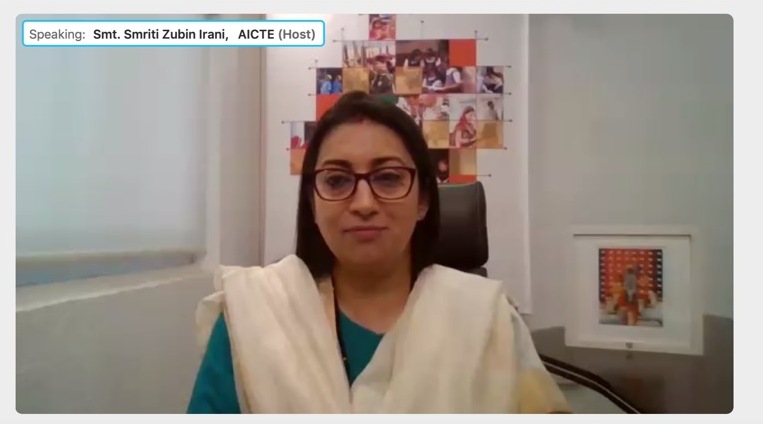
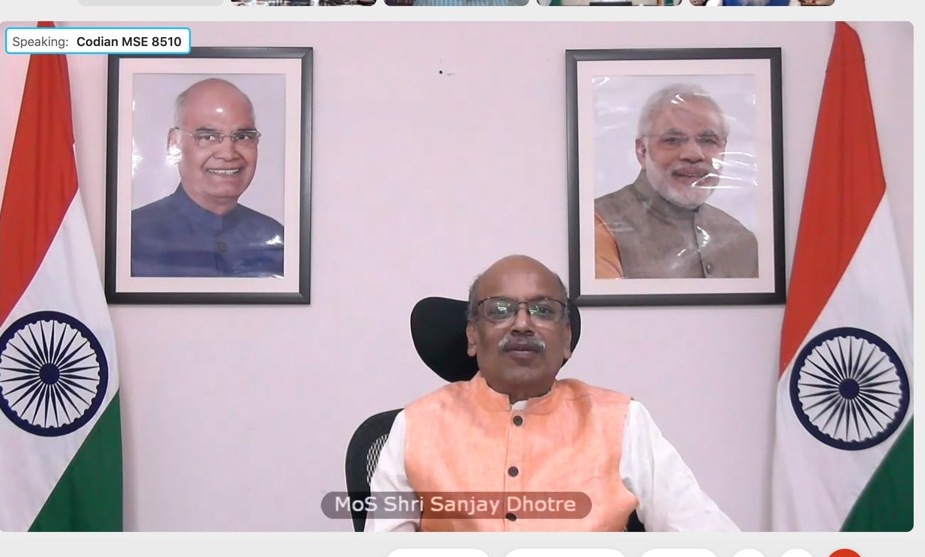
 Union Minister Women and Child Development and Textiles Smt. Smriti Zubin Irani and Minister of State for Education Shri Sanjay Dhotre virtually inaugurated Toycathon 2021 grand finale today. Shri Amit Khare, Secretary, Higher Education, Ministry of Education; Shri Upendra Prasad Singh, Secretary, Ministry of Textiles; Prof. Anil D. Sahasrabudhe, Chairman, AICTE; Dr. Abhay Jere, Chief Innovation Officer, Ministry of Educations Innovation Cell; Dr. M.P. Poonia, Vice Chairman, AICTE and Dr. Mohit Gambhir, Director, MoEs Innovation Cell were present at the inauguration session.

The Toycathon 2021 is being organized jointly by Ministry of Education in coordination with five other Ministries viz: Ministry of Women and Child Development, Ministry of Information and Broadcasting, Ministry of Commerce &Industry, Ministry of Small and Medium Enterprises, and Ministry of Textiles. This inter-ministerial Toycathon focuses on conceptualizing new and innovative toys using local materials which are economical, affordable, safe, environment friendly, with exceptional high quality for both Indian and global markets.

Speaking on the occasion, Smt. Smriti Zubin Irani marked the moment as historical where the nations first toy hackathon is being dedicated to the world. The Minister complimented 17749 individual teams that submitted the ideas at Toycathon 2021. She hoped that many more ideas from this toycathon grand finale be commercialized. She emphasized that the toys have huge impact on psychomotor abilities of children, impact their memory skill and generate huge responsibility towards ensuring future autonomy of the child.

She expressed her concerns that 85% toys that our children are playing with are imported and are predominantly made of plastic. Drawing inspiration from Prime Ministers global commitment for sustainable development, Minister invited research bodies and toy manufacturers to make sustainable toys. She also advised that India is known for its engineering potential and our technologists should equip toy sector with adequate and innovative technologies for electronic toys.

Shri Dhotre said Indian toy market stands at around $1.5 billion USD and currently we are importing a major chunk from outside. The global toy market is estimated to be more than 100 billion USD, we must channelize our creative, innovative and manufacturing power to have our share in these areas. This toycathon will provide opportunity to our young innovative minds to lead the path to manufacture toys in India for the world.He suggested that the use of toys could ease the burden of rote learning science and other subjects.

Speaking on the occasion, Shri Upendra Prasad Singh  highlighted the commercial as well as pedagogical importance of toys in inculcating the values, ethos and awareness about our history and culture. He said we have a very large number of clusters and very good artisans, but one thing which is required is to innovate, innovate as per the changing requirement of not only our country but for abroad as well. He hoped that the ideas generated in this toycathon will be very useful for the said purpose. 

Shri Amit Khare expressed his concerns that economical value of imported toys is huge and it is a roadblock for atmanirbhar Bharat. He said, The curb on import of toys will generate new opportunities for our artisans. He added that the National Education Policy 2020 advocates for 5+3+3+4 system and it asks for activity-based learning for children through toys and games, here the importance of regional Indian toys is very significant in connecting young minds with our history and culture.

On Inaugural occasion Prof. Anil D. Sahasrabudhe, Chairman, AICTE said that early child education should not be stressful and it should be fun based learning through toys, stories and games. He added, Edutainment, which is entertainment and education at the same time,  is required.He praised the organizing team for developing a robust digital platform which could bring the participants, evaluators and organizers on one platform to facilitate this toycathon.

Dr. Abhay Jere, Chief Innovation Officer, Ministry of Educations Innovation Cell, welcomed the dignitaries and motivated the participants to do best as per their abilities.

Dr. Mohit Gambhir, Director, MoEs Innovation Cell, who mastered the inaugural ceremony emphasized the importance of grassroot innovation. He said In todays time it is well understood that the future innovations will spring from the base of pyramid – where common men-women will innovate for their needs. This base of pyramid is very critical for holistic development of society and needs to be trained.

The hackathon was initially conceptualized in physical as well as digital mode. Due to the prevailing Covid 19 pandemic and owing to the safety of participants the physical edition has been deferred and now only digital edition is being conducted from 22ndJune to 24thJune 2021. Toycathon 2021 majorly focuses on conceptualizing new and innovative toys using local materials which are economical, affordable, safe, and environment friendly, of exceptionally high quality for Indian as well as global market.

The ongoing Toy Hackathon have 3 tracks:

Track 1for Junior Level Participants i.e., primarily SCHOOL STUDENTS. They mainly focus on designing toys for kids of age group 0-3 years and 4-10 years. 

Track 2 for Senior Level Participants i.e., students and faculty from Higher education institutions. This group focus on developing concepts for 0-3 years, 4-10 and 11 years and above. This segment primarily focused on Electronics, Sensors, Mechatronics, and toys based on AI and ML approaches, AR-VR-XR and Robotics.

Track 3 for Startup-Professional Level that incudes overall innovation and development of prototypes. These prototypes are expected to enable toy industry in boosting up the production along with improving the quality of toys in Indian market.

During three-day Toycathon 2021 grand finale, participating teams of all tracks will be mentored through specialized mentoring session in morning half of the day and then they will be evaluated in later half of the day for initial two days and then there will be a power judging round for participating teams to declare winners for Toycathon 2021 Digital Edition. For this purpose, Ministry of Education Innovation Cell has engaged 645 mentors and evaluators for 1567participating teams. 85 Nodal centers have been selected to support Ministry of Educations Innovation Cell and All India Council for Technical Education, which are the organizing agencies for this Inter-ministerial Toycathon.

***

Ensure continuity of quality education during the pandemic

The Minister of State for Education Shri Sanjay Dhotre participated in the G20 Education Ministers’ Meeting on 22nd June, 2021. The meeting was hosted in blended mode by Italy. G20 Education Ministers exchanged views on how to progress on the fight against educational poverty and inequalities, especially in context of the Covid 19 pandemic. The ministers also resolved to share innovative experiences implemented during the pandemic to ensure the continuity and quality of learning pathways through blended education

Representing India, Shri Sanjay Dhotre reiterated the country’s commitment towards reducing and eventually eliminating educational poverty, inequalities and early school leaving. Speaking on National Education Policy, 2020, the Minister said it envisages equitable and inclusive education for all, withspecial focus on children and youth, especially girls, from socially and economically disadvantaged groups who are more at risk of being left behind.

Shri Dhotre said that the Indian education system has made steady progress towards bridging gender and social category gaps in all levels of education through multiple interventions. Some of these include increasing intake capacity of schools; tracking out-of-school children; monitoring the learning outcomes of vulnerable students; ensuring physical safety & zero tolerance to breach of child rights;  mid-day meals to ensure health of children; enabling mechanisms for Children With Special Needs ; promoting multiple pathways to learning and strengthening open and distance learning programmes. 

Regarding ensuring educational continuity during the pandemic, the Minister shared that India has promoted blended learning extensively.   Digital educational content has been made available on various e-learning platforms like DIKSHA, SWAYAM and several others which can be accessed by Anyone, Anytime, and Anywhere free of cost. Permissible online component in conventional education has been increased from 20% to 40%. Over 100 top ranked universities have been allowed to introduce full-fledged online education programmes. In order to address the digital divide, India has been making extensive use of the SWAYAM PRABHA TV channels and the Community Radio. The Digital infrastructure is being expanded rapidly. A National Education Technology Forum is being   set up under NEP 2020 to aid technology led education.

The Government also took special care to address mental health issues of students through counseling programmes like Manodarpan and others, he highlighted.

Shri Dhotre said that India reaffirms its support to the collective efforts of the G-20 countries to reduce educational poverty, inequalities and early school leaving. India also supports the collective efforts of G20 countries to further improve and strengthen blended learning initiatives on the basis of the lessons learnt during the pandemic to ensure education continuity.

The Education Ministers adopted a declaration at the end of the meeting

Later in the day, a Joint Meeting of Ministers of Education and Ministers of Labour and Employment was also held virtually. G20 Ministers exchanged views on transitions from school to work. Shri Sanjay Dhotre represented Ministry of Education  in the meeting. Ministry of labour & employment was represented by MoS (I/C) Shri Santosh Gangwar.

Addressing the participants, Shri Dhotre said that it is essential that we, the member countries of G20,   recognize the need to equip our youth well for a smooth transition into the work space after completing their education. This is especially important for learners from socially and economically disadvantaged population groups, who are more at risk of being left behind.

The Minister stated that India is committed to helping its youth develop the knowledge, skills and attitudes necessary for the 21st century global work space. Our approach has been to integrate vocational education with general academic education, with focus on demand driven, competency based, and modular vocational courses, he added.

The Minister highlighted that National Education Policy 2020 provides for early vocational exposure in middle and Singapore international secondary school and its smooth integration into mainstream education.. It aims that by 2025, at least 50% of learners in the school and higher education system would have exposure to vocational education. He further said that the NEP 2020 also provides for vocational education to be aligned to skill gap analysis and mapping of local opportunities. Vertical mobility for students from the vocational stream is being ensured through a National Skills Qualifications Framework. Standards under this framework will be aligned with the International Standard Classification of Occupations maintained by the International Labour Organization”. This Framework will be the basis for Recognition of Prior Learning, and reintegration of dropouts from the formal system, he added. 

Shri Dhotre informed that India is also enhancing post education apprenticeship opportunities for youth by realigning the existing scheme of National Apprenticeship Training Scheme.

He said that India attaches great importance to the collaboration between G20 countries in the field of vocational education and training. He reaffirmed the support of the Government of India to the collective efforts of the G-20 countries to develop strategies to ensure smooth transition from education to work.

G20 Education and Labour and Employment Ministers’ adopted a Declaration at the end of the meeting.

Click here for G20 Education Ministers’ Declaration

Click here for G20 Joint Education and Labour and Employment Ministers’ Declaration

                                                                        ******

Rapid Antigen Test Kit for COVID-19 developed by IIT Delhi

 Union Education Minister Shri Ramesh Pokhriyal ‘Nishank’ virtually addressed students, teachers and stakeholders regarding Board Examinations today.

Shri Pokhriyal expressed deep gratitude and thanked Prime Minister Shri Narendra Modi for taking a decision to cancel the class 12 CBSE Board Exam in the interest of the students keeping in view their health and safety in the wake of Covid.

In his address, Shri Pokhriyal stated that CBSE has already issued comprehensive guidelines on assessment and evaluation for Class 12th Board examinations. He assured that those students who are not satisfied with the assessment, will be provided with an option to take the exams, whenever the situation becomes conducive, in August.

The Minister reiterated that safety, health and the future of the students are the top priorities of the government.

*****

Convocation of Indian Institute of Information Technology (IIIT) Sri City Chittoor

 Minister of State for Education Shri Sanjay Dhotre virtually addressed the students at the convocation of Indian Institute of Information Technology (IIIT) Sri City Chittoor today. Chairman of the Board of Governors of IIIT Sri City Mr. Balasubramaniam was present on the occasion. During the convocation, a total of 261 students comprising 164 Computer Science and Engineering students and 97 Electronics and Communication Engineering students received degrees. This includes 28 Honours students from both disciplines.  

Shri Dhotre said that National Education Policy 2020 aims at making India a global knowledge super power. It endeavours to develop scientific temper, rational and critical thinking in students, ensure students are endowed with 21st Century knowledge and skills, while displaying a strong character, filled with humanistic values, that flow from the ethos of India, i.e.Bharat.  He further added that our students will not only be the top-class students, they will also be the top-class citizens of this country and the world.

Speaking on the importance of Technology, Shri Dhotre urged students to explore how these technologies can be used to solve common man’s problems, such as to improve farming efficiency, and in turn improving his income; in  ensuring energy security, in ensuring piped water to every household in an efficient way.

Minister noted that Technology is playing a massive role in transforming the whole world economy. While working to achieve a goal of a 5 trillion-dollar economy, India is actively focusing on the strength of the digital economy.  He further added that this new India needs young technocrats to provide smarter solutions to the problems. He urged the students to play their part and contribute in making our country a world leader in every aspect of digital technology.

Shri Balasubramaniam said, “The remarkable growth of the fast-growing 180 billion USD IT/ITES industries in India over the past decade has shown the world India’s scientific, engineering and technological prowess and capabilities. The best multinationals of the world are leveraging Indian talent and rushing to set up large R&D hubs in India. We need to be self-reliant as Aatmanirbhar Bharat has now turned the gaze of this world-class innovative talent inwards, to create products and services for the Indian market at par with other countries.”

Dr. G. Kannabiran, Director said that “We propose to significantly improve faculty-student ratio, augment R&D infrastructure and focus on student development initiatives.  We plan to launch online BTech programmes and other continuing education programmes at the certificate, diploma and MTech levels in our key areas of strength.  We also plan to take up in-house corporate training in emerging technology areas, joint degree programmes with suitable overseas universities, enhance our campus infrastructure for next generation students.   We will continue as a family to make IIIT Sri City as a Nationally Relevant and Globally Recognized Entrepreneurial Institution.” 

IIIT Sri City is presently serving as the Secretariat of IIIT Coordination Forum. Besides enabling and coordinating regular meetings, few key activities are being taken up by the Secretariat for the member institutions, including FICCI-Panel discussion with Industry Leaders, Faculty Development Programme on E-Content Development and NOSSCOM Conference for IIIT Directors to benefit the member institutions.

*****

KP/AK

Swachh Vidyalaya Puraskar 2021 – 2022

 Shri Subhas Sarkar, Minister of State for Education today virtually launched Swachh Vidyalaya Puraskar (SVP) 2021 – 2022. The event was attended by Mrs Anita Karwal, Secretary (SE&L), and representatives from all States and UTs and UNICEF.

Shri Sarkar while launching the awardsunderlined the importance ofWater, Sanitation and Hygiene in Schools as it plays a significant role in determining the health of students, their attendance, dropout rate, and learning outcomes. The provision of water, sanitation and hygiene facilities in schools secures a healthy school environment and protects children from illness (including COVID-19) and exclusion, he added. Shri Sarkar emphasized that the SwachhVidyalayaPuraskarrecognise, inspire and award the schoolswho have undertaken exemplary work in the field of water, sanitation and hygieneand also provides a benchmark and roadmap for schools to make further improvements in future.

In order to create self-motivation and awareness about sanitation the SwachhVidyalayaPuraskar (SVP) was first instituted by the Department of School Education and Literacy, in 2016-17.

The SVP 2021-22 is open to all categories of schools. i.e. Government, Government aided and Private schools in both rural and urban areas. The schools will be assessed through an online portal & mobile app in 6 sub-categories: Water, Sanitation, Hand Washing with soap, Operation and Maintenance, Behaviour Change and Capacity Building and the newly added category on COVID-19 Preparedness and Response and the system will generate the overall score and rating automatically.The schools have been given sufficient time till March 2022 to apply for the awards so that they can do so at an appropriate and safe time.

Schools shall be awarded at the District, State and National level based on an internationally recognized five star rating system. Also, every school will get a certificate of participation showing the category-wise scores and overall rating of the school. This will help in promoting sustainable practices of improved Water, Sanitation & Hygiene in schools.

At the National level, 40 schools will be selected for awards this year under the overall category. The award money for the schools has been enhanced this year from Rs. 50,000/- to Rs. 60,000/- per school, under Samagra Shiksha scheme. Also, 6 sub-category wise awards have been introduced for the first time, with award money of Rs. 20,000/- per school.


* * * * *

Realize the dream of activating India 2.0, fueled with the spirit of Atmanirbhar Bharat

 National Innovation week will inspire us to work collaboratively to realize the dream of activating India 2.0, fueled with the spirit of Atmanirbhar Bharat, said Shri Subhas Sarkar, Minister of State for Education while addressing the valedictory session of  E- Symposium on ‘Building Innovation Ecosystem in Educational Institutes’ here today.

In his concluding remarks Shri Sarkar said that our goal is to promote innovation, entrepreneurship, critical thinking, and out-of-the-box thinking in our educational system, which is also reflected in the New Education Policy 2020. He further said that Government is committed to enhance the Indian economy and working tirelessly to achieve India’s goal of becoming a 5 trillion-dollar economy by 2024-25. Facilitating investment, fostering innovation, building best-in-class infrastructure, and making India a hub for manufacturing, design, and innovation will help us achieve the Atmanirbhar Bharat in the true sense. 

Click here to see Closing Ceremony of e-Symposium on Building Innovation & Entrepreneurial Ecosystem

Shri Sarkar stressed that the time has come when every Ministry, Government Department, Industry leaders, and all key stakeholders work collaboratively and support our higher education institutions so that they work on creating a holistic culture of innovation, research, and help in nurturing young talent to pursue their dreams as an Innovators and solve the problems faced by society and address upcoming challenges. 

At the occasion, Professor K. Vijay Raghavan, Principal Scientific Advisor (PSA) to the Government of India, emphasized on need of innovation for economic change and sustainability. He said that we need to expand the funding of research and innovation eco-system to position India as a favoured destination for Research and Development. He highlighted on adoption of best global practices for establishing closer linkages with national R&D institutions and academia, talent development and sourcing, strategic partnerships to bolster R&D in India and integrating with the domestic start-up ecosystem. He further added that, innovation must be linked with economic change and market and in synchronization with ongoing policy measures including Swachh Bharat, Made in India etc. etc. He urged Indian youth to come forward in sharing the ideas for country and economic development.

The opening session was followed by two panel discussion titled, “Grey Hairs not mandatory to build greater enterprises” and “Attracting Big Investment for Innovative ideas from Educational Institution” which was well attended by eminent personalities. All the panelists were enthused with such platforms which are much needed for building up the R&D and innovation eco-systems in India.

Prof. M. P. Poonia, Vice Chairman of AICTE had delivered welcome address and appreciated for the overwhelming responses and participation from student and faculty fraternity from educational institutions. The sessions were viewed by more than1.2 lakh attendees online across the globe. All panelists were enthused with e-symposium platforms which is the need of hour for building the R&D and innovation eco-systems in India.

Prof. Rajive Kumar, Member Secretary, AICTE highlighted the role of AICTE in supporting the technical institutions to excel in the field of innovation and entrepreneurship. The event concluded with vote of thanks delivered by him.

******

Wider participation in Pariksha Pe Charcha 2022

 Union Education and Skill Development Minister Shri Dharmendra Pradhan invited students, teachers and parents to participate in the 5th edition of  “Pariksha Pe Charcha 2022 and get a chance to be mentored by Prime Minister Shri Narendra Modi.

Prime Minister Shri Narendra Modi conceptualized a unique interactive program – Pariksha Pe Charcha wherein students, parents, teachers across the nation and also from overseas interact with him to discuss and overcome the stress emerging out of examinations in order to celebrate life as an Utsav. This event was organized successfully for the last four years by the Department of School Education & Literacy, Ministry of Education.

The format of this programme is proposed to be in online mode like in 2021. An online creative writing competition is being conducted at https://innovateindia.mygov.in/ppc-2022/ on various topics from 28th December to 20th January 2022 to select participants. Questions asked by selected winners will be featured in Pariksha Pe Charcha programme.

School students of classes 9 to 12, teachers and parents shall be selected through an online competition. Registrations on https://innovateindia.mygov.in/ppc-2022/ are live from 28th December 2021 till 20th January 2022 on a bouquet of themes listed below:

● Themes for Students:

  1. Exam stress management strategies during COVID-19
  2. Azadi Ka Amrit Mahostav
  3. Self-reliant School for Self-reliant India
  4. Clean India, Green India
  5. Digital Collaboration in Classrooms
  6. Environmental conservation and climate change resilience

● Themes for Teachers:

a. National Education Policy (NEP) for Naya Bharat

  1. The COVID-19 Pandemic: opportunities & challenges

● Themes for Parents:

  1. Beti Padhao, Desh Badhao
  2. Local to Global – Vocal for Local
  3. Lifelong Students’ Yearning for Learning

About 2050 participants selected through competitions on MyGov will be presented with a certificate of appreciation from Director, NCERT and a special Pariksha Pe Charcha kit comprising of Exam Warriors book in Hindi and English, written by the Prime Minister.There is enthusiastic participation of students,  teachers and parents from all over the country.

****

Webinar on “Cyber security empowerment of Higher Education Institutions (HEIs)”

 The Government of India has launched a 75-week long campaign Azadi ka Amrit Mahotsav; to celebrate the achievements of the country and its people. The University Grants Commission (UGC) as part of  this campaign  is conducting a series of activities beginning with the a sensitisation webinar on “Cyber security Empowerment of Higher Education Institutions (HEIs)”an effort towards making cyber security more accessible, available, and adaptable for HEIs.

Delivering the welcome address, Prof. Rajnish Jain, Secretary, UGC welcomed and introduced all panelists. He set the context for the webinar, stressing on the need for cybersecurity awareness with the increased dependence on IT post pandemic. He emphasised on the fact that the pandemic has put Higher Education in the cyber space which has led HEIs to be subject to increased cybersecurity issues. He said that there is a need to understand how cyber security issues may be addressed and how cyber hygiene may be managed.

The keynote address was delivered by Lt. Gen. (Dr.) Rajesh Pant, Chief (retd.), National Cyber Security Coordinator, National Cyber Coordination Centre, PMO. He emphasized and reiterated the threat cybercrime poses to economy and national security. He focused on cybersecurity for HEIs that are base of personal information and intellectual property. He highlighted the structure of institutions that make them susceptible to cybercrimes and the measures to be taken to address these issues. He shared the ongoing and proposed government initiatives of cyber swacchta kendra and the malware posh and national blockchain project given to IIT Kanpur.  He concluded with two mantras for survival in the new normal: personal hygiene and cyber hygiene. 

Shri Abhishek Singh, CEO, My Gov and President & CEO NeGD, Ministry of Electronics & Information Technology delivering his address emphasised on the importance of cyber security due to the increased dependency and use of the cyber space. He focused on the issues of cybersecurity; cyberattacks, frauds and use of cyber warfare, further emphasising the steps and measures to be taken by HEIs to stay safe. He touched upon the various aspects of cybercrimes and measures to be taken and the processes for reporting cybersecurity issues. He spoke of Cyber Surakshit Bharat of Government of India aimed at educating people on cybersecurity.

Shri Deepak Virmani, Deputy Secretary, Indian Cyber Crime Coordination Centre (I4C) , Cyber & Information Security, Division, Ministry of Home Affairs spoke about the initiatives of Ministry of Home Affairs’ CIS and its efforts in controlling Cybercrimes. He shed light on the Indian Cyber Crime Coordination Centre schemes (I4C) of MHA that aims to prevent cybercrimes. He discussed in detail the 7 verticals of the scheme that also involve the training of police personnel and government functionaries. He further shared about the various portals and helpline numbers that can be availed by the citizens and the initiative Cyber Jaagrookta Diwas, celebrated every month since October 2021. Further delivering his address, he hailed UGC for its initiatives for promoting and sensitizing HEIs regarding Cyber security through the proposed handbook on cyber hygiene and cybersafe curriculum. 

Dr. Charru Malhotra , Coordinator, Centre of e-Governance, Indian Institute of Planning and Administration, New Delhi  brought out the findings on Cybersecurity through analysis of a pre webinar questionnaire which had been shared with HEIs. She highlighted the current status amongst HEIs about cyber security and their preparedness.

Prof. Naveen Chowdhary, National Forensic Science University, Gandhinagar through his address shared the cybersecurity threat landscape highlighting cases of compromises on cybersecurity in Educational Institutions, research facilities.  He provided a detailed outlook and a framework for cybersecurity.

Dr. Atul Kumar Pandey, Chairperson , Rajiv Gandhi National Cyber Law Centre, NLIU, Bhopal spoke about the threat landscape in HEIs and the importance of cybersecurity in HEIs. In his address he shed light on various components like content protection and privacy and capacity building for addressing cybersecurity.

The address by the panelists was followed by a Question and Answer session from the faculty members from HEIs.

The webinar discussed pertinent issues of cyber security with prioritizing its impact on HEIs and the necessary. The Webinar was the first step towards Cyber security empowerment of HEIs and provided an opportunity for sensitization and awareness on cyber security.  

*****

English As Second Language In India

More Indians speak English than any other language, with the sole exception of Hindi. What’s more, English speakers in India outnumber those in all of western Europe, not counting the United Kingdom. And Indian English-speakers are more than twice the UK’s population.


These facts emerge from recently released census 2001 data on bilingualism and trilingualism in India. Indians’ linguistic prowess stood revealed with as many as 255 million speaking at least two languages and 87.5 million speaking three or more. In other words, about a quarter of the population speaks more than one language.


English was the primary language for barely 2.3 lakh Indians at the time of the census, more than 86 million listed it as their second language and another 39 million as their third language. This puts the number of English speakers in India at the time to more than 125 million.


The only language that had more speakers was Hindi with 551.4 million. This includes 422 million, who list it as the primary language, 98.2 million for whom it was a second language and 31.2 million who listed it as their third.


The rise of English puts Bengali, once India’s second largest language in terms of primary speakers, in distant third place. Those who spoke Bengali as their first, second or third language add up to 91.1 million, far behind English.


Telugu with 85 million speakers in all and Marathi with 84.2 million retain their position behind Bengali as does Tamil with 66.7 million and Urdu with 59 million.


Gujarati now falls behind Kannada though it has a sizeable number of primary speakers — 6.1 million — compared to Kannada’s 37.9 million.


Karnataka’s linguistic diversity means that many list other languages as their first and Kannada as a second language. This adds 11.5 million to the ranks of Kannada speakers and another 1.4 million use it as a third language. In total, Kannada had 50.8 million speakers in 2001 compared to Gujarati’s 50.3 million.


Oriya overtakes Malayalam thanks to the 3.3 million people who listed it as their second language and 3.2 lakh who said it was their third language.


The total number of Oriya speakers was 36.6 million against 33.8 million who spoke Malayalam. Punjabi, with 31.4 million speakers, and Assamese with 18.9 million are among India’s most spoken languages.
Unfortunately, the census asked people to list a maximum of three languages, so it is not known how many speak more languages.


The data covers only those over five because the census assumed that younger children would only know their mother tongue.


As expected, urban Indians are more likely to be multi-lingual but as many as 136.7 million rural Indians speak at least two languages.

English in India is a question of linguistic centralism while the other Indian
languages lead to linguistic regionalism.A foreign languages existing so firmly and
distinctly has posed a problem to the country .Yet the language problem became more
complicated without any practical solution .In the process of teaching-learning ,the teacher
should try to understand the student first.Then only he/she can enable the students to
understand his/her teaching .

Theory with practice on some of the teaching topics , may enable the students to understand the concept easily. The growing modernisation and internationalism in the world prevented us from doing away with the English language. Besides ,Indian languages are associated with tradition and are understood to be anti-modern. Therefore , a complete switchover to the Indian languages would lead to educational chaos and complete isolation from the developments on the international arena.

We could not risk this because of the cultural ,social ,political and economic reasons .Hence ,this situation requires an urgent solution .The only resolution that could be thought of was a need for coexistence of English with Indian languages .As a result, we had to define the role of English inIndia and
its relationship with Indian languages .

And furthermore, we had to define the role of English in India and its relationship with Indian languages.The role of English was strengthened and consolidated as English was recognized and perceived as:

  • The language of knowledge(science and technology)
  • The language of liberal, modern thinking.
  • A window on the world
  • The language of library

Thus, the three language formula came in to existence.This policy was proposed in 1956 by the central advisory board on education and was adopted at the Chief Ministers conference in1961 .The policy aimed at making English an integral part of the school education in India .This naturally restricted the learning and use of Hindi and the students started learning English as second language.

Remedies for hair loss

What causes Hair loss?

Hair loss has many causes. What’s causing your hair loss can determine whether your hair:

  • Falls out gradually or abruptly
  • Thins
  • Can regrow on its own
  • Requires treatment to regrow
  • Needs immediate care to prevent permanent hair loss

Causes of hair loss

Hereditary hair loss

Both men and women develop this type of hair loss, which is the most common cause of hair loss worldwide. In men, it’s called male pattern hair loss. Women get female pattern hair loss. Regardless of whether it develops in a man or women, the medical term is androgenic alopecia.

No matter which term you use, it means that you’ve inherited genes that cause your hair follicles (what each hair grows out of) to shrink and eventually stop growing hair. Shrinking can begin as early as your teens, but it usually starts later in life.

In women, the first noticeable sign of hereditary hair loss is usually overall thinning or a widening part.

When a man has hereditary hair loss, the first sign is often a receding hairline or bald spot at the top of his head.

Is regrowth possible?
Yes, treatment can help stop or slow hair loss. It may also help regrow hair. The earlier treatment is started, the better it works. Without treatment, you will continue to lose hair.

Hereditary hair loss

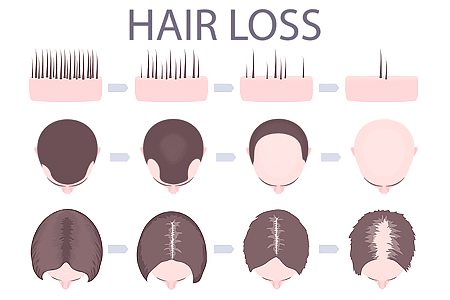
Both men and women develop this type of hair loss, which is the most common cause of hair loss worldwide. In men, it’s called male pattern hair loss. Women get female pattern hair loss.

Illustration of male and female pattern hair loss.

Age

With age, most people notice some hair loss because hair growth slows. At some point, hair follicles stop growing hair, which causes the hair on our scalp to thin. Hair also starts to lose its color. A woman’s hairline naturally starts to recede.

Is regrowth possible?
Caught early, treatment helps some people regrow their hair.

Age

With age, most people notice some hair loss because hair growth slows.

older could sitting with dogs

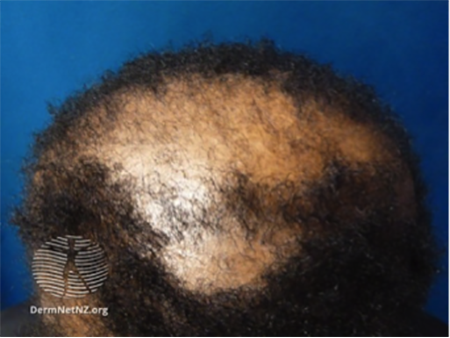
Alopecia areata

Alopecia areata is a disease that develops when the body’s immune system attacks hair follicles (what holds the hair in place), causing hair loss. You can lose hair anywhere on your body, including your scalp, inside your nose, and in your ears. Some people lose their eyelashes or eyebrows.

Is regrowth possible?
Yes. If your hair fails to grow back on its own, treatment may help stimulate regrowth.

Alopecia areata

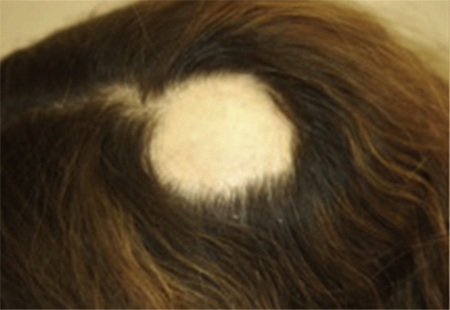
Alopecia areata is a disease that develops when the body’s immune system attacks hair follicles (what holds the hair in place), causing hair loss.

bald spot on top of head

Cancer treatment

If you receive chemotherapy or have radiation treatment to your head or neck, you may lose all (or most of) your hair within a few weeks of starting treatment.

Is regrowth possible?
Hair usually starts to regrow within months of finishing chemotherapy or radiation treatments to the head or neck. Dermatologists can offer medication to help hair grow back more quickly.

Is it preventable?
Wearing a cooling cap before, during, and after each chemotherapy session may help prevent hair loss.

Cancer treatment

If you receive chemotherapy or have radiation treatment to your head or neck, you may lose all (or most of) your hair within a few weeks of starting treatment.

woman with scarf over head embraced by older woman

Childbirth, illness, or other stressors

A few months after giving birth, recovering from an illness, or having an operation, you may notice a lot more hairs in your brush or on your pillow. This can also happen after a stressful time in your life, such as a divorce or death of a loved one.

Is regrowth possible?
If the stress stops, your body will readjust and the excessive shedding will stop. When the shedding stops, most people see their hair regain its normal fullness within 6 to 9 months.

Childbirth, illness, or other stressors

A few months after giving birth, recovering from an illness, or having an operation, you may notice a lot more hairs in your brush or on your pillow. This can also happen after a stressful time in your life, such as a divorce or death of a loved one.

woman pulling hair from brush

Hair care

If you color, perm, or relax your hair, you could be damaging your hair. Over time, this damage can lead to hair loss.

Is regrowth possible?
You can change how you care for your hair, which can prevent hair loss. Once you damage a hair follicle, hair cannot grow from that follicle. Having many damaged hair follicles creates permanent bald spots.

Hair care

If you color, perm, or relax your hair, you could be damaging your hair. Over time, this damage can lead to hair loss.

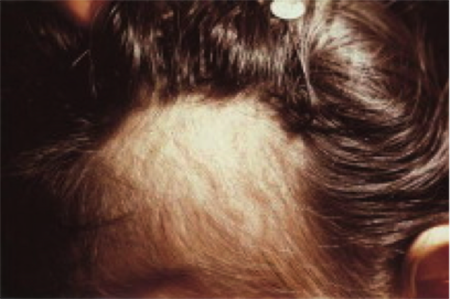
balding area on top of head

Hairstyle pulls on your scalp

If you often wear your hair tightly pulled back, the continual pulling can lead to permanent hair loss. The medical name for this condition is traction alopecia.

Is regrowth possible?
No. You can prevent hair loss by making some changes.

Hairstyle pulls on your scalp

If you often wear your hair tightly pulled back, the continual pulling can lead to permanent hair loss.

woman showing receding hairline

Hormonal imbalance

A common cause of this imbalance is polycystic ovary syndrome (PCOS). It leads to cysts on a woman’s ovaries, along with other signs and symptoms, which can include hair loss. Stopping some types of birth control pills can cause a temporary hormonal imbalance. Women who develop a hormonal imbalance can develop thinning hair (or hair loss) on their scalp.

Is regrowth possible?
Treatment may help.

Hormonal imbalance

A common cause of this imbalance is polycystic ovary syndrome (PCOS). It leads to cysts on a woman’s ovaries, along with other signs and symptoms, which can include hair loss.

Woman with dyed hair

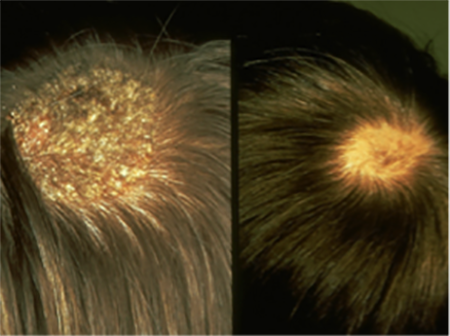
Scalp infection

A scalp infection can lead to scaly and sometimes inflamed areas on your scalp. You may see what look like small black dots on your scalp. These are actually stubs of hair. Some people develop a bald spot.

Is regrowth possible?
Yes, treatment can get rid of the infection. Once the infection clears, hair tends to grow.

Scalp infection

A scalp infeciton can lead to scaly and sometimes inflamed areas on your scalp.

two pictures of scalp with ringworm

Medication

A possible side effect of some medications is hair loss. If you think a medication is causing your hair loss, ask the doctor who prescribed it if hair loss is a possible side effect. It’s essential that you do not stop taking the medication before talking with your doctor. Abruptly stopping some medications can cause serious health problems.

Is regrowth possible?
Yes.

Medication

A possible side effect of some medications is hair loss. If you think a medication is causing your hair loss, ask the doctor who prescribed it if hair loss is a possible side effect.

person with pill in hand

Scalp psoriasis

Many people who have plaque psoriasis develop psoriasis on their scalp at some point. This can lead to hair loss.

Is regrowth possible?
Hair tends to regrow once the scalp psoriasis clears, but this takes time. By following these dermatologists’ tips, you may be able to prevent hair loss.

Scalp psoriasis

Many people who have plaque psoriasis develop psoriasis on their scalp at some point. This can lead to hair loss.

scalp psoriasis on man's head

Pulling your hair

Some people pull on their hair, often to relieve stress. They may be unaware that they’re pulling their hair. The medical term for this is trichotillomania.

Is regrowth possible?
If you haven’t destroyed the hair follicles, yes. For your hair to regrow, you have to stop pulling it.

Pulling your hair

Some people pull on their hair, often to relieve stress. They may be unaware that they’re pulling their hair.

person showing thinning hair that resulted from Trichotillomania

Scarring alopecia

This condition develops when inflammation destroys hair follicles. Once destroyed, a hair follicle cannot grow hair. Diverse conditions can cause this. The medical name for this group of conditions is cicatricial alopecia.

Is regrowth possible?
Once a hair follicle is destroyed, it cannot regrow a hair. Catching this condition early can prevent further hair loss.

Scarring alopecia

This condition develops when inflammation destroys hair follicles. Once destroyed, a hair follicle cannot grow hair. Diverse conditions can cause this.

scalp with alopecia scarring

Sexually transmitted infection

Left untreated, a sexually transmitted infection (STI) can lead to hair loss. Syphilis is such an STI. Left untreated, syphilis can cause patchy hair loss on the scalp, eyebrows, beard, and elsewhere. Other STIs can also cause hair loss.

Is regrowth possible?
After treating the STI, hair often starts to regrow.

Sexually transmitted infection

Left untreated, a sexually transmitted infection (STI) can lead to hair loss.

blood vial labeled sexually transmitted infections

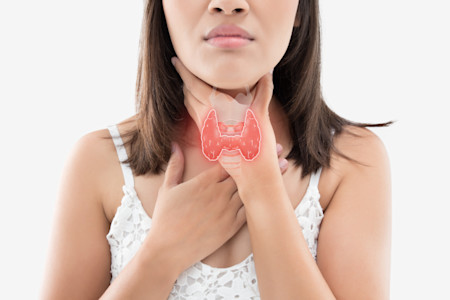
Thyroid disease

If you have a problem with your thyroid, you may see thinning hair. Some people notice that their hair comes out in clumps when they brush it.

Is regrowth possible?
Yes, treating the thyroid disease can reverse the hair loss.

Thyroid disease

If you have a problem with your thyroid, you may see thinning hair.

woman holding throat

Too little biotin, iron, protein, or zinc

If you’re not getting enough of one or more of these, you can have noticeable hair loss.

Is regrowth possible?
Yes. When your body gets enough of the missing nutrients, hair can regrow.

Too little biotin, iron, protein, or zinc

If you’re not getting enough of one or more of these, you can have noticeable hair loss.

woman brushing hair and looking at loose hair

Friction

People can develop hair loss where boots, socks, or tight clothing frequently rubs against their skin. The medical term for this is frictional alopecia.

Is regrowth possible?
Hair tends to regrow on its own when the rubbing stops.

Friction

People can develop hair loss where boots, socks, or tight clothing frequently rubs against their skin.

work boots

Poison

Being slowly poisoned can lead to hair loss. Poisons that can cause hair loss include arsenic, thallium, mercury, and lithium. If you ingest a large amount of warfarin, which is found in rat poisons, it can also cause hair loss. Taking large amounts of vitamin A or selenium is also toxic and can cause hair loss.

Is regrowth possible?
Yes, hair tends to regrow when you are no longer exposed to the poison.

Poison

Being slowly poisoned can lead to hair loss. Poisons that can cause hair loss include arsenic, thallium, mercury, and lithium. If you ingest a large amount of warfarin, which is found in rat poisons, it can also cause hair loss.

warning sign for toxic chemicals

While many causes of hair loss can be treated successfully, the key to effective treatment is to find out what’s causing the hair loss. Without an accurate diagnosis, treatment is often ineffective.

Tips to Enhance Communication Skills

Being able to communicate effectively is perhaps the most important of all life skills. It is what enables us to pass information to other people, and to understand what is said to us. You only have to watch a baby listening intently to its mother and trying to repeat the sounds that she makes to understand how fundamental is the urge to communicate.

Communication, at its simplest, is the act of transferring information from one place to another. It may be vocally , written , visually or non-verbally (using body language, gestures and the tone and pitch of voice). In practice, it is often a combination of several of these.

Communication is a two-way process

Communication is not the same as broadcasting, or simply sending out information.

It is a two-way process. In other words , it involves both the sending and receiving of information.

It therefore requires both speaking and listening, but also—and perhaps more crucially—developing a shared understanding of the information being transmitted and received.

  • If you are the ‘sender’ of information, this means communicating it clearly to start with (whether in writing or face-to-face), then asking questions to check your listeners’ understanding. You must also then listen to their replies, and if necessary, clarify further.
  • If you are the recipient, it means listening carefully to the information, then checking that you have understood by reflecting back, or asking questions to ensure that you both have the same understanding of the situation.

It is, therefore an active process. There is nothing passive about communication, in either direction.

Developing Communication Skills

It is a longterm process, you will have to keep yourselves updated.Good communication skills can improve the way that you operate through life, smoothing your way in your relationships with others.

Poor communication skills, on the other hand, can sour relationships from business to personal, and make your life significantly harder.

Some people seem to understand how to communicate without even trying. They are able to tailor their language, tone and message to their audience, and get their point across quickly and succinctly, in a way that is heard. They are also able to pick up the messages sent to them rapidly, understanding both what is said, and what has not been said.

This may seem effortless, but the chances are that they have spent plenty of time honing their skills.

Along the way, they have probably also developed a good understanding of themselves and habits of reflecting on success and failure, and the actions that have led to one or the other.

Ways to Enhance Communication Skills

1.  Listen, listen, and listen. People want to know that they are being heard. Really listen to what the other person is saying, instead of formulating your response. Ask for clarification to avoid misunderstandings. At that moment, the person speaking to you should be the most important person in your life. Another important point is to have one conversation at a time. This means that if you are speaking to someone on the phone, do not respond to an email, or send a text at the same time. The other person will know that she doesn’t have your undivided attention.

2.  Who you are talking to matters. It is okay to use acronyms and informal language when you are communicating with a buddy, but if you are emailing or texting your boss, “Hey,” “TTYL” or any informal language, has no place in your message. You cannot assume that the other person knows what the acronym means. Some acronyms have different meanings to different people, do you want to be misunderstood? Effective communicators target their message based on who they are speaking to, so try to keep the other person in mind, when you are trying to get your message across.

3.  Body language matters. This is important for face-to-face meetings and video conferencing. Make sure that you appear accessible, so have open body language. This means that you should not cross your arms. And keep eye contact so that the other person knows that you are paying attention.

4.  Check your message before you hit send. Spell and grammar checkers are lifesavers, but they are not foolproof. Double check what you have written, to make sure that your words are communicating the intended message.

5.  Be brief, yet specific. For written and verbal communication, practice being brief yet specific enough, that you provide enough information for the other person to understand what you are trying to say. And if you are responding to an email, make sure that you read the entire email before crafting your response. With enough practice, you will learn not to ramble, or give way too much information.

6.  Write things down. Take notes while you are talking to another person or when you are in a meeting, and do not rely on your memory. Send a follow-up email to make sure that you understand what was being said during the conversation.

7.  Sometimes it’s better to pick up the phone. If you find that you have a lot to say, instead of sending an email, call the person instead. Email is great, but sometimes it is easier to communicate what you have to say verbally.

8.  Think before you speak. Always pause before you speak, not saying the first thing that comes to mind. Take a moment and pay close attention to what you say and how you say it. This one habit will allow you to avoid embarrassments.

9.  Treat everyone equally. Do not talk down to anyone, treating everyone with respect. Treat others as your equal.

10.  Maintain a positive attitude and smile. Even when you are speaking on the phone, smile because your positive attitude will shine through and the other person will know it. When you smile often and exude a positive attitude, people will respond positively to you.

Communicating effectively is a teachable skill, therefore following a few of the tips outlined above, will enable you to hone up on your communication skills.

What to Know About The Virus Omicron?

The Omicron variant of COVID-19 has been called a variant of concern by WHO based on the evidence that it has several mutations that may have an impact on how it behaves. There is still substantial uncertainty regarding Omicron and a lot of research underway to evaluate its transmissibility, severity and reinfection risk.

Development of the Omicron Variant

When a virus is circulating widely and causing numerous infections, the likelihood of the virus mutating increases. The more opportunities a virus has to spread, the more opportunities it has to undergo changes.

New variants like Omicron are a reminder that the COVID-19 pandemic is far from over. It is therefore essential that people get the vaccine when available to them and continue to follow existing advice on preventing the spread of the virus, including physical distancing, wearing masks, regular handwashing and keeping indoor areas well ventilated.

It is also crucial that vaccines and other public health measures are accessible everywhere. Vaccine inequity leaves lower income countries – many of them in Africa – at the mercy of COVID-19. Well-supplied countries must urgently deliver the doses they promised.

Is Omicron variant less severe?

There is also emerging evidence that omicron tends not to burrow deep into the lungs as much as previous variants. A study, which was posted online by the University of Hong Kong and not yet peer-reviewed, found that while omicron is less severe in the lungs, it can replicate faster higher up in the respiratory tract.

In this way, omicron may act more like bronchitis than pneumonia, said Dr. Hugh Cassiere, director of critical care services for Sandra Atlas Bass Heart Hospital at the North Shore University Hospital, on Long Island, New York.

“Usually patients with acute bronchitis tend not to be short of breath. They tend to cough and produce sputum,” he said. “Patients with pneumonia tend to be short of breath and feel more fatigued than bronchitis in general.”

A small study from the CDC found that people who had Covid and are later reinfected with omicron may experience fewer symptoms than they did during their initial bout with the virus.

Still, it’s virtually impossible for people to rely on symptoms to self-diagnose an illness. In addition to omicron, the delta variant continues to circulate, along with increasing cases of the flu.

For these reasons, doctors urge people who have any cold symptoms or flulike symptoms to get tested.

Symptoms of Omicron

  1. Most common symptoms: fever, cough ,tiredness, loss of taste or smell
  2. Less common symptoms: sore throat, headache aches and pains, diarrhoea, a rash on skin, or discolouration of fingers or toes red or irritated eyes
  3. Serious symptoms: difficulty breathing or shortness of breath loss of speech or mobility, or confusion, chest pain.
  4. Seek immediate medical attention if you have serious symptoms.
  5. Always call before visiting your doctor or health facility.
  6. People with mild symptoms who are otherwise healthy should manage their symptoms at home.
  7. On average it takes 5–6 days from when someone is infected with the virus for symptoms to show, however it can take up to 14 days.

The symptoms of omicron generally start with body ache, generalised weakness, fatigue, headache and fever in the initial days and eventually they might also develop a cough which is sometimes dry along with a cold where there is water from the nose, sneezing, etc. The cough is typically dry which resolves over the next few days. Most of the time i.e. in 80% of the patients, fever is resolving over the first 3 days and if not, then that becomes a sign of moderate to severe infection which needs close monitoring.

How do you protect yourself and others?

The WHO has advised the following steps to protect yourself and prevent the spread of COVID-19:

  • Get vaccinated
  • Wear a mask
  • Maintain physical distancing
  • Ventilate indoor spaces
  • Keep good hygiene
  • Self-isolate if you develop symptoms

Effectiveness of COVID-19 vaccines against Omicron or Delta infection

A research shows that Two doses of COVID-19 vaccines are unlikely to protect against infection by Omicron. A third dose provides some protection in the immediate term, but substantially less than against Delta. Our results may be confounded by behaviours that we were unable to account for in our analyses. Further research is needed to examine protection against severe outcomes.

Top 10 Places To Visit In India

1. Shimla – a stunning city in the Himalayan foothills which is one of the best places to explore in India.

Shimla: The land with all the beauty

A popular tourist destination located in the north-west Himalayas, gorgeous Shimla is also sometimes referred to as the ‘Queen of Hills.’ Its colourful colonial past is still evident today and the town is characterised by unusual neo-gothic buildings surrounded by thick forest and outstanding views, offering a very different feel to the rest of India.

‘The Mall’ is the main shopping street and the hub of the city where tourists and locals like to meet, shop and eat. This area also has a good number of clubs and bars great for those looking to step it up a gear.

The Christ Church is also worth a visit – it’s the second oldest church in northern India and its stained glass windows are designed in a distinctive style that you won’t find anywhere else. Also don’t leave Shimla without visiting Jakhu Hill – the highest peak which is also home to many playful monkeys who hang out waiting to be fed. From Shimla, you can also visit a comparatively offbeat destination called Chai.

2. Goa – the famously beautiful beach and party resort.

Cafe Lilliput, Goa

The famous idyllic party place should not be missed and it’s still one of the most popular places to visit in India as well as the most beautiful. If you decide to take a trip, I recommend not leaving the island’s coastal areas. Goa is the smallest state in India and has the most beautiful beaches by far – when you’re here you’ll want to make the most of them.

Many refer to Goa as a tropical paradise and when you’re here enjoying the warm temperatures, clear turquoise water, and palm trees you’ll also probably agree. If you time your visit around the Goa Carnival held every February you’ll be treated to three days and nights of music, lights, dancers, and awesome food.

This is when the legendary King Momo takes over the state and the island becomes party central. Originally celebrated in the 1800s by locals only, now both tourists and locals come here to have a good time.

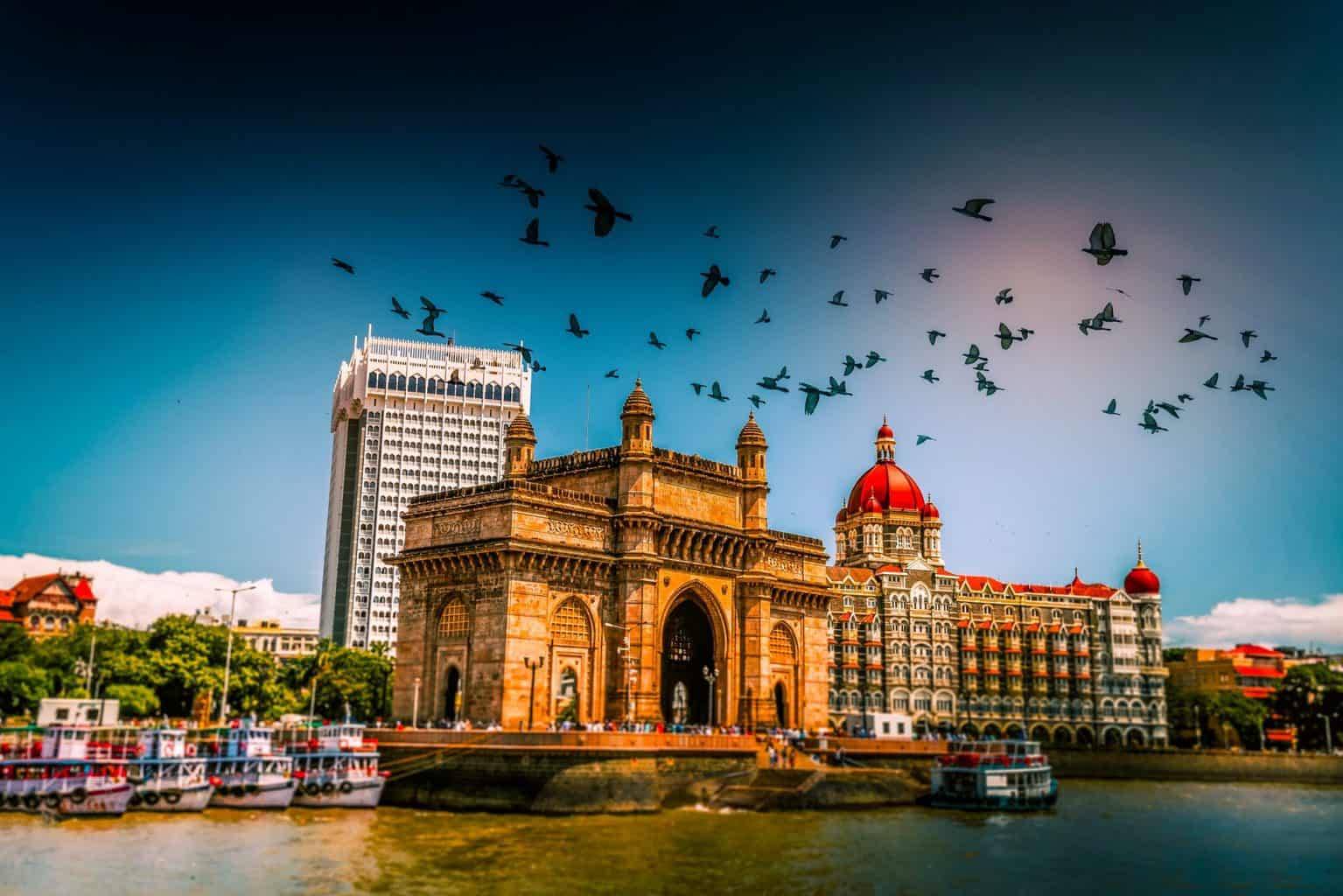
3.Mumbai – the bustling and vibrant city which is one of the most famous cities to visit in India.

Mumbai India

This place has a kind of beauty all of its own. Formally known as Bombay, Mumbai is the most populated city in India. Noisy, frantic, and polluted, Mumbai is a melting pot of different cultures, religions, and wealth extremes. Even though the city is developing at a fast rate, unfortunately, you’ll still see many scenes of poverty.

The city is also the birthplace of Indian cinema and there are many theatres to watch movies from all over the world.

A visually impressive city Mumbai has a large metropolitan area comparable to the size of New York’s skyline and a fine but eclectic mix of colonial buildings, stylish bars, colourful bazaars, and shiny new malls. Finding something to do here would not be a problem.

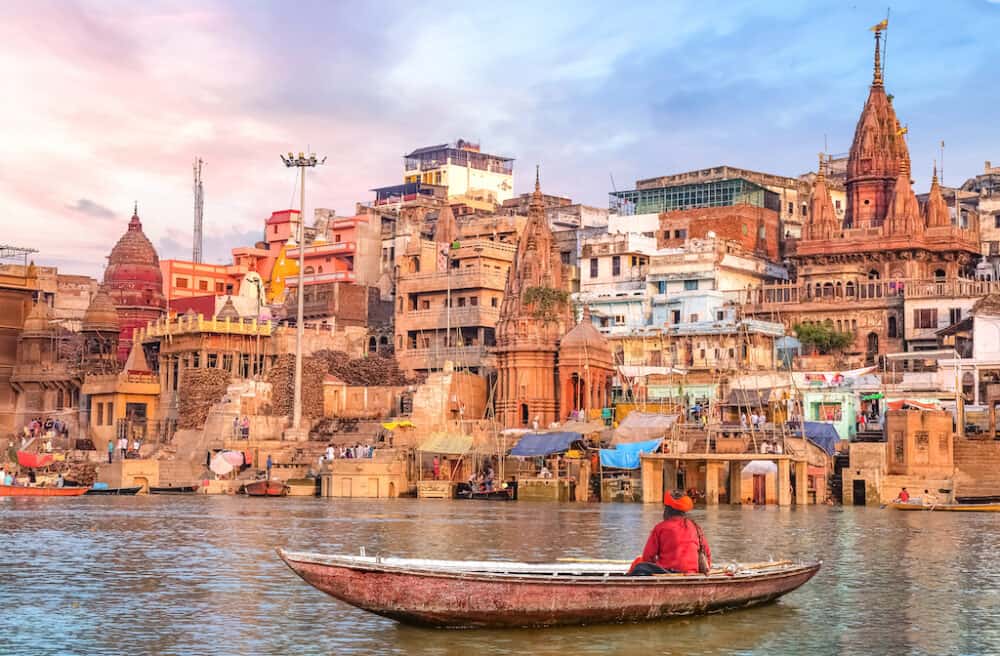
4.Varanasi – an intriguing and beautiful city which is regarded as sacred by Hindus, Buddhists and Jains.

Varanasi India - off the beaten track in India

If you wanted to bottle the essence of Hindu spirituality, then Varanasi would be the place to do it. Walking along the ghats along the River Ganges in this Uttar Pradesh city is not an experience that any visitor ever forgets.

While this city is very much alive, it is also fundamentally about death and rebirth. Here you can watch public cremation ceremonies at the Ganges by day and witness the Hindu aarti ritual by night. Aarti is a part of puja (worship) where light is offered to the gods at the different ghats.

Holy men (known as sadhus) as well as babas and aghoris all spend their days down at the ghats. The sadhus are holy men, often swathed in orange, babas are so-called spiritual gurus and aghoris drink the blood of the dead and cover themselves in cremation ashes.

Not all of them have good intentions so be careful. It is common for holy men to be naked and covered in powder or ashes, some adorn their penises and even do tricks with them for tourists. Varanasi is certainly not for the faint-hearted.

5.The backwaters of Kerala – a network of brackish lagoons and a famous beauty spot to visit in India.

Kerala in India

The backwaters are a beautiful chain of lakes and lagoons along the Arabian sea coast and are a place in India that definitely shouldn’t be missed – they are considered to be the number one tourist destination in India. Ferries here will take you anywhere and you can even hire a houseboat to stay in.

In the Kuttanad region of Alappuzha you’ll also be treated to boat races, where you will also find snake boats that can hold up to a hundred oarsmen. Thousands of fans line the riverbanks and cheer on their favourite teams which makes for a great atmosphere.

There are dozens of villages and communities throughout this area which you can visit and get a real sense of everyday life and culture in this interesting place.

 6. Kapaleeshwarar Temple – the temple’s towers were once the tallest structures in one of the oldest cities in India.

Hindu Kapaleeshwarar Temple

Chennai and the state of Tamil Nadu is one of India’s most spiritual regions, with many exquisite Hindu temples and ruins. In the region of Mylapore in Chennai (formerly known as Madras) you can find the wonderful Hindu Kapaleeshwarar Temple. It is dedicated to Lord Shiva with an incredible rainbow-coloured gopuram (tower), with a large pool within its walls.

Nearby is the busy Marina beach, the second longest urban beach in the world, a hectic stretch of land complete with a market and its own lighthouse. At the nearby San Thome Cathedral, you can attend mass and visit the tomb of St Thomas the apostle that resides there.

7.Jodhpur – the beautiful and incredible ‘Blue City’

Jodhpur in Rajasthan, India

Jodhpur in Rajasthan is known as the ‘Blue City’ as so many of this city’s buildings are painted in a Brahmin blue colour. Residents did this to distinguish themselves as Brahmins.

This isn’t the only history to be found here as it’s also home to the magnificent Mehrangarh Fort. Inside one of India’s largest forts is Maharaja Gaj Singh II’s personal collection of riches, and there are a lot of them, with over 15,000 treasures to see in total.

There are cultural performances that take place in various areas of the fort throughout the day. For those that want even more history, there is also the Umaid Bhawan Palace, the Jaswant Thada marble building, and the beautiful Mandore Gardens

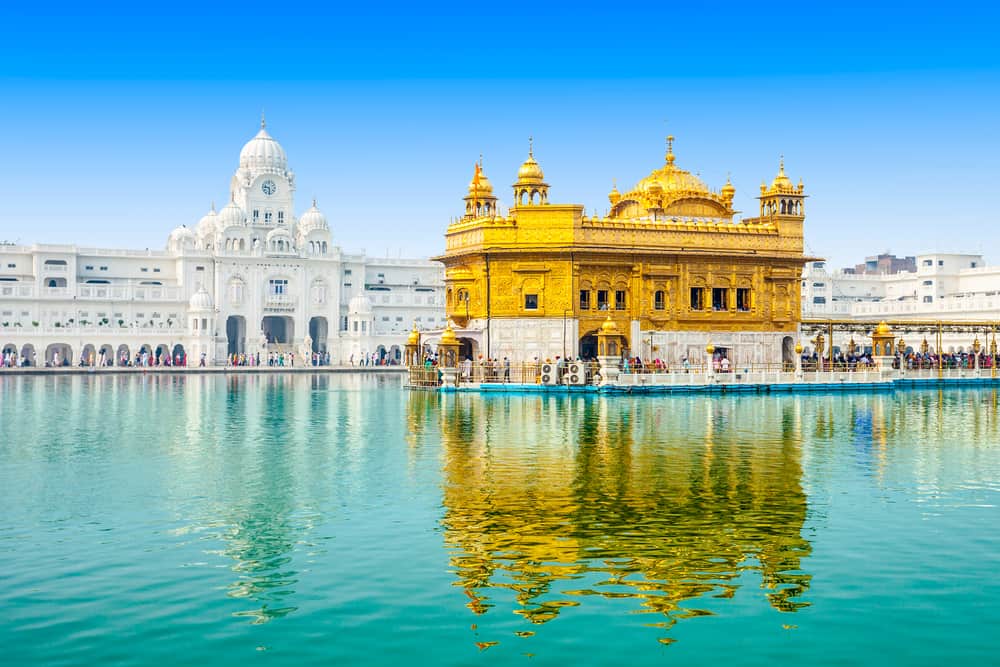
8.Golden Temple in Amritsar, Punjab – a beautiful and spiritual place and the main attraction in the city.

Golden Temple in Amritsar

Amritsar is a city close to India’s border with Pakistan that is the beating heart of Punjab as well as a principal place of worship for Sikhs. The Golden Temple (Harmandir Sahib) is considered the holiest shrine in Sikhism and draws people from all over the world to marvel and worship at it. Many tourists return to the temple after darkness falls to listen to the sounds of prayer emanating from it.

Everyone that visits the temple can sit down for a free meal, known as langar, which is served to 50,000 people by hundreds of volunteers every day. The food is made in vats due to the scale of it, and each plate is washed 5 times afterwards. In the early evening, don’t miss the Wagah-Attari border ceremony.

This is an elaborate ceremony performed by the Indian and Pakistani military to show comradeship between the nations.

9.Ladakh – a beautiful city located on the crossroads of the historic “Silk Route” .

Leh, Ladakh, India

To be in with a chance of seeing India’s snow leopards, you need to travel up to Leh, in the Northwest corner of the country. Whether you are looking for the elusive leopard or not, Ladakh is a jaw-dropping place to hike through its mountains and valleys.

The town of Leh has its own palace, as well as several Buddhist stupas and monasteries, making it a serene place to spend time at a high altitude. 

10. Konkan Coast, Maharashtra – a little-developed shoreline running south from Mumbai all the way to Goa.

Konkan Coast India

The Konkan Coast runs from the city of Mumbai all the way down to Goa, with many serene beaches and interesting attractions along the way. Some of the most beautiful beaches to visit are Alibaug, Kashid, Diveagar, Murud, Karde, and Ganpatipule.

Ganpatipule even has a Ganesh Temple located right on the beach. Winter is a great time to visit as there are dolphin sightings on a daily basis.