
IMPORTANCE OF SEX EDUCATION

INTRODUCTION:

Knowing about our own body is our right and parents have the responsibility to provide them the knowledge and awareness a young mind needs to know. Access to comprehensive sex education is a human right. The society can longer passively leave it to streets or the internet to brainwash the kids mind with incomplete knowledge or set sexual standard values.

MEANING:

Sex Education is a comprehensive set of knowledge and process of learning the emotional, physical and social aspects of sexuality. Sex education should include information about puberty, menstruation, condoms, contraceptives, sexual violence prevention, sexual orientation, gender identity and body image. Sex education will provide the importance of self well being and health to one and others.People have so many different conceptions about sex education.

Many people think teaching children sex education is equivalent to permitting them to engage in sexual intercourse which is not true. Engaging in sexual intercourse is a personal choice nevertheless one should always be clear about the consequences and be aware on how to prevent diseases and unintended pregnancy. Sex education should treat sexual development as a normal human development.Sex education will help kids to adopt healthy decisions. But this is not enough, Children are perplexed and demand honest answers. Comprehensive sex education should provide honest, age appropriate informations.
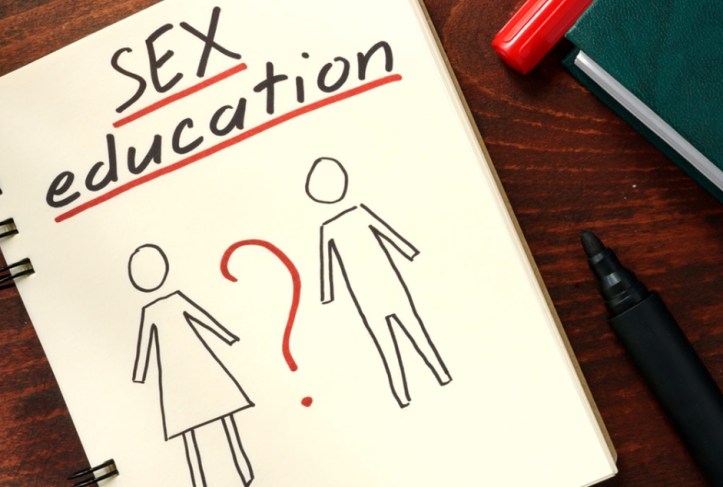
IMPORTANCE OF SEX EDUCATION:

  • It is important in consideration of health and well being and dignity of not only themselves but also others. Health related problems and teenage unintentional pregnancy leads to absenteeism and dropping out of studies.
  • Developing respectful social relationships and sexual relationships will enhance quality of life. Some people choose to be in a relationship while some don’t. Some people feel an attraction towards somebody who could also be of the same gender as theirs and that’s okay.
  • Sexual health can affects the academic development of a student. Reportedly a student who has not engaged in sexual activities tends to be better at studies.
  • Good sex education helps students differentiate between intentions and also knows about sexual violence.

ROLE OF PARENTS IN SEX EDUCATION:

Sex is already taught all over internet in a very poor manner. Children are curious about gathering information about sex much before parents can even imagine. Therefore, parents should take the initiative of education their children about sex from a younger age and educate them further with the growth in their minds and age. It also creates a secure relationship between the child and the parents. Parents need to ensure right information is given to their kids. Parents remaining silent about sex can lead to children trying to figure it out on their own from internet or from their peers.

Sex education helps the kids understand their bodies and feel optimistic about the body. Many parents prepare their daughter for menstrual periods and son for his nocturnal emission. Therefore, parents should be the first source of information to the kids. Boys should also be taught about periods as later on in life it helps to deal with their wife’s mood swings or pain.

RULES TO BE FOLLOWED:

Sex education works best when there is mutual trust and comfort and safety among themselves. Sex education should be taught according to the Childs age and development stage.

Here are some ground rules which are to be followed:

  • Asking questions indicates the want to gather knowledge
  • Respect for each other
  • Correct use of body terms and activities
  • It is possible for the teacher to not know all the answers
  • Gender equality should be taught
  • Students should be given right and primitive information
  • Students should be open to discuss any issue in the class related to sexuality
  • Listen to what the teacher has to say because it might be of use in the future
  • Always speak for yourself

CURRENT PERSPECTIVE:

Looking at the current situation of India, sex education has a far more distance to cover in terms of Indian society understanding and accepting its importance in every Childs life. Sex education is still not to be seen in many schools. Currently many organisations have taken the responsibility to personally approach the school for teaching girls about menstrual or personal hygiene. Boys are still left to collect information the streets and internet.

Many parents believe that with age their child will learn about it anyway therefore they don’t bother to talk about it at all. Some parents are shy to even pronounce the word in front of their kids. Parents refer to ignorance as assurance but now the times have changed, somehow children acquire inaccurate knowledge about sexuality. It is the responsibility of parents and teachers to make sure the kids are socially and sexually aware.

CONCLUSION:

Sex education should be made compulsory in school curriculum. Comprehensive sex education is important for young people to prepare themselves for any bodily changes and maintain their healthy and hygienic being. Sex education doesn’t promote having sex, which should be realised by parents. Knowing about your sexuality gives altogether a better and productive mindset and relationship in the future.


The Pros and Cons of Drones (UAVs)

What is Drone technology ? 

By definition, drones are unmanned aerial vehicles that are operated and navigated by a smartphone or a remote control.

As per records, the earliest version of drones was launched in 1849. Since then, drones have primarily been used for military purposes. Only a few years ago, the miniaturization of drones allowed different businesses to start utilizing drone technology.

Now, the drone industry is rapidly expanding. Drone technology is increasingly being used by organizations to manage their business and deliver services. In the near future drones may be used to deliver items and services. With this new technology, drones have their own set of benefits and drawbacks.

Pros of drone technology

  • Drones are used in a various sectors. They go to places that people find difficult to get.  For example, they can be used to quickly deliver medicines in hilly areas.
  • During natural disasters, drones can be used to deliver food. Not only can drones be used to distribute food, but they may also be used to locate and rescue those who are stuck. Drones can thereby save lives.
  • They can also be used in agriculture to disperse seeds, pollinate flowers, and identify crop diseases, and so on.
  • They can reduce human workload by performing monotonous chores such as delivering goods, sowing seeds, and so on.
  • Drones are extremely useful in substituting humans  for working in dangerous places such as mining.
  • Drones are being used in the military. By replacing humans, they can prevent or reduce the loss of life during wars.
  • They can also be used to provide internet access in remote areas.
  • Drones can replace various jobs, especially those that are monotonous. However, the good news is that drone technology is generating a lot more jobs in different sectors.
  • Drones are cost-effective. Many people who buy drones for personal use, for example, use them to take aerial shots. Taking aerial pictures used to be quite expensive before drones were affordable to the general people.

Cons of drone technology

  • Drones are vulnerable to cyber-attacks.
  • It’s possible that they’ll crash with flights.
  • Drones can be misused to stalk people, vandalize homes and  engage in a variety of other anti-social behaviour. There have been numerous instances where drones have posed a security threat.

Conclusion

Unmanned Aerial Vehicles (UAVs) have a wide range of applications. Drones have the potential to transform a variety of industries. Many industries, including agriculture, construction, mining, and filmmaking, are already using them.

“Language is not only a means of communication but also a tool by which we think”

Language is an essential part of human connection. Although different species have their different ways of communicating, humans are the only ones to have mastered language as a mode communication as it allows us to express share our ideas, feelings, and thoughts with others. So basically humans are made by the language. For most of the people language comes naturally whereas learning a language, say some foreign language means one has mastered the system of complex words, structure, and grammar to communicate efficiently with people of different cultures and societies. Language also plays an important role in the business field as without language one cannot share ideas and grow them into something better. Language also has the power to build or sometimes even destroy the societies.

As language can show our perspective, our understanding, the origin of the nation, our levels of education, and sometimes even our characters. Thus language acts as a mirror of us .Therefore for the communication to well both the parties that involves the sender and the receiver needs to have a proper command over their language.

Language is considered a basic tool of communication but it does not end here as it also acts a tool by which we think. Language indeed influences what we think. One such theory that supports this idea is the linguistic determinism.The concept of linguistic determinism is that language and its structures limit and determine human knowledge or thought, as well as thought processes such as categorization, memory, and perception. This term implies that people’s native languages will affect their thought process and way of thinking therefore people will have different thought processes based on their mother tongues. The differences in the conduction of how the different speakers of different origin such as Mandarin Chinese and English think and talk about time and this was included in one of the illustrations related to this phenomenon. In order to talk about time, the speaker of English origin tends to use terms that explains horizontal changes along the dimension. For example, the phrases used by him were “I’m running behind schedule” or “Don’t get ahead of yourself”. Meanwhile the speaker of Mandarin Chinese explained time in horizontal terms, the vertical arrangement of terms is not unusual to be used. According to the speaker, “up” might be used to describe past and “down” to describe future. It proves that variation in performance is interpreted by the variation language on tests planned with respect to the ordered relation between a mentioned event and an expression of time. The purpose of the test was to evaluate how rapidly one can acknowledge the said relation. Although Language does not completely establishes our thoughts as our thoughts are far too flexible, but habitual use of language can surely influence our habit of thought and action.

Apart from these, the relationship between communication and culture can be noticed from our daily ways of communication or interaction with individuals or a group of people. As the language we use must have been influenced by places we live and the society in which we are born and brought up in which has it own unique culture and identity. Therefore culture in regarded to way of life lived by human beings. Humans learn, think, feel, believe, and even look for whats appropriate according to their culture. Apart from Language, friendships, social and economic activity, politics, and even technologies are based on the various culturals. As for people who speak English, Hindi, Bengali, Gujarati, Telugu etc, this is all because they have been raised in a culture that contains these characteristics. Their actions are a response to their cultural functions. Therefore culture and communication cannot be disassociated as it not only gives an idea about the persons who are having the communication and the topic of communication but also helps to encode the meaning of the messages.

Still there a lot of debate about language being a part of culture and language and culture being different, but they have a very close relationship, so it cannot be separated as most of the things in the culture are reflected in the language as well. If there is diversity in culture, there are also various communication practices. Even the background of a person can also be determined by the language he speaks or the way he speaks. Thus, it can be said that language used is influenced by the culture and vice versa.

66th Convocation of IIT Kharagpur

 Prime Minister Shri Narendra Modi addressed the 66th Convocation of IIT Kharagpur today as Chief Guest through a video conference. Union Education Minister Shri Ramesh Pokhriyal ‘Nishank’ and Union Minister of State for Education Shri Sanjay Dhotre were present on the occasion as Guests of Honour.

The Prime Minister said this day is not only important for the parents and teachers of the IIT but also for the New India as the students represent the entire country. He urged the students passing out, as they embark a new journey of life, to work towards creating startups and innovating things that can change the lives of crores of people in the country. He said the degree they won today represents the aspiration of millions of people, which they have to fulfill.

The Prime Minister said the need of the day is to work while anticipating the needs of the future, to make innovations for tomorrow. He said an engineer has the capability to see things in more detail and this understanding forms the basis of new discoveries and new breakthroughs in future. He urged the students to find solutions which can improve and save the lives of millions and can save the country’s resources.

Shri Narendra Modi asked the students to adopt the mantra of Self 3 to overcome their self doubts and obstacles in the future. He said Self 3 is Self-awareness, Self-confidence and Selflessness. He advised the students to recognize their potential and move forward, move ahead with full confidence, move ahead with selflessness.

The Prime Minister said that there is no place for hastiness in the field of science and technology. He added you may not get complete success in the innovation you are working on. But that failure of yours will also be considered a success, because you will learn something from that as well. He said in the 21st century the IITs need to be taken to the next level from Indian Institutes of Technology to Institutes of Indigenous Technologies to meet the changing demands and aspirations of New India.

Shri Modi said at a time when the world is struggling with the challenges of climate change, India has come up with the idea of International Solar Alliance (ISA) and embodied it. He said today India is one of those countries where the cost of solar power is very low per unit. But there are still many challenges to deliver solar power from door to door. He added India needs technology that minimizes damage to the environment, is durable and user friendly.

The Prime Minister said Disaster management is a subject which the world has looked up to India. During major disasters, along with life, infrastructure is the most affected. He added realizing this two years ago, India took the initiative of establishing Coalition for Disaster Resilient Infrastructure in the United Nations,

The Prime Minister emphasized the need for significant innovation for Industry 4.0. He lauded the efforts of IIT Kharagpur to transform academic research related to AI at industrial level, Internet of things and modern construction technology. He said IIT Kharagpur’s software solutions were also useful in the fight against Corona. He urged the institute to work fast on futuristic solutions in Health Technology. He said a huge market has emerged for personal healthcare equipment. He said the market for Health and Fitness related Equipments is also increasing. He said technology has to be developed to provide for Personal Healthcare Equipments in India which are affordable and accurate.

The Prime Minister said after Corona, India has emerged as a major global player in the field of Science, Technology, Research and Innovation. He said with that inspiration, there has been a major increase in the budget for science and research. He said a few days ago, the government has freed Map and Geospatial Data from control. This step will give a lot of strength to the Tech Startup Ecosystem, intensify the campaign for self-reliant India and also give new freedom to young start-ups and innovators of the country.

The Prime Minister lauded the efforts of IIT Kharagpur on the implementation of the new National Education Policy. He praised the institute for the way they were exploring knowledge and science as the strength of our future innovation. He urged the institute to compile 75 major innovations made by the institute to coincide with the 75th year of India’s independence and make them reach the country and the world. He said these inspirations would give a new boost to the country and inspire confidence.

Union Education Minister Shri Ramesh Pokhriyal ‘Nishank’ spoke about the students aiming to become entrepreneurs and job-creators instead of job-seekers. He emphasized how the National Technology Forum will improve research infrastructure in the country. He urged students to work on realising the vision of self-reliant India.

Union Minister of State for Education Shri Sanjay Dhotre highlighted the importance of the fields like agriculture, energy, water for further R&D. He called ideation, innovation, incubation and development of technological solutions in technology sectors like Telecom, auto-tech, solar cells, defence to strengthen the goal of Atmanirbhar Bharat.

2815 students were awarded degrees today of whom 75 students were invited to receive the gold and silver medals conferred by the Institute. In addition, several dignitaries were present to receive DSc (Honoris Causa), Life Fellow and Distinguished Alumnus Awards.

The Director Prof. V K Tewari, while presenting the report took pride in the recent innovations such as COVIRAP and telemedicine application which are bringing hope to the people of the country. He pledged to work more on product-development-oriented projects to support the cause of Atmanirbhar Bharat. He also talked about setting up more awards for faculty and staff for them to pursue excellence.  

*****

DEPRESSION

Depression exists on a range of severity ranging from relatively mind to transient states of low mood to severe, long term symptoms that have a major impact on a persons quality of life. When a persons symptoms have reached the chronic end of the spectrum and require professional treatment, its typically referred to as clinical depression.

CAUSES OF DEPRESSION:

The causes of depression are not completely understood, but its believed that there are several key factors, including genetics and environment, that make a person more likely to become depressed.

Certain factors which make it more likely are :

  • A family history of depression
  • Experiencing a major traumatic experience
  • Financial troubles

CO-OCCURING CONDITIONS:

There are some conditions which quite often occur to people suffering from depression. The commonly occurring conditions in people are:

  • Anxiety Disorders
  • Obsessive Compulsive Disorder (OCD)
  • Post Traumatic Stress Disorder(PTSD)
  • Phobias
  • Eating Disorders
  • Alcohol and drug use
  • Sleep disorders
  • Headaches
  • Chronic Pain

SYMPTOMS:

People Experience depression in different ways. Some people only have a few symptoms while others have many. Some symptoms may get better overnight while others may get worse. For each type of Depression there are different symptoms or features that are common in those who experience it.

MAJOR DEPRESSION:

Also known as major depressive disorder or unipolar depression this form is most people think of when they hear “depression”. Major depression is typically characterised by the following symptoms:

  • Sadness, feelings of emptiness
  • Loss of enjoyment of hobbies, work, other activities.
  • Appetite changes, weight loss or gain
  • Trouble sleeping
  • Tiredness, fatigue, lack of energy
  • Feelings of worthlessness or guilt
  • Poor decision making skills
  • Planning or attempting suicide

PSYCHOTIC DEPRESSION:

People who have psychotic depression are considered in the spectrum of unipolar depression. People who have this kind of depression usually experience hallucinations or delusions may also have a form of depression. Psychotic depression can manifest with hallucinations that are focused on death and gravely ill.

BIPOLAR DISORDER:

People of bipolar depression tend to alternate between periods of depression and periods of greatly elevated mood called mania.In the depressive phase, symptoms can be very similar to major depression. During the manic phase, symptoms at the opposite end of the spectrum are more likely such as :

  • Increased energy
  • Sleeplessness
  • Irritability
  • Rapid Speech
  • Hyper-sexual Behaviour
  • Racing thoughts
  • Impulsivity
  • Poor judgment

POSTPARTUM DEPRESSION:

Postpartum depression is depression that occurs after a person gives birth and can persist well into the first year postpartum. While it is common and treatable it also needs to be diagnosed earlier.

SITUATIONAL DEPRESSION:

Many people will experience a period of depression in their lifetime in response to a specific event. Unlike more persistent forms of depression, situational depression can usually be treated and improves in response to positive changes in that persons situation

DEPRESSION AMONG KIDS AND TEENS:

t was believed that kids also can be having depression but turns out that it was wrong. Depression can take place in teens or kids but is not as similar as in adults. Symptoms of depression among school kids could be due to school activities, studies or friendships. As teens and adults children who are experiencing depression may also have trouble sleeping, lose in their appetite or have unexplained headaches and stomach-aches

COPING MECHANISMS:

Medications and therapy can be valuable components of depression treatment but each individual person with depression will need to find their own ways of coping with the condition.If you have depression then there are a set of ways which you can cope up with your mental health like the use of physical activity which states that a little bit of physical activity everyday enhances your mood and makes you feel better in numerable ways. Having hobbies and also being creative in your own favourite way will also help you get through this as it helps you to keep yourself engaged instead of your mind wandering about onto less important subjects.

Staying connected to yourself is also very important. Since in depression it becomes very difficult to take care of your physical and mental health’s ways like grocery shopping, cleaning, cooking or anything else which you find therapeutic. Therefore, its very important for each and every individual to find their own point of comfort where its easier for them to deal with depression. It shouldn’t be neglected.