HEALTH AND LIFESTYLE

A BALANCED LIFESTYLE IS IMPORTANT:

Part of a comprehensive stress relief plan involves finding ways to calm down quickly so you can more effectively manage stress as it comes while avoiding the negative effects of chronic stress. Another important way to relieve stress is to maintain healthy lifestyle habits.

Learning to live a healthy lifestyle often brings additional benefits too, such as an endorphin rush, a release of frustration, or added longevity. Many of the healthy lifestyle habits discussed here can also help you to become less reactive to stress, in the long run, providing protection against stress you haven’t even experienced yet

While maintaining healthy habits is a bit more challenging than trying a stress relief method only once, the benefits you receive from maintaining a healthy lifestyle are more than worth the effort it takes to maintain it. The increases in health and wellness that you experience, as well as the reduction in stress, will make you wish you’d made these changes sooner, and can be wonderful sources of continued motivation.

CHANGES CAN BE INTIMIDATING: 

Many people feel intimidated or frustrated with making healthy lifestyle changes for a few reasons, including:

  • Not knowing where to start: There are so many changes that can benefit health and wellness that it can be difficult to know how to begin.
  • Doing too much at once: People often try to make too many changes at once, then find it too difficult (or let perfectionism sabotage their efforts) and give up the effort.
  • Stress: Let’s face it—change is difficult, especially when you’re stressed. Sometimes lifestyle stress takes over and diminishes your momentum.

Given that living a healthy lifestyle can help with stress relief, and that making healthy lifestyle changes can be challenging, the following resources can help you with both choosing new goals for healthy living and with making these new goals a reality by adopting new healthy habits into your lifestyle.

HEALTHY LIFESTYLE CHOICES: 

Here are some changes you can make to lead a healthier, less stressed lifestyle:

  • Healthy eating: One of the most popular changes people like to make to live a healthy lifestyle is to eat differently. Because of the negative health consequences of obesity, the influence fitness has on our self-esteem, and the effects on nutrition  on our stress levels and longevity, switching to a healthier diet brings some of the greatest benefits for wellness.
  • Regular exercise: Getting regular exercise is another wonderful way to keep your weight in check, manage overall stress levels, and stay connected with others. Exercise can also help keep many health conditions at bay and is well worth the effort. The trick is to start gradually and work your way up.
  • Quality sleep: People often underestimate the importance of getting enough sleep, and getting the right type. However, lack of adequate sleep has many negative consequences—they’re subtle but significant. Getting enough sleep isn’t one of the most popular changes that people resolve to make, but it should be. Because stress can rob you of sleep, and because many of the techniques that promote sleep can also reduce stress , it’s a very good idea to learn more about how stress affects sleep and how to get quality sleep when you’re stressed.

OTHER BENEFITS:

The great thing about moving is that just a few minutes a day can have other lasting benefits, many of which you may not even be aware of. Just some of the benefits include:

  • Enhances self esteem
  • Helps maintain flexibility as you age
  • Improves joint stability
  • Improves memory in elderly people
  • Improves mood and reduce symptoms of anxiety and depression
  • Increases and improves range of motion
  • Maintains bone mass
  • Prevents osteoporosis and fractures
  • Reduces stress
  • Reduces the risk of heart disease, stroke, and diabetes

HOW TO MAINTAIN A HEALTHY DIET :

Eating a healthy diet is another part of a healthy lifestyle. Not only can a nutritious diet help with weight management , but it can also improve your health and quality of life as you get older.

You already know about the food groups and the fact that it is recommended that you eat more fruits and vegetables and fewer processed foods. You probably have a list of things you know you should do for a healthier diet but, again, making too many changes at once can backfire. Going on a restrictive diet may make you crave the very foods you’re trying to avoid.​

Another approach is to look for ways to make smaller changes each day.Just a few ideas for changing how you eat include:

  • Cut back on sugary beverages. It’s easy to consume excess sugar and calories in the beverages that you drink. Sugary sodas, sweetened teas, juice drinks, and high-calorie coffee drinks can easily eat up your daily recommended allowance of added sugars. Consider drinking plain water or water flavored with fresh fruit or herbs. It’s a great way to stay hydrated and still get a burst of flavor.
  • Eat low-fat or fat-free dairy. Switching to skim milk or fat-free yogurt is another simple way to eat fewer calories without having to change too much in your diet.
  • Eat more fruits:Add it to your cereal, salads, dinners, or make it a dessert. The fruit is also a great snack after work or school to keep you going for dinner.
  • Make some substitutions. Look through your cabinets or fridge and pick three foods you eat every day. Write down the nutritional content and, the next time you’re at the grocery store find lower-calorie substitutes for just those three items.
  • Sneak in more veggies. Add them wherever you can—a tomato on your sandwich, peppers on your pizza, or extra veggies in your pasta sauce. Keep pre-cut, canned, or frozen veggies ready for quick snacks.
  • Try a healthy salad dressing: If you eat full-fat dressing, switch to something lighter and you’ll automatically eat fewer calories. You can also put the dressing on the side and dip, or even try making your own dressing.

CONCLUSION:

Creating a healthy lifestyle doesn’t have to mean drastic changes. You may adapt to change better when it doesn’t require you to overhaul your entire life. Just pick one thing and work on that one thing every day, letting the rest of your life and habits stay the same. You may be surprised that those small changes really can make a difference.
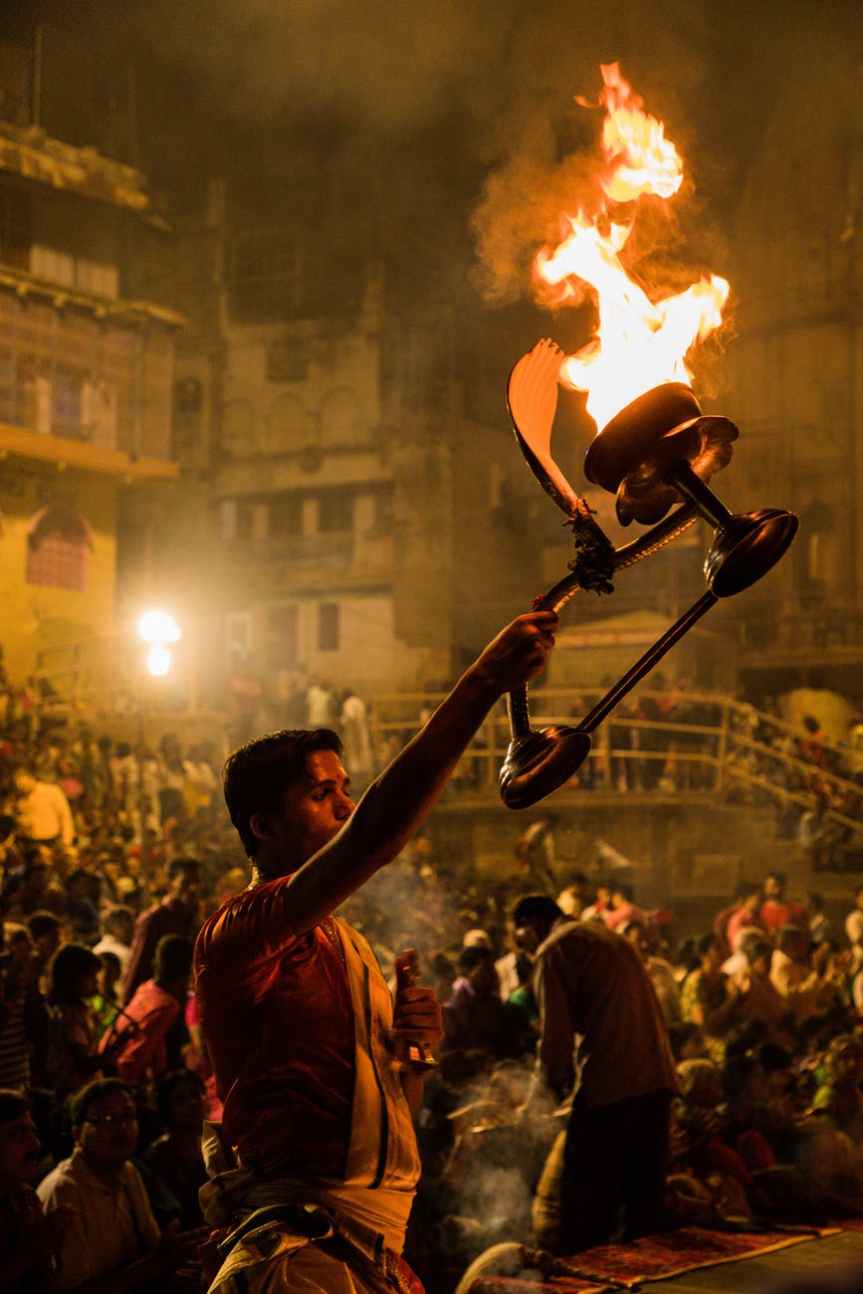
KASHI VISHWANATH CORRIDOR

Kashi Vishwanath Temple is regarded as one of the oldest and most famous temple situated in India. The temple is believed to be dedicated to Lord Shiva and is one of the jyotirlingas of Lord Shiva. It is located on the west of the bank of sacred river Ganga in Varanasi, Uttar Pradesh.

In India, the Phase 1 of project of Kashi Vishwanath Corridor was inaugurated by the Prime Minister Shri Narendra Modi recently on 12 December 2021. The stone of foundation was laid on March 8, 2019. 23 other buildings are also inaugurated as a part of Kashi Corridor project. These buildings includes Vedic Kendra, facilitation centre for tourists, food court, city museums, gallery for viewing etc. It is the first huge renovation of the Kashi Vishwanath Temple as well as it’s surroundings, post the makeover by the Queen of Maratha. While the transformation of the Kashi Corridor, few other 40 temples of the ancient era were restored and rediscovered without distorting the original structure.

The corridor is 400 metre long. The Ghats along the holy river Ganga and the Temple of Kashi Vishwanath are connected by the project providing an easily usable pathway of open space for the pilgrims of Kashi Shrine to take sacred dip in the Ganga and also offering the sacred water at the temple. Mr. Bimal Patel was the architect of the following project. The most prevalent temple architecture in Northern India, the Nagara style was followed to construct the temple. The Jyotirlingas which is worshipped is a stone of dark brown colour and is enshrined in the Sanctum which is placed on a silver platform. The main temple is an open space area with buildings around it, basically it is surrounded by the other God’s shrines. Smaller shrines in series are consisted in the complex of the temple. To the north of the temple is a small well called the wisdom well ( Jnana Vapi). There is Congregation Hall (Sabha Griha) leading to the inner Sanctum Sanctorum ( Garbha Griha).

The tourism in Varanasi is believed to be boosted by the project of Kashi Corridor by furnishing the tourists, travelers and pilgrims all the essential facilities such as proper wide roads, clean water for drinking etc. Post inauguration, Varanasi has become one of the most captivating place for tourists in India. A great number of tourists would visit Varanasi in near future as it is now amongst the most admired destination of religion in India. An easy access for the old age and disable people is provided with the facilities of escalators, ramps and other modern provisions. It would also be a boost to local economy and the heritage will also be rightly preserved.

Before by Anna Todd

I felt obligated to read this because I’d already suffered through the rest of the series, and I couldn’t just.. not finish it. But my god. This entire series is so, so awful. And I’m a sucker for crappy entertainment, so that’s saying a lot.

Worst characters ever. Hardin is a sh*thead, through and through. The fact that he eventually becomes capable of developing feelings for another human does not negate his sh*thead status, especially since he only becomes capable of those feelings because he can’t fathom not being able to sleep with said human whenever he so wishes (as well as making sure he’s the only person who will ever get to see or touch pretty much any part of her for the rest of eternity, until the end of time, etc, etc). This book in particular shows what a sh*thead he truly is. Tessa is unbelievably and annoyingly naive and whiny. I was tempted to reread the first couple of books so I had more to say about what a crappy character she is for about five minutes before I realized it’s really not worth it. So, she sucks too, that’s it.

Worst attempt at creating a “relationship” with two people who have no connection other than an overwhelming love for each other’s naughty bits. They know close to nothing about each other before they’re mentally professing their undying love for the other. Remember, these are college aged people, not a couple of twelve year olds navigating their way through their first crush. Apparently, neither Hardin nor Tessa were ever taught the difference between lust and love. HUGE difference.

Full of unnecessary, over the top drama, simply for the sake of drama. Basically, the equivalent of a soap opera written by a hormonal teenager. The drama is exhausting; I can’t imagine waking up every day knowing that I’ll be in hysterics at least once, most likely multiple times, due to the unstable romantic relationship that I refuse to walk away from in order to save some sh*thead from thinking that he’s a sh*thead, despite the multiple reasons he’s given me to do just that, in addition to all of the other strained relationships in my life (family/frenemies).

Not even going to touch on the whole abusive relationship business that I see being complained about in a lot of other reviews of this series; that’s actually somehow less disappointing/annoying than the fact that EVERY SINGLE LITTLE THING is worthy of either walking away dramatically and vowing to never speak to the other person again, or confessing how one simply can’t survive without the other (dramatically, of course). Both scenarios are inevitably followed by sex, because that is the only way these two know how to “connect” to one another. Super possessive, jealous, emotionally closed off boyfriend mad at you for saying hi to a male coworker? Have sex, everything will be dandy! Until 10 pages later, when he gets mad at you for wearing the wrong socks. Is he mad at someone else for something totally unrelated to you or your relationship with him? Well, sex will fix that too! And if you’re angry at him for something silly, like lying or invading your privacy, just let him fondle you a bit and you’ll feel soooo much better. Moral of the story: Sex fixes everything!!!

To be fair, this last book was the best, mostly because it was the shortest and skipped over quite a bit of the drama included in the first four books.

After Ever Happy by Anna Todd

The fourth book in the ‘After’ series, ‘After Ever Happy’ is the first book in the series that had a different “feel” to it. Don’t get me wrong, there is plenty of dramatic shenanigans between Tessa and Hardin. However, this time around they aren’t the sole focus of the book. The result is a much more somber vibe.

After everything that went down at the end of the third book, Tessa is left markedly changed from the girl she was before. Those tragic events forced her to take a long, hard look at her relationship with Hardin. She finally faces the facts — they’re toxic.

Despite her love for Hardin, she knows that she needs to get away from him. Like the clichéd saying, “sometimes love isn’t enough”. Nothing could be more true for this dysfunctional couple at that point in time.

Even though Hardin comes to his senses and does his best to get Tessa to forgive him, it won’t come easy this time around. Tessa has made up her mind and it will take years for Hardin to prove himself to her. It was long overdue.

With Tessa and Hardin living separate lives for most of this book, the story definitely had a different feel to it than earlier books. As much as it was what the logical me said needed to happen, the illogical part of me couldn’t help but feel like this new direction wasn’t as captivating. After all, this series’ entire guilty pleasure appeal was based on the very same things that made this couple such a train wreck — fighting, angst, jealousy, breaking up and making up. With those elements largely missing from this book, I didn’t feel the same pull to the story.

That being said, I think that the author had used up all of the major angst-ridden story elements that readers could handle. Although the loss of this drama resulted in a slightly less engaging story for me, I don’t think I could’ve handled another book full of Tessa and Hardin’s back and forth fighting. This series has left me emotionally exhausted and I just don’t have it in me.

Luckily, Tessa and Hardin do get the HEA eventually. It was long overdue and I was glad to see it. Finally, they have started to mature and deal with some of the issues in their relationship. As much as I loved to hate this couple, I have to admit that if there was ever a couple that stuck it out, it was them. Talk about hanging in there for better or worse.

Overall, this was still a great read. I have been completely hooked on Tessa and Hardin’s story right from the start. It was one hell of an emotional rollercoaster ride. I feel content, but emotionally drained. I know that there are two remaining books in this series, but I’m stopping with this one for now. I don’t want to upset the balance. I’m feeling content with how this book ended and I’m not sure I could handle it right now if something disrupted that peace.

After We Collided by Anna Todd

After finishing the first book in the ‘After’ series, I immediately jumped into this second book. There was no way that I was going to quit this series with the way things ended at the end of ‘After’–absolutely, no way! I had to know how things were going to play out for this disastrous couple. They are like crack! It might kill me. I know it’s really not healthy…but I just can’t seem to pull myself away from it!

If I thought that Hardin and Tessa were going to grow up and start treating each other better, I would’ve been sorely disappointed. These two are every bit as toxic as they were the first time around. The back and forth, break-up and make-up, abusive cycle continues, strong as ever. Of course, I’m such a glutton for punishment that I had to have a front row seat for all of it!

Picking up right where the first book ended, Tessa does her best to try and piece her life back together. She has been betrayed by everyone that she thought were her friends — most of all, Hardin. Unfortunately, the manipulative jackass succeeded in tying her to him when he tricked her into moving into an apartment with him and away from the dorms. This will make distancing herself from him more difficult than she had hoped.

While Tessa makes a weak attempt at moving on, Hardin sets out to prove that his feelings for her are genuine. Of course, every time he starts to make any progress in that regard he does something that sabotages all of his efforts. They truly are their own worst enemies.

For what it’s worth, Hardin does seem to show some actual emotions in this book. Mainly, his regret and heartache shines through. It’s hard to feel sorry for him though, since all of his pain is entirely the result of his own cruel actions. To make matters worse, every time he starts to gain a little “nice guy” stock, he goes and does something abhorrent again, reminding me of what a despicable asshat he is. Some big revelations about his past only further prove that he is not to be trusted. He really is deplorable…but I love to hate him!

I also found myself feeling a little more irritated with Tessa’s weakness this time around. Can you say “doormat”? How many times is this girl going to fall for his crap? She also played the same childish games over and over, using other guys to make Hardin jealous, only to play the victim when she got the reaction she was looking for all along.

I felt sorry for Tessa at first. By the end of this book, I was marveling at the fact that she hadn’t been weeded out as part of the process of natural selection. Surely, this girl is too stupid to live!

That being said, I still can’t pull myself away from this angsty, infuriating story. It is like watching a trashy talk show or soap opera. It’s unrealistic. The relationships are toxic. It probably kills off brain cells. However, I can’t get enough of it. It is my latest guilty pleasure. I’m kind of ashamed to admit it, but I’m completely hooked on this series.

Like the first book, ‘After We Collided’ ends with a huge cliffhanger. Anna Todd certainly knows how to pull me back in. At this point, I think my relationship with this series is much like the relationship between Hardin and Tessa. I should probably cut all ties and get out while I can, but I just can’t seem to resist the pull. I’m on to the third book in this addictive, dysfunctional romance. 

After by Anna Todd

I know I’m late to the After party. But hey, better late than never! I started After by Anna Todd in the evening, then stayed up all night because I had to finish it. And then, I begged my teen sister for the second book. She kindly agreed to give the book to me. I hope she doesn’t change her mind just to torture me. We’ll have to see how this unravels. 

Synopsis:

Tessa is just starting college, and she’s got everything planned. In one year, her boyfriend Noah will join her as well. But then she meets her wild roommate Steph as well as the incredibly rude guy with a British accent, Hardin. And everything changes!

My Thoughts:

Tessa is a good girl and she doesn’t do parties and short dresses. And she goes to a party with Steph and something changes. She can’t look away. Harding is doing something to her and she can barely resist. But she has a boyfriend. And also, everything she has a good moment with Hardin, two bad ones follow. Hardin is toxic, and Tessa hurts him in return as well. Also, their communication has to improve. Not the mention how the whole boyfriend situation was handled. 

Honestly, I thought my opinions would be conflicting. But they’re not. I really enjoyed the book and I’m looking forward to the second one. Also, I know Hardin is based on Harry Styles, but while I was reading the book, he didn’t once cross my mind. I also often have fantasies about celebrities, I just don’t happen to write them. Honestly, it’s not a big deal. 

My only worry was that teens might see Hardin’s toxic side and think that’s how a girl should be treated. But that would mean underestimating the girls out there. Even in the book, Tessa was aware Hardin’s behaviour was not okay, which is why she reacted the way she did. The facts she would return only meant that she had feelings for him. Their relationship has more issues than good parts, but in all honesty, when I think about my high school days, it was that way for me too. I didn’t handle things well. Sometimes I didn’t communicate well. I trusted people I shouldn’t have trusted. And that’s the beauty of this book. 

After by Anna Todd is the perfect teenage book.

It reminded me of my days of high school and uni. Attending parties I shouldn’t have and trusting people that didn’t deserve my trust. Handling relationships badly and having terrible ability to communicate. And this book brought all the excitement back and more. Fond and not so fond memories that reminded me that I have lived at the fullest. 

In the next book, I do hope that their relationship improves. I hope Hardin grows up and Tessa communicates to him, instead of hurting him back. Also, I hope Tessa fixes her relationship with her mother as well, even though her mother needs to work on her own biases as well. I also hope that the dramas continue as well – I really love them. 

Attila : Scourge of God by William Napier

Rome C AD408 is laid out to us as an Empire on the edge of collapse, it’s allies the Huns alongside Roman forces under the command of General Stilicho defeat the barbarian hordes & Rome is saved (for now).

The players are thus introduced, one being a hostage, that of Attila as a boy in Rome alongside other barbarian leaders sons, his grandfather King Uldin (of the Huns) having just fought alongside the Romans. General Stilicho & his wife Serena are a coupla who feature in Attila’s life, somewhat surrogate parents to him in an otherwise hostile environment. The Emperor & Princess Galla are front & centre in Attila’s world too along with various others namely a servant & a soldier, all who have some way influenced a young Attila as we read of his early life at the hands of Rome. Other hostages, namely the Vandal Princes Gesaric & Beric become his protagonists, they appearing in a few scenes.

So what else happens…..?

The sack of Rome by Alaric of the Goths is covered in the period but only through the eyes of a travelling Roman soldier (lieutenant which is a rank I don’t recognise as being Roman tbh) & not really done in any detail… its jus mentioned which is an omission I think.

The character of Attila is well played & I warmed to him instantly, strong, wilful & mindful of his roots whilst in the belly of Rome, certainly not seduced by its trappings as other hostages appear to be. Always distrustful, listening & gathering intelligence all the while, making plans to escape, its all believable as part of the story. Its the only part of the story, at it’s ending, that I truly enjoyed.

Some parts contain mystical nonsense which don’t really fit in with the story but perhaps fit with the superstitious nature of the period, some are a little fantastical though. A Druid, shaman & witch all make appearances & have to say I mostly cringed when I read those excerpts, expecting unicorns or cave trolls to pop outta the mist at any moment…….

The part about the Huns was quite interesting & probably the only part where you felt immersed in the period & the people. The Romans could have been from any era especially the soldiering element.

As you can derive from the last statement I did expect a little more historical detail. As for its substance, in truth I found it a similar read to the Simon Scarrow Macro & Cato series (even the Centurion in it is called Marco!), not great depth or intrigue but good fun nevertheless…… not a read that takes itself to seriously. The author even nicks a coupla immortal lines from the film Zulu during a battle scene!

Quite a contrast throughout the book, sometimes the historical detail is there & the context is sound at others its a boys own adventure whilst in patches it’s puerile crassness. Bit of a mash-up I’m trying to say but for the most part it did hold my attention & i would give it 3.25 stars for an enjoyable enough romp, although not the historical content I had expected or was looking for, rounded down to a 3.

Slum tourism in developing country

What comes to your head when you listen to the word developing country? How do you imagine developing countries? Some say developing countries are the countries lacking in capital, resources, infrastructure, revenues, and many more things. So with this, the main target of developing countries becomes to grow in the capital, money. Now here comes the slums that exist in abundance in these developing countries. What do you think can slum tourism help the people of slums and these developing countries in any way? let’s discuss, firstly we need to understand that most people consider slum people completely helpless and they don’t even prefer going there for tourism and instead they prefer going in the urban areas. Sometimes people from foreign countries do want to visit these slums and the government of developing countries must encourage slum tourism. The benefit that will come to these slum people when slum tourism will be encouraged will be that they will get the opportunity to grow economically, when foreigners will purchase something from the residents, then their sell will surely increase. Slum people will also be able to show their talents to others and there will be chances for more job creation. And when there will be job creation, the country will automatically develop as in the sense people will have a better lifestyle and a developing country will move towards being the developed one. Slum tourism will help the people change their perception towards the people living over there. These slums are called slums because there is a lack of connectivity, the horizon of vision of people is very much limited for these slum people. People don’t even bother to show some visit or any kind of awareness for these people. But when slum tourism will be there, people will come to know about the problems these people face and will try to connect to these people. When this connectivity will increase then definitely government will start focusing more on these areas and will pay more heed to the developmental tasks that should be performed for the benefit of these people. We all are very well aware that westernization has completely taken place in the urban area and robbed the national culture. But when tourists want to see the national culture then they will only be able to see that in the slum areas because their people live simply and are not at all aware of the determination and perform all the customs and rituals. So, we just can’t remove the slums but at least we can try to make the slum people grow and so that they can also try to put some effort into making their country a developed one. We can simple just not stop slum tourism just because we want to hide our poor sides of the country from the world instead we should make others as well as socially aware and give them a chance to grow, chance to improve because hiding the flaws won’t let us get rid of them but working on them will help us to get them slowly fade away.

CRICKET

Early cricket(pre 1799)

There is a consensus of expert opinion that cricket may have been invented during Saxon or Norman times by children living in the Weald, an area of dense woodlands and clearings in south-east England. The first reference to cricket being played as an adult sport was in 1611, and in the same year, a dictionary defined cricket as a boys’ game. There is also the thought that cricket may have derived from bowls, by the intervention of a batsman trying to stop the ball from reaching its target by hitting it away.

Village cricket had developed by the middle of the 17th century and the first English “county teams” were formed in the second half of the century, as “local experts” from village cricket were employed as the earliest professionals. The first known game in which the teams use county names is in 1709.

In the first half of the 18th Century cricket established itself as a leading sport in London and the south-eastern counties of England. Its spread was limited by the constraints of travel, but it was slowly gaining popularity in other parts of England and Women’s Cricket dates back to the 1745, when the first known match was played in Surrey.

In 1744, the first Laws of Cricket were written and subsequently amended in 1774, when innovations such as lbw, a 3rd stump, – the middle stump and a maximum bat width were added. The codes were drawn up by the “Star and Garter Club” whose members ultimately founded the famous Marylebone Cricket Club at Lord’s in 1787. MCC immediately became the custodian of the Laws and has made revisions ever since then to the current day.

Rolling the ball along the ground was superseded sometime after 1760 when bowlers began to pitch the ball and in response to that innovation the straight bat replaced the old “hockey-stick” style of bat. The Hambledon Club in Hampshire was the focal point of the game for about thirty years until the formation of MCC and the opening of Lord’s Cricket Ground in 1787.

Cricket was introduced to North America via the English colonies as early as the 17th century, and in the 18th century it arrived in other parts of the globe. It was introduced to the West Indies by colonists and to India by British East India Company mariners. It arrived in Australia almost as soon as colonisation began in 1788 and the sport reached New Zealand and South Africa in the early years of the 19th century.

19th century cricket

The growth of cricket in the mid and late 19th century was assisted by the development of the railway network. For the first time, teams from a long distance apart could play one other without a prohibitively time-consuming journey. Spectators could travel longer distances to matches, increasing the size of crowds. Army units around the Empire had time on their hands, and encouraged the locals so they could have some entertaining competition. Most of the Empire embraced cricket, with the exception of Canada.[21]

In 1864, another bowling revolution resulted in the legalisation of overarm and in the same year Wisden Cricketers’ Almanack was first published. W. G. Grace began his long and influential career at this time, his feats doing much to increase cricket’s popularity. He introduced technical innovations which revolutionised the game, particularly in batting.

India at the Olympics

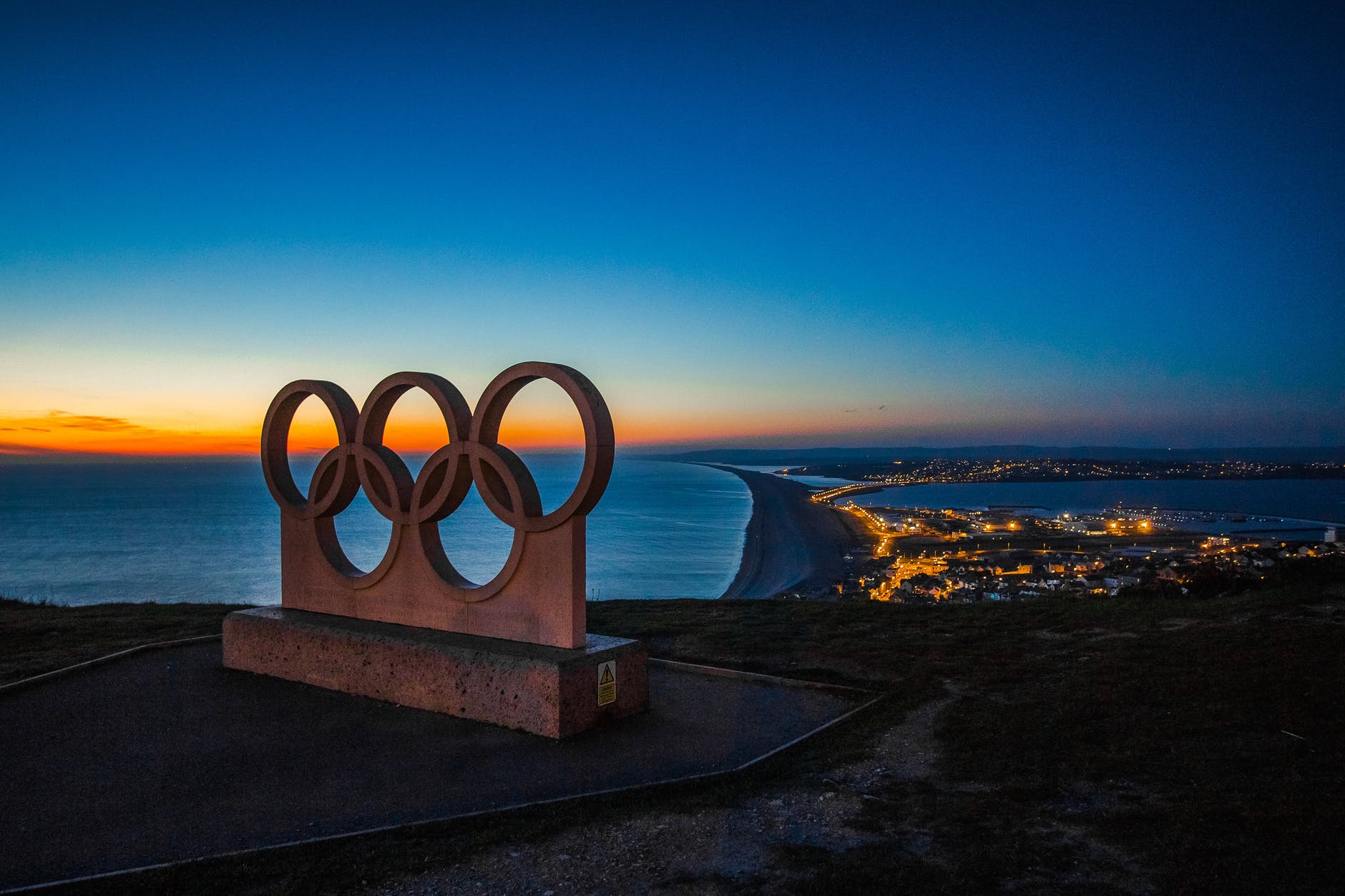
Photo by Pixabay on Pexels.com

As we all know Tokyo Olympics 2021 are scheduled from 23rd July to 8th of august, and we have a lot of expectations from our players. Olympic is a international multi -sport event that is scheduled every 4 years. and so far India has won just 28 medals since they first participated in this global event.

India’s first appearance in Olympics was in 1900 Olympics ,when India sent an athlete (Norman Pritchard), but a whole contingent was sent in 1920 Olympics when India’s athletes competed in every sport. since then ,India has been part of every Olympics .the number of athletes increased every year from sending 5 athletes to sending 117 athletes in 2016. India has come a long way.

India’s journey in Olympics

India’s success in Olympics was majorly contributed by hockey . India won 11 medals in hockey. that was the golden period of India in Hockey. from 1928 to 1980 India won 8 gold medals in hockey. In 2000 ,karnam malleswari won bronze medal and became first Indian woman to win medal in Olympics. For gold medal after 1980(hockey), India won their next gold medal in 2008 Beijing Olympics where Abhinav Bindra won gold in men 10- M air rifle event. and Vijender Singh won bronze medal in the same year becoming first Indian boxer to win medal in Olympics.

Than in 2012 Olympics, India won a record 6 medals . wrestler Sushil Kumar won silver medal ,Saina Nehwal won bronze in badminton and Mary Kom became first Indian woman to win medal in boxing.

in 2016 Rio Olympics , India sent a record 117 Members but India just won 2 medals. PV Sindhu won silver medal in badminton and and Sakshi Malik became first Indian woman wrestler to win medal(bronze) in Olympics. that was a disappointing Olympics for our country where we won only 2 medals.

But still the most disappointed thing is that since 1900 India has just managed to win 28 medals that includes 9 gold,7 silver and 12 bronze medals. and there are many other countries who wins 28 or more medals in a single edition of Olympics consistently, Being a nation of 1.3 billion people, we have just managed 28 medals so far on the other hand if we look back to any other country like USA or Britain they are way ahead of us.

USA won 121 medals in 2016 Rio Olympics ,Britain won 67 medals in Olympics .But my point of view in this matter is that only population of a particular country does not depends on number of medals won. There are many other factors which contribute in it.but why our country still lagging behind many countries?

some of the reasons of India still struggling in Olympics are :-

1.infrastructiure of country

2.proper funding of players

3.poor rehab facilities and inexperience coaches

4.caring of athletes not only during Olympics but also in their preparation time.

5. one more reason i want to write here is cricket. Our country is a cricket loving nation every 2nd child in this country want to be a cricketer. but cricket is not introduced in Olympics so far. I am also a cricket fan, I love cricket. but the problems of us is that we hardly look beyond cricket. like England and Australia are also very good cricketing nations but they have also excelled in other sports. we should also play and concentrate in other sports to win more medals in Olympics.

5 Best Evergreen Niche for being Successful in Blogging

Hi and welcome back

Today we will direct new bloggers to pick various sorts of niches to begin blogging.

Is it true that you will start blogging? Furthermore, would you say you are befuddled about where to begin? On the off chance that Yes! then, at that point quiet down. We have raised some extremely valuable niches which can assist you with beginning your blogging vocation with a blast.

Indeed, You should know about your in addition to point, I mean your zone where you can work without getting rushed. Picking a niche is a genuine cerebral pain on the off chance that you don’t have the foggiest idea about your solidarity and your advantage. Here, we have carried some evergreen niche to begin blogging which can give you a thought what suits best as per your advantage.

1. Health & Fitness

Heath websites are consistently in pattern. These web journals never fizzle and this is among the top niches with exceptionally fewer contenders. That implies you get great positions without any problem. Google likes health web journals and wellbeing websites are a lot of deferential sort of sites. Yet, on the off chance that you are picking a health niche for blogging, you should have a little measure of information about the wellbeing sector. If you run a business in the Heath area we prescribe you to begin blogging in this. Clinical understudies are the significant crowd for this niche as they look for more data and information.

2. Web Marketing

This is the niche that has such a large number of contenders however it is best for specialized individuals who know a ton about web advertising, If you need website streamlining opportunities moreover factors then there is an extraordinary niche to blog. Prior to choosing these niches ensure you are wonderful with blogging stuffs and this niche is the generally looked through niche on the planet as there are a lot of online advertisers today on the planet and it is actually quite difficult to get a major name in these niches.

3. Innovation

This is extremely quickly developing niche which never pauses and increment everyday. Subsequently you wouldn’t run low on words to clarify things. Innovation is outstanding amongst another niche that gets huge loads of traffic. Consistently another item is coming into the market so through innovation blog you could compose audits, tech surveys are extreme catchphrases to create traffic. There is a decent niche for the tech fans to started blogging and bring in some cash. These niches additionally contain the cell phones surveys, which itself is the best watchword in Google and in each web search tool.

  1. Food

Food online journals are utilized to share the plans of food things. This niche is chiefly for individuals who love to prepare food and for the most part housewife beginning utilizing the food blog to bring in some cash. As they share their insight and these is an evergreen niche to begin blogging. There are numerous individuals that are looking for the plans of food materials in online which makes you sure that you will get great traffic.

  1. Profession Guidance

This is likewise among the best niche for experts, instructors, and individuals who know about the instructive areas. This is an extreme niche where you get a lot of traffic from a specifically designated gathering of individuals like understudies, educators, vocation counsels, and so forth You can make a parcel of cash from this niche by showing advertisements on your sites, compositions give you a colossal measure of cash for showing their promotions on your vocation direction site. Consequently, there is an extreme niche for the income part just as for the evergreen part. Presently as you come to realize that to begin blogging you need to initially pick the niche for your blog.

So you can choose any of the above niche dependent on your advantage.

Planning Provides Direction

Planning can be defined as “thinking in advance what is to be done, when it is to be done, how it is to be done and by whom it should be done”. In simple words we can say, planning bridges the gap between where we are standing today and where we want to reach.

Planning involves setting objectives and deciding in advance the appropriate course of action to achieve these objectives so we can also define planning as setting up of objectives and targets and formulating an action plan to achieve them.

Another important ingredient of planning is time. Plans are always developed for a fixed time period as no business can go on planning endlessly.

Features/Nature/Characteristic of Planning

1. Planning contributes to Objectives:

2.Planning is Primary function of management

3. Pervasive:

4. Planning is futuristic/Forward looking

5. Planning is continuous

6. Planning involves decision making

7.Planning is a mental exercise

Importance/Significance of Planning:

. 1️⃣Planning provides Direction:

Planning is concerned with predetermined course of action. It provides the directions to the efforts of employees. Planning makes clear what employees have to do, how to do, etc. By stating in advance how work has to be done, planning provides direction for action. Employees know in advance in which direction they have to work. This leads to Unity of Direction also. If there were no planning, employees would be working in different directions and organisation would not be able to achieve its desired goal.

2️⃣Planning Reduces the risk of uncertainties

Organisations have to face many uncertainties and unexpected situations every day. Planning helps the manager to face the uncertainty because planners try to foresee the future by making some assumptions regarding future keeping in mind their past experiences and scanning of business environments. The plans are made to overcome such uncertainties. The plans also include unexpected risks such as fire or some other calamities in the organisation. The resources are kept aside in the plan to meet such uncertainties.

3️⃣Planning reduces over lapping and wasteful activities

The organisational plans are made keeping in mind the requirements of all the departments. The departmental plans are derived from main organisational plan. As a result there will be co-ordination in different departments. On the other hand, if the managers, non-managers and all the employees are following course of action according to plan then there will be integration in the activities. Plans ensure clarity of thoughts and action and work can be carried out smoothly.

4️⃣Planning Promotes innovative ideas:

Planning requires high thinking and it is an intellectual process. So, there is a great scope of finding better ideas, better methods and procedures to perform a particular job. Planning process forces managers to think differently and assume the future conditions. So, it makes the managers innovative and creative.

Planning helps the managers to take various decisions. As in planning goals are set in advance and predictions are made for future. These predictions and goals help the manager to take fast decisions.

6. Planning establishes standard for controlling:

Controlling means comparison between planned and actual output and if there is variation between both then find out the reasons for such deviations and taking measures to match the actual output with the planned. But in case there is no planned output then controlling manager will have no base to compare whether the actual output is adequate or not.

For example, if the planned output for a week is 100 units and actual output produced by employee is 80 units then the controlling manager must take measures to bring the 80 unit production upto 100 units but if the planned output, i.e., 100 units is not given by the planners then finding out whether 80 unit production is sufficient or not will be difficult to know. So, the base for comparison in controlling is given by planning function only.

7. Focuses attention on objectives of the company:

Planning function begins with the setting up of the objectives, policies, procedures, methods and rules, etc. which are made in planning to achieve these objectives only. When employees follow the plan they are leading towards the achievement of objectives. Through planning, efforts of all the employees are directed towards the achievement of organisational goals and objectives.

1.

Once plans are made to decide the future course of action the manager may not be in a position to change them. Following predefined plan when circumstances are changed may not bring positive results for organisation. This kind of rigidity in plan may create difficulty.

2. Planning may not work in dynamic environment:

ADVERTISEMENTS:https://googleads.g.doubleclick.net/pagead/ads?gdpr=0&client=ca-pub-0989790830026725&output=html&h=244&slotname=2623157748&adk=1891773333&adf=4201686516&pi=t.ma~as.2623157748&w=292&fwrn=6&lmt=1642655117&rafmt=11&psa=1&format=292×244&url=https%3A%2F%2Fwww.yourarticlelibrary.com%2Forganization%2Fimportance-of-planning-its-features-limitations-process-and-types%2F8652&flash=0&wgl=1&adsid=ChAIgIqfjwYQhvqxvrHW_PgEEjkA1DGYtrTaCEo-kbSpJumoXKwYtA8HFKIE6omfcfVnTV34JJbzGTXpHi8hS8XEoIPmEx9R2BHIDrk&uach=WyJBbmRyb2lkIiwiMTEuMC4wIiwiIiwiU00tTTMxNUYiLCI5Ni4wLjQ2NjQuMTA0IixbXSxudWxsLG51bGwsIiJd&tt_state=W3siaXNzdWVyT3JpZ2luIjoiaHR0cHM6Ly9wYWdlYWQyLmdvb2dsZXN5bmRpY2F0aW9uLmNvbSIsInN0YXRlIjoyOSwiaGFzUmVkZW1wdGlvblJlY29yZCI6dHJ1ZX1d&dt=1642655121845&bpp=8&bdt=5231&idt=-M&shv=r20220118&mjsv=m202201180401&ptt=9&saldr=aa&abxe=1&cookie=ID%3D5467780e62843bd0-227f420810d00065%3AT%3D1642655120%3ART%3D1642655120%3AS%3DALNI_MZaYrPs23SEzDxYK1bLZBcqVd5h-g&prev_fmts=0x0%2C412x343%2C412x343%2C292x244%2C292x244&nras=1&correlator=8779006593157&frm=20&pv=1&ga_vid=937120415.1607750099&ga_sid=1642655119&ga_hid=2048748375&ga_fc=1&rplot=4&u_tz=330&u_his=1&u_h=892&u_w=412&u_ah=892&u_aw=412&u_cd=24&u_sd=2.625&dmc=4&adx=60&ady=11743&biw=412&bih=756&scr_x=0&scr_y=7661&eid=44753738%2C182984100%2C182984300%2C31064037%2C31064124%2C31064162%2C31063247%2C21067496&oid=2&psts=AGkb-H9IKkAIMY4RBEG4AT-r-W4hQjVGVz5GD7F7nOzEn-E8vLNDpd9ikd86sKdMrIdbxd_RGzzwIZuiHw&pvsid=3854186648320208&pem=849&tmod=378192270&nvt=1&ref=https%3A%2F%2Fwww.google.com%2F&eae=0&fc=1920&brdim=0%2C0%2C0%2C0%2C412%2C0%2C412%2C756%2C412%2C756&vis=1&rsz=%7C%7CeEbr%7C&abl=CS&pfx=0&fu=128&bc=31&ifi=9&uci=a!9&btvi=2&fsb=1&xpc=xEoZXqF9fu&p=https%3A//www.yourarticlelibrary.com&dtd=568

Business environment is very dynamic as there are continuously changes taking place in economic, political and legal environment. It becomes very difficult to forecast these future changes. Plans may fail if the changes are very frequent.

The environment consists of number of segments and it becomes very difficult for a manager to assess future changes in the environment. For example there may be change in economic policy, change in fashion and trend or change in competitor’s policy. A manager cannot foresee these changes accurately and plan may fail if many such changes take place in environment.

3. It reduces creativity:

With the planning the managers of the organisation start working rigidly and they become the blind followers of the plan only. The managers do not take any initiative to make changes in the plan according to the changes prevailing in the business environment. They stop giving suggestions and new ideas to bring improvement in working because the guidelines for working are given in planning only.

4. Planning involves huge Cost:

Planning process involves lot of cost because it is an intellectual process and companies need to hire the professional experts to carry on this process. Along with the salary of these experts the company has to spend lot of time and money to collect accurate facts and figures. So, it is a cost-consuming process. If the benefits of planning are not more than its cost then it should not be carried on.

5. It is a time consuming process:

Planning process is a time-consuming process because it takes long time to evaluate the alternatives and select the best one. Lot of time is needed in developing planning premises. So, because of this, the action gets delayed. And whenever there is a need for prompt and immediate decision then we have to avoid planning.

6. Planning does not guarantee success:

Sometimes managers have false sense of security that plans have worked successfully in past so these will be working in future also. There is a tendency in managers to rely on pretested plans.

It is not true that if a plan has worked successfully in past, it will bring success in future also as there are so many unknown factors which may lead to failure of plan in future. Planning only provides a base for analysing future. It is not a solution for future course of action.

7. Lack of accuracy:

In planning we are always thinking in advance and planning is concerned with future only and future is always uncertain. In planning many assumptions are made to decide about future course of action. But these assumptions are not 100% accurate and if these assumptions do not hold true in present situation or in future condition then whole planning will fail.

For example, if in the plan it is assumed that there will be 5% inflation rate and in future condition the inflation rate becomes 10% then the whole plan will fail and many adjustments will be required to be made.

Sometimes planning fails due to following limitations on which managers have no control.

(i) Natural calamity:

ADVERTISEMENTS:

Natural calamities such as flood, earthquake, famine etc. may result in failure of plan.

(ii) Change in

(iii) Change in taste/fashion and trend in the market:

Sometimes plans may fail when the taste/fashion or trend in market goes against the expectation of planners.

(iv) Change in technologies:

The introduction of new technologies may also lead to failure of plans for products using old technology.

(v) Change in government/economic policy:

Managers have no control over government decisions. If government economic or industrial policies are not framed as expected by manager then also plans may fai

Plan:

Plan is a document that outlines how goals are going to be met. It is a specific action proposed to help the organization achieve its objectives. There may be more than one way and means of reaching a particular goal but with the help of logical plans, objectives of an organization could be easily achieved.

Single Use Plans:

Single use plans are one time use plan. These are designed to achieve a particular goal that once achieved will not reoccur in future. These are made to meet the needs of unique situations. The duration or length of single use plan depends upon the activity or goal for which it is made. It may last one day or it may last for weeks or months if the project for which it is made is long.

Standing Plans:

Standing plans are also known as Repeat Use Plans. These plans focus on situations which occur repeatedly. Standing plans are used over and over again. They are made once but retain their value over a period of years. Although some revisions and updates are made in these plans from time to time.

RSETI: Self–employment Programme for Rural Youths

Unemployment in India is always a serious issue particularly in rural India as the scope is limited in rural areas. So launching of Rural Self Employment Training Institutes (RSETIs) by the Ministry of Rural Development (MoRD) of the Government of India is a praiseworthy step. MoRD was impressed by the Rural Development and Self Employment Training Institute (RUDSETI) model which was established in the year 1982 at Dharmasthala, Karnataka by Dr D Veerendra Heggade jointly with Syndicate Bank and Canara Bank. MoRD in 2009 advised all the banks to establish one RUDSETI type institute in all their Lead Districts under the banner of Rural Self Employment Training Institutes (RSETIs) (www.nacer.in/index_more.html).
It is pertinent to mention that RSETIs identify, orient, train and assist rural youth to take up self-employment as a source of livelihood. The youths in the age group of 18-45 years, irrespective of caste, creed or religion are eligible to undergo training at RSETI, which is free of cost. RSETI has been doing a commendable job in training and settlement of rural youths. The total number of training programmes organised from inception to 31 March 2020 was 1,26,556 where the number of youth trained was 35,00,770 during the same period and 24,41,083 (69.73%) youths were settled. Further, the number of functional RSETIs was 585 where altogether 29 banks weresponsored (www.nacer.in/performance_glance.html).
Each RSETI offers skill development programmes in a financial year in various avenues and in each batch 25-30 youths are selected for training. The programmes are of short duration ranging from 1 to 6 weeks. And to get a general idea few trades are mentioned below:
• Agricultural Programmes – agriculture and allied activities like dairy, poultry, apiculture, horticulture, sericulture, mushroom cultivation, floriculture, fisheries, etc
• Product Programme – dress designing for men and women, rexine articles, incense sticks manufacturing, football making, bag, bakery products, leaf cup making, recycled paper manufacturing, etc.
• Process Programmes – two wheeler repairs, radio/TV repairs, motor rewinding, electrical transformer repairs, irrigation pump-set repairs, tractor and power tiller repairs, cell phone repairs, beautician course, photography and videography, screen printing, domestic electrical appliances repair, computer hardware and DTP.
• General Programmes – skill development for women
• Other Programmes – related to other sectors like leather, construction, hospitality and any other sector depending on local requirements.
The author time to time studied many youths who were undergoing training and also collected data after training that were settled and found earning was substantial. Few names as evidence can be mentioned here: a) Adapa Kalpana (female) , Dharanikota village of Amaravathi Mandal, Guntur district of Andhra Pradesh ( year of study in 2016), b) Ashok Kumar ( Male/year of study July 2018), Hajpurwa village of Warisnagar block, Samastipur district of Bihar, c) Arati Mishra (female/ year of study July 2018) Nirpur village, Samastipur block, Samastipur district d) In 2017, the author studied some youths of Amritsar district, Punjab. The youths were Jasbir Kaur (female), Harjit Kaur (female), Mandip Kaur (female), Navneet Kaur e) In 2019 the author studied by visiting RSETI at Aurangabad district of Maharashtra. Names of some of the youths are Chhaya Bhalerao (female), Kalpana Jagannath Surase (female), Umesh Bhanudas Dhepe (male), f) In Darrang district of Assam names of some of the youths who were contacted in 2018 are Mousami Saikia Gogoi (female), Poly Seal (female), Mira Medhi, (female), Sabita Koch (female) and many others.
In addition, the author visited many RSETIs and cases collected about the youths trained and post-training settlement and earning of income. and found training and post-training settlement was praiseworthy.
It is suggested that wherever feasible RSETI may be started at the sub-division level.

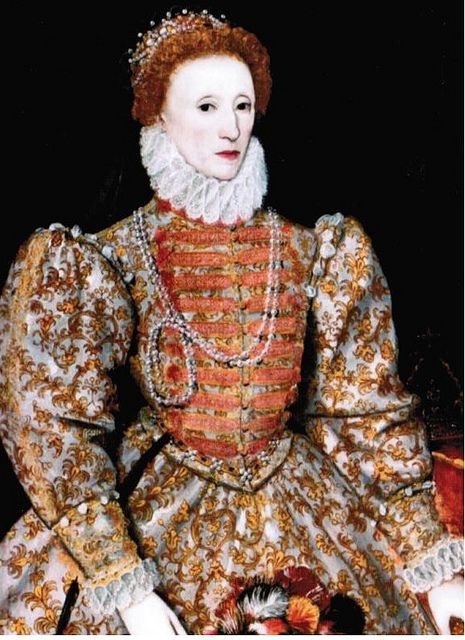
The Toxic Beauty: How Cosmetics Killed Her Highness Queen Elizabeth I

Queen Elizabeth I of England and Ireland

Introduction

Beauty has always been the greatest concern for women since ages. Women , all over the world did what not, to look pretty and presentable throughout the history of Human Civilization. And to address the need of looking flawlessly beautiful, the practice of using cosmetic or make-up came to the play. Women, sometimes, followed bizarre rituals to enhance their look, but sometimes, to their worst, the cosmetic turned out to be toxic and endangered their lives. To look beautiful it cost them a fatal price. Royalties and Elites were victims of the same death trap, including the Great Queen Elizabeth I.

Queen Elizabeth: The Beginning

Elizabeth I was the fifth and last monarch of the House of Tudor. She was born in the Palace of Placentia on 7 September 1533 and was died on 24 March 1603 at the age of 69. Her father was Henry VIII and her mother was Anne Boleyn who was her father’s second wife. On 17 November 1558, she became the Queen of England and Ireland and ruled it for 44 years until her death. She was also called the Virgin Queen and Good Queen Bess. Elizabeth was third in line to become the monarch and she was not even destined to be queen. She was behind her half younger brother Edward VI and half elder sister Mary I. As her father Henry VIII died, on 28 January 1547, her younger brother Edward VI became the monarch at age nine and ruled for six years, dying at the age of 15 because of tuberculosis. After, Mary I became queen and ruled for five years, dying at age 42 on 17 November 1558. Finally, Elizabeth was the last child of Henry VIII to rule England and became the Queen of England, ruling for 44 years.

The Scars in Her Beauty : What Led Her to Toxic Cosmetics

During her 20’s the Queen got infected with smallpox. Though the young queen survived smallpox but the disease left scars and blemishes on her skin and in order to hide those she started using the makeup more vigorously.

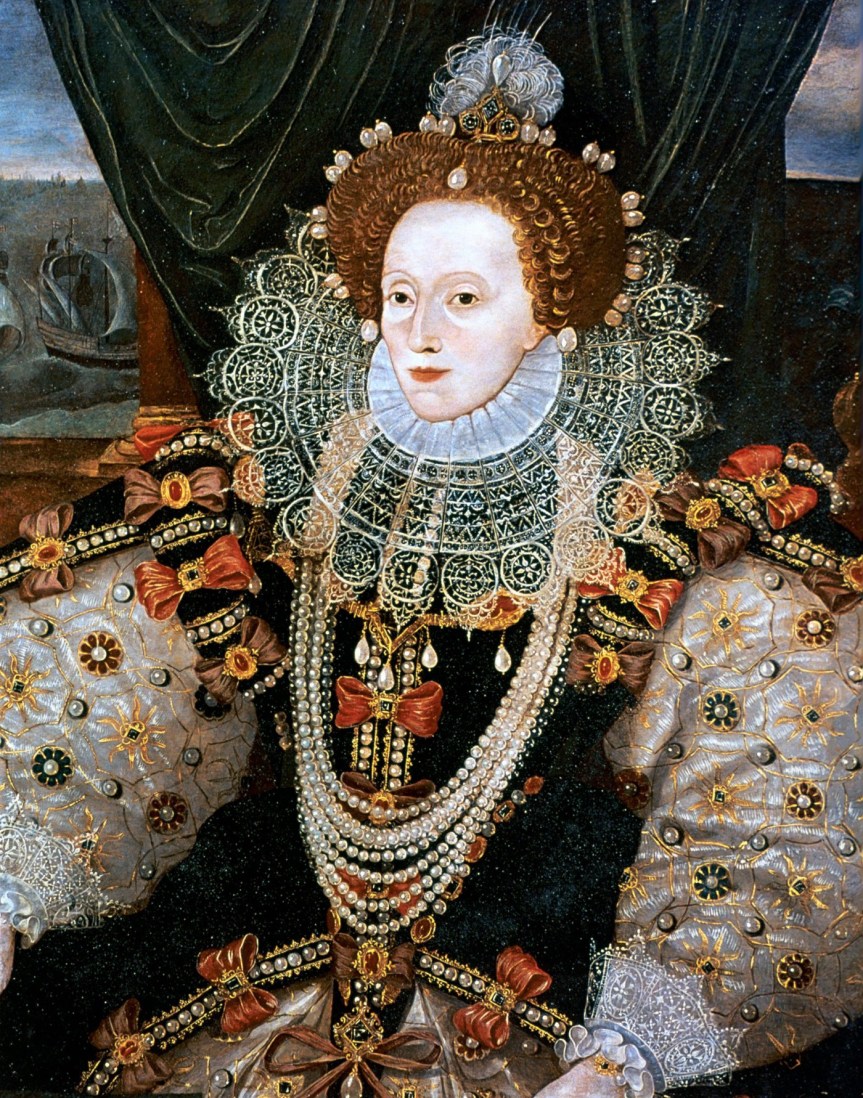
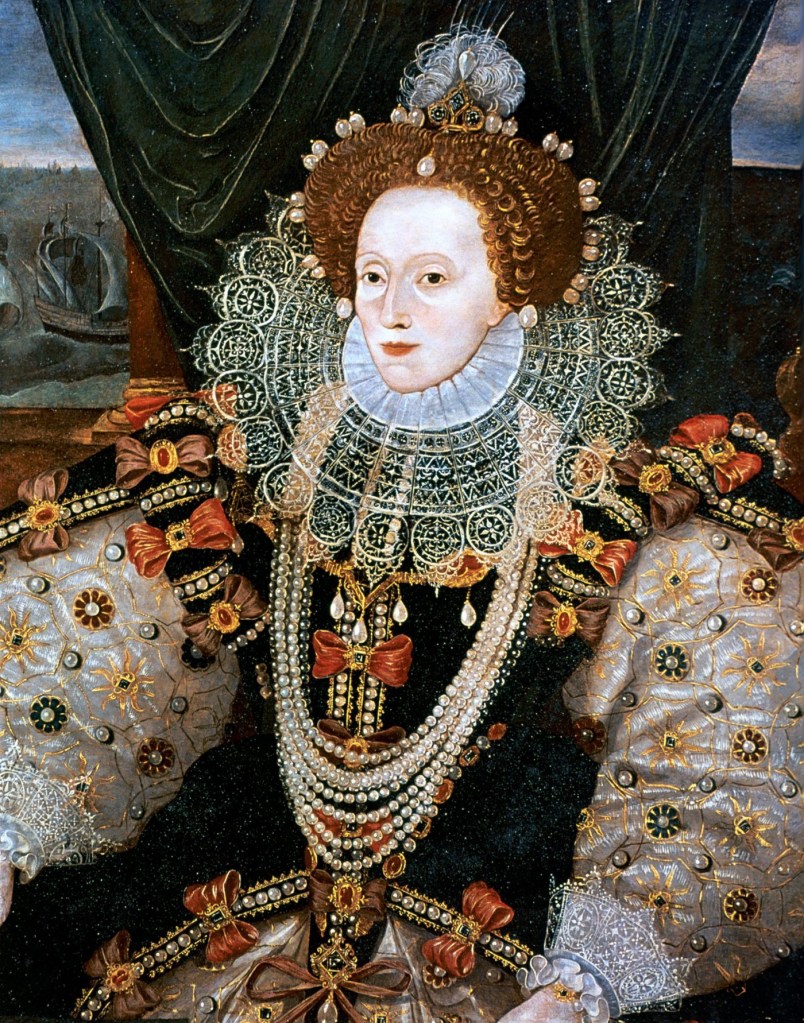
Portrait of the Queen

Bizarre Beauty Standards

The cosmetics that were worn by women in the time of Queen Elizabeth are drastically different from those we wear today. Not only were the materials they used very different but the look they were trying to achieve was very different as well. Standards of beauty change all the time. To understand the cosmetics worn by Elizabethan women, it’s important to understand the effect they were trying to achieve—that “ideal” beauty they wanted to imitate. The ideal Elizabethan female had bright wide-set eyes, snow white skin, rosy cheeks, red lips and fair hair. Pale skin was a sign of nobility, wealth and delicacy was sought after by many. In a time where sunscreen was unheard of, skin problems and pox was a common thing smooth, unblemished skin was a rarity. The pale skin women (and men) wanted was achieved by a number of ways. The most popular being Venetian Ceruse (also known as Spirits of Saturn), a mixture of white lead and vinegar. This white foundation was applied to the face, neck and bosom. Naturally, smearing lead all over one’s skin caused some serious skin damage not only did it make the skin look “grey and shrivelled” there was lead poisoning, hair loss and if used over an extended period of time could cause death. They lined their eyes with black kohl to make them look darker and belladonna eyedrops (used to dilate women’s pupils, an effect considered to be attractive and seductive). Fashion required eyebrows to be thin and arched which would create a high forehead it was considered to be a sign of aristocracy. Rouged cheeks and red lips were very popular. This was obtained with plants and animal dyes.

Her Majesty’ s Royal Makeup

She used ingredients like lead and vinegar in her makeup which is called — “Venetian ceruse. It is said that she was the only monarch that always took a long time to get ready. She used multiple layers of lead and vinegar and applied a thick white mask to her face and neck. The white skin was not a part of racism but it depicted that a woman was of a higher class. she applied was from If you have seen a portrait of Queen Elizabeth you may have noticed that her lips are very red. The red colour cinnabar, a mercury. poisonous substance that contains She used to remove it with a mixture of elements like eggshells, alum, and mercury. Thus, this leads to another use of poison in her makeup. People at that time would say that her skin became soft after makeup re moval but basically, it was peeling one layer at a time. All these caused wrinkles, aging, and the deterioration of her health. And it is assumed by the historians, that continuous use of those deadly chemicals as Cosmetics, led to her death.

Cinematic Portrait of the Queen, played by actress Margot Robbie

Conclusion

The urge of looking beautiful , sometimes proves hard on women’s overall health. body and The obsession of being perfect, has killed many women, including such Royalties like Queen Elizabeth I. Even today, women are insure about their natural beauty and sometimes find it hard to accept body positivity. We should learn to feel confident in our skin first, and the glow then comes from within as our flaws make us Earthly and more humane.

Scheme for Minority People of North Eastern States

 The Government has implemented various schemes for the welfare and upliftment of every section of the society including minorities especially the economically weaker & lesser privileged sections of the society with schemes like Pradhan Mantri Jan Arogya Yojana (PMJAY), Pradhan Mantri Mudra Yojana (PMMY), Pradhan Mantri Kisan Samman Nidhi (PM KISAN), Pradhan Mantri Ujjwala Yojana (PMUY), Pradhan Mantri Awas Yojana (PMAY), Beti Bachao Beti Padhao Yojana, etc. Ministry of Minority Affairs also implements programmes/ schemes across the country including North Eastern States for socio-economic and educational empowerment of the six (6) centrally notified minority communities namely Christians, Sikhs, Buddhists, Muslims, Parsis and Jains. The schemes/programmes implemented by the Ministry in brief are as under: –


(A): Educational Empowerment Schemes:            


(1) Pre-Matric Scholarship Scheme- Scholarship is provided to minority students from Class I to X, out of which 30% scholarship are earmarked for girls.


Post-Matric Scholarship Scheme- Scholarship is provided to minority students from Class XI to PhD., out of which 30% scholarship are earmarked for girls.


Merit-cum-Means based Scholarship Scheme- Scholarship is provided to minority students for Professional and Technical courses, at Under Graduate and Post Graduate level, out of which 30% scholarship are earmarked for girls.


All the three Scholarship schemes are on boarded on the National Scholarship Portal (NSP) and the scholarship amount is disbursed through Direct Benefit Transfer (DBT) mode.


 (2) Maulana Azad National Fellowship Scheme – Under the scheme fellowship in the form of financial assistance is provided to minority candidates who clear the UGC-NET or Joint CSIR UGCNET examination.


 (3) Naya Savera – Free Coaching and Allied Scheme – The Scheme aims to provide free coaching to students/candidates belonging to minority communities for qualifying in entrance examinations of technical/ medical professional courses and various Competitive examinations.


 (4) Padho Pardesh – Under the scheme interest subsidy is provided to students of minority communities on educational loans, for overseas higher studies.


(5) Nai Udaan – Support is provided to minority candidates clearing Preliminary examination conducted by Union Public Service Commission (UPSC), State Public Service Commission (PSC), Staff Selection Commission (SSC) etc.


(B): Employment Oriented Schemes:

(6) Seekho Aur Kamao – Skill development scheme for youth of 14 – 35 years age group and aiming at providing employment and employment opportunities, improving the employability of existing workers, school dropouts etc.


(7) USTTAD (Upgrading the Skills and Training in Traditional Arts/Crafts for Development)- An effective platform to provide self-employment, market and opportunity to traditional artisans and craft persons from the minority communities. Hunar Haats are being organised across the country to provide employment opportunities and markets to artisans/craftsmen.


 (8) Nai Manzil – A scheme for formal school education & skilling of school dropouts or educated in community educational institutions like Madrasas.


(9) Nai Roshni – Leadership development of women belonging to minority communities and non-minority communities (not exceeding 25% of each batch).


(C): Special Schemes

 (10) Jiyo Parsi – Scheme for containing population decline of Parsis in India.


 (11) Hamari Dharohar- A scheme to preserve rich heritage of minority communities of India under the overall concept of Indian culture.


(D): Infrastructure Development Programme:


 (12) Pradhan Mantri Jan Vikas Karyakram (PMJVK) – The scheme aims to provide basic infrastructure such as Schools, Colleges, ITIs, Polytechnics, Hostels, Sadbhav Mandap, Skill Development Centres, Drinking water and Sanitation facilities, Health Projects including hospitals, Sport facilities, Smart classrooms, Aanganwadi Centers etc. in deprived areas of the country. The scheme is implemented in the identified areas having minimum of 25% minority population and backwardness parameters below the national average in respect of socio economic or basic amenities or both.


(13) Also, Maulana  Azad  Education  Foundation  (MAEF)  implements  education  and  skill related  schemes  as  follows:-  (a)  Begum  Hazrat Mahal  National  Scholarship  for Meritorious  Girls  belonging  to  the  economically  weaker  sections  of  Minorities  (b)  Gharib Nawaz  Employment  Scheme  started  in  2017-18  for  providing  short  term  job  oriented skill development training  to youth (c) Grant-in-aid  to NGOs for infrastructure development of educational institutions.


(14) Equity to National Minorities Development and Finance Corporation (NMDFC) for providing concessional loans to minorities for self-employment and income generating ventures. 

The details of the schemes mentioned at S. No.(1) to (12) are available on the website of this Ministry  (www.minorityaffairs.gov.in) and those at serial No.(13) and (14) are available on the website of MAEF (www.maef.nic.in) and NMDFC (www.nmdfc.org) respectively. 


As per Section 2 (c) of the National Commission for Minorities (NCM) Act, 1992, six communities namely Christians, Sikhs, Muslims, Buddhists, Jains and Parsis have been notified as minority communities.  As per Census 2011, population of minority communities in the country are:- Muslims – 17,22,45,158, Christians – 2,78,19,588,  Sikhs –  2,08,33,116,  Buddhists – 84,42,972,  Jains  – 44,51,753   and   Parsis – 57,264.


No State-wise allocation of funds is made in the budget of this Ministry. However, during last five years an amount of Rs. 21,934.38 Crores had been allocated for schemes being implemented by this Ministry.