Scope of Silk Industry in India

Silk – the queen of all fabrics is historically one of India’s most important industries. India produces a variety of silks called Mulberry, Tasar, Muga and Eri, based on the feeding habit of the cocoons.
The sericulture industry today employs over 700,000 farm families and is mostly concentrated in Karnataka, Tamilnadu and Andhra Pradesh and to some extent Assam and West Bengal. Karnataka accounts for more than 70 percent of the country’s total silk production.


Sericulture is one industry which is beneficial to the agriculturists. As in today 56 lakhs people are dependent on the sericulture industry, 5.6 million people out of which 4.7 million are agriculturists. The rest are reelers, weavers etc.

India is the second largest producer of silk, contributing to about 18 per cent to the world production. What is however, more noteworthy is the fact that India’s requirement of raw silk is much higher than its current production at present. Thus, there is considerable scope for stepping up production of raw silk in the country, overcome the persistent conflict of interest between exporters of silk products and producers of raw silk.


While sericulturists want imports of raw silk to be restricted to have better market for their produce, exporters want imports of cheaper raw silk so as to be able to export more silk products at competitive rates. India has all the four varieties of silk namely, mulberry, tassar, eri and muga. It is however, disheartening to note that we have not yet been able to fully exploit this advantage and make our presence felt on the international scene more prominently than at present. For this, one has to clearly understand the strengths and weaknesses of different segments of this sector.

The strength of this industry lies in its wide base, the sustaining market demand pull especially from the Indian handloom weaving sector, the infrastructure created by the national sericulture project and the research and training capabilities.


Silk is the most elegant textile in the world with unparalleled grandeur, natural sheen, and inherent affinity for dyes, high absorbance, light weight, soft touch and high durability and known as the “Queen of Textiles” the world over. On the other hand, it stands for livelihood opportunity for millions owing to high employment oriented, low capital intensive and remunerative nature of its production. The very nature of this industry with its rural based on-farm and off-farm activities and enormous employment generation potential has attracted the attention of the planners and policy makers to recognize the industry among one of the most appropriate avenues for socio-economic development of a largely agrarian economy like India.


Silk has been intermingled with the life and culture of the Indians. India has a rich and complex history in silk production and its silk trade which dates back to 15th century. Sericulture industry provides employment to approximately 8.7 million persons in rural and semi-urban areas in India. Of these, a sizeable number of workers belong to the economically weaker sections of society, including women. India’s traditional and culture bound domestic market and an amazing diversity of silk garments that reflect geographic specificity has helped the country to achieve a leading position in silk industry.

Silk production in India

India has the unique distinction of being the only country producing all the five known commercial silks, namely, mulberry, tropical tasar, oak tasar, eri and muga, of which muga with its golden yellow glitter is unique and prerogative of India. 

Mulberry sericulture is mainly practised in states such as Karnataka, Andhra Pradesh, Assam and Bodoland (Kokrajhar, Chirang, Baksa and Udalguri districts of Assam), West Bengal, Jharkhand and Tamil Nadu who are the major silk producing states in the country. North East has the unique distinction of being the only region producing four varieties of silk viz., Mulberry, Oak Tasar, Muga and Eri. Overall NE region contributes 18% of India’s total silk production.

Title of Book

Scope of Silk Industry in India

Editor Name

Deobrat Kumar

ISBN no. 

978-81-951123-8-8

Imprint

IJR

Year

2022

Edition

First

Language

English

Genre

Education

Publisher

Edupedia Publications Pvt Ltd

Training and Skill Development by NGO

 With 50% of India’s population under the age of 25, India is poised to have the largest workforce by 2027. While the demographic dividend could be in favour of India, there are some stiff challenges that we are faced with.

“Individuals with combination of Skills, viz- broad-based education and training, basic and portable high-level skills, including teamwork, problem solving, information and communications technology (ICT) and communication and language skills are most employable and adaptable to changes in the world of work.”

– International Labour Organization


Acquiring life skills is of foremost importance when young people prepare for the job market. This is because:
  • At the entry-level, employees are expected to be able to understand, comprehend, communicate and problem-solve.
  • Opens array of sectors for young people to kick start their career rather than confining them to a sector or job.
  • These skills are essential to get better jobs and increase their chances for career progression.


To start with, Skill Development Team conducts student mobilisation activities in schools and colleges through presentations & posters and in villages & local communities through mobilisation vans, pamphlet distribution, community meetings, etc. The team further works with Village Pradhan, frontline workers (like ASHAs and AWWs) to mobilise prospective students. Minimum qualification required for undertaking these courses is higher secondary.

Improved training and skill development is critical for providing decent employment opportunities to the growing youth population and is necessary to sustain the high growth momentum.

The insufficient skills and illiteracy compel the poor section of the society to put more than extra physical efforts. This is how they fulfill their basic needs. Despite sweating hard, they manage to earn daily wages only. “Unfortunately, a few of them don’t get to work daily.”

To uproot this curse from the lives of poor people, NGO provide “Free of Cost” skills development programs for poor and needy people. These are specifically drafted to upskill the downtrodden people. These programs include Computer Hardware, Computer Training, Mobile Repairing, Sewing Training, Mehndi Design, Incense Stick etc.

Poverty is pronounced deprivation in a well- being and comprises many dimensions, including low incomes, and the inability to acquire the basic goods and services necessary for survival. Poverty alleviation implies the reduction or eradication of poverty level in any society, skill training in various programs leads to acquisition of competencies to generate wealth through applicable Programs with skills and competencies to become self-employed. Lack of skills and experience and Mismatch between supply and demand for labour may be adjusted by the entrepreneurial skills on how to find business ideas to encourage young people to start their own business.

Poverty means more than simply low income. It includes lack of voice in determining what goes on in one’s community, as well as vulnerable livelihoods. Food insecurity is often a reality of poverty. Skills development contributes to social and economic integration in poor people’s lives. Skills development can be considered as a public good.Lack of access to education and training maintains a low level of education and productive skills among the rural poor.

Skills Development Programs by Narayan Seva Sansthan gives according to your interest.

Skill development Programs have to be aligned to ensure better employment opportunities for the Poor People. In, the country the lack of relevant skills of the underprivileged youth group and a mismatch between supply and demand in the market leads to very poor employability and lower wages for them. Narayan Seva Sansthan has also taken various efforts at the national and regional level to promote health, education to unprivileged people. In this research it has been emphasized that necessary education, training and skill development programs are very necessary for disadvantaged group to have a better life. Invest in the skills and employability of workers contributes to the improvement of productivity and competitiveness. But a great number of destitute children are not getting the basic needs like education and skill development training which is leading them to poverty, insufficient nutrition and illiteracy. A complete strategy for Skills Training Programs Linked to Employment will need to be developed so that underprivileged group can have access for skills training leading to employment. Skills are vital for productivity and growth and are in fact at the core of improving people’s employment outcomes.

As we all know that in today’s generation Education is the most important key to success, this is a very general statement and all people are familiar to this. In, this pragmatic world survival and day to day income become impossible to huge number of educated communities.

Skills development for poor people be also essential to address the opportunities and challenges meeting new demands of changing economies and new technologies in the context of globalization.

Title of Book

Training and Skill Development by NGO

Editor Name

SUMIT SINGH CHANDEL

ISBN no. 

978-81-951123-0-2

Imprint

IJR

Year

2022

Edition

First

Language

English

Genre

Education

Publisher

Edupedia Publications Pvt Ltd

EXPANSION OF MSME SECTOR

 Promotion and development of enterprises is a State subject. The Central Government supplements the efforts of the State/UT Governments through various schemes, programmes and policy initiatives for promotion, development and enhancing the competitiveness of MSMEs and to increase employment opportunities in the country.         

            The Ministry of MSME implements various schemes and programmes for growth and development of MSME Sector in the country. These schemes and programmes inter-alia include Prime Minister’s Employment Generation programme (PMEGP), Scheme of Fund for Regeneration of Traditional Industries (SFURTI), A Scheme for Promoting Innovation, Rural Industry & Entrepreneurship (ASPIRE), Credit Guarantee Scheme for Micro and Small Enterprises, Micro and Small Enterprises Cluster Development Programme (MSE-CDP) etc. Benefits under these schemes are available to all eligible MSMEs throughout the country. Ministry of MSME has also been implementing a special scheme viz. ‘Promotion of MSMEs in North Eastern Region and Sikkim’ which focuses on improving the condition of MSME Sector in North Eastern States including Assam. The Scheme-wise Budget allocation of these schemes is given below:-


 Budget Allocation (Rs. in crore)

S.No.

Name of the Scheme

2019-20

2020-21


2021-22

(As on 31.12.2021)

1

Prime Minister’s Employment Generation Programme

(PMEGP)

2,327.10

2,500.00

2,000.00

2

Scheme of Fund for Regeneration of Traditional Industries (SFURTI)

125.00

464.85

170.00

3

A Scheme for Promoting Innovation, Rural Industry & Entrepreneurship (ASPIRE)

50.00

30.00

15.00

4

Credit Guarantee Scheme

597.00

100.00

0.04

5

Micro and Small Enterprises Cluster Development Programme (MSE-CDP)

227.90

390.69

156.60

Hand-Rickshaw Pullers of Kolkata: The Legacies Left Behind

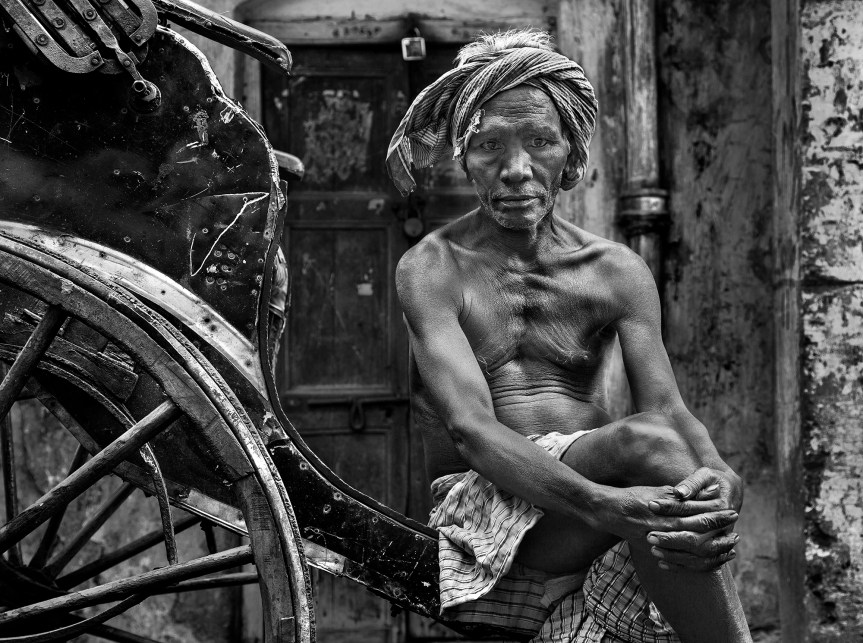
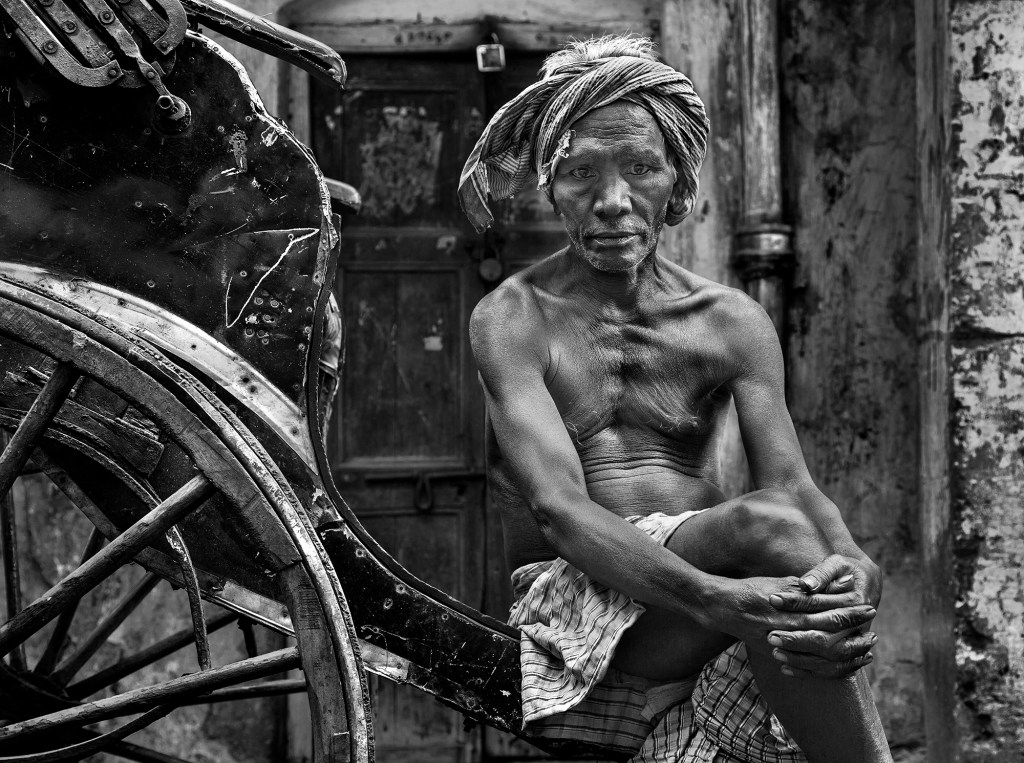
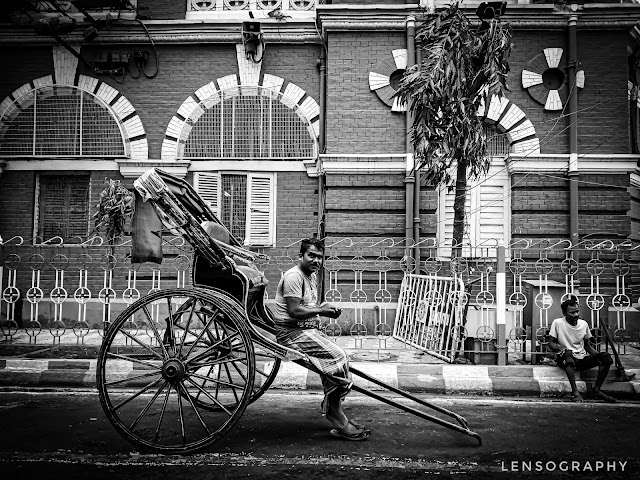
Hand-Rickshaw puller of Kolkata

Introduction

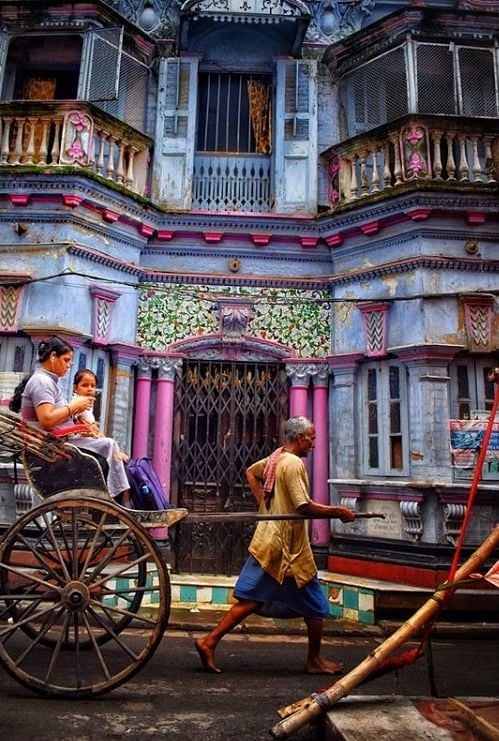
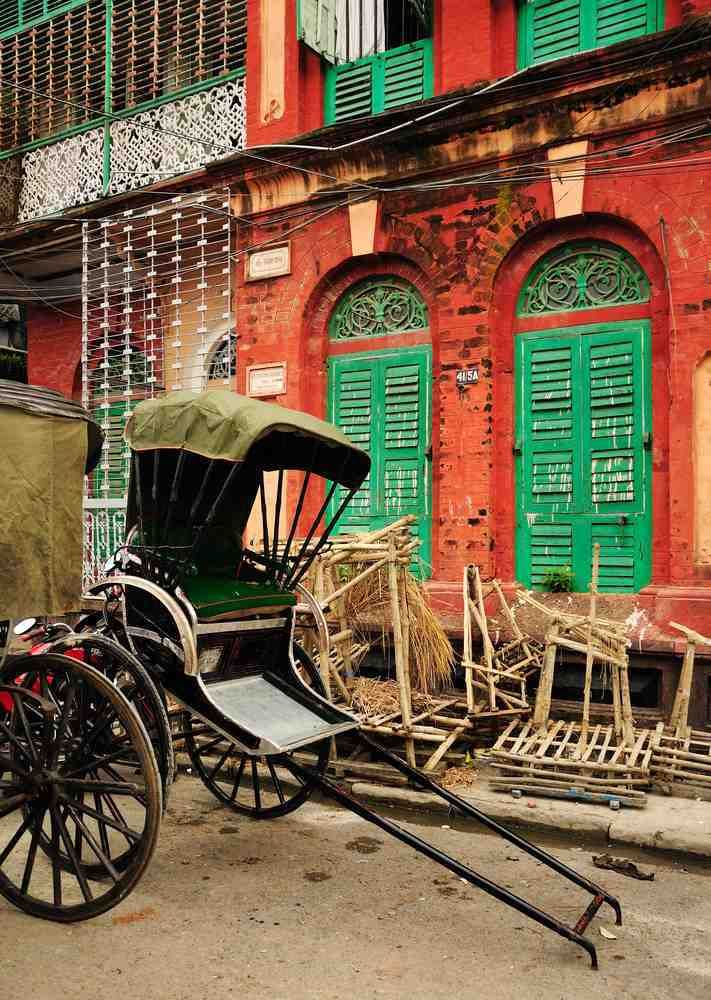
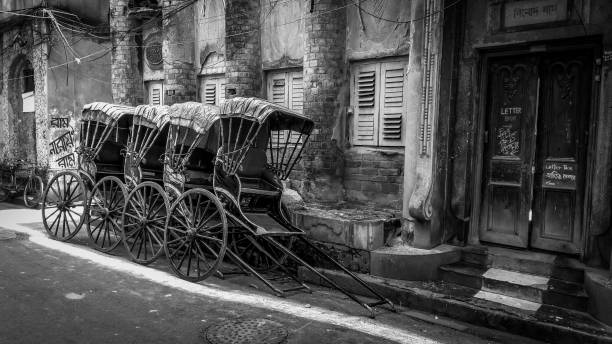
Kolkata is a city that is an amalgamation of the old and new. A city that is being modernised everyday but still manages to hold on to the old charm vibe. It is the only city in India to have various modes of transportation, dating back to the British era. The first city in India to construct a metro rail, it is now the only city in the world that continues to operate licensed hand-pulled rickshaws (called tana rickshawin Bengali) as a mode of public transport. One can still see the tram cars and hand-pulled rickshaws plying on the narrow bylanes of Kolkata.

Hand Rickshaw in Kolkata

Histrionic Background

The word ‘rickshaw’ originates from the Japanese word ‘Jin-riki-sha’ (jin meaning human, riki meaning power, and sha meaning vehicle; which translates to human-powered vehicle). The hand-pulled rickshaw was invented in Japan in 1869 and was introduced in China by 1874. Unlike previous modes of transport, like kago, sedan chairs, etc. which needed two persons to carry, the rickshaw had the significant advantage of being driven by a single person. The following decades witnessed a boom of hand-pulled rickshaws in Japan, China, Singapore, India, Indonesia and Malaysia. They served as cheap means of transportation and provided employment to millions of poor working-class families living in cities. 

The British were the dominant colonial power in Asia and the usage of a human to pull another human definitely served in reinforcing the master-slave power hierarchy. Post World War II, colonialism declined in Asia and the hand-pulled rickshaw faded out of use from erstwhile British colonies. Strangely, the legacy of rickshaws continued in Calcutta long after the British Empire was gone (1947), and long after the communist government in China banned (1949) the use of rickshaws. Not only did it survive in Calcutta but the tenacious hand-pulled rickshaw has become an icon of the metropolis

A Hand-Rickshaw in an alley of Kolkata City

A Staple to Kolkata’s Culture

Kolkata’s hand-pulled rickshaws are mentioned in many literary books and featured in films of different languages. It plays the protagonist in Rudyard Kipling’s ‘The Phantom Rickshaw’. The story is set in Shimla of the 1980s. Greg Vore, an international travel photographer, researched on the life, role and history of hand-pulled rickshaws in Kolkata and Bangladesh. Bimal Roy’s classic Do Bigha Zamin (released in 1953) tells the story of a farmer who becomes a rickshaw wallah in the then Calcutta.

Present Situation of Rickshaw: How They Are Doing

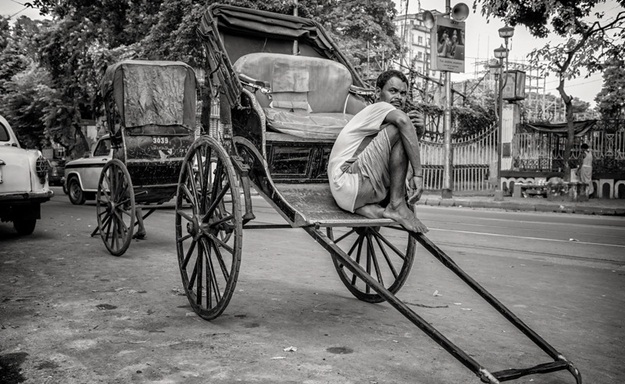
The hand-pulled rickshaw survives due to a number of socio-economic reasons peculiar to Kolkata. Firstly, pulling a rickshaw does not require skill; it requires hard physical labour. Unemployed and unskilled labourers find employment as rickshaw pullers in Kolkata. They do not undergo any training or require a driver’s license to operate. Most rickshaw pullers do not even know the names of the roads they ply their trade on, nor do they understand the various traffic symbols. This is because they are mostly illiterate and speak Hindi instead of the local Bengali. Many rickshaw pullers do not even own the vehicles themselves, but rent them from sardars (rickshaw owners) who own khatals (rickshaw garages). This arrangement evolved because many rickshaw pullers are either too poor or seasonal migrants, plying the rickshaws only for a few months when their fields back home lie fallow. 

Leisure between the fare trips

Today, due to declining popularity and availability of other modes of transport, rickshaw pullers earn a meagre amount and mostly live on the streets, saving every rupee to send to their families. Added to this are costs for food and rent paid to sardars, after which they are left with very little money for themselves. Many turn to alcohol and suffer from various diseases and medical problems associated with old age and the physical stress of the job.

Kolkata does currently have 18,000 rickshaw pullers and 6000 rickshaws, though not all of them are licensed by the municipality

Queued up for passengers

The “Ban” for Rickshaws: The Efforts to Demolish The Rickshaw Transportation

Kolkata has faced much flak due to the existence of this colonial relic. In 2006, the state government tried permanently banning these rickshaws by the passing of the Calcutta Hackney-Carriage (Amendment) Bill, but it was never implemented. Nothing has changed after the change of government in 2011, though promises were made about replacing the licensed hand-pulled rickshaws with electric or cycle rickshaws. If these rickshaws need to be permanently removed from the streets, a justifiable solution needs to be worked out to ensure proper rehabilitation for all the people directly and indirectly attached to the trade.

On the streets of Kolkata

The Positive Side: Why Hand-pulled Rickshaws Are Relevant To Kolkata

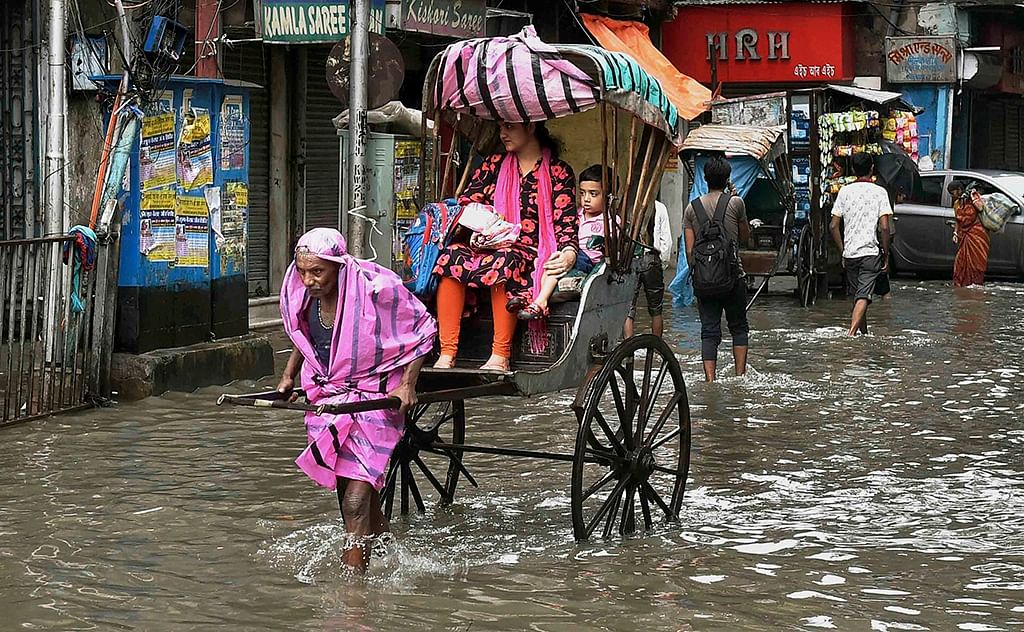
The narrowed urban planning of Kolkata has also played a part in the continuance of this mode of transportation. Due to poor drainage, streets in low-lying areas get flooded frequently. During heavy monsoons, the hand-pulled rickshaw is the only form of transport which can navigate flooded streets. Its non-reliance on fossil fuels makes it less expensive and non-polluting, and its compact size allows easy navigation through the narrow lanes of Kolkata

Carrying passengers in flooded road

Conclusion

Hand-pulled Rickshaws are the legacies of Kolkata’s British colonial past. The demolition of these mannual carts and their replacement with electric mode of carrier carts, would slightly dim the spirit the of the old city. But with time’s stand, it is on the behalf of saving the human labour in a more cost-effective and eco-friendlier way. Although, Kolkata will always cherish its beautiful past garnered with these wooden carts, that served the city and its citizens for ages.

participation of MGIEP in the Implementation of National Educational Policy -2020

 Union Education Minister Shri Ramesh Pokhriyal ‘Nishank’ chaired a meeting on participation of Mahatma Gandhi Institute of Education for Peace and Sustainable Development (MGIEP) in the implementation of National Educational Policy -2020. Secretary, Higher Education, Shri Amit Khare; Secretary, School Education & Literacy , Smt Anita Karwal; Director, UNESCO, New Delhi, Mr. Eric Falt ; Chairman, MGIEP, Prof. J.S. Rajput; Director, MGIEP, Dr. Anantha Duraiappah and senior officials of the Ministry attended the meeting.

Speaking on the National Education Policy 2020, Minister said the policy is in line with the SDGs of UNESCO. It will develop Indian citizens on the lines of a global citizen, and help spread the ideas of empathy, compassion and rational thinking among the citizens. Shri Pokhriyal said that both MGIEP and UNESCO will play a major role in the implementation of this New Education policy. He sought their suggestions and cooperation on implementation of New Education Policy 2020 to make India a global knowledge superpower.

Emphasizing that Government of India is fully committed to achieving the 2030 Sustainable Development Goals, Shri Pokhriyal spoke about several initiatives such as NISHTHA- the world’s largest teacher training capacity building program, digital learning through DIKSHA, Samagra Shiksha Abhiyan among others that have been taken to improve access, equity and quality of education.  

*****