The Incredible Life of Sri Ramakrishna Paramahamsa

Sri Ramakrishna was an Indian Hindu religious leader and saint of 19th century Bengal who is known for his enlightening teachings on God and religion. On his 186th birth anniversary, let us take a look into his compelling life and ideals which has influenced and still remains influencing a great number of minds.
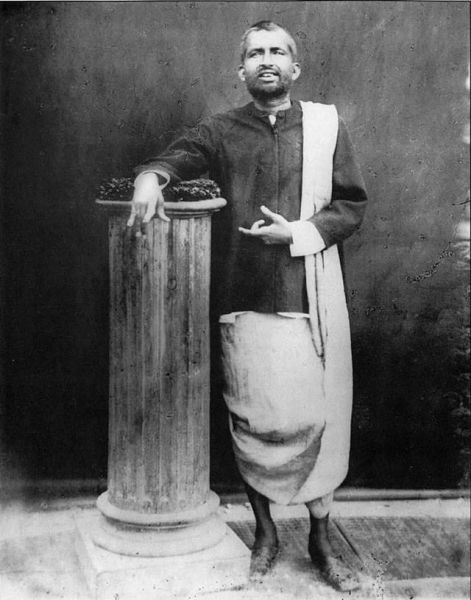
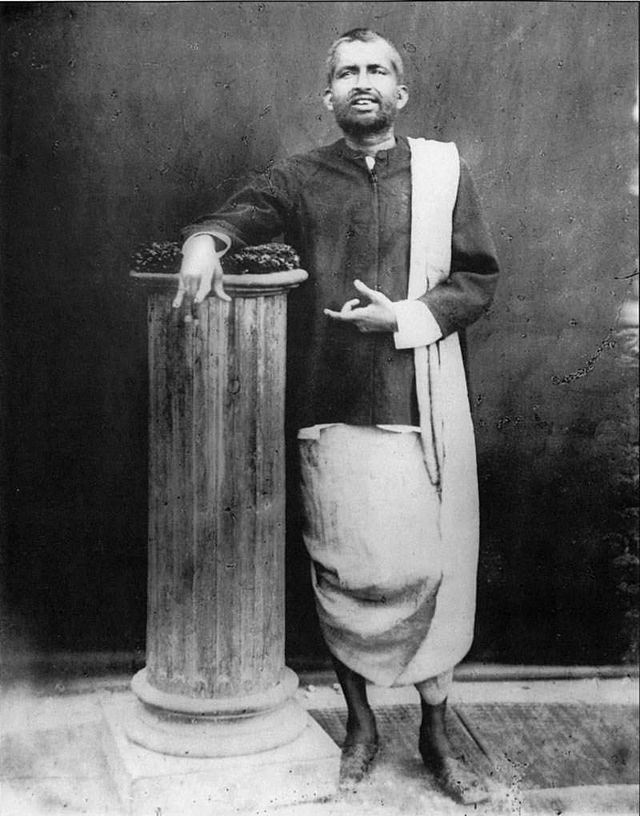
Sri Ramakrishna Paramahamsa

Sri Ramakrishna was born on 18 February 1836 to Kshudiram Chattopadhyaya and Chandramani Devi, in the village of Kamarpukur, West Bengal, in India. Born in a very poor, yet pious and orthodox household, he did not show much interest towards formal education, saying that he was not interested in “bread-winning education”.

Spirituality, Priesthood and Marriage

It was at the age of six that he went through his first experience of spiritual trance, when he came across the sight of a flock of white cranes flying against a background of black rain clouds and continued to have similar experiences throughout his childhood. He was also interested in spiritual discourses from an early age. The death of his father when he was just seven years old added to his introspective nature.

At sixteen, Ramakrishna travelled to Kolkata to help his brother Ramkumar who was the chief priest at the Dakshineshwar Kali Temple. When his brother died after a few months, Ramakrishna was made the priest. He now became completely absorbed in the worship of Goddess Kali. He spent days and nights in prayer, singing devotional songs and meditating, forgetting his priestly duties, longing for the divine vision of Mother Kali. Finally, on an occasion when he was in utmost despair yearning for Mother Kali, he was blessed with her vision, later describing it as an infinite sea of radiation and light which enveloped him and everything around him.

Rumors of Sri Ramakrishna’s unstable life resulted in his concerned family getting him married to Sarada, a five-year old from the neighboring village of Jayarambati. She later joined him in Dakshineshwar at the age of eighteen. Sri Ramakrishna had by this time been ordained a Sannyasin and thus observed the basic vows of monastic life. Thus, their marital life remained truly spiritual. He even worshipped Sarada as the Divine Mother while performing the Shodashi Puja in his room at Dakshineshwar.

After his marriage, Sri Ramakrishna returned to Dakshineshwar, where he proceeded to learn and experience different aspects of God he followed, with the help of various Gurus, and realized God through each path. Bhairavi Brahmani, an ascetic well-versed in scriptures, was the first Guru to arrive at Dakshineshwar in 1861 and teach Sri Ramakrishna various disciplines of the Tantric path. A Vedanta monk named Tota Puri arrived in 1865 and guided him to Nirvikalpa Samadhi, which is the highest spiritual experience according to Hindu scriptures. Sri Ramakrishna also went on to practice Islam and Christianity, wanting to experience God in all forms. He was able to attain the highest realization through each of them in a short span of time. He spent 12 years practicing various forms of religion and spirituality, finally expressing his spiritual realization as “So many religions, so many paths to reach one and the same goal”.

Disciples and Final Years

As his name and spiritual messages spread all over the country, it attracted people from different backgrounds. Disciples arrived from all over, wanting to learn from him. He divided his disciples into householders, who were taught to realize God while performing their family duties, and young, educated monks, who were tasked with spreading the universal message of Vedanta. One of his most influential disciples was Swami Vivekananda, who re-invigorated Hinduism and remains one of the most celebrated spiritual leaders in India.
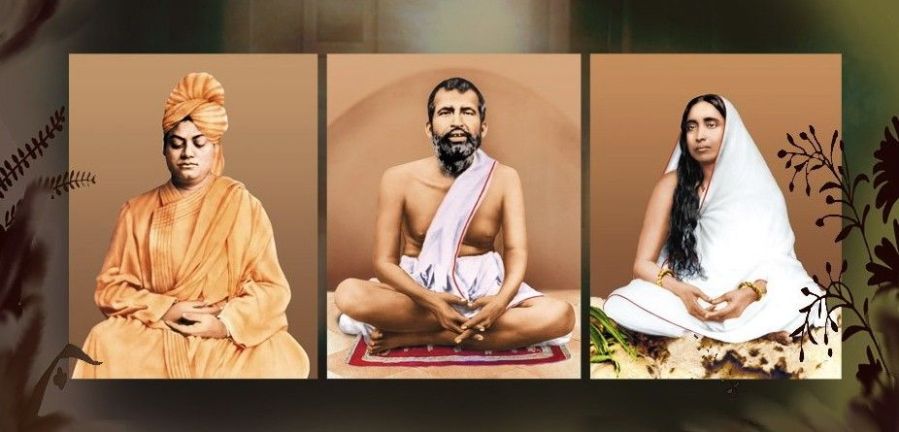
Swami Vivekananda, Sri Ramakrishna Paramahamsa and Sarada Devi

In 1885, Sri Ramakrishna was diagnosed with throat cancer after which he was shifted to a suburban villa where he was nursed by his disciples and Sarada Devi. He gave up his physical body on 16 August 1886, uttering “Ma” before passing away. Sri Ramakrishna’s disciples, led by Swami Vivekananda founded the Ramakrishna Math and Ramakrishna Mission. His illuminating conversations with visitors and disciples have been noted down by his disciple Mahendranath Guptha and published as a book “The Gospel of Sri Ramakrishna“, released in 1942.


Cats and Cats

By Anshiki Jadia

Cats are a secret that has charmed individuals’ hearts for millennia. Felines are an exceptionally well known pet due to their mysterious character and stunning components; as indicated by a report, 18% of families in the UK alone are administered by a feline. With such countless felines around, unquestionably everybody has a universal knowledge of them, correct? Wrong! There are a ton of fascinating realities about felines that you certainly didn’t think about, such the world’s biggest feline and how they walk.

A portion of these feline realities make certain to astound you!

  1. The most seasoned realized pet feline existed 9,500 years prior: The most established This captivating feline goody makes certain to intrigue your visitors at your next evening gathering. Did you realize that the feline should have been tamed by Egyptians? In any case, in 2004, archeologists from France uncovered a 9,500-year-old feline burial chamber in Cyprus. This makes it the world’s most established known pet feline, going back more than 4,000 years before Egyptian feline workmanship!
  2. Felines burn through 70% of their lives dozing: You’d be right in the event that you expected felines spend the a large portion of their lives resting. Felines go through 70% of their time on earth snoozing, which likens to around 13-16 hours consistently, as indicated by Veterinary Hub. It’s the existence of a feline!
  3. The most established feline on the planet was 38 years of age: When he passed on, the most seasoned feline on the planet was 38 years and 3 days old. Creme Puff, brought into the world on August 3, 1967, made due until August 6, 2005, and his proprietor Jake Perry additionally had Grandpa Rex Allen, the past most established feline record holder, who kicked the bucket at the excellent age of 34! Jake Perry is an expert at whatever he does!
  4. The record for the longest feline at any point is 48.5 inches: Domestic felines are ordinarily thought to be modest and sensitive animals. However, did you realize that the world’s longest feline, Stewie, a Maine Coon, was 48.5 inches long? Arcturus, then again, held the title for being the tallest feline, remaining at a faltering 19.05 inches tall! Those are some enormous cats.
  5. The most extravagant feline on the planet had? 7 million: According to Guinness World Records, Blackie is the world’s most well off feline. At the point when his rich proprietor kicked the bucket, he declined to specify his family in his will and rather left Blackie a 7,000,000 pound fortune! That interesting feline data bewilders us!
  6. Felines walk like camels and giraffes: Have you at any point seen how felines stroll similarly that camels and giraffes do? They stroll with both right feet first, then, at that point both left feet, pushing half of their body ahead simultaneously. The lone different creatures that can walk this way are camels and giraffes. Still don’t trust us? Have a look at the video underneath!
  7. A house feline can arrive at velocities of up to 30mph: If you’ve at any point seen your little catlike run around the family room when they’re energized, you realize felines are quick, yet you will have a hard time believing this feline truth. They can arrive at paces of more than 30 miles each hour, which is sufficiently quick to overcome Usain Bolt in a 200-meter run!
  8. In 1963, a feline went to space: You’ve presumably known about monkeys and canines in space, yet did you realize a feline has additionally wandered into the obscure? Felicette, usually known as “Astrocat,” was the sole feline to go to space on October 18, 1963.
  9. House felines share 95.6% of their hereditary cosmetics with tigers: This data about felines will dumbfound you. As indicated by an investigation, our homegrown felines share 95.6 percent of their hereditary cosmetics with tigers! They likewise display a significant number of similar practices, for example, fragrance and pee checking, following, and jumping on prey.
  10. Isaac Newton concocted the feline entryway: Isaac Newton is generally known for his computations on gravity, yet he is likewise credited with developing the feline entryway. Newton’s examinations at the University of Cambridge were routinely hindered by his felines scratching at the passage, as indicated by How Stuff Works. Subsequently, he employed a Cambridge craftsman to cut two openings in the entryway, one for the mother feline and the other for her infants! These openings, as per reports, may in any case be seen at the grounds today.

A new way : Startups

Start-ups wow……. What a innovative and independent way. So today let’s know about something about startups. Startup looks like the newest way to explore our opportunities in the most significant and planned manner. The boss of your own. Sounds great and yes startups are just like that. Skill, knowledge ,technique and experience can lead to a good startup. A startup is an opportunity for an individual to enhance his skills and it will be an employment generation. When the works is facing unemployment, lack of jobs, competition and scarce resources, start-ups come as a best and appropriate option because the creation of jobs is more important rather than being only employed. It gives a way to people of different backgrounds to work under circumstances according to their skill and specification.

Photo by Canva Studio on Pexels.com

A job of their own in which they can take decisions and these decisions can be an example for other people too. Startup can’t be defined because a tea seller is also doing a startup and a businessman too is doing the startup. It’s the need of the hour to understand and go with the trend. Jobs may come and go but experience can’t. People are making milestones in these start-ups whether it is at a village level of group of people who doesn’t possess high degrees to an MBA individual. Startups have never been considered as an option because there is always a risk. And people don’t want to take that risk. But as we know the population is increasing day by day and it’s almost impossible to for any government to provide secure job to every individual. But startups are a game changer in this changeover.

They aren’t only providing employment but are also heading toward the society to change its mindset. A change is the only way to explore and innovate. As a result the youth are taking interest in enhancing their skills and being a part of these startups. Not only the youth, our one genera is of old people who are retired from their jobs but it is not easy for them to accept it mentally. They want to do work because it’s their habit and they have lived that lifestyle for a long period of time. So their experiences and our knowledge can be the perfect balance for a good startup. Startup also creates a step further to communicate our thoughts with the outside world and can create a feeling of good competition. Startup develops the leadershi

Six unfigured places on Earth

Most of us always wanted to explore the Outer-space to discover various unique planets or Aliens, but have we ever wondered that our planet Earth holds many unexplainable secrets that even scientists couldn’t able to explain. There are many Mysterious places on our planet which we have to still figure out, and those places are:- 

Photo by Pixabay on Pexels.com

Devil’s Kettle Falls

There is a place in the United States of America called by the name Minnesota which is known for this mysterious waterfall which is known as Devil’s Kettle Falls. This Waterfall has been puzzling the scientist, geologists and Hikers for many decades because as it looks like an average waterfall that drops about 800 feet of water but the interesting part about this waterfall has two different bodies of falling water. One side of the body of waterfalls on Lake Superior and the other one falls straight into a huge natural hole in the ground, where this water lead is still a mystery. Many researchers or curious people who visited this place has poured many items like dye, sticks, ping pong balls and even logs into the kettle but one of them found any trace of a thing in the water or the nearby area. 

Stonehenge 

It is a unique prehistoric monument on Salisbury Plain located in Wiltshire, England, two miles (3 km) away from the west of Amesbury. It is considered to be one of the architecturally sophisticated and only surviving lintel led stone circles in the world. According to the Encyclopedia Britannica, Stonehenge was constructed in six stages between 3000 and 1520 BCE. Nowadays we have machines that can help us lift heavy materials to build huge buildings and monuments, but back in those days when Stonehenge was built no one had access to this type of technology. Many questions are arising that how can anyone have lifted stones weighing anywhere from four to thirty-seven tons and also that why were they doing this, archaeologists have come up with plenty of theories to explain this phenomenon some guessed that the men who built Stonehenge used a system of sledges rollers and boats others hypothesized that it was built with a weighted levy system well many of these guesses seem to make sense to a certain extent to this day no one has a definitive answer.

The Hessdalen Lights

This is an unidentified light which are 12 kilometres long located in a Hessdalen valley in rural central Norway. The residents of Hestia land valley Norway have to live with this burning question every single night it has to Lin Valley brightly coloured lights appear in the sky in different colours and shapes for the last four decades and possibly longer. This phenomenon has continued to puzzle scientists, according to some theories these lights could be caused by a nearby radioactive lake emitting particles that light up in the air as they evaporate other scientists think that the base of the valley contains a lot of sulfuric acids when it comes into contact with the water it causes sparks to appear in the sky even though there are many different guesses as to why this town gets their very own light show every night scientists still haven’t come up with a definitive answer.

The Boiling River in the Amazon

In the Amazon forests lies a floating river in the forested region of my Mayantuyacu that boasts temperatures so hot that any person or animal that falls into it boils alive from the inside out. This river runs at an unbelievable 196 degrees Fahrenheit dang that’s hot locals used the water to brew tea and sometimes they cook with it well this river’s high temperature is incredibly intriguing what makes this natural phenomenon a mystery is a fact that no one can figure out what makes the water so hot. According to geophysicist Adres Ruzo, boiling waters are typically attached to an active volcano or magmatic system like the boiling River Trail in Yellowstone National Park in the US but in the town of my Mayantuyacu, there are no active volcanoes within 400 miles. Over the centuries residents of this town believed that the river had magical healing powers and used it spiritually and medicinally. Ruzo guesses that hot geothermal waters pour in from cracks in the earth heating the temperature of the river but this has yet to be scientifically proven. 

Movile Cave

There’s a place on earth with its ecosystem and atmosphere similar to another planet well the name of that place is movile cave which is located in the southeastern part of Romania remain closed in complete darkness for approximately 5.5 million years. It wasn’t until workers discovered the cave when they were looking for a place to build that anyone learned about it scientists carved out an opening to the cave and found that a completely sustained ecosystem was thriving inside as a pathway was carved through the rock past numerous tunnels. Scientists found a lake of sulfuric water that stinks, the air was filled with hydrogen sulfide and had 100 times more carbon dioxide than Earth’s air contains needless to say this air is completely toxic what’s even crazier is that a whole ecosystem has been existing in this cave with 33 species that can’t be found anywhere else on earth this cave gives us a glimpse of what could exist on other planets with completely different atmospheres how it managed to exist on earth all this time is still a question. 

Circles of Namibia

Namibian deserts are full of elephants, snakes, antelope and also hundreds of evenly placed circles which makes the mysterious part of this desert, this brutally hot desert is home to a vast array of wildlife but even more interesting are the fields of grass with evenly spaced holes and now these circles are almost perfect and range anywhere from 10 to 65 feet in diameter many scientists have offered up theories as to why these circles appear instead of other more random shapes. In 2013 environmental scientist Norbert Juergens hypothesized that termites were the cause of these circles but like all the hypotheses that came before his, it was later disproved.

Negotiable Instruments Act and it’s Characteristics

Negotiable instrument act enacted on 9th December 1881, by Imperial Legislative Council is an act to define the law relating to negotiableinstruments. Some imp dates and their significance for the act:      

Photo by Matthias Zomer on Pexels.com

    Negotiable Instrument Act (1881)            (Citation: ACT No. 26 of 1881)1866 – The act was originally drafted.1867- “Introduced in the council and was referred to a select committee.” 1877-“ the bill was revised by a select committee, after the lapse due to criticism by local governments , high courts and chamber of commerce.” 1880-“ By the order of secretary of state the bill was referred to new law commission as in spite of everything happened in the past bill could not reach the final stage.”

The bill was redrafted.1881- Thus after being prepared for 4 times, it was introduced in the council.1882-  Commenced on 1 March 1882. Characteristics of Negotiable Instruments :·    These are freely transferable in nature. for example; property is a negotiable instrument and it is readily transferable by a simple process of delivery..·    Presumed to have been

1. made

2. accepted

3. endorsed

4. drawn

5. negotiated6. transferred for consideration·    They are easy for recoveryIndependent Title: “The general principle as regards the transfer of property, that is, no “One can give a better title than he himself has, is not applicable in case of negotiableinstruments.  If  the  transferor  had  obtained  a  negotiable  instrument  by  exercising fraud, but the transferee obtains that negotiable instrument in good-faith (bona-fide) for  value,  then  the  transferee  shall  enjoy  a  good  title  as  regards  that  negotiable instrument.  Thus,  the  title  of  the  transferee  as regards  a  negotiable  instrument  is independent of the title ofthe transferor.”“The holder who acquires the instruments hold title free from all defects.”“Every holder of instrument is presumed to be holder in due course.” Presumptions as to negotiable instruments: “Sections 118 and 119 of the Negotiable Instrument Act lay down certain presumptions which the court presumes in regard to negotiable instruments. In other words these presumptions need not be proved as they are presumed to exist in every negotiable instrument”. Until the contrary is proved the following presumptions shall be made in case of all negotiable instruments: 1. Consideration: “It shall be presumed that every negotiable instrument was made drawn, accepted or endorsed for consideration. It is presumed that, consideration is present in every negotiable instrument until the contrary is presumed. The presumption of consideration, 6 however may be rebutted by proof that the instrument had been obtained from, its lawful owner by means of fraud or undue influence.” 2.Date: “Where a negotiable instrument is dated, the presumption is that it has been made or drawn on such date, unless the contrary is proved.” 3. Time of acceptance: “Unless the contrary is proved, every accepted bill of exchange is presumed to have been accepted within a reasonable time after its issue and before its maturity. This presumption only applies when the acceptance is not dated; if the acceptance bears a date, it will prima facie be taken as evidence of the date on which it was made.” 4. Time of transfer: “Unless the contrary is presumed it shall be presumed that every transfer of a negotiable instrument was made before its maturity.” 5. Order of endorsement: “Until the contrary is proved it shall be presumed that the endorsements appearing upon a negotiable instrument were made in the order in which they appear thereon.” 6. Stamp: “Unless the contrary is proved, it shall be presumed that a lost promissory note, bill of exchange or cheque was duly stamped. “7. “Holder in due course: Until the contrary is proved, it shall be presumed that the holder of a negotiable instrument is the holder in due course. Every holder of a negotiable instrument is presumed to have paid consideration for it and to have taken it in good faith. But if the instrument was obtained from its lawful owner by means of an offence or fraud, the holder has to prove that he is a holder in due course.”Negotiable instrument act enacted on 9th December 1881, by Imperial Legislative Council is an act to define the law relating to negotiableinstruments. Some imp dates and their significance for the act:          Negotiable Instrument Act (1881)            (Citation: ACT No. 26 of 1881)1866 – The act was originally drafted.1867- “Introduced in the council and was referred to a select committee.” 1877-“ the bill was revised by a select committee, after the lapse due to criticism by local governments , high courts and chamber of commerce.” 1880-“ By the order of secretary of state the bill was referred to new law commission as in spite of everything happened in the past bill could not reach the final stage.” The bill was redrafted.1881- Thus after being prepared for 4 times, it was introduced in the council.1882-  Commenced on 1 March 1882. Characteristics of Negotiable Instruments :·    These are freely transferable in nature. for example; property is a negotiable instrument and it is readily transferable by a simple process of delivery..·    Presumed to have been 1. made2. accepted3. endorsed4. drawn5. negotiated6. transferred for consideration·    They are easy for recoveryIndependent Title: “The general principle as regards the transfer of property, that is, no “One can give a better title than he himself has, is not applicable in case of negotiableinstruments.  If  the  transferor  had  obtained  a  negotiable  instrument  by  exercising fraud, but the transferee obtains that negotiable instrument in good-faith (bona-fide) for  value,  then  the  transferee  shall  enjoy  a  good  title  as  regards  that  negotiable instrument.  Thus,  the  title  of  the  transferee  as regards  a  negotiable  instrument  is independent of the title ofthe transferor.”“The holder who acquires the instruments hold title free from all defects.”“Every holder of instrument is presumed to be holder in due course.” Presumptions as to negotiable instruments: “Sections 118 and 119 of the Negotiable Instrument Act lay down certain presumptions which the court presumes in regard to negotiable instruments. In other words these presumptions need not be proved as they are presumed to exist in every negotiable instrument”. Until the contrary is proved the following presumptions shall be made in case of all negotiable instruments: 1. Consideration: “It shall be presumed that every negotiable instrument was made drawn, accepted or endorsed for consideration. It is presumed that, consideration is present in every negotiable instrument until the contrary is presumed. The presumption of consideration, 6 however may be rebutted by proof that the instrument had been obtained from, its lawful owner by means of fraud or undue influence.” 2.Date: “Where a negotiable instrument is dated, the presumption is that it has been made or drawn on such date, unless the contrary is proved.” 3. Time of acceptance: “Unless the contrary is proved, every accepted bill of exchange is presumed to have been accepted within a reasonable time after its issue and before its maturity. This presumption only applies when the acceptance is not dated; if the acceptance bears a date, it will prima facie be taken as evidence of the date on which it was made.” 4. Time of transfer: “Unless the contrary is presumed it shall be presumed that every transfer of a negotiable instrument was made before its maturity.” 5. Order of endorsement: “Until the contrary is proved it shall be presumed that the endorsements appearing upon a negotiable instrument were made in the order in which they appear thereon.” 6. Stamp: “Unless the contrary is proved, it shall be presumed that a lost promissory note, bill of exchange or cheque was duly stamped. “7. “Holder in due course: Until the contrary is proved, it shall be presumed that the holder of a negotiable instrument is the holder in due course. Every holder of a negotiable instrument is presumed to have paid consideration for it and to have taken it in good faith. But if the instrument was obtained from its lawful owner by means of an offence or fraud, the holder has to prove that he is a holder in due course.”

Tehmina Durrani and her Right to Choose

Vijay Tendulkar’s perspective

Vijay Tendulkar was a famous Indian playwright of contemporary times, during the third phase of threatre. He could be called a complete playwright in tradition of Shakespeare because how he reflected on the society in his plays and the way her brought the characters to life.Not many playwrights can claim such an achievement. He took on themes that were not spoken on in those times, various taboo themes of sexuality, violence within the family and outside, treatment of women in the Indian society.

Photo by Dimitri Kuliuk on Pexels.com

One such play he wrote that brought him to spotlight was ‘Silence! The Court Is In Session’. The play takes on the plight of a single Indian woman, the stigma attached to her in the society at that times and how she held more accountable for wanting to live her life her way, unlike a man ever would be. A play within a play, it centers around the mock trial aimed at showing the Samant what a court proceeding looks like and prosecuted the protagonist, Ms. Benare, for a fake crime that was turned into a contempt against her and her personal life and she felt as if she was on a real trial for her “crime” – Being an unwed mother.Ms. Leela Benare, the protagonist, is written as a modern young woman in the middle class society today she is cheerful, lively and seeks to live life on her own terms. She is a dedicated and devoted teacher and believes that one should live their life to the fullest. He character suffers in the play because the way she lived her life defied the established social norms and her private life was dissected for the evil pleasure of the males of the group and to satisfy the jealous of the only woman present there apart from Ms. Benare.The highlighted character represents a modern day free-minded women who are out there in the field doing what they love and living the life on their own terms. The times have changed since the play was first written but the plight of such women still exists and is in effect more than we would like it to be. A woman, even today is questioned for the clothes she wear, working late night, hanging out with male friends and having fun and living their life. The stigma still continues that a woman needs to be reserved, should marry as soon as possible and live her life as far as the permission of her husband allows. And this is the top most layer of it all. The things turn worse if a woman is romantically involved with a man she is not married. She becomes an object of scrutiny for the entire society n the pall-bearers of the “purity of society” treat them as an anomaly and possible threat to the “sancity” of the society. For some reason, the affair of a married man is not as big an issue for the people as a romantic involvement of a woman is. A man can follow his desires, even sexual, run away from his responsibility of upholding the sanctity of society and still live his life in peace. The private life of a man never comes in question when his professional competency is concerned unless it’s something as grave as committing a crime, which still form a crucial part for professional area, the background of an employee. A woman on the other hand, needs to maintain a “society-approved” speckless record of personal life to prove her professional competency. All this gets far much worse if you are an unmarried single woman who’s pregnant or a divorcee. Male divorcees are still treated with more pity than a female divorcee. In the case of the play, how Miss Benare was treated for having a flirtatious nature and living a life full of fun and enthusiasm won’t come as big surprise for the readers. Also, how Prof. Damle was not at all held at contempt, neither was her maternal uncle, for getting involved with her. But Ms. Benare alone faced the blunt of it all, because she’s a woman who wanted nothing more than love from a man and was betrayed. In the game, skeletons tumbled out of the closet and her suicidal tendencies as well as seducing every male member in the troupe and proposal of marriage to everyone is revealed. The institution of a inquiry in her school for her moral conduct which will dismiss her from service (her sole means of sustenance) was also ordered. The hypocrite society calls motherhood divine, higher than heaven and infanticide a great sin will not take any kind of motherhood other than the what they suppose is correct, which is, a married woman. Other elements such as inter-caste marriage is not included in the play but that as well decides the level of divinity of one’s mother hoodShe does not want to abandon his child as she has enjoyed some blissful moment. She talks about her genuine love for her maternal uncle and Prof. Damle and how she left her both the time. Even in the current time, a woman will be treated with quite a bit of harsh contempt for her romantic and , especially, sexual involvement with any person she is not married to. Whereas men and their love for only the flesh of a person, their lust, will always be justified or overlooked, or both. Society might have changed, women a more free than they ever were before, but shaking off of a long set stigma and the utter lack of respect for the personal life of a woman will take a long long time.

Revocation of Contracts a summary

Revocation generally in terms mean to withdraw something. It can be anything of a good , offer, task, deal anything. It may also stand for cancellation. So revocation in the law of contracts can be defines as a remedy given to buyers if not satisfied with goods of the sellers. The buyers here are termed as offerers and revocation must be communicated to offree before acceptance. This is also the general common rule on revocation.

 Section 2(e) says that an agreement is defined as a set of promises. This happens when an offer is placed by the offererand accepted by the offree. Revocation can only be done before the acceptance of a particular agreement.According to section 2e All agreements are not contracts but all contracts are agreements.

Problems Of Revocation:

Formation of a contract lies within giving the power of acceptance to the offreerather than in a meeting of the minds, A different principle has been definitely established . Admittedly even today Freedom of contracting and making the offers permits the offeror to reserve for himself the possibility of revoking his offer without any notice. Thus in Tartoria v Mankoa real estate broker having a listing of Ds property was held to be entitled to his comissionwhen he procured a customer after the property had been sold since the seller had concealed the sale from the broker.”

Today revocation is generally so strictly connected with the offerees notice  about it has also been defined as the communication of change in the offererspurpose. Its justified that communication is essential for revocation purpose.

Laws of spiritual world : REVIEW

Hey guys so I have been reading this book “LAWS OF SPIRITUAL WORLD” by “khorshed Bhavnagri”. It was the book I was looking for. Hearing about the spirit world is so calming. It’s like you know it but you cannot remember it. In this book the writer lost her two young sons in an accident and she explained how she overcome that trauma and contacted her sons in spirit world. Her sons explained many things about spirit world like why humans come on Earth? What is karma? Who is God? What is our mission on Earth?

They explained that every human being on Earth has a spiritual mission. Humans in spirit world choose their own mother their date of birth as well as date of death. Humans choose how they want to be trained on Earth so they can fight their negative karma and rise spiritually.

Five Feet Apart: The Book Review

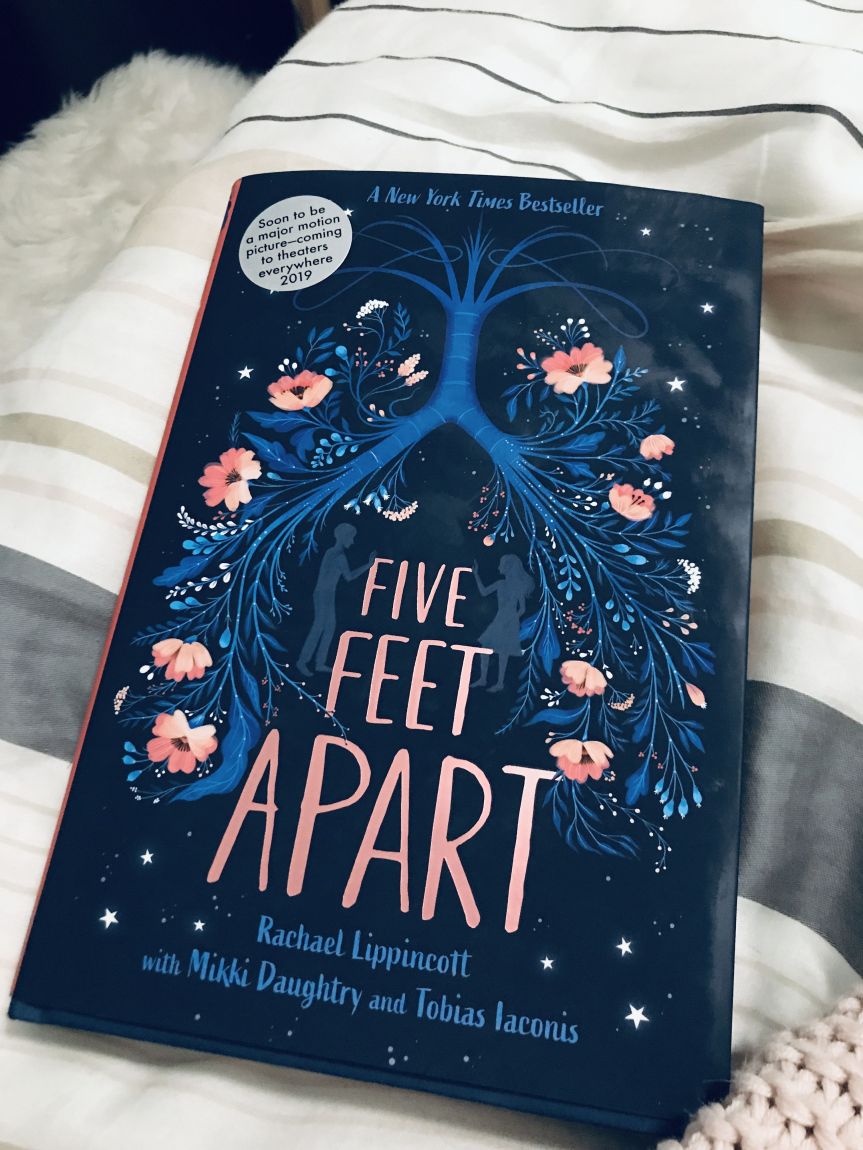
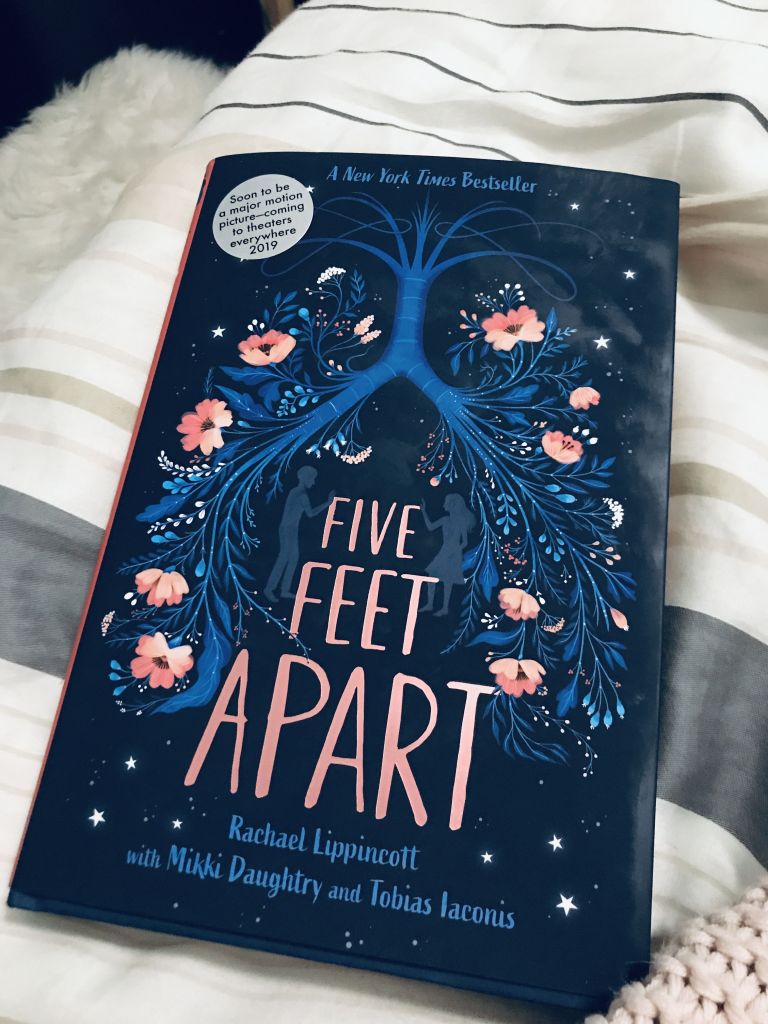
Cover of Five Feet Apart

Introduction

Love can happen to anyone at anywhere, even at a hospital. Five Feet Apart by Rachael Lippincott ( co-authored with Mikki Daughtry and Tobias Iaconis) is such an endearing, engaging and modern-age young adult novel. Talking about the difficulties of life and love while struggling with a inherited chronic disease, is artistically presented in this book. This novel appeals a demand for its readers to think the priorities of a normal life, that often a person with persistent sickness fails to enjoy. The Book Five Feet Apart is adapted into a movie under the same title with Haley Lu Richardson and Cole Sprouse as lead characters.

About The Authors

Rachael Lippincott is the coauthor of All This Time,  New York Times bestseller Five Feet Apart, and She Gets the Girl and the author of The Lucky List. She holds a BA in English writing from the University of Pittsburgh.

Rachael Lippincott

Mikki Daughtry is an American screenwriter and Young Adult Fiction  author. She is best known for writing, along with writing partner Tobias Iaconis, the films The Curse of La Llorona  (2019), Five Feet Apart  (2019) and Nightbooks  (2021).

Mikki Daughtry and Rachael Lippincott

Storyline of The Novel

The story evolves around two teenagers Stella Grant and Will Newman. Stella is a chronically ill teen with Cystic Fibrosis (CF). She’s been in and out of hospitals for lengthy treatments most of her life. A rule-follower and control freak, Stella is careful to take her medications on time and do whatever is needed to maintain her treatment regimen. Only then can she hope for a lungs transplant. She maintains a website through which tens of thousands of viewers follow her journey. Her friend, Poe, who also has CF, is a patient at the same hospital. They communicate frequently, but often via text. Individuals with CF must remain 6 feet apart at all times to avoid sharing life-threatening germs. Will  is a new patient at the hospital. His wealthy mother has arranged for him to participate in clinical trials all over the world. Nothing has helped. Will’s problem is worse than Stella’s and Poe’s. On top of CF, he has a condition called B. cepacia, which will deplete his lung function rapidly. This condition makes him ineligible for a lung transplant and far more dangerous to other CF patients.

Stella and Will meet at the hospital, and almost immediately fall in love with each other. If Stella catches this disease, she will get crossed off the list of people that can get new lungs and start a new life. This makes the relationship between the two very difficult since they must refrain from touching or even approaching each other closer than 6 feet. The more the two fall in love, the more tempting it is for them to break the rules and come closer, hold hands, or even kiss. Poe is a secondary character that is best friends with Stella and provides great support for her. The two have been friends since the age of 6, and are very close emotionally, but haven’t ever been close physically because of CF.

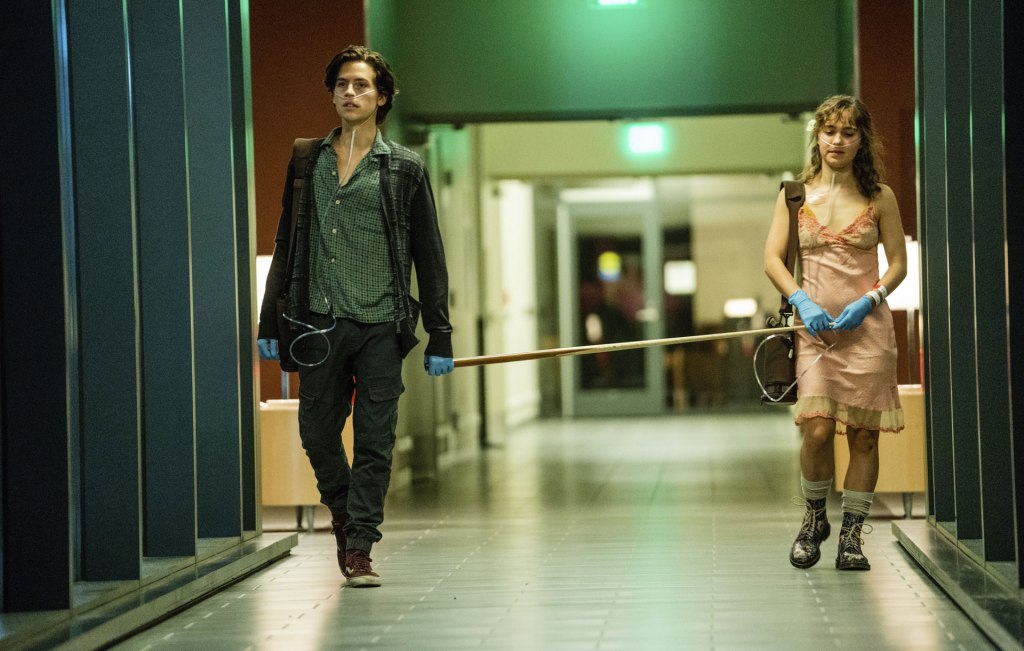
Haley Lu Richardson as Stella Grant and Cole Sprouse as Will Newman in Five Feet Apart movie (2019)

Analysis of The Storyline

Rachael Lippincott delivers an intriguing, emotional, well-plotted and well-written read here with relatable and likeable characters that readers can’t help but to fall in love with. The story is told in alternating perspectives between Stella and Will in a thoroughly enjoyable narrative manner. They complimented each other so well that both of their situations and feelings towards each other ring true.

While there are predictable elements in Five Feet Apart by Rachael Lippincott, as a whole it is tender, emotional and heartfelt. Its easy to root for these characters. The romance may be sudden but given the circumstances, it makes sense and their interactions felt genuine. With heart and humour, Five Feet Apart by Rachael Lippincott is a good read.

Five Feet Apart movie (2019)

Criticism of The Storyline

The book flows very well and is very fast-paced. It is fun to read and is entertaining enough to read in one sitting. The authors used modern and teenage language by incorporating informal conversations ( and sometimes slangs) which adds lucidity to the novel and overall improves the readability. The authors did a good job explaining the disease that the two protagonists have which makes the book easy to understand even to the readers with no prior knowledge of the Cystic Fibrosis disease.

Five Feet Apart is a book that will move you to tears at times. It is heart-felt and gives light to the seriousness of Cystic Fibrosis. The authors included a lot of detail, writing about the daily struggles and tasks that the patients if CF have to go through. Every author tries to write in a way that makes it so the reader can live through the book and Lippincott, Daughtry, and Iaconis do a beautiful job at this. The reader can really feel the emotions of the characters and this is why the book is so gripping. You’re so engrossed in the story that you must know how it ends, with the hope that Stella and Will can conquer anything. This book is touching and definitely worth reading.

Scene from Five Feet Apart movie (2019)

Conclusion

This book is recommended to modern-age readers and fans of YA romance because the book tells you that even if you stand different and have difficulties to deal with in your life and health, you can still find love, even at places it is least expected to be found in general. This book is a definitely good romance novel that takes two people that think that they don’t have anything in common to them falling in love.

Prime Minister’s Employment Generation Programme (PMEGP)

 Ministry of MSME is implementing Prime Minister’s Employment Generation Programme (PMEGP) since 2008-09 through Khadi and Village Industries Commission (KVIC) as nodal agency at the national level for generating employment opportunities in the country by setting up micro-enterprises in non-farm sector.


Under PMEGP, General Category beneficiaries can avail of Margin Money subsidy of 25 % of the project cost in rural areas and 15% in urban areas. For Special Categories such as SC/ST/OBC/minorities/women/ex-serviceman/physically handicapped /NER/Hill and Border areas, etc., the Margin Money subsidy is 35% in rural areas and 25% in urban areas.  Maximum project cost for manufacturing unit is Rs.25 lakh and for service sector is Rs.10 lakh.


            Since its inception upto 31.12.2021, about 7.38 lakh new micro units have been assisted utilizing margin money subsidy of Rs.17819.23 cr. generating estimated employment opportunities for about 60.60 lakh persons.

            The scheme has been successful in generating rural employment spread across various social categories. Around 80% of the PMEGP units have been set up in rural areas and about 50% of the units have been set up by SC/ST/Women entrepreneurs. Target set and achievement made under the PMEGP Scheme in the country during the last three years and current year as on 27.01.2022 is given below:


 Margin Money :- Rs. in lakh)

Year

Target

Achievement

No. of Units assisted

Margin Money disbursed

Estimated Employment Generated

No. of Units assisted

Margin Money disbursed

Estimated Employment Generated

2018-19

72381

206880.00

579048

73427

207000.54

587416

2019-20

79236

239644.00

633888

66653

195082.20

533224

2020-21

78625

228968.52

629000

74415

218880.15

595320

2021-22 (as on 27.01.2022)

92666

285000.00

741328

60180

185122.76

370840


State/UT-wise number of Women beneficiaries benefitted under PMEGP scheme during last three years and current year is given at Annexure.


Following steps have been taken for the effective implementation of PMEGP:


  1. The process of application flow, including bank sanctions and disbursement, has been made faster and transparent through introduction of on-line portal.
  2. The process of selection of entrepreneurs has been further streamlined with the discontinuation of the role of District Level Task Force Committee (DLTFC) since April, 2020, in recommending proposals/applications to financing banks. In the revised scenario, the proposals are now sent directly by Implementing Agencies to financing banks based on a Score Card model, thereby reducing the overall approval period.
  3. Organizing of Entrepreneurship Training Programme (EDP), mandatory before disbursal of loan by Banks, has been made online since October 2019 to provide expedited training and release of loan to the beneficiaries.
  4. Free two day online pre- EDP training has been introduced for interested applicants. 
  5. The list of activities has been expanded to attract entrepreneurs for setting up diverse units.
  6. Implementing Agencies like Khadi and Village Industries Commission (KVIC), State Khadi and Village Industries Board (KVIB) and District Industries Centres (DICs) are providing handholding to applicants, through call centres, online tutorials as well as with help desks with banking and marketing experts.
  7. Sector/industry wise webinars are also being organized every Sunday involving industry experts and banks with participation of more than 300,000 prospective applicants.


No. of  Women beneficiaries assisted under PMEGP during last three years and Current Year (as on 27.01. 2022)


Sr. No.


Name of State/UT


2018-19

2019-20

2020-21

2021-22

(as on 27.01. 2022)

1

Jammu & Kashmir

2449

1861

3235

5982

2

Ladakh

0

0

85

46

3

Himachal Pradesh

528

447

431

     279

4

Punjab

703

681

737

493

5

U.T. Chandigarh

13

8

6

5

6

Haryana

547

592

622

469

7

Delhi

54

41

33

30

8

Rajasthan

524

732

663

446

9

Uttarakhand

499

467

551

288

10

Uttar Pradesh

1433

1574

2777

2193

11

Chhattisgarh

726

670

753

444

12

Madhya Pradesh

738

627

1435

1075

13

Sikkim

27

29

24

13

14

Arunachal Pradesh

99

77

38

41

15

Nagaland

535

481

310

232

16

Manipur

533

518

725

265

17

Mizoram

542

389

417

110

18

Tripura

248

219

224

136

19

Meghalaya

126

117

140

102

20

Assam

999

798

951

464

21

Bihar

861

582

665

425

22

West Bengal

810

911

907

530

23

Jharkhand

428

451

444

256

24

Odisha

1185

1160

1319

936

25

A & N Islands

51

17

42

25

26

Gujarat*

2382

2719

1841

2061

27

Maharashtra**

1965

1636

1179

984

28

Goa

30

36

18

26

29

Andhra Pradesh

1101

1113

856

811

30

Telangana

668

735

734

579

31

Karnataka

1086

1167

1492

1160

35

Lakshadweep

0

0

2

33

Kerala

1052

1003

953

612

34

Tamilnadu

2463

2841

2663

1699

35

Puducherry

29

21

13

20

GRAND TOTAL

25434

24720

27285

23237


Guidelines on Extended Producers Responsibility on plastic packaging under Plastic Waste Management Rules, 2016

 Ministry of Environment, Forest and Climate Change has notified the Guidelines on Extended Producers Responsibility on plastic packaging under Plastic Waste Management Rules, 2016. The guidelines on extended producer responsibility coupled with prohibition of identified single use plastic items, which have low utility and high littering potential, with effect from 1st July 2022, are important steps for reducing pollution caused due to littered plastic waste in the country. 

In a tweet message, Minister for Environment, Forest and Climate Change, Shri Bhupender Yadav informing about the development stated that guidelines will promote development of new alternatives to plastics and provide a roadmap for businesses to move towards sustainable plastic packaging.

The Guidelines provide framework to strengthen circular economy of plastic packaging waste, promote development of new alternatives to plastics and provide further next steps for moving towards sustainable plastic packaging by businesses. Reuse of rigid plastic packaging material has been mandated in the guidelines to reduce the use of fresh plastic material for packaging. 

The enforceable prescription of minimum level of recycling of plastic packaging waste collected under EPR along with use of recycled plastic content will further reduce plastic consumption and support recycling of plastic packaging waste.

The EPR guidelines will give a boost for formalization and further development of plastic waste management sector. In a significant first, the guidelines allow for sale and purchase of surplus extended producer responsibility certificates, thus setting up a market mechanism for plastic waste management. 

The implementation of EPR will be done through a customized online platform which will act as digital backbone of the system. The online platform will allow tracking and monitoring of EPR obligation and will reduce the compliance burden for companies through online registration and filing of annual returns. In order to ensure monitoring on fulfilment of EPR obligations, the guidelines have prescribed a system of verification and audit of enterprises.

The Guidelines prescribe a framework for levy of environmental compensation based upon polluter pays principle, with respect to non-fulfilment of extended producer responsibility targets by producers, importers & brand owners, for the purpose of protecting and improving the quality of the environment and preventing, controlling and abating environment pollution. The funds collected shall be utilized for collection, recycling and end of life disposal of uncollected plastic waste in an environmentally sound manner. 

Under these producers, importers & brand owners, may operate schemes such as deposit refund system or buy back or any other model, in order to prevent mixing of plastic packaging waste with solid waste. 

Detailed Notification


***

STARS project signed between DEA and World Bank

 Agreement for the financial support of the implementation of Strengthening Teaching-Learning and Results for States (STARS) project of Ministry of Education was signed between Department of Economic Affairs (DEA) and World Bank along with Ministry of Education. The total project cost of STARS project is Rs 5718 crore with the financial support of World Bank amounting to US $ 500 million (approximately Rs. 3700 crore) and rest coming as State share from the participating States, over a period of 5 years.

STARS project would be implemented as a new Centrally Sponsored Scheme under Department of School Education and Literacy (DoSEL), MOE. Earlier Union Cabinet has approved the proposal of STARS project on 14th Oct 2020. The project covers 6 States viz Himachal Pradesh, Rajasthan, Maharashtra, Madhya Pradesh, Kerala and Odisha. The identified States will be supported for various interventions for improving the quality of education.

The Program envisions improving the overall monitoring and measurement activities in the Indian school education system through interventions in selected states. STARS will draw on existing structure under Samagra Shiksha with the DoSEL, MoE as the main implementing agency at the national level. At the State level, the project will be implemented through the integrated State Implementation Society (SIS) for Samagra Shiksha.

The proposed World Bank support under STARS is primarily in the form of a results-based financing instrument called Program for Results (PforR). This will ensure major reforms at the State level through a set of disbursement-linked indicators (DLIs). A State Incentive Grant (SIG) will be used to encourage States to meet desired project outcomes. The SIG matrix has been aligned with the intermediate outcome indicators as per the requirement of PforR instrument. An independent Verification agency (IVA) will verify each result before disbursement of funds.

STARS project will be instrumental in the implementation of various recommendations of National Education Policy 2020 i.e. Strengthening Early Childhood Education and Foundational Learning, Improving Learning Assessment System, ICT-enabled approaches in education, Teachers Development and Vocational education etc.

                                                               ******


Valedictory Function of Kala Utsav

 Union Education Minister Shri Ramesh Pokhriyal ‘Nishank’ today addressed the Valedictory Function of Kala Utsav 2020.

Addressing on the occasion, Shri Pokhriyal said that Kala Utsav realises the vision of the Prime Minister Shri Narendra Modi by giving the right direction and shape to the spirit of ‘Ek Bharat Shreshtha Bharat’. He appreciated the introduction of the Indigenous Toys and Games segment in Kala Utsav 2020 and emphasized that this promotes ‘Vocal for Local’.

Speaking on the National Education Policy 2020, Union Minister said the policy emphasises the promotion of arts and culture through education. Kala Utsav 2020 has also incorporated the recommendations of the National Education Policy 2020. Students, when indulging in any form of art, use their imagination and try to realise it and give it life thus turning it into reality. Kala Utsav gives an opportunity to this process. Such opportunities enhance the students’ reasoning, comprehensibility, problem solving, cognitive and decisive abilities, which are helpful in the all-round development of the student.

Shri Pokhriyal congratulated all the participants and the organisers for putting up such enthralling performances virtually, in the odd circumstances this year, an achievement unimaginable till a few months back. He expressed his happiness that  the unanimous participation of all the states with unparalleled enthusiasm prove once again that India is an epitome of Unity and Diversity which is also her speciality and source of strength. 

About Kala Utsav 2020:

Kala Utsav 2020 was launched online on 10 January 2021 through a digital platform. A total of 35 teams have participated in Kala Utsav 2020, from different states, union territories, Kendriya Vidyalaya Sangathan and Navodaya Vidyalaya Samiti schools where 576 students demonstrated their talent. Out of these participants, 287 girls and 289 boys participated in Kala Utsav 2020 including four divyang participants. The Department of School Education and Literacy, Ministry of Education and National Council of Educational Research and Training have done commendable work. Due to their tireless hard work, Kala Utsav 2020 has been successful, even in the circumstances of COVID-19.

In the competitions of Kala Utsav 2020 organised from 11 to 22 January 2021, a total of nine art forms, namely— 1. Classical singing 2. Traditional folk song 3. Classical instruments
4. Traditional/folk instruments 5. Classical dance 6. Folk dance 7. Visual Arts (Two-dimensional) 8.Visual Arts (Three-dimensional) 9. Local games-toys are included. Earlier there were only four art forms in Kala Utsav, now another five art forms have been added in it.

Click here to access the result of Kala Utsav 2020

MC/KP/AK

****