Prime Minister Narendra Modi particularly thanked Romania for permitting Indians to enter its territory without visas.
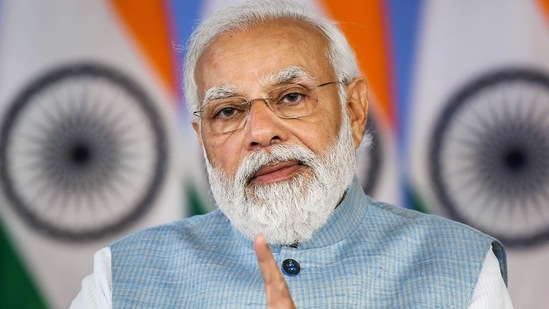
Prime Minister Narendra Modi thanked Romania PM Nicolae-Ionel Ciucă, and Slovak PM Eduard Heger for permitting evacuation flights to land in their countries to bring back stranded Indians from war-hit Ukraine. (PTI)
Prime Minister Narendra Modi on Monday spoke to his Romanian and Slovak counterparts Nicolae-Ionel Ciucă and Eduard Heger, respectively, as India continued to use the two nations as land routes to bring back its stranded nationals from war-hit Ukraine.null
Modi thanked both Ciuca and Heger for their assistance in the repatriation process since Russia’s invasion of the east European country. According to a statement, he particularly thanked the Romanian PM for allowing Indians to enter the country’s territory without visas.
He thanked them for allowing special evacuation flights in their countries, which are being used to bring home stranded Indian citizens from Ukraine.
Further, Modi apprised Ciuca and Heger of the deployment of aviation minister Jyotiraditya Scindia and Union law minister Kiren Rijiju in Romania and Slovakia, respectively, as special envoys to oversee the evacuation process over the next few days.
During his calls with the two leaders, Modi also expressed his anguish at the ongoing violence and humanitarian crisis in Ukraine, and reiterated the need for a return to dialogue. “He also stressed upon the importance of respecting sovereignty and territorial integrity of nations,” a PMO statement said.
Written by Sharangee Dutta | Edited by Sohini Goswami, New Delhi
There are two kinds of students attending school or a college, they are either hostellers or day scholars. Day scholar students would have been wondering what would hostel life be like? There are a few things we all would have heard from hostellers. Nowadays both of the parents are working, so they prefer to join their children in a hostel rather than picking them up or arranging them a transport and worrying whether the child has reached safely or not, Also students from long distance obviously need hostel for them to stay.
Hostel life
There are certain things we are curious about hostellers. We often ask hostellers whether they miss their family and their previous environment. Of course hostellers miss their family and their home when they are new to hostel life. It’s very natural for a person to feel uncomfortable in a new place with new people surrounded by them. We often come across the word home sick, which is nothing but a distress caused by being away from home. Students miss their home, their family, they want to go back but all these sickness is temporary, once they find new friends and start feeling easy about hostel, it would be the best period of their lives. Hostel life is real fun, imagine staying with your friends all day long, chatting, watching shows and having your own little snacks party and saying creepy stories and enjoying the frightened face of your friends, isn’t it funny? Hostel is not only meant for enjoying but also it’s a great advantage to discuss and learn new things among friends. Each one of the students must be good at something, so it will be easier to learn a lot of new things within themselves.
Leaving Hostel
Staying all those years in hostel, it becomes like another home for them, leaving all those crazy memories and friends hurts them a lot, it’s the same feeling when they left their home for the first time or we can even relate it with our graduation day ,the farewell day , the day after which we won’t be able to experience what we experienced till now. But at last everyone came to the hostel with a purpose, once the purpose is filled we are supposed to leave the zone.
A country is divided not based on its geographical features, but its unique citizens. Even though the underlying principle of India’s success is “Unity in Diversity”, often these differences do not play well with ethnic communities. The intrusion of religion in politics can only yield unwelcoming outcomes. This is where secularism comes in, an ideology that clearly states” Civic affairs should not have any basis in religion”. In 1851, the British writer George Holyoake coined this term, in a quest to replace the aggravating word ‘Atheism’. The main objective of this ideology is to make appropriate decisions without harming the integrity of any religion. In lamen language, he did not want secularism to be misunderstood with discrimination. Not involving certain topics in a decision-making conference does not necessarily mean we deliberately excluded them or seek to prejudice them.
Types of secularism
Based on the intensity of secularism, it can be divided into two types-hard and soft. Hard secularism is a radical option, which aims to completely disavow any stance the topic takes in political decorum. It renders any form of religious knowledge illegitimate. On the other hand, soft secularism finds its roots in neutrality, tolerance, and liberalism. It argues that attaining the “absolute truth” is not possible without proper deliberation and tolerance of religious issues in civic issues. Secularism is also divided into three different types based on its application. These are political secularism, philosophical secularism, and socio-cultural secularism. All three overlap and are related to each other, yet they exhibit divergent traits and embody discrete meanings.
Secularism in India
India is a multi-cultural and multi-ethnic society. From harboring Muslims, Christians, and Hindus to being the home of more than a hundred languages, our diversity is one that is marveled all over the world. Keeping in mind the conflicts of interest that might arrive with this heterogeneity, our leaders came up with an effective solution to keep the integrity of politics of this country intact. With the 42nd Amendment of the Constitution enacted in 1976, we declared ourselves a secular nation. Secularism has always been an inspiration for modern India. We identify as a just nation that gives equal rights and opportunities to all its citizens despite their race, caste, or creed. But, the controversy surrounding Indian secularism has also had its share of attention. With many critics claiming that Indian secularism is “defrauded”, a good look at the positive changes bought about by this ideology might change the way they think about our nation.
One of the best examples of the success of the secularism amendment in India is Muslim Madrassas ( religious education schools) getting government funds. Or the fact that one of our own presidents, Dr. APJ Abdul Kalam, was a Muslim. Prime Minister Manmohan Singh was a Sikh, whilst the party leader Sonia Gandhi was a Christian(Born in Italy). Time after time we have witnessed different communities get their fair share of opportunities, and produce fruitful outcomes, all because Indian secularism was, has, and will always be a success.
The term “secular” means being “separate” from religion or having no religious basis. Religion is open to one and all and is given as a personal choice to an individual without any different treatment to the latter.This is the ideology that has done wonders for the world.
Namita Thapar is the Executive director of Emcure Pharmaceuticals. Emcure pharmaceutical is a multinational company in Pune, Maharashtra. The company produce tablet, capsule, and various parental pharmaceutical product. The company also is to promotes youth entrepreneurship by teaching entrepreneurial skills to children in age 11-18 years.
The Namita Thapar born in 21 march 1977. she is from Gujarathi Family. She has done her schooling in Pune. After that, she achieve Charted Accountant degree from ICAI. She completed her MBA from Fuqua School of Business at Duke University. She likes to spend time reading and traveling. She is also a public speaker conducting public speaking at various platforms such as Harvard business school, IIM-Ahmedabad, etc.
Namita Thapar has come into the eye as an investor in shark tank India. The Judges are called Sharks who listen to various business ideas and invest in them. It is the platform for youth to become successful entrepreneurs. In 2020 Thapar started a Youtube channel named Unconditional yourself with Namita Thapar. In this talk, she uploaded videos about Women’s health with various doctors, patients, and healthcare experts.
Namita Thapar got the economic times ahead list 2017 Award, India’s hottest young business leader by The economic times in 2017. she always focuses on women’s empowerment. During her interview she shared three M’s for a happy and healthy life she said, “I relax in three ways- Massage, Movies, and Meditation. I ensure I schedule time for this on a routine basis so I can’t reach that breaking point”
In pursuance of provisions under Section 36 of the Motor Vehicles (Amendment) Act, 2019 and section 93 of Motor Vehicles Act, 1988, Ministry of Road Transport & Highways has issued the Motor Vehicle Aggregator Guidelines, 2020 on 27th November, 2020 and amendments therein on 8th December,2020. The Guidelines are available on the website of the Ministry of Road Transport & Highways (www.morth.nic.in ). It has been shared with States to take appropriate action for regulating taxi aggregators.
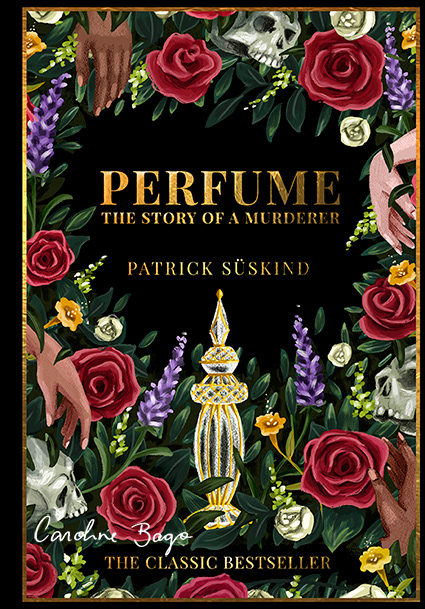
Perfume: The Story of a Murderer (German: Das Parfum: Die Geschichte eines Mörders ) is a 1985 literary historical fantasy novel by German writer Patrick Süskind. The novel explores the sense of smell and its relationship with the emotional meanings that scents may have. An acclaimed bestseller and international sensation, Patrick Suskind‘s classic novel provokes a terrifying examination of what happens when one man’s indulgence in his greatest passion – his sense of smell – leads to murder. This novel was later adapted into a famous movie in 2006 with the same name, starring Ben Whishaw, Alan Rickman, Karolina Herfurth and others.
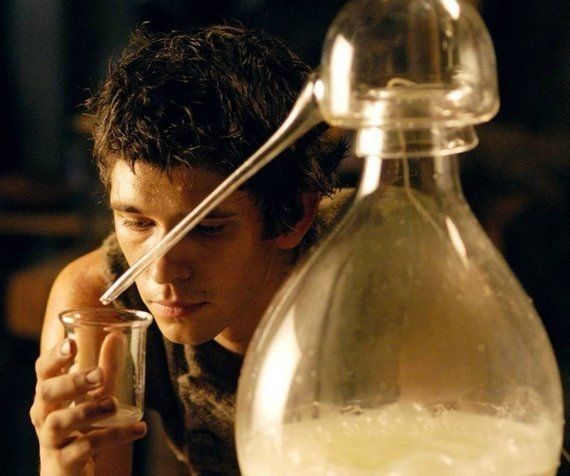
Ben Whishaw as Grenouille in Perfume: The Story of A Murderer (2006)
About The Author
Patrick Süskind ( born 26 March 1949) is a German writer and screenwriter, known best for his novel Perfume: The Story ofaMurderer, first published in 1985. Süskind lives as a recluse in Munich, in Seeheim , and in France at Montolieu. After spending the 1970s writing what he has characterized as “short unpublished prose pieces and longer un-produced screenplays”, Patrick Süskind was catapulted to fame in the 1980s by the monodrama Der Kontrabass [The Double Bass, 1981:], which became an instant success and a favourite of the German stage. In 1985 his status as literary wunderkind was confirmed with the publication of the novel Das Parfüm. Die Geschichte eines Mörders [Perfume. The Story of a Murderer], which quickly topped the European best-seller list and eventually sold millions of copies worldwide.The public knows little about him; he has withdrawn from literary society and does not grant interviews or allow himself to be photographed.
Ben Whishaw as Grenouille and Karolina Herfurth as Girl with Plums in Perfume: The Story of A Murderer (2006)
Storyline of The Novel
The novel is set in Paris in the 1700’s and follows the life of a man named Jean-Baptiste Grenouille who is born with an incredibly strong sense of smell. His nose is so keen that he is able to smell people coming, can locate lost items simply by their scent, and can catalogue smells in his mind. Whilst his sense of smell may be keen, his heart is empty and he seems to be completely unrestrained by everyday emotions. As a young lad, Grenouille encounters the irresistible smell of a young girl entering puberty. He promptly murders her and sniffs every inch of her body to catalogue the unique scent. Believing it is his destiny to bottle such a scent, Grenouille decides to pursue a career as a master perfumer, he works as an apprentice where his unique skills quickly make him the best perfumers in France. The story then follows Grenouille as he becomes a famed perfumer and experiments in scents that allow him to either go unnoticed or incite various emotions among those who smell it. His obsession with scents goes on to reaches a head with extreme consequences for all.
Ben Whishaw as Grenouille in Perfume: The Story of A Murderer (2006)
Analysis of The Storyline
A book about the sense of smell could have been a dull affair, were it not for the excellent way it is written by Suskind. His use of language is beautiful and his descriptions make even some with a dull nose like mine feel like they can smell the essences on the page. It’s not hard to see why this book has become such a modern classic given how excellent Suskind’s prose is. I challenge anyone not to read this and not then start using their nose a little more.
Scene from Perfume:The Story of A Murderer (2006)
The character of Grenouille is both fascinating, sympathetic, and yet also repulsive. In early life he is beat down at every corner and one can’t help but root for the character as he tries to rise above his terrible beginnings. As he becomes more in control of his life, Grenouille quickly becomes insidious and deceptive and there’s something very creepy in the way he is described as living like a tick. Grenouille does indeed live like a parasite, taking whatever he needs from people. As he becomes more unstable, eventually resorting to killing a young virgin, Grenouille turns into a monster, but a compelling one nonetheless. Like Humbert Humbert from Lolita, he’s a character you feel bad for sympathising with, though Grenouille may be a little more redeemable.
Scene from Perfume: The Story of A Murderer (2006)
Criticism of The Storyline
this is in every sense an olfactory novel gives a striking sensory immediacy to the fiction itself. ”Perfume” is a historical novel but one in which the sheer physicality of its theme lends it an honorary present tense. And if Grenouille is the hero of the novel, his obsessions are also its informing presence. Just as he has difficulty with words ”designating non-smelling objects, with abstract ideas and the like,” so the novel itself creates an elemental world in which such abstract matters are only of token significance. The nose is defined here by a priest as ”the primitive organ of smell, the basest of the senses,” with its powers springing from ”the darkest days of paganism”; but it flourishes in Grenouille, even in an age of ”enlightenment,” and the unspoken message of ”Perfume” is that it flourishes still. The point about genuine historical fiction is that it is primarily concerned with the contemporary world. This is not a historical romance, full of ”Prithees!” and strange objects known as poniards, but a meditation on the nature of death, desire and decay.
Scene from Perfume: The Story of A Murderer (2006)
Conclusion
The story of perfume made us really re-evaluate the importance of scents and how certain smells can influence us on a subconscious level. It makes one wonder how much of our everyday lives are dictated by scents without us even realising it. Throughout the book, you get the feeling pressure is mounting and it ends in a finale that sees an orgy of scents come together in one hell of an ending that isn’t likely to leave you any time soon.















 Eduindex
You must be logged in to post a comment.