Why We Need Media Literacy

The presence of media in our lives is extensive. Take a look around you and observe all the various forms of media available. When are we not really surrounded by some form of media? According to Statista Research Department (2021), there are more than 143000 registered newspapers and periodicals across India. Around 210 million households own a television and 744 million users access the internet using mobile phones(Sandhya Keelari, 2021). There is a penetration rate of 54% for smartphones in India. 

An important question arises in this age of saturated information and intense political situations – Are we as media literate as we should be? Before coming to the importance of media literacy, let us look at its proper definition. Media literacy has been defined as the ability to access, analyze and evaluate the power of images, sounds and messages which we are now being confronted with daily and are an important part of our contemporary culture. It also refers to being able to communicate competently in media available on a personal basis. Media literacy basically refers to how much a person can identify the different types of media and understand their messages. These can be television, radio, print, advertisements, memes, video games, etc. Understanding the objective or goal of the author/creator of a media is the basis of media literacy. Media literacy is an essential topic of study, particularly for the youth, for the following reasons:

For Gaining Right Information:

Media literacy helps you access and understand new information, ideas, and perspectives. Media helps us collect data which can be very useful for school or work. A common example is how all students now go to the internet first when a project or presentation work is given to them. It helps them find out what they had missed before.

However, we must also be able to understand when inaccurate or wrong information is presented to us. As the media bombard us with information from all sides, finding the right data may be difficult. Media literacy helps us identify reliable sources. While misinformation has been a prevalent issue for years, it has become even more evident during the lockdown periods of the COVID-19 pandemic. Misinformation has caused both minor and major social and health issues in the country. Misinformation refers to wrong or inaccurate information spread unintentionally. A vast majority of forwarded messages in your family groups on Whatsapp would fall into this category. Disinformation, on the other hand, is false information propagated intentionally. People must be made aware of the nuisance of misinformation and disinformation. They should develop a skepticism towards digital information but not to the extent that they lose their natural curiosity.

Critical Thinking:

We need to be able to critically analyze the media presented to us. This means that on watching a news report, we should understand how the reporter has framed the news and if there is an underlying purpose or bias in the report. Media literacy also helps us recognize how biased media can affect our perceptions of an event or issue. In a country like India, almost all the media we are exposed to can be politically-charged. Directly or indirectly, most newspapers, television channels and media houses are affiliated with some political group or their views. This bias is not right or wrong as long as it is not the deciding factor above everything. Whether it is right or not, we as consumers should be able to recognize various perspectives presented by the media and respond rationally. This also applies to social media posts. Someone who has good media literacy skills can spot paid promotions or advertisements on social media and television.
Media literacy is an area of education that should be given more significance in India. It should be taught so that on exposure to any kind of media, people can find the answers to the following queries on their own:

  • What is the correct source of this message?
  • What creative techniques are used to grab my attention?
  • How might different people understand this message from me?
  • What values and points of views are represented in or avoided from this message?
  • Why are they sending this message?

WHAT IF TECHNOLOGY’S ACTUALLY MAKING US MORE HUMANE

Some say, that it is Artificial Intelligence that will cause the next Big Bang, vanquishing the entire human race. Another pose is that technology has resulted in our mind losing its power to think. Well, let’s ask ourselves a question-“What defines a human?”


A human is defined through various characteristics, out of which the principle ones include emotional interaction and social well-being. Technology’s aim was never to transfigure the way humans think or perceive their surroundings. It slightly altered our emotions to a more positive outlook. A mobile phone is nothing but a simple way to contact our kith and kin living away from us. A social media app is nothing but a path to bliss through socialization with the world. The feature of face-time is the new cure to depression and anxiety.

The truth is that technological superiority can never surrogate humans because it is us humans only, who put forward these advancements.

Machinery and computers have only amended our lifestyle for the better. Let’s take television as an example. Would we ever have known about starving kids in Africa, had it not been for the television. But now that we do, we are compassionate towards them and are funding their nutrition. Technology can be used not just for interaction, but for improving our day-to-day lives. Fitness recorders encourage us to get up and engage in physical exercises, and still, we hear about indolence due to technology. A simple web search can help us transform our diet and thus become more productive.

Thus the role that technology has played so far was for the betterment of humanity, and the persistence of humanity.

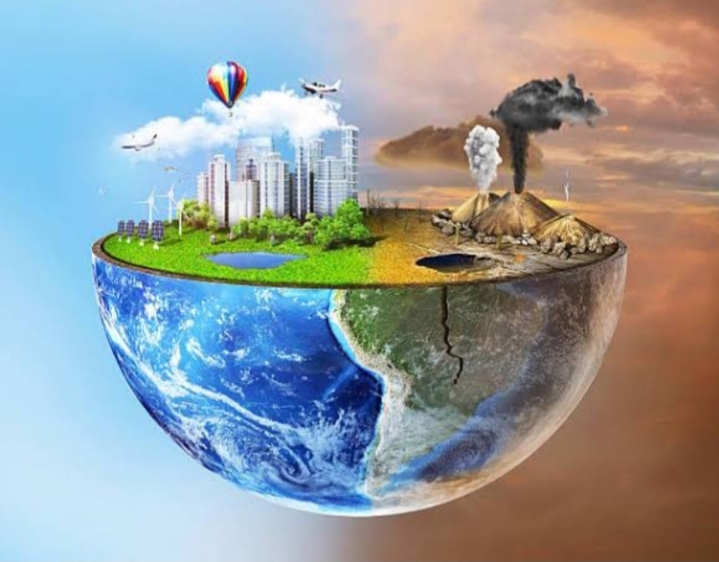
ONE OF THE BIGGEST PROBLEMS IN THE WORLD: POLLUTION

Pollution is the harmful things which are found in the environment. These harmful materials are called pollutants. Pollutants can be natural such as Sulphur dioxide, smog. They can also be man-made like wastage in factories. These hazardous pollutants cause air, water as well as land pollution. In addition to this, there are some other types of pollution like noise pollution, plastic pollution, light pollution, etc. Pollution can take the form of any substance (solid, liquid, gas) or energy.

Some forms of pollution are listed below:

Air pollution: Air pollution is caused due to increase in the hazardous gases in the air. Natural pollutants like smog, ground-level ozone, and man-made pollutants are carbon dioxide released from vehicles, some harmful gases released by the factory in the air cause air pollution. Air pollution causes heart disease, lung cancer, and long-term disease for the respiratory system. It also damages the human brain, kidneys, and other body parts.

Water pollution: water pollution occurs when agricultural fertilizers, pesticides, or insecticides are found in water. Oil leaks, industrial wastage which is found in water also cause water pollution. The diseases like diarrhea, cholera, typhoid, hepatitis A, polio can be caused due to intake of polluted water.

Sound pollution: sound pollution is caused due to loud music systems, machines in factories, or the use of firecrackers in any event. It is also caused by traffic noise. The most common effect of sound pollution on human beings is losing hearing power. It also causes high blood pressure, heart disease, sleep disturbance.

A Jest of God: The Book Review

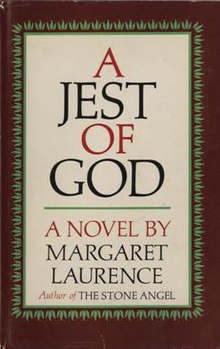
The first cover of A Jest of God (1966)

Introduction

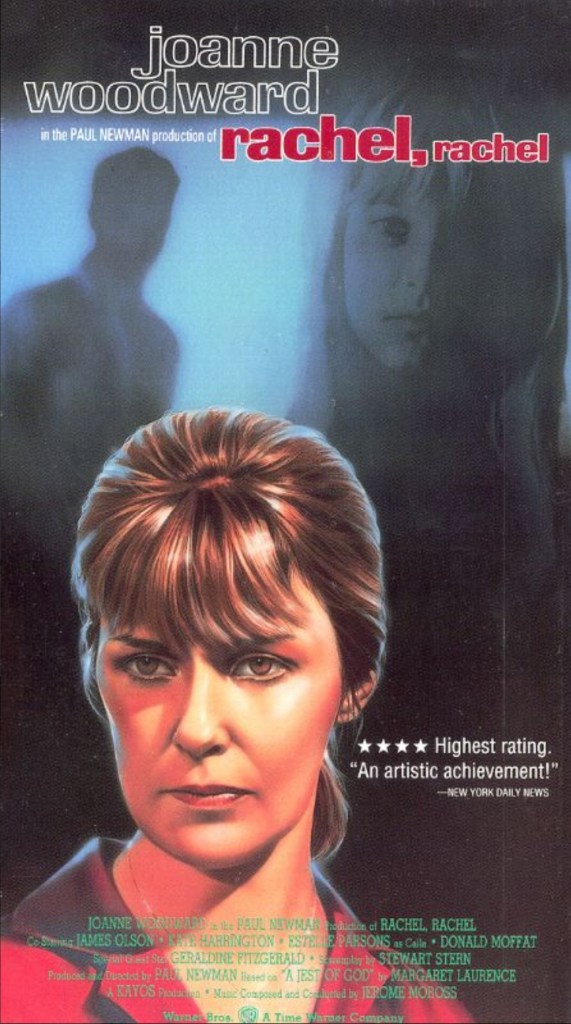
A Jest of God is a novel by Canadian author Margaret Laurence. It was first published in 1966. It won the Governor General’s Award  for 1966 . In 1968, director Paul Newman and screenwriter Stewart Stern  adapted A Jest of God  into the motion picture Rachel, Rachel. It starred Joanne Woodward in the lead role and Estelle Parsons as Calla, both of whom received Academy Award nominations for their performances. It was also nominated for Best Picture.

Revised Cover of A Jest of God (1966)

About The Author

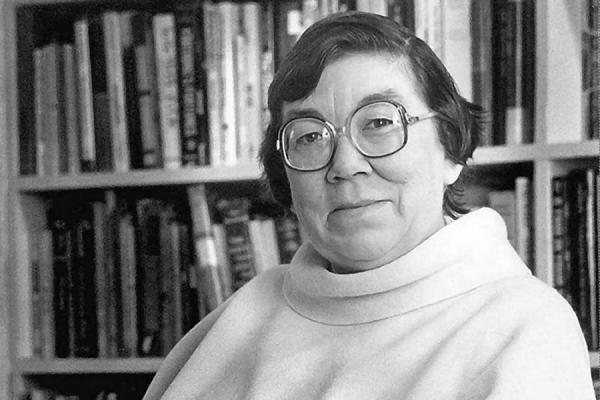
Margaret Laurence (née Jean Margaret Wemyss), was a Canadian novelist (born 18 July 1926 in Neepawa, MB; died 5 January 1987 in Lakefield, ON). Margaret Laurence was one of the pivotal and foundational figures in women’s literature in Canada. Two of her novels — A Jest of God (1966) and The Diviners (1974) — won the Governor General’s Literary Award  for fiction. She also wrote acclaimed poetry, short stories and children’s literature, helped found the Writers’ Union of Canada and the Writers’ Trust of Canada, and served as chancellor of Trent University. She was made a Companion of the Order of Canada  in 1972 and was named a Person of National Historic Significance by the Government of Canada  in 2018.

Margaret Laurence

Storyline of The Novel

The tale of the dutiful daughter who returned home to care for her ailing widowed mother records with appalling accuracy the life of a thirty-four year old spinster schoolteacher in a small town outside of Winnipeg. The relentless confinement of Rachel Cameron‘s life is disrupted the summer the milkman’s son, now a teacher in a Winnipeg high school, returns to visit his parents. Rachel is an easy mark; her affair with Nick brings out passion after awkwardness, and the yearning for a family of her own. The understanding that Nick is married destroys the affair but not her longing, and when she thinks she is bearing his child she determines to go through with her pregnancy. The prospective infant turns out to be a tumour, benign; Nick turns out to be unmarried and the more inaccessible; but Rachel emerges from her experience with a new conception of herself and her environment. She will no longer be a victim, though she may be a reluctant jester, and she makes the needed move to a place where her old responsibilities and limitations will remain but where there will be a greater freedom. Saved from soap opera by an utter sureness and honesty of vision, from dreariness by the aptitude of its portrayals, this carries a compassionate conviction that will reach a limited but sensitive feminine readership.

Poster of movie Rachel, Rachel (1968) based on novel A Jest of God (1966)

Analysis of The Storyline

The novel gets told with difficulty because Rachel’s voice is halting, obsessive. She begins her story as an observer, watching the children in the schoolyard, watching herself both in her immediate present as a teacher and remembering back to her childhood. She thinks of the “secret language” children share. In contrast, her own language is halting, and she finds difficulty establishing a voice. She frequently interrupts to judge her voice critically. She wonders: “Am I beginning to talk in that simper tone?” . Then, as a corrective, she speaks “more sharply than necessary,” and cautions herself to “strike a balance” . But, if we read this story in Jungian terms. (as many critics do),we perceive that Rachel cannot achieve this desired balance until she accepts her shadow side. Locked in a pattern of avoidance, no wonder she finds “my own voice sounds false to my ears”.

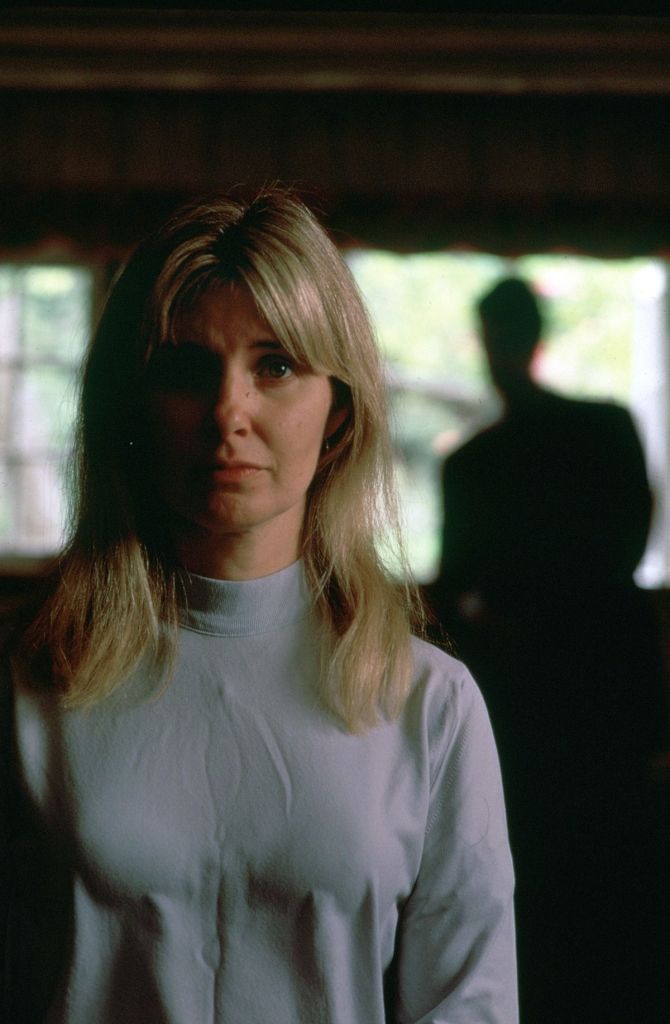
Joanne Woodward as Rachel in Rachael, Rachael (1968)

Because she resists acknowledging her desires, she remains blocked. When she approaches a recognition of her “darker,” “shadow” selves, she retreats, and stops the story. If she fears she is entertaining “morbid” thoughts or eccentric fantasies, she admonishes herself: “This must stop. It isn’t good for me. Whenever I find myself thinking in a brooding way, I must simply turn it off and think of something else”. She retreats from her sexual fantasies : “I didn’t. I didn’t…. Rachel, stop it. You’re only getting yourself worked up for nothing. It’s bad for you”. Yet these private fantasies are colourful and engaging, in vibrant contrast to her stilted public language and constrained behaviour. Fortunately, almost in spite of herself, she comes to acknowledge her desires and to face the implications of sexual passion. Through a symbolic descent into the underworld, the womblike, tomblike mortuary presided over by Hector Jonas (/Jonah), she realizes that she has the power to affirm her passions, to choose life.

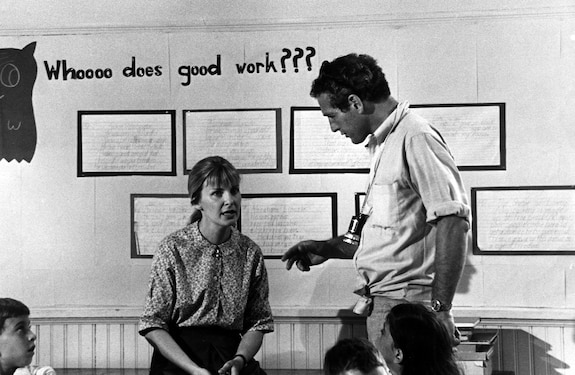
scene from Rachel, Rachel (1968)

Conclusion

A Jest of God is beautifully written, a sympathetic, tender novel which sees Rachel come to a new understanding about herself, and her standing with her difficult mother. A thoroughly beautiful novel, that still possesses its relevance to today’s readers.