The rising population of India as an asset

With the continuous rise in the young Indian population, India is growing younger. There is a “demographic dividend” that needs to be exploited. As per the findings of the ‘State of the Urban Youth, India 2012: Employment, Livelihoods, Skills,’ a report published by IRIS Knowledge Foundation in collaboration with UN-HABITAT, every third person in an Indian city today is a youth. In about seven years, the median individual age in India will be 29 years, very likely a city-dweller, making it the youngest country in the world.

No discussion in India about the environment, health, employment, and various other issues can be carried away by skipping the burning issue of the rising population. With a 1.2 Billion population (17% of the entire world population) India is the second most populated country after the People’s Republic of China. However, set to be utilized in a channelized manner Indian Population will prove to be a valuable asset rather than a liability.

Rising population and asset, how?

The youth segment of India’s population is growing rapidly and is projected to continue to do so for the next 30 years. This demographic dividend has the potential to inject new dynamism into the country’s flagging economy if the state acts quickly on health, education, and employment. Right now more than 50% of India’s population is below 25 which can be tapped for all-around socio-economic growth of the nation as the young workforce has more innovative minds.

Except for China, no country in the world has such big manpower as India has which is indeed a blessing for the country. Such a huge and skilled manpower coupled with resources needs to be regarded as an asset. The huge population offers a bigger pool of human resources and hence a bigger consumer market. Our population will remain our strength only when we have the power, strength, and will to feed the people, provide them clothing and shelter, good education, health care, and jobs. In the past decade, India has emerged as a major back office to the world with global firms outsourcing work to take advantage of the country’s less expensive, educated, young English-speaking workforce. India produces 2.5 million IT, engineering and life sciences graduates a year, besides about 650,000 postgraduates in science and IT-related subjects. The IT sector alone employs about 850,000 graduates and professionals while the pharmaceutical and biotechnology sectors are snapping up others.

Near about 402 million Indians are aged between 15 and 59 – the working-age – and this number is expected to grow to 820 million by 2020.

For the all-round progress of a large nation, its entire population must contribute significantly to diverse areas and sectors of the economy. A talented and hard-working population can easily emerge as a source of national development. A country like India can use vast natural resources coupled with huge manpower to make the country progress in the right direction. In India, there are more workers than dependents, which is good for the development of any economy.

How to channelize the continuously rising population?

No capital in the world can substitute human capital, the Indian state and the government need to properly utilize its skilled and talented population. There is a need for an increase in employment opportunities in the rural areas to make productive use of people’s skills. We cannot talk about the rising population without taking into account the problems of corruption, poverty, and illiteracy which go hand in hand and have been creating hurdles in the country’s progress as a whole. There is a need for the implementation of the government schemes like the National Rural Employment Guarantee Scheme in the rural areas at a massive scale so that more and more people can join the national mainstream. There is no doubt that India has one of the most highly skilled populations and these skills need to be used for employment generation.

There is a need to make the rural population of the country more and more literate and bring them out of poverty. The schools in the villages need to be made more developed with the curriculum and education system matching with that of the schools in the cities. The schemes like Mid Day meal need to be implemented properly and honestly and the education system in the rural areas should be made more attractive so that the rural children are attracted towards studies.  The public schemes targeting the poor need to be implemented properly and honestly because after that it would be easy to bring a large chunk of the country’s population into the national mainstream so that they can play a decisive role in nation-building. There is a need for various job schemes in the interior regions where there is not much industrial activity.

Conclusion

The advantages of such a large population can be had for the making the country more developed and to achieve these goal policies must be made to harness the potential of country’s youth population, which will certainly help in galloping the economy ahead in the double digits.  A huge population creates demand which is also a major indicator of the economic growth of a country. The need is to provide the right share of employment opportunities, education, a proper meal, and a corruption-free environment.
Analyzing Mid-day Meal: India’s School Lunch System

Official Logo of Mid-day Meal Scheme

Introduction

Food is a basic need of life.  And Education is important to make the life affluent. A hungry stomach cannot grasp the teachings of Education at school, there to provide better Education, schools all around the world, offer lunch to the students. In India, the system of school lunch is referred to as Mid-day Meal. In today’s editorial, we’re going to share insights about the system of Mid-day Meal in India.

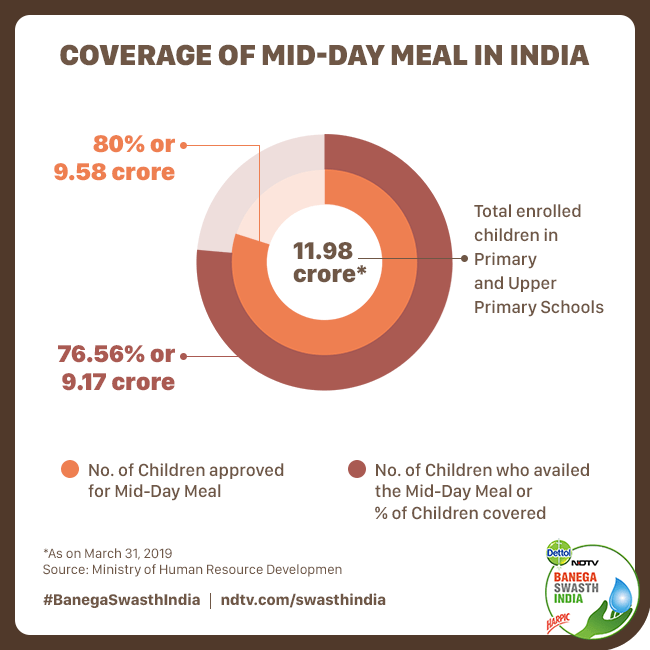
Coverage of Mid-day Meal Scheme in India

Brief Idea of What Mid-day Meal Is

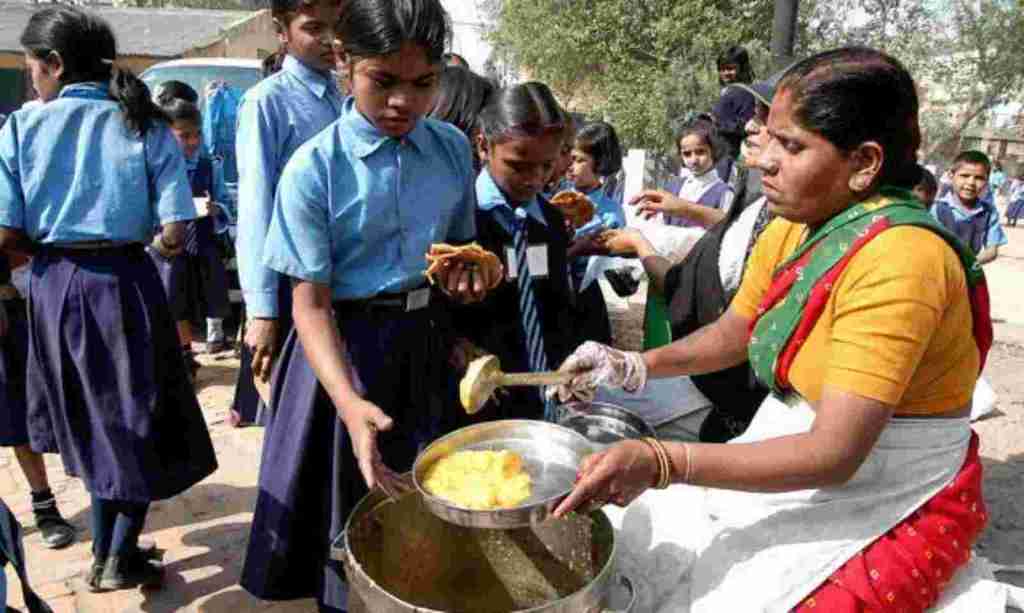
The Midday Meal Scheme, launched in 1995  by former Prime Minister of India, P.V. Narsimha Rao, under the Ministry of Education, is a school meal programme in India designed to better the nutritional  standing of school-age children nationwide. The programme supplies free lunches on working days for children in primary and upper primary classes in government, government aided, local body, Education Guarantee Scheme, and alternate innovative education centres, Madarsa  and Maqtabs  supported under Sarva Shiksha Abhiyan , and National Child Labour Project schools run by the Ministry of Labour. Serving 120 million children in over 1.27 million schools and Education Guarantee Scheme centres, the Midday Meal Scheme is the largest of its kind in the world.

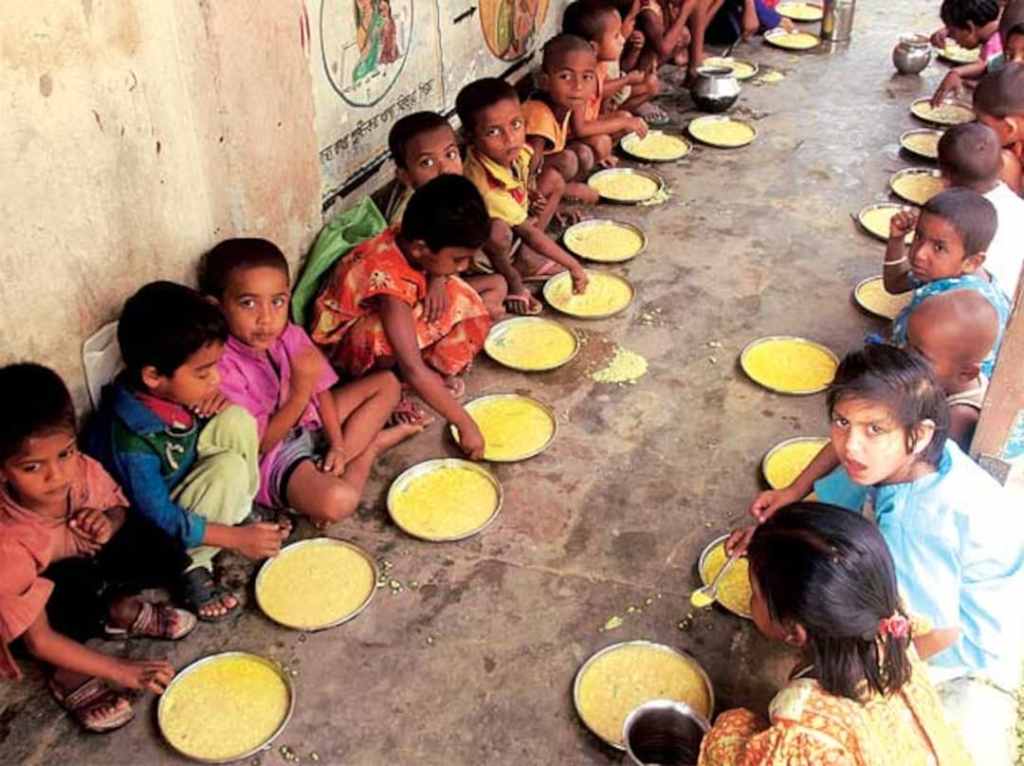
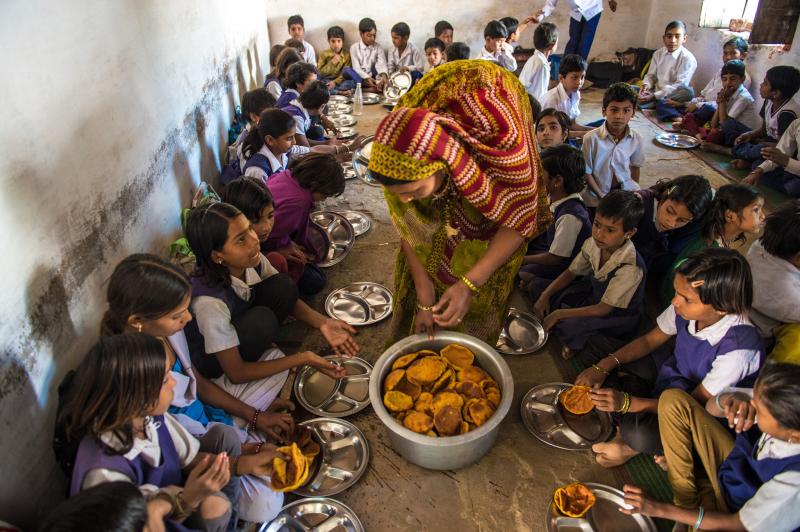
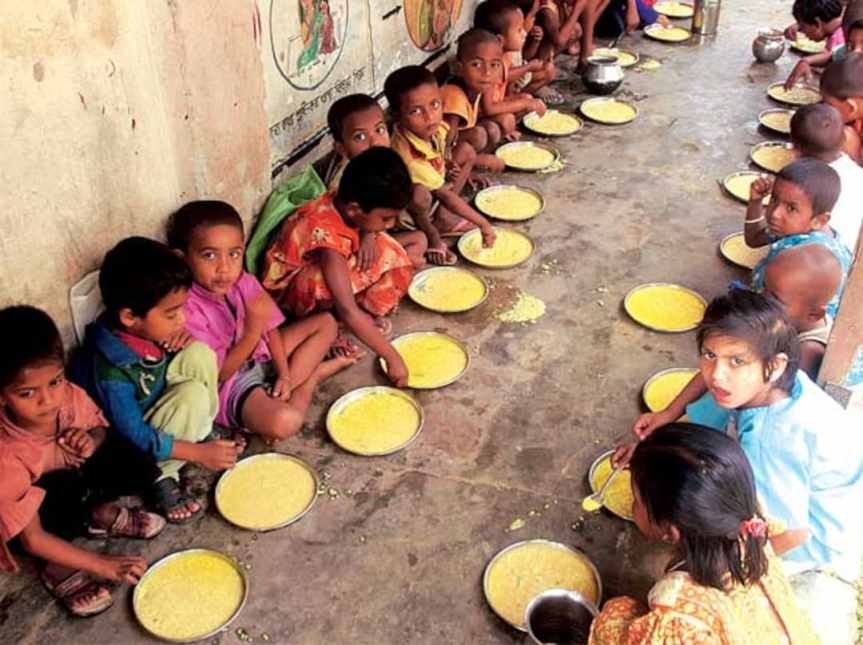
Students having Mid-day Meal at a School in India

Objectives of Mid-day Meal Scheme

  • To increase the enrolment in the schools of children who belong to disadvantaged sections of the society .
  • To increase attendance of students in Government and Government aided schools.
  • To retain the children studying in class I to VIII.
  • To give nutritional support to the children studying in the elementary level, specially in drought-prone areas.
  • To address hunger and malnutrition and increase socialization among the castes.
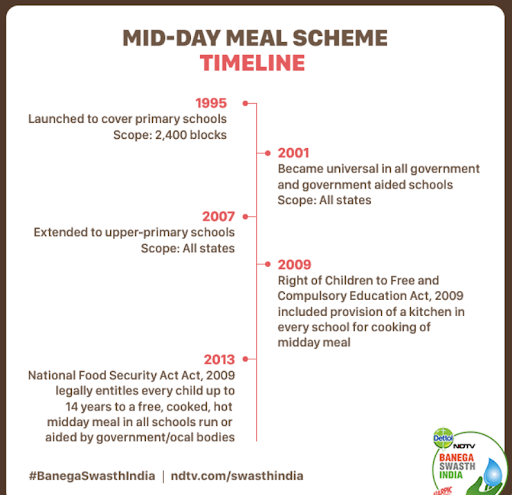
Mid-day Meal Scheme Timeline in India

Features of Mid-day Meal Scheme

  • It is one of the world’s largest school meal programs intended to achieve the goal of universalization of primary education.
  • For the implementation of the scheme, the Ministry of Human Resources and Development is the authorized body to implement the scheme.
  • It is a centre-sponsored scheme, so, the cost is shared between the states and the centre. Where the share of the centre is 60 percent.
  • The first state to implement the midday meal scheme was Kerala in 1984.
  • Till 2002, the scheme is designed especially for the government, government-aided and local body schools. But later on, the benefit of the mid-day meal scheme is extended to those children who were studying in educational guaranteed scheme centres or Alternative & Educational Centres.
  • In 2004, the scheme is again revised, and central assistance is offered for the cooking cost.  Apart from that, the transport subsidy included for all states, maximum of Rs 100 per quintal is provided to the special category states and Rs 75 per quintal for other states.
  • The provision of serving mid-day meals during summer vacation to the children in drought-affected areas was also added.
  • In 2006, the cooking cost was enhanced to Rs 1.80 per child/ school day for states in North Eastern Region and Rs 1.50 per child/ school day for other states and UTs.
  • In 2007, the scheme benefit is also extended to the children studying in the educationally Backwards Blocks.
  • Apart from the calories and food intake, for micronutrients (tablets and deworming medicines), each child is entitled to receive the amount provided for in the school health program of the National Rural Health Mission.
  • Meals provided under the Mid-day Meal Scheme
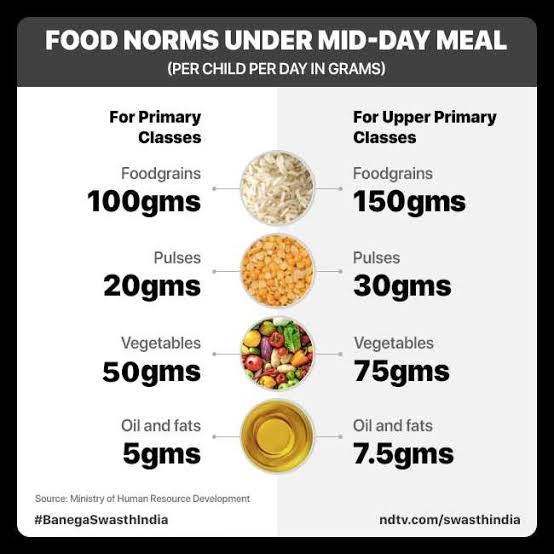
Food Norms under Mid-day Meal Scheme
  • The quantity of food items provided under this scheme per child per school day is as follows:
Food itemsPrimary level (Class I-V)Upper level (Class VI-VIII)
Food Grains100 gms150 gms
Pulses20 gms30 gms
Vegetables (leafy also)50 gms75 gms
Oil & fat5 gms7.5 gms
Salt & condimentsAs per needAs per need
Calories IntakePrimaryUpper Primary
Energy450 calories700 calories
Protein12 grams20 grams
Serving of Mid-day Meal

Advantages of Mid-day Meal

  • It satisfies the hunger of many children.
  • Supplying nutrition to children of the poor section helps them in concentrating on their studies better.
  • Students come to government schools daily and won’t be asked to do labour work.
  • Addresses the issue of malnutrition.
PM POSHAN SHAKTI NIRMAN

Recent Improvisation of Mid-day Meal Scheme

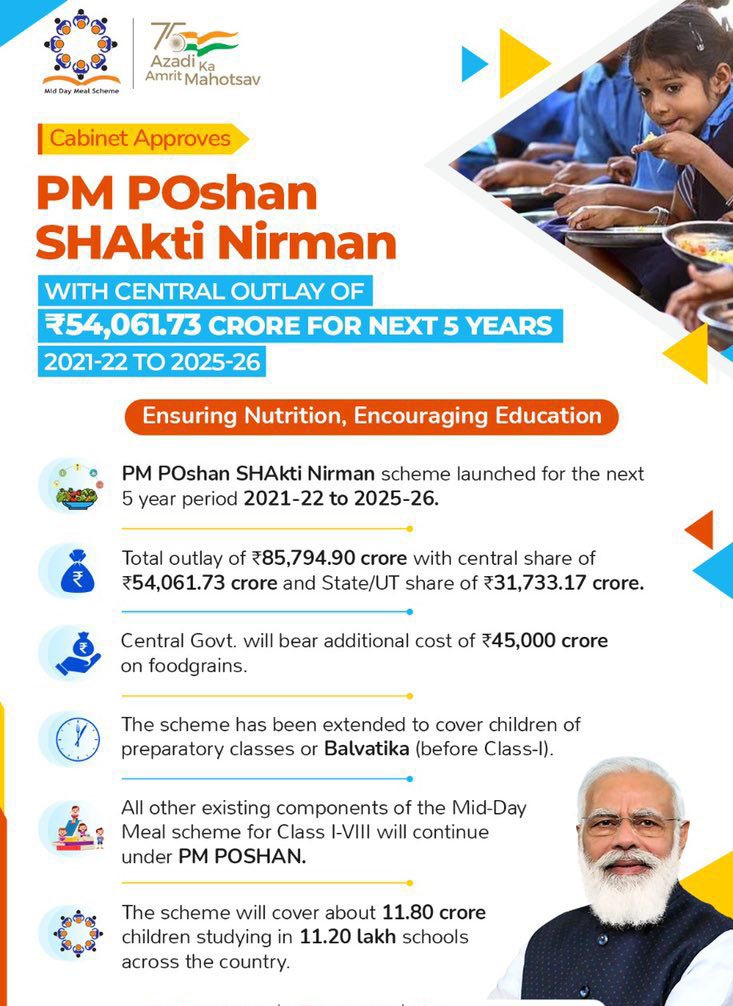
During the celebration of India’s 75th Independence Day as Azadi Ka Amrit Mahotsav, the Cabinet approved for the implementation of PM POSHAN SHAKTI NIRMAN for next 5 years i.e. 2021-22 to 2025-26.

Conclusion

There is no doubt that school is the only place that contributes to the socio-economic development of society. Here children from various backgrounds come together for promoting the culture of unity and brotherhood. The education they receive at school prepares them to achieve their goals and lead a successful life. When we talk about government schools, here children mostly come from economically challenged backgrounds. So, even though education schemes like Sarva Shiksha Abhiyaan are being implemented, the difficult financial conditions force these children to skip school and go on work. In such kind of circumstances,  the real potential of mid-day meal surfaces. Mid-day meal acts as an attractive incentive for parents to send their children to school with the sole hope that the young ones will receive at least one plate full of the meal for the day. 

Social Media Management

In this highly digital era that we live in, every company is trying to make use of social media to increase its presence and gain clients. At this point, social media management is something every management student and prospective job seeker should be knowing about.

Social Media Management is the process of using social media platforms like Twitter, Facebook and Instagram to create, publish and then analyze content for a company. It includes analyzing social media audiences and developing a strategy to create and distribute content for social media profiles, and engage with users. Efficient and well-organized management of social media actually gives many good opportunities for companies to profit more. Brands and companies can use social media to increase brand awareness and store visits. In a company, a Social Media Manager takes on the task of social media management. Social media managers need to be skilled professionals at social media marketing, management and advertising so that the company can reach its goals such as increasing social media revenue and user engagement. They could be working as a consultant or an in-house employee.

  • Social media helps brands engage with users all over the world. This is something traditional marketing and advertising cannot achieve as well as social media networks. Certain platforms like Instagram and Pinterest also help brands connect with niche audiences.
  • With this kind of extensive reach, the brand can now align their marketing initiatives with user behaviour.
  • Not to mention how convenient and cost-effective a social media initiative is. Setting up an account, posting content and engaging with users through chats and comments are all free of cost. Advertising on social media is a very profitable way of building a strong online following.

Major social media platforms used by brands and companies include Facebook, Twitter, Instagram, LinkedIn and Pinterest. There are several paid and unpaid tools that help in managing social media networks by scheduling posts, content, responding to inquiries and comments, etc.  

Photo by Kaboompics .com on Pexels.com

Here are 3 essential steps that will help a brand gain useful information about its social media strategy and direct it through the right path:

Reviewing the company’s social media through an audit:

Conducting a social media audit will help a company understand how effective its marketing strategy is. The audit would include listing all the social media profiles of the company and reviewing social media analytics regarding top-performing posts, engagement, publishing frequency follower growth, traffic sources, average response time, audience interests and demographics. Analyzing this data and reviewing competitor’s social media presence aids the brand in improving its social media management and identifying where it might be wasting its resources.

Researching Target Audience:

Having a good idea about who your audience is, is essential for efficiently managing social media. It helps in creating relevant content and boosting customer relationships. Without knowing your target audience you are basically wasting a lot of time, money and resources.

Determining the Right Social Media Platforms:

While a company should definitely have social media profiles on top networks like Facebook, Twitter and LinkedIn, it should put most effort on networks that is used most by its audience. Not every platform may work well for the brand’s vision and marketing strategy. It should prioritize and put in effort for every platform according to how frequently its audience uses them. Brands that cater to a niche audience can also make use of such platforms that connect with its specific audience demographics.    

Palak Muchhal : Sound behind 1000s of Hearts….

Indian playback singer Palak Muchhal was born on 30 March 1992 in Indore. Her mother, Amita Muchhal, is homemaker and her father Rajkumar Muchhal, works for private firm. She has younger brother, Palash Muchhal. In May 2013, she stated that she was doing her final year of B.Com from a college in Indore.

She started social work by earning money from singing in 1999 when she was just 7 years old. During the Kargil War of 1999, she spent a week singing at shops in her home city, Indore, to raise funds for the families of deceased Indian soldiers. Her efforts received substantial coverage in Indian media and she raised ₹25,000.

Her decision to use her voice to help others was triggered when she saw poor children using their clothes to clean train compartments.

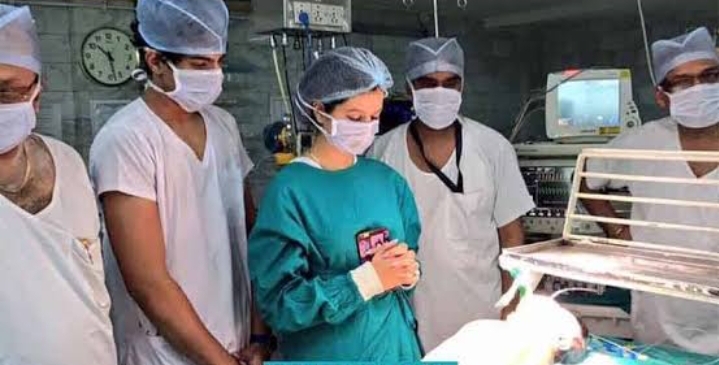
Palak Muchhal as a Cardiac Surgeon

In 2001, she raised over one million rupees for the victims of the Gujarat earthquake. Later in July 2003, Palak offered financial assistance through her charity funds to the parents of a two-year-old Pakistani girl who had a hole in the heart. Her charity organization is named “Palak Muchhal Heart Foundation”. Her foundation made more than 2000 heart surgeries.

In2011, she entered in Bollywood as a professional playback singer. She uses her money received by singing for heart patients. As of 2020, she with her brother has saved the lives of 2200 children.

In 2000, she received Pradhan Mantri Rashtriya Bal Puraskar. In 2013, Palak has made an entry in both the Guinness Book of World Records and Limca Book of World Records for her social work. CBSE and Maharashtra board has included Palak’s achievement in the textbook of seventh standard moral science from 2021. In 2021, she also received the Honorary Doctorate from the American University, the USA for Global Peace.

Ballistic missiles – History, Application and Working

The history of rocketry dates back to around 900 C.E., but the use of rockets as highly destructive missiles able to carry large payloads of explosives was not feasible until the late 1930s. War has been the catalyst for many inventions, both benevolent and destructive. The ballistic missile is intriguing because it can be both of these things. It has made possible some of the greatest deeds mankind has ever achieved, and also some of the worst. German Walter Dornberger and his team began developing rockets in 1938, but it was not until 1944 that the first ballistic missile, the aggregate-4 or V-2 rocket, was ready for use. V-2 was used extensively by the Nazis at the end of World War II, primarily as an error weapon against civilian targets. They were powerful and imposing: 46 feet (14m) long, able to reach speeds of around 3,500 miles per hour (5600 kph) and deliver a warhead of around 2,200 pounds (1000 kg) at a range of 200 miles (320 km).

Ballistic missiles follow a ballistic flight path, determined by the brief initial powered phase of the missile’s flight. This is unlike guided missiles, such as cruise missiles, which are essentially unmanned airplanes packed with explosives. This meant that the early V-2 flew inaccurately, so they were of most use in attacking large, city sized targets such as London, Paris, and Antwerp. The Nazi ballistic missile program has had both a great and a terrible legacy. Ballistic missiles such as the V-2 were scaled up to produce intercontinental ballistic missiles with a variety of warheads, but also the craft that have carried people into space. Ballistic missiles may have led us to the point of self destruction, but to venture beyond our atmosphere.

 Intercontinental ballistic missiles (ICBM) were first developed by the United States in 1959. It is a guided ballistic missile with a minimum range of 5500 kilometers primarily designed for nuclear weapon. United States, China, France, India, United Kingdom and North Korea are the only countries that have operational ICBMs. The ICBMs has a three stage booster, during the boost phase the rocket get the missile airborne, this phase last around 2 to 5 minutes until the ICBM has reached space. ICBMs have up to three rocket phases with each one ejected or discarded after it burns out. They use either liquid or solid propellant. The Liquid fuel rockets tend to burn longer in the boost phase than the solid propellant. The second phase of the ICBMs is the point where the rocket has reached space, here it continues along is ballistic trajectory. At this point the rocket will be travelling anywhere from 24,140 and 27,360 kilometers an hour. The final phase is the ICBM’s final separation and re- entry into earth’s atmosphere. The nose cone section carrying the warhead separates from the final rocket booster and drops back to earth. If the ICBM has rocket thrusters, those will be used at this point to orient itself towards the target. It is important that ICBMs have adequate heat shields to survive reentry, if not they burn up and fall apart. It’s important to note that although countries have ICBMs, none have ever been fired in anger against another country.

“This third day of October, 1942, is the first of a new era in transportation that of space travel.” –  Walter Dornberger

Optics – Application, Laser optics, Fiber optics communication

The formal study of light began as an effort to explain vision. Early Greek thinkers associated with a ray emitted from the human eye. A surviving work from Euclid, the Greek geometrician, laid out basic concepts of perspective, using straight lines to show why objects at a distance appear shorter or slower than they actually are. Eleventh-century Islamic scholar Abu Ali al Hasan Ibn Al-Haytham known also by the Latinized name Alhazen revisited the work done by Euclid and Ptolemy and advanced the study of reflection, refraction, and color. He argued that light moves out in all directions from illuminated objects and that vision results when light enters the eye. In the late 16th and 17th centuries, researches including Dutch mathematician Willebrord Snel noticed that light bent as it passed through a lens or fluid. Although he believed the speed of light to be infinite, Danish astronomer Ole Romar in 1676 used telescopic observations of Jupiter moons to estimate the speed of light as 140,000 miles a second. Around the same time, Sir Isaac Newton used prisms to demonstrate that white light could be separated into a spectrum of basics colors. He believed that light was made of particles, where as Dutch mathematician Christiaan Huygens described light as a wave.

The particle versus the wave debate advanced in the 1800s. English physician Thomas young’s experiments with vision suggested wavelike behavior, since sources of light seemed to cancel out or reinforce each other. Scottish physicist James Clerk Maxell’s research united the forces of electromagnetism fell along a single spectrum. Te arrival of quantum physics in late 19th and early 20th century prompted the next leap in understanding light. By studying the emission of electrons from a grid hit by a beam of light known as the photoelectric effect Albert Einstein concluded that light came from what he called photons, emitted as electrons changed their orbit around an atomic nucleus and then jumped back to their original state. Through Einstein’s finding seemed to favor the particle theory of light, further experiments showed that light and matter itself behave both as waves and as particles.

How do lasers work?

Einstein’s work on the photoelectric effect led to the laser, an acronym for “light amplification by stimulated emission radiation.” As electrons are exited from one quantum state to another, they emit a single photon when jumping back. But Einstein predicted that when an already excited atom was hit with the right type of stimulus, it would give off two identical photons. Subsequent experiments showed that certain source materials, such as ruby, not only did that but also emitted photons that were perfectly coherent-not scattered like the emissions of a flashlight, but all of the same wavelength and amplitude. These powerfully focused beams are now common-place, found in grocery store scanners, handheld pointers, and cutting instruments from the hospital operating room to the shop floors of heavy industry.

Future trends in fiber optics communication

Fiber optics communication is definitely the future of data communication. The evolution of fiber optic communication has been driven by advancement in technology and increased demand for fiber optic communication. It is expected to continue into the future, with the development of new and more advanced communication technology.

Another future trend will be the extension of present semiconductor lasers to a wider variety of lasing wavelengths. Shorter wavelength lasers with very high input powers are of interest in some high density optical applications. Presently, laser sources which are spectrally shaped through chirp managing to compensate for chromatic dispersion are available. Chirp managing means that the laser is controlled such that it undergoes a sudden change in its wavelength when firing a pulse, such that the chromatic dispersion experienced by the pulse is reduced. There is need to develop instruments to be used to characterize such lasers. Also, single mode tunable lasers are of great importance for future coherent optical systems. These tunable lasers laser in a single longitudinal mode that can be tuned to a range of different frequencies.

“Music is the arithmetic of sounds as optics is the geometry of light.” – Claude Debussy

Does sneezing stops your heart?

Most of us have experienced it while in our class, meeting or at any other important commitments. Yes, sneezing, especially when we were suffering from some allergies, we can’t control it, but why do we sneeze? What’s the reason behind it? Well a sneeze is officially called as Sternutation. Sneezing is an involuntary activity of our body to clear our nose. Whenever a foreign matter such as dust, dirt, germs or anything that shouldn’t be there enters your nostrils, the nose get irritated and it sends a message to your brain. Then to remove the particle your brain sends a message to all of your muscles for a sudden exhalation process called a sneeze, and it would take only milliseconds for your brain to process this. In 2002, a study at Denmark’s department of Otorhinolaryngology at Rigshospitalet showed that 95% of people sneeze four times or less each day. Worldwide, we could be sneezing upwards of 7.8 billion times a day.

Shot of an attractive young woman feeling ill and blowing her nose with a tissue at home

Cultural beliefs about sneezing

          Many people think that sneeze is a sign of good luck, while others think it’s a bad sign. People in ancient Greece, 400BC believed these sneezes are favorable sign from the gods. During the 6th century, the plague killed 200 million people all over the world; sneeze is also one of the symptoms of this disease. So people started to believe that sneeze is a sign of death and by saying “bless you” they thought it may prevent them from being infected and some used to consider as a final blessing. That’s why still some people say “God bless you” when someone sneeze.

Does really sneeze stops our heart?

        Do you know? Your sneeze can create 100,000 droplets and it can travel up to 160 kilometers (100 miles) an hour. Yes it’s more likely a faster way to spread diseases than a cough. So while sneezing, our heart stops for a second and start after that? Well it seems like it takes a break but, it’s not the case. Usually we inhale deeply before sneezing; this increases the pressure in your chest and slows down the blood flow to your heart. The heart compensates this by changing to its regular beat right after we sneeze. So it only reduces the heart rate for a short period of time rather than stopping it. Do you know? The heart can continue to beat for a short time after being removed from the body because; it has its own electrical system that can pump blood as long as it gets oxygen. So a sneeze won’t stop the electrical activity of our heart.

Is holding your sneeze dangerous?

       Most of us hate sneezing in awkward situations, it makes us embarrassed. Did you ever tried to hold your sneeze? If you did, the following incident will show why you should not. A 34 year old man has admitted to a hospital in the UK for serious neck infection. Doctors found that the pressure built from the sneeze cant able to escape as he blocked his nose and mouth. It causes rupture in the cavity that connects our nose and mouth called pharynx. It seems that he is trying to hold his sneeze every time for the last 30 years because, he feels that it would be unhygienic to sneeze into the atmosphere. He was hospitalized for a week and doctors treated him with the necessary antibiotics to cure the infection.

      Sneezing is one of the primary defense systems in our body to get rid of harmful irritants in our nose. The entered irritant somehow should have to go out. So, don’t try to hold it, just let it happen.

“I used to wake up at 4 AM and start sneezing, sometimes for five hours. I tried to find out what sort of allergy I had but finally came to the conclusion that it must be an allergy to consciousness”.     – James Thurber.

RUSSIA-UKRAINE TALKS

Russia and Ukraine have failed to find a breakthrough on a ceasefire and other humanitarian issues at the first high-level talks in Turkey  since Moscow’s military operation . Russia’s Foreign Minister Sergei Lavrov and Ukrainian counterpart Dmytro Kuleba met on the sidelines of a diplomatic forum in the Turkish resort city of Antalya .Mr Kuleba has  accused his Russian counterpart of bringing “traditional narratives” about Ukraine to the table.  However Kuleba   said that he would be ready to meet with Lavrov  again in this format if there are prospects  of a substantial discussion for seeking solutions.Lavrov said Russia also wants to continue negotiations with Ukraine and President Vladimir Putin would not refuse a meeting with his Ukrainian counterpart Volodymyr Zelenskyy to discuss “specific” issues.

Time and Tide wait for none

The first thought that comes to our mind when thinking about time is it can’t be changed. But we are not trying to understand the wastage of time in our day-to-day life. We know the benefits of it, but we don’t realize its importance in our life. The reasons we gave to waste time are infinity.

Photo by Taryn Elliott on Pexels.com

There are many reasons for wasting time we would have come across in our daily routine. Some of them are :

  1. Addiction over small tasks : This type of time wastage occurs when we get addicted to small tasks that surrounding us neglecting the big tasks that are important and urgent. It is caused due to the need of perfection in our simple task, but the cost of this addiction is realised later.
  2. Procrastination : It happens every time when we lost our focus on the current work and started thinking about something else without knowing. It is the most common and dangerous reason that finally leads to jeopardise our job.
  3. Wrong priorities : We must prioritise our works correctly before involving in it. The more time we give to priorities our works, the more jobs we can finish. Wrong prioritising of jobs leads to losing of important and urgent work.
  4. Multitasking : The tendency to do everything at once is the way to finishing none at last. Initially it may look like doing all at once and saving time. But eventually it makes our easy jobs more complex and atlast completing no tasks. The amount of time we take to do all simultaneously is more than the cumulation of time taken to do all jobs each at a time.
  5. Disorganised : The surrounding of our work bench also influence our time. If it were too clumsy, the time to find something important is also comes under time wastage. The place we work must be clean and organised to make our jobs easier.

METHODS TO SAVE TIME

  1. Eliminate Distractions : There must be no distractions during our work time. It must be eliminated as far as possible to finish the task quickly. Distractions took large amount of time and it results in postponing of jobs.
  2. Creating a To-Do List : A To-Do list can help us prioritise our jobs and it is a easy way to work on our tasks in an proper order. To-Do List must be created either during day before night or early morning. The important point in creating a To-Do list is it must be minimum and must be possible schedule.
  3. Take a Break : A small break between task keeps us productive during the task and motivate us to do other jobs as well. The best way to schedule breaks is pomodoro technique. Pomodoro is a technique which involves 25 minute work – 5 minute break. This break time must be used for our hobbies and favourite tasks instead of using smart phones and televisions.
  4. Reduce social media Time : The time spend in social media must also be scheduled otherwise it will consume large amount of time. It can be used for some time and must be thrown away. Sometimes logging out of social media might help, since the next time we go to social media the lazyness of logging in again may tempt us to see it afterwards.

The more productive we are, the more achievements we can we do in our life.
Stay productive!!

Science or Religion

It is a well-established fact among the human race that “Some things can only be emotionally and mentally felt, rather than being expressed” Catering to the above thought, I would like to open my side of the debate by arguing, that we as humans express our feelings or rather what we believe in, for the benefit of our companions and relatives. Our beliefs are rather stored in our minds and are sometimes difficult to be given a ” DEFINITION”. But, in no way does that signify how strong our emotions are, or the stability of our mindset. Let’s take the most famous example here, Science vs Religion( GOD), or rather how we know it – ILLUMINATI. Some argue, that God does not exist, it is just a notion of our minds that has or can never be clinically proven. I would reply to that with a “Science” fact- If the earth’s gravity were less than 0.000000000001% of what it is right now, our planet would collapse. And if it was increased by the same value, the Earth would explode. There was obviously something that made our planet so perfect that we can survive on it. I am not arguing that there is any specific God, rather, I say that there is some unnatural power that drives our lives every day. And this power is what most people call ” God”. But can we define it? No, we cannot. But do we believe in it? Of course, we do. And there are some cases, where people know that “GOD” does not exist, but still pray to him in the form of meditation, to achieve mental stability of the mind.

Distinguishing science from non-science or religion is generally an easy matter, as the two rarely seem to make claims to be scientific. When they do make claims of being scientific, this becomes known as pseudoscience. Even so, it is useful to recognize the distinctions, as science doesn’t always clearly do so. For the boundary between science and religion, a majority of the cases can be separated well through the verificationistic view. While empirical matters are primarily dealt with science, spiritual matters are primarily dealt with religion because they cannot be objectively and empirically observed.

When distinguishing science from non-science, it’s easiest to start by defining the fundamentals that make up what science is, and then define all of the fields that fall outside this definition as non-science. At it core, science is a system of acquiring knowledge about the physical world through objective experimentation and observation. Therefore, fields that do not involve the acquisition of knowledge, such as art and business, can be classified as being non-science. Moreover, mathematics is a field considered to be non-science because doesn’t acquire knowledge about the physical world. The field of engineering proves to be an interesting case. While engineers practically apply scientific knowledge, the field as a whole is non-scientific.

The story of successful businesswoman: Vineeta Singh

The vineeta Singh is a successful entrepreneur. She is the founder and CEO of the Sugar Cosmetics. Sugar cosmetics is the India’s most popular cosmetic company. The revenue of company is around 3000cr.

Vineeta Singh done her schooling in Delhi. She completed her graduation in Electrical engineering from IIT, Madras. She done her master in MBA from IIM, Ahmedabad. During college days she won various badminton compitition. At age 23 she refuse to 1cr placement and started her own company. She is among top 100 mindful women in the world. Now she is one of most powerful shark in shark tank India.

Vineeta Singh got Start up of the year2019 by entrepreneur award. She is also most powerful women in business- Forbes December 2021.

In Josh talks she said,” I don’t want to try new things. I fear to try new because I always avoid failure. From childhood I do only thing which are easy and give success to me. My dreams are always according to my success. But at 23 I throw away my safe zone and tried new.”

she also advise young entrepreneurs,” To make a successful business or brand 3 thing are important that are patience, consistency in work and many more hardwork. When you are starting business start from your problem and your consumer/ costumer problem. As a entrepreneur think big and always have a big goal/ aim. And the last thing I want to tell you that don’t fear to failure. Learn from your failure and start again with new energy and confidence”.

Vineeta Singh with her husband kaushik Mukharjee (co-founder of sugar cosmetics)

The Indus Valley Civilization

It was in 1921 and 1922 that archaeologists discovered remains of an ancient civilization after distinct stone seals from around the Indus river valley perked their interest. This civilization which flourished around the Indus river was termed the Indus Valley civilization or the Harappan civilization and it was found to be one of the earliest civilizations along with the Mesopotamian and Egyptian civilizations. But what makes Indus valley civilization intriguing for many is that this civilization, unlike its counterparts in Egypt, China and Mesopotamia, had no evidence of war, conquests, or the existence of armies or slaves. It had some of the most impressive city planning and sewage systems. So, what is the story of this civilization and how did it come to an end?

source: wikipedia.org

Indus Valley Civilization existed from 3300 BC to 1300 BC. Archaeologists first identified the civilization at Harappa in the Punjab region of Pakistan in 1921 and then at Mohenjo-Daro in the Sindh region in 1922. These two sites were found to be the 2 major cities of the civilization. It is the most extensive of the world’s 3 earliest civilizations, covering an area of 1 million square kilometers. Like many other civilizations, this one also developed around river valleys. The people set up farming and grew crops along the banks of 2 rivers – the river Indus and the Ghaggar river. A larger number of settlements were found along the Ghaggar than the Indus and it appears to have been more productive too. The river Ghaggar has presently almost completely dried up, however, and flows only during the monsoon season. Many even believe that this is the lost river Saraswati which is mentioned in the Rig Veda as a big river located between the Indus and the Ganges.

Agriculture was the main source of livelihood while trade was also an important part of the economy. People grew wheat, barley, mustard field peas and spices like turmeric, ginger, cumin and cinnamon. Cattle, water buffalos, sheep, goats, chickens and even elephants were domesticated. Figurines of dogs with collars and paw prints suggest that dogs and cats were kept as pets too. . The Harappans also practiced extensive trade with the Mesopotamians, Central Asia and Iran, with Mesopotamian records calling the land of Harappans “Meluha”. Gold, silver, lapis lazuli, copper, timber etc. were exported to Mesopotamia probably in exchange for luxury or manufactured goods.

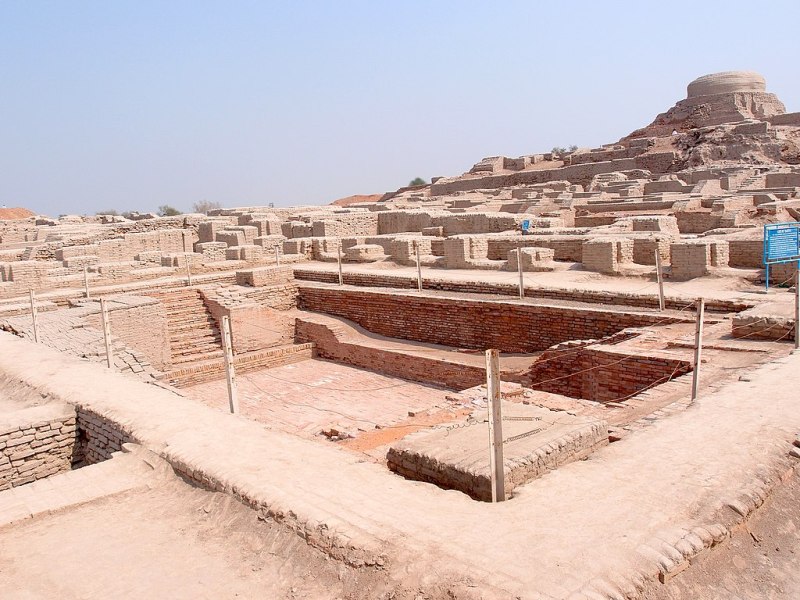
One of the most impressive discoveries about this civilization was how well planned their cities and sewage systems were. It seems water, drainage and bathing were held in high significance by the people. There was a brick-lined sewage system below the main streets that channeled water out of the city. Every house had a bathroom and toilet from where the used water flowed into a small drain cut into the house wall which brought it to the brick-lined sewage system. The public bath in Mohenjo-Daro called “The Great Bath” is one of the earliest instances of water-proofing in the world. This stately multistoried building had a 2.4m deep bathing pool in the center made of specifically-fitted burnt bricks coated with a layer of tar. Every brick found in these sites has the exact same ratio of 1:2:4. They also had a well-formed regular system of weights and measures. Harappan settlements were walled and important buildings like the granaries, warehouses and the Great Bath were separately walled and built on a mound to protect them at the time of floods.

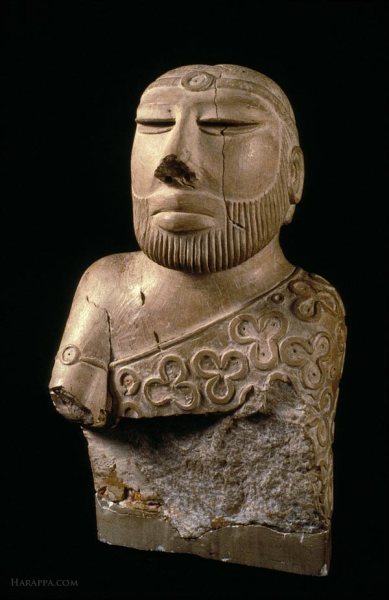
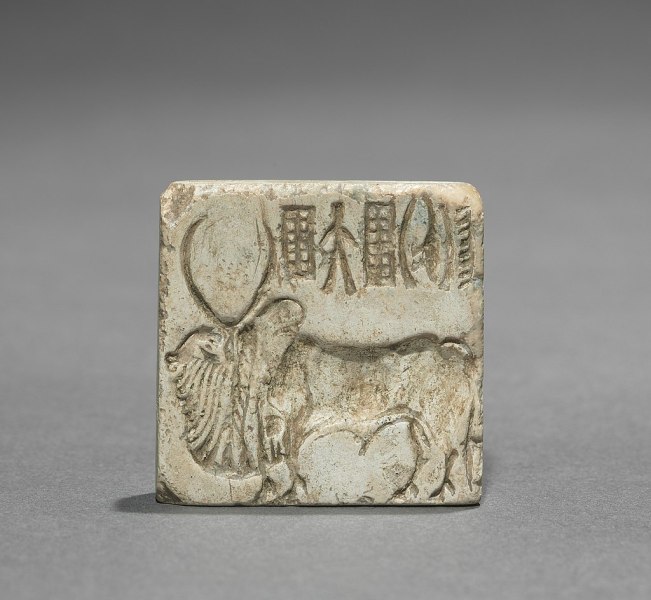
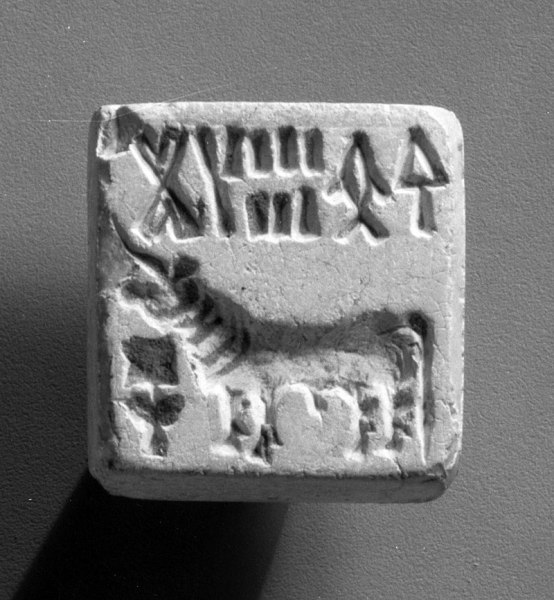
A number of statues and terracotta figurines have been excavated, most of which were probably intended as images for worship. There were figures of seated men, a standing nude male, a dancing girl, small chariots, and kids and animals which appear to be toys. All of them are of excellent quality, signifying that it was a highly developed art in the Harappan culture. Thousands of small Harappan seals are the best-known artifacts from these sites. These seals show an animal such as a “humpless unicorn”, buffalo, elephant, bison, rhinoceros or tiger, with some kind of inscription on top. Around 450 signs or symbols have been identified from these seals which are the only proof that the Harappans had a written language. These seals were could have been used as stamps, identity cards or passports.

This rich and prosperous civilization went into a sudden decline around 1900 BC. It is said that in over a century, the urban social and political system collapsed, and the use of seals and writing disappeared. The Ghaggar or the Saraswati river started to dry up, causing many of the Harappans living in its banks to move in search of greener pastures. Some of them moved to the Ganges which would become the center of North Indian civilization. By 1300 BC, this majestic civilization was completely gone, leaving no traces of its written language or beliefs.   

Evolution of Indian agriculture

India is the second largest producer of wheat and rice, which are the most widely used staple food. India also plays a major role in producing dry fruits, raw materials for textile industries, roots, tuber crops, pulses, coconut, sugarcane and various other vegetables. Agriculture plays a vital role in Indian economy. According to the sources, Indian agriculture began by 9000 BCE on north west India. Indians considered agriculture as their major survival and they even worshiped it and we still do.

Rise and Fall of agriculture

Farmers used to cultivate their lands with completely natural seeds and fertilize them using bio fertilizers, that is manually prepared fertilizers which consists of cow dung, dry leaves, vegetable and fruit waste and farmers even used earthworms to decompose the organic matter. Earthworms have the ability to eat and mix large amount of soil and organic matter and deposit it in the form of casts. The crops that are obtained as a result of natural organic forming were healthy but the yield was less. In order to increase the yield, nowadays lot of chemical fertilizers, pesticides are used, which increases the yield but the quality of the crop is a question mark. Over the years, the dependency on agriculture has declined to 50 percent as per the latest round of the periodic labor force survey for 2018-19, also the lockdown has severely disrupted India’s agriculture.

Reservation Policy of India

Reservation is a controversial and highly debatable topic in India. Furthermore, the main aim behind the reservation was the empowerment of the weaker sections of society. Reservation in its essence is a type of quota-based affirmative action. Reservation is a controversial and highly debatable topic in India. Furthermore, the main aim behind the reservation was the empowerment of the weaker sections of society. Reservation in its essence is a type of quota-based affirmative action. The constitution of India adopts the unique feature of reservation.

In the Hindu religion, the caste system divides people into four categories or varnas – Brahmins, Kshatriyas, Vaishyas, and the Shudras. According to Hindu beliefs, these four varnas originated from Brahma, the creator of the Universe, Vedas, and people. The caste system is considered the distorted form of the Varna system. In the hierarchy of the caste system, Brahmins were on the top. They were supposed to originate from the head of Brahma.

The idea of reservation policy in India was originally developed by William Hunter and Jyotirao Phule in the year 1882. The basic principle behind the reservation was the Caste System and the malpractice of untouchability in India. But the prevailing reservation system in today’s India was introduced in 1933 by British Prime Minister Ramsay Macdonald in the form of the ‘Communal Award.

Under the provisions of the communal award, there were separate electorates for Europeans, Anglo-Indians, Indian Christians, Muslims, Sikhs, and the Dalits. But on 24th September 1932 when the Poona Pact agreement between Mahatma Gandhi and Dr. Ambedkar was signed, it was decided that for Hindus there would be a single elective with certain reservations for the depressed classes in it.

When India got independence from British rule in 1947, the country was divided into two parts India and Pakistan. With the partition, much of the Muslim population migrated to Pakistan and Hinduism became the most prominent religion in India. So, when the constituent assembly was framing the Constitution of India, social discrimination based on the case system was a big hindrance to equality in society. So, the provision of reservation for the socially backward classes was introduced in the Constitution of India. Reservations were initially introduced for a period of 10 years and only for SCs and STs, but it kept on extending with several changes in it.

Reservation in Educational Institutions


In the year 2005, the government introduced the 93rd constitutional amendment act. With the enactment of the act, Article 15 (5) was inserted in the constitution of India. Article 15(5) provides that:
Nothing in this article or in sub-clause (g) of clause (1) of Article 19 shall prevent the State from making any special provision, by law, for the advancement of any socially and educationally backward classes of citizens or for the Scheduled Castes or the Scheduled Tribes in so far as such special provisions relate to their admission to educational institutions including private educational institutions, whether aided or unaided by the State, other than the minority educational institutions referred to in clause (1) of Article 30.

Reservation in Promotion


Reservation for SCs and STs in matters of promotion in public employment was a matter of continuous conflict between the parliament and Apex Court. In 1992, in the case of Indra Sawhney v. Union of India,[iii] the Supreme Court held that Article 16(4) does not allow the reservation in promotion.

Against it, the parliament came with the 77th Constitutional Amendment Act, 1995, and inserted a new clause (4A) under Article 16, which empowers the state to make the provisions of reservation in the matter of promotion to SCs and STs in public employment.

Reservation to Economically Weaker Section


In the 103rd Constitutional Amendment Act, 2019 the new reservation was introduced by the legislature. This amendment introduced a 10% reservation for the economically weaker section of the society popularly known as EWS. It provides reservation to economically weaker sections (EWS) in public employment as well as admission in public and private educational institutions.

Before this amendment, there was a ceiling limit of 50% on reservations. In which, 22.5% of available seats were reserved for Scheduled Caste (SC) and Scheduled Tribe (ST) (7.5% for STs, 15% for SCs). In addition to this 27% of seats, were reservation was given to OBCs. The total reservation provided before the 103rd constitutional amendment was 49.5%, which was in conformity with the rule of 50% ceiling limit on the reservation.

Latest update on reservation

The Supreme Court on Friday is considering widening the ambit of its examination of a Haryana law granting 75% quota for locals in the private sector, to similar laws said to be prevalent in States such as Andhra Pradesh and Jharkhand.

A Bench led by Justice L. Nageswara Rao asked the Haryana government to submit details of cases on domicile quota laws pending in the High Courts of Andhra Pradesh and Jharkhand.

DIABETES

Diabetes is commonly known as Diabetes Mellitus. It is a group of metabolic disorders which results in high blood glucose level in body. Untreated high blood glucose level can damage nerve, eyes, kidney and other organs also. There are 4 types of Diabetes Mellitus.

1.Type 1 diabetes mellitus= It is a chronic condition in which beta cells of pancreas damaged and due to these they produce little or no insulin.

2. Type 2 diabetes mellitus= In this pancreas produce insulin in required amount but it can’t uptake by adipose tissue, Due to insensitivity. It affect the way body processes blood glucose.

3.Prediabetes= It is the disorder where blood glucose is higher than normal but it’s not enough for diagnosis for type 2 diabetes mellitus.

4. Gestational diabetes= The increase in blood glucose level during pregnancy which may be temporarily.

Symptoms: When blood glucose level increase body shows some symptoms such as Excessive thirst, excessive urination, fatigue, weight loss, blurred vision,sweat and hunger.

Treatment: Monitoring blood glucose level, dietary management, maintaining physical activity, keeping weight and stress under control and Monitoring medication.