RAMSAY HUNT SYNDROME

Ramsay Hunt Syndrome is neurological disease in which a virus – Varicella Zoster – causes inflammation of the nerves involved in facial movements.

When the nerves get inflamed, they lose their ability to function, leading to temporary facial palsy or paralysis. Facial muscles in the infected person cannot receive necessary signals to function properly. There are 12 cranial nerves in the body. Ramsay Hunt Syndrome is the viral infection impacting the 7th cranial nerve that is involved in facial movements. The inflammation caused by the Varicella Zoster Virus makes the nerve ineffective.

The symptoms include painful, red rash and blisters in and around the ear, and facial paralysis on the same side. Patients also report hearing loss in the ear that has been impacted apart from Tinnitus or ringing sounds. Inability to close the eye causes dryness. A rash on the eardrum, the ear canal and the earlobe. Rashes can also appear inside the mouth, on the tongue. There is hearing loss, vertigo or spinning sensation. It causes weakness of one side of the face and causes difficulty in closing one eye and eating as food falls off from the affected side. There is drooping of the face.

The Varicella Zoster Virus (VZV) is the same virus that causes chickenpox and shingles.
This virus belongs to the Herpesvirus group and can stay in the body as a latent infection.
The virus can stay dormant in a person’s body and can reawaken to attack the nerves.
VZV can get reactivated due to weakening of the immune system. Stress is also considered a trigger, according to some studies, as it depresses the immune system. Some reports also suggest that T-cell dysfunction caused by coronavirus infection can reactivate VZV.

The disease is reversible. Patients get cured within 15 days to three months of starting the treatment.

Organisation of Islamic Cooperation (OIC)

The OIC is the second largest intergovernmental organisation after the United Nations with a membership of 57 states. It is the collective voice of the Muslim world.These are countries with Islam as the state religion, but also those in which Muslims form the majority of the population. Occasionally, members would also be admitted in which Muslims are only a minority but play a significant role for the country.The OIC’s 57 current members are located primarily in North Africa, the Near East, and South Asia. Together they cover an area of 31.66 m km² with a population of about 1.89 bn. This corresponds to about 24.35% of the world’s population.

The organisation of Islamic Cooperation was established by First Islamic Summit Conference held in Morocco in September 1969 , to marshal the Islamic world after an act of arson at the Aqsa Mosque in Jersualem by a 28 year old Australian in 1969.Its headquarters is in Jeddah, Saudi Arabia. The organisation plans to permanently move its headquarters to East Jerusalem once the disputed city is liberated. It aspires to hold Israel accountable for war crimes and violations of international laws.

Objective of the OIC :

The main objective of the Organization of Islamic Cooperation is to promote cooperation between Muslim states in the fields of culture, science, social cooperation and the economy. It endeavors to safeguard and protect the interests of the Muslim world in the spirit of promoting international peace and harmony among various people of the world , prevent growing dissention in muslim societies and work to ensure that member states take united stand at UN General Assembly, Human Rights council and other international fora. An essential part of its work is also the protection of the Islamic faith and the holy sites. It has consultative and cooperative relation with UN and other intergovernmental organisation to protect the interests of Muslims and settle conflicts and disputes involving member states eg. , territorial conflict between Armenia and Azerbaijan.

OIC Functioning :

The membership is to be ratified with full consensus at the OIC’s Council of Foreign Ministers. UN members with a Muslim majority can join the organization. All decision-making in the forum requires a quorum defined by the presence of two-thirds of the member states and complete consensus.In case a consensus cannot be reached, decisions shall be made by a two-thirds majority of members present and voting.The Council of Foreign Ministers is the chief decision-making body and meets annually to decide on how to implement the OIC’s general policies. The OIC is financed by the member states proportionate to their national incomes.Islamic Summit is the supreme authority of the organisation.Convening every three years, Islamic Summit deliberates, takes policy decisions, provides guidance on issues relevant to the organisation and considers issues of concern to the member states.

Status of India’s relationship with OIC as an organisation :

Islam is the second-largest religion in India after Hinduism, with over 200 million Muslims making up approximately 15% of the country’s total population.India has the largest Muslim population outside of Muslim-majority or Islamic states. However, India’s relationship with Pakistan, the latter being an Islamic state, has been riddled with hostilities and armed conflict since the 1947 Partition of India. The poor relationship between the two states has had a direct impact on India–OIC relations due to Pakistan’s status as a founding member of the organization. India has pushed for the OIC to accept it as a member state, arguing that Indian Muslims comprise 11% of the world’s total Muslim population; Pakistan has staunchly opposed the entry of India into the organization.Pakistan has cited its conflict with India over the Kashmir region as the reason for its opposition, and frequently accuses India of perpetrating widespread human rights abuses against Kashmiris in the Indian-administered territory of Jammu and Kashmir, which has witnessed an ongoing militant uprising since the 1980s.The OIC has been urged to press India on the Kashmir dispute, and has faced pushback from Indian officials for occasional references to Jammu and Kashmir as territory that is militarily occupied by India. The Muslim world has largely lent its support to Pakistan over India during any armed conflicts between the two states.

Criticism of the  OIC :

• Prioritise Rights of Muslim Minorities: The OIC had become a premise for ‘window dressing’, more interested in the rights of Muslim minorities in places such as Palestine or Myanmar than the human rights violations of its member states.

• Incompetent at investigating Human Rights Violations: Thebody lacks power and resources to investigate human rights violations or enforce its decisions through signed treaties and declarations.

• Centred around Quranic Values: The organisation is largely restricted toarbitrating in conflicts where both parties are Muslims.This is because the organisation is centred around Quranic values which believes to make it a qualified arbitrator.

• Failed to Establish a Cooperative Venture: The OIC has failed to establish a cooperative venture among its members, who were either capital-rich and labour-scarce countries or manpower-rich and capital scarce.The organization has not evolved to become a significant player either in international politics or in the area of economic cooperation.

Sources : The Hindu, The Indian Express and Drishti IAS

Indian National Space Promotion and Authority Centre (IN-SPACe)

IN-SPACe is an independent nodal agency under the Department of Space to prioritize the launch manifest along with allowing the use of DOS-owned facilities by space activities and NGPEs (Non-Government Private Entities).

Its function is to: encourage, promote and handhold the private sector for their participation in the space sector;
1. To prepare an integrated manifest considering the requirements of ISRO, New Space India Limited (NSIL) and private companies based on priorities and readiness level:-

  • Currently, there are more than 500 private companies which partner with the Indian Space Research Organisation (ISRO) in carrying out various space activities.
  • They provide materials used in manufacturing, mechanical fabrication, electronic fabrication, system development, integration, etc.

2. To work out suitable mechanisms to encourage private companies to offer free sharing of technology, expertise and facilities wherever possible or on a reasonable cost basis:-

  • After these reforms are implemented fully, the role of NSIL would be to build launch vehicles, provide launch services, build satellites, provide space-based services, technology transfers, etc.

3. Allow setting up of facilities within ISRO campuses based on safety norms and feasibility assessment:-

  • The government will allow utilising those infrastructures of ISRO which are otherwise not available elsewhere in India.

4. Permit establishment of facilities, within ISRO premises, based on safety norms and feasibility assessment.

Chemical Disaster

 Chemical Disaster

Chemical, being at the core of modern industrial systems, has attained a very serious concern for disaster management within government, private sector and community at large. Chemical disasters may be traumatic in their impacts on human beings and have resulted in the casualties and also damages nature and property. The elements which are at highest risks due to chemical disaster primarily include the industrial plant, its employees & workers, hazardous chemicals vehicles, the residents of nearby settlements, adjacent buildings, occupants and surrounding community. Chemical disasters may arise in number of ways, such as:-

  • Process and safety systems failures
    • Human errors
    • Technical errors
    • Management errors
  • Induced effect of natural calamities
  • Accidents during the transportation
  • Hazardous waste processing/ disposal
  • Terrorist attack/ unrest leading to sabotage

Status of Chemical Disaster Risk in India

India has witnessed the world’s worst chemical (industrial) disaster “Bhopal Gas Tragedy” in the year 1984. The Bhopal Gas tragedy was most devastating chemical accident in history, where over thousands of people died due to accidental release of toxic gas Methyl Iso Cyanate (MIC).

Such accidents are significant in terms of injuries, pain, suffering, loss of lives, damage to property and environment. India continued to witness a series of chemical accidents even after Bhopal had demonstrated the vulnerability of the country. Only in last decade, 130 significant chemical accidents reported in India, which resulted into 259 deaths and 563 number of major injured.

There are about 1861 Major Accident Hazard (MAH) units, spread across 301 districts and 25 states & 3 Union Territories, in all zones of country. Besides, there are thousands of registered and hazardous factories (below MAH criteria) and un-organized sectors dealing with numerous range of hazardous material posing serious and complex levels of disaster risks.

Safety initiatives taken in India to address chemical risk

The comprehensive legal/ institutional framework exists in our country. A number of regulations covering the safety in transportation, liability, insurance and compensations have been enacted.

Following are the relevant provisions on chemical disaster management, prevailing in country:-

  • Explosives Act 1884                                      – Petroleum Act 1934
  • Factories Act 1948                                        – Insecticides Act 1968
  • Environment Protection Act 1986              – Motor Vehicles Act 1988
  • Public Liability Insurance Act 1991            – Disaster Management Act 2005

Government of India has further reinforced the legal framework on chemical safety and management of chemical accidents by enacting new rules such as MSIHC Rules, EPPR Rules, SMPV Rules, CMV Rules, Gas Cylinder Rules, Hazardous Waste Rules, Dock Workers Rules and by way of amendments to them.

The National Disaster Management Authority (NDMA) of India had come out with very specific guidelines on Chemical Disaster Management. The guidelines have been prepared to provide the directions to ministries, departments and state authorities for the preparation of their detailed disaster management plans. These guidelines call for a proactive, participatory, multi-disciplinary and multi-sectoral approach at various levels for chemical disaster preparedness and response. Further, NDMA has provided specific inputs to the GOM for avoidance of future chemical disasters in the country, along with suggested amendments on the existing framework. NDMA is also working on revamping of CIFs ( Chief Inspectorate of Factories) to strengthen chemical safety in India. In addition, the National Action Plan on Chemical Industrial Disaster Management (NAP-CIDM), has been finalized which will act as the roadmap for chemical disaster management in India.


Bangladesh War 1971- One of the shortest wars in History

In 1971, India won the war against Pakistan that resulted in the birth of Bangladesh (then East Pakistan).
Pakistan lost half its country, its forces in the East, and had to publicly surrender to India. It was also the largest military surrender after World War II. 

So what happened during 1970s an internal crisis occured in Pakistan. So what happwned is when the 1st general elections took place a split occured between West Pakistan and East Pakistan. In West Pakistan , Zulfikar Ali Bhutto won the elections and in East Pakistan, the Awami league leaded by Sheikh Mujibur Rehman won . Now the bengali population that was in east Pakistan, they voted for Awami league because they were protesting against the dominance of West Pakistan and they were being treated as 3rd class citizens. But the Pakistan rulers in West and East Pakistan were not ready to accept this demovratic verdict.In 1971, Pakistani Army began to commit the genocide on innocent Bengali population, particularly in East Pakistan. So former Prime Minister Indira Gandhi decided to take action against Pakistan at the same time by give refuge to civilians from other side of the border. Throughout 1971, India had to bear the burden of some 80 lakh refugees who fled from East Pakistan and took shelter in India. After months of diplomatic tension and military build up a full scale war broke out between India and Pakistan on dec 1971. The war lasted 13 days and was one of shortest wars in history. The war ended after the Chief of Pakistani forces general AAK Niazi along with his troopes surrendered to Indian Army and Bangladesh’s Mukti Bahini.
General AAK Niazi signed the instrument of surrender in Dhaka marking the formation of East Pakistan as new nation of Bangladesh. Pakistan also lost half its territory after formation of Bangladesh.  On august 1972 India signed Shimla agreement with Pakistan under which the former agreed to release all the 93,000 Pakistani prisoners of war.

Bangladesh War 1971- One of the shortest wars in History

In 1971, India won the war against Pakistan that resulted in the birth of Bangladesh (then East Pakistan).
Pakistan lost half its country, its forces in the East, and had to publicly surrender to India. It was also the largest military surrender after World War II. 

So what happened during 1970s an internal crisis occured in Pakistan. So what happwned is when the 1st general elections took place a split occured between West Pakistan and East Pakistan. In West Pakistan , Zulfikar Ali Bhutto won the elections and in East Pakistan, the Awami league leaded by Sheikh Mujibur Rehman won . Now the bengali population that was in east Pakistan, they voted for Awami league because they were protesting against the dominance of West Pakistan and they were being treated as 3rd class citizens. But the Pakistan rulers in West and East Pakistan were not ready to accept this demovratic verdict.In 1971, Pakistani Army began to commit the genocide on innocent Bengali population, particularly in East Pakistan. So former Prime Minister Indira Gandhi decided to take action against Pakistan at the same time by give refuge to civilians from other side of the border. Throughout 1971, India had to bear the burden of some 80 lakh refugees who fled from East Pakistan and took shelter in India. After months of diplomatic tension and military build up a full scale war broke out between India and Pakistan on dec 1971. The war lasted 13 days and was one of shortest wars in history. The war ended after the Chief of Pakistani forces general AAK Niazi along with his troopes surrendered to Indian Army and Bangladesh’s Mukti Bahini.
General AAK Niazi signed the instrument of surrender in Dhaka marking the formation of East Pakistan as new nation of Bangladesh. Pakistan also lost half its territory after formation of Bangladesh.  On august 1972 India signed Shimla agreement with Pakistan under which the former agreed to release all the 93,000 Pakistani prisoners of war.

What is Cyber Crime?


Cyber crime is any criminal related activity done by a person using a computer or network. It can also be defined as any illegal activity done via the internet. Offences that are committed against individuals or group of individuals with a criminal motive to imtentionally harm the reputation of the victim or cause physical or mental harm using modern telecommunication networks such as Internet (e – mails, chat rooms, etc) and mobile phones(bluetooth, sms, mms) is termed as cyber crime.

Listed below are some ways to prevent Cyber Crime:

1)Strong password

Passwords should be of eight characters (including a combination of letters, numbers and symbols).

2) Ensure your software is up-to-date

3) Don’t fall for pop-ups

If an email or pop-up window asks you to enter username or password, don’t do it. Instead, open your browser and visit the site directly.

4) Secure your internet network with a strong encryption passwoed and a VPN

5) Educate yoir children about internet risks

Communicate with them and assure them that they can come to you if they face any stalking, bullying or online harassment.

6) Protect your financial data

Remember this: Legitimate banks or companies will never ask for any personal details or ask you to transfer money into an account.

7) If you fall victim to Cyber crime, then:

a) contact the banks or companies where the fraud occured.

b) place fraud alerts and get your credit reports

c) register complaint with cyber cell or local police station


What is Cyber Crime?

Cyber crime is any criminal related activity done by a person using a computer or network. It can also be defined as any illegal activity done via the internet. Offences that are committed against individuals or group of individuals with a criminal motive to imtentionally harm the reputation of the victim or cause physical or mental harm using modern telecommunication networks such as Internet (e – mails, chat rooms, etc) and mobile phones(bluetooth, sms, mms) is termed as cyber crime.

Listed below are some ways to prevent Cyber Crime:

1)Strong password

Passwords should be of eight characters (including a combination of letters, numbers and symbols).

2) Ensure your software is up-to-date

3) Don’t fall for pop-ups

If an email or pop-up window asks you to enter username or password, don’t do it. Instead, open your browser and visit the site directly.

4) Secure your internet network with a strong encryption passwoed and a VPN

5) Educate yoir children about internet risks

Communicate with them and assure them that they can come to you if they face any stalking, bullying or online harassment.

6) Protect your financial data

Remember this: Legitimate banks or companies will never ask for any personal details or ask you to transfer money into an account.

7) If you fall victim to Cyber crime, then:

a) contact the banks or companies where the fraud occured.

b) place fraud alerts and get your credit reports

c) register complaint with cyber cell or local police station

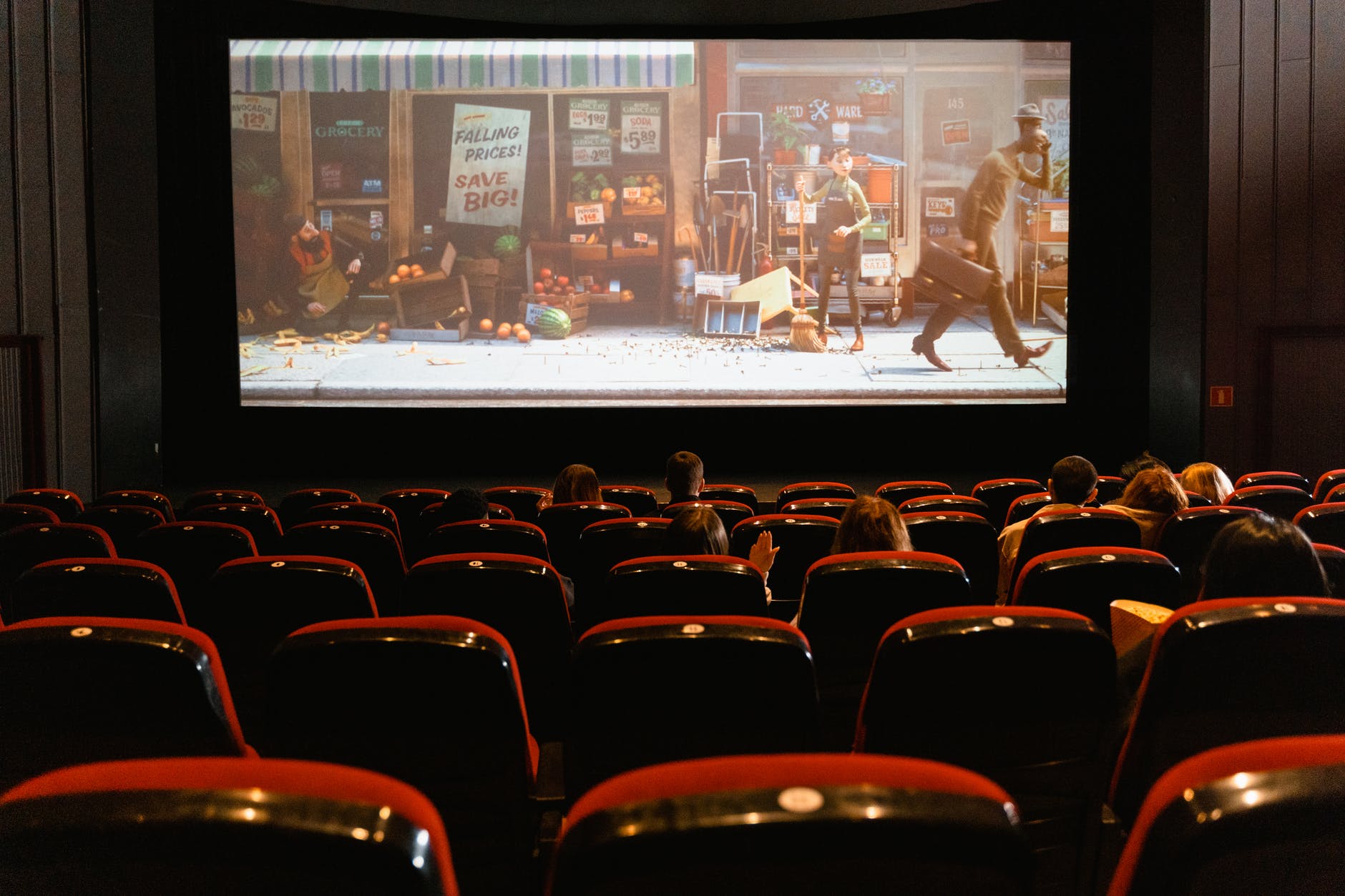
The 4 phases in Bollywood Cinema

Photo by Tima Miroshnichenko on Pexels.com

Bollywood, or the Hindi film industry of India which produces almost 1000 films every year is the world’s largest film industry. From the time the first Indian sound film, Alam Ara was produced in 1931 till the present decade, this industry has a remarkably rich history of producing a variety of movies, showcasing different spheres of Indian life, in myriad themes, be it comedy, romance, thriller, horror or drama. However, there has been a changing trend in the representation of Indian films through the years. The way movies were made in the 1950s is completely different from the way it is done in the twenty first century.
In this presentation I would like to share the changes that the Indian film industry has seen over the decades.

In order to understand the trends better let us divide it into 4 phases!
The first phase would consist of the movies made from the 1940s till the early 1960s. This phase is called the “Golden Era of the India cinema” where critically acclaimed movies like Awaara(1951), Shree 420(1955) and Mother India(1957) to name a few were made. These movies revolved around the common man, who faced various struggles in life, which the audience could relate to and would finally come out as a man with the right morals. These stories showed the protagonist to be poor who even though wavered from his path (mainly due to greed and success) would finally realize his mistakes and be a better person in the end and overcome his troubles in a just manner.

The second phase is the phase from late 1960s to the early 1980s. This phase saw a distinctive shift in the general storyline of the movies. Movies like Aradhana( 1969) , Anand (1970) , Bobby (1973) and Sholay(1975) mark this period.  These movies were more action based and romantic in nature. Violence became an integral part of the movies, and a lot of emphasis was given on villains, who were basically underworld mafias. The image of the “angry young man” was introduced here, a brooding hero who was very good at delivering his punches and kicks, would destroy the villains and win the lady’s heart in the end. A lot of films during this time revolved around this basic theme.

The third phase is from the late 1980s till early 2000s. This phase saw the most diverse shifts in the movie-making procedure in India. Advanced technology was introduced in the country. The first Indian sci-fi movie Mr. India was released in 1987 which was a runaway hit. Romance was still the main theme. Romance films have been popular with the masses in India. The target audience in the romance genre is youth. As urban populations grew in the 80s, the number of youth-centric romantic comedies increased considerably.The new wave of romance movies had situational comedy that became a hit with audiences. 
A lot of movies were shot abroad in this phase. Some of the best Bollywood romance movies and romantic comedies from late 1980s to early 2000s are – Qayamat Se Qayamat Tak- 1988, Andaz Apna Apna- 1994  Dilwale Dulhania Le Jayenge- 1995, Jab we met (2007) , Dostana(2008) and others.


The last and the ongoing phase started in late 2000s. This phase introduced a lot of technical advancements in the ways movies are made. From Koi Mil Gaya(2003) Ra.One(2011) to Mission Mangal (2019) movies put a greater emphasis on the visual effects rather than the story. A lot of movies have been shot abroad, with only the mention of India.

The 4 phases in Bollywood Cinema

Photo by Tima Miroshnichenko on Pexels.com

Bollywood, or the Hindi film industry of India which produces almost 1000 films every year is the world’s largest film industry. From the time the first Indian sound film, Alam Ara was produced in 1931 till the present decade, this industry has a remarkably rich history of producing a variety of movies, showcasing different spheres of Indian life, in myriad themes, be it comedy, romance, thriller, horror or drama. However, there has been a changing trend in the representation of Indian films through the years. The way movies were made in the 1950s is completely different from the way it is done in the twenty first century.
In this presentation I would like to share the changes that the Indian film industry has seen over the decades.

In order to understand the trends better let us divide it into 4 phases!
The first phase would consist of the movies made from the 1940s till the early 1960s. This phase is called the “Golden Era of the India cinema” where critically acclaimed movies like Awaara(1951), Shree 420(1955) and Mother India(1957) to name a few were made. These movies revolved around the common man, who faced various struggles in life, which the audience could relate to and would finally come out as a man with the right morals. These stories showed the protagonist to be poor who even though wavered from his path (mainly due to greed and success) would finally realize his mistakes and be a better person in the end and overcome his troubles in a just manner.

The second phase is the phase from late 1960s to the early 1980s. This phase saw a distinctive shift in the general storyline of the movies. Movies like Aradhana( 1969) , Anand (1970) , Bobby (1973) and Sholay(1975) mark this period.  These movies were more action based and romantic in nature. Violence became an integral part of the movies, and a lot of emphasis was given on villains, who were basically underworld mafias. The image of the “angry young man” was introduced here, a brooding hero who was very good at delivering his punches and kicks, would destroy the villains and win the lady’s heart in the end. A lot of films during this time revolved around this basic theme.

The third phase is from the late 1980s till early 2000s. This phase saw the most diverse shifts in the movie-making procedure in India. Advanced technology was introduced in the country. The first Indian sci-fi movie Mr. India was released in 1987 which was a runaway hit. Romance was still the main theme. Romance films have been popular with the masses in India. The target audience in the romance genre is youth. As urban populations grew in the 80s, the number of youth-centric romantic comedies increased considerably.The new wave of romance movies had situational comedy that became a hit with audiences. 
A lot of movies were shot abroad in this phase. Some of the best Bollywood romance movies and romantic comedies from late 1980s to early 2000s are – Qayamat Se Qayamat Tak- 1988, Andaz Apna Apna- 1994  Dilwale Dulhania Le Jayenge- 1995, Jab we met (2007) , Dostana(2008) and others.

The last and the ongoing phase started in late 2000s. This phase introduced a lot of technical advancements in the ways movies are made. From Koi Mil Gaya(2003) Ra.One(2011) to Mission Mangal (2019) movies put a greater emphasis on the visual effects rather than the story. A lot of movies have been shot abroad, with only the mention of India.

The negative impact of Television and Internet on Children

Photo by cottonbro on Pexels.com

Children are being negatively impacted because of exposure to tv and internet. Today kids spend more time watching tv or on phone which tends to slow down thier metabolism rate. Infact browsing stuffs online to playing games all day can make  them dull and unproductive. Spending insignificant amount of time on tv and internet can make children suffer from lack of sleep and cause serious health problems. Henceforth, a healthy balance and strict timetable needs to be devised by parents which should restrict the amount of time a child spends on tv and internet. For instance, a child can watch educational videos on youtube which can help them to understand their lessons better or can watch news on tv to get equipped with current affairs apart from just playing games or watching cartoons. Limiting the amount of time being spent on tv and internet, parents can involve their children in other healthy activities such as practising yoga or taking up a sport or say learning a new musical instrument. That way a child can do better not only in his academics but can also excel in other creative artforms

The negative impact of Television and Internet on Children

Photo by cottonbro on Pexels.com

Children are being negatively impacted because of exposure to tv and internet. Today kids spend more time watching tv or on phone which tends to slow down thier metabolism rate. Infact browsing stuffs online to playing games all day can make  them dull and unproductive. Spending insignificant amount of time on tv and internet can make children suffer from lack of sleep and cause serious health problems. Henceforth, a healthy balance and strict timetable needs to be devised by parents which should restrict the amount of time a child spends on tv and internet. For instance, a child can watch educational videos on youtube which can help them to understand their lessons better or can watch news on tv to get equipped with current affairs apart from just playing games or watching cartoons. Limiting the amount of time being spent on tv and internet, parents can involve their children in other healthy activities such as practising yoga or taking up a sport or say learning a new musical instrument. That way a child can do better not only in his academics but can also excel in other creative artforms

A state in India that is free of patriarchy

Photo by Angshu Purkait on Pexels.com

Meghalaya – a state in northeastern India has always been a far cry from the rest of India.The state is home to the Khasi and the Garo people, two of the few tribes to follow a matriarchal structure of society.

In a country like India, where the status of women is considered to be lower to that of men, where daughters of the household are treated as paraya dhan who are supposed to get married one day and go to her husband’s family , and the patriarchal system that subjugates women, oppresses women and tells them that they are not up to the mark and not as important as men,the fact that there are societies with a culture of dominant women is a wonder in itself! Unlike many places in India, where the birth of a girl is accompanied by reactions ranging from subdued acceptance to outright rage, the birth of a girl in places like Shillong is celebrated with mirth and laughter.There is no disparity in the treatment of women in urban and rural households of the Khasis and the Garos.In Khasi marriages, the men go and live with the wife and her family which is in stark contrast to most other communities in India, which see tearful goodbyes between the woman’s family.
An interesting and little known fact is that Khasi children take the title of their mother and her clan. This effectively means there are no illegitimate children among them.
It is refreshing to know that such a rare scene exists in our own country. For a nation plagued by a mindset of misogyny, the culture and traditions found in Meghalaya serves as a beacon of hope and change.

A state in India that is free of patriarchy

Photo by Angshu Purkait on Pexels.com

Meghalaya – a state in northeastern India has always been a far cry from the rest of India.The state is home to the Khasi and the Garo people, two of the few tribes to follow a matriarchal structure of society.

In a country like India, where the status of women is considered to be lower to that of men, where daughters of the household are treated as paraya dhan who are supposed to get married one day and go to her husband’s family , and the patriarchal system that subjugates women, oppresses women and tells them that they are not up to the mark and not as important as men,the fact that there are societies with a culture of dominant women is a wonder in itself! Unlike many places in India, where the birth of a girl is accompanied by reactions ranging from subdued acceptance to outright rage, the birth of a girl in places like Shillong is celebrated with mirth and laughter.There is no disparity in the treatment of women in urban and rural households of the Khasis and the Garos.In Khasi marriages, the men go and live with the wife and her family which is in stark contrast to most other communities in India, which see tearful goodbyes between the woman’s family.
An interesting and little known fact is that Khasi children take the title of their mother and her clan. This effectively means there are no illegitimate children among them.
It is refreshing to know that such a rare scene exists in our own country. For a nation plagued by a mindset of misogyny, the culture and traditions found in Meghalaya serves as a beacon of hope and change.

The real reason why Ellen Degeneres ended her show after 19 long years

Ellen Degeneres ended her show after 19 years. This brings to light many questions- Was she forced to end the show? What kind of legacy is she leaving behind? What kind if person is Ellen behind the camera?

Like many comedians, Ellen used humour as a coping mechanism to get through a tough life. At 13 years old, she would already be making jokes for her mother to not feel her pain after being divorced. And later, what her mother didn’t know is that Ellen at 15 years old would be hiding her own nightmare! The nightmare of being abused by her stepfather. This was not the only thing she had to hide cause when her family discovered she was gay, she got rejected by her own family. And this forced her to live in a lie, never telling anyone her true identity. As time passed by, kicked out of her own house, she lived a humble life to sustain herself. One day, while thinking about life in her empty base apartment, Ellen came up with a comedy piece that would soon make history. This comedy piece made her the first ever female comic that Johnny Carson ever invited to sit beside him. It was her big break! Ellen even starred in a sitcom! All of this felt like a reward after all she has been put through and so with everything going well, Ellen decided it was time to reveal her true self. Back then, being gay was not okay for many people in America and therefore after Ellen came out as gay, people shunned her. Advertisers pulled out and her career greatly suffered. To Ellen, this was the second time she was not accepted for being who she is. Years went by, her career stagnated and her life was at it’s lowest point when suddenly she was given a second chance – The Ellen Degeneres Show. She became one of the most friendly faces on American TV. America progressed and accepted her.  Infact, something that used to be what she was judged for became one of her greatest assets! However, she had to fall low again when employees from her show called her out for toxic working environment. Truth is, we will never know what really happened inside a studio. But despite all of it, if there is one life lesson that we can learn from Ellen, it is that: No matter who you are, life will always be full of highs and lows. And no matter how long you are stuck in the low, your high will come.