The Ashrama Vyavastha

The Hindu Sastra- Karas advocated that man’s life and conduct is set in accordance to the attainment of the ultimate goal of life, that is, “moksha” and is influenced by four factors such as ‘desa’, ‘Kala’, ‘srama’ and ‘guna’. The Hindu sages were univocal on the presumption that any scheme of social organization which aims at the best functioning, must, in the first instance, take account of human beings from two aspects. First, the scheme must consider him as a social being with reference to his training and development in the ultimate goal of his existence; and secondly, tho has to be co- ordinated with another scheme which visualizes man with reference to his natural disposition and attitudes. The first of these is undertaken under the scheme of “ashrama“.

The word “Ashrama” comes from a Sanskrit word “srama” meaning “to exert oneself”. The word ashrama literally means a resting or halting place. According to the Hindu Vedas, there are four ashramas, that are regarded as resting places during one’s journey on the way to final liberation. Each ‘ashrama’ is a step in the long journey towards the ultimate goal. Therefore, Vedavyasa has described in the Mahabharata that ‘ashramas’ are the four rungs of ladder which takes man in the direction of Brahma. The four ashramas are:

  1. The Brahmacharyashrama
  2. The Grihasthashrama
  3. The Vanaprasthashrama
  4. The Sanyasashrama

The Brahmacharyashrama

The first stage of life of an individual is the Brahmacharyashrama. This is marked by the initiation rotes or upanayan ceremony. Brahmacharya literally means the leading of life according to Brahma. In this stage, a person acquires knowledge, achieves discipline and moulds his character. He acquires knowledge of the Vedas, shastras (weapons), tatva (theoretical knowledge) and vyavahar (practical knowledge). The student stays at the teacher’s house, ‘Gurukula’, which marked the beginning of schooling in the Vedic texts. The student not only performs his study, but also performs the tasks assigned to hin by his teacher. When the teacher is convinced that the student had evinced a real desire for study, he unfolds the Vedas to him. The student follows some strict rules and learns to restrict and have control over his senses. The individual has to surrender his life of sense, mind and intellectual to the handling and moulding by the teacher.

The Grihasthashrama

After the completion of prescribed education in Brahmacharyashrama, in the first twenty five years of life, the youth enters the Grihasthashrama, that is the time when he is fit to marry with certain aims. In enters this stage with aims of ‘Dhrama’ meaning religiousity, ‘Praja’ meaning procreation and ‘Rati’ meaning satisfaction of sexual urges. The major aim of Hindu marriage is ‘dharma’. To fulfil his ‘dharma’ the married man performs five mahayajnas or the five great sacrifices along with his wife or ‘ardhangini’ or ‘dharmapatni’. These great sacrifices were offered to Gods (Daiva Yajna), Saints or Brahmans (Rishi Yajna), Parents (Pitri Yajna), Ancestors (Bhuta Yajna) and the men (Atithi Yajna). The Grihasthashrama is given a high place of honour. It is also the responsibility of the householder to take care of all those who are in the other three ashramas.

The Vanaprasthashrama

After the completion of the householder’s duty and at fifty years of age, man entered into the third stage of life, the Vanaprasthashrama. At this stage the individual lives as a recluse and resides in the forest. He must satisfy his hunger by eating roots or fruits available in the forest. The hermit must maintain celibacy, sleep on the floor, residing under a tree without any attachment to where he happens to reside.The qualities and virtues he needed to cultivate as a hermit were self restraint, friendliness, charity and compassionate attitude towards all creates. The presence of wife along with him was optional. It is a life devoted to meditation and contemplation, a life of enquiry and searching.

The Sanyasashrama

In the last stage, after twenty five years of conditioning in the Vanaprasthashrama, the man enters the Sanyasashrama, that is, life of an ascetic, casting off all attachment with the world. At the time of entering this ashrama, a person takes the vow that ” I have completely, from tho day, bidden farewell to AL the desires and anxieties regarding son, wealth and the world.” As regards the practice he should beg once in a day without any desired to get large quantity of alms. By restraint of his senses, destruction of love and hatred and by abstention from injuring creatures, he becomes fit for immortality. By passing through this stage, all the sins of man are washed away and destroyed. The man at this stage was mainly concerned with his own realization of spirituality.

It can be concluded that the ashramas are, as a school of life at various phases of human existence, devised and organized, towards the attainment of “moksha” in accordance with the theory of the ultimate nature of human beings.

Black box : The flight data recorder

Black box first came into widespread use on commercial aircraft after World War 2. It was invented by Australian scientist Dr David Warren in 1958. In 1960, Australia was the 1st country to make Black box mandatory for all commercial aircraft. A black box, technically known as an Electronic Flight Data Recorder, is an orange-coloured heavily protected recording device placed in a flight. Any commercial aircraft is required to be equipped with a Cockpit Voice Recorder(CVR) and a Flight Data Recorder(FDR). It is these two items which we commonly refer to as a Black box. While they do nothing to help the plane when it’s in the air ,it is vitally important if the plane crashes as it helps crash investigators to find out crucial events that led to the crash. They are usually kept at the tail of an aircraft which is likely to survive a crash. It usually takes at least 10-15 days to analyse the data recovered from the black boxes. Black boxes are also used in vehicles other than planes like railways, cars etc.

Parts of the black box :
1. Flight Data Recorder – It keeps the track of every instruction made by the pilots and records things like airspeed, altitude, vertical acceleration and fuel flow.
2.  Cockpit Voice Recorder – It records the conversations in the cockpit and general noises in their vicinity such as audible warnings.

The federal Aviation Audio (FAA) requires them to be able to record 2 hours of audio. The previous requirement was 30 minutes but investigators found that they sometimes needed details from longer period before the crash.

Technology:

• Older black boxes used magnetic tape, a technology that was first introduced in the 1960s. Magnetic tape works like any tape recorder but is no longer in making as it leaves a bit of data on the tape and as airlines begin a full transition to solid-state technology.
• These days, black boxes use solid-state memory boards, which came along in the 1990s. Solid state memory boards are much more reliable than memory tapes as they use stacked arrays of memory chips so they don’t have moving parts. With no moving parts, there are fewer maintenance issues and a decreased chance of something breaking during a crash., and are stronger.
• Data from both the CVR and FDR is stored on stacked memory boards inside Crash-Survivable Memory Units (CSMUs) which are engineered to withstand extreme heat, jarring crashes and tons of pressure.
• To make black boxes discoverable in situations where they are under water, they are equipped with locator Beacons. These broadcast their location by sending out ultrasound signals for upto 30 days even when submerged as deep as 6,000 meters (20,000 feet).

Airplanes are equipped with sensors that gather data. There are sensors that detect acceleration, airspeed, altitude, flap settings, outside temperature, cabin temperature and pressure, engine performance and more. Magnetic-tape recorders can track about 100 parameters, while solid-state recorders can track more than 700 parameters in larger aircraft. All of the data collected by the airplane’s sensors is sent to the flight-data acquisition unit (FDAU) at the front of the aircraft. This device often is found in the electronic equipment bay under the cockpit. The flight-data acquisition unit is the middle manager of the entire data-recording process. It takes the information from the sensors and sends it on to the black boxes.

Black boxes are painted in a bright shade of orange. This coloring makes them far easier to locate amid the potentially considerable devastation of an aircraft’s crash site. It has reflective surfaces to increase their visibility. But their are certain cases like the Malaysian Airlines MH370 flight where they are not found. And they still lack video recording capabilities.

It is being tried to stream all of their essential data directly to a ground-based station in realtime which would eliminate the desperate search for a box that may have been destroyed in a crash, and will be more dependable.

Sources : http://www.iasa.com.au and Dristi IAS.

A Struggle of many people to make Uttarakhand a state.

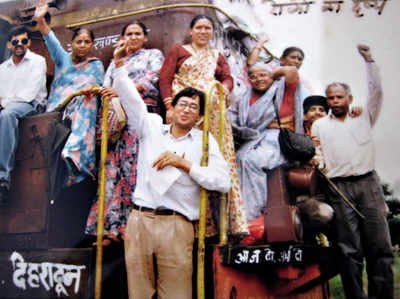
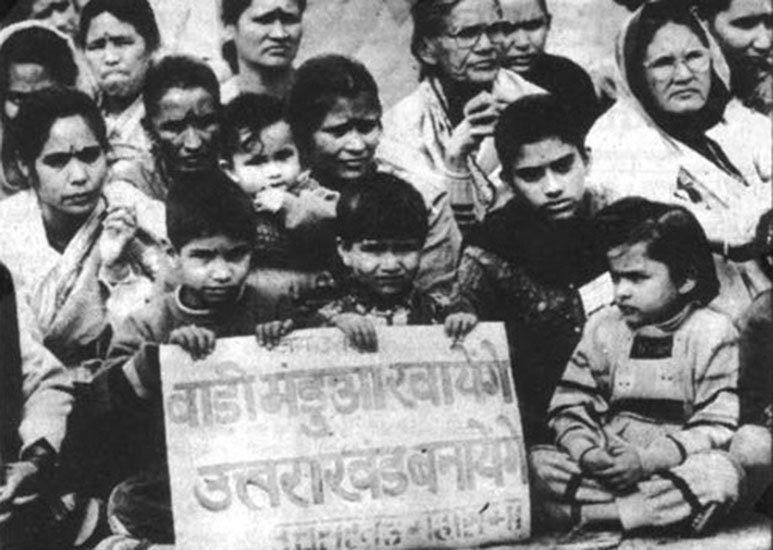
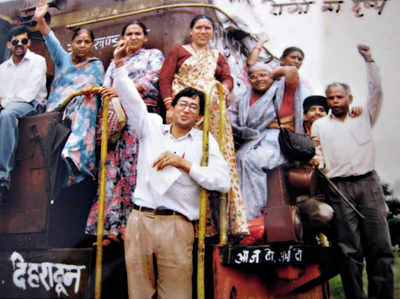
Uttarakhand became a state on November 9, 2000. The establishment of Uttarakhand was achieved after a lot of hard work and sacrifice. The voice for Uttarakhand to become a state was first raised in a special session of the Indian National Congress in Srinagar, May 5-6, 1938. In 1994, after a series of events, demand gradually increased for another state eventually which took the form of a mass movement, leading to the formation of India’s 27th state by 2000.

In March 1994, Uttar Pradesh Chief Minister Mulayam Singh Yadav recommended the Mandal Commission to secure 27% of government positions and places in schools and universities for socially and economically weaker classes,which was later on carried on. The Hill region OBC population was very small at 2.5% and reserving OBC seats meant that all government seats would go to the plains of Uttar Pradesh. This led to intensified protests against the nation.

In 1994, the students throughout the region participated in separate state and group movements for reservations. The Uttarakhand movement was further intensified locally by the anti-Uttarakhand statement by then-Chief Minister of Uttar Pradesh, Mulayam Singh Yadav. Uttarakhand leaders continued to support their call for another state until their death. State officials went on strike for three months, and the Uttarakhand movement was exacerbated by the blockade and confrontation with police. Uttarakhand activists in Mussoorie and Khatima were shot dead by police. On October 2, 1994, in Delhi, the capital of the country, a large-scale demonstration and protest was held in support of the state under the support of Samyukta Morcha. Uttarakhand activists marched to Delhi to participate in the struggle. Activists who participated in peaceful demonstrations near Ranpur Tiraha Junction in Muzaffarnagar were tortured and shot dead openly without warning. Police officers were also charged with obscene behavior and rape with female activists. Satya Pokhriyal was a leader who led all people out of misery and other Andolankari helped others and showed courage. Several people were killed and many were injured. These incidents has fueled the Uttarakhand movement. The next day, October 3, the destruction of gunfights across the region and protests over multiple deaths broke up.

On October 7, 1994, a female activists died after police brutally attacked her in Dehradun while she protested against the shooting at Rampur Tiraha and many activists attacked the police station in return. A curfew was imposed in Dehradun on October 15, and one activists was also killed on the same day. On October 27, 1994, then Indian Minister of Home Affairs Rajesh Pilot met with state activists. Meanwhile, a brutal police attack in Srinagar’s Sriyantra Tapu killed several activists while they were protesting.


On August 15, 1996, then Prime Minister H.D. Deve Gowda announced at the Red Fort of Delhi the forming of a new state Uttarakhand.

In 1998, the BJP-led coalition government at the centre sent the “Uttarakhand Bill” through the President of India to the Uttar Pradesh state government . The Uttar Pradesh State Assembly passed , the Uttarakhand bill with 26 amendments and sent back to the central government. On July 27, 2000, the central government submitted the 2000 Uttar Pradesh Reorganization Bill to the Parliament of India. Lok Sabha passed the bill on August 1, 2000, and Rajya Sabha passed the bill on August 10, 2000. The Uttar Pradesh Reorganization Act was approved by then President of India, K.R. Narayana on August 28, 2000 and on November 9, 2000, the new state of Uttaranchal was established as the 27th state of India, now known as Uttarakhand.

Samsung Could Start Beta Testing Android 13 On The Galaxy S22 Soon.

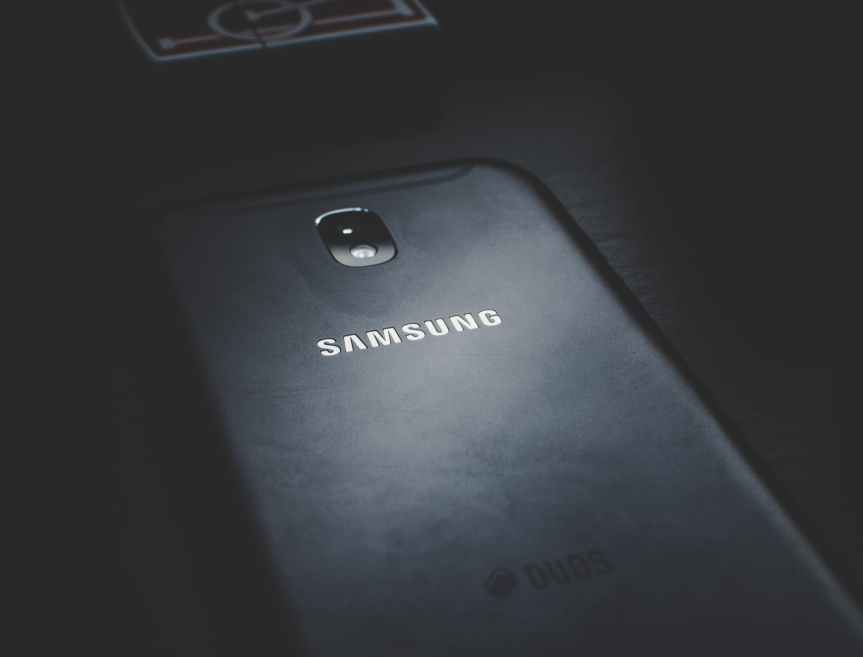
A beta firmware update seems to show testing for Android 13 could begin soon for the Samsung Galaxy S22.The test could start in some parts of the world in July 2022.The beta will also include Samsung’s latest One UI 5.0 skin.

Android 13 is currently in its third beta version for Google’s Pixel phones. However, there’s word that a beta for the OS could soon be made available for the Samsung Galaxy S22 family of smartphones.

Read more: Android 13 schedule – When will it launch?

According to Tizenhelp, it has spotted beta firmware for the Galaxy S22 series in South Korea. The firmware beta, with the user number of S906NKSU2ZVF6 is for the Android 13 beta, which is also for the company’s own One UI 5.0 skin. The story says that the firmware’s appearance could mean that beta testing for the Galaxy S22 Android 13 update could begin in South Korea, and perhaps other parts of the world, as soon as July 2022.

While many of Android 13’s new additions and improvements have been revealed, there hasn’t been much in the way of news for Samsung’s One UI 5.0. Hopefully, we will get some concrete info about that phone skin’s new features soon as well.  While the Galaxy S22 phones will get first crack at the Android 13 beta, it’s expected that other high end Samsung phones will be allowed to enter the beta testing program in the weeks and months to come.

Comments.

Samsung Could Start Beta Testing Android 13 On The Galaxy S22 Soon.

A beta firmware update seems to show testing for Android 13 could begin soon for the Samsung Galaxy S22.The test could start in some parts of the world in July 2022.The beta will also include Samsung’s latest One UI 5.0 skin.

Android 13 is currently in its third beta version for Google’s Pixel phones. However, there’s word that a beta for the OS could soon be made available for the Samsung Galaxy S22 family of smartphones.

Read more: Android 13 schedule – When will it launch?

According to Tizenhelp, it has spotted beta firmware for the Galaxy S22 series in South Korea. The firmware beta, with the user number of S906NKSU2ZVF6 is for the Android 13 beta, which is also for the company’s own One UI 5.0 skin. The story says that the firmware’s appearance could mean that beta testing for the Galaxy S22 Android 13 update could begin in South Korea, and perhaps other parts of the world, as soon as July 2022.

While many of Android 13’s new additions and improvements have been revealed, there hasn’t been much in the way of news for Samsung’s One UI 5.0. Hopefully, we will get some concrete info about that phone skin’s new features soon as well.  While the Galaxy S22 phones will get first crack at the Android 13 beta, it’s expected that other high end Samsung phones will be allowed to enter the beta testing program in the weeks and months to come.

Comments.