ISSUES RELATING TO POVERTY AND HUNGER

India is a country which suffers a lot due to hunger and poverty. Hunger is very closely related to poverty as poverty is one of the main reasons for hunger. 

Indian economist and philosopher Amartya Sen said that lack of ability to pay for food is obviously caused by poverty.

POVERTY

Poverty is a condition caused due to lack of basic needs of life such as water, health care, food, unemployment etc. It is described as the low income level of people which leads them to poor standard of living. Poverty means that the income level from employment is so low that even the basic human needs are not fulfilled. The impact of poverty on children is substantial. Children who grow up in poverty typically suffer from severe and frequent health problems; infants born into poverty have an increased chance of low birth weight, which can lead to physical and mental disabilities. Poverty is a difficult cycle to break and often passes from one generation to the next. Typical consequences of poverty include alcohol and substance abuse, limited access to education, poor housing and living conditions, and increased levels of disease. 

Hunger and food insecurity are the most serious forms of extreme poverty. To eradicate these issues from society is the prime concern of international organizations.

HUNGER

Hunger is a global problem and a lot of countries are facing this problem. Hunger is a condition where both the adults as well as children do not have access to food and there is a constant decrease in food intake, nutrients, no proper diet is there and some days are even gone without food which eventually leads to their death.

Climate change is also one of the reasons for world hunger. The amount of rain determines the production of crops. Droughts also affects agricultural production and extreme rain also causes flooding that leads to destruction of crops . Use of outdated products, not using better quality seeds also leads to shortage of food and those who are capable and have money buys food even at higher prices, the ones who have to suffer are poor people. They do not have money to buy food and hence they remain hungry. Hunger has a lot of serious problems such as insufficient economic systems, climate changes, misinformation but the most serious problem of all is poverty. Many poor nations such as Kenya, Uganda etc. are in desperate need of food. The growing population is one of the major causes of rising hunger and poverty. In Indian scenario Hunger and malnutrition are closely related. The main outcome of poverty is hunger. India is a home to the largest undernourished population in the world, 14℅ of our population is undernourished, 20℅ of children under 5 are underweight, 34.7℅ of children are stunned, 51.4℅ of women in the in the reproductive age i.e. 15-49 are anemic.

DIFFERENT ISSUES RELATING TO HUNGER AND POVERTY

Overpopulation is a major issue of rising poverty. There are not enough resources to satisfy your need. Demand is more and resources are limited and this leads to no proper distribution of resources and a large amount of people are left with no food. India is a country with a large population, and hence everyone’s demand is not full and people remain hungry.

Poor health service– the health sector of India is not as efficient as compared to other developed Nations, which leads to less access to good health and sanitization and hence causes ill health and maintains poverty.

Malnutrition- It is a phenomena that occurs in a human body when it receives little or no nutrition as a result of it people easily get sick and it causes death. it is responsible for the death of people, especially young children.

Insufficient education and lack of training- due to Rising poverty children are not able to get basic education and again since they are not educated, they don’t get employed and this vicious cycle of poverty is continued. Lack of money is reason for them not attending proper School and they have to indulge in labour to provide for a minimal living also causes rise for child labour. Parents send their children to work at a very young age.

Inequality– different gender, ethnic, group and social classes face inequality due to poverty. Low rate of economic development, If a country is poor then its development is also very slow.

Rise in crime – Often due to poverty and hunger, people indulge in criminal activities. To fill their empty stomach many young children opt for wrong ways and indulge in theft and loot and its disturbance in the society.

Way Forward

To eradicate poverty and hunger from the society, there is a need for the government to implement schemes and methods. The government should spend more in health, nutrition, and education. The government should invest more in agriculture and provide the farmers with better quality seeds and advanced machineries and modern techniques for more agricultural production, Also it is necessary to decrease rural poverty. Subsidies address only short-term issues. There is a need to develop technologies, with the help of which farmers can practice all-weather agriculture. Government should focus on increasing employment opportunities creating jobs in modern sectors and promote labor-intensive industries. Reduction in corruption will lead to an overall development of the economy. A country with low poverty level will only develop in a better manner.

Sources: civilservicesindia.com
The joint family system of India

Photo by Yan Krukov on Pexels.com

The family is the most primary group in society. It is the most simplest and elementary form of society. A family usually consists of various combinations and permutations of two primary links of kinship- parenthood and siblings. The family as an institution is universal. It is the most permanent and the most pervasive of all social institutions. Family is the biological social unit composed of husband, wife and children.

The joint family is also known as ‘undivided family’ and sometimes as ‘extended family’. It normally consists of members who at least belong to three generations: husband and wife, their married and unmarried children; and their married as well as unmarried grandchildren.

Definitions of joint family:

  1. K. M. Kapadia defines joint family as a group formed not only of a couple and their children but also other relations either from father’s side or from mother’s side depending on whether the joint family is patrilineal or matrilineal.
  2. I. P. Desai holds, “We call that household joint family which has greater generation depth than the nuclear family and the members of which are related to one another by property, income and mutual rights and obligations.”
  3. According to Dr. Mamodia, “The fundamental principle of the Hindu joint family is the tie of sapinda without which it is impossible to form a joint family.”
  4. Dr. Chandrashekhar says that “joint family is simply the common ownership of the means of production and the common enjoyment of the fruits of labour.”

Characteristics of Joint family:

  1. Common Habitation: Members of the joint family normally reside together under the same household. This comprises of father, mother, son, son’s wife and children etc. Traditionally, a joint family comprised of some separate family units who had a common habitation.
  2. Joint kitchen: The food for all members of a joint family is cooked in common kitchen. The self of joint family begins with separation of the kitchen.
  3. Joint property: In a joint family the property is held in common in respect of the ownership, production and consumption of wealth. The head of the family acts like a trustee. He manages the joint property.
  4. Kindred relationship: The members of the joint family are bound together through kinship tie. Parents and grandchildren, who are all blood related persons, live together in one house. The joint family comprises of persons belonging to at least three generations. Many a time it may be supplements by other relatives.
  5. Common worship: The members of the joint family also cherish common faith, beliefs, and hence participate in common worship. The functions of the family were mostly religious even in the Vedic times.
  6. Ritual Bonds: The performance of ‘Shraddha’ ceremony and the offering of ‘Pinda’ are propriated by the senior male member of the joint family. He performs the function on behalf of all the members of the joint family.
  7. Mutual obligations: In the joint family the members are well aware of one another’s rights and duties. Each member of the family performs certain duties which benefits the other members as well as the family as a whole.
  8. Authority of the Head: The head of the family appears to have absolute authority and control over the family property and members. Since the Hindu family is a patrilocal, patrilineal and patriarchal type, the father exercises authority over all members and family property.

Merits of joint family:

  1. The common right on the joint property is productive from the point of view of agricultural productions.
  2. In the joint family system, all the earnings are pooled into a common fund.
  3. The joint family provides social security to all the members despite their inability to earn or to work to supplement the common fund.
  4. The offsprings undergo the process of socialization in a broader family setting.
  5. All the members of a joint family share joint responsibility.
  6. Work is divided among the members in a joint family.
  7. The joint family exercises an informal type of social control over the harmful tendencies of its young members in an effective manner.
  8. Family traditions and customs are maintained in the joint family system.

Demerits of joint family system:

  1. The joint family can be centred as a source of litigations, quarrels and conflicts due to many reasons.
  2. Since collective responsibility is bestowed on all the members of family the concept ‘everybody’s business, nobody business’ prevails. It makes some members lazy because they know it pretty well that their idleness will not debar them from consuming equal share.
  3. There is a absence of privacy for the married couples.
  4. Joint family hinders social mobility.
  5. The condition of women worsen I the joint family. The woman enjoys a lower status in the joint family.
  6. The incidence of child marriage is quite high in the joint family.

The traditional joint system of Hindi has undergone vast changes. These changes have not destroyed the system as such. They have definitely affected its structure and functions and also its stability. Some of the causative factors are: education, industrialization, urbanization, change in the institution of marriage, specially in the age of marriage and the legislative measures.

Gamma Ray Bursts

Gamma ray bursts are the most energetic and luminous electromagnetic events since the Big Bang. It can release more energy in 10 seconds than the Sun can emit in its entire 10 billion years of expected lifetime. They are the most powerful events in the universe, detectable across billions of light-years. They are high energy explosion that occurs in space atleast once everyday. They can last from milliseconds to a minute. It isn’t possible to predict the exact time and location of its occurrences.

What are Gamma Rays ?

Gamma rays are ionizing electromagnetic radiation, obtained by the decay of an atomic nucleus. Gamma rays are  penetrating form of electromagnetic radiations and can damage living cells to a great extent. They have the smallest wavelengths and the most energy of any wave in the EV spectrum. They are produced by the hottest and most energetic objects in the universe such as neutron stars and , supernova explosions and regions around black holes. On Earth , gamma rays are generated by nuclear explosions,lightning and the less dramatic activity of radioactive decay.

Gamma ray detectors :

Gamma rays can’t be captured and reflected by mirrors like optical light and x-rays. Its wavelength is too short to pass through the space.
Gamma ray detectors contain densely packed crystal blocks. As Gamma rays pass through,  they collide with electrons in the crystal.
This process is called Compton Scattering where a gamma ray strikes an electron and loses energy. These collisions create charged particles that can be detected by the sensor.

Type of Gamma Ray Bursts :

1. Long GRBs :
• They observe long bursts in association with the demise of massive stars.
• When a star much more massive than the Sun runs out of fuel, its core suddenly collapses and forms a black hole.
• Black hole refers to a point in space where matter is so compressed as to create a gravity field from which even light cannot escape.
• As matter swirls toward the black hole, some of it escapes in the form of two powerful jets that rush outward at almost the speed of light in opposite directions.
• Astronomers only detect a GRB when one of these jets happens to point almost directly toward Earth.
• Following the burst, the disrupted star then rapidly expands as a supernova.

2. Short GRBs :
• Short GRB forms when pairs of compact objects – such as neutron stars, which also form during stellar collapse – spiral inward over billions of years and collide.
• A Neutron star comprises one of the possible evolutionary end-points of high mass stars.

GRB 200826A :

• NASA’s Fermi spotted a very short, powerful Gamma-Ray Bursts (GRBs) that lasted for about a second. It was named GRB 200826A after the date it occurred, which is 26th August 2020. It was a sharp blast of high-energy emission lasting just 0.65 seconds.
• After traveling for a very long period of time through the expanding universe, the signal had stretched out to about one-second-long when it was detected by Fermi’s Gamma-ray Burst Monitor.
• It had been racing toward Earth for nearly half the present age of the universe.
• It is considered to be the the shortest GRB till now and it is caused by the death of a massive star.
• It emitted 14 million times the energy released by entire milky way galaxy over the same amount of time , making it one of  the most energetic short duration GRBs ever seen.

Significance of GRB 200826A :
It has helped to resolve the long-standing issues related to gamma-ray bursts. Also, this study triggers to re-analyse all such known events to constrain number densities better.

Sources : PIB and Dristi IAS

ROLE OF FAMILY,SOCIETY AND EDUCATIONAL INSTITUTIONS IN INCULCATIONG VALUES

Family, society, and educational institutions play a very major role in building one’s character or personality. These institutions impart value to an individual and help them become a better person in society. One learns what one listens. Young children very much learn what they see around them. If they see good they learn good and if they see bad they will learn that as well. The role of family is important because an individual lives there and learns from there, society influences an individual’s behaviour and educational institutions are where an individual learns. Now we’ll see how these factors help in inculcating values in an individual.

ROLE OF FAMILY

Family is a place where one grows, and learns the most. Just like the saying charity begins at home similarly an individual’s education starts from home. It is like a foundation where values are built. Values like respecting elders, honesty, justice, respect for both genders all taught at home. If within a family there are differences or if the home environment is not healthy then this also affects the individual. The values practised by the other members of the family also shapes the child’s attitude towards other people or towards the society. Values like love, care, protection all these start from family. If a child experiences love, care, comfort then he/she will have a positive attitude toward others and will behave the same with others and will inspire others as well. Family’s environment will help a child to socialise and progress in the society.

The system of joint family that is the presence of elder family members also has a great influence on an individual. It helps in developing social and moral values. They learn human values and respecting elders and this will help in eradicating negative mental tendencies when they are among elders. In a family an individual not only learns about values but also about their customs and culture and enhancing one’s culture proudly is also a very good value. The attitude of one family member towards another also affects individual behaviour. For example if child see his father not respecting his mother then he may feel that this is how it is supposed to be and he may also do the same thing with his wife but if he sees his father respecting her mother, giving her importance which she deserves the he will also treat his wife in respective manner so it is very important for a family to not just inculcate good values to the younger generation but they themselves should have good value so the future generation could learn from them.

The values that are taught in the family helps a child to learn, grow and progress in the society. Family values enhance a child’s personality and character and help them in becoming a better human being.

ROLE OF SOCIETY

When we grow older our social world also expands, now not only family but we become a part of society. Society also plays an important role in inculcating values. When a child grows it goes outside to make friends and share each other’s thoughts. Society also shapes an individual’s character. Societies follow certain traditions and customs and being a part of the society, we are also a part of these customs and traditions. These customs and traditions are being followed from generations and these are based on values such as loyalty, courage, love and brotherhood. We celebrate different festivals together which portray love and happiness and we not only celebrate festivals of one tradition or religion, but being part of such a diverse country we get to enjoy festivals and customs of different religions which shows mutual respect towards each other and toward different individuals in a society. Religion is a very important social institution in our Indian society and these religions are embedded with cultural values. Society creates social order, the diversity present in our society teaches mutual love, respect and inculcates a variety of values and holistic development of individuals. The social influence and the urge to become an inspiring personality in a society helps in developing good values in an individual. The great inspiring personalities, influencer leaders and celebrities also have a great influence in society. Young individuals learn and get inspired by them so it is also an important job for these powerful personalities to set a good example for the younger generation.

ROLE OF EDUCATIONAL INSTITUTIONS

Apart from home, a child spends most of his/her time at school. The first formal place of socialisation and the first and foremost important value that it teaches is discipline. The educational institutions have a proper disciplined environment. In an educational institution, the day starts with the prayer which teaches gratitude. Different school activities inculcate different values such as teamwork, sportsmanship spirit, competitiveness, etc. Different programs of Community work help in inculcating values like empathy, care, unity, etc. Peer groups also play an important role, students often get feedback about their behaviour from their fellow classmates or friends. Teachers also act as role models for the students, when a teacher asks students to behave in a certain manner then they tend to take it more seriously as compared to any family member or friend. The reward and punishment system also helps as children behave in a good manner for rewards and to protect their self esteem from getting punished. Every school or educational institution has their philosophy or motto and these help in inculcation of good values.

“Intelligence plus character, that is the true goal of education”. – Martin Luther King

Value is something that is not restricted to a certain age or gender or place. It is something which is lifelong, it can be learned at any age and be practiced throughout one’s life. Good values build one character and make an individual a better human being . A man with good values is respected everywhere in the society so it is very important to inculcate good values in life. There are different characters in an individual life that add to his/her character and personality. The influence of family, society and educational institutions have the strongest influence upon an individual and thus it affects in developing an individual personality whether positively or negatively.  

Sources: diyethics.forumias.com

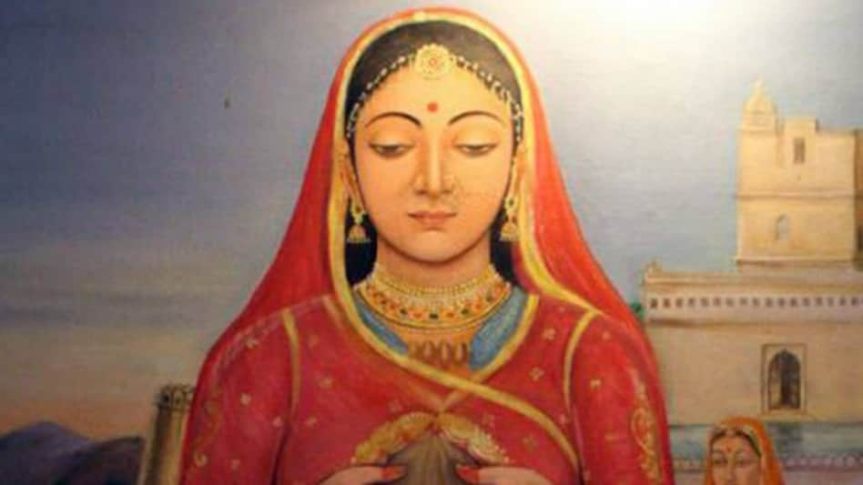
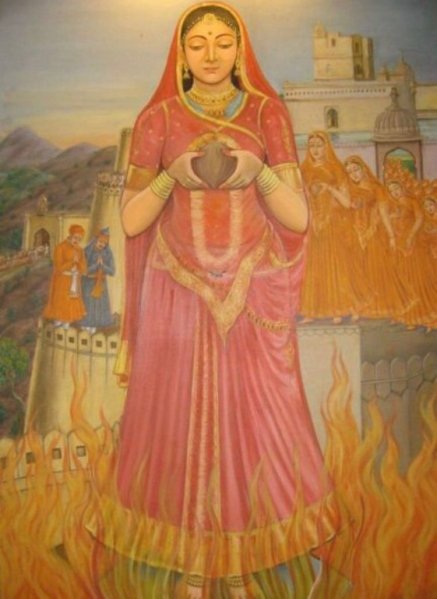
Story of a fierce Queen, Rani Karnavati.

Rani Karnavati was a princess and temporary ruler from Bundi, India. She married Rana Sanga of Mewar in Chittorgarh, the capital of the Kingdom of Mewar. She was the mother of Rana Vikramaditya and Rana Uday Singh, and the grandmother of the legendary Maharana Pratap. During 1527 to 1533 the minority years of her sons she served as a regent for Mewar. She died on 8th March 1535.

After Babur seized the throne of Delhi in 1526, Rana Sanga of Mewar led a coalition of Rajput Kings against Babur to seize the throne of Delhi. In the starting Rana Sanga was able to defeat Babul in the Battle of Bayana, but in the Battle of Kanua, he was defeated because of Babur’s excellent tactics, guns, and artillery.Rani Karnavati took over as regent on behalf of his eldest son Vikramaditya who was a minor at that time. Meanwhile, Mewar was attacked a second time by Gujarat’s ruler Bahadur Shah against whom Vikramaditya had previously been defeated. It was very important issue for Rani Karnavati.

The nobles of Mewar Kingdom did not want to fight for Vikramaditya, and as the upcoming battle will certainly be another stain in the history of Sisodias. Rani Karnavati was able to persuade nobles to fight for Mewar and honor of Sisodias . Their only condition was that Vikramaditya and Uday Singh should go to Boondi for their personal security during the war. In some legends some also said, that Rani Karnavati also sent Rakhi to Emperor Humayun of Mugals calling him his brother and asking for help. Therefore, her name was irreparably linked to the Raksha Bandhan Festival. However, this is not supported by modern writers, and modern historians such as Satish Kumar consider it a fable rather than a historical fact.

Rani Karnavati agreed to send her sons to Bundi ,while knowing the situation being very critical and which can be dangerous for her two sons and send her trusted maid Panna Dai to accompany them and take care of them. Panna hesitated, but she left for Bundi with Vikramaditya and Uday Singh and accept the Queen’s wishes.

The Sisodias dynasty fought bravely, but the army of Mewar was outnumbered by Bahadur Shah army and they were defeated. Bahadur Shah entered Chittorgarh and it was his second attack on Chittor. The male nobles donned with saffron cloths fought with the enemy till thier death and commited Saka.Karnavati and other noble court women realized that defeat was imminent and to save their honour they committed suicide on March 8, 1534, in a fire called Jauhar. This was the second of the three Jauhar to take place in Chittor.

AGNIPATH SCHEME

On 14 June 2022, the central government launched the Agnipath scheme which is a recruitment of soldiers below the rank of commissioned officers into the three services of the armed forces. With this scheme, the central government hopes to fulfill the dream of an individual to join the armed forces and serve the nation. Various other reasons for the government to start this scheme were to reduce salaries and defence pension bill, to increase employment opportunities and higher skilled work force and to provide a youthful profile to the armed forces. One of the important reasons was also to have a large number of military trained and disciplined people in the society. The soldiers recruited through this scheme will be known as ‘AGNIVEERS’.

Under this scheme 45,000 to 50,000 youth aged between 17.5 to 21 years will be recruited annually for 4 years in the Navy, Air force & Armed forces. Enrollment will be based on an ‘All India All Class’ basis. The enrolment of the Agniveers to all the three services will be through a centralized online system, with special rallies and campus interviews at recognized technical institutes such as the National skills Qualifications framework, Industrial Training Institutes. In each batch, 25% of Engineers will be chosen for the permanent cadre in the armed services. The remaining 75% of Agniveers will receive an amount of Rs. 11.71 lakh as Seva Nidhi Package.

The salary per month of the Agniveers is Rs. 30,000 in 1st year, Rs. 33,00 in 2nd year, Rs. 36,500 in 3rd year and Rs. 40,000 in 4th year but the Agniveers contribution to Seva Nidhi will be 30% which means 30% will be deducted from the initial salary which means in hand they will receive 21,000 in first year, 23,100 in second year, 25,580 in third year and 28,000 in fourth year.

The Agniveers will also receive a non-contributory insurance cover of Rs. 48 lakh during the period.

Every demolished AGNIVEER will have a 10% reservation in CAPFs, Assam Rifle recruitment. They are also provided with the Upper age relaxation beyond the prescribed age limit for AGNIVEERS in CAPF & Assam Rifles. Other benefits include:

  • Priority in bank loan schemes in case they want to be entrepreneurs.
  • Many other states including Uttar Pradesh and Madhya Pradesh have stated that agniveers will be given priority in the recruitment of state police officers.
  • Some major companies and sectors like IT, Engineering Security, etc. have also announced that they will prefer hiring skilled, trained, and disciplined Agniveers.
  • It also stated that all those wishing to study further class 12 equivalent certificate and Bridging Course of choice for further studies.

The Upper age limit for recruitment has also increased only for 2022 under the Agnipath scheme to 23 years from 21 years for the first year of the scheme for enrolment of soldiers into the Army, Navy and Air Force.

AIM OF THE SCHEME

  • One of the important aims of the scheme is to make the army a future-ready fighting force with the youth of the nation capable of meeting multiple challenges.
  • To strengthen the national security
  • To provide the youth of the nation to serve the country.
  • To cut down salary and pension bills.
  • To harness the youth potential and make them future ready soldiers.
  • They will be provided with certificates and bridge courses that will help in creating future entrepreneurs.

CRITICISM OF THE SCHEMES

After the announcement of this scheme, there were several protests held throughout the country in several states. Students from throughout the country held riots, burned trains, and caused severe damage to the public as well as private properties. This scheme is criticized on a number of basis such as:

  • The service period that is 4 years is very less and it will provide employment for just 4 years. T
  • he real skills cannot be acquired in such a short period and what about those who want to serve the nation for longer terms.
  • only 25% of the candidates will be taken permanently and the rest 75% will again be unemployed.
  • No pension will be given to these candidates that will be appointed during this scheme.
  • The candidates that will be selected will only be selected for non-commissioned ranks like Naik, Sepoy, and Lance Naik.
  • The recruitment is only for candidates of 17.5 – 23 years of age.
  • After 4 years is over, there will be no job security.
  • Unlike other governments’ jobs no extra basic benefits will be provided to the candidates.
  • The salary will also be deducted for the Seva Nidhi contribution.

With the provided advantages and disadvantages of this AGNIPATH scheme it is way forward for a reform in the Defence policy. This schemes aims to increase employment opportunities with skills and training, to give a better opportunity to the youth who choose to serve the nation and it hopes to have a positive impact on the human resouces management of armed forces and for the country’s development.

Sources: https://byjus.com/free-ias-prep/agnipath-defence-policy-reforms/

GOVERNMENT BUDGET

Government is required to undertake various economic, social, and other activities in every country. It is like to pursue various policies to achieve certain objectives like economic development, reduction of inequalities of income and wealth. The government has to incur expenditure in performing these activities and in pursuing its policies. For instance, the government has to incur expenditure in maintaining law and order and in undertaking various developmental activities. As such, government has to raise necessary revenue to finance these expenditures.

Accordingly, the government has to draw a financial plan corresponding to various activities it wants to undertake during the coming year . Such a financial plan is known as the budget of the government. “Budget of the government is an annual financial statement describing in detail the estimated receipts and proposed expenditures and disbursements of the government under various heads for the financial or fiscal year. The budget is the indicator of government functioning. It also gives the actual financial accounts for the previous year and the revised estimates for the current ye . In other democratic countries ,the government budget is a constitutional obligation in India. Under Article 112 of the constitution, a statement of estimated receipts and proposed expenditures of the Central Government has to be prepared for every financial or fiscal year and has to be placed before the parliament. It is titled Budget of the central government.

Government budget is a subject of immense importance for a variety of reasons.

  • Planned approach to government’s activities: The importance of government budget arises because of the fact that the activities of the government have increased tremendously. This calls for mobilization of large resources to meet the expenditure required to undertake these activities. There has to be a definite planning with regard to the estimated revenue and proposed expenditure for the proper conduct of the government activities.
  • Integrated Approach to Fiscal Operations: All these decisions and policies are interconnected and they must form a part of the overall set of objectives which the government wants to pursue. Government’s fiscal policy as reflected in the budget is an essential part of its overall economic and social policy.
  • Public Accountability: Budget proposals are discussed in the parliament. A popular debate also takes place in the media about the budget proposals. Parliament also exercises control over the government expenditure through various committees – Public Accounts Committee, the Estimates Committee and the Committee on Public Undertakings. Thus, Budget serves as a powerful weapon of financial control in respect of both collection of revenues and their disbursement.

STRUCTURE OF THE GOVERNMENT BUDGET

Constitution of the country demands that the budget must distinguish expenditure on revenue account from the expenditure on capital account. Revenue account covers those items which are recurring nature, while capital account covers those items which are of the nature of creating or reducing the capital assets. Budget is necessarily presented in two parts:

  • REVENUE BUDGET
  • CAPITAL BUDGET

Revenue budget shows revenue receipts of the government and the expenditures met from these revenue receipts. It consists of revenue receipts and revenue expenditure. Revenue receipts of the government are all those receipts which are non-redeemable. They create no liabilities or involve no sale or reduction in the assets of the government. Revenue expenditures relate to expenditures incurred by the government on day to day normal functioning of the government and interest payment on government debts. These expenditures neither create any physical or financial assets nor reduce any liability of the government .

Capital Budget comprises capital receipts and capital expenditure of the government. It shows capital requirements of the government and financing of these expenditures. Capital receipts are the receipts of the government which create liabilities or reduce assets of the government. The main component is to borrowing of all kinds from the public, RBI and repayment of loans to the central government by state government and public sector enterprises. Capital expenditures are those expenditures of the government which lead to creation of physical and financial assets or reduction of financial liabilities.

BUDGET DEFICITS

An important issue which is raked up every year during the budget in India is the issue of budget deficit. In the past two to three decades, government spending has increased more than its receipts. As a result , budget deficits and the government borrowings have increased sharply. Although politicians regularly make fine speeches about the need to reduce deficit, cutting down spending or raising taxes so as to reduce deficit are not politically popular. In every budget , the government has been setting the target of reducing the budget deficit, but reaching the target of reducing budget deficit has been rather difficult.

Budget deficit is financed by increasing the money supply and by borrowing from public and from other countries. This involves burden both on present as well as the future generations. The present generation has to shoulder the burden of budget deficits in terms of inflationary rise in prices. Higher debt also means that interest payments eat away a large part of government expenditure, which could otherwise be used for providing various economic and social services to the public. This deficit is a liability for future generations as well. Taxes will have to be increased in future to pay interest on the debt and to repay the debt. This is the burden of the debt on future generations.

SOME FACTS ABOUT INDIAN BUDGET OVER THE YEARS

  • The budget system was introduced in India on 7 April,1860.
  • James Wilson, the first Indian Finance member, delivered the budget speech
  • The first budget after independence was presented on 26 November, 1947 by R.K.S. Chetty.
  • Yashwant Sinha, the then finance minister, moved the budget to 11a.m. in 1999, instead of 5 P.M. as was the practice till then.
  • Arun Jaitley, the present Finance minister, has advanced the presentation of the budget to 1st February from the 2017-18 Budget. He has presented 4 regular budgets till date.
  • 24 people have presented budget in independent India.
  • Morarji Desai holds the record for the most budget presented in independent India with 8 full budgets and 2 interim budgets.
  • P Chidambaram has matched Morarji Desai’s record of presenting 8 full budgets.
  • All the three Prime Ministers from the Nehru family- Jawaharlal Nehru, Indira Gandhi and Rajiv Gandhi have presented one budget each.

Sources: Frank ISC Economics Class XII

EFFECTS OF GLOBALIZATION ON INDIAN SOCIETY

Globalization has many meaning depending on the circumstance and on the individual who is talking about. There is one of the term of Globalization is a process of the “reconfiguration of geography, so that social space is not entirely mapped in terms of territorial distance, territorial places and territorial borders.” The simple term of globalization refers to the integration of economies of the world through uninhibited trade and financial flows, as also through mutual exchange of technology and knowledge. Ideally, it also contains free inter country movement of labor.

Indian society drastically changes after urbanization and globalization. The economic policies has direct influence in forming the basic framework of the Indian economy. The government shaped administrative policies which aim to promote business opportunities in every country, generate employment and attract global investment. In which the Indian economy witnessed an impact on its culture and introduction to other societies and their norms brought various changes to the culture of this country as well. The developed countries have been trying to pursue developing countries to liberalize the trade and allow more flexibility in business policies to provide equal opportunities to multinational firms in their domestic market. The International Monetary Fund (IMF) and World Bank helped them in this endeavor. Liberalization began to hold its foot on barren lands of developing countries like India by means of reduction in excise duties on electronic goods in a fixed time Frame.

Globalization has several aspects and can be political, cultural, social, and economic, out of Financial integration is the most common aspect. India is one of the fastest-growing economies in the world and has been predicted to reach the top three in the next decade. India’s massive economic growth is largely due to globalization which was a transformation that didn’t occur until the 1990s. Since then, the country’s gross domestic product (GDP) has grown at an exponential rate.

Indian government did the same and liberalized the trade and investment due to the pressure from the World Trade Organization. Import duties were cut down phase-wise to allow MNC’s operate in India on an equal basis. As a result globalization has brought to India new technologies, new products and also the economic opportunities.

Despite bureaucracy, lack of infrastructure and an ambiguous policy framework that adversely impact MNCs operating in India, MNCs are looking at India in a big way, and are making huge investments to set up R&D centres in the country. India has made a lead over other growing economies for IT, business processing, and R&D investments. There have been both positive and negative impacts of globalisation on social and cultural values in India.

Economic Impact:

1. Greater Number of Jobs: The advent of foreign companies led to the growth in the economy which led to creating job opportunities. However, these jobs are concentrated in the various services sectors and led to rapid growth of the service sector creating problems for individuals with low levels of education. The last decade came to be known for its jobless growth as job creation was not proportionate to the level of economic growth.

2. More choice to consumers: Globalisation has led to having more choices in the consumer products market. There is a range of choices in selecting goods unlike the times where there were just a couple of manufacturers.

3. Higher Disposable Incomes: People in cities working in high paying jobs have greater income to spend on lifestyle goods. There’s been an increase in the demand for products like meat, egg, pulses, organic food as a result. It has also led to protein inflation.

Protein food inflation contributes a large part to the food inflation in India. It is evident from the rising prices of pulses and animal proteins in the form of eggs, milk and meat. With an improvement standard of living and rising income level, the food habits of people changed. People tend toward taking more protein intensive foods. This shift in dietary pattern, along with rising population results in an overwhelming demand for protein rich food, which the supply side could not meet. Thus resulting in a demand supply mismatch thereby, causing inflation.

In India, the Green Revolution and other technological advancements have primarily focused on enhancing cereals productivity and pulses and oilseeds have traditionally been neglected.

Shrinking Agricultural Sector: Agriculture now contributes only about 15% to GDP. The international norms imposed by WTO and other multilateral organizations have reduced government support for agriculture. Greater integration of global commodities markets leads to constant fluctuation in prices.

• This has increased the vulnerability of Indian farmers. Farmers are also increasingly dependent on seeds and fertilisers sold by the MNCs.

Globalization does not have any positive impact on agriculture. On the contrary, it has few detrimental effects as the government is always willing to import food grains, sugar etc. Whenever there is a price increase of these commodities.

• Government never thinks to pay more to farmers so that they produce more food grains but resorts to imports. On the other hand, subsidies are declining so the cost of production is increasing. Even farms producing fertilizers have to suffer due to imports. There are also threats like introduction of GM crops, herbicide resistant crops etc.

Increasing Health-Care costs: Greater interconnections of the world have also led to the increasing susceptibility to diseases. Whether it is the bird-flu virus or Ebola, the diseases have taken a global turn, spreading far and wide. This results in greater investment in the healthcare system to fight such diseases.

Child Labor: Despite prohibition of child labors by the Indian constitution, over 60 to a 115 million children in India work. While most rural child workers are agricultural laborer’s, urban children work in manufacturing, processing, servicing and repairs. Globalization most directly exploits an estimated 300,000 Indian children who work in India’s hand-knotted carpet industry, which exports over $300 million worth of goods a year. The many effects of globalization of Indian society and has immense multiple aspects on Indian trade, finance, and cultural system. Globalization is associated with rapid changes and significant human societies. The movement of people from rural to urban areas has accelerated, and the growth of cities in the developing world especially is linked to substandard living for many.

Sources: https://www.clearias.com/effects-globalization-indian-society/

How to start Solar Panel Business in India?

In today’s time, we can earn money sitting at home in many ways, one of which is by doing business of solar energy plate / solar panel, we can earn very good money, through this we can earn lakhs of rupees a month. And we do not have to work too hard in this, so let’s know in today’s article how we can earn lakhs of rupees from the business of solar panel sitting at home, I will tell you the complete way about How to start Solar Panel Business in India, please read our information till the last.

In today’s time, if we want to do any business, then we are getting a lot of help from the government for that because our Indian government also wants that the citizens of India should now become self-reliant. And India is also cooperating a lot in this mission, many businesses have been started in India in the last year 2021, such as ration shops, small medical shops were opened and many companies were also opened and most importantly online. Many such things are taking India towards a new direction, we should also give our support in this and start a new business in India so that India gets a new direction towards progress.

How to start Solar Panel Business


How to start Solar Panel Business


If you are thinking of doing business in India and want to do business inside India, then the best business in today’s time is the business of solar energy plate / solar panels, you do not have to invest much in this business. And from here you also get good returns, so let’s know how we can start this business, what are the things we will need for this business and who can do this business.
In today’s time, the demand for Solar Panel is increasing inside India and in today’s time it is being used everywhere, it is being used to make free electricity nowadays and as we know that electricity Every house, factory, school, college, hospital and shop is needed, so from this you can imagine how much it is going to be used in future.

Solar Panels What are Solar Panels

Solar panels convert the sun’s energy into electric energy and it is used to use all the electrical equipment, these solar panels are made of solar cells and all the solar panels of today’s time are mostly silicon solar. are made which is much more profitable and by this, its life increases even more

There are mainly four types of solar panels

There are many business opportunities in the solar industry, if you start this business then you can earn up to ₹ 100000 per month and for this, you will need very little investment and your business can be very successful.

Solar Panel Dealership

If you are one of those people who want to earn more profit with less investment then you can choose this business, here you need to invest very little and you can start your business here when your If business starts running then you can start your business at your home or by taking a shop, this is a very good way for you to start a business in less money.

Solar Power Distributor

If you people are already in any business then you must know about it, then whenever you want to come in this business, you can work as a Distributor and move the company’s goods from here to there. In this too you have full potential to make a lot of profit and profit and if you do it with all your heart then I can say that you can earn more than 50,000 rupees in 1 month from this

Solar Panel Installer

Whenever a customer wants to buy any kind of solar panel from the company, then the company needs a mechanic to fit it at the customer’s house and the company does this work through private people. So if you have some people who know such work then you can form your team and join this company whenever any order comes to this company and they can get solar panels (solar panels) anywhere. If you want to install Solar Panel, then you will tell it to the people and if you people will get its money, then you can start it too, in this you do not need any kind of investment.

Solar Energy Project Manager

This is also a very good job if you guys know how to make a project and you have a little knowledge of how solar panels are set up and how to make them sit in a structure, then you guys can do this job.

In this job, you have to give complete information about which rate to apply to the solar plate at any customer’s house, what will be their structure and which plate will be installed where you can earn very good money.

How to buy more solar panels


If you are thinking of starting your own business in which you want to buy solar panels but you are in a lot of confusion as to where to buy solar panels and from where you will have to get a license for this, then you should not worry at all. I will give you the complete information in this article today, please I request that you must read this information of mine till the end, if you do not understand my information till the end, then you will not be able to understand my complete information.

If you want to buy solar panels on a large scale, then first you have to get a license from the company, after the license is approved, you will have to sign an agreement whenever you deal with any company for solar panels, that company will be with you. Will make an agreement, after that, you will have to pay some money to the company, this money may vary from company to company, so I will not be able to give you complete information about it.

When you get a license to sell solar panels from that company, then you will first need a shop, if you want, you can start it from your home, but I think that you guys start with a shop. If we do then it will come to the mind of people that this is a new shop, we should take goods on it.

Where to put solar panels


Many people think that if they have a house, then where should they put the solar panels, then friends, you do not need a separate place to install solar panels, if you have a house and If that house has a roof, then you can get solar panels installed on that roof itself, there is no problem in it and if you want to install solar panels on a large scale, then you can install solar panels in your farm or around you. Vacant land is lying, you can get it planted among yourself, but I am of your opinion that if you want to get it planted in your field, then this will be the best way.

How to make a small powerhouse with solar panels


If you want to be free from electricity bills, then you can build a small solar plant at your home. For this, our state government also comes out with a lot of special offers from time to time, in this, we get a very good discount, the government also supports us to build a solar plant and in today’s time, the Indian government is giving a lot of help. has been

You can install a solar plant in your house or your vacant land, and with this, you can easily make electricity from 500 kW to 5000 kW, in this you will not have any problem, but friends, if you have 1000 kW. If you want to build a plant of more than this, then you have to take permission from the government for this, which is also available very easily.

Loan facility for solar panels


If you want to start your own solar power business, then you do not need much money for this because the government has taken care of it a lot and a subsidy is also being given by the government on its behalf whenever you start solar power. If the house will be set up and started, then the details of all the money you will spend during the project will go to the Government of India through banks and you will be given a loan by the Government of India in very few forms, apart from this you will get a lot of money. All the subsidies will be told in which you can get a discount of 200000 to 300000.

License and Certification

For this many types of certification will be required. You must qualify to obtain these licenses and certificates, which include the following certificates.

TIN

The Article of Association

An article of Memorandum

An Article of Commentary (Certificate of Commencement)

If the authority gets wrong information in any way, it will not give a license to you, two main certificates and documents named Article of Association and Article of Memorandum will be strictly required to start a business.

How much will it cost to install a 5-kilowatt solar panel


We have many farmer brothers who have to install 5-kilowatt solar panels so that their water can be replenished easily, so let me tell you that in India at present, the cost of a 1-kilowatt solar panel is around 22000 to ₹ 24000. So you can estimate accordingly that if we want a 5-kilowatt solar panel, then its cost will be between ₹ 100000 to ₹ 140000.

Apart from this, friends, there are many different expenses, this is what I have told you, it is only the cost of solar panels.

conclusion


So friends, in today’s article, I told you how you can start a solar panel business, how much will it cost you to start a solar panel business and how much money you can earn from this business. If you want to install solar panels in your house, then what are the things you should keep in mind, I have told you about all these things in it.

I hope you liked the information about How to start Solar Panel Business in India given by me, if you liked this information, then you can comment to us and if you want to give any suggestion or opinion to us, then you can tell us in the comment box.