The Panipat war

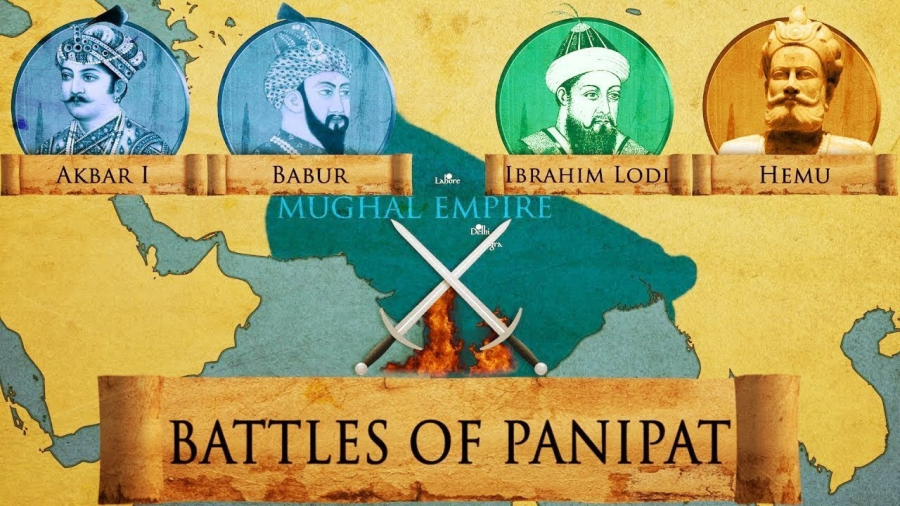
The First Battle of Panipat was fought on April 20, 1526. It was the decisive military confrontation between the Timurid Babur (1483-1530) and the last Sultan of Delhi, Ibrahim II (r. 1517-26), from the Afghan-born Lodi dynasty. Babur’s relatively small army was victorious over the numerically superior force of Ibrahim Lodi, who fell in battle. With Ibrahim’s death, the Delhi Sultanate was extinguished and replaced by the Mughal Empire, whose foundation had been laid by this victory.

The First Battle of Panipat was fought on April 20, 1526. It was the decisive military confrontation between the Timurid Babur (1483-1530) and the last Sultan of Delhi, Ibrahim II (r. 1517-26), from the Afghan-born Lodi dynasty. Babur’s relatively small army was victorious over the numerically superior force of Ibrahim Lodi, who fell in battle. With Ibrahim’s death, the Delhi Sultanate was extinguished and replaced by the Mughal Empire, whose foundation had been laid by this victory.

Result of the First Battle of Panipat

  • Babur, the Timurid ruler of Kabulistan, defeated Ibrahim Lodi, Sultan of Delhi, and his much superior Mughal armies.
  • Babur’s success allowed him to establish the foundations for the Mughal Empire in India.
  • Ibrahim Lodi was betrayed by his feudatories and generals and killed on the battlefield (many of whom were mercenaries).
  • The majority of the feudatories switched their loyalty to Delhi’s new ruler.
  • Sultan Ibrahim’s fate may have been changed if he had lasted another hour of battle since Babur had no reserves left and his soldiers were quickly fatigued.

The Second Battle of Panipat

The Second Battle of Panipat took place on November 5, 1556, between the armies of Samrat Hem Chandra Vikramaditya, often known as Hemu, the Hindu ruler who ruled North India from Delhi, and the army of Akbar. Khan Zaman I and Bairam Khan, Akbar’s generals, won a decisive victory.

Background

  • Samrat Hem Chandra Vikramaditya, often known as Hemu, was the Hindu ruler of Delhi after defeating Akbar/army Humanyun’s at the Battle of Delhi.
  • Hemu was a descendant of Rewari, who served as an adviser to Sher Shah Suri’s son Islam Shah from 1545 until 1553. Between 1553 and 1556, as Prime Minister and Chief of the Army of Islam Shah, he defeated Afghan rebels in 22 battles.
  • Humanyun, the Mughal king, died in Delhi on January 24, 1556, and was succeeded by his thirteen-year-old son, Akbar, at Kalanaur.
  • King Akbar was enthroned on February 14, 1556. Mughal rule was limited to Kabul, Kandahar, parts of Delhi, and Punjab at the time of his accession to the throne.

Result of the Second Battle of Panipat

  • Hemu was ready to defeat Akbar’s army while commanding his soldiers from atop an elephant when an arrow injured Hemu’s squinting eye.
  • He went unconscious when the arrow pierced through his brain and out of the cup of his skull.
  • Hemu’s army was defeated as a result of not spotting Hemu on his howdah (a seat for riding on the back of a horse).
  • Shah Quli Khan Mahram found and captured dead Hemu several hours after the battle ended, and carried him to Akbar’s tent in the Panipat camp.
  • Hemu’s supporters erected a Cenotaph at the location of his beheading, which may still be seen today in the village of Saudhapur on Panipat’s Jind Road.

The Third Battle of Panipat

The Third Battle of Panipat took place on 14 January 1761 at Panipat, about 60 miles (95.5 kilometres) north of Delhi, between a Maratha Empire northern expeditionary force and King of Afghanistan, Ahmad Shah Durrani, with two Indian Muslim allies— the Rohilla Afghans of the Doab and Shuja-ud-Daula, the Nawab of Oudh.

The battle is considered as one of the most important in the eighteenth century, with the highest number of casualties.

The Military Forces

The battle pitted the French-supplied artillery and Maratha’s cavalry against the Afghans’ and Rohillas’ strong cavalry and mounted artillery (zamburak and jezail) led by Ahmad Shah Durrani and Najib-ud-Daulah.(Ahmad Shah Abdali was also a name for Ahmad Shah Durrani.)

The Background

  • The decline of the Mughal Empire after the 27-year Mughal-Maratha war (1680–1707), which resulted in rapid territorial gains for the Maratha Empire.
  • Gujarat and Malwa came under Maratha rule under Peshwa Baji Rao. Finally, in 1737, Baji Rao defeated the Mughals on the outskirts of Delhi and gained possession of most of the old Mughal territory (south of Delhi).
  • This brought the Marathas into direct conflict with Ahmad Shah Abdali’s Durrani empire.
  • Ahmad Shah Abdali formed an army from Pashtun tribes in 1759 and made several gains in Punjab against the smaller Maratha garrisons. He, then formed a broad alliance against the Marathas with his Indian allies, the Gangetic Doab’s Rohilla Afghans.

The Result

  • The battle put an end to further Maratha conquests in the north, as well as weakening their holdings, for around ten years. The rule of Peshwa Madhavrao, who is credited with restoring Maratha supremacy following the defeat at Panipat, lasted ten years.
  • Peshwa Madhavrao sent a huge Maratha force into North India in 1771, ten years after Panipat, in an effort that was intended to:
    • Restore the Maratha Empire’s dominance in North India.
    • Punish rebellious nations that had either allied with the Afghans, like as the Rohillas or had tried to pull from Maratha control after Panipat.
  • The campaign’s success may be regarded as the conclusion in Panipat’s long history.

Inflation

Inflation refers to the rise in the prices of goods and services like food, clothing, petrol, housing, transport, etc. over a period of time. When there is rise in Inflation rate, purchasing power of money decreases,i.e. same amount of goods will be purchased in higher prices. When there is fall in the price index of the items, the purchasing power of the money increases this is called deflation. A certain level of inflation is required in the economy to promote expenditure and to demotivate hoarding money through savings. The optimum level of inflation will nurture economic growth.

Types of Inflation :

1.Demand Pull Inflation : An increase in the supply of money and credits stimulates the overall demand for goods and services. The demand increases more rapidly than the economic’s production capacity. This increasing demand creates demand-supply gap as there is not the supply of products as per demand, leading increase in prices.
2.Cost Push Inflation : Demands of the  goods and services remains constant but there is increase in their prices. There are several factors affecting this pricing of goods like depletion of resources,  monopoly over market , government taxation, change in exchange rate,etc. For example, sudden increase in prices of tomatoes, onions etc. due to poor harvest, crude oil fluctuations,etc.
3.Built-in Inflation : It evolves from the past events and continues to affect the economy of the country. We often get to see blue collar worker’s protest for higher pay scales.

Causes of Inflation :

• Increase in supply of money in the market beyond a certain limit reduces the value of currency.
• Increase in prices of imported products.
• High demand and low supply of products leads to hike in price.
• People with more money tends to spend more causing increase in demands.
• Low growth of agricultural products leads to decrease in agricultural prices causes rise in price of goods through reduced supply.

Impact of Inflation :

• It causes loss of purchasing power of the money. It impacts the general cost of living as now people have the constant wages but have to buy less amount of daily products due to hike in price which ultimately leads to deceleration of economic growth.
• It reduces savings as substantial amount of income is spent on daily consumables due to increased costs.
• It also leads to consumers hoarding goods in fear of further increase in prices leading more shortage of supply and exponential increase in price.

Caste in the Modern Age

Caste system is an extreme form of stratification peculiar to India and is hereditary in nature. The above stated system of stratification offers no vertical mobility. One is ascribed his caste from his/her birth and does not have the liberty to choose his/her caste.

Characteristics of Caste System:

  1. Caste: As a hierarchical division of society: The Hindu society is a gradational one. It is divided into several castes and subcastes. A sense of ‘highness’ and ‘lowness’ or ‘superiority’ and ‘inferiority’ is associated with this gradation.
  2. Restrictions on food habits: The restrictions on food habits of the members differ from caste to caste. “Who should accept what kind of food from whom?” is often decided by the caste.
  3. Restrictions on social relations: The idea of ‘pollution’ makes this point clear. It means a touch of a lower caste man would pollute or defile a man of higher caste. Even his shadow is considered enough to pollute a higher caste man.
  4. Social and religious disabilities of certain castes: In the traditional caste society, some lower caste people [particularly, the Harijans] suffered from certain civil or social and religious disabilities. Generally, the impure castes are made to live on the outskirts of the city or the village. Educational facilities, legal rights and political representation were denied to them for a long time.
  5. The civil and religious privileges of certain castes: If the lower caste people suffer from certain disabilities, some higher caste people enjoy certain privileges.
  6. Restrictions on occupational choice: In a caste ridden society, there is a gradation of occupations also. Each caste has its own specific occupation and these were almost hereditary.
  7. Restrictions on marriage: Caste is an endogamous group. Endogamy is a rule of marriage wherein a person has to marry within his or her own caste group.

Changes in the caste system:

The caste system which is an integral part of the Indian system, prior to the coming of the British, had grown into a powerful social institution, with the dominance of Brahmins at the top of the hierarchy. The modern period saw some major developments taking place in the caste system during the two stages:

  1. Caste during the British rule
  2. Caste in Independent India

Caste during the British rule:

  1. Declining hold of Caste Panchayats: The British introduced throughout India uniform legal, legislative and judicial systems. They transferred the judicial powers of the caste councils to the civil and criminal courts which affected the authority which the caste panchayats held on its members.
  2. Influence of social legislation: Some legislations which the British introduced shook the integrity of the caste system. A few of the legislations are as follows:
    1. The Caste Disabilities Removal Act of 1850.
    2. The Special Marriage Act of 1872
    3. The Hindu Widows Remarriage Act of 1856
  3. Impact of social reform movements: The social reforms launched by social reformers during the British rule attacked the caste system and its inequalities. The Brahma Samaj, The Prarthana Samaj, The Arya Samaj, etc focused on condemning and iradicating some stern beliefs related to the Caste system.
  4. Spread of english education and influence of western Ideas: With the establishment of British rule in India came the inflow of many western ideologies such as equality, liberty, democracy, etc.
  5. Influence Of Industrialization: The growth of industries destroyed the old crafts and household industries and provided for countless ways of earning livelihood. People of all castes started making use of new economic opportunities.
  6. Impact of urbanization: In order to reap the benefits of the new opportunities, people started moving towards towns and cities in large numbers.
  7. Influence of freedom struggle and Gandhiji: The freedom struggle organized by the Indian National Congress brought together people of different castes, classes and religions under one banner.

Caste in Independent India:

The political independence of the country brought in a series of changes in the caste system.

  1. The religious beliefs of the caste has been attacked. Caste is no more believed to be divinely ordained.
  2. The restrictions on food habits have been relaxed.
  3. Caste is not very much associated with hereditary occupations.
  4. Endogamy, although still prevails, is not seen as an obligation to all.
  5. The special civil and religious privileges which the Brahmins enjoyed are no more being enjoyed by them.

Although caste still continues to be a segmental division of Hindu society, it is not as much strict as it was before th modern era. There have been certain changes in the role of caste as well in the independent India. Caste has now become an inseparable part of politics. The caste- consciousness of the members has been increasing making every caste wanting to safeguard its interests. The constitution of India has made enough provisions to protect the interests of the Scheduled Castes and the Scheduled Tribes. Caste has its roots embedded deep within the social structure of India and it is next to impossible to completely eradicate it from the social structure of India.

The History of Paralympic Games

Paralympic Games, major international sports competition for athletes with disabilities. Comparable to the Olympic Games, the Paralympics are split into Winter Games and Summer Games, which alternately occur every two years. Many of the same Olympic events are included—such as Alpine skiing, cross-country skiing, and biathlon for winter sports and cycling, archery, and swimming for summer sports—although sports equipment for the Paralympics may be modified for specific disabilities. Since the late 20th century the Paralympics have been held in the same city that hosts the corresponding Olympic Games; the Paralympics follow shortly after the Olympics conclude. The International Paralympic Committee, which was founded in 1989 and is based in Germany, governs the Paralympic Games.

The Paralympics developed after Sir Ludwig Guttmann organized a sports competition for British World War II veterans with spinal cord injuries in England in 1948. A follow-up competition took place in 1952, with athletes from the Netherlands joining the British competitors. In 1960 the first quadrennial Olympic-style Games for disabled athletes were held in Rome; the quadrennial Winter Games were added in 1976, in Sweden. Since the Seoul 1988 Olympic Games (and the 1992 Winter Olympics in Albertville, France), the Paralympics have been held at the Olympic venues and have used the same facilities. In 2001 the International Olympic Committee and the International Paralympic Committee agreed on the practice of “one bid, one city,” in which every city that bids to host the Olympics also bids to hold the related Paralympics.

The size and diversity of the Paralympic Games have increased greatly over the years. The Paralympics in 1960 hosted 400 athletes from 23 countries participating in eight sports. Just over 50 years later, at the 2012 Summer Paralympics in London, more than 4,200 athletes representing 164 countries participated in 20 sports.

India’s first medal in Paralympics came in 1974 Games, with Murlikant Petkar winning a gold medal in swimming.

“A New Virus Is Found In Animals-“

According to reports, the disease has been found in several Indian states like Assam, Odissa, Maharashtra, Kerala, Karnataka, chattisgarh, Madhya Pradesh etc. It is an infectious disease in cattle caused by a virus of the family Poxviridae also known as needling virus. This disease is spread over by fever, enlarged lymph nodes & multiple nodules on skin and mucous membranes.

It was first seen as epidemic in lambia in 1929. Intially it was thought to be result of either poisoning or hypersensitivity to insect bites, also in 1943& 1945 in Botswana, Zimbabwe & now in Pakistan.

Symptoms-

Infected cattle develop fever, lacrimation, nasal discharge and hypersalivation, followed by the characteristics eruptions on the skin and other parts of the body in 50% of cattle. Incubation period is 4-14days. Clinical findings of lumpy skin disease in cattle-. The nodules are well circumscribed, round,slightly raised, firm, and painful and involve the entire cutis and the mucosa of the GI, respiratory, and genital tracts. Nodules may develop on the muzzle and within the nasal and buccal mucous membranes. The skin nodules contain a firm, creamy-gray or yellow mass of tissue. Regional lymph nodes are swollen, and edema develops in the udder, brisket, and legs. Secondary infection sometimes occurs and causes extensive suppuration and sloughing; as a result, the animal may become extremely emaciated, and euthanasia may be warranted. In time, the nodules either regress, or necrosis of the skin results in hard, raised areas (“sit-fasts”) clearly separated from the surrounding skin. These areas slough to leave ulcers, which heal and scar.

Treatment and Prevention of Lumpy skin disease in Cattle-. Attenuated virus vaccines may help control spread of lumpy skin disease in recent years beyond its ancestral home of Africa is alarming. Quarantine restrictions have proved to be of limited use. Vaccination with attenuated virus offers the most promising method of control and was effective in halting the spread of the disease in the Balkans.Administration of antibiotics to control secondary infection and good nursing care are recommended, but the large number of affected animals within a herd may preclude treatment.

Lumpy skin disease is now occurred at regional problem that requires high level of awareness at technical and political level. Government need to take strict action against the disease .

Call for IJR 2022

   International Journal of Research (IJR) is an applied, international hospitality and tourism management journal designed to help practitioners and researchers stay abreast of the latest developments in the field, as well as facilitate the exchange of ideas. An exciting and challenging international forum, the journal reflects current happenings and trends in the industry. It welcomes both theoretical and applied research papers, and encourages the submission of the results of collaborative research undertaken between academia and industry. IJR also welcomes scholarly contributions from officials with government agencies, international agencies, and non-governmental organizations. The topics related to this journal include but are not limited to:


Commercial policy
Communications
Comparative studies
Cross-cultural issues
Diversity issues
Economic development
Economic integration
Exchange rates
Finance and investments
Fiscal and monetary policy
Globalization
Human resource management
Information
Industry-specific issues
Intellectual property
Labor issues
Law and governance
Managerial decision making
Marketing
Multilateral institutions
Multinational corporations
National and regional studies
Outsourcing and offshoring
Pedagogical issues
Regionalism
Regulatory issues
Technology transfer
Trade in goods and services


The topics related to this journal include but are not limited to:

Business research methods
Business theories
Case studies
Contemporary research in business
Corporate governance
Economic growth and development
Economics of organizations and industries
Entrepreneurship
Finance and investment
Financial reporting
Global business
Human resource management
Innovations
Insurance
Investment
Management information systems
Marketing
Operations management
Organizational behavior
Project management
Public administration
Risk management
Strategic management
Total quality management
Transition issues


International Journal of Research (IJR) with ISSN 2348-6848 (Online) and 2348-795X (Print) is an international peer-reviewed, internationally refereed, online, open-access journal published monthly. 

Journal is available online at https://ijrjournal.com/index.php/ijr 
 
Send papers to ijr@ijrjournal.com

*********************************************************************************************************************

Call for Papers IJR 2022

  International Journal of Research (IJR) provides a forum for sharing timely and up-to-date publication of scientific research and review articles. The journal publishes original research papers at the forefront of law and social sciences. The topics included and emphasized in this journal are, but not limited to, law, political science, economics, environment, history, communication, sociology and safety and other timely and concerned global or international issues. IJR also welcomes scholarly contributions from officials with government agencies, international agencies, and non-governmental organizations. The topics related to this journal include but are not limited to:


Commercial policy
Communications
Comparative studies
Cross-cultural issues
Diversity issues
Economic development
Economic integration
Exchange rates
Finance and investments
Fiscal and monetary policy
Globalization
Human resource management
Information
Industry-specific issues
Intellectual property
Labor issues
Law and governance
Managerial decision making
Marketing
Multilateral institutions
Multinational corporations
National and regional studies
Outsourcing and offshoring
Pedagogical issues
Regionalism
Regulatory issues
Technology transfer
Trade in goods and services

Transportation 


The topics related to this journal include but are not limited to:

Business research methods
Business theories
Case studies
Contemporary research in business
Corporate governance
Economic growth and development
Economics of organizations and industries
Entrepreneurship
Finance and investment
Financial reporting
Global business
Human resource management
Innovations
Insurance
Investment
Management information systems
Marketing
Operations management
Organizational behavior
Project management
Public administration
Risk management
Strategic management
Total quality management
Transition issues


International Journal of Research (IJR) with ISSN 2348-6848 (Online) and 2348-795X (Print) is an international peer-reviewed, internationally refereed, online, open-access journal published monthly. 

Journal is available online at https://ijrjournal.com/index.php/ijr 
 
Send papers to ijr@ijrjournal.com

*********************************************************************************************************************

Call for Papers IJR 2022

  International Journal of Research (IJR) publishes articles in the disciplines of sustainable management and information technologies based on scientific and technological researches, as well as its methodology, concepts, function and principles and interaction among both disciplines. It aims to publish the advances and trends, and to collaborate in the dissemination of knowledge and show advances derived from researches conducted internationally. IJR publishes a broad range of social science research and thinking on the interaction of natural resource ecology and management around the world and at multiple scales. Papers published in the journal go through a double-blind, peer review process and meet standards of contributing significantly to theory and/or transformative policies and practices, offering scholarly depth but broad appeal to our diverse readership. The mission of the journal is to conduct interdisciplinary research, instruction, and extension education to address the sustainable management and conservation of the fishery, forest, rangeland, and wildlife resources all over the world . IJR also welcomes scholarly contributions from officials with government agencies, international agencies, and non-governmental organizations. The topics related to this journal include but are not limited to:


Commercial policy
Communications
Comparative studies
Cross-cultural issues
Diversity issues
Economic development
Economic integration
Exchange rates
Finance and investments
Fiscal and monetary policy
Globalization
Human resource management
Information
Industry-specific issues
Intellectual property
Labor issues
Law and governance
Managerial decision making
Marketing
Multilateral institutions
Multinational corporations
National and regional studies
Outsourcing and offshoring
Pedagogical issues
Regionalism
Regulatory issues
Technology transfer
Trade in goods and services


The topics related to this journal include but are not limited to:

Business research methods
Business theories
Case studies
Contemporary research in business
Corporate governance
Economic growth and development
Economics of organizations and industries
Entrepreneurship
Finance and investment
Financial reporting
Global business
Human resource management
Innovations
Insurance
Investment
Management information systems
Marketing
Operations management
Organizational behavior
Project management
Public administration
Risk management
Strategic management
Total quality management
Transition issues


International Journal of Research (IJR) with ISSN 2348-6848 (Online) and 2348-795X (Print) is an international peer-reviewed, internationally refereed, online, open-access journal published monthly. 

Journal is available online at https://ijrjournal.com/index.php/ijr 
 Send papers to ijr@ijrjournal.com

Call for Papers IJR -2023

 International Journal of Research (IJR) is an international, professional, and peer reviewed journal, it offers opportunities for the exchange of research results, experience and insights, and provides a forum for ongoing discussion between experts in any field of business and economic development. This journal focuses on marketing, management, finance, accounting, decision sciences, operations research and economics. The submission of manuscripts that meet the general criteria of significance and scientific excellence are encouraged. IJR also welcomes scholarly contributions from officials with government agencies, international agencies, and non-governmental organizations. The topics related to this journal include but are not limited to:


Commercial policy
Communications
Comparative studies
Cross-cultural issues
Diversity issues
Economic development
Economic integration
Exchange rates
Finance and investments
Fiscal and monetary policy
Globalization
Human resource management
Information
Industry-specific issues
Intellectual property
Labor issues
Law and governance
Managerial decision making
Marketing
Multilateral institutions
Multinational corporations
National and regional studies
Outsourcing and offshoring
Pedagogical issues
Regionalism
Regulatory issues
Technology transfer
Trade in goods and services


The topics related to this journal include but are not limited to:

Business research methods
Business theories
Case studies
Contemporary research in business
Corporate governance
Economic growth and development
Economics of organizations and industries
Entrepreneurship
Finance and investment
Financial reporting
Global business
Human resource management
Innovations
Insurance
Investment
Management information systems
Marketing
Operations management
Organizational behavior
Project management
Public administration
Risk management
Strategic management
Total quality management
Transition issues


International Journal of Research (IJR) with ISSN 2348-6848 (Online) and 2348-795X (Print) is an international peer-reviewed, internationally refereed, online, open-access journal published monthly. 

Journal is available online at https://ijrjournal.com/index.php/ijr 
 Send papers to ijr@ijrjournal.com

Call for Papers IJR Journal 2022

 International Journal of Research (IJR) aims to promote rapid communication and dialogue among the researchers, scientists, engineers and policy makers working in the areas of investment and management. It provides you with cutting-edge research and expert analysis on managing investments in hedge funds, private equity, distressed debt, commodities and futures, energy, funds of funds, and other nontraditional assets. JIM welcomes the following tier 1 article types: Book Review, Editorial, General Commentary, Hypothesis & Theory, Methods, Mini Review, Opinion, Original Research, Perspective, Review, Specialty Grand Challenge and Technology Report. The topics related to this journal include but are not limited to:

Strategic management
Investment management
Financial management 
Innovation management
Business process management 
Corporate culture and motivation
Education and training 
Ethical and environmental issues 
Assets management 
Knowledge management 
Operations management 
Organisational learning 
Outsourcing 
Accounting, audit and controlling
Benchmarking 
Performance measurement & management
Productivity and quality 
Marketing
Logistics
Business planning
Industrial relations

Change management. IJR also welcomes scholarly contributions from officials with government agencies, international agencies, and non-governmental organizations. The topics related to this journal include but are not limited to:


Commercial policy
Communications
Comparative studies
Cross-cultural issues
Diversity issues
Economic development
Economic integration
Exchange rates
Finance and investments
Fiscal and monetary policy
Globalization
Human resource management
Information
Industry-specific issues
Intellectual property
Labor issues
Law and governance
Managerial decision making
Marketing
Multilateral institutions
Multinational corporations
National and regional studies
Outsourcing and offshoring
Pedagogical issues
Regionalism
Regulatory issues
Technology transfer
Trade in goods and services

Transportation 


The topics related to this journal include but are not limited to:

Business research methods
Business theories
Case studies
Contemporary research in business
Corporate governance
Economic growth and development
Economics of organizations and industries
Entrepreneurship
Finance and investment
Financial reporting
Global business
Human resource management
Innovations
Insurance
Investment
Management information systems
Marketing
Operations management
Organizational behavior
Project management
Public administration
Risk management
Strategic management
Total quality management
Transition issues


International Journal of Research (IJR) with ISSN 2348-6848 (Online) and 2348-795X (Print) is an international peer-reviewed, internationally refereed, online, open-access journal published monthly. 

Journal is available online at https://ijrjournal.com/index.php/ijr 
 Send papers to ijr@ijrjournal.com

Call for Papers IJR 2022

 International Journal of Research (IJR) aims to enhance the study of economic issues such as open economy macroeconomics, international factor movements and business, exchange rate movements and determination, international trade theories, trade policy, FDI, international capital flows, external debt, regional trade agreements, foreign aid, international trade organizations, world economic programs, impacts of globalization, global capital markets, global economic integration and cooperation, global economic inequality, intellectual property rights, optimum currency areas, and other timely and concerned global or international issues. IJR also welcomes scholarly contributions from officials with government agencies, international agencies, and non-governmental organizations. The topics related to this journal include but are not limited to:

Commercial policy
Communications
Comparative studies
Cross-cultural issues
Diversity issues
Economic development
Economic integration
Exchange rates
Finance and investments
Fiscal and monetary policy
Globalization
Human resource management
Information
Industry-specific issues
Intellectual property
Labor issues
Law and governance
Managerial decision making
Marketing
Multilateral institutions
Multinational corporations
National and regional studies
Outsourcing and offshoring
Pedagogical issues
Regionalism
Regulatory issues
Technology transfer
Trade in goods and services

Transportation 


The topics related to this journal include but are not limited to:

Business research methods
Business theories
Case studies
Contemporary research in business
Corporate governance
Economic growth and development
Economics of organizations and industries
Entrepreneurship
Finance and investment
Financial reporting
Global business
Human resource management
Innovations
Insurance
Investment
Management information systems
Marketing
Operations management
Organizational behavior
Project management
Public administration
Risk management
Strategic management
Total quality management
Transition issues


International Journal of Research (IJR) with ISSN 2348-6848 (Online) and 2348-795X (Print) is an international peer-reviewed, internationally refereed, online, open-access journal published monthly. 

Journal is available online at https://ijrjournal.com/index.php/ijr 
 Send papers to ijr@ijrjournal.com

Call for Papers IJR -2022

 International Journal of Research (IJR)  is international, open access and peer-reviewed journal published by EduPub. The journal aims at exploring the latest developments in public policy administration, including public policy shaping, decision making and administrative issues. It contributes to the improvement of the research methodology in the field of public policy and administration. Original articles across the whole scope and up-to-date original research articles are welcomed to publish in this journal. The topics related to this journal include but are not limited to:

Public Policy
Public Administration
Public Management
Human Resource Management
Organizational Theory
Ethics in Public Administration
Policy Analysis 
Public Budgeting
Public Ethics
Government Policy
Administrative Theory
Administrative History 
Administrative Politics
Public Administration Theory
Public Administration Organizations
Business Administration
Civil Servants
Constitutional Issues 
Participatory Democracy


The topics related to this journal include but are not limited to:

Business research methods
Business theories
Case studies
Contemporary research in business
Corporate governance
Economic growth and development
Economics of organizations and industries
Entrepreneurship
Finance and investment
Financial reporting
Global business
Human resource management
Innovations
Insurance
Investment
Management information systems
Marketing
Operations management
Organizational behavior
Project management
Public administration
Risk management
Strategic management
Total quality management
Transition issues

International Journal of Research (IJR) with ISSN 2348-6848 (Online) and 2348-795X (Print) is an international peer-reviewed, internationally refereed, online, open-access journal published monthly. 

Journal is available online at https://ijrjournal.com/index.php/ijr 
 Send papers to ijr@ijrjournal.com

SHATTERING MILLION HEARTS 💔

You will always be missed Sidhu💔

Punjabi Singer, writer, rapper Sidhu moosewala AKA Shubhdeep singh sidhu on 29th may 2022 left us with grief breaking millions of hearts shatter world wide. Sidhu who debuted on 2017 with his track “so high” brought Punjabi industry to a next level on international level by generating buzz in holly wood via collaborating with many international artists like “Steel bangles, Morrison, A.R. Parsley and many more also he was in talks in collaboration with one of the top artist of holly wood ‘Drake’ but unfortunately destiny had other plans. On afternoon he was travelling in a car with his 2 friends where he was followed by the shooters where shooters fired numerous rounds on him on his body as a result making him dead on the spot.

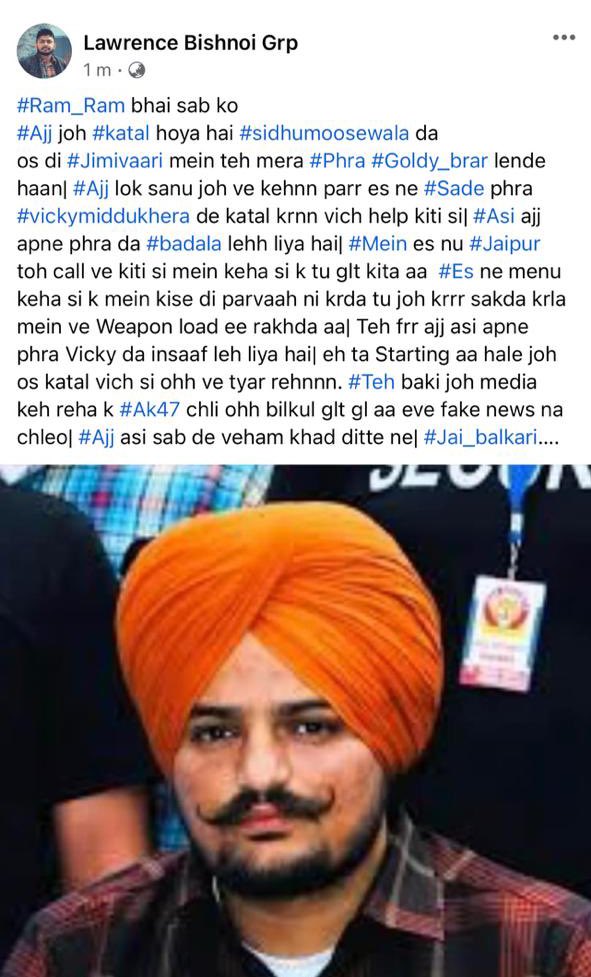
Punjab based gangster Lawrence bishnoi and Goldy brar currently living in Canada took the responsibility of the murder via a Facebook post and they further stated that his murder was planned and they took revenge of one of his gang member “Vicky Middhukhera” who was killed last year

This post was posted by goldy brar on Facebook on 29th may 2022

Sidhu was heart and soul of Punjab music industry and killing him has changed the music industry for worst. Sidhu has written his name with golden letters in books of history.

Rest in Peace Sidhu Moosewala 💔

You’re Definitely in a better place now

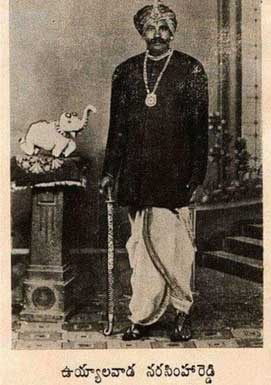
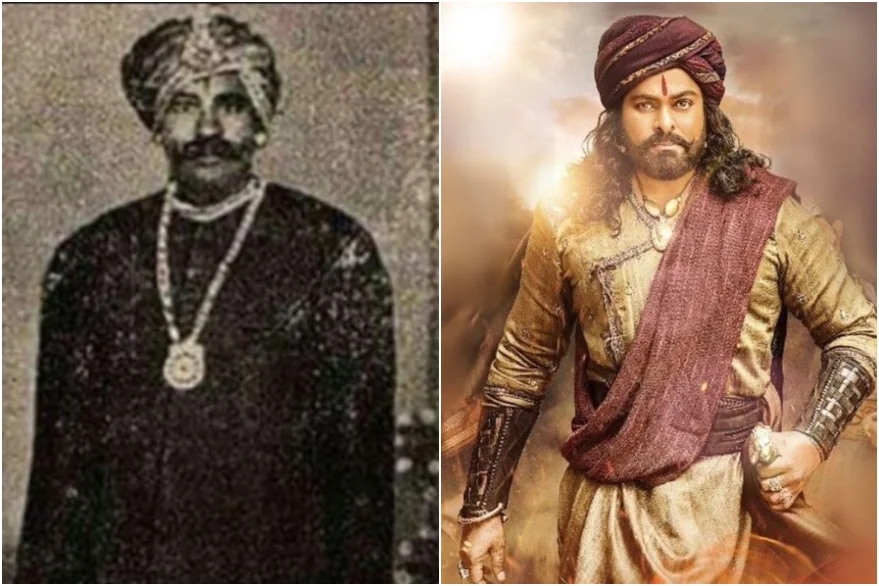
India’s first freedom fighter Narasimha Reddy.

Uyyalawada Narasimha Reddy was an Indian freedom fighter and he was born in Rupanagudi village, on 24 November 1806.

The father of Narasimha Reddy was related to the Palegar family of Uyyalawada in Koilakuntla taluk who had married two daughters of the Palegar of Nossam. He had three sons, of whom Narasimha was the youngest son of the Palegar of Nossam, Seethamma. He married a woman named Siddhamma at the age of 6 .
The British East India Company’s preface to the Chennai Presidency of the 1803 endless agreement, which had first been legislated in Bengal Presidency ten times preliminarily, replaced the agricultural socio- profitable status quo with a further egalitarian arrangement where anyone could cultivate handed that they paid a fixed sum to the East India Company for the honor of doing so.
The Palegars and other advanced- status people who preferred the old agricultural system” represented the decadent social order”, were in numerous cases” arrivistes” and” were also the heirs at law of a social system in which colorful orders of Hindu society were integrated through periods”. These people were ousted of their lands, which were also redistributed, but the primary purpose of the changes was to increase product rather than to restructure the social order. In some cases, it coincided with a discipline because among the dispossessed were those who had lately been involved in fighting the East India Company in the Palegar Wars. Some entered pensions in lieu of the lost lands but at inconsistent rates.


The changes, which included the preface of the ryotwari system and other attempts to maximize profit, deprived vill helmsmen and other advanced- status people of their part as profit collectors and position as lodgers, while also impacting on lower- status tillers by depleting their crops and leaving them impoverished. The East India Company were economically exploiting the people and that those who were dependent on the traditional work were no longer had a means of making a living. As the old order collapsed into disarray, the formerly-authoritative Palegars, including Narasimha Reddy, came the focus of attention from victims, whose pleas fell on deaf cognizance. The Palegars saw a chance to rally peasant opposition both for genuine social reasons.
Narasimha Reddy’s own expostulations too was grounded on their issues. Compared to the Palegar of Nossam, the pension awarded to his family upon their acquisition was paltry and the authorities refused to increase it by redistributing some of the Nossam moneybags when that ultimate family came defunct in 1821. At the same time, some of his cousins were facing proffers for farther reductions in their land rights, including by a reform of the vill policing system.


WAR AGAINT BRITISH EMPIRE
Effects came to a head in 1846 when the Company authorities assumed land rights preliminarily held by colorful people who had failed in the townlets of Goodladurty, Koilakuntla and Nossum. Encouraged by the disgruntlement of others, Reddy came the statuette for an insurrection.
An fortified group, originally comprising those ousted of inam lands around Koilakuntla, was led by Reddy’s Right- hand man Vadde Obanna in July 1846. The Amusement Collector for the area Lord Cochrane, believed that Reddy had material support from fellow pensioners in Bhagyanagar and Kurnool, whose land rights had also been appropriated. The group soon attracted support from the peasantry and was reported by Company authorities to have rampaged in Koilkuntla, taking back the pillaged storeroom there and escaping the police before killing several officers at Mittapally. They also despoiled Rudravaram before moving to an area near to Almore, pursued by the East India Company forces who also girdled them.
A battle between Obanna’s 5000-strong band of revolutionists and a much lower British contingent also took place, with around 200 of the revolutionary being killed and others captured before they were suitable to break out in the direction of Kothakota, Giddalur where Reddy’s family were positioned. He with his family moved to Nallamala Hills . The British offered impulses for information regarding the whereabouts of the revolutionists, who were again girdled amidst reports that uneasiness was now growing in other townlets of the area. In a farther skirmish between the revolutionists and the British, who had transferred for mounts, 40 – 50 revolutionists were killed and 90 were captured, including Reddy. Although there was no substantiation of Obanna’s prisoner, he most conceivably was also a interned along with his leader.
clearances were issued for the arrest of nearly,000 of the revolutionists, of which 412 were released without charge. A farther 273 were bailed and 112 were condemned. Reddy, too, was condemned and in his case entered the death penalty. On 22 February 1847, he was executed in Koilkuntla in front of a crowd of over 2000 people. Reddy’s head on the stronghold wall in public view until 1877.


LEGACY
On 2 October 2019 , a film based on the life of Narsimha Reddy’s life named Sye Raa Narasimha Reddy was released . On 25 March 2021 Kurnool Airport at Orvakal was named as Uyyalawada Reddy Airport .

Ipl revenue more than Epl?

After the 15th edition of IPL concluded in 2022 with the recently formed Gujarat elephants, led by Hardik Pandya, securing palm, the Board of Control for Cricket in India( BCCI) chairman Sourav Ganguly has said, “ The IPL generates further profit than the English Premier League”.


The English Premiere League or the Premiere League is considered the most viewed football event in the world. The Premier League, is the top position of the English football league system. queried by 20 clubs, it operates on a system of creation and deportation with the English Football League.
still, Ganguly’s statement comes at a time when media companies are are fighting for the elusive media rights to the IPL, the world’s richest sports league, anticipated to cost up to$ 6 billion. Ganguly further stated that he feels proud to see that the game of justice has been evolving in India. He also comment “ I have seen the game evolve, where players like me earned a many hundreds and now have the eventuality of earning crores. This game is run by the suckers, by the people of this country, and by the BCCI, which was formed by justice suckers. This sport is strong and will continue to evolve.”
The IPL generates further profit than the English Premier League. It makes me feel happy and proud that the sport I love has evolved to come so strong,” Ganguly said at India Leadership Council Event while speaking to Deepak Lamba, CEO, Worldwide Media, President, Times Strategic results Limited. The IPL 2022 was held in a much larger scale than the former seasons.

How IPL made cricketers and BCCI one of the richest in global sport ?
The Indian Premier League( IPL) in a span of just 15 times has managed to come one of the biggest sporting leagues in the world. The initial edition of the IPL was played in 2008 and there has been no looking back ever since as the T20 league continues to witness a massive growth in its fashionability across the globe. IPL is arguably the biggest T20 league in the world and has the stylish players from across the globe playing their trade in the competition.
The Indian Premiere league has created millionaires out of youthful cricketers and made BCCI as one of the richest governing bodies in the world of global sport.
Aruguably, the high- octane, big- hitting carnivalesque event provides a must- see product, driving broadcast subscriptions by the millions and pulling in huge advertising profit.
IPL brigades admit a share of the TV rights and backing plutocrat, and around 10 to 15 percent of ticket deals.
They can also induce their own profit through economic shirt or other auspices.

Profit Creators
The BCCI earned$ 533 million from the IPL in 2020, treasurer Arun Dhumal told Indian media, but its finances are marked in secretiveness.
In its 15th time, the BCCI is anticipated to earn fresh profit of ₹ crore per time( ₹,715 crore for 10 times) from the new brigades besides ₹ 444 crore which it has entered from VIVO as a reassessment figure.
When the event expanded to 10 brigades this time from the original eight, the transaction for the rights to enjoy the new votes drew transnational stab including the Glazer family, who enjoy Manchester United.
They were eventually beaten out by Indian mogul Sanjiv Goenka’s RPSG empire, who paid the BCCI$ 930 million to form the Lucknow Super Giants.
The alternate new ballot, the Gujarat Titans, bring the global adventure fund CVC Capital$ 690 million. The brigades spent nearly$ 75 million in the February player transaction, with Mumbai Indians retaining gate- keeper- batsman Ishan Kishan for$ 2 million and Punjab lords paying England’s Liam Livingstone$1.52 million for his services.

Broadcast rights are the BCCI’s biggest plutocrat- incentive. Star India, possessed by Disney, paid$2.55 billion for a five- time TV and digital rights deal that expires at the end of this season.