What are Elements of a Developmental Plan


1) Land Use

The developmental plan should indicate areas designated for residential, commercial, industrial, socio-cultural, recreational, administrative and other uses. 

2) Circulation

The roads, streets, railways, waterways, airways, terminal facilities, transit systems etc. for the movement of people, goods and services. 

3) Utilities, services and facilities

The developmental plan should indicates the desirable location, size and other particulars regarding public utilities like water supply, sewerage and power, and other services. 

4) Civic design

The developmental plan should depict the design of important elements of the city like civic centre, the central business district, shopping centres and cultural areas. 

5) Open spaces

The developmental plan indicates the location and extent of desirable open spaces for parks, playgrounds, stadiums, gardens, crematoria etc. 

Legal Status of Development Plan 

The implementation of development plan would be possible if it is made legally binding on all the concerned authorities. Hence it should be made obligatory and give the plan. The legal status to facilitate its implementation. 

Co-operation 

 The success of a plan depends on the active participation and cooperation of the people. A wide range of voluntary organizations and institutions such as youth clubs, colony associations, chambers of commerce, women councils and professional bodies may be involved in the planning process. The mass media such as newspapers, journals, radio, television and cinema can be effective in educating the public on civic problems and planning. Well-presented monographs, booklets, handouts, pamphlets, manuals, guides etc. go a long way in stimulating civic interest in planning. 

Planning Commission 

After independence, the Planning Commission was set up by the Government of India in March 1950. The Commission was instructed to 

  • Make an assessment of the material capital and human resources of the country, and formulate a plan for the most effective and balanced utilization of them 
  • To determine priorities, define the stages for carrying the plan and propose the allocation of resources for the due completion of each stage 
  • To act as an advisory body to the union government 
  • To determine the conditions which (in view of the then current sociopolitical conditions) should be established for the execution of the plan 
  • To advise the centre and the state government 

All the plans made by planning commission have to be approved by NDC (National Development Council) first. It was constituted to build cooperation between States and the Planning Commission. Like planning commission, NDC is also an extra constitutional/legal body. It was setup on 6th August 1952. State Planning Board is the Apex Planning body at State Level with Chief Minister as Chairman, Finance and Planning Ministers of the state and some technical members. District Planning Committee is also there comprising both official and non�official members. 

Types of Developmental Plans 

  • National development plan 
  • Sectoral development plan 
  • Local / Area development plan 
  • Zonal development plan
  • City development plan 
  • Regional development plan 

What are Stages of Preparation and Method of Execution of Development Plan

 It includes Planning department of the local government, Specialized planning organization, A consultant and State town planning department. General methods normally followed for the preparation are: 

  1. Collection of data and relevant information from civic survey and other sources 
  2. Preparation of a tentative draft of the development plan and notifying the same for comments, suggestions and discussions from experts and the public 
  3. Considerations of views received from experts and the public with sympathy and without any prejudice 
  4. Preparation of the revised development plan accommodating the good aspects of comments received from experts and the public.
  5. Determination of the sequence in which the development plan will be implemented.

Method of Execution

The execution of the development plan is carried out by the Municipal or Corporation authorities. The first thing to be determined is the layout of the road system. It requires a functional approach to the more important sociological aspects of the town, viz. ‘Folk, Place and Work’. Lastly a financial program is prepared to devise the ways and means for the implementation of the Development Plan according to the schedule. For execution a team of experts in Engineering, Architecture, Public health, Sociology, Economics, Finance etc. headed by a Town Planner is required. 
The plan making and plan implementation are inseparable. The interim development plan also called the Outline Development Plan is thus prepared by the planning authority. The statutory time limit is two years. It shall then be notified for the public comments and suggestions (Time one month). The Draft plan may be revised in the light of the public and expert comments and shall be submitted for Government’s sanction. (Four months from date of publication of the draft plan. The Govt. sanctions the revised plan and appoints an arbitrator.

The Arbitrator after holding proceedings in respect of each plot publishes the award and submits the detailed proposals to the higher authority such as the President of the Tribunal of Arbitration (No fixed time limit but at least twelve months for small scheme). The Arbitrator prepares the final scheme and submits to Govt. with plans through the local authority (usually six months). The local authority forwards the final scheme to the Govt. (usually three months). Govt. sanctions the final scheme after the photo zinco Dept., has printed all the plans. The detailed Development Plan also called the comprehensive Development Plan is duly approved and sanctioned by the Govt. 

Legal Status of Development Plan 

The implementation of development plan would be possible if it is made legally binding on all the concerned authorities. Hence it should be made obligatory and give the plan. The legal status to facilitate its implementation. 

 Co-operation 

The success of a plan depends on the active participation and cooperation of the people. A wide range of voluntary organizations and institutions such as youth clubs, colony associations, chambers of commerce, women councils and professional bodies may be involved in the planning process. The mass media such as newspapers, journals, radio, television and cinema can be effective in educating the public on civic problems and planning. Well-presented monographs, booklets, handouts, pamphlets, manuals, guides etc. go a long way in stimulating civic interest in planning. 

What are Features of a Development Plan

A development plan sets out a local authority’s policies and proposals for land use in their area. The term is usually used in the United Kingdom. A Local Plan is one type of development plan. 

  • Convenience and cheap means of transport 
  • Good sanitation and water supply 
  • Open air spaces 
  • Population density control 
  • Proper situations for places of worship, education and recreation 
  • Rational layout 
  • Requirement and Distribution of Land (Land use pattern) 
  • Width of roads 

Planning Standards

  • Educational facilities such as primary school, high school and college 
  • Medical facilities such as dispensary, health centre and hospital 
  • Shopping facilities such as departmental stores, shops, etc. 
  • Miscellaneous amenities such as burial ground, crematorium, cinema, auditorium, stadium, petrol filling cum service station, police station, post office, fire station, library, community hall, telephone exchange etc. 
  • Width of roads such as village roads, state roads, national highways etc. 
  • Development of land for the construction of buildings in the form of various building bye laws etc. 

Report of a Development Plan 

The written report accompanying the development plan should analyze the existing state of the town and it should include the following topics to suggest the improvement of town in general. 
  • Cost estimates for immediate measures 
  • Development of basic industries in urban and suburban zones 
  • Engineering infrastructure, site development, sanitation and hygienic measures 
  • Functional zoning and architectural principles involved in the town plan; pattern of highways and urban transportation; population growth for a design period and the first stage of construction 
  • Technical and economic factors of the project etc. 

Data to be Collected for Development Plan


  • Details of trades and industries 
  • Development of airports 
  • Environments of site
  • Facilities of transport 
  • Geological conditions of the site 
  • Land values and land use pattern
  • Locations of spots of natural beauty 
  • Locations of water supply units 
  • Meteorological details such as intensity and direction of wind, temperature, rainfall, etc. 
  • Mineral resources
  • Economic condition of the authority 
  • Places of historical origin 
  • Political position of the surrounding area 
  • Population 
  • Requirements for railway stations, goods yards and shipping facilities 
  • Special requirements for power houses, gas works, sewage disposal plant and storm water drainage

Drawings to be Prepared 

  • Boundaries of land of different types such as residential, agricultural, industrial, etc. 
  • Boundary of green belt around the town 
  • Contours of the whole city 
  • Different zones 
  • Landscape features 
  • Locations of public buildings and town centers 
  • Open spaces including parks and playgrounds 
  • Positions of natural springs, rivers and streams
  • Positions of public utility services such as water supply station, sewage disposal plant, power plant etc. Present and proposed communication systems 
  • Road system

Objectives of Town Development Plan


  • It arranges the pattern of a town in such a way so as to satisfy the present requirements without introduction of future improvements by the coming generations 
  • Restricting haphazard and unplanned growth
  • It helps to bring harmony and understanding between the different groups of the people 
  • It removes the defects of uncoordinated physical growth 
  • It serves as a guide to the planning body for making any recommendations for public improvement
  • It stimulates wider interest in community problems 
  • To coordinate the physical, economic, social and political forces that govern the structure of the community 
  • To formulate long term and short term action programs with a view to injecting long term considerations into short term actions 
  • It aims at intelligent and economic spending of the public funds for achieving welfare of the inhabitants in respect of amenity, convenience and health 
  • To organize and coordinate the complex relationships between urban land uses

Necessity of Development Plan 

  • To control the development of various industries in a systematic way 
  • To discourage the an used and unscientific way growth 
  • It serves an overall picture and program for the future development 
  • To offset the evils which have come up due to overcrowding of population such as acute shortage of houses, traffic congestion, inadequate open spaces and insufficiency in public amenities etc. 
  • To limit to a certain extent the unprecedented flow of rural population to the urban area

What is Scope of Development Plan

The scope of this plan covers an assessment of current issues, prospects, priorities and proposals for development of the urban centre including employment generation, economic base, transportation and land use, housing and other infrastructure; and matters like environment, conservation and ecology. It also contains implementation strategies, agencywise (including private sector) schemes/projects, development promotion rules and resource mobilization plan with particular reference to finance, land and manpower and provides an efficient system of monitoring and review. 
Depending upon the urgency of the needs and priorities requiring special treatment and covering special aerial extant development plans for specific subjects could also be prepared within the framework of the perspective plan and covering the area of jurisdiction of the local authority. These plans could be traffic and transportation plan, tourism development plan, environmental conservation plan, heritage conservation plan, mining sites reclamation plan, coastal area development plan, highway corridor development and such others.A development plan is a statutory plan, approved and adopted by the local authority for implementation with the help of schemes and projects. Its proposals are precise and definite. It makes known publicly the intention of the local authority regarding physical, social and economic development of the urban centre, the facilities and services that are proposed to be provided in near future (Next 5 years). It notifies the property owners the manner in which their properties will be affected; and it informs the developers about the areas where opportunities for investment will be available.

A development plan is a statutory plan, approved and adopted by the local authority for implementation with the help of schemes and projects. Its proposals are precise and definite.
It makes known publicly the intention of the local authority regarding physical, social and economic development of the urban centre, the facilities and services that are proposed to be provided in near future (next 5 years). It notifies the property owners the manner in which their properties will be affected; and it informs the developers about the areas where opportunities for investment will be available.
The time frame of 5 years expediently suits the provisions of 74th Constitution Amendment Act (74th CAA) where, under article 243U(i), the duration of municipalities the local authority for development plan preparation, adoption and implementation is a period of 5 years. A plan and a planning process that provides opportunities to incorporate the needs of the urban centre and development aspirations of the people through the elected representatives would be desirable, acceptable to people and be dynamic as it will have better adaptability to change.

What is Town Development Plan

 Development is a process of enhancement of quality of life through production, provision and utilization of goods and services with people’s choice and environmental sustainability. Developmental planning is the process of organizing resources, people and their activities over space and time to achieve some objectives. 

For a successful town planning there must be a plan which envisages the entire town as a single unit. The development or expansion of a town takes a long time and therefore, the development is required to be controlled at any time on the basis of a plan. Such a plan is called as Development Plan or Master Plan. The development plan is generally prepared to improve the old conditions of the town but it is also equally necessary for the new cities to be planned and built on virgin land. e.g. New Delhi, Gandhinagar, Chandigarh, etc. A development plan is an ideal plan showing the full development of the town at some future date. A master plan or a development plan or a town plan may be defined as a general plan for the future layout of a city showing both the existing and proposed streets or roads, open spaces, public buildings etc. A master plan is prepared either for improvement of an old city or for a new town to be developed on a virgin soil. A master plan is a blueprint for the future. It is an comprehensive document, long range in its view, that is intended to guide development in the township for the next 10 to 20 years. Urban planning involves forecasting future population growth and planning for possible changes. Planners consider rate of growth, rates of natural increases and migration, age profile of the forecasted population, housing types and employment services required for making proposals. To be successful the development planning process must be:

  • Visionary and realistic i.e. it must raise the aspirations for the people and area and provide a vehicle for consensus building and implementation 
  • Fully integrated into land use planning system, but also allow new uses and market opportunities to exploit the full development potential of the area 
  • A flexible process, providing the basis for negotiation and dispute resolution 
  • A participative process, providing all the stakeholders with a means of expressing their needs and priorities 
  • Equally applicable to rethinking the role, function and form of existing neighborhoods as creating new neighborhoods. 
Development Plans are prepared to achieve an orderly growth of urban settlement which forms part of the regional plans. Jurisdiction of the development plans are normally urban areas in the case of smaller urban settlements and it includes the surrounding inter dependent areas in the case of major urban settlements. The plan period for such development plan is generally 15 to 20 years. Here also the population for the plan period is projected and the spatial extent for not only the existing population but also for the future population is given in the plan. It is necessary that development plans also prioritize and phase out the developments. As in the regional plans, the agencies for planning, monitoring and implementation are identified. Such development plans contain the following in detail:
  • The manner in which land in the planning area shall be used 
  • Allotment and reservation of land for residential purpose, commercial purpose, industrial purpose, agricultural purpose, parks, play fields and open spaces, improvement and conservation of urban renewal areas and amenities, services and utilities 
  • Provision of areas for housing, shopping, industries, civic amenities and health, educational and cultural facilities 
  • Control of architectural features 
  • Provision of zoning regulation 
  • Phasing of development proposals
A development plan is a document which details the overall strategy of the council for the proper planning and sustainable development of an area and generally consists of a written statement and accompanying maps. The plan usually includes the broad aims of the council for specific topics, e.g. housing, infrastructure, community facilities which are reinforced by more detailed policies and objectives. A human settlement is a living organism and has an origin, growth, decay and regrowth. The settlement is subjected to various types of forces like physical, social, economical and political, which influence its form ad structure. It is necessary to channelize these forces in a planned manner to create such environment which is healthy, efficient and satisfying for working, living and recreation. The developmental plan is an instrument to achieve these objectives.

Key Concerns of Urban Renewal

 Urban renewal programmers are afterwards turned into a luxury-scheme in many countries. In India, it is very often termed as “Urban Bulldozer” by some regional planners and social geographers as it tends to obliterate the stable neighborhood patterns and character of some authentic urban core areas and buffer areas. Many traditional and old-fashioned buildings are wiped out to make avenues for the fresh buildings and sky-scrappers. Some renewal projects do not help the city’s development and in many cases it enhances some unique problems. As slums get cleaned, poor residents turn-up to other shanty-towns. Otherwise, they are uprooted without proper rehabilitation or forced to rush to a place with higher rent. Economically, the ‘Patricians’ become richer and ‘Plebeians’ get poorer. Some private investors and developers become extraordinarily pampered or puffed-up in such public projects.

Critical Issues 

Urban renewal can affect the urban environment at many levels. The preservation of the city’s identity, community, local culture and natural and built environments, must be given special attention in the process of renewal. 

a) Urban Identity 

A frequent challenge faced in the sensitive reshaping of an already existing environment is discovering and preserving its own visible structure and drawing out its inherent image and identity. Urban renewal modifies not only the physical form of the urban environment but also transforms the way in which it is perceived and experienced, and the psychological and emotional relationships between humans and urban places. Diversity and continuity appear to be essential components of the urban environment which must be preserved in the process of urban renewal. However, in recent years, the emergence of a global model has been threatening local identity, integrity and authenticity, and cities around the world have become increasingly. Respecting the city’s own identity through urban renewal will help rescue cities from the “placelessness” of contemporary international architecture and the homogeneous values of the mass culture. 

b) Environmental Concerns 

The preservation of natural and man-made environments is another important issue which should not be overlooked in the process of renewal. Old buildings, monuments, parks, and neighborhoods, as well as the old pattern of the city which gives the city its unique character are necessary to maintain the city’s vitality.

The preservation of the historic core, which provides future generations with stimulating ideas from their cultural heritage, is essential for the development of modern cities Present, past, and future history are all equally important in the making of a modern city. No adequate image of the emerging city can be formed without reference both to the most enduring and valuable features of historic cities as well as to the fresh departure and fresh opportunities that our modern age, with its immense store of knowledge, wealth and power has opened up. 

Over the last few years, there has been a heightened appreciation of the value of preserving old sections of the urban fabric. For more than one hundred years, writers on architecture have returned to the pre-industrial town for models for a saner, more organic society. The historic core has become the point of reference for planners and architects. Some even consider the historic core to represent the design model that will ultimately be used to transform the remainder of the cit. However, preservation must be handled with caution, and it requires a deep understanding of the nature of the city. A misinterpretation of the process by which cities evolve through time can lead to the creation of sanitized environments, or the reconstruction of an imaginary and more acceptable past. 

c) Social Concerns 

Concerns for the physical and psychological well-being of the individual and the community are essential for sensitive renewal. Urban renewal can either involve re-accommodation of the original population on the site after its renewal or its transfer to another part of the city through relocation. For the population, displacement carries not only financial costs, but social and emotional costs as well. Urban renewal often leads to the dissolution of urban communities and the loss of proximity to friends and relatives. People need to know that their communities will continue to exist and be able to provide for the present and future needs of themselves and their children. 

It is generally recognized that displacement from familiar locations translates into drastic changes in lifestyle and requires long term readjustment which can cause serious psychological trauma, especially for the most vulnerable portion of the population, i.e. young children and the elderly. The loss of contact with a familiar environment to which people have developed strong emotional attachments may occurs both when residents are displaced and when familiar environments are radically altered by revitalizing activities.The high economic, social and emotional costs paid by evicted residents have generally been written off as an unavoidable by-product of “progress” and a necessary consequence of modernization. While the governments can intervene to compensate victims for part of the economic costs of displacement, the psychological costs are less easily mitigated. Relocation therefore remains an important aspect of the process of renewal and should be given special attention. 

d) Cultural Concerns 

The preservation of a unique urban culture is another critical issue in the process of urban renewal. Culture has been defined as the whole social mode of life, or the mode of life of the people in general, and as the collective expression of shared history, traditions, values and ways of life. The continuity of a culture is carried in its architecture, urban design, and planning, as well as in its community life. Urban culture can therefore be said to be closely related to the evolution of the relationship between the urban built environment and its social structure. The disappearance of the physical and social manifestations of a particular culture would lead to the decline of this culture.

The changes brought to the social, natural and build environment of the city through urban renewal can have a serious impact on the flourishing of urban culture. Just as much as the preservation of the environment and community can be important for that of the local culture, culture is itself essential in their development. It is often the local culture which defines what is special and unique about a group of people or a place, giving them their identity and making them last over generations. It is therefore important to ensure that in the process of renewal, the urban culture is not destroyed, but stimulated and promoted through a conscious transformation of the urban environment.

Benefits of Urban Renewal


  • Drives urban productivity E.g.: Creating mixed use development projects in CBD – Creating regional hubs just outside of city limits to reduce residential and commercial pressure on inner city area. 
  • Creates employment opportunities
  • Attracts increased investments – Intensifying use of land – Densification of area can create new market for business 
  • Enhance housing affordability – Brings key workers closer proximity to employment opportunities 
  • Capitalize on existing infrastructure – Improvement of existing infrastructure saves cost of new expensive infrastructure 
  • Increases tourism revenue – Improved infrastructure and services

Benefits for the Community

  • Creates new local jobs – temporary and permanent and keeps earnings local. 
  • Establishes an environment that fosters growth in new businesses. 
  • Promotes the introduction of new housing products, and offers resources for reinvestment in established neighborhoods. 
  • Eliminates hazards and conditions that undermine the integrity and safety of the community. 
  • Stems the decline of property values and correspondingly the revenues of the municipality and other taxing entities. 
  • Provides upgraded and needed infrastructure for future growth. 
  • Supports local historic preservation efforts.

Benefits for the Local Government 

  • Increases tax revenues from new businesses, consumer purchases and property taxes. 
  • Keeps sales tax dollars local for use within the urban renewal area or community at large.
  • Only method of financing capital improvements that does not require an increase in taxes. 
  • Contains costs associated with the provision of government services by using existing infrastructure in a more fiscally responsible way. 
  • Encourages in fill rather than fringe development, resulting in a more efficient use of land and lower municipal capital costs. 
  • More effectively leverages transit improvements, correspondingly lowers regional infrastructure cost. 
  • Identifies capital improvements needed to stabilize existing areas and encourage reinvestment. 
  • Makes development within municipalities more cost effective than sprawl development outside. 

Why Urban Renewal is Necessary

 Local policies and strategies designed to deal with urban decline, decay or transformation are termed as urban renewal. It is a comprehensive and integrated vision and action which leads to the resolution of urban problems and which seeks to bring about a lasting improvement in the economic, physical, social and environmental conditions of an area that has been subject to change. With the decision and authority of a governing municipality, rearranging land use, function and ownership features of a socially, economically or structurally decayed part of a certain city such as slum zones or brown fields, for the purpose of obtaining a desired, well organized neighbourhood. 


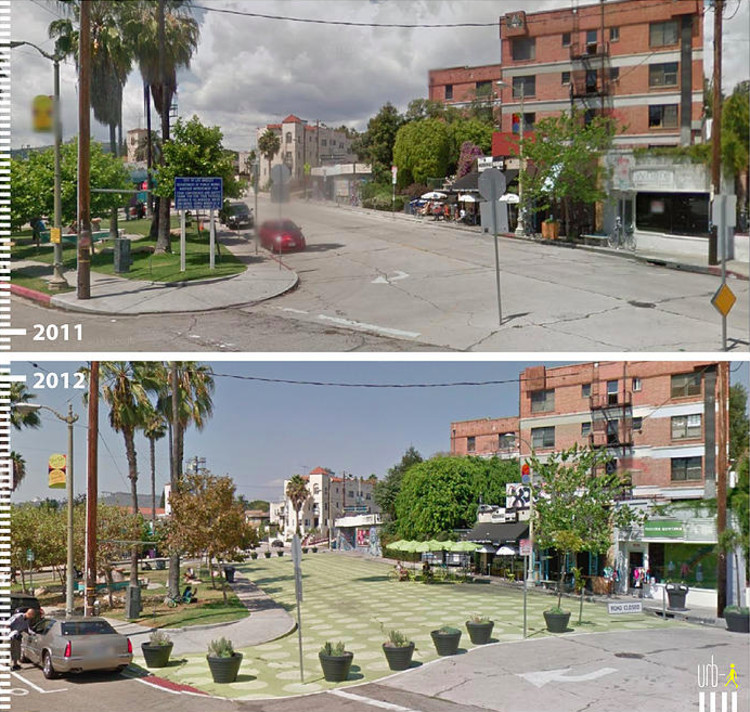
Urban renewal or urban regeneration is a process of land redevelopment in areas of prior, moderately to high, dense urban land use. It has a mammoth impact on the urban panorama and morphology of different cities. On the other side, the urban redevelopment process is envisioned as a way to redevelop or rebuilt urban zones and it also incorporates sewerage treatment and disposal, solid waste management, building and maintenance of roads, streets and flyovers, creation of parks and open spaces, street lighting along with street cleanliness, conservation and remodeling of heritage sites, water purification and supply etc. all of which ultimately lead to a healthy renewal project in urban areas. So renewal is an all-round process that encompasses mainly redevelopment and also some other specific planning strategies within its spectrum.Urban renewal refers to a set of plans and activities to upgrade neighborhoods and suburbs that are in state of distress or decay. Urban renewal programs address the physical aspects of urban decay. Urban problems such as deteriorating housing, poor physical infrastructure (including water and sanitation services) and poor community services such as sports and recreational amenities are addressed through such programs. Urban renewal (also called urban regeneration in the United Kingdom and urban redevelopment in the United States ) is a program of land redevelopment often used to address urban decay in cities. Urban renewal is the clearing out of blighted areas in inner cities to clear out slums and create opportunities for higher class housing, businesses and more. A primary purpose of urban renewal is to restore economic viability to a given area by attracting external private and public investment and by encouraging business startups and survival.

Modern attempts at renewal began in the late 19th century in developed nations, and experienced an intense phase in the late 1940s under the rubric of reconstruction. The process has had a major impact on many urban landscapes and has played an important role in the history and demographics of cities around the world. Urban renewal is a process where privately owned properties within a designated renewal area are purchased or taken by eminent domain by a municipal redevelopment authority, razed and then reconveyed to selected developers who devote them to other uses.

The concept of urban renewal as a method for social reform emerged in England as a reaction to the increasingly cramped and unsanitary conditions of the urban poor in the rapidly industrializing cities of the 19th century. The agenda that emerged was a progressive doctrine that assumed better housing conditions would reform its residents morally and economically. This process is also carried out in rural areas, referred to as village renewal, though it may not be exactly the same in practice. In some cases, renewal may result in urban sprawl when city infrastructure begins to include freeways and expressways. Urban renewal has been seen by proponents as an economic engine and a reform mechanism and by critics as a mechanism for control. Though it may bring more wealth to communities, it may also edge out its preexisting residents.

Objectives of Urban Renewal 

The main objectives of urban renewal are 

  • Restructuring and re planning of concerned urban areas 
  • Designing more effective and environment friendly local transport and road networks within the concerned urban areas
  • Rationalizing land uses within the concerned urban areas 
  • Redeveloping dilapidated buildings into new buildings of modern standard and environment friendly design 
  • Promoting sustainable development in the urban areas 
  • Promoting the timely maintenance and rehabilitation of buildings in need of repair 
  • Preserving buildings, sites and structures of historical, cultural or architectural value 
  • Preserving as far as practicable local characteristics 
  • Preserving as far as practicable the social networks of the local community 
  • Providing purpose-built housing for groups with special needs, such as the elderly and the disabled 
  • Providing more open space and community/welfare facilities 
  • Enhancing the townscape with attractive landscape and urban design 

Reasons behind Urban Renewal 

Urban Renewal allows an absolute city to modernize itself so that it can compete successfully with other cities of a similar hierarchical size for major economic and cultural activities. Various reasons behind urban renewal are as follows. 

a) Economic Reasons 

In Central areas, it alters low revenue property to high value property that yields higher tax revenue to the municipality. In conservation, it maintains the properties from declining. The cost of maintenance becomes less. Private developers are given adequate incentives to extend business and it provides more employment in commercial and institutional activities. Urban renewal project can repay the loan for investment within a few years. It provides employment opportunities and helps construction related activities. The relocated people and business also get economic benefits and blessings. 

b) Social Reasons 

It provides housing to the poor people and thus dilapidated housings and unhealthy, shady as well as shabby environmental ambience get eliminated through this type of projects. Juvenile delinquency, prostitution, anti-social elements and other social pathological symptoms are also removed or eradicated to some extent by the aura of this type of reformations.

c) Public Improvement Reasons 

Traffic improvements and parking facilities, disappearance of illegal and unauthorized usage of public space, provision of adequate community facilities including interward and intraward municipal services can be provided over a wider urban pursuit after the occurrence of a holistic urban renewal programme. 

d) Aesthetic Reasons 

Changing cityscapes with better or improved residential areas are generated due to renewal where all sorts of urban-ugliness can be removed. 

The purpose of urban renewal is to improve specific areas of a city that are poorly developed or underdeveloped. These areas can have old deteriorated buildings and bad streets and utilities or the areas can lack streets and utilities altogether. 

The National Common Minimum Programme (NCMP) has committed itself to a comprehensive programme of urban renewal and massive expansion of social housing especially in Kolkata city. In his inaugural address of a National-level programme, held on 24th June, 2004, the Prime Minister Manmohan Singh emphasized on the need to give special attention to policies promoting urban renewal through urban regeneration, renovation and redevelopment. In the Independence Day address of 2008, he uttered, “Urban renewal constitutes one of the seven pillars for urban growth and development in different metropolitan cities of India”. At the beginning of 21st century, renewal resulted in the creation of urban sprawl also and huge areas of cities were demolished and replaced by fairways and expressways, sky-touching housing projects and vacant lots, some of which (though minor portions) still remain vacant. 

Urban renewal provides the following tools. 

  • First it allows for the use of tax increment financing to finance improvement projects. 
  • Second, it allows for special powers to buy and assemble sites for development or redevelopment, if that is desired. 
  • Third, it allows for special flexibility in working with private parties to complete development projects. 

Urban Renewal Agency 

For a municipality to use urban renewal it must establish an urban renewal agency and it must adopt an urban renewal plan. Urban renewal agencies are created by state law but are specifically “activated’” by the governing body. The agencies are separate legal bodies from the governing body, but in most cases the urban renewal agency board is composed of members of the governing body. 

Urban Renewal Plans 

To undertake urban renewal projects with tax increment financing, the projects must be authorized in an urban renewal plan. The plan applies to a specific geographic area of the city, which is called the urban renewal area. 
The term Urban renewal means rebirth or regeneration of a city or a part of it which has been plagued by the ills of urbanization. The planning concept originated in England and America in 1930’s. Decayed parts of the city were demolished and rebuilt. Initially referred to slum clearance and housing but has gradually evolved into a multidimensional concept. These programs were thrust upon the city and its people and were criticized and halted on opposition by organized community movements. The urban renewal programs taken up later, involved greater participation of the communities.
Urban Renewal programs are generally undertaken by public authorities or by local governments. The emphasis is on those parts which have fallen below current standards of public acceptability. These are commonly to be found in the residential parts of the inner city and the central business district. Indicators for residential parts of inner cities are inadequate housing, environmental degradation and presence of non-conforming uses. Indicators for central business district are traffic problems, congestion and dilapidated buildings. 
Urban renewal is required for 
  • Dilapidating, ageing parts of the city, not providing the city its full potential and becoming a health hazard 
  • In built form it consists of old area of the city, congested area around transit points and illegal settlements needing redevelopment 
  • In terms of infrastructure – measures for efficient and smooth movement of traffic, improvement of transportation network and provision /improvement of utilities


Urban Planning Policy in India

 In our first five year plan, the problem of urbanization was identified with the problem of increasing shortage of living space in urban areas, as a consequence of heavy shift of population from rural to urban area. The second plan marked the expansion of the housing programme of the first plan and given due attention to slum clearance, slum improvement and land acquisition and development was given due importance. In the third plan, it was decided to prepare master plans and regional development plans for metropolitan and industrial cities. In this plan urbanization was recognized as an important aspect of the process of economic and social development. 

In the fourth plan the expansion of urban community and spatial implications of the problems of urbanization was given due importance. In the fifth and sixth plan period attention has been given to spatial and functional linkage of towns, development and growth of small towns and prospects of developing new towns as the centres of agro-industries and rural services. The overall view of developing urbanization as a part of integrated rural development was given due consideration.

Spatial Policy 

The urban spatial policy considerations are becoming increasingly important in development planning. Alternative settlement patterns are being evaluated from the point of view of cost and efficiency. It has been demonstrated that, in spite of continuous failure to arrest the urban growth at a pre planned time and place, reasonable programmes to influence the direction of migration and the pattern of urbanization are feasible. One of the difficulties in facing the formation of spatial policies and urban growth strategies is that, there are very few successful models of urban planning and there are no ready made policies, programmes and strategies to suit all conditions, places and times.

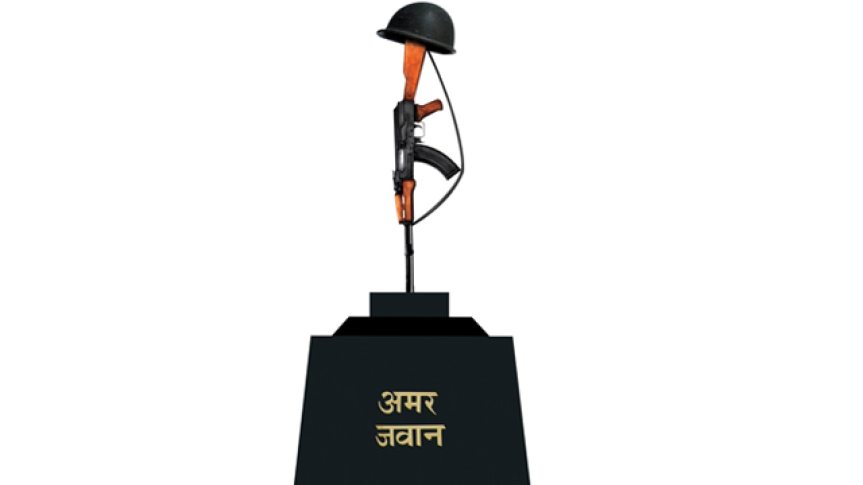
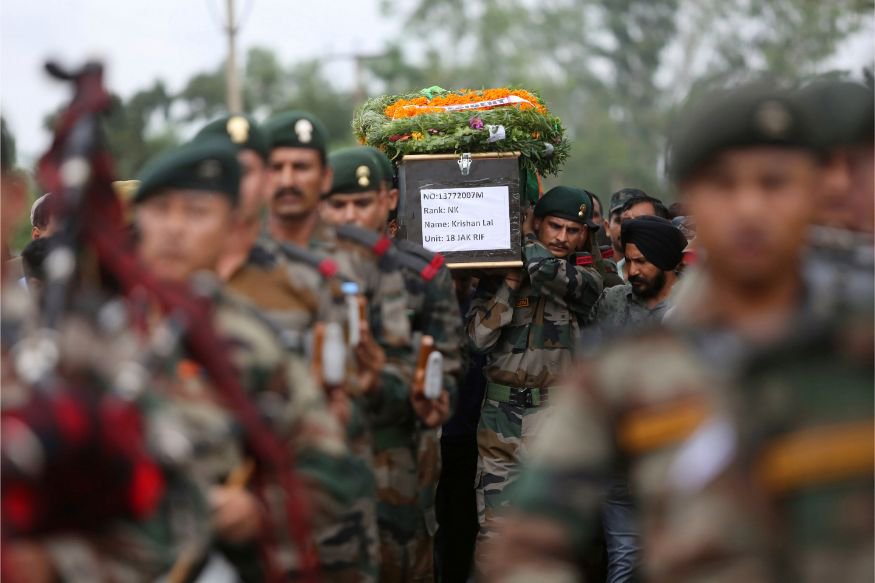
No use of ‘Martyr’ word in Army for death of on duty soldier .

History of the use of the word martyr:
The government has claimed for nearly a decade that the word “martyr” has not been officially recognized. In 2013 and 2014, in response to RTI’s request, the Ministry of Home Affairs revealed that the words “martyr” and “shahid” were not defined anywhere by the Government of India.
In December 2015, then Home Affair Minister Kireen Rijiju said in Lok Sabah that it is advised that the word “martyr” is not refer to any of the victims of the Indian army. He added that such terms were not used by Central Armed Police Forces (CAPF) and Assam Rifles personnel either.
In December 2021, Minister of State Home Nityanand Rai told Rajya Sabha again that there was no formal term like “martyr.”


Objections to the use of martyrs’ words:
The word “martyr” has religious implications and has historically been used to refer to people making sacrifices for their religious beliefs like in Christianity . The word “Shahid”, which is used as a Hindu alternative to the word “Martyr”, also has a religious meaning and is associated with the Islamic concept of Shahadat. The word “martyr” is said to be derived from the Greek word “martur”. In various dictionaries, “martyr” is defined as a person who is willing to die as a punishment for refusing to abandon religion.
Since the Indian army is not affiliated with any religion and does not sacrifice their lives for religious principles, the use of such words for their sacrifice is found wrong,including the supreme leader of the army. Using words like martyr may not be correct in context to armed forces especially in India according to many legal experts and prominent officers of army and retired officers.

Steps Taken By Government To Stop Use Of Martyr Word:
Despite the repeated assertions of the government about the word martyr having no official recognition, it was mostly used in government statements issued by various PR Officers for the defence services and the CAPFs. Many senior serving and retired officers also used it frequently to describe the death of soldiers in action. Thus, the word remained in common use.
The Army in 2022 issued a letter to all its commands asking them to abstain from using the word martyr as it may not be appropriate for soldiers who die in the line of duty. They have been, instead, asked to use phrases such as killed in action, supreme sacrifice for the nation, battle casualty, laid down their lives,veergati etc.

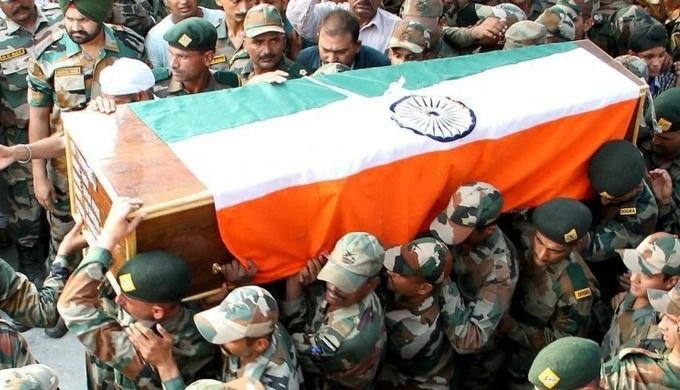
“Either I will come back after hoisting the tricolor, or I will come back wrapped in it, but I will be back for sure. “

-Late Captain Vikram Batra (PVC)

Design and Implementation of a Public Participation Process

 A public participation process is designed and implemented in four discreet stages, as outlined below.

1) Preliminary Design 

  • Situation analysis 
  • Decision process 
  • Information exchange 
  • Public and stake-holders 
  • Planning team 
  • Approvals 

2) Developing the Plan 

  • Establish objectives
  • Identify and address major issues 
  • Identify and involve the stakeholders 
  • Choose techniques 
  • Prepare to provide and receive information 
  • Develop critical path 
  • Budget, staff, resources, logistics, roles and responsibilities 
  • Prepare to give and get feedback

3) Implementation 

  • Follow the critical path 
  • Apply techniques 
  • Provide and receive information 
  • Monitor the process 

4) Feedback 

  • Report to decision makers 
  • Report to participants 
  • Evaluate the overall process

Techniques 

A number of emerging public participation techniques provide the opportunity for shared engagement, which has been difficult to achieve with traditional techniques. Traditional techniques include print publications, public meetings, open houses, advisory committees, workshops, bilateral meetings, and focus groups. Emerging techniques include open space technology, future search conferences, policy dialogue, and a suite of electronic techniques. In general, emerging techniques offer more in-depth opportunities for dialogue and collaboration, with emphasis on value exploration and reaching consensus on shared outcomes in complex situations. It should be noted that public servants and community groups have numerous opportunities to interact with each other, exchange information and gain a better understanding of each other’s views and interests. 

Citizen participation is mainly seen as an instrument to strengthen and support the way representative democracy is functioning now. The local or national government should take and keep the initiative in policy-making. Initiatives ought to be taken from above. The process of involving citizens in politics and policy-making should not lead to the erosion of the primacy of the representative institutions. The central focus of thought is not on citizens, but on the government. The role of participation is mainly an instrumental one. That is, its main objective is to give citizens and their organizations a say in the official political process. Participation is not regarded as a value in itself, but is merely aimed at producing a government.