12U2 Summit 2022: I2U2 Meeting Today, Modi-Biden Attends Virtually; The eyes of the world on the meeting

Prime Minister Narendra Modi will attend the first I2U2 Leaders’ Summit on July 14 with leaders from Israel, the United Arab Emirates and the United States.I2U2 aims to make joint investments in six mutually recognized sectors such as water, energy, transport, space, health and food security.The first I2U2 Leaders Summit will take place today at around 4:00 p.m.

A major topic of the meeting will also be how the partnership between the companies of these four countries can be advanced in order to overcome the great economic challenges. Joining this group of four countries (Quad) has many meanings for India.First, this will be the second quad with the US that India will be a member of.There is currently a quad coalition of India, America, Australia and Japan whose heads met in May 2022.At that meeting, these four countries had announced a grand agenda of economic cooperation and the Indo-Pacific economic framework.What is the I2U2 Summit?I2U2 stands for I2 for India and Israel while U2 stands for USA and UAE .I2U2 is a group of four countries namely India, Israel, USA and United Arab Emirates.These four nations will focus on food security and defense to create a new global standard.At this meeting, the future agenda of six key areas will be discussed.These will mainly include energy and food security.Another important topic of the meeting will be how to advance the partnership between the companies of these four countries to tackle the major economic challenges.The four countries are making efforts to strengthen economic parity partnerships in other areas of interest as well.Member countries will work to carry trade and investment to areas other than their region.The joint statement issued after the meeting will be monitored.
These leaders, including Modi and Biden, will attend the I2U2 meeting

The information from the Indian Ministry of Foreign Affairs on the forthcoming meeting on Tuesday indicates that it is only about economic, social and infrastructure cooperation. The Foreign Ministry has announced that Prime Minister Narendra Modi will attend the first I2U2 meeting, Israel’s Prime Minister Yar Lapid, UAE President Sheikh Mohamed bin Zayed Al Nahyan and US President Joe Biden. The decision regarding I2U2 was made at the meeting of the foreign ministers of the four countries mentioned above on October 18, 2021.After that, Sherpa-level talks between the four countries will also continue on an ongoing basis.

12U2 Summit 2022: I2U2 Meeting Today, Modi-Biden Attends Virtually; The eyes of the world on the meeting

Prime Minister Narendra Modi will attend the first I2U2 Leaders’ Summit on July 14 with leaders from Israel, the United Arab Emirates and the United States.I2U2 aims to make joint investments in six mutually recognized sectors such as water, energy, transport, space, health and food security.The first I2U2 Leaders Summit will take place today at around 4:00 p.m.

A major topic of the meeting will also be how the partnership between the companies of these four countries can be advanced in order to overcome the great economic challenges. Joining this group of four countries (Quad) has many meanings for India.First, this will be the second quad with the US that India will be a member of.There is currently a quad coalition of India, America, Australia and Japan whose heads met in May 2022.At that meeting, these four countries had announced a grand agenda of economic cooperation and the Indo-Pacific economic framework.What is the I2U2 Summit?I2U2 stands for I2 for India and Israel while U2 stands for USA and UAE .I2U2 is a group of four countries namely India, Israel, USA and United Arab Emirates.These four nations will focus on food security and defense to create a new global standard.At this meeting, the future agenda of six key areas will be discussed.These will mainly include energy and food security.Another important topic of the meeting will be how to advance the partnership between the companies of these four countries to tackle the major economic challenges.The four countries are making efforts to strengthen economic parity partnerships in other areas of interest as well.Member countries will work to carry trade and investment to areas other than their region.The joint statement issued after the meeting will be monitored.
These leaders, including Modi and Biden, will attend the I2U2 meeting

The information from the Indian Ministry of Foreign Affairs on the forthcoming meeting on Tuesday indicates that it is only about economic, social and infrastructure cooperation. The Foreign Ministry has announced that Prime Minister Narendra Modi will attend the first I2U2 meeting, Israel’s Prime Minister Yar Lapid, UAE President Sheikh Mohamed bin Zayed Al Nahyan and US President Joe Biden. The decision regarding I2U2 was made at the meeting of the foreign ministers of the four countries mentioned above on October 18, 2021.After that, Sherpa-level talks between the four countries will also continue on an ongoing basis.

What is Energy Conservation Building Code (ECBC)

The Energy Conservation Building Code (ECBC) set minimum energy performance standards for commercial buildings. Under section 14 (p) of the Energy Conservation Act, 2001, Central Government has powers to prescribe ECBC for non-residential buildings, having connected load of 100 KW and above or a contract demand of 120 KVA and above or recommended built-up area of 1000 sqm and above. or building complex for efficient use of energy and its conservation. The state governments have the flexibility to modify ECBC to suit local or regional needs. Energy performance standards for the following building systems will be included in the ECBC:

  1. Building Envelope
  2. Heating Ventilation and Air Conditioning
  3. Lighting
  4. Service Water Heating
  5. Electric Power and Distribution

The salient features of the ECBC for the Composite Climate Zone are as under:

1. Building Envelope:

ECBC compliant design strategy for a building is as under:
Heat/Moisture Losses Walls Roof Window
Minimize Conduction Losses Use insulation with low U-value Use insulation with low U-value Use material with low U-factor
Minimize Convection Losses & Moisture Penetration Reduce air leakage & use vapor barrier Reduce air leakage & use vapor Barrier Use prefabricated windows and seal the joints between windows and walls.
Roof Requirement:
Climate Zone Hospitals, Hotels, Call Centres, (24-hours) Other Building types (Daytime)
Maximum U-factor of the overall assembly (W/sq.m-0 C) Minimum R-value of insulation alone (W/sq.m-0 C) Maximum U-factor of the overall assembly (W/sq.m-0 C) Minimum R-value of insulation alone (W/sq.m-0 C)
Composite U-0.261 R-3.5 U-0.409 R-2.1
Wall Requirement:
Climate Zone Hospitals, Hotels, Call Centres, (24-hours) Other Building types (Daytime)
Maximum U-factor of the overall assembly (W/sq.m-0 C) Minimum R-value of insulation alone (W/sq.m-0 C) Maximum U-factor of the overall assembly (W/sq.m-0 C) Minimum R-value of insulation alone (W/sq.m-0 C)
Composite U-0.440 R-2.10 U-0.440 R-2.10

<td data-th="Maximum SHGC WWR 0.25

<td data-th="Maximum SHGC 40% < WWR 0.20

<td data-th="Maximum SHGC WWR 0.25

<td data-th="Maximum SHGC 40% < WWR 0.20

<td data-th="Maximum SHGC WWR Minimum VLT

<td data-th="Maximum SHGC WWR 0.27

<td data-th="Maximum SHGC WWR 0.20

<td data-th="Maximum SHGC WWR 0.16

<td data-th="Maximum SHGC WWR 0.13

Glazing requirements:
Climate Maximum U-factor Maximum SHGC WWR < 40% Maximum SHGC 40% < WWR <60%
Composite 3.3
Composite 3.3
Minimum Visible Light Transmittance
Window –Wall-Ratio
<30%
31%-40%
41%-50%
51%-60%
Defaults for Unrated Vertical Fenestration (Overall Assembly including the Sash and Frame)
Clear Glass Tinted Glass
Frame Type Glazing Type U- Factor(W/m2-0C) SHGC VLT U-Factor SHGC VLT
All frame types Single Glazing 7.1 0.82 0.76 7.1 0.70 0.58
Wood, vinyl, of fiberglass frame Double Glazing 3.3 0.59 0.64 3.4 0.42 0.39
Metel and other frame type Double Glazing 5.1 0.68 0.66 5.1 0.50 0.40
Envelope Performance Factor Coefficients for Composite Climate (under review)
Daytime Occupancy 24- Hour Occupancy
U – Factor SHGC U – Factor SHGC
Mass Walls 6.01 13.85
Curtain Walls, Other 15.72 20.48
Roofs 11.93 24.67
North Windows -1.75 40.65 -4.56 58.15
Non-North Windows -1.25 54.51 0.68 86.57
Skylights -96.35 311.71 -294.66 918.77
Comfort requirements and Physical manifestations in Buildings of Composite Climate Zone
Thermal Requirements Physical Manifestation
Reduce Heat Gain in Summer and Reduce Heat Loss in Winter
Decrease exposed surface area Orientation and shape of building. Use of trees as wind barriers
Increase thermal resistance Roof insulation and wall insulation
Increase thermal capacity (Time lag) Thicker walls
Increase buffer spaces Air locks/Balconies
Decrease air exchange rate Weather stripping
Increase shading Walls, glass surfaces protected by overhangs, fins and trees
Increase surface reflectivity Pale color, glazed china mosaic tiles, etc.
Reduce solar heat gain Use glazing with lower SHGC and provide shading for windows. Minimize glazing in East and West
Promote Heat Loss in Summer/Monsoon
Increase air exchange rate ( Ventilation) Courtyards/wind towers/ arrangement of openings
Increase humidity levels in dry summer Trees and water ponds for evaporative cooling
Decrease humidity in monsoon Dehumidifiers/ desiccant cooling

Source:- Nayak and Prajapati (2206), Handbook on Energy Conscious Buildings.

2. Heating, Ventilation and Air Conditioning (HVAC):

i) Minimum Efficiency for Chillers:
Equipment Class Minimum COP Minimum IPLV Test Standard
Air Cooled Chiller <530KW (<150 tons) 2.90 3.16 ARI 550/590-1998
Air Cooled Chiller>=530KW(>=150 tons) 3.05 3.32 ARI 550/590-1998
Centrifugal Water Cooled Chiller <530KW(<150 tons) 5.80 6.09 ARI 550/590-1998
Centrifugal Water Cooled Chiller >=530KW and =150 tons and <300 tons) 5.80 6.17
Centrifugal Water Cooled Chiller >=1050KW(>=300 tons) 6.30 6.61 ARI 550/590-1998
Reciprocating Compressor, Water Cooled Chiller all sizes 4.20 5.05
Rotary Screw and Scroll Compressor, Water Cooled Chiller <530KW(<150 tons) 4.70 5.49 ARI550/590-1998
Rotary Screw and Scroll Compressor, Water Cooled Chiller>=530 and =150 and <300 tons) 5.40 6.17
R Rotary Screw and Scroll Compressor, Water Cooled Chiller>=1050KW(>=300 tons) 5.75 6.43 ARI 550/590-1998

ii) Unitary Air

Conditioning Equipment:
Equipment Class Minimum COP Minimum IPLV Test Standard
Unitary Air Cooled Air Conditioner >=19 and =5.4 and <11 tons) 3.08 ARI 210/240
Unitary Air Cooled Air Conditioner >=40 to =11 to <20 tons) 3.08 ARI 340/360
Unitary Air Cooled Air Conditioner >=70KW(>=20 tons) 2.93 2.99 ARI 340/360
Unitary Water Cooled Air Conditioner<19KW(<5.4 tons) 4.10 ARI 210/240
Unitary Water Cooled Air Conditioner>=19 and =5.4 and <11 tons) 4.10 +++ ARI 210/240
Unitary Water Cooled Air Conditioner>==11 tons) 3.22 3.02 ARI 210/240

3. Lighting:

i) Lighting Power Requirement: Table 7.3.1 Interior Lighting Power-Building Area Method
Building Area Type LPD (W/sq.m) Building Area Type LPD (W/sq.m)
Automotive facility 9.7 Multifamily 7.5
Convention Center 12.9 Museum 11.8
Court House 12.9 Office 10.8
Dining: Bar Lounge/Leisure 14.0 Parking Garage 3.2
Dinging: Cafeteria/Fast Food 15.1 Performing Arts Theater 17.2
Table 7.3.2 Interior Lighting Power –Space Function Method
Space Function LPD (W/sq.m) Space Function LPD (W/sq.m)
Lobby 14.0 Hospital
For Hotel 11.8 Emergency 29.1
For Performing Arts Theater 35.5 Recovery 8.6
For Motion Picture Theater 11.8 Nurse Station 10.8
ii) Exterior Building Lighting Power:
Exterior Lighting Applications Power Limits
Building entrance (with canopy) 13 W/m2 (1.3 W / ft2) of canopied are
Building entrance (without canopy) 90 W/lin m (30 W/lin f) of door width
Building exit 60 W/lin m (20 W/lin f) of door width
Building facades 2 W/m2 (0.2 W/ ft2) of vertical facade area
iii) Interior Lighting Power – Space Function Method:
Space Function LPD (W/m2) Space Function LPD (W/m2)
Office-enclosed 11.8 For Reading Area 12.9
Office- open plan 11.8 Hospital
Conference/Meeting/Multipurpose 14.0 For Emergency 29.1
Classroom/Lecture Training 15.1 For Recovery 8.6
Lobby 14.0 For Nurse Station 10.8
For Hotel 11.8 For Exam Treatment 16.1
For Performing Arts Theater 35.5 For Pharmacy 12.9
For Motion Picture Theater 11.8 For patient Room 7.5
Audience/Seating Area* 9.7 For Operating Room 23.7
For Gymnasium 4.3 For Nursery 6.5
For Convention Center 7.5 For Medical 23.7
Audience/Seating Area* 9.7 For Operating Room 15.1
Atrium –first three floors 6.5 For Low Bay (<8m celling) 12.9
Atrium-each additional floor 2.2 For High Bay (>8m ceiling) 18.3
Lounge/Recreation* 12.9 For Detailed Manufacturing 22.6
For Hospital 8.6 For Equipment Room 12.9
Dining Area* 9.7 For Control Room 5.4
For Hotel 14.0 Hotel/Motel Guest Rooms 11.8
For Motel 12.9 Dormitory- Living Quarters 11.8
For Bar Lounge/Leisure Dining 15.1 Museum
For Family Dining 22.6 For General Exhibition 10.8
Food Preparation 12.9 For Restoration 18.3
Laboratory 15.1 Bank office- Banking Activity Area 16.1
Restrooms 9.7 Retail
Dressing/Locker/Fitting Room 6.5 For Sales Area 18.3
Corridor/Transition* 5.4 For Mall Concourse 18.3
For Hospital 10.8 Sports Arena
For Manufacturing Facility 5.4 For Ring Sports Area 29.1
Stairs-active 6.5 For Court Sports Area 24.8
Active Storage* 8.6 For Indoor Field Area 15.1
For Hospital 9.7 Warehouse
Inactive Storage* 3.2 For Fine Material Storage 15.1
For Museum 8.6 For Medium /Bulky Material Storage 9.7
Electrical /Mechanical Facility 16.1 Parking Garage- Garage Area 2.2
Workshop 20.5 Transportation
Convention Center- Exhibit Space 14.0 For Airport- Concourse 6.5
Library For Air/Train/Bus- Baggage Area 10.8
For Card File & Cataloging 11.8 For Ticket Counter Terminal 16.1
For Stacks 18.3

4. Service Water Heating:

Mandatory Requirements

a) Solar water heater or heat recovery for at least 20% of the design capacity

Minimum efficiency for service water heating equipment

Piping insulation

Communalism in India: Threat to National Integration

Photo by Mauru00edcio Mascaro on Pexels.com

National Integration is a process by which divisive people and culture are synthesized into a unified whole, along with higher levels of cooperation, mutual understanding, shared values, common identity and above all national consciousness. In the process of national integration, people of a nation develop the sense of we feeling and are unified. The broader objective of national integration has been the attainment of ideological goals such as secularism and democracy. But these are some negative forces lurking within the society which pose as a rising threat to the national integration of India in the form of communalism, regionalism, linguism, etc.

India represents a divirse religions and cultures. Hinduism, Islam, Sikhism, Christianity, Zoroastrianism, Buddhism, etc have flourished here. Whereas the Hindus constitute the major segment of India’s population, the Muslims constitute the largest minority. But the irony is that the adjustment between the Hindus and Muslims has been a failure several times, resulting in violent outbursts and communal riots. The inhuman behavior seen in the communal riots during the period of Independence of India, has no parallel instances in the entire history of the world. In fact, communalism is not a new phenomenon and has tended to exist since the times of the Muslim rule in the medieval period.

Communalism is described as a tool to mobilize people for or against, by raising an appeal on communal lines. Asghar Ali Engineer, Moin Shakir and Abdul Ahmed try to explain communalism as an ideological tool for propagation of economic and political interests. According, to them it I an instrument in the hands of the hands upper class to concentrate power by dividing people.

Communalism as an ideology may be perceived as:

  • A total commitment to a set of beliefs,
  • Far from rationality,
  • Commiting of self to the community alone,
  • Unwillingness to accept other belief patterns and faiths,
  • Closing of self and being highly emotional to it, to the extent of crossing the bounds of law at times.
  • It mostly rests on prejudices,
  • It causes rivalry and violence among masses,
  • It effects are disastrous,
  • It strikes at the roots of secularism and national integration.

There are many factors that lead to the emergence of communalism in the society. Some of these factors include provocation of enemy countries, negative effect of mass media, geographical causes, weak economic status of minorities, historical causes, organized and militant fundamentalist organization, orthodoxy and obscurantism and failure of government policies.

There stands an urgent need of eradication of communalism in our society. Some policies that can be undertaken in this regard include abolition of communal parties in our country, healthy public opinion, inter- religious marriages, declaration of national festivals, etc. These are few measures that may help in curbing communalism from causing any threat to the National integration of our country.

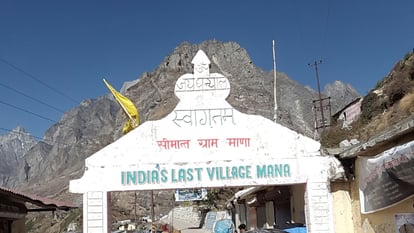
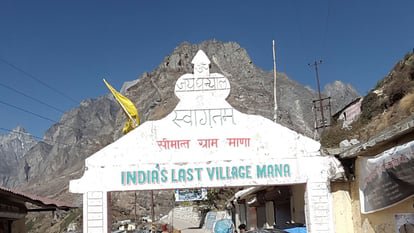
India’s last village Mana.

Mana Village is located in the Chamoli district of Uttarakhand, at an altitude of 3200 m , on the banks of the Saraswati River, about 5 km from the famous Hindu pilgrimage site Badrinath. This beautiful place is located 26 km from the border between India and Tibet and is the last village of India.
According to the 2011 census, the village was home to about 558 households and with population of about 1214 people . Most of the population here belong to Marchhas and Jads or Bhotias. During the winter, the area is covered with snow, so the entire population moves to lower altitudes. Many cafes here tell people that their store is the last cafe on the Indian border. Most of the people here speaks Garhwali Or Hindi languages.
If you visit this place, you will notice that the shopkeepers in the area sell their products under the title “Last Village”, such as “The Last Tea and Coffee Corner in India”.

Religious importance of mana village:

The village of Mana is of great religious importance to Hindus as it is associated with the Mahabharata era. Pandavas, the five mythical figures of the epic Mahabharata, is believed to have passed through the village of Mana on his final journey to heaven. There is also a stone bridge called “Bheempul” near the Saraswati River. It is believed to have been created by Bheem, one of the Pandava’s .

How do you get to Mana village?
You can reach Mana village easily as it is easily accessible from Rishikesh / Haridwar/Dehradun and situated just 5 km from Badrinath Temple. The nearest train station is located in Haridwar, about 275 km away, and you can reach the village by bus / taxi from outside this station. Mana is just 315 km from Dehradun and there is a regular bus in front of the train station.

Mana attractions :

Neelkanth Peak: At an altitude of 6597 feet above sea level, Neelkanth Peak is one of the region’s main attractions. Also known as the “Queen of Garhwal”, this snow-capped peak rises beautifully above the Badrinath Temple and is a must-see for adventure and trekking lovers.

Tapt Kund: According to Hindu mythology, Tapt Kund is the Sanctuary of the Lord of Agni (Fire). This natural hot spring is thought to have medicinal properties, and it is said that soaking in Tapt Kund water will cure skin diseases.

Vasudhara: This is a scenic waterfall about 9km from Badrinath Temple. According to Legend it is the place where Pandavas stayed for some time during their exile.

Vyas Gufa: As the name implies, Ved Vyas, a famous scholar and author of the epic Mahabharata, lived in this cave while writing the four famous vedas. What makes this cave interesting is a small shrine dedicated to him, which is said to be over 5,000 years old.

Beehma Pul: One of Mana Village’s main attractions is Beehma Pul. Beehma is said to have built this Bheem Pul, a stone bridge to allow his wife Draupadi to cross the Saraswati River on a journey to heaven.

Racial composition of India

Photo by Yogendra Singh on Pexels.com

Race remains one of the most complex concepts in sociology. In popular usage, race maybe human race, car race, etc., but in this context it refers to any category or group of people who have similar physical traits. Race according to some is a group of people who maybe separated from other groups by repeating physical features like color of skin, hair, stricture of jaw, structure of eyes, etc.

Race, as a term, gained usage around 16th century and it began being referred to family, village and breed. It was in the 18th century period, especially during the enlightenment,i.e., age of reason, that the idea of race began to be restored more systematically. Ethnic groups in Indian society have a complex history of more than 5000 years. It is a history of series of migration, accommodation, assimilation, invasions and wars.

According to Dubey, it can stipulate about the original people of India on the basis of information provided by physical anthropology regarding the racial groups in the composition of India. The most authoritative and widely accepted classification is by Dr. B.S.Guha who identified six major racial types, namely:

  1. The Negrito: People belonging to this racial group are characterized by black skin color, frizzly hair, thick lips, etc. The prevelance of a Negrito segment in the Indian population is a matter of controversy for the anthropologists and as such they are divided into two groups:
    1. The protagonists, who believe in the existence of the Negritos in India.
    2. The antagonists, who do not find any conclusive evidence of the existence of Negrito racial stock in Indian population.
  2. The Proto- Austroloid: This racial stock consists of an ethnic group comprising of the Australians aborigines and other people of the Southern Asia and Pacific Islands. The aborigines are also considered the pre- Dravidian race and the Indian tribal population in general, is dominated by this racial element.
  3. The Mongoloid: The Mongoloids, as a major racial stock, are native to Asia. This race entered India from the Western China through The Tibet, The Chinese, The Japanese, The Burmese, The Eskimos and also the American Indians are covered within this strain.
  4. The Mediterranean: This racial stock may be related to the Caucasian physical type i.e., the white race. It is one of the dominant races in India.
  5. The Western Brachycephals: It is believed that this racial group have entered India from the West. This race is divided into three sub- groups:
    1. The Alpinoid
    2. The Dinaric
    3. The Armenoid
  6. The Nordic: People belonging to this racial stock are characterized by tall stature, long head, light skin and hair and blue eyes. Tho physical stock has come to India from the North East Asia, South West Siberia through Central Asia and spread all over the Northern part of our country during the second millennium B.C.

What is IPO? All you need to know about IPO

Who does not love money, and then if even more money is made by investing money somewhere, then you will also know how good it will be.

In the same way, many big and small companies also keep investing in the same way, and at the same time many ways are brought to invest in them, one of them is IPO.

So today we are awake to tell you what this IPO is, and how you can get a lot of returns by investing in a good IPO.

A company planning an IPO will typically select an underwriter or underwriter. They will also choose an exchange in which the shares will be issued and subsequently publicly traded.


Are you planning to invest in IPO? So get ready, because there are lots of good IPOs coming up next week. So, if you want to invest, you need to have complete knowledge about it. Let’s know what is IPO?

What is IPO


What is IPO?

IPO means Initial Public Offering which is called IPO in short. When a company issues its common stock or shares to the public for the first time, it is called an IPO, Initial Public Offering.

This IPO is issued by limited companies so that they can get listed on the stock exchange. After listing on the stock exchange, the shares of the company can be bought in the stock market.

In IPO, when a company issues its common stock or shares to the public for the first time, it is called IPO (Initial Public Offering).

IPOs are mostly issued by smaller, newer companies that want capital to grow their business, but they can also be issued by large privately-owned companies that enter the public market. She wants to do business (publicly traded).

What is IPO

Typically a large IPO is underwritten by a syndicate of investment banks, led by one or more large investment banks.

On the sale of shares, underwriters receive a commission based on the value of the shares sold. Typically, the lead underwriter, the underwriter who has sold the largest portion of the IPO, receives the highest commission – 8 % in some cases.

How do IPOs work?

Before an IPO, a company is considered private. As a private company, the business has grown with a relatively small number of shareholders, including early investors such as founders, family and friends, as well as professional investors such as venture capitalists or angel investors.

When a company reaches a stage in its growth process where it believes it is mature enough to meet the rigors of SEC regulations, as well as the benefits and responsibilities to public shareholders, it may advertise its interest in going public.

Typically, this stage of growth will occur when a company has reached a personal valuation of about $1 billion, also known as unicorn status.

However, private companies with different valuations with strong fundamentals and proven profitability potential may also qualify for an IPO based on market competitiveness and ability to meet listing requirements.

An IPO is a big step for a company. This facilitates the company to raise a lot of money. This gives the company more potential to grow and expand. The increased transparency and credibility of share listings can also help in getting better terms along with borrowing funds.


Some important things about IPO.

IPO refers to the process of offering shares of a private corporation to the public in a new stock issuance.

Companies must meet requirements by exchanges and the SEC to hold an initial public offering.

Companies hire investment banks to market, solicit demand, price and date IPOs, and more.

An IPO can be viewed as an exit strategy for company founders and early investors, to realize the full benefits from their personal investments.

The company that offers its shares, known as the ‘issuer’, does so with the help of investment banks. After the IPO, the company’s shares are traded on an open market. Those shares can be further sold by investors through secondary market trading.


What is IPO?

The company that offers its shares, known as the ‘issuer’, does so with the help of investment banks. After the IPO, the company’s shares are traded on an open market. Those shares can be further sold by investors through secondary market trading.

The stages of an IPO include the following:

Underwriters submit proposals and valuations that discuss their services, market offerings

The best type of security to offer the price for, the quantity of shares and the estimated time frame.

The company chooses its underwriter and formally agrees to underwrite the terms through an underwriting agreement.

IPO teams are formed of underwriters, attorneys, certified public accountants, and Securities and Exchange Commission experts.

Ensure procedures for reporting auditable financial and accounting information every quarter.

What is the reason for bringing IPO?

When a company needs additional capital, it issues an IPO. This IPO company can issue even when it is short of funds, it considers it better to raise money from IPO instead of taking loan from the market.

This is the expansion plan of any company. After listing on the stock exchange, the company can invest its shares in other schemes.

Securities and Exchange Board of India i.e. SEBI (Securities and Exchange Board of India) is a government regulator for companies that bring IPO.

It makes the companies bringing the IPO strictly follow the rules. Companies are obliged to give all kinds of information to SEBI.

The money raised through IPO is generally used for the expansion of the company, its technological development, to buy new assets, to clear debts, etc.


How many types of IPO are there? (Types of IPO)

There are two types of IPO. First Fixed Price IPO and second Book Building IPO Let us know about both.

Fixed Price IPO

Fixed price IPO can be referred to as the issue price that some companies set for the initial sale of their shares.

Investors get to know about the price of the shares that the company decides to take public.

The demand for shares in the market can be ascertained after the issue is closed. If investors participate in this IPO, they must ensure that they pay the full price of the shares while applying.

Book Building IPO

In terms of book building, the company initiating an IPO offers investors a 20% price band on the shares. Interested investors place bids on the shares before the final price is fixed.

Here investors need to specify the number of shares they wish to buy and the amount they are willing to pay per share.

The lowest share price is known as the floor price and the highest stock price is known as the cap price. The final decision regarding the price of the shares is determined by the bids of the investors.

How to invest in IPO?

The IPO issuer opens its IPO for investors for 3-10 days. Meaning when any IPO comes, any investor can buy it within 3 to 10 days.

Some companies keep their IPO issuance period for only 3 days and some keep more than three days.

You can invest in an IPO within these specified days by visiting the company’s site or through a registered brokerage.

Now if IPO is a fixed price issue then you have to apply for IPO at the same fixed price, and if IPO is a book building issue then you have to bid on that book building issue only.

IPO Allotment Process

When the IPO opening closes, the company allots the IPO. In this process, the company allots the IPO to all the investors and after the IPO is allotted to the investors, the shares get listed on the stock exchange (STOCK MARKET).

After listing in the stock market, shares are bought and sold in the secondary market. Unless the shares are listed in the stock market, you cannot sell them. Once the shares are listed in the stock market, the money and the shares are exchanged between the two investors.

Once listed, you can also sell and buy shares according to the stock market timing.


Is it good to invest in IPO?

Investing in IPO is a good idea but investing in every single IPO may not be the same. After all, the course of each IPO is different.

Initial Public Offerings present a convenient platform, especially for early investors. This is a good opportunity for them to enter the market at the best possible rates.

How does IPO make money?

A bank or group of banks put money to fund an IPO and buy shares of the company even before it is listed on a stock exchange.

Banks make their profit on the difference in price paid before the IPO and when the shares are officially offered to the public.

Overall, the road to IPO is very long. Thus, interest-generating public investors can develop headlines and other information along the way to help them complement the valuation of the best and potential offering price.

The pre-marketing process typically involves demand from large private accredited investors and institutional investors that influence the opening day of the IPO.

Investors are not included in the public until the day of the final offering. All investors can participate but individual investors must have exclusive trading access.

The most common way for an individual investor to obtain shares is to have an account with a brokerage platform that itself receives an allotment and wishes to share it with its clients.

So friends, you must have understood that what is IPO? Or what is IPO, although we have tried to give you some information about IPO, but still if you have any problem or you want to ask something from us, you can ask in the comment box given below. We will do our best to help you.


Metaverse what is it

Do you know what the metaverse is? Today we are going to tell you a lot about Metaverse. Today you will get to know a lot about the Metaverse in this article.

As you already know that ever since the Internet has come into our lives, we have seen many changes all over the world. Today, with the help of the internet, we can get information about anything and anywhere sitting at home, as today you have reached here with the help of the internet to know about Metaverse.

Friends, the world is progressing very fast, and we should also know about these new things, what the changes happening around us and in the world, as a new change is this metaverse, so let’s tell you today What is the metaverse, and what will it benefit us, as well as how it is useful for us.

You must have used Facebook because Facebook is one of the first social media platforms in the world. Now Facebook’s parent company is named Meta. Which is derived from the word metaverse. After all, what is this metaverse, let us know.

What is Metaverse?


Metaverse what is it


The Metaverse is a virtual world where you can do everything you would do in the real world. Simply put, in a world where you have an identity, you will be at home, but your avatar will be in the metaverse.

There are many different technologies used in the metaverse. It uses Augmented Reality, Virtual Reality and video tools. The concept of the Metaverse is that people digitally connect in a digital space.

For example, if you want to attend a live concert on the Metaverse, you can do that too. This will be different from a concert in video format, as your avatar will be present with other people at this concert.

You will be able to feel like you are participating in that concert and enjoying with the people through the device you use for the metaverse because there will be other people in the form of avatars and you will see them right there You can also have a conversation.

Metaverse can be used in different places. From the gaming sector to meeting and interacting with each other will be included in this.

People will be able to meet each other, talk and do gaming together in the digital space through their avatar sitting at home. People can even take virtual trips around the world through their avatars in the digital space.

How did the metaverse start?


In 1992, Steven Stephenson used the term Metaverse in his science fiction novel Snow Crash.

He envisioned that the metaverse would be a space where people would be able to interact with each other through their avatars. Have you ever thought that people will give billions of rupees to buy virtual land? It is true.

People are buying virtual land in Metaverse now, and it is very much in trend.

What is the future of the metaverse?


The way the Metaverse is becoming popular right now, this is going to change our lives very soon. Friends, 20 to 30 years ago hardly anyone would have thought that the world would become dependent on the internet, similarly, if you think that the metaverse will flop then you are wrong.

Because as of Web 3.0, the metaverse looks like a solid future. Barbados has become the first country to announce the opening of its embassy in the metaverse. Barbados is building its diplomatic compound in the Decentraland of the Metaverse.

People are also seeing this as a new way to earn money in the metaverse. Because the price at which plots are available in the metaverse right now is expected to increase prices as fast as cryptocurrencies in the future, and then everyone will have a different property of theirs in the metaverse.

The term that will trend after Cryptocurrency for the next few years is Metaverse. You should not see it by associating it with Facebook, since recently Facebook has changed its name to Meta, so people are seeing Metaverse associating it with Facebook, but it is not so.

Metaverse is a term, for the real world where you and I live and you can think of Metaverse as a virtual world.

Just like in the real world you need land to build a house or open a shop, so in the Metaverse, people are buying virtual plots to live, open a shop, play or hold a concert.


What would the world of the Metaverse be like?


The world of the Metaverse can be understood with a simple example in such a way that if a person is married, then in today’s time people gather in one place.

But with the arrival of the metaverse, it will happen that the bride and groom may also stay at their home and the rest of the guests too, just all in their virtual way.

-Gather through your image and talk to each other through 3D images and perform other rituals.

A few years ago a film was made in Hollywood called Avatar. This film was very much liked all over the world. Let us tell you that the world shown in the film Avatar is the world of the metaverse, in which a person will remain at his home but his virtual avatar can be anywhere in the world.

The world of Metaverse has started to form, it can be gauged from the fact that gaming company Epic Games organized a music concert in the past, which was virtual and people participated in it virtually.

This means people were dancing in concert with pop stars sitting in their homes, similarly, office meetings and classes can also be organized in future.

Metaverse land

In the metaverse, land means virtual land. Like you buy land or plot in the real world. Similarly, land can be bought or sold in the metaverse as well.

conclusion-

So in this way today you have learned what is the metaverse, and at the same time today, you must have got to know a lot more about the metaverse.

By the way, today in this article we have tried to tell you a lot about Metaverse, if you also know something about Metaverse, then you can share it with us, through the comment box given below.

And if you liked this article, and you got to learn something good from it today, then definitely share it with your friends too, and they too can get more information about what is Metaverse and about it. help.

ICC ODI Rankings: India rewarded after spectacular win over England, leaves Pakistan behind

In the first match of the 3-match ODI series to be played between India and England, India won against England by 10 wickets.India received a big reward for this victory, overtaking Pakistan in the latest ranking published by the ICC. Before the game, the Indian team was fourth with 105 points, but with India’s spectacular victory, the team’s Elo rating has increased by 3 points and now sits in third place with 108 points, leaving Pakistan behind. Pakistan has slipped to fourth place with 106 points.With 126 points, the New Zealand team is still in first place, while the English team is in second place with 122 points.Australia is 5th in this list, South Africa is 6th.The Bangladeshi team is 7th and the Sri Lankan team is 8th.West Indies and Afghanistan are 9th and 10th respectively.Pakistan had it after a clean win over the West Indies in the just made it to third place last month but now India has overtaken it.India can keep their lead until Pakistan play their next game.That being said, if India needs to maintain their lead then they need to win both of their remaining games against England.

ICC ODI Rankings: India rewarded after spectacular win over England, leaves Pakistan behind

In the first match of the 3-match ODI series to be played between India and England, India won against England by 10 wickets.India received a big reward for this victory, overtaking Pakistan in the latest ranking published by the ICC. Before the game, the Indian team was fourth with 105 points, but with India’s spectacular victory, the team’s Elo rating has increased by 3 points and now sits in third place with 108 points, leaving Pakistan behind. Pakistan has slipped to fourth place with 106 points.With 126 points, the New Zealand team is still in first place, while the English team is in second place with 122 points.Australia is 5th in this list, South Africa is 6th.The Bangladeshi team is 7th and the Sri Lankan team is 8th.West Indies and Afghanistan are 9th and 10th respectively.Pakistan had it after a clean win over the West Indies in the just made it to third place last month but now India has overtaken it.India can keep their lead until Pakistan play their next game.That being said, if India needs to maintain their lead then they need to win both of their remaining games against England.

What is Green Building

Green building refers to both a structure and the application of processes that are environmentally responsible and resource-efficient throughout a building’s life-cycle: from planning to design, construction, operation, maintenance, renovation, and demolition.

What is Green Building

What is green building? A green’ building is a building that, in its design, construction or operation, reduces or eliminates negative impacts, and can create positive impacts, on our climate and natural environment. Green buildings preserve precious natural resources and improve our quality of life. There are a number of features which can make a building green’. These include: Efficient use of energy, water and other resources Use of renewable energy, such as solar energy Pollution and waste reduction measures, and the enabling of re use and recycling Good indoor environmental air quality Use of materials that are non toxic, ethical and sustainable Consideration of the environment in design, construction and operation Consideration of the quality of life of occupants in design, construction and operation A design that enables adaptation to a changing environment Any building can be a green building, whether it’s a home, an office, a school, a hospital, a community centre, or any other type of structure, provided it includes features listed above. However, it is worth noting that not all green buildings are and need to be the same. 
Different countries and regions have a variety of characteristics such as distinctive climatic conditions, unique cultures and traditions, diverse building types and ages, or wide ranging environmental, economic and social priorities all of which shape their approach to green building. Green buildings could become one of the main factors to preserve our rapidly decaying environment. There is no easy way to define a green building, but a green building is essentially a structure that amplifies the positives and mitigates the negatives throughout the entire life cycle of the building Kriss, 2014 . There are many definitions for a green building, but all of them include the planning, designing, constructing, and operating of the building while taking into huge considerations of the energy use, water use, indoor air environment, materials used and the effect it has on the site the green building is being built on. The first green buildings dates back to as far as the 1970’s, when solar panels went from experiments to reality. Green buildings were not as popular as they are today due to their extremely high pricing. With technology rapidly growing, solar panels are becoming cheaper and cheaper, making the transition to creating green buildings more affordable. This is the primary reason for the increased growth of green buildings today. A modern company that is paving the way to the growth of green buildings named LEED, Leadership in Energy and Environmental Design, focuses primarily on new and effective ideas for environmentally friendly buildings projects. 
With more than 60,000 commercial projects worldwide and 1. 7 million square feet being certified every day, LEED is one of the leading groups for promoting green buildings. Buildings require air, water, energy and space for its occupants. These are provided by systems in place like the ventilation system, the water supply system and the electricity supply system. The materials which are used in the construction of the building also produce environmental impact like carbon footprint, pollution through wastes and slurry, and the consumption of water and power. Buildings are one of the major sources of pollution that cause air pollution and are responsible for climate change. The objective of green building concept is to develop buildings which use the natural resources to the minimal at the time of construction as well as operation. Green buildings emphasize on the resource usage efficiency and also press upon the three R’s Reduce, Reuse and Recycle. The technique of green building maximizes the use of efficient construction materials and practices boosts the use of natural sources and sinks in the building’s surroundings minimizes the energy usage to run itself uses highly proficient equipment for the indoor area uses highly proficient methods for water and waste management. The indoor equipment includes lighting, air conditioning and all other needed equipment. Green Building is a team effort and the designing and construction include consultants from architecture and landscaping, air conditioning, plumbing, energy and electrical areas. These consultants have to assess the impact of the each and every design on the environment, keeping in mind the cost involved. The final design needs to be feasible and should minimize the negative impacts that the building would have on the environment. Implementation of the green building concept can lead to a reduction of carbon emission by thirty five percent, water usage by forty percent, solid waste reduction by seventy percent and reduction in energy consumption by fifty percent. Green Building concept also emphasizes on the fact that an area with high biodiversity should be avoided as a site for the construction of a building. To ensure minimum negative impact on the environment by the construction and operation of a building, the factors which are to be kept in mind are to preserve the external environment to the building location to improve the internal area for the residents of the building and also preserve the areas which are not close to the building. Saving Energy Energy saving through green building concept occurs in two ways. 
First is reduction in the amount of energy that is consumed in lighting, air conditioning and other building operations. Second is the usage of energy sources which do not produce any greenhouse gases and are renewable in nature. Green Buildings emphasize more on natural lighting and concepts of temperature control and efficient design to further reduce the carbon footprint as well as reduce cost of operation. Saving water Green Buildings use various methods to reduce water usage, treat and reuse waste water and filter water from sourced from precipitation. The target is to be able to achieve zero water table negative impact from the green building. Reducing Waste Waste reduction is one of the most important issues that are to be dealt with. In the US alone, the waste from construction and demolition of buildings accounts for sixty percent of the total non industrial waste. Green Building concept emphasizes on improving the design of the product, re using and recycling materials. It results in tremendous waste reduction and also helps to reduce the environmental impact of the building. Improving Health and Productivity Hygiene and proper conditions inside the building also help in boosting human productivity. Hence various businesses concentrate on this aspect. Green Building concept provides for cleanliness and sound working conditions for employees and other inhabitants. Green Building concept in USA: Green building markets in the United States of America USA , account for five to ten percent of the total building market. The largest organisation for green building in USA is the US Green Building Council USGBC . It has over twelve thousand member organizations and is around a financial worth of over twelve billion dollars. Some of the rating systems that have been developed for green building concept are: Leadership in Energy and Environmental Design LEED , Green Globes, Building Owners and Managers Association BOMA , National Association of Home Builders NAHB , International Codes Council and American National Standards Institute. 
In USA, the existing buildings are accounting for forty percent of total energy consumption, twelve percent of total water usage, sixty eight percent of electricity usage, thirty eight percent of carbon dioxide emission and sixty percent of non industrial waste generation. Leadership in Energy and Environmental Design LEED Rating System: LEED rating system was developed in USA by the US Green Building Council in the year 1998. It provides a set of standards for environmentally sustainable construction of building using a market based rating system. This rating system is being followed in the US and many other countries for the evaluation of sustainable building. LEED can be defined for new constructions, existing buildings, commercial buildings and schools. Buildings which have been recognized to be eligible for LEED are offices, retail establishments, institutional buildings and service establishments. LEED rating system provides a variety of benefits and cost savings. The benefits include reducing the operating costs, reducing resource utilizations in terms of water and electricity, reducing emissions of greenhouse gases. The other cost savings includes the tax rebates and zone allowances

Linguistic composition in India

At the time of Independence from the British rule in 1947, there were many princely states. Sardar Vallabh Bhai Patel, the then home minister, played a stellar role in amalgamating these states into the union of India. The Constitution of India was adopted on 20th November 1949 and came into effect on 26th January 1950, which defined Union of India, comprising of different states and union territories. In 1956, the states were recognized on linguistic basis.

Language is a system of mutually intelligible vocal symbol by which the member of a society communicates. It serves as a medium of communication and expression of and for the masses, thereby instilling in them a sense of belongingness and warmness. In a broader sense, language plays an essential ROK in constructing a sense of identity.

India is one such country which holds more than a billion population comprising of a vast communities having its own ethnocentric and distinctive profile of spoken and written languages. About 400 languages and 300 dialects spoken across 29 states and 7 Union Territories of India. According to 2011 linguistic survey, census at a reports there are a total of 121 languages and 270 mothertongues. There are 22 languages specified in the 8the constitution of India, of which Hindi is the predominant language spoken by about 43.63% of the population followed by Bengali (8.03%), Marathi (6.83%), Telugu (6.70%) and Tamil (5.70%).

The multilingual aspect of the country affects every aspect of its national life. At present the language problem has become so acute that it has posed a major threat to national integration. Most often linguistic tensions are being manifested in the borders which are bilingual.

Of course English is a great language, but the problem is that, no nation can grow great with the help of a foreign language, simply because a foreign language fails to represent the indigenous culture. In the past, India did not have the problem of languages, because Sanskrit and Prakrit served as link language. At present, although Hindi has been recognized as the official language of the Union, but his has promoted bitter hostilities, particularly in the South.

Development of one national language, that is, Sanskrit maybe keep the linguistic unrest under control as most of the languages owe their origin to the Sanskrit grammar and literature. States should be recognized as administrative unit rather than linguistic units. There should be ban on the political organizations which try to solidify linguism.

In conclusion, language is the most delicate part of the body of community. It should not ordinarily be disturbed in the process of national development or social regeneration.