4 WAYS TO FIX WHEN MICROSOFT EXCEL CAN NOT OPEN OR SAVE ANY DOCUMENTS

Microsoft Excel is being used worldwide as the most trusted and capable software to maintain data and input of the organisation. It is the best way to store data in one place and easy to access it back but sometimes, some excel file we receive doesn’t open and comes with a flash message.

“MS EXCEL CAN’T OPEN OR SAVE ANY MORE DOC CAUSE THERE IS ENOUGH MEMORY SPACE NOT AVAILABLE”

So, how to fix this issue??

Apparently, this issue does not mean that the file is corrupted or your ms-excel is not working properly. This is just a secure way to proceed and prevent unwanted malware that comes along with spreadsheets. but you can go and change it in settings to run the excel file.

Many excel files until 2007 are saved in a different format that is XLS and after 2007 files use extensions in XLSX format so, modifying the format can actually be made it possible for files to open easily.

FOUR WAYS TO OPEN MS EXCEL FILE.

1. TEMPORARY SOLUTION 

Sometimes files are not directly allowed to open and are in the restricted mode so just allowing them by unblocking can actually work. This is the most basic solution which is done with two clicks only and the most common solution to open an excel file.

STEPS TO FOLLOW

  • RIGHT-CLICK ON THE MS EXCEL FILE
  • GO TO PROPERTIES
  • CLICK ON UNBLOCK 

After clicking on unblocking the file that doesn’t open up earlier is now easily able to open if it is just blocked and not having any further issues.

2. PERMANENT SOLUTION 

This solution is required to go to the main settings of the excel file to allow the settings that are restricting it to open and this actually is done by deleting the existing hidden file that is actually blocking the file to open.

STEPS TO FOLLOW 

  • CLICK ON MY COMPUTER
  • OPEN C-DRIVE
  • GO TO USER
  • OPEN APP DATA
  • OPEN LOCAL
  • CLICK ON TEMPT
  • SELECT ALL THE FILES AND DELETE IT

After deleting all the files in there those files which are restricting the excel to open are now deleted and now your file will be open easily.

3. OPEN FILE IN VERSION MS EXCEL 2013 AND ABOVE

There is also a possibility that the settings of the TRUST CENTRE will be changed and allow the location of the file directly through the trust centre. This indicates the file is safe and easy to access after that.

STEPS TO FOLLOW

  • OPEN MS EXCEL
  • OPEN FILE
  • GO TO OPTIONS
  • CLICK ON TRUST CENTRE
  • CLICK ON TRUST CENTRE SETTINGS

AND choose the file that is having trouble while opening.

  • Also, don’t forget to click on the subfolder also

4. UNCHECKING BARS IN TRUST CENTRE

Sometimes just some unchecked bars can do a lot of things and lead to opening some rusted files that you think might be corrupted.

Steps to follow 

  • OPEN MS EXCEL 
  • OPEN FILES
  • CLICK ON OPTIONS
  • CLICK ON TRUST CENTRE 
  • CLICK ON TRUST CENTRE SETTINGS
  • OPEN PROTECTED VIEW
  • UNCHECKED ALL BARS ONE BY ONE

There are a total of three bars which can be checked one by one and then press ok. This actually disables the protected view for the files from the internet, unsafe location and outlook attachment. Boom, your spreadsheet is ready to open.

Origin and Development of Agriculture

Agriculture began in different parts of the globe in a diverse range.Agriculture started approximately 10,000 years ago,when human began to domesticate plants and animals. Agriculture is the important turning point of humankind. It brought several development and cultivation of processes for producing food,fibre and fuel and so on which are important for the human race to its next level.

The development of agricultural about 12,000 years ago changed the way humans lived. It was switched from nomadic hunter-gatherer lifestyles to permanent settlements and farming. Traditional hunter-gatherer lifestyles, followed by humans since their evolution, were swept aside in favor of permanent settlements and a reliable food supply.Domesticated plants and animals have been raised at scales ranging from the household to massive commercial operations. Agriculture developed independently in many regions of the world. It was the first profound change in the relationship between fully modern humans and the environment.Although global climate change played a role in the development of agriculture, it does not account for the complex and diverse cultural responses that ensued, the specific timing of the appearance of agricultural communities in different regions, or the specific regional impact of climate change on local environments. By studying populations that did not develop intensive agriculture or certain crops , such as wheat and rice.Many studies are made from agriculture like pathology , horticulture, agronomy,floriculture and so on.

Raw materials from agriculture make huge portion of trade internationally,in both imports and exports.The impact of high on export show the wealth of the country. Agriculutral industries is one of the biggest sources of employment,whether it’s a farmer, harvester, technician for farm equipment, scientist and so on,there are plenty of jobs available in this field. Agricultural jobs helps in reducing high rate of unemployment in the developing countries. Economic development of a country is tied to a country’s agriculture sector. Agriculture is important for the world’s food supply. Agriculture is important for the world’s food supply.

Agriculture is the backbone of a country.As agriculture plays an important role in the economic development of the country it is our responsibility to save and preserve the agricultural lands for our use and our future generations to live a healthy life.

‘ Agriculture is a fundamental source of national prosperity’. -by J.J.MAPES

Launching of first International Bullion Exchange in India.

India being the second biggest consumer of precious metals, tries to regulate the market for the precious metal. For this Prime Minister on July 29 laid the foundation of India International Bullion Exchange (IIBX), based at Gujarat International Finance Tec-City, or GIFT City in western Gujarat state.

India imported 1,069 tonnes of gold in 2021, up from 430 tonnes a year ago. Indian households own an estimated collective 25,000 tonnes of gold, which passes from one generation to the next. New Delhi has been trying to monetise these holding to reduce the imports. Gold is tightly regulated in India and currently only nominated banks and agencies approved by the central bank can import gold and sell to dealers and jewellers. The opening of the international bullion exchange is aimed to standardize the gold pricing in India. It further seeks to it easier for small bullion dealers and jewellers to trade.

Currently, there are nominated banks and agencies who have been approved by the central bank to conduct trade or import gold and sell it to dealers.

“IIBX with its technology-driven solutions, will facilitate transition of Indian bullion market towards a more organised structure by granting qualified jewellers a direct access to import gold directly through the exchange mechanism,” the exchange said in a statement.

The International Bullion Exchange shall be the Gateway for Bullion Imports into India, wherein all the bullion imports for domestic consumption shall be channelized through the exchange, as per a government’s notification.

The exchange ecosystem is expected to bring all the market participants at a common transparent platform for bullion trading and provide an efficient price discovery, assurance in the quality of gold, enable greater integration with other segments of financial markets and help establish India’s position as a dominant trading hub in the World.

Launching of first International Bullion Exchange in India.

India being the second biggest consumer of precious metals, tries to regulate the market for the precious metal. For this Prime Minister on July 29 laid the foundation of India International Bullion Exchange (IIBX), based at Gujarat International Finance Tec-City, or GIFT City in western Gujarat state.

India imported 1,069 tonnes of gold in 2021, up from 430 tonnes a year ago. Indian households own an estimated collective 25,000 tonnes of gold, which passes from one generation to the next. New Delhi has been trying to monetise these holding to reduce the imports. Gold is tightly regulated in India and currently only nominated banks and agencies approved by the central bank can import gold and sell to dealers and jewellers. The opening of the international bullion exchange is aimed to standardize the gold pricing in India. It further seeks to it easier for small bullion dealers and jewellers to trade.

Currently, there are nominated banks and agencies who have been approved by the central bank to conduct trade or import gold and sell it to dealers.

“IIBX with its technology-driven solutions, will facilitate transition of Indian bullion market towards a more organised structure by granting qualified jewellers a direct access to import gold directly through the exchange mechanism,” the exchange said in a statement.

The International Bullion Exchange shall be the Gateway for Bullion Imports into India, wherein all the bullion imports for domestic consumption shall be channelized through the exchange, as per a government’s notification.

The exchange ecosystem is expected to bring all the market participants at a common transparent platform for bullion trading and provide an efficient price discovery, assurance in the quality of gold, enable greater integration with other segments of financial markets and help establish India’s position as a dominant trading hub in the World.

Demography

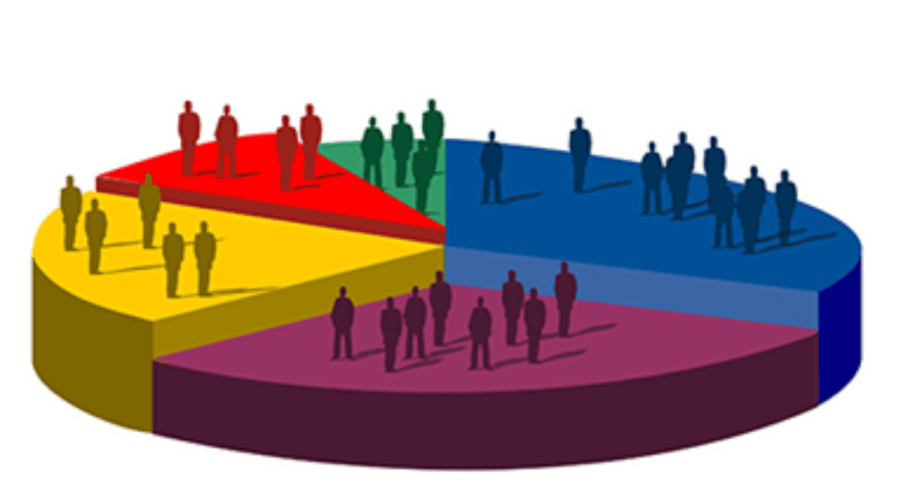
Demography is the study of human population dynamics. Population is shaped by a number of factors including fertility, mortality, migration and urbanization. Significant demographic changes have been shown in many parts of the world. The world population growth has been decelerating since 1970s. Fertility rates in more developed countries (MDCs) have been showing a declining trend, whereas an increasing one in the less developed countries (LDCs). Mortality rates have gone down in both MDCs and LDCs due to medical advancement. Consequently, the population of the countries with low fertility rates aged more quickly, and the world population growth will be concentrated in those developing countries where fertility rates remain high. Uneven population growth among nations accelerated the migration of people across nation borders and the growth of cities. The changes of these interrelated factors with their causes and problems of each of the factors will be discussed, followed by some possible plans and opportunities that may benefit from these changes.Human birth rate (natality) is the fertility expressed as the average number of live births per thousand populations per year. Since not all age groups in a population have equal fertility, demographers often use more specialized measures of birth rates that relate to age groups.Human mortality rate is the average number of individuals who die per thousand populations per year.

Again, demographers often use more sensitive measures, for different mortality rates. Both the very young and the very old segments of the population have higher mortality rates than are found in other age groups.Human population shows uneven or clumping pattern of distri­bution on earth. The density of human population in a village, district, city, province, country or any area can be obtained by di­viding the total number of persons living in the given region by the total land area of that region.The average number of people per square unit of land area tells us how dense or sparse is the popu­lation in a giver, area. The average population density of the world is calculated about 27 persons per square kilometre.insurance agents to determine life insurance rates.

These early demographic studies were mostly concerned with mortality. However, in the 19th century, studies showed that there was a decline in the number of births, and researchers began to study fertility as well as mortality. These studies led to the idea of “differential fertility.” Differential fertility suggests that different groups within a population have different numbers of children due to factors, such as religion, cultural attitudes, poverty, and employment. Migration of people is the last main factor in demographic studies. It is these three variables (mortality, fertility, and migration) that contribute to population change.Demographers gather data mainly through government censuses and government registries of births and deaths. However, these sources can be inaccurate depending on the precision of government records. Demographers also gather data indirectly through surveying smaller groups within a population. These samples are then examined using statistical models to draw conclusions about the whole population.


Demography is changing us as we are older societies, we’re living longer. How the generations balance each other out, how that affects education and health care.

Apiculture: Art of Bee rearing 🐝

Apiculture Or beekeeping refers to the rearing , caring, and management of honeybees to obtain honey ,wax ,pollen ,royal jelly etc. and other useful substance.

In apiculture, an area is selected for the commercial maintenance of bees in artificial beehives, and such areas are called apiaries. Nectar is collected by honey bees naturally from flowers and stored in their hives. Beehives are a source of wax, which is used in a variety of medicinal preparations in addition to honey.

Types of honeybee in hive include queen bee, drone and worker bee. Queen bee is the mother of colony . She lays eggs out of which drone emerge from unfertilized egg and worker bee and queen bee emerge from fertilized egg. Drones are young male to fertilize young queen. Worker bee are female but are sterile, they are involved in indoor activities, scavenger and nurse bees.

The various species used for honeybee rearing are as follows:1.Apis cerana indica (Indian bee) 2. Apis dorsata (Rock bee) 3. Apis florea (Little bee) 4. Apis mellifera ( Italian bee).

Among there Apis mellifera is mostly used because of gentle nature, good honey collection capacity, prolific queen etc.

The establishment of apiary depends on :Location of apiary, surrounding flora and nectar collecting flower, varities of honey bee used in rearing.

Importance :

Honey is found to be quite useful in the treatment of various disorders of humans related to digestion, dysentery, vomiting and stomach or liver ailments.

Honey is considered as a blood purifier, a cure against cough and cold, sore throat, ulcers of the tongue, stomach and intestine.

Bee wax is used in cosmetics, creams and ointments.

Royal jelly is taken as an invigorating tonic.

Propolis is a health supplement with antibiotic properties.

Bee venom is employed as a cure for rheumatism, arthritis and certain central nervous system diseases.

Pollination depends on honeybees leading to an increase in the yield .

Overall bee rearing helps in maintaining the ecological balance .

Disaster management

Disaster is a very common phenomenon to the human society. It has been experienced by them since time immemorial. Though its form may be varied, it has been a challenge for society across castes, creeds, communities and countries. The latest development which has been discovered in the World Disaster Reports recently is that the disasters have increased in frequency and intensity.People are becoming more and more vulnerable to disasters of all types, including earthquake, flood, cyclones, landslides, droughts, accidents, plane crash, forests fire, etc. With the technological advancements and progress, the force of disasters is also changing. When they occur they surpass all preparedness and eagerness of society and pose bigger challenge to them. This is quite true in case of both developed and developing countries. The floods in UK, France, and heat wave in Europe, particularly in France in 2003, claimed more than 35000 lives. In the year 2006, America had to face bigger disaster in the form of tornadoes and other cyclones. They caused great loss of lives and property. All these are sufficient to prove that technological mechanisms are inadequate.There is a direct correlation between higher human development and higher preparedness. The countries which have lesser human development are more vulnerable to risks of disasters and damage. Of all the disasters, floods are the most common followed by wind storms, droughts and earthquakes. But the drought is the deadliest disaster which accounts for 48 per cent of all deaths from natural disasters. The highest numbers of people die from disasters in Asia. India, China and Bangladesh are the worst affected countries by flood. Besides the natural disasters, transport accidents and technological disasters are also faced by the developing countries.

The UNDA with Government of India has jointly prepared an action plan for cities and towns vulnerable to earthquakes. The need in the vulnerable zones is that the existing buildings be technically assessed and evaluated and individual owners and group housing authorities should be informed about the weaknesses in their construction. Presently, in India, it is estimated that around 10 lakhs buildings which are constructed every year, an equal number of them get damaged as a result of disasters. It is required that a monitoring mechanism should be set up in disaster prone areas and it must act in proper coordination with the concerned to ensure fulfillment of building codes.
Disaster is a state subject in India; it is, therefore, the responsibility of the state to provide every kind of support and assistance to the victim. The Central Government has a facilitating role. It, with proper coordination with various ministries, extends all required support and helps to the states, namely defence services, air dropping, rescuing, searching, transport of relief goods, availability of rail and ferry services, health personnel and medical support, etc. In the State, the Relief Commissioner or Disaster Management Secretary is the specific authority responsible for handling and management of the disaster.

Rehabilitation is an integral part of disaster management. When disasters occur administrative measures are terribly inadequate and perhaps this is the most difficult period for a victim. The role of administration does not end with end of disasters. In fact its effort and commitment get more complex. It requires proper coordination among various agencies. In this context it is very important to note that disasters are non-routine events that require non-routine response. Government cannot rely on normal procedures to implement appropriate responses- the rescue teams require learning special skills, technologies and attitudes in dealing with disasters.


SUCCESSFUL EMERGENCY MANAGEMENT RELIES UPON EXPERIENCE AND EXPERTISE.

Disaster management

Disaster is a very common phenomenon to the human society. It has been experienced by them since time immemorial. Though its form may be varied, it has been a challenge for society across castes, creeds, communities and countries. The latest development which has been discovered in the World Disaster Reports recently is that the disasters have increased in frequency and intensity.People are becoming more and more vulnerable to disasters of all types, including earthquake, flood, cyclones, landslides, droughts, accidents, plane crash, forests fire, etc. With the technological advancements and progress, the force of disasters is also changing. When they occur they surpass all preparedness and eagerness of society and pose bigger challenge to them. This is quite true in case of both developed and developing countries. The floods in UK, France, and heat wave in Europe, particularly in France in 2003, claimed more than 35000 lives. In the year 2006, America had to face bigger disaster in the form of tornadoes and other cyclones. They caused great loss of lives and property. All these are sufficient to prove that technological mechanisms are inadequate.There is a direct correlation between higher human development and higher preparedness. The countries which have lesser human development are more vulnerable to risks of disasters and damage. Of all the disasters, floods are the most common followed by wind storms, droughts and earthquakes. But the drought is the deadliest disaster which accounts for 48 per cent of all deaths from natural disasters. The highest numbers of people die from disasters in Asia. India, China and Bangladesh are the worst affected countries by flood. Besides the natural disasters, transport accidents and technological disasters are also faced by the developing countries.

The UNDA with Government of India has jointly prepared an action plan for cities and towns vulnerable to earthquakes. The need in the vulnerable zones is that the existing buildings be technically assessed and evaluated and individual owners and group housing authorities should be informed about the weaknesses in their construction. Presently, in India, it is estimated that around 10 lakhs buildings which are constructed every year, an equal number of them get damaged as a result of disasters. It is required that a monitoring mechanism should be set up in disaster prone areas and it must act in proper coordination with the concerned to ensure fulfillment of building codes.
Disaster is a state subject in India; it is, therefore, the responsibility of the state to provide every kind of support and assistance to the victim. The Central Government has a facilitating role. It, with proper coordination with various ministries, extends all required support and helps to the states, namely defence services, air dropping, rescuing, searching, transport of relief goods, availability of rail and ferry services, health personnel and medical support, etc. In the State, the Relief Commissioner or Disaster Management Secretary is the specific authority responsible for handling and management of the disaster.

Rehabilitation is an integral part of disaster management. When disasters occur administrative measures are terribly inadequate and perhaps this is the most difficult period for a victim. The role of administration does not end with end of disasters. In fact its effort and commitment get more complex. It requires proper coordination among various agencies. In this context it is very important to note that disasters are non-routine events that require non-routine response. Government cannot rely on normal procedures to implement appropriate responses- the rescue teams require learning special skills, technologies and attitudes in dealing with disasters.


SUCCESSFUL EMERGENCY MANAGEMENT RELIES UPON EXPERIENCE AND EXPERTISE.

What is Tsunami

 The Earth’s lithosphere is broken up into a bunch of discrete pieces, called plates that move around the surface of the planet. There are seven or eight major plates (depending on how they are defined) and many minor plates.  This motion is driven by the flow of the mantle rock beneath the plates and by the forces plates exert at their boundaries where they touch each other.  Earthquakes happen when plates move with respect to each other because of the friction and stress at the edges of plates prevents them from slipping smoothly at their boundaries. When one plate is forced to dive beneath another plate, there is no way to do it except with some component of vertical motion creating tsunami (please see figure) . 

The tsunami that occurred during 2004 Sumatra-Andaman earthquake of Mw 9.3 was primarily caused by vertical displacement of the seafloor, in response to slip on the inter-plate thrust fault.  The earthquake and resulting tsunami in the Indian Ocean affected many countries in Southeast Asia and beyond, including Indonesia, Sri Lanka, India, Thailand, the Maldives, Somalia, Myanmar, Malaysia, Seychelles and others. Many other countries, especially Australia and those in Europe incurred casualties due to the tsunami, because they had large numbers of citizens traveling in the region on holiday. This tsunami-genic earthquake was one of the ten worst earthquakes in recorded history, as well as the single worst tsunami in history. Indonesia was the worst affected country. Beyond the heavy toll on human lives, the Indian Ocean earthquake has caused an enormous environmental impact that will affect the region for many years to come. The disaster also caused a substantial geo-physical impact in Indian Ocean. The disaster invited attention of affected countries for setting up effective tsunami early warning system and institutional mechanism for handling disasters.

The Government of India has put in place an Early Warning System for mitigation of such oceanogenic disasters under the control of Indian National Center for Ocean Information Services (INCOIS), Hyderabad. A state-of-the-art early warning centre was established with the necessary computational and communication infrastructure that enables reception of real-time data from  sensors, analysis of the data, generation and dissemination of tsunami advisories following a standard operating procedure. Seismic and sea-level data are continuously monitored in the Early Warning Centre using custom-built software application that generates alarms/alerts in the warning centre whenever a pre-set threshold is crossed. Tsunami warnings/watches are then generated based on pre-set decision support rules and disseminated to the concerned authorities for action, as per pre-decided standard operating procedure. The efficiency of this end-to-end system was proved during the large under-sea earthquake of 8.4 M that occurred on September 12, 2007 in the Indian Ocean.

The 2004 tsunami also prompted NDMA to formulate Tsunami Risk Management Guidelines to outline inter-agency roles and responsibilities, tsunami risk preparedness, mitigation and response.  

The Guidelines recommends practical and effective ways for awareness generation, capacity building, education, training and research & development for better tsunami risk management.  The Guidelines explore options for effective dissemination of tsunami alert and warning messages generated by INCOIS to the concerned agencies and coastal vulnerable communities exposed to tsunamis in a coordinated manner.

Structural Mitigation measures, as envisaged in the Guidelines, gives a brief guidance on design and construction of new structures as well as strategies for protecting lifeline and priority structures from Tsunamis along the seafront. The Guidelines urge BIS to roll out the pending construction standards entitled ‘Criteria for Tsunami-Resistant Design of Structures’. It further recommends a robust techno-legal regime through efficient land use practices, bioshields, shelter belt plantation and mangrove regeneration with community involvement. A strong mechanism has been recommended for effective emergency response by involving local police network, civil defence volunteers wherever available, home guards, State Disaster Response Forces and National Disaster Response Force. Further, the Guidelines explore the  provisions of Disaster Management Act 2005 to mainstream concern of Tsunami risk management in disaster management plans of various levels. 

zone map

Recover and build

  • You should continue using a Weather Radio or staying tuned to a Coast Guard emergency frequency station or a local radio or television station for updated emergency information.
  • Check yourself for injuries and get first aid if necessary before helping injured or trapped persons.
  • If someone needs to be rescued, call professionals with the right equipment to help Many people have been killed or injured trying to rescue others in flooded areas.
  • Help people who require special assistance—Infants, elderly people, those without transportation, large families who may need additional help in an emergency situation, people with disabilities, and the people who care for them.
  • Avoid disaster areas. Your presence might hamper rescue and other emergency operations and put you at further risk from the residual effects of floods, such as contaminated water, crumbled roads, landslides, mudflows, and other hazards.
  • Use the telephone only for emergency calls.Telephone lines are frequently overwhelmed in disaster situations. They need to be clear for emergency calls to get through.
  • Stay out of a building if water remains around it. Tsunami water, like floodwater, can undermine foundations, causing buildings to sink, floors to crack, or walls to collapse.
  • When re-entering buildings or homes, use extreme caution. Tsunami-driven floodwater may have damaged buildings where you least expect it. Carefully watch every step you take.
  • Wear long pants, a long-sleeved shirt, and sturdy shoes. The most common injury following a disaster is cut feet.
  • Use battery-powered lanterns or flashlights when examining buildings. Battery-powered lighting is the safest and easiest to use, and it does not present a fire hazard for the user, occupants, or building. DO NOT USE CANDLES.
  • Examine walls, floors, doors, staircases, and windows to make sure that the building is not in danger of collapsing.
  • Inspect foundations for cracks or other damage. Cracks and damage to a foundation can render a building uninhabitable.
  • Look for fire hazards. Under the earthquake action there may be broken or leaking gas lines, and under the tsunami flooded electrical circuits, or submerged furnaces or electrical appliances. Flammable or explosive materials may have come from upstream. Fire is the most frequent hazard following floods.
  • Check for gas leaks. If you smell gas or hear a blowing or hissing noise, open a window and get everyone outside quickly. Turn off the gas using the outside main valve if you can, and call the gas company from a neighbour’s home. If you turn off the gas for any reason, it must be turned back on by a professional.
  • Look for electrical system damage. If you see sparks or broken or frayed wires, or if you smell burning insulation, turn off the electricity at the main fuse box or circuit breaker. If you have to step in water to get to the fuse box or circuit breaker, call an electrician first for advice. Electrical equipment should be checked and dried before being returned to service
  • Check for damage to sewage and water lines.If you suspect sewage lines are damaged under the quake, avoid using the toilets and call a plumber. If water pipes are damaged, contact the water company and avoid using water from the tap. You can obtain safe water from undamaged water heaters or by melting ice cubes that were made before the tsunami hit. Turn off the main water valve before draining water from these sources. Use tap water only if local health officials advise it is safe.
  • Watch out for wild animals, especially poisonous snakes that may have come into buildings with the water. Use a stick to poke through debris. Tsunami floodwater flushes snakes and animals out of their homes.
  • Watch for loose plaster, drywall, and ceilings that could fall.
  • Take pictures of the damage, both of the building and its contents, for insurance claims. Open the windows and doors to help dry the building.
  • Shovel mud before it solidifies.
  • Check food supplies.Any food that has come in contact with floodwater may be contaminated and should be thrown out.
  • Expect aftershocks. If the earthquake is of large magnitude (magnitude 8 to 9+ on the Richter scale) and located nearby, some aftershocks could be as large as magnitude 7+ and capable of generating another tsunami. The number of aftershocks will decrease over the course of several days, weeks, or months depending on how large the main shock was.
  • Watch your animals closely.
  • Keep all your animals under your direct control.

What is Cyclone

Cyclones are caused by atmospheric disturbances around a low-pressure area distinguished by swift and often destructive air circulation. Cyclones are usually accompanied by violent storms and bad weather. The air circulates inward in an anticlockwise direction in the Northern hemisphere and clockwise in the Southern hemisphere. Cyclones are classified as: (i) extra tropical cyclones (also called temperate cyclones); and (ii) tropical cyclones. The word Cyclone is derived from the Greek word Cyclos meaning the coils of a snake. It was coined by Henry Peddington because the tropical storms in the Bay of Bengal and the Arabian Sea appear like coiled serpents of the sea.

Classifications

Cyclones are classified as extra tropical cyclones (also called temperate cyclones); and tropical cyclones.

The World Meteorological Organisation (WMO, 1976) uses the term ‘Tropical Cyclone’ to cover weather systems in which winds exceed ‘Gale Force’ (minimum of 34 knots or 63 kph). Tropical cyclones are the progeny of ocean and atmosphere, powered by the heat from the sea; and driven by easterly trades and temperate westerlies, high planetary winds and their own fierce energy.

In India, cyclones are classified by:

  • Strength of associated winds,
  • Storm surges
  • Exceptional rainfall occurrences.

Extra tropical cyclones occur in temperate zones and high latitude regions, though they are known to originate in the Polar Regions.

Cyclones that developin the regions between the Tropics of Capricorn and Cancer are called tropical cyclones. Tropical cyclones are large-scale weather systems developing over tropical or subtropical waters, where they get organized into surface wind circulation.

Worldwide terminology

Cyclones are given many names in different regions of the world – They are known as typhoons in the China Sea and Pacific Ocean; hurricanes in the West Indian islands in the Caribbean Sea and Atlantic Ocean; tornados in the Guinea lands of West Africa and southern USA.; willy-willies in north-western Australia and tropical cyclones in the Indian Ocean. 

Indian Meteorological Department

The criteria below has been formulated by the Indian Meteorological Department (IMD), which classifies the low pressure systems in the Bay of Bengal and the Arabian Sea on the basis of capacity to damage, which is adopted by the WMO.

Type of Disturbances Wind Speed in Km/h Wind Speed in Knots
Low Pressure Less than 31 Less than 17
Depression 31-49 17-27
Deep Depression 49-61 27-33
Cyclonic Storm 61-88 33-47
Severe Cyclonic Storm 88-117 47-63
Super Cyclone More than 221 More than 120

1 knot – 1.85 km per hour
Cyclones are classified into five different levels on the basis of wind speed. They are further divided into the following categories according to their capacity to cause damage:-

Cyclone Category Wind Speed in Km/h Damage Capacity
01 120-150 Minimal
02 150-180 Moderate
03 180-210 Extensive
04 210-250 Extreme
05 250 and above Catastrophic

Storm surges (tidal waves) are defined as the rise in sea level above the normally predicted astronomical tide. Major factors include:

  • A fall in the atmospheric pressure over the sea surface
  • Effect of the wind
  • Influence of the sea bed
  • A funnelling effect
  • The angle and speed at which the storm approaches the coast
  • The tides

The very high specific humidity condenses into exceptionally large raindrops and giant cumulus clouds, resulting in high precipitation rates. When a cyclone makes landfall, rain rapidly saturates the catchment areas and the rapid runoff may extensively flood the usual water sources or create new ones.


How Cyclones are formed

The development cycle of tropical cyclones may be divided into three stages:

Formation and Initial Development Stage
The formation and initial development of a cyclonic storm depends upon various conditions. These are:

  • A warm sea (a temperature in excess of 26 degrees Celsius to a depth of 60 m) with abundant and turbulent transfer of water vapour to the overlying atmosphere by evaporation.
  • Atmospheric instability encouraging formation of massive vertical cumulus clouds due to convection with condensation of rising air above ocean surface.

Mature Tropical Cyclones
When a tropical storm intensifies, the air rises in vigorous thunderstorms and tends to spread out horizontally at the tropopause level. Once air spreads out, a positive perturbation pressure at high levels is produced, which accelerates the downward motion of air due to convection. With the inducement of subsidence, air warms up by compression and a warm ‘Eye’ is generated. Generally, the ‘Eye’ of the storms has three basic shapes: (i) circular; (ii) concentric; and (iii) elliptical. The main physical feature of a mature tropical cyclone in the Indian Ocean is a concentric pattern of highly turbulent giant cumulus thundercloud bands.

Modification and Decay
A tropical cyclone begins to weaken in terms of its central low pressure, internal warmth and extremely high speeds, as soon as its source of warm moist air begins to ebb, or is abruptly cut off. This happens after its landfall or when it passes over cold waters. The weakening of a cyclone does not mean that the danger to life and property is over.

Indian Context

The Indian subcontinent is one of the worst affected regions in the world. The subcontinent with a long coastline of 8041 kilometres is exposed to nearly 10 per cent of the world’s tropical cyclones. Of these, the majority of them have their initial genesis over the Bay of Bengal and strike the East coast of India. On an average, five to six tropical cyclones form every year, of which two or three could be severe. More cyclones occur in the Bay of Bengal than the Arabian Sea and the ratio is approximately 4:1. Cyclones occur frequently on both the coasts (the West coast – Arabian Sea; and the East coast – Bay of Bengal). An analysis of the frequency of cyclones on the East and West coasts of India between 1891 and 1990 shows that nearly 262 cyclones occurred (92 of these severe) in a 50 km wide strip above the East coast. Less severe cyclonic activity has been noticed on the West coast, where 33 cyclones occurred the same period, out of which 19 of were severe.

Tropical cyclones occur in the months of May-June and October-November. Cyclones of severe intensity and frequency in the North Indian Ocean are bi-modal in character, with their primary peak in November and secondary peak in May. The disaster potential is particularly high during landfall in the North Indian Ocean (Bay of Bengal and the Arabian Sea) due to the accompanying destructive wind, storm surges and torrential rainfall. Of these, storm surges cause the most damage as sea water inundates low lying areas of coastal regions and causes heavy floods, erodes beaches and embankments, destroys vegetation and reduces soil fertility.

Cyclones vary in diameter from 50 to 320 km but their effects dominate thousands of square kilometers of ocean surface and the lower atmosphere. The perimeter may measure 1,000 km but the powerhouse is located within the 100-km radius. Nearer the Eye, winds may hit at a speed of 320 km. Thus, tropical cyclones, characterized by destructive winds, torrential rainfall and storm surges disrupt normal life with the  accompanying phenomena of floods due to the exceptional level of rainfall and storm surge inundation into inland areas. Cyclones are characterized by their devastating potential to damage structures, viz. houses; lifeline infrastructure-power and communication towers; hospitals; food storage facilities; roads, bridges and culverts; cropss etc. The most fatalities come from storm surges and the torrential rain flooding the lowland areas of coastal territories.

zone


Recover and build

After ‘All Clear’ is issued for back movement by ‘State’ give attention to the following:

  • Whether ‘roads’ for reaching home is recommended by authorities
  • Whether power lines are safe
  • Whether transport arrangement is approved by authorities
  • Pure drinking water is available
  • Sewage lines are working
  • Any epidemic spread in the area
  • Safety of neighbor(s) assured

Emergency Kit

  • Battery operated torch
  • Extra batteries
  • Battery operated radio
  • First aid kit and essential medicines
  • Important papers (Ration card, Voter ID card, Aadhar card etc)
  • Emergency food (dry items) and water (packed and sealed)
  • Candles and matches in a waterproof container
  • Knife
  • Chlorine tablets or powdered water purifiers
  • Cash, Aadhar Card and Ration Card
  • Thick ropes and cords
  • Shoes

What is Visual Design

Visual design is a creative concept that aims to communicate to the visitor what is needed for the business. At its core, it’s an environment that focuses attention on. Visual design with the help of results and applications used performs the function of informing. The task of a visual designer is to show the organization of the process and lead the client to purchase a specific product or service. Visual designers focus on the look and feel of the product and brand, showing their best sides.

Web studio Laroche www.laroche.co reports that design is a complex art that can motivate the client to action. A competent designer not only uses theoretical knowledge, tries to introduce new “chips” and apply special techniques. With the help of a combination, you can really create an extraordinary, memorable site.

Basic principles of visual design

Visual design concepts will help to implement the set goals and lead the site visitor to the final result. To accomplish this task, you should be guided by certain principles of site design.

  • Lines. The simplest connection of two points, which is used to create a form and its derived components. All lines have length, width and directions. They create a motion effect. Emphasize the right data.
  • Blocks. Certain areas that carry functionality and perform the assigned task. To outline the areas, lines are used, different colors are used. The blocks have a task – to hold the visitor’s gaze.
  • Color. Selected for specific tasks. The purpose of the chosen color is to divide objects, focus attention, organize the presentation of information. Shades and halftones are used in order to psychologically affect visitors. The game of shades can both distract and retain the visitor.
  • Texture. An element that visually shows how the surface is represented. It creates and forms models. They are used to attract or distract attention, lead the visitor to the ultimate goal. Textured visualization will be able to create the effect of realism.
  • Printing house. You should know that the use of fonts is important. Something needs to be highlighted, something is lowered down, into the “footer” of the site. Depending on which font was chosen, the functional value of the information is determined. The correct font decorates the site, contributes to the visual representation of the site.
  • Form. This includes three-dimensional objects that are depicted in a realistic style. A form is created by combining multiple objects. It can be expanded or differentiated using tones, textures, or colors. With the help of the form, it is possible to “play” with the attention of visitors.
  • Space. With the help of an area that focuses attention or looks away, you can visually convey information. Space is used to convey the necessary to the client or distract him. Performs an important role in the design of the site and the demonstration of objects for site guests.
  • Visual concept. In fact, this is the most important thing in design. The main thing for a designer is to keep in mind the goal for which the site is made. A strong concept will necessarily fulfill the task and help to convey information to the consumer. Competently thought-out design will fulfill all the tasks and lead to their implementation. All actions should lead to a positive result.

These are the basic principles of visual design. In addition to the main ones, there are several others. This includes scale, dominance and similarities. Applying the basic formulas, it will be easy for the designer to perform the task, to convey the necessary information to the visitor.

What is Visual Design

Visual design is a creative concept that aims to communicate to the visitor what is needed for the business. At its core, it’s an environment that focuses attention on. Visual design with the help of results and applications used performs the function of informing. The task of a visual designer is to show the organization of the process and lead the client to purchase a specific product or service. Visual designers focus on the look and feel of the product and brand, showing their best sides.

Web studio Laroche www.laroche.co reports that design is a complex art that can motivate the client to action. A competent designer not only uses theoretical knowledge, tries to introduce new “chips” and apply special techniques. With the help of a combination, you can really create an extraordinary, memorable site.

Basic principles of visual design

Visual design concepts will help to implement the set goals and lead the site visitor to the final result. To accomplish this task, you should be guided by certain principles of site design.

  • Lines. The simplest connection of two points, which is used to create a form and its derived components. All lines have length, width and directions. They create a motion effect. Emphasize the right data.
  • Blocks. Certain areas that carry functionality and perform the assigned task. To outline the areas, lines are used, different colors are used. The blocks have a task – to hold the visitor’s gaze.
  • Color. Selected for specific tasks. The purpose of the chosen color is to divide objects, focus attention, organize the presentation of information. Shades and halftones are used in order to psychologically affect visitors. The game of shades can both distract and retain the visitor.
  • Texture. An element that visually shows how the surface is represented. It creates and forms models. They are used to attract or distract attention, lead the visitor to the ultimate goal. Textured visualization will be able to create the effect of realism.
  • Printing house. You should know that the use of fonts is important. Something needs to be highlighted, something is lowered down, into the “footer” of the site. Depending on which font was chosen, the functional value of the information is determined. The correct font decorates the site, contributes to the visual representation of the site.
  • Form. This includes three-dimensional objects that are depicted in a realistic style. A form is created by combining multiple objects. It can be expanded or differentiated using tones, textures, or colors. With the help of the form, it is possible to “play” with the attention of visitors.
  • Space. With the help of an area that focuses attention or looks away, you can visually convey information. Space is used to convey the necessary to the client or distract him. Performs an important role in the design of the site and the demonstration of objects for site guests.
  • Visual concept. In fact, this is the most important thing in design. The main thing for a designer is to keep in mind the goal for which the site is made. A strong concept will necessarily fulfill the task and help to convey information to the consumer. Competently thought-out design will fulfill all the tasks and lead to their implementation. All actions should lead to a positive result.

These are the basic principles of visual design. In addition to the main ones, there are several others. This includes scale, dominance and similarities. Applying the basic formulas, it will be easy for the designer to perform the task, to convey the necessary information to the visitor.

Upcoming Car In August 2022: Which 5 luxurious cars

After a few months, the festive season is about to come, in view of which the vehicle manufacturing companies are making various strategies. Many vehicles have been launched in July this month, while 5 cars are going to be launched in August 2022 as well. Let’s know the list of upcoming cars

  1. New Hyundai Tucson – Launch on August 4
    The price of Hyundai Tusson is going to be revealed on August 4. The Hyundai Tucson has been kept longer and wider and the wheelbase has been increased by 3.4 inches. Apart from this, the Hyundai logo and four-spoke steering wheel will be seen on the rear windshield. In terms of lighting, the Tucson will get a large front grille with integrated LED DRLs. The SUV will be equipped with LED lighting at the front and rear.
  2. Toyota Hyryder – Launch on August 16
    Toyota Highrider will be launched in the Indian market on 16th August. The highlight of the Hyryder is its mild-hybrid petrol engine, a first of its kind in its segment. It is also the first model in the segment to get all-wheel-drive in the mild-hybrid variant. The High Rider is powered by a 1.5-litre engine. This engine gives an output of 68 kW and is capable of generating 122Nm of pickup torque.
  3. Five Mahindra Electric SUVs – Unveil on August 15
    Mahindra is building the Bourne Electric Platform, which aims to make Mahindra’s electric cars. The company is set to introduce its 5 new electric cars on August 15.
  4. New Maruti Alto – Launch on August 18
    This third generation Alto will be the first fully redesigned model in itself. Based on the spy images found earlier, the upcoming Alto can share the styling from the new Celerio that was launched last year. This could include bigger sweptback headlamps, reprofiled front and rear bumpers, new fog lamp housings and updated taillights. The new Alto can be launched on August 18.
  5. Mercedes AMG EQS 53 4Matic+ – Launch on August 24
    Luxury vehicle maker Mercedes is all set to launch the Mercedes AMG EQS 53 4Matic+ on 24th August next month.

Upcoming Car In August 2022: Which 5 luxurious cars

After a few months, the festive season is about to come, in view of which the vehicle manufacturing companies are making various strategies. Many vehicles have been launched in July this month, while 5 cars are going to be launched in August 2022 as well. Let’s know the list of upcoming cars

  1. New Hyundai Tucson – Launch on August 4
    The price of Hyundai Tusson is going to be revealed on August 4. The Hyundai Tucson has been kept longer and wider and the wheelbase has been increased by 3.4 inches. Apart from this, the Hyundai logo and four-spoke steering wheel will be seen on the rear windshield. In terms of lighting, the Tucson will get a large front grille with integrated LED DRLs. The SUV will be equipped with LED lighting at the front and rear.
  2. Toyota Hyryder – Launch on August 16
    Toyota Highrider will be launched in the Indian market on 16th August. The highlight of the Hyryder is its mild-hybrid petrol engine, a first of its kind in its segment. It is also the first model in the segment to get all-wheel-drive in the mild-hybrid variant. The High Rider is powered by a 1.5-litre engine. This engine gives an output of 68 kW and is capable of generating 122Nm of pickup torque.
  3. Five Mahindra Electric SUVs – Unveil on August 15
    Mahindra is building the Bourne Electric Platform, which aims to make Mahindra’s electric cars. The company is set to introduce its 5 new electric cars on August 15.
  4. New Maruti Alto – Launch on August 18
    This third generation Alto will be the first fully redesigned model in itself. Based on the spy images found earlier, the upcoming Alto can share the styling from the new Celerio that was launched last year. This could include bigger sweptback headlamps, reprofiled front and rear bumpers, new fog lamp housings and updated taillights. The new Alto can be launched on August 18.
  5. Mercedes AMG EQS 53 4Matic+ – Launch on August 24
    Luxury vehicle maker Mercedes is all set to launch the Mercedes AMG EQS 53 4Matic+ on 24th August next month.