MAJOR CROPS OF INDIA

India has a great history of agrarian culture. Agriculture is the soul of rural India. It is an ancient form of economic activity in our country. It also contributes a significant figure to the Gross Domestic Product (GDP).
Major Crops
A variety of food and non-food crops are grown in different parts of our country.
Few crops are: Rice
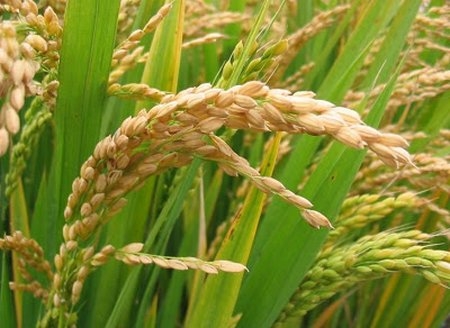
It is grown in the plains of north and in the parts of north-eastern India; it is also cultivated in coastal and deltaic regions. India is the second largest producer in the world after China. Areas of less rainfall, such as Punjab, Haryana and Western Uttar Pradesh and parts of Rajasthan have been made appropriate for cultivation of rice with the development of canal and irrigation tubewells.

Maize
It is a kharif crop which in both used as food and fodder. Karnataka, Uttar-Pradesh, Bihar, Andhra Pradesh and Madhya Pradesh are the major maize-producing states of India. Production of maize have increased with the use of modern inputs such as HYV seeds, fertilizers and irrigation.

Millets
The coarse grains, such as, jowar, bagra and ragi are major millets produced in India. Maharashtra is the largest producer of jowar. Other than this, Karnataka, Andhra Pradesh and Madhya Pradesh are other leading producer of jowar.
Bajra is grown in Rajasthan, which is the largest producer of bajra, followed by Uttar Pradesh, Maharashtra, Gujarat and Haryana.

Ragi
Ragi is grown in dry regions and Karnataka is its largest producer followed by Tamil Nadu, Himachal Pradesh, Uttarakhand, Sikkim, Jharkhand and Arunachal Pradesh.

Wheat
It is the second most important cereal crop after rice and the two important wheat-growing zones of India are the Ganga- satluj plains in north-west and black soil region of the Deccan. Punjab, Haryana, Uttar Pradesh, Bihar, Rajasthan and Madhya Pradesh are the leading producers of wheat.

Pulses
India is the largest producer and consumer of pulses in the world. Major pulses grown are tur, Urad, moong, masur, peas and gram. The leading states producing pulses are Madhya Pradesh, Uttar Pradesh, Rajasthan, Maharashtra and Karnataka.

Sugarcane
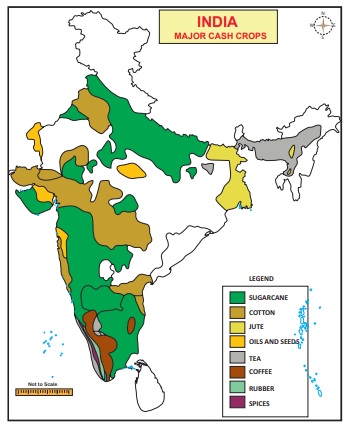
India is the second largest producer of sugarcane after Brazil. Sugarcane is the main source of sugar, gur, khandsari and molasses. Uttar Pradesh, Maharashtra, Karnataka, Tamil Nadu, Andhra Pradesh, Bihar, Punjab and Haryana are the sugarcane producing States of India.

Oil Seeds
Main oil-seeds of India includes mustard, groundnut, coconut, Sesamum (til), soyabean, caster seeds, cotton seeds, linseed and sunflower, in which some are edible and used in cooking. Also, some are used a raw material for the production of soap, cosmetics and ointments.
Groundnut is the major oil seed produced in Andhra Pradesh, Tamil Nadu, Karnataka, Gujarat and Maharashtra. Sesamum is a kharif crop in north and caster seed is grown both as rabi and kharif crop.

Tea
Tea was introduced by British in our country, which grows well in tropical and sub-tropical climates endowed with deep and fertile well-drained soil.
Tea is processed in a tea garden to maintain its freshness and requires huge labour for its cultivation. The hills of Darjeeling and Jalpaiguri, Assam, West Bengal, Tamil Nadu and Kerala are the largest producers of tea in India. Some other tea producing states are Himachal Pradesh, Uttaranchal, Meghalaya, Andhra Pradesh and Tripura.

Coffee
The varieties of India coffee has a demand all over the world mostly for its good quality. The Arabica variety, which is brought from Yemen, is produced in India which was initially introduced on the Baba Budan Hills and now-a-days, it is confined to Nilgiri in Karnataka.

Horticulture crops
India is very famous for its fruits and vegetables around the would and is the largest producer as well.
The fruits like Mangoes, which is mostly produced in Maharashtra, Andhra Pradesh, Uttar Pradesh and West Bengal, Oranges which are produced in Nagpur and Cherrapunjee, Bananas of Kerala, Mizoram, Maharastra and Tamil Nadu, Lichi and guava which is grown in Uttar Pradesh and Bihar are demanded all over the world. The other fruits of great demand are Pineapples of Meghalaya, grapes of Andhra Pradesh, Maharastra; Aplles, pears, Apricots and Walnuts of Jammu and Kashmir and Himachal Pradesh.
IRRIGATION & ITS TYPES

What is Irrigation?
Irrigation is the process of applying water to the crops artificially to fulfil their water requirements. Nutrients may also be provided to the crops through irrigation. The various sources of water for irrigation are wells, ponds, lakes, canals, tube-wells and even dams. Irrigation offers moisture required for growth and development, germination and other related functions.
The frequency, rate, amount and time of irrigation are different for different crops and also vary according to the types of soil and seasons. The types of irrigation systems are practised based on the different types of soils, climates, crops and resources.

Methods of Irrigation:
Irrigation can be carried out by two different methods:
• Traditional Methods
• Modern Methods
Traditional Methods of Irrigation
In this method, irrigation is done manually. Here, a farmer pulls out water from wells or canals by himself or using cattle and carries to farming fields. This method can vary in different regions.
The main advantage of this method is that it is cheap. But its efficiency is poor because of the uneven distribution of water. Also, the chances of water loss are very high.
Some examples of the traditional system are pulley system, lever system, chain pump. Among these, the pump system is the most common and used widely.

Modern Methods of Irrigation
The modern method compensates the disadvantages of traditional methods and thus helps in the proper way of water usage.
The modern method involves two systems:
• Sprinkler system
• Drip system

SPRINKLER SYSTEM:
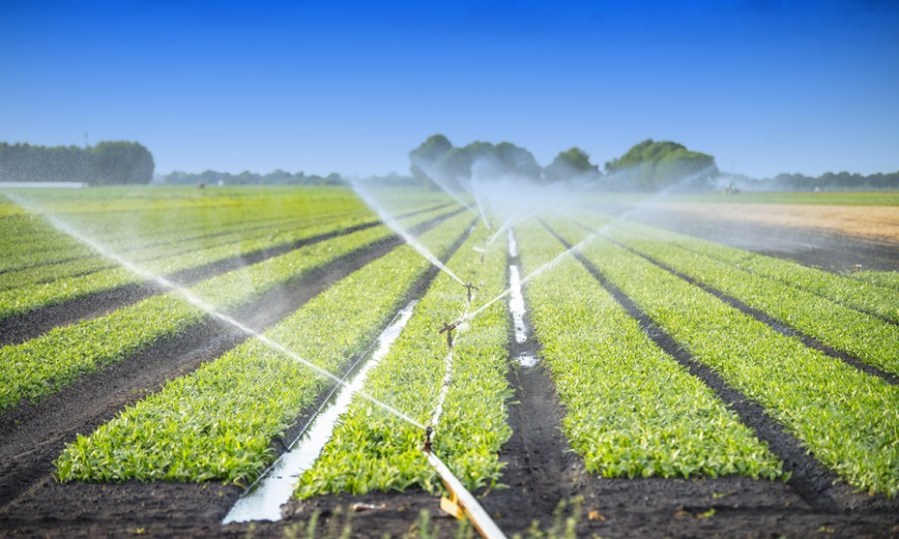
A sprinkler system, as its name suggests, sprinkles water over the crop and helps in an even distribution of water. This method is much advisable in areas facing water scarcity.
Here a pump is connected to pipes which generate pressure and water is sprinkled through nozzles of pipes.

DRIP SYSTEM:
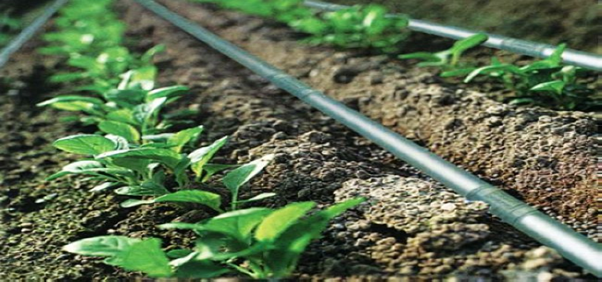
In the drip system, water supply is done drop by drop exactly at roots using a hose or pipe. This method can also be used in regions where water availability is less.

FEW OTHER TYPES OF IRRIGATION ARE:
Localized Irrigation
Water is scattered throughout the land under low pressure. A piped network, that passes throughout the soil, is used for water distribution so that all the plant gets water effectively.
Center Pivot Irrigation
Water is scattered throughout the land by a machine of sprinklers that move on wheeled towers in 360 degrees pattern or a circle that would move around the land and sprinkle water all over the soil and it is really efficient and effective and this procedure or system is well recommended in a lot of countries but mostly used in the USA.
Surface Irrigation
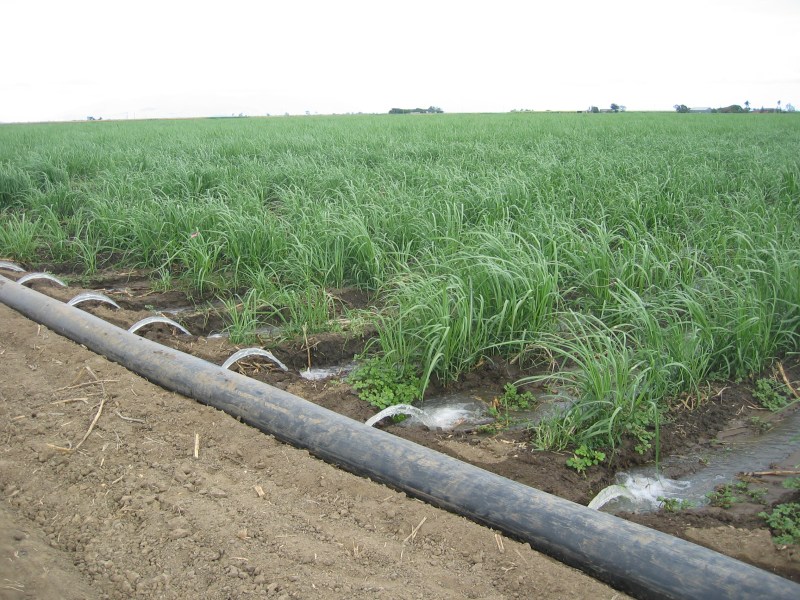
Water is scattered equally throughout the land with the help of gravitational pull and it doesn’t require a machine to take care of it. This consists of a vast amount of irrigation methods in which water is scattered, the things you need to have before you introduce the irrigation water to the basins are by siphons, gated pipe. This system is best suited for areas that have a parallel slope or flat surface and a moderate fine-textured soil type. This helps the surface to have water spread through it evenly as it moves down across the basin.

There are three types of surface irrigation:
• Basin irrigation
• Furrow irrigation
• Flood irrigation
• Bay/border strip irrigation

Lateral Move Irrigation
Water is scattered throughout the land evenly through a series of pipes or water lines, they can either be controlled by hands which could be less effective compared to a man-made machine for sprinkling water all over the land. The sprinkles move only a recommended distance on the field and for the next land, the Reconnection of the water hose is required to cover the next distance. Compared to the other irrigation systems, lateral move irrigation system tends to be way cheaper but requires a lot of labor or manpower.
Sub-Irrigation
In this process, the surrounding water table is raised to scatter water evenly across the land. Methods like pumping stations, canals, gates, ditches, and a few other systems are used to raise the water table. This irrigation method is one of the most effective for scattering water throughout the areas with a high water table.
Manual Irrigation
Water is scattered across evenly around the field with the help of manual power such as labors and watering cans. This system is very labor concentrated.
Each of these methods is useful in its own specific way and it depends on how you are using it and what you are using it on. The lade matters as sometimes the best irrigation system might seem to have flaws in it. Make sure you determine the soil you are using and check whether you have a good supply reservoir filled with water around you which would make it easier for you to take care of your plants.

Goverment policy regarding education in India

 Government policy regarding education in India

in India, till the year 1976, the state was handling the responsibility of education as the central government only take care of forming standards for technical and higher education. since 1976 it has become a joint responsibility . the decision regarding the organization and structure of education is taken by the states .so the union government is clearly concerned about the quality of the type of education.

laws related to the education system in india

as in India, we have the right Right to education which states that every child has the right of getting primary education between the age of six to fourteen here the government meant free primary education. free actually means no child is liable to pay any fees until it completes its primary education. it provides free education to those students who can not avail it on their own. it also gets details about parents, government, and local authorities on the basis of info it gives the free education.

there is another act right to information which allows the examiner to examine that the student should have freedom of speech and expression.

the right to equality is also an act that came by the government to remove the discrimination between the students during the time of admission as the schools can not say no to admission without having a valid reason so which helps in becoming everyone  equal for education. 

the student have an right of getting a loan for his education if he has attained the age of 18 as now he is eligible for come  into any type of contract .

scheme for secondary education

  • Rashtriya Madhyamik Shiksha Abhiyan
  • Girls Hostel Scheme
  • National Scheme of Incentives to Girls for Secondary Education
  • Inclusive Education for Disabled at Secondary Stage
  • Scheme of Vocational Education
  • National Merit-cum-Means Scholarship Scheme
  • Scheme for construction and running of Girls Hostel for students of secondary and higher secondary schools
  • Scholarship schemes for Minority students
  • National Scholarships

NUTRITION & ITS TYPES

What is nutrition?
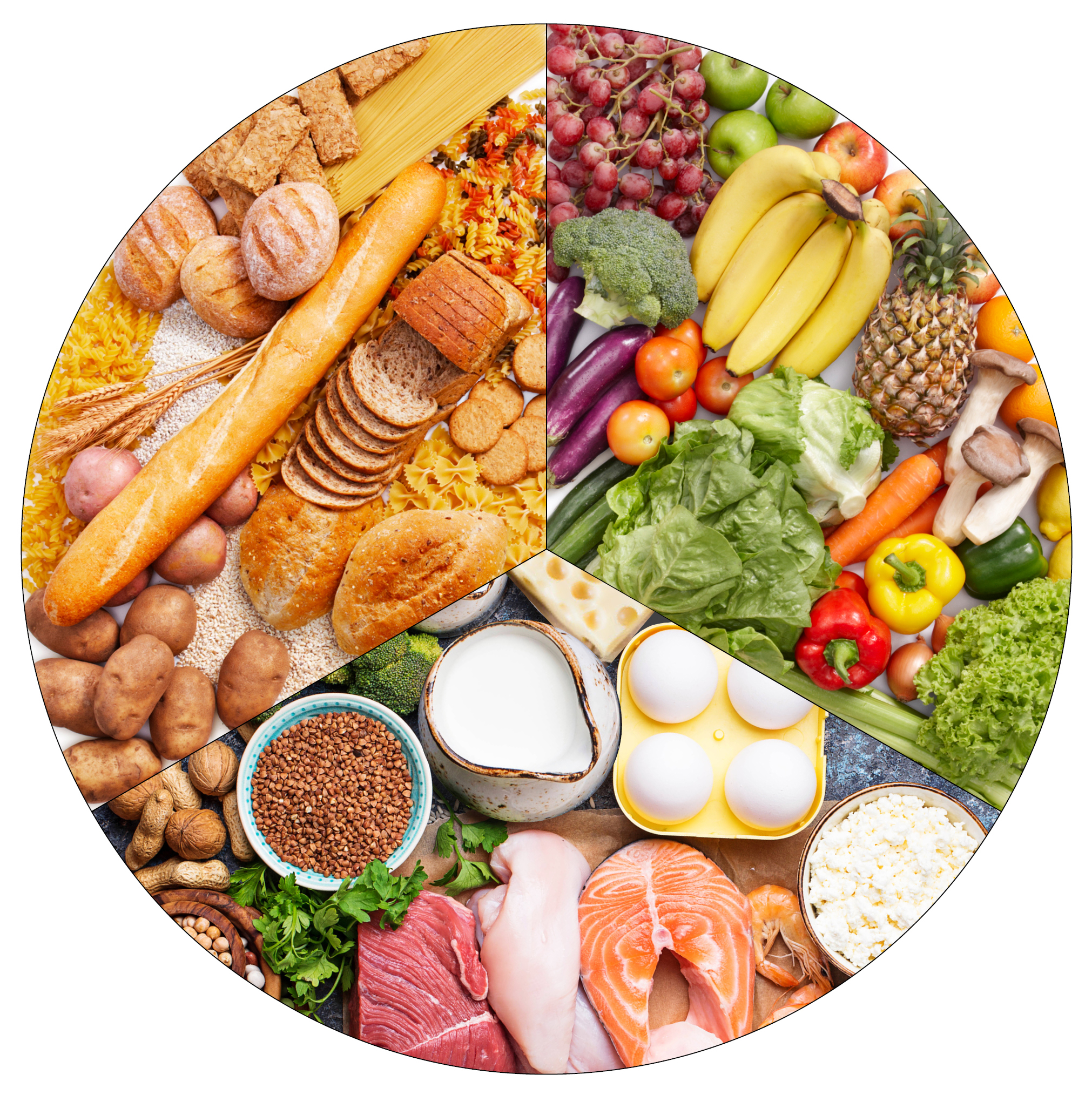
Provision to cells and organisms to support life. Nutrition is the science that interprets the interaction of nutrients and other substances in food in relation to maintenance, growth, reproduction, health and disease of an organism.
Nutrition is a critical part of health and development. Better nutrition is related to improved infant, child and maternal health, stronger immune systems, safer pre
Healthy children learn better. People with adequate nutrition are more productive and can create opportunities to gradually break the cycles of poverty and hunger.
Malnutrition, in every form, presents significant threats to human health. Today the world faces a double burden of malnutrition that includes both undernutrition and overweight, especially in low- and middle-income countries.

Types of Nutrition
Broadly, there are two types of nutrition among living organisms, namely:
• Autotrophic mode
• Heterotrophic mode

Autotrophic Nutrition
In the autotrophic mode, organisms use simple inorganic matters like water and carbon dioxide in the presence of light and chlorophyll to synthesize food on their own. In other words, the process of photosynthesis is used to convert light energy into food such as glucose. Such organisms are called autotrophs. Plants, algae, and bacteria (cyanobacteria) are some examples where autotrophic nutrition is observed.
During photosynthesis, carbon dioxide and water get converted into carbohydrates. These carbohydrates are stored in the form of starch in plants. Plants later derive the energy required from the stored starch.
In plants, stomata are the openings on leaves where gaseous exchange takes place and is regulated by guard cells. Plants take in and release gases through these stomatal pores.
In desert-like habitats, to avoid water loss, guard cells keep these pores closed during the daytime. Later, during the night time, stomata will be opened to absorb carbon dioxide and store in the vacuoles. During the daytime, they will use this stored carbon dioxide to perform photosynthesis.
Other than photosynthesis, plants also depend on soil for micro and macro elements. These elements are used to synthesize proteins and other essential compounds required for the proper functioning and growth of the plants.

Heterotrophic Nutrition
Every organism is not capable of preparing food on its own. Such organisms depend on others for their nutrition. The organisms which cannot produce food on their own and depend on other sources/organisms are called heterotrophs. This mode of nutrition is known as heterotrophic nutrition.
Fungi and all the animals including humans are heterotrophs. Heterotrophs can be of many varieties depending upon their environment and adaptations. Some may eat plants (herbivores) and others eat animals (carnivores) while few eat both (omnivores). Thus we can say survival of heterotrophs depends directly or indirectly on plants.
Heterotrophs are classified into different categories based on their mode of nutrition. They are:
• Parasites (e.g. leeches, ticks)
• Saprophytes (e.g. mushrooms)
• Holozoic (e.g. humans, dogs)

OIL SPILLS: CAUSES AND ITS EFFECTS

What is an Oil Spill?
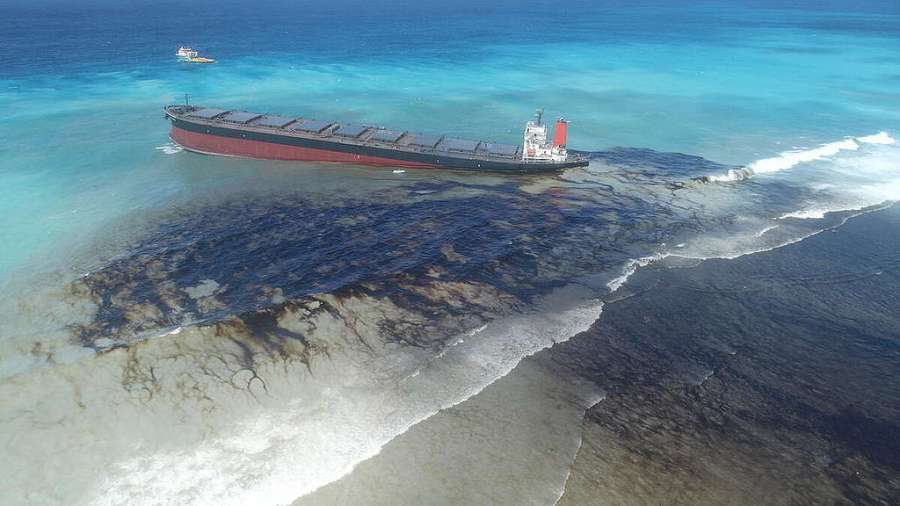
An oil spill is the release of a liquid petroleum hydrocarbon into the environment, especially the marine ecosystem, due to human activity, and is a form of pollution. The term is usually given to marine oil spills, where oil is released into the ocean or coastal waters, but spills may also occur on land.

Where do oil spills happen?
Oil spills that happen in rivers, bays and the ocean most often are caused by accidents involving tankers, barges, pipelines, refineries, drilling rigs and storage facilities, but also occur from recreational boats and in marinas.
Causes of Oil Spill:
People being careless while sailing oil tankers in cruises, equipment breaking down, natural disasters such as hurricanes, storm surge or high winds, deliberate acts by terrorists, acts of war, vandals or illegal dumping are the important causes of Oil spills.

Effects of Oil Spills:
Most oils float on the oceans’ saltwater or freshwater from rivers and lakes. Oil usually spreads out rapidly across the water’s surface to form a thin oil slick. As the oil continues spreading, the slick becomes thinner and thinner, finally becoming a very thin sheen, which often looks like a rainbow.
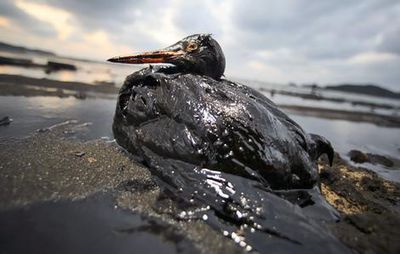
It affects the food chain of the whole ecosystem. When oil spills occur, it will break down a moderate amount of oil and deposit on the bottom. When oil spreads in the ocean, it breaks and sinks into the ocean which deteriorates the health of the ocean life. It contaminates the natural habitat of the ocean. Oil spills have harsh effects on the coastlines. The birds and the sea mammals are covered by the oil. Oil is so damaging to the whole ecosystem as it covers everything which is nearby the coastlines like sand, animals, grass and soil etc. It destroys everything near the coastline. The oil that spills into the ocean can have a great impact on people’s health who consume seafood. It can be damaging for those marine animals who swim in the ocean and if they ingest oil then it will be destroying them.

ONLINE PROFESSIONAL DEGREE.

ONLINE PROFESSIONAL DEGREE

Imagine you are a bright student and a very ambitious student. You have certain aims and goals to achieve for which you need to study at the best place. You decided to study in London and counted your expenses and fees. I am sure everyone will hesitate at this moment. It’s not easy to spend lakhs and lakhs of money. Unfortunately, you cancel the plan but deserve to study at the best college, which is absolutely correct. 

What will you do? Will you stop chasing your dreams? Will you compromise with your dream? Or will you find another way to study the best course from the best place?

In this type of situation online learning can be a lifeline for you, Paul Levison said that” online learning can be a lifeline to those who have obstacles such as geographical distance or physical disabilities.”   If you are a student you must have experienced online learning in the past couple of years. If you are an employee you would have experienced working from home. The world is at your fingertips, the world is online now.  The education is vast, we have hundreds of degrees. Nowadays you don’t have to go to an institution and get a degree. This is a modern world, study online rather than studying abroad. You can perceive any degree or course from your home. Where there is a will there is a way. 

You can study professional degree online, and you have new technologies. 

 Advantages of studying online:-

  1. You can perceive a degree from the best institution you want to study.

  2. No need to migrate.

  3. You will have your comfort zone and preferred facilities.

  4. Economic problems will be less

  5. low course fees.

  6. Enough content to prepare yourself for challenges.

  7. Compete at national and international levels.

  8. No one will judge you.

  9. Availability of teachers.

  10. Feedback and reviews of teachers.

Every coin has two sides, if online learning has advantages, it will also have disadvantages.


Disadvantages of online learning:-


  1. Distraction and laziness.

  2. Video recommendation.

  3. Less motivation and seriousness.

  4. Less practical learning as compared to offline education.

  5. Natural issues like network and connectivity. 

  6. Social media attractions.

  7. An extra comfort zone will not allow us to study well.

  8. You will not enjoy campus recruitment.

  9. Less socialized.

What’s your point of view on online education?

 It’s okay if you are pursuing your degree online and it’s worthy. Everything in this world has advantages and disadvantages. Do not need to worry about it. Decide on online learning if your course is less practical and mostly dependent on your conversation. But if you are going for a course with includes more practical learning you must prefer offline learning. Suppose if you pursuing a language professional course, it’s okay if you complete it online but in case you are pursuing a degree in engineering or doctorate then it’s going to be tough for you to learn online, in those cases you should prefer offline learning. 

Education is the most powerful weapon in this world which can help you to change the world. Let the way of education be online or offline, it depends on you, how curious you are? How passionate you are?  A.P.J. Abdul Kalam said, ” you have to dream before your dreams come true.”


CANCER: DEFINTION, CAUSES AND TREATMENT

What Is Cancer?
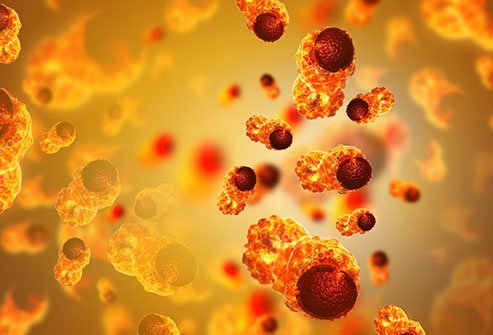
Cancer is a group of diseases involving abnormal cell growth with the potential to invade or spread to other parts of the body. It describes the disease that results when cellular changes cause the uncontrolled growth and division of cells. Some types of cancer cause rapid cell growth, while others cause cells to grow and divide at a slower rate.
Certain forms of cancer result in visible growths called tumors, while others, such as leukemia, do not.
Most of the body’s cells have specific functions and fixed lifespans. While it may sound like a bad thing, cell death is part of a natural and beneficial phenomenon called apoptosis.
A cell receives instructions to die so that the body can replace it with a newer cell that functions better. Cancerous cells lack the components that instruct them to stop dividing and to die.
As a result, they build up in the body, using oxygen and nutrients that would usually nourish other cells. Cancerous cells can form tumors, impair the immune system and cause other changes that prevent the body from functioning regularly.
Cancerous cells may appear in one area, then spread via the lymph nodes. These are clusters of immune cells located throughout the body.

How Does Cancer Develop?
ENLARGE
Cancer is a genetic disease—that is, it is caused by changes to genes that control the way our cells function, especially how they grow and divide.
Genetic changes that cause cancer can happen because:
• of errors that occur as cells divide.
• of damage to DNA caused by harmful substances in the environment, such as the chemicals in tobacco smoke and ultraviolet rays from the sun. (Our Cancer Causes and Prevention section has more information.)
• they were inherited from our parents.
The body normally eliminates cells with damaged DNA before they turn cancerous. But the body’s ability to do so goes down as we age. This is part of the reason why there is a higher risk of cancer later in life.
Each person’s cancer has a unique combination of genetic changes. As the cancer continues to grow, additional changes will occur. Even within the same tumor, different cells may have different genetic changes.
A cancer that has spread from the place where it first formed to another place in the body is called metastatic cancer. The process by which cancer cells spread to other parts of the body is called metastasis.
Metastatic cancer has the same name and the same type of cancer cells as the original, or primary, cancer. For example, breast cancer that forms a metastatic tumor in the lung is metastatic breast cancer, not lung cancer.
Under a microscope, metastatic cancer cells generally look the same as cells of the original cancer. Moreover, metastatic cancer cells and cells of the original cancer usually have some molecular features in common, such as the presence of specific chromosome changes.
In some cases, treatment may help prolong the lives of people with metastatic cancer. In other cases, the primary goal of treatment for metastatic cancer is to control the growth of the cancer or to relieve symptoms it is causing. Metastatic tumors can cause severe damage to how the body functions, and most people who die of cancer die of metastatic disease.

Treatments
nnovative research has fueled the development of new medications and treatment technologies.
Doctors usually prescribe treatments based on the type of cancer, its stage at diagnosis, and the person’s overall health.
Below are examples of approaches to cancer treatment:
• Chemotherapy aims to kill cancerous cells with medications that target rapidly dividing cells. The drugs can also help shrink tumors, but the side effects can be severe.
• Hormone therapy involves taking medications that change how certain hormones work or interfere with the body’s ability to produce them. When hormones play a significant role, as with prostate and breast cancers, this is a common approach.
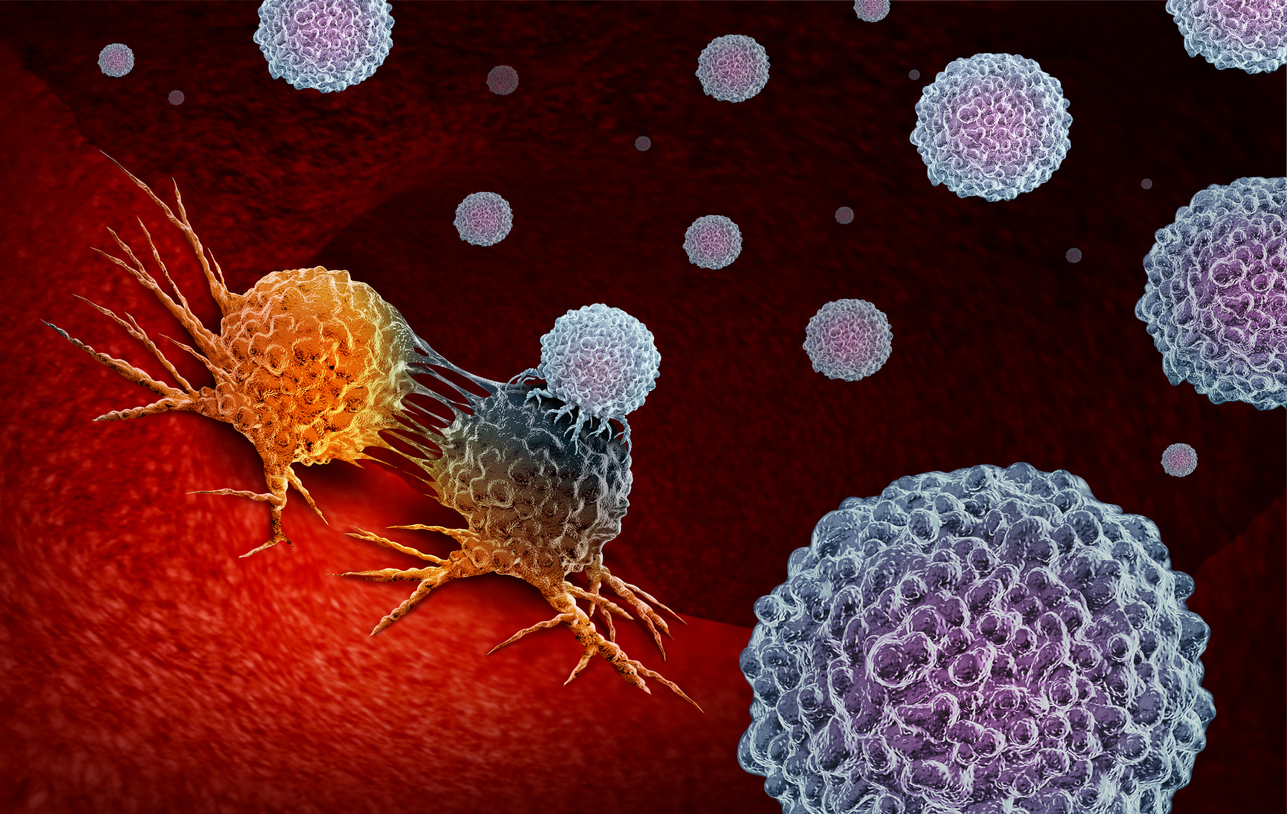
• Immunotherapy uses medications and other treatments to boost the immune system and encourage it to fight cancerous cells. Two examples of these treatments are checkpoint inhibitors and adoptive cell transfer.
• Precision medicine, or personalized medicine, is a newer, developing approach. It involves using genetic testing to determine the best treatments for a person’s particular presentation of cancer. Researchers have yet to show that it can effectively treat all types of cancer, however.
• Radiation therapy uses high-dose radiation to kill cancerous cells. Also, a doctor may recommend using radiation to shrink a tumor before surgery or reduce tumor-related symptoms.
• Stem cell transplant can be especially beneficial for people with blood-related cancers, such as leukemia or lymphoma. It involves removing cells, such as red or white blood cells, that chemotherapy or radiation has destroyed. Lab technicians then strengthen the cells and put them back into the body.
• Surgery is often a part of a treatment plan when a person has a cancerous tumor. Also, a surgeon may remove lymph nodes to reduce or prevent the disease’s spread.
• Targeted therapies perform functions within cancerous cells to prevent them from multiplying. They can also boost the immune system. Two examples of these therapies are small-molecule drugs and monoclonal antibodies.
Doctors will often employ more than one type of treatment to maximize effectiveness.

SALIENT FEATURES OF INDIAN SOCIETY

Indian society is known for its ability of tolerance and acceptance, and social cohesion making it unique in sustaining its culture. The importance of fraternity enshrined in the Preamble of the constitution makes it a duty of every citizen.
Indian society is extensively diverse in cultural and regional aspects and it is pertinent that it is posited in each individual the realization of ideas and objectives in the Preamble concerning every other individual.
India from ancient times has thrived to create a nationality that is neither governed by universalism nor by exclusivity to its interest groups. The multi-cultural conundrum is a salient feature of Indian society that has been a boon and a bane over the history of the country.

SALIENT FEATURES OF INDIA:
• Multi-Ethnic Society
• Multi-Lingual Society
• Multi-Class Society
• Patriarchal Society
• Unity In Diversity
• Tribes
• Family
• Kinship System
• Balance between spiritualism and materialism
• Balance between Individualism and collectivism
• Co-existence of traditionalism and modernity

The multi-ethnic Indian society
Multi-ethnicity is a major salient feature of Indian society. An ethnic group or ethnicity is a category of people who identify with each other, usually based on a common language or dialect, history, society, culture, or nation.
A society with the co-existence of a wide variety of racial groups is a Multi-ethnic society. India is home to almost multiple racial profiles like Nordic, Dinaric, Proto-Australoid, Mongolian, etc.
Multilingualism- salient feature of Indian society
India is home to many native languages, and it is also common that people to speak and understand more than one language or dialect, which can entail the use of different scripts as well.
India’s 2011 census documents that 121 languages are spoken as mother tongues, which is defined as the first lan¬guage a person learns and uses.
Of these languages, the Constitution of India recognizes twenty-two of them as official or “scheduled” languages. Articles 344(1) and 351 of the Constitution of India, titled the Eighth Schedule, recognize the following languages as official languages of the states of India:
• Assamese, Bengali, Bodo, Dogri, Gujarati, Hindi, Kannada, Kashmiri, Konkani, Maithili, Malayalam, Manipuri, Marathi, Nepali, Oriya, Punjabi, Sanskrit, Santhali, Sindhi, Tamil, Telugu, and Urdu.
Six languages also hold the title of classical languages (Kannada, Malayalam, Odia, Sanskrit, Tamil, and Telugu), which are determined to have a history of recorded use for more than 1,500 years and a rich body of literature.
Multi-religious society
India is a cradle of world religions whose ancestors have preached and practiced almost all major religions of the world giving rise to worldly beliefs, practices, rites, rituals, ceremonies, and institutions.
The co-existence of all the religions and variety of faiths has been a shining example of religious pluralism and tolerance.
• The principle of secularism despite several conflicts and riots has been upheld by our citizens time and again.
• Indian Constitution has rightly reflected the idea of multi religions. It states that “every citizen has a right to freely practice, preach, profess and propagate any religion or faith”.
• A secular state has been defined as a “state in which all religions and citizens irrespective of their faith would be treated impartially”.
• Apart from the major religions, several tribal religions are coexisting in Indian society.
UNITY IN DIVERSITY:
“Unity in Diversity” is a phrase implying unity among people with diverse cultural, religious, and other demographic differences. It denotes the sense of oneness and we-ness .In India, people of different religions have continued to respect the ideals and values of people of other religions, and hence, India has always stood up as an integrated nation ready to put its arms around everybody in this world.

Online Professional Courses

 Amity University is India’s private education group ranked in the top 3 % of universities Globally by QS. Our programs are also WES accredited in the US & Canada. We were the very first in India to get UGC approval for our online programs. Amity university is located in Noida, India. The University is recognised by UGC and accredited by NAAC with a grade of A+.

Some professional courses of Amity University

1. Management of Financial Institution and market

Duration – 9 weeks 

Mode – Online

2. Accounting for Managers

Duration – 9 weeks

Mode – Online

3. Equity & Derivatives

Duration – 6 weeks

Mode – Online

4. Financial Management

Duration – 11 weeks

Mode – Online

5. Corporate Tax Planning and Financial Analysis 

Duration – 8 weeks

Mode – Online

6. Forex and Money markets

Duration – 7 weeks

Mode – Online

7. Management Accounting

Duration – 5 weeks

Mode – Online

8. Mergers & Acquisitions – Concepts & Theories 

Duration – 6 weeks

Mode – Online

9. Capital Markets

Duration – 6 weeks

Mode – Online

10. Treasury and Risk Management

Duration – 6 weeks

Mode – Online

For more details visit the official website of amityonline.com