Online Courses by SWAYAM


Online Courses by SWAYAM

SWAYAM is a programme initiated by Government of India and designed to achieve the three cardinal principles of Education Policy viz., access, equity and quality. The objective of this effort is to take the best teaching learning resources to all, including the most disadvantaged. SWAYAM seeks to bridge the digital divide for students who have hitherto remained untouched by the digital revolution and have not been able to join the mainstream of the knowledge economy.

This is done through a platform that facilitates hosting of all the courses, taught in classrooms from Class 9 till post-graduation to be accessed by anyone, anywhere at any time. All the courses are interactive, prepared by the best teachers in the country and are available, free of cost to any learner. More than 1,000 specially chosen faculty and teachers from across the country have participated in preparing these courses.

The courses hosted on SWAYAM are in 4 quadrants – (1) video lecture, (2) specially prepared reading material that can be downloaded/printed (3) self-assessment tests through tests and quizzes and (4) an online discussion forum for clearing the doubts. Steps have been taken to enrich the learning experience by using audio-video and multi-media and state of the art pedagogy / technology.

 In order to ensure that best quality content is produced and delivered, nine National Coordinators have been appointed. They are:


  AICTE (All India Council for Technical Education) for self-paced and international courses

  NPTEL (National Programme on Technology Enhanced Learning) for Engineering

  UGC (University Grants Commission) for non-technical post-graduation education

  CEC (Consortium for Educational Communication) for under-graduate education

  NCERT (National Council of Educational Research and Training) for school education

  NIOS (National Institute of Open Schooling) for school education

  IGNOU (Indira Gandhi National Open University) for out-of-school students

  IIMB (Indian Institute of Management, Bangalore) for management studies

  NITTTR (National Institute of Technical Teachers Training and Research) for Teacher Training programme

Courses delivered through SWAYAM are available free of cost to the learners, however learners wanting a SWAYAM certificate should register for the final proctored exams that come at a fee and attend in-person at designated centres on specified dates. Eligibility for the certificate will be announced on the course page and learners will get certificates only if this criteria is matched. Universities/colleges approving credit transfer for these courses can use the marks/certificate obtained in these courses for the same.

How to apply for the SWAYAM Courses?

1.    Step 1Search for the SWAYAM website or you can click on https://swayam.gov.in/ to go directly to                  the website.

2.   Step  2The webpage will open and you can register on the website by clicking on SIGN-           IN/REGISTER button.

3.   Step 3After registering on the website click on All Courses at the top of the page to find the relevant course. The page will appear which shows all the courses.

4.   Step 4You can find the course of your choice by searching in the Course Catalog option or by scrolling down. You can also apply a filter (shown on the left of the above image) to search for the course according to your convenience.

5.  Step 5After choosing your favorite course click on it. This will direct you to the page showing all the information about that particular course. You can get every information about that course and can join the course by clicking on the JOIN button.


I hope, the information is helpful for you to find free courses by the government of India. Enroll yourself now and get started with government authorize short-term courses.

 Source– https://swayam.gov.in/ 
 

Seventh Governing Council meeting of NITI Aayog

 As India commemorates 75 years of Independence, there is a reinforced need for the states to be agile, resilient and self-reliant and move towards ‘AatmaNirbhar Bharat’ in a spirit of cooperative federalism.  In the drive towards building a steady, sustainable and inclusive India, the Seventh Governing Council meeting of NITI Aayog will be held on 7th August 2022 and will pave the way for synergies towards a new era of collaboration and cooperation between Centre and States/ Union Territories.

Prime Minister Shri Narendra Modi will chair the seventh meeting of the Governing Council at Rashtrapati Bhawan Cultural Centre, New Delhi.  The agenda of the meeting, interalia, includes crop diversification and achieving self-sufficiency in oilseeds and pulses and agri-communities; implementation of the National Education Policy–school education; implementation of the National Education Policy–higher education; and urban governance.

As part of preparations for the meeting, the National Conference of Chief Secretaries held in Dharamshala in June 2022 which was the culmination of the six month long rigorous exercise by the Centre and States. The conference was chaired by the Prime Minister and attended by the Chief Secretaries of all States and UTs, along with senior officials of the Central and State Governments.  The 7th Governing Council Meeting will endeavour to finalize a roadmap and outcome oriented action plan on each of the above themes. 

This would be the first in-person  meeting of the Governing Council since July 2019. It is particularly important as we enter Amrit Kaal against the backdrop of the Covid-19 pandemic and in light of India hosting the G20 Presidency and summit next year. The meeting would also lay emphasis on the importance of the Presidency for India for the federal system and the role that states can play in highlighting their progress at the G-20 Platform.

NITI Aayog’s Governing Council is the premier body tasked with evolving a shared vision of national priorities and strategies with the active involvement of States and Union Territories.  The Governing Council presents a platform to discuss inter-sectoral, inter-departmental and federal issues. It comprises the Prime Minister of India; Chief Ministers of all the states and union territories with legislature; Lt Governors of other UTs; Ex-Officio Members; Vice Chairman, NITI Aayog; Full-Time Members, NITI Aayog; and Union Ministers as Special Invitees.  It provides one of the most important forum for deliberations between the Centre and States and identifying key strategies for cohesive action with a whole-of-Government approach.

*****

Provisions for Children With Special Needs Under Mission Vatsalya

 Mission Vatsalya Scheme is a roadmap to achieve development and child protection priorities aligned with the Sustainable Development Goals (SDGs). It lays emphasis on child rights, advocacy and awareness along with strengthening of the juvenile justice care and protection system with the motto to ‘leave no child behind’. The Juvenile Justice (Care and Protection of Children) Act, 2015 provisions and the Protection of Children from Sexual Offences Act, 2012 form the basic framework for implementation of the Mission. Funds under the Mission Vatsalya Scheme are released according to the requirements and demands made by the States/UTs.

Under Mission Vatsalya Scheme support is provided to States/ UTs for setting up of Special Unit for children with special needs in Child Care Institutions (CCIs), who are not able to go to school due to physical/ mental disabilities. Special provisions are made in the CCIs to provide services including Special Educators/ therapist and Nurse required for such children in CCIs for occupational therapy, speech therapy, verbal therapy and other remedial classes as per the children’s need. The capacity building of the Special Unit staff in sign language, Braille etc. is undertaken with help of resource institutions in States for such Homes.

GOI Measures for Safety, Security and Empowerment of Women

 The Government accords highest priority to improving sex ratio in the country and ensuring healthy life for women. Some major initiatives taken by the Government in this regard are as follows:


  • Beti Bachao Beti Padhao (BBBP) ensures protection, survival and education of girl child.
  • Mission Saksham Anganwadi and Poshan 2.0 aims to address the challenges of malnutrition in children, adolescent girls, pregnant women and lactating mothers through a strategic shift in nutrition content and delivery and by creation of a convergent eco-system to develop and promote practices that nurture health, wellness and immunity.
  • Pradhan Mantri Matru Vandana Yojna (PMMVY) provides partial compensation for the wage loss and seeks to improve health seeking behaviour among the pregnant women and lactating mothers. The revamped PMMVY under Mission Shakti also aims to promote positive behavioural change towards girl child by providing additional cash incentives for the second child, if that is a girl child.
  • Rollout of Comprehensive Primary Health Care including health promotion through Ayushman Bharat-Health & Wellness Centers (AB-HWC).
  • Janani Shishu Suraksha Karyakram (JSSK) to eliminate out-of-pocket expenses for pregnant women delivering in public health institutions and sick infants accessing public health institutions for treatment.
  • Janani Suraksha Yojana (JSY) to provide financial assistance to pregnant women for encouraging institutional delivery.
  • Pradhan Mantri Ujjwala Yojana empowers women and protects their health by providing LPG cylinder free of cost.


As a result of the above measures, the sex ratio at birth has improved from 918 (2014-15) to 937 (2020-21) and the life expectancy at birth has improved from 69.4 years (2014-18) to 69.7 years (2015-19).

The Government has taken several initiatives to enhance women’s participation in labour force. The labour laws have specific provisions relating to women workers besides all other rights under labour laws which, inter alia, include:


  • The Equal Remuneration Act, 1976 provides that there shall be no discrimination in an establishment or any unit thereof among employees on the ground of gender in matters relating to wages by the same employer, in respect of the same work or work of similar nature done by any employee.
  • The Maternity Benefit Act, as amended in 2017, provides paid maternity leave from 12 weeks to 26 weeks for two surviving children. It also has enabled provision of “Work from home”, after availing of the maternity benefit by the woman, where the nature of work being assigned of such nature, for such period and on such conditions mutually agreed upon by the employer and the woman employee.
  • Vide notification dated 29th January 2019 under Mines Act 1952, the Government allowed the employment of women in the aboveground mines including opencast workings between 7 pm and 6 am and in below ground mines working between 6 am and 7 pm in technical, supervisory and managerial work where continuous presence may not be required.
  • The Government has also enacted the four Labour Codes, namely the Code on Wages, 2019; the Industrial Relations Code, 2020; the Code on Social Security, 2020, and the Occupational Safety, Health and Working Conditions Code, 2020, which inter alia promote participation of women in workforce in a dignified manner through a number of provisions, some of which are as follows:
  • No discrimination on the ground of gender in matters relating to wages, recruitment and in the conditions of employment,
  • Women are entitled to be employed in all establishments for all types of work even before 6 AM and beyond 7 PM subject to their consent and other adequate safety measures.


Some of the major initiatives taken by the Government for improving economic empowerment of women are as follows:


  • Sakhi Sadan (Working Women’s Hostel) scheme provides safe and affordable housing for working women and thereby encourages more women to seek employment.
  • Palna, the National Crèche Scheme, ensures that women take up gainful employment through providing a safe, secure and stimulating environment to the children.
  • Hubs for Empowerment of Women (HEW) at National, State and District level have been approved under the new ‘Mission Shakti’. The support under HEW is available for guiding, linking and hand holding women to various institutional and schematic set-up for their empowerment and development including equal access to healthcare, quality education, career and vocational counselling/training, financial inclusion, entrepreneurship, backward and forward linkages, health and safety for workers, social security and digital literacy at various levels across the country.
  • Pradhan Mantri Mudra Yojana (PMMY) has been initiated by Government, inter alia, for facilitation self-employment. Under PMMVY, collateral free loans upto Rs. 10 lakh are extended to micro/small business enterprises and to individuals to enable them to setup or expand their business activitiesMajority of the beneficiaries under this yojana are women.
  • Stand Up India scheme promotes entrepreneurship amongst women, SC and ST categories, i.e., those sections of the population understood to be facing significant hurdles due to lack of advice/ mentorship as well as inadequate and delayed credit.
  • Pradhan Mantri Kaushal Vikas Yojana aims to enable a large number of Indian youths including women to take up industry-relevant skill training in securing a better livelihood.
  • Deen Dayal Antyodaya National Urban Livelihoods Mission focuses on creating opportunities for women in skill development, leading to market-based employment.
  • Pradhan Mantri Awaas Yojana aims to provide housing under the name of woman also.
  • Sukanya Samriddhi Yojna – Girls have been economically empowered by opening their bank accounts under this scheme.
  • Skill Upgradation & Mahila Coir Yojna is an exclusive training programme of MSME aimed at skill development of women artisans engaged in coir Industry.
  • Prime Minister’s Employment Generation Programme is a major credit-linked subsidy programme aimed at generating self-employment opportunities through establishment of micro-enterprises in the non-farm sector.


Mission Vatsalya Scheme

 Mission Vatsalya Scheme is a roadmap to achieve development and child protection priorities aligned with the Sustainable Development Goals (SDGs). It lays emphasis on child rights, advocacy and awareness along with strengthening of the juvenile justice care and protection system with the motto to ‘leave no child behind’. The Juvenile Justice (Care and Protection of Children) Act, 2015 provisions and the Protection of Children from Sexual Offences Act, 2012 form the basic framework for implementation of the Mission. Funds under the Mission Vatsalya Scheme are released according to the requirements and demands made by the States/UTs.

The Scheme is implemented as a Centrally Sponsored Scheme in partnership with State Governments and UT Administrations to support the States and UTs in universalizing access and improving quality of services across the country. The fund sharing pattern is in the ratio of 60:40 between Centre and State & Union Territories with Legislature respectively. The fund sharing pattern between Centre and State is in the ratio of 90:10 for the North-Eastern States viz. Arunachal Pradesh, Assam, Manipur, Meghalaya, Mizoram, Nagaland, Sikkim and Tripura and two Himalayan States viz. Himachal Pradesh and Uttarakhand, and UT of Jammu and Kashmir. For Union Territories without Legislature, it is 100% central share.

Mission Vatsalya scheme supports the children through Non-Institutional Care under Private Aided Sponsorship wherein interested sponsors (individuals/ institutions/ company/ banks/ industrial units/ trusts etc.) can provide assistance to children in difficult circumstances. The District Magistrates take measures to encourage individuals or Public/ Private Sector Organisations to sponsor a child or a group of children or an Institution. Such arrangements are subject to stipulations as per the Juvenile Justice (Care and Protection of Children) Act, 2015, and Rules thereof.

Digitalization of Anganwadi Services

 IT systems have been leveraged to strengthen and bring about transparency in nutrition delivery support systems at the Anganwadi centres. The ‘Poshan Tracker’ application was rolled out on 1st March 2021 as an important governance tool. The Poshan Tracker facilitates monitoring and tracking of all AWCs, AWWs and beneficiaries on defined indicators. Technology under Poshan Tracker is being leveraged for dynamic identification of stunting, wasting, under-weight prevalence among children. Further, under Poshan Abhiyan, for the first time, a digital revolution was ushered in when the Anganwadi Centres were equipped with mobile devices. The mobile application has also facilitated digitization and automation of physical registers used by AWWs that helps in improving their quality of work.

Universal access to Anganwadi Services ensures that no beneficiary, who migrates or whose family migrates from one State to another or within a State is deprived of access to key services delivered through Anganwadis. To facilitate the same, a module on ‘migration’ is available and functional on Poshan Tracker. Using the same, beneficiary details can be accessed by the Anganwadi Centre, where the beneficiary migrated to, by using the beneficiary’s Aadhar details. The Anganwadi Worker at the Centre, where the beneficiary migrated to, can pull the data of the beneficiary to its own data-base by using the migration module. In this regard, Ministry has informed all States / UTs about the detailed flowchart of the migration module on the Poshan Tracker and advised them to undertake appropriate measures for wider dissemination of the availability of this facility among beneficiaries

Aadhaar Seeding of beneficiaries has been initiated to ensure last mile tracking and effective delivery of services to beneficiaries at Aanganwadi centres. Further, a child’s Aadhaar card shall not be mandatory for availing the benefits under the Scheme. The benefits under the scheme can be accessed using the mother’s Aadhaar card. As on 31st July 2022, close to 53% of beneficiaries have been Aadhar seeded on the Poshan Tracker. The Ministry is constantly following up with the States/ UTs to complete the Aadhar seeding process. Funds for enrollment kits have been placed with the States/UTs to facilitate enrollment of beneficiaries at the AWC itself.


Conditions Conducive to Sex Workers to Live with Dignity

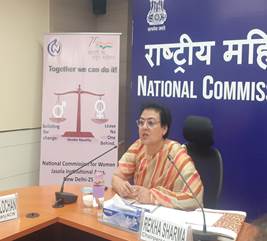
 The National Commission for Women (NCW) organized a Consultation on the topic ‘Conditions Conducive to Sex Workers to Live with Dignity’ to understand the issues faced by the sex workers and to take recommendations to attempt mainstreaming of their rights.

Through this Consultation, the Commission sought to discuss topics such as educating marginalised sex workers about the recent Supreme Court ruling and how to use it for their protection, human and fundamental rights of sex workers, as well as sensitization of the masses to protect dignity of sex workers and their children.

Ms Rekha Sharma, Chairperson, National Commission for Women, Ms Meeta Rajivlochan, Member Secretary, NCW and other senior officials of the Commission graced the occasion. Stakeholders from across the country were invited to attend the meeting to understand the problems of sex workers. Some of the organisations that joined today’s deliberation were All India Network of Sex Workers, Saheli Sangh, SANGRAM, Kat-Katha Foundation, Guria India, Durbar, National Network of Sex Workers, VAMP, ApneAap Women’s Collective, Mahila Jagrut Seva Bhavi Sanstha, SIAAP, Karnataka Sex Workers Union and Women Initiatives (Me and My World).


In her inaugural address, the Chairperson Ms Rekha Sharma said that like every citizen, sex workers are also entitled to all the rights and a life of dignity and it is important to provide them with opportunities and support. “Today’s Consultation aims to understand the problems faced by sex workers and to understand and prepare a future roadmap for providing them with better institutional support and help for mainstreaming their rights,” said Ms Sharma.

The participants stressed on the need to sensitize police officers as major violence/misuse of power is observed in their conduct while dealing with sex workers, and that social security schemes and benefits be easier to access for sex workers and their children. Physical, mental and social well-being of sex workers and media sensitization on sharing pictures without consent of these workers were also discussed by the participants.

Additionally, the experts also discussed monitoring shelter homes since they may lead to further harassment, ensuring that rehabilitation is not forced, and providing educational and skill development opportunities for sex workers and their children.


***

Handloom sector is a symbol of our country’s rich and varied cultural heritage

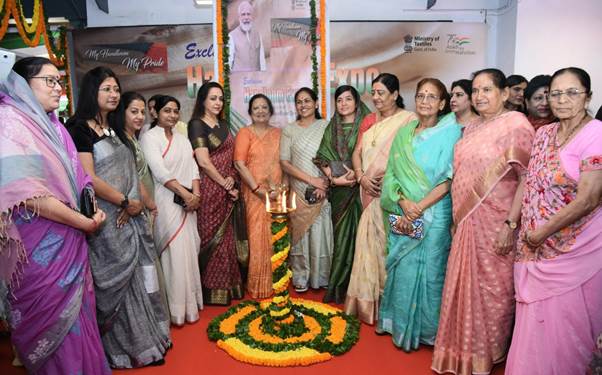
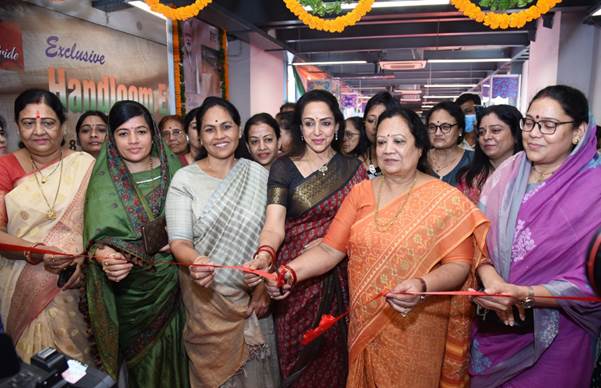
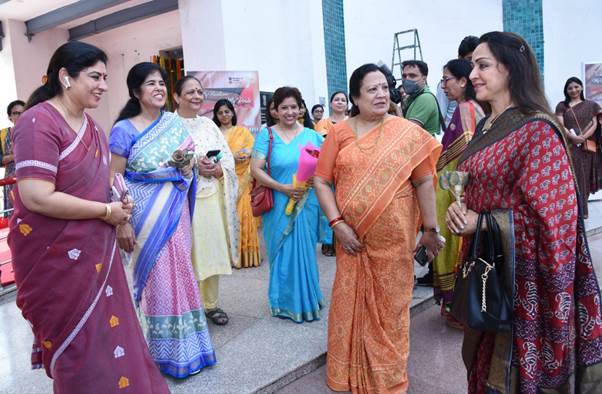
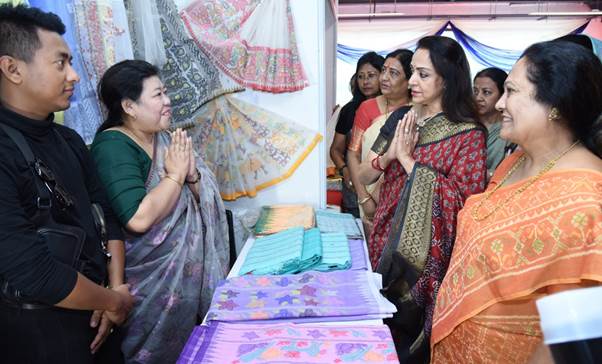
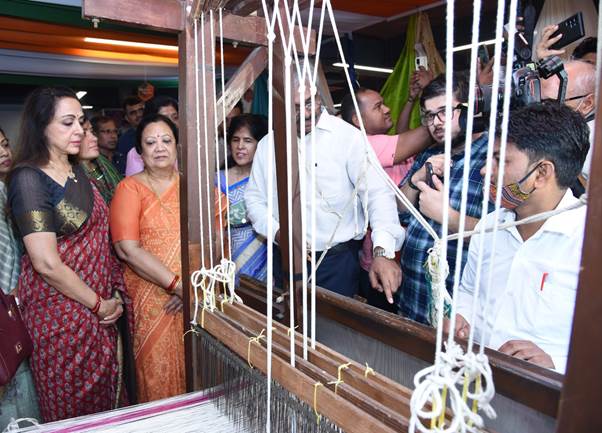
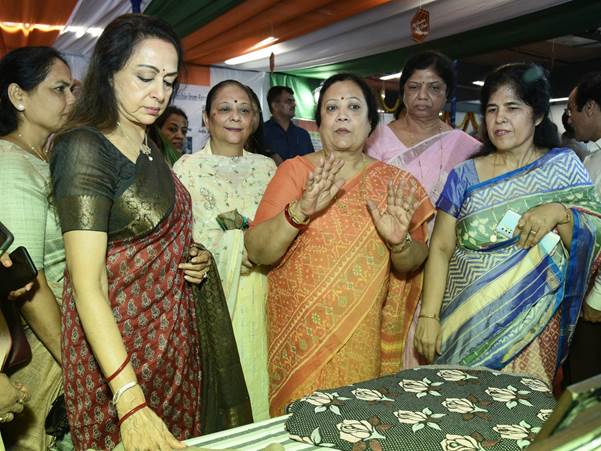
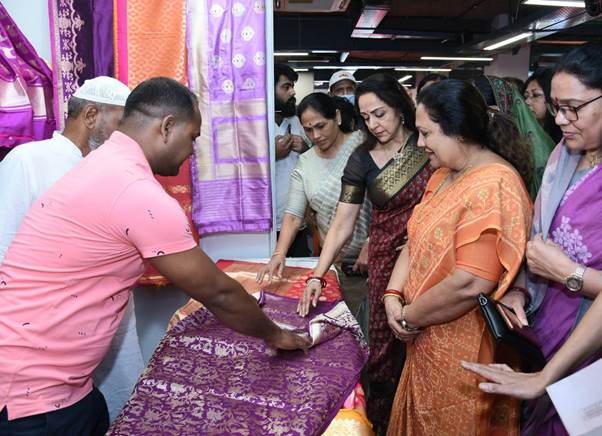
 Minster of State for Textiles and Railways Smt. Darshana Vikram Jardosh accompanied by esteemed women members of parliament Smt. Hema Malini, Smt. Navneet Kaur Rana, Smt. Mahua Moitra and others inaugurated Exclusive Handloom Expo ‘My Handloom My Pride Expo’ at Handloom Haat today. They interacted with weavers & artisans and bought the exquisite handloom products. Smt Darshana Jardosh had invited all the women Members of Parliament to visit the Exclusive Handloom Expo at Janpath Haat and see the rich handloom heritage in order to encourage the weavers and promote the industry.


A total of 55 Sant Kabir and National Awardees from 14 states are showcasing and selling exquisite handloom products. The exhibition will be open to public from 11 am to 8 pm for 7 days up to August 11th, 2022. This Exclusive Handloom Expo is an initiative of the O/o Development Commissioner (Handlooms), Ministry of Textiles, Government of India through National Handloom Development Corporation (NHDC) Ltd.


“Handloom sector is a symbol of our country’s rich and varied cultural heritage,” said Smt. Jardosh.


Swadeshi Movement which was launched on 7th August, 1905 had encouraged indigenous industries and in particular handloom weavers. In 2015, the Government of India decided to designate 7th August every year, as the National Handloom Day.


On this day, we honour our handloom weaving community and highlight the contribution of this sector in the socio-economic development of this country. We reaffirm our resolve to protect our handloom heritage and to empower the handloom weavers and workers with greater opportunities.

The art of Handloom weaving has traditional value attached to it and each region has exquisite varieties. The uniqueness of products such as Pochampally, Tangaliya saree, Kota Doria, Banarasi, Jamdani, Baluchari, Ikkat, Kalamkari etc. to name a few, attracts customers across the globe with exclusives weaves, designs and traditional motifs.


Through these exhibitions, handloom weavers not only market their products at reasonable rates but also get to know customers’ choice with regard to colour, design and weaving for future improvement of the product. The exhibition enables a direct interface between the awardee Handloom weavers and consumers.

Handloom products drawn from some of the exotic locations of India are on display and sale at the exhibition. A brief list is given below: –


· Andhra Pradesh

Venkatagiri Jamdani Cotton Saree,

· Assam

Vegetable Dyed Silk Saree

.   Gujarat

Tangaliya Saree, Duppta Marino woolen Shawl

.   Himachal Pradesh

Kullu Shawl

.   Jammu & Kashmir

Kani Shawl

· Madhya Pradesh

Chanderi sarees, suit, dupatta

· Manipur                           

Manipur traditional H/L products

·   Nagaland

Nagaland traditional H/L products

· Odisha

Triyantra Saree, Pratijna, Ramshila, Beti Cotton Saree

· Rajasthan

Punja Duri, Kota Doria Saree

· Tamil Nadu

Kancheepuram Korvai Silk Saree 

· Telangana

Double Ikat Telia Rumal Saree

· Uttar Pradesh

Rangkat Saree, Cotton Jamdani, Cutwork Stole

· West Bengal                            

Jamdani sarees, dress material, stoles


*****

AD/NS

Nominations for Vayoshreshtha Samman 2022

 The Ministry of Social Justice and Empowerment (MSJE) has invited nominations for Vayoshreshtha Samman (National Awards for Senior Citizens) 2022. The awards are to be conferred in13 categories to eminent citizens and institutions involved in rendering services for the cause of elderly persons, especially indigent senior citizens, as part of celebration of the International Day of Older Persons (IDOP) on 1st October 2022.

Of the 13 categories, seven are meant for the institutions involved in rendering services for the cause of elderly persons. The remaining six categories are for the individuals rendering services for the cause of elderly persons.

The nominations are to be uploaded on the portal www.awards.gov.in in the prescribed format by 19th August 2022. The detailed guidelines, in this regard, are available on the website of MSJE i.e. https://socialjustice.gov.in.

The Best District Panchayat in providing services and facilities to Senior Citizen will get a citation, memento and a cash award of Rs. ten lakh.

The Best Institution for Research in the field of Ageing will receive a citation, memento and a cash award of Rs. five lakh. Likewise, the Best Institution for providing services to Senior Citizens and Awareness Generation will also receive a citation, memento and a cash award of Rs. five lakh.

In the individual category, the Centenarianaward will be conferred to renowned individuals who are above 90 years and are still physically active, independent and contributing to the society. The awardee will receive a citation, memento and a cash award of Rs. two lakh fifty thousand.

The award of Iconic Mother will be conferred to women senior citizens who in the face of great odds, brought up their children and supported them in being high achievers in the field of their choice. The recipient will get a citation, memento and a cash award of Rs. two lakh fifty thousand.

Click herefor the detailed information.


******

Skill India launches Recognition of Prior Learning (RPL) program in Delhi to upskill Workers

 The National Skill Development Corporation (NSDC), the strategic implementation and knowledge partner of the Ministry of Skill Development and Entrepreneurship (MSDE), has initiated a project to recognise the prior skills of 75,000 people between the age group of 18-45 years and upskill them in association with the New Delhi Municipal Council (NDMC). The project aims at certifying them to increase their relevance in the volatile job market and encourage them in contributing toward nation-building.

The initiative will be funded by NDMC and SANKALP (World Bank Project under MSDE) and implemented by NSDC. The training commenced today with an aim to upskill 25,000 workers in the first phase.

The workers will be upskilled in multiple trades across construction, electrical, plumbing, pottery etcIt will not only expose them to digital literacy and entrepreneurial opportunities, but also upgrade them in technical skills. During the course of the training, the trainees will also be provided with an additional benefit of accidental insurance for two years.

The Recognition of Prior Learning (RPL)/Upskilling program will be implemented in three phases through Sector Skill Councils (SSCs) and their empanelled training providers. Moreover, there will be two modes of implementation — RPL through Camps, under which industrial and traditional clusters will be targeted and RPL at Employer’s premises which will be carried forward in partnership with industries and employers for orientation and training at the employer’s location.

Quoting Prime Minister Shri Narendra Modi, Shri Vinai Kumar Saxena, Lt. Gov. of Delhi said that there is an urgent need to uplift artisans and workers to increase their relevancy in the volatile job market and all the stakeholders should come together to fulfil this mission. Delhi being the national capital has always been the melting pot of people from different rungs of society and NDMC has been one of the torchbearers working towards improving the quality of life of the workers. He is confident that this RPL program will recognise the talent of the youth, hone their skills and give them the respect that they deserve.

Lauding the initiative, Ved Mani Tiwari, Chief Operating Officer, and Officiating CEO, NSDC, said that we are committed to standardising skills and making them a part of the organised sector by the virtue of recognition and certification. Our

collaboration with NDMC is not only a positive step toward fulfilling the need for a skilled workforce in India but also an effort to identify skilled candidates and help them in upgrading their skills, making them a part of the organised sector. This unique program will also help in meeting the aspiration of the youth and empower them for a better livelihood.

RPL or prior learning assessment and recognition (PLAR), which is a component of Skill India’s flagship scheme PMKVY, is an assessment process used to evaluate a person’s existing skill sets, knowledge and experience gained either by formal, non-formal or informal learning. The process helps in aligning the competencies of the unregulated workforce of the country to the standardized National Skills Qualification Framework (NSQF) to enhance employability opportunities and reduce the skill gap.


***

National Initiative on Science, Technology and Innovation Statistics (NISTIS)

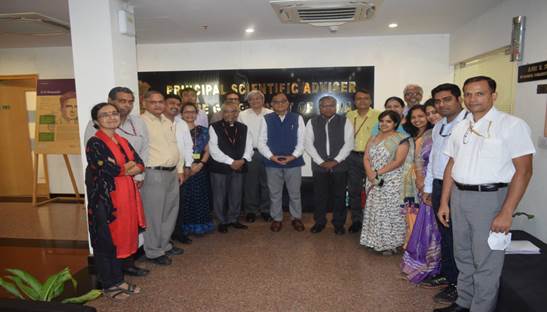
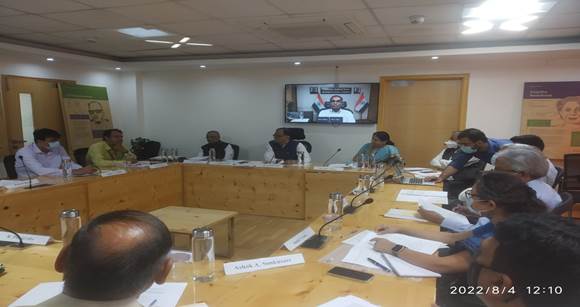
 The first meeting of the National Advisory Committee of the National Initiative on Science, Technology and Innovation Statistics (NISTIS) discussed the way forward for the initiative.

It was decided that the Detailed Project Report (DPR) for the Centre for Science, Technology and Innovation Statistics will be prepared by the Project Monitoring Unit (PMU) at the Indian Institute of Science (IISc) Bengaluru.

Principal Scientific Adviser to the Government of India, Professor Ajay K Sood, who chaired the meeting, underlined the importance of the initiative and the urgent need to establish the centre to start focused work on it.


https://static.pib.gov.in/WriteReadData/userfiles/image/image001ZWYH.jpg


“Data is critical for knowledge-based decisions. While data is being collected by the different ministries, its centralised management is essential for taking critical decisions in the future,” he pointed out.

Secretary, Department of Science and Technology (DST), Dr Srivari Chandrasekhar, welcomed the initiative, highlighting the range of data that is already available with the department and emphasized the need to add to it.

Senior Adviser, DST, Dr Akhilesh Gupta, stressed on the need for a one-stop coordinated effort to bring the various efforts of accumulation of data and presented the tentative structure of the centre. He gave examples of international best practices of such efforts in USA and Japan.

Director Indian Institute of Science (IISc), Professor Govindan Rangarajan, elaborated on the functioning of the future centre at IISc.


https://static.pib.gov.in/WriteReadData/userfiles/image/image0026TMV.jpg


Experts from scientific establishments discussed the governance, functioning and way forward for the center.


Mission raftaar

 Mission Raftaar is a ‘Mission’ envisaged for speed enhancement and to achieve a target of doubling average speed of freight trains and increasing the average speed of Superfast /mail/Express trains by 25 kmph and not a stand alone ‘Project(s)’. The overall allocation and utilization of funds under Mission Raftaar can not be quantified.

CAG report tabled in budget session 2022 has analyzed the punctuality and travel time in train operations in Indian Railways as a whole. Mission Raftaar is only one of the document used as Audit criteria for preparation of report. Speeding up of trains is a constant endeavour and a continuous process on Indian Railways which is dependent on constant optimization of the investments made by Railways in modernization of technology, high powered locos, modern coaches and better tracks. To this end Indian Railways are inter alia proliferating Hofmann Busch (LHB) coaches which have higher speed potential, converting passenger trains operating with conventional coaches into MEMU services (which have higher acceleration/deceleration owing to distrusted power). As a part of “Mission Raftaar” and during the period 2015-16 and 2021-22, 414 passenger train services have been converted into MEMU services.

Indian Railway is constructing more than 3000 Km of Dedicated Freight Corridor(DFC), which would enable freight trains to run at speed of 100 kmph.

There is marked improvement in average freight train speed.

During financial year 2016-17 to financial year 2020-21, Average speed of freight train has increased from 23.7 kms/hr to 41.2 kms/hr.

Prevention of human trafficking in railways

 Police’ and ‘Public Order’ are State subjects under the Seventh Schedule to the Constitution of India and, as such, State Governments are responsible for prevention, detection, registration and investigation of crime and maintaining law and order etc. on Railways through their law enforcement agencies viz. Government Railway Police (GRP)/local Police. Railway Protection Force (RPF) supplements the efforts of GRP/local Police to provide better protection and security of passenger area and passengers and for matters connected therewith. RPF is not empowered to investigate cases of Human Trafficking and whenever any case of suspected human trafficking is detected by RPF, the same is reported to GRP/District Police. The persons rescued and apprehended are handed over to concerned Police for further necessary action as per law.

Children in need of care and protection coming in contact with Railways, who can be prospective victim of Human Trafficking are rescued regularly, in accordance with the provisions of the Standard Operating Procedure (SOP) issued by Railways in coordination with Ministry of Women & Child Development and NCPCR (National Commission for Protection of Child Rights) under the Operation ‘Nanhe Farishte’ launched by RPF for rescue of such children.

In order to strengthen action against Human Trafficking, more than 750 Anti Human Trafficking Units (AHTUs) have been setup by RPF over the Indian Railways. These AHTUs coordinate with AHTUs of Police & CAPFs (Central Armed Police Forces) i.e. BSF & SSB functioning at district level/state levels/International Borders and with Intelligence Units, NGOs and other stakeholders and take effective action on traffickers as per law.

RPF has signed a Memorandum of Understanding (MOU) with Association of Voluntary Action (AVA) also known as Bachpan Bachao Andolan (an NGO), who is assisting in training and capacity building of RPF, GRP and other railway staff on all child protection issues and in implementation of sensitization and awareness campaigns. Also, AVA shares intelligence information pertaining to suspected traffickers and their activities with RPF to conduct raids and help in rescue of trafficked children.

Further, a pan India Drive ‘Operation AAHT’ is undertaken by RPF focused to take effective action in cases of Human Trafficking through railways. During the current year (upto June), total 150 children being trafficked through railway system have been rescued by RPF from the clutches of traffickers under ‘Operation AAHT’.

Further, the following steps are being taken by the Railways in coordination with GRP/District Police to prevent Human Trafficking through trains and railway premises:-

  1. Train escorting parties and staff deployed in mass contact areas have been sensitized and trained to identify the potential victims of trafficking and immediate action taken to rescue them.
  2. An Exhaustive Security circular No.03/2022 dated 02.02.2022, detailing action plan to be taken by RPF against Human Trafficking have been issued.
  3. To supplement the efforts of State Police, Cyber cells of RPF have been instructed for cyber patrolling of the web/social media to look for digital footprints/traces of human trafficking in the internet and to cull out the clues helpful in taking action against Human Trafficking through railways.
  4. The subject of “Human Trafficking” have been included in all training courses conducted in RPF Training Centres. Also, time to time Special seminars are organised to sensitize RPF personnel and train them in identification of victims and traffickers.
  5. Periodic   review   meetings   are    held    with    Nodal    Officers    of    Anti    Human Trafficking    Units    and     other     concerned     agencies     from     time     to     time     to review the efforts undertaken to combat human trafficking.
  6. Surveillance is kept through CCTV cameras provided in 5882 coaches and 861 Railway Stations for enhanced security of passengers.

Mantra of "reform, perform and transform"

 Union Minister of State (Independent Charge) Science & Technology; Minister of State (Independent Charge) Earth Sciences; MoS PMO, Personnel, Public Grievances, Pensions, Atomic Energy and Space, Dr Jitendra Singh today said that besides making governance technology driven, Prime Minister Narendra Modi has also introduced innovation in governance reforms. This is the essence of the success story of Modi’s Mantra of “reform, perform and transform”, he said.


Speaking after the launch of 16th edition of Central Secretariat Manual of Office Procedure (CSMOP) 2022, the Minister said, there is continuous innovation in reforms under Modi, who takes personal interest in all governance related issues. He also informed that some of the success stories in governance reforms implemented by Modi as Chief Minister of Gujarat are being replicated at the Centre like the abolition of interviews, prompt redressal of grievances and weeding out of obsolete laws.

Dr Jitendra Singh said, since 2014, when Modi took charge at the centre, there is a visible change in the work culture and all the Ministries are strictly adhering to timelines in execution of projects. Referring to CSMOP 2022, the Minister said, after 2019, this is the 2nd Manual prepared by DARPG within such a short time under Modi Government and this is a clear-cut reflection of continuity, consistency and innovation in reforms.

Referring to productive and result-oriented reforms in grievance redressal, Dr Jitendra Singh said, Department of Administrative Reforms & Public Grievances (DARPG) in the union Ministry of Personnel has emerged as a role model, which many of the States and UTs are trying to emulate. He also pointed out that requests are pouring in from several States and UTs for linking their grievance portal with Central CPGRAMS. He said, after Jammu and Kashmir, Uttar Pradesh and Madhya Pradesh, several such requests are being received.

Apart from the launch of 16th edition of Central Secretariat Manual of Office Procedure (CSMOP) 2022, Dr Jitendra Singh also launched Impact Evaluation Report of the Initiative for Increasing Efficiency in Decision Making in the Central Secretariat 2022, Swachhta Assessment Report 2022 and CPGRAMS Monthly Report July 2022.

Dr Jitendra Singh said, the Central Secretariat Manual of Office Procedure 2022 is the 16th Edition of the CSMOP first published in 1955 to enable the march to a digital central secretariat. He said, the 16th Edition has focused on the 4-pronged approach of Delayering, Delegation, Operationalization of Desk Officer System, Digitization of Central Registration Units and Implementation of e-Office ver 7.0 as part of the silent transformation under way in the context of “Maximum Governance – Minimum Government”.

The Swachhta Assessment Report 2022 highlights that the Swachhta Campaign has resulted in holistic process improvement in disposal of pending matters by Central Ministries/ Departments with focus on cleanliness process adoption. The Swachhta Campaign activities are implemented on a regular basis in all Ministries/ Departments for 3 hours/ week. The success of the Campaign is highlighted by the efficient management of the space and bringing pendency down by significant margin. 12 lac sq. feet of space was freed and scrap worth Rs. 62 crore was disposed.

V. Srinivas, Secretary DARPG said that the CPGRAMS Monthly Report, is a unique initiative to present a comprehensive analysis on types and categories of public grievances in Government of India and nature of disposal along with relative performance of Ministries/ Departments. The CPGRAMS Monthly Report says that 68576 PG cases were redressed in July 2022 along with 8539 appeals. The CPGRAMS Monthly Report contains the Grievance Redressal Index which ranks Ministries/ Departments on the overall quality and timely disposal of grievances. For the month of July 2022, Department of Land Resources, Department of Public Enterprises and Department of Expenditure are the top performers in the Grievance Redressal Index for July 2022.

All the 4 reports will be available at www.darpg.gov.in.

The launch function was attended by all Senior Officers of DARPG, all Nodal Appellate Authorities, all Nodal Grievance Officers as also all Nodal Officers of the Special Swachhta Campaign in Government of India.

Promotion of e-Lok Adalat

 Steps taken by Legal Services Authorities to promote e-Lok Adalats include – Standard Operating Procedure for conduct of e-Lok Adalat, Technical training through System officers to the Court Staff, Whatsapp groups for litigants, advocates and respondents for conveying them relevant information/ link for attending e-Lok Adalats and Video conferencing link and cause list displayed on the website of the District Courts.

Lok Adalat is not a permanent establishment and is organised at such intervals as felt required with a view to reduce pendency of cases in courts and settle disputes at pre-litigation stage. During the covid pandemic, the Legal Services Authorities under the aegis of National Legal Services Authority (NALSA) ingeniously integrated technology to move Lok Adalat on to the virtual platform, better known as e-Lok Adalats. Since e-Lok Adalats are organized simultaneously with regular Lok Adalats, benches are constituted on the basis of volume of cases referred by various courts or tribunals and institutions for pre-litigation cases.