Rishi sunak: Prime minister of UK

Rishi Sunak born on May 12, 1980, is a British politician who has served as Prime minister designated the United Kingdom and Leader of the conservative party since 24 October 2022. He previously served as Chancellor of the Exchequer from 2020 to 2022 and chief secretary to the treasure from 2019 to 2020. He has been a member of Parliament and MP for Richmond York since 2015.

    Rishi Sunak was born in Southampton to parents of Punjabi-Indian descent who migrated to Britain from East Africa in the 1960s. He was educated at Winchester College read philosophy politics and economics PP at Lincoln College Oxford and gained an MBA from Stanford University in California. As a Fulbright scholar while studying at Stanford, he met his future wife shitamorti, the daughter of Inar Narayana Morty the Indian Billionaire businessman who founded Infosys. Sunak and Morty are the 2022 richest people in Britain with a combined fortune of 730 metres as of 2022. After graduating Sunak worked for Goldman Sachs and later as a partner at the huge fund firms the Children’s investment fund management and Saleem Partner. Sonic was elected to the House of Commons for Richmond in North Yorkshire. Its the 2015 general election succeeding William Hague sonic supported Brexit in the 2016 reference on EU membership he was appointed to Thresha Mays’s second government as the parliamentary government in the 2018 reshuffle he voted three times in favor of Mays’s Brexit withdrawal agreement after May resigned, Sonak supported Boris Johnson campaign to become a conservative leader. After Johnson was elected and appointed prime minister he appointed Sunak as Chief secretary to the treasury Sonak replaced Saja David as Chancellor of ex check after his resignation in February 2020 Cabinetry shuffle as Chancellor sunak was prominent in the government’s financial response to the Covid 19 pandemic and it’s economic impact including the coronavirus job retention and reaches to help out schemes. He resigned as Chancellor on July 2022 followed by Johnson’s resignation amid a government crisis. Sunak stood in the Conservative party leadership election to replace Johnson and last the members vote for Liz Dress following Truss’s resignation amid another government crisis. Sunak was elected unopposed as a leader of the conservative party and is set to become the next British prime minister.  

He is the eldest of three siblings. His father was born and raised in the colony and protectorate of Kenya present-day Kenya while his mother was born in Tanganyika which later became part of Tanzania. His grandfather was born in Punjab province British India and migrated from East Africa with their families to the UK in the 1960s. His paternal grandfather Ramdas Sunak was from Gujranwala in presence Pakistan and moved to Nairobi in 1936 to work as a clerk where he was joined by his wife Suhagwani sunk from Delhi

Sunak’s maternal grandfather rub reason berry MBE worked in Tanganyika as a tax officer and had arranged a marriage with 16-year-old Tanganyika born srksha with whom he had three children the family moved to the UK in 1966 funded by Srksha sold her wedding jewelry Sunk attended school in Romsey Hampshire and Winchester college a boy’s independent boarding school where he was head boy.

New policy of Education system 2022

The president of India Sri Ramnath Kovind inaugurated a virtual conference of governors on the role of national education policy NEP 2020 and transforming higher education in New Delhi. Today Prime Minister Narendra Modi addressed the inaugural session of the conference which was attended by union education minister sir Ramesh April Shank for Education Sri Sanjay Dutta governors lieutenant governor administrations of states and also some sat chief ministers and education ministers addressing the conference. 

Photo by Fox on Pexels.com

The president of India said that the national education policy NEP will take the country, especially the youth forward by the needs and aspirations of the 21st century congratulated the prime minister for his visionary leadership and inspiring role in shaping this historical document he also appreciated Dr. Kastura Runyan and ministers as well as the officials of education ministry for giving shape to NEP. Through an elaborate process that took into consideration more than two lack suggestions received 2.5 lakhs gram panchayats more than 12.5 thousand local bodies and about 675 districts if changes are effectively brought about India will emerge as an education superpower he added elaborating on the NEP. The president said that governors being chancellors of states Universities have a crucial role to play in the implementation of NEP there are some 400 states Universities with about 40k colleges affiliated with them hence it was imperative to establish coordination and dialogues with these universities which could be done by governors who are also the chancellors the president said that Education is the most effective way for social justice and hence the NEP calls for an investment of about 6 percentage of GDP  jointly by the center and the states. He said the NEP emphasized strengthening public educational institutions for a vibrant democratic society and at the same time inculcating respect among students for fundamental rights duties constitutional values and patriotism speaking on the occasion the prime minister said the education policy and education system are important means of fulfilling the aspirations of the country. The prime minister said that though the responsibility of education lies with the central state and local level governments their interference in the policy should be minimal. He said the relevance and effectiveness of the education policy will increase when more and more teachers, parents, and students get associated with it. He added that NEP 2020 was drafted after receiving feedback from millions of people across the country and from those related to the Education sector which is why there is a sense of ownership and an all round acceptance among people about this policy. The prime minister further said that NEP is not only directed at reforming the education system but also at giving a new direction to the social and economic fabric of 21st-century India. he said the policy aims at making India self-reliant or atma nirbhar by making our youth further ready in a rapidly changing world and equipping them with the knowledge and skills as per the requirements of the future. He added that NEP focuses on learning rather than studying and goes beyond the curriculum to emphasize his critical thinking he said there is more emphasis given on passion practically and performance than a process he said that the policy aims at making India a knowledge economy in the 21st century. He said that it also allows for offshore campuses of top international Universities in India which will address the issue of brain drain in his welcome remarks union education Minister Sri Rameshh’s portrayal of Shank touched upon the journey evolution and consultation process of the NEP. The minister said this policy is the result of a wide-ranging consultation process covering Laksa villages block districts’ academicians vice chancellor principal teachers and scientists he stressed the new direction and support to research that will be given through the national research foundation. He said the NEP will make our education system both flexible and stable he said the focus and the police are on reform transform and performance and hope the road to a swatch status act atma nirbhar and Ek Bharat Shrestha Bharat will go through this NEP policy the minister of State for Education Sri Sanjay dutra appreciated the entering insights from the governor’s conference and thanked all the participants of the conference discussion sessions with governors lieutenant governor and education minister of the states and union Territories were held during the conference the prospect of transformational reforms in higher education under the new NEP 2020 and the road ahead was elaborately discussed upon in the session the governors and lieutenant governors briefed the president and other participants about various issues with regards to their states and union Territories.

The New Education Policy is a comprehensive and all-encompassing policy that seeks to revamp the Indian education system in its entirety. One of the most significant changes proposed by the NEP is the switch from the 10+2 education structure to a new 5+3+3+4 education system.

Under the new system, students will spend five years in elementary school, three years in middle school, three years in high International schools, and four years in college. This will allow for a more well-rounded and holistic education, as students will be exposed to a broader range of subjects and disciplines.

In addition, the New Education Policy 2022 also proposes introducing multiple exit options so that students can choose to leave the education system after completing elementary school, middle school, or high school if they so desire.

The NEP 2022 is an ambitious and far-reaching policy that seeks to transform the Indian education system into one that is on par with the best in the world.

This national education policy focuses on students’ individual needs. It aims to create a more flexible and adaptive education system that can meet the needs of students and the economy.

Vocational Education is part of the new education policy. It includes teaching the mother tongue and provincial languages up to the 5th year of schooling. Training in vocational skills will be included from the 6th class onwards.

Research Innovation Initiative Gathering (RIIG)

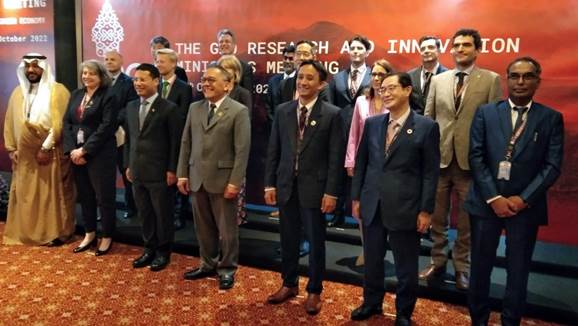
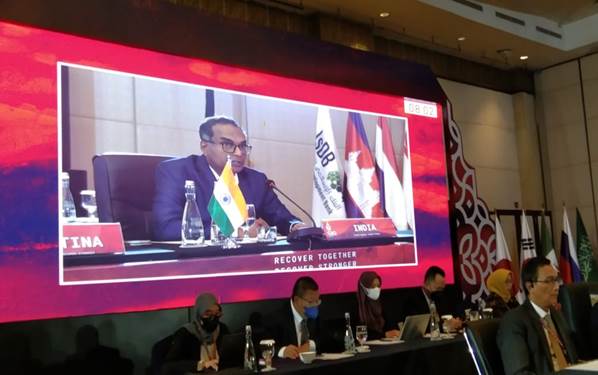
 Secretary, Department of Science and Technology (DST) Dr. Srivari Chandrasekhar highlighted that materials for sustainable energy, scientific challenges & opportunities to achieving a sustainable blue economy, biodiversity, and economy would be the major themes and topics of the Research Innovation Initiative Gathering (RIIG) during India’s presidency starting from 1st December 2022.  

He informed that discussions would be centered on developing the science for innovation and sustainable growth, connecting science and society, science for culture & heritage, traditional knowledge, and medicine.

“India is committed to implementing G-20 Research Innovation Initiative Gathering (RRIG) deliverables and seek support on the G-20 research and innovation agenda for India’s G-20 presidency next year,” said Dr. Chandrasekhar while representing the Minister for Science and Technology at the G-20 Research Ministers meeting at Jakarta.


He elaborated on India’s evolution into a country with major global contributions in research and innovations and highlighted the country’s participation in international scientific collaborations.

“India is partnering in all the global forums, including the construction and establishment of mega-science facilities in India and abroad. We also partner with multilateral forums like UN, ASEAN, BRICS, BIMSTEC, SCO, G-20, etc. Science has to be global, and solutions to challenges should be regional,” he said.

“We aim to adopt a new approach that makes research infrastructure available for all stakeholders and finalising guidelines for Scientific Research Infrastructure Sharing Maintenance and Networks (SRIMAN). Besides, following global trends on a unified nationwide subscription-based model for knowledge, we are creating a central repository for all S&T data,” DST Secretary pointed out.

Dr. Chandrasekhar spoke about India’s efforts in enhancing domestic manufacturing capacity underlining how the country’s generic industry and vaccine manufacturing capability had supported global safety during the pandemic.


“We also promote a plurality of solutions for a variety of social, economic strata as well as geographical regions and focus on rural as well as urban problems in the country. Impact-based research evaluation is undertaken in a framework of research excellence keeping in mind local needs. Mainstreaming science communication has been taken up as a major challenge with the aim of increasing people’s participation in science,” he said.

“India has recently launched policies like Scientific Social Responsibility (SSR) and Corporate Social Responsibility (CSR) to disseminate scientific knowledge and also promote science and technology across the ecosystems. We also launched many programmes for gender equality in the country. Many national missions have been launched partnering with international players to work on cyber-physical systems health, education, energy, environment, agriculture, Industry 4.0, etc.,” DST Secretary pointed out, expressing confidence that collaborations will bring opportunities for G-20 partners and promote innovation as single point agenda for all in the group.

The Research Ministers meeting has been planned to be held in 1st week of July 2023.


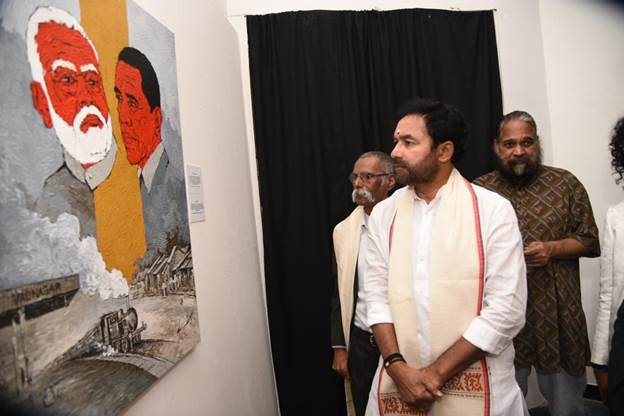
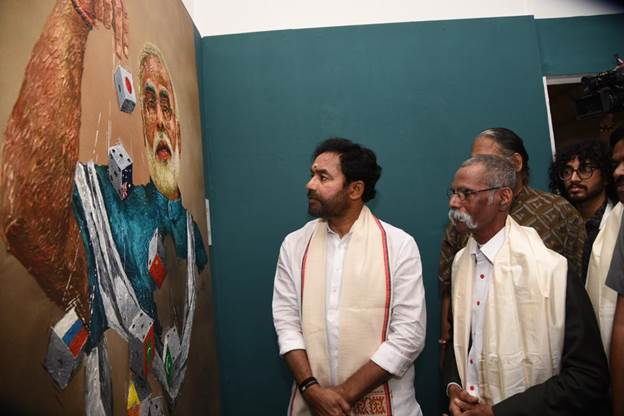
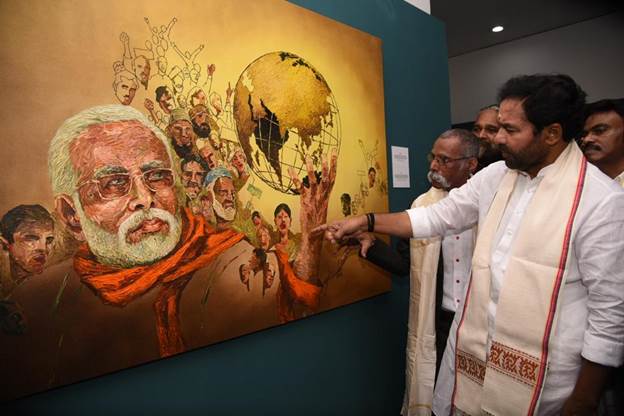
An exhibition of paintings wholly inspired by Prime Minister Shri Narendra Modi

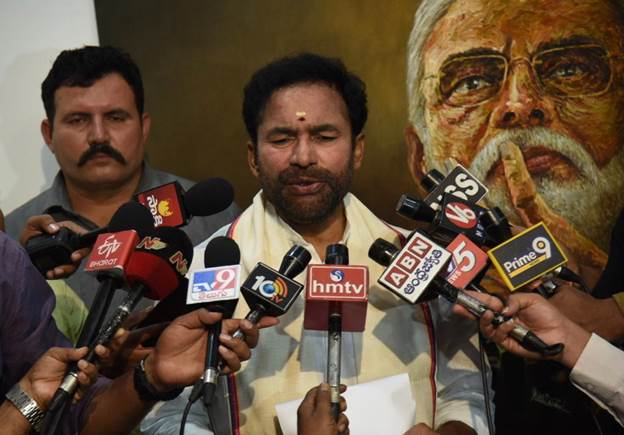
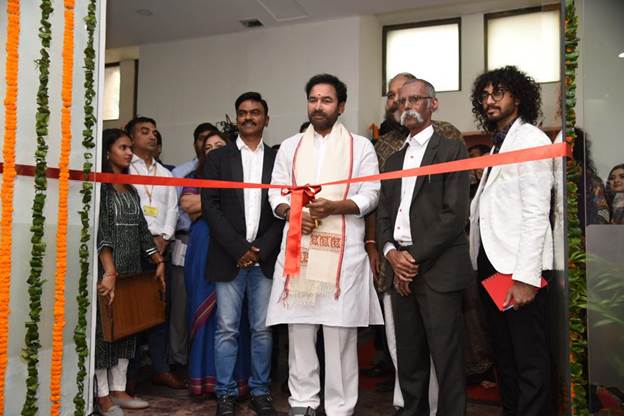
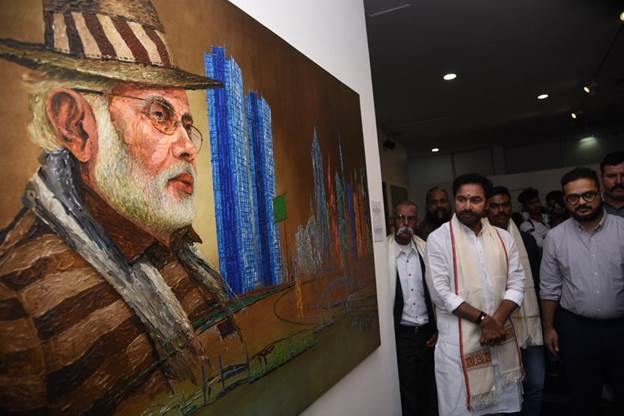
 Shri G Kishan Reddy, Union Minister for Culture, Tourism and Development of North-eastern Region, inaugurated an exhibition of paintings by eminent artist, Akbar Saheb today at National Gallery of Modern Art, New Delhi.  The art of Akbar Saheb is unique as all fifty-five artworks are wholly inspired by the Prime Minister Shri Narendra Modi and his incredible journey and vision. The exhibition, curated by the well-known Rajeev Menon is open to the public from 28th October to 3rd November 2022.

On the occasion, the Union Minister said that Akbar Saheb has shown the journey of Prime Minister Shri Narendra Modi including from Gujarat to becoming the world leader. He added that the paintings show major policy decisions such as GST and depict demonetisation and surgical strike in a clear manner. Shri G.K also said the paintings show the challenges faced by Shri Narendra Modi and his achievements as Prime Minister. The paintings are also important as they show the impact of Shri Narendra Modi  around the world.


The themes presented promise to resonate with every Indian across the country. Each work is deeply rooted in the initiatives taken by the Union government and is directly linked to the aspirations of the common man and the progress of the nation. With his exceptional paintings, Akbar Saheb’s sole intention is to simply encourage and inspire Indians to follow their dream. Of particular interest is the painting titled ‘Dare to Dream’ which documents the courageous journey of a young boy, selling tea in a small town in Gujarat to realise his destiny as Prime Minister of the world’s largest democracy.

The paintings also highlight Prime Minister Shri Narendra Modi’s success stories as well as the many challenges faced with various projects such as Vibrant Gujarat, Shining Bright (based on Asia’s largest solar park in Gujarat), Statue of Unity, Truth Prevails, Sadhbhavana Yatra and so on. Some paintings of note are ‘Lasting Impact’ which depicts his formidable power of resilience and endurance. ‘Bharat Mata’ is another evocative work where the Hon’ble Prime Minister’s mother is personified as Bharat Mata.

Interestingly more than forty artworks are fine expressions based on the popular series of talks, Mann ki Baat. Works like Sankalp Se Siddhi, Say NO to Black Money, Beware of Drugs, Save our Farmers, Water is a Blessing and Helping Hands are masterful compositions that are not only aesthetically pleasing but also send out a powerful message of humanity and compassion. A painting titled ‘Two Great Leaders’ illustrates some special moments shared with President Barack Obama of the United States. There are also the artist’s masterstrokes on the challenges of demonetization, Indus water treaty and the heroic sacrifices of the Indian army.

Akbar Saheb’s paintings present a narrative of mass mobilization and the positive impact of programmes like Swachh Bharat, Digital India, Mudra Yojana, Yoga as part of Life, electrification of villages and LPG connections for the poor. They also illustrate the revitalisation of the economy with the ambitious Make in India project and the growth of tourism as a showcase for the cultural heritage of the country.

***

IEPFA organises an Investor Education, Awareness and Protection Conference in Srinagar, Jammu & Kashmir

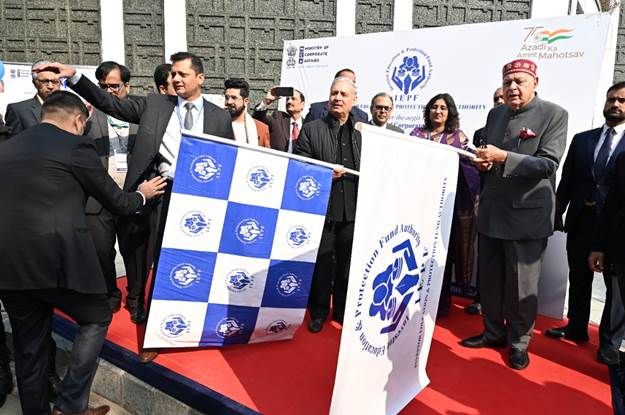
The Investor Education and Protection Fund Authority (IEPFA) under the aegis of Ministry of Corporate Affairs (MCA) organised an Investor Education, Awareness and Protection Conference in Srinagar, Jammu & Kashmir today at Kashmir International Conference. The Conference was inaugurated by Chief Guest, Union Minister of State for Ministry of Corporate Affairs Shri Rao Inderjit Singh.


The event was also graced by Guest of Honour Dr. Farooq Abdullah, Member of Parliament (Srinagar), Smt. Anita Shah Akella, CEO IEPF Authority & Joint Secretary, MCA, Shri Sanjay Shorey, Regional Director (Northern Region), Ministry of Corporate Affairs, Shri Hamid Bukhari Registrar of Companies (ROC) Srinagar and other dignitaries from the Union Territory of Jammu & Kashmir along with senior officials from IEPF Authority, India Post Payment Bank and Department of Posts, CSC e-governance, Institute of Company Secretaries of India, Kashmir Chamber of Commerce, Central Reserve Police Force.

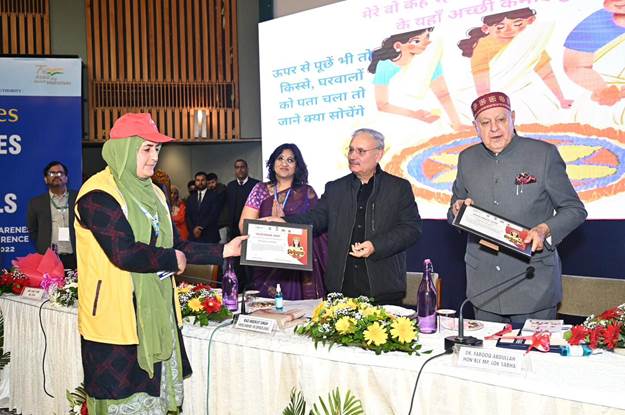
During the inaugural session, Shri Rao Inderjit Singh and Dr. Farooq Abdullah released various major initiatives of IEPF Authority and MCA:


  • IEPFA Mascot “Fundoo” which was selected through Jan-bhagidari after a month-long open contest on MyGov platform. The mascot is conceptualised with an idea symbolizing IEPFA’s vision of taking investor awareness to the last mile with the objective of making it easier to connect with its message, mandate and initiatives.
  • “Niveshak Didi” which is a unique endeavour of IEPF Authority with India Post Payment Bank wherein Investor Education will be promoted in “By the women, for the women” concept. The Niveshak Didi i.e. female Dakiya has intense social connect to the rural population especially women. Three representatives Niveshak Didi from the valley were given certificates by the Chief Guest and Guest of Honour during the Conference.
  • “Niveshak Sarathi”, an investor awareness van was flagged by the Shri Singh and Dr Abdullah and is an initiative by IEPFA to promote financial literacy among people in far-flung areas by spreading knowledge through dedicated audio-visual and print material & a specially designed van equipped with a TV display, public announcement system, internet connectivity etc.
  • “Investors’ Handbook” – a concise compilation of information on savings, budgeting, and investments and provide a vast knowledge of financial instruments in capsule form thereby enabling them to make informed and sensible financial decisions.
  • “75 dedicated IAPs” in the Union territory of J&K to involve stakeholders of different segments of society in the caravan of Investor Awareness.


During his keynote address, Shri Singh appreciated IEPFA’s initiative of conducting the Conference on Investor Education & Awareness in Srinagar, Jammu & Kashmir. He also shared ideas, need and significance of spreading inclusive financial literacy, investor awareness & protection for overall economic growth and nation building.

The inaugural session was followed by a technical session on Financial Literacy as a tool for Economic development. The event was summed up with Nukkad Natak, quiz and other related activities on Financial Literacy involving School Students and other diverse audiences. The conference was attended by around 650 delegates which included students, professionals, academicians, housewives, artisans, CRPF personnel, panchayat representatives and general public from the UT of J&K.


ABOUT IEPFA

IEPF Authority has been established under sub-section (5) of section 125 of Companies Act, 2013 with the objective of promoting Investor Education, Awareness and Protection and for administration of the IEPF fund. It has undertaken a wide gamut of activities to accelerate the pace of investor education among the masses at large. Till date more than 65,000 Investor Awareness Programmes covering above 30 lakh citizens have been conducted by IEPFA. In addition, more than 28,000 claim refunds have been approved with transfer of about 1.6 crore shares and related dividends.


**** 

NEOM : the futuristic sci-fi city of Saudi Arabia.

With plans under way to build Saudi Arabia’s smart city Neom, it is set to be a place in the desert unlike anything else on Earth.

NEOM is being called as what ‘New Future might look like’ by Saudi Arabia. Neom is a portmanteau of the Greek word neos. NEOM is being built on the Red Sea in northwest Saudi Arabia. It can be imagined as a place where entrepreneurship and innovation would frame the course for this New Future. The city is being marketed as a new model for sustainable living, working and prospering. Saudi officials describe it as “the world’s most ambitious project.”

Unveiling the project, Crown Prince Mohammed bin Salman said the 170-kilometre coastal strip in the north-west of the country would be free of cars and streets and have zero carbon emissions.

The smart city will be powered entirely by clean energy, a major step in Saudi Arabia’s shift away from an oil-based economy.

The Line is to be built in Neom and will be home to nine million people, who will live in interconnected societies run by artificial intelligence designed to coexist with nature, with excavation on this massive project having now started.

Confronting the traffic, pollution and infrastructure challenges that overshadow urban life in conventional cities, this futuristic development will prioritise walkability, clean energy and technology to create a new way of living.

NEOM : the futuristic sci-fi city of Saudi Arabia.

With plans under way to build Saudi Arabia’s smart city Neom, it is set to be a place in the desert unlike anything else on Earth.

NEOM is being called as what ‘New Future might look like’ by Saudi Arabia. Neom is a portmanteau of the Greek word neos. NEOM is being built on the Red Sea in northwest Saudi Arabia. It can be imagined as a place where entrepreneurship and innovation would frame the course for this New Future. The city is being marketed as a new model for sustainable living, working and prospering. Saudi officials describe it as “the world’s most ambitious project.”

Unveiling the project, Crown Prince Mohammed bin Salman said the 170-kilometre coastal strip in the north-west of the country would be free of cars and streets and have zero carbon emissions.

The smart city will be powered entirely by clean energy, a major step in Saudi Arabia’s shift away from an oil-based economy.

The Line is to be built in Neom and will be home to nine million people, who will live in interconnected societies run by artificial intelligence designed to coexist with nature, with excavation on this massive project having now started.

Confronting the traffic, pollution and infrastructure challenges that overshadow urban life in conventional cities, this futuristic development will prioritise walkability, clean energy and technology to create a new way of living.

India will become a global economic power with collective efforts

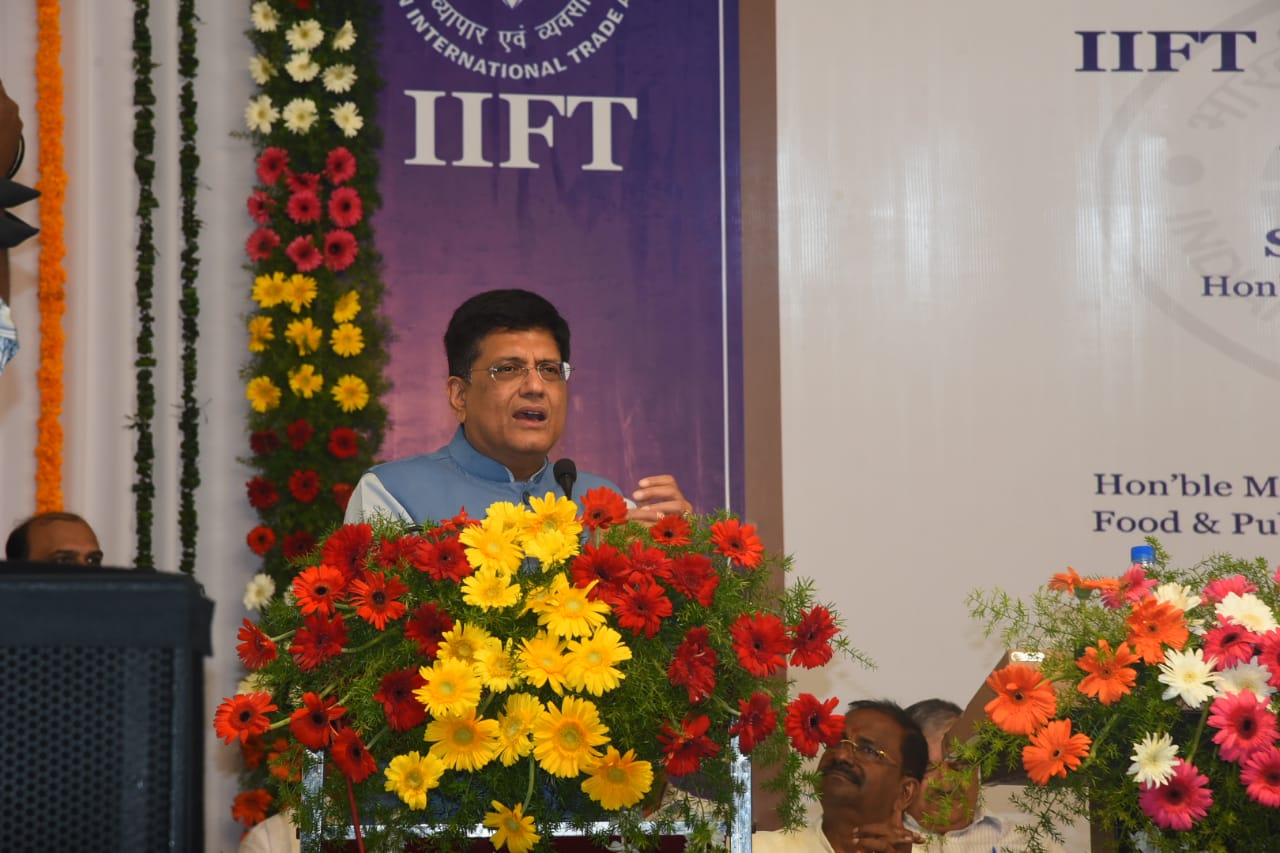
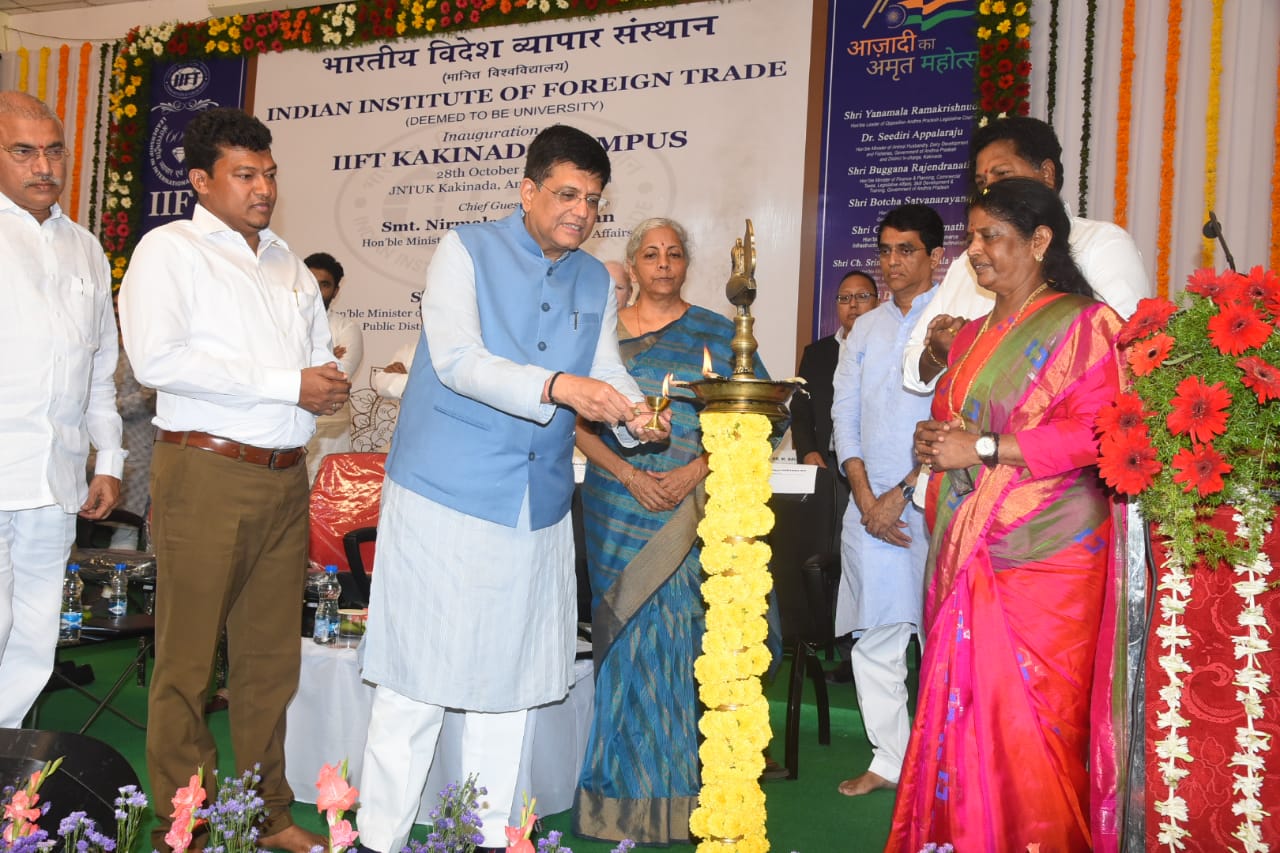
 Union Minister for Commerce and Industries, Consumer Affairs, Food, Public Distribution and Textiles Shri. Piyush Goyal attended as Chief Guest at the inagural of Indian Institute of Foreign Trade (IIFT), Kakinada Campus, in Andhra Pradesh today. Union Minister of Finace, Corporate Affairs Smt. Nirmala Sitaraman inagurated the IIFT Kakinada campus.


Union Minister Piyush Goyal, on this occasssion said that Union Finance Minister Smt. Nirmala Sitaraman paid special attention and initiative for the establishment of IIFT campus. The establishment of this new campus marks the beginning of a new chapter.

He further said that an expert management of human resources is necessary for Indian commerce to gain more international recognition in the future. These human resources will be made available through IIFT’s. 


With political stability, high competitiveness, collective efforts and developing economic system, India will become an economic force in the world to rekonwith. 


He also said that at present, the Indian economy is worth of 3.5 trillion US dollars. A developing country can be taken to the level of a developed country with integrated economic growth and collective efforts. With continuous efforts Indian economy will reach tenfold in the next 25 years, by 2047, when we mark the 100th year of independence. The development can be achieved by making available expert human resources to the maximum extent.

He mentioned that the actions and special allocation of budgets by the central government under the Atman Nirbhar Bharat makes country’s economic system much stronger and enriched. , He also said that Andhra Pradesh is growing a lot in the fields of agriculture, fisheries etc, and the state of Andhrapradesh also have various special economic zones.

The minister has called for the promotion of local products, artisans, skilled weavers etc, as it is important to support them in every way.


The programme was attended by Members of Parliament, Smt. Vanga Geeta, Shri GVL Narasimha Rao, Shri P. Subhas Chadnrabose, Shri M. Bharat Ram, Andhra Pradesh Finance Minister Shri B. Rajendranath Reddy, Civil Supplies Minister, Shri K. Venkata Nageswara Rao, BC Welfare, I&PR and Cinematography Minister Shri Ch. Venugopala Krishna, R&B Minister Shri D. Raja and others.


****