The Indian rupee has been hitting new lows, week after week. From holding on to 74 against the US dollar in January to dropping to 83 last week — a double-digit fall in percentage terms in just 10 months — the rupee’s depreciation has not augured well for the economy. Economists caution that the currency could plunge further in the coming months before settling down. Some forecasters argue that the rupee could rebound and gain strength in the next fiscal year.
The fall of the rupee has been precipitated by global factors and an unusual strengthening of the dollar against almost all major currencies of the world. While the rupee has performed way better against the greenback than biggies such as the pound and the euro, the runaway dollar can’t be taken lightly since it has a massive fallout on India’s import bills and inflation.
The rupee will fall further against the US dollar over the rest of the year, a Reuters poll last week showed, setting up the currency for its steepest annual decline in at least nine years due to a widening domestic trade balance and surging US interest rates.
It is likely to fall further to 84.50 by December, according to the mean and median forecasts of a poll of 14 bankers and foreign exchange advisors. The estimates in the poll ranged between 83.25 and 86, showing a broad consensus that the Rupee would not recover this year.
Joining as a guest in season 14 of Shark tank, Emma Grede is a self-made businesswomen and the first black women to hold an investor position on the popular ABC show, Shark Tank.
In 2008, she established the marketing firm ITB Worldwide for fashion and entertainment.
She is also known for brands such as SKIMS, Good American and Safely.
She is also the chairwoman of the Fifteen Percent Pledge, a campaign that calls on stores to provide Black-owned firms 15% of their shelf space.
The Kardashian clan
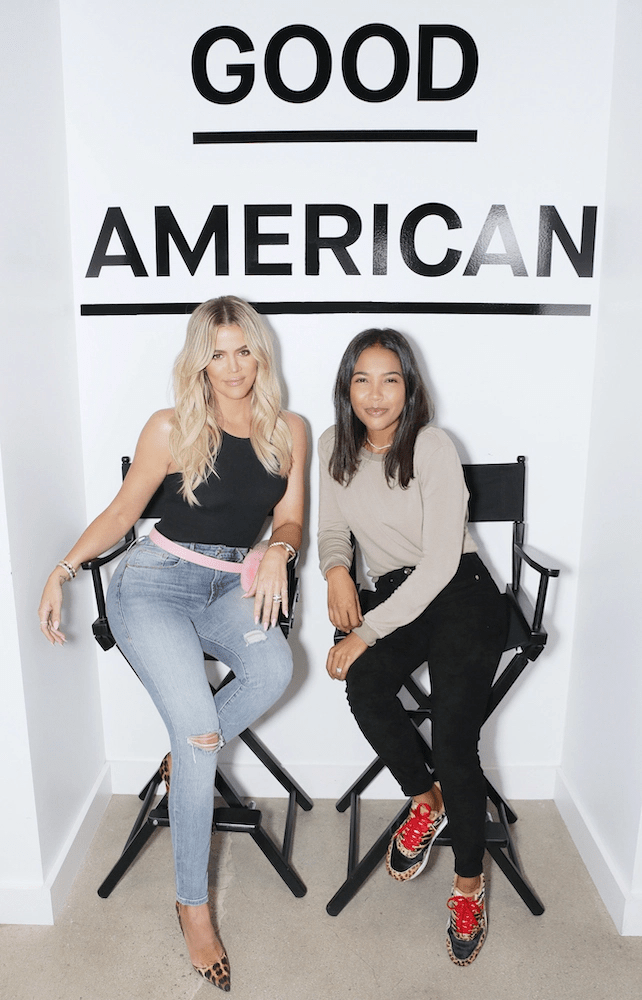
Grede is a close business partner with the Kardashian-Jenner family, being the co-founder and CEO of Good American, a size-inclusive clothing line, in 2016 with Khloe Kardashian.
She is a founding partner and the chief product officer of shapewear company SKIMS, owned by Kim Kardashian where her husband is the CEO.
Along with Kris Jenner, she also co-founded the plant-based cleaning company Safely.
History and the start of the career
Born and raised in East London, England by a single mother, she started a side job when she was 12 years old and used her savings to purchase fashion magazines.
She attended the London College of Fashion to study business and left after landing an internship at Gucci.
Post that she quickly drew the attention of Inca Productions, one of Europe’s top producers of fashion shows and events.
Emma oversaw the department that handled sponsorship and endorsement deals after beginning as a producer.
She helped Inca establish the field of “designer collaborations,” which are partnerships between high fashion and consumer brands.
She did this by working with some of today’s top designers, including Alexander McQueen, Christopher Kane, Vivienne Westwood, and Zac Posen, as well as companies like Chivas, Mercedes-Benz, and Sky.
itb
Emma was appointed managing director of the newly established Independent Talent Group and Saturday Group joint venture, ITB, which represents brands’ interests in the entertainment industry, in 2008.
She was appointed CEO of ITB Group when the company bought the licensing firm Brand 360 in 2010.
She is currently the chairman of the business, which has offices in London, New York, and Los Angeles and serves customers like H&M, Calvin Klein, and Net-a-Porter.
ITB Group is active in the fields of artist representation, brand development, and entertainment marketing.
Good American and beyond
As a co-founder she established the Good American company in 2016 with Khloe Kardashian .
It is a US-based luxury clothing brand that supports the idea of a healthy physique and offers a wide range of sizes.
Sales of upwards of $1 million on the first day of the brand’s launch in October 2016 made it the largest apparel launch in history, further demonstrating a void in the market before Good American’s entry.
Instead of the straight body found in the traditional fashion establishment, Good American has been created to serve to a curvier, sexier, and stronger type of woman.
The company backs the nonprofit Step Up, which assists young women in reaching their full potential.
Soon after collaborating with Khloe’s sister and celebrity Kim Kardashian, they launched SKIMS, a all-women type shapewear affordable by the masses.
Recently she also collaborated with Kris Jenner herself for the plant based cleaning company Safely.
Emma Grede with her husband Jens Grede and four children, Grey, Lola, and twins Lake and Rafferty
Today, due to accumulating massive amount of success with so many brands, Forbes declared Emma Grede as one of the top 100 in America’s self-made woman.
Currently she has a net worth of $360 million and is happily married to Swedish entrepreneur Jens Grede. the couple reside in Los angles with their four kids.
Joining as a guest in season 14 of Shark tank, Emma Grede is a self-made businesswomen and the first black women to hold an investor position on the popular ABC show, Shark Tank.
In 2008, she established the marketing firm ITB Worldwide for fashion and entertainment.
She is also known for brands such as SKIMS, Good American and Safely.
She is also the chairwoman of the Fifteen Percent Pledge, a campaign that calls on stores to provide Black-owned firms 15% of their shelf space.
The Kardashian clan
Grede is a close business partner with the Kardashian-Jenner family, being the co-founder and CEO of Good American, a size-inclusive clothing line, in 2016 with Khloe Kardashian.
She is a founding partner and the chief product officer of shapewear company SKIMS, owned by Kim Kardashian where her husband is the CEO.
Along with Kris Jenner, she also co-founded the plant-based cleaning company Safely.
History and the start of the career
Born and raised in East London, England by a single mother, she started a side job when she was 12 years old and used her savings to purchase fashion magazines.
She attended the London College of Fashion to study business and left after landing an internship at Gucci.
Post that she quickly drew the attention of Inca Productions, one of Europe’s top producers of fashion shows and events.
Emma oversaw the department that handled sponsorship and endorsement deals after beginning as a producer.
She helped Inca establish the field of “designer collaborations,” which are partnerships between high fashion and consumer brands.
She did this by working with some of today’s top designers, including Alexander McQueen, Christopher Kane, Vivienne Westwood, and Zac Posen, as well as companies like Chivas, Mercedes-Benz, and Sky.
itb
Emma was appointed managing director of the newly established Independent Talent Group and Saturday Group joint venture, ITB, which represents brands’ interests in the entertainment industry, in 2008.
She was appointed CEO of ITB Group when the company bought the licensing firm Brand 360 in 2010.
She is currently the chairman of the business, which has offices in London, New York, and Los Angeles and serves customers like H&M, Calvin Klein, and Net-a-Porter.
ITB Group is active in the fields of artist representation, brand development, and entertainment marketing.
Good American and beyond
As a co-founder she established the Good American company in 2016 with Khloe Kardashian .
It is a US-based luxury clothing brand that supports the idea of a healthy physique and offers a wide range of sizes.
Sales of upwards of $1 million on the first day of the brand’s launch in October 2016 made it the largest apparel launch in history, further demonstrating a void in the market before Good American’s entry.
Instead of the straight body found in the traditional fashion establishment, Good American has been created to serve to a curvier, sexier, and stronger type of woman.
The company backs the nonprofit Step Up, which assists young women in reaching their full potential.
Soon after collaborating with Khloe’s sister and celebrity Kim Kardashian, they launched SKIMS, a all-women type shapewear affordable by the masses.
Recently she also collaborated with Kris Jenner herself for the plant based cleaning company Safely.
Emma Grede with her husband Jens Grede and four children, Grey, Lola, and twins Lake and Rafferty
Today, due to accumulating massive amount of success with so many brands, Forbes declared Emma Grede as one of the top 100 in America’s self-made woman.
Currently she has a net worth of $360 million and is happily married to Swedish entrepreneur Jens Grede. the couple reside in Los angles with their four kids.
On Tuesday, the day after Diwali, Delhi’s air quality was the finest in seven years (October 25). This includes the epidemic years of 2020 and 2021. According to statistics from the Central Pollution Control Board, the AQI (air quality index) was 303 on Tuesday (CPCB). On Monday, Diwali, the temperature was 312. This signifies that the air quality was very bad on both days. An AQI of 301 to 400 is considered very poor. According to CPCB statistics, last year saw the worst post-Diwali air quality in Delhi since 2015, with an AQI of 462 recorded on the day after Diwali. This classified air pollution as ‘severe.’ Last year on Diwali, the AQI was 382. In four of the eight years since 2015, Delhi’s air quality has deteriorated to ‘severe’ the day after Diwali.
REASON BEHIND THE CLEAN AIR?
On Diwali, it was windy, and Gufran Beig, SAFAR’s original project director, noted that the wind speed helped reduce the collection of pollution. Furthermore, because Diwali fell early this year, the air is not yet chilly enough to trap pollution in the lower levels. Crop residue burning has also contributed nothing so far this year in Punjab and Haryana. The wind direction in Delhi, which has been westerly-southwesterly since Monday, has not been favourable for transporting stubble-burning smoke from the northwest, according to him.
According to a SAFAR forecasting system update, the percentage of stubble burning to PM2.5 levels in Delhi was approximately 5.6% on Tuesday. According to SAFAR statistics, the contribution of stubble burning to Delhi’s air on Diwali day (November 4) last year was 25%, and 36% on the day following Diwali.
Anumita Roychowdhury, executive director of research and advocacy at the Centre for Science and Environment, identified many variables. “Diwali occurred early, with milder weather and before the strong inversion conditions set in.” Wind speeds have been lower in comparison, and crop fires have not been as violent. “It’s tough to say whether or not there were fewer firework emissions,” she added.
Urban Indians are most worried about unemployment (39 per cent), financial and political corruption (27 per cent), crime and violence (25 per cent), poverty, social inequality (22 per cent) and climate change (22 per cent) in the month of October, revealed Ipsos What Worries the World survey.
At least 2 in 10 urban Indians were worried about inflation (21 per cent), and India was placed last among 29 markets in its worry around inflation.
Ipsos in India said, “India is still reeling under the collateral impact of the prolonged coronavirus and global slowdown of the economy due to the war in Ukraine, which are impacting jobs, leading to rising in corruption, crime and social inequality. Even the inflation impact is manifesting itself though India is better placed than its global counterparts due to the government’s steps to keep the fuel prices in check. Floods and adverse climate impacts are making urban Indians worry about climate change. These issues need to be addressed by the government first.
Urban Indians are most worried about unemployment (39 per cent), financial and political corruption (27 per cent), crime and violence (25 per cent), poverty, social inequality (22 per cent) and climate change (22 per cent) in the month of October, revealed Ipsos What Worries the World survey.
At least 2 in 10 urban Indians were worried about inflation (21 per cent), and India was placed last among 29 markets in its worry around inflation.
Ipsos in India said, “India is still reeling under the collateral impact of the prolonged coronavirus and global slowdown of the economy due to the war in Ukraine, which are impacting jobs, leading to rising in corruption, crime and social inequality. Even the inflation impact is manifesting itself though India is better placed than its global counterparts due to the government’s steps to keep the fuel prices in check. Floods and adverse climate impacts are making urban Indians worry about climate change. These issues need to be addressed by the government first.
Some typical features of comprehensive development in Smart Cities are described below.
Promoting mixed land use in area based developments–planning for ‘unplanned areas’ containing a range of compatible activities and land uses close to one another in order to make land use more efficient. The States will enable some flexibility in land use and building bye-laws to adapt to change;
Housing and inclusiveness – expand housing opportunities for all;
Creating walkable localities –reduce congestion, air pollution and resource depletion, boost local economy, promote interactions and ensure security. The road network is created or refurbished not only for vehicles and public transport, but also for pedestrians and cyclists, and necessary administrative services are offered within walking or cycling distance;
Preserving and developing open spaces – parks, playgrounds, and recreational spaces in order to enhance the quality of life of citizens, reduce the urban heat effects in Areas and generally promote eco-balance;
Promoting a variety of transport options – Transit Oriented Development (TOD), public transport and last mile para-transport connectivity;
Making governance citizen-friendly and cost effective – increasingly rely on online services to bring about accountability and transparency, especially using mobiles to reduce cost of services and providing services without having to go to municipal offices. Forming e-groups to listen to people and obtain feedback and use online monitoring of programs and activities with the aid of cyber tour of worksites;
Giving an identity to the city – based on its main economic activity, such as local cuisine, health, education, arts and craft, culture, sports goods, furniture, hosiery, textile, dairy, etc;
Applying Smart Solutions to infrastructure and services in area-based development in order to make them better. For example, making Areas less vulnerable to disasters, using fewer resources, and providing cheaper services.
Researchers have found a solution for retrofitting old non-earthquake-resistant buildings with a technology that can prevent major damage to such buildings from earthquakes without compromising on their strength.
The technology called semi-confined unreinforced brick masonry (SC-URBM) can resolve the problem of spread of settlements in earthquake-prone areas with constructions that have been built without following earthquake-preventive building codes.
Historically, most buildings, technically called unreinforced masonry (URM), were not built using modern building codes. Thus they are much more likely to experience damage or collapse during an earthquake. URM buildings have traditionally been widely adopted worldwide due to inexpensive and locally available construction materials.
Just like in most developing countries located in earthquake-prone regions unreinforced brick masonry (URBM) has been a common practice in urban, semi-urban, and rural areas of India. Considering that major parts of India are under seismic zone III or above and most of the URBM buildings are old and structurally deficient, strengthening of URBM buildings located in earthquake-prone areas is extremely important.
Researchers from Indian Institute of Technology, Kanpur, have explored the extent to which retrofitting old buildings with SC-URBM technology can solve the problem. They found that SC-URBM can significantly enhance the energy dissipation capacity and ductility of the retrofitted building without compromising its strength. Hence such buildings would have resulting superior performance in comparison to URBM buildings during earthquakes.
The idea of the technology emerged from confined masonry, an earthquake-resistant construction system where the masonry walls are built first, and the concrete columns and beams are poured in afterward to enclose (confine) the wall. SC-URBM technology has a similar concept but does not need to be implemented at the construction stage. It involves embedding of reinforced concrete (RC) bands through the partial thickness of the wall and can be implemented or retrofitted in old buildings.
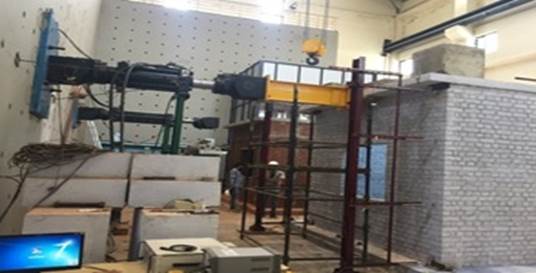
The researchers, Lakshmi Latha, Samit Ray-Chaudhuri, Suparno Mukhopadhyay, and Kunwar Bajpai, conducted experiments on two identical full-scale single-story brick masonry buildings — a completely unreinforced (URBM), and the other retrofitted with semiconfining horizontal and vertical reinforced concrete (RC) elements (SC-URBM).
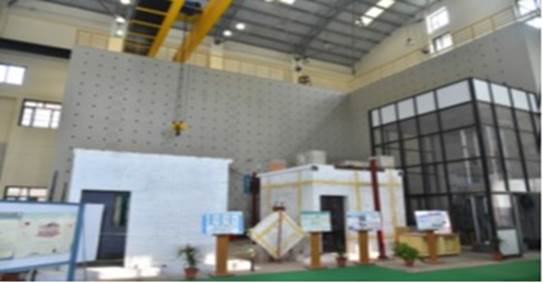
The two buildings were subjected to a test called reverse slow-cyclic quasi-static loading protocol to quantify the improved seismic performance of the SC-URBM building compared to the URBM building. A Pseudo Dynamic Testing Facility (PDTF) for affordable experimental evaluation of earthquake resistance of full prototype structural systems developed with the guidance of Professor Durgesh C Rai under the Fund for Improvement of S&T Infrastructure (FIST) programme of the Department of Science and Technology (DST), Government of India was used for the tests. They proved that the technology provides better integral action of the confining elements and load-bearing walls to achieve enhanced seismic performance. The results were published in the ASCE Journal of Structural Engineering.
This technology for strengthening existing URBM buildings is not only architecturally aesthetic but can also be implemented easily by manpower available locally (masons).
Rishi Sunak born on May 12, 1980, is a British politician who has served as Prime minister designated the United Kingdom and Leader of the conservative party since 24 October 2022. He previously served as Chancellor of the Exchequer from 2020 to 2022 and chief secretary to the treasure from 2019 to 2020. He has been a member of Parliament and MP for Richmond York since 2015.
Rishi Sunak was born in Southampton to parents of Punjabi-Indian descent who migrated to Britain from East Africa in the 1960s. He was educated at Winchester College read philosophy politics and economics PP at Lincoln College Oxford and gained an MBA from Stanford University in California. As a Fulbright scholar while studying at Stanford, he met his future wife shitamorti, the daughter of Inar Narayana Morty the Indian Billionaire businessman who founded Infosys. Sunak and Morty are the 2022 richest people in Britain with a combined fortune of 730 metres as of 2022. After graduating Sunak worked for Goldman Sachs and later as a partner at the huge fund firms the Children’s investment fund management and Saleem Partner. Sonic was elected to the House of Commons for Richmond in North Yorkshire. Its the 2015 general election succeeding William Hague sonic supported Brexit in the 2016 reference on EU membership he was appointed to Thresha Mays’s second government as the parliamentary government in the 2018 reshuffle he voted three times in favor of Mays’s Brexit withdrawal agreement after May resigned, Sonak supported Boris Johnson campaign to become a conservative leader. After Johnson was elected and appointed prime minister he appointed Sunak as Chief secretary to the treasury Sonak replaced Saja David as Chancellor of ex check after his resignation in February 2020 Cabinetry shuffle as Chancellor sunak was prominent in the government’s financial response to the Covid 19 pandemic and it’s economic impact including the coronavirus job retention and reaches to help out schemes. He resigned as Chancellor on July 2022 followed by Johnson’s resignation amid a government crisis. Sunak stood in the Conservative party leadership election to replace Johnson and last the members vote for Liz Dress following Truss’s resignation amid another government crisis. Sunak was elected unopposed as a leader of the conservative party and is set to become the next British prime minister.
He is the eldest of three siblings. His father was born and raised in the colony and protectorate of Kenya present-day Kenya while his mother was born in Tanganyika which later became part of Tanzania. His grandfather was born in Punjab province British India and migrated from East Africa with their families to the UK in the 1960s. His paternal grandfather Ramdas Sunak was from Gujranwala in presence Pakistan and moved to Nairobi in 1936 to work as a clerk where he was joined by his wife Suhagwani sunk from Delhi
Sunak’s maternal grandfather rub reason berry MBE worked in Tanganyika as a tax officer and had arranged a marriage with 16-year-old Tanganyika born srksha with whom he had three children the family moved to the UK in 1966 funded by Srksha sold her wedding jewelry Sunk attended school in Romsey Hampshire and Winchester college a boy’s independent boarding school where he was head boy.
The president of India Sri Ramnath Kovind inaugurated a virtual conference of governors on the role of national education policy NEP 2020 and transforming higher education in New Delhi. Today Prime Minister Narendra Modi addressed the inaugural session of the conference which was attended by union education minister sir Ramesh April Shank for Education Sri Sanjay Dutta governors lieutenant governor administrations of states and also some sat chief ministers and education ministers addressing the conference.
The president of India said that the national education policy NEP will take the country, especially the youth forward by the needs and aspirations of the 21st century congratulated the prime minister for his visionary leadership and inspiring role in shaping this historical document he also appreciated Dr. Kastura Runyan and ministers as well as the officials of education ministry for giving shape to NEP. Through an elaborate process that took into consideration more than two lack suggestions received 2.5 lakhs gram panchayats more than 12.5 thousand local bodies and about 675 districts if changes are effectively brought about India will emerge as an education superpower he added elaborating on the NEP. The president said that governors being chancellors of states Universities have a crucial role to play in the implementation of NEP there are some 400 states Universities with about 40k colleges affiliated with them hence it was imperative to establish coordination and dialogues with these universities which could be done by governors who are also the chancellors the president said that Education is the most effective way for social justice and hence the NEP calls for an investment of about 6 percentage of GDP jointly by the center and the states. He said the NEP emphasized strengthening public educational institutions for a vibrant democratic society and at the same time inculcating respect among students for fundamental rights duties constitutional values and patriotism speaking on the occasion the prime minister said the education policy and education system are important means of fulfilling the aspirations of the country. The prime minister said that though the responsibility of education lies with the central state and local level governments their interference in the policy should be minimal. He said the relevance and effectiveness of the education policy will increase when more and more teachers, parents, and students get associated with it. He added that NEP 2020 was drafted after receiving feedback from millions of people across the country and from those related to the Education sector which is why there is a sense of ownership and an all round acceptance among people about this policy. The prime minister further said that NEP is not only directed at reforming the education system but also at giving a new direction to the social and economic fabric of 21st-century India. he said the policy aims at making India self-reliant or atma nirbhar by making our youth further ready in a rapidly changing world and equipping them with the knowledge and skills as per the requirements of the future. He added that NEP focuses on learning rather than studying and goes beyond the curriculum to emphasize his critical thinking he said there is more emphasis given on passion practically and performance than a process he said that the policy aims at making India a knowledge economy in the 21st century. He said that it also allows for offshore campuses of top international Universities in India which will address the issue of brain drain in his welcome remarks union education Minister Sri Rameshh’s portrayal of Shank touched upon the journey evolution and consultation process of the NEP. The minister said this policy is the result of a wide-ranging consultation process covering Laksa villages block districts’ academicians vice chancellor principal teachers and scientists he stressed the new direction and support to research that will be given through the national research foundation. He said the NEP will make our education system both flexible and stable he said the focus and the police are on reform transform and performance and hope the road to a swatch status act atma nirbhar and Ek Bharat Shrestha Bharat will go through this NEP policy the minister of State for Education Sri Sanjay dutra appreciated the entering insights from the governor’s conference and thanked all the participants of the conference discussion sessions with governors lieutenant governor and education minister of the states and union Territories were held during the conference the prospect of transformational reforms in higher education under the new NEP 2020 and the road ahead was elaborately discussed upon in the session the governors and lieutenant governors briefed the president and other participants about various issues with regards to their states and union Territories.
The New Education Policy is a comprehensive and all-encompassing policy that seeks to revamp the Indian education system in its entirety. One of the most significant changes proposed by the NEP is the switch from the 10+2 education structure to a new 5+3+3+4 education system.
Under the new system, students will spend five years in elementary school, three years in middle school, three years in high International schools, and four years in college. This will allow for a more well-rounded and holistic education, as students will be exposed to a broader range of subjects and disciplines.
In addition, the New Education Policy 2022 also proposes introducing multiple exit options so that students can choose to leave the education system after completing elementary school, middle school, or high school if they so desire.
The NEP 2022 is an ambitious and far-reaching policy that seeks to transform the Indian education system into one that is on par with the best in the world.
This national education policy focuses on students’ individual needs. It aims to create a more flexible and adaptive education system that can meet the needs of students and the economy.
Vocational Education is part of the new education policy. It includes teaching the mother tongue and provincial languages up to the 5th year of schooling. Training in vocational skills will be included from the 6th class onwards.
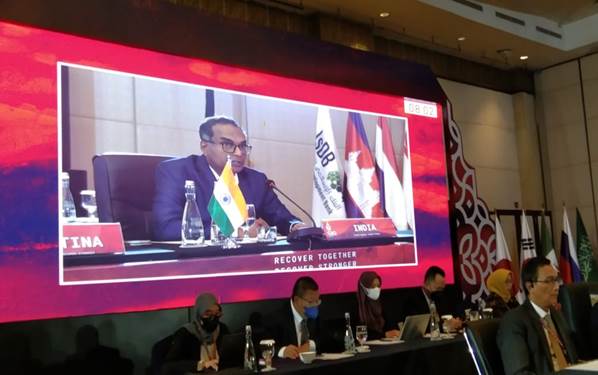
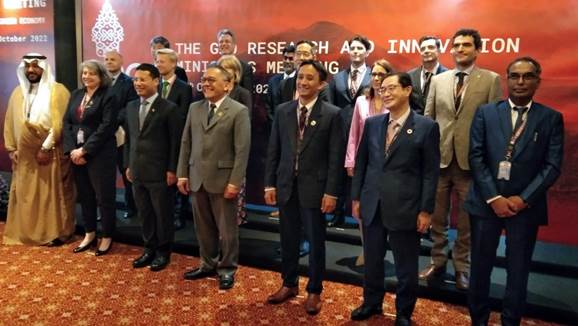
Secretary, Department of Science and Technology (DST) Dr. Srivari Chandrasekhar highlighted that materials for sustainable energy, scientific challenges & opportunities to achieving a sustainable blue economy, biodiversity, and economy would be the major themes and topics of the Research Innovation Initiative Gathering (RIIG) during India’s presidency starting from 1st December 2022.
He informed that discussions would be centered on developing the science for innovation and sustainable growth, connecting science and society, science for culture & heritage, traditional knowledge, and medicine.
“India is committed to implementing G-20 Research Innovation Initiative Gathering (RRIG) deliverables and seek support on the G-20 research and innovation agenda for India’s G-20 presidency next year,” said Dr. Chandrasekhar while representing the Minister for Science and Technology at the G-20 Research Ministers meeting at Jakarta.
He elaborated on India’s evolution into a country with major global contributions in research and innovations and highlighted the country’s participation in international scientific collaborations.
“India is partnering in all the global forums, including the construction and establishment of mega-science facilities in India and abroad. We also partner with multilateral forums like UN, ASEAN, BRICS, BIMSTEC, SCO, G-20, etc. Science has to be global, and solutions to challenges should be regional,” he said.
“We aim to adopt a new approach that makes research infrastructure available for all stakeholders and finalising guidelines for Scientific Research Infrastructure Sharing Maintenance and Networks (SRIMAN). Besides, following global trends on a unified nationwide subscription-based model for knowledge, we are creating a central repository for all S&T data,” DST Secretary pointed out.
Dr. Chandrasekhar spoke about India’s efforts in enhancing domestic manufacturing capacity underlining how the country’s generic industry and vaccine manufacturing capability had supported global safety during the pandemic.
“We also promote a plurality of solutions for a variety of social, economic strata as well as geographical regions and focus on rural as well as urban problems in the country. Impact-based research evaluation is undertaken in a framework of research excellence keeping in mind local needs. Mainstreaming science communication has been taken up as a major challenge with the aim of increasing people’s participation in science,” he said.
“India has recently launched policies like Scientific Social Responsibility (SSR) and Corporate Social Responsibility (CSR) to disseminate scientific knowledge and also promote science and technology across the ecosystems. We also launched many programmes for gender equality in the country. Many national missions have been launched partnering with international players to work on cyber-physical systems health, education, energy, environment, agriculture, Industry 4.0, etc.,” DST Secretary pointed out, expressing confidence that collaborations will bring opportunities for G-20 partners and promote innovation as single point agenda for all in the group.
The Research Ministers meeting has been planned to be held in 1st week of July 2023.
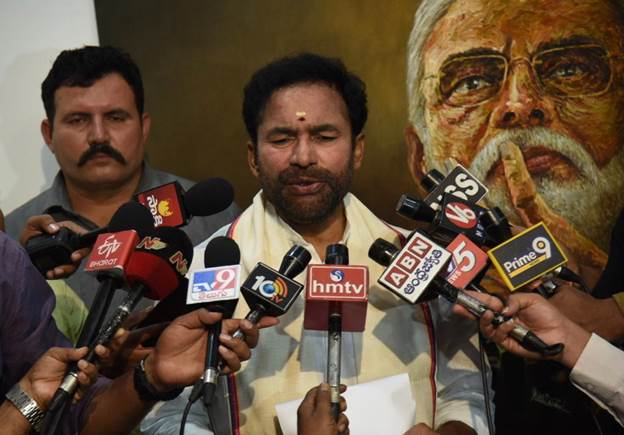
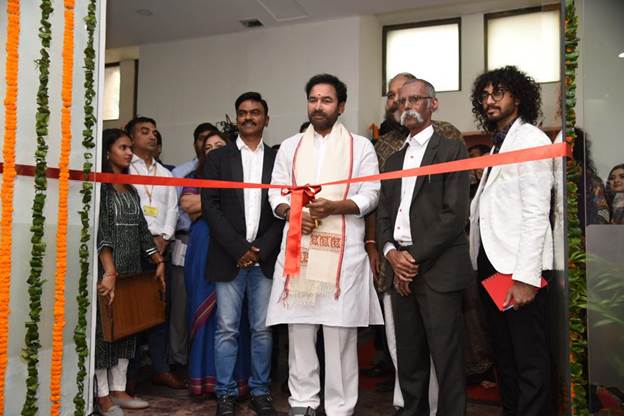
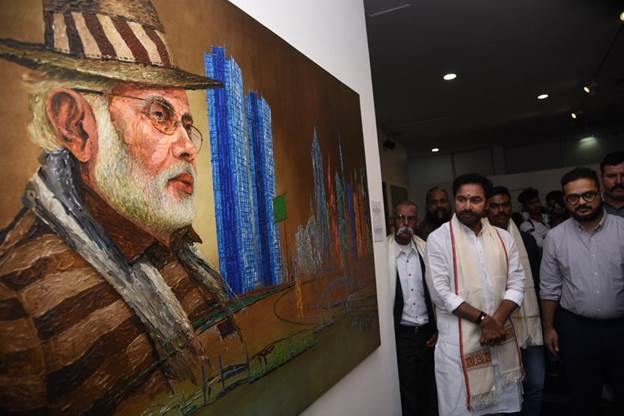
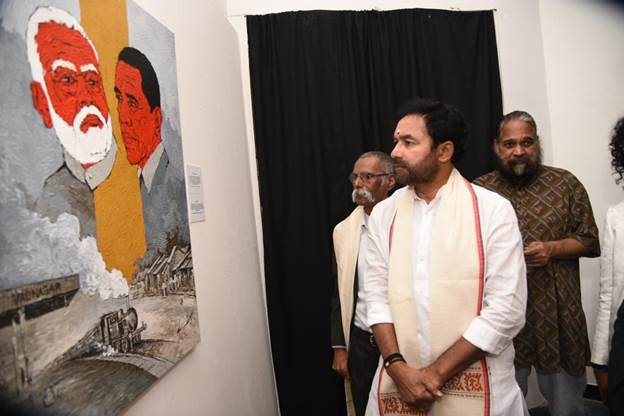
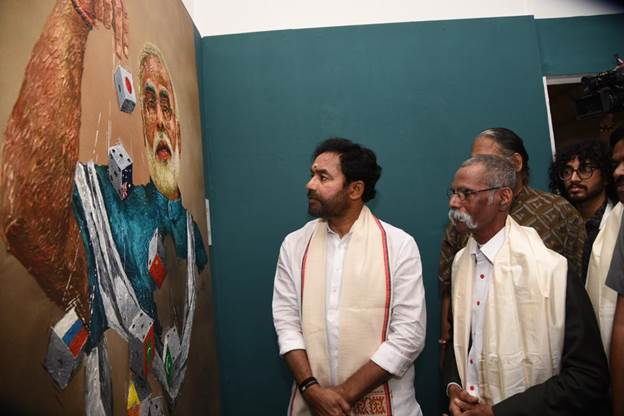
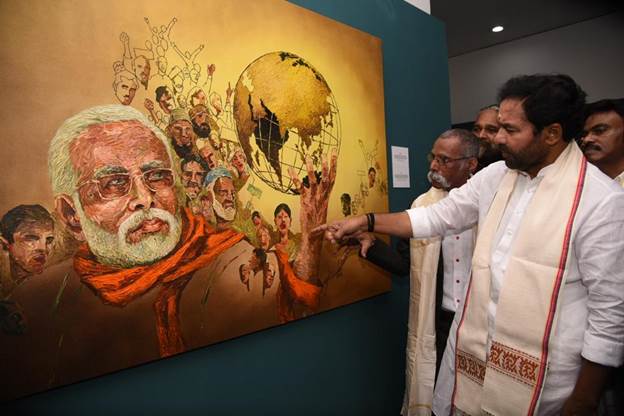
Shri G Kishan Reddy, Union Minister for Culture, Tourism and Development of North-eastern Region, inaugurated an exhibition of paintings by eminent artist, Akbar Saheb today at National Gallery of Modern Art, New Delhi. The art of Akbar Saheb is unique as all fifty-five artworks are wholly inspired by the Prime Minister Shri Narendra Modi and his incredible journey and vision. The exhibition, curated by the well-known Rajeev Menon is open to the public from 28th October to 3rd November 2022.
On the occasion, the Union Minister said that Akbar Saheb has shown the journey of Prime Minister Shri Narendra Modi including from Gujarat to becoming the world leader. He added that the paintings show major policy decisions such as GST and depict demonetisation and surgical strike in a clear manner. Shri G.K also said the paintings show the challenges faced by Shri Narendra Modi and his achievements as Prime Minister. The paintings are also important as they show the impact of Shri Narendra Modi around the world.
The themes presented promise to resonate with every Indian across the country. Each work is deeply rooted in the initiatives taken by the Union government and is directly linked to the aspirations of the common man and the progress of the nation. With his exceptional paintings, Akbar Saheb’s sole intention is to simply encourage and inspire Indians to follow their dream. Of particular interest is the painting titled ‘Dare to Dream’ which documents the courageous journey of a young boy, selling tea in a small town in Gujarat to realise his destiny as Prime Minister of the world’s largest democracy.
The paintings also highlight Prime Minister Shri Narendra Modi’s success stories as well as the many challenges faced with various projects such as Vibrant Gujarat, Shining Bright (based on Asia’s largest solar park in Gujarat), Statue of Unity, Truth Prevails, Sadhbhavana Yatra and so on. Some paintings of note are ‘Lasting Impact’ which depicts his formidable power of resilience and endurance. ‘Bharat Mata’ is another evocative work where the Hon’ble Prime Minister’s mother is personified as Bharat Mata.
Interestingly more than forty artworks are fine expressions based on the popular series of talks, Mann ki Baat. Works like Sankalp Se Siddhi, Say NO to Black Money, Beware of Drugs, Save our Farmers, Water is a Blessing and Helping Hands are masterful compositions that are not only aesthetically pleasing but also send out a powerful message of humanity and compassion. A painting titled ‘Two Great Leaders’ illustrates some special moments shared with President Barack Obama of the United States. There are also the artist’s masterstrokes on the challenges of demonetization, Indus water treaty and the heroic sacrifices of the Indian army.
Akbar Saheb’s paintings present a narrative of mass mobilization and the positive impact of programmes like Swachh Bharat, Digital India, Mudra Yojana, Yoga as part of Life, electrification of villages and LPG connections for the poor. They also illustrate the revitalisation of the economy with the ambitious Make in India project and the growth of tourism as a showcase for the cultural heritage of the country.
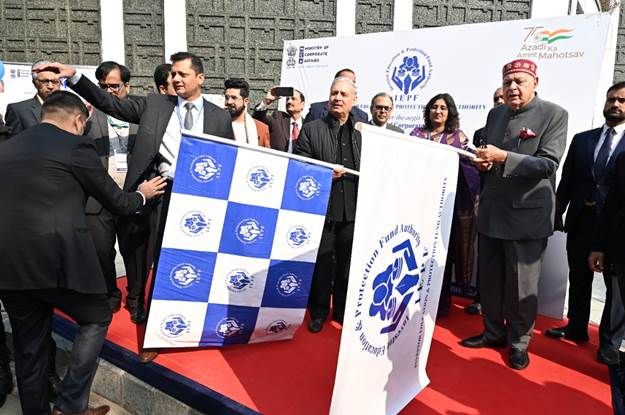
The Investor Education and Protection Fund Authority (IEPFA) under the aegis of Ministry of Corporate Affairs (MCA) organised an Investor Education, Awareness and Protection Conference in Srinagar, Jammu & Kashmir today at Kashmir International Conference. The Conference was inaugurated by Chief Guest, Union Minister of State for Ministry of Corporate Affairs Shri Rao Inderjit Singh.
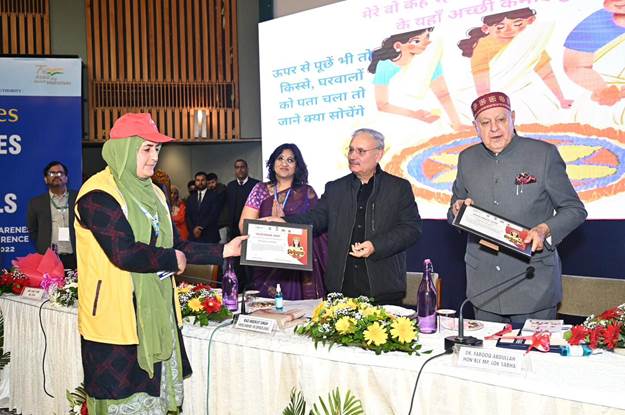
The event was also graced by Guest of Honour Dr. Farooq Abdullah, Member of Parliament (Srinagar), Smt. Anita Shah Akella, CEO IEPF Authority & Joint Secretary, MCA, Shri Sanjay Shorey, Regional Director (Northern Region), Ministry of Corporate Affairs, Shri Hamid Bukhari Registrar of Companies (ROC) Srinagar and other dignitaries from the Union Territory of Jammu & Kashmir along with senior officials from IEPF Authority, India Post Payment Bank and Department of Posts, CSC e-governance, Institute of Company Secretaries of India, Kashmir Chamber of Commerce, Central Reserve Police Force.
During the inaugural session, Shri Rao Inderjit Singh and Dr. Farooq Abdullah released various major initiatives of IEPF Authority and MCA:
IEPFA Mascot “Fundoo” which was selected through Jan-bhagidari after a month-long open contest on MyGov platform. The mascot is conceptualised with an idea symbolizing IEPFA’s vision of taking investor awareness to the last mile with the objective of making it easier to connect with its message, mandate and initiatives.
“Niveshak Didi” which is a unique endeavour of IEPF Authority with India Post Payment Bank wherein Investor Education will be promoted in “By the women, for the women” concept. The Niveshak Didi i.e. female Dakiya has intense social connect to the rural population especially women. Three representatives Niveshak Didi from the valley were given certificates by the Chief Guest and Guest of Honour during the Conference.
“Niveshak Sarathi”, an investor awareness van was flagged by the Shri Singh and Dr Abdullah and is an initiative by IEPFA to promote financial literacy among people in far-flung areas by spreading knowledge through dedicated audio-visual and print material & a specially designed van equipped with a TV display, public announcement system, internet connectivity etc.
“Investors’ Handbook” – a concise compilation of information on savings, budgeting, and investments and provide a vast knowledge of financial instruments in capsule form thereby enabling them to make informed and sensible financial decisions.
“75 dedicated IAPs” in the Union territory of J&K to involve stakeholders of different segments of society in the caravan of Investor Awareness.
During his keynote address, Shri Singh appreciated IEPFA’s initiative of conducting the Conference on Investor Education & Awareness in Srinagar, Jammu & Kashmir. He also shared ideas, need and significance of spreading inclusive financial literacy, investor awareness & protection for overall economic growth and nation building.
The inaugural session was followed by a technical session on Financial Literacy as a tool for Economic development. The event was summed up with Nukkad Natak, quiz and other related activities on Financial Literacy involving School Students and other diverse audiences. The conference was attended by around 650 delegates which included students, professionals, academicians, housewives, artisans, CRPF personnel, panchayat representatives and general public from the UT of J&K.
ABOUT IEPFA
IEPF Authority has been established under sub-section (5) of section 125 of Companies Act, 2013 with the objective of promoting Investor Education, Awareness and Protection and for administration of the IEPF fund. It has undertaken a wide gamut of activities to accelerate the pace of investor education among the masses at large. Till date more than 65,000 Investor Awareness Programmes covering above 30 lakh citizens have been conducted by IEPFA. In addition, more than 28,000 claim refunds have been approved with transfer of about 1.6 crore shares and related dividends.
With plans under way to build Saudi Arabia’s smart city Neom, it is set to be a place in the desert unlike anything else on Earth.
NEOM is being called as what ‘New Future might look like’ by Saudi Arabia. Neom is a portmanteau of the Greek word neos. NEOM is being built on the Red Sea in northwest Saudi Arabia. It can be imagined as a place where entrepreneurship and innovation would frame the course for this New Future. The city is being marketed as a new model for sustainable living, working and prospering. Saudi officials describe it as “the world’s most ambitious project.”
Unveiling the project, Crown Prince Mohammed bin Salman said the 170-kilometre coastal strip in the north-west of the country would be free of cars and streets and have zero carbon emissions.
The smart city will be powered entirely by clean energy, a major step in Saudi Arabia’s shift away from an oil-based economy.
The Line is to be built in Neom and will be home to nine million people, who will live in interconnected societies run by artificial intelligence designed to coexist with nature, with excavation on this massive project having now started.
Confronting the traffic, pollution and infrastructure challenges that overshadow urban life in conventional cities, this futuristic development will prioritise walkability, clean energy and technology to create a new way of living.











 Eduindex
You must be logged in to post a comment.