IYOM & Mega Food Event 2023

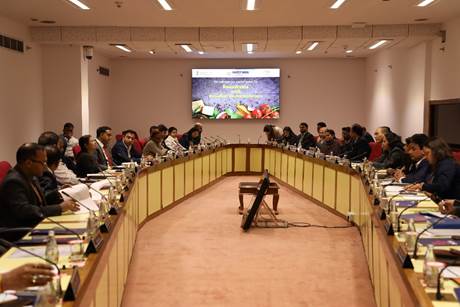
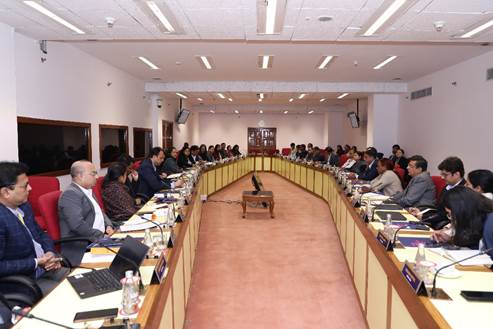
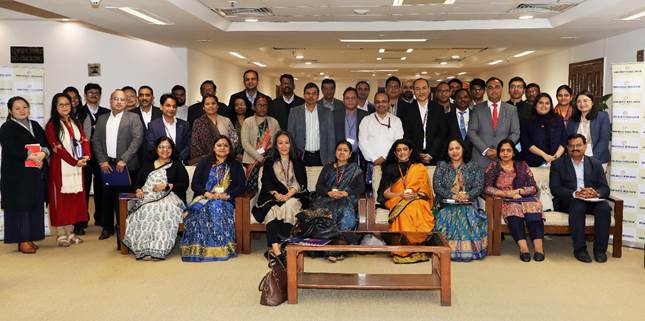
 Secretary, FPI chaired a roundtable interaction with Resident Commissioners on Thursday 8th December 2022 at 11:00 AM. The agenda of the roundtable was to apprise the Ministry’s plan of action for the proposed Mega Food Event to States / UTs and discuss possible areas of collaborations.

During the keynote address, Secretary, FPI informed the RCs that the mega event would be organized in October 2023 and is being envisaged on a much larger scale than the event earlier organised by the Ministry. This event would be providing a platform for the States and UTs to showcase State / UT-specific opportunities, interact with global and domestic business leaders, suppliers, purchasers, and technology providers for collaborations, and generate investment & sourcing interests across the value chain of food processing and food retail sectors.

All States / UTs were requested to share feedback / suggestions to make the event a grand success. They were also requested to participate actively in the event, as well as support the Ministry in creating awareness, ensuring participation of senior policy makers, agri-food companies, FPOs / SHGs and all relevant stakeholders in the mega food event.

The participants were also informed that as part of ‘International Year of Millets’, a series of activities are being planned by the Ministry to create awareness about the many benefits of millets and millet based value-added products.

All participating RCs assured support to MoFPI in activities planned throughout the year 2023 and during the Mega Food Event 2023. Some of the suggestions / feedback included requirements of focused campaigning of the mega food event as well as benefits of millets domestically & in international expos, organising district level summits in addition to planned summits and expos in State Capitals which would help in onboarding micro entrepreneurs, FPOs, SHGs; showcasing of traditional aspects, possible association with tourism industry for promotion of the mega event etc.
.
A group of people sitting in a conference roomDescription automatically generated with medium confidence


The Investment Facilitation Cell (Invest India) was advised to coordinate with the States and UTs for implementing the identified plan of action and ensuring necessary support to enable active participation of States / UTs.

Secretary, FPI urged all States and UTs to engage with the Ministry for showcasing the strength of Indian food processing sector as well as actively participate in to avail the maximum benefits of the mega event.
A group of people posing for a photoDescription automatically generated

***

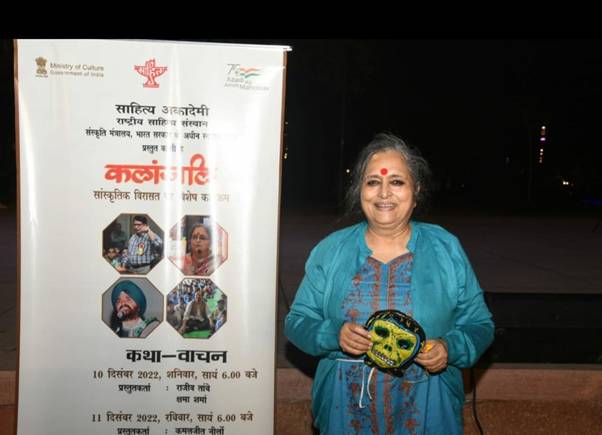
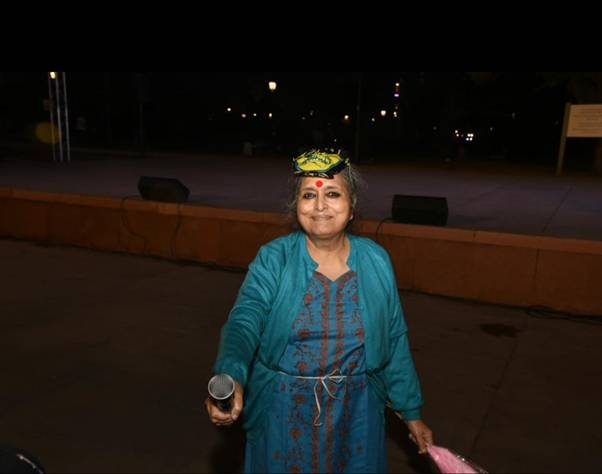
Ministry of Culture organises ‘Story Telling’ as part of Kalanjali campaign

 Main Highlights:

  • On 10th December, 2022, Shri Rajiv Tambe and Kshama Sharma presented story in an interactive manner.
  • The 2 day event will be organized on 11th of December 2022 also.

Under the aegis of Azadi ka Amrit Mahotsav, Sahitya Akademi, an autonomous organisation of the Ministry of Culture, Government of India, organized Storytelling  at the India Gate Lawns in New Delhi as a part of campaign named Kalanjali, a unique culture spectacle, under which cultural programmes are being organised at Amphitheatre Central Vista, India Gate every week.


On 10th December, 2022 ,Shri Rajiv Tambe and  Kshama Sharma presented story in an interactive manner which  held  the interest of both children and adults. Shri Rajiv Tambe is  a writer of children’s stories and a Sahitya Akademi Awardee for Children’s Literature. His style is unique and immersive. Besides being a writer, he also works with few select non-government organizations (NGOs) and the United Nations International Children’s Emergency Fund. He has to his credit 80 published books in Marathi, Hindi, Gujarati and English.


Kshama Sharma has received the Sahitya Akademi Award for her contribution to Children’s Literature. An eminent writer in Hindi, she has to her credit over 50 published works. She has also been associated with the editing of several children’s magazines. She will be presenting her story with interesting dialogues.

The 2 day event will be organized on 11th of December 2022 also. On 11th December Kamaljit Neelon and Devendra Mewari,will present their stories.

Oral traditions have always been popular in India. It is a way of preserving the culture and beliefs of a tribe or community and passing them down to the next generation. That is the real significance of oral traditions. However, storytelling does not need to be limited to oral recitation. It can take form through drawings, paintings, dance or even puppet shows. India’s storytelling traditions are as diverse as the culture of the country,

Narrating stories is a means used to teach lessons, morals and to entertain people, particularly in rural areas. Before TV, the internet and smartphones, people were coming together to hear stories about their history, folklore and current events. India being a land of diverse cultures, every state follows its own style of storytelling. While some narrate, others employ props like puppets, masks and even musical instruments. There are some that are told through the medium of dance and music.

Katha is an Indian style of religious storytelling, performances of which are a ritualistic event in Hinduism. It often involves professional storytellers who recite Hindu religious texts such as Puranas, The Ramayana or Bhagavata Purana, followed by an explanatory commentary. South India has a long tradition of storytelling and religious discourse. Religious scholars were knowledgeable in the scriptures used for discourse in temples and monasteries. Purana-Pravachana is a lecture about scriptures in which the pauranika is a spiritual interpreter of the scriptures. These stories generally have a religious theme, usually the life of a saint or a story from an Indian epic.

Wall paintings in temples and shrines across India also serve the purpose of interpreting and storytelling with a religious theme.

Kamaljit Neelon  is the recipient of the Sahitya Akademi Award for Children’s Literature. A well-known name in Punjabi children’s literature, her writings incorporate cultural and social values, which motivates both children and adults to move towards a positive direction. Nine albums of Punjabi songs written by her continue to be aired by Doordarshan and other television channels. She will be presenting her stories with the musical accompaniment of the Dhapli and Harmonium.

 Devendra Mewari is a recipient of the Sahitya Akademi Award for Children’s Literature. A distinguished writer in Hindi, he has 25 published books to his credit. He has also worked on a rare genre of audio plays in Hindi on Science and Technology. His presentation will be innovative and interesting.

******

Human Rights Day Celebration Organised by the National Human Rights Commission

 The President of India, Smt Droupadi Murmu graced and addressed the Human Rights Day celebration, organised by the National Human Rights Commission, in New Delhi today (December 10, 2022).

Speaking on the occasion, the President said that it is an important occasion for the whole of humankind, as it was on this day in 1948 that the United Nations General Assembly adopted the Universal Declaration of Human Rights (HDHR). She noted that the text of the UDHR has been translated into more than 500 languages, which makes it the most translated document in history. She said that still, when we consider the sad developments that keep taking place in many parts of the world, we wonder if the declaration has been read at all in some of those languages. The fact remains that human rights are a work in progress around the world.

The President said that in India, we can take solace in the fact that the National Human Rights Commission has been making the best possible efforts to spread awareness about them. Now in its 30th year, the NHRC has done a commendable job of protecting as well as promoting human rights. It also participates in various global forums for human rights. India is proud of the fact that its work has been appreciated internationally.

The President said that developing sensitivity and sympathy is the key to promoting human rights. It is essentially an exercise of the faculty of imagination. If we can imagine ourselves in the place of those who are treated as less than human, it would open our eyes and compel us to do the needful. There is a so-called ‘golden rule’, which says “Treat others as you would like them to treat you”. That sums up the human rights discourse beautifully. 

The President noted that today is the beginning of the worldwide, year-long celebrations of the 75 years of the UDHR. And the United Nations has chosen ‘Dignity, Freedom and Justice for All’ as the theme of the year 2022. She said that over the past few years, the world has suffered from a high number of natural disasters caused by unusual weather patterns. Climate change is knocking on the doors. People in the poorer nations are going to pay a heavier price for the degradation of our environment. We must consider the environmental dimension of justice now.

The President said that the challenge of climate change is so enormous that it forces us to redefine ‘rights’. Five years ago, the High Court of Uttarakhand held that the Ganga and Yamuna rivers have the same legal rights as human beings. India is a land of sacred geography, with countless holy lakes, rivers and mountains. To these landscapes, the flora and fauna add rich biodiversity. In old times, our sages and seers saw them all as part of a universal whole, along with us. So, just as the concept of human rights exhorts us to consider every human being as no different from us, we should treat the whole living world and its habitat with respect.

The President shared that she wonders what the animals and trees around us would tell us if they could speak, what would our rivers say about human history and what would our cattle say on the topic of human rights. She said that we have trampled on their rights for long, and now the results are before us. We must learn – rather re-learn – to treat nature with dignity. This is not only a moral duty; it is necessary for our own survival too.

Please click here to see the President’s Speech – 

***

India to become a hub of drone technology.

Union Information and Broadcasting Minister Anurag Thakur this week said that India will become a hub of drone technology and the country will require at least 1 lakh drone pilots by next year. He was speaking at the gathering after flagging of the ‘Drone Yatra 2.0’, in Chennai.

Stating that India will require at least 1 lakh pilots in 2023, he said that each pilot will earn at least Rs 50-80 thousand a month. “If you take the Conservative Average even Rs 50,000 × 1 lakh youth × 12 months = Rs. 6000 crores a year worth employment could be created in the Drone sector,” he said

Apart from this, Industries and Government agencies which use Drones will also be impacted. He appreciated the that Garuda Aerospace’s plan to make one lakh ‘Made in India’ drones in the next two years.

Garuda’s Drone Skilling & Training Conference which is to be conducted in 775 districts across the country hopes to reach 10 lakh Youth. With an aim to train 1 lakh Youth to significantly impact not just the Drone ecosystem or generate employment for Youth, but hopes to create a massive impact in agriculture, mining, government departments and Other industries.

While noting that currently there are over 200 drone start-ups operating in the country, the minister said that this number will increase to generate lakhs of new job opportunities for the youth.

India to become a hub of drone technology.

Union Information and Broadcasting Minister Anurag Thakur this week said that India will become a hub of drone technology and the country will require at least 1 lakh drone pilots by next year. He was speaking at the gathering after flagging of the ‘Drone Yatra 2.0’, in Chennai.

Stating that India will require at least 1 lakh pilots in 2023, he said that each pilot will earn at least Rs 50-80 thousand a month. “If you take the Conservative Average even Rs 50,000 × 1 lakh youth × 12 months = Rs. 6000 crores a year worth employment could be created in the Drone sector,” he said

Apart from this, Industries and Government agencies which use Drones will also be impacted. He appreciated the that Garuda Aerospace’s plan to make one lakh ‘Made in India’ drones in the next two years.

Garuda’s Drone Skilling & Training Conference which is to be conducted in 775 districts across the country hopes to reach 10 lakh Youth. With an aim to train 1 lakh Youth to significantly impact not just the Drone ecosystem or generate employment for Youth, but hopes to create a massive impact in agriculture, mining, government departments and Other industries.

While noting that currently there are over 200 drone start-ups operating in the country, the minister said that this number will increase to generate lakhs of new job opportunities for the youth.

US’s list for religious freedom, Pakistan questioned why India not blacklisted.

Last week, Pakistan expresses strong exception to the United States recent decision to add the country to its religious freedom blacklist and exclude India from it, saying the decision is “detached from ground realities of Pakistan”.

Last week, the US added Pakistan, China and Latin American adversaries Cuba and Nicaragua, among others, to a blacklist — Countries of Particular Concern from 2021 — on international religious freedom, opening the path to potential sanctions.

Secretary of State Antony Blinken took no action against India, ignoring a recommendation by the autonomous US Commission on International Religious Freedom (USCRIF), which said that treatment of minorities was “significantly” worsening under Prime Minister Narendra Modi´s Hindu nationalist government. India is seen by the US as a key emerging ally.

US's list for religious freedom, Pakistan questioned why India not blacklisted.

Last week, Pakistan expresses strong exception to the United States recent decision to add the country to its religious freedom blacklist and exclude India from it, saying the decision is “detached from ground realities of Pakistan”.

Last week, the US added Pakistan, China and Latin American adversaries Cuba and Nicaragua, among others, to a blacklist — Countries of Particular Concern from 2021 — on international religious freedom, opening the path to potential sanctions.

Secretary of State Antony Blinken took no action against India, ignoring a recommendation by the autonomous US Commission on International Religious Freedom (USCRIF), which said that treatment of minorities was “significantly” worsening under Prime Minister Narendra Modi´s Hindu nationalist government. India is seen by the US as a key emerging ally.

India won’t be a US ally rather a great power : WH official.

Washington: India, which has a unique strategic character, will not be an ally of the US, but another great power, a top White House official has said, asserting there is no other bilateral relationship that is being “deepened and strengthened” more rapidly than between the two countries over the last 20 years.

Responding to a question on India during his appearance at the Aspen Security Forum meeting here on Thursday, Kurt Campbell, the White House Asia Coordinator, said that in his view India is the most important bilateral relationship for the United States in the 21st century.

“The fact is, I don’t know of any bilateral relationship that is being deepened and strengthened more rapidly than the United States and India over the last 20 years,” he told a Washington audience.

The United States needs to invest even more of its capacity, and build in people-to-people ties, working together on technology and other issues, he said.

“India has a unique strategic character. It will not be an ally of the United States. It has the desire to be an independent, powerful state and it will be another great power. But I think there are reasons to believe that our strategic alignment is growing across the board in almost every arena,” Campbell said.

India won't be a US ally rather a great power : WH official.

Washington: India, which has a unique strategic character, will not be an ally of the US, but another great power, a top White House official has said, asserting there is no other bilateral relationship that is being “deepened and strengthened” more rapidly than between the two countries over the last 20 years.

Responding to a question on India during his appearance at the Aspen Security Forum meeting here on Thursday, Kurt Campbell, the White House Asia Coordinator, said that in his view India is the most important bilateral relationship for the United States in the 21st century.

“The fact is, I don’t know of any bilateral relationship that is being deepened and strengthened more rapidly than the United States and India over the last 20 years,” he told a Washington audience.

The United States needs to invest even more of its capacity, and build in people-to-people ties, working together on technology and other issues, he said.

“India has a unique strategic character. It will not be an ally of the United States. It has the desire to be an independent, powerful state and it will be another great power. But I think there are reasons to believe that our strategic alignment is growing across the board in almost every arena,” Campbell said.

Indian telecom sector to hire staffs laid off by big tech MNCs.

According a report by Economics Times : The Indian telecom eco-system could absorb up to 30% of the workforce laid off at the big tech firms and who chose to return to India. These include employees across technical and service profiles, say staffing experts.

Companies like Meta, Amazon, Twitter, Microsoft and Stripe among many others have laid off employees and rationalised their employee base. According to estimates by TeamLease, over 62,000 employees have received the pink slip in 2022.

While employees at tech firms are facing headwinds in light of the pink slips being dealt out, the Indian telecom eco-system has increased its hiring over the past few quarters in light of the 5G rollout.

Given the hiring impetus that the telecom sector is seeing, one would expect it to absorb a majority of the employees laid off. However, there is only so much of a skill overlap between the workforce being laid off, and the requirement at the telecom companies say experts.

Indian telecom sector to hire staffs laid off by big tech MNCs.

According a report by Economics Times : The Indian telecom eco-system could absorb up to 30% of the workforce laid off at the big tech firms and who chose to return to India. These include employees across technical and service profiles, say staffing experts.

Companies like Meta, Amazon, Twitter, Microsoft and Stripe among many others have laid off employees and rationalised their employee base. According to estimates by TeamLease, over 62,000 employees have received the pink slip in 2022.

While employees at tech firms are facing headwinds in light of the pink slips being dealt out, the Indian telecom eco-system has increased its hiring over the past few quarters in light of the 5G rollout.

Given the hiring impetus that the telecom sector is seeing, one would expect it to absorb a majority of the employees laid off. However, there is only so much of a skill overlap between the workforce being laid off, and the requirement at the telecom companies say experts.

How roll out of 5g services will help Indian economy?

The transition to 5G will unlock new use cases and revenue streams through innovative business models. It will bolster the startup ecosystem and enable India to be an R&D hub for 5G technology and use cases. Developing 5G applications is likely to have a huge impact across industries.

In India, the engineering/advanced manufacturing segment offers the largest 5G/IoT opportunity. Multiple use cases exist in this segment with benefits of increased efficiency, productivity, better safety standards, and highly efficient production. In healthcare, 5G’s benefits can immediately be realized in home-based care and connected hospital devices as 5G facilitates real-time data transfer.

The Indian M&E sector is transitioning from passive consumption to participative consumption fueled by the popularity of immersive technologies such as AR and VR, networked gaming, and interactive game shows. 5G may help accelerate this trend and completely transform the consumer experience.

Further, the advent of 5G may significantly enhance connected car features and usher in the age of autonomous vehicles (AV) in India.

India likely to face extreme heat waves.

India, very soon, could experience heat waves that could exceed the survivability limit of humans.  This startling revelation was made in a report by the World Bank. 

According to the report, India will soon be one of the first countries in the world that will experience severe heatwaves that will break the human survivability limit.  India, over the past couple of decades, recorded several deaths due to intense heat waves. 

Frequency of extreme weather events such as heatweaves and floods is expected to increase in India as a result of the climate change.

According to one study, if the global mean temperature increases by more than 1.5 degrees Celsius from the pre-industrial level, the proportion of the total population and urban area that will be exposed to successive extremes will rise rapidly.

According to the researchers, under the lowest emission scenario, the length of a heatwave will grow from an average of 3 days in the current climate (1981-2010) to 11 days by the end of the twenty-first century (2071-2100).

Under the scenario with the highest emissions, however, they predicted that the length of heat waves would increase to 33 days by the end of the century.

India likely to face extreme heat waves.

India, very soon, could experience heat waves that could exceed the survivability limit of humans.  This startling revelation was made in a report by the World Bank. 

According to the report, India will soon be one of the first countries in the world that will experience severe heatwaves that will break the human survivability limit.  India, over the past couple of decades, recorded several deaths due to intense heat waves. 

Frequency of extreme weather events such as heatweaves and floods is expected to increase in India as a result of the climate change.

According to one study, if the global mean temperature increases by more than 1.5 degrees Celsius from the pre-industrial level, the proportion of the total population and urban area that will be exposed to successive extremes will rise rapidly.

According to the researchers, under the lowest emission scenario, the length of a heatwave will grow from an average of 3 days in the current climate (1981-2010) to 11 days by the end of the twenty-first century (2071-2100).

Under the scenario with the highest emissions, however, they predicted that the length of heat waves would increase to 33 days by the end of the century.

Passenger cars to witness a price hike in the new year.

Kia, Maruti Suzuki, Tata, Mercedes-Benz and Audi have announced a price hike across their model range from January 2023. All carmakers have cited an increase in commodity prices as the major reason behind the hike.

Maruti Suzuki has confirmed that it will be increasing the prices of its entire model line-up, although the hike will vary depending on the model. 

Kia will hike the price of its entire model line-up by up to Rs 50,000 from January 2023. The South Korean manufacturer has also stated increasing commodity and transportation costs as the reason for the hike.

Along with the rise in commodity prices, Tata also states that updating its vehicles to meet the upcoming RDE norms will also lead to a hike in prices.