
SSB Selection Process

The SSB (Services Selection Board) is a selection process used by the Indian Armed Forces to recruit officers for the Army, Navy, and Air Force. The SSB training process is an intense and comprehensive program that evaluates candidates on their physical fitness, mental aptitude, and leadership potential.

The SSB training process is divided into two stages: the Screening Test and the Main Test. The Screening Test is a one-day process that consists of Intelligence Tests and a Picture Perception and Discussion Test (PPDT). The Intelligence Tests assess the candidate’s cognitive abilities, including verbal reasoning, numerical ability, and spatial perception. The PPDT is a group exercise where candidates are shown a picture for 30 seconds and are then asked to write a story about it. They are then divided into groups and are asked to discuss their stories with each other.


Candidates who clear the Screening Test move on to the Main Test, which is a five-day process. The Main Test consists of the following tests:

  1. Psychological Tests: These tests assess the candidate’s personality, including their emotional stability, social adaptability, and maturity.

  2. Group Testing: This consists of a series of group exercises, including group discussions, group planning, and group obstacle races. These exercises assess the candidate’s ability to work in a team, leadership potential, and problem-solving skills.

  3. Interview: The candidate is interviewed by a board of officers who assess their suitability for commissioning as an officer in the armed forces.

  4. Physical Tests: Candidates undergo physical tests, including a 1.6 km run, push-ups, sit-ups, and a 10-meter rope climb.

The SSB training process is designed to evaluate a candidate’s overall personality, including their physical fitness, mental aptitude, and leadership potential. It is an intense and comprehensive program that requires candidates to be physically and mentally prepared. Candidates who successfully complete the SSB training process are commissioned as officers in the Indian Armed Forces, where they serve the country with honor and pride.

Disturbing discovery after finally reaching bottom of Great Blue Hole

 I’m all for the pursuit of information, but there are some things that seem best left alone. I’m talking about old Egyptian tombs, black holes, and massive, ominous caverns descending into the ocean’s depths.

Consider this: is whatever possibly horrific thing we discover really worth the lessons we learn from it?

My usual response would be no, but an exploration of Belize’s Great Blue Hole has shown that sometimes disturbing findings are worthwhile.

The massive hole in the ocean is about 60 miles off the shore of Belize and descends more than 400 feet into the water. Divers were unable to investigate much of the hole for a long time because they lacked the necessary equipment to reach its depths. But that altered as technology advanced, and when billionaire Richard Branson became interested in the hole.

When diver Fabien Cousteau traveled there to capture high-quality photographs and videos of the mysteries hidden beneath the surface, the Virgin founder went on an expedition to the hole. Unfortunately, what lay at the bottom of the beautiful, mysterious ocean formation sums up mankind as we know it in part.

The crew discovered a two-liter plastic bottle as well as a long-lost GoPro with photos from someone’s vacation on it. But that wasn’t the end of it. The crew also found two bodies in the hole; divers who had gone missing in the great cavern. Though the sight certainly would have been unnerving, the team chose to leave the bodies where they were, determining the hole to be a good final resting place. However, they did let the Belize government know the divers had been found.

When the team dove into the depths of the hole in a submersible vehicle, they discovered a large series of caves that were home to hanging stalactites – but scientists didn’t believe stalactites could develop beneath the surface of the water.
The discovery revealed that the caves, which are hundreds of feet beneath the ocean’s surface, were once on dry ground.
“The Blue Hole is made of a complex system of caves that once formed on dry land,” Branson wrote in a post on Virgin.com, emphasizing how disturbing this finding is for the state of the planet. It demonstrates how rapidly and catastrophically the oceans can rise.

“Once upon a time, sea levels were hundreds of feet lower. When a lot of ice melted around the globe 10,000 years ago, the sea level rose by about 300 feet. At 300 feet down, you could see the change in the rock where land had become water.”

‘One of the starkest reminders of the dangers of climate change [he’s] ever seen,’ Branson said of the sight.

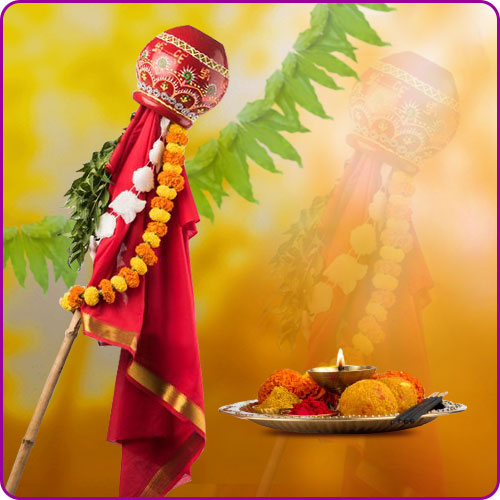
Gudi Padwa – Marathi New Year

Gudi Padwa is a Hindu festival that marks the beginning of the New Year according to the traditional Hindu lunar calendar. It is celebrated on the first day of Chaitra month, which usually falls in March or April. Gudi Padwa is primarily celebrated in the states of Maharashtra, Goa, and Konkan regions of India. The festival symbolizes victory, happiness, and prosperity and brings people together to celebrate the spirit of the New Year.

Source – https://www.rudraksha-ratna.com/

The festival of Gudi Padwa is celebrated with great enthusiasm and joy. It is believed that on this day, Lord Brahma created the universe, and it is also considered the day when Lord Rama returned to Ayodhya after his victory over Ravana. The festival is named after the ‘Gudi’, which is a special flag made of cloth or silk and is adorned with a copper or silver pot, a neem leaf, a twig of mango leaves, and a garland of flowers. The Gudi is hoisted outside homes, and it signifies victory and happiness.

The celebration of Gudi Padwa begins with the cleaning and decoration of homes. People decorate their homes with rangolis, flowers, and lights. The preparation of traditional delicacies like puran poli, shrikhand, and karanji is also an essential part of the celebration. On this day, people also wear new clothes and exchange sweets and gifts with each other.

One of the main rituals of Gudi Padwa is the hoisting of the Gudi outside homes. The Gudi is hoisted early in the morning, and it is believed to bring good luck and prosperity to the family. People also offer prayers and perform puja to the Gudi. The Gudi is taken down in the evening, and the prasad is distributed among family and friends.

Another significant aspect of Gudi Padwa is the traditional Maharashtrian dance, ‘Dindi’. Dancers dressed in colorful traditional attire dance to the beats of Dhol, Tasha, and Lezim. The dance signifies the victory of good over evil and is performed in temples and public places.

Apart from Maharashtra, Gudi Padwa is also celebrated in other parts of India with different names and customs. In Andhra Pradesh and Telangana, the festival is known as Ugadi, while in Karnataka, it is celebrated as Yugadi. In Tamil Nadu, the festival is called Puthandu, while in Punjab, it is celebrated as Baisakhi.

Idol Worshipping

Idol worshipping is common in India. And it’s a great way to show respect to someone who is more better. It shows the path of hope in pathetic conditions.

But is that enough? Just simply worshipping and giving respect to someone else who is more better is a good way to appreciate/ promoting goodness in a society.

Simply just worshipping a deity and committing crimes , doing bad deeds would not take us anywhere.

In fact having a ‘ paradox mindset ‘ is one of the main reason of being underdeveloped and unprogressive.

Because if we see our indian culture closely and analyse it ,we will get to know that our real culture promotes goodness, openness and values irrespective of, from where they are coming. The mindset of being open to adaptability is one of the main reason of having advanced technology in Vedic era.

Idol Worshipping

Idol worshipping is common in India. And it’s a great way to show respect to someone who is more better. It shows the path of hope in pathetic conditions.

But is that enough? Just simply worshipping and giving respect to someone else who is more better is a good way to appreciate/ promoting goodness in a society.

Simply just worshipping a deity and committing crimes , doing bad deeds would not take us anywhere.

In fact having a ‘ paradox mindset ‘ is one of the main reason of being underdeveloped and unprogressive.

Because if we see our indian culture closely and analyse it ,we will get to know that our real culture promotes goodness, openness and values irrespective of, from where they are coming. The mindset of being open to adaptability is one of the main reason of having advanced technology in Vedic era.

Pakhala Divas – A unique festival of Odisha

Being from Odisha and being raised in a different state, I have always been curious about my ground culture and traditions. One of such interesting festival celebrated in Odisha is Pakhala Divas. The article will discuss more about its History, Significance & celebration of Pakhala Divas in Odisha.

Pakhala Divas is a unique festival celebrated in the eastern state of Odisha, India. It is celebrated on March 20th every year, marking the beginning of summer in the state. The festival is dedicated to Pakhala, a traditional dish made of rice, water, and curd.

Source – pragativadi.com

History of Pakhala Divas

The history of Pakhala Divas dates back to ancient times when Odisha was ruled by the Kalinga dynasty. During those times, Pakhala was a staple food for farmers and laborers who used to work in the scorching heat. The dish is prepared by mixing cooked rice with water and sour curd and kept overnight. This process allows the rice to ferment and gives it a unique taste and aroma.

The tradition of celebrating Pakhala Divas started in the 1990s when a group of social activists in Odisha came together to revive the traditional food culture of the state. They realized that the younger generation was losing interest in traditional dishes and were adopting western food habits. To promote traditional food habits, they organized the first Pakhala Divas in 1992.

Significance of Pakhala Divas

Pakhala Divas has significant cultural and social significance in Odisha. It is celebrated to promote the traditional food culture of the state and to create awareness among the younger generation about the health benefits of traditional food. Pakhala is a healthy dish that is rich in probiotics, which is beneficial for the digestive system. It also helps to keep the body hydrated during the scorching summer heat.

The festival also promotes the sense of community and togetherness. People in the state come together to share the meal with their friends and family, and it is a symbol of unity and brotherhood. It is also an occasion to express gratitude towards farmers and laborers who work hard to provide us with food.

Celebration of Pakhala Divas

Pakhala Divas is celebrated with great enthusiasm and fervor in Odisha. People prepare Pakhala in their homes and offer it to their friends and family members. They also distribute the dish to the poor and needy. In many parts of the state, restaurants and food joints offer free Pakhala to the public on this day.

Several cultural programs and events are also organized to mark the occasion. People dress up in traditional attire and participate in cultural activities such as folk dances and songs. The festival also includes competitions and games, including cooking competitions, pakhala-eating competitions, and quiz competitions related to traditional food culture.