
Ram Navami 2023

Ram Navami is an important Hindu festival that is celebrated with great fervor and enthusiasm across India and other parts of the world. It is celebrated on the ninth day of the Hindu month of Chaitra (usually in March or April) to mark the birth anniversary of Lord Rama, who is considered to be the seventh incarnation of Lord Vishnu. The festival is celebrated with great enthusiasm and devotion across India and other parts of the world. It is a time for people to come together, seek blessings from Lord Rama, and reflect on his teachings of righteousness and morality.

Source – ISKON Dwarka

The festival is celebrated by performing puja (worship) to Lord Rama, who is revered as the epitome of righteousness, truth, and justice. People observe fasts, read the Ramayana (a Hindu epic that tells the story of Lord Rama’s life), and chant his name to seek his blessings. On this day, devotees decorate their homes and temples with flowers, lights, and rangolis (intricate designs made with colored powders). Many people also organize processions and cultural programs to celebrate the occasion. The streets are filled with people dressed in colorful traditional clothes, singing hymns, and playing musical instruments.

One of the most significant rituals associated with Ram Navami is the Rama Navami Rath Yatra. It is a procession in which a chariot carrying the idol of Lord Rama, along with his wife Sita, his brother Lakshmana, and his devotee Hanuman, is taken out on the streets. The chariot is decorated with flowers and other decorations and is pulled by devotees, who chant hymns and mantras. The procession usually ends at a temple, where the idols are placed and worshiped.

In some parts of India, Ram Navami is celebrated for nine days, leading up to the main day of the festival. This period is known as the Navratri, and each day is dedicated to a different form of the divine mother. The final day of Navratri is Ram Navami, which is considered to be the most auspicious day of the festival.

Apart from the religious significance, Ram Navami is also associated with social and cultural traditions. It is believed that Lord Rama’s message of righteousness, truth, and justice is relevant even today and can inspire people to live a life of virtue and morality.

Structure of Electrical System

 An electrical system is a network of components that work together to generate, distribute, and consume electrical power. The structure of an electrical system can vary widely depending on the size and complexity of the system. However, there are certain fundamental components that are common to most electrical systems.

Source – https://engineeringnotesonline.com/

Power Source –

The first component of an electrical system is the power source. This is the device that generates electrical power. It can be a generator, a battery, or a solar panel, depending on the application. The power source is connected to the rest of the system through a set of wires or cables, which carry the electrical power to the other components.

Load –

The next component of an electrical system is the load. This is the device that consumes the electrical power. The load can be a light bulb, a motor, or any other electrical device. The load is also connected to the rest of the system through a set of wires or cables.

Switch –

In between the power source and the load, there are several other components that help to regulate and control the flow of electrical power. One of the most important of these components is the switch. A switch is a device that can be used to turn the flow of electrical power on and off. It is often used to control the operation of a load, such as a motor.

Transformer –

Another important component of an electrical system is the transformer. A transformer is a device that can be used to change the voltage of the electrical power. This is important because different devices require different voltages to operate properly. For example, a motor may require a higher voltage than a light bulb. A transformer can be used to step up or step down the voltage of the electrical power as needed.

Distribution System –

The distribution system is also a crucial component of an electrical system. This is the network of wires and cables that carry the electrical power from the power source to the loads. The distribution system is often divided into several different levels, such as the transmission system, the sub-transmission system, and the distribution system. Each level of the distribution system is designed to handle a specific amount of electrical power and to serve a specific geographic area.

Protective Devices –

Finally, an electrical system may also include various protective devices, such as fuses and circuit breakers. These devices are designed to protect the system from overloads and short circuits, which can damage the components and cause fires or other hazards.

You can read more about protective devices here.

What are Protective Devices?

Electrical power systems are complex networks of electrical components that supply power to homes, businesses, and industries. These systems are designed to deliver electricity safely and reliably, but they are also subject to a variety of hazards that can cause damage to the system and threaten the safety of personnel. Protective devices are therefore a crucial part of any electrical power system, as they help to prevent damage and ensure safety in the event of abnormal conditions.


Source – LinkedIn

Circuit Breakers

Circuit breakers are perhaps the most common type of protective device in electrical power systems. They are designed to interrupt the flow of electrical current when an abnormal condition is detected, such as an overcurrent or short circuit. Circuit breakers can be installed at various points in the system, including at the main distribution panel, sub-panels, and individual outlets. They typically consist of a switch mechanism that opens and closes the circuit, along with a protective mechanism that detects abnormal current flow and trips the switch.

Fuses

Fuses are similar to circuit breakers in that they are designed to protect against overcurrent conditions. They consist of a thin wire that melts when the current exceeds a certain level, causing the circuit to break. Fuses are often used in conjunction with other protective devices, such as circuit breakers or surge arresters, to provide an additional layer of protection.

Surge Arresters

Surge arresters are used to protect the system against voltage surges caused by lightning strikes or other external sources. Voltage surges can cause significant damage to electrical equipment, so surge arresters are often installed at strategic points in the system to absorb the energy of the surge and prevent it from reaching the equipment. Surge arresters typically consist of a metal oxide varistor that absorbs the energy of the surge and dissipates it as heat.

Ground Fault Interrupters

Ground fault interrupters (GFI) are designed to protect against electric shock. They detect imbalances in current flow between the hot and neutral wires and trip the circuit if a ground fault is detected. GFIs are often used in areas where water is present, such as bathrooms, kitchens, and outdoor outlets.

Protective Relays

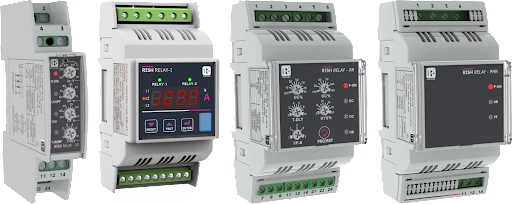
Protective relays are another type of protective device used in electrical power systems. They are designed to detect abnormal conditions in the system, such as overcurrent, under voltage, or overvoltage, and trip the circuit breakers or other protective devices as needed. Protective relays are often used in high-voltage systems, such as transmission lines and substations, where a fault can cause significant damage to the system.