Intriguing facts about Roman Architecture

Roman architecture is one of the most significant and influential architectural styles in history. It developed during the Roman Republic and continued to evolve during the Roman Empire. Roman architecture was characterized by its massive scale, technological innovations, and distinctive design elements that were used in buildings such as temples, public buildings, and aqueducts. The Romans were excellent builders and engineers, and they employed advanced construction techniques to create structures that were both functional and aesthetically pleasing. They used a variety of materials including stone, brick, and concrete, and they often incorporated decorative elements such as columns, arches, and domes into their buildings.

Colosseum
Image – © Mapics/stock.adobe.com

One of the most significant innovations in Roman architecture was the development of concrete. The Romans used a form of concrete that was made from a mixture of volcanic ash, lime, and water. This concrete was much stronger than other building materials of the time and allowed the Romans to construct massive structures such as the Colosseum and the Pantheon.

Another important element of Roman architecture was the use of arches and vaults. The arch allowed the Romans to span large distances without the need for columns or other supports. The vault was used to create ceilings and roofs that were both sturdy and visually impressive. The most famous example of a vaulted ceiling is the dome of the Pantheon, which is still considered to be one of the most remarkable feats of engineering in the world.

Roman temples were also an important part of their architectural heritage. The temples were usually rectangular in shape and featured a colonnade of columns on the front facade. The columns were often decorated with intricate carvings and designs, and they supported a triangular pediment on the top of the temple. The interior of the temple was usually very simple and contained an altar and a statue of the deity that the temple was dedicated to.

Public buildings were another important part of Roman architecture. These buildings included amphitheaters, forums, and basilicas. The amphitheater was used for gladiatorial contests and other public events, while the forum was a central gathering place for political and social activities. The basilica was a large public hall that was used for business and legal proceedings. The Romans were also famous for their engineering feats, particularly their aqueducts. These structures were used to transport water from distant sources to cities and towns. The aqueducts were made of a series of arches that supported a channel or pipe that carried the water. The aqueducts were often built on a grand scale, and some of them were over 50 miles long.

Roman architecture was an important part of their cultural heritage and continues to influence architecture to this day. The Romans were skilled builders and engineers who used advanced construction techniques to create massive structures that were both functional and beautiful. Their use of concrete, arches, and vaults allowed them to build on a grand scale, and their temples, public buildings, and aqueducts were among the most impressive structures of the ancient world.

Discovery of Uranus

The discovery of Uranus is an important milestone in the history of astronomy. Uranus is the seventh planet from the sun and is the third-largest planet in our solar system. It was discovered by Sir William Herschel on March 13, 1781. Herschel was a German-born British astronomer who had a keen interest in studying the stars and planets. He had built his own telescopes and was known for his expertise in optics.

Source – NASA

In 1781, while observing the night sky from his garden in Bath, England, Herschel noticed an object that he initially thought was a comet. However, as he continued to observe it over the course of several nights, he realized that it was something much larger and farther away than a comet. Herschel’s discovery of Uranus was significant for several reasons. First, it was the first planet to be discovered since ancient times. The other planets, including Mercury, Venus, Mars, Jupiter, and Saturn, had been known since ancient times, and Uranus was the first new planet to be added to the list. Second, it provided evidence that there were other planets in our solar system beyond the orbit of Saturn. Prior to Herschel’s discovery, it was believed that Saturn marked the edge of our solar system.

The discovery of Uranus was also significant because it challenged existing beliefs about the nature of the universe. At the time, it was believed that the planets orbited the sun in a predictable pattern based on their distances from the sun. However, Uranus did not follow this pattern, and its orbit was difficult to explain using the existing models of the solar system. This led astronomers to question their understanding of the laws of physics and the nature of the universe.

After Herschel’s discovery, astronomers around the world began studying Uranus in more detail. They found that it was a gas giant planet with a distinctive blue-green color. They also discovered that it had a system of moons and a ring system, similar to those of Saturn. Over the years, astronomers have continued to study Uranus using telescopes and space probes, providing new insights into the planet’s composition, atmosphere, and history.

To conclude, the discovery of Uranus by Sir William Herschel in 1781 was a significant event in the history of astronomy. It was the first new planet to be discovered since ancient times and challenged existing beliefs about the nature of the universe. Herschel’s discovery opened up new avenues for scientific inquiry and inspired generations of astronomers to study the planets and the stars. Today, Uranus remains an important object of study for astronomers, providing insights into the workings of our solar system and the universe beyond.

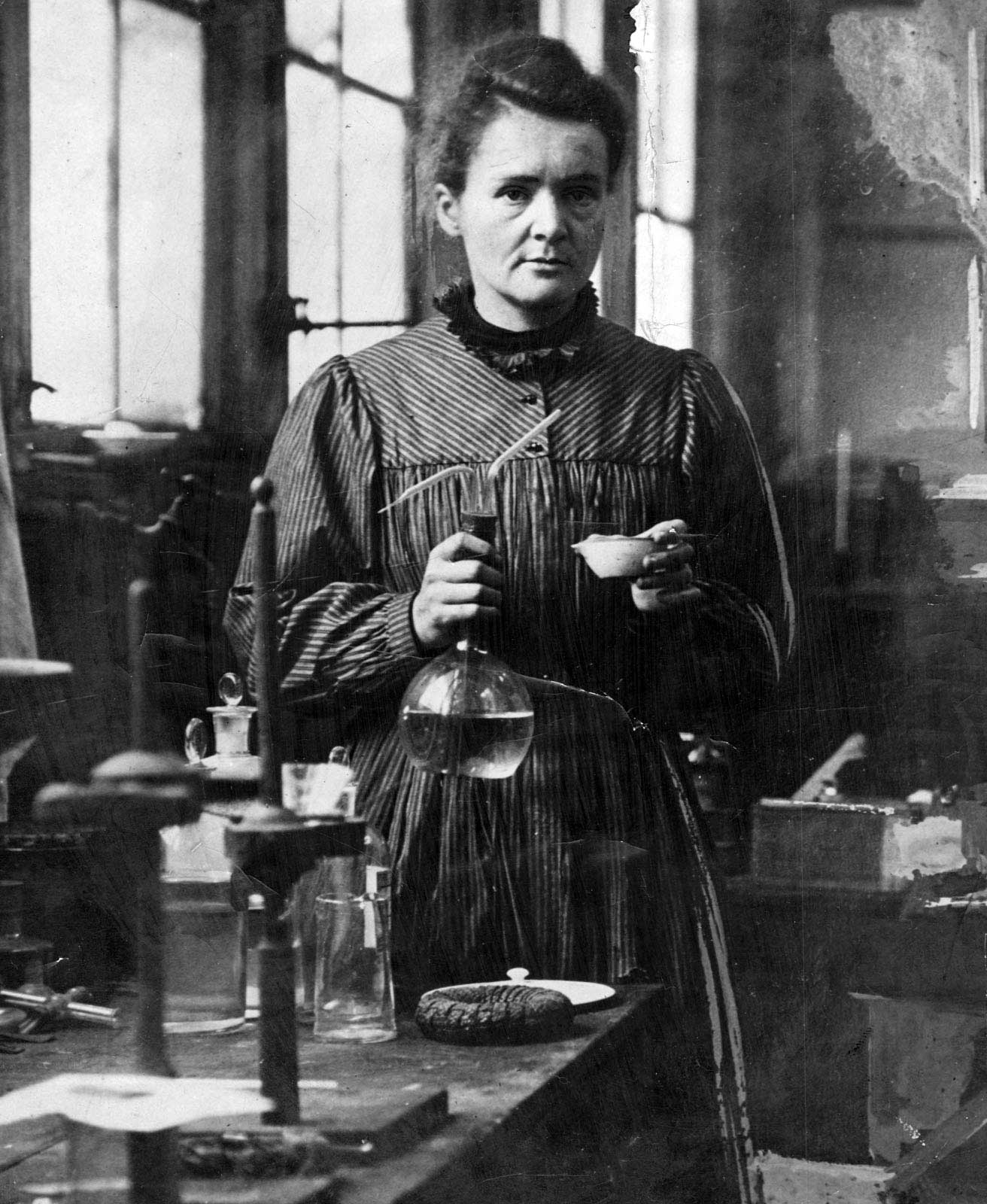
Marie Curie – The First Woman who won Nobel Prize

Marie Curie was a Polish-born physicist and chemist who is best known for her pioneering work in the field of radioactivity. She was the first woman to be awarded a Nobel Prize, and the first person to win two Nobel Prizes in different scientific fields. Curie was born in Warsaw, Poland in 1867, and grew up in a family of educators. She was a highly intelligent and curious child, and had a passion for learning from a young age.

Source – https://www.atomicarchive.com/

In 1891, Curie moved to Paris to pursue further studies in physics and chemistry. It was there that she met her future husband, Pierre Curie, who was also a physicist. Together, the couple began to study the properties of radioactive materials, a field that was still in its infancy at the time. They discovered two new elements, polonium and radium, and Marie coined the term “radioactivity” to describe the phenomena they were observing.

Their work on radioactivity earned them the Nobel Prize in Physics in 1903, making Marie the first woman to receive this prestigious award. However, their research also had significant consequences for their health, as they were exposed to high levels of radiation in their laboratory work. Pierre died in 1906 from a tragic accident involving a horse-drawn carriage, leaving Marie to continue their research alone.

In 1911, Marie was awarded her second Nobel Prize, this time in Chemistry, for her discovery and isolation of pure radium. She was the first person ever to win two Nobel Prizes, and remains the only person to have won them in two different scientific fields. Despite her success, Marie faced significant discrimination as a woman in the male-dominated scientific community of her time. She was not allowed to join the French Academy of Sciences until 1962, more than 30 years after her death.

Marie Curie’s contributions to science and medicine have had a lasting impact on our understanding of the world. Her work on radioactivity helped pave the way for modern cancer treatments, and her discoveries of new elements and their properties expanded our knowledge of the basic building blocks of matter. Her legacy also serves as an inspiration to generations of women and girls who aspire to pursue careers in science and technology.

In addition to her scientific achievements, Marie was also a dedicated humanitarian. During World War I, she used her knowledge of radiology to develop mobile X-ray units that could be used to diagnose and treat wounded soldiers on the front lines. She also served as a role model and mentor to other women in science, including her daughter, Irène Joliot-Curie, who also won a Nobel Prize in Chemistry.

Marie Curie died in 1934 at the age of 66, from complications related to her exposure to radiation. She was buried in the Panthéon in Paris, alongside other French national heroes, becoming the first woman to be interred there on her own merits. Today, she is remembered as one of the most influential scientists of the 20th century, whose groundbreaking discoveries continue to inspire and inform our understanding of the natural world.

Red thread Connection in Chinese Culture

The Red Thread is a popular metaphor that represents a common thread that connects people, events, and experiences throughout one’s life. It is a concept that is rooted in ancient Chinese folklore and is believed to be the guiding force that brings people together and helps them fulfill their destiny. In Chinese culture, the Red Thread of Fate is said to connect two people who are destined to meet, regardless of time, place, or circumstance. This thread is said to be tied around the ankles of the two people and is believed to be unbreakable, representing the unbreakable bond between them.

The Red Thread is often associated with the idea of synchronicity, which is the belief that events are connected in meaningful ways, even if they appear to be random or coincidental. This belief is rooted in the idea that the universe is a complex web of interconnected energies, and that everything that happens is a part of a larger, more significant pattern. It can be seen as a way of understanding the interconnectedness of our lives and the world around us. It encourages us to view our experiences as part of a larger story, and to recognize that every person we meet, every decision we make, and every event we experience is part of our unique journey.

In modern times, the concept of the Red Thread has expanded beyond its original meaning to include a broader sense of interconnectedness between all people and events. It is now used as a metaphor for the idea that everything in our lives is connected, and every experience we have is a stepping stone towards fulfilling our ultimate purpose.

In business and leadership, the Red Thread can be a powerful tool for building connections and creating a shared sense of purpose among team members. By identifying the common thread that connects each person’s experiences and goals, leaders can help their team members see how their individual contributions are part of a larger, collective effort.

In conclusion, the Red Thread represents the idea that everything in our lives is interconnected, and every experience we have is part of a larger story. Whether it is viewed as a mystical force that connects people, or a metaphorical thread that ties together our experiences, the Red Thread is a powerful concept that can help us understand the deeper meaning and purpose of our lives.