
Ancient Indian Mathematics

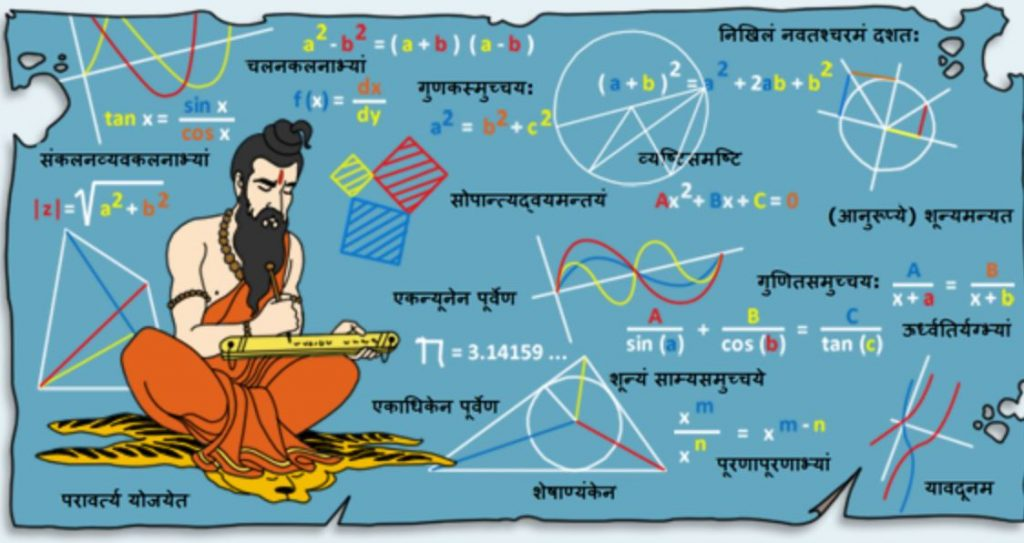
India has a rich history of mathematics, with contributions spanning thousands of years. Ancient Indian mathematicians made significant discoveries in the fields of arithmetic, algebra, geometry, and trigonometry, laying the foundations for modern mathematics.

Source –
https://www.indica.today/

One of the earliest known texts on mathematics in India is the Sulba Sutras, which date back to the 8th century BCE. These texts describe geometric principles used in the construction of altars for Vedic rituals, and contain formulas for calculating the area and circumference of circles and the square roots of numbers.

In the 5th century BCE, the mathematician Pingala wrote the Chhandahshastra, which is considered to be the first known work on binary numbers. Pingala’s system of binary numbers is similar to the modern binary system used in computing, and was used to represent Vedic hymns as sequences of long and short syllables.

In the 3rd century BCE, the mathematician Aryabhata wrote the Aryabhatiya, a treatise on mathematics and astronomy that made significant contributions to the fields of algebra, trigonometry, and spherical geometry. Aryabhata developed the concept of zero as a number, and also introduced the sine, cosine, and inverse sine functions.

Another influential mathematician from ancient India was Brahmagupta, who lived in the 7th century CE. Brahmagupta wrote the Brahmasphutasiddhanta, a treatise on astronomy and mathematics that included formulas for solving quadratic equations, as well as the first known use of negative numbers in mathematical calculations.

In the 12th century, the mathematician Bhaskara wrote the Siddhanta Shiromani, which contained essential contributions to the fields of algebra and trigonometry. Bhaskara developed a method for solving indeterminate equations, and also gave a formula for calculating the sine of an angle using the cosine.

The Kerala School of Mathematics, which flourished in southern India between the 14th and 16th centuries, made significant contributions to the field of calculus. The mathematician Madhava is credited with the discovery of the power series, which was used to calculate the value of pi to an accuracy of 11 decimal places.

In addition to these specific contributions, ancient Indian mathematicians also developed several mathematical concepts and notation systems that are still used today. For example, the decimal system, which uses the digits 0-9 and place value to represent numbers, was developed in India and later spread to other parts of the world.

Evolution of Clocks

The evolution of clocks is a fascinating story that spans thousands of years, from the earliest timekeeping devices to the most accurate atomic clocks of today. In this article, we will explore the major milestones in the history of clocks and how they have shaped our understanding of time.


Creator –
Jorge Villa 

The earliest known timekeeping devices were sundials, which were used by ancient civilizations such as the Egyptians, Greeks, and Romans. Sundials work by casting a shadow on a marked surface, indicating the time of day based on the position of the sun in the sky. Although sundials were effective in providing a rough estimate of time, they were not very accurate and could only be used during daylight hours.

The invention of the mechanical clock in the 14th century marked a major leap forward in timekeeping technology. These early clocks used gears and springs to power the movement of the hands and were able to keep time more accurately than any previous device. The first mechanical clocks were large and expensive and were primarily used in churches and other public buildings.

The development of the pendulum clock in the 17th century was another major breakthrough in timekeeping technology. The pendulum clock uses a swinging weight to regulate the movement of the gears, making it much more accurate than earlier mechanical clocks. The invention of the pendulum clock made it possible for individuals to own their own timekeeping devices, and clocks soon became a common household item.

In the 19th century, the invention of the electric clock paved the way for even greater accuracy and precision. Electric clocks use a quartz crystal to regulate the movement of the hands, making them much more reliable than mechanical clocks. Electric clocks also allowed for the development of synchronized timekeeping systems, which made it possible for people all over the world to keep the same time.

The invention of the atomic clock in the mid-20th century was another major milestone in the history of timekeeping. Atomic clocks use the vibrations of atoms to keep time, making them the most accurate clocks ever created. Atomic clocks are now used in a wide range of applications, from satellite navigation systems to scientific research.

Today, clocks come in all shapes and sizes, from traditional mechanical timepieces to digital clocks and smartwatches. Although the basic technology behind clocks has remained largely unchanged over the centuries, advances in materials, electronics, and software have allowed for ever-greater accuracy and precision.

In conclusion, the evolution of clocks has been a long and fascinating journey, marked by major milestones in technology and innovation. From the simple sundials of ancient times to the sophisticated atomic clocks of today, clocks have played a vital role in shaping our understanding of time and the world around us.

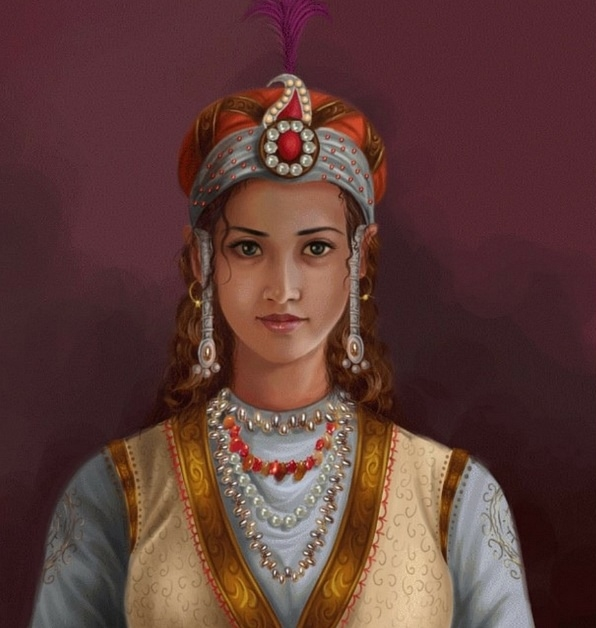
First and Only Ruler of Delhi Sultanate – Razia Sultan

Razia Sultan was the first and only female ruler of the Delhi Sultanate in India. She ruled from 1236 to 1240 CE and was known for her bravery, intelligence, and administrative skills.

Razia was the daughter of Sultan Iltutmish, who had established the Delhi Sultanate after the decline of the Ghaznavid Empire. Iltutmish had several sons, but he chose Razia as his successor, as he believed her to be the most capable of ruling the empire.

Source – https://yourexamguide.com/

Razia’s reign was marked by several accomplishments. She introduced several reforms to the administration, such as improving the tax collection system and establishing a network of spies to gather information about the state of affairs in the empire. She also established a postal system, which improved communication and helped her maintain control over the vast empire. Razia was also a skilled warrior and led several military campaigns against neighboring kingdoms. She defeated the rebellious governor of Bhatinda, Malik Altunia, who had refused to recognize her as the Sultan. She also successfully repelled a Mongol invasion led by Genghis Khan’s grandson, Batu Khan.

Despite her many achievements, Razia faced significant opposition from the nobility, who were unhappy with being ruled by a woman. Her half-brother Ruknuddin Firuz, who had been appointed as her successor by the nobility, led a rebellion against her. Razia was defeated and imprisoned, and Ruknuddin became the Sultan. However, Razia managed to escape from prison and launched a counter-attack against her half-brother. She defeated Ruknuddin and regained the throne, but her reign was short-lived. She was betrayed by one of her advisors, Altunia, whom she had married for political reasons. Altunia, who had harbored resentment towards Razia for defeating him earlier, turned against her and had her killed in 1240 CE.

Razia Sultan’s legacy has endured through the centuries. She was a trailblazer for women in positions of power and challenged the traditional norms of her time. Her reign demonstrated that a woman could rule a vast empire effectively and competently. She is still celebrated as a symbol of female empowerment and has inspired several books, films, and television series in India.