Operation Dost #turkey #india #foreignrelations

Operation Dost refers to the friendly relations and collaborations between Turkey and India in various fields, including politics, trade, defense, and cultural exchanges. Both countries have a history of diplomatic ties and mutual cooperation that have strengthened over time.

In recent years, their relationship has seen advancements in economic cooperation, especially in trade and investment. They’ve also collaborated on defense initiatives, aiming to enhance their strategic partnership. Cultural exchanges, educational collaborations, and people-to-people contacts have further deepened their bond.

However, it’s important to note that specific initiatives or policies under the label “Operation Dost” might not exist formally in diplomatic agreements or official statements. Rather, it could refer to the broader ongoing efforts between the two nations to bolster their relationship and foster closer ties.

Turkey and India have recognized the importance of mutual cooperation in various regional and international issues, contributing to stability and development. Their partnership is a testament to the significance of bilateral relationships in a global context.

‘Golden Globe’ to Oscar: ‘Naatu Naatu’ song glorified India across the world

Indians are proud and joyous because the Telugu blockbuster RRR, short for Rise Roar Revolt, Naatu Naatu is the first Indian film to win the Academy Award for best original song, making history. According to BBC News (www.bbc.com/news/world-asia-india-64899481), “the song became a global sensation – inspiring endless Instagram reels and dance trends on social media – after the film’s release in US last year, where its quick tempo and synchronised choreography were an instant hit with the audiences”. According to the Reuter, “The song – a fast-paced number that has found fans all over the world, spawned a TikTok challenge and has millions of views on YouTube – won a standing ovation when it was performed at the 95th Academy Awards”. It is pertinent to mention that Indians had won Oscars earlier, but no Indian film had won an Academy Award before. “The Elephant Whisperers” which won best documentary short film, gave the country two Oscar-winning films in one night. Thus, with two laurels Indian films particularly in Indian languages have reached across the world. According to BBC News, “It took around 19 months for all the elements of superhit musical number Naatu Naatu – which won a historic Oscar for Best Original Song – to fall into place”. In January 2023 it won the ‘Golden Globe’ for best original song. I appreciate the statement of the Director of the film S. S. Rajamouli when said, “It’s not just because of the music or the dance – the entire story of RRR can be summarised within these 10 minutes of Naatu Naatu,” (ibid). For the benefit of readers, I wish to mention that the Academy Award for Best Original Song is one of the awards given annually to people working in the motion picture industry by the Academy of Motion Picture Arts and Sciences (AMPAS). It is presented to the songwriters who have composed the best original song written specifically for a film. The performers of a song are not credited with the Academy Award unless they contributed either to music, lyrics, or both in their own right. The songs that are nominated for this award are typically performed during the ceremony and before this award is presented. I am presenting a few lines from en.wikipedia.org/wiki/Academy_Award
“The Academy Award for Best International Feature Film (known as Best Foreign Language Film prior to 2020) is one of the Academy Awards handed out annually by the U.S.-based Academy of Motion Picture Arts and Sciences (AMPAS). It is given to a feature-length motion picture produced outside the United States with a predominantly non-English dialogue track.”
“When the first Academy Awards ceremony was held on May 16, 1929, to honor films released in 1927/28, there was no separate category for foreign language films because most of the films released in 1927 and in 1928 were silent films. Between 1947 and 1955, the academy presented Special/Honorary Awards to the best foreign language films released in the United States. These awards, however, were not handed out on a regular basis (no award was given in 1953), and were not competitive since there were no nominees but simply one winning film per year. For the 1956 (29th) Academy Awards, a competitive Academy Award of Merit, known as the Best Foreign Language Film Award, was created for non-English speaking films and has been given annually since then”.
I from the core of my heart congratulate all the people who were either at the forefront or behind the curtain for making success and bringing laurels to the entertainment world through the two films “RRR” and “The Elephant Whisperers”. I feel these two films have given a Great New Year (2023) gift to all the Indians – staying in the country or outside the country.

Dr. Shankar Chatterjee, Hyderabad.

‘Golden Globe’ to Oscar: 'Naatu Naatu' song glorified India across the world

Indians are proud and joyous because the Telugu blockbuster RRR, short for Rise Roar Revolt, Naatu Naatu is the first Indian film to win the Academy Award for best original song, making history. According to BBC News (www.bbc.com/news/world-asia-india-64899481), “the song became a global sensation – inspiring endless Instagram reels and dance trends on social media – after the film’s release in US last year, where its quick tempo and synchronised choreography were an instant hit with the audiences”. According to the Reuter, “The song – a fast-paced number that has found fans all over the world, spawned a TikTok challenge and has millions of views on YouTube – won a standing ovation when it was performed at the 95th Academy Awards”. It is pertinent to mention that Indians had won Oscars earlier, but no Indian film had won an Academy Award before. “The Elephant Whisperers” which won best documentary short film, gave the country two Oscar-winning films in one night. Thus, with two laurels Indian films particularly in Indian languages have reached across the world. According to BBC News, “It took around 19 months for all the elements of superhit musical number Naatu Naatu – which won a historic Oscar for Best Original Song – to fall into place”. In January 2023 it won the ‘Golden Globe’ for best original song. I appreciate the statement of the Director of the film S. S. Rajamouli when said, “It’s not just because of the music or the dance – the entire story of RRR can be summarised within these 10 minutes of Naatu Naatu,” (ibid). For the benefit of readers, I wish to mention that the Academy Award for Best Original Song is one of the awards given annually to people working in the motion picture industry by the Academy of Motion Picture Arts and Sciences (AMPAS). It is presented to the songwriters who have composed the best original song written specifically for a film. The performers of a song are not credited with the Academy Award unless they contributed either to music, lyrics, or both in their own right. The songs that are nominated for this award are typically performed during the ceremony and before this award is presented. I am presenting a few lines from en.wikipedia.org/wiki/Academy_Award
“The Academy Award for Best International Feature Film (known as Best Foreign Language Film prior to 2020) is one of the Academy Awards handed out annually by the U.S.-based Academy of Motion Picture Arts and Sciences (AMPAS). It is given to a feature-length motion picture produced outside the United States with a predominantly non-English dialogue track.”
“When the first Academy Awards ceremony was held on May 16, 1929, to honor films released in 1927/28, there was no separate category for foreign language films because most of the films released in 1927 and in 1928 were silent films. Between 1947 and 1955, the academy presented Special/Honorary Awards to the best foreign language films released in the United States. These awards, however, were not handed out on a regular basis (no award was given in 1953), and were not competitive since there were no nominees but simply one winning film per year. For the 1956 (29th) Academy Awards, a competitive Academy Award of Merit, known as the Best Foreign Language Film Award, was created for non-English speaking films and has been given annually since then”.
I from the core of my heart congratulate all the people who were either at the forefront or behind the curtain for making success and bringing laurels to the entertainment world through the two films “RRR” and “The Elephant Whisperers”. I feel these two films have given a Great New Year (2023) gift to all the Indians – staying in the country or outside the country.

Dr. Shankar Chatterjee, Hyderabad.

Transients in Power Systems

In power systems, transients refer to short-term disturbances or fluctuations in voltage, current, or power that can occur due to various factors, such as sudden changes in load demand, faults in the system, lightning strikes, switching operations, and generator or load tripping.

Transients can have different time durations, ranging from a few microseconds to a few seconds, and can cause various problems, such as equipment damage, system instability, and power quality issues. Transients can destroy computer chips and TV.

To mitigate the effects of transients, various protective devices are used in power systems, such as circuit breakers, fuses, surge arresters, and voltage regulators. These devices help to limit the magnitude and duration of transients, and protect the system and equipment from damage.

Simulation tools, such as transient stability analysis software, are also used to model and analyze the behavior of power systems during transients, and help to identify potential problems and optimize system performance.

Transients are usually classified into two categories:

  • Impulsive and
  • Oscillatory

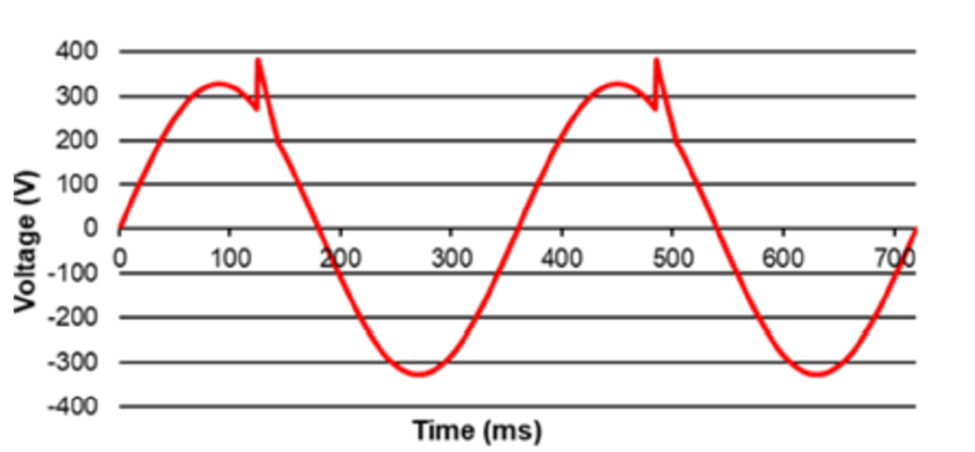
Impulsive transient caused by a lightning stroke.
Switching of lines with power factor correction capacitor banks, poor
grounding, switching of inductive loads, utility fault clearing, disconnection
of heavy loads, and electrostatic discharge. Impulsive transients can be very
fast events (5 ns rise time from steady state to the peak of the impulse) of
short-term duration (less than 50 ns), and may reach thousands of volts, even
in low voltage.

Devices are needed to prevents damage to electrical equipment
caused by impulsive transients from lightning strokes Utilities use lightning
arresters mounted on their transmission and distribution systems and in their
substations, while many utility customers use transient voltage surge
suppression (TVSS).

Fig- Impulse transients

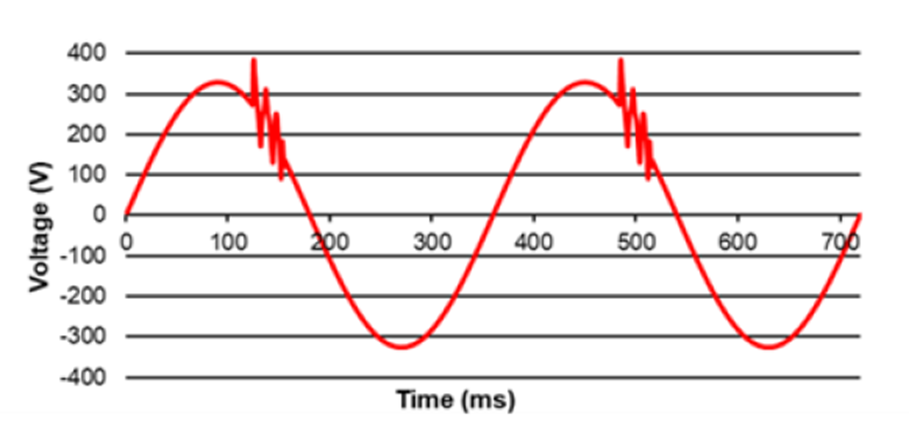
Oscillatory transients occur when switching inductive
or capacitive loads such as motors or capacitor banks. An oscillatory transient
occurs because the load resists the change. Lighting, utility fault clearing
and transformer energization and Ferro resonance could also cause oscillatory
transients.

Oscillatory transients do not decay quickly like impulsive
transients. They tend to continue to oscillate for 0.5 to 3 cycles and reach 2
times the nominal voltage or current. Another cause of oscillatory

transients, besides lightning strokes going into resonance, is
switching of equipment and power lines on the utility’s power system.

Fig – Oscillatory transients

Silla – The first Korean Kingdom

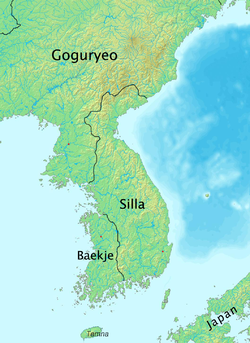
 Silla was one of the three kingdoms that emerged in the Korean peninsula during the Three Kingdoms period, which lasted from the 1st century BCE to the 7th century CE. Silla was founded in 57 BCE by Bak Hyeokgeose, who established his capital in the city of Gyeongju, in what is now the southeastern region of South Korea.


Source – Wikipedia

Silla began as a small state in the southeastern part of the Korean peninsula, but gradually expanded its territory through military conquest and political alliances. In the 4th century CE, Silla formed an alliance with the neighboring kingdom of Baekje, which allowed it to take control of much of the Han River basin in central Korea. Silla also fought against the kingdom of Goguryeo to the north, but was unable to conquer it.

Silla’s rise to prominence came in the 7th century CE, when it formed an alliance with the Tang dynasty of China to defeat the neighboring kingdom of Baekje and Goguryeo. This alliance enabled Silla to control the entire Korean peninsula, ushering in a period of political stability and cultural flourishing known as the Unified Silla period.

During the Unified Silla period, Silla became a major center of Buddhism in East Asia. The ruling elite adopted Buddhism as their official religion and built many temples and pagodas throughout the kingdom. Silla also had a sophisticated system of government, with a centralized bureaucracy and a powerful aristocracy that dominated political and economic life.

Silla’s achievements in art and culture were also noteworthy. Silla artisans produced exquisite pottery, bronze sculptures, and gold ornaments that reflected the influence of Chinese and Central Asian styles. Silla literature, including poetry and historical records, also flourished during this period.

However, Silla’s dominance was not to last. In the late 8th century CE, Silla faced a series of rebellions by regional warlords and the rise of a new power in the north, the kingdom of Balhae. In 918 CE, Silla was overthrown by the kingdom of Goryeo, which established a new dynasty that would last for nearly 500 years.

Despite its relatively short lifespan, Silla played an important role in the history of Korea. Its military conquests and political alliances laid the foundation for the unification of the Korean peninsula, while its cultural achievements helped to shape the artistic and literary traditions of Korea for centuries to come. Today, the legacy of Silla can be seen in the many historical sites and artifacts that have been preserved in Gyeongju, including the Seokguram Grotto and the Bulguksa Temple, which have been designated as UNESCO World Heritage Sites.

Did Cleopatra Really Die by Snake Bite?

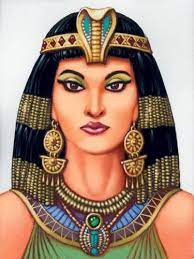
Cleopatra VII was the last pharaoh of Egypt and is famously known for her death by suicide. Her death is a significant event in history and has been the subject of numerous artistic depictions, including plays, novels, and movies. In this essay, I will discuss the circumstances surrounding her death and the possible reasons behind it.


Source – Pinterest

Cleopatra was born in 69 BC and became the queen of Egypt in 51 BC, at the age of 18, after her father’s death. She ruled jointly with her younger brother, Ptolemy XIII, but soon became embroiled in a power struggle with him. Cleopatra fled to Syria and gathered an army to fight her brother, and with the help of Julius Caesar, she regained her throne in 47 BC.

Cleopatra had a romantic relationship with Julius Caesar and bore him a son, Caesarian. However, Caesar was assassinated in 44 BC, and Cleopatra formed a new alliance with Mark Antony, one of Caesar’s generals. Cleopatra and Mark Antony had a passionate love affair and had three children together.

However, their relationship became strained after Mark Antony’s military campaign against Parthia was a failure, and he returned to Alexandria, Egypt. Mark Antony was forced to marry Octavia, the sister of his fellow triumvir, Octavian, who later became the emperor Augustus. Cleopatra, feeling betrayed, fled to her mausoleum and pretended to commit suicide.

Mark Antony, upon hearing the news of Cleopatra’s death, was devastated and decided to follow suit. He fell on his sword and died shortly afterward. However, Cleopatra was not dead but was only in a deep sleep induced by a poisonous snake, most likely an asp. When Cleopatra woke up, she learned of Mark Antony’s death and realized that she had no choice but to take her own life. She instructed her servants to bring her a basket of figs, which she had secretly poisoned with deadly toxins. She then took her own life by ingesting the poison.

Cleopatra died on August 30, 30 BC, at the age of 39. Her death marked the end of the Ptolemaic dynasty and the beginning of Roman rule in Egypt. Her life and death have been the subject of many myths and legends, and her image has been immortalized in countless works of art and literature.

There are many possible reasons why Cleopatra chose to end her life. Some historians suggest that she was afraid of being paraded through Rome as a captive, as many other defeated monarchs had been. Others argue that she was devastated by the loss of her lover and decided to follow him into death. Some believe that Cleopatra was trying to protect her children and prevent them from being used as political pawns by the new Roman rulers.

In conclusion, the death of Cleopatra remains a fascinating and mysterious event in history. Despite the numerous depictions of her death, we may never know the true circumstances that led to her tragic end. However, her legacy as a powerful and intelligent leader, a romantic figure, and a symbol of ancient Egypt will continue to inspire and captivate people for generations to come.

Property rights

In India property rights are given to women also. But despite having property rights, women are still stucked in an abusive relationships . They are still not free . So many families are still not giving property to their daughters. And the main role in capturing the property rights of women’s is specially their brother. Despite being incapable and being less talented they capture the parent’s house as well as business. They throw their sisters out of the house and think it is their right.Women get emotionally black mailed and don’t take their share .

I think the administration should play a role in it. If someone’s property rights are violated that property should be sealed and parents should be punished at all cost . And if the property rights are violated by brother then they should be punished strongly as well.

Government should make a department which will deal with property rights of family members and execution of their rules. This department should keep all the details regarding property ownership of the families and in doing that government will have every detail of the property, money circulation and transparency in every family and at the same time property distribution should be done by government officials by this every member of family will get equal opportunities regardless of their gender.

Property rights

In India property rights are given to women also. But despite having property rights, women are still stucked in an abusive relationships . They are still not free . So many families are still not giving property to their daughters. And the main role in capturing the property rights of women’s is specially their brother. Despite being incapable and being less talented they capture the parent’s house as well as business. They throw their sisters out of the house and think it is their right.Women get emotionally black mailed and don’t take their share .

I think the administration should play a role in it. If someone’s property rights are violated that property should be sealed and parents should be punished at all cost . And if the property rights are violated by brother then they should be punished strongly as well.

Government should make a department which will deal with property rights of family members and execution of their rules. This department should keep all the details regarding property ownership of the families and in doing that government will have every detail of the property, money circulation and transparency in every family and at the same time property distribution should be done by government officials by this every member of family will get equal opportunities regardless of their gender.

Women’s security

Recently I got to know about Holi incident happened in Delhi with foreigner girl. This kind of incidences are shameful. Why do so many cases are happening in India despite having law and order? Why this kind of incidences are growing day by day? Either there is lack of rules and regulations or there is lack of execution . Why do women are still insecure in India? After so much development, Women are still not secured . In matter of women’s dignity and security the role of police administration should be changed. Police department should be given special permission to interfere in the matter of women’s dignity and security . And should take instant action.

Women's security

Recently I got to know about Holi incident happened in Delhi with foreigner girl. This kind of incidences are shameful. Why do so many cases are happening in India despite having law and order? Why this kind of incidences are growing day by day? Either there is lack of rules and regulations or there is lack of execution . Why do women are still insecure in India? After so much development, Women are still not secured . In matter of women’s dignity and security the role of police administration should be changed. Police department should be given special permission to interfere in the matter of women’s dignity and security . And should take instant action.

Mauryan Empire( 322 BCE – 184 BCE)

In Ancient India, many significant empires evolved. One of them was the Mauryan empire. Founded by Chandragupta Maurya, the Mauryan empire was an important dynasty in our history. The last of the Nanda rulers, Dhana Nanda was highly unpopular due to his oppressive tax regime. Also, post-Alexander’s invasion of North-Western India, that region faced a lot of unrest from foreign powers. Chandragupta, with the help of an intelligent and politically astute Brahmin, Kautilya usurped the throne by defeating Dhana Nanda in 321 BC.

Source – Wikipedia

Founder of Mauryan Empire – Chandragupta Maurya

Chandragupta Maurya was an ancient Indian emperor who ruled from around 321 BCE to 297 BCE. He was the founder of the Maurya Empire, which at its height, encompassed most of the Indian subcontinent.

Chandragupta Maurya was born in the Magadha region of ancient India, in present-day Bihar. He was the son of a chief of a small tribe called the Mauryas. As a young man, he was inspired by the teachings of the philosopher Chanakya, who later became his mentor and advisor. Under Chanakya’s guidance, Chandragupta Maurya built a powerful army and overthrew the reigning Nanda dynasty in 321 BCE. He then established the Maurya Empire, which became one of the largest and most powerful empires in the world at the time.

Chandragupta Maurya was known for his administrative and military skills. He implemented a centralized system of government, with a complex bureaucracy that included officials in charge of taxation, law and order, and intelligence gathering. He also built a large army, which was organized into different units and divisions.

Chandragupta Maurya’s reign was marked by several military conquests. He defeated the Seleucid Empire in the northwest and extended his empire as far south as the Deccan Plateau. He also maintained diplomatic relations with other kingdoms, including the Hellenic kingdoms in the west.

After ruling for more than 20 years, Chandragupta Maurya abdicated his throne in favor of his son Bindusara and became a Jain monk. He spent the rest of his life in the pursuit of spiritual enlightenment and died in around 297 BCE.

Second Ruler of Mauryan Empire – Bindusara


Bindusara was an ancient Indian emperor who ruled from around 298 BCE to 272 BCE. He was the second ruler of the Maurya Empire, succeeding his father Chandragupta Maurya.

Not much is known about Bindusara’s early life or accession to the throne. However, it is known that he continued his father’s policies of expansion and consolidation of the empire. Bindusara is said to have conquered the Deccan region and parts of southern India, as well as parts of present-day Afghanistan.

Bindusara was known for his patronage of the arts and learning. He was said to be a great supporter of Buddhism and invited several Buddhist scholars to his court. According to some accounts, he also patronized Jainism and other religious sects.

Bindusara had several wives and concubines, and his favorite wife was named Dharma. He had two sons, Susima and Ashoka, who were born to different mothers. Susima was initially named as his successor, but Ashoka ultimately became the emperor after a power struggle.

Bindusara ruled for more than 25 years and died in around 272 BCE. He was succeeded by his son Ashoka, who went on to become one of the most famous and powerful emperors in Indian history.

Third Ruler of the Mauryan Empire – Ashoka

Ashoka was an ancient Indian emperor who ruled from around 268 BCE to 232 BCE. He was the third ruler of the Maurya Empire and is widely considered to be one of the greatest rulers in Indian history.
Ashoka was the son of Emperor Bindusara and was appointed as the governor of the province of Avanti during his father’s reign. After a succession battle with his brothers, Ashoka eventually emerged as the victor and became the emperor in 268 BCE.
Ashoka’s reign was marked by several military campaigns, including a campaign against the Kalinga kingdom in eastern India. The war was said to be brutal and caused a great deal of suffering, leading Ashoka to embrace Buddhism and renounce violence.
After his conversion to Buddhism, Ashoka began to focus on promoting peace, tolerance, and non-violence. He instituted several reforms, including the construction of hospitals, rest houses, and universities throughout his empire. He also established a set of ethical guidelines known as the “Ashoka’s Dhamma” which promoted values such as compassion, honesty, and respect for all life.
Ashoka’s legacy has endured throughout history, and he is often regarded as one of the greatest emperors in Indian history. His conversion to Buddhism and his embrace of non-violence has had a profound influence on the history of the region, and his edicts can still be found throughout India and neighboring countries today.

The Most Frightening Spain’s Sports: Bullfighting

 Spain is a highly developed country ranked 27th on
the Human Development Index, a secular parliamentary democracy, and a
constitutional monarchy. It is a high-income country and an advanced economy,
with the world’s sixteenth-largest economy by nominal Gross Domestic Product (
GDP) and the sixteenth-largest by Purchasing Power Parity (PPP). PPP  is a
popular metric used by macroeconomic analysts that compare different countries’
currencies through a “basket of goods” approach. On the other hand,
GDP refers to the total monetary value of the goods and services produced
within one country, generally in a year. Nominal GDP calculates the monetary
value in current, absolute terms.  Anyway, Spain has the twelfth-highest
life expectancy in the world. It ranks particularly high in healthcare quality,
with its healthcare system considered to be one of the most efficient
worldwide. It is a world leader in organ transplants and organ donation. Spain
is a member of the United Nations, the European Union, the Eurozone, the
Council of Europe (CoE), a de facto member of the G20, the Organization of
Ibero-American States (OEI), the Union for the Mediterranean, the North
Atlantic Treaty Organization (NATO), the Organisation for Economic Co-operation
and Development (OECD), Organization for Security and Co-operation in Europe
(OSCE), the World Trade Organization (WTO), and many other international
organizations.
In this country with so-called highly developed
people with high per capita income enjoy some  cruel sports.  From,
the newsletter of People for the Ethical Treatment of Animals (popularly
known as PETA), I am sharing three cases of cruelty inflicted upon bulls in the
name of sports. And another from a different source, about the
burning of the horns of the bull. 
 Case 1) “In bullfights,
matadors drive lances and barbed sticks into each bull’s back and spine before
stabbing the tormented animal with a sword or dagger. If the public praises the
matador’s performance enough, he might cut off the dying bull’s ears and/or tail
as a trophy – sometimes while he (bull) is still conscious but paralyzed”.
Case 2) “PETA has shared the cruelest video,
recorded by PACMA,
(PACMA means Partido Antitaurino Contra el Maltrato
Animal) which shows a becerrada ( Spanish word that means fighting with the
young bull), in which an apprentice bullfighter attacks a young calf – who
doesn’t even have fully formed horns and hasn’t been weaned from his mother’s
milk”. In the video, it is observed that the young bull who was still in the
stage of drinking his mother’s milk was cruelly tortured to death in the name
of sports. Many people enjoyed it. Also, it may be mentioned that “the
young, terrified animal staggers around – as he is stabbed repeatedly and
bleeds from multiple wounds – before he falls to the ground and his ears are
cut off”.
Case 3) “Another disturbing video showed children
as young as 14 years learning how to stab calves as part of a practical exam at
a bullfighting school in Madrid”. According to the United Nations: “The
participation of children and adolescents in bullfighting activities
constitutes a grave violation of the articles of the Convention on the Rights
of the Child … as they are being indoctrinated for a violent act”. 
Case 4) This case has been collected from www.hsi.org/news-media/fire_bull_fiestas/ but initially, PETA shared the video with me.  “Every November in the village of Medinaceli in the Castilla y León
region of northern Spain, El Toro Jubilo, or the Jubilation Bull, festival
takes place. “Late in the evening, a bull is roped to a post in the town square
whilst flaming torches are attached to its horns.
Unshackled once the torches above its head are
ablaze, the bull dashes about the square trying to avoid roaring bonfires, as
spectators rush in, trying to goad it. The animal tosses its head again and
again, as it turns in one direction and then the next, trying desperately to
escape the fire burning above its head. As the fire burns, drops of the
flammable liquid fall onto the head and body of the animal and loud
firecrackers explode above the square. These events can last for up to 40 minutes”.
I observed many people enjoyed it. In this sport, because of the burning, the
bull  cries to the maximum extent, and
its heart-wrenching cries disturbed my sleep for many days because people
sitting in the audience enjoyed its cries. 
I am a simple person with no money power or spiritual or political
power even then I request the Government of Spain please close down all sorts
of bullfighting sports. Anyway, PETA UK asked me to sign the form for banning the
bullfight which I signed and they have sent me mail as mentioned here “Dear
Prof Shankar, Thank you for taking action against bullfighting schools. Your
e-mail has been sent to Spain’s Ministry of Education, Culture, and Sport and
will help create pressure to end the government-funded abuse of children and
animals at these horrific institutions”.
Dr. Shankar Chatterjee, Hyderabad