Challenges of Sustainable Development

Sustainable development refers to a way of meeting the needs of the present generation without compromising the ability of future generations to meet their own needs. However, there are several challenges to achieving sustainable development, including:
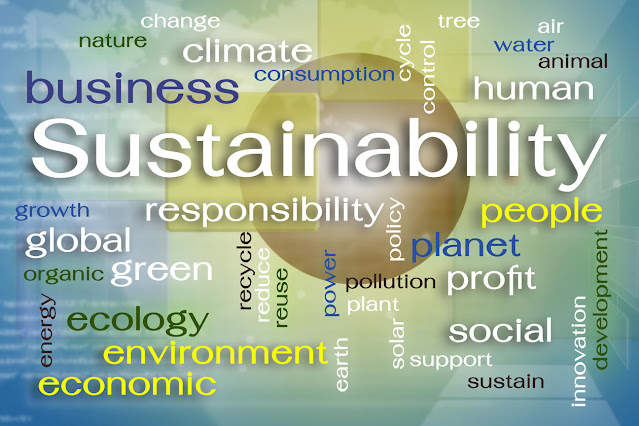
Climate Change: Climate change is one of the most significant challenges facing sustainable development. The burning of fossil fuels and deforestation are major contributors to climate change, leading to rising temperatures, changing weather patterns, and more frequent natural disasters.
Poverty and Inequality: Achieving sustainable development requires reducing poverty and promoting equity. Poverty and inequality are major obstacles to sustainable development, as they can prevent people from accessing basic resources and opportunities.
Biodiversity Loss: The loss of biodiversity, caused by factors such as habitat destruction, overfishing, and pollution, threatens the balance of ecosystems and the sustainability of many industries that rely on natural resources.
Population Growth: The world’s population continues to grow, putting increasing pressure on natural resources and contributing to environmental degradation.
Unsustainable Consumption: Unsustainable patterns of consumption and production, such as overconsumption of meat and other animal products, can strain resources and contribute to environmental damage.
Political Will and Governance: Achieving sustainable development requires political will and effective governance. However, many governments lack the political will or capacity to enact policies that promote sustainable development.
Technological Innovation: Technological innovation has the potential to drive sustainable development, but it also presents challenges. New technologies can have unintended consequences and can be expensive to develop and implement on a large scale.
Overall, achieving sustainable development requires a collective effort to address these challenges and ensure that economic, social, and environmental goals are met in an integrated and equitable way.

Princess Diana's death – A Tragic Accident or Murder?

Princess Diana’s death on August 31, 1997, was a tragic event that shocked the world. She died in a car accident in Paris, France, along with her partner at the time, Dodi Fayed, and their driver, Henri Paul. The events surrounding her death have been the subject of much speculation and controversy, but the official explanation is that the car crashed into a pillar in a tunnel due to the driver’s high speed and intoxication.

The news of Princess Diana’s death was met with an outpouring of grief from around the world. She was beloved by many for her charitable work, her compassion, and her willingness to speak out on issues such as HIV/AIDS and landmines. Her death was a shock to the British royal family, as well as to the general public, and it prompted an unprecedented outpouring of emotion and public mourning.

In the aftermath of her death, there were many questions about what had happened and why. The French authorities conducted an investigation into the crash, which concluded that the driver, Henri Paul, had been drinking and was driving at high speed when the car crashed. There were also conspiracy theories that suggested that Princess Diana’s death was not an accident, but was instead the result of a deliberate plot by the British establishment.

Also, Princess Diana did write a letter to her butler, Paul Burrell, several months before her death in which she expressed her concerns for her safety and her belief that there was a plot to harm her. The letter, known as the “Burrell letter,” was revealed during the inquest into her death.

In the letter, Diana expressed her belief that someone was planning an accident to cause her harm and that she was being watched. However, it is important to note that the circumstances surrounding the letter’s contents and its authenticity have been the subject of much debate and controversy. Some people have questioned whether the letter was genuine or whether it was a fabrication.

Furthermore, the investigations into Diana’s death found no evidence to support the idea that there was a conspiracy or that anyone was responsible for her death. Instead, it was concluded that her death was the result of a tragic accident.

EDUPub – Edupedia Publications Pvt Ltd is Services for Scholars

 Edupub: A New Way of Learning with Digital Textbooks

Education is one of the most important aspects of human development. It enables us to acquire knowledge, skills, values, and attitudes that are essential for personal and social well-being. However, education also faces many challenges in the 21st century, such as access, quality, relevance, equity, and innovation. How can we overcome these challenges and provide better learning opportunities for everyone?

One possible solution is edupub, a new format for digital textbooks that is based on the EPUB standard. EPUB is an open and widely adopted format for electronic publications that can be read on various devices and platforms. Edupub is a profile of EPUB that adds specific features and guidelines for educational content, such as interactivity, accessibility, metadata, alignment, and assessment.

Edupub has many advantages over traditional textbooks and other digital formats. First of all, edupub is flexible and adaptable to different contexts and needs. It can support multiple languages, scripts, layouts, media types, and learning styles. It can also be customized and personalized according to the preferences and abilities of the learners and teachers.

Secondly, edupub is interactive and engaging. It can incorporate various elements that enhance the learning experience, such as animations, simulations, quizzes, games, annotations, feedback, and social features. It can also connect to external resources and services that provide additional information and functionality.

Thirdly, edupub is accessible and inclusive. It follows the principles of universal design for learning (UDL), which aim to provide multiple means of representation, expression, and engagement for all learners. It also supports assistive technologies and accessibility standards that enable learners with disabilities to access the content.

Fourthly, edupub is interoperable and portable. It can be easily created, distributed, exchanged, and consumed across different devices and platforms. It also follows common standards and specifications that ensure compatibility and quality. It can also be integrated with other systems and tools that support learning management, analytics, assessment, and certification.

Fifthly, edupub is innovative and future-proof. It leverages the latest technologies and best practices that enable new possibilities and opportunities for learning. It also evolves with the changing needs and expectations of the learners and teachers. It also supports continuous improvement and feedback through data collection and evaluation.

In conclusion, edupub is a new way of learning with digital textbooks that offers many benefits for education in the 21st century. It is flexible, interactive, accessible, interoperable, and innovative. It can help us overcome the challenges of education and provide better learning opportunities for everyone.


I hope you liked my essay on edupub. If you need more help or inspiration with your writing project, you can ask me to rewrite it or improve it for you.

Rinku Singh:  Sweeper to A Budding Genius Cricketer

As games and sports lover, I normally watch cricket and other my favourite games and sports. Presently Indian Premiere League (IPL) is going on which I am enjoying. On April 9, 2023, while watching Gujrat Titans (GT) vs Kolkata Knight Riders (KKR) match held at the Narendra Modi Stadium in Ahmedabad, Gujarat, I was fascinated to observe wonderful batting by a budding genius cricketer originally from Uttar Pradesh Rinku Singh, played for KKR. The match came to a dramatic end at the stadium because Kolkata Knight Riders needed 29 runs to win against Gujarat Titans in the last over (20 overs match) which was almost impossible for KKR but Rinku Singh made it possible by hitting five sixes in five balls in a row. He has become the hero of victory overnight.
He was born on October 12, 1997, in Aligarh, Uttar Pradesh and he is the third of five siblings. He hails from an ordinary family as his father supplies LPG gas cylinders door to door as a worker and one elder brother ekes out his livelihood by driving an auto. So, the family was not economically sound and from his childhood, he struggled. Rinku was not good in education also as he was a dropout after class 9th standard. In spite of all these, Rinku was a great cricket lover and used to play cricket. In his teenage, he was employed as a sweeper by his elder brother to earn income for their family, Rinku did not like it as he desired to be a cricketer. At the age of 17 (2014), he got the opportunity to play for the first time in the Uttar Pradesh state cricket team. After that, Rinku was introduced in first-class cricket on November 5, 2016. He scored four fifties in the seven matches and in those days many predicted ‘he is the budding genius cricketer’. This left-handed batsman scored 91 runs off 44 balls against Tripura in Vijay Hazare Trophy in 2018. In 2017, Rinku was bought by Kings XI Punjab for Rs 10 lakh, however, he did not get a chance to play in the tournament so he could not bat in any match. In 2018, Rinku was bought by KKR for Rs. 80 lakh. Since then, he has been with the KKR team. According to various media sources, Rinku’s total assets are around Rs. six crore and he has become a millionaire by playing IPL. Wishing the cricketer, a bright future with more and more laurels.
(Basic inputs collected from anandabazar.com/photogallery/kolkata-night-riders, 10 April 2023).

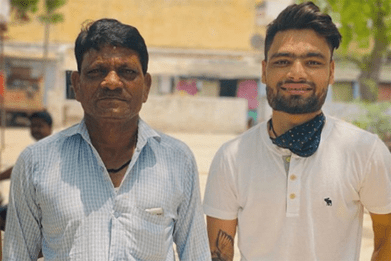
(Rinku with his father and mother)

Rinku Singh: Sweeper to A Budding Genius Cricketer

As games and sports lover, I normally watch cricket and other my favourite games and sports. Presently Indian Premiere League (IPL) is going on which I am enjoying. On April 9, 2023, while watching Gujrat Titans (GT) vs Kolkata Knight Riders (KKR) match held at the Narendra Modi Stadium in Ahmedabad, Gujarat, I was fascinated to observe wonderful batting by a budding genius cricketer originally from Uttar Pradesh Rinku Singh, played for KKR. The match came to a dramatic end at the stadium because Kolkata Knight Riders needed 29 runs to win against Gujarat Titans in the last over (20 overs match) which was almost impossible for KKR but Rinku Singh made it possible by hitting five sixes in five balls in a row. He has become the hero of victory overnight.
He was born on October 12, 1997, in Aligarh, Uttar Pradesh and he is the third of five siblings. He hails from an ordinary family as his father supplies LPG gas cylinders door to door as a worker and one elder brother ekes out his livelihood by driving an auto. So, the family was not economically sound and from his childhood, he struggled. Rinku was not good in education also as he was a dropout after class 9th standard. In spite of all these, Rinku was a great cricket lover and used to play cricket. In his teenage, he was employed as a sweeper by his elder brother to earn income for their family, Rinku did not like it as he desired to be a cricketer. At the age of 17 (2014), he got the opportunity to play for the first time in the Uttar Pradesh state cricket team. After that, Rinku was introduced in first-class cricket on November 5, 2016. He scored four fifties in the seven matches and in those days many predicted ‘he is the budding genius cricketer’. This left-handed batsman scored 91 runs off 44 balls against Tripura in Vijay Hazare Trophy in 2018. In 2017, Rinku was bought by Kings XI Punjab for Rs 10 lakh, however, he did not get a chance to play in the tournament so he could not bat in any match. In 2018, Rinku was bought by KKR for Rs. 80 lakh. Since then, he has been with the KKR team. According to various media sources, Rinku’s total assets are around Rs. six crore and he has become a millionaire by playing IPL. Wishing the cricketer, a bright future with more and more laurels.
(Basic inputs collected from anandabazar.com/photogallery/kolkata-night-riders, 10 April 2023).

(Rinku with his father and mother)

Mesopotamia's cradle of civilization

Mesopotamia is a historical region located in the eastern Mediterranean, between the Tigris and Euphrates rivers, in what is now modern-day Iraq. It is considered to be one of the cradles of civilization, as it was home to some of the world’s earliest civilizations, such as Sumer, Akkad, and Babylon.


Credits – Pinterest

The first civilization to arise in Mesopotamia was the Sumerian civilization, which emerged around 4000 BCE. The Sumerians were one of the first groups to develop a form of writing, known as cuneiform, which they used to keep records and write literature. They also created a number of important innovations, including the wheel, plow, and irrigation systems, which allowed them to sustain large populations and build complex societies.

The Akkadian Empire emerged around 2334 BCE, and was founded by the Akkadian king Sargon. The Akkadians conquered much of Mesopotamia and created the first empire in history. The Akkadian Empire was known for its military prowess, as well as its contributions to art and culture. The empire lasted for about two centuries before falling apart due to internal strife and external pressures.

The Babylonian Empire emerged around 1894 BCE, and was founded by the Amorite king Hammurabi. Hammurabi is best known for his legal code, which was one of the first comprehensive legal systems in history. The Babylonian Empire was also known for its advances in mathematics, astronomy, and literature. The empire fell to the Assyrians in 612 BCE.

Throughout its history, Mesopotamia was subject to numerous invasions and conquests. The Assyrians, for example, emerged as a major power in the region around 1300 BCE, and went on to conquer much of Mesopotamia, as well as parts of Egypt and Anatolia. The Assyrians were known for their brutal tactics and their ability to create large, efficient armies.

Mesopotamia was also home to a number of important religious traditions, including the worship of the gods Enlil, Anu, and Marduk. The Mesopotamians believed in a pantheon of gods and goddesses, and their religious practices were closely intertwined with their daily lives.

Mesopotamia is a region that played a critical role in the development of human civilization. It was home to some of the world’s earliest civilizations, which made significant contributions to art, culture, and technology. Mesopotamia was also a region of great political and military turmoil, as various empires rose and fell throughout its history. Despite its challenges, Mesopotamia’s legacy endures to this day, as many of its achievements continue to influence our world.

Finland ranked the 'happiest country' for sixth year in row

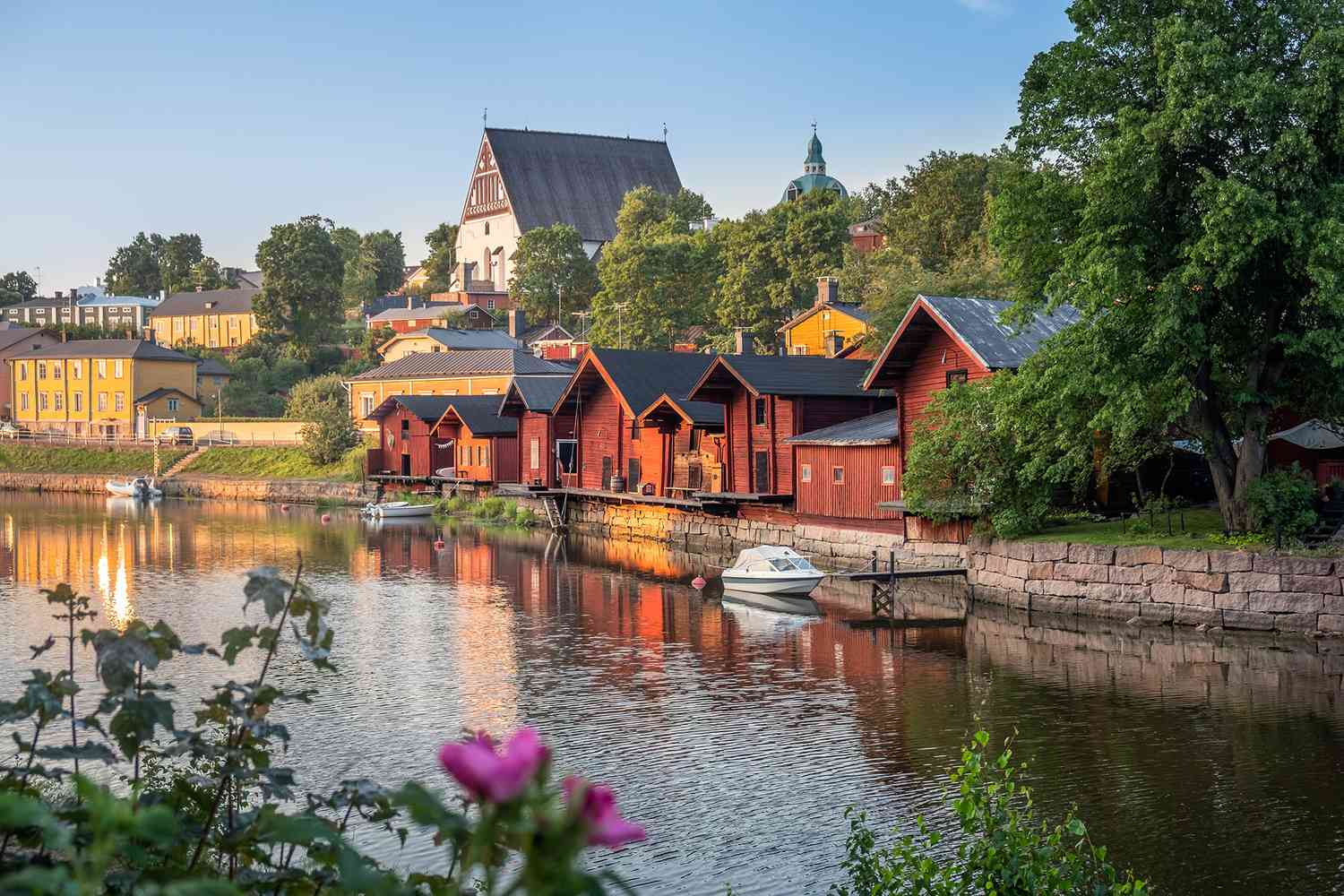
Finland is a Nordic country located in Northern Europe, and it has been ranked the happiest country in the world for six times in row. This ranking is based on the annual World Happiness Report, which measures the well-being of people in countries around the globe. In this article, you can read about why Finland is the happiest country in the world.

PHOTO: JANI RIEKKINEN/GETTY IMAGES

Finland has a high standard of living. The country has a robust social welfare system that provides its citizens with access to quality education, healthcare, and other basic needs. This means that the majority of people in Finland can enjoy a good standard of living, regardless of their socioeconomic background. In addition, the country has a low level of income inequality, which further contributes to a sense of well-being among the population.

Finland is a safe and peaceful country. Crime rates are low, and the country has a strong rule of law, which means that people can feel secure in their daily lives. Additionally, Finland has a long tradition of political stability and democratic governance, which helps to maintain a sense of social harmony and trust among its citizens.

Another factor that contributes to Finland’s happiness is its natural beauty. Finland has vast expanses of unspoiled wilderness, including forests, lakes, and rivers, which provide ample opportunities for outdoor recreation and relaxation. This connection with nature has been shown to have positive effects on mental health and well-being.

Furthermore, Finland has a strong sense of community and social cohesion. This is partly due to the country’s Nordic welfare model, which emphasizes equality, cooperation, and solidarity. Additionally, Finland has a strong tradition of volunteerism and civic engagement, which helps to create a sense of shared purpose and mutual support among its citizens.

Finally, Finland is a country that values work-life balance. The country has a culture that prioritizes leisure time and family time, and it has one of the shortest workweeks in Europe. This means that people in Finland have more time to pursue hobbies and spend time with loved ones, which can contribute to overall happiness and well-being.

To conclude, Finland’s happiness can be attributed to a variety of factors, including a high standard of living, safety and security, natural beauty, social cohesion, and a culture that values work-life balance. While no country is perfect, Finland’s commitment to social welfare, democratic governance, and environmental sustainability has made it a shining example of what a happy and prosperous society can look like.

Air Pollution – Causes

Air pollution refers to the presence of harmful substances in the air that we breathe. It can have serious effects on both human health and the environment. Some of the causes of air pollution include industrial activities, transportation, and natural events such as wildfires and dust storms.
Effects of air pollution:

Respiratory problems: Air pollution can cause a range of respiratory problems such as coughing, wheezing, and shortness of breath. It can also aggravate asthma and other respiratory conditions.
Cardiovascular problems: Air pollution has been linked to an increased risk of heart disease, stroke, and other cardiovascular problems.
Cancer: Exposure to air pollution, particularly to certain types of air pollutants such as benzene, has been linked to an increased risk of cancer.
Environmental damage: Air pollution can have serious environmental effects such as acid rain, ozone depletion, and damage to crops and forests.
Global warming: Air pollution is a major contributor to global warming, which has serious implications for the planet.
Causes of air pollution:
Industrial activities: The burning of fossil fuels in industries is a major source of air pollution. This includes burning coal, oil, and gas.
Transportation: Vehicles emit a range of pollutants into the air including carbon monoxide, nitrogen oxides, and particulate matter.
Natural events: Natural events such as wildfires and dust storms can also contribute to air pollution.
Agricultural activities: Agricultural activities such as the use of fertilizers and pesticides can release pollutants into the air.
Household activities: Household activities such as cooking, heating, and using cleaning products can also contribute to air pollution.
In conclusion, air pollution is a serious problem that can have a range of harmful effects on both human health and the environment. It is caused by a range of factors including industrial activities, transportation, and natural events. It is important that we take steps to reduce air pollution and protect our health and the planet.

The Seven Wonders of World

The New Seven Wonders of the World is a collection of remarkable architectural and engineering feats of the modern world that were chosen through a global vote held in 2007. The campaign was launched by the Swiss foundation New7Wonders, which aimed to promote cultural diversity and encourage the preservation of global heritage sites. The winners were announced on July 7, 2007, in Lisbon, Portugal.


Source – Wikipedia

  1. Great Wall of China:
    The Great Wall of China is an iconic symbol of Chinese civilization and one of the most visited tourist destinations in the world. It was built over 2,000 years ago to protect China from invading nomadic tribes. The wall stretches for over 13,000 miles and comprises a series of walls and fortifications.

  2. Petra, Jordan:
    Petra is an ancient city located in the deserts of Jordan that was carved into the sandstone cliffs by the Nabatean people over 2,000 years ago. It was an important trading center on the Silk Road and is famous for its impressive rock-cut architecture, including the Treasury and the Monastery.

  3. Christ the Redeemer, Brazil:
    Christ the Redeemer is a statue of Jesus Christ located in Rio de Janeiro, Brazil. It was built in the early 20th century and stands at 98 feet tall, including its pedestal. The statue is one of the most recognizable landmarks in Brazil and a symbol of Christianity worldwide.

  4. Machu Picchu, Peru:
    Machu Picchu is an ancient Incan citadel in the Andes Mountains of Peru. It was built in the 15th century and abandoned by the Incas a century later. The site was rediscovered by Hiram Bingham in 1911 and is now a popular tourist destination known for its stunning architecture and panoramic views.

  5. Chichen Itza, Mexico:
    Chichen Itza is a complex of Mayan ruins located in Mexico’s Yucatan Peninsula. It was built in the 9th century and features impressive pyramids, temples, and observatories. The most famous structure is the Kukulcan Pyramid, also known as El Castillo, which is renowned for its unique acoustic properties.

  6. Colosseum, Italy:
    The Colosseum is an iconic symbol of ancient Rome and a popular tourist destination. It was built in the 1st century AD and was used for gladiatorial contests and public spectacles. The Colosseum is the largest amphitheater ever built and could seat up to 50,000 spectators.

  7. Taj Mahal, India:
    The Taj Mahal is a white marble mausoleum located in Agra, India. It was built in the 17th century by Emperor Shah Jahan as a tribute to his beloved wife, Mumtaz Mahal. The Taj Mahal is renowned for its stunning beauty and intricate decorative elements, including its marble inlay work and intricate carvings.

10 Tips for Book Promotion

Here are 10 tips to get your book promoted:

Leverage social media: Use social media platforms such as Twitter, Facebook, Instagram, and LinkedIn to promote your book to your followers and target audience.
Get book reviews: Reach out to book bloggers and reviewers to request a review of your book. Positive reviews can help increase visibility and credibility.
Attend book festivals: Attend book festivals and book fairs to network with other authors, publishers, and industry professionals.
Offer giveaways and contests: Offer giveaways and contests on social media or through your website to generate interest and buzz around your book.
Create a book trailer: Create a book trailer to give potential readers a visual preview of your book.
Collaborate with other authors: Collaborate with other authors in your genre to cross-promote each other’s books.
Use book promotion sites: Utilize book promotion sites such as BookBub, Freebooksy, and Bargain Booksy to reach a wider audience.
Reach out to book clubs: Reach out to book clubs and offer to provide copies of your book for their reading list.
Participate in book signings: Participate in book signings at local bookstores or libraries to connect with readers and promote your book.
Offer exclusive content: Offer exclusive content to your email subscribers or social media followers, such as bonus chapters, deleted scenes, or author interviews, to keep them engaged and interested in your book.

courses offered through SWAYAM are recognized by the UGC

Yes, the courses offered through SWAYAM (Study Webs of Active Learning for Young Aspiring Minds) are recognized by the University Grants Commission (UGC) in India. The UGC has given recognition to SWAYAM as a Massive Open Online Courses (MOOCs) platform, and the courses offered on this platform are equivalent to regular classroom courses in terms of curriculum, syllabus, and learning outcomes. Students who complete the courses offered through SWAYAM are also eligible for credits, which can be transferred to their regular degree programs. Therefore, SWAYAM courses are recognized by UGC and can be considered as a credible option for students who want to enhance their knowledge and skills in various subjects.

Here are 10 merits of SWAYAM (Study Webs of Active Learning for Young Aspiring Minds):
Free of cost: All the courses offered through SWAYAM are free of cost, which means that students can access quality education without having to pay any fees.
Flexible learning: The platform offers online courses that can be accessed anytime, anywhere, and at the student’s own pace, providing flexibility and convenience to the learners.
High-quality content: The courses offered through SWAYAM are prepared by experienced faculty members and subject matter experts from reputed institutions, ensuring high-quality content and teaching.
Variety of courses: SWAYAM offers a wide range of courses in various subjects, including engineering, management, humanities, social sciences, and many more.
Certification: Students who successfully complete the courses are awarded certificates, which can be useful for their career growth and academic pursuits.
Interactive learning: The platform offers various interactive tools like discussion forums, live chat, and social media integration, which facilitate peer-to-peer learning and collaboration.
Personalized learning: SWAYAM uses advanced technologies like Artificial Intelligence and Machine Learning to personalize the learning experience for each student, based on their learning preferences and performance.
Accessible to all: SWAYAM is designed to be accessible to all learners, including those with disabilities, by providing features like audio and video transcripts, sign language interpretation, and captioning.
Integration with credit systems: The platform is integrated with the credit transfer system, which means that students can transfer the credits earned through SWAYAM to their regular degree programs.
Recognition by UGC: The courses offered through SWAYAM are recognized by the University Grants Commission (UGC), which adds credibility to the platform and the courses offered.

Education Policy of USA

The education policy of the United States is a complex and multifaceted issue, as education is primarily a responsibility of the individual states. However, there are some overarching policies and initiatives at the federal level that impact education in the country.

One of the key federal policies is the No Child Left Behind Act (NCLB), which was signed into law in 2002. This law aimed to improve student achievement by requiring states to implement annual standardized testing to measure student progress in reading and math, and by holding schools accountable for their students’ performance.
In 2015, the NCLB was replaced by the Every Student Succeeds Act (ESSA), which continued the focus on accountability and standardized testing, but gave states more flexibility in implementing their own policies to improve education.
The federal government also provides funding for education through programs like Title I, which provides financial assistance to schools with a high percentage of students from low-income families, and special education funding for students with disabilities.
Another key policy issue in education is school choice, which refers to the ability of parents to choose where their children go to school, including private and charter schools. While some argue that school choice promotes competition and improves education, others are concerned about the impact it may have on public schools and access to education for disadvantaged students.
Overall, the education policy of the United States is a complex and often contentious issue, with ongoing debates about the best approaches to improving student achievement and access to education.

Madhya Pradesh PhD Colloquium 2023

A colloquium is an academic event, usually organized by a university or research institute, where experts in a particular field come together to discuss and exchange ideas on a specific topic or theme.

Colloquia may take different forms, such as lectures, seminars, panel discussions, workshops, or informal gatherings. They typically involve presentations by invited speakers, followed by questions and discussions among the attendees.

Colloquia serve as an important platform for sharing research findings, exploring new ideas, and fostering collaboration and networking among scholars, students, and practitioners in a particular field. They may also provide opportunities for graduate students and early career researchers to present their work and receive feedback from senior colleagues.

Overall, colloquia play a significant role in advancing academic and intellectual discourse, promoting interdisciplinary and cross-cultural exchange, and enriching the educational experience for both scholars and students.

Book Review – Rich Dad Poor Dad

“Rich Dad Poor Dad” is a personal finance book written by Robert Kiyosaki, which challenges the traditional views of financial success and offers a unique perspective on the importance of financial education.
The book revolves around the lessons Kiyosaki learned from his “rich dad” (his best friend’s father) and “poor dad” (his biological father) who had two very different approaches to money management. Through anecdotes and personal experiences, Kiyosaki highlights the value of financial literacy and how it can lead to greater financial freedom and security.
One of the most significant takeaways from the book is the idea that it’s not about how much money you make, but rather how much money you keep and how well you invest it. Kiyosaki emphasizes the importance of investing in assets that generate passive income, such as rental properties, stocks, and businesses. He also stresses the need to avoid liabilities that drain your finances, such as credit card debt and car payments.
Another key lesson is the value of taking calculated risks and embracing failure as a learning opportunity. Kiyosaki encourages readers to think outside the box and to take calculated risks in order to achieve financial success.
While the book has been criticized for oversimplifying complex financial concepts and promoting a “get rich quick” mentality, it nonetheless serves as an excellent starting point for anyone looking to improve their financial literacy and mindset.
Overall, “Rich Dad Poor Dad” is a thought-provoking and inspiring book that challenges conventional wisdom about money and provides practical advice for achieving financial freedom. Whether you’re just starting out on your financial journey or looking to improve your existing financial situation, this book is definitely worth a read.

What is Good Friday

Good Friday is an important religious holiday observed by Christians all over the world. It commemorates the crucifixion of Jesus Christ, who died for the sins of humanity. The holiday is observed on the Friday before Easter Sunday and marks the end of the Lenten season.

The origin of Good Friday dates back to the early days of Christianity when it was first observed as a day of mourning and repentance. It is believed that Jesus was arrested and put on trial before the Roman governor, Pontius Pilate, who sentenced him to death by crucifixion. The crucifixion took place on a hill called Golgotha, outside the city walls of Jerusalem.
The story of Jesus’ crucifixion is recorded in the New Testament of the Bible. According to the Gospels, Jesus was betrayed by one of his disciples, Judas Iscariot, who led a group of soldiers to arrest him in the Garden of Gethsemane. Jesus was then taken to the high priest Caiaphas and questioned by the Sanhedrin, the Jewish council of elders. He was accused of blasphemy and sentenced to death by the Roman authorities.
Jesus was then taken to Golgotha, where he was crucified alongside two thieves. He was nailed to a wooden cross and left to die. According to Christian tradition, Jesus died on the cross after several hours of agony, during which time he uttered the famous words, “Father, forgive them, for they know not what they do.”
Good Friday is a solemn and reflective day for Christians. Many churches hold special services, including the reading of the Passion of Christ, a recounting of Jesus’ suffering and death. In some churches, the service ends in darkness, symbolizing the darkness that fell upon the earth when Jesus died.
Christians also observe Good Friday by fasting and abstaining from meat. The day is a time for reflection, prayer, and repentance. Many Christians also participate in the Stations of the Cross, a devotional practice that involves walking the path of Jesus’ final hours, stopping at 14 stations along the way to meditate on his suffering and death.
In some countries, Good Friday is a public holiday, and businesses and schools are closed. It is a time for families to gather, and many traditional foods are eaten, including hot cross buns, a sweet bread marked with a cross, and fish, which is a traditional Lenten food.
In conclusion, Good Friday is a significant religious holiday for Christians, marking the crucifixion and death of Jesus Christ. It is a time for reflection, prayer, and repentance, and is observed with solemnity and reverence around the world. Christians believe that Jesus’ death on the cross was a sacrifice for the sins of humanity, and that through his death and resurrection, they can have eternal life. Good Friday is a powerful reminder of the importance of faith, sacrifice, and redemption in the Christian faith.