Clean energy transition ambitions

 As part of the third Energy Transition Working Group (ETWG) meeting under India’s G20 Presidency, the Ministry of New and Renewable Energy (MNRE), Government of India, in collaboration with the Global Wind Energy Council (GWEC) and National Institute of Wind Energy (NIWE) convened a high-level event “Harnessing Offshore Wind for Accelerating Energy Transition: The Way Forward” on 16th May, 2023 in Mumbai. The event brought saw a gathering of government representatives, financial institutions and senior domestic and international industry representatives. The event emerged as a platform for the exchange of urgent priorities for bolstering offshore wind deployment in India and globally ­- permits and clearances, supply chain resilience, low-cost financing, capacity building and business volumes to boost market attractiveness.

Mr Bhupinder Singh Bhalla, Secretary, Ministry of New and Renewable Energy (MNRE), Government of India, attributed offshore wind as a solution to air pollution and climate change mitigation. He emphasized the jobs creations opportunity through the flourishment of the offshore wind value chain. He outlined India’s strides in harnessing offshore wind given its role in balancing the grid. He further added that India’s G20 Presidency is an opportunity for offshore wind countries, businesses, and financial institutions to work together and build on mutual strengths to support national, regional, and global offshore wind and clean energy transition ambitions.
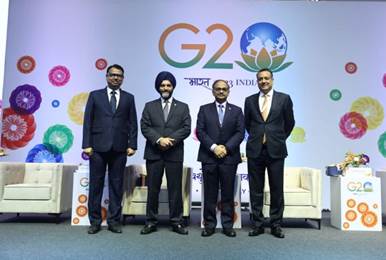
 

Mr Alok Kumar, ETWG Chair and Secretary Ministry of Power, Government of India emphasized the ever-growing role of offshore wind in India’s power mix. He outlined how India’s offshore potential is almost comparable to hydro and nuclear capacities that India may add in the future. In addition, he suggested how having an offshore wind horizon, beyond 2030, emerges as an opportunity for the country and a mission mode approach may give even further force to the country’s aspirations that may lead to the development of a robust value chain and attract more enthusiastic participation of the industry.

Mr Dinesh Dayanand Jagdale, Joint Secretary, Ministry of New and Renewable Energy (MNRE), Government of India, outlined the country’s progress on various facets of offshore wind – including proposed business models, upcoming plans of rolling out tender, international collaborations, and extensive engagements between government and the industry to facilitate a robust enabling environment.  

Mr Sumant Sinha, Chairperson of GWEC India collaboration between government and industry and partnership between Indian and international offshore wind companies, as well as power generators and original equipment manufacturers, and finally the role of multilateral development banks. He also pressed for long-term PPAs and necessary infrastructure. He also added on supply chain resilience- availability of customized equipment, ships, cables, and trained people among others.

There were two high-level panel discussions moderated by Ms Rebecca Williams, Global Head of Offshore Wind, GWEC and Mr Chintan Shah, former Director of IREDA, respectively.  The session titled “Role of Global Offshore Wind Sector in Reaching Net Zero Targets” focussed on deliberations around global offshore wind experience, international best practices, supply chain priorities, and expectations of the industry from the emerging Indian offshore wind market.
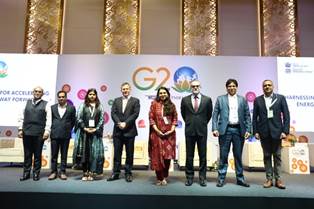
The panel discussion on “Financing and Capacity Building for Offshore” presented a comprehensive view of available instruments to feed the need for the development of an offshore wind ecosystem. Senior representatives of ADB, World Bank, Corio Generation, Aon, NTPC REL Limited, NIWE, ReNew, IREDA, Center of Excellence on Offshore Wind and Renewable Energy, IEA, O2 Power and SGRE among others spoke in these panels.

In his concluding remarks, Mr Dinesh Dayanand Jagdale, Joint Secretary, MNRE, summarized the enriching discourse as part of the event and thanked distinguished speakers and esteemed participants for their enthusiastic participation.  

*****
World Hypertension Day

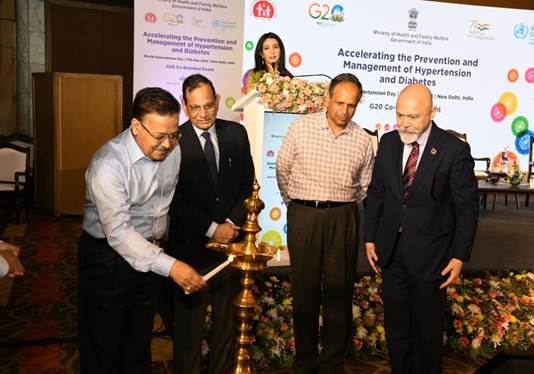
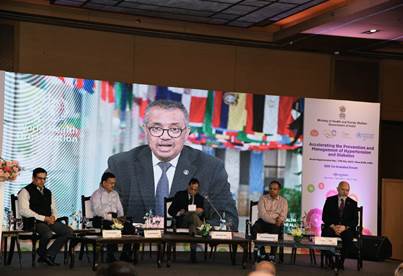
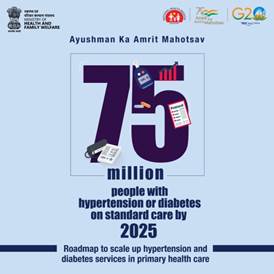
 The Union Health Ministry launched an ambitious initiative of screening and putting 75 million people with hypertension and diabetes on Standard Care by 2025, to mark the World Hypertension Day, here today. This was announced at the G20 co-branded event “Accelerating the Prevention and Management of Hypertension and Diabetes”, organized by Union Health Ministry and WHO by Dr. V K Paul, Member (Health), NITI Aayog in the presence of Shri Rajesh Bhushan, Union Health Secretary and Shri S Gopalakrishnan, Special Secretary, Health Ministry. Dr. Tedros Adhanom Ghebreyesus, Director General, WHO and Dr. Poonam Khetrapal Singh, Director, WHO SEARO virtually addressed the event.

Highlighting the innovative scheme, Dr Paul stated that this will be the largest expansion of NCDs in primary health care programme in the world with a community based approach starting at the primary healthcare level. This indicates clear resolve of the Govt to address NCDs by allocating resources, capacity enhancement, mobilization and multi-sectoral collaboration, he said. “Under the leadership of Hon’ble Prime Minister, India is determined to become a developed nation in the next 25 years in the Amrit Kaal. Towards this goal, India is making efforts to achieve results in social indicators like life expectancy, maternal mortality rate, NCDs at par with developed nations”, he stressed. The Outcome Budget document of Union Budget 2023-2024 has for the first time introduced hypertension and diabetes treatment as output indicators reflecting reflects the government’s commitment to scale-up hypertension and diabetes coverage services.

Dr Paul mentioned that the battle against NCDs have to be fought through the primary healthcare level and pointed out that India has created a platform to fight the menace through the creation of more than 1.5 lakh HWCs and operationalization of telemedicine and digital health services.

To accelerate the prevention and management of Hypertension, Dr V K Paul urged State teams to adhere to all SOPs especially the screening SOPs correctly at the grassroots since screening is the bedrock of successful management of any disease. However, he noted that only screening is not enough. Detection should lead to outcomes. He therefore urged all stakeholders to ensure that at least 80% of the diagnosed people are under treatment. The need for private sector engagement in this effort and the contribution of academic and research sector in creating models and different building blocks for achieving the ambitious targets were also emphasized.

Dr Paul also emphasized that greater effort should be put in prevention which includes lifestyle changes through eating good food, exercising and other wellness practices. He highlighted the need for a Jan Andolan to make this effort more visible through community participation; and on the need for countries to work together and share each other’s successes in the spirit of “One Earth, One Health”.

Congratulating India on this stupendous initiative, Dr Tedros Adhanom Ghebreyesus said that the “Indian Government’s ambitious target of reaching 75 million people with Hypertension under standard care in primary healthcare by 2025 is the largest cover of NCDs in the world for primary healthcare”.

In her virtual address, Dr Poonam Khetrapal Singh also congratulated the Govt of India for launching ambitious healthcare initiatives. She applauded India’s commitment to primary healthcare and highlighted the operationalization of more than 1.5 lakh Ayushman Bharat Health and Wellness Centres as a significant achievement. She also urged countries in the Southeast Asia region to create a new and effective regional roadmap to accelerate NCD control.

Union Health Secretary, Shri Rajesh Bhushan highlighted the interplay between economy, societal forces and epidemiological forces. He stated that with over 7% economic growth in the last two decades, the average life expectancy of people in India has risen significantly to around 70 today. Lifestyle of a large section of population has become more sedentary than before. The Union Health Secretary noted that the solution to the problem of NCDs lies in a societal approach where awareness, prevention, health promotion and wellness are looked at in an integrated manner. He also stressed “on the need for inter-sectoral efforts and collaboration of public and private sectors to address the growing burden of NCDs in the country”.

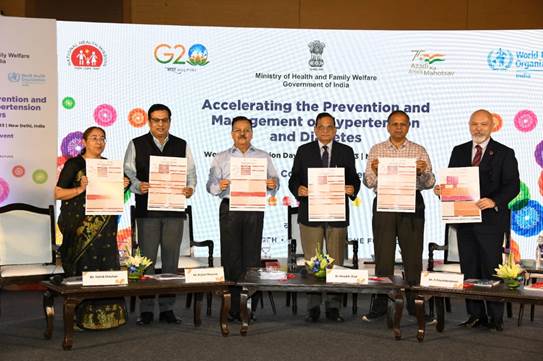
In addition to the 75/25 initiative, the Shashakt Portal was launched for training of 40,000 Primary Health Care Medical Officers on Standard Treatment Workflow for NCDs initiated to realize health care services closer to the community. The Revised operational guidelines of National Programme for Prevention and Control of Non-Communicable Diseases (NP-NCD) were also released with the aim of much wider coverage.  The programme is now providing services for Chronic Obstructive Pulmonary Disease (COPD) and Asthma, Chronic Kidney Disease (CKD) and Non-Alcoholic Fatty Liver Diseases NAFLD), ST Elevation of Myocardial Infarction (STEMI) apart from Hypertension, Diabetes and three common Cancers including Oral, Breast and Cervical. 

Shri Vishal Chauhan, Joint Secretary, Health Ministry, Dr Roderico H. Ofrin Offrin, WHO Representative to India, G-20 representatives, participants from WHO-SEARO countries, international partners working on hypertension and diabetes from WHO, UN and other organizations, senior state officials from states, national NCD partners and senior officials from the Union Govt were present in the event.

****

G-20 Culture group at Bhubaneswar

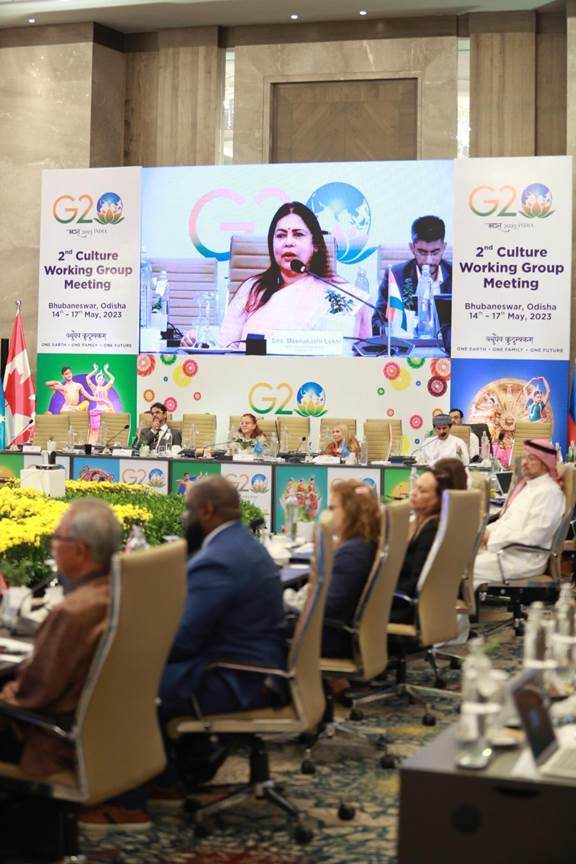
 The 2nd Culture Working Group (CWG) meetings discussion sessions came to a close on  May 16, 2023. The delegates participated in the discussion sessions focusing on the 3rd and 4th priority areas outlined by the CWG: ‘Promotion of Cultural and Creative Industries and Creative Economy’ and Leveraging Digital Technologies for the Protection and Promotion of Culture. The discussions offered valuable insights, which are expected to culminate into tangible and action-oriented recommendations that have the potential to shape the cultural sector and concerning policy frameworks globally.

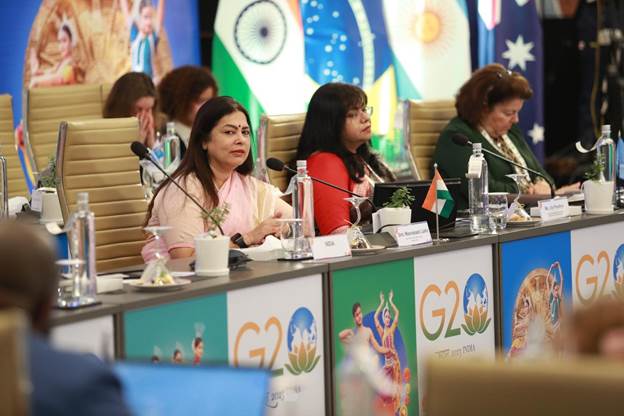
The first two sessions of the CWG meeting witnessed the delivery of statements by the delegates, followed by an open discussion on the third and fourth priority areas. Minister of State for Culture and External Affairs Smt Meenakashi Lekhi concluded the second session of the day with a special address. The concluding session outlined details and the timeline concerning the working process of the Culture Working Group going forward.

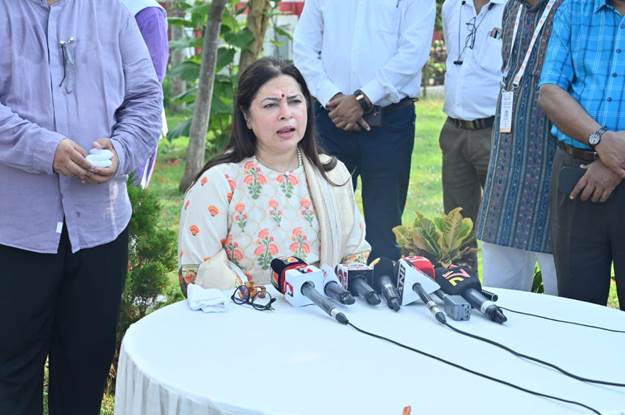
In her interaction with the media, Echoing Prime Minister’s desire to take India to greater heights during the Amrit Kaal i.e. 25 years from now, the Minister said, India has to work really had to regain the position it once used to be in. Underlining the cohesive nature of culture, the Minister said, “Culture can be a way of engagement to bring everyone together especially at a time when a lot of stress and strain are showing up. Stating “Culture Connects”, the Minister said that for the first time in G-20 Culture working group has been created as a separate group. She said when G-20 talks about harmony and peace, culture is something one needs to look at. She expressed happiness that the second culture working group meeting was held in the state of Odisha or Utkal, which transliterates into Utkarsh Kala ki Bhumi, which means the land of glorious art and culture.

On 16th May, 2023, the delegates were taken for a specially curated visit to the Konark Sun Temple, a UNESCO World Heritage site which is located in the Puri district of Odisha. The Temple, dedicated to the Hindu sun god, Surya, was built in the 13th century and is considered a masterpiece of Kalinga architecture. Later, in the evening the G-20 delegates were feted with the Gotipua dance performance by local artists, which is one of the ancient dance forms associated with the temple tradition of Shree Jagannath temple, Puri. Union Minister Smt. Lekhi felicitated the artists who gave their best in creating a fine piece of Odisha’s cultural treasure to the immense pleasure of the visiting dignitaries and delegates.

With this the four days long activities and brainstorming sessions under the G-20 second culture group meeting came to a close. The 2nd Culture Working Group Meeting attended by delegates from G20 members, guest nations, and several international organizations, provided a platform to discuss pressing issues faced by the culture sector to further deliberation towards tangible, action-oriented recommendations. The meetings of the Culture Working Group that spread over six sessions and two days, focused on 4 key priority areas articulated under Culture Track of India’s G20 Presidency. The 4 priority areas are: Protection and Restitution of Cultural Property; Harnessing Living Heritage for a Sustainable Future; Promotion of Cultural and Creative Industries and Creative Economy; and Leveraging Digital Technologies for the Protection and Promotion of Culture.

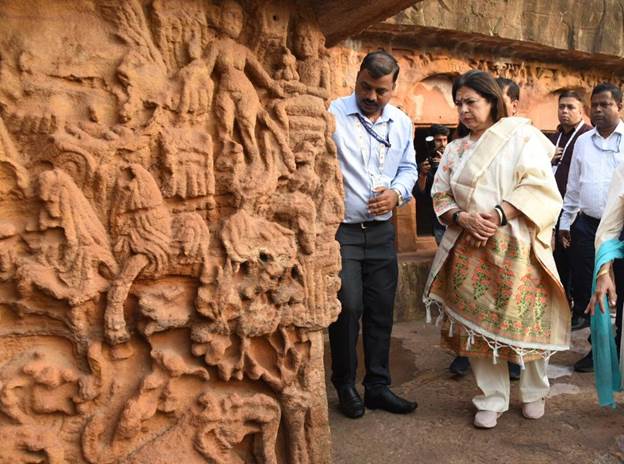
On concluding day, the Minister along with the delegates visited famous caves at Udaygiri, which dates back to more than 2000 years. They also visited the museum at the Gandhi peace centre at Bhubaneswar which is dedicated to the life and vision of Mahatma Gandhi.

On being asked about the opinion of the delegates who were taken on a visit to the ancient rock-cut caves of Udaygiri at the outskirt of capital Bhubaneswar, the Minister said that it was a knowledge sharing experience for the delegates. She said they were very amazed at the super craftsmanship and the culture of Odisha.

The CWG meetings aim to promote an inclusive and collaborative forum to deliberate on key issues concerning the cultural sector and its pivotal role in sustainable development. The meeting seeks to promote a global dialogue on cultural diversity and its role in fostering inclusivity and sustainability.

****

Mission Amrit Sarovar

 The Secretary Ministry of  Rural Development, Shri Shailesh Kumar Singh chaired a high-level meeting to review the progress, monitor, and ensure the quality of Mission Amrit Sarovar here yesterday. Additional Chief Secretary, Principal Secretary, and Secretary, Rural Developmentof all States/Union Territories (UTs), State Nodal officer for the Mission Amrit Sarovar, DM/DC/CEOs of over 700 districts along with District Nodal officers of the Mission took part were also present on the occasion.

The Secretary Rural Development has emphasized conducting a final check of quality by every Stakeholder to ensure the sustainability of all the completed Amrit Sarovars. Further, he has also emphasised that the authorised functionaries should preferably be from a different Block of the District. Social audit team will be deployed for all such completed Amrit Sarovars wherein the Sarovar has been constructed/rejuvenated through Mahatma Gandhi NREGS funds or through the scheme wherein social audit is applicable. Sample checks of inspected sites will be done by the state/UTs teams.Apart from this, National Level Monitors (NLM) will be deployed for inspection of selected Amrit Sarovar. Further, an app for inspection reporting has been developed.

All State/ UTs to take the appropriate necessary action by making an action plan for physical inspection of all the completed Amrit Sarovars before the onset of monsoon latest by 10th June 2023 and do the necessary course correction for improvement of work and in case of lapses appropriate action should be ensured.

Mission Amrit Sarovar has been launched by Prime Minister on 24th April 2022 with an objective to provide sustainable water sources wherein every district is expected to construct/ rejuvenate a minimum of 75 Amrit Sarovar. The National target of 50,000 Amrit Sarovars has been achieved by following due guidelines of the Mission.

This Mission is being implemented with a whole of Government Approach in which 8 Central Ministries/Department namely Department of Rural Development, Department of Land Resources, Department of Drinking Water and Sanitation, Department of Water Resources, Ministry of Panchayati Raj, Ministry of Forest, Environment and Climate changes, Ministry of Railway, Ministry of Road, Transport & Highways are participating. Also Bhaskaracharya National Institute for Space Application and Geo-informatics(BISAG-N)has been engaged as Technical partner for the Mission. The Mission works through the States and Districts, through refocusing of various schemes such as Mahatma Gandhi NREGS, XV Finance Commission Grants, PMKSY sub schemes such as Watershed Development Component, Har Khet Ko Pani besides States’ own schemes. It may also be mentioned that the Mission encourages mobilization of citizen and non-govt resources for supplementing these efforts.

*****

India EU Trade and Technology Council

 Union Minister for Commerce & Industry, Textiles, Consumer Affairs, Food & Public Distribution, Sh. Piyush Goyal held a bilateral meeting with the European Commissioner for Internal Trade, Mr. Thierry Breton on the sidelines of the 1st Ministerial meeting of India EU Trade and Technology Council (TTC). During the meeting, both sides underscored the importance of shared democratic values and complementary nature of both India and EU going forward. Both sides agreed that appropriate political commitment can be made to strengthen our bilateral relations taking to new heights.

Sh. Piyush Goyal informed that India has undertaken an ambitious growth trajectory for the next 25 years and has achieved many of the sustainable development goals. The target of having about 40% source of energy from renewables has already been achieved much before the committed timeline of 2030. India has set a further target of creating 500GW of renewable resources to be achieved by 2030. He noted that both our economies have different basis and this provides an opportunity for greater engagement given the current geopolitical scenario. On the suggestion of Mr. Breton for exploring engagement in the space sector, Sh. Goyal informed that India is amongst the major powers in the space sector and that both sides can have deeper engagements in the sector.

Further, the Minister informed that India has become a global leader in respect of fintech with UPI and Rupay. India has also come out with an open network for digital commerce (ONDC) which has capability to integrate all the buyers and sellers across networks. Mr Breton informed that EU is working on new Digital Services Act to which Sh. Goyal said that both sides can collaborate further given India’s status as an IT giant. He further informed that India has the world’s third largest startup ecosystem and has included B20 track in G20 meetings. This provides for greater engagements in digital space and other areas.

On the issue of carbon border adjustment mechanism (CBAM), Sh. Goyal informed that further study needs to be undertaken as to how this could impact enterprises on both sides, impact on trade and the effect on consumers due to increased price of goods and services.

Memorandum of Understanding between Institute of Chartered Accountants of India and The Chartered Accountants of the Maldives

 The Union Cabinet, chaired by the Hon’ble Prime Minister Shri Narendra Modi, today approved the signing of Memorandum of Understanding between Institute of Chartered Accountants of India (ICAI) and The Chartered Accountants of the Maldives (CA Maldives).

Details:

ICAI and CA Maldives aim to establish mutual co-operation for the advancement of Accounting Knowledge, Professional and Intellectual Development, Advancing the interests of their respective members and positively contributing to the development of the Accountancy Profession in the Maldives and India.

Impact:

This MoU besides aiding CA Maldives will provide an additional impetus to prospects of the ICAI Members to get professional opportunities in Maldives in short to long term future. With this MoU, ICAI would be able to help strengthen the partnership with Maldives by providing the export of services in accountancy profession, ICAI members are holding middle to top level positions in various organisations across the countries and can influence the decision/policy making strategies of respective organisations of a country

Benefits:

The MoU will provide an opportunity to ICAI members to expand their professional horizon and provide impetus to ICAI to aid in the strengthening the capacity building of local nationals. The MoU will foster strong working relations between India and Maldives. The agreement would increase mobility of professionals at either end and also would herald a
new dimension for business globally.

Implementation Strategy and Targets:

The MoU aims to strengthen cooperation between ICAI and CA Maldives in the matters of accountancy profession through exchange of views, information in respect of Professional Accountancy Training, Professional Ethics, Technical Research, Professional Development of Accountants. It is also intended to promote mutual cooperation through linkages to each others’ website, seminars, conferences, students exchange programmes and other joint activities mutually beneficial to both the institutes. This MoU will also provide updates on the development of the accountancy profession in India and Maldives to promote the profession in the world. Further, CA Maldives intends to become the member of International Federation of Accountants (IFAC), the global voice of accountancy profession with more than 180 members in 135 countries. ICAI will do technical due diligence for CA Maldives to make CA Maldives the member of IFAC.

Background:

The Institute of Chartered Accountants of India (ICAI) is a statutory body established under the Chartered Accountants Act, 1949 for the regulation of the profession of Chartered Accountants in India. ICAI has contributed immensely in the field of education, professional development, maintenance of high accounting, auditing and ethical standards in furtherance of the profession of Chartered Accountants, which is recognized globally.

****

Navodaya Vidyalayas

 Navodaya Vidyalayas are a system of co-educational residential schools in India, established and managed by the Navodaya Vidyalaya Samiti, an autonomous organization under the Ministry of Education, Government of India. These schools aim to provide quality education, primarily to rural children, with an emphasis on promoting talent and enhancing the intellectual capabilities of students.

Key Features of Navodaya Vidyalayas:

  1. Rural Focus: Navodaya Vidyalayas primarily target talented children from rural areas, ensuring that quality education is accessible to those residing in remote and rural regions.

  2. Admission through Selection Test: Admissions to Navodaya Vidyalayas are based on an entrance examination called the Jawahar Navodaya Vidyalaya Selection Test (JNVST). This merit-based selection process aims to identify talented students from various districts.

  3. Free Education: Navodaya Vidyalayas provide tuition-free education, including boarding and lodging, to all students. This enables students from economically disadvantaged backgrounds to access quality education without financial constraints.

  4. Multilingual Environment: While the medium of instruction is primarily in the regional language, Navodaya Vidyalayas also emphasize the learning of English and Hindi, fostering a multilingual environment.

  5. Holistic Development: Alongside academics, these schools focus on extracurricular activities such as sports, arts, music, and cultural programs to ensure the holistic development of students.

  6. Innovative Teaching Methods: Navodaya Vidyalayas often adopt modern teaching methodologies, educational technology, and interactive learning tools to enhance the learning experience.

  7. Quality Infrastructure: The schools typically have well-equipped classrooms, laboratories, libraries, sports facilities, and residential accommodations to provide a conducive learning environment.

  8. Community Engagement: Navodaya Vidyalayas encourage the involvement of local communities, parents, and alumni in various school activities and initiatives.

  9. Emphasis on Values: Besides academic excellence, these schools promote values like integrity, leadership, social responsibility, and respect for diversity.

  10. Success Stories: Many alumni from Navodaya Vidyalayas have excelled in diverse fields, contributing significantly to various professions and sectors across the country.

Navodaya Vidyalayas play a pivotal role in identifying and nurturing the talents of rural students, providing them with opportunities for quality education, personal growth, and future success. They aim to bridge the gap between rural and urban educational standards and create a brighter future for talented children from rural areas.