India’s First International Multimodal Logistics Park at Jogighopa ,Assam

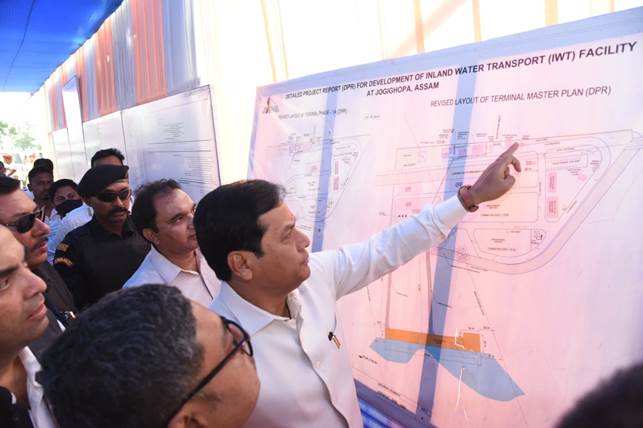
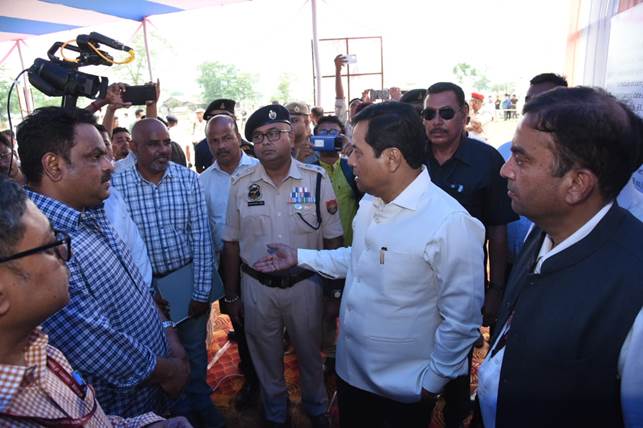
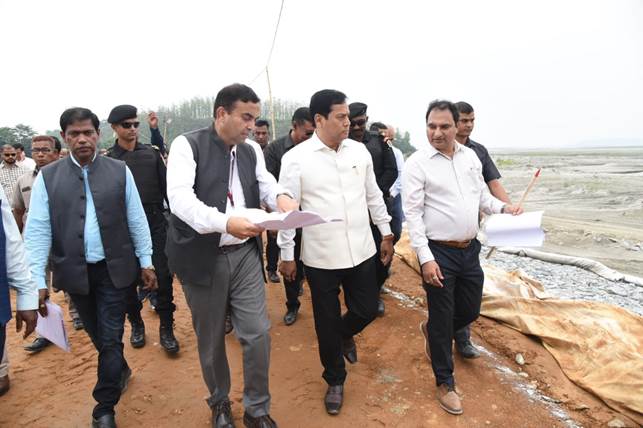
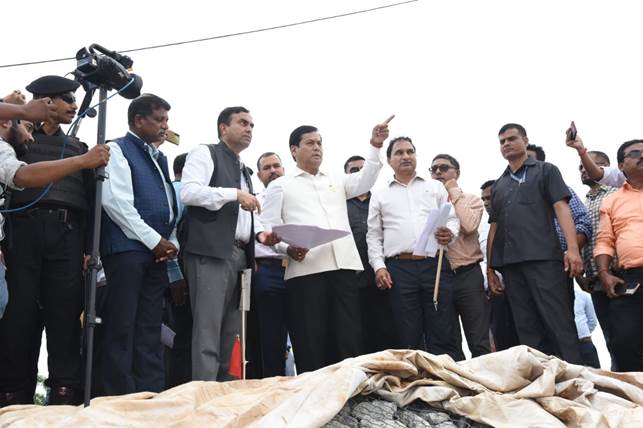
 Union Minister of Ports, Shipping & Waterways and Ayush, Shri Sarbananda Sonowal visited the construction site of India’s first International Multi Modal Logistics park in Jogighopa, Assam to review the progress today. Shri Sonowal said the jetty at the park is likely to be completed within this year. Union Minister expressed satisfaction at the pace of work as the road and railway connectivity is also aimed at completion by end of this year.


Speaking on the occasion, the Shri Sonowal said, “For the swift development of the Northeast India, our dynamic Prime Minister Shri Narendra Modi ji has been taking many revolutionary steps to revitalise our economy. Prime Minister Modi ji’s vision of transformation via transportation has enabled the entire region of Northeast to revamp their transportation network. As the construction of this crucial Multi Modal Park goes on in a swift pace, it is likely to unlock huge potential for the region along with the neighbouring countries like Bhutan and Bangladesh. The PM Gati Shakti National Master Plan has been conceived to revive and rejuvenate the transportation to become an efficient & effective agent of change. In order to ensure trickle down of economic prosperity, the PM Gati Shakti NMP aims at strengthening the coastal regions of both sea and rivers. I call upon everyone to join this wonderful initiative and make it a grand success.”

The park is being developed under the ambitious Bharatmala Pariyojana of the Government . First such MMLP, it is being made by NHIDCL in Jogighopa of Assam. The park will be connected to road, rail, air and waterways. This is being developed in 317-acre land along the Brahmaputra. 


The distance of 154 km between Jogighopa and Guwahati will be covered by making a 4-lane road on this stretch, a 3-km rail line will connect Jogighopa station to the MMLP, another 3-km rail link will connect it to the IWT, and the road to newly developed Rupsi airport will be upgraded to 4-lanes for easier connectivity. 

The MMLP will have all the facilities like, warehouse, railway siding, cold storage, custom clearance house, yard facility, workshops, petrol pumps, truck parking, administrative building, boarding lodging, eating joints, water treatment plant, etc.

****

India-Israel Friendship – Beginning of a New Era of Industrial Research and Development Cooperation

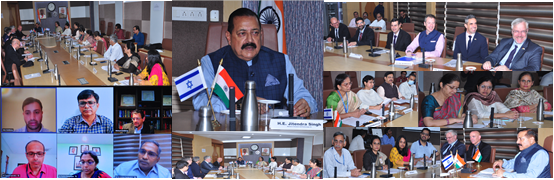
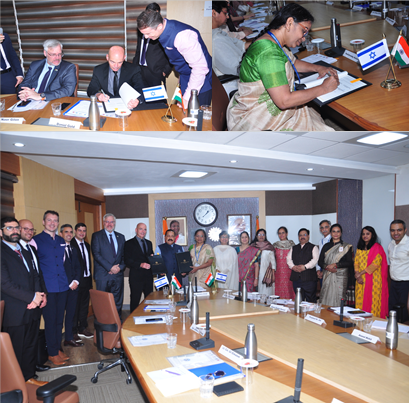
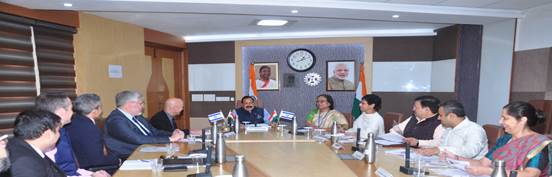
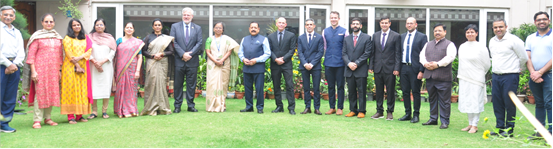
 In a momentous milestone in S&T cooperation between India and Israel, a Memorandum of Understanding (MoU) on Industrial Research and Development Cooperation was signed between the Council of Scientific and Industrial Research (CSIR) under the Ministry of Science and Technology (MoST) of the Republic of India and the Directorate of Defense Research and Development (DDR&D), under the Ministry of Defense of the State of Israel.

Dr N Kalaiselvi, DG, CSIR and Secretary, DSIR thanked the Hon’ble Minister of State(IC), Ministry of Science and Technology and Earth Sciences, GoI and Vice President, CSIR Society for gracing the meeting and his continued support to CSIR. She welcomed the dignitaries and gave an overview of CSIR, showcasing its technological and research prowess as also the ongoing collaboration discussions with DDR&D, Israel in Aerospace, Healthcare, Energy. Sharing CSIR’s priority topics she concurred to the interest of DDR&D for furthering collaboration with Israel in high technology areas such as Artificial Intelligence, Quantum and semiconductors, synthetic biology etc.

Acknowledging the ongoing cooperation efforts of CSIR and his team, Dr. Daniel Gold, Head, DDR&D envisioned that the CSIR-DDR&D cooperation would be beneficial for the welfare of both the countries. He added that DDR&D welcomes collaboration not only with R&D organizations but also with start-ups and companies, venture capitals on both sides. He apprised that AI and photonics are strengths of Israel and welcomed cooperation with CSIR in High Technology sectors which would pave the way for building a better future.

Stressing the successful completion of three decades of India-Israel successful diplomatic relations, Mr. Naor Gilon, Ambassador of Israel to India emphasised the close friendly relations between Israel and India, which have culminated into a strategic partnership after the complimentary visits of Prime Ministers of both the countries in 2018. The present CSIR-DDR&D cooperation would add another feather and be a milestone for India-Israel relations.

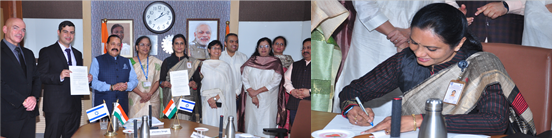
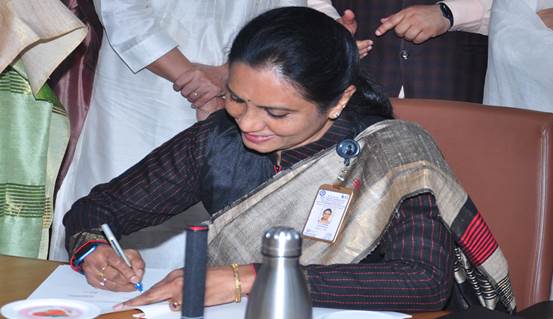
Dr N Kalaiselvi and Dr. Daniel Gold signed the CSIR-DDR&D MoU in the august presence of Hon’ble Minister of S&T, Government of India and Vice President, CSIR Society, Dr Jitendra Singh.

The MoU shall enable cooperation in the industrial R&D programs in mutually agreeable industrial technology fields through implementation of specific projects. The collaboration would encompass some of the key industrial sectors including Healthcare; Aerospace & Electronics Instrumentation; Civil, Infrastructure & Engineering; Chemicals and Petrochemicals, Sustainable Energy including Energy Devices; Ecology, Environment, Earth & Ocean Sciences and Water; Mining, Minerals, Metals & Materials; Agriculture, Nutrition & Biotechnology. The collaboration through the MoU would be steered and the execution monitored by a Joint Steering Committee led by the heads of the CSIR and DDR&D for taking forward mutually benefiting Industrial and technology cooperation.

Specific collaboration on Hydrogen and Aerospace currently under discussed between CSIR and DDR&D were briefed by Dr Abhay Pashilkar, Director, CSIR-National Aerospace Laboratories (CSIR-NAL), and Dr Ashish Lele, Director, CSIR-National Chemical Laboratory (CSIR-NCL); they welcomed collaboration on futuristic technologies in these domains, including in High Altitude Platform, Hydrogen Valley programs of CSIR, respectively.

Specific collaboration on Therapeutics between CSIR-Indian Institute of Chemical Technology (CSIR-IICT) and M/s 101 Therapeutics for conducting clinical trials of a COVID-19 drug having enormous therapeutic potential was briefed; if successful this would prove to be highly appropriate and effective for preparation of future pandemics. The cooperation MoU between CSIR-IICT and M/s 101 Therapeutics was also signed during the meeting.


In his remarks, Dr Jitendra Singh said that it is a very important year in the S&T sphere of India under the leadership of  PM of India as India is holding G20 presidency, celebrating the International year of Millets, as also India and Israel completed 30 years of successful diplomatic relations.

He apprised that CSIR has specialized laboratories in almost all the identified priority sectors therefore assured appropriate competence for this cooperation. For e.g. indigenous Hydrogen Fuel Cell bus by CSIR-NCL, purple revolution (Lavender cultivation) by CSIR-IIIM. He welcomed technology partnership with Israel and congratulated both sides for for their efforts to strengthen the India-Israel relationship.

Dr. Rama Swami Bansal, Head, International S&T Affaris Directorate (ISTAD), CSIR thanked the Hon’ble Minister for his continued support to CSIR, the team from Israel for building and formalizing the cooperation and her colleagues from CSIR and MEA for their kind and gracious presence during the MoU signing meeting today.

**************************

New way to track particles in soft colloids using optical tweezers

 Scientists have found a way to track minute clay particle movements within soft clay colloids using optical tweezers — the application of which in biological systems brought the Nobel Prize in Physics in 2018. This new way to track particles and manipulate them as desired can be applied in areas like targeted drug delivery.

Using optical tweezers, researchers at Raman Research Institute (RRI), an autonomous institute funded by the Department of Science and Technology, Govt. of India, attempted to study the dynamics and hidden structural details of Laponite, a synthetic clay. As these clay particles are the same size (monodisperse) and transparent, so they are best suitable for performing advanced studies under light. Laponite is a widely used raw material in the pharmaceutical and cosmetics industries. This clay comprises disk-shaped particles sized 25 to 30 nanometres (nm) and one nm in thickness.

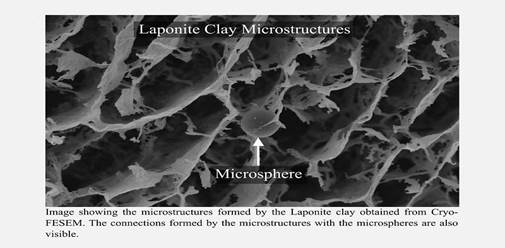
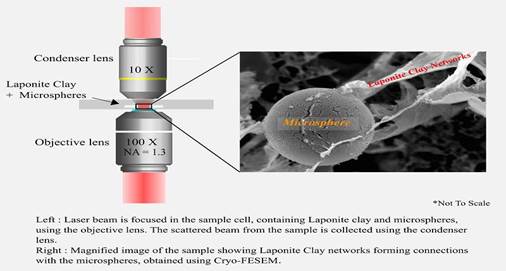
Polystyrene beads dispersed in Laponite clay suspension were used for the experimental setup. With time, microstructures were noted to have developed due to the electrostatic interactions between the clay particles. These microstructures grew stronger with time, with their network size dependent on the concentration of Laponite particles.

“These structures are responsible for the material’s elasticity, enabling adjustment of elasticity by tuning the microstructures. These microstructures also form connections with micron-sized polystyrene particles, which are used to probe these suspensions in such studies,” said Anson G. Thambi, a third-year Ph.D. student at RRI.

In a study published in the journal ‘Soft Matter, Ranjini Bandyopadhyay, faculty, RRI, and her team used optical tweezers as they wanted to measure movements of the probe in nanometres scales, where the properties of the medium evolve with passing time. Optical tweezer is a popular tool in an optics laboratory, used to measure minute forces and manipulate tiny dielectric beads trapped at the tight focus of an intense laser beam over length scales down to a few nanometers. It allows the inducement of movement in the trapped probe particle, and its response is analysed to extract previously inaccessible local viscoelastic properties of the underlying medium.

“These attachments between the probe (PS) and Laponite clay particles are necessary to understand the properties of the suspension if the internal networks are of sizes greater than the probe itself,” said Bandyopadhyay.

Furthermore, the team used cryogenic field emission scanning electron microscopy (cryo-FESEM) to examine the average pore areas formed by the Laponite microstructures.

“Interestingly, the collective observations obtained using an optical tweezer and cryo-FESEM experiments revealed an intriguing and previously unknown correlation. We found that beads trapped by the optical tweezer moved much slower in denser network structures,” added Bandyopadhyay.

The RRI team thus concluded the prevalence of a direct relation between the morphologies of the clay suspension structures and the probe particle dynamics at micrometre length scales.

Publication link: https://pubs.rsc.org/en/content/articlelanding/2023/SM/D2SM01457B

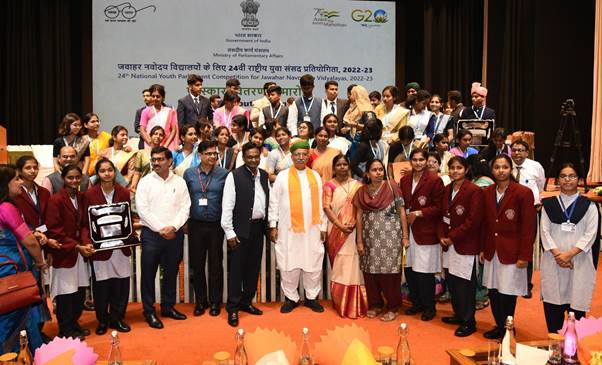
Prize Distribution Function of the 24th National Parliament Competition, 2022-23

 The Prize Distribution Function of the 24th National Youth Parliament Competition, 2022-23 for Jawahar Navodaya Vidyalayas was held on Thursday, the 4th of May, 2023 at Parliament House Complex, New Delhi. Jawahar Navodaya Vidyalaya, Nadia, West Bengal (Patna Region) wins first prize  in the 24th National Youth Parliament Competition, 2022-23.

The Union Minister of State for Ministry of Parliamentary Affairs and Culture Shri Arjun Ram Meghwal, distributed  the prizes to the winning teams of Vidyalayas for their meritorious performance in the Competition .Apart from JNV ,Nadia,West Bengal , the following 7 regional winning Vidyalayas also received prizes :

1. Jawahar Navodaya Vidyalaya, Puri, Odisha (Bhopal Region)

2. Jawahar Navodaya Vidyalaya, Chandrapur, Maharashtra (Pune

Region)

3. Jawahar Navodaya Vidyalaya, Mandya, Karnataka (Hyderabad

Region)

4. Jawahar Navodaya Vidyalaya, Kathua, Jammu & Kashmir

(Chandigarh Region)

5. Jawahar Navodaya Vidyalaya, East Khasi Hills-I, Meghalaya

(Shillong Region)

6. Jawahar Navodaya Vidyalaya, Kurukshetra, Haryana (Jaipur

Region)

7. Jawahar Navodaya Vidyalaya, Saharanpur, Uttar Pradesh

(Lucknow Region)


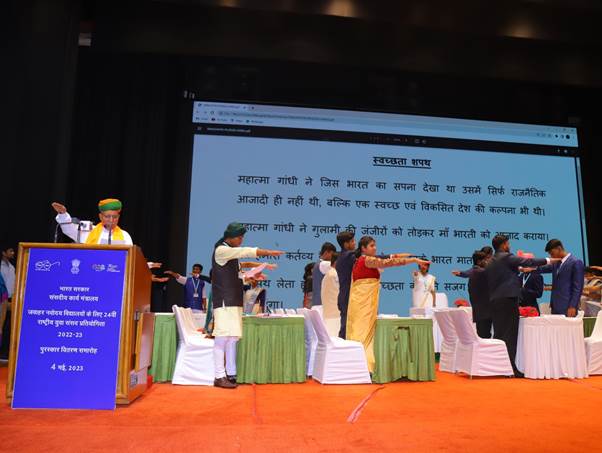
The Minister, Shri Meghwal  has taken an interactive session with the students during the program. The Minister exhorted while interacting with the students that the younger generation should learn and adapt the democratic values and ethics of democracy and devote themselves to promote the harmony and tradition of this democratic country. Shri Meghwal also administered the Swachhata Pledge to all the attendees of the function.


While delivering the Welcome Address, the Secretary, Ministry of Parliamentary Affairs ,Shri G.Srinivas has given a clarion call to the students for popularising and inculcating the practices and process of Parliamentary proceedings. He said that National Youth  Parliament Competitions have been spread from Schools to Universities.

On this occasion, the winning team of Jawahar Navodaya Vidyalaya, Nadia, West Bengal (Patna Region), presented an energetic repeat performance of Youth Parliament which was appreciated hugely by the gathering.

Ministry of Parliamentary Affairs has been organising Youth Parliament Competitions in Jawahar Navodaya Vidyalayas for the past 26 years. Under the scheme of National Youth Parliament Competition for Jawahar Navodaya Vidyalayas, the 24th Competition in the series was organized during 2022-23 among 80 Vidyalayas spread over 8 regions of Navodaya Vidyalaya Samiti, all over India.

The Youth Parliament Scheme aims at inculcating among the younger generations the spirit of self-discipline, tolerance of diverse opinion, righteous expression of views and other virtues of a democratic way of life. Besides, the scheme also acquaints the students with the practices and procedures of Parliament, techniques of discussion and debate and develops in them self-confidence, quality of leadership and the art and skill of effective oratory.

*******

National Mission For Clean Ganga Organizes River-Cities Alliance Global Seminar

 National Mission for Clean Ganga (NMCG) in association with the National Institute of Urban Affairs (NIUA) organized the ‘River-Cities Alliance (RCA) Global Seminar: Partnership for Building International River-Sensitive Cities’ today in New Delhi. The purpose of the RCA Global Seminar was to provide a platform for officials of member cities and international stakeholders to discuss and learn good practices for managing urban rivers.

The RCA Global Seminar witnessed participation from Embassies/High Commissions of select countries and their respective river cities in order to highlight objectives, achievements, and potential collaborative outcomes of RCA. State Missions for Clean Ganga (SMCGs) and funding agencies like World Bank, ADB, JICA & KfW also were part of the discussions.
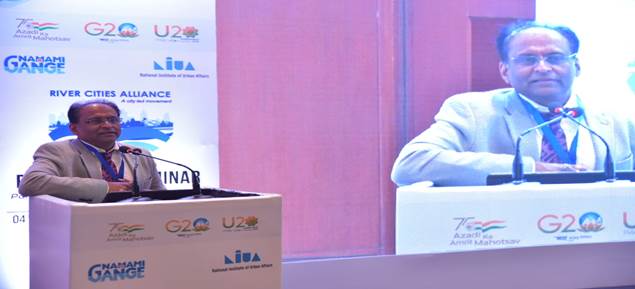
The RCA Global Seminar was presided over by Mr. G. Asok Kumar, Director General (NMCG).  

Addressing the gathering, Mr. G. Asok Kumar expressed happiness on the increase in number of cities joining the RCA and the immense interest NMCG has been able to generate on this issue. He noted that the trickle started with the Urban River Management Plan and has been flowing ever since. He emphasized the importance of issues related to climate change and urban water management, and how urban planners have a serious challenge at hand. “Climate change is a reality. We can see it now in Delhi where in the month of May we are needing blankets,” he said.

He informed that RCA started with 30 cities on the banks of the river and eventually it was decided to expand it to all cities not restricting to the Ganga Basin. “During the DHARA 2023 event in Pune, we were enthused to see the response from the city planners, who viewed water as something not important,” he said, adding, “People and administrators are now waking up to the reality as they have realized that issues related to water such as floods, droughts, inadequate waste management etc. can shut down cities.” DG, NMCG hoped that urban planners incorporate water management at the planning stage and start giving the priority it deserves.
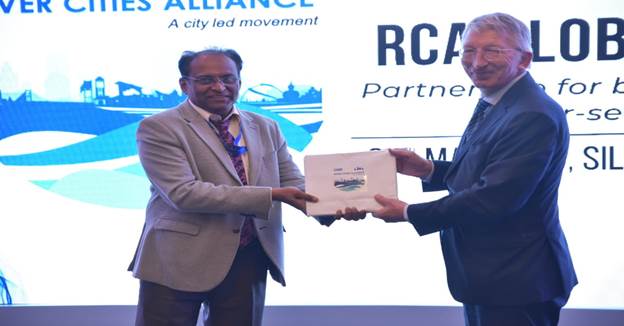
Mr. Kumar said that under the leadership of the PM, Swacch Bharat Mission and Jal Jeevan Mission are progressing well and creating positive impact on ground setting world class examples in the water and sanitation sectors. The stopping of Open Defecation ensured that the drinking water sources don’t get contaminated whereas household water supply under JJM is easing the pain of women in rural areas who had to walk several kilometres to fetch water. “With urbanization, if we don’t take care about the disposal of sewage then it is a major threat. The urban planners solely focussed on the infrastructure must take this into account to keep the rivers and other drinking water sources clean,” he said. 

He noted that the theme of RCA resonated in the UN Water Conference 2023 held in New York in March 2023. “The timely success in water sector in India is primarily because of people’s participation (Jan Bhagidari) and whole-of-government approach,” he said, adding, “The time has now come, as envisaged by the Union Minister for Jal Shakti, is to move towards whole-of-world approach to break the silos in which water has been divided.” 

He called for the world players to co-operate, work together, pick from each other’s best practices, share knowledge (Gyan Bhagidari), come up with transformational solutions and share in the success.
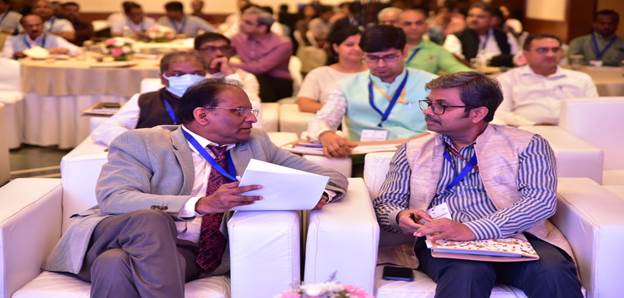
On RCA Global, he said that cleaning of rivers like Rhine and Thames in foreign lands is a lesson and inspiration for us and we should partner with international cities to create beautiful cities in India which can take pride in their rivers and people enjoy and have pleasant experience at the river fronts. “The experience of international cities in making their rivers clean, improving river properties, managing river flooding and increased aesthetic value can be seen as fruitful lessons for us. RCA Global platform should leverage the experience of foreign countries,” he added. He also said that it is not about aping anyone but taking the adaptable best practices as per requirements and using them to make our cities more beautiful.

DG, NMCG informed that Namami Ganga was recognized as the ‘Top 10 World Restoration Flagships to Revive the Natural World’ in Montreal, Canada and Clean Ganga, which seemed impossible, is now happening. He said that NMCG has committed to the SDG goals of equity in water distribution, access to safe drinking water, democratization of water etc.

Session 1 of the event saw a presentation from the Asian Development Bank Institute (ADBI) on ‘Decentralized Urban Wastewater Management System in Japan’, and an Embassy Round Table discussion.

Session 2 began with the context setting of RCA that incorporated an introduction to NMCG’s Urban Agenda, Urban River Management Plan (URMP) Framework with comments on RCA and future goals/actions pertaining to river management. Furthermore, there was a presentation from representatives of the India-Denmark Partnership, with a focus on the case study of Udaipur-Aarhus. Another presentation was made on RCA Cities – Ayodhya and Chhatrapati Sambhaji Nagar in this session.

NMCG c-Ganga facilitated presentations from International Cities – Greater Manchester by Mr. Mark Turner (National Course GM Team Leader, Greater Manchester Combined Authority), City of Hamburg by Mr. Christian Ebel (Desk Officer for Implementation of EU Water Framework Directive in Hamburg for the Elbe River Free and Hanseatic City of Hamburg), City of Copenhagen by Mr. Jan Burgdorf Nesilsen, Municipality of Copenhagen and City of Aarhus, Mr. Gitte Nordmand Andersen (Aarhus Municipality). The session 2 also witnessed an open house discussion and ended with a vote of thanks from Mr. Dheeraj Joshi, Deputy Secretary, NMCG.

Mr. D.P Mathuria, Executive Director (Technical), NMCG delivered the special address and spoke about how India is hugely investing in the water sector, but staring at twin challenges of water security and climate change. Both of these factors are interlinked in making water equitable. He noted the facets of water security being water management and water quality. NMCG has developed a large number of STPs that are able to address the issues of faecal contamination. He noted that nature-based solutions and decentralised systems shall be very important assets in terms of solution to organic waste falling into rivers.

Other participants included Mr. Mukul Verma (Senior Adviser – Infrastructure & Financial Services, Embassy of UK), Mr. Shayan Yousefi (Embassy of Austria), Mr. Beate Langset (Counsellor for Climate & Environment, Royal Norwegian Embassy), Ms. Anitha Sharma (Counsellor in Urban Development with focus on Water, Embassy of Denmark), Mr. R.K. Srinivasan (USAID’s Senior Water and Sanitation Advisor, US Embassy), Mr. Dirk Steffes-enn (Deputy Head of Economic Cooperation and Development, Embassy of the Federal Republic of Germany), Ms. Martina Burkard (Head of Programme, GIZ), Ms. Nishi  Pant (Senior Policy Advisor, Netherlands Embassy), Mr. Jun Tsumori (Counsellor, Economic Cooperation, Embassy of Japan), Mr. Kazushi Hashimoto (Consultant, ADBI), Prof Manabendra Saharia (Assistant Professor, IIT Delhi), and Prof. Ashish Pandey (HOD, Department of Water Resources Development & Management, IIT Roorkee).

NMCG-NIUA Collaboration
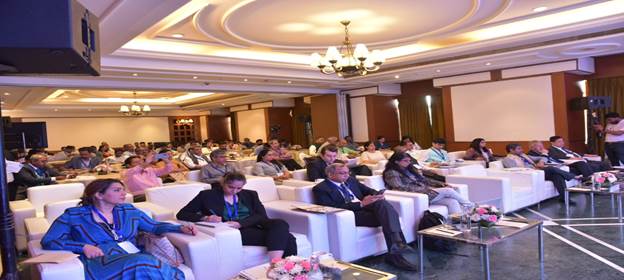
The NMCG-NIUA collaboration has witnessed the historic establishment of the ‘River Cities Alliance (RCA)’ of 110 river cities across India with one international member city – the city of Aarhus from Denmark. RCA was a significant initiative at NMCG’s Side Event during the ‘UN 2023 Water Conference – Water Action Agenda’ on March 23, 2023, which highlighted the importance of Germany as a key partner for the commitment related to ‘River Cities Alliance: Partnership for Building International River Sensitive Cities’.

NMCG has been tirelessly working on a joint initiative to propagate river-sensitive development in our cities with NIUA. This is in response to the Prime Minister’s call for new thinking in river cities at the 1st Meeting of the National Ganga Council (NGC) in December 2019. Hence, NMCG seeks to deepen the commitment through the inclusion of international cities as members of the RCA during the RCA Global Seminar. The intent is to facilitate knowledge exchange (online) for Indian cities to learn new practices and approaches for urban river management. Likewise, it will also be an opportunity for international cities to learn about experiences in Indian cities, which may be relevant to their contexts.

River Cities Alliance

The River Cities Alliance (RCA) is a joint initiative of the Department of Water Resources, River Development & Ganga Rejuvenation under the Ministry of Jal Shakti (MoJS) & the Ministry of Housing and Urban Affairs (MoHUA), with a vision to connect river cities and focus on sustainable river centric development. Beginning with 30 member cities in November 2021, the Alliance has expanded to 109 river cities across India and one international member city from Denmark.

DHARA 2023

The first annual meeting of the RCA – DHARA 2023 (Driving Holistic Action for Urban Rivers) was held on February 13–14, 2023, in Pune. DHARA 2023 featured key sessions on international best practices and examples for urban river management. DHARA 2023 was aimed to inspire members of the RCA to engage in progressive actions for urban river management in their cities. The event shone a light on the unaddressed issues and challenges for river management in cities, which helped NIUA and its partners formulate an effective work plan. The event also helped in developing a compendium of technological solutions that cities may adopt for enhancing the management of their local rivers.

****

City Beautification Progressing By Eliminating Garbage Dumps in Cities


Garbage Dumps and open dumpsites are being transformed rapidly to change and beautify the urban landscape. Under Swachh Bharat Mission Urban 2.0, it was realised that transforming garbage dumps in urban areas was the need of the hour to protect environment and reduce health risks. Many States are taking creative steps to transform and beautify these garbage dumps in urban areas which eventually lead to sustainable development and a healthier, greener future. It has also created avenues for waste reduction, recycling, and reusing, helping in the sustainable use of resources.
Bhopal’s exemplary dumpsite remediation is an inspirational example of transformation of urban spaces. Flagged off by Hon’ble PM Sh. Narendra Modi, the Vande Bharat Express travelling between Bhopal to Delhi zooms past a dumpsite-turned-green zone in Bhopal. It was beautified after 37 acres of land was reclaimed.


Navi Mumbai Makes Urban Spaces Usable

Navi Mumbai Municipal Corporation (NMMC) took an innovative approach to embark on an ambitious plan to convert area under bridges/ flyovers into community recreational facilities. An example of this can be seen in a public sports complex built under the Sanpada flyover in Mumbai. A sports complex was created as per the height of the bridge, where a basketball court, badminton court, box cricket zone, and skating rink were all painted in vibrant colors, creating a visually appealing and attractive space. The complex was also equipped with safety nets to ensure the safety of the players.

The success of the Sanpada flyover project has encouraged Navi Mumbai to plan and execute more such projects in future. The Ghansoli-Talawale bridge has already received a facelift last year with new paintings and lighting. This year, the area will be transformed into a garden and a seating area for industrial workers. The second stretch of the Sanpada Bridge will have a yoga center, and the Seawoods Bridge will undergo a beautification drive along with a sports complex.

The once-neglected spaces have now become thriving centres of activity, fostering social interaction, and promoting a healthy lifestyle among the residents. Not only has it revitalized neglected areas, but it has also improved the health and well-being of citizens.

Surat’s Creative Initiative to Eliminate Garbage Dumps

Surat’s conversion of garbage dumps into seating areas for the public has been a remarkable transformation. To eliminate garbage dumps, the Surat Municipal Corporation (SMC) transformed many of these points into seating areas. Under this initiative, Surat identified the garbage dumps and transformed them into seating area equipped with benches, lights, and trash bins. It has also planted trees and shrubs to create a green environment and promote biodiversity. ‘Sanjay Nagar circle’ is one of the few examples of these transformations, where the garbage dump site has been converted into a beautiful seating area by SMC. The corporation ensures daily coverage of door-to-door garbage collection from the surrounding area to ensure 100% waste collection.

Patna’s Swachhata Journey: Garbage Points to Green Zones

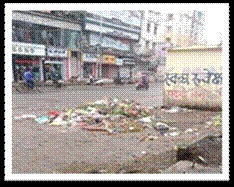
Patna was struggling with the increasing number of garbage dumps for a long time. To transform these garbage dumps into green zones and promoting a sustainable environment, Patna Municipal Corporation began a massive garbage dumps transformation drive in which a total of 630 garbage dumps across the city were cleaned and beautified. The mass garbage dumps removal drive emerged as massive development in the city.

The transformation drive was then conducted in 4 phases including 19 wards from each 19 zones of the PMC jurisdiction. PMC officials conducted awareness activities in which they rallied in the wards playing musical instruments and urging citizens to keep the city clean. The listed garbage dumps were cleaned extensively and the corporation made an appeal to the residents to keep the city clean and wreathed the offenders with garlands made out of disposable cups, bottles, wrappers and kitchen waste.

The Transformation of 630 Garbage Dumps
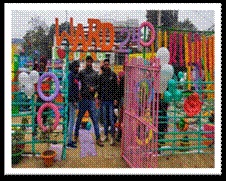
Patna Municipal Corporation began its transformation drive of garbage dumps by converting such sites into green zones. The cleaned-up spaces were beautified by planting saplings, paintings, placing benches made out of discarded items like rubber tubes, tires, tins and other plastic materials.


Many of the garbage points were also turned into selfie points. Later, PMC even celebrated various festivals and events on the transformed garbage dumps including Litti Chokha program on New Year’s Eve, Dahi chura on Makar Sankranti and a Kite Festival.

The transformation of garbage dumps into beautiful urban spaces is an excellent example of how innovative ideas and community engagement can help to address environmental and social issues in cities. This process not only improves the quality of life for locals but also creates a sustainable and green environment for all.

***********

Chief Minister of the Punjab Late Shri Parkash Singh Badal

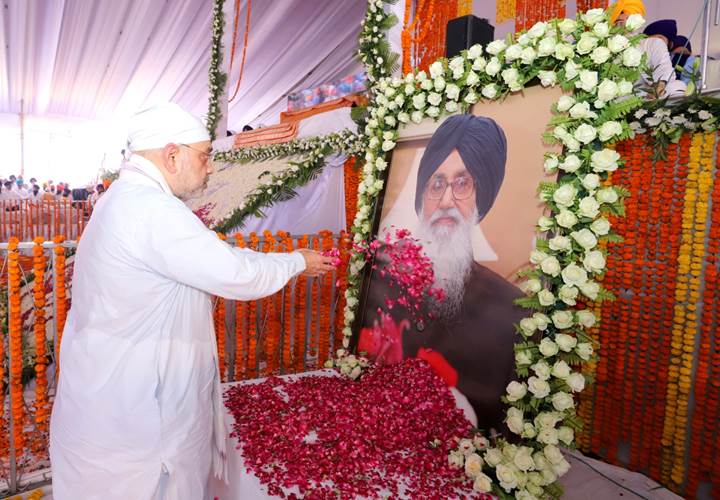
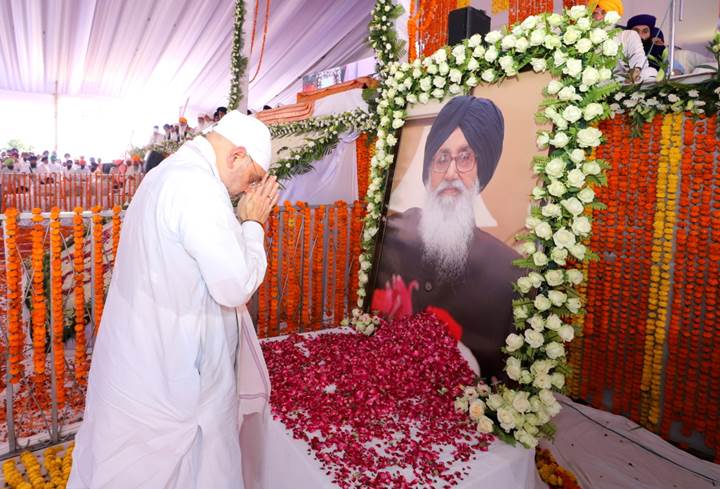
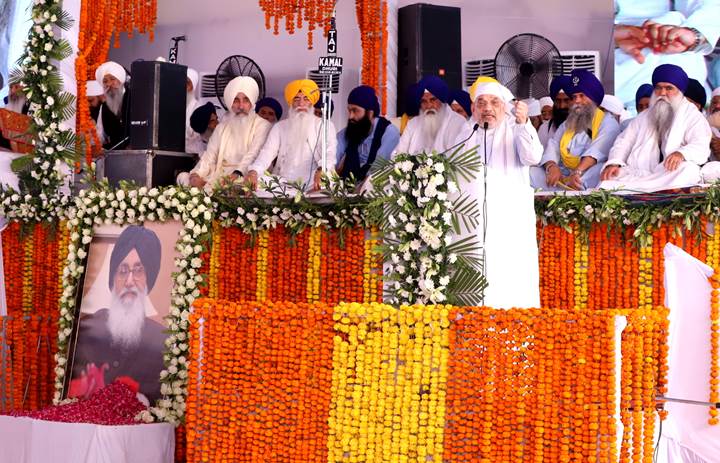
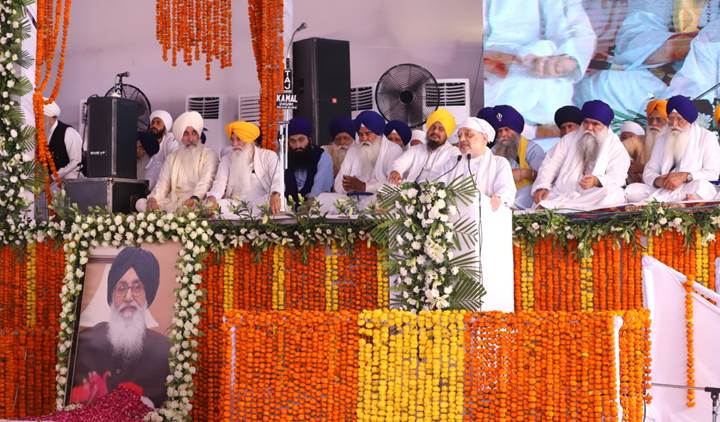
 Union Home Minister and Minister of Cooperation, Shri Amit Shah took part in the ‘Antim Ardas’ of former Chief Minister of the Punjab Late Shri Parkash Singh Badal and paid his last respects at Shri Muktsar Sahib in Punjab.

https://static.pib.gov.in/WriteReadData/userfiles/image/image001U30J.jpg

Shri Amit Shah said that due to passing away of Shri Parkash Singh Badal, the political and social leadership of not only Punjab but the entire country has suffered an irreparable loss. He said that it would be very difficult to fill the vacuum created by the demise of Shri Badal. Shri Shah said that with the passing away of Shri Badal, the Sikh community has lost a true soldier, the country has lost a patriot, the farmers have lost a true sympathizer and politics has lost a great man who set high standards.

https://static.pib.gov.in/WriteReadData/userfiles/image/image002D723.jpg

The Union Home Minister said that Shri Parkash Singh Badal had a long public life of 70 years, no person except Badal Sahab could live such a life without making any opponent. Shri Shah said that he always learnt from his meeting with Shri Badal and he always tried to show the true path. No one except great man like Shri Badal can give advice in political life with such transparency.

https://static.pib.gov.in/WriteReadData/userfiles/image/image003HB3V.jpg

Shri Amit Shah said that Shri Parkash Singh Badal was the longest serving member of the Punjab Legislative Assembly and Shri Badalserved as the Chief Minister of Punjab for 5 times and laid the foundation of New Punjab. With his demise, the Sardar of brotherhood has also left us. Shri Parkash Singh Badal devoted his whole life to Hindu-Sikh unity and despite facing many oppositions in politics, Badal Sahab always tried to keep everyone united. Shri Shah said that it is impossible to find such a person in public and political life.

https://static.pib.gov.in/WriteReadData/userfiles/image/image004L62O.jpg

The Union Home Minister and Minister of Cooperation said that from 1970 till today, whenever there was an opportunity to stand for the country, Badal Sahab never backed down. He said that Sardar Parkash Singh Badal fought for principles and creedand spent longest time of his public life on jail. During the Emergency, Shri Parkash SinghBadal firmly stood to protect democracy, whether it was the Kargil war or the fight against terror, on every front, Badal Sahab, always stood like a shield for the national interest. Shri Shah said that the passing away of Badal Sahab is a huge loss for the entire country. Shri Amit Shah said that we all should take inspiration from the life of Shri Parkash Singh Badaland may Waheguru give us all the strength to walk on his path.

*****

‘Food Street Project’ to develop 100 Healthy and Hygienic Food Streets across the country

 Union Minister of Health and Family Welfare, Dr. Mansukh Mandaviya reviewed the ‘Food Street Project’ to develop 100 healthy and hygienic food streets across the country with senior officers of Health Ministry and Food Safety and Standards Authority of India (FSSAI). The aim of this project is to encourage safe and healthy food practices among food businesses and community members, thus, reducing foodborne illnesses and improving the overall health outcomes.

To operationalize the food streets, the National Health Mission (NHM) of the Ministry of Health and Family Welfare will provide an assistance of Rs. 1 crore per food street as a pilot project to support 100 such food streets at different locations across the country. The grant will be routed under NHM, in the ratio of 60:40 or 90:10, with the condition that branding of these food streets will be done as per FSSAI guidelines.

The financial assistance would be provided for activities such as provision of safe drinking water, hand washing, toilet facilities, tiled flooring of common areas, appropriate liquid & solid waste disposal, provision of dustbins, using billboards, façade preparation and signage of permanent nature, common storage space, lighting, specialized carts for specific type of trades, branding etc.

The initiative will be implemented through NHM in convergence with Ministry of Housing and Urban Affairs (MoHUA), apart from FSSAI’s technical support. The technical assistance will include assistance in designing of food streets, preparation of an SOP and providing training under Hazard Analysis and Critical Control Points (HACCP) protocol.

Street food has been an integral part of the Indian food culture and has played an immense role in sustaining and shaping the Indian food economy. It is not only a source of affordable and delicious food for millions of Indians but also a major contributor to the country’s economic growth. With rapid urbanization, street food hubs have led to an easy access to food but food safety and hygiene at these hubs remain a matter of concern.

The Ministry of Health and Family Welfare has taken various steps to improve the hygiene and food safety standards protocols for food street hubs. These initiatives include training of food handlers, independent third-party audits, and certification under Clean Street Food Hub initiative of the Eat Right India movement.

The state-wise list of suggestive number of food streets is as under:

S.N.

State/UT


No. of food streets

1

Andhra Pradesh

4

2

Assam

4

3

Bihar

4

4

Chhattisgarh

4

5

Delhi

3

6

Goa

2

7

Gujarat

4

8

Haryana

4

9

Himachal Pradesh

3

10

Jammu & Kashmir

3

11

Jharkhand

4

12

Karnataka

4

13

Kerala

4

14

Ladakh

1

15

Madhya Pradesh

4

16

Maharashtra

4

17

Odisha

4

18

Punjab

4

19

Rajasthan

4

20

Tamil Nadu

4

21

Telangana

4

22

Uttar Pradesh

4

23

Uttarakhand

4

24

West Bengal

4

25

Arunachal Pradesh

1

26

Manipur

1

27

Meghalaya

1

28

Mizoram

1

29

Nagaland

1

30

Sikkim

1

31

Tripura

1

32

A & N Islands

1

33

Chandigarh

1

34

DI) & DNH

1

35

Lakshadweep

1

36

Puducherry

1


Total

100


****

Petersberg Climate Dialogue over need for stronger mitigation and adaptation efforts and for expansion of renewables

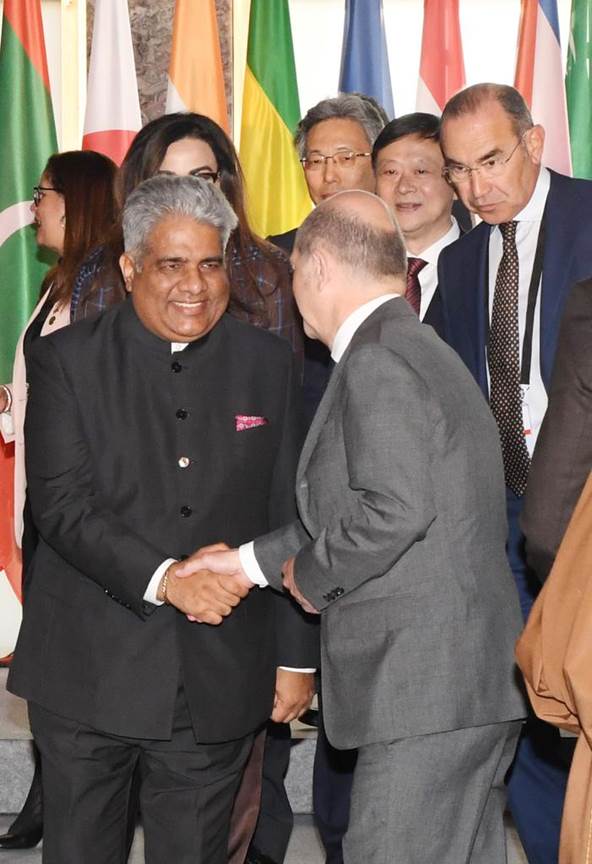
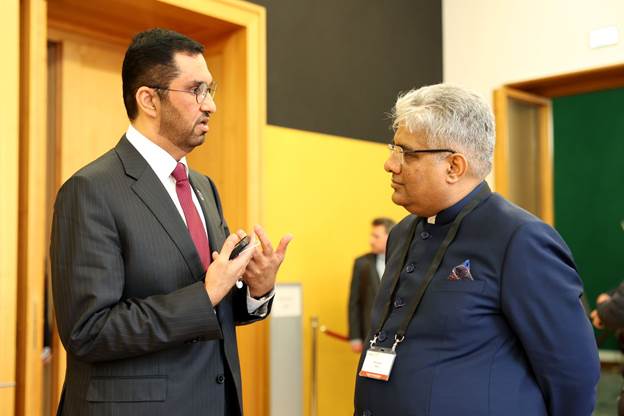
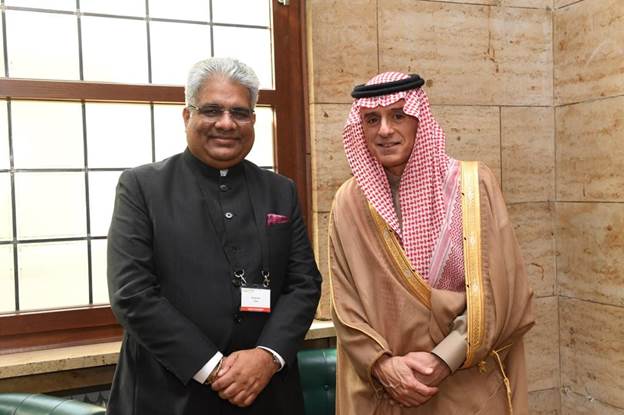
 Union Minister for Environment, Forest and Climate Change and Labour and Employment Shri Bhupender Yadav said the Petersberg Climate Dialogue concluded in Berlin with delegates having worked towards laying the groundwork for joint decisions at COP28. He said that there was a broader consensus over the need for stronger mitigation and adaptation efforts and for expansion of renewables.

https://static.pib.gov.in/WriteReadData/userfiles/image/image001OYML.jpg

India put forth its side strongly at the discussions. Shri Yadav said as has been underlined by Prime Minister Shri Narendra Modi, at the event it was reiterated that recognising the need for support towards Just, Affordable & Inclusive Energy Transition is crucial in the spirit of leaving no one behind.

https://static.pib.gov.in/WriteReadData/userfiles/image/image002OMQV.jpg

Shri Yadav said while following the clean energy pathway, to protect livelihood of local population and local economy, which depend on the existing energy system, focus on diversifying the economy and creation of new livelihood opportunities are required.

https://static.pib.gov.in/WriteReadData/userfiles/image/image003OIHC.jpg

Earlier Shri Yadav addressed the session on ‘Strategic Dialogue on Global Stocktake and Roadmap for Global Transformation’.

The Union Minister highlighted that the Global Stocktake outcome should focus on how climate change impacts, actions and responses have a bearing on the developmental priorities of developing countries including eradication of poverty. He said the outcome of the first GST should seek to convey a message on sustainable lifestyles as well as sustainable consumption to inform the next round of Nationally Determined Contributions (NDCs) and enhanced international cooperation.

*****

From Trash to Treasure: A Hackathon on Innovative Solutions for Waste Utilization

 Driven by the message of Mission LiFE and circular economy goals, the Central Pollution Control Board is organizing an online ‘Waste to Wealth Ideation Hackathon’ for undergraduate and above students on 14th May, 2023 (Sunday) the registration for which are currently open on https://cpcb.nic.in/w2w-hackathon-cpcb/#

 It is a nationwide event to provide platform to college students across the country to solve real-world waste management challenges on (a) plastic waste (b) electronic waste (c) battery waste (d) crop residueIt will help them to build upon their understanding of waste management and present innovative solutions for Waste to Wealth conversion.

The Ideation Hackathon offers a one-of-a-kind opportunity to students to win cash prizes worth up to Rs. 3.6 Lakhs across all waste streams. On the day of Ideation Hackathon i.e. May 14, 2023 (Sunday), one problem Statement each for four waste categories will be posted on the CPCB website at 09:00 am and students will be required to email the original ideas pertaining to it on w2w.cpcb[at]gov[dot]in by 05:00 pm in a given template. The best original ideas under each waste category will be awarded cash prize of Rs. 50,000, Rs. 25,000 and Rs. 15,000. Along with this, chosen ideas will get incubation support, industry exposure, and mentoring from top scientists of CPCB. For further details regarding eligibility, process, important dates and problem scope, please visit https://cpcb.nic.in/w2w-hackathon-cpcb/.

The last date for registration is May 12, 2023 (Friday).


CONTACT

Central Pollution Control Board

Parivesh Bhawan, East Arjun Nagar, Delhi 110092, India

mscb.cpcb[at]gov[dot]in   

C-DAC Transfer of Technology of Power quality solution for Grid and Electronics Solutions for Railways

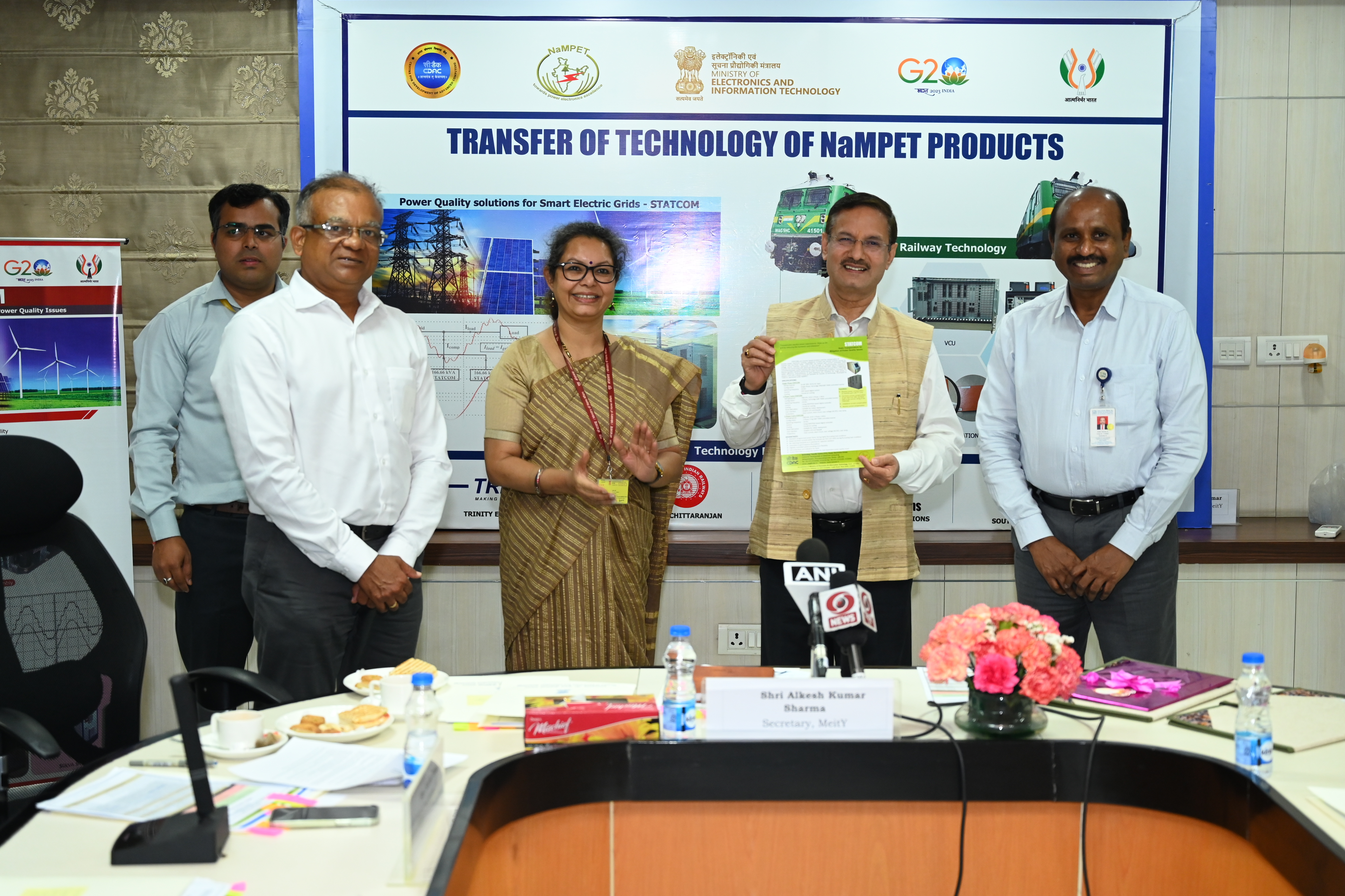
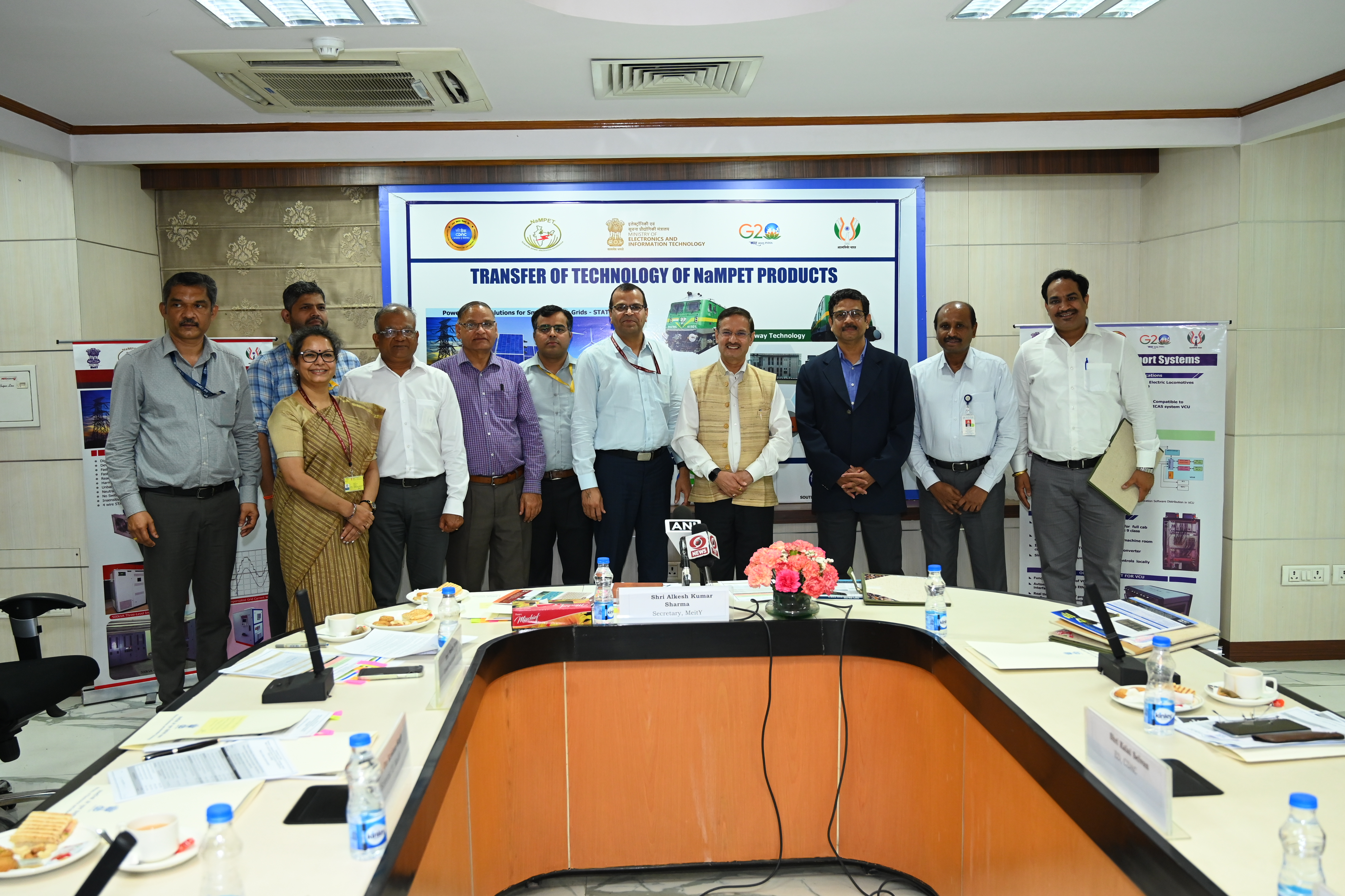
 Centre for Development of Advanced Computing (C-DAC), Thiruvananthapuram, Ministry of Electronics and Information Technology (MeitY), Transferred  Indigenous Technology of Power Quality Solution and Railways VCU solutions to industry partners in the presence of MeitY Secretary Shri Alkesh Kumar Sharma here today.

Addressing the gathering, Shri Alkesh Kumar Sharma said the Prime Minister’s vision of ‘Make in India- Make for the World’ can be achieved through more and more indigenisation of technology and taking it forward by the industry. “The STATCOM technology will help the masses in integration of different renewable sources of energy to the grid without depleting power factor and can help the grid in unbalanced grid conditions. Also, the VCU and its offshoot technologies given to the Indian Railways will ultimately help the passengers, freight, Shatabdi and Tejas trains to have more indigenisation of the technologies,” he added.

Shri Alkesh Kumar Sharma said, “India is slowly transforming and strengthening itself in the R&D and manufacturing sector in which the industry partners has more roles to play as Indian Entrepreneurs and stakeholders to take this mission forward and this synergy will make India a ‘Aatmanirbhar Bharat’.” There is a huge market for the new and innovative, upgraded, devices, and the whole advantage of this technology is on efficiency which will be a win-win situation for both the developer of the technology and the industry, in which the momentum gain of Indian technology will be crucial as an exporter hub, he added.

Group Coordinator, MeitY, Smt Sunita Verma in her address said the development technology for STATCOM for Power quality solution and Electronics Solutions for Railways (Vehicle Control Unit, Rolling Stack software, Loco Simulation Controller and Off-Loco VCU test kit) is a good initiative when country is focussing on self-reliance. The requirement of these five applications will grow manyfold in coming years, She added.

STATCOM: The Static Synchronous Compensator (STATCOM) based on PQ standard-IEEE519 & IEEE1459. The STATCOM technology has become increasingly relevant in recent years due to the growing demand for renewable energy sources such as wind and solar power, which are intermittent and variable in nature. The integration of these sources into the power grid can cause voltage fluctuations and instability, which can be mitigated by using STATCOMs. This Technology of STATCOMs developed by C-DAC, Thiruvananthapuram was transferred Trinity Energy Solution

VCU: The VCU based on the Standard IEC-61375. The technology was based on TCN protocols available during early 2010s. Since then various enhancements have come up in TCN protocol. Further, it has been felt that there was a need to upgrade the VCU at par with contemporary technology. The existing C-DAC-VCU in terms of hardware and software and to handhold the technology for 5 years while in-house capacity is built at CLW to tackle the day-to-day and long term maintenance requirement of locomotive fleet. This Technology of VCU developed by C-DAC, Thiruvananthapuram was transferred CLW Chittaranjan.

Loco Simulation Controller: The Loco Simulation Controller is based on the Railways standard. The VCU and its application software needs to be tested in locomotive to better debugging, understanding the response of the outputs given from VCU to various sub-systems of locomotives. This test platform could simulate the actual functionalities of locomotive and will be giving inputs to VCU as per actual locomotive logic. Similarly, it also takes inputs from VCU and processes it and generates outputs as of actual locomotive to VCU. This Technology of Loco Simulation Controller developed by C-DAC, Thiruvananthapuram was transferred to CG Power & Industrial solution.

Rolling Stack Software: The Rolling Stack Software is as per the requirement of Indian Railways. The rolling stock application that controls the loco function is distributed among the 4 processors boards in the VCU set. So as to make the loco operation more reliable in case of processor board failures, the important functions are implemented redundantly. This will also help the loco pilot to steer the train without moving from the driving cab to rear cab to address the failure. This software of Rolling Stack Software developed by C-DAC, Thiruvananthapuram was transferred to CG Power & Industrial Solutions.

Off-Loco VCU Test Kit: The Off-Loco VCU Test kit is as per the necessity of Indian Railways. The PCB test jig is used to verify the basic functions of the sub-system PCBs that are being used in C-DAC developed VCU for 3 phase electric locos. The OK/ Not OK status of VC MeitY U subsystem PCBs under test is used for screening the PCBs for use in VCUs. This technology of Off-Loco VCU Test Kit developed by C-DAC, Thiruvananthapuram was transferred to Electrical Loco shed, Rayapuram Southern Railway.

Executive Director (Electrical), Railway Board, Shri Ram Niwas; Scientist ‘D’, Dr Om Krishan Singh, representatives from the industry and other senior officials from MeitY, C-DAC and Indian Railways were also present on the occasion.

Written Result of Combined Defence Services Examination (I)-2023

 On the basis of the results of the COMBINED DEFENCE SERVICES EXAMINATION (I), 2023 held by the Union Public Service Commission on 16th April, 2023, 6518 candidates with the following Roll Numbers have qualified for being interviewed by the Service Selection Board of the Ministry of Defence, for admission to (i) Indian Military Academy, Dehradun 156th  (DE) Course commencing in January, 2024 (ii) Indian Naval Academy, Ezhimala, Kerala, Course commencing in January, 2024 (iii) Air Force Academy, Hyderabad (Pre-Flying) Training Course (215 F(P)) commencing in January, 2024 (iv) Officers Training Academy, Chennai  119th SSC (Men) (NT) (UPSC) Course commencing in April, 2024 and (v) Officers Training Academy, Chennai, 33rd SSC Women (Non-Technical) (UPSC) Course commencing in April, 2024.

The candidature of all the candidates, whose Roll Numbers are shown in the lists below, is provisional.  In accordance with the conditions of the admission to the examination, they are required to submit the original certificates in support of age (Date of Birth), educational qualifications, NCC (C) (Army Wing/Senior Division Air Wing/Naval Wing) etc. claimed by them to IHQ of MoD (Army) / Dte Gen of Rtg (Rtg A) CDSE Entry for SSC male candidates and SSC women entry for female candidates West Block III, R. K. Puram, New Delhi-110066 in case of IMA/SSC first choice candidates and IHQ of MoD(Navy DMPR (OI & R Section), Room No. 204,‘C’ Wing, Sena Bhawan, New Delhi-110011 in case of Navy first choice candidates and PO3 (A)/Air Headquarters ‘J’ Block, Room No. 17, Opp. Vayu Bhawan, Motilal Nehru Marg, New Delhi-110 106 in case of Air Force first choice candidates by the following dates failing which their candidature will stand cancelled.  The original Certificates are to be submitted not later than 01st January, 2024 for IMA & INA,not later than 13th November, 2023 for AFA and not later than 1st April, 2024 in case of SSC course only.  The candidates must not send the original Certificates to the Union Public Service Commission.

Candidates who qualified in the written exam and given their first choice as Army (IMA/OTA) are required to register themselves on the recruiting directorate website www.joinindianarmy.nic.in in order to enable them to receive call up information for SSB interview. Those candidates who have already registered on the recruiting directorate website are advised not to register again.

In case, there is any change of address, the candidates are advised to promptly intimate directly to the Army Headquarters/Naval Headquarters/Air Headquarters as the case may be.

For any further information, the candidates may contact Facilitation Counter near Gate “C” of the Commission, either in person or on telephone numbers 011-23385271, 011-23381125 and 011-23098543 between 10:00 hrs to 17:00 hrs on any working day. In addition for SSB/interview related matter the candidates may contact over telephone no. 011-26175473 or joinindianarmy.nic.in for Army as first choice011-23010097 / Email: officer-navy[at]nic[dot]in or joinindiannavy.gov.in for Navy/Naval Academy as first choice and 011-23010231 Extn. 7645 / 7646 / 7610 or www.careerindianairforce.cdac.in for Air Force as first choice. Candidates can also obtain information regarding their result by accessing UPSC website http://www.upsc.gov.in

The marks-sheet of candidates who have not qualified, will be available on the Commission’s website within 15 days from the date of publication of the final result of OTA (after conducting SSB Interview) and will remain available on the website for a period of 30 days. 

Click here for results:

India-U.S. partnership is the defining moment of the 21st century

 Union Minister of Commerce & Industry, Textiles and Consumer Affairs, Food & Public Distribution Shri Piyush Goyal said that the India-U.S. partnership is the defining moment of the 21st century and reiterated the “ChaleinSaathSaath: Forward Together We Go” motto underscoring the depth of the partnership. During his Inaugural Address on ‘US-India Partnership: Forging Ahead’ at American Chamber of Commerce in India (AMCHAM) India’s 31st Annual General Meeting today in New Delhi, he talked about diversifying and deepening India-U.S. trade and investment ties for mutual growth and prosperity.

The Minister emphasised that the leaders of both the countries, Prime Minister of India, Shri Narendra Modi and President of the United States of America, Mr. Joe Biden, understand each other and work smoothly together to find solutions to complex geopolitical problems around the world. Shri Goyal mentioned the 5Ts-Talent, Technology, Tradition, Trade and Trusteeship- identified by the Prime Minister as the vision for the India-U.S. relationship.

The Minister noted that the bilateral trade between India and U.S. has been the highest in the last couple of years and said that it is aimed to increase multifold in the coming years. He said that the target of US$2 trillion exports by the year 2030 is doable with the increasing eminence and recognition of India across the world and with strengthening partnerships with like minded countries having shared values like the U.S.

Shri Piyush Goyal cited the examples of many Indian companies operating in the U.S. and vice versa and highlighted how significantly they are contributing to each other’s economy. The Minister said that these business relations are deepening the partnership between the two countries. He expressed hope that more and more U.S. based corporations will work together with Indian companies in the near future.

The Minister encouraged companies from the U.S. to establish their base in India and expand to newer frontiers like the markets of Africa and South-East Asia. He said that India offers assured prosperity and growth to the U.S. companies with the recent policy reforms undertaken with focus on the fundamental  macroeconomic parameters, affordable labour costs, inclusive and sustainable development and increasing ease of doing business.

The Minister said that the businesses in both countries can work together to expand to the next level in many sectors like defence manufacturing, pharmaceuticals, textiles, engineering products, auto components, electrical products, agricultural products, etc. on the merchandise side while IT, accounting, business processes outsourcing, research & development, tourism, etc. on the services side. He said that the bilateral trade between both the countries is growing rapidly and has tremendous potential to scale further heights. He said that the technical and managerial talent offered by India to businesses around the world cements India’s relationship with the world; he cited the example of many U.S. corporations having Indian or Indian-origin CEOs.

The Minister said that Amrit Kaal is the defining period for India in which the demographic dividend is contributing to the growth of the economy bringing prosperity & future for the country. He said that the reform processes undertaken by the government in the last 9 years will turn India into a global manufacturing hub. He said that the efforts of the government towards improving logistics infrastructure like connectivity, power, etc. is leading to better quality of life for the people of India and enabling the aspirational youth to contribute to the rapid development of India. Shri Goyal stressed that it is important for the industry to stand on its own feet with delivery of high quality products and services with government interference in business to the minimum.

The Minister said that there is multifarious interaction between India and the U.S. at various platforms like the Indo-Pacific Economic Framework for Prosperity (IPEF), U.S.-India CEO Forum, Quad, etc. He said that the comprehensive & strategic partnership between India and the U.S. is based on the strong foundation of shared values, commitment to the rule of law, transparency, freedom of business, freedom of media, independent judiciary, etc. The Minister said that there is complementarity between the India-U.S. economy and both countries collaborate to make prosperous and rational decisions.

He mentioned the significance of the recent visit of United States Secretary of Commerce, Ms. Gina Raimondo to India for the strengthening and deepening of the India-U.S. Partnership. He said that during her visit, Ms. Raimondo met the Prime Minister of India, Shri Narendra Modi and praised his visionary leadership in transforming India. He said that Ms. Raimondo noted the efforts of the Government in eliminating poverty and improving the lives of the people of India through the efficient use of technology and effective policy formulations.

The Minister said that India is committed to the fight against climate change and praised the performance of India as it performed better than the commitments it had made with being among the top 5 countries in performance on climate action. He said that India is consistent in the fight against climate change under the visionary leadership of Prime Minister, Shri Narendra Modi who brought less developed, developing and developed countries together for the signing of the Paris Agreement.

The Minister appreciated the important role played by AMCHAM and the impetus provided by it for the India-U.S. partnership. He said that the collective effort between the leadership of both countries, warmth between people, etc. enables both the countries to partner in uncharted territories for mutual growth and development. The Minister also released two reports at the event: 1. The India edge – US Industries catalysing the growth trajectory and 2. Future of Urban Mobility- Integration of Platforms.

***

Social Sector Ministries/ Departments being onboarded on PM GatiShakti National Master Plan

 In line with the vision of the Prime Minister, Shri Narendra Modi of expanding the outreach of the NMP platform for socio-economic development, Social Sector Ministries are being onboarded on mission mode through a series of meetings. During a high-level meeting on the adoption of PM Gati Shakti NMP by Social Sector Ministries/Departments held yesterday in New Delhi, Special Secretary, Logistics Division, DPIIT, Smt. Sumita Dawra highlighted that there is immeasurable potential for the adoption and augmentation of NMP in social sector planning.

As of date, 14 Social Sector Ministries/ Departments have been onboarded, namely Ministry of Panchayati Raj, Department of Health and Family Welfare, Department of Post, Department of School Education and Literacy, Department of Higher Education, Ministry of Culture, Ministry of Housing and Urban Affairs, Ministry of Rural Development, Ministry of Women and Child Development, Ministry of Tribal Affairs, Department of Youth Affairs, Department of Sports, Ministry of Skill Development and Entrepreneurship and Ministry of AYUSH. Individual portals of these Ministries/Departments have been developed, which are integrated at the backend with the NMP.

61 data layers of Social Sector Ministries related to infrastructure assets, such as primary and secondary schools, colleges, primary health centres, district hospitals, health sub-centres, public toilets, dump sites, Anganwadi centres, fair price shops, Amrit samovars, and dairy locations, etc., have been mapped on NMP.

Smt. Dawra stated that for wider adoption of PM GatiShakti NMP, a comprehensive area approach planning should be focused upon. It was further emphasized that Standard Operating Procedures (SOPs) are to be developed by each social sector Ministry to serve as guidelines for data management, which may be replicated by States.

The focus of the discussion in the meeting was on reviewing the status of the adoption of NMP for social sector planning and also on the measures to be taken for data management, i.e., improving the data quality, data uploading, and validation of data. The meeting saw the participation of 34 officers from all 14 Ministries/ Departments.

Ministries like the Ministry of Women and Child Development, the Department of School Education and Literacy, and the Ministry of Skill Development and Entrepreneurship showcased the use cases for the adoption of NMP.

Ministry of Women and Child Development has developed a mobile application viz., Poshan Tracker for the collection of data regarding Anganwadi Centres (AWC) under the Mission Poshan 2.0. The collected data is geo-tagged and integrated with the NMP platform through API integration. So far, 9.27 lakh Anganwadi Centres have been captured and integrated on NMP through this application. Hence, this has resulted in real-time data enrichment on the platform for infrastructure planning.

Further, after the mapping of the existing Anganwadi centres on the NMP platform, new areas were identified in terms for establishment of new Anganwadi Centres (AWC), basis the parameters like local population, habitat clusters, distance between institutions, and using the site suitability tool on the NMP.

Department of School Education and Literacy are using the NMP platform by identifying suitable sites for the opening of new schools through the use of the site suitability tool and mapping of existing data layers, i.e., road and rail network, population census data, and demographic layer for identifications of gaps and finalising the locations for opening new schools.

Other social sector Ministries, like the Ministry of Housing and Urban Affairs, Ministry of Health & Family Welfare, Department of Higher Education, Ministry of Culture, and Ministry of Tribal Affairs are also in the process of identifying assets essential for social sector planning, to be uploaded on NMP.

Individual portals for 22 infrastructure and user economic ministries and all 36 States/UTs have been created and integrated with the NMP at the backend. At present, 1460 data layers have been integrated into NMP, belonging to Central Ministries/ Departments (585) and States/ UTs (875).

***

Media and entertainment industry to make a matchless mark

 Union Minister of Commerce and Industry, Textiles and Consumer Affairs, Food and Public Distribution, Shri Piyush Goyal said that the media and entertainment industry will make a mark that will be matchless in the Amrit Kaal poised to be the defining moments for India. During his address at the FICCI Frames 2023, the Minister lauded the industry for its commitment to take Indian cinema on the global map.

The Minister said that the government under the visionary leadership of the Prime Minister, Shri Narendra Modi is supportive to all the efforts by the media and entertainment industry to expand the frontiers of the sector globally and reach the remotest corners of the world. Shri Goyal said that the media and entertainment industry can disseminate the message to the world that India is on the pathway to become a developed nation by 2047. He also said that India as the fastest growing economy of the world along with an unparalleled talent and skill base at a very competitive price offers unmatched opportunities for economic development and business growth to the world.

The Minister appreciated the industry for efficiently adopting modern technologies and cited the example of widespread use of smartphones as cameras. Shri Goyal said that the media and entertainment industry will grow by leaps and bounds with the emergence of digital platforms. Shri Piyush Goyal lauded the Indian VFX companies involved in Hollywood movies like Avatar. He said that startups are contributing to the growth of this sector significantly.

The Minister noted that the media and entertainment industry can showcase to the world, the New India of today and boost the economy, helping the country reach a new audience, influencing opinions, and spreading positivity. He said that this positivity encourages people, government and businesses to be more aspirational and look at the future with greater hope demanding better lifestyles and better business opportunities.

Shri Goyal said that the media and entertainment industry are the cultural ambassadors of India and have given a unique identity to India. He highlighted that the media and entertainment industry has a huge potential to connect people, businesses and nations leading to a better understanding and appreciation of different cultures and conditions across the world.

The Minister said that the world is also appreciating Indian art and culture and the recent Oscar Awards for the ‘Naatu-Naatu’ song and the ‘Elephant Whisperers’ showcase this global appreciation. Shri Goyal said that these Awards helped India convey a social message that sustainability is at the core of Indian culture and tradition. He said that the message of Naari Shakti was also effectively conveyed as the Awards highlighted that Indian women of substance are defining the New India. Shri Goyal said that these achievements are boosting the morale of billions of people.

Shri Piyush Goyal noted that the theme ‘inspire, innovate and immerse’, is relevant to the current times as it reflects the vibrancy demonstrated by the media and entertainment industry. He said that the theme also resonates with the belief that creativity can indeed enhance commerce. He said that the industry acts as a key pillar of India’s cultural identity and cultural heritage. The Minister noted that FICCI Frames has now become an established platform in the media and entertainment sector showcasing to the world what India truly represents.

The Minister said that every artist can dream and every dreamer can succeed in New India and urged the media and entertainment industry to build an industry which entertains, empowers, enlightens and inspires the whole nation, in this journey of progress and prosperity.

***