Things to expect in a counselling session

  A counselling session is meant to help a person with certain problems and giving them advice and suggestions on how to cope with them. Counselling is done primarily for the purpose of solving issues related to mental health . 

In a counseling session, you can expect a safe, confidential, and non-judgmental space where you can openly discuss your concerns. Here’s what typically happens in a counseling session:

  1. Establishing Rapport: At the beginning, the counselor will aim to create a comfortable atmosphere and build rapport. They may introduce themselves, explain the counseling process, and discuss confidentiality.

  2. Discussion of Concerns: The counselor will invite you to talk about the issues or challenges you’re facing. They may ask open-ended questions to understand your situation better.

  3. Active Listening: Expect the counselor to actively listen to you without judgment. They’ll pay attention to your thoughts, feelings, and experiences to gain insight into your concerns.

  4. Goal Setting: Together with the counselor, you’ll identify goals or outcomes you wish to achieve through counseling. These goals will guide the sessions and focus on areas you want to work on.

  5. Exploration and Reflection: The counselor might explore your thoughts, emotions, and behaviors related to your concerns. This exploration can help gain insights and offer different perspectives on the issues.

  6. Skill Building and Strategies: Depending on your needs, the counselor may teach coping skills, relaxation techniques, or offer strategies to manage emotions and situations more effectively.

  7. Feedback and Insights: The counselor might provide feedback or insights based on what you’ve shared. They may offer interpretations, reflections, or observations to help you gain a deeper understanding.

  8. Homework or Follow-Up: You might be given tasks or exercises to practice between sessions. These could be reflective journaling, practicing relaxation techniques, or implementing new coping strategies.

  9. Closure and Future Sessions: Towards the end of the session, there will be a discussion about progress made, any new insights gained, and plans for future sessions if needed.

Remember, counseling sessions vary based on the counselor’s approach, the specific issues being addressed, and your preferences. It’s essential to feel comfortable and safe with your counselor, so don’t hesitate to communicate your needs or concerns during the session.


ESG INVESTING

ESG investing also called socially responsible investing and impact investing is a type of investment made by large corporates which prioritizes environmental, social, and governance outcomes. This type of investment is the need of the hour, which highlights sustainable investment. The investment is based on the universal fact that organizational growth and financial performance is due to environmental and social factors. 


ESG investing has started to gain popularity in India. This is a way of investing in companies based on their commitment to the ESG factors. 

ESG (Environmental, Social, and Governance) investing is an approach that considers not only financial returns but also the impact of investments on society, the environment, and corporate behavior. Here’s a breakdown of each component:

  1. Environmental Factors (E): This includes considerations related to a company’s impact on the environment. ESG investors look at how a company manages its carbon footprint, energy efficiency, waste management, water usage, and its overall environmental sustainability practices.

  2. Social Factors (S): Social considerations involve how a company manages relationships with its employees, communities, customers, and suppliers. It includes aspects like labor standards, diversity and inclusion, human rights, employee relations, and the company’s impact on local communities.

  3. Governance Factors (G): Governance focuses on the leadership, structure, and policies that guide a company. It includes issues such as board diversity, executive compensation, transparency, ethical business practices, and the presence of anti-corruption measures.

ESG investing aims to align investments with ethical and sustainability goals while seeking competitive financial returns. Investors choose companies or funds based on their ESG performance, seeking those with strong sustainability practices, ethical business conduct, and positive societal impacts.

The growth of ESG investing reflects a shift in investor preferences, with more individuals and institutions seeking to support companies that align with their values and contribute positively to society and the environment.

However, challenges exist, including the lack of standardized ESG metrics, varying definitions and interpretations of ESG factors, and the need for more comprehensive and transparent reporting by companies regarding their ESG practices.

Overall, ESG investing represents a growing trend where financial decisions are influenced not just by potential returns, but also by a company’s impact on the world around it.


Leadership in Education

 Leadership in education is pivotal for shaping the direction, effectiveness, and culture of educational institutions. Educational leaders, which can include principals, superintendents, department heads, or educational policymakers, play multifaceted roles:


  1. Vision Setting: Effective leaders establish a clear vision and direction for the school or educational institution. They articulate goals and objectives that guide the community toward a common purpose.

  2. Instructional Leadership: They focus on improving teaching and learning practices. This involves supporting and developing teachers, implementing effective curriculum strategies, and ensuring student engagement and success.

  3. Creating a Positive School Culture: Educational leaders foster a positive and inclusive school environment that encourages collaboration, innovation, respect, and a sense of belonging among students, teachers, and staff.

  4. Strategic Planning and Management: They are responsible for strategic planning, resource allocation, budget management, and decision-making that aligns with the institution’s goals and needs.

  5. Community Engagement: Leaders build partnerships with parents, communities, and stakeholders to create a supportive network for the institution. They understand the importance of involving the community in the educational process.

  6. Adaptability and Innovation: Effective leaders stay updated with educational trends, research, and innovations. They encourage experimentation and innovation to adapt teaching methods and technologies for better outcomes.

  7. Advocacy and Policy Implementation: Educational leaders advocate for policies and practices that benefit students and educational quality. They implement and oversee policies that comply with educational standards and regulations.

  8. Professional Development: They support the continuous growth and development of teachers and staff by providing opportunities for professional learning, mentorship, and skill enhancement.

Leadership in education is not limited to formal administrative roles; it can also involve teachers who take on leadership roles within their classrooms or across departments. Effective leadership is crucial for fostering a conducive environment for learning, supporting students and staff, and achieving educational goals.

Journalism and Politics

 The relationship between journalism and politics is intricate and significant, with each having a profound impact on the other.


  1. Information Dissemination: Journalism plays a vital role in informing the public about political events, policies, and decisions. It serves as a bridge between the government and the people by providing accurate and timely information.

  2. Watchdog Function: Journalists act as watchdogs, holding political leaders and institutions accountable. Investigative journalism uncovers corruption, malpractice, and misuse of power, fostering transparency and accountability in governance.

  3. Shaping Public Opinion: Media coverage can influence public opinion on political matters. The way news is framed, presented, and emphasized can sway public perceptions of politicians, policies, and current events.

  4. Access to Information: Journalists rely on access to information from political sources to report accurately. Governments and politicians control the flow of information, and conflicts often arise over transparency and the right to access certain information.

  5. Media Bias and Objectivity: Political biases can influence media coverage. Some outlets may have inherent biases based on their ownership, funding sources, or political affiliations, impacting the objectivity of their reporting.

  6. Press Freedom: The relationship between journalism and politics can be contentious in regions where press freedom is restricted. Governments may attempt to control or censor the media, suppressing critical reporting and limiting journalistic freedoms.

  7. Political Communication: Politicians use media outlets to communicate their agendas, policies, and messages to the public. They often engage in media strategies to shape their public image and gain support.

  8. Ethical Considerations: Journalistic ethics come into play when reporting on political matters. Issues such as accuracy, fairness, and the balance between public interest and privacy need to be carefully navigated.

The dynamics between journalism and politics are complex, with both playing pivotal roles in shaping societies. A free and responsible press is essential for democracy, as it ensures an informed citizenry capable of making well-informed decisions and holding leaders accountable. However, the relationship can also be fraught with challenges, including issues of bias, manipulation, and the struggle for control over information dissemination.

Effects of COVID-19 on Education system

Education is undoubtedly the backbone of modern civilization.Covid-19 affected every part of society so education is not left alone.As per United Nations, some 1 billion students and youth across the planet are affected by school and university closures due to the COVID-19 outbreak.In India schools ,colleges are closed more than 3 months as of now but still their is uncertainty about when and how the education system can come back to normal.

The COVID-19 pandemic has significantly impacted the education system worldwide, leading to a myriad of challenges and changes:

  1. School Closures: To control the spread of the virus, many countries implemented widespread closures of educational institutions. This disrupted traditional learning and affected millions of students globally, leading to interruptions in their education.

  2. Transition to Remote Learning: To mitigate the effects of closures, schools and universities shifted to remote learning and online classes. However, this transition was not seamless for everyone. Disparities in access to technology and the internet resulted in unequal learning opportunities for students.

  3. Learning Loss: Extended periods away from traditional classrooms led to learning loss for many students. The lack of face-to-face interaction, support, and structured learning environments affected academic progress.

  4. Mental Health Impact: The pandemic brought about increased stress and anxiety among students, teachers, and parents. Isolation, uncertainty, and the challenges of adapting to remote learning took a toll on mental health.

  5. Economic Impact: Families facing financial hardships due to the pandemic had to make difficult choices, potentially affecting their children’s ability to access education. This led to concerns about increased drop-out rates, especially among vulnerable populations.

  6. Educational Inequalities: Existing educational disparities were exacerbated. Students from low-income families, rural areas, or marginalized communities faced greater challenges in accessing remote learning due to lack of resources or inadequate infrastructure.

  7. Adaptation of Teaching Methods: Educators had to rapidly adapt their teaching methods to suit online platforms. This shift required training and resources, often posing challenges for teachers who were unfamiliar with technology-driven teaching methods.

  8. Reimagining Education: The pandemic forced a reevaluation of traditional educational systems. It highlighted the importance of flexibility, innovation, and resilience in education, leading to discussions about reforming teaching practices and educational policies.

Moving forward, there’s a push for hybrid learning models that combine in-person and online elements, increased investment in technology and infrastructure to bridge the digital divide, and a focus on mental health support for students and educators. The pandemic has spurred a conversation about reshaping education to be more adaptable and inclusive in the face of future challenges.

Into the journey of – MARY KOM

 Into the Journey of  

– MARY KOM –

Eight World Championship medals (6 Gold, 1 Silver, 1 Bronze)

Mary Kom, often referred to as “Magnificent Mary,” is a renowned Indian boxer and a trailblazer in the world of women’s boxing. Born on March 1, 1982, in Manipur, India, she has an incredible legacy in the sport.

Here are some highlights of Mary Kom’s illustrious career:

  1. Olympic Success: She is a six-time world champion and the only woman boxer to have won a medal in each one of the first seven World Championships. At the 2012 London Olympics, Mary Kom won a bronze medal in the flyweight (51 kg) category, marking her Olympic debut.

  2. Asian Games Dominance: Mary Kom has clinched several gold medals in the Asian Games, showcasing her dominance in the sport at the continental level.

  3. Commonwealth Games Achievements: She has also excelled at the Commonwealth Games, winning gold medals and solidifying her reputation as one of the greatest female boxers of all time.

  4. Padma Bhushan Awardee: She has been honored with several awards and accolades for her contribution to boxing and sports in India. Notably, she received the Padma Bhushan, India’s third-highest civilian award, for her achievements in sports.

  5. Inspiring Journey: Mary Kom’s journey to success has been inspirational. Hailing from a humble background in a remote Manipuri village, she faced numerous challenges and societal norms that discouraged women from pursuing sports, especially boxing. Despite this, she persevered and became an icon for aspiring athletes, particularly women, breaking barriers and stereotypes.

  6. Contribution Beyond the Ring: Apart from her sporting achievements, Mary Kom is also involved in promoting and nurturing boxing talent in India. She runs academies and initiatives to encourage young boxers and provide them with opportunities to excel in the sport.

Mary Kom’s remarkable achievements in boxing and her unwavering determination have not only brought her personal glory but have also inspired generations of athletes, especially women, to strive for excellence and pursue their dreams.

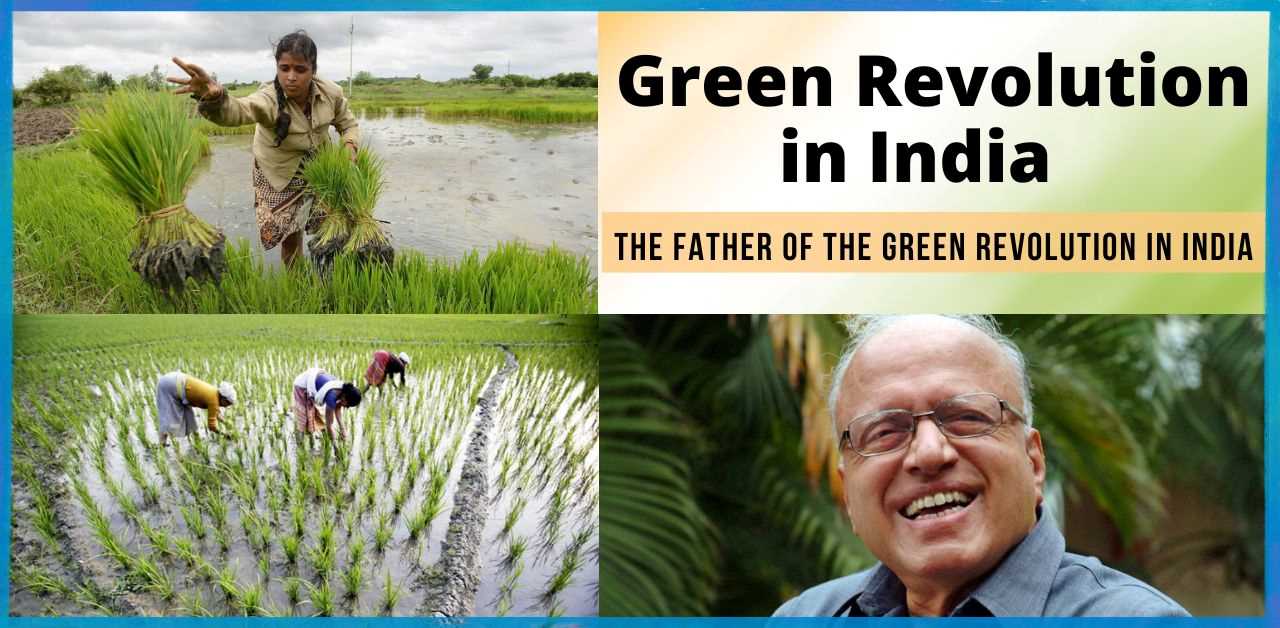
Green Revolution

Green revolution, great increase in production of food grains (especially wheat and rice) that resulted in large part from the introduction into developing countries of new, high-yielding varieties, beginning in the mid-20th century. Its early dramatic successes were in Mexico and the Indian subcontinent.


part of a larger initiative by Norman Borlaug, Green Revolution in India was founded by M S Swaminathan. The aim was to increase agricultural productivity in the developing world with use of technology and agricultural research.

The Green Revolution was initiated in the 1960’s to address the issue of malnutrition in the developing world. The technology of the Green Revolution involved bio-engineered seeds that worked in conjunction with chemical fertilizers and heavy irrigation to increase crop yields.

The amount of greenhouse gas emissions will help to reduce this. It allows us to create more food than conventional methods of growing. In uncooperative conditions, it offers us with predictable yields. It allows a decline in food costs for the world economy.

it was beneficial because it helped produce more food and prevented the starvation of many people. It also resulted in lower production costs and sale prices of produce. Although it had several benefits, the Green Revolution also had some negative effects on the environment and society.

The Green Revolution was a significant period of agricultural innovation and development that began in the mid-20th century, aiming to increase agricultural productivity worldwide, particularly in developing countries.

Key elements of the Green Revolution included:

  1. High-Yielding Varieties (HYVs): Scientists developed new varieties of seeds, particularly for staple crops like wheat, rice, and maize, which had higher yields and were more resistant to diseases and pests.

  2. Intensive Use of Chemical Fertilizers and Pesticides: To support the growth of these high-yielding crops, farmers began using synthetic fertilizers and pesticides on a larger scale.

  3. Irrigation Techniques: Implementation of improved irrigation systems, like drip irrigation, helped provide water to crops more efficiently.

  4. Mechanization: Introduction of machinery and technologies into agriculture, such as tractors and combine harvesters, to streamline farming processes.

The Green Revolution had several positive impacts:

  • Increased Agricultural Productivity: Crop yields soared, leading to more food being produced on existing farmland.
  • Food Security: It helped alleviate hunger in many parts of the world by increasing food availability.
  • Economic Growth: Improved agricultural productivity contributed to economic growth in many developing countries.

However, there were also concerns and criticisms associated with the Green Revolution:

  • Environmental Impact: Excessive use of chemical fertilizers and pesticides led to soil degradation, water pollution, and loss of biodiversity.
  • Social Disparities: The benefits of the Green Revolution were not equally distributed, leading to socioeconomic disparities between wealthy and poor farmers.
  • Sustainability Concerns: Reliance on high inputs of water, chemicals, and specific seed varieties raised concerns about the long-term sustainability of this agricultural model.

Efforts have been made to address these issues through sustainable agricultural practices, emphasizing environmentally friendly approaches and technologies while aiming for increased productivity and food security without compromising the environment or social equity.

Major Train Accidents in India

India has unfortunately witnessed several major train accidents since gaining independence in 1947. These accidents have caused significant loss of life and infrastructure damage. While the list provided here highlights some notable incidents, it may not include all accidents, and it’s important to refer to reliable sources and official reports for comprehensive and up-to-date information. Here are some major train accidents that occurred in India after independence:

Peruman Train Accident (1956): On November 5, 1956, near Peruman, Kerala, the Bangalore Mail derailed, resulting in a tragic collision with an oncoming passenger train. This accident claimed the lives of 144 people and injured many others.

Ariyalur Train Accident (1956): On December 15, 1956, near Ariyalur, Tamil Nadu, two trains, the Sabari Express and the Bangalore Express, collided head-on due to a signal failure. The accident resulted in the deaths of over 140 passengers.

Midnapore Train Accident (2010): On May 28, 2010, the Howrah-Kurla Lokmanya Tilak Gyaneshwari Express derailed near Midnapore, West Bengal. Sabotage was identified as the cause of the derailment, leading to the deaths of 148 passengers and injuries to numerous others.

Kanpur Train Derailment (2016): On November 20, 2016, the Indore-Patna Express derailed near Kanpur, Uttar Pradesh. The accident caused the deaths of 150 passengers and injured many others. The exact cause of the derailment was under investigation.

Pukhrayan Train Derailment (2016): On the same day as the Kanpur derailment, near Pukhrayan, Uttar Pradesh, the Indore-Patna Express derailed, resulting in one of the deadliest train accidents in recent times. This accident claimed the lives of 152 passengers and caused injuries to numerous individuals.

Amritsar Train Accident (2018): On October 19, 2018, during a Dussehra festival celebration near Amritsar, Punjab, a speeding train struck a crowd that was standing on railway tracks, leading to a tragic incident. The accident resulted in the deaths of around 60 people and injured many others.

Raebareli Train Accident (2010): On October 10, 2010, near Raebareli, Uttar Pradesh, the Goa Express collided with a stationary Mewar Express due to signal failure. The accident caused the deaths of 22 people and injured several others.

Jagdalpur-Bhubaneswar Hirakhand Express Derailment (2017): On January 21, 2017, the Jagdalpur-Bhubaneswar Hirakhand Express derailed near Kuneru, Andhra Pradesh. The accident led to the deaths of 41 passengers and caused injuries to numerous individuals.

Guwahati-Puri Express Derailment (1999): On September 13, 1999, the Guwahati-Puri Express derailed near Gaisal, Assam, resulting in a collision with an incoming freight train. This accident claimed the lives of 285 people and injured more than 300.

Khanna Rail Accident (1998): On November 26, 1998, near Khanna, Punjab, the Jammu Tawi-Sealdah Express collided with two derailed wagons, causing a massive fire. The accident resulted in the loss of 212 lives and injuries to several others.

These accidents underscore the importance of continuous efforts to improve railway safety, infrastructure maintenance, and the implementation of advanced technologies to prevent such incidents

A must carry things in your backpack for a trip


Isn’t it always enjoyable to travel? Driving down a road is always memorable while listening to your favorite songs and taking in the environment. “An eye carries memories better than a camera,” as I believe.
A fantastic destination, fantastic company, and a fantastic journey? So, what else do we require?
However, we will require a good backpack. So, let’s go over some of the essential stuff to pack.

If you are going to hilly areas, no doubts do carry some woolen clothes, mufflers, earmuffs, etc. Hilly areas can be cold at nights and in early morning also. 

Packing the right essentials in your backpack can make a trip more comfortable and enjoyable. Here are some must-carry items:

  1. Water Bottle: Staying hydrated is crucial. Opt for a reusable bottle that you can refill.

  2. Snacks: Pack some non-perishable snacks like nuts, energy bars, or dried fruit for quick energy.

  3. Map and Compass: Even if you have GPS on your phone, having a physical map and compass is wise in case of battery issues or signal loss.

  4. First Aid Kit: Include band-aids, antiseptic wipes, pain relievers, and any specific medications you might need.

  5. Weather Appropriate Clothing: Depending on your destination and season, pack clothing layers, a rain jacket, hat, and gloves.

  6. Sun Protection: Sunscreen, sunglasses, and a hat to shield from the sun.

  7. Multi-tool or Swiss Army Knife: Handy for various situations from cutting things to fixing minor issues.

  8. Portable Charger: Keep your devices charged with a portable power bank.

  9. Personal Identification and Important Documents: ID, passport (if traveling internationally), emergency contacts, and any necessary reservations or tickets.

  10. Light Source: A flashlight or headlamp can be a lifesaver if you’re out after dark.

  11. Personal Hygiene Kit: Pack essentials like travel-sized toothpaste, toothbrush, hand sanitizer, and wet wipes.

  12. Emergency Whistle: Useful for attracting attention if you get lost or need help.

  13. Notepad and Pen: Helpful for jotting down important information or leaving notes.

  14. Backup Cash: Carry some emergency money in case cards aren’t accepted or in case of any unforeseen circumstances.

  15. Entertainment: A book, deck of cards, or any compact form of entertainment for downtime.

Remember to tailor this list based on your specific trip, considering factors like duration, activities planned, and the destination’s climate and environment.

Career

Careers at Track2Training are suitable for dynamic people looking to grow as leaders, capable of functioning as one among our volunteers, enabling and complementing their work. Candidates should be willing to work flexible hours and on weekends. Remuneration is on par with the best in the sector.
Prior experience with volunteer, non-profit, education and /or youth organizations desirable. Prior volunteering experience
Drop a mail to 
contact@track2training.com

INTERNSHIP

We offer internships at Hajipur throughout the year and at other chapters during specific periods. Interns are not provided any remuneration, food or accommodation, but will be equipped with professional skills and provided with a certificate at the end of the engagement.
Interns should be willing to work full time or part time.
Send a mail to contact@track2training.com

VISION AND MISSION

Vision:
To help build a more influential, equal and socially conscious society.
Mission:
Track2Training drives social change by fostering an environment where young adults & children learn, lead and thrive
Our Strategy: Engage, Execute, Empower & Exit – To engage rural communities with corporates, young urban India, not-for-profit organizations and Governments to execute programs that empower our communities to transform their own lives, enabling us to exit and allowing them to serve as role models and change agents for the rest of the country.

Areas of Interest

  1. Capacity building                 
  2. Monitoring & evaluation      
  3. Micro – enterprises establishment
  4. Watershed works.
  5. Sanitation works.
  6. Sericulture activities.
  7. Lac cultivation, processing & marketing.
  8. Animal husbandry
  9. Micro planning. 
  10. Child Development MDM ,Diet Plan

INFRASTRUCTURE AND FACILITIES

OFFICE : Our organization has well established Office, Training centre & Vehicles.
EQUIPMENT : 1. Telephone, Fax Machine ,Computers and  Printers available.
2. LCD Projector time for video visuals trainings  to peoples.
3. Having documentary films on watershed, sanitation, education, health,  veterinary, agricultural fields.