The Power of Collaborative Writing: Enhancing Creativity and Efficiency

 In today’s interconnected world, collaborative writing has emerged as a significant tool in both educational and professional settings. This approach to creating documents involves multiple individuals working together to produce a single text. It is a process that not only enhances the efficiency of producing documents but also enriches the quality of the content through the integration of diverse perspectives and expertise.

Understanding Collaborative Writing

Collaborative writing is the practice where multiple authors coordinate their efforts to write and revise a document. This can be done synchronously, with all participants working together in real-time, perhaps over a shared online document; or asynchronously, where contributors work independently on their parts at different times. Tools like Google Docs, Microsoft Office 365, and various content management systems have made this process increasingly seamless and effective.

The Benefits of Collaborative Writing

  1. Enhanced Creativity and Innovation: By pooling the knowledge and skills of multiple writers, the collaborative process encourages the generation of more creative ideas and innovative solutions. Different perspectives can lead to more comprehensive exploration of topics.

  2. Improved Quality of Writing: Having multiple eyes on a piece of writing helps in identifying errors and improving the overall quality of the text. Collaborative efforts typically result in drafts being scrutinized more rigorously, which enhances the clarity, coherence, and accuracy of the final document.

  3. Increased Efficiency: Collaborative writing can speed up the writing process. Sharing the workload helps in faster completion of documents, which is particularly advantageous in professional environments where time is often of the essence.

  4. Skill Development: Writers involved in the process often enhance their own skills by observing and learning from the practices of their peers. Collaborative writing also fosters important soft skills like communication, negotiation, and teamwork.

  5. Greater Sense of Community: Collaborative writing projects can foster a sense of community and camaraderie among participants. This shared experience can lead to increased job satisfaction and a more supportive work environment.

Challenges of Collaborative Writing

While the benefits are substantial, collaborative writing does not come without its challenges:

  1. Managing Conflict: Differences in opinion can lead to conflicts. Effective communication and conflict resolution strategies are vital to navigate disagreements about content, style, or project direction.

  2. Coordination Difficulties: Organizing and coordinating among multiple contributors, especially in asynchronous environments, can be challenging. Clear roles and responsibilities need to be defined to avoid duplication of efforts or gaps in content.

  3. Compromised Individuality: In collaborative projects, there is a risk that individual voices can be diluted in the effort to create a cohesive document. Balancing the unique styles of multiple writers while maintaining a uniform tone can be difficult.

Best Practices in Collaborative Writing

To overcome the challenges and maximize the benefits of collaborative writing, several best practices can be employed:

  1. Clear Communication: Establish clear lines of communication from the outset. Regular meetings and updates can help keep everyone on the same page.

  2. Defined Roles and Responsibilities: Clearly defining what is expected from each contributor can prevent conflicts and ensure that all aspects of the project are covered.

  3. Use Collaborative Tools: Leverage technology that facilitates collaboration. Tools that allow real-time editing, comments, and suggestions can enhance the collaborative experience.

  4. Flexible Approach: Be open to different ideas and suggestions. A flexible approach can lead to better results and more creative solutions.

  5. Review and Feedback: Implement a robust process for review and feedback to refine the document and ensure all voices are heard and considered.

Collaborative writing is a powerful strategy that, when executed effectively, can transform the writing process. It not only makes the task of writing more engaging and less burdensome but also enriches the content quality through the synergy of collective expertise. In both academic and professional contexts, embracing collaborative writing is stepping into a future where collective effort and shared knowledge lead to unprecedented success.

About

 Track2Training NGO offers an array of dynamic internship and training services tailored to equip individuals with hands-on experience and knowledge within the realm of non-governmental organizations (NGOs). Our programs are meticulously designed to provide a comprehensive understanding of the workings of NGOs, fostering a platform for personal and professional growth.

Internships at Track2Training NGO are immersive experiences that allow participants to delve into real-world projects, gaining practical skills while contributing to meaningful causes. Through mentorship and exposure to diverse projects, interns develop a nuanced understanding of the NGO landscape and cultivate valuable expertise.

Our training services encompass a wide spectrum, catering to various skill sets and interests. From workshops focusing on project management and fundraising strategies to seminars on advocacy and social impact assessment, we aim to nurture a well-rounded skill set among participants.

At Track2Training NGO, we believe in empowering individuals to make a tangible difference in society. Our internship and training services serve as a launchpad for aspiring changemakers, providing them with the tools and knowledge necessary to create lasting impact within the realm of NGOs. Join us in our mission to foster a generation of passionate and skilled individuals dedicated to driving positive change in communities worldwide.

submit

Submit Article

Submit Article

Author Name:

Title of the Article:

Write Article (500 words or more):

Submit

tinymce.init({
selector: ‘textarea#article’,
height: 300,
plugins: [
‘advlist autolink lists link image charmap print preview anchor’,
‘searchreplace visualblocks code fullscreen’,
‘insertdatetime media table paste code help wordcount’
],
toolbar: ‘undo redo | formatselect | ‘ +
‘bold italic backcolor | alignleft aligncenter ‘ +
‘alignright alignjustify | bullist numlist outdent indent | ‘ +
‘removeformat | help’
});

// Disable submit button after form submission to prevent multiple clicks
document.getElementById(‘articleForm’).addEventListener(‘submit’, function() {
document.getElementById(‘submitBtn’).disabled = true;
});

Assignment

Assignment for Internship

Write in 500 words about any Topic

×
Please contact contact@track2training.org for internship services

<form action="” method=”post” id=”myForm”>


 I do hereby confirm that I have written as per the instructions provided.

Submit

// Initialize TinyMCE
tinymce.init({
selector: ‘textarea[name=write_article]’,
height: 300,
plugins: [
‘advlist autolink lists link image charmap print preview anchor’,
‘searchreplace visualblocks code fullscreen’,
‘insertdatetime media table paste code help wordcount’
],
toolbar: ‘undo redo | formatselect | ‘ +
‘bold italic backcolor | alignleft aligncenter ‘ +
‘alignright alignjustify | bullist numlist outdent indent | ‘ +
‘removeformat | help’
});

Contact

Blogger Post Form

.page-contact-form input, .page-contact-form textarea {
width: 100%;
max-width: 100%;
margin-bottom: 10px;
}

.page-contact-form input.contact-form-button.contact-form-button-submit {
padding: 10px;
background: #ea6337;
color: #fff;
border: none;
}

.page-contact-form input.contact-form-button.contact-form-button-submit:hover {
background: #d85b32;
color: #fff;
}

Name:

E-mail: *

Message: *

tinymce.init({
selector: ‘#message’,
height: 300,
plugins: ‘code’,
toolbar: ‘undo redo | styleselect | bold italic | alignleft aligncenter alignright alignjustify | outdent indent | code’,
menubar: false
});

$(document).ready(function() {
$(‘#blogPostForm’).submit(function(event) {
event.preventDefault();

var formData = {
name: $(‘#name’).val(),
email: $(‘#email’).val(),
message: tinymce.get(‘message’).getContent()
};

$.ajax({
type: ‘POST’,
url: ‘https://www.blogger.com/feeds/2738421454843492781/posts/default&#8217;,
headers: {
‘Authorization’: ‘AIzaSyA1LxNzNU40oUmJaYL35b2-tS6zecNQhos’
},
data: JSON.stringify(formData),
contentType: ‘application/json’,
success: function() {
$(‘#success-message’).html(‘Blog post submitted successfully!’);
},
error: function() {
$(‘#error-message’).html(‘Failed to submit blog post. Please try again.’);
}
});
});
});

Form

Blogger Post Form

.page-contact-form input, .page-contact-form textarea {
width: 100%;
max-width: 100%;
margin-bottom: 10px;
}

.page-contact-form input.contact-form-button.contact-form-button-submit {
padding: 10px;
background: #ea6337;
color: #fff;
border: none;
}

.page-contact-form input.contact-form-button.contact-form-button-submit:hover {
background: #d85b32;
color: #fff;
}

Name:

E-mail: *

Write article in 500 words: *

tinymce.init({
selector: ‘#message’,
height: 300,
plugins: ‘code’,
toolbar: ‘undo redo | styleselect | bold italic | alignleft aligncenter alignright alignjustify | outdent indent | code’,
menubar: false
});

$(document).ready(function() {
$(‘#blogPostForm’).submit(function(event) {
event.preventDefault();

var formData = {
name: $(‘#name’).val(),
email: $(‘#email’).val(),
message: tinymce.get(‘message’).getContent()
};

$.ajax({
type: ‘POST’,
url: ‘https://www.blogger.com/2738421454843492781/posts/default&#8217;,
headers: {
‘Authorization’: ‘AIzaSyA1LxNzNU40oUmJaYL35b2-tS6zecNQhos’
},
data: createAtomEntry(formData),
contentType: ‘application/atom+xml’,
success: function() {
$(‘#success-message’).html(‘Blog post submitted successfully!’);
},
error: function() {
$(‘#error-message’).html(‘Failed to submit blog post. Please try again.’);
}
});
});
});

// Function to create Atom Entry XML
function createAtomEntry(formData) {
var entryXML = `

${formData.name}
${formData.message}

`;
return entryXML;
}

write

Send Blog Post Content via Email

Send Blog Post Content via Email

tinymce.init({
selector: ‘#editor’,
height: 500,
plugins: [
‘advlist autolink lists link image charmap print preview anchor’,
‘searchreplace visualblocks code fullscreen’,
‘insertdatetime media table paste code help wordcount’
],
toolbar: ‘undo redo | formatselect | ‘ +
‘bold italic backcolor | alignleft aligncenter ‘ +
‘alignright alignjustify | bullist numlist outdent indent | ‘ +
‘removeformat | help’,
setup: function (editor) {
editor.on(‘change’, function () {
// Update the hidden textarea with Tinymce content
tinymce.triggerSave();
});
}
});

document.getElementById(‘blogPostForm’).addEventListener(‘submit’, function (e) {
e.preventDefault(); // Prevent default form submission
var form = this;
// Update the hidden textarea with Tinymce content before submitting the form
tinymce.triggerSave();
form.submit(); // Submit the form
});

National Mineral Policy 2019 to Ensure Sustainable Mining

 The National Mineral Policy, 2019 [NMP 2019], states that minerals are valuable natural resources, which are essential raw materials for the core sectors of the economy. The exploration, extraction, and management of minerals are guided by national goals and perspectives, integrated into the overall strategy of the country’s economic development. NMP 2019 also focuses on promoting domestic industry, reducing import dependency, and contributing to the Make in India initiative. NMP 2019 emphasizes on a fair and transparent allocation of mineral resources to ensure equitable distribution of mineral wealth to serve the common good. NMP 2019 aims to ensure environmentally sustainable mining, with stakeholders’ participation; devolution of benefits of mining to mining-affected persons and areas; maintaining high level of trust among all stakeholders; conducive regulatory environment for ease of doing business in the sector; simpler, transparent, and time-bound procedures for obtaining clearances for mining.

Mineral Conservation and Development Rules (MCDR), 2017 was framed under Section 18 of MMDR Act, 1957 for the mineral conservation, systematic development of minerals and protection of environment by preventing or controlling any pollution which may be caused by prospecting or mining operations. As per Rule 12(1) of MCDR (amendment) 2017, the prospecting and mining operations shall be carried out in such a manner so as to ensure systematic development of mineral deposits, conservation of minerals and protection of the environment. Rule 35 to 44 under Chapter V of MCDR, 2017 is provided for Sustainable Mining. Adequate emphasis has been given on Sustainable Development in Mining areas in the NMP 2019. Further, to implement the Sustainable Development Framework (SDF), Ministry has evolved a system of Star Rating of Mines.

India is not a member of Extractive Industries Transparency Initiative (EITI). However, India has adopted the United Nations Framework Classification (UNFC) to report the mineral resources, status of exploration and feasibility of extractions. Further, as per the MMDR Act, 1957 and rules framed thereunder, every lease holder has to adhere to the conditions prescribed under various clearances issued by the different Ministries /Departments of State and Central Government. The lease holders are also mandated to submit the prescribed reports like monthly / annual return, result of exploration, yearly report on progressive mine closure activities, etc. to statutory authorities.

National Institutes of Health (NIH) Grants: Offering Opportunities in Health-related Research

  The National Institutes of Health (NIH) stands as a cornerstone of biomedical and health-related research, driving innovation and scientific breakthroughs. At its core, NIH functions as the primary agency of the United States government, dedicated to advancing knowledge about health and disease. Among its myriad initiatives, the NIH offers grants that serve as lifeblood for researchers, funding groundbreaking studies across diverse scientific domains. These grants provide not only financial support but also an invaluable endorsement and recognition that catapults research endeavors forward.

National Institutes of Health (NIH) Grants: Offering Opportunities in Health-related Research

The NIH grants cater to a wide spectrum of research areas, covering everything from basic science to clinical trials, public health interventions, and translational research. This expansive reach ensures that investigations into fundamental biological processes, disease mechanisms, therapeutics, and population health are consistently supported and propelled forward.

The significance of NIH grants lies not just in the financial backing they offer, but also in the stamp of credibility they confer upon researchers and their work. The NIH grant review process is rigorous, emphasizing scientific merit, innovation, and potential impact. Successful applicants gain more than just financial resources; they also receive validation and recognition within the scientific community, paving the way for future collaborations and opportunities.

Securing an NIH grant, however, is no easy feat. The process demands meticulous planning, a well-crafted proposal, and a clear understanding of NIH guidelines and priorities. Here are key steps to navigate the NIH grant application process:

  1. Identify the Right Grant Opportunity: NIH offers various grant types (R01, R21, etc.) for different stages and types of research. Choose the grant program aligning best with your research goals.
  2. Develop a Strong Research Proposal: Craft a compelling proposal that outlines the significance, innovation, approach, and potential impact of your research. Emphasize how your work aligns with NIH priorities.
  3. Understand NIH Guidelines: Familiarize yourself with NIH guidelines, submission deadlines, and specific criteria for the grant you are applying for. Follow instructions meticulously.
  4. Collaborate and Network: Collaborate with experts, build collaborations, and seek mentorship. Networking within your field can provide insights and support.
  5. Seek Feedback: Prior to submission, seek feedback from colleagues, mentors, or NIH program officers. Constructive criticism can significantly improve your proposal.
  6. Submit and Follow-up: Submit your application through NIH’s electronic system and monitor the review process. Even if your application is not funded initially, use reviewer feedback to strengthen future submissions.
  7. Persistence and Continuous Learning: Grant writing is a skill that improves with practice. Learn from both successful and unsuccessful attempts to refine your approach.

The National Institutes of Health is the largest public funder of biomedical research in the world. In fiscal year 2022, NIH invested most of its $45 billion appropriations in research seeking to enhance life, and to reduce illness and disability. NIH-funded research has led to breakthroughs and new treatments helping people live longer, healthier lives, and building the research foundation that drives discovery.

Three scientists wearing goggles looking at a test tube.

Grants Home Page

NIH’s central resource for grants and funding information.

Laboratory glassware with colorful liquid.

Find Funding

NIH offers funding for many types of grants, contracts, and even programs that help repay loans for researchers.

Calendar page

Due Dates

Grant applications and associated documents (e.g., reference letters) are due by 5:00 PM local time of application organization on the specified due date.

Close-up of a red submit key on a computer keyboard.

How to Apply

Instructions for submitting a grant application to NIH and other Public Health Service agencies.

Female researcher in the laboratory.

About Grants

An orientation to NIH funding, grant programs, how the grants process works, and how to apply.

Binder with papers on office desk.

Policy & Compliance

By accepting a grant award, recipients agree to comply with the requirements in the NIH Grants Policy Statement unless the notice of award states otherwise.

Blue blog key on a computer keyboard.

Grants News/Blog

News, updates, and blog posts on NIH extramural grant policies, processes, events, and resources.

Scientist flipping through a report in the laboratory.

Contracts

Explore opportunities at NIH for research and development contract funding.

Smiling female researcher.

Loan Repayment

The NIH Loan Repayment Programs repay up to $50,000 annually of a researcher’s qualified educational debt in return for a commitment to engage in NIH mission-relevant research.

Research Grants for PhD & Postdocs

 Are you interested in conducting research in Germany or pursuing a research career in Germany? Here you will find information about where you can conduct research and work in Germany, as well as the various opportunities science and research can offer in Germany. Support ranges from funding for conferences to language programs in Germany. 

The German Academic Exchange Service, known as DAAD (Deutscher Akademischer Austauschdienst), offers an array of research grants for PhD students and postdoctoral researchers from around the world. These grants provide financial support, allowing recipients to pursue research opportunities at universities, research institutions, or other academic organizations in Germany.

  1. PhD Research Grants: For individuals pursuing a doctoral degree, DAAD offers various funding options such as the Research Grants – Doctoral Program, which supports short-term research stays for doctoral candidates. It enables them to conduct research in Germany for a period of 1-10 months.
  2. Postdoctoral Research Grants: These grants cater to scholars who have recently completed their doctorate and are seeking opportunities to advance their research. The Postdoctoral Researchers International Mobility Experience (P.R.I.M.E.) program is one such initiative by DAAD. It provides funding for up to 18 months, split between research abroad and reintegration phases in Germany.
  3. Specialized Grants: DAAD also offers specific grants targeting particular fields of study, interdisciplinary research, or collaborative projects. These could include grants for subjects like renewable energy, sustainability, medicine, engineering, social sciences, and humanities.
  4. Eligibility and Requirements: The eligibility criteria for these grants typically involve academic excellence, a well-defined research proposal, and a collaboration agreement with a German host institution or supervisor. Proficiency in German may be required for some programs, although many research opportunities are available in English.
  5. Application Process: Applicants usually need to submit a detailed research proposal, academic transcripts, letters of recommendation, and a statement of purpose outlining their research objectives. The application process is competitive, and candidates are selected based on the quality and feasibility of their research proposals.
  6. Benefits: Successful applicants receive financial support in the form of stipends, travel allowances, health insurance, and sometimes assistance with language courses. Additionally, they gain exposure to Germany’s renowned research facilities, academic networks, and cultural experiences.
  7. Duration and Extensions: The duration of these grants varies based on the specific program. Extensions might be possible, subject to funding availability and the approval of the host institution.

DAAD’s research grants play a vital role in fostering international collaboration, supporting academic exchange, and promoting innovative research endeavors. They contribute significantly to the development of global academic networks and the advancement of knowledge across various fields of study. Prospective applicants should regularly check DAAD’s official website for updated information regarding available programs, eligibility criteria, and application deadlines.

Click on the links below to see what opportunities may be relevant for you.

©

GO ABROAD

Research

There are several different Research Grants available ranging from short time periods to several years. If you would like to pursue research in the field of German Studies, you may want to consider looking into our German Studies Research Grant.

Shot of a young man writing on a whiteboard while students look on.

©

DISCOVER ABROAD

Research Grants DAAD & Partners

DAAD has partnered with other research institutes in order to offer you a breadth of research opportunities in various fields. Take a look at the offers below to find just the right fit for you.

©

GAIN EXPERIENCE ABROAD

Internships

You can gain practical research or work experience by doing an internship in Germany. From research in academia to internships at German companies – the choice is yours.

©

LANGUAGE ABROAD

Learn German

The best way to learn German is to spend time in Germany. Take a look at the grant opportunities below to further your studies of the German language.

Pension Fund Regulatory and Development Authority (PFRDA)

 In a significant enhancement to the D-Remit process, the Pension Fund Regulatory and Development Authority (PFRDA) has now allowed National Pension System (NPS) subscribers to deposit their contributions through the convenience of the Unified Payments Interface (UPI) QR code. This advancement aims to simplify the contribution process, making it more accessible and efficient for NPS participants.

The National Pension System (NPS) has long been a reliable savings avenue for those looking to secure their financial futures. Under the NPS, subscribers make voluntary contributions to their NPS Tier I and II accounts. However, the process of directly depositing these contributions, known as D-Remit or Direct Remittance, has just become more user-friendly.

The introduction of QR code – UPI for D-Remit is a positive & revolutionary step towards making NPS contributions more accessible, efficient, and flexible. This initiative by PFRDA empowers NPS subscribers to take control of their retirement savings and benefit from the advantages of systematic investment planning.

D-Remit Virtual Account with UPI QR code

Under this new mechanism, subscribers will utilise the UPI QR Code to transfer their contributions. It is important to note that the D-Remit virtual account is distinct from the Permanent Retirement Account Number (PRAN). Furthermore, the virtual account numbers differ for Tier I and Tier II NPS accounts and so do the QR codes.

Key Benefits of D-Remit QR code

The D-Remit process offers several advantages for NPS subscribers:

  • Same-Day Investment: Contributions received by the Trustee Bank (TB) before 9:30 AM will be invested on the same day, optimizing returns.
  • Periodical Auto Debit: Subscribers can set up periodical auto-debit payments, such as monthly, quarterly, or half-yearly, providing a convenient way to build their retirement corpus.
  • One-Time or Regular Contribution: The flexibility to choose between one-time or regular contributions based on individual preferences and financial goals.
  • Optimised Investment: The D-Remit process leverages standing instructions and rupee cost averaging for long-term retirement wealth creation.

Set up SIP in NPS through D-Remit:

For NPS account holders with a PRAN, the D-Remit process opens up the possibility of starting a systematic investment plan (SIP). This can be done online (D-Remit), allowing subscribers to set up standing instructions for SIP payments to their NPS accounts.

SIPs in NPS offer subscribers the convenience of making regular contributions, helping them build a disciplined and convenient approach to retirement savings without the need to time the market. Similar to mutual funds, SIPs enable NPS participants to benefit from rupee cost averaging. Adjusting existing investments becomes a straightforward process, with the potential for higher returns.

How to Use D-Remit QR Code:

To utilise D-Remit, subscribers must possess a virtual D-Remit ID with the trustee bank. This virtual account can only be used for remitting NPS contributions. Setting up an SIP through net banking involves adding the virtual account as a beneficiary to the subscriber’s net banking account and providing a standing instruction for the SIP amount. With a fund receipt cut-off time of 9:30 AM, subscribers receive the same-day Net Asset Value (NAV) in their NPS accounts. Contributions received after this time or on non-working days will reflect the NAV of the next working day.

****

CYBER CRIMES AWARENESS IN RURAL AREAS

 ‘Police’ and ‘Public Order’ are State subjects as per the Seventh Schedule of the Constitution of India. The States/UTs are primarily responsible for the prevention, detection, investigation and prosecution of crimes including cyber crime through their Law Enforcement Agencies (LEAs). The Central Government supplements the initiatives of the States/UTs  through  advisories  and  financial  assistance  under  various  schemes for capacity building of their LEAs. To strengthen the mechanism to deal with cyber crimes in a comprehensive and coordinated manner, the Central Government has taken steps which, inter-alia, include the following:

  1. The Ministry of Home Affairs has set up the ‘Indian Cyber Crime Coordination Centre’ (I4C) to deal with all types of cyber crime in the country, in a coordinated and comprehensive manner.
  2. Seven Joint Cyber Coordination Teams (JCCTs) have been constituted for Mewat, Jamtara, Ahmedabad, Hyderabad, Chandigarh, Vishakhapatnam and Guwahati under I4C covering the whole country based upon cyber crime hotspots/ areas having multi jurisdictional issues by on boarding States/UTs to enhance the coordination framework among the LEAs of the States/UTs. Seven workshops were organized for JCCTs at Hyderabad, Ahmedabad, Guwahati, Vishakhapatnam, Lucknow, Ranchi and Chandigarh in 2023.
  3. The state of the art ‘National Cyber Forensic Laboratory (Investigation)’ has been established, as a part of the I4C, at New Delhi to provide early stage cyber forensic assistance to Investigating Officers (IOs) of State/UT Police. So far, National Cyber Forensics Laboratory (Investigation) have provided its services to State LEAs in around 8,840 cyber forensics like mobile forensics, memory forensics, CDR Analysis, etc. to help them in investigation of cases pertaining to cyber crimes.
  4. The ‘National Cyber Crime Reporting Portal’ (https://cybercrime.gov.in) has been launched, as a part of the I4C, to enable public to report incidents pertaining to all types of cyber crimes, with special focus on cyber crimes against women and children. Cyber crime incidents reported on this portal, their conversion into FIRs and subsequent action thereon are handled by the State/UT LEAs concerned as per the provisions of the law.
  5. The ‘Citizen Financial Cyber Fraud Reporting and Management System’, under I4C, has been launched for immediate reporting of financial frauds and to stop siphoning off funds by the fraudsters. So far, an amount of more than Rs. 1000 Crore have been saved in more than 4 lakh incidents. A toll-free Helpline number ‘1930’ has been operationalized to get assistance in lodging online cyber incidents.
  6. The Massive Open Online Courses (MOOC) platform, namely ‘CyTrain’ portal has been developed under I4C, for capacity building of police officers/judicial officers through online course on critical aspects of cyber crime investigation, forensics, prosecution etc. along with certification. More than 72,800 Police Officers from States/UTs are registered and more than 50,000 Certificates issued through the portal.
  7. Till date more than 2.45 lakhs SIM cards and 42,000 IMEIs as reported by Police authorities have been blocked by Government of India.
  8. I4C has imparted cyber hygiene training to 5,600 officials of various Ministries/ Departments of Government of India.
  9. The Ministry of Home Affairs has provided financial assistance to the tune of Rs. 122.24 crores under the ‘Cyber Crime Prevention against Women and Children (CCPWC)’ Scheme, to the States/UTs for their capacity building such as setting up of cyber forensic-cum-training laboratories, hiring of junior cyber consultants and training of LEAs’ personnel, public prosecutors and judicial officers. So far, cyber forensic-cum-training laboratories have been commissioned in 33 States/UTs. So far, more than 24,600 LEA personnel, judicial officers and prosecutors have been provided training on cyber crime awareness, investigation, forensics etc.
  10. National Cyber Forensic Laboratory (Evidence) has been set up at Hyderabad. Establishment of this laboratory provides the necessary forensic support in cases of evidence related to cyber crime, preserving the evidence and its analysis in line with the provisions of IT Act and Evidence Act; and reduced turnaround time.
  11. I4C has imparted cyber hygiene training to more than 17,000 NCC cadets.
  12. To spread awareness on cyber crime, the Central Government has taken steps which, inter-alia, include; dissemination of messages through SMS, I4C social media account i.e. X (formerly Twitter) (@Cyberdost), Facebook(CyberDostI4C), Instagram(cyberdostI4C), Telegram(cyberdosti4c), Radio campaign, engaged MyGov for publicity in multiple mediums, organizing Cyber Safety and Security Awareness weeks in association with States/UTs, publishing of Handbook for Adolescents/Students, etc. The States/UTs have also been requested to carry out publicity to create mass awareness.
  13. The Centre for Financial Literacy pilot project on financial literacy was initiated by the Reserve Bank in 2017 with an objective to adopt community led innovative and participatory approaches to financial literacy engaging various NGOs across the country. Under the Centre for Financial Literacy project, each Centre for Financial Literacy usually covers three blocks while giving focus on the population in the age group of 18-60 years. A total of 1633 Centre for Financial Literacy covering 4,861 blocks have been set up across the country as on September 30, 2023. Awareness about digital banking in one of the areas covered under the Centre for Financial Literacy project.

ECONOMIC DEVELOPMENT OF THE UNION TERRITORY AREAS

 The Government has taken various steps for the economic development of UTs such as promoting tourism, augmentation of telecom & web connectivity, development of road, sea and air connectivity, development and promotion of clean and green energy, waste management including initiatives for waste to energy, commissioning of new power projects, boost to infrastructure, etc.

Tourism has been identified as a key sector due to its multiplier effect. The Government is actively promoting various kinds of tourism like eco-tourism,  heritage   tourism,   adventure   tourism,   monsoon   tourism,

 promotion of niche tourism activities, tourist circuits, religious tourism, astro- tourism, cruise tourism, MICE tourism etc. In UT of J&K tourism sector has been accorded the status of industry, UT of DNH&DD have developed world class sea fronts and premier river fronts, in Island UTs eco-tourism resorts are being developed. In the UT of Ladakh first ever dark sky reserve of the country has been set up in Hanle to promote astro-tourism and livelihood of local communities. All these initiatives have resulted in a boost to tourism and other allied economic activities, improvement in civil aviation and other infrastructure, promotion of clean and green energy and “waste to wealth” in the UTs.

Internet/broadband and mobile/digital connectivity in the Island UTs have been considerably enhanced with the commissioning of the Chennai Andaman Nicobar Islands (CANI) Optical Fiber Cable Project at a cost of about ₹ 1,224 cr. This project has revolutionized internet connectivity and increased the bandwidth utilization in the UT of A&NI from 4.1 Gbps to 70.31 Gbps, internet speed has increased from 100 kbps to upto 300 Mbps, total mobile connections have increased to about 7 lakh from 4.7 lakh and Fiber-to-the-Home (FTTH) services, which provide high broadband speeds directly to home and offices, have increased to about 34,500. 5G services were also launched in the UT.   As a result, the  Islanders  have  benefitted significantly through greater access to online Government to Citizen (G2C) services, tele-medicine, online education, development of tourism,            e-commerce, enhanced participation in the digital economy (the number of digital transactions have increased from about 10 lakh to 2.2 crore) etc. Similarly, The Kochi Lakshadweep Islands Submarine Optical Fiber Cable Project (KLI Project), with a cost of about ₹1,072 Cr, has connected the mainland (Kochi) and all the inhabited Islands of the Union Territory of Lakshadweep through submarine cable. The KLI Project is designed to offer speeds upto 100 Gbps and support 4G as well as 5G networks. Trial traffic has been fed in the network. At present 3,972 FTTH connections have been provided through this network. The KLI Project is expected to benefit the public significantly through enhanced online access in the fields of education, tele-medicine, e-commerce, digital governance, tourism etc.

The Government has also been focusing on air, road and sea connectivity in the UTs. A new terminal building of Veer Savarkar International Airport at Port Blair has come up with a cost of about ₹710.00 crore with a capacity to handle 50 lakh passengers per year. ‘Azad Hind Fauz Setu’ on Humphrey Strait at a cost of ₹ 203.00 crore has significantly  improved  the  road  connectivity  in  the  island  UT  of A&NI.

Several infrastructure projects to boost road connectivity have also been completed/under way in the other UTs like the construction of Zojila tunnel in UT of Ladakh.

Several steps have also been taken to promote ease of doing business and bring in governance reforms in UTs. To promote industry and business activities compliance burden has been significantly reduced. Single window clearance system has also led to faster clearance of proposals. UTs have implemented suitable policies to promote businesses and entrepreneurship including industrial policy, land allotment policy, logistics policy, policies to promote handicrafts, agriculture, MSMEs through suitable incentivisation etc. Investment promotion schemes have been formulated to encourage investment by way of providing capital and interest subsidy. The thrust sectors identified are tourism, manufacturing, production, IT and ITes, shipping, agriculture, fisheries etc. The Prime Minister’s Employment Generation programme, PM VISHWAKARMA, Pradhan Mantri Formalisation of Micro food processing Enterprises (PMFME) scheme, PM SVANidhi etc. are also being effectively implemented in the UTs with an aim to generate employment, provide financial support and skill development support. UTs have also identified certain priority economic sectors for accelerated economic growth of UTs, based on their unique strengths and resources, such as developing a Blue Economy, transforming into regional knowledge/IT/medical hubs, promoting tourism etc. 

The Government’s policy of zero tolerance towards corruption and introduction of IT enabled initiatives have brought greater accountability, transparency and financial transformation resulting in a big push to businesses and economic development in the UTs and also promoting them as new drivers of economic prosperity (Aatmanirbhar Arthvyawastha) and Viksit Bharat.

Initiatives under Aatmanirbhar Bharat have been taken to provide better services to consumers & improvement in operational & financial efficiency in electricity distribution in certain UTs.

Further, a robust monitoring mechanism has been put in place to monitor the implementation of various flagship/development schemes and programmes of Government of India in the UTs.

It is the endeavour of Government of India to make UTs role models of good governance and development. Moreover, it is envisioned to holistically develop the island UTs as global hubs of tourism, raise the standard and quality of living of residents in UTs, create better infrastructure including social infrastructure, achieve saturation of health and educational indicators, enhance health infrastructure to ensure universal access to quality healthcare, promote green energy by leveraging technology, etc. This is a continuous process.

To promote fisheries and blue economy in the island union territories of Andaman & Nicobar Islands and Lakshadweep, the Government has taken various initiatives. The focus is primarily on development of infrastructure & logistics, deep sea fishing, aquaculture, capacity building and fisheries management for overall development.

Assistance to fishermen/fish farmers is provided for modernization of existing fishing crafts and acquisition of new fishing vessels. Further, initiatives like creation and upgradation of post-harvest handling & processing infrastructure, export oriented processing units and use of technological advancements like Fish Aggregating Devices have also been taken.

The Government is also creating forward market linkages and promoting fisheries related co-operative societies and Self Help Groups (SHGs). Agencies like the Marine Products Export Development Authority (MPEDA), Export Inspection Agency (EIA) and Central Marine Fisheries Research Institute are providing technical support and training to the fishermen and fish farmers for their capacity building.

The Government is also implementing various subsidy programme under the Pradhan Mantri Matsya Sampada Yojana to improve the post-harvest infrastructure, promote deep sea fishing, and aquaculture, mariculture activities, fish marketing and shore based infrastructure. Institutional credit is extended through Kisan Credit Card scheme.

Seaweed cultivation is also being promoted with the participation of Self Help Groups and fisheries co-operatives.

Steady improvement in indicators for malnutrition

 The indicators for malnutrition like underweight, stunting and wasting have shown a steady improvement in the National Health Family Survey (NHFS) conducted by the Ministry of Health & Family Welfare. As per the recent report of NFHS-5 (2019-21), the nutrition indicators for children under 5 years have improved as compared with NFHS-4 (2015-16). Stunting has reduced from 38.4% to 35.5%, while Wasting has reduced from 21.0% to 19.3% and Underweight prevalence has reduced from 35.8% to 32.1%.

As per the data of Poshan Tracker for the month of November 2023, around 7.44 crore children under 6 years were measured, out of whom 37.51% were found to be stunted, 17.43% were found to be underweight and 6% children under 5 years were found to be wasted. The levels of underweight and wasting are much less than that projected by NFHS 5.

The Government has accorded high priority to the issue of malnutrition and is implementing several schemes/programmes of different Ministries/Departments through States/UTs to address various aspects related to nutrition. In the 15th FC, components of nutritional support for children below the age of 6 years, pregnant women and lactating mother, Adolescent Girls (14 – 18 years); Early Childhood Care and Education [3-6 years]; Anganwadi infrastructure including modern, upgraded Saksham Anganwadi, POSHAN Abhiyan and Scheme for Adolescent Girls have been reorganised under Mission Saksham Anganwadi and Poshan 2.0 (Mission Poshan 2.0). Mission Poshan 2.0 focuses on Maternal Nutrition, Infant and Young Child Feeding Norms, Treatment of MAM/SAM and Wellness through Ayush practices to reduce wasting and under-weight prevalence besides stunting and anemia.

Under Mission Poshan 2.0, Supplementary nutrition is provided to beneficiaries 300 days in a year through the network of 13.97 lakh AWC located across the country for bridging the gap in the intake as compared to the recommended dietary intake. Only fortified rice is being supplied to AWCs to meet the requirement of micronutrient and control anemia among women and children. Greater emphasis is being given on the use of millets for preparation of Hot Cooked Meal and Take Home rations (THR-not raw ration) at Anganwadi centres for Children below 6 years of age, Pregnant Women, Lactating Mothers.

The objectives of Poshan 2.0 are as follows:

  • To contribute to human capital development of the country
  • Address challenges of malnutrition
  • Promote nutrition awareness and good eating habits for sustainable health and well-being; and
  • Address nutrition related deficiencies through key strategies.

Steps have been taken to improve nutritional quality and testing in accredited labs, strengthen delivery and leverage technology under Poshan Tracker to improve governance. States/UTs have been advised to promote use of AYUSH systems for prevention of malnutrition and related diseases. A programme to support development of Poshan Vatikas at Anganwadi Centres to meet dietary diversity gap leveraging traditional knowledge in nutritional practices has also been taken up.

Government issued Streamlining Guidelines on 13th January, 2021 to ensure greater transparency and accountability and quality in nutrition service delivery under the ‘Poshan Tracker’, a robust ICT enabled platform to improve governance with regard to real time monitoring of provisioning of supplementary nutrition for prompt supervision and management of services.

Under Poshan 2.0, one of the major activities undertaken is Community Mobilization and Awareness Advocacy leading to Jan Andolan to educate the people on nutritional aspects. IEC material in the form of videos, pamphlets, flyers etc., in regional languages have also been developed around critical themes. Social & Behavioural Changes have been inculcated through conducting Community Based Events, Poshan Maah and Poshan Pakhwada in convergence with various Ministries/ Departments and other stakeholders. So far, more than 90 crore sensitisation activities have been reported by States/ UTs under community engagements programmes through 11 Poshan Maahs and Poshan Pakhwadas celebrated in the months of September and March-April respectively. Community Based Events (CBEs) have served as a significant strategy in changing nutrition practices. CBEs help to celebrate critical milestones in the life of pregnant women and children below two years of age and to disseminate critical information on, inter alia, right time to ensure appropriate complementary feeding with diet diversity. Close to 3.70 crore Community Based Events have been held so far.

Kashi Tamil Sangamam Phase II 

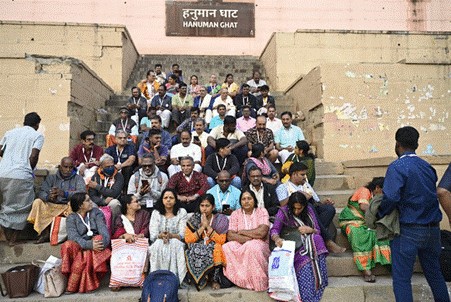
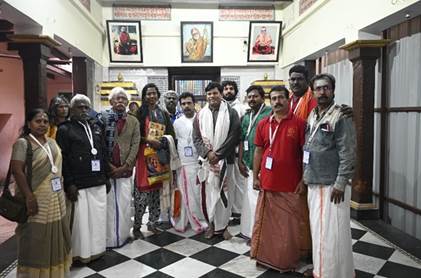
 The delegation group comprising teachers (Yamuna) of the Kashi Tamil Sangamam II visited Hanuman Ghat and learnd about the history of various ghats of Ganga from the Acharyas.

Later, the delegates visited the ancient temples on the ghats and learned about their history, divinity and grandeur. The group also visited the residence of Shri Subramanya Bharati located at Hanuman Ghat and met the family members. The group visited the Kanchi Math and learnt about its history.

The group learnt about the deep connection between Kashi and Tamil Nadu and visited the areas around the Hanuman Ghat, Kedar Ghat, and Harishchandra Ghat where several Tamil families have been residing for many years, exemplifying the spirit of Kasi Tamil Sangamam.

The second phase of the Kashi Tamil Sangamam will continue till 30th December 2023. Last year, the first phase of Kashi Tamil Sangamam was organized from 16th November to 16th December 2022. Nearly 1400 (7 Groups of 200 persons each) people are expected to be travelling from different parts of Tamil Nadu, representing varied walks of life. The first two groups have already arrived at Varanasi. During their stay in Kashi, as per their tour itinerary, they will also visit Prayagraj and Ayodhya.

***