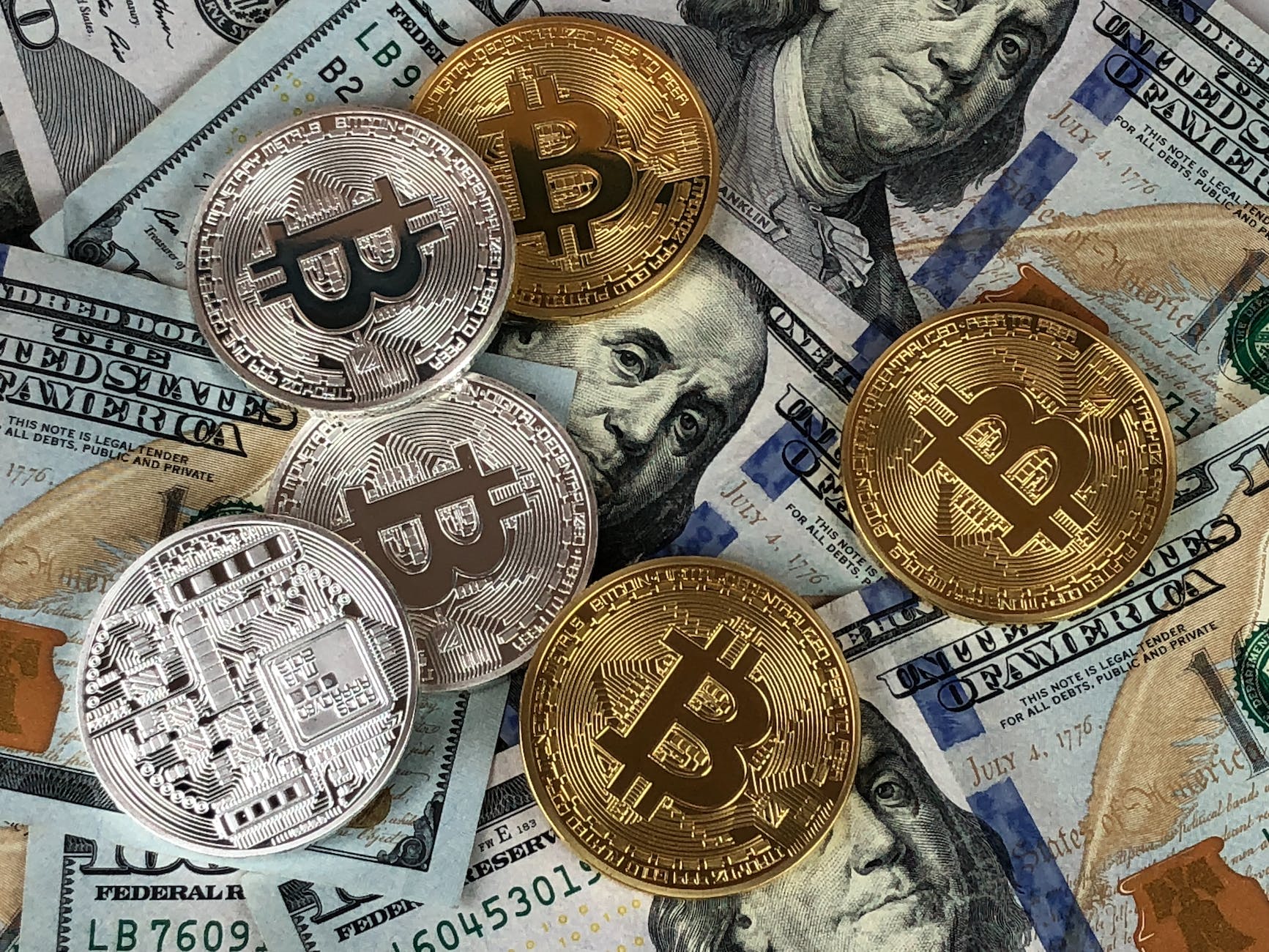
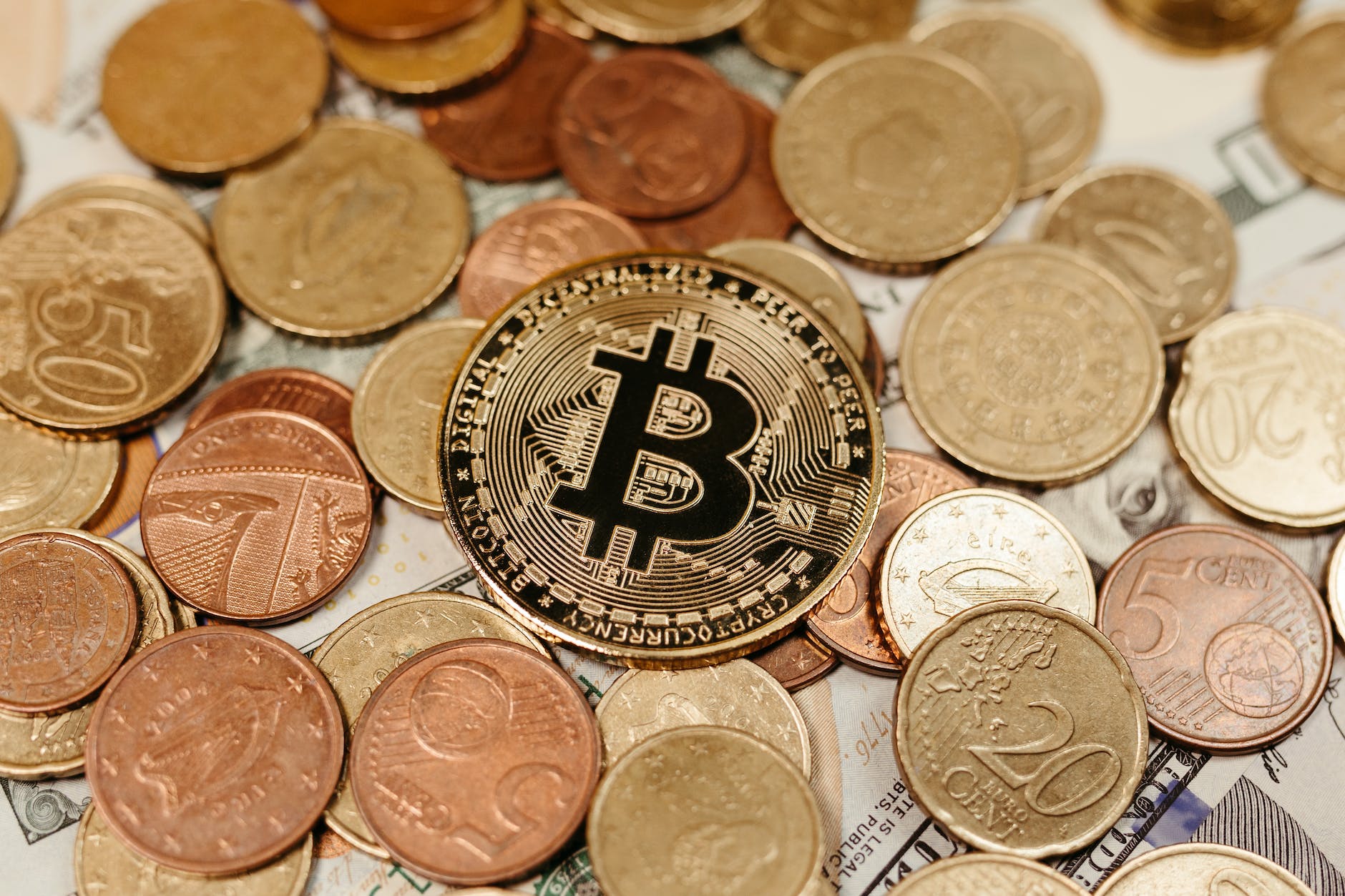
Bitcoin And Cryptocurrency

 Bitcoin price volatility makes everyday shopping difficult. The vast majority of Bitcoin transactions take place on cryptocurrency exchanges, not for transactions with merchants. Typically, you create an account with an exchange, and then you can transfer real money to buy cryptocurrencies like Bitcoin or Ethereum.

Coinbase is a popular cryptocurrency exchange where you can create a wallet and buy and sell Bitcoin and other cryptocurrencies. If you are willing to take the risk of owning bitcoins, there are a growing number of digital currency exchanges, such as Coinbase and FTX, where you can buy, sell, and store bitcoins. Any investor can buy cryptocurrencies through cryptocurrency exchanges such as Coinbase, Cash app, etc. Investors can profit from cryptocurrencies by mining bitcoins or simply selling their bitcoins for a profit.

Bitcoin is by far the most popular cryptocurrency followed by other cryptocurrencies such as Etherum, Litecoin and Cardano. Bitcoin is the largest cryptocurrency by market capitalization and a good indicator of the cryptocurrency market in general as other coins like Ethereum (and smaller altcoins) tend to follow trends.

Bitcoin prices have been negatively impacted by numerous hacks or thefts from cryptocurrency exchanges, including Coincheck in January 2018, Bithumb in June, and Bancor in July. As of December 2017, approximately 980,000 bitcoins have been stolen from cryptocurrency exchanges. Bitcoin has been controversial since its inception in 2009, and so have cryptocurrencies that followed.

Bitcoin is a digital currency that operates without any central control or oversight from banks or governments. At the core of the appeal and functionality of Bitcoin and other cryptocurrencies is blockchain technology, which is used to keep an online record of all transactions ever made, thus providing a data structure for this book that is sufficiently secure and public. coordinated by the entire network of one node or by the computer that stores a copy of the registry. In this way, Bitcoin acts as an incentive to add valid transactions to the ledger, eliminating the need for a central trusted authority.

Both Bitcoin and Ethereum experienced short-term price increases, while Musk, Dorsey, and Wood discussed wider institutional adoption of the cryptocurrency. Musk detailed his holdings in cryptocurrencies — Bitcoin, Ethereum, and Dogecoin — at The B Word conference on Wednesday. If you are looking for a tutorial on bitcoin and cryptocurrencies, you are in the right place.

We explore the early days of bitcoin and provide survey data on consumer familiarity, usage, and more. Let’s take a look at the most commonly used aspects of Bitcoin in the real world, such as Bitcoin wallets, wallet mechanisms, mining, transactions, and governance. We present the Ethereum virtual machine and Turing’s idea of ​​completeness and explore some of the major protocol differences between Bitcoin and Ethereum such as the UTXO model and functionality versus accounts. Let’s take a look at how FS companies are using blockchain and how we expect blockchain technology to evolve in the future.

Blockchain also has potential applications far beyond Bitcoin and cryptocurrencies. The first blockchain-based cryptocurrency was Bitcoin, which remains the most popular and most valuable. Bitcoin’s success has spawned a number of competing cryptocurrencies, called “altcoins,” including Litecoin, Peercoin, and Namecoin, as well as Ethereum, Cardano, and EOS. This year, Bitcoin — and cryptocurrencies in general — has penetrated deep into financial services and culture, gaining a foothold in folk art, commerce, and other mainstream fields.

For an overview of cryptocurrencies, start with 2015’s Money Isn’t the Problem. Read the Robinhood review * Seven cryptocurrencies including Bitcoin, Bitcoin Cash, and Ethereum. Read TradeStation Review * Offers trading in five cryptocurrencies including Bitcoin, Bitcoin Cash, and Ethereum.

What You Should Know About Cryptocurrency Investing Cryptocurrency is a highly volatile speculative investment. Here’s how you can invest wisely, regardless of news or bitcoin price fluctuations.

Cryptocurrency (or “crypto”) is a digital currency that can be used to buy goods and services, but an online ledger with strong encryption is used to secure online transactions. Bitcoin [a] (BTC) is a cryptocurrency invented in 2008 by an unknown individual or group of individuals named Satoshi Nakamoto. The value of bitcoin or this cryptocurrency remains highly uncertain. Cryptocurrencies such as bitcoin, ethereum, and litecoin show significant price fluctuations due to high levels of uncertainty.

In addition, cryptocurrencies are not ordinary shares of companies and are not traded on the stock exchange. As NerdWallet authors point out, cryptocurrencies like bitcoin may not be as safe, and some prominent members of the investment community are advising novice investors to avoid them. There are concerns that cryptocurrencies like bitcoin are not based on any tangible asset.

For those considering cryptocurrencies such as Bitcoin as the currency of the future, it should be noted that currencies need stability so that merchants and consumers can determine what a fair price for goods is. While buying and selling Bitcoin is legal, many aspects of the industry, such as tax issues for investors, remain in a gray area that could be vulnerable to future regulatory and/or enforcement actions. The rules and bans that apply to Bitcoin are likely to apply to similar cryptocurrency systems.

Other countries have completely banned the use of bitcoin and other cryptocurrencies, and there are severe penalties for anyone who makes cryptocurrency transactions. Some countries have imposed restrictions on the use of bitcoins, and banks have banned their customers from making transactions in cryptocurrency. The Bank of Indonesia, the country’s central bank, has adopted new rules banning the use of cryptocurrencies, including bitcoin, as a means of payment from January 1, 2018.

The State Bank of Vietnam said it is illegal to issue, supply, and use bitcoin and other cryptocurrencies as means of payment, with fines ranging from VND 150 million (EUR 5,600) to VND 200 million (EUR 7,445). ). On April 16, 2021, the Central Bank of the Republic of Turkey issued a regulation prohibiting the direct or indirect use of cryptocurrencies, including Bitcoin, to pay for goods and services. The European Union has proposed regulation of private crypto transactions in an attempt to stop crypto crime. In July last year, the Federal Reserve launched an investigation into whether to launch its own digital currency.

The Federal Reserve Chairman says the US may need more regulation of cryptocurrencies, but long-term holders of large coins like Ethereum and Bitcoin probably don’t need to worry about changing their strategy, according to experts. As the Fed continues to investigate the digital dollar, which will create competition for major cryptocurrencies such as Bitcoin, Ethereum, Solana, XRP and BNB, the congressman wants to ban state-backed digital currencies. While Fed Chairman Jerome Powell has said that private cryptocurrencies can coexist with central bank-issued digital currencies (CBDCs), the congressman argues that a CBDC would allow the Fed to control Americans, which defeats the very purpose of a decentralized cryptocurrency.

CRYPTOCURRENCY – A FASCINATION

 Ever since evolution, we humans have made tremendous advancements in every field we have created and known till today. Over time, humans have realized that they cannot be self-sufficient or totally independent in terms of resources, products and services. Hence, we made a suitable arrangement of exchange of products. Earlier, goods and services used to be traded in exchange of other goods and services, known as the barter system. When loopholes were found in this system, these discrepancies were resolved with the invention of currency. Currency was identified as the common exchange medium for any particular product or jobs and the currency price of the particular commodity or service was fixed on its value. Thus, currency was an easier mode of exchange, but eventually it was realized that different regions or kingdoms had different currencies and values attributed to them. With development, inventions and globalization, currencies were compared on their value offerings and certain prices were fixed for comparing these different currencies pertaining to their regions. Today, trading money has a centralized system and its definition and diversification have vastly transitioned with humankind’s needs and wants.

With the inception of modern technology, internet and its expansion, we have now become global citizens. Online banking has become quite hassle-free, safer and more secured than its primitive form. Recently over a decade ago, digital currency became a new form of global currency with new incentives and perks, and we were introduced to the concept of ‘cryptocurrency’. Cryptocurrency broadly defined is virtual or digital money that takes the form of tokens or coins. This form of digital currency stays on a distributed and decentralized ledger meaning that the crypto in cryptocurrency refers to cryptography which allows for the creation and processing of digital currencies and their transactions across decentralized systems. This provides portability, transparency and is not easily prone to inflation related problems. Cryptocurrencies were initially designed with the motive of being independent from any governmental currency or connect, but their huge popularity has led to governments intervening with rules and regulations on their usage and utility. Yet, the world of cryptocurrencies is rapidly expanding, and new ones are released every other month. A cryptocurrency is digitally handled and owned, and governed by specific protocols and processes. It is an asset based on a network distributed over a large number of computers. This is what helps it stay free from government and centralized systems’ control. The network is secured through encryption techniques. Cryptocurrency works through blockchains, which ensure the integrity of transactional data in the organization. The cryptocurrency system allows for secure transactions online, and this is denominated in terms of virtual tokens represented by ledger entries in the system internally. These entries are kept safe through encryption algorithms and cryptographic methods.

The working system of cryptocurrency is a bit complicated for beginners, but with time, handling and experience, it is hassle-free and easier to handle in the long run. As more and more people turn towards this form of currency, we are headed towards a better world in terms of globalization. With inception of cryptocurrency into numerous sectors, we will be equipped to use it in a more versatile way. As we walk towards an advanced future, cryptocurrency is amalgaming with modern technology and systems to become a ubiquitous phenomenon of tomorrow.

Cryptocurrency Heist

 Programmers behind one of the greatest ever advanced coin heists have presently returned about all of the $610 million (generally Rs. 4,530 crores)-plus they stole, Poly Organize, the cryptocurrency stage focused on prior this week by the assault, said on Thursday. The stage, which was small known some time recently Tuesday’s heist, pronounced the programmer on Twitter as a “white cap,” alluding to moral programmers who by and large point to uncover cyber vulnerabilities, upon the return of the reserves.

Poly Arrange, which encourages peer-to-peer token exchanges, included that the tokens were exchanged to a multi-signature wallet controlled by both the stage and the hacker. The as it were remaining tokens however to be returned are the $33 million(roughly Rs. 245 crores) in tie stablecoins solidified prior within the week by cryptocurrency firm Tie, Poly Organize said.

The reimbursement prepare has not however been completed. To guarantee the secure recuperation of client resource, we trust to preserve communication with Mr. White Cap and pass on precise data to the open,” said Poly Arrange on Twitter. A individual claiming to have executed the hack said Poly Organize advertised him a $500,000 (generally Rs. 3.7 crores) bounty to return the stolen resources and guaranteed that he would not be responsible for the occurrence, agreeing to computerized messages shared on Twitter by Tom Robinson, chief researcher and co-founder of Elliptic, a crypto following firm. Poly Arrange, which permits clients to exchange or swap tokens over distinctive blockchains, said on Tuesday it had been hit by the cyberheist, encouraging the guilty parties to return the stolen stores

The still as however unidentified programmer or programmers show up to have misused a powerlessness within the computerized contracts Poly Arrange employments to move resources between distinctive blockchains, agreeing to blockchain forensics company Chainalysis. On Wednesday, the programmers begun returning the stolen coins, driving a few Blockchain examiners to guess that they might have found it as well troublesome to wash stolen cryptocurrency on such a scale. Later on Wednesday, the programmers said in computerized messages moreover shared by Elliptic that they had executed the assault “for fun” and needed to “uncover the defenselessness” some time recently others could abuse it which it was “continuously” the arrange to return the tokens.

At $600 million (generally Rs. 4.460 crores), in any case, the Poly Organize burglary distant surpassed the record $474 million (generally Rs. 3,520 crores) in criminal misfortunes that were enrolled by the whole decentralized fund (DeFi) division from January to July, concurring to crypto insights company CipherTrace. The burglary outlines the dangers of the for the most part unregulated DeFi segment, said crypto specialists. DeFi stages permit clients to conduct exchanges, more often than not in cryptocurrency, without conventional watchmen such as banks or trades.

Cryptography


Cryptography is a way of safeguarding information and communications by using codes to ensure that only those who are supposed to read and use the information may do so. The prefix “crypt-” denotes “hidden” or “vault,” while the suffix “- graphy” denotes “writing.”

Cryptography is a term used in computer science to describe secure information and communication systems that use mathematical ideas and a series of rule-based calculations known as algorithms to change communications in difficult-to-decipher ways. These deterministic algorithms are used for cryptographic key generation, digital signature, data privacy verification, internet web surfing, and secret communications such as credit card transactions and email.

Techniques of cryptography

Cryptography is inextricably linked to the fields of cryptology and cryptanalysis. It covers techniques such as microdots, combining words and pictures, and other methods for concealing data in storage or transport. However, in today’s computer-centric world, cryptography is most commonly linked with scrambling plaintext (regular text, also known as cleartext) into ciphertext (a process known as encryption), then back again (known as decryption). Cryptographers are professionals who work in this sector. 

Modern cryptography is concerned with the four goals listed below:

  1. Confidentiality: the information cannot be understood by anybody who was not intended to understand it.
  2. Integrity: the information cannot be changed while in storage or transit between the sender and the intended receiver without being discovered.
  3. Non-repudiation: The creator/sender of the material cannot subsequently dispute his or her intentions in creating or transmitting the information.
  4. Authentication: The transmitter and receiver can verify each other’s identities as well as the origin/destination of the information.

Cryptosystems are procedures and protocols that fulfil some or all of the aforementioned requirements. Cryptosystems are sometimes considered to simply apply to mathematical methods and computer programmes; nevertheless, they also involve the regulation of human behaviour, such as selecting difficult-to-guess passwords, turning off unneeded systems, and not discussing sensitive operations with outsiders. 

History of cryptography

The term “cryptography” is derived from the Greek word kryptos, which means “hidden.” The origins of cryptography are typically attributed to the Egyptian usage of hieroglyphics about 2000 B.C. These were made up of intricate pictograms, the entire meaning of which was only known to a select few. Julius Caesar (100 B.C. to 44 B.C.) was the first known user of a modern cypher, who did not trust his couriers while dealing with his governors and commanders. As a result, he devised a method in which each character in his communications was substituted with a character three positions higher in the Roman alphabet. 

Cryptography has recently become a battleground for some of the world’s greatest mathematicians and computer scientists. The capacity to securely store and transport sensitive information has proven to be a crucial component in both military and commercial success.

Because governments do not want certain entities in and out of their countries to have access to methods of receiving and sending hidden information that may be a threat to national interests, cryptography has been subject to a variety of restrictions in many countries, ranging from limitations on the use and export of software to the public dissemination of mathematical concepts that could be used to develop cryptosystems.

However, the internet has enabled the dissemination of powerful programmes and, more crucially, the underlying cryptographic techniques, such that many of the most advanced cryptosystems and concepts are now available to the public.

Crypto in india


Even as the Government has delayed cryptocurrency regulation in the country and the RBI is gearing up to introduce India’s own digital currency to counter private virtual currencies, the crypto community is bullish on the future.https://e5975533e4ea41a9fec68848c8c2d52c.safeframe.googlesyndication.com/safeframe/1-0-38/html/container.html?n=0

The delay in introduction of Cryptocurrency and Regulation of Official Digital Currency Bill, 2021 is being seen by the crypto community as a welcome sign. They believe the Government is finally taking cryptocurrency seriously and is not in a hurry to introduce harsh regulations.

In 2019, the SC Garg Committee had recommended the Government not to allow private cryptocurrencies in India.https://e5975533e4ea41a9fec68848c8c2d52c.safeframe.googlesyndication.com/safeframe/1-0-38/html/container.html?n=0

“These cryptocurrencies cannot serve the purpose of a currency. The private cryptocurrencies are inconsistent with the essential functions of money/currency. Hence, private crypto currencies cannot replace fiat currencies,” it had said. This committee not only recommended a blanket ban on all cryptocurrencies but also suggested the Government to criminalize carrying on any activity connected with cryptocurrencies in India

However, since then, cryptocurrencies have continued to thrive in the country. According to various estimates, around 15 million Indians are said to have invested in the private crypto assets. In just one year from April 2020, crypto investments in the country grew from $923 million to nearly $6.6 billion by May 2021.https://e5975533e4ea41a9fec68848c8c2d52c.safeframe.googlesyndication.com/safeframe/1-0-38/html/container.html?n=0

According to Nischal Shetty, CEO of crypto trading platform WazirX, delaying introduction of crypto bill in the Parliament shows the government is not in a hurry to make a decision.

“It’s a good sign and shows that our lawmakers are deliberating and understanding this technology instead of rushing into it. This is a really important bill that involves both finance and technology, and I don’t think the government will pass a bill without considering stakeholders’ views. News like S&P adding more crypto indexes is a proof that crypto is headed towards mainstream adoption. I’m optimistic that India is going to be a part of this innovation via regulatory clarity,” Shetty said.

Considering the rapidly growing size of crypto community in the country, it is becoming obvious that the Government is taking a cautious approach towards private virtual currencies.

Bitinning founder Kashif Raza also believes that the Government would not ban ban cryptocurrencies. “If the Government wanted to act on the SC Garg Committee recommendations, it would have already done that. But this has not happened till now,” Raza said.

Sharat Chandra, Blockchain Expert, IET Future Tech Panel, said shelving of crypto bill has not dampened the sentiment of crypto entrepreneurs and investors.

“The delay in tabling the bill augurs that the government seems to have bought more time to shape the contours of the bill . The Union Finance Minister has reiterated multiple times that the government is open to allowing a window of experimentation to fuel innovation in crypto and fintech space,” said Chandra.

Wait and Watch

Raza said the Government has adopted a wait and watch policy, which is similar to the stance adopted by all developed countries.

“The Government is observing what’s happening in the crypto space all across the world. All the developed countries of the world are keeping an eye on cryptocurrencies and are allowing the technology to grow,” he said.

Raza is hopeful that the recent expansion of the Union Cabinet, in which tech-friendly ministers like Ashwini Vaishnav and Rajeev Chandrasekhar were inducted, would bring favorable policies for the crypto community in India.

Glimmer of hope

The Union Government shelved the much hyped Cryptocurrency Regulation Bill for discussion during the Monsoon Session of Parliament. In a written reply to a query in Lok Sabha in the Monsoon Session, the Government reiterated its 2018-19 position that it “does not consider crypto-currencies legal tender or coin and will take all measures to eliminate use of these crypto assets in financing illegitimate activities or as part of the payment system.”

However, providing a glimmer of hope to the crypto community, the Government said it “will explore use of block chain technology proactively for ushering in digital economy.”

More funds coming

Chandra believes the hopes of crypto community in the country is fueled further by the fact that Indian Venture Capitalists (VCs) have started to gradually warm up to them.

“Few leading Venture Capitalists in India are scouting for innovative projects and startups in DeFi(Decentralized Finance) space. Crypto and DeFi, powered by distributed ledger technology , are the future of finance. With more than 65 billion USD worth of assets locked in DeFi lending, borrowing and staking projects, democratization of financial services has just begun. A new era of open finance built on public blockchains will usher in transparency , efficiency and accessibility. The euphoria and enthusiasm in Indian cryptoverse is fuelled by the fact that Indian VCs are gradually warming up to crypto projects,” said Chandra.

No outright ban

Sandeep Nailwal, Co-Founder and COO of Polygon, believes that the Government will not ban cryptocurrencies in India. Rather it may introduce pragmatic regulations.

“We’ve noticed a lot of block chain-based teams in India that are focused on the technology rather than the trading of crypto assets. However, we did not see such initiatives getting any official attention. What I believe is that the government has shown an interest in learning more about space in order to develop appropriate laws. I don’t believe the Indian government would outright prohibit cryptocurrency; rather, it will be pragmatic and find a way to accommodate it,” Nailwal said

The Crypto-surge

 Originally cryptocurrency was coined in the early 90’s by an American Cryptographer David Chaum when he conceived an electronic money named ecash. Later in pre-2000’s he implemented a system known as Digicash a software, which would designate specified encrypted keys during a transaction, making the transaction untraceable. But it took decades before a country would accept Bitcoin a cryptocurrency as a legal tender. In June earlier this year El Salvador became the first country to do so.

Although Cryptocurrencies are unreliable, erratic, unpredictable and any thing else one can say about it. The people of our country have been taken afoot by this trend. Earlier in May this year, Indians had invested nearly 900 million US dollars. But just after a month this figure skyrocketed around 7 billion dollars. This exponential increase was never expected by the Indian market and was clearly a surprising rise.

Some believe this is just the beginning of Crypto in India, they are saying it is just the tip of an iceberg and in the coming future many more people will flock on to this digital market. This trend might seem very appreciable and enriching especially for global investors who are seeing India as a potential for further growth, this might be dangerous. The reason for it being dangerous is because there haven’t been any guidelines form the government or from any of the central banks.

Recently, finance minister Nirmala Sitharaman stated that the government has prepared a draft policy which could ban all private cryptocurrencies and provide a legislative framework of on official digital currency. It is also believed that the government is delaying to lay out these norms as the RBI is working on its own central bank digital currency. So, for now we need to wait for the officials to make a law curbing this new trend.

But this doesn’t stop the money and fame people are making through cryptocurrency, nor does it stop established personalities to sweep the prices of such cryptocurrencies. Elon Musk, known as CEO of Tesla and Spacex Chief, recently changed his Twitter profile picture having a reflection of DOGE in his shades. This made the value of Dogecoin raise by almost 10%. Although Elon might not have complete control over the crypto market, he surely can nudge it by doing such things.

Apart from such celeb facts, the Crypto surge was mainly caused because of the tech-savvy youth of our nation. A major part of the youth is keen to these things, since it was a new concept. To add on several cryptocurrency brokers or dealers too had to play a major role in this surge.

Overall, we can’t see Crypto is good or bad for the country but currently until it serves its purpose, we must utilize it.

Importance of Imprints of Publication House

Daily writing prompt
What is your favorite holiday? Why is it your favorite?

Imprints of a publication house play a significant role in the book publishing industry, serving various strategic and market-oriented purposes. Here are some of the key roles and functions of imprints:

Photo by George Milton on Pexels.com
  1. Specialization: Imprints often focus on specific genres or niches, such as science fiction, romance, academic publications, or children’s books. This specialization allows the imprint to cater to a particular audience, develop expertise in that genre, and build a strong brand identity that readers come to recognize and trust.
  2. Brand Differentiation: Large publishing houses may have multiple imprints under their umbrella, each with its own brand identity. This differentiation helps publishers market their books more effectively to target audiences. For example, a publisher might have one imprint dedicated to mainstream literary fiction and another to avant-garde poetry.
  3. Editorial Independence: Imprints can operate with a degree of editorial independence, which allows them to cultivate a distinct editorial style and attract authors who resonate with their specific aesthetic or value system. This independence can be crucial in fostering creativity and innovation within the broader constraints of a large publishing house.
  4. Marketing and Sales: By segregating books into different imprints based on genre or target demographic, publishers can streamline their marketing and sales strategies. Each imprint can develop specialized marketing plans that cater to its particular audience, which can be more effective than a one-size-fits-all approach.
  5. Attracting Talent: Authors often choose to work with particular imprints because of their reputation, editorial staff, or the specific books they have published. A strong imprint can attract high-quality manuscripts, which in turn strengthens the imprint’s brand and market success.
  6. Management Efficiency: Having separate imprints allows a large publishing house to manage its portfolio more efficiently. Each imprint functions as a semi-autonomous unit with its own management team, which can lead to quicker decision-making and greater responsiveness to market changes.
  7. Historical or Legacy Reasons: Some imprints are retained because they have a long-standing history or have acquired a legacy of quality and prestige. Authors and readers alike may feel a connection to these imprints based on their historical significance.

Imprints thus serve as crucial tools for publishers, helping them manage a diverse range of books and authors while maintaining focus and specialized expertise in various segments of the market.

A Study of Growth and Adoption of Alternative Cryptocurrencies

  Cryptocurrencies have been gaining in popularity and recognition since the launch of Bitcoin in 2009. With Bitcoin like (bit-indexai.co) becoming the first decentralized digital currency, several other cryptocurrencies have been developed and introduced to the market, with varying features and use cases. In this article, we take a closer look at alternative cryptocurrencies and their growth and adoption in recent years.

The Rise of Alternative Cryptocurrencies

Photo by Alesia Kozik on Pexels.com

The Birth of Alternative Cryptocurrencies

After the launch of Bitcoin, several other cryptocurrencies were developed and introduced to the market. The main objective of these alternative cryptocurrencies was to offer improved features, security, and scalability over Bitcoin. Alternative cryptocurrencies, also known as altcoins, are digital currencies that use decentralized technology to carry out transactions and store value.

The Growing Number of Altcoins

As of 2021, there are over 8,000 alternative cryptocurrencies in existence, each with its unique features, use cases, and objectives. These altcoins have gained a lot of popularity and recognition in recent years, with some of them even surpassing Bitcoin in terms of market capitalization and adoption.

The Rise of Decentralized Finance (DeFi)

One of the most significant growth drivers for alternative cryptocurrencies has been the rise of decentralized finance (DeFi). DeFi refers to a new financial system built on the blockchain, which allows users to transact and store value without the need for intermediaries. DeFi has opened up a world of opportunities for alternative cryptocurrencies, with many of them providing unique features and use cases for decentralized finance.

The Adoption of Altcoins

The growth and adoption of alternative cryptocurrencies have been on the rise in recent years. While Bitcoin still remains the most popular and widely used cryptocurrency, alternative cryptocurrencies have been gaining in popularity, especially among younger generations and early adopters.

Factors Driving Growth and Adoption

Improved Features and Use Cases

One of the key factors driving the growth and adoption of alternative cryptocurrencies is their improved features and use cases. Many altcoins have been designed to offer better scalability, security, and privacy compared to Bitcoin. For example, Ethereum, the second-largest cryptocurrency by market capitalization, is a decentralized platform that enables the creation and execution of smart contracts and decentralized applications.

Market Volatility and Speculation

Another factor driving the growth and adoption of alternative cryptocurrencies is market volatility and speculation. Cryptocurrency markets are highly speculative and volatile, which has made them an attractive investment opportunity for many people. The high volatility of alternative cryptocurrencies has led to significant price swings, which has generated a lot of interest among investors and traders.

Decentralized Finance (DeFi)

As previously mentioned, the rise of decentralized finance (DeFi) has been a significant driver for the growth and adoption of alternative cryptocurrencies. DeFi provides users with a new financial system built on the blockchain, which offers a wide range of financial services, including lending, borrowing, trading, and more. Alternative cryptocurrencies have been playing a significant role in the DeFi space, providing unique features and use cases for decentralized finance.

Challenges and Risks

Regulation and Security Concerns

While the growth and adoption of alternative cryptocurrencies have been on the rise, they still face several challenges and risks. One of the main challenges facing alternative cryptocurrencies is regulation and security concerns. Cryptocurrencies are still in their early stages, and there is a lack of clarity and consistency in terms of regulation. This has led to security concerns, as many altcoins have been subject to hacking and scams.

Market Volatility and Speculation

Another challenge facing alternative cryptocurrencies is market volatility and speculation. The highly speculative and volatile nature of cryptocurrency markets makes it difficult for investors and traders to accurately predict their future value. This can lead to significant losses for those who invest without a clear understanding of the market and its underlying risks.

Limited Adoption and Awareness

Another challenge facing alternative cryptocurrencies is limited adoption and awareness. Despite their growing popularity, many people are still unaware of alternative cryptocurrencies and their potential use cases. This has resulted in limited adoption and usage, as many people are still hesitant to invest in something they do not fully understand.

Conclusion

In conclusion, alternative cryptocurrencies have been growing in popularity and recognition in recent years, driven by factors such as improved features, market volatility, and the rise of decentralized finance (DeFi). However, they still face several challenges, including regulation and security concerns, market volatility, and limited adoption and awareness. As the cryptocurrency market continues to evolve, it will be interesting to see how alternative cryptocurrencies continue to grow and evolve in the future.

Buying Cryptocurrency Anonymously

  Cryptocurrency is a digital asset designed to work as a medium of exchange using cryptography to secure transactions and control the creation of new units. It has been gaining popularity over the years, and the market continues to grow. Many individuals are interested in purchasing cryptocurrency but are concerned about their privacy and want to know if it is possible to buy cryptocurrency anonymously. For more info visit this Website

Photo by David McBee on Pexels.com

Can Cryptocurrency be Bought Anonymously?

The short answer is no, buying cryptocurrency is not completely anonymous. Most cryptocurrency exchanges and platforms require some form of identification, such as a passport, driver’s license, or government-issued ID, to comply with anti-money laundering and know your customer (AML/KYC) regulations. The purpose of these regulations is to prevent illegal activities such as money laundering, terrorism financing, and tax evasion.

How Does the AML/KYC Process Work?

The AML/KYC process works by verifying the identity of the customer and ensuring that the funds used to purchase cryptocurrency are not obtained illegally. This process is usually carried out by collecting personal information and documentation from the customer, which is then compared to public databases and other sources to verify the customer’s identity.

What Does the AML/KYC Process Entail?

The AML/KYC process typically includes the following steps:

Customer registration

The customer is required to provide basic personal information, such as their full name, address, and date of birth.

Identity verification

The customer is required to provide a government-issued ID, such as a passport or driver’s license, and a selfie to confirm their identity.

Source of funds

The customer is required to provide information about the source of their funds, such as their employment or business information, bank statements, or tax returns.

Once the AML/KYC process is complete, the customer can then proceed to purchase cryptocurrency.

Can the AML/KYC Process Be Bypassed?

While it is not possible to completely bypass the AML/KYC process, there are some ways to increase privacy and reduce the amount of personal information required. For example, some exchanges allow customers to purchase cryptocurrency using a pseudonym, rather than their real name. However, this does not guarantee anonymity as the exchange may still require additional information for compliance purposes.

Another option is to use a decentralized exchange, which operates on a peer-to-peer basis and does not require personal information. However, these exchanges are often less user-friendly and less reliable than centralized exchanges.

Risks Associated with Anonymity

It is important to note that attempting to buy cryptocurrency anonymously may increase the risk of fraudulent activities, such as scams or hacking. Without proper verification, individuals may become victims of scams and lose their investment. Additionally, anonymous transactions may also be used to support illegal activities, such as money laundering or financing terrorism.

Furthermore, buying cryptocurrency anonymously may also violate the terms of service of the platform or exchange, and individuals may face consequences such as account termination or legal action. In some cases, law enforcement may also seize anonymous funds as part of an investigation into illegal activities.

Therefore, it is important to weigh the potential benefits of anonymity against the risks and consequences, and to make an informed decision. The AML/KYC process is in place to protect both the individual and the wider community, and it is important to adhere to these regulations to maintain the integrity of the cryptocurrency market.

Conclusion

In conclusion, while it is not possible to completely buy cryptocurrency anonymously, there are ways to increase privacy and reduce the amount of personal information required. It is important to understand the AML/KYC process and the reasons behind it, as well as the potential risks associated with attempting to bypass it. As always, it is advisable to conduct thorough research and consult a financial advisor before making any investment decisions.

5 Mistakes to Avoid When Trading Cryptocurrencies

  The rise of cryptocurrencies has created a new arena for investors and traders alike. While the potential rewards can be significant, there are also significant risks involved. To succeed in the world of cryptocurrency trading, it is crucial to avoid common mistakes. In this article, we will explore five things to avoid when trading cryptocurrencies. Learn more: https://immediateprofit.app/

Failing to Conduct Proper Research

Photo by RODNAE Productions on Pexels.com

The Importance of Research

One of the most significant mistakes made by cryptocurrency traders is failing to conduct proper research. Before investing in any cryptocurrency, it is crucial to understand the technology behind it, its current market trends, and its future potential. Failure to conduct proper research can result in making poor investment decisions and significant financial losses.

Failing to Diversify Your Portfolio

The Benefits of Portfolio Diversification

Another mistake made by many cryptocurrency traders is failing to diversify their portfolios. Investing in only one cryptocurrency can be a high-risk strategy, as the price of that particular cryptocurrency can be highly volatile. Diversifying your portfolio across several cryptocurrencies can help to reduce the overall risk of your investment and improve your chances of success.

Trading Based on Emotion

Avoiding Emotional Trading

One of the most significant challenges facing cryptocurrency traders is avoiding emotional trading. The highly volatile nature of cryptocurrencies can lead to emotional responses, such as fear, greed, and panic, which can cause traders to make poor investment decisions. It is crucial to maintain a level head and avoid making impulsive decisions based on emotions.

Not Staying Up-to-Date with Market Trends

The Importance of Staying Informed

Cryptocurrency markets are fast-paced and highly dynamic, making it essential to stay up-to-date with the latest market trends. Failing to do so can result in missing out on significant investment opportunities or making poor investment decisions based on outdated information. Regularly monitoring news and developments in the cryptocurrency market can help to ensure that you are making informed investment decisions.

The Advantages and Risks of Keeping Crypto Assets on Trading Platforms”

When it comes to trading cryptocurrencies, one of the key decisions traders face is where to store their assets. While there are several options, including using a hardware wallet, software wallet, or a paper wallet, many traders choose to keep their crypto assets on a trading platform. In this article, we will explore the advantages and risks of maintaining your crypto assets on a trading platform.

Advantages:

Convenience: Keeping your crypto assets on a trading platform provides convenience as you can easily access your assets to make trades or withdrawals. It eliminates the need to constantly transfer your assets between different wallets or platforms.

Speed: Trading platforms are designed for high-frequency trading, making it easy to quickly execute trades and take advantage of market opportunities.

Security: Many trading platforms have security measures in place, such as two-factor authentication, to help protect your assets from cybercrime.

Risks:

Exchange Hacks: Despite security measures, trading platforms can be vulnerable to cyber-attacks and exchange hacks, putting your assets at risk.

Loss of Control: When you store your assets on a trading platform, you are relying on the platform to keep your assets safe. In the event of a security breach or other issue, you may lose control over your assets.

Limited Access: Some trading platforms have restrictions on withdrawing your assets, or may limit the types of assets you can hold, limiting your options for managing your investments.

Not Protecting Your Investment

The Necessity of Secure Investment Strategies

Finally, failing to protect your investment is another common mistake made by cryptocurrency traders. With the increasing number of cyber-attacks on cryptocurrency exchanges and wallets, it is crucial to ensure that your investment is secure. Implementing best practices, such as using secure wallets, two-factor authentication, and keeping your private keys safe, can help to reduce the risk of loss due to cybercrime.

Conclusion:

The world of cryptocurrency trading can be highly rewarding, but it also comes with significant risks. By avoiding the five common mistakes discussed in this article, traders can improve their chances of success and protect their investments. Proper research, portfolio diversification, avoiding emotional trading, staying up-to-date with market trends, and implementing secure investment strategies are all crucial components of a successful cryptocurrency trading strategy.

Cryptocurrency: Rise and Fall of Digital Currency

  The advent of cryptocurrency has been a game-changer for the financial world. It was supposed to be the future of money, but the reality is far from it. The majority of cryptocurrencies, despite having a good start, have failed to sustain their position in the market. This article will delve into the reasons behind the failure of many CryptocurrenciesBlockchain Experiments.

Photo by Anna Tarazevich on Pexels.com

Types of Cryptocurrency

Before diving into the reasons, it’s important to understand the different types of cryptocurrencies. There are several types of cryptocurrencies, but the most common ones are:

Bitcoin: The first and most well-known cryptocurrency, Bitcoin was created in 2009.

Ethereum: A decentralized platform for building decentralized applications (dapps) and smart contracts.

Ripple (XRP): A digital currency for cross-border transactions that’s aimed at financial institutions.

Litecoin: A peer-to-peer cryptocurrency that’s similar to Bitcoin but faster and with a lower transaction fee.

Tether: A stablecoin that’s pegged to the US dollar, ensuring stability and avoiding price volatility.

Lack of Regulation

The Dark Side of Cryptocurrency

One of the biggest reasons for the failure of many cryptocurrencies is the lack of regulation. Cryptocurrencies operate in a decentralized manner, making it challenging to regulate their activities. The lack of regulation has led to several fraudulent activities in the cryptocurrency market, including Ponzi schemes, money laundering, and hacking. This has resulted in the loss of millions of dollars for investors and has eroded the trust of the public in cryptocurrencies.

Technical Challenges

Title: The Technical Hurdles of Cryptocurrency

Cryptocurrencies also face several technical challenges, including scalability and security issues. The decentralized nature of cryptocurrencies has resulted in a slow and costly transaction process. This makes it difficult for cryptocurrencies to compete with traditional payment methods like credit cards and online payment platforms. Additionally, the security of cryptocurrencies is also a major concern, with several exchanges and wallets being hacked, resulting in the loss of millions of dollars’ worth of cryptocurrencies.

Competition from Traditional Finance

Title: The Battle between Cryptocurrency and Traditional Finance

Cryptocurrencies face stiff competition from traditional finance, which has a much more established and trusted infrastructure. The lack of acceptance of cryptocurrencies by merchants and consumers has hindered their growth, making it challenging for them to compete with traditional payment methods. Additionally, traditional finance has the advantage of being well-regulated, which has helped to build trust in the industry.

Lack of Awareness and Understanding

Title: The Gap in Public Understanding

Another reason for the failure of many cryptocurrencies is the lack of awareness and understanding among the general public. Many people are still not aware of the potential benefits of cryptocurrencies and how they work. Additionally, the complex nature of cryptocurrencies has made it difficult for people to understand and trust them. This lack of understanding has resulted in many people being hesitant to invest in cryptocurrencies, leading to their failure.

The Overcrowded Cryptocurrency Market

Another reason for the failure of many cryptocurrencies is the saturated market. With the increasing popularity of cryptocurrencies, many new coins have been introduced, leading to an overcrowded market. This has made it challenging for new coins to gain traction and compete with established coins. Additionally, the large number of coins has resulted in many of them becoming worthless, making it difficult for investors to differentiate between a good investment and a bad one.

The saturation of the market has also led to a lack of innovation, as most new coins are just copies of existing ones with minor modifications. This has resulted in an unsustainable market, where many coins are struggling to survive and investors are losing their money.

Moreover, the crowded market has also created a highly competitive environment, where coins are constantly fighting for market share. This has resulted in a price war, where coins are lowering their prices in order to attract more users. This price war, combined with the lack of innovation, has made it challenging for many coins to remain profitable, leading to their failure.

Conclusion

In conclusion, the failure of many cryptocurrencies is due to several factors, including the lack of regulation, technical challenges, competition from traditional finance, and a lack of awareness and understanding. Despite these challenges, cryptocurrencies have the potential to revolutionize the financial world if they can overcome these obstacles and gain the trust of the public. As the cryptocurrency market continues to evolve, it will be interesting to see how these challenges will be addressed and what the future holds for this digital currency.

What do You need to Know to Succeed in the Cryptocurrency Market?

  Before you can succeed with cryptocurrencies, you must know what you’re doing. It can’t be simple to learn all there is to know about cryptocurrencies when you’re just starting. For more detail about Bitsoft360 visit at this link.

Numerous services, exchanges, and wallets are accessible, but keeping track of all their abbreviations might be difficult. Stay away from the bitcoin market if you don’t know what you’re doing.

Photo by Worldspectrum on Pexels.com

In essence, you are gambling with money that has no worth until someone else decides that it does. If you want to make it big in the bitcoin market, consider the advice below.

First and foremost, keep in mind that the market is always right while trading cryptocurrencies; the market is always right. Yes, there are days when market predictions are more accurate than others. However, you may conclude that you are at fault if its behavior deviates from your expectations.

Do not give anybody access to your financial resources:

Several individuals may approach you, hoping to borrow some of your coins. It might be tempting to lend money to someone who asks, but you should avoid doing so if possible. That’s because the value of a single cryptocurrency coin may fall if it’s misplaced or stolen, and cryptocurrencies are notoriously unstable. To avoid being taken advantage of, you should only put your money into projects or currencies you have faith in.

If you want to maintain track of your investments, please do the following:

Even if there is no practical need to keep track of your bitcoin investment amounts, doing so is a good habit to get into. If you think the currency is a good investment, you may consider buying more. The business world might seem like one big hoax when you’re just starting. If you want to know what to anticipate from your assets in the future, tracking them is a smart move.

Take a look at the white paper:

It’s tough to make it as a cryptocurrency investor if you don’t know what a coin is or the project’s goals. Some digital currencies lack even a whitepaper. You should stay away from any currency that doesn’t have a whitepaper. 

You should read the whitepaper before making any financial commitments. Furthermore, you must provide adequate evidence that the corporation supposedly backing the initiative is doing so.

Get more for your money when you stock up:

Many people wrongly believe that purchasing in large quantities is a negative idea when, in fact, it often saves them money. It is in your best interest to purchase coins as quickly as possible after becoming aware of their existence since their value may fall precipitously over time.

Technical analysis is based on the principle of “less is more”; thus, all that you need to know about wedges, breakouts, bull flags, upward and downward bands, trends, stochastic RSI, exponential moving averages, and candlestick charts to succeed in bitcoin trading is the basics of these indicators. 

However, shorter periods are nearly always more error-prone, so if you know it would take hours to uncover anything, don’t attempt to design your TA using minute numbers.

Investment Strategy:

Successful investing and trading require a thorough familiarity with market dynamics and trade practices. You may compare the pros and cons of each cryptocurrency with the help of your techniques and methods. 

It helps you recognize trends and maintain a watchful eye on the latest happenings in the world. You may utilize that knowledge to further your career and expand your grasp of the industry.

Have a plan B ready?

Make contingency measures in case anything goes wrong. Successful traders know they must be flexible and prepared for anything. New traders are especially vulnerable to the mental turmoil resulting from sudden market reductions. 

Avoid letting your emotions cloud your judgment. Instead of behaving impulsively, it would be better to take a more calculated approach.

If you study the market and a few different cryptocurrencies in-depth, you’ll have a better idea of when to buy and sell. Keep in mind that the notion that the bitcoin market is very unstable is widely held. 

One day, a cryptocurrency may be a great investment; the next, it may be worthless. Keeping tabs on the bitcoin market is a great way to get insight into common trends and price movements in the cryptocurrency industry. A lot more money can be made if you just do as I say.

How to Use a Wallet for Cryptocurrencies?

If you keep all of your digital money on exchange platforms, hackers may easily access it. Money stored in a physical or digital wallet is guaranteed to remain safe. There is a separate purchase for your wallet, or you may buy one online and save it to your computer’s storage device.

Tap on this download to download those who want to invest in cryptos.

Conclusion:

Although bitcoin is still in its infancy, the sector shows immense potential. Putting money into cryptocurrencies is a high-stakes gamble. Therefore it’s crucial to complete your research before making any purchases. Success is far more likely if you invest time into studying the bitcoin market and how it operates.

Cryptocurrency to cash

  Although cryptocurrency is quickly becoming a smart investment option for people, it has some practical problems. For example Trading Software, people cannot use it for all day-to-day transactions, such as paying restaurant bills and paying personal effects.

Therefore, the question arises whether we can convert cryptocurrency into cash. It’s an interesting question, isn’t it? Cryptocurrency is a highly unregulated virtual currency with high price fluctuations. But turning it into money is quite simple. Well, you certainly have the option of converting it into cash, but you should also know that crypto transactions are now a global phenomena. Around 15000 companies are accepting Bitcoin payment. 

Photo by Alesia Kozik on Pexels.com

So, if you want to convert Bitcoin to cash, there are a few things to keep in mind to ensure that once the cryptocurrencies are converted into cash, the real value of the money is not lost. Due to the volatility of digital tokens, the risk of losing the value of your money is great.

Although it is possible to convert cryptocurrencies into cash, it is essential to note that since they are not recognized as legal tender in the country, the income must be taxable.

How can I turn my digital currency into cash?

Recently, a news item raised this problem, which is very common.

There are three ways to convert cryptocurrency into fiat currency: mining, trading cryptocurrency, and using cryptocurrency as a payment method.

Converting cryptocurrencies to fiat through mining is likely to be lengthy. Creating new crypto assets involves solving computer puzzles and speculating on their solutions.

Another way to convert cryptocurrencies into cash is to exchange crypto assets. You can easily sell your crypto assets to other users on an online trading platform in exchange for cash or other crypto assets. 

Using fiat currency is the third way to convert cryptocurrencies into cash. For example, businesses and services that accept bitcoin will exchange the cryptocurrency for fiat currency to pay their vendors. The procedure is very much like making a purchase using a credit card.

Advantages of cash over cryptocurrencies:

  • The idea was that compared to bitcoin (BTC), bitcoin cash (BCH) could make more transactions faster and cheaper. The reality is that bitcoin cash has come to an end. It’s just another Proof-of-Work (PoW) altcoin, like many others, like Dogecoin, that has no future.
  • The incredibly talented developers who have contributed so much to Bitcoin’s success have stuck with it. As a result, bitcoin is evolving into a very secure settlement layer which, along with layer 2 and 3 applications, could be essential for the world of finance.
  • BTH is based on the archaic idea that one can use cryptocurrency to buy a cup of coffee. BTH and BTC use the SHA-256 hash function as their proof-of-work (PoW) algorithm. BCH has very low usage and very low difficulty settings, so BTH is only more efficient than BTC because it is less secure than BTC.
  • Naturally, BCH is neither more efficient nor less efficient than BTC. However, BCH is not preparing for future significant use cases. Proof of Stake (PoS) is where things currently seem to be heading, as it will be controlled by cryptocurrency if used for small purchases.

Top cryptocurrencies to hold:

Ethereal

If you’re surprised the list doesn’t start with bitcoin, it’s time to turn your attention to other cryptocurrencies worth buying this month. Ethereum fell from USD 4,300 to USD 2,300. However, little by little, it picks up speed. According to experts, Ethereum has a chance to overtake Bitcoin this month and emerge as one of the best cryptocurrencies to invest in June.

Cardano

Cardano is the best cryptocurrency to buy right now, as the blockchain will see a lot of new developments and improvements. Because of this, it has a tremendous potential to bring in profits over the long run for the sake of investing. In support of Cardano, IOHK presented the Alonzo hard fork project. On the Cardano blockchain, this will enable the functionality of smart contracts.

Cash

Due to its fast transaction processing and low transaction fees, Bitcoin Cash is considered one of the best cryptocurrencies to invest in. The scalability of this crypto indicates significant future growth potential. Due to the huge price drop, now is the perfect time to invest in Bitcoin Cash.

Ripple

Ripple is now making headlines for winning a lawsuit with the Securities and Exchange Commission (SEC) after refusing to provide access to Ripple Labs’ private legal status documentation. Ripple’s growth is fueled by its popularity. Also, it plans to go public. This should be an essential factor to consider if you are looking to invest in major cryptocurrencies in November.

Conclusion:

This article is all about converting crypto to cash. This article is for you if you want to know how to do it and how it is beneficial. You can also trust the Bitcoin Era app.

Factors Affecting the Value of Cryptocurrency

  The cryptocurrency’s value fluctuates very quickly. Sometimes it shows enormous growth, and sometimes it shows a downside trend. After being a decentralized currency, some factors can impact the cryptocurrency’s value over time.  It is because of this reason there is a constant shift in the mindset towards cryptocurrencies. For more detail about Bitcoin 360 ai visit our website.

An investor can predict cryptocurrency’s upcoming upward or downward trend by understanding those factors. Here are some factors that can affect the value of cryptocurrency: 

Photo by Jonathan Borba on Pexels.com

Supply and Demand

Like other things, cryptocurrency is also affected by supply and demand as the demand increase more rapidly than the supply. The value of a certain cryptocurrency would go higher. And likewise, if the supply is more than the demand, then the value of certain cryptocurrencies would be lower. 

The basic same demand and supply principle applies to cryptocurrency too. In such a situation, crypto investors should focus on the demand and supply of certain cryptocurrencies to understand the upcoming trend. 

Fee of Exchange

Sometimes the token can be available on a huge number of crypto exchanges, which surely raises the number of people purchasing and using the same tokens. For every swap on any cryptocurrency token on the exchange, the user has to pay some fee to the exchange. 

The more exchanges, the more fees the user has to pay to swap the token. This process certainly raises the investment cost. There is no doubt this has a huge effect on the cryptocurrency value. 

The Competition 

In the cryptocurrency market, there are lots of cryptocurrencies existing. Still, the new token keeps launching every month or even every week. There are doge coins, some soccer team coins, and many more. 

The number of the existing token would allure new investors, and surely sooner or later, it would affect the value of cryptocurrency. It would also give the investors many options which can fit into their financial statements. To know about other coins, check Bitcoin PRO.

The cost of Production 

The cost of Production is one of the major factors that have a huge effect on the value of cryptocurrency. Every day, from all over the world, crypto miners use high-end servers and other computer hardware to produce new tokens and try to verify fresh network transactions. 

Miners get the virtual token with the rewards as the payment and the network fee for their work. Such miners’ network performance allows the decentralization of the cryptocurrency in the working mode. And if, in any situation, the cost of the miner would increase, surely it would also affect the value of cryptocurrency. 

The Social Media

Undoubtedly, social media plays an important role in cryptocurrency value. Like other things, if social media build hype about any cryptocurrency at any point in time, people worldwide would show interest in the cryptocurrency. The result would affect the certain cryptocurrency value. 

For example, in recent years, many times Tesla Founder Elon Musk’s statements over the tweeter affect the Dogecoin value. This one was something that everyone witnessed. For investors, social media is one of the most powerful tools. 

Regulations of Government

From all over the world, every ruling government has its point of view regarding cryptocurrency. And they make the regulations according to their point of view about cryptocurrency. Sometimes such kind of regulations is in favor of cryptocurrency, and sometimes not. 

The worth of cryptocurrencies might be affected under any of these situations. Such as some countries they are also decided to ban bitcoin and a few other crypto coins to control the crypto market. In such a situation, many crypto investors would be unable to invest further in crypto. This would devaluate cryptocurrencyies.

Under Supply of Cryptocurrency

According to the theories, there is a limitation on the cryptocurrency supply, and the price would automatically go up trends once fewer coins are available. As per the same theory, 40% of coins are circulating all over the internet, and 60% are still reserved, and then the value would be decreased when more coins would be available for buyers all over the internet. 

Conclusion

The value of cryptocurrency is affected by a lot of factors. Some factors affect the value of cryptocurrency directly, and some affect the cryptocurrency indirectly. In both situations, investors must be more careful while trading in cryptocurrency. 

To understand the effect of certain factors on cryptocurrency, investors have to show a keen interest in cryptocurrency news.

The Future of Cryptocurrency


Introduction

Cryptocurrencies are digital or virtual currencies underpinned by cryptographic systems. They enable secure online payments without the use of third-party intermediaries. “Crypto” refers to the various encryption algorithms and cryptographic techniques that safeguard these entries, such as elliptical curve encryption, public-private key pairs, and hashing functions. Cryptocurrencies can be mined or purchased from cryptocurrency exchanges. Not all eCommerce sites allow purchases using cryptocurrencies. In fact, cryptocurrencies, even popular ones like Bitcoin, are hardly used for retail transactions.

What is Cryptocurrency?

A cryptocurrency is a digital or virtual currency that is secured by cryptography, which makes it nearly impossible to counterfeit or double-spend. Many cryptocurrencies are decentralized networks based on blockchain technology—a distributed ledger enforced by a disparate network of computers. A defining feature of cryptocurrencies is that they are generally not issued by any central authority, rendering them theoretically immune to government interference or manipulation.

Blockchain Technology

Central to the appeal and functionality of Bitcoin and other cryptocurrencies is blockchain technology. As its name indicates, a blockchain is essentially a set of connected blocks or an online ledger. Each block contains a set of transactions that have been independently verified by each member of the network. Every new block generated must be verified by each node before being confirmed, making it almost impossible to forge transaction histories. The contents of the online ledger must be agreed upon by the entire network of an individual node, or computer maintaining a copy of the ledger.

Types of Cryptocurrency

Bitcoin is the most popular and valuable cryptocurrency. An anonymous person called Satoshi Nakamoto invented it and introduced it to the world via a white paper in 2008. There are thousands of cryptocurrencies present in the market today. Each cryptocurrency claims to have a different function and specification. For example, Ethereum’s ether markets itself as gas for the underlying smart contract platform. Ripple’s XRP is used by banks to facilitate transfers between different geographies. Bitcoin, which was made available to the public in 2009, remains the most widely traded and covered cryptocurrency. As of November 2021, there were over 18.8 million bitcoins in circulation with a total market cap of around $1.2 trillion. Only 21 million bitcoins will ever exist.

Is Cryptocurrency Legal?

Fiat currencies derive their authority as mediums of the transaction from the government or monetary authorities. For example, each dollar bill is backstopped by the Federal Reserve. But cryptocurrencies are not backed by any public or private entities. Therefore, it has been difficult to make a case for their legal status in different financial jurisdictions throughout the world. It doesn’t help matters that cryptocurrencies have largely functioned outside most existing financial infrastructure. The legal status of cryptocurrencies has implications for their use in daily transactions and trading. In June 2019, the Financial Action Task Force (FATF) recommended that wire transfers of cryptocurrencies should be subject to the requirements of its Travel Rule, which requires AML compliance. As of December 2021, El Salvador was the only country in the world to allow Bitcoin as legal tender for monetary transactions. In the rest of the world, cryptocurrency regulation varies by jurisdiction.

Future of Cryptocurrency

A cryptocurrency that aspires to become part of the mainstream financial system may have to satisfy widely divergent criteria. It would need to be mathematically complex (to avoid fraud and hacker attacks) but easy for consumers to understand; decentralized but with adequate consumer safeguards and protection; and preserve user anonymity without being a conduit for tax evasion, money laundering, and other nefarious activities. Since these are formidable criteria to satisfy, is it possible that the most popular cryptocurrency in a few years could have attributes that fall in between heavily-regulated fiat currencies and today’s cryptocurrencies?

Conclusion

The emergence of Bitcoin has sparked a debate about its future and that of other cryptocurrencies. Despite Bitcoin’s recent issues, its success since its 2009 launch has inspired the creation of alternative cryptocurrencies such as Ethereum, Litecoin, and Ripple. A cryptocurrency that aspires to become part of the mainstream financial system would have to satisfy very divergent criteria. While that possibility looks remote, there is little doubt that Bitcoin’s success or failure in dealing with the challenges it faces may determine the fortunes of other cryptocurrencies in the years ahead.

References