Project PARI

 Public art spaces of India are a reflection of our Lok Kala and Lok Sanskriti. When we talk about Public Art, it is very dynamic and is an intersection of past, present, and future. Through it, we can see the amalgamation of different ideas in various art forms like traditional and contemporary. This art form which is freely accessible to the public; attracts not only attention but even thoughts begin to gather as to why this work of art is here, what is its uniqueness, what material it is made up of, and what is the thought of the artist behind this artwork. Making it open to various interesting interpretations. These are the few aspects that make this art very special. It connects the public to the art.

With rapid urbanization, Public Art enhances a sense of distinctiveness and adds aesthetic value to the image of a city. It contributes to the visual quality of the public arena encouraging community pride with a sense of belonging. It uplifts and engages visitors or passers-by’s travel experience by leaving an imprint in their minds. The outreach of Public Art is immense and thought-provoking. It acts as a significant factor in giving visual recognition to a specific place. The public art augments and induces meaning to a public space making it an integral part of the culture and society.

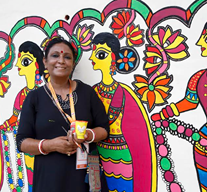
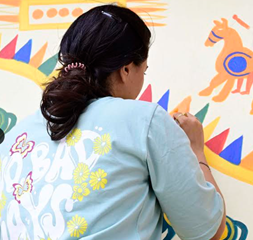
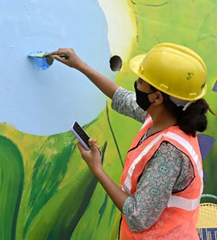
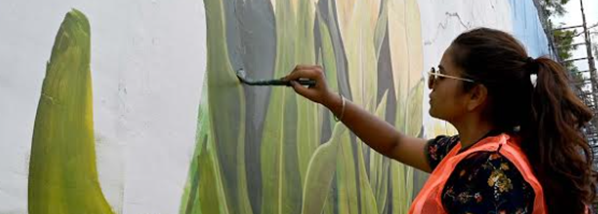
The Ministry of Culture, Government of India, on the occasion of the 46th Session of the World Heritage Committee Meeting, which is being held in New Delhi from 21st-31st July 2024, has initiated Project PARI (Public Art of India). Under it, Lalit Kala Akademi, an autonomous institution under the Ministry of Culture, has invited more than 150 visual artists from all over the country. The Project PARI aims to provide a platform to uplift the aesthetic and cultural outlook of Delhi while adding grandeur to the rich historical legacy of our national capital.

Lalit Kala Akademi and the National Gallery of Modern Art seek to bring forth public art that draws inspiration from millennia of artistic heritage (lok kala/lok sanskriti) while incorporating modern themes and techniques. These expressions underscore the intrinsic value that art holds in Indian society, serving as a testament to the nation’s enduring commitment to creativity and artistic expression. These artists are working on various sites in the national capital for the beautification of the public spaces for the upcoming event.
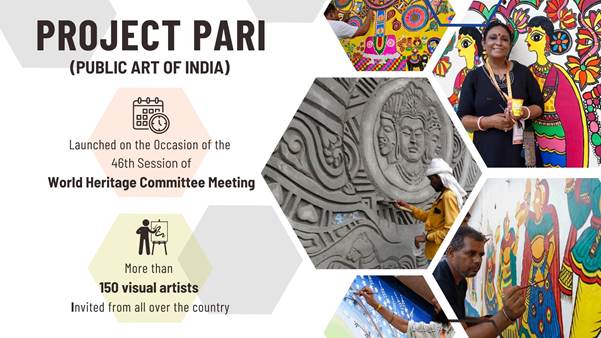
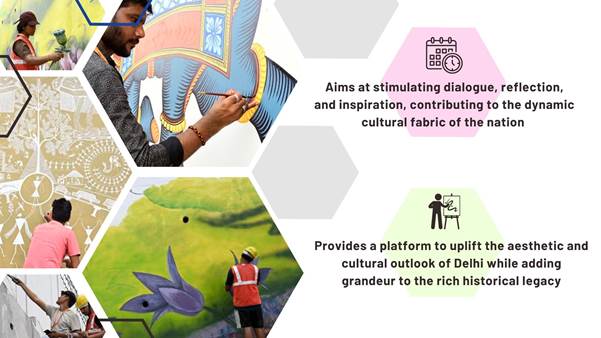
The representation of Art in public spaces is particularly significant as it showcases the nation’s rich and diverse cultural heritage. The democratization of art through public installations transforms urban landscapes into accessible galleries, where art transcends the confines of traditional venues such as museums and galleries. By integrating art into streets, parks, and transit hubs, these initiatives ensure that artistic experiences are available to one and all. This inclusive approach fosters a shared cultural identity and enhances social cohesion, inviting citizens to engage with art in their day-to-day life. Project PARI aims to stimulate dialogue, reflection, and inspiration, contributing to the dynamic cultural fabric of the nation.

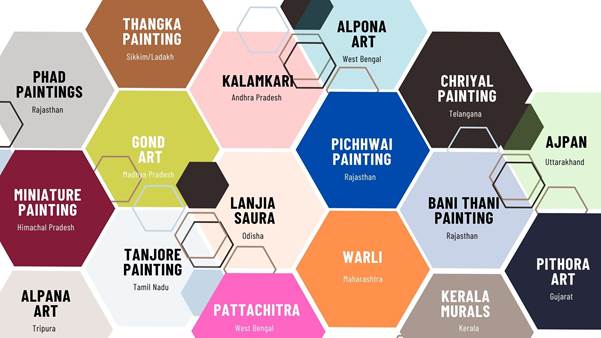
Traditional art forms as well as sculptures, murals, and installations have been created under this beautification project. More than 150 visual artists from all over the country have come together to create the various wall paintings, murals, sculptures, and installations being prepared under this project. The creative canvas includes but is not limited to artwork inspired by and /or drawn in styles of Phad paintings (Rajasthan), Thangka painting (Sikkim/Ladakh), miniature painting (Himachal Pradesh), Gond art (Madhya Pradesh), Tanjore paintings (Tamil Nadu), Kalamkari (Andhra Pradesh), Alpona art (West Bengal), Cheriyal painting (Telangana), Pichhwai Painting (Rajasthan), Lanjia Saura (Odisha), Pattachitra (West Bengal), Bani Thani Painting (Rajasthan), Warli (Maharashtra), Pithora Art (Gujarat), Aipan (Uttarakhand), Kerala Murals (Kerala), Alpana art (Tripura) and more.
The proposed sculptures being created for Project PARI include wide-ranging ideas such as paying tributes to nature, ideas inspired by the Natyashastra, Gandhi ji, toys of India, hospitality, ancient knowledge, Naad or Primeval Soun, Harmony of life, Kalpataru – the divine tree, etc.

Furthermore, in sync with the proposed 46th World Heritage Committee Meeting, some of the artworks and sculptures draw inspiration from World Heritage Sites such as Bimbetka and the 7 natural World Heritage Sites in India find a special place in the proposed artworks.


Women artists have been an integral part of Project PARI and their participation in large numbers is a testimony of Bharat’s NARI SHAKTI.
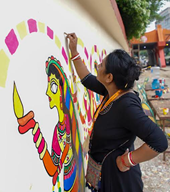
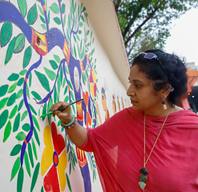


Project PARI stands as a monumental effort to infuse Delhi with the rich and diverse artistic heritage of India, while simultaneously embracing contemporary themes and expressions. As the city prepares to host the 46th session of the World Heritage Committee, the initiative not only beautifies public spaces but also democratizes art, making it accessible to all. This cultural renaissance, brought to life by the collaborative efforts of over 150 visual artists, showcases the profound and multifaceted traditions of Indian art. By engaging citizens and fostering a shared cultural identity, the initiative not only enriches the urban landscape but also inspires a deeper connection with our heritage.

Come and join the celebrations. Click your selfie with a Project PARI creation and share your pictures on social media with #ProjectPARI.

References

· https://www.pib.gov.in/PressReleasePage.aspx?PRID=2031268 .

· https://lalitkala.gov.in/pariproject

*****

Importance of Proofreading before Submission of Research paper or Manuscript of Publication

Daily writing prompt
What do you think gets better with age?

Proofreading before the submission of a research paper or manuscript for publication is a critical step in the academic and professional writing process. The importance of proofreading can be understood through the following key points:

1. Ensures Clarity and Precision

Proofreading helps to eliminate ambiguities and ensures that the message is clear and precise. It allows the writer to refine their language, making the text more readable and comprehensible. Clear and precise communication is crucial for conveying complex ideas effectively.

2. Corrects Grammar, Punctuation, and Spelling Errors

Errors in grammar, punctuation, and spelling can undermine the credibility of a paper. Proofreading helps identify and correct these errors, enhancing the overall quality of the manuscript and ensuring it meets the high standards expected in academic publishing.

3. Enhances Professionalism

A well-proofread document reflects professionalism and attention to detail. It demonstrates to reviewers, editors, and readers that the author has taken the time to polish their work, which can positively influence their perception of the manuscript.

4. Improves Structure and Flow

Proofreading allows authors to review the structure and flow of their paper. It provides an opportunity to reorganize content for better coherence, ensuring that ideas and arguments are presented logically and persuasively.

5. Increases Chances of Acceptance

Journals and publishers often have strict submission guidelines and high standards. Submitting a well-proofread manuscript increases the chances of acceptance by reducing the likelihood of rejection due to preventable errors.

6. Identifies Inconsistencies

During proofreading, inconsistencies in terminology, formatting, and data presentation can be identified and corrected. This consistency is vital for maintaining the integrity and reliability of the research.

7. Detects Plagiarism

Proofreading includes checking for unintentional plagiarism. By carefully reviewing citations and references, authors can ensure that all sources are appropriately credited, maintaining academic honesty and avoiding ethical issues.

8. Enhances Readability

Proofreading helps to simplify complex sentences and remove redundant words, making the manuscript more engaging and easier to read. This readability is crucial for maintaining the interest of the audience and facilitating their understanding.

9. Addresses Reviewer Comments

If the manuscript is a revision, proofreading provides an opportunity to address reviewers’ comments meticulously. It ensures that all feedback has been incorporated appropriately and that the revised manuscript meets the reviewers’ expectations.

10. Builds Author’s Reputation

Submitting a polished and error-free manuscript contributes to building the author’s reputation within the academic community. It demonstrates their commitment to quality and excellence in research, which can lead to greater recognition and opportunities.

In conclusion, proofreading is an indispensable step before submitting a research paper or manuscript for publication. It ensures that the work is accurate, clear, and professionally presented, ultimately contributing to the success of the publication process.

Khelo India Women’s Wushu League

 The upcoming northern zonal round of the Khelo India women’s wushu league is set to draw significant attention, featuring prominent international athletes Ayeera Chisti and Komal Nagar. This competition will take place at the Netaji Subhas National Institute of Sports in Patiala from July 9 to 13, showcasing the talents of 350 athletes across sub-junior, junior, and senior categories. Organized by SAI Patiala, the event will encompass both Sanda (fighting) and Taolu (forms), welcoming participants from Haryana, Punjab, Delhi, Himachal Pradesh, Chandigarh, Uttarakhand, Jammu & Kashmir, and Ladakh.

Department of Sports, Ministry of Youth Affairs and Sports funds the Rs 7.2 lakh prize money competition conducted by the Wushu Federation of India. The top eight wushu athletes from the sub-junior, junior and senior events will get cash incentives.

Following last month’s successful South Zonal event in Karnataka, the North Zonal meet marks the next phase in the league’s calendar. After the four zonal meets, the national ranking championship will be held.

The women’s wushu league will provide an opportunity to several players wanting to make it big like international medallists Ayeera (18 years) and Komal (19 years), who train at the NSNIS Patiala Centre.

“I am very excited to play in my home ground here in my third Khelo India women’s wushu league, having won gold in the last two championships,” said Ayeera, who debuted in this competition in 2022.

“The Khelo India women’s league is very important for a lot of girls especially looking at the future and I’m thankful to the government for this. As for me, I want to clinch gold medal at the Asian Games in the 52kg category and become the first woman to achieve this feat for India in this weight division. Before that, I am aiming for the gold at the senior Asian championships in China this September,” Ayeera added.

Jammu and Kashmir’s Ayeera Chisti looking to clinching her third consecutive gold medal at the Khelo India Women’s Wushu League.

Jammu and Kashmir’s Ayeera, who will take part in the senior 52kg Sanda category, won a bronze at the junior wushu world championship in Indonesia in 2022. She also landed a gold at the international wushu championship in Georgia in 2022 as well as a gold at the Russian Moscow Stars Wushu International Championship in 2024.

Chandigarh’s Komal, gold medallist at the Russian Moscow Stars Wushu International Championship 2023 in Sanda, said, “Getting an opportunity to play one more tournament in the calendar year besides the nationals, bolsters our confidence.”

“The Khelo India Women’s League gives us a good playfield for our performance assessment, understand flaws in our game and areas to work on,” said  Komal, who started learning self-defence techniques when she was 14.

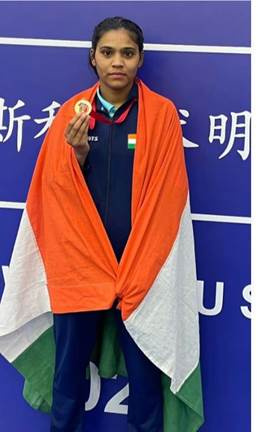
Chandigarh’s Komal with her gold medal at the Russian Moscow Stars Wushu International Championship 2023

About Sports for Women:

Under the Sports for Women Vertical, Khelo India Women’s Leagues are structured into two main formats: Major League and City League. These leagues serve as platforms for promoting women’s sports across various disciplines. Additionally, leagues are organized within specific age categories or weight categories, tailored to the requirements of each sport.

This approach, supported by the Union Ministry of Youth Affairs and Sports, not only encourages widespread participation among women athletes but also facilitates talent identification and development across different skill levels and age groups nationwide. Through these structured formats, the Khelo India initiative aims to foster a vibrant sports culture and support the growth of female athletes in India.

****

Rebuttal to Citigroup's Research Report on Employment in India

 The recent research report by Citigroup on Employment in India quoted by some of the print and electronic media, which forecasts that India will struggle to create sufficient employment opportunities even with a 7% growth rate, fails to account for the comprehensive and positive employment data available from official sources such as the Periodic Labour Force Survey (PLFS) and the Reserve Bank of India’s KLEMS data. Therefore, the Ministry of Labour and Employment strongly rebuts such reports which do not analyse all official data sources available in the public domain.

Employment Data for India

According to PLFS and RBI’s KLEMS data, India has generated more than 8 crore (80 million) employment opportunities from 2017-18 to 2021-22. This translates to an average of over 2 crore (20 million) employment per year, despite of the fact that the world economy was hit by COVID-19 pandemic during 2020-21 which contradicts Citigroup’s assertion of India’s inability to generate sufficient employment. This significant employment creation demonstrates the effectiveness of various government initiatives aimed at boosting employment across sectors.

PLFS data

The Annual PLFS report depicts an improving trend in labour market indicators related to: (i) Labour Force Participation Rate (LFPR), (ii) Worker Population Ratio (WPR) and (iii) Unemployment Rate (UR) for persons of age 15 years and above during 2017-18 to 2022-23. For instance, the WPR i.e. employment has increased from 46.8% in 2017-18 to 56% in 2022-23. Similarly, the labour force participation has also increased in the country from 49.8% in 2017-18 to 57.9% in 2022-23. The Unemployment Rate has declined from 6.0 % in 2017-18 to a low of 3.2% in 2022-23.

The PLFS data shows that during the last 5 years, more employment opportunities have been generated compared to the number of people joining the labour force, resulting in a consistent reduction in the unemployment rate. This is a clear indicator of the positive impact of government policies on employment. Contrary to the report, which suggests a dire employment scenario, the official data reveals a more optimistic picture of the Indian job market.

EPFO Data

The formal sector employment figures are also being bolstered by government efforts to improve ease of doing business, enhance skill development, and provide incentives for job creation in both the public and private sectors. The EPFO data suggests that more and more workers are joining formal jobs. During 2023-24, more than 1.3 crore subscribers joined EPFO which is more than double compared to 61.12 lakh joined EPFO during 2018-19. Moreover, during last six and half years (since September, 2017 to March, 2024) more than 6.2 crore net subscribers have joined EPFO.

New subscribers to NPS

The data from National Pension System (NPS) indicates that more than 7.75 lakh new subscribers have joined the NPS during 2023-24 under the Central and State governments which is 30% more than 5.94 lakh new subscribers joining NPS under government sector during 2022-23. This substantial increase in new subscribers highlights the government’s proactive measures to fill-up the vacancies in public sector in timely manner.

Flexi-staffing sector

In a recent interaction of Indian Staffing Federation (ISF) members with Secretary, Ministry of Labour and Employment, ISF members informed that they are employing about 5.4 million formal contract workers. Nearly 30% demand in the sector remains unfulfilled at frontline across manufacturing, retail, banking due to talent shortages and labour mobility. 

Multiple new opportunities

The future prospects of the employment market in India are highly encouraging, as evidenced by data from various sources. The Global Capability Centers (GCCs) in India have shown remarkable growth in recent years. The gig economy also promises significant increase in workforce in the country. Notably, the NITI Aayog report on gig economy projects a substantial increase in platform workers, which is expected to reach 2.35 crore (23.5 million) by 2029-30, underscoring the rapid expansion of the gig economy. The gig workers are expected to form 6.7% of the non-agricultural workforce or 4.1% of the total livelihood in India by 2029-30. These developments collectively reflect India’s robust economic trajectory and its potential to generate diverse employment opportunities.

Data Credibility

It is well known that the private data sources, which the report/media refers to as more reliable, has several shortcomings. These surveys use their own derived definition of employment – unemployment which is not aligned to either national or international standards. The sample distribution and methodology are often critiqued for not being as robust or representative as official data sources like PLFS. Therefore, reliance on such private data sources over official statistics can lead to misleading conclusions and thus, should be used with caution.

Further, some authors use data selectively which undermines the credibility of their analysis and does not present an accurate picture of the employment scenario in India. Such reports fail to consider the positive trends and comprehensive data from official sources.

Summary

The official data sources like PLFS, RBI, EPFO, etc. show consistent improvements in the key labour market indicators, including increased Labour Force Participation Rate (LFPR) and Worker Population Ratio (WPR), and a declining Unemployment Rate during last five years. EPFO and NPS data further support the positive employment trends. The trends in manufacturing, expanding service sector, infrastructure growth, apart from others, including emerging opportunities in multiple sectors such as gig and platform economy and GCCs indicate robust future prospects.

The Ministry of Labour and Employment emphasizes the credibility and comprehensiveness of official data, cautioning against the selective use of private data sources that can lead to misleading conclusions about India’s employment scenario.

The Government remains committed to creating a robust and inclusive job market, and the evidence suggests substantial progress is being made in this direction.

*****

Important Days of November Month

 Here are some important dates and days observed in November:

  1. World Vegan Day – November 1st

    • A day to promote the benefits of veganism for health, animals, and the environment, and to encourage people to adopt a vegan lifestyle.
  2. Diwali (Deepavali) – Date varies (usually in November)

    • A major Hindu festival of lights, celebrated with fireworks, feasting, and the lighting of lamps to symbolize the victory of light over darkness and good over evil.
  3. World Tsunami Awareness Day – November 5th

    • A day to raise awareness about the risks and impacts of tsunamis, promote early warning systems, and enhance preparedness and resilience.
  4. World Diabetes Day – November 14th

    • A day to raise awareness about diabetes, its prevention, management, and the importance of access to healthcare for all individuals affected by the disease.
  5. International Day for Tolerance – November 16th

    • A day to promote tolerance, respect, and understanding among cultures and peoples, and to combat discrimination and prejudice.
  6. World Children’s Day – November 20th

    • A day to promote children’s rights, celebrate childhood, and advocate for children’s well-being and education worldwide.
  7. Universal Children’s Day – November 20th (Different from World Children’s Day)

    • A day to promote international togetherness, awareness among children worldwide, and improving children’s welfare.
  8. Thanksgiving Day (United States) – Fourth Thursday in November

    • A national holiday in the United States, celebrated with feasting, family gatherings, and expressions of gratitude.
  9. Remembrance Day (also known as Armistice Day or Veterans Day) – November 11th

    • A day to commemorate the end of World War I and honor the veterans and soldiers who have died in the line of duty.
  10. Movember – Month-long campaign in November

    • A global movement to raise awareness about men’s health issues, such as prostate cancer, testicular cancer, and mental health, by growing mustaches (or “mos”) and fundraising.

These are some of the significant dates and observances in November that highlight cultural celebrations, global issues, and awareness campaigns.

Important Days of December Month

 Here are some important dates and days observed in December:

  1. World AIDS Day – December 1st

    • A day to raise awareness about HIV/AIDS, remember those who have died from AIDS-related illnesses, and show support for people living with HIV.
  2. International Day of Persons with Disabilities – December 3rd

    • A day to promote the rights and well-being of persons with disabilities and raise awareness about disability issues and inclusion.
  3. Human Rights Day – December 10th

    • A day to commemorate the adoption of the Universal Declaration of Human Rights by the United Nations General Assembly in 1948, promoting and protecting human rights globally.
  4. Hanukkah (Chanukah) – Date varies (usually in December)

    • An eight-day Jewish festival commemorating the rededication of the Second Temple in Jerusalem, marked by the lighting of the menorah and other traditions.
  5. Christmas Day – December 25th

    • A Christian holiday celebrating the birth of Jesus Christ, observed with religious services, gift-giving, and festive meals.
  6. Kwanzaa – December 26th to January 1st

    • An African-American cultural holiday celebrating family, community, and culture, observed with feasts, music, dance, and the lighting of the kinara.
  7. Boxing Day – December 26th (Some countries)

    • A holiday observed in some countries, traditionally a day for giving gifts to service workers and the less fortunate.
  8. New Year’s Eve – December 31st

    • The last day of the Gregorian calendar year, celebrated with social gatherings, parties, and fireworks to welcome the New Year.

These are some of the significant dates and observances in December that highlight cultural celebrations, religious holidays, and global awareness days.

Important Days of October Month

 Here are some important dates and days observed in October:

  1. International Day of Older Persons – October 1st

    • A day to recognize and appreciate the contributions of older persons to society and raise awareness about issues affecting their well-being.
  2. World Vegetarian Day – October 1st

    • A day to promote the benefits of vegetarianism for health, animals, and the environment, and to encourage people to adopt a vegetarian diet.
  3. International Day of Non-Violence (Mahatma Gandhi’s birthday) – October 2nd

    • A day to commemorate the principles of non-violence advocated by Mahatma Gandhi and promote peace, tolerance, and understanding.
  4. World Habitat Day – First Monday in October

    • A day to reflect on the state of human settlements and the basic right to adequate shelter, as well as to advocate for sustainable urban development.
  5. World Teachers’ Day – October 5th

    • A day to honor and appreciate teachers worldwide for their contributions to education and development.
  6. World Mental Health Day – October 10th

    • A day to raise awareness about mental health issues, advocate for mental health education and support services, and reduce stigma surrounding mental illness.
  7. International Day of the Girl Child – October 11th

    • A day to promote girls’ rights, highlight gender inequalities, and address the challenges girls face globally.
  8. World Food Day – October 16th

    • A day to raise awareness about food security, hunger, and nutrition issues worldwide, and to promote efforts to achieve Zero Hunger.
  9. United Nations Day – October 24th

    • A day to celebrate the founding of the United Nations and raise awareness about its goals and achievements in promoting peace, development, and human rights.
  10. Halloween – October 31st

    • A festive holiday celebrated with costumes, trick-or-treating, and parties, particularly in Western countries.

These are some of the significant dates and observances in October that highlight global issues, cultural celebrations, and awareness campaigns.

Importnat Days of September Month

 Here are some important dates and days observed in September:

  1. Labor Day (United States, Canada) – First Monday in September

    • A day to honor and recognize the contributions of laborers and the labor movement, marked by parades, picnics, and other celebrations.
  2. International Day of Charity – September 5th

    • A day to raise awareness and promote charitable efforts and volunteer activities for the common good.
  3. International Literacy Day – September 8th

    • A day to raise awareness about the importance of literacy and education for individuals, communities, and societies worldwide.
  4. World Suicide Prevention Day – September 10th

    • A day to raise awareness about suicide prevention, reduce stigma around mental health issues, and promote support for those affected by suicide.
  5. International Day of Democracy – September 15th

    • A day to celebrate the principles of democracy, raise awareness about the importance of democratic governance, and promote respect for human rights.
  6. International Day for the Preservation of the Ozone Layer – September 16th

    • A day to raise awareness about the depletion of the ozone layer and promote efforts to protect and preserve the ozone layer for future generations.
  7. World Peace Day (International Day of Peace) – September 21st

    • A day devoted to strengthening the ideals of peace, both within and among all nations and peoples.
  8. World Tourism Day – September 27th

    • A day to raise awareness about the importance of tourism and its social, cultural, political, and economic value worldwide.
  9. International Day of Sign Languages – September 23rd

    • A day to raise awareness about the importance of sign languages as a means of communication and promote the rights of deaf people.
  10. World Alzheimer’s Day – September 21st

    • A day to raise awareness about Alzheimer’s disease and dementia, challenge stigma, and advocate for support and research efforts.

These are some of the significant dates and observances in September that highlight global issues, awareness campaigns, and cultural celebrations.

Important Days of August Month

 Here are some important dates and days observed in August:

  1. International Friendship Day – August 1st (varies by country)

    • A day to celebrate the importance of friendship and promote peace and understanding among cultures.
  2. Hiroshima Day – August 6th

    • A day to commemorate the dropping of the atomic bomb on Hiroshima, Japan, during World War II, and to advocate for peace and nuclear disarmament.
  3. International Youth Day – August 12th

    • A day to celebrate the role of young people as essential partners in change, raise awareness of challenges facing youth worldwide, and promote their empowerment.
  4. Independence Day (Various countries)

    • Many countries celebrate their independence during August, including India (August 15th), Pakistan (August 14th), and Indonesia (August 17th), among others.
  5. World Humanitarian Day – August 19th

    • A day to honor humanitarian workers who risk their lives in humanitarian service, and to advocate for the protection and safety of humanitarian personnel and civilians affected by conflicts and disasters.
  6. Women’s Equality Day – August 26th

    • A day to commemorate the passage of the 19th Amendment to the U.S. Constitution, granting women the right to vote, and to promote gender equality globally.
  7. International Day of Remembrance and Tribute to the Victims of Terrorism – August 21st

    • A day to honor and support victims and survivors of terrorism and promote solidarity and resilience in the face of terrorism.
  8. Raksha Bandhan (Hindu Festival) – Date varies (usually in August)

    • A Hindu festival celebrating the bond of love and protection between brothers and sisters, marked by the tying of a sacred thread (rakhi) by sisters on their brothers’ wrists.
  9. National Dog Day – August 26th

    • A day to honor dogs and promote their adoption from shelters, as well as to raise awareness about the importance of dog rescue and welfare.
  10. International Cat Day – August 8th

    • A day to celebrate cats and promote awareness about their welfare, care, and adoption.

These are some of the significant dates and observances in August that highlight cultural celebrations, historical events, and global awareness campaigns.

Important Days of February Month

 Here are some important dates and days observed in February:

  1. World Cancer Day – February 4th

    • A day to raise awareness about cancer, its prevention, detection, and treatment, organized by the Union for International Cancer Control (UICC).
  2. International Day of Women and Girls in Science – February 11th

    • A day to promote full and equal access to and participation in science for women and girls, as well as to recognize their contributions to science and technology.
  3. Valentine’s Day – February 14th

    • A day to celebrate romantic love, friendship, and admiration, often marked by the exchange of cards, flowers, and gifts.
  4. World Day of Social Justice – February 20th

    • A day to promote social justice, including efforts to tackle issues such as poverty, inequality, and exclusion.
  5. International Mother Language Day – February 21st

    • A day to promote linguistic and cultural diversity and multilingualism, as well as to raise awareness about the importance of mother languages.
  6. World Wildlife Day – February 22nd

    • A day to celebrate and raise awareness about the world’s wild animals and plants, and to highlight the importance of conservation efforts.
  7. Rare Disease Day – Last day of February (February 28th or 29th)

    • A day to raise awareness about rare diseases and their impact on patients’ lives, as well as to advocate for research and support for those affected by rare diseases.
  8. Black History Month (United States and Canada) – Entire month of February

    • A month-long celebration honoring the achievements and contributions of African Americans and Black Canadians throughout history.

These are some of the significant dates and observances in February that highlight various global issues, cultural celebrations, and awareness campaigns.

Important Days of January Month

 Here are some important dates and days observed in January:

  1. New Year’s Day – January 1st

    • The first day of the Gregorian calendar year, celebrated with social gatherings, parties, and fireworks in many cultures around the world.
  2. World Braille Day – January 4th

    • A day to raise awareness about the importance of Braille as a means of communication for blind and visually impaired people worldwide.
  3. World Cancer Day – February 4th

    • A day to raise awareness about cancer, its prevention, detection, and treatment, organized by the Union for International Cancer Control (UICC).
  4. International Day of Education – January 24th

    • A day proclaimed by the United Nations to celebrate the role of education in fostering peace and sustainable development.
  5. Holocaust Remembrance Day (International) – January 27th

    • A day to commemorate the victims of the Holocaust, honor survivors, and promote education and remembrance about the Holocaust atrocities.
  6. Australia Day – January 26th

    • The official national day of Australia, marking the anniversary of the arrival of the First Fleet at Port Jackson in New South Wales in 1788.
  7. Chinese New Year (Lunar New Year) – Date varies (usually falls in January or February)

    • The most important festival in Chinese culture, celebrating the beginning of a new lunar year with festivities, family gatherings, and symbolic traditions.
  8. Martin Luther King Jr. Day (United States) – Third Monday of January

    • A federal holiday honoring the civil rights leader Martin Luther King Jr., observed with tributes, marches, and acts of community service.
  9. Burns Night (Scotland) – January 25th

    • A celebration of the life and poetry of the Scottish poet Robert Burns, featuring traditional Scottish food, music, and recitations of Burns’ poetry.
  10. Indian Republic Day – January 26th

    • A national holiday in India commemorating the adoption of the Constitution of India in 1950, marking the country’s transition to a republic.

These are some of the significant dates and observances in January that highlight cultural celebrations, historical events, and global awareness campaigns.

Important Days of March Month

 Here are some important dates and days observed in March:

  1. International Women’s Day – March 8th

    • A global day celebrating the social, economic, cultural, and political achievements of women, as well as a call to action for gender equality.
  2. World Wildlife Day – March 3rd

    • A day to celebrate and raise awareness about the world’s wild animals and plants, and to highlight the importance of conservation efforts.
  3. World Water Day – March 22nd

    • A day to focus attention on the importance of freshwater and advocate for the sustainable management of freshwater resources.
  4. World Tuberculosis Day – March 24th

    • A day to raise awareness about the global epidemic of tuberculosis (TB) and efforts to eliminate the disease.
  5. International Day of Happiness – March 20th

    • A day to promote happiness as a fundamental human goal and encourage actions that contribute to greater well-being and happiness.
  6. St. Patrick’s Day – March 17th

    • A cultural and religious celebration held on March 17th, the traditional death date of Saint Patrick, the foremost patron saint of Ireland.
  7. World Meteorological Day – March 23rd

    • A day to celebrate the establishment of the World Meteorological Organization (WMO) and raise awareness about the importance of meteorology in understanding and predicting the weather and climate.
  8. World Poetry Day – March 21st

    • A day to promote the reading, writing, publishing, and teaching of poetry worldwide, as well as to encourage cultural expression and linguistic diversity.

These are some of the significant dates and observances in March that highlight various global issues, celebrations, and awareness campaigns.

Important Days of April

 Here are some important dates and days observed in April:

  1. April Fools’ Day – April 1st

    • A day of practical jokes and hoaxes celebrated in many countries around the world.
  2. World Autism Awareness Day – April 2nd

    • A day to raise awareness about autism spectrum disorder (ASD) and promote acceptance and inclusion of individuals with autism.
  3. International Day of Mine Awareness and Assistance in Mine Action – April 4th

    • A day to raise awareness about landmines and explosive remnants of war and promote efforts to clear mines and assist victims.
  4. World Health Day – April 7th

    • A day to raise awareness about global health issues and promote healthier living habits worldwide, organized by the World Health Organization (WHO).
  5. Earth Day – April 22nd

    • A day to promote environmental protection and raise awareness about environmental issues such as pollution, climate change, and conservation.
  6. World Malaria Day – April 25th

    • A day to raise awareness about malaria and promote efforts to prevent and control the spread of this deadly disease.
  7. International Dance Day – April 29th

    • A day to celebrate the art of dance and raise awareness about its importance as a form of expression and cultural heritage.
  8. Arbor Day (varies by country, often observed in April)

    • A day dedicated to planting trees and promoting tree planting and conservation efforts.

These are some of the significant dates and observances in April that highlight various global issues, celebrations, and awareness campaigns.

Important Days of May Month

 Here are some important dates and days observed in May:

  1. May Day (International Workers’ Day) – May 1st

    • A celebration of labor and the working class, observed in many countries around the world.
  2. World Press Freedom Day – May 3rd

    • A day to raise awareness of the importance of press freedom and to remind governments of their duty to respect and uphold the right to freedom of expression.
  3. World Asthma Day – First Tuesday of May (varies)

    • A day to raise awareness about asthma, its prevention, and management worldwide.
  4. Mother’s Day – Second Sunday of May (varies)

    • A day to honor mothers and mother figures, celebrated with gifts, cards, and special gestures of appreciation.
  5. World Red Cross and Red Crescent Day – May 8th

    • A day to commemorate the birth of Henry Dunant, the founder of the Red Cross, and to celebrate the humanitarian efforts of the Red Cross and Red Crescent Societies worldwide.
  6. International Nurses Day – May 12th (Florence Nightingale’s birthday)

    • A day to celebrate the contributions of nurses to society and raise awareness about the importance of nursing education and training.
  7. World Hypertension Day – May 17th

    • A day to raise awareness about hypertension (high blood pressure) and its prevention, detection, and control.
  8. International Day for Biological Diversity – May 22nd

    • A day to increase understanding and awareness of biodiversity issues and promote actions that conserve and sustainably use biodiversity.
  9. World No Tobacco Day – May 31st

    • A day to raise awareness about the health risks associated with tobacco use and advocate for effective policies to reduce tobacco consumption.
  10. Memorial Day – Last Monday of May (varies)

    • A day to honor and remember the military personnel who have died in the performance of their military duties.

These are some of the significant dates and observances in May that highlight various global issues, celebrations, and remembrances.

Important Days of June Month


  • World Environment Day – June 5th

    • A day designated by the United Nations to raise awareness and encourage action for the protection of our environment.
  • World Oceans Day – June 8th

    • A global day of ocean celebration and collaboration for a better future, recognized by the United Nations.
  • World Blood Donor Day – June 14th

    • A day to raise awareness about the need for safe blood and blood products and to thank blood donors for their voluntary, life-saving gifts of blood.
  • Father’s Day – Third Sunday of June (varies)

    • A day to honor fathers and father figures, celebrated in many countries with gifts, cards, and special gestures of appreciation.
  • International Day of Yoga – June 21st

    • A day established by the United Nations to highlight the benefits of yoga for physical and mental health and well-being.
  • World Refugee Day – June 20th

    • A day to raise awareness about the situation of refugees throughout the world and honor their courage and resilience.
  • World Environment Day – June 5th

    • A day designated by the United Nations to raise awareness and encourage action for the protection of our environment.
  • World Oceans Day – June 8th

    • A global day of ocean celebration and collaboration for a better future, recognized by the United Nations.
  • World Blood Donor Day – June 14th

    • A day to raise awareness about the need for safe blood and blood products and to thank blood donors for their voluntary, life-saving gifts of blood.
  • Father’s Day – Third Sunday of June (varies)

    • A day to honor fathers and father figures, celebrated in many countries with gifts, cards, and special gestures of appreciation.
  • International Day of Yoga – June 21st