69th edition of e-book Civil List 2024 of IAS officers

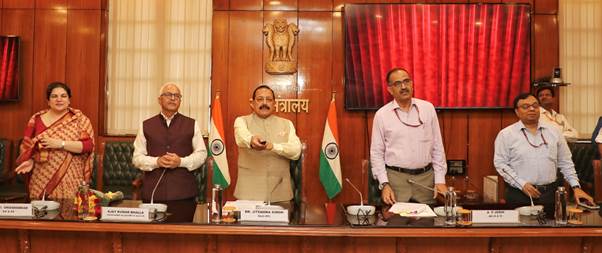
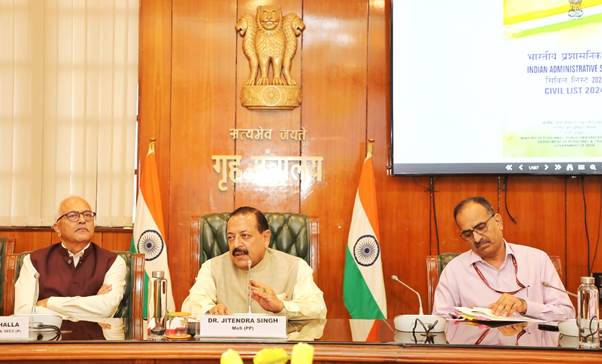
 Union Minister Dr. Jitendra Singh launched the 69th edition of e-book Civil List 2024 of IAS officers here today in New Delhi.

The 4th edition of publishing e-book makes a huge departure from bulky paper- backed document and cause saving for State Exchequer” says, Dr. Jitendra Singh, Union Minister of State (Independent Charge) for Science and Technology, Minister of State (Independent Charge) for Earth Sciences, MoS PMO, Department of Atomic Energy and Department of Space and MoS Personnel, Public Grievances and Pensions. The minister added that availability of information of IAS officers on a click of mouse is a sequel of reforms carried out by the Government in the last 10 years and one of the earliest in Modi 3.0. It is the 4th Edition of the civil list in e-book version. The publishing of civil list of IAS officers started in the 1960’s.
 

Dr. Jitendra Singh said “The civil list is a comprehensive platform for the government to select best officers from different parts of the country and level playing for officers to seek opportunities. It will widen the horizon for the government to choose the best suitable officers from wider pool of talent with more objective feedback and thus not limiting the opportunities to officers who have worked with senior officers and preferred as they are exposed to the working in the central government and creates a pool of human resources as well as knowledge resources”.
 

Dr. Jitendra Singh while delivering his keynote speech highlighted the win-win situation for both Government as well as officers. He further mentioned the integration of Artificial Intelligence and use of data to make better and informed choices in governance. He emphasized on the use of next generation tools and technologies for ease of working of the government.

The DoPT Minister said “We are carrying forward Prime Minister Narendra Modi’s Vision of ‘Minimum Government – Maximum Governance’ along Mission Karmayogi and promoting capacity building of officers to meet the challenges of Amrit Kal in 2047. According to him the citizen centric reforms, transparency along with good governance forms the cornerstone of reforms in Modi Government 3.0.
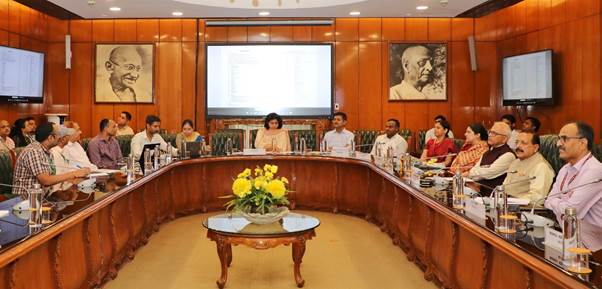
 

Shri. Ajay Kumar Bhalla, Secretary, Ministry of Home Affairs shared that the civil list contains names of nearly 6000 plus IAS officers. With details such as Batch, Cadre, Present posting as on 01.01.2024, Pay level as on 01.01.2024, Education, Superannuation, etc.

On the sidelines Dr. Jitendra Singh also interacted with the IAS probationers’ of 2022 batch who are currently undergoing their training as Assistant Secretaries. He took their feedback on improvement in training and overall experience. He also recalled the integration of IIPA with other institutes and programmes. The probationers also mentioned the ease of working due to e-office and asked for its replication in the states. They also shared the success stories of Direct Benefit Transfer and reduction in pilferages and leakages of public money with the minister.

*****
India Leads Global Maritime Discourse at IMO Council Session in London

 The A high-level Indian delegation, led by Shri T.K. Ramachandaran, Secretary, Ministry of Ports, Shipping and Waterways, is participating in the 132nd session of the Council of the International Maritime Organization (IMO) in London. India, an elected member of the IMO Council in the category of countries with the largest interest in international seaborne trade, emphasized the urgent issue of seafarer abandonment. The delegation pointed out that despite efforts, there are currently 44 active cases involving 292 Indian seafarers. India’s strong stance on the need for effective measures and oversight to resolve such issues was well received.

In recognition of its continued commitment to addressing seafarers’ issues, India secured its position as one of the eight governments representing IMO in the Joint Tripartite Working Group. This group is dedicated to identifying and tackling seafarers’ issues and the human element in maritime operations. Other proposed members include the Philippines, Thailand, Liberia, Panama, Greece, the US, and France.

Shri T.K. Ramachandaran stated, “India remains deeply committed to addressing the issue of seafarer abandonment and ensuring the safety and welfare of our maritime workforce. India’s participation in the IMO Council session underscores dedication to international maritime cooperation and innovation. The establishment of the South Asian Centre of Excellence for Sustainable Maritime Transport is a testament to India’s leadership in promoting environmentally sustainable and technologically advanced maritime practices. We look forward to collaborating with global partners to drive positive change in the maritime sector.”

The Indian delegation also addressed concerns over disruptions in the Red Sea, Gulf of Aden, and adjoining areas, which have been impacting shipping and trade logistics. Highlighting India’s commitment to maritime safety and security, the delegation cited two significant incidents where the Indian Navy successfully intervened. These included the rescue of a Marshall Island-flagged crude oil carrier, MV Marlyn Luanda, and the interception of the vessel MV Ruen off the coast of Somalia, ensuring the safety of crew members and handling piracy threats effectively.

Furthermore, India reiterated its proposal for the South Asian Centre of Excellence for Sustainable Maritime Transport (SACE-SMarT). This regional hub aims to transform the maritime sector in India and South Asia into a technologically advanced, environmentally sustainable, and digitally proficient industry. The centre will focus on reducing greenhouse gas emissions, fostering technical cooperation, capacity-building, and digital transition. India’s leadership in evolving the SACE-SMarT in collaboration with the IMO’s global Maritime Technology Cooperation Centres (MTCCs) was highlighted as a significant step towards sustainable maritime development.

The 132nd session of the IMO Council, which commenced on July 8, 2024, will continue until July 12, 2024, addressing various critical issues and proposals for the future of global maritime operations.

***

Floral Waste is boosting circularity in economy

 As India moves towards sustainability and a circular economy, the focus on waste to wealth is the way to be. Implementing composting pits in temples and involving Temple trusts and SHGs in recycling efforts can create significant employment opportunities. Outreach programs to educate priests and devotees about not dumping floral waste in rivers can help encourage waste reduction. The “Green Temples” concept can be integrated into policies to transform temples into eco-friendly spaces. Promoting digital offerings or biodegradable materials instead of traditional flowers can also help reduce floral waste.  The National Horticulture Board can be involved in tracking and managing floral waste in green spaces like parks etc.

The floral waste sector in India is experiencing new growth, marked by its multifaceted benefits. Not only is it providing meaningful employment opportunities for women, but is also effectively diverting waste from dumpsites, contributing to environmental preservation.

Floral waste, collected from the spiritual sites mostly biodegradable, often ends up in landfills or water bodies, causing health hazards and harming aquatic life. According to a UN Climate Change report, the river Ganga alone absorbs over 8 million MT of flower waste annually. Under the Swachh Bharat Mission-Urban 2.0, several Indian cities are bringing innovative solutions to the table. Social entrepreneurs are stepping in to recycle flowers into valuable products like organic compost, soaps, candles, and incense sticks.

The Swachh Bharat Mission is spearheading a transformative journey towards sustainability, where the ethos of circular economy and waste-to-wealth reign supreme. Amidst this paradigm shift, floral waste emerges as one of the significant contributors to carbon footprints, prompting collaborative efforts among cities and startups to tackle this challenge head-on.

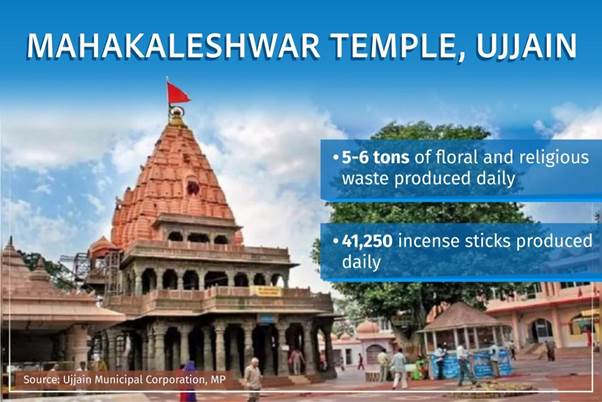
With 75,000 to 100,000 daily visitors at the Ujjain’s Mahalakaleshwar Temple, around 5-6 tonnes of floral and other waste are produced daily. Specialized ‘Pushpanjali Econirmit’ vehicles collect this waste and then it is processed at a 3TPD plant, turning it into eco-friendly products. 16 women from the Shiv Arpan Self-Help Group create various high-quality items from the floral waste and have been employed for the same. Additionally, the waste is converted into briquettes and compost, for the local farmers and as also works as biofuel. According to the Ujjain Smart City 2022 report, 2,200 tons of floral waste has been treated to date, and a total of 30,250,000 sticks produced so far.

Siddhivinayak Temple sees nearly 40,000 -50,000 devotees daily peaking 1,00,000 devotees on some given days, offering 120 to 200kgs of floral. Mumbai-based designer house ‘Adiv Pure Nature’ has initiated a sustainable venture, turning the temple’s discarded blooms into natural dyes to create different textiles in the form of fabric yardage, garments, scarves, table linens and tote bags. They collect floral waste thrice in a week which accounts to 1000-1500 kg /week. After segregation, a team of artisans transform the dried flowers into natural dyes. Beyond the commonly used marigold, rose, and hibiscus, the team also utilizes coconut husks to create natural dyes and produce textured prints through steam.

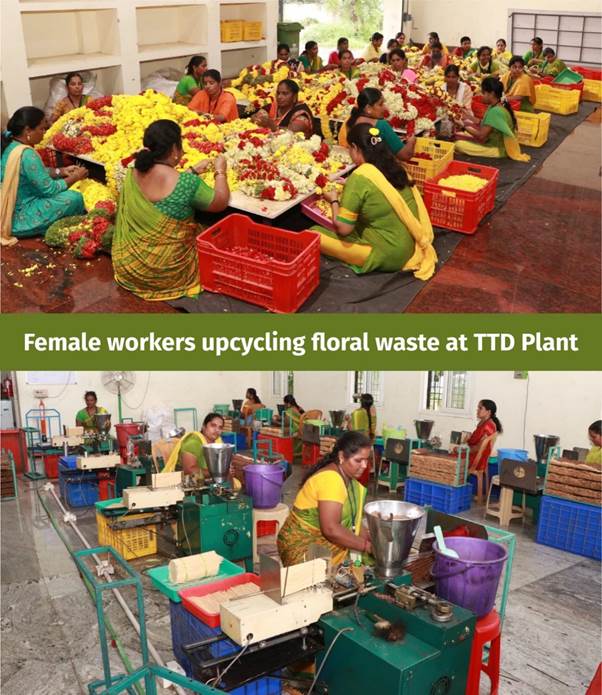
Tirupati Municipal Corporation handles over 6 tons of floral waste daily from temples every day. The city collects and upcycles floral waste into valuable & reusable products. 150 women from self-help groups have been employed through this. The recycling is done at the Tirumala Tirupati Devasthanam Aggarbatti 15-ton capacity manufacturing plant. The products are packaged with recycled paper and plantable paper embedded with Tulsi seeds for a zero-carbon footprint.

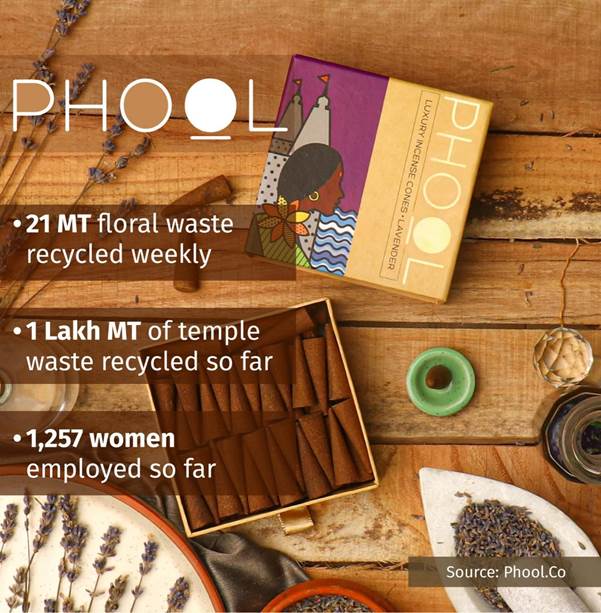
Kanpur based Phool, the floral waste recyclers have been tackling the massive temple-waste problem by collecting floral-waste from temples from various cities on a daily basis. Phool collects nearly 21 MT of floral-waste weekly (3 TPD) across the five prominent temple towns of India including Ayodhya, Varanasi, Bodh Gaya, Kanpur and Badrinath. This waste is upcycled into items such as incense sticks, incense cones, Bamboo-less incense, havan cup etc. The women employed by Phool enjoy a safe working space, fixed salaries, and benefits like provident fund, transportation, and healthcare. With deep-tech research, the startup has developed ‘Fleather’, which is a viable alternative to Animal leather and it was recently awarded PETA’s best innovation the Vegan World.

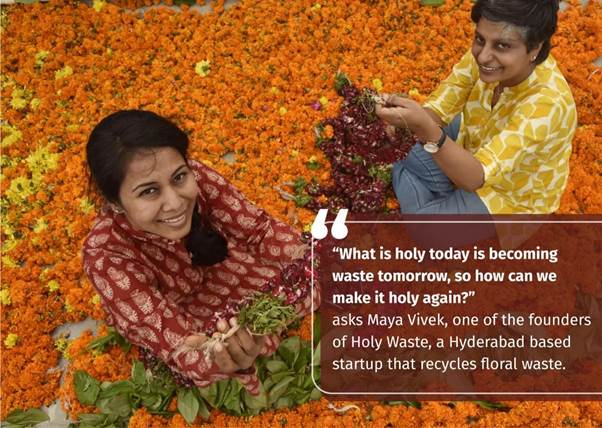
Hyderabad-based startup, ‘HolyWaste’ has revitalized floral waste through a unique process called ‘Florjuvination. Founded in 2018, the company’s founders Maya Vivek and Manu Dalmia partnered with vendors, temples, event organizers, decorators, and flower waste generators. They collect floral waste from 40 temples, 2 flower vendors, and a market area to create eco-friendly products like fertilizers, incense sticks, scented cones, and soaps. Currently, Holy waste is preventing a humble quantity of 1,000 kgs/week from clogging the water bodies or rotting in the landfills.

Poonam Sehrawat’s startup, ‘Aaruhi’, collects floral waste from over 15 temples in Delhi-NCR, recycling 1,000 kg of waste and earning over Rs 2 lakh monthly. Sehrawat has trained more than 3,000 women to create products from floral waste.

*****

MoHUA, MoRD, Education Ministry and Municipal Corporations and local self govt. for dengue prevention and control

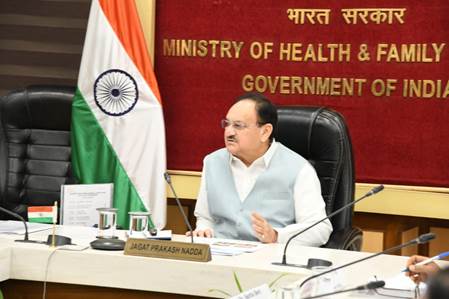
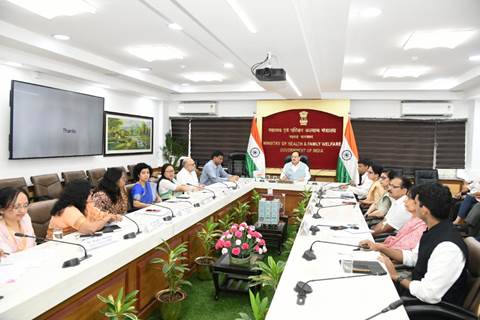
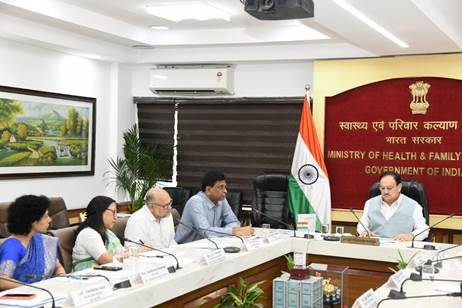
 Union Minister of Health and Family Welfare, Shri Jagat Prakash Nadda chaired a high-level meeting to review the dengue situation across the country and preparedness of public health system for prevention, containment and management of dengue in view of the onset of monsoon and the rise in dengue cases globally, here today.


The Union Health Minister was briefed on the nationwide dengue situation and preparedness of the Ministry. It was informed that the Dengue Case Fatality Rate has reduced from 3.3 % (1996) to 0.1 % in 2024 as a result of focused, timely and collaborative activities. Underlining the challenge posed by the onset of monsoon and the threat of increasing number of dengue cases during the rainy season, Shri Nadda emphasized the importance of being prepared against dengue. He directed the officials to gear up and strengthen prevention, containment and management measures against dengue.

Shri J P Nadda urged officials to primarily focus on high burden states and regions where outbreaks are frequently reported. He urged officials to proactively work with States to bring tangible results on dengue prevention. He particularly stressed on inter-ministerial convergence meeting involving Ministry of Housing and Urban Affairs (MoHUA), Ministry of Rural Development (MoRD), Education Ministry and Municipal Corporations and local self govt. for sensitization on their roles and responsibilities for dengue prevention and control.


He stated that the Centre has been proactively communicating with the states on timely action for prevention and control of dengue activities. Various inter-sectoral meetings have been conducted to sensitize the stakeholders and ministries on their role and responsibilities on prevention and control of dengue. He informed that these activities will be further strengthen incoming years. “Union government has been over the period of time providing technical and budgetary support as a result of which the”.

Highlighting the importance of communication and awareness enhancement activities, the Health Minister stated that in order to sensitise communities regarding the ades mosquito which generally bites in the daytime, awareness campaign among school going children and others to wear clothes that keep the body fully covered, and keeping various water containers, pots etc., free of stagnant water will be taken up at a massive scale. A nationwide IEC campaign for awareness through TV, radio, social media etc., platforms will be taken up across the country.

The Union Health Minister directed for the officials to create a 24/7 central helpline number for dengue prevention and awareness, and support for queries on the symptoms, treatment protocols and help during emergency situation. States were also advised to operationalize similar Helpline numbers.

Shri Nadda has directed AIIMS and all central Govt hospitals to have dedicated dengue wards are fully equipped with trained manpower, drugs and other logistics. They have also been instructed to create a referral system to optimally utilize their clinical facilities.

Dr. Atul Goel, Director General of Health Services (DGHS) highlighted the need for sensitizing municipal bodies in states for preventing dengue outbreaks. He also suggested on improving coolers and tanks in buildings to make them immune from mosquito breeding.


The following measures have been taken for prevention, control and management of dengue across the country:

  • The Government of India have issued 14 advisories in 2024 for sensitization of States on preparedness for prevention and control of Dengue and Chikungunya. Various high-level meetings have been held to provide technical guidance to States from time to time.
  • For free diagnosis and disease surveillance, Sentinel Surveillance Hospitals increased from 110 in 2007 to 848 in 2024.
  • National Dengue Day is observed on 16th May across the Country to initiate pre-monsoon preventive activities.
  • Updated National guidelines of case management were released by the Union Health Minister on 10th August, 2023.
  • Master trainers from medical colleges and district hospitals were trained in four National level trainings on updated guidelines for improving clinical management and avert deaths due to Dengue.
  • Central teams are also deputed to States on regular basis for review of disease situation, actions taken by States and to provide technical guidance for containment of disease. Adequate diagnostic kits both for Dengue and Chikungunya have also been provided to the states.

Shri Apurva Chandra, Union Health Secretary; Smt. Aradhana Patnaik, Addl. Secretary, Health Ministry; Smt. L S Changsan, Addl. Secretary, Health Ministry; Dr Atul Goel, DGHS, Smt. Vandana Jain, Joint Secretary, Health Ministry; Prof. M Srinivas, Director, AIIMS New Delhi; Dr. Sarita Beri, Director, Lady Hardinge Medical College; Dr. Vandana Talwar, Medical Superintendent, Safdarjung Hospital; Dr. Ajay Shukla, Medical Superintendent, Ram Manohar Lohia Hospital; Dr Tanu Jain, Director, NCVBDC, Health Ministry and other senior officials of the Union Health Ministry were present in the meeting.

****

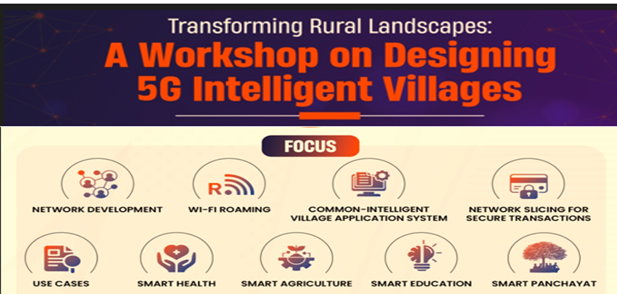
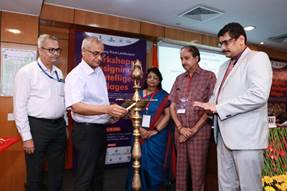
DoT organises workshop on ‘Transforming Rural Landscapes: Designing 5G Intelligent Villages’

 The transformative potential of future technologies, such as 5G, to revolutionize life in rural areas, was the focus of a workshop on “Transforming Rural Landscape: Designing 5 G Intelligent Villages” held here today. The Workshop was organised by the Department of Telecommunications (DoT) which is spearheading these efforts by unlocking the potential of 5G technology for rural development.

Emphasizing the government’s priority on enhancing rural development, the workshop showcased initiatives aimed at improving connectivity, digital literacy, and sustainable practices to significantly enhance the quality of life for rural communities.


In his inaugural address, Dr Neeraj Mittal, Secretary (T) highlighted the importance of collaborative efforts in achieving the vision of intelligent villages. He discussed the concept of “smart” and “intelligent” villages, emphasizing the ability of these communities to interact, sense their surroundings, convey data, and extract knowledge, to be able to make informed decisions. He urged Industry and TSPs to come forward and adopt villages and employ technology to make them intelligent villages.  He expressed the hope that  workshop will come out with smart solution and test use-cases  for  creating a sustainable and prosperous future for our rural communities.

Member (T) Ms Madhu Arora emphasised on the need to bridge the digital gap between Urban and Rural landscapes. She said, the evolving technologies have the potential to enrich the lives of people in rural areas in all spheres of life, be it education, health, environment, agriculture and conservation and intelligent use of natural resources etc.

DDG(SRI) Shri A Robert J Ravi firmly asserted that technology must enhance the lives of people in rural areas to be truly valuable. Therefore, we need to develop innovative solutions, ranging from ‘Intelligent Display’ to micro-robots, to create 5G Intelligent Villages that will positively affect all sectors and benefit the society at large, particularly the rural population.

The sessions at the Workshop included ‘Building the backbone of rural connectivity’; ‘ Real world use cases and innovations’; ‘AI-powered real time monitoring’; and ‘On-ground 5G network infrastructure’.  A panel discussion was also  held on Deployment of “Intelligent Villages”.  It featured a series of presentations and interactions on topics such as renewable energy, smart agriculture, digital literacy, and infrastructure development. Attendees had the opportunity to engage with industry experts and explore practical applications of these technologies in their own communities.

Senior DoT officials, Industry people, MSMEs, start-ups, academia and other stakeholders participated in the Workshop.

The workshop aimed at integrating technology and rural development to enhance quality of life. The integration of cutting-edge innovations, like 5G, with traditional rural practices was highlighted as a pathway to foster sustainable growth and improve living standards in rural areas.

The 5G Intelligent Village Initiative of the DoT (see link attached) responds to the pressing need for equitable technological advancement by harnessing the transformative power of 5G technology to uplift rural communities. “From Connectivity Gaps to Smart Solutions: Designing 5G Networks for Rural Innovation- 5G Intelligent Villages”- aims to addresses critical pillars such as agriculture, education, healthcare, governance, and sustainability (see link attached). https://youtube.com/shorts/ufQzwxh8nZ0?si=e0vMGtASR6NTmaz1.

By leveraging such advancements, the government aims to ensure that rural areas are not left behind in the global push for technological progress and sustainability.

The Intelligent Village Workshop is a significant step forward in the journey towards empowering rural areas, demonstrating the government’s priority to integrate future technologies and sustainable practices in the development of intelligent villages.

****

Support Indian artisans, and nurture creativity and imagination through toys that inspire and educate children across the globe

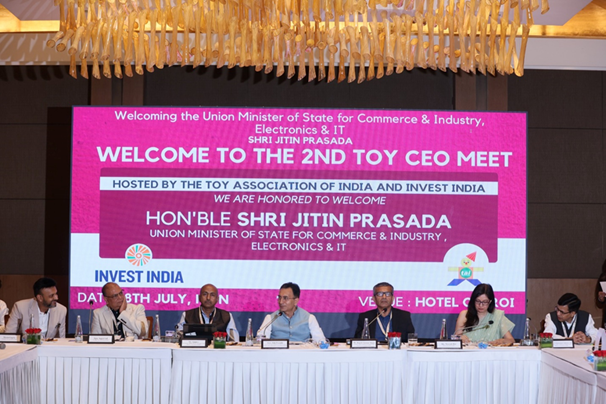
 Union Minister of State for Commerce and Industry and Electronics & Information Technology, Shri Jitin Prasada encouraged the toy industry to support Indian artisans, and nurture creativity and imagination through toys that inspire and educate children across the globe. While delivering the keynote address at the ‘2nd Edition of Toy CEO Meet’ organized by the Toy Association of India in association with the Department for Promotion of Industry and Internal Trade (DPIIT) and Invest India, in New Delhi on 8th July 2024, the Minister highlighted the vision of the Prime Minister, Shri Narendra Modi, of, “Sabka Saath, Sabka Vikas, Sabka Vishwas”. He also motivated the participants to continue collaboration and celebrate India’s toy making legacy.

The 2nd Edition of Toy CEO Meet provided a platform for collaboration between the Indian and Global Toy industry, with the aim of working towards the mission of positioning India as a Global Toy Hub. The event was attended by prominent global players including Walmart, Amazon, Spin Master, IMC Toys, etc., and members from the domestic Toy industry including Sunlord Apparels Manufacturing Company Pvt. Ltd., Playgro Toys India Pvt. Ltd, etc.

Secretary, DPIIT, Shri Rajesh Kumar Singh, while addressing the participants highlighted that the initiatives of the Government together with the endeavors of the domestic manufacturers have resulted in remarkable growth of the Indian Toy industryThese developments indicate India’s increasing self-reliance and enhanced manufacturing prowess in toy manufacturing, he said.

Joint Secretary, DPIIT, Shri Sanjiv, applauded the efforts made by the Indian Toy industry, especially the Toy Association of India for successful organization of the 15th Toy Biz International B2B Expo. He encouraged the Toy industry members to continue engaging with DPIIT in case of any challenges and expressed that the mission is to make Indian Toys synonymous with quality, uniqueness, innovation, and sustainability.

While discussing the investment opportunities in India for Toys, CEO & MD, Invest India, Ms. Nivruti Rai, highlighted that India has a huge market potential for investment due to expanding Toy demand with a growing young population.

During the stakeholder discussions, global players such as Walmart, IMC Toys, Spin Master etc. spoke about their own growth stories and expressed enthusiasm to expand operations in India. The vision shared by the speakers provided the audience with insights on the Indian toy industry and opportunities for growth and collaboration. The event has played a pivotal role in harnessing synergies, leveraging complementary strengths, and capitalizing on emerging opportunities in the global marketplace for Indian Toy industry.

This event was a part of the 15th edition of the India Toy Biz International B2B Expo, one of the largest toy fairs in the country, which has brought together prominent global and domestic toy manufacturers, artisans, retailers and Government officials to harness the burgeoning opportunities in the domestic toy sector

***

74th Meeting of Network Planning Group under PM GatiShakti evaluates five key infrastructure projects

 The 74th meeting of the Network Planning Group (NPG) under PM GatiShakti was convened in New Delhi yesterday under the chairpersonship of Additional Secretary, Department for Promotion of Industry and Internal Trade (DPIIT), Shri Rajeev Singh Thakur. The meeting focused on evaluating five significant infrastructure projects from the Ministry of Railways (MoR), Ministry of Road Transport and Highways (MoRTH), and Ministry of Housing and Urban Affairs (MoHUA). These projects were assessed for their alignment with the principles of integrated planning outlined in the PM GatiShakti National Master Plan (NMP).

Balaram – Tentuloi New Railway Line (MCRL Phase II) in Odisha

This greenfield project involves the construction of a 49.58 km rail line at an estimated cost of INR 1,404 Crores in Angul district to provide vital first-mile rail connectivity for 11 coal blocks. It aims to reduce logistics costs for industries and generate employment, thus contributing to regional development. The project is expected to significantly enhance the transport efficiency of coal, benefiting both the local economy and the broader industrial landscape of the state of Odisha.

Budhapank – Luburi New Railway Line (MCRL Outer Corridor) in Odisha

Spanning 106 kilometres, this greenfield rail line at an estimated project cost of INR 3,478 Crores will support efficient coal evacuation from the Mahanadi River Basin. The proposed alignment facilitates the transportation of coal from Talcher Coal Fields, providing first-mile rail connectivity to 21 coal blocks reducing the average distance to rail head from 43 km to 4.2 km enhancing logistical efficiency and reducing costs for core industries like iron and steel.

Lucknow Metro Rail Project Phase I-B East – West Corridor (Charbagh to Vasant Kunj) in Uttar Pradesh

This project involves extending the Lucknow Metro corridor by 11.165 kilometres to address the city’s growing transportation needs. While the existing metro line caters to 80,000 passengers per day (PPD), this additional new line is expected to cater to an additional 200,000 PPD. This proposed new corridor will serve the city’s most densely settled central business districts (CBDs), including Aminabad, Alambagh, Faizabad and Charbagh area. The stations are proposed to be strategically located to seamlessly connect points of interchange through foot overbridges (FoBs) and underpasses. The project is expected to cost INR 5,801 Crores and aims to reduce congestion, vehicular pollution, and enhance public transport accessibility through an integrated network. The development plan emphasizes the use of renewable energy through rooftop installations to reduce conventional energy consumption.

Upgradation of existing 6 Lane Road including elevated corridor of NH-47 (Narol Jn. to Sarkhej Jn.) in Gujarat

This brownfield project involves upgrading a 10.63 km section of NH-47 at an estimated cost of INR 1,295 Crores to address increasing traffic congestion in the southern part of Ahmedabad connecting to major highways and expressways. The project aims to enhance smooth and safe traffic flow, thus improving service levels. Upgrading this critical segment of NH-47 is expected to facilitate more efficient movement of goods and people, contributing to the economic vitality of the region.

4-laning of Section of NH-166 from Chokak to Sangli (Ankali) in Maharashtra

This project involves the four-laning of a 33.6 km section of NH-166, enhancing connectivity between key regions i.e., between Kolhapur & Sangli in the state of Maharashtra, at an estimated cost of INR 864 Crores. This development will reduce the travel time by 50% and the distance by about 5.4 km. This will also have a significant impact on environmental attributes. The improvement of this road will save fuel and time as well as help in controlling the pollution measures due to emission of smoke from vehicles.

Network Planning Group (NPG) evaluated all the projects from the perspective of principles of PM GatiShakti i.e., integrated development of multimodal infrastructure development, last mile connectivity to economic and social nodes, intermodal connectivity and possible synchronized implementation of the projects. These projects are expected to play pivotal roles for nation-building, integrating various modes of transport, and providing substantial socio-economic benefits and ease of living, thereby contributing to the overall development of the regions.

***