National Youth Awardees and National Service Scheme Awardees

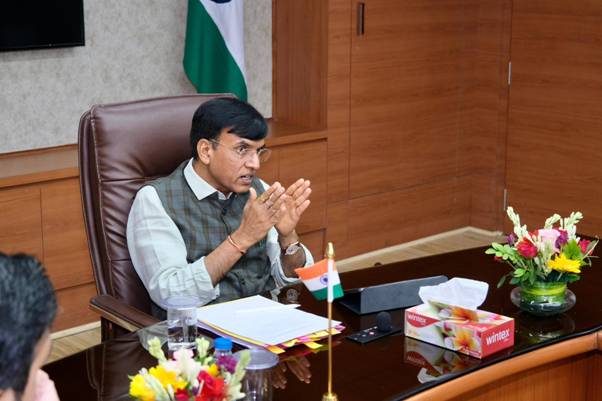
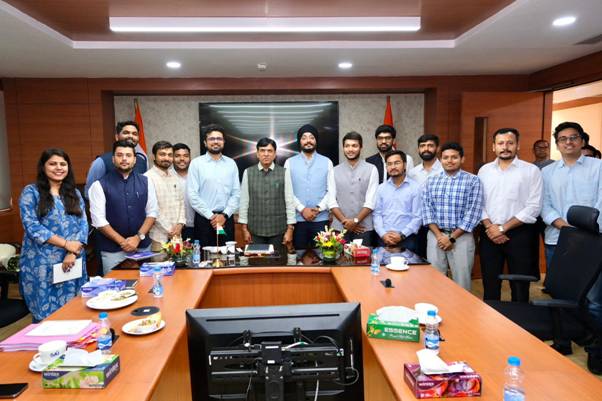
 Union Minister of Youth Affairs & Sports and Labour & Employment, Dr Mansukh Mandaviya held an insightful interaction with the National Youth Awardees and National Service Scheme (NSS) Awardees in New Delhi today. The session aimed to celebrate the achievements of these young leaders and discuss strategies to enhance the MY Bharat platform, ensuring it becomes more accessible and beneficial to the youth of India.

Dr. Mandaviya commenced the interaction by acknowledging the extraordinary contributions of the awardees, who hail from different States across India and have made significant impacts in diverse areas such as Sustainable Development Goals (SDGs), Climate Change, Urban Planning, Youth Empowerment, Drug Abuse prevention, among others. He emphasized the importance of recognizing and nurturing young talent to build a robust future for the nation.

Addressing the participants, Dr, Mandaviya said, “The youth of India are our future decision-makers, and I am excited about our collective journey towards empowering them”.

A significant part of the discussion focused on innovative and collaborative ideas for constructive youth engagement on the MY Bharat platform. Dr. Mandaviya invited suggestions from the awardees on how to make the platform more interactive, informative, and engaging. The awardees proposed ideas such as incorporating more digital tools, making it a one stop solution for all youth-related initiatives, and creating mentorship and internship programs to guide aspiring young leaders.

Dr. Mandaviya encouraged continuous dialogue between the youth and the Ministry to ensure that the needs and aspirations of young Indians are adequately addressed.

Dr. Mandaviya reiterated the government’s commitment to empowering the youth through various schemes and programs. The interaction concluded with a collective vision to make the MY Bharat platform a cornerstone for youth engagement and development. Dr. Mandaviya expressed his optimism about the future and his belief in the transformative power of the youth in driving India towards progress and innovation.

The interaction was also attended by Secretary, Department of Youth Affairs and senior officials of the Ministry of Youth Affairs & Sports.

*****

Schemes and key Initiatives under the Ministry of Tribal Affairs for the next 100 days

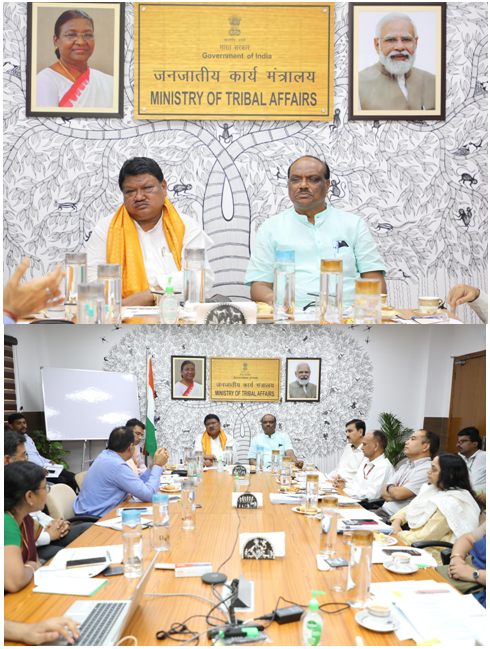
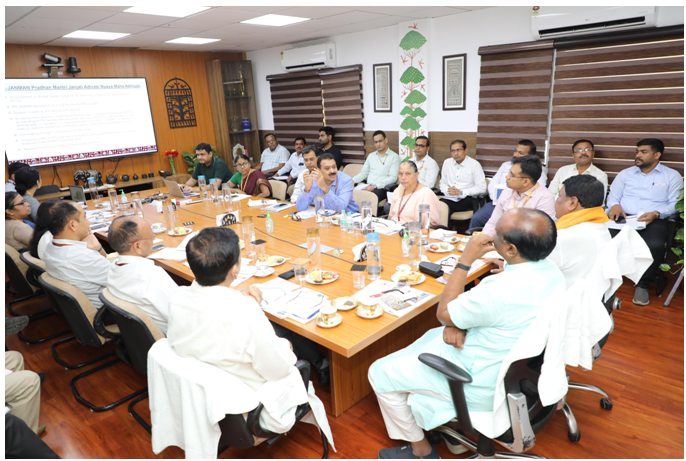
 In a daylong meeting in New Delhi today, Union Minister for Tribal Affairs, Shri Jual Oram and Minister of State, Shri Durgadas Uikey reviewed the progress of schemes and strategized on key initiatives of the Ministry for the next 100 days.

The meeting commenced with a comprehensive presentation on the Ministry’s schemes and initiatives, followed by an overview of the budget.

Key schemes and initiatives discussed in the meeting were:

  • Scholarships schemes for tribal students
  • Pradhan Mantri Janjati Adivasi Nyaya Maha AbhiyaN (PM-JANMAN)
  • Pradhan Mantri Adi Adarsh Gram Yojana (PMAAGY)
  • Eklavya Model Residential Schools (EMRS)
  • Livelihood Schemes
  • Grants under Proviso to Article 275 (1) of the Constitution
  • Support to Tribal Research Institutes (TRIs)
  • Support to voluntary organisations (NGOs)
  • Major initiatives taken in the health sector, and
  • Other ancillary matters handled by various divisions of the Ministry

Shri Oram emphasised the importance of these initiatives in fostering an inclusive and equitable society. Shri Uikey echoed these sentiments, highlighting the collaborative efforts needed to drive these initiatives forward. Secretary (Tribal Affairs), Sh. Vibhu Nayar,  along with senior officers, provided valuable insights and detailed plans to ensure timely and effective implementation.

The meeting concluded with a unanimous commitment of the Ministry to work tirelessly for the outlined goals for empowering tribal community.

*****

‘Healthcare Summit’; emphasises use of latest technology for accessible, affordable healthcare

Addressing the 2nd “Healthcare Summit” of “American Chamber of India” (AMCHAM) at Hotel Taj here, Union Minister Dr. Jitendra Singh emphasised the use of latest technology  for accessible, affordable healthcare. 

The Minister also described  India among the top 6 Bio-manufacturers of the world with one of the most cost-effective and efficacy-based Bio-manufacturing as well as cost-effective healthcare destination.
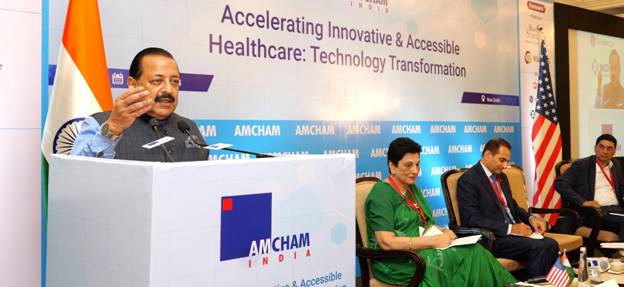
Union Minister of State (Independent Charge) for Science and Technology, Minister of State (Independent Charge) for Earth Sciences, MoS PMO, Department of Atomic Energy and Department of Space, MoS Personnel, Public Grievances and Pensions, Dr. Jitendra Singh, said in his opening remarks, “I would like to extend my gratitude to AMCHAM for organizing this pivotal healthcare summit and inviting me to articulate the Government’s vision for healthcare in India.” He expressed his happiness at being a part of the fraternity gathering and discussing the subject of health, which is his area of interest.

Incidentally, the Minister is  himself a renowned endocrinologist with a three-decade long career in medicine. He pressed on the new burden of metabolic disorders and the challenges it posed with a wide spectrum of diseases and an increased life span bringing novel diseases.

The Minister appreciated the theme of the summit, i.e., ‘Accelerating Innovative and Accessible Healthcare: Technology Transformation.’ He said the theme is quite relevant to India’s contemporary health issues and government efforts to ensure affordable healthcare f toor all.
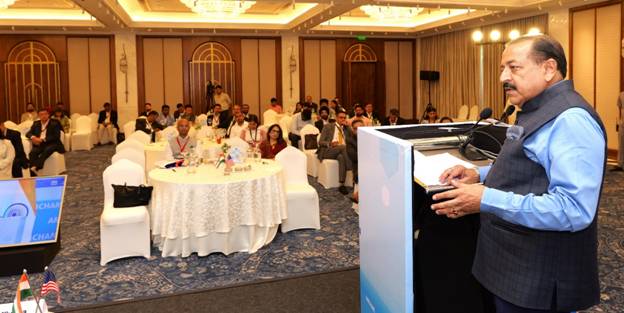
Dr. Jitendra Singh underscored that summits of this nature are instrumental in convening key stakeholders-healthcare professionals, technology experts, policymakers, and industry leaders to deliberate on fortifying the U.S.-India partnership in healthcare.

Speaking on the transformation in healthcare brought about in recent times, Dr. Jitendra Singh said, “Prime Minister Narendra Modi has a vision for a healthy India with the elimination of communicable diseases and reduction in non-communicable diseases, developing health indices and making steady progress.” He said, “India carried out the world’s largest vaccination drive in COVID pandemic; this reaffirms that Modi Govt. 3.0 firmly believes that accessible healthcare is a right for every citizen.

“Gone are the days when people used to visit other developed nations to access medical facilities; now India has become a hub and is the most sought-after destination for medical tourism and among the frontline nations in preventive healthcare.” According to the Science and Technology Minister, in the last decade, healthcare has been a priority sector for the government. He recalled the achievements such as the Ayushman Card which ensured cashless medical treatment to the citizens. The Digital healthcare mission, PM Jan Aaushadi and its integration with other medical streams such as Ayush.

Dr. Jitendra Singh stated that technology plays a crucial role in ensuring equitable access to healthcare. Technology is revolutionizing the healthcare sector, and the integration of Artificial Intelligence (AI) and Machine Learning (ML) tools can significantly enhance our capabilities by leveraging technology, we can enhance efficiency, reduce wait times, and improve overall healthcare delivery. Sharing his experience with Telemedicine, the minister shared how it has transformed healthcare and made services accessible even to the remotest villages in Jammu and Kashmir.
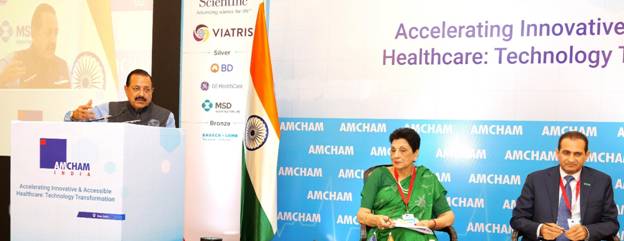
Dr. Jitendra Singh emphasized the increased cooperation in the public and private sectors. It is important to understand that public health is not just the responsibility of the government; private participation is equally important and we as a society as a whole have to take steps in the right direction. The Minister said opening up of the Space sector had ushered a private investment of more than Rs 1,000 crore within a few months and boosted the Startup numbers from one startup in 2022 to 200 plus startups currently and having global capacity.

The Minister also recalled the efforts of the Department of Biotechnology and their achievements for fostering research and development in translational health sciences. He said the Bio- manufacturing and bio-foundry has grown 10 times from $13 billion in 2014 to $130 billion in 2024.

Highlighting the vitality of the pharmaceutical sector the minister said, “India supplies four out of every ten prescriptions filled in the U.S, highlighting our pharmaceutical manufacturing capabilities.” Going further he highlighted that partnership between India and the United States is critical.

Ms. Ranjana Khanna Director General, CEO AMCHAM; Mr Som Satsangi, Chairman, AMCHAM & Sr Vice President and MD, India Hewlett Packard Enterprise; Dr Rajeev Singh Raghuvanshi, Drug Controller General of India; Mr. Madan Krishnan, Vice President and Managing Director India Subcontinent, Boston Scientific and Mr Chaitanya Sarawate, Managing Director Wipro GE Healthcare also participated in the Summit.

*****

A High-Level Brainstorming Session on Avian Influenza Under One Health Approach

 The Department of Animal Husbandry & Dairying convened a high-level brainstorming session on Avian Influenza, focusing on surveillance and vaccination under the One Health approach. The session took place at Krishi Bhawan on yesterday and was chaired by Secretary of the Department of Animal Husbandry & Dairying Ms. Alka Upadhyaya. The event was attended by a diverse group of officers and experts.

Dr. Rajiv Bahl, Secretary of the Department of Health Research and Director General of the Indian Council of Medical Research (ICMR), set the context of the One Health Mission. Participants included senior experts from ICMR Headquarters, ICMR-NIV Pune, CSIR-Centre for Cell and Molecular Biology (CCMB), the National Centre for Disease Control, ICAR-NIHSAD Bhopal, ICAR-NIVEDI Bangalore, and representatives from the Ministry of Environment, Forest and Climate Change, Department of Biotechnology, DM Cell, Ministry of Health & Family Welfare and the Department of Animal Husbandry & Dairying (DAHD).

The poultry sector in India plays a crucial role in food security by providing a reliable source of high-quality protein. It significantly contributes to nutritional security and supports livelihoods, particularly in rural areas. The sector, which has grown steadily at a rate of 7-10% over the past decade, also boosts trade and exports, contributing to the country’s economic growth. However, recurrent Highly Pathogenic Avian Influenza (HPAI) outbreaks hinder its potential and impact exports.

Highly pathogenic avian influenza (HPAI) H5 subtype virus is evolving biologically and expanding geographically, with the emergence of well-established genetic lineages. The recent HPAI outbreak in dairy cattle in the USA, with spill over to other mammals, underscores the pandemic potential of HPAI. Addressing this threat requires the One Health approach, integrating human, animal, and environmental health with enhanced coordination and comprehensive strategies. The session featured comprehensive presentations from the Human Health, Animal Husbandry, and Wildlife sectors, highlighting current surveillance protocols and response mechanisms for Avian Influenza outbreaks. The need for enhanced environmental surveillance and updating existing protocols was emphasized.

Experts concurred on the necessity of proactive One Health Coordination to prepare for exotic and emergent zoonotic diseases like Avian Influenza. Discussions focused on strengthening surveillance at the interface areas between humans, animals, and wildlife, augmenting active surveillance, and deploying cross-sectoral Joint Response Teams (RRTs).

The Influenza A/H5 virus is spreading through poultry and wild birds along well-defined migratory routes. Given India’s position along the migratory bird flyway, developing an effective strategy for migratory bird surveillance at water bodies during the winter season is emphasized for early warnings and disease control. Special emphasis is placed on developing SOPs for environmental surveillance using low-cost methods at sites like wet markets, water bodies, wastewater, slaughterhouses, and poultry farms. Following the lead from wastewater screening for COVID and polio virus, CCMB, ICMR, and NIV have initiated research in this area, yielding significant and promising results.

The globally available HPAI vaccines typically neither provide sterile immunity nor are 100% effective against all strains. vaccines offer partial immunity, reducing disease severity and viral shedding but not entirely preventing infection. Vaccinated birds can still carry and transmit the virus without exhibiting symptoms, complicating surveillance and outbreak detection. This partial immunity can lead to the emergence of vaccine-resistant strains. Considering these scenarios and the difficulties in ensuring stringent biosecurity and movement restrictions, particularly in the backyard poultry sectors, experts advocate continuing the present strategy of surveillance and culling with no vaccination. However, the need for advanced research for vaccines for both humans and poultry birds is emphasized. ICAR-NIHSAD, Bhopal, which has already commercialized the vaccine technology against Low-Pathogenic Avian Influenza (LPAI-H9N2), has taken a significant lead in developing an indigenous vaccine against HPAI. ICMR is also planning to initiate cell-culture-based vaccines against Avian flu for human use.

This brainstorming session marked a significant step towards a coordinated and comprehensive approach to managing Avian Influenza. By leveraging the One Health approach, the Department of Animal Husbandry & Dairying aims to enhance surveillance, response mechanisms, and vaccine development, thereby mitigating the impact of Avian Influenza and similar zoonotic diseases.

*****

Regulation of Drugs, Cosmetics and Medical Devices

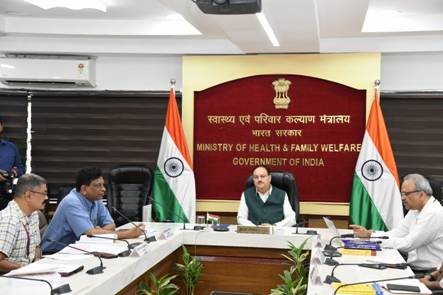
 “For India to become the global leader in drugs regulation to match our global reputation of ‘Pharmacy of the World’, we need to have world class regulatory framework matching our scale of operations and international expectations”. This was stated by Union Health Minister Shri J P Nadda, as he reviewed the regulation of drugs, cosmetics and medical devices, here today. Union Health Secretary Shri Apurva Chandra, Drugs Controller General of India (DCGI) Dr Rajeev Singh Raghuvanshi and senior officers of Central Drugs Standard Control Organization (CDSCO) and Union Health Ministry were present at the high level review meeting.

Highlighting the global position of India as the leading producer and exporter of drugs, Shri J P Nadda stressed on CDSCO to draw a roadmap with timelines of achieving global standards in its mandated activities. He stated that the upscaling needs to be systems-based focusing on highest standards of uniformity, technical upgradation and futuristic approach. For export of drugs and pharmaceuticals, the system should be designed for proper intervention to maintain the quality of drugs being exported, he emphasized.

Shri Nadda underscored the importance of transparency in the working of CDSCO. He stated that “In order to achieve global standards, our focus needs to be on transparency of procedures at CDCSO and within the drugs and medical devices industry”. Both the Drugs Regulatory body and the industry should work on highest principles of transparency to ensure that the products manufactured and sold by India meet the highest indices of global quality standards, he said.

The Union Health Minister stated that it is important for CDSCO to be in continuous dialogue with the drugs and medical devices industry to understand their issues and support them to fulfill the quality expectations and standards of CDSCO. “Our focus should be on developing mechanisms that ensure easy of doing business for the drugs industry within the regulatory requirements. For this, CDSCO needs to be a user-friendly organization with state-of-the-art facilities matching global standards”, he stated.    

On the topic of Micro, Small & Medium Enterprises (MSME) sector in drugs manufacturing and the issues faced by the small scale industries to meet quality standards, the Union Health Minister “Let us understand the issues faced by MSME sector and support them to strengthen their capacity and quality of products on the one hand, and encourage them to meet the regulatory requirements on the other.”

Shri Nadda was briefed about the mandated activities of CDSCO, its achievements, future plans and various issues and challenges faced by CDSCO. The Minister was also updated on the progress of the Scheme for strengthening state drug regulatory system with a budget of Rs.850 crores which was launched in 2016 during his earlier tenure.

The Union Minister was briefed on the roles and responsibilities of the central and state drugs regulatory bodies, and some of the challenges faced in alignment between them. Noting that the States are integral part of our regulatory value chain, Shri Nadda underscored the importance of working in tandem with the States so as to enhance their skills and capacities, and also encourage them to align with quality standards of the Central Government. “This is especially important in view of upgradation of Good Manufacturing Practices to global level embarked upon by CDSCO”, he added.

****

Lakshadweep, Daman Diu, Dadra and Nagar Haveli

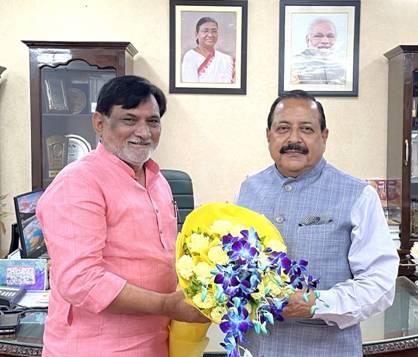
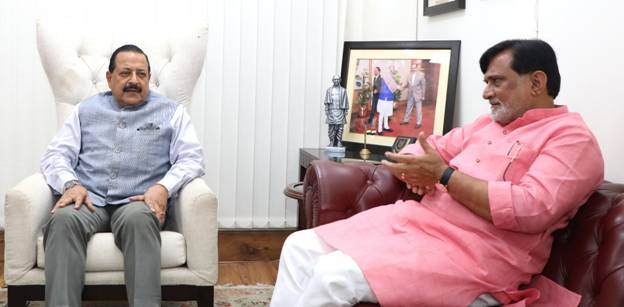
 Administrator of Lakshadweep, Daman Diu, Dadra and Nagar Haveli Sh Praful Patel called on Union Minister Dr. Jitendra Singh here today to express gratification for initiatives such as installing world’s first of its kind “Desalination Plant” for drinking water by National Institute of Ocean Technology, Chennai under the aegis of Union Ministry of Earth Sciences.

Sh Patel thanked Minister Earth Sciences Dr. Jitendra Singh for the World’s first Low Temperature Thermal Desalination (LTTD) plant which has brought huge relief by providing clean drinking water to people of the Union Territory. Total 9 Desalination plants are approved of which are 7 operational and one more will be operationalized in the coming weeks. The capacity of each of these LTTD units is around 1 Lakh litre of potable water per day which will be increased to 1.5 lakh litres per day in the coming time.

 The LTTD technology uses the naturally available temperature difference in oceans, evaporating the surface water at low pressure and condensing the resultant vapour with deep sea cold water at 12oC, obtained from about 400 m depth. The technology is indigenous, environmentally friendly and easy to operate. He also thanked Prime Minister Narendra Modi and the union government for approving Two Airports.

Dr. Jitendra Singh said “Two airports will prove to be a boon for Eco-tourism and development in Lakshadweep.” He highlighted the development journey since 2014 of the Union Territory and reforms brought in schools, colleges and other social sectors such as Hospitals and Local self Governing bodies.

Union Minister of State (Independent Charge) for Science and Technology, Minister of State (Independent Charge) for Earth Sciences, MoS PMO, Department of Atomic Energy and Department of Space, MoS Personnel, Public Grievances and Pensions, Dr. Jitendra Singh informed Sh Praful Patel that two re-mineralization plants are being made operational which will add the essential salts evaporated during the desalination process. Other desalination units/plants will also be provided with similar re-mineralization facility in course of time, he added.

Dr. Jitendra Singh shared that a team of doctors from SRM Institute, based on local health records 6 months before and after installation of Kavaratti plant observed that the incidence of water borne diseases reduced by 90% (200 to 8) highlighting the health benefits and impact of provision of potable water. He also assured that these indigenous technological developments will prove to be a landmark and increased the pace of development and promote tourism in the Union Territory.

Dr. Jitendra Singh highlighted Prime Minister’s vision for the development of Lakshadweep and said “In the coming years It will become a major hub for Domestic as well as international tourists generating employment and boosting economy. He also informed Sh Patel that almost all the Ministries under Dr. Jitendra Singh are working in tandem to bring more projects and development to the region. On the sidelines both discussed various developmental activities and projects in the UT. 

*****