The International Conference on Motherhood Melodies brought together scholars, writers, and practitioners from diverse fields to explore the intricate connections between motherhood and literature. Focusing on the theme “A Global Harmony of Literary Resonance,” this conference aimed to illuminate how literary expressions across cultures reflect and shape maternal experiences, emotions, and narratives.
Panels and Sessions
The conference included a variety of panels and breakout sessions that engaged participants in critical discussions and interactive workshops. Notable topics included:
The Role of Memory in Maternal Narratives: Examining how personal and collective memories shape the portrayal of motherhood in literature.
Motherhood and Identity: Investigating the intersection of maternal identities with cultural, racial, and socio-economic factors in literary works.
The Aesthetic of Care: Exploring how literature represents caregiving as a form of art and emotional labor.
Highlights of the Conference
Interactive Workshops: Attendees participated in workshops that focused on creative writing, storytelling, and the use of narrative techniques to express maternal experiences.
Poster Presentations: Emerging scholars showcased their research through poster presentations, allowing for rich dialogue and networking opportunities.
Cultural Performances: The conference featured performances that celebrated maternal themes through poetry, music, and dance, reinforcing the idea of motherhood as a universal melody.
Conclusion
The International Conference on Motherhood Melodies fostered an environment of intellectual exchange and collaboration. Participants left with a deeper understanding of how literature resonates with the myriad experiences of motherhood, transcending cultural boundaries and inspiring future research.
Acknowledgments
We extend our heartfelt gratitude to all speakers, participants, and volunteers who contributed to the success of this conference. Special thanks to the organizing committee at Christ Nagar College and the IQAC for their unwavering support and dedication.
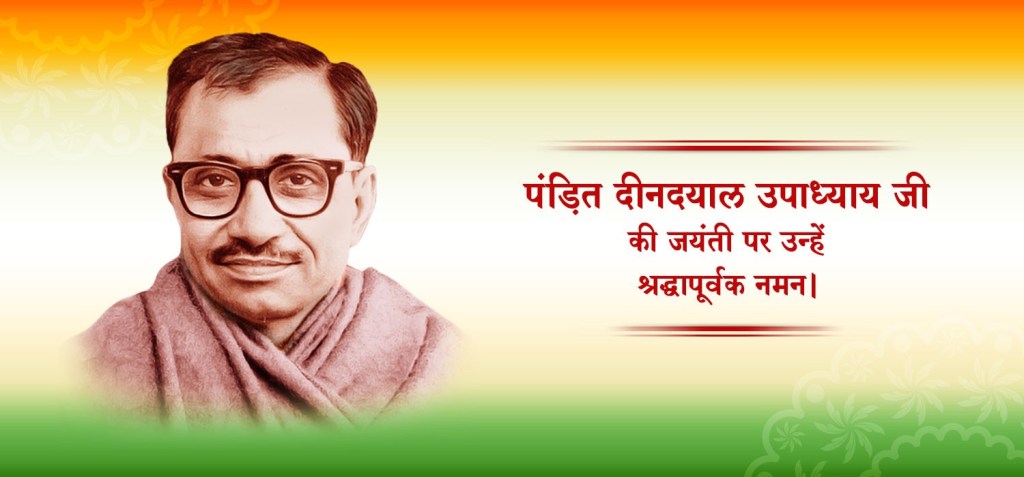
Pandit Deendayal Upadhyaya (1916–1968) was an Indian politician, philosopher, economist, and thinker, who played a significant role in shaping the political and ideological framework of modern India. He was a key leader in the Bharatiya Jana Sangh (the precursor to the Bharatiya Janata Party, or BJP) and is best known for his formulation of the concept of “Integral Humanism”—a philosophy that sought to define India’s political and socio-economic direction post-independence.
Early Life and Education
Deendayal Upadhyaya was born on September 25, 1916, in the small town of Chandrabhan (now renamed Deendayal Dham) in Mathura district, Uttar Pradesh. His early life was marked by tragedy, as he lost his parents at a young age, and he was raised by his maternal uncle. Despite financial hardships, Upadhyaya was an excellent student, excelling academically. He attended high school in Sikar, Rajasthan, where he earned a scholarship, and later completed his graduation from Sanatan Dharma College, Kanpur. He pursued further studies at St. John’s College, Agra.
However, despite excelling academically, Upadhyaya was drawn towards nationalist politics and social work, influenced by the ideas of Rashtriya Swayamsevak Sangh (RSS), a Hindu nationalist volunteer organization that focused on nation-building and social welfare.
Political Career
Pandit Deendayal Upadhyaya’s formal political journey began when he joined the RSS in the late 1930s. Deeply committed to the cause of Hindutva (Hindu nationalism), he worked as a full-time “pracharak” (propagator) for the RSS. His dedication to nationalist ideals was evident as he worked tirelessly to expand the influence of the organization in different parts of India.
In 1951, when Syama Prasad Mookerjee founded the Bharatiya Jana Sangh (BJS), Deendayal Upadhyaya was one of its key founding members. He became the party’s General Secretary, a post he held for nearly two decades, contributing to the growth of the party. He was instrumental in defining the ideological framework of the Jana Sangh, emphasizing a vision of India rooted in its indigenous culture, values, and self-reliance.
Integral Humanism
The most important contribution of Pandit Deendayal Upadhyaya to Indian political thought is his doctrine of “Integral Humanism” (Ekatma Manav Darshan). Delivered as a series of lectures in 1965, Integral Humanism was proposed as an alternative to both Western capitalism and socialism. According to Upadhyaya, both these systems were incompatible with Indian culture and failed to meet the holistic needs of human beings.
Core principles of Integral Humanism:
Holistic Development of Human Beings: Upadhyaya believed that human development must address both material and spiritual needs. Western ideologies focused too much on material prosperity, neglecting the spiritual and cultural aspects of human life.
Socio-Economic Model Based on Indian Traditions: Upadhyaya advocated for an economic model rooted in Indian values, emphasizing decentralized governance and self-reliance (Swadeshi). He was against the blind adoption of Western economic policies and called for a system that balanced economic growth with ethical living.
Harmony between Individual and Society: He stressed that individual aspirations should align with the well-being of society as a whole. He argued for a balance between individual rights and societal duties, avoiding both excessive state control and extreme individualism.
Focus on Indigenous Solutions: Upadhyaya’s vision was fundamentally based on the cultural and spiritual ethos of India. He believed that India must evolve a political and economic system that is not an imitation of the West but instead arises from its own traditions, culture, and spiritual heritage.
Integral Humanism continues to serve as the ideological foundation of the BJP today, which sees it as a guiding principle for national development and governance.
Political Leadership and Influence
Deendayal Upadhyaya’s leadership in the Bharatiya Jana Sangh was marked by his focus on organizational discipline and ideological clarity. Although he was not a mass leader like some of his contemporaries, his influence lay in his intellectual contributions and behind-the-scenes work in strengthening the party structure. He became the President of the Bharatiya Jana Sangh in 1967, but his tenure was tragically short-lived due to his untimely death.
Despite the challenges faced by the Jana Sangh in competing with larger political entities like the Congress, Upadhyaya’s vision helped solidify the party’s role as the voice of Hindu nationalism and cultural conservatism in Indian politics. His emphasis on a politics of ethics, discipline, and indigenous values resonated with many, laying the groundwork for the later rise of the BJP.
Mysterious Death
Pandit Deendayal Upadhyaya’s life was cut short under mysterious circumstances. On February 11, 1968, his body was found near the railway tracks in Mughal Sarai (now Deendayal Upadhyaya Junction) under suspicious circumstances. The circumstances of his death remain unclear to this day, leading to various theories and speculations. His untimely death was a great loss to Indian politics, as many believe he had much more to offer in terms of thought leadership and political guidance.
Legacy
Pandit Deendayal Upadhyaya’s legacy lives on through the political ideology he helped shape. The Bharatiya Janata Party (BJP), which emerged from the Bharatiya Jana Sangh, regards him as a key figure in its ideological foundation. His thoughts on Integral Humanism continue to influence Indian politics, particularly in the realm of governance, self-reliance, and national identity.
Several institutions, programs, and initiatives have been named in his honor, reflecting the continued relevance of his ideas. The government of India, especially under the leadership of BJP, has launched numerous schemes bearing his name, including Deen Dayal Antyodaya Yojana (for poverty alleviation) and Deen Dayal Upadhyaya Grameen Kaushalya Yojana (for rural employment).
Conclusion
Pandit Deendayal Upadhyaya was a thinker and politician who left an indelible mark on Indian political thought through his advocacy of a distinctive Indian philosophy, Integral Humanism. His ideas continue to inspire contemporary political discourse in India, especially within the Hindutva movement and the broader framework of Indian governance. His focus on the integration of material and spiritual development, as well as the promotion of an indigenous economic and political system, makes him a key figure in the intellectual history of modern India.
NICDC Logistics Data Services Ltd. (NLDSL) announces the launch of Unified Logistics Interface Platform (ULIP) Hackathon 2.0, a competitive event aimed at fostering innovation and developing digital solutions to tackle pressing challenges in the logistics industry. The Hackathon was officially launched at an event held under the chairmanship of Shri Rajeev Singh Thakur, Additional Secretary, Department for Promotion of Industry and Internal Trade (DPIIT), at Vanijya Bhawan.
The launch event witnessed more than 1800 attendees joining the kick-off physically and virtually, reflecting widespread industry interest in the initiative. Hackathon 2.0 marks a significant step in leveraging innovation and technology to reshape and streamline India’s logistics and supply chain sector.
Building on the success of ULIP Hackathon 1.0, which resulted in the development of cutting-edge solutions, Hackathon 2.0 invites developers, start-ups, and industry players to come together once again. The focus of this year’s hackathon is on addressing key logistics challenges such as sustainability, complex supply chain processes, unified documentation, andmultimodal logistics optimization.
Speaking on the occasion, Shri Rajeev Singh Thakur, said, “We are excited to launch ULIP Hackathon 2.0, an initiative that fosters creativity, problem-solving, and collaboration. With the tremendous success of Hackathon 1.0, we are confident that this year’s event will generate even more innovative solutions to shape the future of India’s logistics ecosystem.”
As part of its ongoing commitment to transforming the logistics sector, NLDSL also announced the launch of the Track Your Transport (TYT) application powered by ULIP. This app is designed to empower small-scale transporters and traders by addressing various facets of logistics management, from providing tracking of cargo via all modes to verification of vehicles and drivers. TYT eliminates the need for heavy IT infrastructure investments, making it a cost-effective and user-friendly tool for the unorganized sector.
Shri Rajat Kumar Saini, CEO & MD, NICDC and Chairman, NLDSL highlighted that the TYT app is a key milestone in their efforts to bring digital empowerment to small traders and transporters. He stated, “The app provides the tools necessary to enhance operational efficiency and visibility, ensuring that small players can compete on a level playing field with the rest of the industry.”
Track Your Transport app can be accessed via the web at http://www.trackyourtransport.in or downloaded through Android, iOS, and Digital India App Stores.
About ULIP:
ULIP is a digital gateway that allows industry players to access logistics-related datasets from various Government systems through API-based integration. Currently, the platform integrates with 37 systems from 10 ministries via 118 APIs, covering over 1800 data fields. Private sector participation in ULIP has been instrumental in amplifying its impact, with over 1000 companies registered on the ULIP portal (www.goulip.in). Additionally, these companies have developed over 100 applications, leading to more than 54 crore API transactions.
About NLDSL:
NICDC Logistics Data Services Ltd. (NLDSL) has been at the forefront of transforming India’s logistics sector through its innovative solutions like Logistics Data Bank (LDB) and ULIP. By leveraging advanced technology, NLDSL has enhanced efficiency, transparency, and digitization within the industry.
The company was established on December 30, 2015, with the primary objective of harnessing Information and Communication Technology (ICT) to enhance efficiency in the Indian logistics sector. It is a joint venture between Government of India represented by National Industrial Corridor Development and Implementation Trust (NICDIT) and Japanese IT major NEC Corporation.
Satyanarayanamma’s Sanitation Success in Ponnapalli
A fisherwoman’s efforts transformed her community in line with Swachh Bharat’s vision
(Ministry of Housing & Urban Affairs)
September 24, 2024
In the heart of Narsapur town, Andhra Pradesh, lies Ponnapalli ward, a community once defined
by vulnerability and the prevalence of open defecation. A large slum population with limited
access to basic sanitation services had accepted open defecation as the norm. Yet, amidst this
environment, one woman, Satyanarayanamma, refused to accept the status quo. A fisherwoman
and mother of two, Satyanarayanamma, who is differently abled due to polio, became a force
of change in her community. Her personal experience with the illness made her deeply aware
of the importance of sanitation, driving her to make a difference not only for her family but for
the entire ward.
Satyanarayanamma’s journey
started when she joined the
Gender Forum, a local NGO
dedicated to raising awareness
about sanitation and hygiene
among women.
Alongside
other Forum members, she led
discussions on menstrual
hygiene, toilet usage, and
hand washing, working
tirelessly to engage her
neighbours in the battle for a
cleaner, healthier
environment. Initially, it was
very difficult to convince the
local community to adopt safe
sanitation practices and
maintain personal hygiene.
However, with local women
like Satyanarayanamma
leading the charge, the effort
slowly began to gain
momentum. Their sanitation audits and discussions on faecal sludge management and genderfriendly services helped address specific concerns, empowering the community to take charge.
Thanks to their tireless work, Ponnapalli ward achieved Open Defecation Free (ODF) status, a
milestone for the town and an enduring testament to the power of grassroots mobilization.
This transformation coincides with the national Swabhav Swachhata Sanskaar Swachhata
(4S) campaign, launched to mark the 10th anniversary of the Swachh Bharat Mission. Running
from September 17 to October 2, 2024, the campaign highlights India’s ongoing efforts to foster
a culture of cleanliness and sanitation, echoing the goals of the annual Swachhata Hi Seva
movement. As the country builds up to Swachh Bharat Diwas on Mahatma Gandhi’s birth
anniversary, the stories of communities like Ponnapalli stand as powerful symbols of what can
be achieved when citizens unite for a common cause. The 4S campaign is not just about
maintaining cleanliness but instilling a sense of responsibility and pride in sanitation practices,
much like what Satyanarayanamma and her fellow women achieved in their ward.
The broader impact of the Swachh Bharat Mission is evident in its tiered achievements. As of
September 24, 2024, 4,576 cities across India are Open Defecation Free (ODF), meaning they
have successfully eliminated the practice of open defecation. Additionally, 3,913 cities have
achieved ODF+ status, indicating not only the elimination of open defecation but also sustained
toilet usage and proper maintenance of public and community toilets. Furthermore, 1,429 cities
have reached ODF++ status, showcasing advanced management of faecal sludge and septage,
ensuring efficient waste treatment.
In rural areas, the mission has also made significant strides, with 5,54,150 villages achieving
ODF Plus status, which indicates improved sanitation facilities and practices. Among these,
3,00,368 villages have been recognized as ODF Plus Model Villages, setting benchmarks for
others. Additionally, 1,30,238 villages have been verified as ODF Plus Model Verified Villages,
ensuring that they meet the stringent criteria for sustainable sanitation practices.
These numbers are more than just statistics; they represent lives transformed, healthier
communities, and the collective determination of individuals like Satyanarayanamma. Her
work in Ponnapalli ward mirrors the mission’s vision of a cleaner, healthier India, a vision that
continues to inspire change across the nation.
As the Swachh Bharat Mission enters its second decade, the success of the 4S campaign
promises to build on these achievements, ensuring that communities like Ponnapalli are not
just ODF but also equipped with the knowledge and resources to maintain their cleanliness and
hygiene for generations to come. Behind these impressive statistics are stories like
Satyanarayanamma’s—individual efforts that ignite collective action. The Swachh Bharat
Mission didn’t just build toilets; it reshaped mindsets. Satyanarayanamma’s journey shows that
true transformation goes beyond infrastructure—it’s about changing how people perceive and
practice sanitation. Her story is a reminder that sustainable change happens when communities
take ownership, fostering not only cleanliness but also a lasting sense of responsibility for their
health and environment.
References:
• https://sbmurban.org/storage/app/media/stories-of-change.pdf
• https://sbmurban.org/
• https://sbm.gov.in/sbmgdashboard/statesdashboard.aspx
Santosh Kumar/ Sarla Meena/ Sheetal Angral/ Ritu Kataria/ Saurabh Kalia
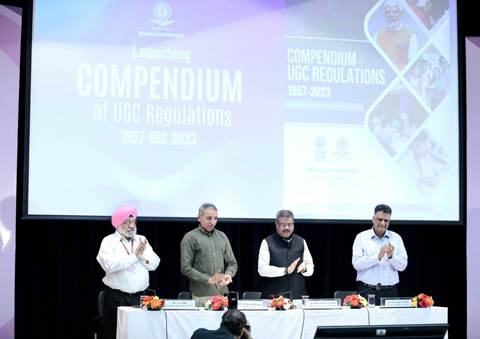
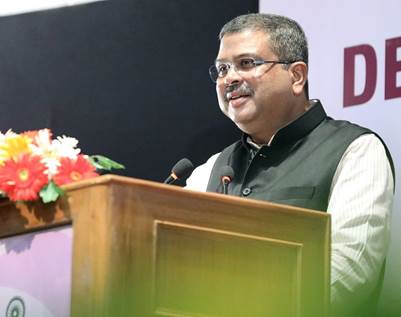
Union Minister for Education, Shri Dharmendra Pradhan, inaugurated a one-day workshop on the Institutional Development Plan for Higher Education Institutes. He also released the UGC Compendium of Regulations (1957-2023) as a single, accessible & reliable source of all UGC rules. Shri Sanjay Murthy, Secretary, Department of Higher Education, Ministry of Education; Dr. N.S. Kalsi, Former Chairman, NCVET and Chairman of the Committee working on formulating the IDP Guidelines; Shri M. Jagadesh Kumar, Chairman, UGC; Vice-Chancellors, Nodal Officers, and other dignitaries were also present at the event.
Shri Dharmendra Pradhan, while addressing the audience said the Higher education Institutes of the country will play a crucial role in realising the vision of Prime Minister Shri Narendra Modi of Viksit Bharat by embracing the core values and spirit of NEP 2020.
He also talked about the role of the HEIs in redefining the purpose and structure of education, empowering youth and making them future-ready, doubling the gross enrolment ratio, bringing a vast majority of the population under the higher education net, effectively utilising demographic advantage, achieving academic, research & innovation excellence and also the way forward for transforming 5000 HEIs into centres-of-excellence through holistic and inclusive approaches.
Shri Pradhan also said that education will propel India from being a consuming economy to becoming a producing economy. The institutional development plan should focus on enhancing the competencies of our vast demography, facilitating learner-centric and multidisciplinary education, integrating Bharatiya Bhasha in higher learning, prioritising innovation, entrepreneurship and job-creation as an outcome, capacity building of teachers and achieving the global standard of research & development, he added.
He also said that education must address 21st-century aspirations and create solutions for local and global challenges. The world looks at India’s talent pool for new models and solutions to challenges of our age, he stated He exhorted the academic fraternity to work in a focused and time-bound manner to reinvent their institutions, transforming the higher educational landscape and achieving national priorities.
Speaking on the relevance and importance of the workshop Shri K. Sanjay Murthy elaborated on the ambitious plan the Ministry of Education had presented to the Prime Minister as part of the social group with the vision for the next twenty-five years. Talent and competency would be needed to back up the tremendous work that would take place and the institutions must rise to the demand to meet the talent requirements, he added. He also emphasized the Future of Work and that the IDP must focus on enhancing the quality of the institutes. Introduction of the IDP will also help the institutes to be at par with the universities of the world, he said.
About the Workshop:
The workshop on Institutional Development Plan (IDP) brings together higher education institutions to discuss strategies for institutional growth and development. The compendium will serve as a valuable resource for institutions as they develop and implement their IDP. Over 170 representatives from HEIs across India are participating in this workshop. Aligning with the National Education Policy (NEP) 2020, the IDP provides institutions with a clear roadmap to develop their vision, mission and goals for a future-ready education system.
Through the two thematic sessions, the participants will have the opportunity to learn about governance enablers, financial planning and management, human resources and supportive-facilitative enablers, networking and collaboration enablers, physical enablers, digital enablers, and research and intellectual property enablers, innovative funding models, and curriculum development. Renowned experts from industry, academia, and government will share their insights and experiences on these critical areas.
In each session, different universities will share their best practices for creating their IDP. In a separate Q&A session, Chairman UGC, Former Chairman, NCVET and the speakers from the Panels will address the queries of the participants.
About UGC Compendium:
To provide a single source of reference to all the stakeholders, UGC has prepared a Compendium of all UGC Regulations, Rules and Notifications from 1957-2023. The compendium includes 15 Rules, 87 Regulations, and 28 Notifications covering a wide range of topics, including inspection, the fitness of institutions for grants, return of information, budget and accounts, establishments, affiliation, autonomy, accreditation, admission & fees, specification of degrees, and other miscellaneous matters. The compendium provides a one-stop reference for all regulatory requirements, ensuring that institutions can easily access and comply with UGC guidelines. This is expected to streamline operations and support informed decision-making, creating an environment of compliance and best practices. This compendium having more than 1100 pages, is available in the form of a PDF and e-book on the UGC website.
About IDP:
Institutional Development Plan (IDP) Guidelines were launched by UGC on 6th February 2024. The IDP Guidelines will help institutions make a strategic Institutional Development Plan with the joint participation of Board members, institutional leaders, faculty, students and staff based on which institutions will develop initiatives, assess their progress, and reach the goals set therein.
EduPub is excited to present an exclusive offer for authors! For a limited time, you can publish your eBook for only $50. Whether you’re an academic, researcher, novelist, or a first-time writer, this is the perfect opportunity to share your work with the world.
What’s Included in the $50 Offer:
Professional Formatting: Your manuscript will be professionally formatted for digital platforms.
ISBN Assignment: Get a unique ISBN for your eBook, ensuring it is recognized globally.
Global Distribution: Your eBook will be available on leading platforms such as Amazon, Google Play, and other major online stores.
Author-Friendly Rights: You retain full copyright ownership of your work.
Dedicated Support: Our team will guide you through the entire publishing process, ensuring a smooth and hassle-free experience.
Why Choose EduPub?
EduPub is a trusted name in academic and professional publishing. We are committed to providing high-quality services at affordable rates, making publishing accessible to all authors.
Take advantage of this special offer and make your mark as an author. Submit your manuscript today and reach a global audience with your eBook!






 Eduindex
You must be logged in to post a comment.