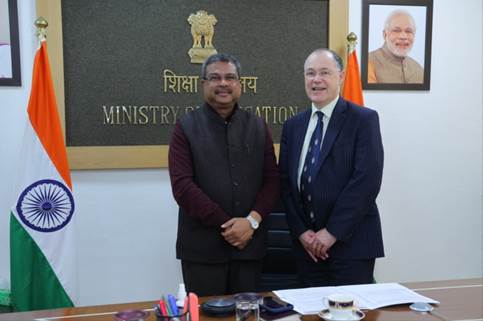
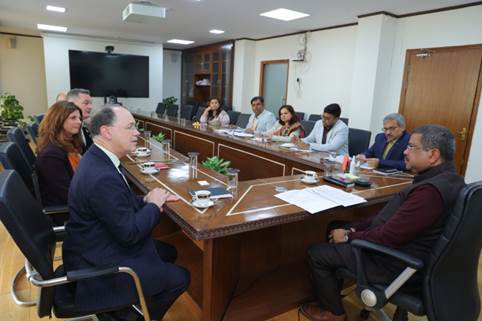
Union Minister for Education, Shri Dharmendra Pradhan, met with a delegation from the University of Southampton and the British Council in India today in New Delhi. Also present at the meeting were Secretary of the Department of Higher Education, Shri Vineet Joshi; President and Vice-Chancellor of the University of Southampton, Prof. Mark E. Smith; Country Director of the British Council in India, Ms. Alison Barrett MBE; along with other officials from the Ministry.
Shri Dharmendra Pradhan highlighted that as a globally top-100 university and the first foreign institution to establish a campus in India, the University of Southampton Delhi NCR campus will provide high-quality education rooted in research, innovation, and real-world applications for both Indian and international students. He emphasized that this initiative marks a crucial step in India’s journey toward the internationalization of education, supporting the Study in India program and advancing global education standards domestically, as envisioned in NEP 2020.
During the discussion, Prof. Smith briefed the Minister on the progress of the University of Southampton’s Delhi NCR campus.
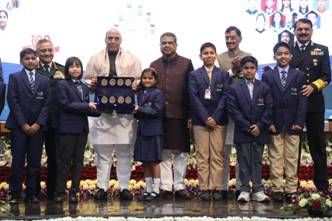
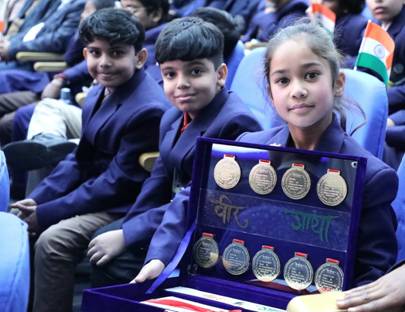
RakshaMantri Shri Rajnath Singh and Minister for Education Shri Dharmendra Pradhan felicitated the Super-100 winners of Veer Gatha 4.0 in New Delhi on January 25, 2025. Among the 100 winners, 66 are girls from different parts of the country. During the felicitation ceremony, each winner was presented with a cash prize of Rs. 10,000, a medal and a certificate. These Super-100 are among the approx. 10,000 Special Guests, who will be witnessing the Republic Day Parade at Kartavya Path on January 26, 2025.
In his address, RakshaMantri congratulated the winners and appreciated the joint efforts of Ministry of Defence and Ministry of Education towards achieving Veer Gatha’s objective of connecting the youth with the glorious history of the country’s bravehearts. He acknowledged the pan-India participation of over 1.76 crore students in this fourth edition of the Project, stating that it is providing recognition to the bravehearts through education. He commended the intelligence, enthusiasm and patriotism of the students who participated in the competition.
Expressing delight over the fact that 2/3rd of the Super-100 winners of Veer Gatha 4.0 are girls, Shri Rajnath Singh made special mention of a Class 10 student named ‘Nemneineng’ from Manipur, who had lost her parents when she was a child. RakshaMantri commended her perseverance for not giving up her studies despite numerous difficulties and securing a place among the winners.
Explaining the true meaning of a ‘hero’ to the students present on the occasion, RakshaMantri asserted that a hero works for the upliftment of the nation; whose work gives a new direction to the society. He added that the youth are future heroes of India and they will play a major role in making India ‘Viksit Bharat’ by 2047, as envisioned by the Government, led by Prime Minister Shri Narendra Modi.
“India’s stature has grown on the global stage due to the Prime Minister’s dynamic leadership. Today, when we speak on any international forum, the whole world listens. This has been made possible due to the hard work of every Indian, including our brave soldiers, scientists and young ignited minds. We have a major young population of about 50 crore youth. How can a country with such creative minds not develop?,” Shri Rajnath Singh asked the students.
RakshaMantri exhorted them to continue taking inspiration from bravehearts such as freedom fighters Bhagat Singh, Chandrashekhar Azad, Ashfaqulla Khan and courageous soldiers, whose bravery and sacrifice will never be forgotten. He termed the sense of national pride as the most crucial aspect for the development of any country.
Shri Rajnath Singh encouraged students to not feel afraid in the face of challenges and continue moving forward towards their goals with confidence & good intent. He urged them to never allow the feeling of ego creep into their hearts, even when they touch greater heights. Always remaining polite and modest is the key, he said.
Speaking on the occasion, Minister for Education Shri Dharmendra Pradhan emphasised that initiatives like Veer Gatha educate school students about the valour and sacrifices of the brave gallantry award winners while nurturing the creativity of young minds. He highlighted the record-breaking participation of 1.76 crore students from over 2.5 lakh schools who engaged in activities such as drawing, painting, and essay writing, paying heartfelt tributes to the heroes for their immense service and sacrifice to the nation.
The Minister of Education also noted that this initiative would help instil values of patriotism, grit, and national pride, inspiring students to contribute to the nation’s progress. Congratulating every student who participated with enthusiasm and respect for the gallantry award winners, he lauded the Super-100 awardees for their success. Wishing them a bright future, he remarked that their enthusiasm and creativity would serve them well in life.
During the event, ParamVir Chakra Awardee Subedar Major Sanjay Kumar shared his inspiring experience from the 1999 Kargil War, urging students to embody the values of bravery, selflessness and integrity in their lives. “True bravery lies not only in combat but in standing up for what is right in everyday life,” he said, inspiring the young participants.
RakshaRajyaMantri Shri Sanjay Seth, Chief of Defence Staff General Anil Chauhan, Chief of the Naval Staff Admiral Dinesh K Tripathi, Chief of the Air Staff Air Chief Marshal AP Singh, Secretary, Department of School Education & Literacy Shri Sanjay Kumar, Secretary (Defence Production) Shri Sanjeev Kumar, Secretary, Department of Defence R&D and Chairman DRDO Dr Samir V Kamat, Vice Chief of the Army Staff Lt Gen NS Raja Subramani and other senior officials attended the event.
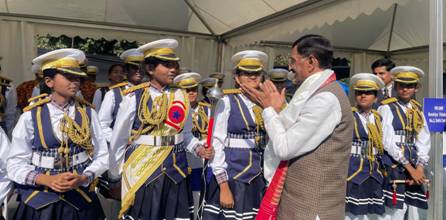
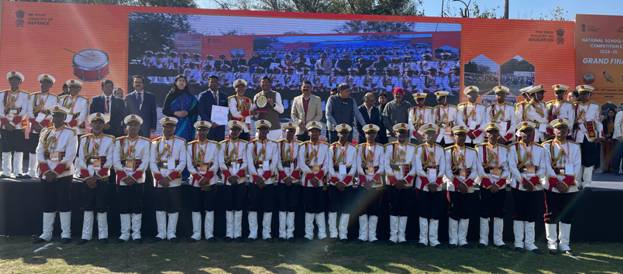
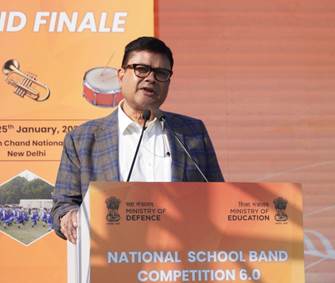
Union Minister of State for Defence, Shri Sanjay Seth, gave away prizes for the National School Band Competition 6.0. Secretary, Department of School Education and Literacy (DoSEL), Ministry of Education, Shri Sanjay Kumar and Additional Secretary,DoSEL, Shri Anandrao V. Patilwere also present at the event.
Shri Sanjay Seth, while addressing the audience, praised the exceptional performance of the young participants, describing the event as a mini replica of the nation. Highlighting the individual performances of several teams, he urged students to reduce their reliance on mobile devices, as advised by Prime Minister Shri Narendra Modi, and to engage in outdoor activities and creative pursuits. He encouraged the students to become brand ambassadors of the Viksit Bharat of 2047.
Shri Anandrao V. Patil, in his address, encouraged students to carry forward the message of Ek Bharat Shreshtha Bharat, as envisioned by Prime Minister Shri Narendra Modi, and to contribute to nation-building with a nation-first approach.
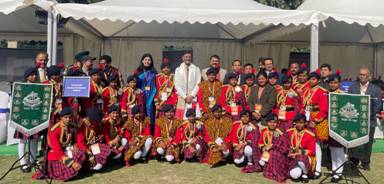
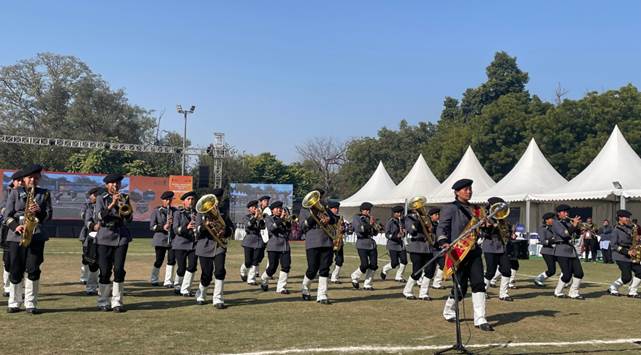
In the Brass Band – Girls category, Government Sr. Sec. School West Point, Gangtok, Sikkim, secured the First Prize. St. Joseph’s Convent Sr. Sec. School, Bhopal, Madhya Pradesh, received the Second Prize, while St. Joseph’s Anglo-Indian Girl’s Higher Secondary School, Kozhikode, Kerala, earned the Third Prize. The team from GayatriVidyapeeth, Shantikunj, Haridwar, Uttarakhand, received the Consolation Prize.
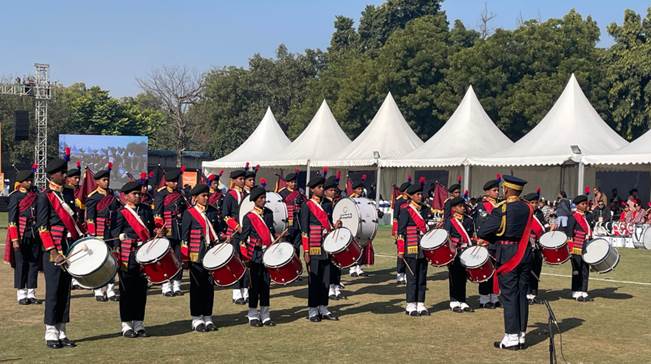
In the Brass Band – Boys category, the First Prize went to Prince Lotus Valley, Sikar, Rajasthan. St. Xavier’s Higher Secondary School, Pathaliyaghat, Sepahijala, Tripura, won the Second Prize, and Pinegrove School, Solan, Himachal Pradesh, secured the Third Prize. The team from St. Xavier’s English Medium School, Pathalgaon, Chhattisgarh, received the Consolation Prize.
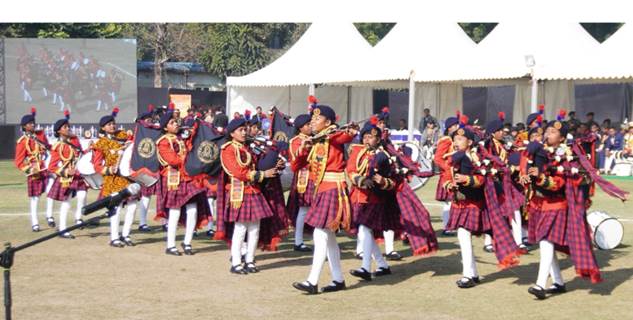
In the Pipe Band – Girls category, the First Prize was awarded to PM SHRI KGBV Patamda, PurbiSinghbhum, Jharkhand. Bhonsala Military School Girls, Nasik, Maharashtra, secured the Second Prize, and Shri ThakurdwaraBalikaVidyalaya, Ghaziabad, Uttar Pradesh, earned the Third Prize. The team from Monte CBSE School, Pandipadu Village, KallurMandal, Kurnool, Andhra Pradesh, received the Consolation Prize.
In the Pipe Band – Boys category, City Montessori School, Kanpur Road Campus, Sec DLDA Colony, Kanpur Road, Lucknow, Uttar Pradesh, claimed the First Prize. North Sikkim Academy, Nangan, Sikkim, secured the Second Prize, while RBP Military School Sports Academy, Sangli, Maharashtra, won the Third Prize. PM SHRI KendriyaVidyalaya No. 2, BelagaviCantt., Karnataka, received the Consolation Prize in this category.
The First Prize-winning teams will receive ₹21,000, while the Second Prize-winning teams will be awarded ₹16,000, and the Third Prize-winning teams will receive ₹11,000. Teams receiving the Consolation Prize will be awarded ₹3,000. In addition to the cash prizes, all winning teams will be presented with a trophy and certificates.
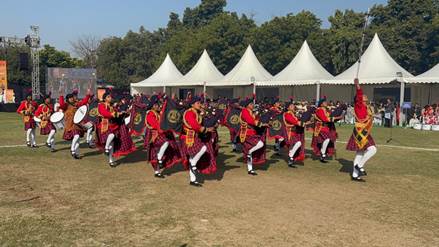
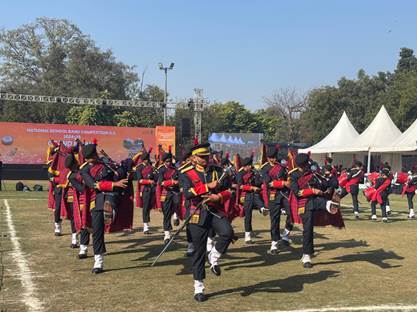
Ministry of Education, in collaboration with the Ministry of Defence, organised the grand finale of National School Band Competition 6.0 on 24-25 January 2025 at Major Dhyan Chand National Stadium, New Delhi. This year 16 band teams from 13 States with 463 children were shortlisted for the finale (list annexed) through State- and Zonal-level competitions. At the State-Level Competitions, 568 teams comprising 13,999 children participated; while at the Zonal Level, 84 teams comprising 2,337 children took part.
For the first time:
1. Band Teams from three government schools have got the opportunity to participate in the Republic Day Parade.
2. PM SHRI KGBV Patamda, PurbiSinghbum, Jharkhand school students will be giving their performance at the rostrum in front of the Presidential stage.
3. Two band teams (KendriyaVidyalaya and Government Sr. Sec. School West Point, Sikkim) will be performing at Vijay Chowk in the Republic Day Parade.
4. In tandem with the “whole of Government approach”, initiative has been taken for training of PM SHRI school band teams by the band instructors/teams of Army Regimental Centres. Training has begun in 11 States/UTs and will commence shortly in the rest of the States/UTs. This is a step towards imparting holistic education to students of PM SHRI schools and developing them into well-rounded personalities.
The National Education Policy 2020 is the first education policy of the 21st century and aims at large-scale transformational reforms in the education sector. In that direction, this program will not only instil a sense of patriotism and national pride but will also enhance the musical skills of the students and inculcate discipline among them. This initiative aims to rejuvenate the spirit of patriotism and unity amongst school students throughout the country and help in the furtherance of holistic education.
Joint Secretary, DoSEL, Dr.AmarpreetDuggaland other dignitaries from the Ministry of Education and Ministry of Defence
Pariksha Pe Charcha (PPC), an initiative by Prime Minister Shri Narendra Modi to transform exam-related stress into a festival of learning, witnessed unprecedented growth in its 8th edition. Pariksha Pe Charcha (PPC), an initiative by Prime Minister Shri Narendra Modi to transform exam-related stress into a festival of learning, witnessed unprecedented growth in its 8th edition. Since its beginning in 2018, PPC has evolved into a nationwide movement, garnering a staggering 3.56 crore registrations for its 8th edition in 2025. This also marks a significant increase from the 7th edition, which saw 2.26 crore registrations, reflecting a remarkable surge of 1.3 crore registrations.
Pariksha Pe Charcha has not only become a popular program but has also transformed into a “Jan Andolan” (people’s movement), resonating deeply with students, teachers, and parents across the country. The initiative’s focus on addressing exam stress and encouraging students to view examinations as a festival – “Utsav” – has struck a chord with people from all walks of life. The overwhelming participation in PPC reflects a growing awareness and acceptance of the importance of mental well-being and holistic education. The program’s interactive format, which involves open dialogue between students, teachers, and the Prime Minister, has further contributed to its success.
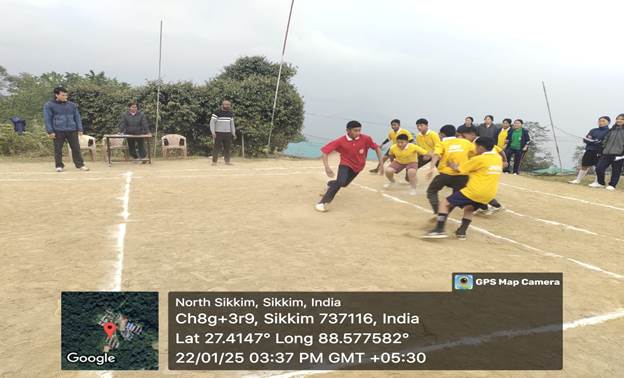
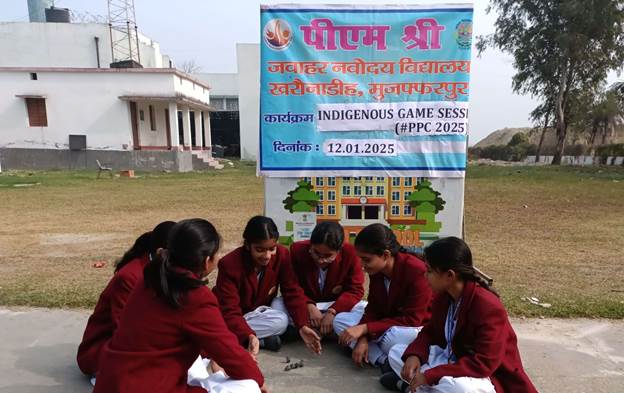
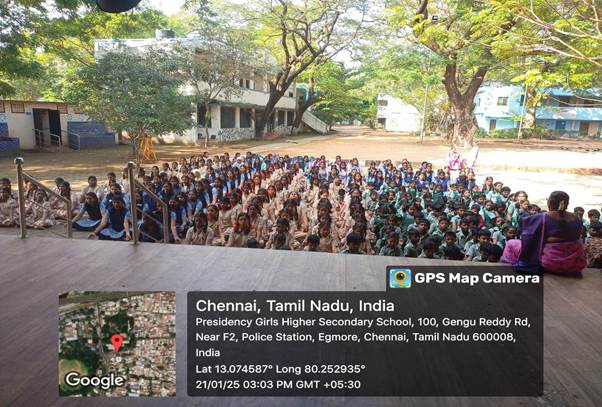
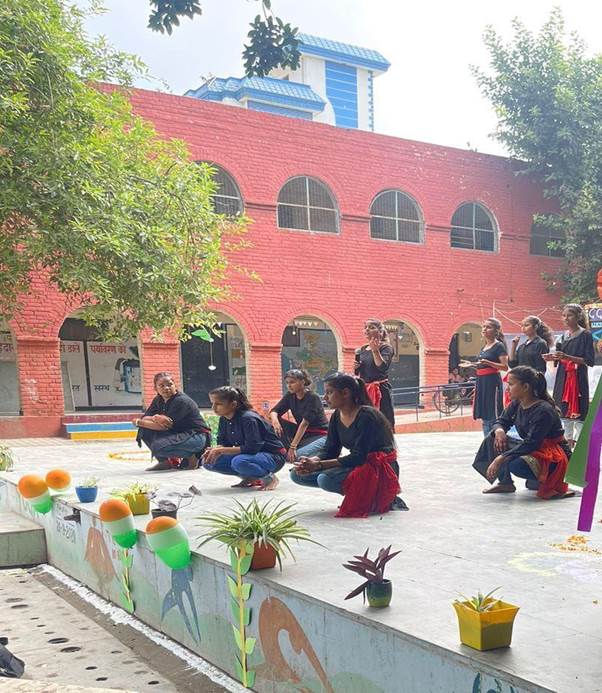
To further strengthen PPC as a “Jan Andolan,” a series of engaging activities were conducted from 12th January 2025 (National Youth Day) to 23rd January 2025 (Netaji Subhash Chandra Bose Jayanti) at the school level. These activities, conducted across States/UTs, aimed to engage students, parents, and teachers in celebrating PPC as a festival. A total of 1.42 crore students, 12.81 lakh teachers, and 2.94 lakh schools participated. These activities were designed to reduce stress, improve focus, and enhance performance during exams and beyond. Students were encouraged to participate in a diverse range of activities, including indigenous games like Kho-Kho and Kabaddi, short-distance marathons, creative meme competitions, engaging Nukkad Natak performances, and eye-catching poster-making. They were also encouraged to share their experiences through student testimonials, participate in student-led discussions, and engage in yoga and meditation sessions to cultivate relaxation and mindfulness. Schools organized plays developed by students, conducted workshops, and invited special guests to share their insights.
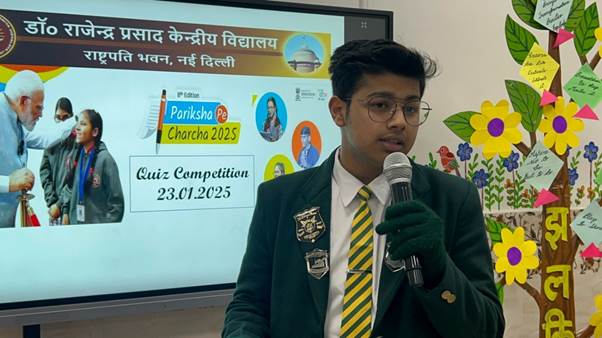
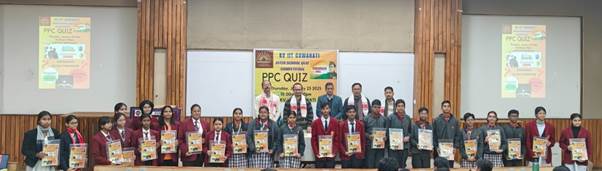
Culminating these activities, screening of glorious inspirational stories of valour and sacrifice, the “Bharat Hai Hum” series was conducted on 23rd January 2025. Thereafter, a quiz competition based on the series “Bharat Hai Hum” was conducted across 567 Kendriya Vidyalayas nationwide. A total of 55,961 students participated, including 17,408 from Kendriya Vidyalayas, 4,567 from Jawahar Navodaya Vidyalayas, 5,542 from PM SHRI Schools, 18,394 from CBSE-affiliated schools, and 10,050 from State Board schools. Prizes were awarded to the winners, and all participants received a copy of the book “Exam Warriors,” authored by the Prime Minister of India. This initiative not only tested the students’ knowledge but also reinforced the valuable lessons imparted through the “Bharat Hain Hum” series.
Pariksha Pe Charcha 2025 has once again proven to be a resounding success, solidifying its position as a pivotal initiative in fostering a positive and supportive learning environment for students across India.
The Grand Finale of the National School Band Competition 6.0 was inaugurated today at the Major Dhyan Chand National Stadium, New Delhi. Secretary, Department of School Education and Literacy (DoSEL), Ministry of Education, Shri Sanjay Kumar; Defence Secretary, Shri Rajesh Kumar Singh; Additional Secretaries, DoSEL, Shri Anil Kumar Singhal and Shri Anandrao V. Patil; Chairperson, CBSE, Shri Rahul Singh; Commissioner, Kendriya Vidyalaya Sangathan, Smt. Nidhi Pandey; Joint Secretary, DoSEL, Dr. Amarpreet Duggal; Joint Secretary, Ministry of Defence, Shri Amitabh Prasad, and other officials of Ministry of Education and Ministry of Defence were present at the event.
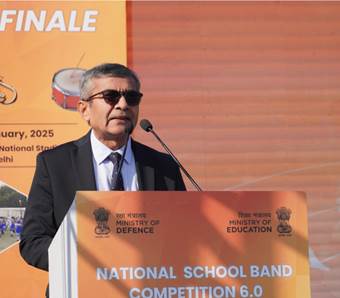
Shri Sanjay Kumar, in his address, highlighted the significant importance of a band, particularly in fostering a sense of discipline and teamwork among participants, which nurtures a collective spirit to excel. He further emphasized the relevance of this collective spirit in educational pursuits. He noted that more schools would join the Band System, with support from the Army Regional Centres, opening new opportunities for children. Shri Sanjay Kumar also expressed his heartfelt gratitude to the Ministry of Defence for their invaluable support and assistance.
Shri Rajesh Kumar Singh, while addressing the gathering, highlighted the rich tradition of military music in the Armed Forces, which boosts morale, adds dignity to ceremonies, and provides talented individuals with an opportunity to showcase their prowess. He also mentioned how, since 2023, the Government has been involving and encouraging talented school children to actively participate in the Republic Day celebrations. The objective of organizing the National School Band Competition, he added, is to inspire a sense of unity, esprit de corps, and a profound feeling of belonging among school children towards their schools and the nation.
Ministry of Education, in collaboration with the Ministry of Defence, is organising the grand finale of National School Band Competition 6.0 on 24-25 January 2025 at Major Dhyan Chand National Stadium, New Delhi. This year 16 band teams from 13 States with 463 children have been shortlisted for the finale (list annexed) through State- and Zonal-level competitions. At the State-Level Competitions, 568 teams comprising 13,999 children participated; while at the Zonal Level, 84 teams comprising 2,337 children took part.
For the first time:
1. Band Teams from three government schools have got the opportunity to participate in the Republic Day Parade.
2. PM SHRI KGBV Patamda, Purbi Singhbum, Jharkhand school students will be giving their performance at the rostrum in front of the Presidential stage.
3. Two band teams (Kendriya Vidyalaya and Government Sr. Sec. School West Point, Sikkim) will be performing at Vijay Chowk in the Republic Day Parade.
4. In tandem with the “whole of Government approach”, initiative has been taken for training of PM SHRI school band teams by the band instructors/teams of Army Regimental Centres. Training has begun in 11 States/UTs and will commence shortly in the rest of the States/UTs. This is a step towards imparting holistic education to students of PM SHRI schools and developing them into well-rounded personalities.
The National Education Policy 2020 is the first education policy of the 21st century and aims at large-scale transformational reforms in the education sector. In that direction, this program will not only instil a sense of patriotism and national pride but will also enhance the musical skills of the students and inculcate discipline among them. This initiative aims to rejuvenate the spirit of patriotism and unity amongst school students throughout the country and help in the furtherance of holistic education.
List of Participating Teams at the Grand Finale
Sl. No.
State/UT
No. of Schools
Name and Address of the School
Category
Band
Boys/Girls
Andhra Pradesh
1
Monte CBSE School Kurnool, Pandipadu Village, Kallur Mandal-Kurnool, Andhra Pradesh
Pipe
Girls
Chhattisgarh
1
St. Xavier’s English Medium School, Pathalgaon, Chhattisgarh
Three government school teams are all set to perform in the Republic Day Parade for the very first time on 26 January 2025. The team from PM SHRI KGBV Patamda, Jharkhand, will have the honour of performing at the Rostrum opposite the Presidential dais, synchronized with the Army band. Meanwhile, the teams from Govt. Sr. Sec School West Point, Gangtok, Sikkim, and PM SHRI Kendriya Vidyalaya No. 2 Belagavi Cantonment, Karnataka, will showcase their performances at the Vijay Chowk. These school bands are among 16 teams competing in the Grand Finale of the National School Band Competition 6.0, taking place on 24-25 January 2025 at the Major Dhyan Chand National Stadium in New Delhi.
The Pipe Band Girls Team from PM Shri Kasturba Gandhi Balika Vidyalaya (KGBV) Patamda, East Singhbhum, Jharkhand, showcases an inspiring journey of determination and achievement. This 25-member team comprises girls from underprivileged families, many reliant on farming and daily labour. For most, this is their first train journey to Delhi. They have received guidance from instructors of the Sikh Regiment and Punjab Regiment located at Ramgarh Army Regimental Centre.
The team has been practising the pipe band for the past three years. In the 2024-25 State-Level (Inter-District) School Band Competition held in Ranchi, the team claimed first place in the pipe band category, surpassing the previous year’s champions and a strong Ranchi district team. Emerging from humble beginnings in remote villages, these determined young girls committed themselves to mastering the pipe band, braving freezing mornings and enduring long, gruelling practice sessions with unwavering dedication.
The Brass Band Girls’ Team: Govt. West Point Sr. Secondary School, Gangtok, Sikkim, has set benchmarks of excellence, claiming state, zonal, and national-level accolades. Competing against seven champion teams, the team showcased unmatched dedication and emerged as Eastern Region Champions. Many of these students hail from humble and challenging backgrounds.
The pipe band (boys) contingent of PM SHRI Kendriya Vidyalaya No. 2 Belagavi Cantt., Karnataka, has many students from families with parents serving in the Indian Army. The team has been trained by MLIRC (Maratha Light Infantry Regimental Centre Belagavi).
In tandem with the “whole of Government approach”, initiative has been taken for training of PM SHRI school band teams by the band instructors/teams of Army Regimental Centres. Training has begun in 11 States/UTs and will commence shortly in the rest of the States/UTs. Subsequently, more schools would join the Band System, with support from the Army Regional Centres, opening new opportunities for children. This is a step towards imparting holistic education to students of PM SHRI schools and developing them into well-rounded personalities.
Under the innovation component of the Centrally sponsored scheme – Samagra Shiksha – financial support is being provided to States/UTs for organizing the Band Competition at the State level.
The National Education Policy 2020 is the first education policy of the 21st century and aims at large-scale transformational reforms in the education sector. In that direction, this program will not only instil a sense of patriotism and national pride but will also enhance the musical skills of the students and inculcate discipline among them. This initiative aims to rejuvenate the spirit of patriotism and unity amongst school students throughout the country and help in the furtherance of holistic education.
Agriculture forms the backbone of many economies around the world, especially in developing countries. It provides food, raw materials, and employment to a significant proportion of the global population. The concepts of agricultural productivity and the market for agricultural produce are closely intertwined, influencing food security, economic development, and rural livelihoods. This essay delves into the intricacies of agricultural productivity, the factors affecting it, and the dynamics of the market for agricultural produce.
Understanding Agricultural Productivity
Agricultural productivity refers to the output generated per unit of input in farming activities. Inputs may include land, labor, capital, seeds, fertilizers, water, and technology. Productivity is a critical measure of the efficiency and sustainability of agricultural practices. It determines the ability of a nation to meet the growing food demands of its population and contributes significantly to economic growth.
Factors Affecting Agricultural Productivity
Technological Advancements:
Adoption of modern farming techniques, mechanization, and biotechnology significantly enhances productivity.
Precision farming, irrigation systems, and genetically modified crops are examples of innovations that have improved yields.
Soil Fertility and Management:
The quality of soil determines its capacity to support crops.
Practices such as crop rotation, organic farming, and balanced fertilization help maintain soil health.
Climate and Weather Conditions:
Temperature, rainfall, and sunlight are critical for crop growth.
Erratic weather patterns due to climate change pose challenges to agricultural productivity.
Access to Inputs:
Timely availability of quality seeds, fertilizers, and pesticides influences productivity.
High input costs or unavailability can hinder optimal agricultural output.
Government Policies and Support:
Subsidies, minimum support prices (MSPs), and agricultural extension services impact farmers’ ability to adopt better practices.
Infrastructure development, such as roads and irrigation facilities, also plays a vital role.
Education and Training:
Farmers with knowledge of modern farming techniques are better equipped to enhance productivity.
Agricultural extension programs and capacity-building initiatives are essential for disseminating knowledge.
Market for Agricultural Produce
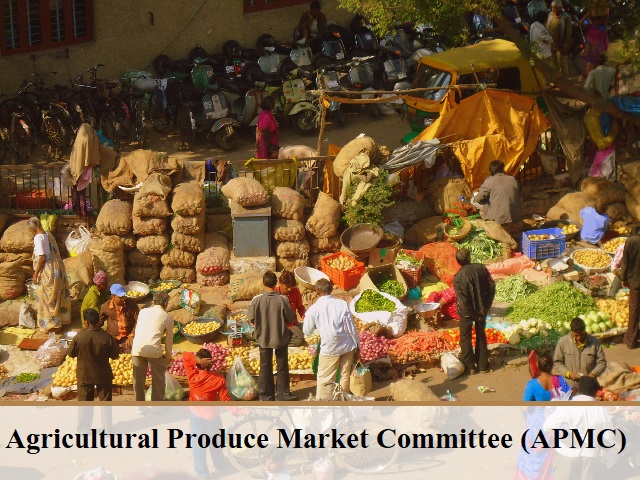
The market for agricultural produce refers to the entire system through which farm products are bought, sold, processed, and distributed. It encompasses local markets, wholesale markets, export markets, and online platforms. An efficient market system is crucial for ensuring fair prices for farmers and adequate supplies for consumers.
Challenges in Agricultural Markets
Price Volatility:
Agricultural produce is often subject to price fluctuations due to seasonal variations, demand-supply imbalances, and global market trends.
Lack of Market Access:
Farmers, especially smallholders, face challenges in accessing profitable markets due to poor infrastructure and inadequate market information.
Middlemen and Exploitation:
A significant portion of profits is often absorbed by intermediaries, leaving farmers with low returns.
Post-Harvest Losses:
Poor storage facilities, inadequate transportation, and lack of cold chains result in significant wastage of perishable commodities.
Trade Barriers:
Export restrictions, tariffs, and non-tariff barriers limit farmers’ access to international markets.
Improving Agricultural Markets
Infrastructure Development:
Investments in roads, cold storage, and warehouses can minimize post-harvest losses and improve market access.
Digital Platforms and E-Markets:
Initiatives like eNAM (National Agriculture Market) and online trading platforms can connect farmers directly to buyers, ensuring better prices.
Cooperatives and Farmer Producer Organizations (FPOs):
FPOs enable farmers to pool resources, negotiate better prices, and access markets collectively.
Government Interventions:
Policies such as MSPs and procurement mechanisms provide price stability and income security for farmers.
Value Addition and Processing:
Promoting agro-industries and value-added products increases the profitability of agricultural produce.
Interrelationship Between Productivity and Market Dynamics
Higher agricultural productivity and efficient markets are mutually reinforcing. Increased productivity ensures a steady supply of produce, stabilizing prices and enabling market growth. Simultaneously, well-functioning markets incentivize farmers to adopt better practices, invest in technology, and enhance productivity.
Conversely, inefficiencies in markets can lead to low returns for farmers, reducing their capacity to invest in inputs and technology, thereby negatively affecting productivity. Ensuring a balance between production and market demand is essential for the sustainability of the agricultural sector.
Conclusion
Agricultural productivity and the market for agricultural produce are pivotal to food security, economic development, and rural prosperity. Addressing the challenges in both domains requires a comprehensive approach that combines technological innovation, supportive policies, infrastructure development, and market reforms. By fostering synergy between productivity and market efficiency, nations can build resilient agricultural systems that cater to the needs of their populations and contribute to global food security.
References
Amadi, L. A., Ogbanga, M. M., & Agena, J. E. (2015). Climate change and feminist environmentalism in the Niger Delta, Nigeria. African Journal of Political Science and International Relations, 9(9), 361-371.
Chavas, J. P. (2008). On the economics of agricultural production. Australian Journal of Agricultural and Resource Economics, 52(4), 365-380.
de Lima, G. N., Zuñiga, R. A. A., & Ogbanga, M. M. (2023). Impacts of Climate Change on Agriculture and Food Security in Africa and Latin America and the Caribbean. In Climate Change and Health Hazards: Addressing Hazards to Human and Environmental Health from a Changing Climate (pp. 251-275). Cham: Springer Nature Switzerland.
Gollin, D. (2010). Agricultural productivity and economic growth. Handbook of agricultural economics, 4, 3825-3866.
Jack, J. T. C. B., Ogbanga, M. M., & Odubo, T. R. (2018). Energy poverty and environmental sustainability challenges in Nigeria. Ilorin Journal of Sociology, 10(1), 19-31.
Ogbanga, M. M., & Sharma, S. N. (2024). Climate Change and Mental Heat.
Ogbanga, M. M. (2024). Assessment of the Barriers to the Adoption of Clean Energy for Household Cooking in Okrika Local Government Area.
Ogbanga, M. M. (2024). Examining the Potential of Women Organisations in Promoting the Use of Clean Energy for Household Cooking; A Study of Okrika Local Government Area.
Van der Ploeg, J. D. (2019). Labor, markets, and agricultural production. CRC Press.
Artificial Intelligence (AI) is reshaping how businesses operate, offering tools to streamline processes and improve decision-making. Despite its potential, many companies don’t fully utilize AI. Serhii Tokarev, an IT entrepreneur and co-founder of Roosh Ventures, explains how AI can help businesses turn mistakes into valuable lessons and thrive.
Learning from Mistakes with AI
Failure is part of business and life, but repeating the same mistakes leads to setbacks. Serhii Tokarev explains that AI can analyze errors and transform them into actionable insights. He outlines several ways businesses can use AI effectively:
1. Finding Cause-and-Effect Relationships
AI excels at uncovering complex connections that might go unnoticed. Serhii Tokarev highlights how declining sales could be linked to factors like pricing, changing demand, weather, or emerging trends. AI can analyze such patterns across areas like sales, logistics, and production workflows, helping businesses fix problems at their root.
“For example, if there is a drop in sales, we might attribute it to decreased demand or pricing issues. AI, however, can uncover unexpected correlations—such as the influence of weather, emerging trends, local nuances, or geographical factors,” explains the entrepreneur.
2. Building “Institutional Memory”
AI can learn from a company’s past to improve its future. By analyzing historical data, AI identifies patterns in successes and failures, offering strategies tailored to specific contexts.
Tokarev points to UPS’s ORION system as a strong example. ORION uses AI to optimize logistics by studying delivery routes, customer data, and performance history, saving time and costs.
3. Listening to Customers
Customer interactions hold valuable insights. Whether through chatbots, reviews, or feedback, AI can analyze data to improve customer experiences.
For example, if customers frequently ask the same question, it may signal a need to update the company’s website or social media. AI can detect these patterns faster and more comprehensively than humans, making it especially useful for B2C businesses.
4. Balancing AI and Human Oversight
AI isn’t a standalone solution. Serhii Tokarev stresses that human supervision is critical for making contextually sound decisions.
“Consider the case of Zillow’s real estate division, Zillow Offers, which relied solely on algorithms to predict housing prices. Without human intervention, the system failed to adapt to unforeseen events like COVID-19 and labor shortages, leading to massive losses, layoffs, and the division’s eventual shutdown,” explains Serhii Tokarev.
By combining AI insights with human expertise, businesses can avoid similar pitfalls. Learning from others’ mistakes, as well as their own, is key to building a successful AI strategy.
Serhii Tokarev shows how AI can turn business challenges into opportunities. By identifying patterns, learning from the past, and listening to customers, companies can use AI to enhance operations and decision-making. However, a balanced approach—mixing AI with human judgment—is essential for long-term success.
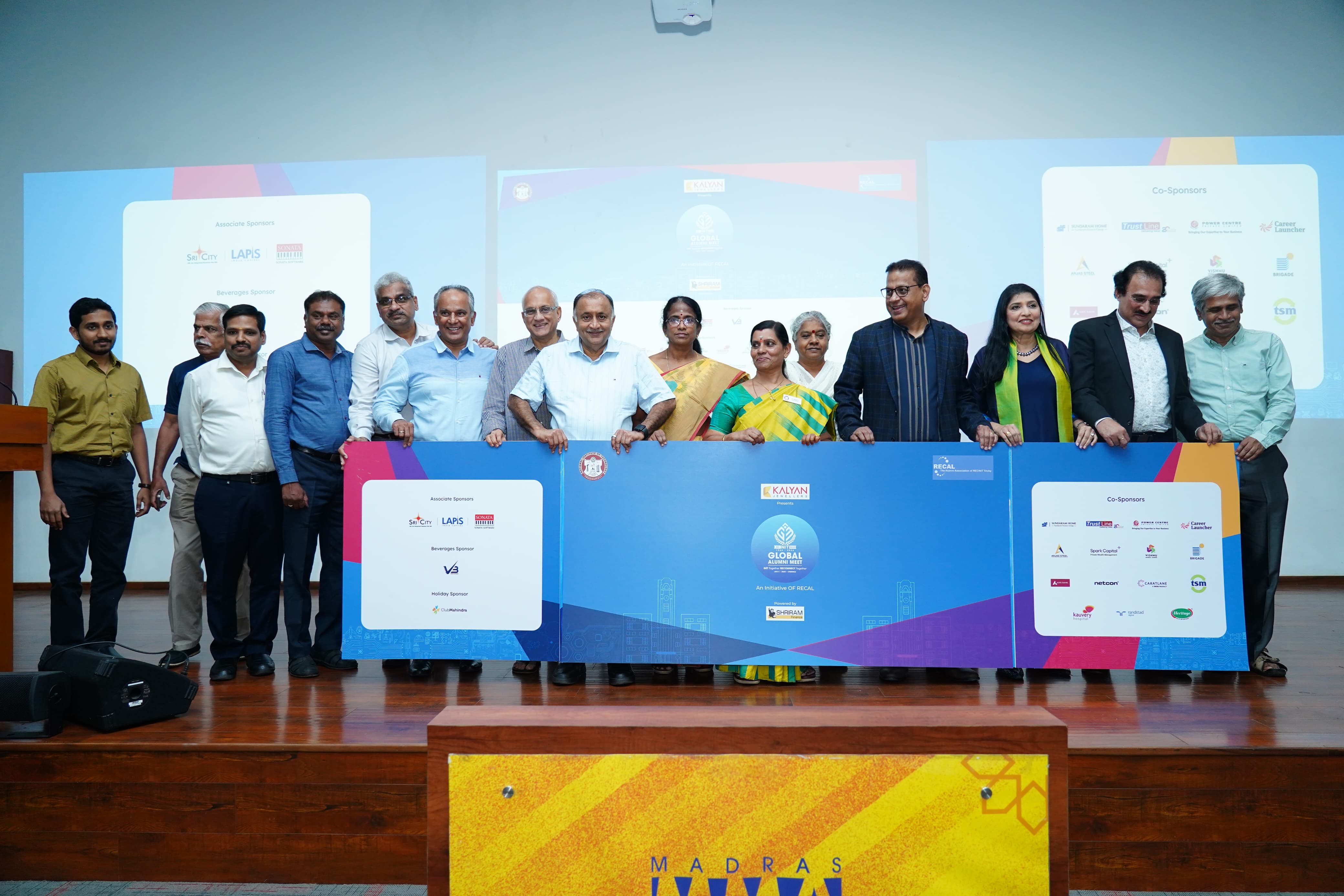
The Director, G. Aghila, National Institute of Technology, Tiruchirappalli (NIT Trichy), announced the Global Alumni Meet (GAM) 2025 will take place in Chennai on January 4, 2025. This momentous event is spearheaded by RECAL, the institute’s official alumni association. This gathering will unite NIT Trichy alumni from across the globe to celebrate the rich legacy of REC/NIT Trichy. The previous edition of GAM was held in 2020.
Boasting a dynamic network of over 48,000 alumni, including 930+ CEOs and 1,300+ founders, NIT Trichy stands as a powerhouse of talent and innovation. GAM 2025 will feature a stellar lineup of distinguished alumni, including:
Mr. N. Chandrasekaran, Chairperson of the Tata Group, as the Chief Guest
Dr. Palanivel Thiagarajan, Minister for Information Technology & Digital Services, Tamil Nadu, as the Guest of Honour
Mr. Gopi Kallayil, Chief Business Strategist for AI at Google, delivering the Keynote Address
Dr P Veeramuthuvel, Project Director of Chandrayaan 3, T V Narendran, Manging Director, CEO, Tata Steels will be the Guests of Honour
These leaders, alongside numerous other notable alumni, will celebrate shared achievements, inspire collaborations, and forge impactful connections.
Launch of a Research and Innovation Hub
NIT Trichy will unveil its vision for a 20-acre Research and Innovation Hub at GAM 2025, marking a significant step in its mission to foster entrepreneurship and interdisciplinary research. The facility will focus on emerging domains such as AgriTech, FinTech, SpaceTech, GreenTech, Quantum Computing, and AI/ML. The hub will involve an estimated investment of ₹150 crore and aims to accelerate innovation in Tier-II cities.
Empowering Students and Alumni Engagement
The institute’s ongoing initiatives, including the Adopt-a-Student Program, travel grants, and endowment funds, continue to support deserving students. Alumni-driven programs like Rockfort Ventures, SCIENT Labs, and CEDI exemplify NIT Trichy’s dedication to nurturing entrepreneurial talent. Plans to introduce Chair Professorships and enhance global research collaborations further demonstrate the institute’s commitment to academic excellence and sustainable development.
Dr. G. Aghila, Director of NIT Trichy, informed that “The Research and Innovation Hub will provide a formal platform for alumni-student mentorship, industry-led projects, and a thriving startup ecosystem. It’s a step towards scaling research and nurturing entrepreneurship talent.”
Mr. K. Mahalingam, President of RECAL, added, “Our vast and accomplished alumni network is a reservoir of mentorship, funding, and innovation. GAM 2025 underscores our collective commitment to supporting our alma mater.”
About NIT Tiruchirappalli
NIT Trichy, formerly Regional Engineering College (REC), is one of India’s premier engineering institutions, consistently ranked among the top in the country. Offering undergraduate, postgraduate, and doctoral programs across 17 disciplines, the institute continues to make significant contributions to global innovation and industry leadership.
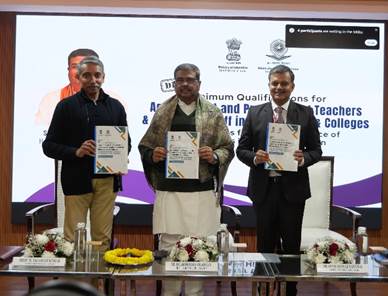
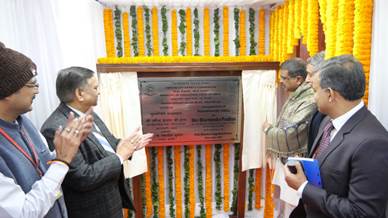
Union Minister for Education, Shri Dharmendra Pradhan, released the draft UGC (Minimum Qualifications for Appointment & Promotion of Teachers and Academic Staff in Universities and Colleges and Measures for the Maintenance of Standards in Higher Education) Regulations, 2025, today in New Delhi. He also inaugurated ‘Pushpagiri’, the new auditorium of UGC. Shri Sunil Kumar Barnwal, Additional Secretary, Ministry of Education; Prof. M. Jagadesh Kumar, Chairman, UGC; heads of the institutions, academicians, officials of the Ministry and other dignitaries were also present at the event.
Shri Dharmendra Pradhan, while addressing the audiences said that these draft reforms and guidelines will infuse innovation, inclusivity, flexibility and dynamism in every aspect of higher education, empower teachers and academic staff, strengthen academic standards and pave the way for achieving educational excellence. He congratulated the team of UGC for their efforts in formulating the Draft Regulations and Guidelines in sync with the ethos of NEP 2020.
The Minister mentioned that the Draft Regulations, 2025, have been placed in the public domain for feedback, suggestions, and consultations. He expressed confidence that the UGC will soon publish the Draft Regulations, 2025, in their final form, driving transformations in the education system and propelling the country towards Viksit Bharat 2047 through quality education and research.
Shri Pradhan also complimented the UGC for honouring the unparalleled intellectual heritage of Odisha by naming their newly constructed auditorium ‘Pushpagiri.’ He noted that it is a matter of great pride and personal delight for him. He highlighted how Pushpagiri in Jajpur, Odisha, was a cradle of knowledge and a symbol of enlightenment. He commended the UGC for this laudable step in reappropriating Bharat’s intellectual heritage and values in the 21st century. Additionally, he expressed hope that this state-of-the-art auditorium would emerge as a hub for vibrant intellectual discourses, shaping bright futures.
Shri Sunil Kumar Barnwal, in his address, said that these regulations will significantly enhance the quality of teaching and learning in the higher education institutions. He also mentioned how the Ministry is committed to supporting their effective implementation across the country.
About the Regulations
The Draft UGC (Minimum Qualifications for Appointment & Promotion of Teachers and Academic Staff in Universities and Colleges and Measures for the Maintenance of Standards in Higher Education) Regulations, 2025 will give flexibility to universities in appointing & promoting teachers and academic staff in their institutions.
The draft regulations and guidelines are available for public consultation, inviting comments, suggestions and feedback from stakeholders at:
• Flexibility: Candidates can pursue teaching careers in subjects they qualify for with NET/SET, even if different from their previous degrees. Ph.D. specialisation will be prioritised.
• Promoting Indian Languages: The draft Regulations encourage the use of Indian languages in academic publications and degree programmes.
• Holistic Evaluation: It aims to eliminate score-based short-listing, focusing on a broader range of qualifications, including “Notable Contributions.”
• Diverse Talent Pool: Creates dedicated recruitment pathways for experts in arts, sports, and traditional disciplines.
• Inclusivity: Provides opportunities for accomplished sportspersons, including those with disabilities, to enter the teaching profession.
• Enhanced Governance: Revises the selection process for Vice-Chancellors with expanded eligibility criteria with transparency.
• Simplified Promotion Process: Streamlines the criteria for promotions, emphasising teaching, research output, and academic contributions.
• Focus on Professional Development: Encourages continuous learning and skill enhancement for teachers through faculty development programs.
• Enhanced Transparency and Accountability: Promotes transparent processes for recruitment, promotion, and addressing grievances.
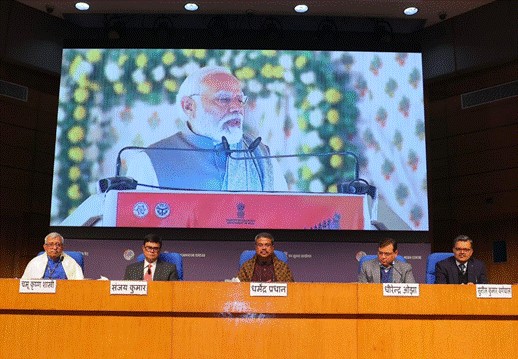
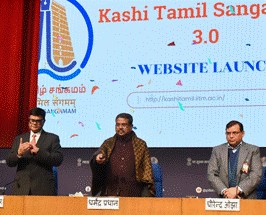
Union Minister for Education, Shri Dharmendra Pradhan, launched the registration portal for the 3rd edition of Kashi Tamil Sangamam (KTS). The Minister, while addressing a press conference, announced that KTS 3.0 will commence on 15th February 2025 in Varanasi, Uttar Pradesh. This 10-day-long event will conclude on 24th February 2025, he added. The portal, kashitamil.iitm.ac.in – hosted by IIT Madras, will accept registrations till 1st February 2025, he added.
Secretary, Ministry of Education, Shri Sanjay Kumar; Principal DG, PIB, Shri Dhirendra Ojha; Additional Secretary, Higher Education, Ministry of Education, Shri Sunil Kumar Barnwal; Chairman, Bhartiya Bhasha Samiti, Shri Chamu Krishna Shastry, and other officials also attended the Press Conference.
Shri Pradhan, while interacting with the media, said that the inseparable bonds between Tamil Nadu and Kashi are set to come alive through Kashi Tamil Sangamam 3.0.
The Minister highlighted that Kashi Tamil Sangamam, a brainchild of Prime Minister, Shri Narendra Modi, is an inspirational initiative to celebrate the timeless bonds between Tamil Nadu and Kashi, strengthen the civilisational links and further the spirit of Ek Bharat Shrestha Bharat.
Shri Pradhan said that Kashi Tamil Sangamam will be a celebration of one of India’s most revered sages—Maharishi Agasthyar. Maharishi Agasthyar’s legacy is deeply woven into India’s cultural and spiritual fabric, Shri Pradhan highlighted. His intellectual brilliance is the bedrock of Tamil language and literature as well as our shared values, knowledge traditions and heritage, he added.
Shri Pradhan said, that this year, Kashi Tamil Sangamam holds a special significance as it is coinciding with the Mahakumbh, and it is also the 1st Sangamam after the ‘Pran Pratishtha’ of Shri Ram Lalla in Ayodhya.
With Maharishi Agasthyar as the central theme and Mahakumbh and Shri Ayodhya Dham as the backdrop, Kashi Tamil Sangamam 3.0 will offer a divine experience and bring Tamil Nadu and Kashi—the two timeless centres of our civilisation and culture, more closer than ever, he said.
Shri Pradhan encouraged people of Tamil Nadu to participate in Kashi Tamil Sangamam 3.0 wholeheartedly.
An exhibition on the different facets of Sage Agasthyar and his contributions to world of Health, Philosophy, Science, Linguistics, Literature, Polity, Culture, Art, particularly to Tamil and Tamil Nadu, etc. and Seminars, workshops, book release, etc. will be organised at Kashi during KTS 3.0. Competitions and other awareness programs in Tamil Nadu prior to KTS 3.0 will be organised in a befitting manner in major cities of India and abroad where there is considerable Tamil diaspora.
This year, the government has decided to bring around 1000 delegates from Tamil Nadu under five categories/groups: (i) Students, Teachers, and Writers; (ii) Farmers and Artisans (Vishwakarma Categories); (iii) Professionals and Small Entrepreneurs; (iv) Women (SHG, Mudra Loan beneficiaries, DBHPS Pracharaks); and (v) Start-up, Innovation, Edu-Tech, Research. This year, an additional group of around 200 students of Tamil origin studying in various CUs will be a part of this event to enliven the bond between Kashi and Tamil Nadu. Participation of youth in all categories will be encouraged this year.
The duration of the tour will be 8 Days (4 for travel, 4 at site). The first group will leave Tamil Nadu on 13th February 2025 and the last group will return to Tamil Nadu on 26th February 2025.
The objective of the Kashi Tamil Sangamam is to rediscover, reaffirm, and celebrate the age-old links between Tamil Nadu and Kashi—two of the country’s most important and ancient seats of learning.
Kashi Tamil Sangamam is being organized by the Ministry of Education, Govt. of India in collaboration with other ministries including Culture, Textiles, Railways, Tourism, Food Processing, I&B etc. and the Govt. of UP. The programme aims to provide an opportunity for scholars, students, philosophers, traders, artisans, artists and people from other walks of life from the two regions to come together, share their knowledge, culture and best practices and learn from each other’s experience. It also aims to make the youth aware and experience cultural oneness. The endeavour is in sync with NEP 2020’s emphasis on integrating the wealth of Indian Knowledge Systems with modern systems of knowledge. IIT Madras and BHU are the two implementing agencies for the programme.
The Government has so far celebrated the Kashi Tamil Sangamam on two occasions earlier; i.e., for one month in 2022 and for a fortnight in 2023 and around 4000 delegates from Tamil Nadu have been a part of this event. In both the editions of KTS, there were overwhelming responses from people of Tamil Nadu and Uttar Pradesh. IIT Madras will be the sender institution and BHU the receiving institution, as in the earlier editions. IIT Madras will call for applications for participation through a portal, which was launched today.
KTS 2.0 was inaugurated by Prime Minister Shri Narendra Modi at Varanasi on 17th December, 2023, with the first-ever real-time, app-based translation of a part of the Prime Minister’s speech in Tamil for the benefit of visiting Tamil delegates.
The United Nations Institute for Training and Research is pleased to announce its 2025 portfolio of educational and training programmes, offered in partnership with world-class universities. These programmes, taught by UN experts and distinguished practitioners in their fields, offer flexible formats and a diverse array of learning opportunities, designed to equip diplomats, government officials, and professionals with the skills and knowledge needed to advance their careers.
Master’s ProgrammesComprehensive master’s degrees designed to provide in-depth knowledge in diplomacy and international relations, available in hybrid, online, or in-person formats. ● M.A. in Digital International Relations and Diplomacy In partnership with EU Business SchoolStart: October, January, April (In-person, Geneva, Full-time) | Deadline: Rolling Learn More >
● M.A. in International Affairs and DiplomacyIn partnership with Open University of Catalonia Start: 12 March 2025 (Online, Full-time or Part-time) | Deadline: 21 February 2025Learn More >
● Master’s Programmes in Diplomacy, International Law, Gender and DevelopmentIn partnership with the University for PeaceStart: July, August, September (Online, Hybrid, In-person, Full-time) | Deadline: April, June, August (Depending on the format) |See related certificates >Learn More >
● LL.M. in Public International Law In partnership with Sigmund Freud University ViennaStart: October 2025 (Online or In-person, Full-time) | Deadline: 14 April (Non-EU Citizens) / 31 August 2025 (EU/EFTA Citizens)Learn More >
● M.S. in International Affairs and Diplomatic PracticeIn partnership with Seton Hall UniversityStart: August 2025 (Online, Full-time) | Deadline: RollingLearn More > | Join the info session (4 February) >
● Professional Masters in Data Science and Artificial Intelligence ApplicationsIn partnership with the Asian Institute of TechnologyStart: August 2025 (Hybrid, Part-time)Learn More >
● MBA in Alternative Dispute ResolutionIn partnership with the University of BoltonStart: September 2025 (Online Part-time, with 1-week in Geneva)Learn More >
● MSc. Gender and Diplomatic PracticeIn partnership with the University of StirlingStart: September 2025 (In-person, Full-time or Part-time)Learn More >
● M.A. in International Leadership and Negotiation In partnership with Universidad Europea de Valencia Start date: 2025 TBC (Online, Full-time)Learn More >
* For programmes without confirmed deadlines, further details will be shared in upcoming communications.
Executive Diplomas Executive programmes for professionals seeking specialized knowledge in diplomacy, available in both in-person and online formats.
● Executive Diploma in Cultural Diplomacy, International Relations and Global GovernanceIn partnership with the Center for Cultural Diplomacy StudiesStart: 9 February 2025 (Berlin or Online, 10 days) | Deadline: 8 February 2025Learn More >
● Online Diploma in Multilateral Diplomacy Modules can also be taken separately as certified courses, with upgrade options toward the diploma.Start: 10 February/ 1 September 2025 | Deadline: 9 February/ 1 September 2025 (10 months)
Upcoming Courses Include:– The Art of Speechwriting- Overcoming Negotiation Deadlocks- United Nations Protocol- Public and Cultural Diplomacy- Cross-Cultural CommunicationLearn More >
● Executive Diploma in Anti-Corruption and Diplomacy In partnership with the International Anti-Corruption Academy Start: March 2025 | Deadline: 21 February 2025 (Online, 5 months)Learn More >
Immersion Programmes 5-day field visits in the world’s multilateralism capitals, receiving expert lectures, training workshops, multilateral conferences, private guided tours, access to UN institutions, and career development sessions.
● UN Geneva Immersion ProgrammeDates: February, May, July, August 2025Learn More >
● UN Nairobi Immersion ProgrammeDates: 17 March – 21 March 2025 Learn More >
● UN The Hague Immersion ProgrammeDates: 7 – 11 July 2025Learn More >
● UN New York Immersion ProgrammeDates: 4 – 8 August 2025Learn More >
● UN Vienna Immersion ProgrammeDates: 29 September – 3 October 2025Learn More >
APAAR ID Card, the One Nation One Student ID: The Ministry of Education in conjunction with the Government of India has introduced the APAAR ID program, which stands for “One Nation One Student ID Card.” This initiative is set to greatly benefit students by digitally consolidating their complete academic records, including degrees, scholarships, rewards, and other credits into a unified APAAR ID. If you have enrolled in a school or college, you will need to complete the One Nation One ID Registration at abc.gov.in and then access your APAAR ID in PDF format from the official website. This program is open to all students, allowing them to participate and complete their ABC Bank Registration on the official website.
In this article, we provide comprehensive information about the advantages of the ABC Card and include from abc.gov.in. It is important to obtain your One Nation One ID Card using this provided link, as it grants you access to a variety of benefits offered by the card. By pursuing different courses and developing skills, you can accumulate various rewards and credits through the ABC Card program.
The One Nation One Student ID, APAAR ID Card, is a significant step towards a more organized and accessible academic experience for students in India. By registering and downloading your APAAR ID Card, you can unlock various benefits and conveniently store your academic records. With thousands of institutes and millions of students already benefiting from this program, it’s a promising development in the education sector.
APAAR ID Card 2025: One Nation One Student ID Overview
Student Mobility, Academic Flexibility, Unified Student ID and Easy Transfers
Total Registered Students
2 Crore + Students
How to Register
Using Mobile Number
Details Required
Aadhar Card Number, Mobile Number, University Name
Apaar Id Full Form
APAAR ID stands for Automated Permanent Academic Account Registry. This system aims to create a unique and permanent identification number for every student in India, storing their academic records securely and digitally. While online applications aren’t yet available, it’s important to be aware of the initiative and its future developments.
Use of APAAR ID for students, parents and schools
APAAR ID will be unique nature and will work as One Nation, One Student ID giving identify to students across all use purpose and will be easy for transfer of students from one school to other school, state etc.
It will empower students with their own ID.
This unique ID will be lifelong and help in accessing the educational resources too.
APAAR ID will be useful for tracking educational progress and achievement of students;
APAAR ID will be useful for monitoring the dropout students and mainstreaming them.
APAAR ID will be gateway for accessing Digilocker ecosystem which will store digitally all achievements of students like exam results, holistic report card, health card, learning outcomes besides other achievements of students be it OLYMPIAD, Sports, Skill training or any field.
Students can use the credit score for their higher education or employment purpose in future.
APAAR ID will also be used for multiple use cases e.g., Entrance tests conducted by NTA, admissions, Scholarship disbursement, transfer of government benefit, issue of awards, recognition etc for students, teachers and other users.
APAAR ID Card Key Features
Preserving student achievements
Streamlines credit recognition
Enhance educational flexibility
Credit transfer across institutions
APAAR ID Card Registration Form
Government Initiatives: Explore how the Government of India and the Ministry of Education continue to introduce initiatives that benefit citizens.
Registration Process: Understand the significance of completing the APAAR ID registration and how to download the APAAR ID card for use.
APAAR ID Card Apply Online
There are two main ways to apply for an APAAR ID Card online:
1. Through the Academic Bank of Credits (ABC) website:
Click “Sign up” and enter your mobile number, address, and Aadhaar card details.
Agree to share your Aadhaar details with ABC for KYC verification.
If you have a DigiLocker account:
Log in using your credentials.
DigiLocker will ask for your consent to share your Aadhaar card details with ABC. Select “I agree.”
Enter your academic details: school/university name, class, course name, etc.
Submit the form.
Your APAAR ID card will be generated.
2. Through DigiLocker:
Open your DigiLocker account.
Search for “Education” in the categories.
Select “Academic Bank of Credits” service.
Choose “Create APAAR/ABC ID.”
Select your University and click “Generate APAAR/ABC ID.”
Your ID will be displayed. You can download it.
How to Download the ABC Card PDF
We have some exciting news to share with you! The Academic Bank of Credits, which was talked about in the National Education Policy (NEP), has been launched.
With this special portal, all students can sign up and enjoy the benefits of the ABC Card.
Here’s how to get your ABC Card PDF:
Follow the steps outlined in the ABC Card PDF Download Process.
After you’ve downloaded the APAAR Card PDF @ abc.gov.in, take a moment to check the details on it. Make sure your Name, APAAR ID, QR Code, and other information are correct.
Right now, thousands of schools and two crore (20 million) students have already signed up online for the ABC Card or APAAR ID Card. It’s a big deal!
APAAR ID Card: One Nation One ID Card Registration
We want to let you know that the ABC Bank registration through Digilocker is currently open, and we encourage all students to complete it to enjoy the benefits.
Here’s how to do it:
Use Digilocker to open an ABC Bank Account. You can then access your APAAR Card using your Mobile Number.
Provide your University Name, Academic Qualifications, and other required details.
Submit the form, and your APAAR Card will be generated.
Your ABC Card will be available online for you to download. You can use it for various services.
As an ABC Card Holder or APAAR Card user, you can also enjoy discounts and special offers available to students.
Instructions for Online APAAR ID Registration @ abc.gov.in
To complete your APAAR ID registration online at abc.gov.in, follow the steps below:
Visit the website mentioned above and wait for the homepage to load.
Click on the “Login” option and then select the “Signup” button.
Provide your Mobile Number and Aadhar Card Number to complete the registration process.
Next, choose your School or University and specify your Class or Course.
Submit the registration form, and your APAAR ID Card will be generated.
Download the card online and utilize it to access and manage your academic credits.
ABC ID Card Overview
The ABC ID Card, also known as APAAR ID, is a digital document issued by the Academic Bank of Credits (ABC) in India. It acts as a unique identifier for students, storing and managing their academic information in a central location. Here’s a quick overview: Purpose:
Serves as a digital record for students’ academic achievements, including:
Degrees
Diplomas
Certificates
Training details
Co-curricular accomplishments
Functions as a link to DigiLocker, a secure online document storage platform.
Streamlines the verification process for admissions or job applications by providing easy access to academic credentials.
Benefits:
Enhances student mobility: Enables seamless transfer of credits between or within higher education institutions.
Promotes flexibility: Allows students to pursue courses from various institutions and build their qualifications at their own pace.
Simplifies record management: Eliminates the need for physical documents and ensures secure storage of academic records.
Key Points:
Each student receives a unique 12-digit ID.
Information is stored in digital format on the ABC platform.
Students can access and manage their records through the user-friendly interface.
APAAR ID Card: One Nation One Student ID FAQ
Automated Permanent Academic Account Registry (APAAR) ID has sparked significant interest and raised numerous questions. This FAQ aims to address common queries regarding the APAAR ID, also known as “One Nation, One Student ID,” and provide a clear understanding of its purpose and implementation.
Q1: What is the APAAR ID, and why is it significant? A. The APAAR ID, or Automated Permanent Academic Account Registry ID, is a unique identification number assigned to students across India. It is part of the “One Nation, One Student ID” initiative under the National Education Policy (NEP) 2020. The APAAR ID is significant because it provides a lifelong identifier for students to track their educational journey and achievements, from pre-primary to higher education.
Q2: How does the APAAR ID work? A. The APAAR ID is a unique alphanumeric code linked to an individual student. It will be used to centralize and maintain a record of the student’s academic achievements, certificates, and other educational data throughout their academic career.
Q3: Is the APAAR ID linked to Aadhaar? A. Yes, the APAAR ID will be linked to the student’s Aadhaar ID, which is a unique identification number issued by the Indian government. However, it’s important to note that the APAAR ID does not replace the Aadhaar ID but complements it for educational tracking purposes.
Q4: Who will be assigned an APAAR ID, and what is the process for obtaining one? A. All students in both private and government schools will be assigned an APAAR ID. The process for obtaining an APAAR ID involves consent from parents. Schools will seek consent from parents before creating an APAAR ID for their child. Parents can choose to withdraw their consent at any time.
Q5: What information will be included in the APAAR ID? A. The APAAR ID will include a variety of academic data, including information about the student’s educational journey, achievements, certificates, and other relevant details. It may also include additional information such as the student’s blood group, height, and weight.
Q6: When will the APAAR ID be implemented, and is it mandatory for all students? A. The implementation of the APAAR ID is an ongoing process. State education departments have directed educational institutions to conduct meetings between teachers and parents to discuss the importance and relevance of the APAAR ID. While it is being actively encouraged, participation is not always mandatory, and parents have the choice to provide consent for their child’s APAAR ID.
Q7: How can parents and students ensure the security of their data linked to the APAAR ID? A. The government has assured that student data linked to the APAAR ID will remain confidential and will only be shared with government agencies when deemed necessary. Parents and students should be vigilant about how their data is handled and ensure it is used solely for educational purposes as intended.
Q8: Can students or parents access and update information linked to the APAAR ID? A. Students and parents may have the option to access and update certain information linked to the APAAR ID, but this will depend on the specific policies and systems in place at the educational institutions and government agencies handling the APAAR ID.
Q9: How will the APAAR ID benefit students and the education system? A. The APAAR ID is expected to benefit students by providing a unified record of their academic journey, making it easier to access and share educational credentials and achievements. For the education system, it streamlines the management of student data and can assist in assessing educational progress and needs more efficiently.
Q10: Are there any concerns or criticisms regarding the APAAR ID? A. While the APAAR ID initiative has garnered support, it has also raised concerns about data privacy, consent, and the potential for misuse of student data. Some individuals and organizations have raised questions about the implementation and the need for clear policies to protect student information.
A child starts its learning journey from a play school followed by primary, secondary, any other higher/professional or vocational education with multiple touch points involving many entities (schools, college, universities, education boards, sports academy, financial institutions etc.). In the current scenario, all these entities maintain their records in isolation, creating multiple and duplicate information for each student having its own way to become accessible to the individual. This leads to nothing but chaos, confusion, no way to track dropouts and increased efforts at every stage and for every stakeholder but most importantly for the student.
Public Digital Platform for Education could be envisaged as unifying isolated systems into a combined Platform with a unique number where all the entities through consent-based mechanism supported by new age technologies would interact with the data available across entities. Thus, helping the student with a consolidated view of their education journey foremost but also making it easier for other stakeholders involved within the education system and even outside it.
What is Personal Education Number (PEN) ? :
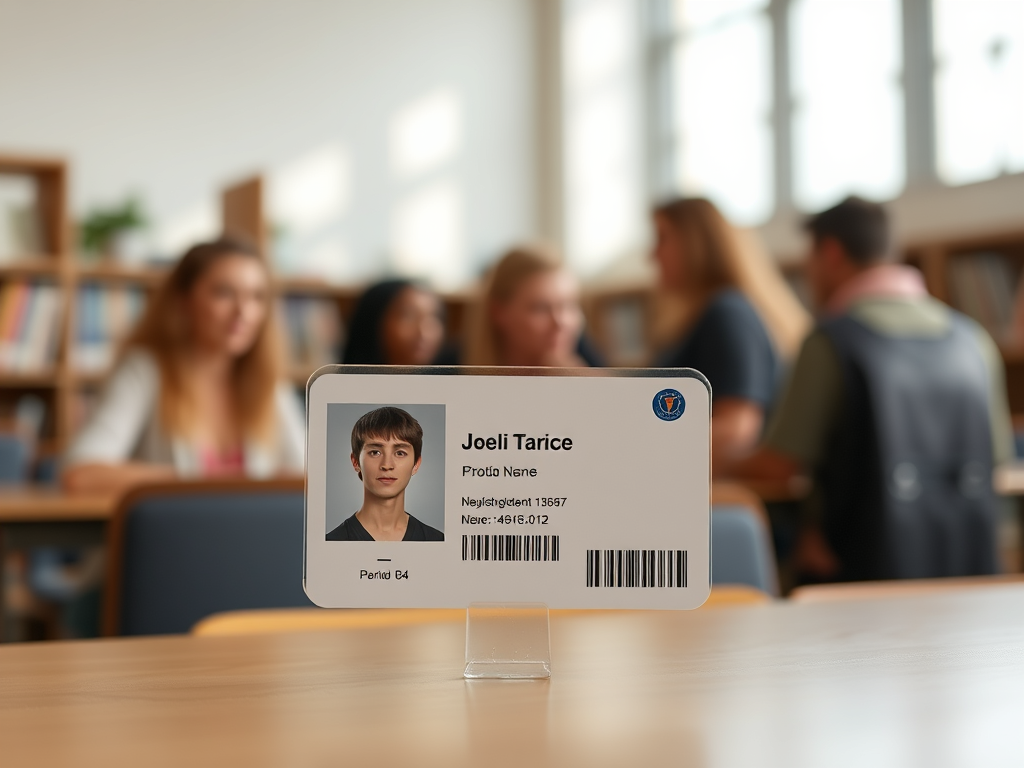
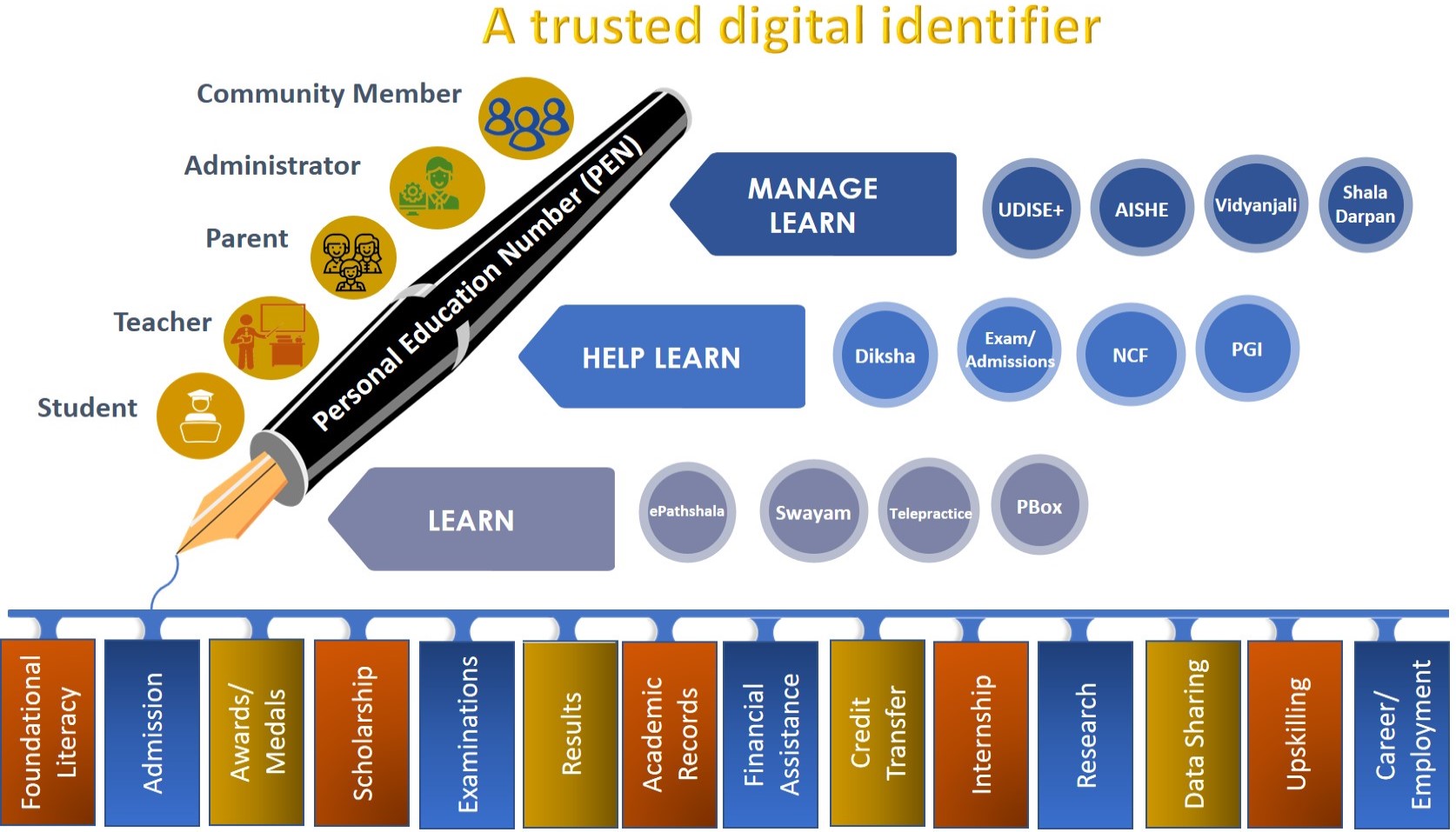
Personal Education Number or “PEN” is an initiative to create a unique identification number across all the Education platforms. PEN would be issued to 5 key personas (Learners, Parents, Teachers, Administrators and Community Members) interacting through 3 generalized scenarios: Learn, Help Learn and Manage Learn as defined in National Digital Enterprise Architecture (NDEAR).
PEN would contain minimum set of essential parameters (like name, date of birth, gender, email, phone etc.) validating the association of personas to the education sector to uniquely identify an academician or an entity.
PEN would facilitate unifying of existing digital assets and applications part of the federated system.
It would act as a permanent reference number in the entire persona lifecycle at different learning stages including pre-primary, primary, secondary, senior secondary, graduate, post-graduate, upskilling etc.
PEN can also facilitate building of national core registries such as student, teacher, counsellor, entities etc. as identified in NDEAR.
Most importantly, it would benefit the personas by providing a unified view of digital assets from diverse federated systems. Stakeholders would be able to share the digital academic assets like UPI model which uses mobile number linked to various kinds of financial accounts for making transaction. On the similar lines PEN linked with multiple registration numbers can be used for availing different services including employment, education, scholarship, credit transfer, loans, examinations, admissions, Passport/Visa etc.
Why Not Aadhaar and other Identifiers ? :
Aadhaar can be enlisted as an attribute for PEN rather than a unique identifier as it might not always be available for everyone part of the education system like NRIs, foreign nationals, organizations etc. Also, due to the legal frameworks associated with Aadhaar, it can’t be made a mandatory parameter for educational services. Similar is the case with other identifiers like Health ID, Passport, PAN etc.
Way Forward
Although generating identification numbers for such a huge population can be a daunting task, it can be implemented if done in a phased manner. In the initial phase, the focus can be on existing class 10th passed students and teachers for whom the database is readily available and slowly it can be cascaded down further for rest of the population. The new entrants can be easily considered by providing tools and creating policies & procedures.
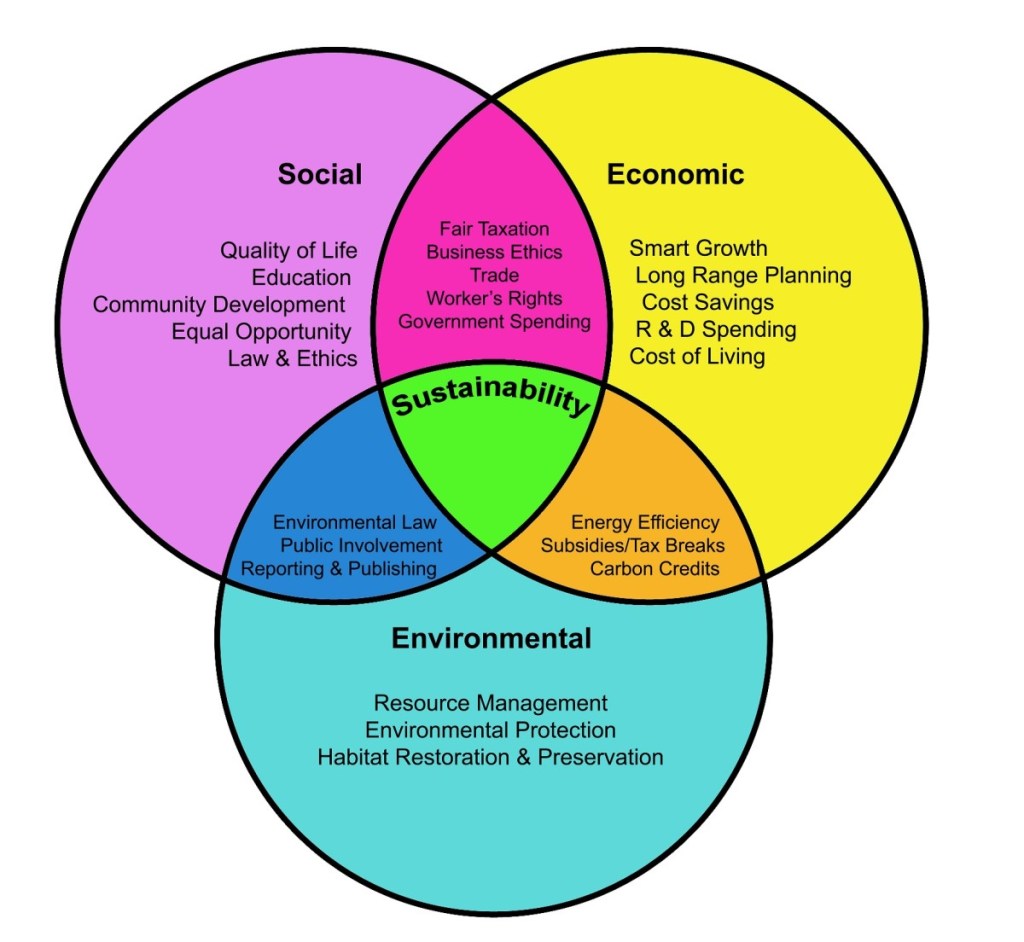
Integrating social work into environmental and social issues is a growing necessity as the interconnectedness of human well-being and environmental health becomes increasingly evident. Social workers are uniquely positioned to address the social dimensions of environmental challenges, such as climate change, natural disasters, and pollution, which disproportionately affect vulnerable populations. By incorporating ecological perspectives into their practice, social workers can advocate for sustainable policies, educate communities about environmental risks, and help individuals and groups adapt to changing conditions. This integration fosters a holistic approach to problem-solving, emphasizing both human rights and environmental justice to create resilient communities.
Moreover, social workers can play a pivotal role in bridging the gap between grassroots movements and policy-making to address systemic inequities exacerbated by environmental degradation. For instance, they can work with marginalized communities to amplify their voices in decision-making processes, ensuring equitable access to resources like clean water, safe housing, and renewable energy. By collaborating with environmental scientists, policymakers, and community leaders, social workers contribute to sustainable development initiatives that prioritize social equity. This interdisciplinary approach not only addresses immediate social and environmental crises but also promotes long-term solutions that align with the principles of social justice and environmental stewardship.Social work is crucial in addressing multifaceted issues such as environmental sustainability, health, and gender inequality. Recent studies by scholars like MM Ogbanga have shown how social work can contribute to solving complex challenges faced by communities, particularly in regions affected by environmental and socio-economic crises.
Flooding and Housing Health Impacts in Rivers State, Nigeria Ogbanga’s research on the impacts of flooding in Ahoada East and West Local Government areas highlights how natural disasters exacerbate health and housing issues. Social workers play a pivotal role in disaster response, from aiding in community recovery to providing counseling and support to affected individuals.
Gender and Unemployment in the Niger Delta Another critical study addresses how oil exploration has worsened gender disparities and unemployment. Social work can be instrumental in advocating for policies that ensure gender equality and offer employment opportunities for marginalized groups.
Energy Poverty and Sustainability Challenges Energy poverty is another significant issue in Nigeria, especially in rural communities. Social work interventions that address this challenge include advocacy for better energy access and environmental sustainability.
The Role of Communication Skills in Social Work Effective communication is vital in social work practice, and Ogbanga’s work emphasizes how enhancing communication skills can better support communities facing social challenges.
Climate Change and Feminist Environmentalism The intersection of climate change and feminist environmentalism in the Niger Delta demonstrates how social workers can use gender-sensitive approaches to address climate change’s disproportionate impacts on women.
Through these and other studies, social work integrates into a broader framework of social justice, community resilience, and sustainable development, proving its relevance in addressing today’s global challenges. Whether addressing the aftermath of flooding, gender inequalities, or the challenges posed by environmental degradation, social workers are central to fostering adaptive responses and building sustainable futures for vulnerable populations.
For further exploration of these issues, check out the works by Ogbanga and others in journals like Nigerian Journal of Agriculture, Food and Environment, International Journal of Social Science and Humanities Research, and African Journal of Political Science and International Relations.
Referenecs
Amadi, L., Igwe, P., & Ogbanga, M. (2016). Talking Right, Walking Wrong: Global Environmental Negotiations and Unsustainable Environmental Consumption. International Journal of Research in Environmental Science, 2(2), 24-38.
Amadi, L. A., Ogbanga, M. M., & Agena, J. E. (2015). Climate change and feminist environmentalism in the Niger Delta, Nigeria. African Journal of Political Science and International Relations, 9(9), 361-371.
Briggs, N. D., Okowa, W. J., & Ndimele, O. M. (Eds.). (2013). The Economic Development of Rivers State: In Commemoration of Port Harcourt Centenary Celebration: 2013. Rivers State Economic Advisory Council/Onyoma Research Publications.
Bukie, B. F., & Ogbanga, M. M. (2024). Correctional Institutions (Prison) Congestion and the Health Implication of Inmates in Nigeria.
de Lima, G. N., Zuñiga, R. A. A., & Ogbanga, M. M. (2023). Impacts of Climate Change on Agriculture and Food Security in Africa and Latin America and the Caribbean. In Climate Change and Health Hazards: Addressing Hazards to Human and Environmental Health from a Changing Climate (pp. 251-275). Cham: Springer Nature Switzerland.
Nwakanma, E., & Ogbanga, M. M. Assessing disaster preparedness and Indigenous disaster management systems of at-risk communities in Isoko-South LGA of Delta State, Nigeria.
Ogbanga, M. M. (2024). Communication skills in social work. EduPedia Publications Pvt Ltd.
Ogbanga, M. M., & Bukie, B. F. (2024). Traditional Institutions and Conflict Resolution in Nigeria: A Social Work Analysis.
Ogbanga, M. M., & Sharma, S. N. (2024). Climate Change and Mental Heat. Eduindex
Uzobo, E., & Ogbanga, M. M. (2017). The Role of Civil Registration and Vital Statistics in the Attainment of Selected Sustainable Development Goals in Nigeria. Indian Journal of Sustainable Development, 3(2), 1-10.
Uzobo, E., Ogbanga, M. M., & Jackson, J. T. C. B. (2014). Socio-cultural factors and attitudes affecting the health status of rural communities: a study of Danmusa, Katsina State, Nigeria. Int J Sci Res, 3(3), 837-844.
























 Eduindex
You must be logged in to post a comment.