



By Shankar Chatterjee
Agriculture forms the backbone of many economies around the world, especially in developing countries. It provides food, raw materials, and employment to a significant proportion of the global population. The concepts of agricultural productivity and the market for agricultural produce are closely intertwined, influencing food security, economic development, and rural livelihoods. This essay delves into the intricacies of agricultural productivity, the factors affecting it, and the dynamics of the market for agricultural produce.
Understanding Agricultural Productivity
Agricultural productivity refers to the output generated per unit of input in farming activities. Inputs may include land, labor, capital, seeds, fertilizers, water, and technology. Productivity is a critical measure of the efficiency and sustainability of agricultural practices. It determines the ability of a nation to meet the growing food demands of its population and contributes significantly to economic growth.
Factors Affecting Agricultural Productivity
- Technological Advancements:
- Adoption of modern farming techniques, mechanization, and biotechnology significantly enhances productivity.
- Precision farming, irrigation systems, and genetically modified crops are examples of innovations that have improved yields.
- Soil Fertility and Management:
- The quality of soil determines its capacity to support crops.
- Practices such as crop rotation, organic farming, and balanced fertilization help maintain soil health.
- Climate and Weather Conditions:
- Temperature, rainfall, and sunlight are critical for crop growth.
- Erratic weather patterns due to climate change pose challenges to agricultural productivity.
- Access to Inputs:
- Timely availability of quality seeds, fertilizers, and pesticides influences productivity.
- High input costs or unavailability can hinder optimal agricultural output.
- Government Policies and Support:
- Subsidies, minimum support prices (MSPs), and agricultural extension services impact farmers’ ability to adopt better practices.
- Infrastructure development, such as roads and irrigation facilities, also plays a vital role.
- Education and Training:
- Farmers with knowledge of modern farming techniques are better equipped to enhance productivity.
- Agricultural extension programs and capacity-building initiatives are essential for disseminating knowledge.
Market for Agricultural Produce
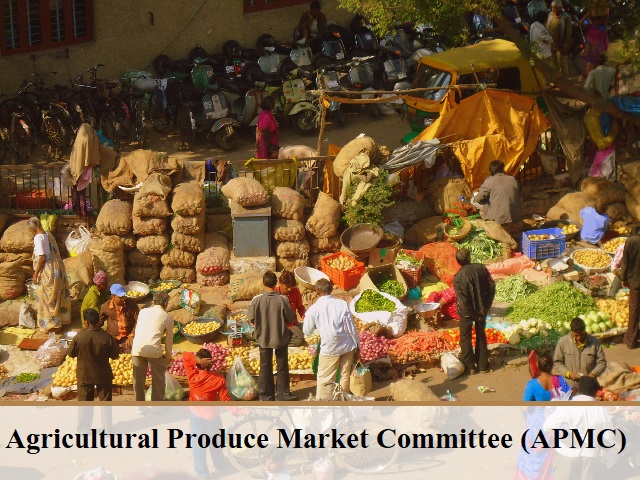
The market for agricultural produce refers to the entire system through which farm products are bought, sold, processed, and distributed. It encompasses local markets, wholesale markets, export markets, and online platforms. An efficient market system is crucial for ensuring fair prices for farmers and adequate supplies for consumers.
Challenges in Agricultural Markets
- Price Volatility:
- Agricultural produce is often subject to price fluctuations due to seasonal variations, demand-supply imbalances, and global market trends.
- Lack of Market Access:
- Farmers, especially smallholders, face challenges in accessing profitable markets due to poor infrastructure and inadequate market information.
- Middlemen and Exploitation:
- A significant portion of profits is often absorbed by intermediaries, leaving farmers with low returns.
- Post-Harvest Losses:
- Poor storage facilities, inadequate transportation, and lack of cold chains result in significant wastage of perishable commodities.
- Trade Barriers:
- Export restrictions, tariffs, and non-tariff barriers limit farmers’ access to international markets.
Improving Agricultural Markets
- Infrastructure Development:
- Investments in roads, cold storage, and warehouses can minimize post-harvest losses and improve market access.
- Digital Platforms and E-Markets:
- Initiatives like eNAM (National Agriculture Market) and online trading platforms can connect farmers directly to buyers, ensuring better prices.
- Cooperatives and Farmer Producer Organizations (FPOs):
- FPOs enable farmers to pool resources, negotiate better prices, and access markets collectively.
- Government Interventions:
- Policies such as MSPs and procurement mechanisms provide price stability and income security for farmers.
- Value Addition and Processing:
- Promoting agro-industries and value-added products increases the profitability of agricultural produce.
Interrelationship Between Productivity and Market Dynamics
Higher agricultural productivity and efficient markets are mutually reinforcing. Increased productivity ensures a steady supply of produce, stabilizing prices and enabling market growth. Simultaneously, well-functioning markets incentivize farmers to adopt better practices, invest in technology, and enhance productivity.
Conversely, inefficiencies in markets can lead to low returns for farmers, reducing their capacity to invest in inputs and technology, thereby negatively affecting productivity. Ensuring a balance between production and market demand is essential for the sustainability of the agricultural sector.
Conclusion
Agricultural productivity and the market for agricultural produce are pivotal to food security, economic development, and rural prosperity. Addressing the challenges in both domains requires a comprehensive approach that combines technological innovation, supportive policies, infrastructure development, and market reforms. By fostering synergy between productivity and market efficiency, nations can build resilient agricultural systems that cater to the needs of their populations and contribute to global food security.
References
Amadi, L. A., Ogbanga, M. M., & Agena, J. E. (2015). Climate change and feminist environmentalism in the Niger Delta, Nigeria. African Journal of Political Science and International Relations, 9(9), 361-371.
Chavas, J. P. (2008). On the economics of agricultural production. Australian Journal of Agricultural and Resource Economics, 52(4), 365-380.
de Lima, G. N., Zuñiga, R. A. A., & Ogbanga, M. M. (2023). Impacts of Climate Change on Agriculture and Food Security in Africa and Latin America and the Caribbean. In Climate Change and Health Hazards: Addressing Hazards to Human and Environmental Health from a Changing Climate (pp. 251-275). Cham: Springer Nature Switzerland.
Gollin, D. (2010). Agricultural productivity and economic growth. Handbook of agricultural economics, 4, 3825-3866.
Jack, J. T. C. B., Ogbanga, M. M., & Odubo, T. R. (2018). Energy poverty and environmental sustainability challenges in Nigeria. Ilorin Journal of Sociology, 10(1), 19-31.
Ogbanga, M. M., & Sharma, S. N. (2024). Climate Change and Mental Heat.
Ogbanga, M. M. (2024). Assessment of the Barriers to the Adoption of Clean Energy for Household Cooking in Okrika Local Government Area.
Ogbanga, M. M. (2024). Examining the Potential of Women Organisations in Promoting the Use of Clean Energy for Household Cooking; A Study of Okrika Local Government Area.
Van der Ploeg, J. D. (2019). Labor, markets, and agricultural production. CRC Press.


 Eduindex
You must be logged in to post a comment.