

🍽️ Types of Foods: A Detailed Overview
Food can be classified in various ways depending on nutritional content, source, and function. Below is a comprehensive breakdown:
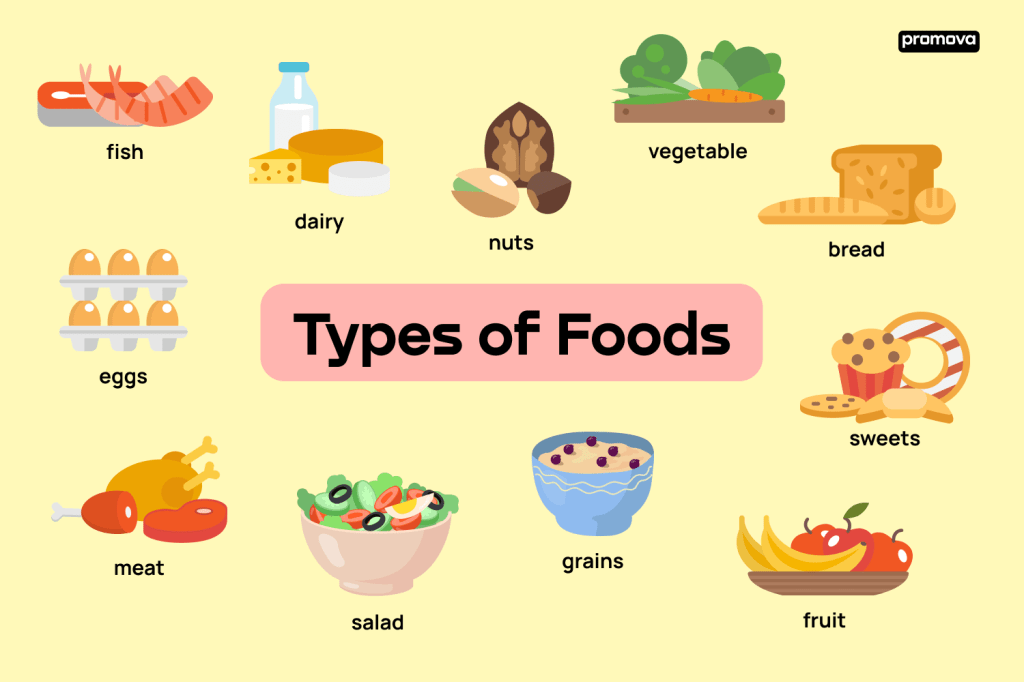
1. 🌾 Cereals and Grains
- Description: Staple foods rich in carbohydrates, providing energy.
- Examples: Rice, wheat, maize (corn), barley, oats, millet, rye, sorghum, quinoa.
- Uses: Basis for bread, pasta, noodles, breakfast cereals, and baked goods.
- Nutritional Value: High in carbohydrates, moderate protein, some vitamins (B-complex) and minerals.
2. 🥦 Vegetables
- Description: Edible plant parts such as roots, stems, leaves, flowers, and tubers.
- Examples:
- Roots & Tubers: Carrot, beetroot, potato, sweet potato, yam.
- Leafy Greens: Spinach, kale, lettuce, cabbage, fenugreek.
- Other Vegetables: Tomato, cucumber, broccoli, cauliflower, brinjal (eggplant), okra.
- Nutritional Value: Rich in dietary fiber, vitamins (A, C, K), minerals (iron, potassium), antioxidants, and low in calories.
3. 🍎 Fruits
- Description: Edible fleshy products of plants, often sweet or sour.
- Examples: Apple, banana, mango, orange, grapes, pomegranate, papaya, watermelon, berries, pineapple.
- Nutritional Value: Source of natural sugars, vitamins (especially vitamin C), minerals, fiber, and antioxidants.
- Types:
- Citrus fruits (orange, lemon)
- Stone fruits (mango, peach, plum)
- Berries (strawberry, blueberry)
- Tropical fruits (banana, papaya, pineapple)
4. 🥛 Dairy Products
- Description: Foods made from milk and milk derivatives.
- Examples: Milk, yogurt, cheese, butter, cream, paneer (cottage cheese), ghee.
- Nutritional Value: Rich in protein (casein), calcium, vitamin D, vitamin B12, fats, and probiotics (in fermented dairy).
5. 🍗 Meat, Poultry, and Seafood
- Description: Foods derived from animals and birds.
- Examples:
- Meat: Beef, pork, lamb, goat.
- Poultry: Chicken, turkey, duck.
- Seafood: Fish (salmon, tuna, cod), shellfish (shrimp, crab, lobster).
- Nutritional Value: Excellent source of protein, iron, zinc, vitamin B12, and omega-3 fatty acids (in fish).
6. 🥚 Eggs
- Description: Highly nutritious food from poultry birds, primarily chicken eggs.
- Nutritional Value: Rich in protein, vitamins (A, D, B12), choline, minerals, and healthy fats.
7. 🥜 Legumes, Pulses, and Nuts
- Description: Plant-based protein-rich foods.
- Examples:
- Legumes/Pulses: Lentils, chickpeas, kidney beans, black beans, peas.
- Nuts: Almonds, walnuts, cashews, peanuts, pistachios, hazelnuts.
- Seeds: Sunflower seeds, flaxseeds, chia seeds, pumpkin seeds.
- Nutritional Value: High in plant-based protein, fiber, minerals (magnesium, iron), healthy fats, and antioxidants.
8. 🥥 Oils and Fats
- Description: Foods that provide concentrated energy and essential fatty acids.
- Examples: Vegetable oils (olive oil, sunflower oil, soybean oil), butter, ghee, coconut oil, animal fats.
- Nutritional Value: Source of essential fatty acids, vitamins A, D, E, K, and energy (9 kcal/g).
9. 🍫 Sugars and Sweets
- Description: Foods high in refined sugars, often used for taste and quick energy.
- Examples: Sugar, honey, jaggery, chocolates, candies, desserts, pastries.
- Nutritional Value: Provide quick energy but low in vitamins and minerals (“empty calories”).
10. 🍵 Beverages
- Description: Liquids consumed for hydration, refreshment, or nutrition.
- Examples: Water, tea, coffee, fruit juices, soft drinks, milkshakes, soups, alcoholic beverages.
- Nutritional Value: Varies—water hydrates, milk gives protein and calcium, tea/coffee provide antioxidants, while sugary drinks may add empty calories.
11. 🌱 Herbs and Spices
- Description: Plant-based flavoring agents used in cooking.
- Examples: Turmeric, cumin, coriander, cinnamon, black pepper, cardamom, ginger, garlic, basil, thyme, oregano.
- Nutritional Value: Rich in antioxidants, phytochemicals, and medicinal compounds.
12. 🥗 Processed and Convenience Foods
- Description: Foods that are altered from their natural state for preservation, taste, or convenience.
- Examples: Bread, biscuits, canned foods, frozen meals, instant noodles, packaged snacks.
- Nutritional Value: Often high in salt, sugar, and unhealthy fats; limited vitamins and minerals depending on processing.
13. 🌿 Functional and Health Foods
- Description: Foods that provide health benefits beyond basic nutrition.
- Examples: Probiotic yogurt, fortified cereals, soy products, green tea, oats, spirulina.
- Nutritional Value: Help in preventing diseases, improving immunity, and promoting overall well-being.
✅ Conclusion
Foods are broadly classified into plant-based and animal-based categories, and further into nutrient groups like carbohydrates, proteins, fats, vitamins, and minerals. A balanced diet should include a variety from all groups to maintain health, energy, and disease prevention.
 Eduindex
You must be logged in to post a comment.