Importance of Corporate Social Responsibilities towards Corporate Sector in India

Citation

Kumar, H., & Bindal, M. (2026). Importance of Corporate Social Responsibilities towards Corporate Sector in India. International Journal of Research, 13(2), 207–217. https://doi.org/10.26643/rb.v118i10.9575

Hemant Kumar-Research Scholar, Lords University-Alwar (Raj.)

Dr. Meenakshi Bindal- Research Supervisor, Lords University-Alwar (Raj.)

Abstract: –

Indian companies engage in diverse CSR activities focused on Education, Healthcare, Environmental Sustainability, Skill Development, and Rural/Community Development, with major players like Tata, Wipro, HUL, and Infosys leading in areas from water conservation and women’s empowerment to COVID-19 relief and skill training, guided by India’s Companies Act. Key trends show increased focus on environment, skill-building, and tech-driven impact measurement, though spending fluctuates. 

Corporate Social Responsibility (CSR) is vital for Indian companies as it boosts brand image, customer loyalty, and talent attraction, while mitigating risks and ensuring long-term sustainability by integrating societal welfare with business strategy, leading to better financial performance, innovation, and competitive edge in a growing conscious market. 

Key-Words: -CSR, COVID-19, HUL, BHEL.

Introduction: –

Key CSR Focus Areas:-

  • Education & Skill Development: Building schools, scholarships, supplementary learning centers (ITC), vocational training for employability (Tata Power, Wipro).
  • Healthcare: Medical camps, hospital infrastructure, COVID-19 relief (oxygen, PPE), sanitation, HIV/AIDS awareness (Wipro, HUL).
  • Environmental Sustainability: Afforestation (BHEL), water conservation, renewable energy, waste management (Infosys, HUL, BHEL).
  • Rural & Community Development: Slum development, disaster relief, women’s empowerment via Self-Help Groups (Tata Power, Reliance).
  • Poverty Eradication: Hunger reduction programs, supporting livelihoods for marginalized groups. 

Examples by Company: –

  • ITC: Focuses on education (Supplementary Learning Centres) and sustainable agriculture.
  • Tata Power: Empowers women in Kutch through SHGs, providing financial aid.
  • Infosys: Water body restoration, metro station partnerships, general education.
  • Wipro: Health, wellness, disaster relief, and education through Wipro Care.
  • BHEL: Large-scale afforestation and biodegradable product support. 

Trends & Mandates: –

  • Legal Framework: Mandated by the Companies Act, 2013, requiring companies to spend a percentage of profits on CSR.
  • Sectoral Shifts: Increased spending on environmental sustainability, growing focus on skill development and technology for impact measurement.
  • COVID-19 Impact: Significant CSR funds directed towards creating health infrastructure and supplying medical equipment during the pandemic. 

In India, Corporate Social Responsibility (CSR) is crucial for the corporate sector as it enhances brand image, boosts customer loyalty, attracts/retains top talent, mitigates risks, and drives long-term financial sustainability by aligning business goals with societal welfare, fulfilling legal mandates, and creating shared value in a conscious marketplace. 

Key Importance for Corporations:-

  • Enhanced Reputation & Brand Value: CSR builds a positive public image, increases brand recognition, and differentiates companies in competitive markets, fostering trust among consumers, investors, and the media.
  • Customer Loyalty & Sales: Consumers prefer and trust brands that contribute positively to society, leading to deeper connections, increased loyalty, and higher sales.
  • Talent Attraction & Retention: Socially conscious companies attract skilled professionals who seek purpose-driven work, improving morale, engagement, and retention.
  • Risk Management: Proactive CSR helps mitigate legal, regulatory, and reputational risks by addressing social and environmental concerns, preventing lawsuits and negative publicity.
  • Long-Term Sustainability: By investing in community and environmental well-being, businesses build sustainable models that benefit society and ensure their own longevity.
  • Access to Capital & New Opportunities: Strong CSR can attract investors and create partnerships with NGOs and communities, opening new markets and growth avenues.
  • Legal Compliance: In India, CSR is mandated by law (Section 135 of the Companies Act, 2013), making it a necessity for compliance, especially for large companies. 

Societal Impact & Business Synergy

  • Poverty Alleviation & Education: CSR initiatives contribute to grassroots development, education, and poverty reduction, benefiting society directly.
  • Community Development: Engaging with local communities through CSR fosters better stakeholder relations and promotes inclusive economic growth. 

In essence, CSR moves beyond charity to become a strategic imperative, benefiting both the corporate sector’s bottom line and India’s overall sustainable development. 

Key trends: –

  1. Slower CSR spending growth: In FY 2023-24, the CSR spending by companies listed on the National Stock Exchange (NSE) increased by 5 percent to INR 155.24 billion, up from INR 148.16 billion in FY 2022-23. This growth was slower compared to a 13 percent rise in average net profit over the preceding three years.
  2. Decline in CSR as a percentage of net profit: CSR spending as a percentage of net profit fell to 1.87 percent, a six-year low, indicating a lag in CSR spending relative to profit growth.
  3. Compliance with CSR mandate: Despite the slowdown, 1,271 out of 1,296 companies required to spend on CSR did so, showing an improvement from the previous year.
CSR Expenditure in India
Fiscal yearTotal number of companiesTotal amount of CSR spent (INR)States and Union Territories coveredTotal number of CSR projectsDevelopment sectors
FY 2023-2424,392299.86 billion4051,96614
FY 2022-2319,888265.79 billion4044,42514
FY 2021-2220,840262.10 billion3939,32414
FY 2020-2122,985249.65 billion3835,29014
FY 2019-2025,181202.17 billion3932,07114

Source: CSR National Portal, Ministry of Corporate Affairs

Corporate social responsibility (CSR) initiatives involve companies integrating social and environmental concerns into their business operations and interactions with stakeholders. These efforts fall generally into four main categories: environmental, ethical, philanthropic, and economic responsibility. 

Types of CSR Examples

  • Environmental Responsibility: Focuses on behaving in an environmentally friendly way, often called environmental stewardship.
    • Examples: Reducing carbon footprints, minimizing packaging, increasing reliance on renewable energy, improving water efficiency, and donating to environmental causes.
  • Ethical Responsibility: Ensures an organization operates in a fair and ethical manner through fair treatment of all stakeholders

.     Examples: Offering competitive salaries and compensation, providing generous benefits like parental leave, establishing clear ethical codes of conduct, and ensuring the supply chain avoids child or forced labor.

  • Philanthropic Responsibility: Aims to actively make the world a better place through charitable donations and community involvement.
    • Examples: Donating a percentage of profits to charities, organizing employee volunteer programs (with paid leave or volunteer grants), funding scholarships, and providing in-kind donations of products or services.
  • Economic Responsibility: Involves making responsible financial decisions that “pay dues” to society.
    • Examples: Paying fair taxes, ensuring financial transparency, paying employees competitive wages, and investing in local communities or businesses that further social good. 

Real-World Company Examples

Many companies have strong CSR programs, often aligning their initiatives with their core business values. 

  • Google: Committed to achieving net-zero emissions across all operations by 2030, powered entirely by carbon-free energy. It has invested billions in renewable energy projects and offers Google Ad Grants, providing free advertising credits to eligible nonprofits.
  • Microsoft: Known for its robust employee volunteering programs and its donation of billions in tech assets and grants to nonprofits worldwide.
  • Starbucks: The Coffee and Farmer Equity (C.A.F.E.) Practices program sets guidelines for ethically sourcing 100% of its coffee to ensure sustainability and fair working conditions for farmers.
  • Walmart: Focuses on large-scale philanthropy, donating over a billion dollars in cash and in-kind goods annually, and works with suppliers to reduce their emissions.
  • TOMS: A Certified B Corporation that donates a portion of its profits to support various causes like mental health, access to opportunities, and ending gun violence (previously known for its “One for One” shoe donation model).
  • Patagonia: Commits to radical supply chain transparency and environmental activism, donating 1% of all sales to conservation efforts and using organic cotton.
  • Coca-Cola: Aims to make 100% of its packaging recyclable by 2025 and has a goal to return 100% of the water used in its beverages back to communities and nature. 

Example: ITC Limited

Key aspects of ITC’s CSR approach include participatory planning and community ownership, emphasizing behavioral change and asset creation. The Two Horizon approach guided ITC’s Social Investments Program, promoting inclusive growth and livelihood enhancement.

ITC’s CSR projects spanned 27 States/Union Territories and impacted over 300 districts. Notable initiatives included:

  • Social forestry: Afforested over 31,000 acres, benefiting 176,000 households.
  • Water stewardship: Enhanced water security across 136,000 acres with effective water-harvesting structures.
  • Biodiversity conservation: Revived ecosystems over 150,000 acres, improving biodiversity.
  • Climate smart agriculture: Covered 2.34 million acres, promoting sustainable farming practices.
  • Livestock development: Improved livelihoods for families engaged in various livestock rearing.
  • Women empowerment: Supported over 35,400 women and reached 210,000 self-help groups.
  • Education: Enhanced learning for over 250,000 children.
  • Skilling & vocational training: Trained over 14,400 youth, achieving a 68 percent placement rate.
  • Sanitation: Constructed toilets benefiting 115,000 community members.
  • Health & nutrition: Improved health awareness for over 560,000 beneficiaries.
  • Waste management: Developed models for zero waste to landfills.
  • ITC Sangeet Research Academy: Promoted Hindustani Classical Music through training.

Example: Tata Chemicals

In the fiscal year 2022-23, Tata Chemicals allocated INR 160 million to CSR initiatives. During FY23, Tata Chemicals collaborated with 5,245 farmers, providing training and support in areas like livestock management and organic farming, which improved farm productivity and farmers’ incomes.

The company also engages rural youth through skill development programs in areas such as fashion technology and welding, creating employment and entrepreneurial opportunities. These initiatives take place at various locations, including a skill development center in Mithapur and partner institutions like Tata Strive Skill Development Centre.

The company has established comprehensive CSR policies, including a Community Development Policy and Diversity & Inclusion Policy.

In 2024, Corporate Social Responsibility (CSR) in India became crucial for enhancing brand image, attracting talent, ensuring long-term profitability, and meeting legal mandates under the Companies Act, with spending by listed firms rising 16% to ₹17,967 crore, driving community development in education, healthcare, and environment while boosting inclusive growth and aligning with national goals like “Developed India 2047,” though financial limits and awareness remain hurdles. 

Importance of CSR for the Corporate Sector in India (2024)

  • Enhanced Brand & Reputation: CSR builds trust, positive public image, and brand equity, attracting ethically-conscious consumers.
  • Talent Attraction & Retention: Employees, especially younger generations, prefer socially responsible employers, boosting morale and loyalty.
  • Long-Term Profitability: Socially responsible practices are linked to business expansion, stability, and increased profitability.
  • Legal Compliance & Governance: India’s Companies Act, 2013, mandates CSR for large firms, making it a core governance requirement, not just voluntary.
  • Community & National Development: CSR supplements government efforts in education, healthcare, poverty alleviation, and sustainable development, aiding India’s vision for 2047. 

Key Data & Trends (FY 2023-24)

  • Increased Spending: Total CSR spending by listed companies grew 16% to ₹17,967 crore in FY24.
  • Mandatory Thresholds: Companies with ₹500 Cr+ net worth, ₹1000 Cr+ turnover, or ₹5 Cr+ net profit must comply.
  • Key Focus Areas: Education, skill development, healthcare, and environmental sustainability saw significant investment.
  • Collaborative Approach: Increased partnerships between companies, NGOs, and government to maximize impact. 

Tabular Data: CSR Impact & Trends

Metric/Area Data/Trend (Approx. 2024)Significance for Corporates
CSR Spending Growth16% increase in FY24.Shows growing commitment & integration into business.
Total CSR Spend₹17,967 Crore (Listed Cos, FY24).Demonstrates scale of corporate contribution to society.
Profitability LinkPositive correlation (r=0.67) between CSR & business expansion.Proves CSR as a strategic financial advantage, not just cost.
Employee EngagementHigher morale & attraction for values-driven employees.Crucial for talent management in a competitive market.
Community Well-being15% rise reported via MSME CSR.Shows tangible social return on investment (SROI).
Environmental Impact20% drop in carbon emissions with green tech adoption.Aligns with ESG goals & regulatory demands.
National Vision59% of MSMEs ready to expand CSR for national goals.Positions companies as key partners in nation-building.

Data reflects trends and reported figures from 2024 sources; MSME data from a 2025 study on 2024 trends. 

Conclusion

The outcome of this paper demonstrates that governments should play a proactive role in promoting CSR in any given nation or state, as Caroll (1991) argues that CSR is “an economic, legal, ethical, and discretionary expectation (philanthropic).” The same sentiment is expressed by Freeman (1984), who argues that business has responsibilities for groups and individuals who can both influence and be influenced by business operations. Hopkins (2003) also acknowledged that CSR has four core principles or addenda of economic, legal, ethical, and discretionary expectation (philanthropic) that should not be left only to the corporation’s voluntary means but should be safeguarded and managed so that there is a win–win situation between a corporation and the communities or societies they operate. In some developing countries in Africa, CSR activities are inexistence not implemented, or the elites are the ones who benefit from such funds that could help spur development in those countries. CSR’s best practices should be transferred from developed west to developing countries since most of these corporations operating in developing countries are businesses with origins in the western world, for example, firms operating in mining or forestry products or communication.

Collaboration is vital so that CSR core issues are shared. There is a need for a transfer of best practices of CSR. In promoting CSR activities or agendas, each country or government should carefully consider its own social, economic, cultural, political, and growth situations. Hence, good governance is essential for CSR activities, especially in developing countries where centralization leads to inefficiencies and ineffectiveness. There is a need to avoid situations whereby some oil companies and forestry exploration corporations in developing countries in Africa do not directly benefit their local communities.

Most local communities in developing countries feel abandoned by corporations exploring their natural resources. There is a growing sentiment of anti-western domination, notably when some of these western companies are operating in developing countries and are not implementing CSR activities or are benefiting a small elite in developing countries. Good governance and transparency in the management of natural resources in developing countries concerning CSR agenda are welcome, and best practices should be shared and not kept as a policy that is not used or communicated. The need for local chiefs in developing countries and the local authorities to be transparent in managing local land and its natural resources for local development and growth is essential hence the CSR agenda. Thus, the significant contribution of this paper is that governments should play a proactive role in promoting CSR activities that benefit local communities and their societies. Developing countries’ nature government systems need to be transparent and serve the interest of their people. We need to avoid a situation whereby rich oil countries with significant natural resources do not benefit those at the local level but rather tiny elites who have confiscated the country’s natural resources for themselves only and their families. Developing countries’ governments can use varied instruments in promoting CSR by creating awareness, fostering and partnering, mandating, volunteering, or putting soft legislation in place for corporations to further improve CSR activities that benefit communities at large. Soft legislation will enable some of these corporations to comply with their CSR initiatives. For example, tax exemptions for a business that contributes money to educational, environmental, and social issues are vital for developing countries instead of CSR activities as philanthropic only. CSR should not be seen only as a philanthropic agenda but rather should focus on social, economic, environmental, and legal to spur economic growth and development for developing countries, especially in Africa.

The literature shows that many countries in the west and some developing countries profit from CSR activities and, more importantly, during the COVID-19 pandemic. The result also shows that developing countries should not blindly be copying from western countries’ CSR agendas. They should create CSR agendas that reflect their realities. Developing countries in the south should learn from developed countries’ CSR implementation, for example, the United Kingdom, the USA, Sweden, Denmark, South Korea, Malaysia, Singapore, Saudi Arabia, and India. There should not be a blind adoption of the implementation of the CSR agenda from the north; government and governance must create their own CSR agenda that fit them and their communities’ realities and context. This study contributes to CSR issues in developed countries, including how developing countries can learn from good practices in the developed world to strengthen CSR in developing countries, as well as the role of government in promoting CSR agendas for development and growth rather than seeing CSR as philanthropy. Good collaboration between developed and developing countries in enhancing best practices of CSR is vital because corporations have responsibilities to society that go beyond economic, legal, and moral expectations. Future research is needed to examine CSR agendas in both developed and developing countries and not allow CSR activities to be only a voluntary act by corporations.

References: –

  1. Albareda, L., Lozano, J. M., & Ysa, T. (2007). Public policies on corporate social responsibility: The role of governments in Europe. Journal of Business Ethics,74, 391–407.
  2. Albareda, L., Lozano, J. M., Tencati, A., Midttun, A., & Perrini, F. (2008). The changing role of governments in corporate social responsibility: drivers and responses. Business ethics: A European review17(4), 347–363. Available at SSRN: https://ssrn.com/abstract=1259960 or  10.1111/j.1467-8608.2008.00539.x
  3. Albareda L., Lozano J.M., Tencati A., Perrini F., & Midttun A. (2009). The role of government in corporate social responsibility. In: Zsolnai L, Boda Z, Fekete L (eds) Ethical Prospects. Springer, Dordrecht
  4. Alharthey, B. K. (2016). Role of corporate social responsibility practices in Saudi universities. International Journal of Business and Social Research,06(01), 2016. 
  5. Bapuji, H., Patel, C., Ertug, G., & Allen, D. (2020). Corona crisis and inequality: Why management research needs a societal turn. Journal of Management,46(7), 1205–1222. 
  6. Batty, R. J., Cuskelly, G., & Toohey, K. (2016). Community sport events and CSR sponsorship: Examining the impacts of a public health agenda. Journal of Sport and Social Issues,40(6), 1–20. 10.1177/0193723516673189.
  7. Bhave, A. G. (2009). Experiences of the role of government in promoting corporate social responsibility initiatives in the private sector recommendations to the Indian state of Gujarat. A master thesis submitted to the University of Lund, Sweden. 
  8. Boadi, E. A., He, Z., Bosompem, J., Say, J., & Boadi, E. K. (2019). Let the talk count: Attributes of stakeholder engagement, trust, perceive environmental protection and CSR. SAGE Open,9(1), 1–15. 10.1177/215824401982592034290901.
  9. Capaldi, N. (2016) Directions in corporate social responsibility. Int J Corporate Social Responsibility, 1(4) . 10.1186/s40991-016-0005-5#citeas 
  10. Caroll, A. B. (1991). The pyramid of corporate social responsibility: Toward the moral management of organizational stakeholders. Business Horizons.
  11. Caroll, A. B. (1999). Corporate social responsibility: Evolution of a definitional construct. Business and Society,38, 268–295.

Center–State Relations in Federal Systems: An Analysis of Power Distribution

Daily writing prompt
Describe a phase in life that was difficult to say goodbye to.

Citation

Anand, P. (2026). Center–State Relations in Federal Systems: An Analysis of Power Distribution. https://doi.org/10.26643/rb.v118i11.11076

Prem Anand

MA, UGC NET (Political Science)

Sahebganj Sonarpatti Chowk, Chapra, Saran, Bihar, 841301

royale.prem@gmail.com

Abstract
The dynamics of center–state relations are central to the functioning of federal systems around the world. Federalism is premised on a constitutional division of power between national and subnational governments, but in practice the distribution and exercise of authority is shaped by history, political culture, economic pressures, and judicial interpretation. This paper critically examines the theoretical foundations of federalism and the institutional mechanisms through which central and constituent units interact. Drawing upon comparative examples, it explores models of asymmetric and symmetrical federal relations, fiscal federalism, and the role of conflict and cooperation in maintaining systemic equilibrium. The paper assesses how power is negotiated, contested, and transformed within federal frameworks, highlighting the importance of legal frameworks, political negotiation, and economic interdependence in shaping center–state dynamics. It concludes that effective federal governance depends not only on constitutional design but also on adaptive practices that respond to social change, economic imbalance, and political asymmetries. Understanding these dynamics is crucial for scholars and policymakers aiming to enhance democratic governance, regional equity, and national cohesion in federal states.

Keywords: Federalism, center–state relations, power distribution, constitutional design, fiscal federalism, asymmetry, intergovernmental relations, decentralization, comparative federal systems.

Introduction

Federalism as a mode of governance has fascinated political theorists, constitutional designers, and policymakers for more than two centuries. At its core, federalism is an institutional arrangement that accommodates diversity within unity by distributing political authority between a central government and self-governing regional units. The concept embodies both normative commitments to pluralism and practical mechanisms for managing complexity in diverse polities. The relationship between the central authority and constituent units—commonly referred to as center–state relations—is neither static nor uniform across federations. Instead, it evolves over time, shaped by constitutional frameworks, judicial interpretation, political bargaining, and economic imperatives.

This paper seeks to analyze the nature of power distribution within federal systems and the institutional and political mechanisms that mediate center–state relations. It begins with a conceptual discussion of federalism and the theoretical bases for division of powers. The paper then explores models of federal arrangements, focusing on symmetrical and asymmetrical federalism, and discusses how fiscal federalism influences intergovernmental relations. Using comparative insights, it examines conflicts and mechanisms of cooperation that characterize center–state interactions. The final sections address contemporary challenges in center–state relations and propose perspectives for strengthening federal governance in increasingly complex political environments.

Theoretical Foundations of Federalism and Power Distribution

Federalism is defined by the constitutional sharing of authority between different levels of government. Scholars such as K.C. Wheare and Daniel Elazar have emphasized that federal systems are distinguished by dual political communities coexisting within a single polity. The central premise of federalism is that sovereignty, although ultimately indivisible in legal theory, is functionally divided so that regional governments possess constitutionally guaranteed powers. This division aims to reconcile the need for a cohesive national policy with the desire for regional autonomy and self-determination.

The constitutionally enshrined division of powers forms the backbone of center–state relations. Constitutions typically specify exclusive powers of the federation, exclusive competencies of constituent units, and shared fields of authority. For example, matters involving national defense, currency, and foreign affairs are usually the preserve of the central government, while areas such as education, local policing, and cultural policy frequently fall within regional jurisdiction. However, this neat division often blurs in practice, necessitating mechanisms such as intergovernmental negotiation, judicial interpretation, or statutory elaboration to clarify responsibilities.

Federal theory distinguishes between symmetrical and asymmetrical distributions of power. Symmetrical federalism implies that all subnational units enjoy equal standing and powers under the constitution. Canada and Australia have traditionally exemplified symmetrical relations, wherein provinces or states enjoy equivalent jurisdictional competencies. Asymmetrical federalism, by contrast, recognizes that certain regions may possess distinct powers or privileges owing to historical, cultural, or political considerations. Examples include the autonomous status of Quebec within Canada or the special provisions for Scotland and Wales within the United Kingdom’s quasi-federal arrangements.

The normative foundations of power distribution in federal systems are grounded in principles of subsidiarity, autonomy, and shared governance. Subsidiarity advocates that decisions should be taken at the lowest capable level of government, thereby bringing governance closer to the people. Autonomy seeks to respect the self-governing capacity of constituent units, while shared governance emphasizes cooperation and coordination on matters of mutual concern. The balance among these principles determines the texture of center–state relations.

Models of Federalism: Symmetry, Asymmetry, and Beyond

An understanding of the different models of federalism is essential for comprehending the diversity of center–state relations. As noted, symmetrical federalism is characterized by uniform constitutional status and powers for all subnational units. The United States offers a classical example, where states possess equal constitutional standing, and differences in law or policy emerge primarily from democratic choice rather than structural hierarchy.

In contrast, asymmetrical federalism acknowledges structural differences among constituent units. Such arrangements often arise in response to demands for cultural recognition, linguistic rights, or regional autonomy. In Spain, for instance, the autonomous communities like Catalonia and the Basque Country enjoy distinct powers, reflecting historic identities and political negotiations. In multinational federations, asymmetry can function as a tool for managing diversity while sustaining national unity. However, it also introduces complexities in center–state relations, as unequal powers can fuel perceptions of favoritism or inequality among regions.

Federal systems may also be categorized by the centrality of intergovernmental mechanisms and the prevalence of judicial versus political resolution of disputes. Some federations emphasize judicial review to arbitrate disputes over jurisdiction, with supreme or constitutional courts playing a pivotal role. The United States’ Supreme Court has historically shaped center–state relations by interpreting constitutional provisions on federal authority. Other systems rely more heavily on intergovernmental councils or forums for negotiation. Germany’s Bundesrat, representing states at the federal level, institutionalizes regional input into national legislation, thereby fostering cooperative federalism.

These diverse models highlight that federal arrangements are not merely constitutional texts but living systems shaped by political practice. The balance between centralization and decentralization can shift over time in response to social pressures, economic needs, or political crises. Consequently, center–state relations are dynamic, requiring continuous adaptation.

Fiscal Federalism and Economic Dimensions of Power Distribution

An essential dimension of center–state relations is fiscal federalism, which refers to the allocation of revenue-raising powers and expenditure responsibilities across levels of government. Effective fiscal federalism is crucial for ensuring that subnational governments have the resources to fulfill their constitutional obligations without undue dependence on central transfers.

Revenue distribution in federal systems typically involves a mix of locally raised taxes, shared tax bases, and intergovernmental transfers. The design of fiscal arrangements influences the degree of autonomy subnational units can exercise. In some federations, subnational governments possess significant tax powers, enabling them to tailor policies to local needs. In others, heavy reliance on central grants can circumscribe regional autonomy and heighten tensions in center–state relations.

Intergovernmental transfers serve to address vertical and horizontal imbalances. Vertical imbalances occur when subnational expenditure responsibilities outstrip their revenue capacities, while horizontal imbalances reflect disparities in fiscal capacity across regions. Central governments often deploy equalization mechanisms to ensure comparable levels of public services across diverse regions. However, the political implications of transfers can be contentious, as wealthier regions may object to redistribution, while poorer regions demand greater support. Negotiating these tensions is a central feature of federal politics.

Fiscal federalism also intersects with macroeconomic policy. In federations, national economic stability often necessitates coordination between central and regional governments. Deficits at the subnational level can have ramifications for national debt and creditworthiness. Consequently, federal systems develop frameworks for budgetary oversight, borrowing limits, and fiscal responsibility. The European Union’s Stability and Growth Pact illustrates the challenges of maintaining fiscal discipline in a multilevel political system, even though the EU is not a traditional federation.

The economic dimension of power distribution underscores that constitutional delineations of authority are inseparable from resource capabilities. Without adequate fiscal arrangements, formal autonomy may be hollow, and center–state relations can become strained by competition for resources rather than cooperation for shared goals.

Conflict and Cooperation in Center–State Relations

Federal systems routinely generate both conflict and cooperation as part of their normal functioning. Disputes may arise over jurisdictional boundaries, resource allocation, or interpretation of constitutional provisions. These conflicts are not necessarily pathological; rather, they are inherent in a system where multiple centers of authority coexist.

Judicial review often serves as a mechanism for resolving disputes, with constitutional courts interpreting the scope of powers. In countries such as India, the Supreme Court has played a significant role in adjudicating center–state tensions, particularly in areas of concurrent jurisdiction or when state laws are challenged for inconsistency with national legislation. While courts provide clarity and legal legitimacy, judicial intervention can also be perceived as centralizing if decisions consistently favor national authority.

Political negotiation and intergovernmental councils provide alternative or complementary avenues for managing disputes. Regular dialogue between central and regional leaders can foster understanding and facilitate compromise. Institutionalized forums for consultation, such as Canada’s Council of the Federation, enable provinces to coordinate positions and engage with the federal government on shared concerns. Cooperative federalism models emphasize such negotiation and joint policy making as means to build consensus and advance common interests.

In some cases, center–state tensions escalate into broader political crises, particularly when regions perceive systemic bias or threat to their identity. Secessionist movements in federations like Canada, Spain, and past examples in Yugoslavia underscore the stakes involved in center–state relations. Addressing such tensions requires not only legal and institutional tools but also political sensitivity and willingness to accommodate regional aspirations within the framework of national unity.

Cooperation, however, extends beyond dispute resolution. Joint policy initiatives in areas such as infrastructure development, public health, and environmental regulation demonstrate the potential for collaborative governance. Federal systems often establish mechanisms for shared policy implementation, recognizing that complex challenges transcend jurisdictional boundaries. These cooperative arrangements can strengthen center–state relations by building interdependence and fostering shared accountability.

Comparative Perspectives on Power Distribution

A comparative approach illuminates the varied ways in which federations manage the distribution of power. The United States, Canada, Germany, India, and Australia offer illustrative contrasts in center–state relations.

In the United States, federalism has been characterized by a robust system of state autonomy, tempered by an expanding role for the national government, particularly in the twentieth century. Supreme Court interpretations, national policy imperatives, and fiscal interventions have shifted the balance over time. Nonetheless, states retain significant authority in areas such as education, criminal law, and local governance.

Canada’s federal system reflects a blend of symmetrical and asymmetrical elements. While provinces possess equal constitutional status, Quebec’s distinct cultural and linguistic identity has led to specific provisions and political negotiations that differentiate its standing within the federation. Intergovernmental councils play a significant role in shaping policy coordination.

Germany’s federalism emphasizes cooperative relations. The Bundesrat’s role in national legislation institutionalizes state participation in federal decision making. Fiscal equalization mechanisms seek to ensure uniform standards of public services across Länder. Germany’s model demonstrates how constitutional design can embed cooperation into the fabric of federal governance.

India’s federal system is notable for its constitutional specificity and diversity. The Seventh Schedule of the Indian Constitution delineates exclusive and concurrent legislative subjects, and the Supreme Court frequently adjudicates disputes over jurisdiction. Fiscal federalism in India combines tax devolution with statutory and discretionary grants, reflecting efforts to balance autonomy with national priorities.

Australia’s federal structure, shaped by the Constitution of 1901, has evolved through High Court interpretations and political practice. Fiscal centralization through the national government’s dominance in taxation has prompted debates on state autonomy and resource distribution. The balance between national standards and regional flexibility remains an ongoing challenge.

These comparative perspectives reveal that while federal systems share common structural principles, the practical contours of center–state relations are shaped by history, judicial practice, political culture, and economic imperatives. No single model offers a definitive blueprint, but each demonstrates how power distribution can be negotiated and renegotiated through constitutional and political processes.

Contemporary Challenges in Center–State Relations

Federal systems today confront a range of challenges that test the resilience of established power distributions. Globalization, economic inequality, and social movements amplify demands for autonomy, equity, and responsive governance. Technological change and cross-border issues such as climate change and pandemics necessitate cooperative policy frameworks that transcend traditional jurisdictional lines.

Economic crises can exacerbate center–state tensions, as fiscal pressures compel governments to renegotiate responsibilities and priorities. Subnational indebtedness, revenue shortfalls, or demands for greater investment in infrastructure can prompt calls for reform in fiscal federal arrangements. Ensuring that subnational governments possess adequate resources without undermining national fiscal stability remains a critical balancing act.

Identity politics and regional nationalism pose another dimension of contemporary challenge. Regions with distinct linguistic, cultural, or historical identities may seek greater autonomy or special status within federations. Addressing such aspirations requires not only legal accommodation but also inclusive political processes that recognize diversity while affirming collective national identity. Failure to manage these tensions can lead to polarization and, in extreme cases, threats to national cohesion.

Judicialization of center–state disputes also raises questions about democratic legitimacy. While courts play an essential role in interpreting constitutional boundaries, excessive reliance on judicial resolution can engender perceptions of overreach or politicization of the judiciary. Strengthening political mechanisms for negotiation and consultation can complement judicial processes and enhance democratic accountability in center–state relations.

Federal systems must also adapt to demographic shifts and urbanization. Cities and metropolitan regions increasingly drive economic growth and innovation, yet they may not fit neatly into traditional federal structures. Recognizing subnational diversity beyond formal states and provinces challenges federations to develop flexible frameworks for governance that accommodate evolving social and economic realities.

Conclusion: Toward Adaptive and Inclusive Federalism

The study of center–state relations in federal systems reveals a complex interplay between constitutional design, political practice, and economic imperatives. Power distribution in federations is not merely a matter of legal text but is shaped by interaction, negotiation, and adaptation. Federalism accommodates diversity and unity by structuring authority across multiple levels, yet it requires continuous effort to manage tensions and foster cooperation.

Effective federal governance depends on several factors: clear constitutional delineation of powers, robust mechanisms for intergovernmental dialogue, equitable fiscal arrangements, and political cultures that value pluralism and consensus. Judicial review plays an indispensable role in interpreting constitutional boundaries, but it must be balanced with political negotiation to ensure democratic legitimacy. Fiscal federalism, meanwhile, must balance autonomy with shared responsibility to ensure both regional equity and national stability.

Comparative examples demonstrate that federal systems evolve in response to internal dynamics and external pressures. Flexibility within constitutional frameworks allows federations to adapt to changing circumstances while retaining core principles of shared governance. As federations confront contemporary challenges—economic inequality, regional identity movements, and global interdependencies—the resilience of center–state relations will depend on inclusive practices that empower constituent units while sustaining collective governance.

Understanding the dynamics of power distribution in federal systems is essential for scholars, policymakers, and citizens who seek to strengthen democratic governance and manage diversity within unity. Center–state relations are not static; they are living processes that reflect the ongoing negotiation between autonomy and cooperation, diversity and cohesion. A dynamic and inclusive federalism can harness the strengths of multiple political communities, fostering stability and justice in an increasingly complex world.

Works Cited

Aroney, Nicholas. The Constitution of a Federal Commonwealth: The Making and Meaning of the Australian Constitution. Cambridge University Press, 2009.

Bednar, Jenna. The Robust Federation: Principles of Design. Cambridge University Press, 2009.

Burgess, Michael. Comparative Federalism: Theory and Practice. Routledge, 2006.

Dicey, A. V. Introduction to the Study of the Law of the Constitution. 8th ed., Macmillan, 1915.

Elazar, Daniel J. Exploring Federalism. University of Alabama Press, 1987.

Hueglin, Thomas O., and Alan Fenna. Comparative Federalism: A Systematic Inquiry. 2nd ed., University of Toronto Press, 2015.

Kincaid, John. “The Rise of Social Welfare and Onward March of Devolution.” Publius: The Journal of Federalism, vol. 28, no. 4, 1998, pp. 1–22.

Livingston, William S. Federalism and Constitutional Change. Clarendon Press, 1956.

Riker, William H. Federalism: Origin, Operation, Significance. Little, Brown and Company, 1964.

Rodden, Jonathan. Hamilton’s Paradox: The Promise and Peril of Fiscal Federalism. Cambridge University Press, 2006.

Watts, Ronald L. Comparing Federal Systems. 3rd ed., McGill-Queen’s University Press, 2008.

Wheare, K. C. Federal Government. 4th ed., Oxford University Press, 1963.

Celebrating a Decade of Soil Health Cards

Daily writing prompt
Describe a phase in life that was difficult to say goodbye to.

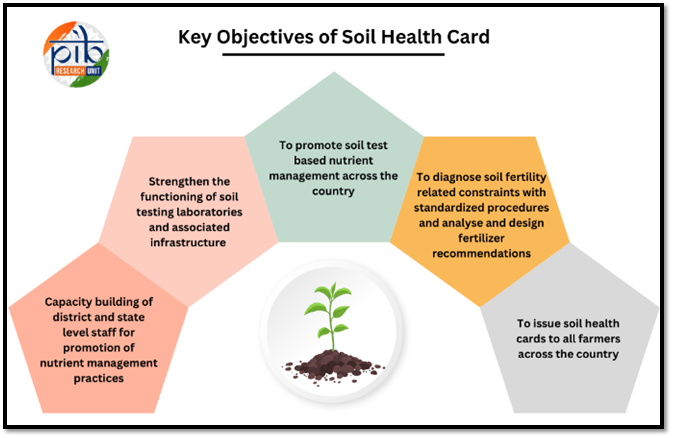
The Soil Health Card Scheme was introduced by Prime Minister Shri Narendra Modi on 19th February, 2015 at Suratgarh, Rajasthan. The scheme was launched to assist State Governments to issue soil health cards to all farmers in the country. Soil health card provides information to farmers on nutrient status of their soil along with recommendation on appropriate dosage of nutrients to be applied for improving soil health and its fertility.

The Soil Health Card Portal (www.soilhealth.dac.gov.in) facilitates generation of Soil Health Cards for the benefit of farmers in uniform and standardized format across country in all major languages and 5 dialects.

The Soil Health Card contains status of the soil with respect to 12 parameters, namely N,P,K, S (Macro-nutrients); Zn, Fe, Cu, Mn, Bo (Micro – nutrients) ; and pH (Acidity or Basicity), EC (Electrical Conductivity) and OC (Organic Carbon).

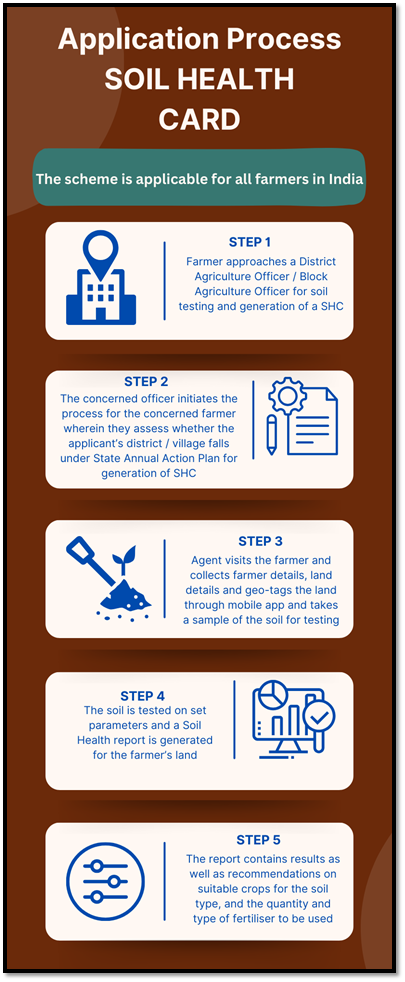
Based on this, the card will also indicate fertilizer recommendations and soil amendment required for the farm. Soil Samples are taken generally two times in a year, after harvesting of Rabi and Kharif Crop respectively or when there is no standing crop in the field.

The Guideline of Village Level Soil Testing Labs (VLSTLs) was issued in June 2023. VLSTLs can be set up by individual entrepreneurs i.e. rural youth and community based entrepreneurs, including Self Help Groups (SHGs), Schools, Agriculture Universities etc. The beneficiary/village level entrepreneur should be a youth whose age should not be below 18 years and should not be more than 27 years. Self Help Groups, Farmers Producers Organisation (FPO) can also be enrolled as VLSTL.

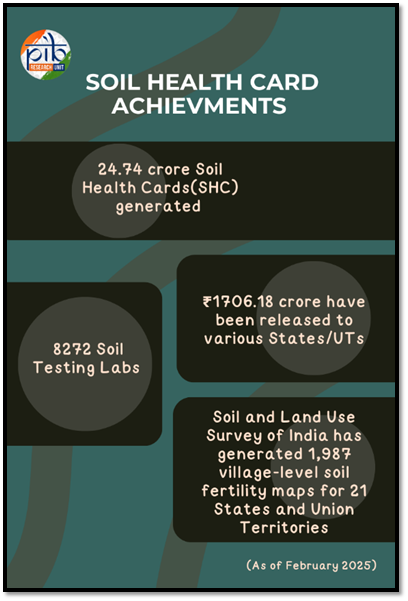
As of February 2025, 665 Village-level Soil Testing Labs have been established in 17 States.

School Soil Health Programme

A pilot project on School Soil Health Programme has been undertaken by Department of Agriculture and Farmers Welfare in (DA&FW) collaboration with Department of School Education & Literacy (DSE&L), Indian Council of Agricultural Research (ICAR) and State Governments in 20 schools (10 Kendriya Vidyalaya & 10 Navodaya Vidyalaya) in rural areas. The aim is to make students aware about soil health for sustainable agriculture practices. 20 soil health labs were set up in these schools. Modules for students from class VI to XII and teachers were developed and disseminated. Under the programme, soil samples were collected by School Students and soil testing were also done by students and SHCs were generated Students also educated farmers about the recommendation of Soil health card for judicious use of fertilizer and crop recommendation.

As of 2024, 1020 schools are implementing the School Soil Health Programme, with 1000 soil testing labs set up and 125,972 students enrolled.

Soil Health Card scheme has been merged in Rashtriya Krishi Vikas Yojana (RKVY) scheme as one of its components under the name ‘Soil Health & Fertility’ from the year 2022-23.

Technological Advancements

SHC Mobile App

To further ease the process of obtaining easy access to the Soil Health Card, the Government of India in 2023 made technological interventions in the New Soil Health Card Scheme. The Soil Health Card portal was revamped and integrated with a Geographic Information System (GIS) system so that all the test results are captured and seen on a map. To make the implementation/monitoring of the scheme smooth and to facilitate farmers an easy access to his soil health card, the mobile application has been made robust with the additional features such as:

  • Restrict the sample collection region for the Village Level Entrepreneur/Operator collecting the soil samples
  • Auto selection of the latitude and longitude of the location
  • Generation of a QR code to link with the sample and test results of all samples directly on the portal from the geo-mapped labs, without any manual intervention.

This application provides the graphical information of all over the India and also shows multiple layers State Boundary, District Boundary, Taluka Boundary, Panchayat Boundary and Cadastral Boundary.

The new system was rolled out in April 2023 and samples are now being collected through the mobile application. Soil Health Cards are now generated on this revamped portal.

For digitizing the Soil Health Cards, Web based work flow application Soil Health Card portal has been designed and developed by National Informatics Centre (NIC).

Conclusion

The Soil Health Card Scheme has transformed agricultural practices in India over the past decade. Since 2015, it has empowered farmers with crucial information on soil nutrient status and optimal fertilizer use, promoting sustainable farming and improved crop productivity. Initiatives like the School Soil Health Programme have expanded soil health awareness among students and local communities. With a robust mobile app, the process of obtaining a Soil Health Card has enhanced accessibility, efficiency, and transparency. As the scheme evolves, it continues to play a vital role in fostering sustainable agricultural development and safeguarding India’s soil health for future generations.

References:

Kindlty find the pdf file 

****

Importance of High Impact Research Publications and How to Search Papers

Daily writing prompt
Describe a phase in life that was difficult to say goodbye to.

High impact research publications are pivotal in advancing knowledge and shaping academic and industry landscapes. They serve as the cornerstone for disseminating breakthroughs, influencing policy decisions, and fostering collaborations across disciplines. Here’s a deeper look into their importance and a guide on how to effectively use the research search tool available on Track2Training:


Importance of High Impact Research Publications

  • Dissemination of Innovative Ideas:
    High impact publications are essential for sharing new methodologies, theories, and experimental results. They reach a broad audience, ensuring that innovative ideas are disseminated throughout the scientific community and beyond.
  • Academic and Professional Recognition:
    Publishing in high impact journals not only adds credibility to a researcher’s work but also enhances their academic reputation. It often plays a crucial role in securing funding, tenure, and professional opportunities.
  • Influence on Policy and Practice:
    Research that garners high impact tends to influence policy-making, industry practices, and future research directions. Its findings are frequently cited, guiding further studies and real-world applications.
  • Global Collaboration and Networking:
    High impact research often acts as a bridge for international collaboration. Researchers from various parts of the world can build on each other’s work, leading to collaborative projects that push the boundaries of knowledge.
  • Quality and Rigor:
    The rigorous peer-review process associated with high impact publications ensures that the research meets high standards of quality, reliability, and relevance. This process helps to validate findings and enhances the overall integrity of the research field.

How to Search Using the Track2Training Research Page

The Track2Training research page is a specialized tool designed to help users locate high-quality research publications efficiently. Here’s how to make the most out of it:

  1. Accessing the Search Interface:
    When you visit the research page, you’ll find a clean and intuitive interface. Typically, there is a prominent search bar that serves as the starting point for your inquiry.
  2. Keyword Search:
    • Input Specific Keywords:
      Begin by entering relevant keywords related to your research topic. Whether you’re interested in “machine learning,” “renewable energy,” or “clinical trials,” the search bar allows you to narrow down the vast repository of research papers.
    • Use Boolean Operators:
      For more precise results, you might combine keywords using Boolean operators (AND, OR, NOT). This helps in filtering out unrelated results and focusing on the core aspects of your research interest.
  3. Advanced Search Filters:
    • Publication Date:
      Narrow your search by specifying a range of publication years to access the most current research or historical perspectives.
    • Journal or Conference Name:
      If you are looking for publications from a particular journal or conference, use the filter options provided.
    • Research Area or Discipline:
      Many research search tools, including this one, allow filtering by specific research domains, which can help in locating niche or interdisciplinary studies.
  4. Reviewing Search Results:
    • Title and Abstract Review:
      Once the search results are displayed, scan through the titles and abstracts. This quick review can help you determine the relevance of each paper before diving into the full text.
    • Citation Information:
      High impact research is often indicated by a high number of citations. Look for citation counts or related metrics if available, as they can provide insights into the influence of the research.
  5. Accessing Full-Text and Additional Resources:
    • Link to Full Papers:
      Many search tools provide direct links to the full-text versions of the papers or to their respective publisher pages.
    • Reference Management:
      Some platforms also offer options to download citations in various formats (like BibTeX or EndNote), which can be very helpful when managing references for your own research.
  6. Staying Updated:
    Regularly revisiting the research page or setting up alerts (if the functionality is available) ensures that you remain updated on the latest high impact research publications in your field.

Final Thoughts

High impact research publications not only validate the credibility and relevance of academic work but also drive progress across multiple sectors. By leveraging specialized search tools like the one offered by Track2Training, researchers can efficiently navigate through vast databases, pinpoint the most influential studies, and build upon existing knowledge to foster further innovation.

This approach not only streamlines the research process but also ensures that the most pertinent and high-quality information is at your fingertips.