The Great Pyramid of Giza

The Great Pyramid of Giza is a defining symbol of Egypt and the last of the ancient Seven Wonders of the World. It is located on the Giza plateau near the modern city of Cairo and was built over a twenty-year period during the reign of the king Khufu (2589-2566 BCE, also known as Cheops) of the 4th Dynasty. Until the Eiffel Tower was completed in Paris, France in 1889 CE, the Great Pyramid was the tallest structure made by human hands in the world; a record it held for over 3,000 years and one unlikely to be broken. Other scholars have pointed to the Lincoln Cathedral spire in England, built in 1300 CE, as the structure which finally surpassed the Great Pyramid in height but, still, the Egyptian monument held the title for an impressive span of time. The pyramid rises to a height of 479 feet (146 metres) with a base of 754 feet (230 metres) and is comprised of over two million blocks of stone. Some of these stones are of such immense size and weight (such as the granite slabs in the King’s Chamber) that the logistics of raising and positioning them so precisely seems an impossibility by modern standards.

Design

In terms of design and planning, some theories suggest that parts of the plan were laid out on the ground at a 1:1 scale. This might account for the accuracy of the workmanship, such that the four sides of the base have an average error of only 58 mm in length. The sides of the pyramid rise at the angle of 51°52′, accurately oriented to the compass’ four cardinal points.

The entrance is around 18 m (59 ft) above the ground on the north side. The Queen’s Chamber and the King’s Chamber are contained inside, connected via a corridor and a slanting gallery 46 m (151 ft) long. The King’s Chamber is shielded from the thrust exerted by the masses of masonry piled on top of it, by five compartments separated by massive horizontal slabs of granite, weighing 25-80 tonnes.

Construction

Most hypotheses are based on the idea that the huge stones were moved from a quarry, and then either dragged, lifted or rolled into place. The most widely accepted theory is that a ramp-like embankment of brick, earth and sand was increased along with the pyramid. Using this embankment, the Egyptians would have hauled the stone blocks using sledges, rollers and levers.

There is also disagreement about the size and nature of the workforce required. The Ancient Greeks thought that slave labour was used, with the historian Herodotus theorising that it took 20 years and 100,000 slaves to build. However, Egyptologists in the 20th century discovered archaeological remains of workers’ camps, which gave rise to the belief that a more limited workforce of as few as 20,000 could have been sufficient, with the workers being skilled rather than slaves.

The core of the pyramid was formed from 2.3 million limestone blocks. The outer casing was made using white Tura limestone, crafted to form a smooth surface with intricate joints unrivalled by any other Egyptian masonry. However, this casing was gradually plundered during ancient and medieval times, although some of the stones can still be seen around the base today.

Shine Bright Like a Diamond:

Today, the Giza pyramids wear the tawny tones of their surrounding Libyan Desert. But back in their heyday, they sparkled. Originally, the pyramids were encased in slabs of highly polished white limestone. When the sun struck them, they lit up and shimmered. Some researchers believe that the pyramids’ capstones were plated in gold as well.

Those dazzling façades have long been stripped—some sources report that those blocks of stone were repurposed and used to build mosques—but you can still see remnants of a once-snowy cap atop the middle pyramid.

The Parthenon of Athens

The Parthenon is one of the crown jewels of the Acropolis of Athens and a formidable testament to the wealth and culture of ancient Athens, Greece. It is constructed as a dedication to Goddess Athena after whom the current city is named. Parthenon has been the center of the history of this city in the past and has seen lots of battles and various owners staking their claim to this magnificent monument that was constructed on top of the rock mountain in Athens. Its construction was completed in 438 BC the architecture is a Peripteral Octastyle Doric temple with Ionic architectural features.

The Parthenon temple is built on the site of the older Athenian temple which was decimated by the Persians in 480 BC. The Parthenon has seen lots and lots of events in history. It started as a treasury and was later converted to a Christian church dedicated to the Virgin Mary in the last decade of the 6th century. The Parthenon was also converted into a mosque at one stage by the invading Ottomans. It was during this unfortunate time that the siege of the city by Venetian forces and bombardment brought its way to igniting the gunpowder stored here and thus heavily damaging the monument and its sculptures.

The Architecture of the Parthenon of Athens

The whole architecture was decorated and designed with marble sculptures that represent past images from Athenian cult and mythology. There are three categories of architectural sculpture. The frieze which was made from low relief goes high up around all four sides of the building. The metopes which were made in high relief were positioned at the same level as the frieze above the architrave above the columns on the outside of the temple. The pediment sculptures which were carved in the round filled the triangular gables at each end.

The Parthenon was planned to go under a lot of changes but it remained untouched until the seventeenth century. The early Christians then turned the temple into a church, adding an apse at the east end. It was at this time that the sculptures representing the birth of Athena were removed from the center and lots of other sculptures were defaced. The Parthenon of Athens from thereon was viewed as a holy church until Athens was conquered by the Ottomans in the fifteenth century and they subsequently made it a mosque that was worshipped by many.

The Venetians after a prolonged battle succeeded in capturing the Acropolis but held it for less than a year. Further damage to the building was done in an attempt to remove sculptures from the west when the lifting equipment broke and the sculptures fell and were smashed.

IT’S NOT ACTUALLY A TEMPLE.

While we refer to the Parthenon as a temple—and it looks like one architecturally—the building doesn’t function quite the way one would think. Traditionally, a temple would host a cult image of Athena—the patron saint. Instead, the main cult image of Athena Polias is located in a different area of the Acropolis. While a colossal statue of Athena by the famed sculptor Phidias would have been located inside the Parthenon, it was not related to a particular cult and so would not have been worshipped.

IT WAS ORIGINALLY QUITE COLORFUL.

While we often think of classical art as being white and pristine, the Parthenon—as with much Greek architecture and sculpture—would have been colored originally. While historians debate just how much of the structure would have been covered in colour, archaeologists often use UV light to uncover pigments that have now been lost.

How to build Good Habits ?

Habits are the secret sauce to a healthy life – or the recipe for an unhealthy one, depending on what’s in question. Habits are tricky little creatures in that they’re easy to build when they immediately reward us, but feel near impossible to start when the benefits aren’t instantly obvious. 

Nearly everyone has a bad habit that needs breaking. Sometimes these habits are relatively harmless (say, biting your nails) but others, when broken, stand to greatly improve your quality of life.

1.Understand the difference between your good habits and bad habits

In exact definition, a habit is a repetitive action or behavior, a routine. The difference between a good habit and a bad habit is whether or not it enhances or diminishes your life. A good habit promotes a healthy goal that betters your life. A bad habit leads you further and further from your goals and what you want out of life.

To distinguish between a good habit or a bad habit, ask yourself the question, “If I do this every day for the next ten years, what will my life look like?”

2. Anticipate your distractions

Get your notebook, think about a habit you’re trying to form, and write down everything you can think of—screwing around on Twitter, suddenly making a lasagna, brushing the dog—that might block your ability to participate. Please also make a list of the people in your life who may be too partylicious to be around while you give up drinking, too pessimistic to hang out with while you do your part to help end world hunger, too chatty to talk with while you quit gossiping—and make a point to limit your time with them.

3. Choose what you want to change

The first step in building a good, healthy habit is choosing what you want to change. Considering your goals for your physical and mental health or your personal values is a great place to start. What habit, if done every day, will bring you closer to your desired outcomes?

4. Write it down (in all caps)

Write down the habit you’re going to work on in a notebook. Once you focus on and embody it, it’ll become just a part of who you are, and nothing special. And then, because we’re all creatures in a constant state of transformation, you’ll shift your attention to some newer, fresher habit, and you’ll have the confidence, know-how, and tools to make it yours as well.

5. Mark each day that you show up

You know what’s immediately satisfying? Tracking your habits. While you may not see the actual results of the actions you take every day, you will see how many days you’ve stayed on course with the new habit, which is a huge accomplishment in itself. Each time you successfully participate in your habit—walk three miles, say not one snarky thing to your mother—mark that day on a calendar.

6. Reward and celebrate your success as you go

Building a new practice or a new routine takes time and patience, so don’t forget to reward your success! When you remember to practice your habit, congratulate yourself by adding in a little something nice for yourself as a reward.

“We are what we repeatedly do. Excellence, then, is not an act, but a habit.”

How to Create a Strong Password ?

A strong password is the main barrier keeping most of your online accounts from being hacked. Without up to date practices, you might be using passwords that cyber-frauds can easily guess within hours. Exposing yourself to identity theft and extortion is a risk you should never take. You will need to create passwords that can fight modern password theft methods.

Weaknesses in your account credentials can be a cybercriminal’s dream. But their success is your nightmare, so you’ll need to take steps to avoid being a victim of password hacking.

Biggest Mistakes Users Make

By using a weak password, you are “opening the door” for hackers and inviting them in. To top it off, there’s high likelihood that what you consider to be “strong” passwords” are really weak ones. Have you ever used any of the following as a password:

  • Your name. (Like seriously? It doesn’t take a hacker or a malware to crack this)
  • Your friends or family members’ names. Pet names as well. – Well sure, I love my dog too, but it could be easily guessed, even without a professional on the other side.
  • Keyboard patterns – “123456” is the leader in most “worst passwords” lists. Followed by the likes of “qwerty” and such.
  • Your login information. If your username is, let’s say, Ironman, your password shouldn’t be Ironman as well.
  • Common words – these are too many to list, but let’s just say passwords like “password”, or “admin” aren’t the best options. Also, avoid the names of sports, sports teams or common names for your password.
  • Avoid using short passwords – The shorter your password, the less time someone needs to crack it. Only 30% of users use passwords longer than six symbols.

How to Create a Strong Password

To protect yourself against the newest hacking methods, you’ll need powerful passwords. If you’re wondering. “how strong is my password?” here are some tips to help you create a strong password:

  • Is it long? Try for over 10-12 characters minimum but aim to make it longer if possible.
  • Is it hard to guess? You should avoid sequences (“12345” “qwerty”) because these can be brute force hacked in seconds. Also, avoid common words (“password1”) for the same reason.
  • Does it use varied character types? Lowercase, uppercase, symbols, and numbers can all have a home in your password. Variety can increase how unpredictable your password is.
  • Does it avoid apparent character substitutes? For example, you might use the number zero “0” in place of the letter “O.” Hackers code these into their software nowadays, so avoid this.
  • Does it use any uncommon word combinations? Passphrases might be more secure when using unexpected words. Even if you are using common words, you can arrange them in an odd order and make sure they are unrelated. Both methods can throw off dictionary hacking.
  • Will you remember it? Use something that makes sense to you but will be hard for computers to guess. Even random passwords can be remembered by muscle memory and being semi-readable. But passwords that lock you out of your account won’t help much.
  • Have you used it before? Reusing passwords compromises multiple accounts. Make it original every time.
  • Does it use a rule that’s hard for computers to guess? An example might be a passphrase of three 4-letter words, where you are replacing the first two letters of each word with numbers and symbols. This might look like: “?4ee#2ge?6ng” in place of “treecagesing”

For example:

TGG_bFSF!HwBo9241896 [ The Great Gatsby_ by F. Scott Fitzgerald! He was Born on 9/24/1896 ]

InTlItMbA_rn!4S-mny$ [ I need To log In to My bank Account_right now! 4 Some – mny$]

A passphrase example might be, “coW!burN#movE?pianOh” (using the words cow, burn, move, and piano.)

Salesforce Acquires Slack

It’s secure to say the crossover work slant is picking up a few balance, as Salesforce has reported the securing of Slack — the prevalent work messaging platform — with a cost tag that diminutive people any other within the company’s history. To say the commerce world is making moves when it comes to hybrid work would be a critical modest representation of the truth. Companies around the world have been setting up modern approaches, securing unused companies, and by and large prioritizing adaptability in benefit of their farther workforce and their virtual customers. Suffice it to say, this bargain between Salesforce and Slack solidly cements the importance of hybrid work within the business world nowadays, especially given the amazing add up to of the bargain.

Salesforce Acquires Slack for $27.7 Billion

Salesforce reported that its procurement of Slack came out to $27.7 billion. Fortunately, both companies appear to get it the gravity of the bargain, with the Slack CEO portraying it as “a once-in-a-generation opportunity to reconsider and reshape how and where we work.”

“Salesforce and Slack are uniquely positioned to lead this historic shift to a digital-first world. I could not be more excited for what’s to come,” said Stewart Butterfield, co-founder and CEO of Slack.

For hybrid work, usually a enormous bargain, actually and metaphorically. With the widespread still influencing how we work, this partnership demonstrates that crossover work has need to be a enormous portion of any business’s long-term plans.

This isn’t as it were a huge bargain since of the times we’re living in, in spite of the fact that. The cost of the bargain is clearly cosmically expansive, but the two companies included are powerhouses within the crossover work space, as well. Salesforce is verifiably the foremost prevalent CRM on the advertise nowadays, advertising nothing brief of a torrent of advanced assets that can move forward your trade. In truth, Salesforce’s CRM showcase share is about 20%, which is more than its four driving competitors combined. Similarly, Slack has risen rapidly to tip top status within the trade world, with 10 million every day clients in 2021, and 600,000 diverse organizations around the world utilizing the informing computer program. With these two working together, they seem totally change how work is thought of from a crossover point of view. Or, at slightest, make it less demanding for everybody else.

Together They Can Do More

As for the two companies coming together, the best administration of both of these companies sees numerous potential benefits of blending the Slack communications with the undertaking program ability of Salesforce. Slack will make Salesforce more available conjointly offer assistance interface the automation and workflow. Automation is considered to be more event-driven. With the long-running forms and what individuals are doing with the Slack stage, it is more of consolidating the workflows and bots with everything else. The combination of the Salesforce stage with Slack leads to the leading automation based on the insights capabilities run on the Slack stage which in itself is incredible. The as it were challenge that both these companies confront presently is the heading in which they should move forward with the securing. All the desires in a bargain that’s this expansive are basically making the collaboration work and will proceed to do so within the coming times as well.

White Holes

Black holes are places in the Universe where matter and energy are compacted so densely together that their escape velocity is greater than the speed of light. Fully describing a black hole requires a lot of fancy math, but these are real objects in our Universe. They were predicted by Einstein’s theory of relativity, and actually discovered over the last few decades.

Black holes are created when stars, much more massive than our Sun, die catastrophically in a supernova.

So then what’s a white hole?

White holes are created when astrophysicists mathematically explore the environment around black holes, but pretend there’s no mass within the event horizon. What happens when you have a black hole singularity with no mass?

White holes are completely theoretical mathematical concepts. In fact, if you do black hole mathematics for a living, I’m told, ignoring the mass of the singularity makes your life so much easier.

They’re not things that actually exist. It’s not like astronomers detected an unusual outburst of radiation and then developed hypothetical white hole models to explain them.

Dr. Brian Koberlein says, “If you start with five cupcakes and start giving them away, you eventually run out. At that point you can’t give away any more. In this case you can’t count down past zero. Sure, you can hand out slips of paper with “I O U ONE cupcake.” written on them, but it would be ridiculous to use the existence of negative numbers to claim that “negative cupcakes” exist and can be handed out to people.”

Now if white holes did exist, which they probably don’t, they would behave like reverse black holes – just like the math predicts. Instead of pulling material inward, a white hole would blast material out into space like some kind of white chocolate fountain. So generous, these white holes and their chocolate.

One of the other implications of white hole math, is that they only theoretically exist as long as there isn’t a single speck of matter within the event horizon. As soon as single atom of hydrogen drifted into the region, the whole thing would collapse. Even if white holes were created back at the beginning of the Universe, they would have collapsed long ago, since our Universe is already filled with stray matter.

That said, there are a few physicists out there who think white holes might be more than theoretical. Hal Haggard and Carlo Rovelli of Aix-Marseille University in France are working to explain what happens within black holes using a branch of theoretical physics called loop quantum gravity.

In theory, a black hole singularity would compress down until the smallest possible size predicted by physics. Then it would rebound as a white hole. But because of the severe time dilation effect around a black hole, this event would take billions of years for even the lowest mass ones to finally get around to popping.

If there were microscopic black holes created after the Big Bang, they might get around to decaying and exploding as white holes any day now. Except, according to Stephen Hawking, they would have already evaporated.

Naphthalene balls

Naphthalene balls have been used for decades as household preservative of clothes and as deodorant tables for toilets, urinals etc. They are manufactured from naphthalene flakes by a tablet making machine having a ball shaped die. The product has wide market and the investment cost is low. The raw material is required for manufacturing Naphthalene Balls are Naphthalene flakes, camphor, phenol etc.

Moth balls over the sackcloth.

Dictionary meaning:

a white, crystalline, water-insoluble hydrocarbon, C10H8, usually obtained from coal tar: used in making dyes, as a moth repellant, etc.

Mothballs or Naphthalene balls are small balls containing smell of a deodorant and are used for storing clothing and articles susceptible to damage from mold or moth larvae. It is also used as a repellent to keep away mice, snakes, or other pests and for use as a stovepipe cleaner.1 Mothballs have been used by drag racers to enhance the octane rating of fuel, by dissolving the mothballs in some of the fuel and filtering out the remains with a filter paper. Generally mothballs are made from ingredients containing either naphthalene or para-dichloro benzene. Due to health risks of naphthalene and para-dichloro benzene, these chemicals have been prohibited for the use in mothballs. Nowadays, camphor is being used as a substitute for these chemicals.

Proper Use of Mothballs

Mothball labels typically direct users to place mothballs in a tightly closed container that will prevent the pesticide fumes from accumulating in living spaces where people and pets can breathe them in for long periods of time. Inside airtight containers, the vapors released by the mothballs build up and kill the clothes moths.

One common mistake is using mothballs in containers that aren’t airtight, allowing the toxic vapors to escape into the surrounding air. This can lead to long-term exposure, which may cause health problems.

Another common mistake is using mothballs in gardens or other outdoor locations to control insects, snakes or other wildlife. Using mothballs outside can harm children, pets and other animals. Mothballs used outdoors can also contaminate soil, plants and water. The information below contains additional resources for the proper use of mothballs and some alternative methods of controlling clothes moths.

Other places you may find naphthalene being used include:

  • Abrasives
  • Fuels
  • Agricultural chemicals, other than pesticides
  • Paint additives
  • Adhesives

Health Effects of Mothballs

Mothballs are nearly 100% active ingredient, and the active ingredient may be either naphthalene or paradichlorobenzene. Each active ingredient can cause different health effects if the exposure is high enough. Mothballs slowly turn from solids to toxic vapor. When you smell mothballs, you are inhaling the insecticide. Mothballs can also be dangerous if they are chewed or eaten. Children, pets and wildlife may mistake them for food or candy and eat them. One mothball can cause serious harm if eaten by a small child.

 Inhalation of naphthalene may cause skin and eye irritation; gastrointestinal symptoms, such as nausea, vomiting, abdominal cramps, and diarrhea; neurologic symptoms, such as confusion, excitement, and convulsions; renal problems, such as acute renal shutdown; and hematologic features, such as icterus and severe anemia.

Hiccups

Hiccups(hichki). They can be annoying or embarrassing, but we typically don’t think of them as concerning. They’re usually short-lived, although in rare cases, they can persist. When they last more than a of couple days, or if other symptoms occur at their onset, they can be a sign of a more serious medical condition.

What causes hiccups (hichki)?

Hiccups seem to come from the chest–a quick influx of air that hits your vocal cords and causes a little sound. The spasm that causes a hiccup is really coming from your diaphragm or the nerves that control it. Some common causes include:

  • Eating too much or too fast
  • Feeling excited, nervous or scared
  • Drinking carbonated beverages or too much alcohol (sometimes in excess)
  • Stress
  • A sudden change in temperature
  • Swallowing air while chewing gum or sucking on candy
  • Irritation of the esophagus

Esophageal reflux is a common cause of hiccups. Prolonged hiccups, though, could be caused by direct post-surgical irritation of the phrenic or vagus nerves. Irritation can also be caused by cancers of the chest or neck. Rarely, hiccups can be associated with disorders of the brain–including tumors and strokes, among others—or cardiovascular disease. Some medications can trigger long-term hiccups, too.

Finally, hiccups can also persist without an apparent cause.

What really gets rid of hiccups?

Before we worry too much about serious conditions, let’s consider some of the many recommendations to get rid of your hiccups. One of the most common is temporarily holding your breath to disrupt your breathing pattern. It can be helpful, and it doesn’t carry much risk to try.

As mentioned, the vagus and phrenic nerves affect your diaphragm. They’re part of your autonomic nervous system, which controls your heart rate and breathing.

Maneuvers that affect the nerve reflex may knock out your hiccups. The Valsalva maneuver is performed by attempting to exhale while closing your mouth and pinching your nose shut at the same time. You’ll bear down a bit as well, trying to (unsuccessfully) expel air, as if blowing up a balloon.

This motion stimulates the vagus nerve, called a vagal nerve response, and it can interrupt the hiccups. I like to think of it as rebooting your nervous system; sort of a reset for the irritated nerves.

Ingesting ice or applying mild pressure to your closed eye might also reboot this nervous system response.

You also may get rid of hiccups with a spoonful of sugar to stimulate the back of your throat (which also might cause a vagal nerve response). Eating peanut butter from a spoon might relax the back of your throat and could help. Interestingly, some patients have had success getting rid of hiccups by eating a lemon wedge.

The one common recommendation to be cautioned against is the tradition of scaring someone to rid them of hiccups. While the gasp of fright may induce a vagal nerve response that interrupts the spasm, it also risks dangerous side effects: If you scare someone, they could lose their balance and fall, and being startled may also negatively impact an underlying heart condition.

Cloud Computing

Cloud computing refers to any kind of hosted service delivered over the internet. These services often include servers, databases, software, networks, analytics and other computing functions that can be operated through the cloud.

Files and programs stored in the cloud can be accessed anywhere by users on the service, eliminating the need to always be near physical hardware. In the past, for example, user-created documents and spreadsheets had to be saved to a physical hard drive, USB drive or disk. Without some kind of hardware component, the files were completely inaccessible outside the computer they originated on. Thanks to the cloud, few people worry anymore about fried hard drives or lost or corrupted USB drives. Cloud computing makes the documents available everywhere because the data actually lives on a network of hosted servers that transmit data over the internet.

The need of Cloud Computing

  • One of the major reason why huge number of small scale and large scale business sectors from all over the world are using cloud today, is because of tremendous effect on cost saving. Yes, Cloud computing has made drastic change in the reduction of hardware and software cost and other server resources as well
  • We can run all our workload data of applications and processes online over the internet remotely instead of using physical hardware and software
  • Day to day issues related to server maintenance or installation of software/ hardware or whether it is renewal of license, all those factors are undertaken via cloud computing service providers
  • With the help of cloud we can access any data, applications whenever and wherever we want to, over the internet. 100 of pre-configured applications can be install and updated
  • Cloud not only handles data storage remotely but it also protects and recovers all crashed or loss data, so we don’t have to worry about crashed or loss of data, it gives you high security

Cloud Computing Service Types

Cloud computing services are broken down into three major categories: software-as-a-service (SaaS), platform-as-a-service (PaaS) and infrastructure-as-a-service (IaaS).

Software-as-a-Service

SaaS is the most common cloud service type. Many of us use it on a daily basis. The SaaS model makes software accessible through an app or web browser. Some SaaS programs are free, but many require a monthly or annual subscription to maintain the service. Requiring no hardware installation or management, SaaS solutions are a big hit in the business world.

Examples of SaaS: Microsoft Office 365, Salesforce, Cisco WebEx, Google Apps

Platform-as-a-Service

PaaS is a cloud environment supporting web application development and deployment. PaaS supports the full lifecycle of applications, helping users build, test, deploy, manage and update all in one place. The service also includes development tools, middleware and business intelligence solutions.

Notable examples include Windows Azure, AWS Elastic Beanstalk and Google App Engine.

Infrastructure-as-a-Service

IaaS provides users with basic computer infrastructure capabilities like data storage, servers and hardware — all in the cloud. IaaS gives businesses access to large platforms and applications without the need for large onsite physical infrastructures.

Notable examples of IaaS include DigitalOcean, Amazon EC2 and Google Compute Engine.

Salesforce

What Is Salesforce?

Salesforce started as Software as a Service (SaaS) CRM company. Salesforce now provides various software solutions and a platform for users and developers to develop and distribute custom software. Salesforce.com is based on multi-tenant architecture. This means that multiple customers share common technology and all run on the latest release. You don’t have to worry about the application or infrastructure upgrades – they happen automatically. This helps your organization focus on innovation rather than managing technology. 

The platform integrates all the domains such as marketing, sales, customer service, supply chain, data analysis, and many others so that customers can have an integrated view of the business. Customer Relationship Management (CRM) is an application that manages the company’s relationship with its customers. In other words, CRM is a tool through which the company and its employees can analyze customer interactions, churn rate, buying patterns by maintaining a database. This database consists of the customer’s distinct attributes, i.e. their ids, past buying history (orders), and many other details. Hence, this application helps the companies understand consumer behavior and analyze where to invest in boosting up their profits and minimizing the losses. Moreover, it also helps manage a huge database of the customer and maintain a healthy relationship with them.

Salesforce products

Sales Cloud

  • A customizable product for managing accounts,contacts, and business opportunities
  • Facilitates collaborating conveniently with partners using chatter
  • A SaaS product for browser-based access and is also available as a mobile app
  • Offers a range of cloud-based tools to increase productivity and manage leads better
  • Lets users keep all the customer information on one platform that includes marketing, lead generation, sales, customer service, and business analytics

Service Cloud

  • A platform that enables users to deliver smarter, faster, and more personalized service to their end- users across multiple channels – on any device
  • Facilitates users to automate service processes
  • and streamline workflows
  • Offers users a call center-like look and feel where they can automatically route and escalate the important cases in addition to creating and tracking them

Marketing Cloud

  • A product that enables marketers to create and manage marketing campaigns
  • Includes solutions for customer journey management, email, mobile, social media, web personalization, advertising, content creation, content management, and data analysis

Components include

  • Journey builder – to plan and customize to improve client cooperation over the client life cycle
  • Social Studio – to listen, publish, and engage in building meaningful relationships across social channels
  • Mobile Studio – to reach customers at the appropriate time via SMS, MMS, push messaging, and group messaging

Community Cloud

  • An online platform that allows companies to connect customers, partners, and employees with each other
  • Enables companies to simplify business processes both internally (across departments) and externally (with customers and partners) – enhancing the efficiency and effectiveness of the overall business ecosystern

For employees

  • Better connectivity and interaction among employees across departments, offices, or countries
  • Enables employees to find information easily about onboarding, payroll, and IT troubleshooting anytime with the help of HR and IT Help Desk

Advantages of Salesforce

Mobile Access

Along with the desktop version, Salesforce cloud solutions are also available on the mobile devices which give SMEs an easy access to customer data, lead-generation process, social profiles, contacts, and more. The collaboration capabilities of the app allow the SMEs to keep the team updated on the deal status and seek support whenever required.

Automated Workflow

The automated workflow feature of Salesforce accelerates the sales process and enables SMEs to assign tasks, make suggestions, and respond to approval requests (such as order placements, discounts, and expenses) anytime, anywhere.

Collaboration

The built-in social tools of Salesforce help SMEs drive the sales by letting sales representatives and staff members collaborate with each other. Open discussions and sharing of data, insights, and files are easy with this platform, which further enhance the productivity of the workforce.

Third-Party Integration

SMEs can expand the core functionalities of Salesforce by integrating with third-party apps and software solutions, in order to reap the maximum potential of the platform and achieve a single integrated collaborative business process management environment.

Reports

Salesforce facilitates SMEs to keep an eye on their key business metrics and make critical decisions from anywhere. With the drag-and-drop reporting tools (including real-time graphs and charts) of Salesforce, generation and analysis of reports are easy. Since these reports are also showcased in the dashboard, it takes no time in retrieving the data soon after login.

History of McDonald’s

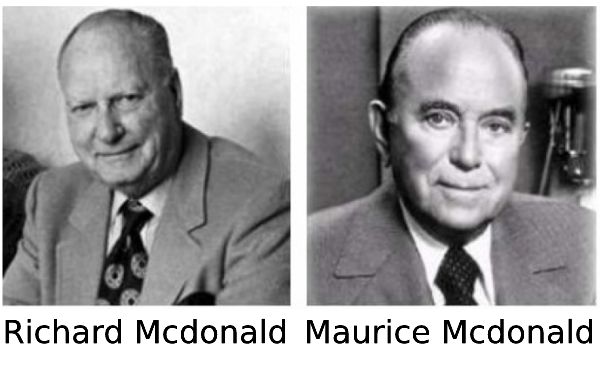
A man named Patrick McDonald opened a small food stand called “The Airdome” in Monrovia, California in the late 1930s. The stand served burgers and orange juice that cost ten and five cents, respectively. By 1940, Patrick’s sons Dick(Richard) and Mac(Maurice) McDonald had inherited and been operating their father’s small business, and moved the restaurant’s location in San Bernardino, California.

It was in the year 1948 where the true foundations of McDonald’s lay. When Mac and Dick McDonald realized that the burgers became more sought-after and successful sellers than their BBQ’s, the brothers reorganized their business into a burger restaurant. Their present menu since the refurbishing consisted of hamburgers, cheeseburgers, French fries, soft drinks, apple pies and milkshakes. It was quite a simple menu compared to their previous BBQ offering, but the very simplicity gave the business astounding success.

The ambitious Ray Kroc

Enter Ray Kroc into the picture. Kroc was a milkshake machine salesman who found out that the McDonald brothers had previously bought eight of his multi-mixer milkshake makers. Fueled by curiosity, he decided to visit McDonald’s San Bernardino restaurant where all of eight milkshake machines were installed. This was in 1954 when the brothers were enjoying their franchising success.

Kroc saw the immense potential of McDonald’s and had plans to expand it with more franchising throughout the country. Despite Mac and Dick’s initial refusal, Kroc still went out of his way with the right to open more McDonald’s branches throughout the country. When his first McDonald’s restaurant opened in Des Plaines, Illinois, Kroc integrated his company to McDonald’s in 1955. This is where the foundation of McDonald’s Corporation was established.

When McDonald’s phenomenal success started to kick off, Ray Kroc set bigger, farther sights. In 1961, the ambitious businessman bought the entire company from the brothers for a total of $2.7 million. He had the goal of making McDonald’s restaurants the country’s number one fast food chain. In 1963, the mascot Ronald McDonald was created and designed to attract the little ‘uns. McDonald’s went public in 1965.

With Kroc and his people’s innovative marketing ideas, adaptability to respond to the demand of their customers, new introductions and additions to their menu (such as their breakfast menus and the “Happy Meal”, which offers free toys for the kids with every purchase), McDonald’s grew more rapidly than ever. In 1968, the Big Mac was born and has remained the chain’s signature best-seller.

McDonald’s Today

Today, McDonald’s maintains over 34,000 restaurants around the world, serving up everything from Breakfast McMuffins to unique dishes like the McShrimp. One of the world’s truly global corporations, McDonald’s restaurants can be found in countries as far abroad as Indonesia and Egypt, where the company has a special halal menu.

This rapid expansion has earned the company both praise from business analysts and scorn from cultural preservationists, who claim that McDonald’s has pushed its way into countries that didn’t want it. The company’s ethics aside, its success as a global franchise is undeniable, and it is one of the 20th century’s biggest successes.

Arthur Eddington

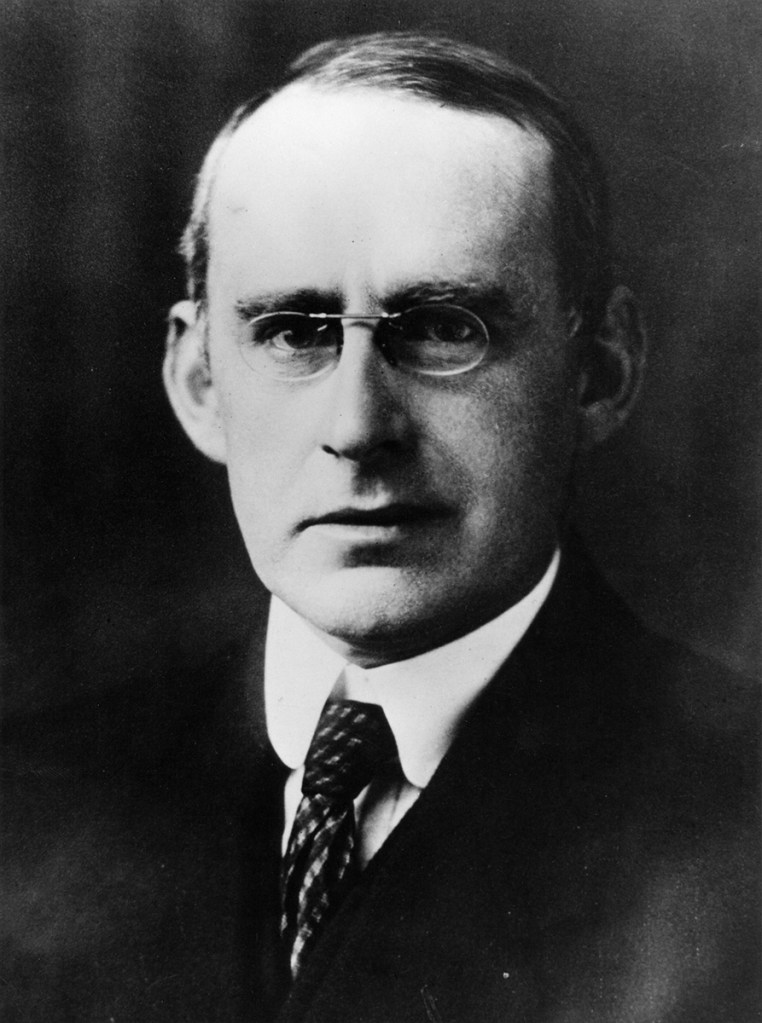
Sir Arthur Stanley Eddington (1882 – 1944)

Arthur Eddington was a British astronomer, physicist and mathematician. He was born in Cumbria, UK before moving to Weston-super-Mare as a child. He was not from a wealthy family but did so well at school that he got a scholarship to go to Owen’s College, Manchester. He graduated with a physics degree in 1902. Arthur was then offered a position at Trinity College, Cambridge where he completed his master’s degree. He worked at the Royal Observatory in Greenwich, London, before returning to Cambridge five years later.

He was the first person to propose that stars were powered by the nuclear fusion of hydrogen into helium. The limit to how bright a star can be before it begins to collapse is named after him, the Eddington Luminosity.

Einstein’s Theory of Relativity

He is most famous, for his work on Einstein’s Theory of Relativity. Arthur carried out observations of a solar eclipse to confirm the theory. This work was considered so important that it prevented him beginning military service during the First World War. Arthur was happy about this as he was a pacifist, but he did offer to join an ambulance unit, or work as a harvest labourer on home soil.

Arthur viewed the eclipse from the island of Principe, off the west coast of Africa. He chose that location because there was a good chance of clear skies, and he could view the eclipse in full there. During the darkness of the eclipse, Arthur took photographs of stars close to the Sun. These stars are normally blocked by the light of the Sun during the day. Arthur observed that stars close to the Sun had their light shifted by the Sun’s gravitational field. This confirmed Einstein’s Theory of Relativity.

Cosmology

Eddington was also heavily involved with the development of the first generation of general relativistic cosmological models. He had been investigating the instability of the Einstein universe when he learned of both Lemaître’s 1927 paper postulating an expanding or contracting universe and Hubble’s work on the recession of the spiral nebulae. He felt the cosmological constant must have played the crucial role in the universe’s evolution from an Einsteinian steady state to its current expanding state, and most of his cosmological investigations focused on the constant’s significance and characteristics. In The Mathematical Theory of Relativity, Eddington interpreted the cosmological constant to mean that the universe is “self-gauging”.

Eddington number for cycling

Eddington is credited with devising a measure of a cyclist’s long-distance riding achievements. The Eddington number in the context of cycling is defined as the maximum number E such that the cyclist has cycled E miles on E days.

For example, an Eddington number of 70 miles would imply that the cyclist has cycled at least 70 miles in a day on at least 70 occasions. Achieving a high Eddington number is difficult since moving from, say, 70 to 75 will (probably) require more than five new long distance rides, since any rides shorter than 75 miles will no longer be included in the reckoning. Eddington’s own life-time E-number was 84.

He later wrote this short poem about the discovery:

Oh leave the Wise our measures to collate

One thing at least is certain, LIGHT has WEIGHT,

One thing is certain, and the rest debate—

Light-rays, when near the Sun, DO NOT GO STRAIGHT.

The Chernobyl Incident

In the early morning hours of April 26, 1986, the Chernobyl Nuclear Power Plant in Ukraine (formerly part of the Soviet Union) exploded, creating what many consider the worst nuclear disaster the world has ever seen.

Where is Chernobyl?

The Chernobyl Nuclear Power Plant is located about 81 miles (130 kilometers) north of the city of Kiev, Ukraine and about 12 miles (20 km) south of the border with Belarus, according to the World Nuclear Association. It is made up of four reactors that were designed and built during the 1970s and 1980s. A manmade reservoir, roughly 8.5 square miles (22 sq. km) in size and fed by the Pripyat River, was created to provide cooling water for the reactor.

The power plant

The Chernobyl plant used four Soviet-designed RBMK-1000 nuclear reactors — a design that’s now universally recognized as inherently flawed. RBMK reactors were of a pressure tube design that used an enriched U-235 uranium dioxide fuel to heat water, creating steam that drives the reactors’ turbines and generates electricity, according to the World Nuclear Association.

CHERNOBYL, UKRAINE, USSR – MAY 1986: Chernobyl nuclear power plant a few weeks after the disaster. Chernobyl, Ukraine, USSR, May 1986.

What happened?

The explosion occurred on April 26, 1986, during a routine maintenance check, according to U.N. Scientific Committee on the Effects of Atomic Radiation (UNSCEAR). Operators were planning on testing the electrical systems when they turned off vital control systems, going against the safety regulations. This caused the reactor to reach dangerously unstable and low-power levels.

Reactor 4 had been shut down the day before in order to perform the maintenance checks to safety systems during potential power outages, according to the Nuclear Energy Agency (NEA). While there is still some disagreement over the actual cause of the explosion, it is generally believed that the first was caused by an excess of steam and the second was influenced by hydrogen. The excess steam was created by the reduction of the cooling water which caused steam to build up in the cooling pipes — the positive-void coefficient — which caused an enormous power surge that the operators could not shut down.

The explosions occurred at 1:23 a.m. on April 26, destroying reactor 4 and initiating a booming fire, according to NEA. Radioactive debris of fuel and reactor components rained over the area while fire spread from the building housing reactor 4 to adjacent buildings. Toxic fumes and dust were carried by the blowing wind, bringing fission products and the noble gas inventory with it.

Radioactive fallout

The explosions killed two plant workers — the first of several workers to die within hours of the accident. For the next several days, as emergency crews tried desperately to contain the fires and radiation leaks, the death toll climbed as plant workers succumbed to acute radiation sickness.

Evacuations of Pripyat commenced on April 27 — about 36 hours after the accident had occurred. By that time, many residents were already complaining about vomiting, headaches and other signs of radiation sickness. Officials closed off an 18-mile (30 km) area around the plant by May 14, evacuating another 116,000 residents. Within the next few years, 220,000 more residents were advised to move to less contaminated areas, according to the World Nuclear Association.

Chernobyl today

The area has recovered to some extent, but is far from returning to normal.. But in the areas just outside the exclusion zone, people are beginning to resettle. Tourists continue to visit the site, with visitation rates jumping 30-40% thanks to a new HBO series based on the disaster. And The catastrophe that occurred at Chernobyl resulted in a few significant changes for the nuclear industry: concern about reactor safety increased in eastern Europe as well as around the world; the remaining RBMK reactors were modified to reduce the risk in another disaster; and many international programs including the International Atomic Energy Agency (IAEA) and the World Association of Nuclear Operators (WANO) were founded as a direct result of Chernobyl, according to the World Nuclear Association. And around the globe, experts have continued researching ways to prevent future nuclear disasters.

Artichoke

The artichoke is a flavoursome vegetable and also a superb ornamental garden plant thanks to its lovely purple flowers. It is eaten raw or cooked depending on the variety, hot or cold, alone or as a side dish.

Mediterranean origins

Originating in the Mediterranean basin, artichokes were probably first cultivated in Andalusia or Tunisia. They undoubtedly reappeared in Italy during the Renaissance (mid-15th century), and had pride of place on all the finest tables in Europe. The Spanish and French colonists developed its cultivation in America, in California and Louisiana respectively.

A tasty surprise

Although they are spread across the five continents, the biggest artichoke producers are still concentrated in the Mediterranean basin. Italy, Spain and Egypt alone produce more than half of the 1600 tonnes harvested around the world every year. Artichoke cultivation takes up a large amount of space. Artichoke heads are still harvested by hand and, since this depends on their ripening, this may span several weeks. This leads to particularly high production costs, making artichokes among the most expensive vegetables on the market (at equivalent edible quantities). They are harvested in Europe from June to November and in California from March to May. Artichoke heads are eaten raw or cooked. However, care must be taken to remove the choke (for the largest specimens) and the outermost ‘leaves’ or bracts, which are too tough and rather bitter. The small, purple poivrade artichoke is eaten whole, or peeled and cooked for a short time. Some Italian varieties of purple artichokes are especially eaten raw, thinly sliced, with salt, lemon juice and olive oil. Artichokes can be boiled in salted water, steamed, microwaved, roasted or braised, etc.

Health Benefits

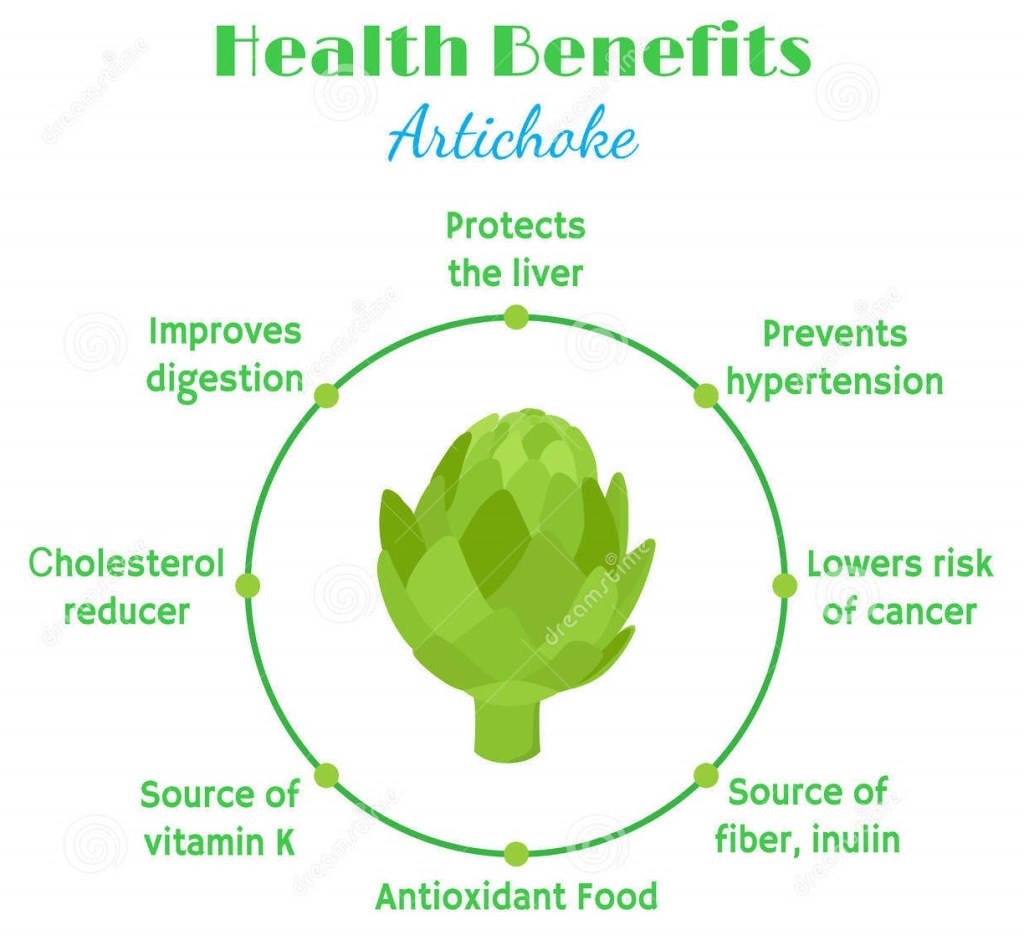
Artichoke extract is sometimes used to treat a variety of health conditions. For example, some consumers use the extract to treat hangovers, high blood pressure, anemia, arthritis, kidney problems, liver problems, snake bites, water retention, and other concerns. There is not enough evidence to support the use of artichoke leaf extract for these health benefits.

There is research, however, to support the use of artichoke leaf extract to treat indigestion and high cholesterol with studies about cholesterol gaining interest.

Healthiest way to prepare an artichoke:

Grab a steamer pot, and add a small amount of water with a squeeze of lemon juice.

Add one tablespoon of salt and bring to a boil.

Trim the spiky leaves, then place the artichokes stem-side up in the steamer basket after having trimmed their spiky leaves.

Cover pot, steam for 25 to 30 minutes, until heart is tender when pierced with a knife and inner leaves pull out easily.

Hubble Space Telescope

Definition: Hubble Space Telescope (HST) is a space telescope named after renowned astronomer Edwin Hubble. It was launched in 1990 and is one of the great observatories of NASA.

Hubble was created with a need to capture high-resolution images of universe. It is capable of taking high-resolution images with negligible background light. History: Though the HST launched in 1990, the idea of making this telescope struck scientists way back in 1923. It was funded in 1970 and supposed to be launched in 1980 but due to the budget problem it got launched in 1990. After the launch of the telescope, the first fewer images it returned were not that sharper as desired and the best image quality was lower than expected. It happened because primary mirror was incorrectly grounded in terms of shape.

Initially, considering the cost of telescope and the output, it was called a ‘white elephant’. After that the error was identified and some optical corrections were done by using sophisticated image processing techniques. Maintenance and Support: HST has the ground support for maintenance and several operations which are conducted by The Space Telescope Science Institute (STScI). STScI is responsible for the delivery of data captured by HST to astronomers. Technology: It uses optical science to capture images. HST is a very big space telescope. It is capable of collecting plenty of light thereby letting us to see fainter objects too.

The telescope only takes pictures in shades of black and white.

The dazzling snaps of nebulae, supernovae and galaxies captured by Hubble are usually only released after having undergone a postproduction process to add color. Hubble’s onboard digital cameras only take photos as gray-scale pixels, so astronomers make multiple exposures of the same object using different filters—typically red, blue and green—to capture various wavelengths of light. These are then overlaid to create a single color composite. Since Hubble can see in the ultraviolet and infrared ranges, scientists also occasionally insert additional color into the images to bring out details that would otherwise remain invisible to the human eye.

Some Facts:

The telescope was several decades in the making.

The launch was delayed by the Challenger disaster.

A faulty mirror nearly derailed Hubble’s mission before it started.

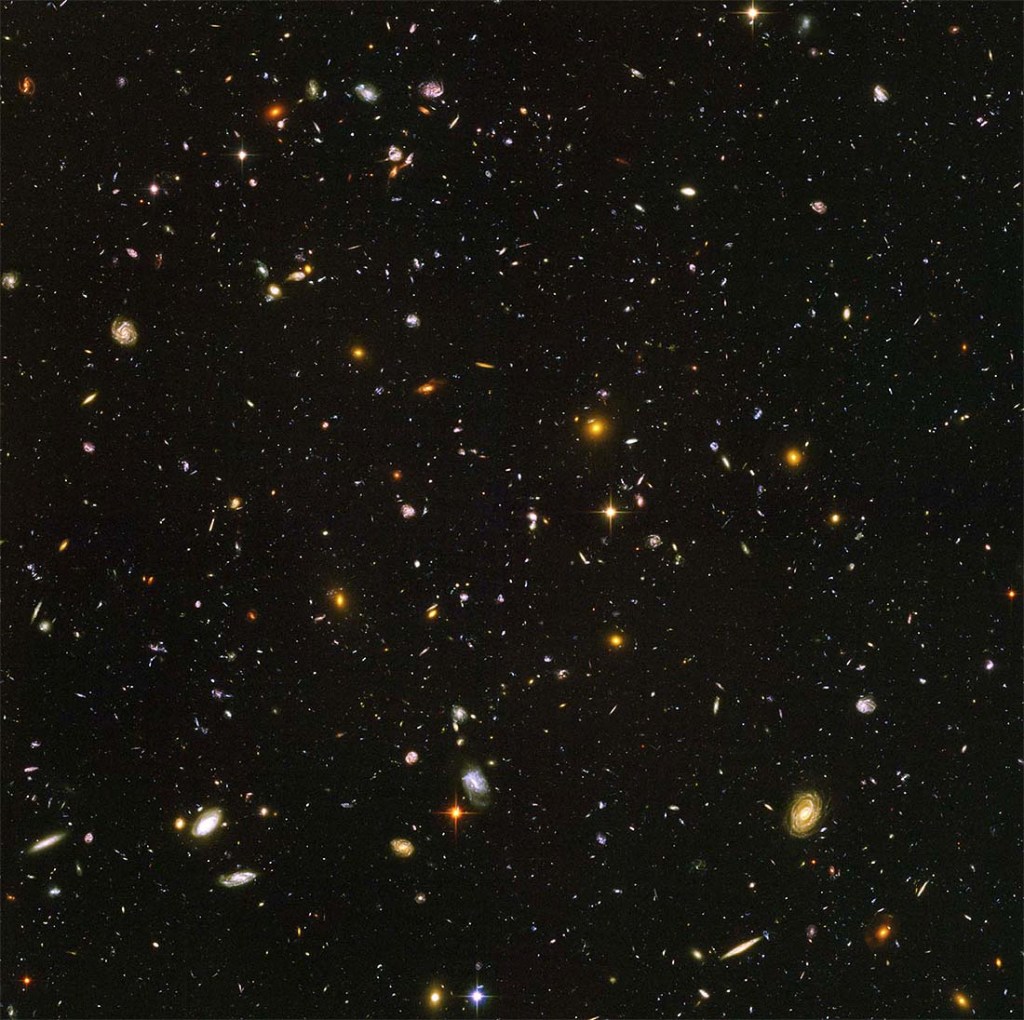
It’s responsible for the deepest images of the universe ever recorded.

Hubble technology helped lead to better methods for detecting breast cancer.

Its observations have settled many longstanding debates in cosmology.