
BOOK REVIEW: The Silver Chair

Author: C.S. Lewis

The Silver Chair is the sixth book in The Chronicles of Narnia series and serves as the sequel of the film ‘ The Voyage of the Dawn Treader’. There had been speculations about this book being adapted into a film but as of now there is no confirmation regarding it. However, this book is included in The Chronicles Of Narnia TV series which is a British BBC produced television serial and aired form 1988 to 1990 and covered four books of the series.
It is a middle grade book just like the rest of the series. This book dives deeper into the land of Narnia and shows the sides of it which weren’t shown before. It is the first book to show openly Narnia as a much less friendly and darker place than the other books. Well it may be because as the series proceeded, it became rather more mature. The Pevensies, who serve as the main characters throughout the film trilogy and also in most of the books, are not in this book.


“You would not have called to me unless I had been calling to you,” said Aslan.”

https://www.goodreads.com/book/show/65641.The_Silver_Chair

The story opens with a girl named Jill Pole who had been experiencing bullying. She is comforted by Eustace Scrubb. This is the same guy who was in the film The Voyage of Dawn Treader and was very annoying in the starting but eventually became good by the end. He tells her about Narnia and they both get there. There, both of them are given a task by Aslan, to find and rescue King Caspian’s son, who is the heir to the throne of Narnia.
The book consists of sixteen chapters. The story is very progressive. It gets interesting after every chapter. There is this aura of mystery surrounding the story which wasn’t very prominent in other books. The more you read, the more you get invested in unravelling the mystery of Prince Rilian. Chapter 11 and 12 in particular have a great plot twist which makes overall story very exciting.
There are a lot of referencing in this book as well. It also explores underworld, the part of Narnia which is not really emphasised in other books. This must be the reason that makes this book very different than rest and also gives it a relatively darker tone. Deceit, manipulation, captivity, bullying, delusions are some themes which make this story very different from others. The main antagonist is the Lady of the Green Kirtle, the Queen of the Underland. She is depicted as a very beautiful women who turns out to be very deadly by the end of the book. Looks can be deceiving huh!
The writing style of the author is simple, conversational and cunning. It is written very descriptively and makes the story lively. The narrative of the story gives a very nostalgic feeling as if the story is of a very distant past. Overall, it is a very good book. The storytelling, the characters, the plot, everything is amazing. It is a must read!!!

https://youtu.be/O6yxZ8WXVtw

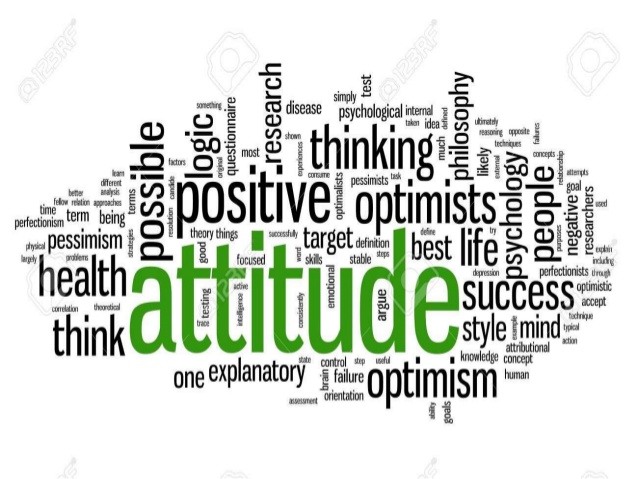
Attitude: Formation & Change

We all have our own opinions about people, situations, issues or life. These opinions are formed over time with experience and are an example of attitude. An attitude is basically a state of mind or a set of views regarding some topic. It is accompanied with a tendency to act in a particular way with regard to attitude object. Attitude are not a behaviour in itself but rather it represents the tendency to behave in a certain way.
Attitudes have an evaluative feature i.e. they are either positive or negative. Attitudes are formed through interaction and changes throughout our lives through experiences. Some attitudes however, remain fairly constant. Such attitudes get incorporated in our lives as a part of our belief system and moral values. Beliefs and values differ for every individual. For some they may change over time while for others they may never change.
In general, attitudes are learned. This learning can take place through association, observation, exposure, culture etc. In early age group, attitudes are learnt by being rewarded or punished. For example, praising(rewarding) a child every time he does his share of chores will lead to a positive attitude formation towards doing chores. Most of the attitudes are formed by modelling or observation. During pre teen years or even teenage in that matter, important attitudes about life and related matters are formed by observation of living environments. Social norms also shape our attitudes. Social norms are exclusive to their cultures and become a part of our social cognition.
Family and school environment especially during the early years play a significant role in shaping the attitude of an individual. Most of the attitudes are formed through direct personal experiences which bring about a drastic change in our opinions towards people and our own life. Over the years, media has become an important source and factor for attitude formation. It provides an exposure to vast amount of information, both positive and negative. Internet is also a very powerful factor for attitude formation.
Change in the attitude depends on it’s existing nature. Nature of attitude includes it’s positivity or negativity, simplicity or complexity and centrality. Generally speaking, positive attitudes are easier to change. Extreme attitudes and central attitudes are rather difficult to change. Attitude may change in the same direction as the existing one, or it may change in the opposite direction. It has been observed that attitude changes when message comes from a highly credible source. A message in the information that is presented to change the attitude. Whether the message contains a rational or emotional appeal also makes a difference. People who have a more open and flexible personality change more easily then those who are less open. People with low self esteem and low confidence also tend to change their attitudes more easily than those with high self esteem and confidence. People with strong prejudices do not easily change their attitudes. More intelligent people change their attitude less easily but sometimes they change it more willingly than others.

https://youtu.be/xxisEC4nF1A

https://youtu.be/tohd2AJ2bvI

BOOK REVIEW: The Magician’s Nephew

Author: C.S. Lewis

The Magician’s Nephew is the first book in The Chronicles of Narnia series. There are total seven books in the series. Three of them have been adapted into theatrical films. The Magician’s Nephew serves as the prequel to the movie ‘The lion, the witch and the wardrobe’.
The Chronicles of Narnia series is set up in a fictional world known as Narnia where talking beasts walk, and magic exists. The series follow stories of various people who are associated with Narnia. Each book is has it’s own timeline and is connected with other without loosing essence of it’s own.

Being a prequel of the film, this book deals with a lot of stuff that wasn’t completely explained in the film. It explains the origins of Narnia and the wardrobe and also deals with the backstories of characters which were in the film like white witch and professor. Reading this book prior watching the film make the experience better.

“This is a very important story”, explains the author at the beginning, “because it shows how all the comings and goings between our own world and the land of Narnia first began”.

https://www.goodreads.com/community_answer/93466/comments?reverse=true

The story revolves around a boy named Digory. He befriends a girl named Polly and both agree to go on some sort of adventure for fun but things don’t go so well when they encounter Digory’s uncle Andrew. He tricks the girl into using one of his experimental rings which send her to unknown dimension. Digory goes after her in a quest to save her and find a way back home.
The story then follows their journey through different worlds. The book has a total of 15 chapters. Chapter 3 and 4 in particular are very interesting. They represent the feeling of unfamiliarity very well. The sense of adventure when you try something new yet the feeling of uneasiness which comes out of fear are very well portrayed.
The writing style of the author is very casual and conversational yet very cunning and ominous. It is very descriptive and makes you imagine the stuff in the novel real quick. The world building in this novel as well as the series on the whole is phenomenal. There is a lot of referencing in this book as well and lot of foreshadowing too. The book is written in such a way, it feels like distant past and gives nostalgic vibes. The narration changes from third person to first person many times throughout the series. The later chapters deal with the creation of Narnia, the origins of Jadis, the white witch, who serves as the main antagonist in the sequel. The end of this story marks the beginning of all others and it serves a perfect intro for the rest of the series.

Talking about the lessons it teaches, the first one would be learning to contain your curiosity. Throughout the story, most of the problems occur because the characters are curious to find out what’ll happen if you do a certain thing or so. Values of friendship, loyalty and commitment are also presented well. Overall, this book is a must read.

https://youtu.be/nVBMw372IxU

Why Human Development?

Human development refers to the process of widening people’s choices, freedom and opportunities as well as raising the level of their well being. Human development focusses on the enlargement of all human choices whether economic, social, cultural or political.
Economic growth or development alone cannot guarantee human development. This is because these two terms pertain to economic advancement which is usually expressed in monetary terms. Accumulation of wealth does not necessarily mean the fulfilment of several kinds of human choices. For instance, a society does not have to be rich to afford democracy or equality. It is the how we use the wealth and not the wealth itself that is decisive in attaining human development. The real wealth of a society is its people and development of those people can transform that society.
In recent times, an alternative to GNP as a measure of economic development has lead to computation of the Human Development Index. This measure has been enlarged and many related indices like gender development index, gender inequality index, human poverty index, etc. have been developed as well. Human development is necessary for several reasons.
Human development leads to higher productivity. A healthy and skilled labour is a very important productive asset for any economy. Improvement in education not only enhances skills but also helps in lowering family sizes. Education makes people aware of the benefits of smaller families.
Human development also leads to a better physical and social environment. Population growth effects the environment. Deforestation, desertification etc decline with a decline in poverty. Reduced poverty also contributes to a healthy civil society, increased democracy and greater social stability.
Human development embraces the entire society and not just the economy. The political, cultural and social factors are given much importance as the economic factors.
Some of the important components of human development are equity, empowerment, sustainability and productivity. People must enjoy equitable access to opportunities. They must be empowered so that they are in a position to exercise choices of their own free will. The development should be sustainable i.e. needs of future generations should also be under consideration. Productivity is an essential part of human development as therefore should always be a priority.
In the recent years, economists have shifted their concern from economic growth to human development. This has lead to the creation of Human Development Index (HDI). HDI is a measure of human development done on the basis of three dimensions: long and healthy life, access to education and decent standard of living. Long and healthy life can be measured through life expectancy while literacy rate shows access to knowledge. For measuring standard of living, GNP is often used.
Since human development is so closely linked to economic growth, it is important that planning in economic growth should coincide with human development. It means that equal emphasis should be laid on production and distribution objectives. Human beings should be declared the ultimate objective of economic planning. There are enormous difficulties in doing so but it is worthwhile.

PRIVATISATION : PROS AND CONS

Privatisation refers to the process by which the government transfers the productive activity from the public sector to the private sector. It is basically the transfer of ownership from the central government to the private sector. A vast majority of economies have been supporting privatisation and have launched massive privatisation programmes during the last two-three decades ago. The supporters believe that privatisation and disinvestment has many advantages.
The first and foremost being improvement in efficiency and performance. Since private sector is profit oriented, the decision making is inclined more towards efficiency. Moreover, privatisation establishes a market for managers which improves the quality of management. Here fixing responsibility is much easier. Public enterprises cannot be held responsible for any lapse i their responsibilities but this is not the case with private sector. That is way the performance of private sector is better.
Decision making is faster in private sector in comparison to public sector. Delayed decision making is often equivalent to making no decision at all. The problem of red tapism which is present in public sector is absent in the private sector. In the contemporary businesses environment, it has become important to take spot decisions without wasting time. Remedial measures are also taken early in private sector. Because private sector faces threats of takeover, liquidation, loss of assets etc., the likelihood of taking remedial measures in advance is very common which is not quite often observed in the public sector.
The succession is well planned out in private sector. The public sector enterprises however, remain headless for long periods of time. This causes confusion and delayed decision making. Such a situation does not exist in private sector.
Privatisation leads to better customer service. This is due to the fact that the survival of a private sector enterprise depends on customer satisfaction, since it is the satisfaction that insures repeated buying and profit generation. For creating sustained markets for themselves, the quality of services offered by private sectors for their customers are quite good.
The critiques have however, criticised privatisation and disinvestment on the following grounds.
There has been undervaluation of assets. The performance on disinvestment front has been dismal. The main reason for this is the fact that disinvestment was carried out in a hasty, unplanned and hesitant way. It was launched without a required condition of its take off. Adequate efforts were not made for the much needed linkage between public enterprise and capital market. Considerable under pricing of public enterprises shares results in considerable loss to the government.
Critiques argue that privatisation leads to unemployment. Supporters call it marginal retrenchment of labour but still, the future employment scenario for labour is a cause of worry. Having low productivity jobs in public sector is a better alternative to unemployment as the later does not increase a nation’s income definitely does not increase welfare of workers.
Privatisation of PSUs is more risky. Since private sector is more interested in profit generation, critiques argue they won’t worry much about local labours and the costs would be borne by customers.

PUBLIC DEBT

Public debt refers to the accumulation of annual budget deficits. It is basically the amount a country owes to lenders inside or outside of itself. Public debt is the sum of internal or external debt. The former refers to the public loans floated within the country while the later refers to public loans taken from other countries.

In India, public debt has increased tremendously over the years. This is mainly due to the fact that India is a developing economy the government requires massive investments in infrastructure and capital goods industries. For these purposes, they have to resort to borrowing. Development projects also involve a lot of raw materials. In the past few years the prices of petroleum products have increased significantly and so has it’s import bill in India. The exports however, have not increased in the same proportion. Consequently, the obligations of external debt has increased in India.
The total public debt of India in 2016-17 has been 50.3 per cent as a proportion of GDP. The external debt has to be paid in terms of foreign currency and it’s repayment creates serious problems.

A criteria of assessing the burden of public debt should not be the amount but how the funds are actually used. If public debt is wasted is becomes a problem rather than the debt which is used productively. It has been observed that in India a vast amount of external debt has been used for maintenance imports and has not really increased productive capacity. This shows that burden of external debt is quite heavy. Internal debt however, has been used more productively. A significant amount of it has been utilized for development of industries, railways, projects, services etc.
Just like the central government, the state government also faces problems of public debt. Over the years, the expenditures of state governments have increased more than the revenue they get. This is mainly because tax potential is not at its fullest. Large investments made in projects like electricity, irrigation etc. have not generated expected returns.
Since the burden of public debt is so heavy, economists have come up with different strategies to tackle it.
One way can be the reduction of interest rates. This is specifically for internal debt. Reducing the interest rate can bring down debt-GDP ratio. Interest rate can be reduced directly or indirectly by making debt less risky. A monetary policy which reduces risk and real interest rate can aid in doing so.
Selling a part of vast real estate can also help in raising resources. Government of India hold s a vast majority of real estate especially railways which hold a large amount of land along its rail tracks. Some economists have suggested the government to sell some part of this real estate to generate necessary funds.
Another way to curb public debt is to reduce public expenditure and increase revenues. Reducing public expenditure is not easy especially for India which is a developing economy. As far as rising revenues are concerned, suggestions have been made for increasing taxation. This is however, not feasible. A substitute for this can be building ways to reduce loopholes that allow tax avoidance.

INDUSTRIAL SICKNESS

Industrial sickness refers to the situation wherein an industrial firm performs poorly, incurs losses for several years and often defaults in its debt repayment obligations. The problem of industrial sickness has grown significantly over the years in India and a large number of industrial units were affected by it.

There are various causes of industrial sickness. Firstly, an internal cause can be faults at the planning and construction stage. Faulty decisions like setting up the firm in the wrong location i.e. a location which lacks infrastructure facilities or lacks market availability cause problems in the long run. Unplanned production, unbalanced capital structure etc. are all faulty decision which makes a firm sick.

Defective plant and machinery is another reason for industrial sickness. It has been observed that small scale sector do not seek professional technical guidance in choosing machinery. At times technology adopted is outdated and inappropriate. Production with this sort of technology is bound to be inferior and likely to suffer cost and price disadvantage.
An external cause of industrial sickness is demand and credit restrain. During the times of recession, there is a steep decline of demand in the market. This causes losses to individual units especially the products with high prices like automobiles. If such situation persists for long durations, then industrial units are prone to turn sick.
The most important internal cause of industrial sickness is management problems. Management can make or break a firm. Incorrect managerial decisions pertaining to the fields of finance, production, marketing etc. can ruin a business. Absence of quality control systems, lack of inventory, inadequate maintenance are some examples of mismanagement.
Entrepreneurial incompetence is yet another reason for industrial sickness. Many entrepreneurs in the small scale sector do not have basic knowledge of business, manufacturing, costing, accounts etc. Units set up by them often turn sick.
Industrial sickness can have serious consequences. It is a set back for employment opportunities. When a firm turns sick, it can actually go out of business. Closure of an industrial firm renders its workers unemployment. This situation can be more serious if a big firm with a large number of employees gets shut down. Unemployment brings a lot of complications with itself. This can cause industrial unrest. Closure of a big firm also causes labour unrest which can result in industrial strikes which threatens the peace of industrial environment.
Industrial sickness also leads to wastage of resources. When a sick firm is shut down, resources invested in that unit are wasted. In case of large firms this problem is more serious as a lot of investment is made in its plants and machinery. In fact other industries which are linked to a sick firm through backward or forward linkages, also incur some losses.
Closure of large sick units also effects investors and entrepreneurs and creates a psychology of despair. The prices of share fall down and affect the entire stock market. Even banks and financial institutions which have granted loans to these units suffer losses. Locking up funds in the sick units negatively affects the future lending programmes of banks and financial institutions. Industrial sickness also results in loss of revenue of government. Since industrial sickness has such a wide range of impact, it is considered as a social problem in India.

Anime

Anime refers to the animation work produced in Japan. Over the years, anime industry has grown significantly and anime has made it’s way all across the globe. With fans all around the world, anime is one of the greatest achievements of Japan.
Anime uses traditional style of animation. It is basically like a flipbook animation where each frame is drawn by hand. Even after the rise of computer generated animation, the anime industry still sticks to the traditional method of animation. Although CGI is used for special effects but the vast majority of animation is done traditionally. Because of this, anime has a distinct animation style, it somehow looks different, far more detailed and feels like an artwork.
The stories they animate are generally taken from the Japanese comics called ‘manga’. Usually a manga is released first after which it is adapted as an anime but this is not always the case. Some anime are original i.e. without any manga source material while others are released prior to their respective mangas.
Anime originally has Japanese audio. It can be watched with subtitles. Anime is often dubbed in different countries in the language they prefer, mostly it dubbed in English.
Another great feature of anime is the variety of genres and content it offers. Since anime is an animation, most people confuse it as ‘children’s cartoon’ or a ‘kids show’ but this is a very wrong belief as it undermines the content that anime offers. It is true that anime has content for children too but it’s not entirely that. It offers content for teens, young adults and adults. In fact the mainstream anime is targeted for an older audience. Taking about the genres, it has a lot to offer. Action, adventure, thriller, fantasy, sci-fi, romance, slice of life and what not. Each single genera offers a ton of different animes to watch.
The music in the anime is also very appealing. The opening an ending songs are usually taken from the j-rock or j-pop bands. The soundtracks used in the episodes can generate hype real quick and makes the overall experience fun.
Anime is a great source of entertainment and can teach valuable life lessons as well. One can learn a lot about the Japanese culture through anime. Here are some of the greatest anime out there which are worth checking out:
• Death Note:
Genre: mystery, thriller, supernatural
The story revolves around a boy named Light who finds a book which has the ability to kill the person whose name is written in it. Using that book he starts killing criminals to build a better world. This is however considered as serial killing and the investigators with the assistance of a detective named L try to apprehend the culprit.
This anime is a delight for thrill seekers and mystry lovers. It questions what true justice is and presents different perspectives of it.
•Naruto series:
Genre: adventure, fantasy
The series tells the story of an orphaned ninja named Naruto who has a demon sealed inside him. He seeks acknowledgement from his peers and dreams of becoming the leader of his village.
This anime is a classic and teaches many life lessons the most important being never giving up.
• Your Name
Genre: romance, fantasy, drama
This movie revolves around two teenagers who share a magical connection of switching bodies. Things get complicated when they decide to meet in person.
This anime has a breath-taking animation and has a very different take on love.

Income Inequality in India

Income inequality refers to the unevenness in the distribution of income throughout the population. In India, income inequality has emerged as one of the major economic problem and is increasing. According to World Inequality Report 2018, inequality in India has increased substantially from the 1980s onwards. The top 0.1 per cent earners have captured more growth than bottom 50 per cent all combined.
There are several reasons for this inequality. Firstly there is an extreme concentration of wealth and economic power in the hands of large industrialists. They have acquired massive assets over time. This can be due to easy availability of money in form of loans from banks. Secondly, inequalities have existed for a very long time, since the time of colonialization. The zamindari system was responsible for inequalities in land ownership which resulted in concentration of tangible wealth. Even though zamindari system was abolished, the damage had been done. The concentration of land ownership could not be broken. Even today, the main reason for income inequalities in rural areas is the concentration of ownership of lands.

Another reason for income inequality is the rising capital intensity of technology. Over the years, due to digital tsunami and consecutive rise of IT sectors, the demand for labour have significantly reduced over the demand for capital. Reduction in wages and unemployment has increased. More skilled workers have a higher demand and wage in comparison to low skilled workers. This has contributed towards increasing gap in income levels. Furthermore, there exists urban bias in private investments. Mostly rural people are the ones who are not very advanced with the technology. Majority of population in India belongs to rural sector and therefore a pattern of urban bias is observed in private investments. It can be seen as the use of highly mechanised projects. Here the share of wages added is relatively low. This naturally leads to inequality in income distribution and wealth accumulations.
Inflation has also greatly contributed in rising income inequality. It has affected the real incomes of working class while benefited traders, farmers, industrialists. Not much has been done to prevent this effect of inflation and hence the result is income inequality. Even the credit facilities are responsible for income inequalities. Large business frims or individuals have an easy access to loans and financial supply on favourable and supporting terms. They have an access to formal capital market but the vast majority of small marginal farmers, labours etc. do not have this. They depend largely on moneylenders who exploit them by charging high interest rates.
The government has desperately tried to curb these inequalities by taking various measures. Various land reforms and redistribution of agricultural land has taken place and the government has even tried to control monopolies and restrictive trade practices. Several employment and wage policies and social security measures have been undertaken and special programmes for the upliftment of rural population have been taken up. Even then, income inequality exists. All of these measures have little impact on poverty and thus inequality continues to grow.

Aggression

Aggression and violence are amongst the numerous issues our society is facing. Both of these terms are related and yet different from each other. Violence refers to behaviour which is forceful towards someone or something and may cause harm. Aggression refers to the behaviour towards someone or something which is intended to cause harm. The key difference between the two terms lies in the intent in which an act is done.
Aggression therefore is a more serious problem. It ranges from small actions like using harsh words, unnecessary criticism, having hostile feelings etc. to larger and more concerning actions like ragging, bullying, child abuse, murder etc. In some cases the act of aggression may be done to obtain something while in some other cases the aggressor does not wish to obtain anything from the victim. The former case is termed as instrumental aggression while the later is called hostile aggression.
There are several causes of aggressive behaviours. Some psychologists argue that aggression is an inborn tendency in humans just like it is in animals. It is a sort of defence mechanism. It gets triggered by physiological mechanisms. There are several factors that cause this arousal.
Childhood experiences also shape the tendency of aggression in individuals. It has been observed that those children who were brought up in a hostile environment like parents using physical punishment often tend to grow as aggressive individuals. It is not very clear why this happens though. Some say that children imitate their parents behaviours, others say that it is the anger and resentment they bottle up during childhood which comes out in the form of aggression.
Aggression is often caused by frustration. Frustration is marked by a sense of helplessness when we’re unable to achieve something. Aggression is in fact an expression of frustration. People in frustrated situations often show more aggression than others. This sort of aggression is often projected towards a weaker person who is less likely to retaliate. An example of this is bullying. However, it is not necessary that frustrated person is always aggressive. It largely depends on a person’s personality. Some people are inherently short tempered and show more aggression than others.
People mostly learn aggression by observing others displaying it. Some researchers say that exposing children to aggression shown on television or media causes them to learn aggressive behaviours. Sometimes people show aggression when unnecessarily provoked.

Aggression serves as a root cause for various social issues out there and therefore it needs to be curbed down. The most important step in ding so is preventing children to learn aggression. Aggressive behaviour of any form should be unappreciated amongst children. Using punishment as a tool for discipline should not be done. Portraying aggression as a heroic behaviour must be stopped as it make children model that behaviour. Television and media should be regulated for children. Another way is to reduce frustration. Having equality and justice is a key in doing so. Encouraging people to talk about their problems of frustration can significantly reduce the occurrence of aggression. Lastly, having a positive attitude toward peace and non violence should be taught to children.

Stress

Stress is the response of an individual towards an event which is beyond his/her ability to cope. When faced with a challenging or threatening situation, an individual undergoes stress. Stress is not necessarily bad, in fact term eustress is used to describe the stress that is good for an individual. This is the least level of stress which actually helps a person to achieve peak performance and managing problems. If however, this stress starts growing inside, it causes body’s wear and tear. It is called distress and it is this stress that is unhealthy for an individual.
Stress is caused by external events. These events are called stressors. Some examples of stressors are: crowding, examination pressure, bad relationships etc.
Individuals responses towards a stressor varies from one another. It largely depends on perceived events and how they are interpreted. Past experiences often help in dealing with stress. If an individual has handled a similar stressful situation well in the past, he/she is more likely to do the same in the present. The opposite also stands true. An individual who beliefs that he/she is in control of the situation, often experience less stress than those who have no such sense of personal control. Self confidence is a key in overcoming stress.
When faced with stress, our body produce a stress reaction. It can be physical, emotional or behavioural or a mixture of all. The first reaction is usually the physiological one, wherein adrenal glands release hormones responsible for fight or flight response. During stress, a hormone named cortisol is also released in our body which provides energy. Emotional reactions may include negative feelings like fear, anger, anxiety or depression. Behavioural reactions however depend on individuals that whether they choose flight response (forget everything and run) or fight response (face everything and rise).
How an individual responds to a stressor aslo depends on the nature of stress. The intensity and complexity of a stressor as well as whether it is predictable or not influences the nature of response it induces. It has been observed that stress which is intense, prolonged, complex and unpredictable have a more negative effect on people in comparison to the stress which is less intense, short lived and predictable.
There are various types of stress. Physical stress relates to the stress that is related to our body. It is much easier to deal with than the psychological stress which generates in our minds. This psychological stress is very subjective and unique to the person experiencing it. It includes frustration and internal conflicts. Social pressure, life events and daily hassles or experience of traumatic events also contribute to psychological stress.
Stress has various adverse effects on an individual. Emotional effects like mood swings, anxiety, depression, increasing tension, decreasing confidence are very common. Physiological effects include increased heart rate, slow digestion, hypertension etc. People may even suffer from mental overload and loose their ability to make sound decisions. Poor concentration, disrupted sleep patterns, reduced work performance are some other effects of stress.

A poison called poverty

“Anyone who has struggled with poverty knows how extremely expensive it is to be poor” – James Baldwin
Poverty is a condition where people face actual shortage of resources required for living. Poverty is usually described in economics terms but in reality it is much more than that. It is not merely lack of necessities but it also extends to issues pertaining to deprivation, discrimination and social disadvantage. It can also relate to unequal distribution of wealth in a society.
‘The cycle of poverty’ as they say, explains why poverty continues amongst the same sections of society. Starting with lack of resources, poor people live a life poverty wherein they cannot get proper education. This leads to unemployment and further poverty. Thus it is evident that poverty begets poverty.
Poverty is often associated with deprivation. Here a person feels he/she is not getting what he/she deserves.
Poverty and deprivation have their own impacts on individuals. Poor people have low motivation and low aspirations. They believe in fate or luck and tend to have low self esteem. It’s not an individual way, but a belief system which is formed by their experiences in a life filled with poverty. This is called the ‘culture of poverty’ and it serves as both cause and effect of poverty. It convinces poor people that they will remain poor and this belief is carried over from one generation to the next.
Poverty and deprivation are also linked to social disadvantage. It is very true that certain sections of the society enjoy more privilege than others. As for poor people, they are not allowed to enjoy the same privileges as the rest of the society. Prolonged deprivation effects individuals espacially children. The environment in which a child grows significantly affects his/her development and it is reflected in their task performance. It has been observed that intellectual functioning and task performance of deprived people are lower than those of who are not deprived.

Social disadvantage and discrimination go hand in hand. Once you are a part of disadvantaged section, you are bound to face discrimination at some point of time. Discrimination refers to behaviours or practices that make distinction between rich and poor. Obviously the rich are favoured over poor and disadvantaged.
This discrimination is quite visible in matters of education, employment, social interaction etc. Even if children of poor people have skills and capabilities, they fail to pursue their dreams because they cannot avail the opportunities rest of the society can. Social disadvantage and discrimination together contribute towards preventing the poor people from improving their economic condition. It can be seen that discrimination is the cause and effect of poverty as well.
Some people say that poor people are themselves responsible for poverty and that they lack motivation or abilities to utilise the opportunities that they are given. This view however, is very negative and does not help in making them any better. The economic system is made in such a way that it doesn’t do any good to poor people either. It is therefore safe to say that poverty is like poison and once it enters the lives of the people, it continuously deteriorates them.

SOLID WASTE MANAGEMENT: A problem

Solid waste refers to unwanted materials generated as a result of human activities. It is basically everything that goes out in trash. It can be domestic, industrial or commercial based on its source of origin.
As the human population is increasing, so is the waste produced by them. Solid wastes have a lot of problems attached to them. Not only they result in pollution of varried forms but also cause many diseases by being the breeding grounds for vectors.
It is therefore very important to dispose solid wastes safely. Solid waste management deals with the process of treating solid wastes. Different methods are applied to treat different sorts of solid wastes.
Municipal solid wastes refers to the waste produced at offices, schools, homes etc. It usually comprises of paper, food waste, plastic, metal, glass etc. It is usually collected by the municipality and taken for their treatment.
One way of doing so is burning. This reduces the volume of the waste but this method causes air pollution of course. A substitute for this method is sanitary landfills wherein wastes are dumped in a trench and covered with dirt everyday. This method is less polluting than the former but has its own flaws. It is very effective for biodegradable wastes but when it comes to wastes like plastic, metals or glass, i.e.. non biodegradable wastes, this method can do more bad than good. So separation of wastes before putting them in a sanitary landfill is a must or else there will be soil pollution.
The disposal of biodegradable wastes is quite easy, so the actual problem is non biodegradable wastes. This can be further divided as wastes which can be recycled and the ones which cannot. The most effective solution can be reducing the use of non biodegradable products, as it is their disposal procedure which takes a lot of time and resources.

Another source of solid wastes is hospital. The use of chemicals and disinfectants make the solid wastes produced by hospitals more hazardous than others. It also contains pathogenic microbes. The disposal of such wastes has to be carried out very carefully. These wastes are usually incinerated. Incinerators are furnaces used for burning wastes. It involves combustion of solid, liquid and gaseous wastes. Incinerators, however produce harmful gases which possess a threat to health of workers and nearby community.
Electronic wastes are also difficult to dispose off. Irreparable parts of electronic gadgets are known as e-wastes. In its process of disposal, first metals like iron, copper, silicon etc are recovered and the rest of the junk is incinerated. This procedure usually involves manual participation and therefore possess a risk to human health. The works can be exposed to toxic substances present in the e- wastes or the harmful by-products of incinerators.
The most difficult waste to dispose is radioactive waste. The radiations emitted by nuclear wastes is very harmful for living organisms as it causes mutations which can lead to problems like cancer. Another problem is the fear of accidental leakage. Radioactive waste is usually pre-treated and then buried deep underground inside shielded containers.

As it can be seen that every solid waste disposal method has its own flaws. There is no perfect method for management of solid wastes. Reduction in waste generation should be our prime concern.

Life skills : overcoming challenges of life

Throughout our lives, we have different experiences. Some good, others not so good. It is certain to go through a period of personal crisis or to face acute pressure at some point of time. Many people sail through tough times easily while many others have a hard time doing so.
It has been observed that the people who are good at overcoming life challenges have certain set of characteristics. These are called ‘life skills’. Life skills are basically the abilities that an individual possess which helps him/her to deal effectively with the demands and challenges of everyday life.

These abilities often depend on how well we are prepared to deal with everyday demands. There are various practices on the part of a person which can enhance his/her life skills and lead toward a better life.
The first and foremost is to get rid of unhelpful practices. Procrastination, for instance, is a habit of putting off what we can do today. In this process we actually create a ton of work for ourselves which acts as a stressor later on. Another unhelpful habit is Perfectionism. Here the person tries to be perfect and therefore cannot relax like others. These habits are a reason of daily hassles. Time management is also very important. Learning to mange your time helps to reduce the pressure on us. The way people spend their time determines the quality of their lives.

Another life skill is self care. When we are healthy and relaxed, we are both physically and mentally prepared to face challenges and succeed in doing so. A healthy and balanced diet gives more energy, improves immunity and circulation and can lift one’s mood. When we are stressed we tend to eat comfort foods which are high in fats and sugar. The key to healthy living is to eat three meals a day with well balanced diet. Exercising is also beneficial when it comes to health. Stretching exercises have a calming effect. Regular exercising not only helps in physical fitness but also have a positive effect on reducing stress, tension etc.

An important life skill is rational thinking. There is a saying that “our thoughts determine our reality”. It is very true indeed. Many stress related problems arise due to our distorted thinking. What we think is connected to what we feel, therefore it is very important to have a positive attitude and positive thinking. Optimism plays a key role in this. Optimists tend to believe that problems can be overcome successfully and perceive problem as challenge instead of a threat. This sort of thinking helps in driving away negative thoughts. Other positive habits are sense of responsibility, acceptance, tolerance, humour etc.
Lastly, having sound relationships is also a life skill. Having people you can turn to during your low time helps to bounce back faster. Emotional support given by friends or family members can help an individual during tough times. The key to sound relationships is communication. Conveying what you feel and accepting what others feel is the basis of sound relationships.

Cultural Relativism

Human is a social animal. He cannot survive without a society. Society gives birth to culture. The ideas, customs, practices, beliefs of a society forms it’s culture. This culture incorporates with the lives of the people belonging to a society. Cultural transmission starts from right when we are born and continues till we live. Our culture is given to us as our legacy which must be practiced and preserved. Therefore it is a given that different societies have different culture and cultural practices, some more different than others.

Generally, it has been seen that there is this notion among people that our culture is superior or that a particular culture is inferior to our culture. An “Us vs them” mentality is created which leads to perception bias in our favour. This leads to cultural misinterpretations and generalisations about other cultures. Sometimes these beliefs are so strong that they take forms of prejudices, disparity, bullying, intolerance, wars, genocide etc.
A well-known instance of this is the Nazi Germany and the holocaust of Jews.

It’s not our differences that divide us, but our own inability to accept those differences.

This is where ‘Cultural Relativism’ comes into light. Cultural relativism refers to the ability of a person to understand a culture on it’s own terms and not being judgemental towards it. It simply means that we should try to understand cultural practices of other groups in their own cultural context. This term was first used philosopher Alain Locke. It lays emphasis on the fact that people from different cultures can have relationships with respect and acknowledgement of each other’s diverse lives.

The basic goal of cultural relativism is to promote a sense of unity and to demolish the views pertaining to superiority of a particular culture over others. It also argues that there is no particular standard of judging what is good or evil and every decision is individually decided in each society. The bottom-line is that there no right or wrong in an ethical system and it is our own perception which tints our sense of morality.

Cultural relativism has two broad categories, absolute and critical.
The former argues that whatever happens within a culture has nothing to do with outsiders and therefore should not be questioned. The later forms questions about the practices in terms of who is accepting them and why.

We need to understand that there exists absolutely no culture that can be called Perfect. Cultural relativism has it’s flaws of course. Sometimes in the name of culture, we violate Human Rights but inspite of that, it is very important because it gives us objective insight, cross cultural empathy and makes us realise similarity among human cultures. It enables us to leave behind our biased mind sets and to see things in new light. It can also help to put a check on discriminatory practices and prejudiced behaviour which originates as a by-product of cultural misinterpretation. Cultural relativism important in studying and understanding other and different cultures because first and foremost we have to realise that our perception can be prejudiced while we are studying another culture. In a nutshell, cultural relativism is what we need to create a world which is equally hospitable and welcoming for everyone irrespective to their culture.