M karunanidhi: A man who shaped Tamil nadu politics for over 50 years

Muthuvel Karunanidhi was an Indian politician who served as the chief minister of Tamil Nadu on five separate occasions. He was born on 3 June 1924. He served as the president of the Dravida Munnetra Kazhagam (DMK), a major Dravidian political party in the state of Tamil Nadu. Karunanidhi led the party since its founder, C. N. Annadurai, passed away in 1969. The DMK chief also worked as a playwright and screenwriter for Tamil cinema. He was known as ‘Kalaignar’ (meaning ‘artist’) by his supporters. He breathed his last on 7 August 2018, just a few days after he completed 50 years as DMK’s president.

Political Career of M. Karunanidhi

Karunanidhi got inspired to enter into the realm of politics at a mere age of 14 and this was believed to be after hearing a speech of Justice Party’s Alagiriswami. His political career commenced with his involvement in Anti-Hindi agitations. He also formed an organisation in his locality for the local youth and circulated ‘Manavar Nesan,’ a handwritten newspaper, among its members.

Subsequently, he founded ‘Tamil Nadu Tamil Manavar Mandram,’ a student organisation. It was the first student wing of the Dravidian Movement. Karunanidhi got engaged in social work along with other organisation members. He started a newspaper which grew into ‘Murasoli’, the DMK party’s official newspaper today.

Karunanidhi’s journey in Tamil Nadu politics started with his involvement in the Kallakudi agitation in 1953. The original name of this town was Kallakudi but it was later changed to Dalmiapuram in order to name it after a cement baron who had constructed a cement plant there. The DMK was eagerly protesting to switch the name back to the previous one. During the protest, Karunanidhi was arrested and two people died.

Karunanidhi was first elected to the Tamil Nadu legislative assembly in 1957 from Kulithalai seat of Tiruchirapalli district. In 1961, he became the DMK treasurer and the following year, he assumed the position of deputy leader of opposition in the state assembly.

When the DMK came to power in 1967, he became the minister for public works. After the death of C.N. Annadurai in 1969, Karunanidhi became the Chief Minister of Tamil Nadu. He has held a number of positions in both government and party during his political career in Tamil Nadu.

Karunanidhi suffered many poll defeats against his main opponent M.G. Ramachandran’s ADMK until the death of the latter in 1987. Karunanidhi became the Chief Minister of Tamil Nadu in 1996. After completing a full term, his party suffered lost to J. Jayalalithaa’s AIADMK in 2001 elections.

He was, however, back in power 5 years later after his coalition party won from J. Jayalalithaa in the 2006 polls. After completing a full term in office, Karunanidhi suffered defeat from Jayalalitha’s AIADMK in the Assembly elections of 2011. He also represented Tiruvarur constituency in Tamil Nadu legislative assembly. He has been elected to the Tamil Nadu Legislative Assembly 12 times and once to the erstwhile Tamil Nadu Legislative Council.
Last Updated on 17 August, 2018

Iron Lady of Tamil nadu

The two iconic politicians of the last era were M Karunanidhi and J Jayalalithaa. The late Chief Minister Jayalalithaa was born in Melukote, Mandya district of Mysore on February 24. Her wisdom and knowledge had exponentially risen through her practise and experience right from her education.

Jayalalithaa’s Educational Background:

  • In Bangalore, she attended Bishop Cotton Girls’ School
  • She later shifted to Chennai and studied in Church Park Presentation Convent, then known as Sacred Heart Matriculation School.
  • She excelled in academics and was offered government scholarship to study further
  • She secured a gold medal in her 10th standard
  • She was offered a seat in Stella Maris College, but declined it.

Jayalalithaa’s Career Graph

Acting Career

  • Jayalalithaa’s interest in extra curricular activities was supported by her mother Sandhya, who was an actress.
  • She learnt classical music, western classical piano, and various forms of classical dance, including Bharatanatyam, Mohiniattam, Manipuri and Kathak.
  • She played many stage plays and was appreciated my the then veteran artists like Shivaji Ganesan and Y G Parthasarathy.
  • During one of the film shootings of Jayalalithaa’s mother Sandhya, Kannada film-maker B. R. Panthulu requested Sandhya to star Jayalalithaa against Kalyankumar in movie Chinnada Gombe. After much thought, she accepted the offer and made her daughter act.
  • In 1965, she was cast as the lead role in the movie ‘Vennira Aadai’
  • She made her debut in Telugu film Manushulu Mamathalu
  • In 1968, she acted in a Hindi film called Izzat.
  • Between 1965 and 1973, she acted in various films with the then Superstar Actor M G Ramachandran
  • In 1971, she won Tamil Nadu State Film Award for Best Actress after a series of hit movies in Tamil

Political Career

  • M G R, who was the Chief Minister of Tamilnadu in 1977 was instrumental in enrolling Jayalalithaa in the party. She joined AIADMK in 1982.
  • In 1983, she became the Propaganda Secretary of AIADMK
  • From 1984 to 1989, she was a Rajya Sabha member
  • In 1987, MGR deceased due to stroke. AIADMK split into two factions, one under MGR’s wife Janaki and another under Jayalalithaa. Janaki was crowned as the CM, however, she could not handle the duties and President rule took place.
  • The party later re-united under Jayalalithaa’s leadership and she became the leader of opposition in 1989.
  • In 1991, for the first time she became Chief Minister of Tamilnadu.
  • She was five times elected as the CM.
  • On 4 December, she passed away due to a cardiac arrest.

‘Netaji’

Subhash Chandra Bose is fondly remembered as one of the greatest freedom fighters of India, and popularly known by the name of ‘Netaji’ (Respected Leader). He was strongly influenced by Swami Vivekananda’s teachings, and also believed that the Bhagavad Gita was a great source of inspiration for the struggle against the British. Bose was an Indian nationalist, and a prominent figure of the Indian independence movement. The leader spearheaded the revolutionary Indian National Army during World War II. He always pitched for complete and unconditional independence of India from the British Rule.
S. C. Bose was a twice-elected President of the Indian National Congress (INC), founder and President of the All India Forward Bloc, and founder and Head of State of the Provisional Government of Free India, which he led alongside the Indian National Army from 1943 until his demise in 1945. Spoken as a part of a motivational speech for the Indian National Army at a rally of Indians in Burma in July 1944, Bose’s most famous slogan was “Give me blood, and I shall give you freedom!”

Early Life of S. C. Bose

Subhash Chandra Bose, popularly known by the name of ‘Netaji’ (Respected Leader), was born to Prabhavati Devi and Janakinath Bose on January 23 in 1897 in Odisha. He took admission into the Protestant European School which was run by the Baptist Mission. He did B A in Philosophy from the Presidency College in Calcutta, and was later expelled for assaulting Professor for the latter’s anti-India remarks. After the incident, Bose was considered as one of the rebel-Indians. During his college days, he gradually developed nationalistic temperament, and became socially and politically aware. He found Britishers’ insults to Indians in public places as offensive. In December 1921, Bose was arrested and imprisoned for organising a boycott of the celebrations to mark the Prince of Wales’s visit to India. Bose left for England in 1919 to appear for Indian Civil Service Examination. 

Political Life of Subhash Chandra Bose

After a few years, Bose returned to India as he resigned from his civil service job in April 1921, and later joined the Indian National Congress to fight for the independence of India. Subhash Chandra Bose started the newspaper known as ‘Swaraj’, and took charge of publicity for the Bengal Provincial Congress Committee. In 1923, Bose was elected as the President of All India Youth Congress and as the Secretary of Bengal State Congress. He was also editor of the newspaper called ‘Forward’, founded by his mentor Chittaranjan Das, and he served as the CEO of the Calcutta Municipal Corporation. By December 1927, Bose was appointed as the General Secretary of the INC. In November 1934, he wrote the first part of his book ‘The Indian Struggle’, which was about nationalism and India’s independence movement during 1920–1934, but the British government banned the book. By 1938, he agreed to accept nomination as the Congress President, and presided over the Haripur session. However, due to his strong differences with Mahatma Gandhi and Jawaharlal Nehru, he resigned in 1939. 

Subhash Chandra Bose’s Role in India’s Independence

S C Bose was always in favour of armed revolution in order to expel the Britishers from India. During the time when the Second World War took place, Bose revived the Indian National Army (INA) with the help of the Imperial Japanese Army, and also founded an Indian Radio Station called ‘Azad Hind Radio’. A few years later, he travelled to Japan, where more soldiers and civilians joined the INA. Even when faced with military reverses, Bose was able to maintain support for the Azad Hind movement. In Europe, S C Bose sought help from Adolf Hitler and Benito Mussolini for the liberation of India. Bose had struck an alliance with Japan and Germany as he felt that his presence in the East would help India in the freedom struggle against the British. 

Subhash Chandra Bose’s famous quotes

S C Bose’s most famous slogans/quotes are “Give me blood and I will give you freedom”, Dilli Chalo (“On to Delhi)!” This was the call he used to give to the INA army to encourage them. “Jai Hind”, or, “Glory to India!” was another slogan used by him, and later adopted by the Government of India and the Indian Armed Forces. Another slogan coined by him was “Ittefaq, Etemad, Qurbani” (Urdu for “Unity, Agreement, Sacrifice”). INA also used the slogan “Inquilab Zindabad”, which was coined by Maulana Hasrat Mohani. In July 1944, in a speech broadcast by the Azad Hind Radio from Singapore, Bose addressed Mahatma Gandhi as the “Father of the Nation”. 

Death of Subhash Chandra Bose

Subhash Chandra Bose is believed to have died in a plane crash in Taiwan in 1945, but his body was never found. There have been several theories regarding his disappearance. The government had set up a number of committees to investigate the case and come out with the truth.

Bhimrao Ramji Ambedkar

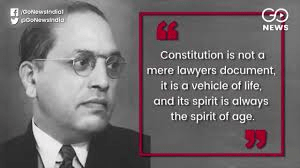
Bhimrao Ramji Ambedkar, (born April 14, 1891, Mhow, India—died December 6, 1956, New Delhi), leader of the Dalits (Scheduled Castes; formerly called untouchables) and law minister of the government of India (1947–51).

Born of a Dalit Mahar family of western India, he was as a boy humiliated by his high-caste schoolfellows. His father was an officer in the Indian army. Awarded a scholarship by the Gaekwar (ruler) of Baroda (now Vadodara), he studied at universities in the United States, Britain, and Germany. He entered the Baroda Public Service at the Gaekwar’s request, but, again ill-treated by his high-caste colleagues, he turned to legal practice and to teaching. He soon established his leadership among Dalits, founded several journals on their behalf, and succeeded in obtaining special representation for them in the legislative councils of the government. Contesting Mahatma Gandhi’s claim to speak for Dalits (or Harijans, as Gandhi called them), he wrote What Congress and Gandhi Have Done to the Untouchables (1945).

In 1947 Ambedkar became the law minister of the government of India. He took a leading part in the framing of the Indian constitution, outlawing discrimination against untouchables, and skillfully helped to steer it through the assembly. He resigned in 1951, disappointed at his lack of influence in the government. In October 1956, in despair because of the perpetuation of untouchability in Hindu doctrine, he renounced Hinduism and became a Buddhist, together with about 200,000 fellow Dalits, at a ceremony in Nagpur. Ambedkar’s book The Buddha and His Dhamma appeared posthumously in 1957, and it was republished as The Buddha and His Dhamma: A Critical Edition in 2011, edited, introduced, and annotated by Aakash Singh Rathore and Ajay Verma.

6 things that a student can do during this lockdown

With a country gradually coming out of lockdown. Schools and colleges are still closed so the student has no other way than spending time with family.even though some institutions are conducting online classes the students are still finding it tough to be at home. Here are some ways to spend time productively at home.

  1. Yoga

Exercising improves strength and agility and can help build your immunity in times like these. Meditation can help you destress and relax. It will help you inculcate a lot of energy and boost your stamina. Also, do not forget to maintain a healthy diet.

2.spend time with family

This is the best time to spend time with your family. During your busy school or college lives, you may not get enough time to talk to your family and spend quality time with them. Help your parents in the household chores or spend some extra time with your grandparents.

3.Watch good movies and shows

Whenever we have some time on our hands, we tend to put on the television or watch a movie or a tv show. However, during this quarantine, do not rewatch the same ones again. Instead, look for something new on topics that interest you. This way, you will get a chance to educate yourself about interesting topics.

4.Read a few good books

It is always good to get lost in a good book. They are the perfect way to spend long lockdown days. Read genres that interest you. You can now find books online and don’t even have to step out once you have read through your entire bookshelf.

5. Learn a new language

Learning a new language gives you an edge over the others. They count for a meaningful addition to your resume and will also help you in your career. You can opt for online classes and apps that offer easy ways to learn a new language. It is not only fun; they add a lot of value to your professional life.

6.play old games

Children spend so much time on the internet, playing video games. However, the charm of the good old monopoly board or the chessboard is still the same. These are the games we still go to if we have our cousins over and want to have a good time with your family. Now is the best time to get back in touch with those evergreen board games

Need for programming language

Programming Language- it is vocabulary and a collection of rules that command a computer, devices, applications to work according to the written codes. The programing language enables us to write efficient programs and develop online solutions such as- mobile applications, web applications, and games, etc.

Programming is used to automate, maintain, assemble, measure and interpret the processing of the data and information. It helps in accelerating the input and output of the devices or applications.

Programing language is also named as high-level languages. Some of the commonly used languages are- C, C++, Java, JavaScript, React JS, PHP, .Net, etc. The mobile applications are coded by using different languages having distinct features. However, programming languages share a lot of similarities with each other.

  • To advance your ability to develop real algorithms- Most of the languages come with a lot of features for the Programmers. They can be used in a proper way to get the best results.
  • To Improve Customization of Your Current Coding- By using basic features of the existing programming language you can simplify things to program a better option to write resourceful codes. There is no compulsion of writing code in a specific way. The thing which matters is the usage of features used and clarity of the concept.
  • To Increase Your Vocabulary Of beneficial Programming Constructs- Programmers use high-level languages to express thoughts. And, by using the best features they can easily explain the working of a specific application, device, etc.

C-
It is the basic, middle-level programming language having a simple set of keywords that are used to develop moderate-level applications. C is the best means to step into the programming world, especially for beginners.

C++- 
Foremost programming language taught in the education institutes. An extension of the C language, that allows developers to code for middle-level applications such as- graphics, office applications, games, and video editors. 

PYTHON-

Python is a general-purpose programming language, so it can be used for many things. Python is used for web development, AI, machine learning, operating systems, mobile application development, and video games.

PHP– 
PHP Development is a popular general-purpose programming language that is particularly suited to web development. It is quite fast,  easy to learn, flexible and pragmatic additionally PHP controls everything from your blog to the utmost popular websites in the world. It can be used to develop an application to create dynamic page content.

.NET-
It is a free, cross-platform, open-source developer platform used to build several kinds of applications. For developers, the .NET Framework delivers a broad, wide-ranging and reliable programming language which is used for building applications that have visually spectacular user experiences and smooth and secure communication. Different applications (for- mobile, desktop, IoT, gaming, web) can be developed with the help of .Net because it uses several different languages, libraries, editors.

HTML–
It is the standard markup language used to design documents for a web browser. Through this, developers can easily format text and images. CSS and JavaScript work as the helping hands for HTML developers.

Flutter–
 It is an open-source framework developed by Google to craft high-quality native interfaces such as- diverse mobile applications. The application developed by Flutter gives better performance because there’s no JS bridge. 

ReactJS– 
Also named as React.js. It is a JavaScript library used to create user interfaces. Mainly, it is used to develop single-page applications or web pages. This is an excellent option for fetching quickly changing data.

React Native– 
It is an open-source mobile application framework developed by Facebook after the launch of React. Developers can easily develop applications for iOS, Web, Android, and UWP by using the React along with the Native platform. 

Vue.js– 
It is an MIT-licensed open-source framework for developing user interfaces. As per the use and need the library and framework can be scaled up easily. It is well known for its speed.

Node.js– 
It is a cross-platform, open-source, JavaScript run-time environment that executes JavaScript code outside of a browser. Node has the ability to manage thousands of connections simultaneously with a single server. 

Conclusion-
Programming Language is important in our daily life to enhance and increase the power of computers, mobile solutions, and the internet. There are numerous examples you may come to know when you are going to learn a programming language. The actual power of the language is when the right programmer uses it with the right features to solve a problem or for any other specific purpose. Learning a programming language is exciting

Achievements of Jawahar lal Nehru as prime Minister

In the 35 years from 1929, when Gandhi chose Nehru as president of the Congress session at Lahore, until his death, as prime minister, in 1964, Nehru remained—despite the debacle of the brief conflict with China in 1962—the idol of his people. His secular approach to politics contrasted with Gandhi’s religious and traditionalist attitude, which during Gandhi’s lifetime had given Indian politics a religious cast—misleadingly so, for, although Gandhi may have appeared to be a religious conservative, he was actually a social nonconformist trying to secularize Hinduism. The real difference between Nehru and Gandhi was not in their attitudes toward religion but in their attitudes toward civilization. Whereas Nehru talked in an increasingly modern idiom, Gandhi was harking back to the glories of ancient India.

The importance of Nehru in the perspective of Indian history is that he imported and imparted modern values and ways of thinking, which he adapted to Indian conditions. Apart from his stress on secularism and on the basic unity of India, despite its ethnic and religious diversities, Nehru was deeply concerned with carrying India forward into the modern age of scientific discovery and technological development. In addition, he aroused in his people an awareness of the necessity of social concern with the poor and the outcast and of respect for democratic values. One of the achievements of which he was particularly proud was the reform of the ancient Hindu civil code that finally enabled Hindu widows to enjoy equality with men in matters of inheritance and property.

Internationally, Nehru’s star was in the ascendant until October 1956, when India’s attitude on the Hungarian Revolution against the Soviets brought his policy of nonalignment (neutralism) under sharp scrutiny by the noncommunist countries. In the United Nations, India was the only nonaligned country to vote with the Soviet Union on the invasion of Hungary, and it was thereafter difficult for Nehru to command credence in his calls for nonalignment. In the early years after independence, anticolonialism had been the cornerstone of his foreign policy. His interest in the issue waned, however, after Zhou Enlai, the Chinese prime minister, stole the spotlight from him at the Bandung Conference of African and Asian countries that was held in Indonesia in 1955. By the time of the first conference of the Non-Aligned Movement in Belgrade, Yugoslavia (now in Serbia), in 1961, Nehru had substituted nonalignment for anticolonialism as his most-pressing concern.

Walt Disney

Walter Elias Disney  December 5, 1901 – December 15, 1966) was an American entrepreneur, animator, writer, voice actor, and film producer. A pioneer of the American animation industry, he introduced several developments in the production of cartoons. As a film producer, he holds the record for most Academy Awards earned by an individual, having won 22 Oscars from 59 nominations. He was presented with two Golden Globe Special Achievement Awards and an Emmy Award, among other honors. Several of his films are included in the National Film Registry by the Library of Congress.

Today, Disney is an entertainment giant of nearly unfathomable scale. It holds hundreds of properties, including Marvel Studios and the Star Wars franchise, and continues producing record-setting films and operating theme parks around the globe. Behind the initial company was the innovative, imaginative genius of Walt Disney himself. While many people recognize his earliest successful films, few know the difficulties he faced prior to making them. Disney’s first animation studio was dissolved, and Disney could not afford to pay his rent. Even after the successful premiere of Snow White, many of Disney’s early movies–classics like Pinocchio and Fantasia–were financial failures.

The strength of an idea cannot be objectively measured by its relative success or failure. Most of Disney’s earliest films are considered masterpieces, even though commercially, they were objective failures. Even Disney’s first studio, which went under, likely produced some amazingly high-quality work.

Swami Vivekananda and professor

When swami vivekananda was studying law at University College,london. A white professor disliked him intensely.
One day, professor was having lunch in dining room,just then swami vivekananda came along with his tray and sit next to professor.

Professor trying to insult said to Swami,”Mr.vivekananda a pig and a bird do not sit together”.

Vivekananda ji looked at him and quitely replied,”Don’t worry professor.l will fly away”and on saying it Swami ji get up and sat on another table.

Professor was reddened with rage and wanted to take revenge.

Next day,in class professor posed a question to Swami Vivekananda,”If you are walking down the street and found a package,within which there was a bag of wisdom and the bag of money and you can take one”.Then would you take?

Without hesitation swami vivekananda ji replied “The one with a money,of course”.
Professor smiled sacriastically and said,”if I was in your place I would have taken the bag with wisdom”
Swami Vivekananda shrugged and responded “Each one takes what he doesn’t have”.

Professor was angered by this. So angered When he saw swami ji’s answer sheet.he didn’t evaluate it and just wrote idiot on it and gave it to Swami ji.

Vivekananda took the answer sheet and sat on his desk.

After a few minutes Swami ji get up and went to professor and told him in dignified polite tone ,”professor you signed my answer sheet and forgot to give grade”.

Why javascript is important?

JavaScript is a programming language used primarily by Web browsers to create a dynamic and interactive experience for the user. Most of the functions and applications that make the Internet indispensable to modern life are coded in some form of JavaScript.

The earliest incarnations of JavaScript were developed in the late 1990s for the Netscape Navigator Web browser. At the time, Web pages were static, offering little user interaction beyond clicking links and loading new pages. For the first time, JavaScript enabled animation, adaptive content and form validation on the page.

For many years, JavaScript only functioned on a limited number of browsers. Microsoft’s Internet Explorer, the largest browser base, did not support JavaScript until much later. Instead, Microsoft created its own proprietary client-side script called JScript. In the early days of Web development, programmers who wished to create dynamic websites were often forced to choose one browser family over the other. This was less than ideal because it made the Internet less universally accessible.

JavaScript did not become standardized and widely adopted until 1999. Even after standardization, browser compatibility remained an issue for over a decade.

JavaScript is what is known as a client-side script. Most Web applications, such as a search engine, work because of an interaction between the user’s device (e.g. computer, phone or tablet) and a remote server. The software on the remote server sends information to the client (i.e. the user’s machine) and the software on the client side reads the information and renders a Web page on screen.

A client-side script is a programming language that performs its tasks entirely on the client’s machine and does not need to interact with the server to function. For instance, if you have a Web page loaded on your computer and your Internet service provider goes down, you are still able to interact with the Web pages already loaded on your browser. You will not, however, be able to navigate to new Web pages or access any data located remotely.

Some of the dynamic website enhancements performed by JavaScript are:

  • Autocomplete
  • Loading new content or data onto the page without reloading the page
  • Rollover effects and dropdown menus
  • Animating page elements such as fading, resizing or relocating
  • Playing audio and video
  • Validating input from Web forms
  • Repairing browser compatibility issues

While JavaScript is a client-side language, some of its most powerful features involve asynchronous interaction with a remote server. Asynchronous simply means that JavaScript is able to communicate with the server in the background without interrupting the user interaction taking place in the foreground.

Take a search engine for example. Today, search engines almost all have an autocomplete function. The user begins typing a word into the search box and a list of possible search terms or phrases appears below. The experience is seamless. Suggested search terms appear without reloading the page.

In the background, JavaScript reads the letters as the user types, sends those letters to a remote server and the server sends suggestions back.

The software on the server side analyzes the words and runs algorithms to anticipate the user’s search term. Such programs are diabolically large and complex. The JavaScript on the client’s machine is as simple and small as possible so as not to slow down the user’s interaction. The communication between JavaScript and the server-side program is limited by the user’s bandwidth. This is why developers prioritize efficiency in JavaScript functions and make the amount of data communicated between the programs as small as possible.

Only once the user selects a search term does the entire page reload and produce the search results. Engines such as Google have reduced or eliminated the need to reload, even for that step. They simply produce results using the same asynchronous process.

The future of JavaScript

While JavaScript is not the only client-side scripting language on the Internet, it was one of the first and it is still the most widely used. Many developers believe that JavaScript is inefficient and finicky, so they have made many improvements to the language over the years. Enterprising programmers have created JavaScript libraries – more concise languages constructed from the building blocks of JavaScript that are less complex and can be targeted for specific applications.

For instance, JQuery is a JavaScript library that simplifies and expands many of JavaScript’s animation and interactive functions, while Backbone.js makes responsive design easier.
JavaScript has become integral to the Internet experience as developers build increased interaction and complexity into their applications. Search engines, ecommerce, content management systems, responsive design, social media and phone apps would not be possible without it.

How dangerous will the third wave of COVID-19 be?

A potential third wave would unlikely be as severe as the second wave, according to a modelling study by a team of scientists from the Indian Council of Medical Research (ICMR) and the Imperial College London, U.K. For it to be as devastating, at least 30% of the population who had been infected earlier must entirely lose their immunity, or an emerging variant of the virus must have a reproductive rate (R) over 4.5, that is, each infected person should be spreading to at least 4-5 others and these must occur almost immediately after the second wave ends.

Thereafter, a second wave was simulated assuming a more infectious variant, and therefore a higher R value, and accounting for the fact that second wave saw a peak about four times higher than the first wave. Once this was done, and estimating the number of people who had been likely exposed to the infection, they then modelled a future third wave under several scenarios: a complete loss of immunity from previous waves; emergence of a variant that was more infectious and capable of thwarting immunity than the ones observed; the impact of moving out of lockdowns; and the role of a highly infectious variant in a scenario of a certain percentage of people getting vaccinated.

Their results showed that under all of these situations, the peak number of infections remained much lower than during the second wave, unless the R rate exceeded 4.5, or those previously susceptible exceeded 30%.

The emergence of a third wave could be significantly buffered by expanding vaccination, they contend. Illustratively, the authors calculate that were vaccines rolled out in a way to cover 40% of the population with two doses over a period of three months following the end of the second wave, it could reduce symptomatic incidence by around 55%.

Less than 20% of Indians have received at least one dose of the vaccine and only 4% are fully vaccinated. The Centre proposes to vaccinate all adults — about 94.4 crore — by the end of 2021.

while several factors needed to converge for a third wave as devastating as the second, complacency in observing physical distancing or mask usage could be dangerous. “Wearing masks consistently and correctly as well vaccination are critical to ensure that a third wave isn’t severe, even though the evidence, as we’ve calculated, shows that it is quite unlikely,”

This is the first time that the ICMR’s scientists have attempted a formal forecast of a future wave. In spite of several modelling experts, no group estimated or warned of the severity of the second wave that saw new infections rise to nearly 400,000 a day. Currently, India’s second wave is on a decline, with about 50,000 cases being added daily. India, with over 30 million confirmed coronavirus cases and nearly 400,000 deaths, is the second most affected country after the United States.

5 Lesser known facts about Jawaharlal Nehru

  • India’s first Prime Minister was homeschooled till he turned 15. His father and famous barrister of India at that time Pt. Motilal Nehru took a special interest in his academics. He ensured that young Nehru received a wholesome education at home under the mentorship of skilled tutors and governesses.
  • Many of you would be aware that Jawaharlal Nehru had been jailed many times during India’s independence struggle but few of you would be aware that he spent almost 10 years of his life in Jail for freedom from the British. Nehru was imprisoned 9 times. Altogether he was jailed by the British for a total of 3,259 days which is almost a decade of his life spent in jail.
  • Nehru was believed to be very fond of smoking. The famous cigarette brand ‘555’ is said to be his favourite brand. There are various pictures of Pandit Nehru in the public where he is seen smoking.
  • During his lifetime, Pandit Nehru survived four attempts to assassinate him. Historians say that there were four attempts in 1947, during the partition, the in 1955 by a rickshaw puller and other two in 1956 and 1961 to kill PM Nehru.
  • During his lifetime, Pandit Nehru survived four attempts to assassinate him. Historians say that there were four attempts in 1947, during the partition, the in 1955 by a rickshaw puller and other two in 1956 and 1961 to kill PM Nehru.

Overview of Cyber security

Cyber security refers to the body of technologies, processes, and practices designed to protect networks, devices, programs, and data from attack, damage, or unauthorized access. Cyber security may also be referred to as information technology security.

Cyber security might not seem like trending technology, given that it has been around for a while, but it is evolving just as other technologies are. That’s in part because threats are constantly new. The malevolent hackers who are trying to illegally access data are not going to give up any time soon, and they will continue to find ways to get through even the toughest security measures. It’s also in part because new technology is being adapted to enhance security. As long as we have hackers, cybersecurity will remain a trending technology because it will constantly evolve to defend against those hackers.

As proof of the strong need for cybersecurity professionals, the number of cybersecurity jobs is growing three times faster than other tech jobs. Also, the need for proper cybersecurity is so high that by 2021, $6 trillion will be spent globally on cybersecurity.

You must note that however challenging the field is it also offers lucrative six-figure incomes, and roles can range from

Ethical Hacker 

Malware Analyst

Security Engineer 

Chief Security Officer

offering a promising career path for someone who wants to get into and stick with this evergreen trending technology.

Dr. A. P. J Abdul kalam

A.P.J. Abdul Kalam, in full Avul Pakir Jainulabdeen Abdul Kalam, (born October 15, 1931, Rameswaram, India—died July 27, 2015, Shillong), Indian scientist and politician who played a leading role in the development of India’s missile and nuclear weapons  programs. He was president of India from 2002 to 2007.

Kalam earned the degree of aeronautical engineering in madras Institute of technology and in 1958 joined the Defence Research and Development Organisation (DRDO). In 1969 he moved to the IndianSpace Research Organisation, where he was project director of the SLV-III, the first satellite launch vehicle that was both designed and produced in India. Rejoining DRDO in 1982, Kalam planned the program that produced a number of successful missiles, which helped earn him the nickname “Missile Man.” Among those successes was Agni, India’s first intermediate-range ballistic missilewhich incorporated aspects of the SLV-III and was launched in 1989.

From 1992 to 1997 Kalam was scientific adviser to the defense minister, and he later served as principal scientific adviser (1999–2001) to the government with the rank of cabinet minister. His prominent role in the country’s 1998 nuclear weapons tests solidified India as a nuclear power and established Kalam as a national hero, although the tests caused great concern in the international community In 1998 Kalam put forward a countrywide plan called Technology Vision 2020, which he described as a road map for transforming India from a less-developed to a developed society in 20 years. The plan called for, among other measures, increasing agricultural productivity, emphasizing technology as a vehicle for economic growth, and widening access to health care and education.

In 2002 India’s ruling National Democratic Alliance (NDA) put forward Kalam to succeed outgoing President Kocheril Raman Narayanan. Kalam was nominated by the Hindu nationalist (Hindutva) NDA even though he was Muslim, and his stature and popular appeal were such that even the main opposition party, the Indian National Congress, also proposed his candidacy. Kalam easily won the election and was sworn in as India’s 11th president, a largely ceremonial post, in July 2002. He left office at the end of his term in 2007 and was succeeded by Pratibha Patil, the country’s first woman president.

Upon returning to civilian life, Kalam remained committed to using science and technology to transform India into a developed country and served as a lecturer at several universities. On July 27, 2015, he collapsed while delivering a lecture at the Indian Institute of Management Shillong and was pronounced dead from cardiac arrest soon afterward.

Kalam wrote several books, including an autobiography, Wings of Fire (1999). Among his numerous awards were two of the country’s highest honours, the Padma Vibhushan (1990) and the Bharat Ratna (1997).