Types of Diet for Healthy weight loss

1.The Paleo Diet

The Paleo diet claims that you should eat the same foods that your hunter-gatherer ancestors ate before agriculture developed.

The theory is that most modern diseases can be linked to the Western diet and the consumption of grains, dairy, and processed foods.

While it’s debatable whether this diet really provides the same foods your ancestors ate, it is linked to several impressive health benefits.

How it works: The paleo diet emphasizes whole foods, lean protein, vegetables, fruits, nuts, and seeds, while discouraging processed foods, sugar, dairy, and grains.

Some more flexible versions of the paleo diet also allow for dairy like cheese and butter, as well as tubers like potatoes and sweet potatoes.

2. The Vegan Diet

The vegan diet restricts all animal products for ethical, environmental, or health reasons.

Veganism is also associated with resistance to animal exploitation and cruelty.

How it works: Veganism is the strictest form of vegetarianism.

In addition to eliminating meat, it eliminates dairy, eggs, and animal-derived products, such as gelatin, honey, albumin, whey, casein, and some forms of vitamin D3.

3. Low-Carb Diets

Low- Carb diets have been popular for decades — especially for weight loss.

There are several types of low-carb diets, but all involve limiting carb intake to 20–150 grams per day.

The primary aim of the diet is to force your body to use more fats for fuel instead of using carbs as a main source of energy.

How it works: Low-carb diets emphasize unlimited amounts of protein and fat while severely limiting your carb intake.

When carb intake is very low, fatty acids are moved into your blood and transported to your liver, where some of them are turned into ketones.

Your body can then use fatty acids and ketones in the absence of carbs as its primary energy source.

Some people may experience an increase in “bad” LDL cholesterol.

In extremely rare cases, very low-carb diets can cause a serious condition called nondiabetic ketoacidosis. This condition seems to be more common in lactating women and can be fatal if left untreated

However, low-carb diets are safe for the majority of people.

4. The Dukan Diet

The Dukan diet is a high-protein, low-carb weight loss diet split into four phases — two weight loss phases and two maintenance phases.

How long you stay in each phase depends on how much weight you need to lose. Each phase has its own dietary pattern.

How it works: The weight loss phases are primarily based on eating unlimited high-protein foods and mandatory oat bran.

The other phases involve adding non-starchy vegetables followed by some carbs and fat. Later on, there will be fewer and fewer pure protein days to maintain your new weight.

5. The Ultra-Low-Fat Diet

An ultra low fat diet restricts your consumption of fat to under 10% of daily calories.

Generally, a low-fat diet provides around 30% of its calories as fat.

Studies reveal that this diet is ineffective for weight loss in the long term.

Proponents of the ultra-low-fat diet claim that traditional low-fat diets are not low enough in fat and that fat intake needs to stay under 10% of total calories to produce health benefits and weight loss.

How it works: An ultra-low-fat diet contains 10% or fewer calories from fat. The diet is mostly plant-based and has a limited intake of animal products.

Therefore, it’s generally very high in carbs — around 80% of calories — and low in protein — at 10% of calories.

6. The Atkins Diet

The Atkins diet is the most well-known low-carb weight loss diet.

Its proponents insist that you can lose weight by eating as much protein and fat as you like, as long as you avoid carbs.

The main reason why low-carb diets are so effective for weight loss is that they reduce your appetite.

This causes you to eat fewer calories without having to think about it

How it works: The Atkins diet is split into four phases. It starts with an induction phase, during which you eat under 20 grams of carbs per day for two weeks.

The other phases involve slowly reintroducing healthy carbs back into your diet as you approach your goal weight.

7. The HCG Diet

The HCG diet is an extreme diet meant to cause very fast weight loss of up to 1–2 pounds (0.45–1 kg) per day.

Its proponents claim that it boosts metabolism and fat loss without inducing hunger

HCG (human chorionic gonadotropin) is a hormone present at high levels during early pregnancy.

It tells a woman’s body it’s pregnant and maintains the production of hormones that are important for foetal development. It has also been used to treat fertility issues

How it works: The diet is split into three phases. During the first phase, you begin taking HCG supplements.

During the second phase, you follow an ultra-low-calorie diet of only 500 calories per day, along with HCG supplement drops, pellets, injections, or sprays. The weight loss phase is prescribed for 3–6 weeks at a time.

In the third phase, you stop taking HCG and slowly increase your food intake.

In addition, most HCG products on the market are scams and don’t contain any HCG. Only injections are able to raise blood levels of this hormone.

Moreover, the diet has many side effects, including headaches, fatigue, and depression. There is also one report of a woman developing blood clots, most likely caused by the diet.

8. The Zone Diet

The Zone diet is a low-glycemic load diet that has you limit carbs to 35–45% of daily calories and protein and fat to 30% each.

It recommends eating only carbs with a low glycemic index (GI).

The GI of a food is an estimate of how much it raises your blood glucose levels after consumption.

The Zone Diet was initially developed to reduce diet-induced inflammation, cause weight loss, and reduce your risk of chronic diseases

How it works: The Zone Diet recommends balancing each meal with 1/3 protein, 2/3 colorful fruits and veggies, and a dash of fat — namely monounsaturated oil, such as olive oil, avocado, or almonds.

It also limits high-GI carbs, such as bananas, rice, and potatoes.

9. Intermittent Fasting

Intermittent fasting cycles your body between periods of fasting and eating.

Rather than restricting the foods you eat, it controls when you eat them. Thus, it can be seen as more of an eating pattern than a diet.

The most popular ways to do intermittent fasting are:

  • The 16/8 method: Involves skipping breakfast and restricting your daily eating period to eight hours, subsequently fasting for the remaining 16 hours of the day.
  • The eat-stop-eat method: Involves 24-hour fasts once or twice per week on non-consecutive days.
  • The 5:2 diet: On two non-consecutive days of the week, you restrict your intake to 500–600 calories. You do not restrict intake on the five remaining days.
  • The Warrior Diet: Eat small amounts of raw fruits and vegetables during the day and one huge meal at night.

How it works: Intermittent fasting is commonly used for weight loss because it leads to relatively easy calorie restriction.

It can make you eat fewer calories overall — as long as you don’t overcompensate by eating much more during the eating periods.

Furthermore, intermittent fasting has been linked to increased levels of human growth hormone (HGH), improved insulin sensitivity, improved cellular repair, and altered gene expressions.

Animal studies also suggest that it may help new brain cells grow, lengthen lifespan, and protect against Alzheimer’s disease and cancer.

In addition, some people should avoid fasting, including those sensitive to drops in blood sugar levels, pregnant women, breastfeeding moms, teenagers, children, and people who are malnourished, underweight, or nutrient deficient.

Conclusion:

There is no perfect weight loss  diet.Different diets work for different people, and you should pick one that suits your lifestyle and tastes.The best diet for you is the one that you can stick to in the long term.

Yoga And Good Health

The science of Yoga has two aspects, the physical and the spiritual one. Therefore the relation of yoga with health has also two aspects. Firstly, the benefits that one gets through the physical aspect of Yoga and secondly the benefits that one gets through the spiritual aspect of Yoga.

The physical aspect has to do with the physical body; through asanas, pranayama, proper eating and cleansing techniques yoga leads to proper breathing, proper blood circulation, proper function of nervous system, proper function of endocrine system and flexibility and strengthening of muscles, all of which help one to obtain and maintain a healthy body.

The spiritual aspect of yoga has to do with the energy body and the spirit; again through asanas, pranayama, cleansing techniques and meditation yoga cleanses the energy body and leads to realisation of the oneness with the Supreme Being and the immortality of the soul. Cleaning the energy body is very important since problems to the energy body reflect to the physical.

Realising the oneness with the Supreme Being helps one to escape from the anxiety and the fear that our society generates, to feel total happiness and bliss and therefore be free of depression, stress and anxiety diseases.

The physical and spiritual benefits of Asanas, Pranayama, proper eating, cleansing techniques and meditation will be presented in the following paragraphs.

Asanas

Asanas can be divided in the following categories: Standing, twists, forward bend, backbend, inversion, balancing and relaxation asanas.

Every category has its own advantages.

Standing asanas develop strength, increase awareness of alignment. They are helpful in releasing poor posture and creating a strong, healthy body. Standing postures help to clean different chakras in the energy body.

For instance, the triangle pose cleans the manipura and the ajna chakra, the warrior poses clean the manipura, while the eagle pose cleans the anahata chakra. All of the standing poses work on the muladhara chakra, since the legs are used in all of them.

Twists increase the flexibility of the spine and lengthen all the muscles, tendons, and ligaments; they also strengthen and balance the deep spinal muscles providing in this way a healthy spine; furthermore they provide an internal massage to the internal organs and increase the blood circulation to all the valuable organs and glands, harmonising in this way the hormonal activity. Twists are very helpful asanas for detoxification of the body. All of the twists work on cleaning the manipura chakra.

Forward bending asanas stretch the hamstrings along with hips and also lengthen the spine. As with the twists they message abdominal organs, increase blood circulation and tone all the abdominal organs. Forward bending asanas are also very effective in curing depression, because they calm the nervous system. Forward bending asanas clean mostly the manipura, the swadisthana and the muladhara chakras.

Backward bending asanas on the one hand provide stretching and toning to the abdomen, the pelvis and the chest and on the other hand strengthen the back muscles, the buttocks, the legs and the arms. They also help to open the chest area promoting deep breathing. With back bends one feels that the heart opens and fills with energy and love. In many backbends the blood circulation in the thymus gland is increased and the gland is stimulated; therefore the immune system is strengthened. Backward bending asanas work mainly in the anahata and the swadisthana chakra, while some work also in the manipura chakra.

Inversion asanas mainly bring fresh blood to the brain and rest the heart and the veins by reversing the flow of the blood in the body. In this way the blood circulation is improved and the brain rejuvenated. The thyroid gland, the pituary gland and the hypothalamus are stimulated by the additional blood supply and therefore the whole endocrine system is enhanced. Inversion asanas work mainly in the vishuddhi and the sahasrara chakra.

Balancing asanas mainly increase the body awareness and focus the mind. Through balancing asanas one learns to be patient and persistent to achieve ones goal. Balancing asanas also strengthen the abdominal muscles and the muscles of the legs. Balancing asanas mainly help to focus and clean the ajna and the muladhara chakras.

Relaxation postures provide full relaxation to the muscles of the body and therefore relaxation, peace and harmony to the mind. During relaxation the body gains all the benefits from the previous asanas.

Pranayama

People in today’s world have a swallow upper chest breathing due to stress and the quick rhythms of life, instead of a deep diaphragmatic abdominal breathing. The swallow upper chest breathing has as a result fewer amounts of fresh oxygen and prana to enter to the human body, causing diseases, headaches and more. Pranayama is the control of prana, the life-force, the most important ingredient of the air that enters the body by breathing.

Through pranayama one learns to control the breath, one learns to use the diaphragm for deep diaphragmatic abdominal breathing, the lungs and the respiratory muscles are exercised, the body is energised and the bloodstream is oxygenated. Yogic breathing additionally massages the abdomen. Daily practising of yogic breathing trains the thoracic, diaphragmatic and abdominal muscles to operate efficiently all the day even during sleeping.

Another very important factor of yogic breathing concerning health is the exhalation. The exhalation, in most of the breathing techniques, is double time of the inhalation. This is a very significant factor for a healthier body. During exhalation the carbon dioxide is expelled from the lungs. The longer the exhalation the more carbon dioxide is expelled and therefore a greater amount of fresh oxygen can enter the lungs.

Additionally yogic breathing tones the nervous system, calms and concentrates the mind. Yogic breathing can also be used to energise, to relax, to vitalise and to disperse anxiety or fear.

Spiritually yogic breathing can be used to achieve equanimity and serenity of mind, slow controlled breath can bring calmness, quietness and stillness to body, mind and spirit. Pranayama can be used to clean the energy channels and the chakras of the body and also to enter more easily to a meditative state.

Finally through yogic breathing several diseases, for example asthma and bronchitis, colds, insomnia, headaches as well as stress, anxiety and depression can be cured.

Yoga and proper eating

Yoga promotes a lacto-vegetarian diet. A lacto-vegetarian diet includes all of the milk product, vegetables, fruits, nuts, seeds, oats, beans, rice, potatoes and more. All the ingredients that the body needs are found in greater quantities and in better quality in the lacto-vegetarian diet than in the meet consuming diet.

A meet consuming diet has many toxins, an excess amount of uric acid that can be dangerous for the body, moreover less antiscorbutic acid that prevents many diseases is contained in meat.

Furthermore vegetarian food keeps the blood with an alkaline pH, while meat makes the pH of the blood acidic. Acidic pH of the blood can lead to many diseases. Additionally it is better to take the energy needed from the plant kingdom where plants take their energy straight from the sun, than from the animal kingdom where animals take their energy from plants or other animals, because this energy is “second or even third hand energy”.

Another advantage of lacto-vegetarian diet is that it is rich in vitamins and organic calcium, while in animal tissues one can not find a balanced combination of proteins, calcium and vitamins. For all the above mentioned reasons the yogic diet promotes a healthier condition of the body.

 Yoga and cleansing techniques

The proper yogic lifestule includes the performance of six hygienic duties. These are Dhauti or washing, Basti or colonic irrigation, Neti or nasal cleansing, Nauli or recti isolation, Trataka or cleansing vision and Kapalabhati or cleansing breath.

They are all cleansing acts that help the body get rid of impurities, phlegm and excess fat. They prepare the body for receiving all the benefits from pranayama and asanas. These six cleansing acts cleanse the digestive, respiratory, eliminatory and nervous systems and therefore help the body stay clean and healthy.

Meditation

Meditation is a variety of methods that aim to make the mind quiet, steady and open. Its final goal is to achieve knowledge and union with the Absolute, the universal spirit. In Raja yoga meditation is to withdraw the senses, concentrate to one point or idea, sustain this concentration and finally enter a superconcious state called Samadhi.

The benefits of meditating are many. Meditation is a kind of mental hygiene. It clears the mind, it brings serenity and equanimity. It calms and tones the nervous system; it lightens the spirit and clarifies consciousness. Meditation can also be used just to relax and bring harmony within. Through meditation one can be protected against the stress of today’s life. Meditation calms the mind by making space between the thoughts.

The benefits of meditation do not stop there, through mediation the blood pressure is lowered, the muscles are relaxed and the brain waves show a new slow pattern, different from the patterns observed during sleep or hypnosis or normal awaking state, meditation also helps one to open up to brilliant emotions like peace, joy, love and happiness and this can help one to have better relationship with anyone around him, therefore leading to a more peaceful and loving world.

All of the above mentioned factors help a person to achieve a generally healthier condition of the body and to retard old age.

However yoga can be used to treat many different diseases with different combinations of asanas, breathing techniques, cleansing techniques and eating plans. For every different disease a different combination of the above mentioned has to be used. One has to know exactly the different benefits of asanas, breathing and cleansing techniques to combine them properly to obtain the best results.

Certainly many protocols exist already, written by recognized yogis like Swami Sivananda Saraswati, Swami Satyananda Saraswati, Dr Swami Karmananda and more. Possibly the best solution, when one wants to treat a specific disease, is to follow the existing protocols, because these yogis are wise and unmistakable.

Noise Pollution

What Is Noise Pollution?

Noise pollution is generally defined as regular exposure to elevated sound levels that may lead to adverse effects in humans or other living organisms. According to the World Health Organization, sound levels less than 70 dB are not damaging to living organisms, regardless of how long or consistent the exposure is. Exposure for more than 8 hours to constant noise beyond 85 dB may be hazardous. If you work for 8 hours daily in close proximity to a busy road or highway, you are very likely exposed to traffic noise pollution around 85dB.

This type of pollution is so omnipresent in today’s society that we often fail to even notice it anymore:

  • street traffic sounds from cars, buses, pedestrians, ambulances etc.
  • construction sounds like drilling or other heavy machinery in operation
  • airports, with constant elevated sounds from air traffic, i.e. planes taking off or landing
  • workplace sounds, often common in open-space offices
  • constant loud music in or near commercial venues
  • industrial sounds like fans, generators, compressor, mills
  • train stations traffic
  • household sounds, from the television set to music playing on the stereo or computer, vacuum cleaners, fans and coolers, washing machines, dishwashers, lawnmowers etc.
  • events involving fireworks, firecrackers, loudspeakers etc.
  • conflicts generate noise pollution through explosions, gunfire etc. The dysfunctions, in this case, are likely caused by the conflict and insecurity and less by the noise pollution in itself, although that compounds stress levels too.

Human Diseases Caused by Noise Pollution

Whether we realize we are subjected to it or not, noise pollution can be hazardous to our health in various ways.

  • Hypertension is, in this case, a direct result of noise pollution caused elevated blood levels for a longer period of time.
  • Hearing loss can be directly caused by noise pollution, whether listening to loud music in your headphones or being exposed to loud drilling noises at work, heavy air or land traffic, or separate incidents in which noise levels reach dangerous intervals, such as around140 dB for adult or 120 dB for children.
  • Sleep disturbances are usually caused by constant air or land traffic at night, and they are a serious condition in that they can affect everyday performance and lead to serious diseases.
  • Child development. Children appear to be more sensitive to noise pollution, and a number of noise-pollution-related diseases and dysfunctions are known to affect children, from hearing impairment to psychological and physical effects. Also, children who regularly use music players at high volumes are at risk of developing hearing dysfunctions. In 2001, it was estimated that 12.5% of American children between the ages of 6 to 19 years had impaired hearing in one or both ears
  • Various cardiovascular dysfunctions Elevated blood pressure caused by noise pollution, especially during the night, can lead to various cardiovascular diseases.
  • Dementia isn’t necessarily caused by noise pollution, but its onset can be favoured or compounded by noise pollution.
  • Psychological dysfunctions and noise annoyance. Noise annoyance is, in fact, a recognized name for an emotional reaction that can have an immediate impact.

Effects of Noise Pollution on Wildlife and Marine Life

Our oceans are no longer quiet. Thousands of oil drills, sonars, seismic survey devices, coastal recreational watercraft and shipping vessels are now populating our waters, and that is a serious cause of noise pollution for marine life. Whales are among the most affected, as their hearing helps them orient themselves, feed and communicate. Noise pollution thus interferes with cetaceans’ (whales and dolphins) feeding habits, reproductive patterns and migration routes, and can even cause hemorrhage and death.

Other than marine life, land animals are also affected by noise pollution in the form of traffic, firecrackers etc., and birds are especially affected by the increased air traffic.

Social and Economic Costs of Noise Pollution

The World Health Organization estimates that one out of three people in Europe is harmed by traffic noise. More than the purely medical effects of noise pollution on the individual, there is a significant social and economic impact. Since noise pollution leads to sleep disturbance, it affects the individual’s work performance during the day, it leads to hypertension and cardiovascular disease and costs the health system additional time and money, and it negatively affects school performance in children.

Tips for Avoiding Noise Pollution

  • Wear earplugs whenever exposed to elevated noise levels
  • Maintain a level of around 35 dB in your bedroom at night, and around 40 dB in your house during the day
  • If possible, choose your residential area as far removed from heavy traffic as you can
  • Avoid prolonged use of earphones, especially at elevated sound levels
  • If possible, avoid jobs with regular exposure to elevated sound levels

Best Skin care Routine

Purpose of Skin care

A good skin care routine is only as good as the products you use. While good quality products can help your skin look better now as well as in the future, poor quality products can be ineffective and even cause harm.

Why is good skin care important?

Good skin care is important for the following reasons:

  • It helps your skin stay in good condition: You’re shedding skin cells throughout the day, so it’s important to keep your skin glowing and in good condition. An effective routine can help prevent acne, treat wrinkles, and help keep your skin looking its best.
  • Your skin will look more youthful: As you age, your skin’s cells turn over more slowly, make it look duller and less radiant. Using a quality skin care line can help remove dead skin cells so your body will replace them with newer, more youthful cells.
  • Prevention is easier than correction: Preventing skin problems is easier -– and less costly – than trying to fix them in the future. 
  • Your self-confidence will get a boost: When your skin looks better, you’ll feel better about yourself and have more self-confidence.

What are some good skin care methods?

The following components can create a good, effective skin care routine:

  • Cleanser: Face cleansing should be the first step in any skincare routine, as it clears away impurities and excess oil that can clog pores and dull skin.But be gentle. “Too many people cleanse too much or too often or with a cleanser that’s too harsh, which will actually break down your skin’s protective barrier”.If you have dry or sensitive skin, try washing only at night and rinsing your face with water in the morning.Wash your face gently with a product designed for your face. If you have dry skin, you’ll want to choose a cleanser that doesn’t have alcohol, and if you have oily skin, look for an oil-free cleanser. Afterward, rinse with warm water.
  • Toner: Toner is used after washing your face, and it helps smooth and calm skin while restoring nutrients.You don’t possibly need a toner, but swiping one on can be a great way to refresh skin, remove any residual debris and balance pH. If you have acne-prone skin, look for a toner with ingredients like salicylic acid to combat breakouts.For dry or sensitive skin, seek out a hydrating toner made without parching alcohol and with ingredients like glycerin and hyaluronic acid to soothe.
  • Exfoliator: Exfoliators are optional and can be used after a cleanser but before a serum or moisturizer. They should only be used a maximum of once or twice a week.
  • Serum: A serum can help address specific issues, such as redness.A serum tailored to your skin concerns can both treat and protect. Look for an antioxidant like gold-standard vitamin C “Everyone should use vitamin C, no matter what age.It helps reverse a lot of the skin damage we get from the sun and pollution.” For darker skin tones, hyperpigmentation can be a common issue, and using a vitamin C serum in the morning can help mitigate dark spots.
  • Moisturizer: Next come heavier formulas like moisturizer, which keeps skin hydrated and helps strengthen its barrier. Unless you have dry skin, opt for a lighter moisturizer for daytime use, such as a lotion or gel that will soak in quickly and won’t pill under makeup. If your skin is drier, try a thicker formula, like a cream. “Look for ceramides or hyaluronic acid, since these ingredients are the building blocks of moisture retention in skin,” .Moisturizers should be used every time you wash your face, even if you have oily skin. If you have this type of skin, choose an oil-free or gel product.
  • Sunscreen: It’s the most important step in any skincare routine, for every skin type and age. “If you don’t wear sunscreen, you might as well not do any of the other steps”. “The sun is the number one reason people’s skin ages prematurely.” And the damage isn’t only cosmetic, no matter what your skin colour: “People of colour can and do get skin cancer,”.
  • “Plus, if you’re treating hyperpigmentation without daily SPF use, it’s like taking two steps forward and one step backward.”Smooth on a broad-spectrum SPF 30 or higher face sunscreen as the last step in your morning skincare routine, including on your neck and the backs of your hands. Heads up: Protecting your skin from the sun is important even if you’re spending your days indoors, as UV rays can penetrate through the windows.Even if your moisturizer has a sunscreen, it can still help to use a separate sunscreen every day, even if it’s cloudy. Choose one that provides broad-spectrum protection and has an SPF of at least 30.
  • Facial oil: If your skin is still feeling parched, applying a facial oil can be a great way to help lock in moisture overnight. “A lot of people think that if they have acne or oily skin, they’ll break out with an oil, but it’s not true,”. “It can actually really help soften skin.” For a nourishing boost, pat on a face oil as a last step once the rest of your leave-on skincare products dry.

What benefits do quality skin care products provide?

The following are some of the benefits of quality skin care products:

  • Quality ingredients: Similar to the benefits that healthy food provides for your body, quality skin-care ingredients can improve your skin.
  • Protection from environmental damage: such as pollution
  • Help fighting the effects of aging: such as wrinkles and sunspots
  • Results for the money: Even if quality products cost more in some cases, they’re worth the money. If you use ineffective products, you’re wasting money.
  • Exceeding standards: Quality skin care products are more refined, with fewer bacteria and impurities.

Organic Farming

Organic farming is a production system which avoids or largely excludes the use of synthetically compounded fertilizers, pesticides, growth regulators, genetically modified organisms and livestock food additives. To the maximum extent possible organic farming system rely upon crop rotations, use of crop residues, animal manures, legumes, green manures, off farm organic wastes, biofertilizers, mechanical cultivation, mineral bearing rocks and aspects of biological control to maintain soil productivity and tilth to supply plant nutrients and to control insect, weeds and other pests.

Organic methods can increase farm productivity, repair decades of environmental damage and knit small farm families into more sustainable distribution networks leading to improved food security if they organize themselves in production, certification and marketing. During last few years an increasing number of farmers have shown lack of interest in farming and the people who used to cultivate are migrating to other areas.

Organic farming is one way to promote either self-sufficiency or food security. Use of massive inputs of chemical fertilizers and toxic pesticides poisons the land and water heavily. The after-effects of this are severe environmental consequences, including loss of topsoil, decrease in soil fertility, surface and ground water contamination and loss of genetic diversity.

Organic farming which is a holistic production management system that promotes and enhances agro-ecosystem health, including biodiversity, biological cycles, and soil biological activity is hence important. Many studies have shown that organic farming methods can produce even higher yields than conventional methods.

Significant difference in soil health indicators such as nitrogen mineralization potential and microbial abundance and diversity, which were higher in the organic farms can also be seen. The increased soil health in organic farms also resulted in considerably lower insect and disease incidence. The emphasis on small-scale integrated farming systems has the potential to revitalize rural areas and their economies.

Advantages of organic farming

  1. It helps to maintain environment health by reducing the level of pollution.
  2. It reduces human and animal health hazards by reducing the level of residues in the product.
  3. It helps in keeping agricultural production at a sustainable level.
  4. It reduces the cost of agricultural production and also improves the soil health.
  5. It ensures optimum utilization of natural resources for short-term benefit and helps in conserving them for future generation.
  6. It not only saves energy for both animal and machine, but also reduces risk of crop failure.
  7. It improves the soil physical properties such as granulation, good tilth, good aeration, easy root penetration and improves water-holding capacity and reduces erosion.
  8. It improves the soil’s chemical properties such as supply and retention of soil nutrients, reduces nutrient loss into water bodies and environment and promotes favourable chemical reactions.

Nutrient management in organic farming

In organic farming, it is important to constantly work to build a healthy soil that is rich in organic matter and has all the nutrients that the plants need. Several methods viz. green manuring, addition of manures and biofertilizers etc can be used to build up soil fertility. These organic sources not only add different nutrients to the soil but also help to prevent weeds and increase soil organic matter to feed soil microorganisms.

Soil with high organic matter resists soil erosion, holds water better and thus requires less irrigation. Some natural minerals that are needed by the plants to grow and to improve the soil’s consistency can also be added. Soil amendments like lime are added to adjust the soil’s pH balance. However soil amendment and water should contain minimum heavy metals. Most of the organic fertilizers used are recycled by-products from other industries that would otherwise go to waste.

Farmers also make compost from animal manures and mushroom compost. Before compost can be applied to the fields, it is heated and aged for at least two months, reaching and maintaining an internal temperature of 130°-140°F to kill unwanted bacteria and weed seeds. A number of organic fertilizers / amendments and bacterial and fungal biofertilizers can be used in organic farming depending upon availability and their suitability to crop. Different available organic inputs are described below:

1. Organic manures

Commonly available and applied farm yard manure (FYM) and vermicompost etc. are generally low in nutrient content, so high application rates are needed to meet crop nutrient requirements. However, in many developing countries including India, the availability of organic manures is not sufficient for crop requirements; partly due to its extensive use of cattle dung in energy production.

Green manuring with Sesbania, cowpea, green gram etc are quiet effective to improve the organic matter content of soil. However, use of green manuring has declined in last few decades due to intensive cropping and socioeconomic reasons. Considering these constraints International Federation of Organic Agriculture Movement (IFOAM) and Codex Alimentarius have approved the use of some inorganic sources of plant nutrients like rock phosphate, basic slag, rock potash etc. in organic farming systems.

These substances can supply essential nutrients and may be from plant, animal, microbial or mineral origin and may undergo physical, enzymatic or microbial processes and their use does not result in unacceptable effects on produce and the environment including soil organisms.

2. Bacterial and fungal biofertilizers

Contribution of biological fixation of nitrogen on surface of earth is the highest (67.3%) among all the sources of N fixation. Following bacterial and fungal biofertilizers can be used as a component of organic farming in different crops.

  • Rhizobium : The effectiveness of symbiotic N2 fixing bacteria viz. Rhizobia for legume crops eg. Rhizobium, Bradyrhizobium, Sinorhizobium, Azorhizobium, and Mesorhizobium etc have been well recognized. These bacteria infecting legumes have a global distribution. These rhizobia have a N2-fixing capability up to 450 kg N ha–1 depending on host- plant species and bacterial strains. Carrier based inoculants can be coated on seeds for the introduction of bacterial strains into soil.
  • Azotobacter: N2 fixing free-living bacteria can fix atmospheric nitrogen in cereal crops without any symbiosis. Such free living bacterias are: Azotobacter sp. for different cereal crops; Acetobacter diazotrophicus and Herbaspirillum spp. for sugarcane, sorghum and maize crop. Beside fixing nitrogen, they also increase germination and vigour in young plants leading to an improved crop stand.
  • They can fix 15-20 kg/ha nitrogen per year. Azotobacter sp. also has ability to produce anti fungal compounds against many plant pathogens. Azotobacter can biologically control the nematode diseases of plants also.
  • Azospirillum: The genus Azospirillum colonizes in a variety of annual and perennial plants. Studies indicate that Azospirillum can increase the growth of crops like sunflower, carrot, oak, sugarbeet, tomato, pepper, cotton, wheat and rice. The crop yield can increase from 5-30%. Inoculum of Azotobacter and Azospirillum can be produced and applied as in peat formulation through seed coating. The peat formulation can also be directly utilized in field applications.
  • Plant growth promoting rhizobacteria : Various bacteria that promote plant growth are collectively called plant growth promoting rhizobacteria (PGPR). PGPR are thought to improve plant growth by colonizing the root system and pre empting the establishment of suppressing deleterious rhizosphere microorganisms on the roots. Large populations of bacteria established in planting material and roots become a partial sink for nutrients in the rhizosphere thus reducing the amount of C and N available to stimulate spores of fungal pathogens or for subsequent colonization of the root.
  • PGPR belong to several genera viz.Actinoplanes, Azotobacter, Bacillus, Pseudomonas, Rhizobium, Bradyrhizobium, Streptomyces, Xanthomonas etc. Bacillus spp. act as biocontrol agent because their endospores are tolerant to heat and desiccation. Seed treatment with B.subtilis is reported to increase yield of carrot by 48%, oats by 33% and groundnut upto 37%.
  • Phosphorus-solubilizing bacteria (PSB): Phosphorus is the vital nutrient next to nitrogen for plants and microorganisms. This element is necessary for the nodulation by Rhizobium and even to nitrogen fixers, Azolla and BGA. The phospho microorganism mainly bacteria and fungi make available insoluble phosphorus to the plants. It can increase crop yield up to 200-500 kg/ha and thus 30 to 50 kg Super Phosphate can be saved. Most predominant phosphorus-solubilizing bacteria (PSB) belong to the genera Bacillus and Pseudomonas. At present PSB is most widely used biofertilizer in India. PSB can reduce the P requirement of crop up to 25%.
  • Mycorrhizal fungi: Root-colonizing mycorrhizal fungi increase tolerance of heavy metal contamination and drought. Mycorrhizal fungi improve soil quality also by having a direct influence on soil aggregation and therefore aeration and water dynamics. An interesting potential of this fungi is its ability to allow plant access to nutrient sources which are generally unavailable to the host plants and thus plants may be able to use insoluble sources of P when inoculated with mycorrhizal fungi but not in the absence of inoculation.
  • Blue green algae (BGA): BGA are the pioneer colonizers both in hydrosphere and xerosphere. These organisms have been found to synthesize 0.8 x 10¹¹ tonnes of organic matter, constituting about 40 percent of the total organic matter synthesized annually on this planet. BGA constitute the largest, most diverse and widely distributed group of prokaryotic microscopic organisms that perform oxygenic photosynthesis. These are also known as cyanophyceae and cyanobacteria.
  • These are widely distributed in tropics; and are able to withstand extremes of temperature and drought. The significance of the abundance of BGA in Indian rice soils has been well recognized. Multi-location trials conducted under varying agro climatic conditions have indicated that the algal inoculation could save 30 kg N /ha, however, it depends upon the agro ecological conditions. BGA has been reported to reduce the pH of soil and improve upon exchangeable calcium and water holding capacity.
  • The recommended method of application of the algal inoculum is broadcasting on standing water about 3 to 4 days after transplantation. After the application of algal inoculum the field should be kept water logged for about a week’s time. Establishment  of the algal inoculum can be observed within a week of inoculation in the form of floating algal mats, more prominently seen in the afternoon.
  • Azolla: A floating water fern ‘Azolla’ hosts nitrogen fixing BGA Anabaena azollae. Azolla contains 3.4% nitrogen (on dry wt. basis) and add organic matter in soil. This biofertilizer is used for rice cultivation. There are six species of Azolla viz. A. caroliniana, A. nilotica, A. mexicana, A.filiculoides, A. microphylla and A. pinnata. Azolla plant has a floating, branched stem, deeply bilobed  leaves and true roots which penetrate the body of water.
  • The leaves are arranged alternately on the stem. Each leaf has a dorsal and ventral lobe. The dorsal fleshy lobe is exposed to air and contains chlorophyll. It grows well in ditches and stagnant water. Azolla can be easily grown throughout the year in India if water is not a limiting factor and climatic conditions are favourable for its growth. This fern usually forms a green mat over water. Azolla is readily decomposed to NH4 which is available to the rice plants. Field trial have shown that rice yields increased by 0.5-2t/ha due to Azolla application. In India and China, about  20 and 18% increase in rice yield, respectively has been reported due to Azolla application.

Weed management in organic farming

In organic farming, chemical herbicides cannot be used. So weeding can be done only manually. Different cultural practices like tillage, flooding, mulching can be used to manage the weeds. Besides, biological (pathogen) method can be used to manage the loss due to weeds. When the ground is fallow, a cover crop can be planted to suppress weeds and build soil quality. Weeds growth can also be limited by using drip irrigation whenever possible, which restricts the distribution of water to the plant line.

Insect pest management

In organic farming, the presence of pests (where and when) is anticipated in advance and accordingly the planting schedules and locations are adjusted as much as possible to avoid serious pest problems. The main strategy to combat harmful pests is to build up a population of beneficial insects, whose larvae feed off the eggs of pests. The key to building a population of beneficial insects is to establish borders (host crops) around fields planted with blends of flowering plants that the beneficial insects particularly like.

Then periodically beneficial insects are released into the fields, where the host crops serve as their home base and attract more beneficial insects over time. When faced with a pest outbreak that cannot be handled by beneficial insects, the used of natural or other organically approved insecticides like neem pesticides is done. The two most important criteria for allowed organic pesticides are low toxicity to people and other animals and low persistence in the environment. These criteria are determined by the National Organic Standards.

Diseases management in organic farming

Plant diseases are major constraints for reductions in crop yield and quality in organic and low input production systems. Proper fertility management to crops through balanced supply of macro and micronutrients and adoption of crop rotation have shown to improve the resistance of crops to certain diseases.

Thus one of the biggest rewards of organic farming is healthy soil that is alive with beneficial organisms. These healthy microbes, fungi and bacteria keep the harmful bacteria and fungi that cause disease in check.

Limitations and implications of Organic farming

There are a few limitations with organic farming such as

  1. Organic manure is not abundantly available and on plant nutrient basis it may be more expensive than chemical fertilizers if organic inputs are purchased.
  2. Production in organic farming declines especially during first few years, so the farmer should be given premium prices for organic produce.
  3. The guidelines  for organic production, processing, transportation and certification etc are beyond the understanding of ordinary Indian farmer.
  4. Marketing of organic produce is also not properly streamlined. There are a number of farms in India which have either never been chemically managed / cultivated or have converted back to organic farming because of farmers’ beliefs or purely for reason of economics. These thousands of farmers cultivating million acres of land are not classified as organic though they are.
  5. Their produce either sells in the open market along with conventionally grown produce at the same price or sells purely on goodwill and trust as organic through select outlets and regular specialized markets. These farmers may never opt for certification because of the costs involved as well as the extensive documentation that is required by certifiers.

In dry lands, covering over 65% cultivated area in India, application of chemical fertilizers and pesticides is always low. So these areas are at least “relatively organic” or “organic by default” and a portion of these lands can be converted easily to an organic one to provide better yields/returns. India can greatly benefit from the export of organic foods, but needs to seriously devote attention to market intelligence regarding which product to grow, where to sell, distribution channels, competition, marketing access etc.

Presently, good awareness exists among farmers, researchers and policy makers about organic production but a lot more need to be done to streamline production, certification and marketing of organic produce. Uttaranchal and some other state governments have already declared their states as “Organic” state and created special Export Zones like Basmati Export Zone. A large area of North eastern states  and other states may be developed as commodity based “organic” production areas.

With greater  political will and investment in research, extension and marketing infrastructure more of this potential could be realized. Therefore to feed the world’s hungry and poor and to ensure present and future food security right policies, increased public and private investments and technologies, knowledge and capacity building, grounded in sound ecosystem management and harmony between organic farming and food security goals are required.

How To Get Established Through Instagram?

Instagram can be a highly targetable, visual marketing channel for your brand and an opportunity to build a loyal audience that grows with your business.

In fact, over 500 million Instagram users browse the app every day, making it home to some of the most engaged audiences around.

But like any social network, there are right ways to use your Instagram profile, wrong ways, and clever ways.

How to get more followers on Instagram ?

There are 15 tactics that will help you understand how to get more followers on Instagram instantly and over time:

  • Use the right hashtags.
  • Use high quality filters.
  • Post at the right times.
  • Steal your competitors followers.
  • Pay for sponsored posts and product reviews.
  • Use geotags to boost local discovery.
  • Organise your stories into Highlights.
  • Ask for more followers.
  • Hop on trends.
  • Run a giveaway.
  • Share user-generated content.
  • Use Instagram live.
  • Be consistent.
  • Monitor follower growth closely over time.
  • Use the Instagram tools at your disposal.

1. Consistency is key

Let’s make sure you have the basics down first. To grow an Instagram account, you can’t put all your eggs in the proverbial basket and rely on one post to go viral. Most posts won’t go viral, which you means you need to find a better way to get your posts in front of your intended audience.

Take a look at your posting schedule, posting frequency and content quality. What are you doing well and what are your areas of improvement?

In our yearly research about the best time to post on Instagram, we found that around mid-morning (central time) was a peak time across all industries. If you’ve never researched your most successful times to post, these time ranges would be a good place to start.

To get more detailed, check out our best times to post article for a breakdown by multiple industries, or hone in even further on your niche with a data-driven approach. Sprout Social’s Viral post publishing feature takes the legwork out of your research and suggests algorithmically selected peak times when you’ll have the highest engagement based on previous analytics. This can be a huge time saver when looking to post frequently and consistently to organically grow your Instagram.

Posting on a consistent basis sets up an expectation for your followers to look forward to the next post. Larger brands will post multiple times a day while small businesses may only post a few times a week. Whichever you commit to, just make sure it’s a consistent schedule to set expectations with your audience.

And finally, consistency in content quality is very important. There’s a lot more noise on Instagram feeds these days and you need to stand out. Subpar or stock photos won’t help grow Instagram followers as much as those who are creating their own interesting content.

2. Invest in content production & content diversity

Engagement is no longer limited to in-feed posts. Instagram now includes metrics for new content types such as Story replies, views of IGTV episodes and Story mentions. With an ever-increasing variety of content types like Instagram Reels, there are more opportunities to increase your engagement rates and, consequently, your organic Instagram growth.

If you’ve only done in-feed posts or tried out Stories sporadically, we recommend committing to a few Stories a week to establish consistency and plan content for it. With a variety of ways to use stories  as a method to grow Instagram followers, it’s an opportunity to see what resonates with your audience.

A good example of content diversity is Magnolia Bakery’s new AR filter that will add cupcakes to the camera or replaces eyes with cupcakes for a selfie. The cupcakes are a classic representation of the brand and people tag Magnolia Bakery when they use it. In return, Magnolia can repost these user-tagged Stories into their own Stories.

It can’t be stressed enough that content quality and posting consistently it is important for account growth. Spend time learning how to take better photos and videos or hire a content agency or freelance photographers/videographers to help with this huge but important task.

3. Run promotions & contests

Audiences love giveaways, discounts and freebies, and that’s not likely to change no matter what new developments arise on social media. But what marketers post is not always what consumers want. This mismatch means that there are missed opportunities for marketers in creating social content.

It was discovered that 72% of consumers want discounts or sales to be posted on brands’ social media. Conversely, only 18% of marketers think that discounts are what are needed on social media. This disconnect in expectations means that there’s room to grow for giving customers what they want.

To grow your following and increase your brand presence on Instagram, run contests and promotions. Make one of the requirements for the giveaway a follow for your band and any other brands you’re partnering with, as well as tagging friends for more exposure. If you’re consistent in your giveaways, such as monthly or quarterly, your followers will be more likely to stick around and look forward to the next one.

4. Promote cross-platform

Don’t silo yourself on Instagram alone.

How often do you talk about your Instagram account on your other social media platforms?

Many people have multiple social accounts, and different platforms all have unique strengths, so you can reach different audiences by highlighting your Instagram presence in different places.

Direct followers on other social channels to your Instagram profile for exclusive offers or content. You can also use another visual-heavy platform like Pinterest to extend the reach of Instagram content  that might otherwise have a short lifespan on the platform’s highly active feed.

Beyond social media, there are other spaces for your brand to grow Instagram followers organically. Adding prominent social media buttons in your email newsletter, website’s footer and large digital ads are all good examples of cross-platform promotion.

Offline, you can add your Instagram account to in-store signage and promotions.

5. Share the wealth with influencers

While the influencer market has certainly grown over the last few years, there are still ways for social budgets of all sizes to incorporate an influencer strategy.

Micro-influencers are those that have smaller followers but often a more engaged audience. These influencers have highly specialized niches and are often willing to work with brands who line up with their values.

Working with influencers, especially micro- and nano-influencers, establishes trust in your company. As they talk and post about your brand to their followers, your Instagram account will organically grow with them.

6. Increase engagement time

One of the most proven method of growing your Instagram organically is to actively engage on your account.

That means taking the time to leave comments on followers’ posts, answering questions and reposting user-generated content.

Creating conversations and small chat groups to connect followers with each other is a part of building up your Instagram community. If you’re able to provide your followers with a deeper connection beyond contests and company announcements, then you’re more likely to gain a loyal following that extends beyond social media.

To put this into action, there are several approaches you can test out, including liking or responding to all types of customer comments and showcasing your brand’s personality and voice through your content strategy.

Increasing your engagements and repeatedly interacting with customers is a long-term strategy that will help grow your account over time. But the relationships built from this are more memorable and stronger than one-off interactions.

Wrap it all up with Instagram growth analytics

There are many methods of growing your Instagram following organically and steadily.

Using these Instagram growth strategies–like creating a wide array of content, and building customer relationships–can produce reliable results that can help you withstand algorithm changes much better than accounts relying on spammy tactics.

As you utilise these strategies, check in on your Instagram analytics to see how your account is growing. If there are large peaks on certain days, see what type of content was posted and how people are engaging with it. This will let you reflect on what tactics worked the best and refine your strategy even further for the future.

How Can Yoga Therapy help?

Yoga therapy meets people where they are, connecting them to their own innate healing potential. Yoga therapy clients report experiencing improved mood, decreased stress and chronic pain, and more. See a sample list of research articles on yoga therapy and yoga.

Women exercising in fitness studio yoga classes

One mechanism researchers have uncovered is yoga’s capacity to affect the nervous system by improving our ability to self-regulate. The practice uses methods that work via both the mind and the body, known in research as top-down and bottom-up regulation. Put simply, top-down regulation uses cognitive tools like meditation and ethical inquiry to affect the state of the body, whereas bottom-up regulation uses the body itself, through movement and breathing techniques, to change the state of the nervous system and to affect thoughts and emotions.

In short, the practice of yoga equips us with a comprehensive toolkit to help support regulation and resilience in the mind-body system. Yoga therapy is the specific use of these tools by a trained practitioner.

Click left or below to find out how individually tailored yoga therapy can help with

  • Chronic pain, including low-back pain, arthritis, premenstrual syndrome (PMS), and other types of pain such as that associated with fibromyalgia and chronic fatigue syndrome
  • Mental health, including concerns like anxiety, depression, trauma and PTSD, insomnia, and others
  • Neurological issues and complications of stroke, multiple sclerosis (MS), Parkinson’s disease, and traumatic brain injury (TBI)
  • Support for illnesses such as cancer, diabetes, and heart disease
  • Overall well-being (you don’t need to be sick or in pain for yoga therapy to have value!) and healthy aging

Ikigai: why is it Important?

I have been fascinated by the Japanese and their culture for at least ten years now and I have learned a lot from them. Some of the things I am most fascinated by about the Japanese are their longevity (the Japanese have the longest lifespans of any race in the world), the high importance they place on teamwork, social connections and social responsibility, and their incredibly healthy diets.

If you ask someone the reason why the average Japanese lives so long, the answer you will probably receive is, “because they have a healthy diet”. And that answer is mostly correct. But, as it turns out, there might be more to it than simply a healthy diet. It may also have to do with the fact that the Japanese believe in and adhere to something called “ikigai”, which loosely means “reason for being” or “reason for waking up”.

The Japanese take their ikigai seriously and this motivates them in many ways. It is somewhat akin to the word “passion” in English. It may relate to a person’s career or job, but it does not have to. In fact, only about a third of Japanese profess that their ikigai is related to the type of work they do.

Very often, the Japanese will cite social connections and responsibility as their ikigai. For example, the older generation is respected and highly appreciated. Their opinions and experience are valued by society and this allows them to feel a sense of purpose and responsibility towards others. In other words, their lives matter.

Unlike in the West where our passions mostly take into account what we love to do, ikigai also involves doing something that we love, but it also places a lot of emphasis on a group and fulfilling a role that benefits that group as a whole. Many Japanese are part of formal groups called “moai” and they consider their connection to these groups to be very important in their lives.

A fisherman’s ikigai might be to hone his craft so that he can help successfully feed his family, his moai, or the town, village, or city. A grandmother’s ikigai may be to impart wisdom to the younger generation. A traditional chef’s ikigai might involve preserving ancient recipes and passing them on so that every new generation can enjoy traditional Japanese food. A man who conducts the church choir every week might cite that as his ikigai.

Interestingly enough, a lot of research shows that the earlier a person retires, the higher the risk of an earlier death. This could have something to do with inactivity and being sedentary. It also could have something to do with losing one’s “raison d’etre”, or ikigai.

Some people in the West compare ikigai to happiness, but the two are not synonymous. Ikigai refers to finding happiness and joy in the small, day-to-day activities rather than reaching some final goal that promises bliss. It encompasses finding meaning in the small things. In fact, a person’s ikigai gives them a reason for living even when they are unhappy or miserable in the moment. It is what Victor Frankl wrote about in his epic book, Man’s Search For Meaning. In other words, one can still experience his or her ikigai during times of hardship or suffering. It fosters resilience.

How to Find Your Ikigai

Simply put, your ikigai is where what you are good at, what you love, and what your values are, intersect. When all three of these factors are in line and congruent, it is likely that you have found your ikigai. Try to recall a time when you were doing something and were so engrossed in it that you lost track of time and forgot to eat lunch or dinner. This is often referred to as being in the “flow”.

When you pay attention to tasks that seem to “flow” to you, you will find your ikigai and even deepen your association with it. You will find your life to be more meaningful and enjoyable. Once you notice the things that have meaning to you, you must then take the additional step of incorporating more of those types of tasks into your life. In other words, it requires some action and will not just happen on its own.

This also involves eliminating some things that are not harmonious with your values, that you are not good at, or that you do not like to do. Of course, this does not mean that you can get rid of every single task or activity that you do not like (some people do not like to brush their teeth, but it needs to be done anyway). But it does reduce the amount of tasks that are meaningless to you. Some people delegate these “meaningless” tasks to others to create more time for the tasks related to their ikigai.

One important point to note is that, once you find your ikigai, it will help you see the bigger picture and make even some mundane tasks more meaningful. For example, helping others by conducting research and writing this blog is very meaningful to me. I often experience “flow” and lose track of time when I am writing a blog post. However, I have also come to see that proofreading and correcting my mistakes (not my favorite things to do) are necessary in order to create an article that my readers like and can benefit from.

Knowing what your ikigai is (you can have more than one, although I would be suspicious if a person had more than four or five) not only creates more happiness and meaning in your life, it also can help you live a longer and healthier life. It makes sense if you really think about it: a person is more likely to jump out of bed each morning with vigor if he knows that the tasks he has to perform will make him more proficient at it, happier, and make a difference in the world. Knowing your ikigai also increases the likelihood of you taking better care of your health because your life has meaning.

Knowing your ikigai can be one of the most rewarding things in a person’s life. What is yours?

Some Fascinating and Perplexing Unsolved Mysteries of Indian History

1. Disappearance of the Indus Valley Civilization

Untitled design

The Indus valley civilisation is perhaps India’s most ancient mystery. There are many unanswered questions about this great civilisation that was larger than the ancient Egyptian and Mesopotamian civilisations combined. The secrets behind the identity of the people who created it and their puzzling 4000-year-old Indus pictographic script are yet to be discovered. Also, perhaps the most bewildering fact about this civilisation is that all its major sites went into sudden decline and disappeared more or less simultaneously. There are several theories about why this happened but none of them have been very conclusive.

2. Alien Rock Paintings Of Charama

aliens-01
Puzzling ancient rock paintings have been found in caves near the town of Charama in the tribal Bastar region of Chhattisgarh. Archaeologist JR Bhagat, who discovered them, says they depict eerie humanoids with no facial features and other paintings of flying discs. Interestingly, nearby villages have several legends of small ‘Rohela’ people who used to land from the sky in round shaped flying objects and kidnap one or two villagers. The Chhattisgarh Department of Archaeology and Culture has asked the Indian Space Research Organisation and the US space agency, NASA, to help research these compelling finds.

Kolkata

Situated in easterly part of India along the famous Hoogly river, Kolkata which was earlier known as Calcutta is referred as the city of joy .With the magnificent architecture, rich traditions, beautiful music and art this city has something unique within it. And not only the traditions, but this city is a place of residence for esteemed artists such as the great Rabindranath Tagore and Satyajit Ray providing a special admiration for literature as well as cinema. Among all this city provides an exceptional religious and traditional experience of Durga Puja known as “Maha  pujo” or merely puja or pujo every year.

“Dugga Dugga” echo the unified voice of all the Bengali women as they move towards the pandals for the “pujo”, wishing for a  secure journey ahead in their life. The euphonious sound of beats coming from the dhak echoes the entire pandal and the aroma of dhunuchi(a Bengali incense burner used in traditional ceremonies)) fills in every house and the joyous street of Kolkata. Attired in the most beautiful sarees along with the heaviest of jewels, every Bengali women seem to walk a step ahead of every individual on the auspicious day. Nothing  

Toycathon aims to position India at 100 billion USD global toy manufacturing market

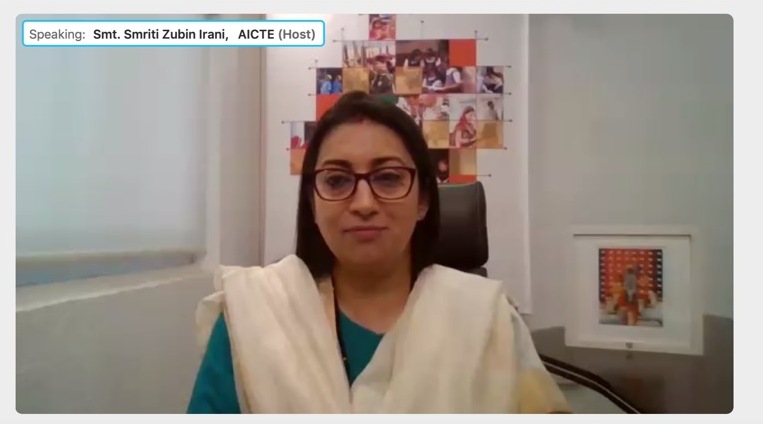
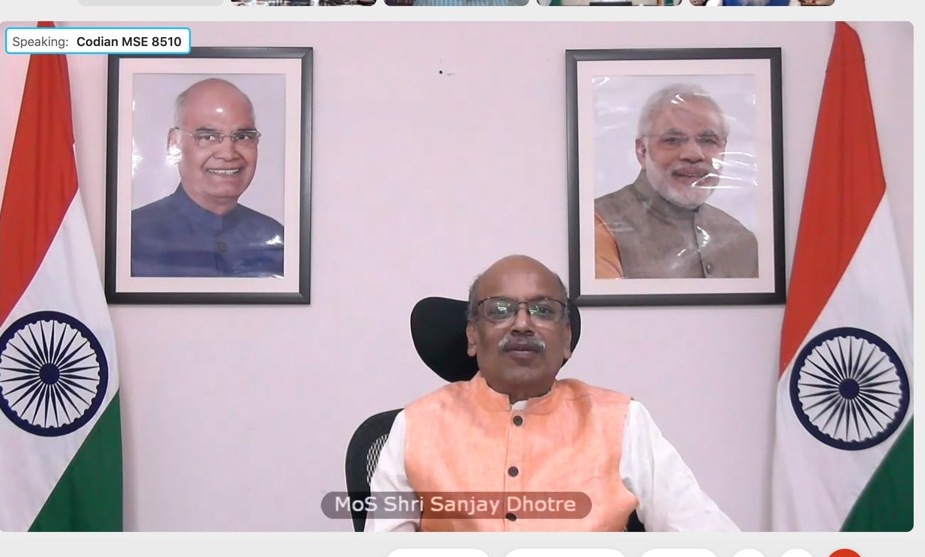
 Union Minister Women and Child Development and Textiles Smt. Smriti Zubin Irani and Minister of State for Education Shri Sanjay Dhotre virtually inaugurated Toycathon 2021 grand finale today. Shri Amit Khare, Secretary, Higher Education, Ministry of Education; Shri Upendra Prasad Singh, Secretary, Ministry of Textiles; Prof. Anil D. Sahasrabudhe, Chairman, AICTE; Dr. Abhay Jere, Chief Innovation Officer, Ministry of Educations Innovation Cell; Dr. M.P. Poonia, Vice Chairman, AICTE and Dr. Mohit Gambhir, Director, MoEs Innovation Cell were present at the inauguration session.

The Toycathon 2021 is being organized jointly by Ministry of Education in coordination with five other Ministries viz: Ministry of Women and Child Development, Ministry of Information and Broadcasting, Ministry of Commerce &Industry, Ministry of Small and Medium Enterprises, and Ministry of Textiles. This inter-ministerial Toycathon focuses on conceptualizing new and innovative toys using local materials which are economical, affordable, safe, environment friendly, with exceptional high quality for both Indian and global markets.

Speaking on the occasion, Smt. Smriti Zubin Irani marked the moment as historical where the nations first toy hackathon is being dedicated to the world. The Minister complimented 17749 individual teams that submitted the ideas at Toycathon 2021. She hoped that many more ideas from this toycathon grand finale be commercialized. She emphasized that the toys have huge impact on psychomotor abilities of children, impact their memory skill and generate huge responsibility towards ensuring future autonomy of the child.

She expressed her concerns that 85% toys that our children are playing with are imported and are predominantly made of plastic. Drawing inspiration from Prime Ministers global commitment for sustainable development, Minister invited research bodies and toy manufacturers to make sustainable toys. She also advised that India is known for its engineering potential and our technologists should equip toy sector with adequate and innovative technologies for electronic toys.

Shri Dhotre said Indian toy market stands at around $1.5 billion USD and currently we are importing a major chunk from outside. The global toy market is estimated to be more than 100 billion USD, we must channelize our creative, innovative and manufacturing power to have our share in these areas. This toycathon will provide opportunity to our young innovative minds to lead the path to manufacture toys in India for the world.He suggested that the use of toys could ease the burden of rote learning science and other subjects.

Speaking on the occasion, Shri Upendra Prasad Singh  highlighted the commercial as well as pedagogical importance of toys in inculcating the values, ethos and awareness about our history and culture. He said we have a very large number of clusters and very good artisans, but one thing which is required is to innovate, innovate as per the changing requirement of not only our country but for abroad as well. He hoped that the ideas generated in this toycathon will be very useful for the said purpose. 

Shri Amit Khare expressed his concerns that economical value of imported toys is huge and it is a roadblock for atmanirbhar Bharat. He said, The curb on import of toys will generate new opportunities for our artisans. He added that the National Education Policy 2020 advocates for 5+3+3+4 system and it asks for activity-based learning for children through toys and games, here the importance of regional Indian toys is very significant in connecting young minds with our history and culture.

On Inaugural occasion Prof. Anil D. Sahasrabudhe, Chairman, AICTE said that early child education should not be stressful and it should be fun based learning through toys, stories and games. He added, Edutainment, which is entertainment and education at the same time,  is required.He praised the organizing team for developing a robust digital platform which could bring the participants, evaluators and organizers on one platform to facilitate this toycathon.

Dr. Abhay Jere, Chief Innovation Officer, Ministry of Educations Innovation Cell, welcomed the dignitaries and motivated the participants to do best as per their abilities.

Dr. Mohit Gambhir, Director, MoEs Innovation Cell, who mastered the inaugural ceremony emphasized the importance of grassroot innovation. He said In todays time it is well understood that the future innovations will spring from the base of pyramid – where common men-women will innovate for their needs. This base of pyramid is very critical for holistic development of society and needs to be trained.

The hackathon was initially conceptualized in physical as well as digital mode. Due to the prevailing Covid 19 pandemic and owing to the safety of participants the physical edition has been deferred and now only digital edition is being conducted from 22ndJune to 24thJune 2021. Toycathon 2021 majorly focuses on conceptualizing new and innovative toys using local materials which are economical, affordable, safe, and environment friendly, of exceptionally high quality for Indian as well as global market.

The ongoing Toy Hackathon have 3 tracks:

Track 1for Junior Level Participants i.e., primarily SCHOOL STUDENTS. They mainly focus on designing toys for kids of age group 0-3 years and 4-10 years. 

Track 2 for Senior Level Participants i.e., students and faculty from Higher education institutions. This group focus on developing concepts for 0-3 years, 4-10 and 11 years and above. This segment primarily focused on Electronics, Sensors, Mechatronics, and toys based on AI and ML approaches, AR-VR-XR and Robotics.

Track 3 for Startup-Professional Level that incudes overall innovation and development of prototypes. These prototypes are expected to enable toy industry in boosting up the production along with improving the quality of toys in Indian market.

During three-day Toycathon 2021 grand finale, participating teams of all tracks will be mentored through specialized mentoring session in morning half of the day and then they will be evaluated in later half of the day for initial two days and then there will be a power judging round for participating teams to declare winners for Toycathon 2021 Digital Edition. For this purpose, Ministry of Education Innovation Cell has engaged 645 mentors and evaluators for 1567participating teams. 85 Nodal centers have been selected to support Ministry of Educations Innovation Cell and All India Council for Technical Education, which are the organizing agencies for this Inter-ministerial Toycathon.

***

Ensure continuity of quality education during the pandemic

The Minister of State for Education Shri Sanjay Dhotre participated in the G20 Education Ministers’ Meeting on 22nd June, 2021. The meeting was hosted in blended mode by Italy. G20 Education Ministers exchanged views on how to progress on the fight against educational poverty and inequalities, especially in context of the Covid 19 pandemic. The ministers also resolved to share innovative experiences implemented during the pandemic to ensure the continuity and quality of learning pathways through blended education

Representing India, Shri Sanjay Dhotre reiterated the country’s commitment towards reducing and eventually eliminating educational poverty, inequalities and early school leaving. Speaking on National Education Policy, 2020, the Minister said it envisages equitable and inclusive education for all, withspecial focus on children and youth, especially girls, from socially and economically disadvantaged groups who are more at risk of being left behind.

Shri Dhotre said that the Indian education system has made steady progress towards bridging gender and social category gaps in all levels of education through multiple interventions. Some of these include increasing intake capacity of schools; tracking out-of-school children; monitoring the learning outcomes of vulnerable students; ensuring physical safety & zero tolerance to breach of child rights;  mid-day meals to ensure health of children; enabling mechanisms for Children With Special Needs ; promoting multiple pathways to learning and strengthening open and distance learning programmes. 

Regarding ensuring educational continuity during the pandemic, the Minister shared that India has promoted blended learning extensively.   Digital educational content has been made available on various e-learning platforms like DIKSHA, SWAYAM and several others which can be accessed by Anyone, Anytime, and Anywhere free of cost. Permissible online component in conventional education has been increased from 20% to 40%. Over 100 top ranked universities have been allowed to introduce full-fledged online education programmes. In order to address the digital divide, India has been making extensive use of the SWAYAM PRABHA TV channels and the Community Radio. The Digital infrastructure is being expanded rapidly. A National Education Technology Forum is being   set up under NEP 2020 to aid technology led education.

The Government also took special care to address mental health issues of students through counseling programmes like Manodarpan and others, he highlighted.

Shri Dhotre said that India reaffirms its support to the collective efforts of the G-20 countries to reduce educational poverty, inequalities and early school leaving. India also supports the collective efforts of G20 countries to further improve and strengthen blended learning initiatives on the basis of the lessons learnt during the pandemic to ensure education continuity.

The Education Ministers adopted a declaration at the end of the meeting

Later in the day, a Joint Meeting of Ministers of Education and Ministers of Labour and Employment was also held virtually. G20 Ministers exchanged views on transitions from school to work. Shri Sanjay Dhotre represented Ministry of Education  in the meeting. Ministry of labour & employment was represented by MoS (I/C) Shri Santosh Gangwar.

Addressing the participants, Shri Dhotre said that it is essential that we, the member countries of G20,   recognize the need to equip our youth well for a smooth transition into the work space after completing their education. This is especially important for learners from socially and economically disadvantaged population groups, who are more at risk of being left behind.

The Minister stated that India is committed to helping its youth develop the knowledge, skills and attitudes necessary for the 21st century global work space. Our approach has been to integrate vocational education with general academic education, with focus on demand driven, competency based, and modular vocational courses, he added.

The Minister highlighted that National Education Policy 2020 provides for early vocational exposure in middle and Singapore international secondary school and its smooth integration into mainstream education.. It aims that by 2025, at least 50% of learners in the school and higher education system would have exposure to vocational education. He further said that the NEP 2020 also provides for vocational education to be aligned to skill gap analysis and mapping of local opportunities. Vertical mobility for students from the vocational stream is being ensured through a National Skills Qualifications Framework. Standards under this framework will be aligned with the International Standard Classification of Occupations maintained by the International Labour Organization”. This Framework will be the basis for Recognition of Prior Learning, and reintegration of dropouts from the formal system, he added. 

Shri Dhotre informed that India is also enhancing post education apprenticeship opportunities for youth by realigning the existing scheme of National Apprenticeship Training Scheme.

He said that India attaches great importance to the collaboration between G20 countries in the field of vocational education and training. He reaffirmed the support of the Government of India to the collective efforts of the G-20 countries to develop strategies to ensure smooth transition from education to work.

G20 Education and Labour and Employment Ministers’ adopted a Declaration at the end of the meeting.

Click here for G20 Education Ministers’ Declaration

Click here for G20 Joint Education and Labour and Employment Ministers’ Declaration

                                                                        ******

English As Second Language In India

More Indians speak English than any other language, with the sole exception of Hindi. What’s more, English speakers in India outnumber those in all of western Europe, not counting the United Kingdom. And Indian English-speakers are more than twice the UK’s population.


These facts emerge from recently released census 2001 data on bilingualism and trilingualism in India. Indians’ linguistic prowess stood revealed with as many as 255 million speaking at least two languages and 87.5 million speaking three or more. In other words, about a quarter of the population speaks more than one language.


English was the primary language for barely 2.3 lakh Indians at the time of the census, more than 86 million listed it as their second language and another 39 million as their third language. This puts the number of English speakers in India at the time to more than 125 million.


The only language that had more speakers was Hindi with 551.4 million. This includes 422 million, who list it as the primary language, 98.2 million for whom it was a second language and 31.2 million who listed it as their third.


The rise of English puts Bengali, once India’s second largest language in terms of primary speakers, in distant third place. Those who spoke Bengali as their first, second or third language add up to 91.1 million, far behind English.


Telugu with 85 million speakers in all and Marathi with 84.2 million retain their position behind Bengali as does Tamil with 66.7 million and Urdu with 59 million.


Gujarati now falls behind Kannada though it has a sizeable number of primary speakers — 6.1 million — compared to Kannada’s 37.9 million.


Karnataka’s linguistic diversity means that many list other languages as their first and Kannada as a second language. This adds 11.5 million to the ranks of Kannada speakers and another 1.4 million use it as a third language. In total, Kannada had 50.8 million speakers in 2001 compared to Gujarati’s 50.3 million.


Oriya overtakes Malayalam thanks to the 3.3 million people who listed it as their second language and 3.2 lakh who said it was their third language.


The total number of Oriya speakers was 36.6 million against 33.8 million who spoke Malayalam. Punjabi, with 31.4 million speakers, and Assamese with 18.9 million are among India’s most spoken languages.
Unfortunately, the census asked people to list a maximum of three languages, so it is not known how many speak more languages.


The data covers only those over five because the census assumed that younger children would only know their mother tongue.


As expected, urban Indians are more likely to be multi-lingual but as many as 136.7 million rural Indians speak at least two languages.

English in India is a question of linguistic centralism while the other Indian
languages lead to linguistic regionalism.A foreign languages existing so firmly and
distinctly has posed a problem to the country .Yet the language problem became more
complicated without any practical solution .In the process of teaching-learning ,the teacher
should try to understand the student first.Then only he/she can enable the students to
understand his/her teaching .

Theory with practice on some of the teaching topics , may enable the students to understand the concept easily. The growing modernisation and internationalism in the world prevented us from doing away with the English language. Besides ,Indian languages are associated with tradition and are understood to be anti-modern. Therefore , a complete switchover to the Indian languages would lead to educational chaos and complete isolation from the developments on the international arena.

We could not risk this because of the cultural ,social ,political and economic reasons .Hence ,this situation requires an urgent solution .The only resolution that could be thought of was a need for coexistence of English with Indian languages .As a result, we had to define the role of English inIndia and
its relationship with Indian languages .

And furthermore, we had to define the role of English in India and its relationship with Indian languages.The role of English was strengthened and consolidated as English was recognized and perceived as:

  • The language of knowledge(science and technology)
  • The language of liberal, modern thinking.
  • A window on the world
  • The language of library

Thus, the three language formula came in to existence.This policy was proposed in 1956 by the central advisory board on education and was adopted at the Chief Ministers conference in1961 .The policy aimed at making English an integral part of the school education in India .This naturally restricted the learning and use of Hindi and the students started learning English as second language.

Remedies for hair loss

What causes Hair loss?

Hair loss has many causes. What’s causing your hair loss can determine whether your hair:

  • Falls out gradually or abruptly
  • Thins
  • Can regrow on its own
  • Requires treatment to regrow
  • Needs immediate care to prevent permanent hair loss

Causes of hair loss

Hereditary hair loss

Both men and women develop this type of hair loss, which is the most common cause of hair loss worldwide. In men, it’s called male pattern hair loss. Women get female pattern hair loss. Regardless of whether it develops in a man or women, the medical term is androgenic alopecia.

No matter which term you use, it means that you’ve inherited genes that cause your hair follicles (what each hair grows out of) to shrink and eventually stop growing hair. Shrinking can begin as early as your teens, but it usually starts later in life.

In women, the first noticeable sign of hereditary hair loss is usually overall thinning or a widening part.

When a man has hereditary hair loss, the first sign is often a receding hairline or bald spot at the top of his head.

Is regrowth possible?
Yes, treatment can help stop or slow hair loss. It may also help regrow hair. The earlier treatment is started, the better it works. Without treatment, you will continue to lose hair.

Hereditary hair loss

Both men and women develop this type of hair loss, which is the most common cause of hair loss worldwide. In men, it’s called male pattern hair loss. Women get female pattern hair loss.

Illustration of male and female pattern hair loss.

Age

With age, most people notice some hair loss because hair growth slows. At some point, hair follicles stop growing hair, which causes the hair on our scalp to thin. Hair also starts to lose its color. A woman’s hairline naturally starts to recede.

Is regrowth possible?
Caught early, treatment helps some people regrow their hair.

Age

With age, most people notice some hair loss because hair growth slows.

older could sitting with dogs

Alopecia areata

Alopecia areata is a disease that develops when the body’s immune system attacks hair follicles (what holds the hair in place), causing hair loss. You can lose hair anywhere on your body, including your scalp, inside your nose, and in your ears. Some people lose their eyelashes or eyebrows.

Is regrowth possible?
Yes. If your hair fails to grow back on its own, treatment may help stimulate regrowth.

Alopecia areata

Alopecia areata is a disease that develops when the body’s immune system attacks hair follicles (what holds the hair in place), causing hair loss.

bald spot on top of head

Cancer treatment

If you receive chemotherapy or have radiation treatment to your head or neck, you may lose all (or most of) your hair within a few weeks of starting treatment.

Is regrowth possible?
Hair usually starts to regrow within months of finishing chemotherapy or radiation treatments to the head or neck. Dermatologists can offer medication to help hair grow back more quickly.

Is it preventable?
Wearing a cooling cap before, during, and after each chemotherapy session may help prevent hair loss.

Cancer treatment

If you receive chemotherapy or have radiation treatment to your head or neck, you may lose all (or most of) your hair within a few weeks of starting treatment.

woman with scarf over head embraced by older woman

Childbirth, illness, or other stressors

A few months after giving birth, recovering from an illness, or having an operation, you may notice a lot more hairs in your brush or on your pillow. This can also happen after a stressful time in your life, such as a divorce or death of a loved one.

Is regrowth possible?
If the stress stops, your body will readjust and the excessive shedding will stop. When the shedding stops, most people see their hair regain its normal fullness within 6 to 9 months.

Childbirth, illness, or other stressors

A few months after giving birth, recovering from an illness, or having an operation, you may notice a lot more hairs in your brush or on your pillow. This can also happen after a stressful time in your life, such as a divorce or death of a loved one.

woman pulling hair from brush

Hair care

If you color, perm, or relax your hair, you could be damaging your hair. Over time, this damage can lead to hair loss.

Is regrowth possible?
You can change how you care for your hair, which can prevent hair loss. Once you damage a hair follicle, hair cannot grow from that follicle. Having many damaged hair follicles creates permanent bald spots.

Hair care

If you color, perm, or relax your hair, you could be damaging your hair. Over time, this damage can lead to hair loss.

balding area on top of head

Hairstyle pulls on your scalp

If you often wear your hair tightly pulled back, the continual pulling can lead to permanent hair loss. The medical name for this condition is traction alopecia.

Is regrowth possible?
No. You can prevent hair loss by making some changes.

Hairstyle pulls on your scalp

If you often wear your hair tightly pulled back, the continual pulling can lead to permanent hair loss.

woman showing receding hairline

Hormonal imbalance

A common cause of this imbalance is polycystic ovary syndrome (PCOS). It leads to cysts on a woman’s ovaries, along with other signs and symptoms, which can include hair loss. Stopping some types of birth control pills can cause a temporary hormonal imbalance. Women who develop a hormonal imbalance can develop thinning hair (or hair loss) on their scalp.

Is regrowth possible?
Treatment may help.

Hormonal imbalance

A common cause of this imbalance is polycystic ovary syndrome (PCOS). It leads to cysts on a woman’s ovaries, along with other signs and symptoms, which can include hair loss.

Woman with dyed hair

Scalp infection

A scalp infection can lead to scaly and sometimes inflamed areas on your scalp. You may see what look like small black dots on your scalp. These are actually stubs of hair. Some people develop a bald spot.

Is regrowth possible?
Yes, treatment can get rid of the infection. Once the infection clears, hair tends to grow.

Scalp infection

A scalp infeciton can lead to scaly and sometimes inflamed areas on your scalp.

two pictures of scalp with ringworm

Medication

A possible side effect of some medications is hair loss. If you think a medication is causing your hair loss, ask the doctor who prescribed it if hair loss is a possible side effect. It’s essential that you do not stop taking the medication before talking with your doctor. Abruptly stopping some medications can cause serious health problems.

Is regrowth possible?
Yes.

Medication

A possible side effect of some medications is hair loss. If you think a medication is causing your hair loss, ask the doctor who prescribed it if hair loss is a possible side effect.

person with pill in hand

Scalp psoriasis

Many people who have plaque psoriasis develop psoriasis on their scalp at some point. This can lead to hair loss.

Is regrowth possible?
Hair tends to regrow once the scalp psoriasis clears, but this takes time. By following these dermatologists’ tips, you may be able to prevent hair loss.

Scalp psoriasis

Many people who have plaque psoriasis develop psoriasis on their scalp at some point. This can lead to hair loss.

scalp psoriasis on man's head

Pulling your hair

Some people pull on their hair, often to relieve stress. They may be unaware that they’re pulling their hair. The medical term for this is trichotillomania.

Is regrowth possible?
If you haven’t destroyed the hair follicles, yes. For your hair to regrow, you have to stop pulling it.

Pulling your hair

Some people pull on their hair, often to relieve stress. They may be unaware that they’re pulling their hair.

person showing thinning hair that resulted from Trichotillomania

Scarring alopecia

This condition develops when inflammation destroys hair follicles. Once destroyed, a hair follicle cannot grow hair. Diverse conditions can cause this. The medical name for this group of conditions is cicatricial alopecia.

Is regrowth possible?
Once a hair follicle is destroyed, it cannot regrow a hair. Catching this condition early can prevent further hair loss.

Scarring alopecia

This condition develops when inflammation destroys hair follicles. Once destroyed, a hair follicle cannot grow hair. Diverse conditions can cause this.

scalp with alopecia scarring

Sexually transmitted infection

Left untreated, a sexually transmitted infection (STI) can lead to hair loss. Syphilis is such an STI. Left untreated, syphilis can cause patchy hair loss on the scalp, eyebrows, beard, and elsewhere. Other STIs can also cause hair loss.

Is regrowth possible?
After treating the STI, hair often starts to regrow.

Sexually transmitted infection

Left untreated, a sexually transmitted infection (STI) can lead to hair loss.

blood vial labeled sexually transmitted infections

Thyroid disease

If you have a problem with your thyroid, you may see thinning hair. Some people notice that their hair comes out in clumps when they brush it.

Is regrowth possible?
Yes, treating the thyroid disease can reverse the hair loss.

Thyroid disease

If you have a problem with your thyroid, you may see thinning hair.

woman holding throat

Too little biotin, iron, protein, or zinc

If you’re not getting enough of one or more of these, you can have noticeable hair loss.

Is regrowth possible?
Yes. When your body gets enough of the missing nutrients, hair can regrow.

Too little biotin, iron, protein, or zinc

If you’re not getting enough of one or more of these, you can have noticeable hair loss.

woman brushing hair and looking at loose hair

Friction

People can develop hair loss where boots, socks, or tight clothing frequently rubs against their skin. The medical term for this is frictional alopecia.

Is regrowth possible?
Hair tends to regrow on its own when the rubbing stops.

Friction

People can develop hair loss where boots, socks, or tight clothing frequently rubs against their skin.

work boots

Poison

Being slowly poisoned can lead to hair loss. Poisons that can cause hair loss include arsenic, thallium, mercury, and lithium. If you ingest a large amount of warfarin, which is found in rat poisons, it can also cause hair loss. Taking large amounts of vitamin A or selenium is also toxic and can cause hair loss.

Is regrowth possible?
Yes, hair tends to regrow when you are no longer exposed to the poison.

Poison

Being slowly poisoned can lead to hair loss. Poisons that can cause hair loss include arsenic, thallium, mercury, and lithium. If you ingest a large amount of warfarin, which is found in rat poisons, it can also cause hair loss.

warning sign for toxic chemicals

While many causes of hair loss can be treated successfully, the key to effective treatment is to find out what’s causing the hair loss. Without an accurate diagnosis, treatment is often ineffective.

Tips to Enhance Communication Skills

Being able to communicate effectively is perhaps the most important of all life skills. It is what enables us to pass information to other people, and to understand what is said to us. You only have to watch a baby listening intently to its mother and trying to repeat the sounds that she makes to understand how fundamental is the urge to communicate.

Communication, at its simplest, is the act of transferring information from one place to another. It may be vocally , written , visually or non-verbally (using body language, gestures and the tone and pitch of voice). In practice, it is often a combination of several of these.

Communication is a two-way process

Communication is not the same as broadcasting, or simply sending out information.

It is a two-way process. In other words , it involves both the sending and receiving of information.

It therefore requires both speaking and listening, but also—and perhaps more crucially—developing a shared understanding of the information being transmitted and received.

  • If you are the ‘sender’ of information, this means communicating it clearly to start with (whether in writing or face-to-face), then asking questions to check your listeners’ understanding. You must also then listen to their replies, and if necessary, clarify further.
  • If you are the recipient, it means listening carefully to the information, then checking that you have understood by reflecting back, or asking questions to ensure that you both have the same understanding of the situation.

It is, therefore an active process. There is nothing passive about communication, in either direction.

Developing Communication Skills

It is a longterm process, you will have to keep yourselves updated.Good communication skills can improve the way that you operate through life, smoothing your way in your relationships with others.

Poor communication skills, on the other hand, can sour relationships from business to personal, and make your life significantly harder.

Some people seem to understand how to communicate without even trying. They are able to tailor their language, tone and message to their audience, and get their point across quickly and succinctly, in a way that is heard. They are also able to pick up the messages sent to them rapidly, understanding both what is said, and what has not been said.

This may seem effortless, but the chances are that they have spent plenty of time honing their skills.

Along the way, they have probably also developed a good understanding of themselves and habits of reflecting on success and failure, and the actions that have led to one or the other.

Ways to Enhance Communication Skills

1.  Listen, listen, and listen. People want to know that they are being heard. Really listen to what the other person is saying, instead of formulating your response. Ask for clarification to avoid misunderstandings. At that moment, the person speaking to you should be the most important person in your life. Another important point is to have one conversation at a time. This means that if you are speaking to someone on the phone, do not respond to an email, or send a text at the same time. The other person will know that she doesn’t have your undivided attention.

2.  Who you are talking to matters. It is okay to use acronyms and informal language when you are communicating with a buddy, but if you are emailing or texting your boss, “Hey,” “TTYL” or any informal language, has no place in your message. You cannot assume that the other person knows what the acronym means. Some acronyms have different meanings to different people, do you want to be misunderstood? Effective communicators target their message based on who they are speaking to, so try to keep the other person in mind, when you are trying to get your message across.

3.  Body language matters. This is important for face-to-face meetings and video conferencing. Make sure that you appear accessible, so have open body language. This means that you should not cross your arms. And keep eye contact so that the other person knows that you are paying attention.

4.  Check your message before you hit send. Spell and grammar checkers are lifesavers, but they are not foolproof. Double check what you have written, to make sure that your words are communicating the intended message.

5.  Be brief, yet specific. For written and verbal communication, practice being brief yet specific enough, that you provide enough information for the other person to understand what you are trying to say. And if you are responding to an email, make sure that you read the entire email before crafting your response. With enough practice, you will learn not to ramble, or give way too much information.

6.  Write things down. Take notes while you are talking to another person or when you are in a meeting, and do not rely on your memory. Send a follow-up email to make sure that you understand what was being said during the conversation.

7.  Sometimes it’s better to pick up the phone. If you find that you have a lot to say, instead of sending an email, call the person instead. Email is great, but sometimes it is easier to communicate what you have to say verbally.

8.  Think before you speak. Always pause before you speak, not saying the first thing that comes to mind. Take a moment and pay close attention to what you say and how you say it. This one habit will allow you to avoid embarrassments.

9.  Treat everyone equally. Do not talk down to anyone, treating everyone with respect. Treat others as your equal.

10.  Maintain a positive attitude and smile. Even when you are speaking on the phone, smile because your positive attitude will shine through and the other person will know it. When you smile often and exude a positive attitude, people will respond positively to you.

Communicating effectively is a teachable skill, therefore following a few of the tips outlined above, will enable you to hone up on your communication skills.