Handling Criticism Like A Pro

Everyone of us, at some point in our lives, would have faced criticism in one form or the other (except of course if we’ve chosen to shut ourselves up in a room and not attempt anything at all in life). It might be about anything – about what you have said or done or not done or the way you dress or about your work, the list just goes on. Criticism pops up everywhere. It’s as much a part and parcel of our lives as the air we breathe, and hence learning how to deal with it gracefully is an important life skill to have.

Is Criticism good for you ?

Criticism, wrapped up and delivered even in the best of the packaging, is not something that anybody actually enjoys. The instant reaction to it in most cases is to close ourselves up and get into defensive mode. So identifying whether it’s constructive or destructive is a key step that’ll help you in figuring out whether it’s good or bad for you.

Photo by Liza Summer on Pexels.com

So, what exactly is Constructive and Destructive criticism ?

Constructive Criticism is a way of giving feedback with an intention of helping you improve yourself. It not just points out your mistakes and weaknesses, but also includes suggestions for improvement and the actions that need to be taken. It can be considered as that much needed reality check which we all need from time to time. 

Destructive Criticism on the other hand is given with the sole intention of tearing you down. The reasons for doing that may be many – jealousy, insecurities, ignorance, complexes, boredom etc. Here, instead of commenting on the actions of a person, the focus mainly is on attacking the person and pulling him down. The critic in this case, is not in the least interested in your well being or improvement.

So, as you might have figured out by now, constructive criticism more often than not, represents an opportunity. It helps you in identifying your weaknesses, which you might otherwise be unaware of and enables you to see things from a different perspective. Whereas destructive criticism is more or less an attempt by a person to let his steam off at the expense of others. 

How do you identify them ?

Honestly, when you are out there at the receiving end, identifying whether it’s constructive or destructive would probably be the last thing on your mind. But before you pounce on your critic, just pause and take a deep breath. Wait, what ? Yes you read it right. Pause and take a deep breath (Remember, deep breath not an annoyed sigh ! You don’t want to worsen the situation, do you ?) Let the emotions flow through you. Do not restrict it but also do not take it out on the other person.It’s not easy but it’s definitely doable. If you find it hard to refrain yourself from blowing a fuse, excuse yourself and take some time out before responding. Setting your emotions aside and getting into a frame of mind where you are calm enough to analyse the situation rationally, is the most difficult but important step to take, while facing criticism. 

Once you have calmed yourself down, listen to the other person without interrupting. By listening, I meant active listening and not just nodding along while thinking about ways on how to attack the critic back. Allow the other person to share their thoughts and comments completely. While listening, focus on the content of the comment and not on the tone. Sometimes even the best intended criticisms may sound harsh or even worse, the most toxic comments may be presented in the most tactful manner. So it’s very important that you detach the content from the tone.

At this point, you can try and  repeat back what you have heard and understood. Be careful to do that in a non aggressive tone. By repeating back, you are not only making sure that you aren’t misinterpreting their comments, but also helping yourself understand the comment better. When you take a step back and remove yourself from the equation and focus just on the comment, chances are that you may be able to view it through a different lens. At this stage, by analysing it objectively, you will be able to figure out the intention behind it – whether you are actually being attacked or is it just your ego playing tricks on you.

If you are still confused, seek clarification. Break it down and  ask questions. When you are asking questions, do it with an open mind and not with an intention to prove the other person wrong. You can ask for specific examples to get better clarity on the issue raised or ask for suggestions on how the situation could have been handled differently. Be genuinely curious in finding the intention. If the critic actually means well, he’ll be able to give you answers or suggestions or atleast give you valid and logical reasons to back his comment, which might help you to see things from the critic’s perspective. Destructive criticism shatters under scrutiny – no logic, no reasons, nothing but just a set of toxic statements thrown at you with the sole intention of hurting your self-esteem and  pulling you down.

Photo by SHVETS production on Pexels.com

How to deal with criticism ?

So now that you have calmly analysed the issue and identified whether the criticism was meant to help you or to tear you down, it’s time to take action. 

Okay, but before that, you may now take a moment to appreciate yourself for successfully pulling off the I-Can-Be-Calm-No-Matter-What version of you. A little bit of self appreciation always helps to put that vulnerable little child inside you in a better mood. 

Alright, now that you are slightly in a better mood, let’s get to business. Let’s say you have identified the criticism to be toxic, what do you think you should do next ?  Tell them that their points are baseless ? Make them understand that you are right and argue until you prove your point ? Or give them a taste of their own medicine and criticise them ? Well, the best course of action here would be to ignore. Ignore ? Seriously? But how can you just walk away when somebody is attacking you and challenging your self worth?   

Well, it might sound all philosophical and seem like something that only people roaming about with a halo around their heads can do. But trust me, it is the most logical thing to do,  given such a situation. Think about it, here is a person who is trying to derogate and destroy your self-esteem, confidence and reputation using some baseless and illogical set of arguments. Do you think if that person was logical enough he would have stooped to this level ? No matter what you do, understand that he has come with a closed mindset and a fixed agenda, that is,to insult you. Nothing you say or do is going to knock sense into that person’s head. And moreover it’s not even your responsibility to do that.There’s no point in wasting your time and energy on such people, so just let it go. Politely excuse yourself, thank the person for the feedback and move on with your life. 

Now, let’s come to constructive criticism. When you receive it, ask yourself Does this align with my priorities ?For example, you might be criticised for not making that perfect pasta or for being lousy at tennis. Ask yourself, does it really matter ? Is this really a priority in your life ? Well, depending upon your goals, it might or might not be. In any case it is important that you identify that. And if the suggestion doesn’t align with your priorities, even though it is constructive, there is no point investing too much of your time in it. So, take note of it and ask for suggestions on how to improve, if you feel a need for that and move on.And hey, don’t forget to thank your critic !

Now, what if it aligns with your priorities ? Then set your ego aside and  ask yourself – ‘Deep down, do I agree with what is being said ?’  If you can’t bring yourself to agree to it, respectfully disagree. Present your side of the story. Engage in a constructive discussion.Chances are that when you do it, the other person may understand your perspective or vice-versa.Either way it’s a win-win. However, there are chances that you both might not come to a conclusion at all. Accept the fact that everyone is entitled to have their own opinions and perspectives and it’s perfectly okay not to be on the same page always. So just agree to disagree and peacefully move on.

Finally, let’s say that the little voice inside your head secretly agrees to all the charges that you are accused of. In that case, buckle up, it’s time for action. If you find that there is truth in what the other person has said, then do not shy away from acknowledging it. Analyse the comment, deconstruct it and figure out what needs to be addressed and what measures need to be taken to learn and evolve from your mistakes. You may even take suggestions from your critic on the steps that need to be taken. Accepting your mistakes and learning from them is a great way to kick-start your journey of self improvement. 

Bottom Line

Criticism comes in all shapes and forms. Neither can you avoid it nor can you control the way others perceive you. The only thing you have control over is your attitude towards it and the way you choose to respond to it. It is important that you identify the intent behind it and take action accordingly. And depending on it, you can either use the criticism as a foundation to build a better future for yourself or choose to ignore it if it’s not worthy of your time and energy. Having said that, I also want you to know that developing a positive attitude towards criticism is not something that comes easy. It takes time, patience and hell a lot of practice. So be gentle with yourself; take it one step at a time. And while you are at it, don’t forget to acknowledge and celebrate even the smallest of your milestones. Good Luck !

Metaverse. Sounds interesting, but will it make real life less interesting?

What is metaverse?

Metaverse is a frictionless integration of various technological components that include virtual reality, as well as augmented reality and videos. All intended to create a digital world, which users can exist in. This allows the user to be almost anywhere they want, but of course, digitally.

Companies like Meta (formerly known as Facebook), Microsoft, Roblox, Epic Games and more are already looking into building this immersive experience and creating this digital world of tomorrow. As impressive as it sounds, to what extend does it stop being glorious and fascinating and only contribute to decay our society?

The metaverse brings us closer to the dystopian future we’ve until now, only heard and read about. A world where users are free to create any identity they please through characters and virtual possessions. Making it easier to escape reality.  It is highly possible that individuals will use this as a way to escape their real life, avoid the problems and emerge into a state of ignorance. They will want to completely immerse themselves in this virtual world as it much nicer than real life. It can distort our sense of reality. We will grow to become unable to perceive reality, lose the ability to talk to people and all in all, become lazy and unimaginative. Kill our creativity and lose our sense of curiosity to explore the real world and our openness to new experience. As we allow algorithms to do their magic, collect data and perfectly curate personalized suggestions for us. Basically, letting our past dictate our future. Users will gladly accept this false reality a third-party fabricates.

It’s also bound to make us more anxious, irritable and paranoid. We are already slaves to our devices. Indulging in a system that makes it even harder to step away from and have real-life interactions will only make us more miserable. Social isolation is inevitable, when one can create their own personalized individual bubble. It will create a vast divide.

“You’ll be able to hang out with friends, work, play, learn, shop, create, and more. It’s not necessarily about spending more time online — it’s about making the time you do spend online more meaningful,” – Meta

But? What’s wrong with the way we already do those things? The only difference is true quality is snatched away and replaced by a sense of distorted glory.

Technological advancements are an integral part of our future and the reason for it is to make our lives easier, simpler, better. Of course, there are domains that benefit wonderfully by these advancements. For example, using VR for training pilots or using integrated virtual augmentation system to train the soldiers is a great economic and efficient way to tackle insurance of quality training. If used properly technology is a great tool. But it is just as easy to drown in it’s quicksand.

SUBHASH CHANDRA BOSE

INTRODUCTION

Subhash Chandra Bose
SUBHASH CHANDRA BOSE

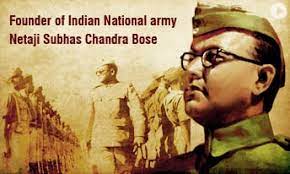
Subhash Chandra Bose is fondly remembered as one of the greatest freedom fighters of India, and popularly known by the name of ‘Netaji’ (Respected Leader). He was strongly influenced by Swami Vivekananda’s teachings, and also believed that the Bhagavad Gita was a great source of inspiration for the struggle against the British. Bose was an Indian nationalist, and a prominent figure of the Indian independence movement. He was superior head for Indian National Army during World War II. He always pitched for complete and unconditional independence of India from the British Rule.

CHILDHOOD

Subhash Chandra Bose was born to Prabhavati Devi and Janakinath Bose on January 23 in 1897 in Odisha. He took admission into the Protestant European School which was run by the Baptist Mission. He did B A in Philosophy from the Presidency College in Calcutta, and was later expelled for assaulting Professor for the latter’s anti-India remarks. After the incident, Bose was considered as one of the rebel-Indians.During his college days, he gradually developed nationalistic temperament, and became socially and politically aware. 

POLITICAL LIFE

18 Subhash Chandra Bose Books Which Prove Massively Impactful
THE GREAT FREEDOM FIGHTER

After a few years, Bose returned to India as he resigned from his civil service job in April 1921, and later joined the Indian National Congress to fight for the independence of India. Subhash Chandra Bose started the newspaper known as ‘Swaraj’, and took charge of publicity for the Bengal Provincial Congress Committee. In 1923, Bose was elected as the President of All India Youth Congress and as the Secretary of Bengal State Congress. He was also editor of the newspaper called ‘Forward’, founded by his mentor Chittaranjan Das, and he served as the CEO of the Calcutta Municipal Corporation. By December 1927, Bose was appointed as the General Secretary of the INC.

In November 1934, he wrote the first part of his book ‘The Indian Struggle’, which was about nationalism and India’s independence movement during 1920–1934, but the British government banned the book. By 1938, he agreed to accept nomination as the Congress President, and presided over the Haripur session. However, due to his strong differences with Mahatma Gandhi and Jawaharlal Nehru, he resigned in 1939.

ROLE IN INDIAN INDEPENDENCE

S C Bose was always in favour of armed revolution in order to expel the Britishers from India. During the time when the Second World War took place, Bose form the Indian National Army (INA) with the help of the Imperial Japanese Army, and also founded an Indian Radio Station called ‘Azad Hind Radio’.

A few years later, he travelled to Japan, where more soldiers and civilians joined the INA. Even when faced with military reverses, Bose was able to maintain support for the Azad Hind movement. In Europe, S C Bose sought help from Adolf Hitler and Benito Mussolini for the liberation of India. Bose had struck an alliance with Japan and Germany as he felt that his presence in the East would help India in the freedom struggle against the British.

MEMORIAL

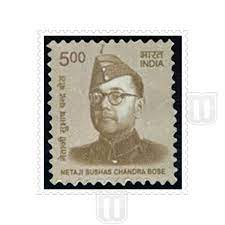
Bose was featured on the stamps in India from 1964, 1993, 1997, 2001, 2016 and 2018.Bose was also featured in ₹2 coin in 1996 and 1997, ₹ 75 coin in 2018and ₹125 coin in 2021. Netaji Subhash Chandra Bose international Airport at Kolkata, Netaji Subhash Chandra Bose Island, formerly Ross Island and many other institutions in India are named after him. On 23 August 2007,Japanese Prime minister visited the Subhas Chandra Bose memorial hall in Kolkata. Abe said to Bose’s family “The Japanese are deeply moved by Bose’s strong will to have led the Indian Independence Movement from British rule. Netaji is a much respected name in Japan.

In 2021, the Government of India declared 23 January as Parakram Divas to commemorate the birth anniversary of Subhas Chandra Bose. Political party, Trinamool Congress and the All India Forward Bloc demanded that the day should be observed as DESHPREM Divas.

*****MY HERO IS SUBHAS CHANDRA BOSE THIS ARTICLE IS DEDICATED TO YOU*****

JAI HIND” this slogan is said by Subhas Chandra Bose .

Srinagar designated a creative city by UNESCO

On November 8, 2021, UNESCO designated Srinagar a creative city. Srinagar became the sixth city after Mumbai, Chennai, Hyderabad, Varanasi, and Jaipur to achieve such distinction. With this, the capital city of Jammu and Kashmir has entered the club of 295 creative cities network across the world.

The UNESCO Creative Cities Network is a project launched by UNESCO in 2004 to “promote cooperation among cities which recognized creativity as a strategic factor in their urban development”. According to UNESCO, the cities designated as creative cities work together towards a common objective of “placing creativity and cultural industries at the heart of their development plans at the local level and cooperating actively at the international level”.

On Monday, UNESCO designated 49 cities as part of the creative cities network. With this, the total number of creative cities in the world has reached 295 across 90 countries. The Srinagar city had applied in 2018 also but the application was rejected then.

UNESCO designates the creative cities in seven fields — Craft, Folk Art, Media Arts, Film Design, Gastronomy, Literature, and Music. The Srinagar city has been designated the creative city in Crafts and Folk Arts — the only second city in India in this category after Jaipur. While Mumbai has been honored in the film category, Chennai and Varanasi have been made part of UCCN for their music. Hyderabad is a UCCN city in the gastronomy category.

GANDHI’S GOAL-SHANTI SENA

SHANTI SENA

              *    SHANTI SENA is a word derived from Sanskrit.

               *  SHANTI means peace and SENA Means army.

                *  SHANTI SENA is also called as peace army.


MAIN GOALS OF SHANTI SENA:

*.   Service to peoples as a volunteer at any time.

*.    Give to a cause close to your heart.

*.     Most important goal is to bring the non-violence.

*.       No religion diverse all religions must       get equal rights and respect.

All are equal

QUOTES BY PEACE ARMY:-

“THE GREAT GOOD IS WHAT WE DO FOR ONE ANOTHER”.

” TREES NEED FOR SEED PEOPLE NEED FOR SHANTI SENA”.

  NON – VIOLENT LIFE :-

                        *  Non violent is a personal practice to not make harm to others.

                        *  Gandhi introduced the concept of ahimsa ( Non-violence).

                         *. Non violence is powerful tool for the social protest.

                          *. To create non violent children.It is crucial to maintain the peaceful environment.

                          *. It is the active out pouring of one’s whole being of another.

                          *. Non violence love is active not passive.


IMPORTANT OF NON VIOLENT COMMUNICATION IN Society:-

* Non violent will bring peace among the people.

* Non violent communication help us to express our feelings.

* Non violent communication means complete lack of violence in the way we communicate with others.

* To respect our people.

MAIN COMPONENTS OF NON VIOLENT COMMUNICATION:-

* Observation.

* Feelings.

* Needs.

* Requests.

SHANTI SENA:-

* SHANTI SENA makes love and peace to the people.

* SHANTI SENA brings non violence to the people.

* SHANTI SENA is not only to maintain peace also good relationship.

* SHANTI SENA is the non weapon war of peace.

* If one should have shanti sena he should ignore annoyance.

* SHANTI SENA avoid us from the jealous and competition with the people.

* SHANTI SENA is one of the fundamental peace policy of people.

” soldiers army save country

Peace army save courtesy”.

DON’T QUIT-DON’T STOP

Do you know, What is the easiest thing to do in the world? Think a bit. What is the easiest thing to do? It is to say these two words,”I Quit”. A few decades ago. There was a young man, who saw a big dream. He wanted to climb, the world’s highest mountain. The mighty Mount Everest. Everyone told him, it cannot be done. It was impossible to climb Mount Everest. No human has never done it before. However, the young man was determined. His name was Edmund Hillary. And on 29 May 1953.. he achieved his dream. Edmund Hillary and Tenzing Norgay became the first humans to reach the top of Mount Everest.People across the world, lauded their triumph. They both accomplished what was the earlier called as ‘impossible’. But what happened a few days later puzzled the newspapers. Edmund Hillary and Tenzing Norgay had taken 7 weeks to climb Mount Everest. But can you guess. How many weeks they took to climb down from the to pand return back to the base? They took… 6 weeks? 5 weeks? Or 3 weeks?”NO”. They took only 3 days to return to their base camp. A 7-week journey while climbing up. Was done in mere days, while they were coming down. Few journalists were shocked.How is this possible? How they came back in just 3 days? Edmund Hillary replied…The most important factor of him reaching the top and returning early, was not climbing. It was “MOTIVATION”. In his 7-week journey, here were days he felt scared. There were days, he doubted himself. He thought about, what others had told him before, How Everest was unconquerable. But, amidst all this internal turmoil. He did one simple thing. He kept himself motivated to keep on moving forward. Even with all self-doubts, and all the fears. He didn’t stop. And once they reached the top, all the fears and doubts, went away, As their mission was now complete. While coming down, the journey which took 7 weeks to climb up was reduced to only 3 days not only because now they were climbing down,But also because, now they were climbing down without the burden of fears and doubts. They were climbing down without the burden of failure. In our lives, we also carry the burden of fear and self-doubt. That burden makes it harder… to continue.

That burden makes us want to say..”I Quit”.

But let me tell you one important fact from my own life experience. We often quit by justifying to ourselves, that there were obstacles, there were the problems and I had to quit. But the fact is, No obstacle has the power to stop you. No problem has the strength, to make you stop. Before leaving just remember , this simple life lesson.It is very easy to Quit anything. But real courage is when even after facing all the challenges you stand tall. Real courage is when even after facing failures again and again, you keep on trying harder. Real courage is  when you DON’T STOP moving ahead. That’s real courage. So please.. DON’T STOP.

“Only you can stop yourself. If you continue, you might fail or succeed. But if you stop, turn back from your goal you will fail 100 %.”

BREAK FREE FROM YOUR MIND

Far away, there was a village, A “CURSED” village. It was known to everyone that whoever will cross this village boundary will “DIE” instantly. Generations passed, and no one crossed the boundary of the village. One day an innocent little boy mistakenly crossed the village boundary. His mother screamed at the sight of losing her beloved child. Hearing the scream all the villagers gathered at the spot and they were all SHOCKED. “There they saw the little boy was standing across the boundary and he was safe and smiling back at them. That was the moment, they all realized. There was no curse on the village.” It was all a LIE. But in reality, there was one CURSE on their village. The curse, which made them FEAR the unknown. The CURSE which TRAPPED each of them inside the village. That curse was only in their MIND and Nowhere else. Your MIND is a symphony of thoughts. Your MIND is the valley of wonders. It can visualize your greatest dreams. It can conceive the greatest ideas and make the biggest discoveries. But sometimes, It also LIES to you. It scares you makes you afraid. Your mind tells you, you are wrong. Your mind tells you it cannot be done. It tells you, you are NOT GOOD  enough. It tells you to STOP and quit. Your mind wants you, to not take any chances. To never try anything new. It tells you, you will FAIL if you will hurry. You will FAIL if you take action. Your mind DEMANDS you to take time. To achieve perfection, even before trying. You know one thing, Your mind is LYING all along. Not because it is our enemy. But because it is filled with fear. It is fearful of all failures that might come. It is fearful of what others might say. It is fearful that your hope and dreams shall be shattered. It wants to stop you from taking any action. Because if you don’t act, you will never fail. It wants an existence without pain, grief, and failures. But what’s life without taking action towards your dream. What’s life without tears and joy. What’s life without its ups and downs.

 So tell your mind NOT TO WORRY. Tell your mind to NOT TO SCARED. To NOT OVERTHINK your worst fears. “Just take ACTION towards your goal and BREAK FREE from the clutches of your fearful mind. “

“If you spend too much time thinking about something.. you’ll never be able to make it, a REALITY.”

A GLASS OF WATER

Once upon a time, a psychologist was teaching stress management to the audience. She raised a cup of water and asked everyone. How heavy do you think this glass of water is? Expecting another half- full/half empty questions, The crowd gave various answers from 50 gm to 400 gms. But she said the absolute weight of the glass doesn’t matter. It actually depends on how long I hold it. A minute won’t be a problem. After an hour, I might feel a dull ache. If I hold it a day, my arm would feel paralyzed. But, The weight of the water never changed the longer I hold , the heavier it felt. Then she said, the stresses and worries of our life are just like the cup of water.Think about them all day and you’ll feel paralysed and helpless. It’s important to remember to let go of your stresses. Don’t carry them for hours and days and months. Remember to put down the glass!

Moral:”Think about them for a while nothing happens. Think about them longer, it starts to hurt.”

A TRUE STORY OF A CARPENTER

Mr.Chris Myler, an elderly carpenter who was ready to retire. He told his employer of his plans to leave the house of building business to live a more leisurely life with his wife and enjoyed his extended family. He would miss the pay cheque each week but he wanted to retire. The employer was sorry to see his good worker go and asked if he could build just one more house as a personal favour. The carpenter agreed and started working on the last project of his life. Since it was his last project, he worked half-heartedly. He said goodbye to overtime. He did not consider to find the best cement mixture. He did not consider having a  swimming pool in this project. He did not use quality wood for doors. The furniture was not good quality. The employer called the carpenter in his office and gave the keys of this newly built house to the carpenter saying, “ This is my gift to you for your such a commendable service over 15 years. The carpenter was shocked. What a shame! If he had only known he was building his own house, he would have done it all so differently. So it is with us. We build our lives a day at a lime, often pulling less than our best into the building. Then, with a shock we realise we have to live in the house we have built. If we could do it over, we would do it much differently. But you cannot go back, you are the carpenter and every day you hammer a nail, place a board or erect a wall. Someone once said, “ life is a do-it-yourself project”. Your attitude and the choices you make today, help build the house you live in tomorrow. Therefore, build wisely!.

10 MINUTES TO START YOUR DAY RIGHT

Unless you take risks. Nothing. Nelson Mandela said: “ There is no passion to be found playing small, in settling for a life that’s less than the one you’re capable of living. I am sure in your experiences in school in applying to college. In picking your major, in deciding what you want to do with life, people have told you to make sure you have something to “fall back on”. Make sure you got something to fall back on, honey. But I never understood that concept have something to fall back on. If I’m going to fall, I don’t want to fall back on anything except my faith. I want to fall forward. I figure at least this way I’ll see what I’m going to hit. Full forward, this is what I mean. Reggie Jackson struck out 2600 times in his career the most in the history of baseball. But you don’t hear about the strikeouts. People remember the home runs. Fall forward. Thomas Edison conducted 1000 failed experiments. Did you know that, I didn’t either because 1001 was the light bulb. Fall forward. Every failed experiment is one step closer to success. It’s good for you to go take your place in the world, have some ambition; have a vision; have a goal; have a strategy. Try to be a good person and not because it’s your duty precisely because that’s the proper way to live. We’re in danger of undermining all of that. And it’s not good for people. One of the things that I’ve really learned, for example, recently, is that learned to articulate better is that there’s a very tight relationship between aspiration and responsibility. So let’s say, well, the first question might be do you need to aspire to something? An answer is, well, yes, because you have to do something. If you just sit there, you’ll die. You can’t just sit there. You have to go act out in the world. Ok, so act towards what? Well, that’s whatever your aspiration is. You have to have an aim. Ok, well, what should the aim be? Well, it should be something worth doing, let’s say. Why do something that you don’t feel is worth doing? What do you think’s worth doing? Well, if you watch other people and you judge when they’re doing something worthwhile, usually judge them positively, if you see that they’re taking responsibility at least for themselves. What do you want to be completely useless so other people have to take care of you? That’s pretty pathetic and may be you could get your act together. So you’re taking care of yourself and your family and maybe you could even do better than that and your family and your community. I know I’ve gone on stage infront of 10000 people and I thought I should have more PowerPoint. I should have more reminders, and I just remember walking out and saying, I’m here to help rise these people up, to give them capabilities to change their life. It’s my vision, it’s my goal. It’s my obligation to use my unique ability to just help these people and live for my heart. All I think is changing these people’s lives. And when I got out there, I wasn’t perfect on stage. I wasn’t robotic and say the right things, and I didn’t have the crisp, clear PowerPoint. But when I spoke from the heart, it overcame all of that and I get to be one of the best presenters wherever I go because I speak from the heart. Now you might say that, Deen that’s your unique ability and may be that is. But I know for you in life there are circumstances where you have to prepare. You have to do a PowerPoint, you have to do presentation and I want to tell you passion and from the heart. Always wins over over prepared and thinking from the head. Well, let me just ask you something right now in the crazy presidential race, the GOP race. You know, Ben Carson is probably the smartest guy when it comes to Booksmart out of the whole group. And I don’t watch the news a lot, but I just read a lot. And somebody said this the other day and it just hit me. Someone said, Man, Ben Carson is probably the smartest guy in that GOP race that’s going on. Whatever I’m going to share my opinion. But you know that, the guy said when he was done, he’s like, We all know the smartest guy never wins. And I was like, Wow, we all know that the smartest guy never wins. And what does that mean. And it’s kind of what I’m sharing today. I’m not saying you shouldn’t be smart. I’m sure, so many of you were probably way smarter than I am. But what I want to tell you is enthusiasm and passion and living from your heart. To me, one hundred percent of this time. Outweighs being over-prepared and robotic and trying to think what to say. I hope I’m getting the right message across today. I’ve had this question from so many people. How are you so easy to talk on camera on stage? And I never have a good answer, and I really fought through it. And that’s the answer. I am here right now doing this video for you because each week I want to delivery you a nugget that you can just place into your life and make a tiny shift towards a better life. So I don’t need a teleprompter. I don’t need a script. I come here and just want to deliver, and it’s coming from your heart. Now I have practise. I’ve been on video for 15 years. I’ve been doing these for 7-8 years, and maybe that’s not what you do, but you’re still going to have these circumstances where you have to talk to your children, talk to your owner, talk to your employees and talk to your employer. And if you get stuck in your head, that’s when you get worried. That’s when you try to remember what to say and you leave and go, Oh, why did I say that? Or why didn’t I say more? Well, if you can go in and say, Why am I going in and live with passion and have it come from your heart, then that’s truly you, and you’re giving the answers you’re supposed to do from the real you, not the facade that sometimes life makes us where. One of the challenges I think many people have is really the discernment of information. It’s really difficult to know what’s the truth anymore just because information is so accessible. And I used to say that in an age of information, ignorance is a choice. And now we have to confront a whole another level and that is the information that we’re getting. It is actually supporting us or is it something that really is an incentive to to cause us to make choices? So for me, I think the biggest challenge has been ust really an awakening to what kind of information I want to expose myself to. And I think it’s now more than ever a challenge for a lot of people in the world. You don’t have to be perfect to inspire others. You can inspire people by how you deal with your imperfections. Don’t feel that you have to have it all. Know it all to make an impact? You don’t. You just need a soul full of desire and compassion, right? It was Martin Luther King who said, “ You don’t need a college degree to serve. You don’t need to know how to fill a sentence to serve. All of you need is a heart full of soul, right? And a half and have compassion. That’s all that’s needed. That’s what we need to focus on. Let’s not be limited by feeling. We need other resources apart from love and compassion to make an impact. Because we don’t right? You actually don’t need them. We are going to create a baseline for ourselves that’s based on intention. This is around 1989, when I’d read Gary Zuka book called The Seat of the Soul, and that book was life changing for me because in it, he talked about the power of intention and that cause and effect. What goes out comes back is determined by your intention. The energy of your intention is what determines your life. Most people don’t think about their intention, they just think about what they want to do. Most people don’t think about why they want to do it, but what’s going to come back to you? The energy that’s going to come back to you is the real why of why you did it. And so I then said to my producers, we’re not going to do any shows that are intentional. So don’t bring me an idea. Unless you have an intention for the show that you want the outcome to be, and we’re going to strive to see if we can live up to our intentions. And so around the late 80’s, we started a pre-show to talk about what the intention was. And then it polls show, after every single show to say, Did we fulfill that intention? And that’s about the time I realize this is bigger than me.

Things to do after BA in English Literature

Photo by Pixabay on Pexels.com

BA in English Literature is an undergraduate course that is opted for following the completion of the 10+2 formal schooling. Do you have a knack for analysing poetry or writing one? Are you keen about learning the history and evolution of different forms of arts and literature? Then a BA in English Literature was an ideal choice for your graduation. Many great inventions today across different fields such as astronomy, engineering and medicine are influenced by ancient literature and several art forms. 

For example, Nicolaus Copernicus’ book “The revolutions of the celestial spheres” popularised the heliocentric theory that proposed the sun as the centre of the universe. With the majority of students opting for medical, engineering or legal degrees, Bachelor of Arts as a degree course is often undermined. There are a lot of common misconceptions and stigmas surrounding this graduation course. 

  • Students studying BA in English Literature are assumed to lackluster in studies. 
  • It is a course often idealised as suitable for women. 
  • Students opting for BA in English LIterature can only become a teacher or professor. 

Many students graduate in English Literature as they are passionate about what the course has to offer. Although women are the majority among English Literature graduates, Men also specialise in this field and go on to pursue post graduation alongside women. 

As we have debunked some of the misconceptions and stigmas surrounding BA in English Literature, let us look at the doors of opportunities this course leads us to. 

Courses to take up after BA In English Literature

BA in English Literature is a three year graduation course that familiarises you with the evolution of English language and its literature through plays, different forms of poems, novels and theatre. Its curriculum consists of literary analysis, literary criticism and communication skills. Graduating in English Literature qualifies you for several job opportunities and higher studies. 

For further specialisation or better job opportunities, doing a Masters course following BA in English Literature might be an ideal choice. 

Here are the following courses you can consider following your graduation in English Literature. 

Master of Arts in Communication

Photo by Terje Sollie on Pexels.com

MA in Communication is a postgraduate program for the duration of 2 years which equips students with information regarding transmitting messages and principles of communication. 

This masters course prepares its candidates for professions such as film directors, producers, screenwriters, journalists, public relations officers, and other professional careers. 

Eligibility

  • Minimum requirement for admission to MA in Communication is a Bachelor’s degree in any stream from a recognized university. 
  • Students must have secured 50% in their bachelor’s degree course. 
  • Candidates may be required to pass entrance exams conducted by specific colleges or universities. 

Employment Opportunities

Choosing MA in Communication following BA in English Literature can set you up for the following employment roles. 

  1. Television or Film Director 
  2. Content Writer
  3. Event Management
  4. Digital Marketing Expert
  5. Journalist
  6. Public Relations Professionals

Master of Arts in Sociology

Photo by Element5 Digital on Pexels.com

MA in Sociology is a postgraduate program like MA in Communication. Students keen about social studies, politics and economics can pursue this masters course following BA in English Literature. The MA Sociology curriculum consists of the study of religion and society, political society, Indian society, economy and society, social development, and research in sociology. 

Eligibility

  • Interested candidates must be graduated in any stream of education from a reputed university.
  • Candidates must have scored a minimum of 50% in the undergraduate level. 
  • Some colleges expect students to be a graduate in psychology while the others accept candidates across different streams. 
  • Colleges conduct entrance exams that need to be cleared by the admission seeking candidates. 

Employment Opportunities

MA in Sociology opens doors to an expansive range of career opportunities after your graduation in English Literature. Following are some of the job profiles that might get you interested. 

  1. Counselors
  2. PR Executives
  3. Administrators
  4. Educators
  5. Sociologist
  6. Researcher

Master of Arts in English Literature

Photo by Janko Ferlic on Pexels.com

Nothing seems more appropriate than studying for MA in English Literature post your graduation from BA in English Literature. This post graduation course in English Literature is the study of ancient and modern English literature, consisting of poetry, drama and fiction. Literature in the English language is not only written by English authors from England but also writers from across the world. 

Post graduation in English Literature sets you up for job profiles such as a teacher or a journalist. Candidates interested in writing and translating for agencies can also benefit from this masters course. 

Eligibility

  • Already being a graduate in English Literature, one needs to make sure that he or she has earned upto 50% marks to be qualified for admission. 
  • Your graduation course should be from a recognized university.
  • Admissions can be provided on both merit basis as well as clearance of entrance exams. 

Employment Opportunities

Upon completion of your post graduation course, you will be qualified for the following job profiles. 

  1. English Language Specialist
  2. Translator / Interpreter
  3. English Teacher
  4. English Editor
  5. Junior Parliamentary Reporter

Bachelor of Law (LLB)

Photo by Sora Shimazaki on Pexels.com

Bachelor of Law is a popular choice for higher studies among graduates of English Literature. A degree in LLB familiarises students with environmental law, consumer protection act, arbitration, and insurance law including others. Following the completion of Bachelor in Law, candidates can opt to study LLM (Masters of Law) for further specialisation, practice law after registering with certain agencies or take up careers as legal professionals in public or private sectors. 

Eligibility

  • Students aspiring to study Bachelor of Law must have graduated from a recognized university with an aggregate of 45% in any stream. 
  • Selection for the course is based on the results from entrance exams such as SLAT, CUET, and CLAT. 

Employment Opportunities

Careers after a Bachelor of Law are not confined to courtroom duties involving defending clients. Law graduates today have scope for job profiles in corporate firms, legal agencies, IT firms, and administrative services. Following are some of the job profiles mentioned below.

  1. HR Manager
  2. Legal Advisor
  3. Lawyer
  4. Attorney
  5. Legal Manager

Bachelor of Education

Photo by Pixabay on Pexels.com

Graduates who want to begin a career in the field of teaching can further study Bachelor of Education. This post graduation course acquaints the candidates with different learning methods and Pedagogy of a school subject. The course lasts for a duration of 3 to 4 years. 

After the completion of B.Ed, clearing aptitude tests such as TET and CTET will qualify you for teaching in primary and secondary schools. 

Eligibility

  • A bachelor’s degree from a recognized university with 50% aggregate marks.
  • A master’s degree from a recognized university with 50% aggregate marks. 
  • Aspirants for B.Ed must be at least 21 years old, irrespective of their graduation or post graduation. 

Job Profiles

Job profiles for B.Ed graduates are usually related to the field of teaching. One can become a teacher with specialisation in a particular subject or head teacher in a primary or secondary school. 

Happy Learning!

References

Vinayak Kashyap, mycourseguru.in/courses after ba english/

Team Careers360 | Updated on Sep 29, 2021 – 3:32 p.m. IST career360.com/10 best career options to progress with after llb degree/

The Awe-Inspiring Journey of Captain Lakshmi

The era of Indian Independence Struggle is one of the most painful and shattering phases in the country’s history. But it was also a period which saw the emergence of some of the finest leaders of the country.

Captain Lakshmi Sehgal is one such leader who ardently fought for the freedom of India. At a time when most Indian women rarely stepped outside of their society approved roles, here was a woman who not only broke all the social conventions but also aced her roles as a firebrand revolutionary and a medical practitioner.

Source: thetalentedindian.com

Early Life

Born to a progressive family in Madras, to S.Swaminathan, a criminal lawyer at Madras High Court and A.V Ammukutty, a renowned social worker and activist, Lakshmi Sehgal aka Captain Lakshmi was an iron lady who dedicated her entire life to public service in various capacities. She wore many hats: she was the commander of Rani of Jhansi regiment – the all-women regiment of the Indian National Army, a doctor,  social activist and a member of the Communist Party of India (Marxist).

Right from her childhood, she never missed a chance to voice her opinions or rebel against the social evils. She came from a family of active Gandhi supporters who had strong nationalist leanings, so it was only natural that she was drawn into the ongoing freedom struggle.

Lakshmi Swaminathan to Captain Lakshmi – The Journey

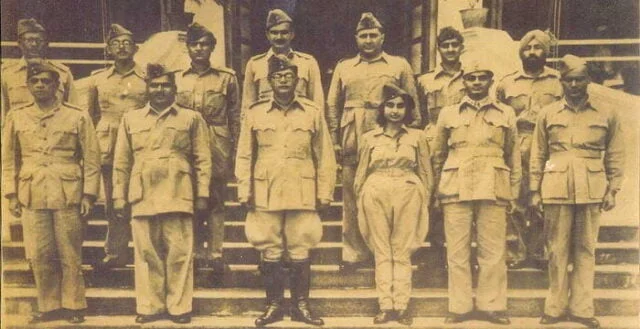
In 1940, she left for Singapore, where she set up a clinic with a focus on making medical treatment and facilities available for people from all walks of life. Meanwhile, she also joined the Indian Independence League, formed by Rashbehari Bose. It was around this time, in 1942, that an army for Indian independence was formed by Captain Mohan Singh and a few other Indian war prisoners in Singapore. The army was slowly losing its initial momentum due to the lack of a firm commitment from the Japanese side regarding their participation in the war. It was the arrival of Subhash Chandra Bose which proved to be a real game changer for the Indian independence movement in Singapore.

Captain Lakshmi was one among the many who had gathered to listen to Bose while he addressed the crowd in 1943 at Singapore. He was keen on forming an army not only composed of Indian war prisoners but also of civilian Indians settled in Malaysia, Singapore and Thailand. He also wanted to create an all-women regiment.

Rani of Jhansi Regiment

The turning point in Lakshmi Sehgal’s life came when she was asked by Netaji to form and lead the all-women regiment. Whether it was healing wounds or holding firearms, she always put her heart and soul into whatever she did. This young woman took charge and managed to mobilise around 25-30 women for the regiment. These were mostly second or third generation Indian women who had grown up in South East Asia, who were fighting for the freedom of their motherland that they hadn’t even seen. Her ability to galvanize such a group of civilians, train them and form a regiment speaks volumes about her determination and charisma.That was the beginning of the Rani of Jhansi regiment and her life as Captain Lakshmi.

Source:edtimes.in

The INA marched to Burma in 1944, but before they could enter Imphal they had to beat a retreat and she, along with others, was captured by the British army. She was placed under house arrest in Burma and was later sent to India in 1946. 

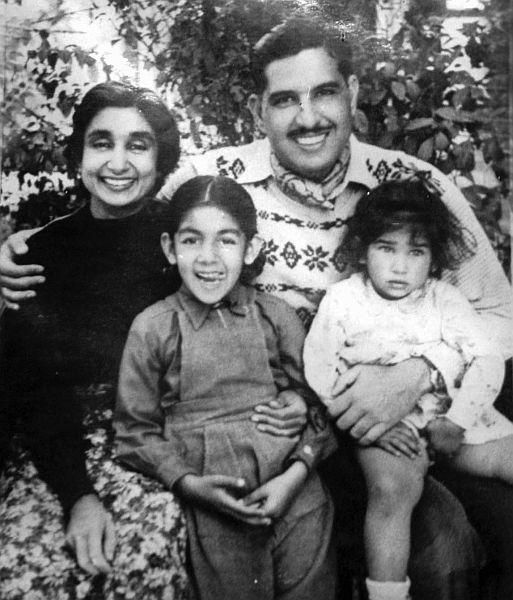
She was a woman of mettle and nothing could ever dampen her spirits. She continued to fight for the freedom of the country once she was back in India and actively campaigned for the release and rehabilitation of the imprisoned INA personnel. Her fight for freedom continued even after the release of the war prisoners, including Col.Prem Kumar Sehgal, in March 1947. Later she got married to Col.Prem Kumar Sehgal and moved to Kanpur.

Later Life 

For a person as enthusiastic and passionate as her, every day was a new opportunity to serve her country and its people. She continued her medical practice in Kanpur and was actively involved in providing aid for the refugees pouring into the country following the partition.

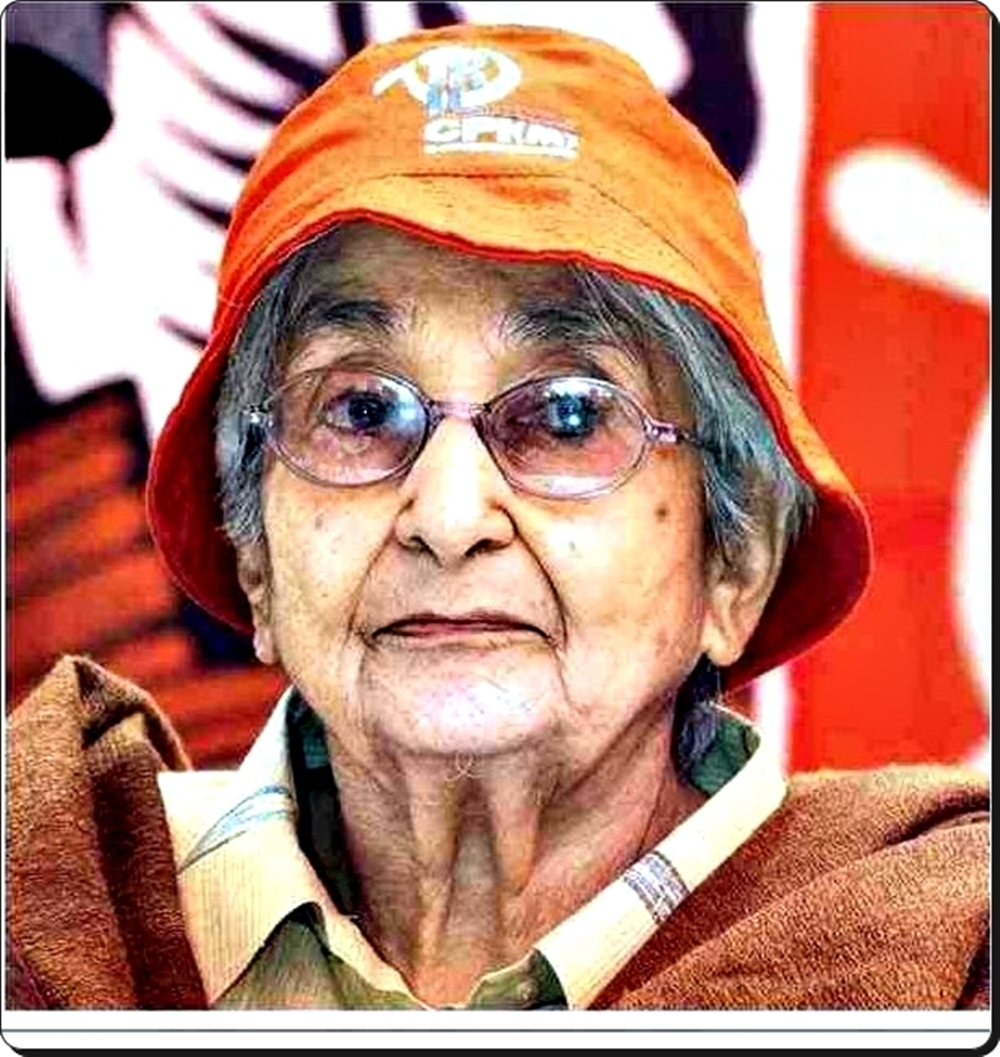
In the early 1970s, through her daughter Subhashini who had joined CPI(M), it was brought to her attention the need for doctors and medical supplies for the refugees from  Bangladesh. She didn’t have to think twice before packing up enough supplies, clothes and medicines and leaving for Calcutta to provide her service in the Bangladesh refugee camps along the border areas.Her ideologies were inherently communist, and hence, she joined the Communist Party of India (Marxist) in 1971 and represented the party in Rajya Sabha.

Source: penbugs.com

She never shied away from going out onto the streets of Kanpur during the anti-Sikh riots of 1984,  to confront the anti-Sikh mobs and to ensure the safety of the Sikhs and Sikh establishments near her clinic. She participated actively in the restoration of peace during the riots.

She was rightly called Captain Lakshmi for she was a born leader. Be it leading the campaigns and activities of the All India Democratic Women’s Association or the medical camps in Bhopal  following the Gas Tragedy, she conducted it all with ardent passion and dedication. 

Her charisma, dedication and undying spirit to fight for what she believes in were a few of the many reasons why she was selected jointly by all four leftist parties as the sole opponent of Dr. APJ Abdul Kalam in the 2002 Presidential elections. In spite of knowing that her chances of winning are slim, she took that as a golden opportunity to scrutinise a political system that allowed the weeds of poverty and injustice to grow by feeding divisive and irrational thoughts to the society.

At an age when most people retired to the comforts of their homes,  she regularly treated patients at her clinic. Service to humanity was the motto of her life and she never let her age get in the way of service.

She was honoured with Padma Vibhushan in 1998 and was also bestowed with an honorary doctorate by Calicut University.

source:thebetterindia.com

Captain Lakshmi was one such person who was hard to box in by the conventions of the society. During the course of her entire life, which was only a couple of years short of a century, she had seen it all – the colonial rule, India’s struggle for independence and the post-independence nation building and transformation of the country. And through it all, she had been an active contributor to the society, who always positioned herself firmly on the side of the oppressed and needy. 

Captain Lakshmi passed away on 23rd July 2012 following a cardiac arrest, but not before leaving behind her a legacy of sheer will, compassion and valour, which continues to inspire thousands of people across the country.

Social Evils that prevail in India

Photo by Nothing Ahead on Pexels.com

India is a country which is known for its diverse heritage and mesmerizing culture. However, it also has some unavoidable rigid belief systems or evils which, if not reformed, can be really harmful for the Indian society. Such social evils can also be harmful for the growth and progress of the society.

Social evils can be defined as the toxic beliefs due to which the societal progress is hindered. Such evils can be born out of sheer ignorance or blind faith in religion or culture or both. These evils are not only harmful for the believers themselves but for the society as a whole.

There have been several personalities who, in order to bring reforms in the society, tackled and attempted to remove the practices of some rigid belief systems which, in turn, brought reforms in the society.

Here are some evils that either prevailed or still prevail in India due to the stiff nature of the society:

The Caste system:

The caste system has its roots in the ancient Indian society where the common folks were divided into four categories on the basis of their skills and abilities. Those categories consisted of Brahmin, Kshatriya, Vaishya and Shudra.

But as the time passed, this system became so rigid that the people belonging to the higher castes were seen as superior to those of the lower castes. Brahmins were known to be next to God and were respected by almost everybody. On the other hand, the Shudras were discriminated and were considered as ‘Untouchables’. Although the Indian Constitution has outlawed the practice of Untouchability, it still exists in some parts of the Indian Society.

The Dowry system:

The word ‘dowry’ means payment (of property or money) from the bride’s parents to the groom or his family at the time of marriage. This stems from the belief that a daughter is a liability for her parents and for her bright future she has to be married off to a decent groom. In order to get a good marriage prospect, the bride’s family starts saving money as soon as the daughter is born. This puts an unimaginable of amount of burden on the bride’s family.

This system has also made many Indian women victims of the atrocious crimes by the groom and his family. There have been many cases where crimes against women were committed by their husbands or their in-laws. In such cases, women had to go through unimaginable physical and emotional abuse.

Although we have laws in the constitution against the practice of the Dowry System, it is still practised in some of India. The government is taking measures to eradicate this system by bringing in policies to educate and the girls and parents of the country. They have also started schemes to aware the parents about the negative outcomes of the Dowry system.

Female Infanticide:

Female infanticide is the intentional and deliberate killing of a baby girl once she is born due to the preference for a baby boy. Even though this is an illegal practice, people in some parts of India still practice it. According to a census in 2001, there are only 933 females to every 1000 men. Another census in the year 2011 showed a decline in the Child Sex Ratio (CSR) where there were only 918 females to every 1000 men.

Female infanticide is more prevalent than male infanticide in south Asian countries like India and China due to cultural reasons. In the Indian Society, some families kill their new born daughters to avoid the burden of paying Dowry to the groom or his family. For families with several daughters, it can be a huge financial burden and hence, killing the baby girl seems like an easier option to them.

The Indian government has tried to take several initiatives to tackle and eradicate this issue. In several Indian states, the government took the responsibility of educating the girl child which, in turn, freed the parents from their financial burden.

These are some of the dreadful evils in the Indian society which need to be tackled and solved so that a better and more reformed society can be created. However, there are more such evils like Poverty, superstitions and corruption. These issues have become pretty common in the Indian Society.

With the years passing by, these issues have risen instead of coming to an end. Therefore, proper action must be taken by the government and the society to change the mindset of the existing society.

Google honors Dr. Kamal Ranadive with a Google doodle on her birthday

IMAGE: GOOGLE

On the occasion of the 104th birth anniversary of Dr Kamal Ranadive, an Indian biomedical researcher, Google dedicated a Google doodle to her where she can be seen holding a microscope. She is well-known for her revolutionary cancer research and her commitment towards promoting social justice through education and science.

Dr. Kamal Ranadive was born in Pune on November 8, 1917. Her father, who was a biologist, encouraged her to study medicine but she had different aspirations. She decided to study botany and zoology as her main subjects and got her Bachelor of Science (B.Sc) in the same field from Fergusson College in Pune. She then moved to the Agriculture College in Pune for her post-graduation.

She successfully won a doctorate in Cytology (also known as cell studies) in the same year as working as a researcher at the Indian Cancer Research Center (ICRC), and thereafter, was qualified to gain a fellowship at Johns Hopkins University in Baltimore, USA. She thereafter returned to India and established the first tissue culture laboratory in the country in Mumbai.

She closely examined the links between cancer and different viruses, and also the link between breast cancer and heredity. She also studied Mycobacterium leprae (a type of bacterium that causes leprosy) and gave her contribution in the development of a leprosy vaccine.

Dr. Kamal Ranadive and a few of her workmates initiated the establishment of the Indian Women Scientists’ Association (IWSA) in the year 1973 to promote women in the scientific field. The organization as of now has 11 branches across the country. It provides scholarships and childcare to women in working or researching in the scientific area.

Ranadive received the Padma Bhushan, the third highest civilian award, in 1982 for her contributions to medicine. In 1964, the Medical Council of India presented her with the first Silver Jubilee Research Award. This award comprised of a gold medal and an amount of Rs. 15000. Another award that she received was the G. J. Watumal Foundation Prize in 1964 for her work in leprosy.

Dr Kamal Ranadive was loved and admired by many of her students and colleagues. They fondly called her ‘bai’. She always encouraged her colleagues and students to work and do various scientific researches in their own country. She also worked in rural Maharashtra after her retirement, training women as healthcare professionals and teaching them about health and nutrition.

Dr. Kamal Ranadive passed away in the year 2001 but she still continues to inspire the youth especially the women of this country to work hard and be an inspiration for many.

A man called Ove: Review

A book beyond the principles of judgment and society, barring the barriers of age, this masterpiece will remold your soul towards the kvetches in your life. A man called Ove, Created and written miraculously by Fredrick Backman, is a thin but infinitely everlasting book that will always stay with you once you turn the last page. As described on the cover page, it is a story about a man called Ove, and the short but satisfactory chronicles of his life. Being a cranky curmudgeon, he has a big habit of floccinaucinihillipilliphication. Big word, isn’t it? Google it (secretly gushing). He basically thinks every new technological thing that he cannot understand is paltry. His neighbors, His friends, everyone thinks he is an old trout. Well, when you are always seen with disgust and disappointment searing in your eyes, you wouldn’t expect much. But if you get to know the man who is called ‘the sorehead’, there is something irresistibly beautiful about Ove.

The story starts with a pouty old man who is seen buying an IPad or at least trying to buy an IPad, with a ‘you just broke my most precious possession and now I am going to kill you’ look. At that moment, the bewitching chronicle takes its first step into a beautiful tale about love, lived and lost.

Ove is a man who believes in practicality. Inaccuracy. In reality. Having a mighty adoration for tools, he was a straightforward man with no tolerance for nonsense, contrasting opinions, or even a happy sunshiny personality. Even after all this, there were so many things about Ove that were magnificent and adorable. That man’s life was simply great, he was arrogant, but down to earth. A man with a heart too big.

You’ll only feel the inklings of dismay and somewhat a sigh as the right side of the gem grows thinner page by page. The words start to reach the deepest core of our hearts, the dark noir on the crisp paper seems like the only world to exist. This little infinite tale will make you laugh out loud, and cry till you can’t breathe. My heart goes out to the author who has created such a magical fable, such an everlasting magnet of love and appreciation. Thank you. Fredrick Backman. Well done. Overall, I recommend this book to you, and I will do it again and again. Believe me.

it is worth it.