India’s brilliant performance at Paralympics 2020

It will be fair to say that Paralympics 2020 is India’s most extraordinary Paralympics ever. From 1968 to 2016, India won 12 medals at Paralympics, at Tokyo India have already secured 15 members and counting. 30th august will go down as golden day in history of Indian para sports as India claimed 5 medals in a single day. Let’s have a look at India’s journey at Paralympics till now,

Bhavina Patel created history as she won silver medal in women’s single table tennis C4. She won medal in her maiden Paralympics on august 29. Chinese paddler Ying Zhou ended her impressive run at the games in class 4 final with 0-3 win.

India’s next medal came from men’s high jump T47. India’s Nishad kumar clinched a silver medal in the event with an Asian record effort. The 21 year old cleared 2.06 m to win the silver and set an Asian record. He lost his right hand due to an accident at the age of 8.

Shooter Avani Lekhra made history as she became the first Indian woman to win a gold medal at the Paralympics as she won gold in women’s 10m air rifle shooting standing SH1. The 19 year old finished with a world record equaling total of 249.6, which is also a new Paralympic record. Also it was her maiden Paralympics.

India’s medal favorite, two time gold winning javelin throw veteran Devendra jhajharia didn’t disappointed and clinched a silver in men’s javelin throw F46. 40 year old Devendra already India’s greatest Paralympian pulled off a new personal best throw of 64.35 m for silver. Sundar Singh Gurjar, another Indian secured third place with a best effort of 64.01 m in the same event.

24 year old Yogesh Kathuniya started India’s golden day in para sports history with a silver in Men’s discus throw F56. He sent the discus to the best distance of 44.38 m and clinch the silver.

30th august didn’t stopped producing amazing moments for Indians as Sumit Antil upgraded his own world record in the Men’s javelin throw F64 category with a throw of 68.55m to hand India second gold medal of Paralympics 2020. Singhraj added to India’s medal tally by winning bronze medal in the men’s 10 m air pistol shooting SH1. He started shooting only 4 years ago and it was his debut Paralympics.

Mariyappan Thangavelu and Sharad kumar secured silver and bronze for India in men’s high jump T42 on 31th august. Mariyappan cleared 1.86m while Sharad succeeded in clinching bronze with 1.83m jump. 18 year old Parveen kumar also won silver in T64 classification of men’s high jump with the best jump of 2.07m. It was his personal best performance and his first major medal.

Avani Lekhra added 12th medal to India’s medal tally as she won bronze in women’s 50m rifle three positions SH1. She also became India’s most successful women para-athlete as it was her second medal after winning gold in women’s 10m air rifle.

We can hope for more as many more events are yet to come. India’s para-athletes are on a dream run and we hope it doesn’t stop.

BLESSING IN DISGUISE

BY DAKSHITA NAITHANI

The year 2020, as we all know, will be a major change in our life. It has also demonstrated the opposite side of existence. We continued to count things for the future, and when the pandemic struck, it reminded us of how unexpected life can be; different aspects of life were affected, and working conditions were significantly altered. There was a lot of misunderstanding in the education industry about how to teach pupils, how to start lessons, and so on. However, technology was the solution to all problems.

People have used mobile phones for social interactions and pleasure in the past, but they have now evolved into a source of information, and we can say that school has come within our grasp. This situation is very similar to one of the chapters in NCERT’s English course book for class 9 called “The fun they had,” in which two children from the future (2050) got their hands on a real hardcover book from their grandfather and were amused by the idea of a real school and school building where all the children of the same age group used to study together under one roof and thought that happiness was being together with their friends. Did the pupils in this circumstance realise that this narrative would become so relevant and genuine to them? Many parents used to refuse to let their children to use cell phones, but it has now become a necessity.

Although there are always two sides to a coin, sales of smart phones soared as a result of the epidemic, since every home needed one additional one for their children to attend courses. Technology has also played a significant role in education, and how we use it can have positive or negative consequences. Phones have evolved into more than simply a means of communication; they have also become a lifeline and an indispensible component of our lives in some manner. It was a struggle for teachers to not only teach their material but also to engage with their pupils throughout these testing periods. They’ve also learned to utilise technology in a variety of ways, including not just communicating but also using various digital classrooms, boards, and audio and visual teaching and learning methods. They were not only effective in speaking with pupils, but also with their guardians, and despite the challenges, they were able to establish an emotional bond with them.

Many parents lost their jobs as a result of industry losses and were obliged to shift their children from private to government schools, but many were pleased to do so because the curriculum is on par with top institutions. The government and teachers have made it a point to link each and every kid with them. Many teachers aided their students financially as well as academically. Many teachers have also attempted to offer phones or internet connections to their kids, demonstrating that humanity bears primary responsibility in any scenario.

The desire for change in school education emerges as a result of continual changes in society on psychological, social, and economic levels. As a result, we must constantly introduce and upgrade a framework. As you can see with the current pandemic, a lot of adjustments are required both during and after the crisis. With this in mind, the Delhi government began giving curriculum-based work sheets to children of all grades, as well as training their teachers.

Teachers’ ability and efficiency have been improved via the use of webinars and online seminars on a regular basis. Regular trainings were provided to demonstrate how to use Google products to make the teaching and learning process more engaging and beneficial. The government has also launched a number of applications, such as Chalklit and Diksha, to provide a platform for various trainings and to keep instructors informed about innovative ways of teaching and learning. It was remarkable that students continued to attend courses on a regular basis, whether they were in the same city or in their village; their desire to study grew day by day, and they began to respond positively.

Personality development!!

So today’s post is about you, about us. I mean about our personality , about our identity, our views , our behavior, etc. Personality development encompasses the dynamic construction and deconstruction of integrative characteristics that distinguish an individual in terms of interpersonal behavioral traits.

Indeed , personality development is ever -changing and subject to contextual factors and life altering experiences. Personality development is also dimensional in description and subjective in nature. The dominant viewpoint in personality psychology indicates that personality emerges early and continues to develop across one’s lifespan.

We all possess certain personality traits that set us apart from the rest. A mix of good and bad, these traits define how we respond to situations and people. Now I tell 13 personality development ‘tips’. I hope you will enjoy reading it and become the most terrific version of you.

13 ways of personality development :

  • Know you are incomparable – Know that you and the other person are unique and are just incomparable
  • Be kind to yourself – Self compassion brings positive traits in life.
  • Give space to imperfections – Find your peace amidst the world’s flaws even as you strive to make a change.
  • Be spontaneous – Spontaneity makes one to be fun around and be per cent aware in the present moment.
  • Be light in mind and heart – Be happy and don’t overthink and overanalyze yourself.
  • Stay enthusiastic – Enthusiasm is infectious and appealing so one must never give up enthusiasm.
  • Be a better communicator – A skillful communicator can win over people and adverse situations through his words.
  • Be warm and approachable – We all like people whom we can easily mingle and talk to. Be friendly and be ready to share and help.
  • Do things with style – Doing things with style adds zing to your personality. At the same time, stay relaxed.
  • Learn to let go – After you’re done with your task, let go of your attachment with the result.
  • Be a lion in the face of danger – Don’t give into pressure and face every challenge confidently.
  • Stay calm with the power of breath – Being calm strengthens one’s personality and your stress will diminish.
  • Remember you’re a proton! – A proton never lose its positivity, nor can you. Your inner core continues to radiate positivity.

That’s all for today hope you will like it!! Thank you…

SOME OF THE MAJOR PSYCHOLOGICAL DISORDERS

1) ANXIETY DISORDERS

The word anxiety is derived from Latin word ‘Anxietas’ which means uneasy or troubled mind. When a person feels nervous without any obvious reason for a long time and it affects the person daily life it is termed as Anxiety Disorder. There are many types of Anxiety Disorder let’s look at few;

GENERALIZED ANXIETY DISORDER

Humans feels tension in their daily life it can be termed as a a good pressure as it compels us to face difficult situation in a systematic and planned manner like studying for exams or some responsibilities. But when this pressure becomes too intense and start to interfere with our daily routine it can be called as generalized anxiety disorder.

– PHOBIC DISORDER

The word phobia is derived from Phobos the name of a Greek god of fear. When an individual has an intense and irrational fear of some object or situation which they are not able to overcome it is termed as phobia; there are many types of phobia like fear of heights, fear of water , social phobia, etc.

2) DEPRESSIVE DISORDER

When a person experiences an extreme feeling of sadness as well as guilt due to some negative incidences or some other external factors for atleast two weeks it is called depressive disorder. People may experience suicidal thoughts, feeling of hopelessness, lack of sleep and many more.

3) BIPOLAR DISORDER

This is also called Manic depressive disorder. An individual experiences alternate phases of extreme sadness, hopelessness, stress at one time and extreme happiness, enthusiasm, and elation at other times. In some cases this conditions happens one after the other. Genetic factors, imbalance in neurotransmitter in brain, mainly norepinephrine, serotonin and dopamine are found to be the main causative factors.

OZONE LAYER

Ozone layer depletion

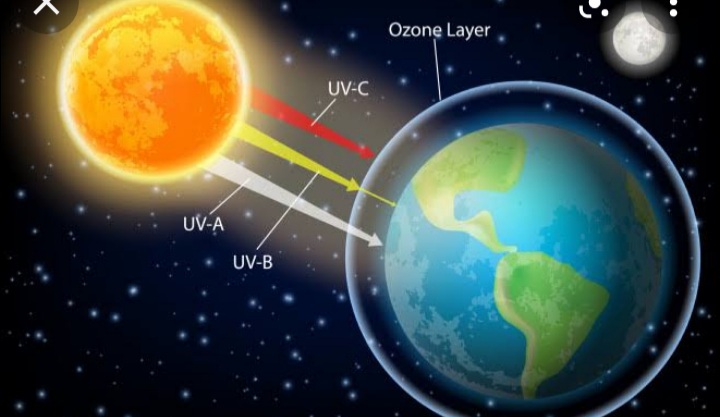
Ozone is a form of oxygen (O3). In the stratosphere (Ozonosphere),ozone blocks out the sun’s ultraviolet rays and is a life saver.

Ozone as a natural sun block

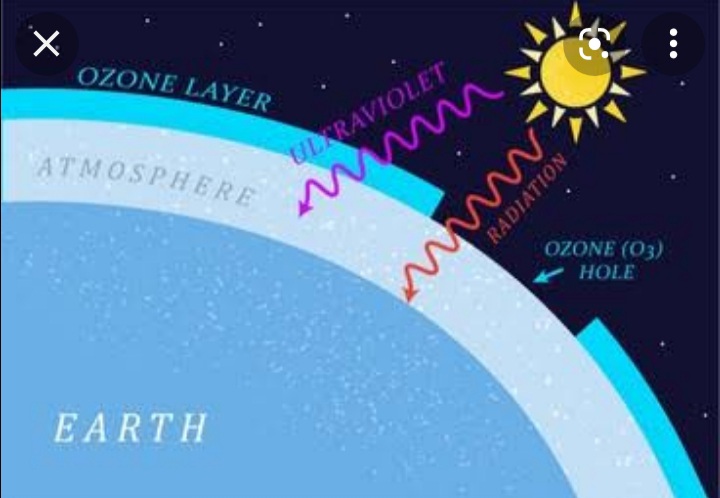
The electromagnetic radiation emitted from the sun includes ultraviolet radiation, which is potentially harmful to most living things since it can damage DNA. The ozone layer screen out the sun’s harmful ultraviolet radiation. Even 1% reduction in the amount of ozone in the upper stratosphere causes a measurable increase in the ultraviolet radiation that reaches the earth surface. If there was a no ozone at all ,the amount of ultraviolet radiation reaches us would be catastrophically high. All living things would suffer radiation burns,unless they were underground, or in the sea.

In the stratosphere, small amount of ozone are constantly being made by the action of sunlight on oxygen. At the same time, ozone is being broken down by natural processes. The total amount of ozone usually stays constant because its formation and destruction occur at about the same rate. But unfortunately human activity has recently changed that natural balance. Some manufactured substances such as chloroflurocarbons and hydrochloroflurocarbons can destroy stratosphere ozone much faster than it is formed.

Ozone hole

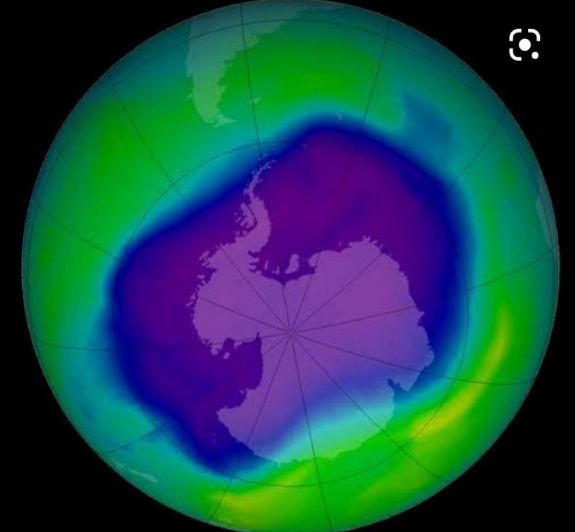
Ozone loss was first detected in the stratosphere over the Antarctic. The part of the atmosphere where Ozone is most depleted is referred as ” Ozone hole” but it is not a real hole just a vast region of the upper atmosphere where there is less Ozone than elsewhere.

Ozone-poor air can spread out from the polar regions and move above others areas. In addition, direct Ozone less elsewhere is slowly increasing.

Ozone-poor air can spread out from the polar regions and move above other areas. In addition, direct Ozone depleted area is also slowly increasing.

Reason for Antarctic Ozone hole

Scientific observation prove that the ozone hole formed over Antarctic is due to compounds of chlorine and bromine formed in the atmosphere. Nearly all of the chlorine and half of the bromine in the stratosphere comes from the human activities. The chlorofluorocarbons released due to human activities get transported up into the upper stratosphere.

The most common ozone depleting substances (ODS) are chlorofluorocarbons (CFC) or freon gases,certain bromine compounds, nitrogen oxides and methyl bromide. These compounds are liberally released from air-conditioners,freezers,foam insulation, aerosol products, industrial solvents, fire extinguishers and pesticides.

Effects of ozone depletions

If the ozone is depleted more ultraviolet radiation (especially ultraviolet B (UVB) will reach the earth’s surface.

Effect on plants – will affect crop yield and forest productivity.

Effect on animals – will cause damage to fish larvae and other Small animals.

Effect on human health – results in non – melanoma skin cancer and melanoma ,acute erythemia(sun burn), ocular abnormalities, cataract,poor immune responses.

Preventing ozone depletion

1. CFC’s ( Chloro Fluoro Carbons) should be replaced by HCFC’s (Hydro Chloro Fluro Carbons). If over used could damage ozone, HFC’s ( Hydro Flouro Carbons), Hydrocarbons such as butane and propane ( but flammable and poisonous), Ammonia ( must be handled carefully), water and steam.

2. Production, use and emission of ozone-depleting chemicals should be controlled.

3. Recycling of these chemicals should be increased.

4. Servicing of refrigerators and air-conditioners should be regulated.

5. Refrigerants should be recaptured and used .

6. Adopt protection measures from sun’s radiation.

PLIGHT OF WOMEN IN AFGHANISTAN

BY DAKSHITA NAITHANI

The Afghan women, maybe more than anybody else, have dreaded the Taliban’s return. There have been many advances in women’s rights over the last 20 years, which appear to be set to erase nearly overnight.

A quick lesson from history…

The Taliban, a political and military force, is said to have started in Islamic schools in Northern Pakistan in the early 1990s. Its aim was to restore order in Afghanistan following the withdrawal of Soviet troops in 1989, as well as to impose a harsh form of Sharia law. By 1998, the organisation had seized 90% of Afghanistan’s territory.

Once in control, the organisation garnered worldwide condemnation for a slew of human-rights violations. The ban on female education above the age of ten as well as harsh limitations on day-to-day liberties, were among the stringent mores imposed on women and its influence has frequently threatened to expand beyond, to places like Pakistan, where the organisation memorably shot teenager Malala Yousafzai in 2012. Women were treated worse than at any previous period or by any other culture throughout its rule (1996–2001). They were prohibited from working, leaving the house without a male escort, seeking medical assistance from a male doctor, and being compelled to cover themselves from head to toe, including their eyes. Women who had previously worked as physicians and teachers were compelled to become beggars or even prostitutes in order to feed their families during the Taliban’s rule.

Following the 9/11 attacks, it was thought that the Taliban were harbouring Al-Qaeda soldiers, thus an US-led international operation was started against Afghanistan. As a consequence, the Taliban were deposed from power, an Afghan government was established, and soldiers occupied the country for 20 years. It destabilised several regions of the nation due to battles with US and UK forces on a regular basis, and Afghan people were continued to be assaulted. Many would agree that the political and cultural status of Afghan women had improved significantly since the Taliban’s collapse in late 2001.

The Bush administration’s acceptance of women’s rights and empowerment as rationale for its assault on the Taliban is long gone. So it was under the Barack Obama administration, when then-Secretary of State Hillary Clinton stated that the Taliban’s repudiation of al-Qaida and promise to support the Afghan constitution and safeguard women’s rights were preconditions for US discussions with them. The rejection of al-Qaida has yet to be declared openly and publicly less than 10 years later; the constitutional order and women’s rights are still subject to intra-Afghan talks and will be influenced by the changing balance of military power.

In February 2020, US-Taliban peace talks were concluded, with the US pledging a quiet departure in exchange for an end to hostilities. Afghan leaders and top military generals have warned that the government will collapse without foreign assistance. It looks like the worst has transpired only weeks before Biden’s deadline of September 11th.

The Taliban rule wreaked havoc on the institutions and the economy, which had already been ravaged by decades of conflict and the Soviet scorched-earth counterinsurgency policy.

The post-Taliban constitution of 2004 granted Afghan women a wide range of rights, and the political epoch brought social and economic progress, which greatly improved the socioeconomic situation. From a crumbling health-care system with almost no healthcare available to women during the Taliban years, the post regime built 3,135 functional facilities by 2018, giving more than 80 percent of Afghans access to a medical facility within two hours’ drive.

 Less than 10% of females were enrolled in elementary schools in 2003; by 2017, that figure had risen to 33%, while female secondary school attendance increased from 6% to 39%. As a result, 3.5 million Afghan females were enrolled in education, with 100,000 of them enrolled in academic institutions. Women’s life expectancy increased from 56 to 66 years in 2017 and maternal mortality fell from 1,100 per 100,000 live births in 2000 to 396 per 100,000 in 2015. By 2020, women made up 21% of Afghan public workers, including 16% of top management positions, and 27% of Afghan parliamentarians.

 These benefits for women have been dispersed inequitably, with women in metropolitan areas benefiting considerably more than women in rural regions. Despite formal legal empowerment, life for many rural women has not improved much since the Taliban era, notably in Pashtun regions but also among other rural minority groups. Many Afghan males are staunch conservatives. Families often let their daughters to complete a primary or secondary education before proceeding with planned marriages. The burqa is worn by the majority of Afghan women in rural regions without any pushing from the Taliban.

What is the situation for women in Afghanistan now?

Women’s rights in Afghan had arguably maintained pace with many other Western countries prior to the 1970s. Women were granted the right to vote in 1919, one year after women in the United Kingdom. In the 1950s, gender segregation was eliminated, and in the 1960s, a constitution was enacted that included women in political life. As the region became more unstable in the 1970s, these rights were steadily eroded.

Only 38% of the international humanitarian response plan for Afghanistan is financed as of August 2021. This gap might result in the loss of specialised protection services for 1.2 million children, putting them at risk of abuse, recruitment, child labour, early and forced marriages, and sex abuse. About 1.4 million females, many of whom are survivors of domestic abuse, would be left without access to safe spaces where they may receive full care.

Females, who have experienced life with rights and freedoms, are among the most exposed as a result of the Taliban’s fast progress in Afghanistan. As the Taliban capture control of Kabul, they risk losing their hard-won achievements.

Those cries for aid may be too late as the capital city falls into the clutches of Islamist rebels. There have been several stories of the Taliban going door-to-door and compiling a list of women and girls aged 12 to 45 who are then compelled to marry Taliban warriors. Women are told that they cannot leave the house without a male escort, that they cannot work or study, and that they cannot wear anything they want. Schools are also being shuttered.

There is a lot to lose for a whole generation of Afghan women who entered public life – legislators, journalists, local governors, physicians, nurses, teachers, and public administrators. While they worked alongside male colleagues and in communities that were unfamiliar with people in positions of power to help establish a truly democratic civil society, they also wanted to pave the way for future generations to follow in their footsteps.

The Taliban offers itself a broad range of possibilities by claiming that they will “protect” women’s rights under sharia but refusing to explain how women’s rights and life in Afghanistan will alter if they achieve their goals. Even if the government did not openly adopt as cruel a system for women as in the 1990s, the Taliban’s dispositions are quite likely to undermine women’s rights, impose cultural prohibitions on women, and reduce socio-economic possibilities for them.

In summary, even with this change in behaviour, the Taliban in power would almost certainly strive to curtail Afghan women’s legal rights, exacerbating their social, economic, and political circumstances. How much and in what manner, is the question.


ATMOSPHERE

What is the Atmosphere?

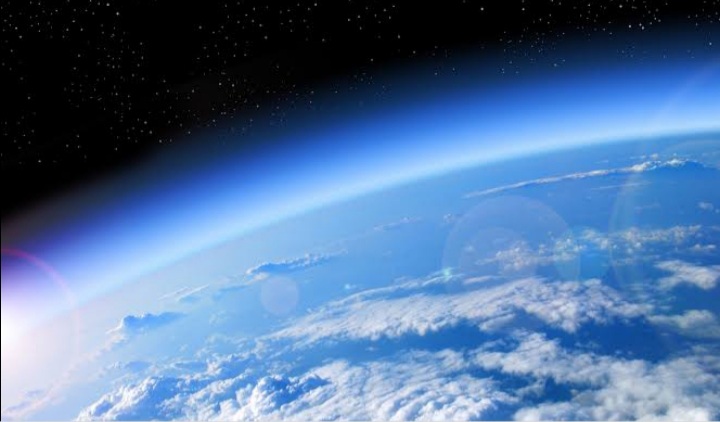
Layers of Earth's Atmosphere as seen from space

The atmosphere is a mixture of gases that surrounds the planet. On Earth, the atmosphere helps make life possible. Besides providing us with something to breathe, it shields us from most of the harmful ultraviolet (UV) radiation coming from the Sun, warms the surface of our planet by about 33° C (59° F) via the greenhouse effect, and largely prevents extreme differences between daytime and nighttime temperatures. The other planets in our solar system also have an atmosphere, but none of them have the same ratio of gases and layered structure as Earth’s atmosphere. 

Gases in Earth’s Atmosphere

Nitrogen and oxygen are by far the most common; dry air is composed of about 78% nitrogen  (N2) and about 21% oxygen  (O2). Argon, carbon dioxide (CO2), and many other gases are also present in much lower amounts; each makes up less than 1% of the atmosphere’s mixture of gases. The atmosphere also includes water vapor. The amount of water vapor present varies a lot, but on average is around 1%. There are also many small particles – solids and liquids – “floating” in the atmosphere. These particles, which scientists call “aerosols”, include dust, spores and pollen, salt from sea spray, volcanic ash, smoke, and more.

Layers of Earth’s Atmosphere

The atmosphere grows thinner (less dense and lower in pressure) as one moves upward from Earth’s surface. It gradually gives way to the vacuum of outer space. There is no precise “top” of the atmosphere. Air becomes so thin at altitudes between 100 and 120 km (62-75 miles) up that for many purposes that range of heights can be considered the boundary between the atmosphere and space. However, there are very thin but measurable traces of atmospheric gases hundreds of kilometers/miles above Earth’s surface.

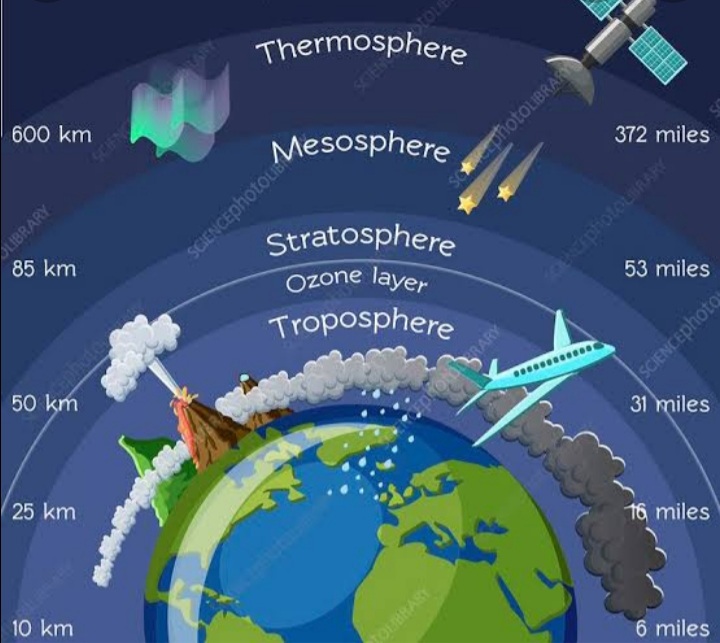
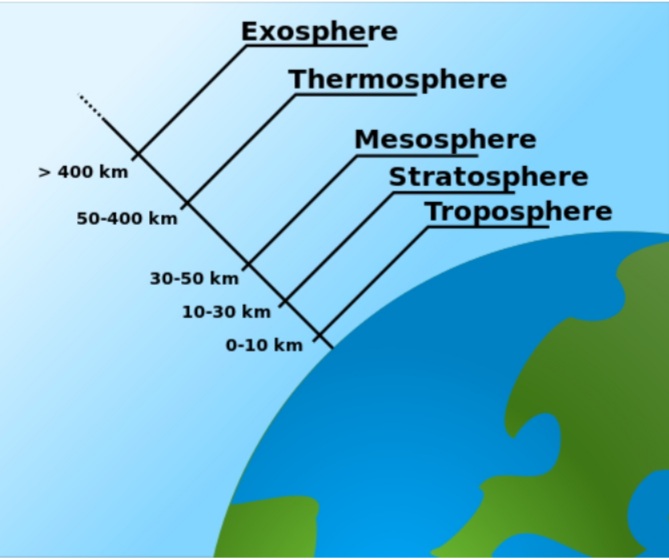
There are several different regions or layers in Earth’s atmosphere. Each has characteristic temperatures, pressures, and phenomena. We live in the troposphere, the lowest layer, where most clouds  are found and almost all weather occurs. Some jet aircraft fly in the next higher layer, the stratosphere, which contains the jet streams and the ozone layer. Temperatures reacj their lowest in the mesosphere, because the there are almost no air molecules there to absorb heat energy. The sky also changes from blue to black in the mesosphere, because there are so few molecules for light to refract off of there. And fartherst from the surface we have the thermosphere, which is the widest layer of the atmosphere and absorbs much of the harmful radiation that reaches Earth from th Sun. The exosphere represents the transition from Earth’s atmosphere to space. 

Layers of Earth's Atmosphere

Troposphere

The troposphere  is the lowest layer of our atmosphere. Starting at ground level, it extends upward to about 10 km (6.2 miles or about 33,000 feet) above sea level. We humans live in the troposphere, and nearly all weather occurs in this lowest layer. Most clouds appear here, mainly because 99% of the water vapor in the atmosphere is found in the troposphere. Air pressure drops, and temperatures get colder, as you climb higher in the troposphere.

Stratosphere

The next layer up is called the stratosphere. The stratosphere extends from the top of the troposphere to about 50 km (31 miles) above the ground. The infamous ozone layer is found within the stratosphere. Ozone molecules in this layer absorb high-energy ultraviolet (UV) light from the Sun, converting the UV energy into heat. Unlike the troposphere, the stratosphere actually gets warmer the higher you go! That trend of rising temperatures with altitude means that air in the stratosphere lacks the turbulence and updrafts of the troposphere beneath. Commercial passenger jets fly in the lower stratosphere, partly because this less-turbulent layer provides a smoother ride. The jet stream flows near the border between the troposphere and the stratosphere.

Mesosphere

Above the stratosphere is the mesosphere. It extends upward to a height of about 85 km (53 miles) above our planet. Most meteors burn up in the mesosphere. Unlike the stratosphere, temperatures once again grow colder as you rise up through the mesosphere. The coldest temperatures in Earth’s atmosphere, about -90° C (-130° F), are found near the top of this layer. The air in the mesosphere is far too thin to breathe; air pressure at the bottom of the layer is well below 1% of the pressure at sea level, and continues dropping as you go higher.

Thermosphere

The layer of very rare air above the mesosphere is called the thermosphere. High-energy X-rays and UV radiation from the Sun are absorbed in the thermosphere, raising its temperature to hundreds or at times thousands of degrees. However, the air in this layer is so thin that it would feel freezing cold to us! In many ways, the thermosphere is more like outer space than a part of the atmosphere. Many satellites actually orbit Earth within the thermosphere! Variations in the amount of energy coming from the Sun exert a powerful influence on both the height of the top of this layer and the temperature within it. Because of this, the top of the thermosphere can be found anywhere between 500 and 1,000 km (311 to 621 miles) above the ground. Temperatures in the upper thermosphere can range from about 500° C (932° F) to 2,000° C (3,632° F) or higher. The aurora, the Northern Lights and Southern Lights, occur in the thermosphere.

Exosphere

Although some experts consider the thermosphere to be the uppermost layer of our atmosphere, others consider the exosphere  to be the actual “final frontier” of Earth’s gaseous envelope. As you might imagine, the “air” in the exosphere is very, very, very thin, making this layer even more space-like than the thermosphere. In fact, the air in the exosphere is constantly – though very gradually – “leaking” out of Earth’s atmosphere into outer space. There is no clear-cut upper boundary where the exosphere finally fades away into space. Different definitions place the top of the exosphere somewhere between 100,000 km (62,000 miles) and 190,000 km (120,000 miles) above the surface of Earth. The latter value is about halfway to the Moon!

Ionosphere

The ionosphere  is not a distinct layer like the others mentioned above. Instead, the ionosphere is a series of regions in parts of the mesosphere and thermosphere where high-energy radiation from the Sun has knocked electrons loose from their parent atoms and molecules. The electrically charged atoms and molecules that are formed in this way are called ions, giving the ionosphere its name and endowing this region with some special properties.

Planetary Atmospheres

Earth is not the only world with an atmosphere. All of the planets – and even a few moons – in our solar system have atmospheres. Some have clouds, wind, rain and powerful storms. Recently scientists have also begun to get glimpses of atmospheres of planets in other solar systems.

Each of the planets in our solar system has an uniquely structured atmosphere. The atmosphere of Mercury is extremely thin and is not very different from the vacuum of space. All four giant planets in our solar system – Jupiter, Saturn, Uranus and Neptune – have very thick, deep atmospheres. The smaller, rocky planets – Earth, Venus and Mars – have much thinner atmospheres hovering above their solid surfaces. The atmospheres on moons in our solar sytem are typically quite thin. Saturn’s moon Titan is an exception – air pressure at the surface of Titan is higher than on Earth! Of the five officially recognized dwarf planets, Pluto has a thin, seasonal atmosphere containing nitrogen, methane  and carbon monoxide, and Ceres may have an extremely thin atmosphere of water vapor. But only Earth’s atmosphere has the layered structure that allows enough light energy to enter and be trapped for warmth, but also shields us from too much harmful radiation. This important balance is necessary to maintain life on Earth. 

Creation of Imagination

Photo by Teddy Tavan on Pexels.com

Imagination is our creation, we have always followed this streak of points of view that being creative is drawing characters and theories in the world of imagination where they live as long as we keep believing in them right?

In every field either its arts and relation or its commerce and markets strategy, everywhere we go we are asked to imagine the next step or the reaction or the situation or the condition which could happen and we can be prepared for everything that is going to happen and hence adding in the constant growth.

But most of the time they ask us to think out of the box and come up with different things, reactions, and situations but does it ever occurred to anyone that what kind of box we are required to think beyond and what if there is any box to even start with I mean if we are telling ourselves we have to think out of the box that does mean that we are saying there was a range and limit beyond which we couldn’t think but there isn’t any limit to even start with.

Keep thinking and you might come up with something that actually is out of every range and limits we drew even in our imagination, though imagination is our own free will and just our own.

But there are many interesting facts about the power of imagination and why creating one takes a lot more than just thinking out of the box. Horsing the mind in the limitless area of our brain and aimless thoughts and even the traumatic events though it all might seem bad and it is but it does have some of the positive impacts on the creative side of our brain.

Solitary Activity

Morning hot showers or walking alone where there is no one to disturb and just in all the standing beneath the hot shower head relaxing your mind does the number on our creative mind as well which can be confirmed by 72% of our population.

A survey showed that taking a bath in the morning confirms that people do get some insightful thoughts and ideas while they are really relaxed and calm there, bathing away the dirt as well as any blockage which could stop the horse of their thoughts.

Hunching Thrives

Hunch, whenever our intuitions tell us something most of us feels the need to ignore it or just consider it as the feeling that arrives when we are in a certain situation and that is just our reaction though most of the time it could be right but doing with the hunch has been proved the right thing to let your imagination thrive So hunch the way out of the box.

Trying New Things

Thinking out the box is common but knowing first where your box lies and what kind of restraint you have imposed could help you get a better outcome and to do so always be ready to try out the new things as whenever we learn something our brain gets one more topic or thing to continuously wander about without any restraint.

India’s best Olympic

Indian had a roller-coaster path during the Tokyo Olympics. It started with a bang, struggled in the middle, and then ended with a stunning win that makes the grand event historic.
The first medal was won in track-and-field which happened to be the first gold in 13 years, the first medal in hockey in 41 years, the first woman with two Olympic medals, first silver in weightlifting, first boxing medal in 9 years, the most number of debutants ending up on the podium, and the most numbers of medal ever for India in happened in one single game.
Whereas some missed to reach out to the podium by one step. Their anguish is a story in itself the women’s hockey team and golfer Aditi ended up covering the distance of the podium but was unable to reach there. India’s overall performance was bigger than the remarkable seven medals in the game. All the Olympians reflected confidence which can be best exemplified through Neeraj Chopra when he won the Olympic Stadium with his self-assured pace during the final throw.
India’s Olympic crusade was a story of human vitality as of sporting virtue. India’s story of progress in sports, the country isn’t at the highest yet but certainly inching closer one at a time.

A Load Balancer for Any Workload

Kemp, Inc. was founded in 2000 in Bethpage, New York and operates in the application delivery controller industry. The company builds load balancing products which balances user traffic between multiple application servers in a physical, virtual or cloud environment.
In 2010, Kemp opened a European headquarters in Limerick, Ireland Edison Ventures, Kennet Partners and ORIX Venture Finance invested $16 million into the company for research and development, sales and marketing in early 2012. In April 2014, Kemp announced a further investment in its Limerick Operations to expand from 30 positions to 80. Kemp was recognized as a Visionary in the 2015 Gartner Magic Quadrant for Application Delivery controllers and again in 2016.
In 2019, Kemp was acquired by private equity firm Mill Point Capital.
Kemp is a software company that develops load balancing and application delivery software built on a bespoke Linux operating system which is sold under the LoadMaster brand. As of 2019, there were over 100,000 deployments of LoadMaster globally for customers that need high availability, scalability, security and visibility for their applications. This enables customers to scale their operations by delivering applications in a highly available manner with layer 4 to 7 load balancing, enhanced performance, and greater security. LoadMaster is available as a hardware appliance as well as a software-based load balancer that is available as a virtualized appliance and in the cloud including Microsoft Azure, Amazon AWS, and other private clouds.
Kemp is offering the Free LoadMaster to help small companies and developers by providing them with a robust and proven load balancing option. As their load balancing needs grow and expand, they will be able to upgrade to a commercial version in the future, since they will already be comfortable with and knowledgeable about the LoadMaster.
The availability of a proven free load balancer from a well-established company will enable many start-ups and QA/Dev teams to focus on the task at hand. They will no longer have to worry about addressing the trade-off between cost, quality and upgradeability associated with some open source and application-embedded load balancing solutions.
The Kemp Load Balancer is also great for existing Kemp customers who wish to replicate their production environment for UAT purposes. While there are some limiting differences between the Free LoadMaster and commercial versions, this community supported, lower performance model provides all of the same core functionality that is included in our commercial LoadMasters.
How you can use Free LoadMaster Load Balancer
Development and Test Environments
The Kemp Free LoadMaster is ideal for use at all stages of service development and testing to minimize risks when services are delivered in a production environment…

Open Source Load Balancer Users

Mitigate some of the complexity and risk inherent in open source Load Balancers Open source load balancers…
Active Directory Federation Service (ADFS)
Free LoadMaster can provide a load balanced ADFS service that incorporates in-house ADFS deployment with ADFS in a cloud service (such as Azure, Amazon Web Services or vCloud Air). In the event of a site outage…

Application PCI compliance validation

For organizations that process credit card details and are required to comply with the Payments Card Industry (PCI) standards, the Free LoadMaster can help…

Windows Network Load Balancing (WNLB)replacement

Using a free load balancer to replace WNLB not only provides the server and application status awareness for smarter load balancing…

Organizational Behavior

Another article is management related. One of the basic and core part is organizational behavior in an organization. Organizational behavior (known as OB) is the” study of human behavior ” in organizational settings, the interface between human behavior and the organization itself.

  • OB research can be categorized in at least three ways. The following three ways are mentioned as under :-
  • Individual in organization (MICRO LEVEL)
  • Work groups (MESO LEVEL)
  • How organizations behave (MACRO LEVEL)

Organizational Behavior is the academic study of how people act within groups. It’s principles are applied primarily in attempts to make businesses operate more effectively. The study of organizational behavior includes areas of research dedicated to improving job performance, increasing job satisfaction, promoting innovation and encouraging leadership.

The new frontiers of organization behaviour are the cultural components of organization, such as how race, class and gender roles affect group building and productivity. Organizational Behavior is the study of how people behave within groups. Early studies determined the importance of group dynamics in business productivity.

The study of organizational behavior gives insight on how employees behave and perform in the workplace. It helps us develop an understanding of the aspects that can motivate employees, increase their performance and help organization’s establish a strong and trusting relationship with their employees.

Thank you for today!!!

BEST COLLEGES IN MUMBAI

A college assists a student in building their career. Colleges are necessary for converting the thoughts into action. The institution acts as a bridge for their career pathways. In college we are taught how to make into the society and working industry and progress in life, the institution boost our overall development. A college provide with many activities, fest, placement, etc so that an individual growth is secured. It’s on us to work hard and achieve our dream; here are few of the best colleges in Mumbai.

1) IIT BOMBAY – INDIAN INSTITUTE OF TECHNOLOGY

It is a public technical and research university, located in Powai. It was established in 1958, the Chairman is Dr Pawan Goenka and the Director is Subhasis Chaudhari. The institute has physically expanded to include more than 584 major building. The institute grant’s admission through JEE and Advance. It offers many courses such as bachelor of technology, bachelor of science. It offer courses for post graduate, doctoral and postdoctoral level. The centre has five primary research areas. It offers a great campus area and an awesome student life.

2) ST. XAVIER’S COLLEGE

It is a private Catholic autonomous higher education institution run by The Society of Jesus in Mumbai, located in the Fort area of South Bombay. It was established in 1869, the Chairman is Fr. Arun de Souza, SJ and the Principal is Dr. Rajendra Shinde. The college was greatly expanded in 1930s and is built in Indo-Gothic style. The college is equipped with modern amenities and has a large common library. It also has a leisure space area known as ‘The Woods’. The college is affiliated with the University of Mumbai, offering undergraduate and postgraduate courses in Arts, Science, Commerce and Management. One can opt for this college for a better career development.

3) MITHIBAI COLLEGE OF ARTS, CHAUHAN INSTITUTE OF SCIENCE AND AMRUTHBEN JIVANLAL COLLEGE OF COMMERCE AND ECONOMICS

Mithibai college is affiliated by the University of Mumbai and was granted the status of autonomous in 2018. The college was established in 1961 by Shri Vile Parle Kelavani Mandal as a part of the trust’s Silver Jubilee Celebration, located in Vile Parle. The principal was Dr. Rajpal Hande. It has 50% reservation for gujrati speaking community. It has been consistently featured on the top 5 ranks in India Today College rankings. It offers an undergraduate and postgraduate courses in commerce. Other courses include bachelor of management studies, bachelor of science and master of science courses in biochemistry, biotechnology and computer science.

4) JAI HIND COLLEGE

Jai Hind College is an autonomous college affiliated by the University of Mumbai, located in Churchgate Mumbai. It was established in 1948, the Principal of the college is Ashok Wadia. The college offers both junior college and regular degree college. The college provides bachelor degree in science, commerce and arts and also offers MSc in Big Data Analytic. It offers great students life and hosts big college fests every year. Once can consider this college if they have to enjoy their college life along with their studies.

SCRAP POLICY 2021

The topic for today’s article is scrap policy in India. Now the question is what is meant by scrap? The answer to this is – to remove an unwanted covering or a top layer from something. Scrap consists of recyclable materials left over from product manufacturing and consumption, such as parts of vehicles, building supplies, and surplus materials.

Unlike waste, scrap has monetary value, especially recovered metals and non-metallic ,especially are also recovered for recycling. And the much -awaited draft policy on vehicle scrapping is finally out.

The policy outlines the criteria for defining end -of-life vehicles and scrapping them. It also makes provision for scrapping facilities for safe disposal of waste and material recovery. This policy has only “advised” the state governments and the automobile industry to provide voluntary incentives to the owners of the vehicles.

This proposed policy seeks to phase out unit vehicles to reduce vehicular pollution, meet the climate commitments, improve road safety and fuel efficiency, formalise informal vehicle scrapping industry and recover low cost material for automotive, steel and electronics industry. The vehicle scrapping scheme is likely to usher in significant change and is expected to generate demands for new vehicles.

The policy says, commercial vehicles of more than 15 years and passenger vehicles of more than 20 years will have to be mandatorily scrapped if they don’t pass the fitness and emission tests. Vehicle owners who would voluntarily scrap their vehicles will get a rebate on road tax in the range of 15% to 25% and complete waiver of registration fees on the next vehicle purchase.

The government has envisaged investments worth Rs 10000 core for establishing vehicle fitness centers. Most likely scrapyards are to be established in the four zones and they will also supply scrap steel to automobile manufactures and other industries. The milestones set in the draft policy require the rules for fitness tests and scrapping to be in place by October 1, 2021. All government and PSU -owned vehicles older than 15 years will be scrapped by October 1, 2022. The same will be done for other vehicles by 2023 and 2024.

Hope you will like this information. Thank you!!

STAR FISH

Starfish (or sea stars) are beautiful marine animals  found in a variety of colors, shapes, and sizes. All starfish resemble stars, and though the most common have only five arms, some of these animals can grow up to 40 arms. The amazing sea creatures—part of a group of animals known as echinoderms—travel using their tube feet. They can regenerate lost limbs and swallow large prey using their unusual stomachs.

Sea Stars Are Not Fish

Close-up of orange starfish on sand

Although sea stars live underwater and are commonly called “starfish,” they are not true fish. They do not have gills, scales, or fins like fish do.

Sea stars also move quite differently from fish. While fish propel themselves with their tails, sea stars have tiny tube feet to help them move along.

Because they are not classified as fish, scientists prefer to call starfish “sea stars.”

Sea Stars Are Echinoderms

Echinoderms: Starfish and purple sea urchin

Sea stars belong to the phylum Echinodermata. That means they are related to sand dollars, sea urchins, sea cucumbers, and sea lilies. Overall, this phylum contains approximately 7,000 species.

Many echinoderms exhibit radial symmetry, meaning their body parts are arranged around a central axis. Many sea stars have five-point radial symmetry because their body has five sections. This means that they do not have an obvious left and right half, only a top side and a bottom side. Echinoderms also usually have spines, which are less pronounced in sea stars than they are in other organisms such as sea urchins.

There Are Thousands of Sea Star Species

Galapagos, closeup of seastar on colorful sand.

There are about 2,000 species of sea stars. Some live in the intertidal zone, while others live in the deep water of the ocean. While many species live in tropical areas, sea stars can also be found in cold areas—even the polar regions.

Not All Sea Stars Have Five Arms

Diver and Sun Star, Crossaster sp., Monterey Bay, California, USA

While many people are most familiar with the five-armed species of sea stars, not all sea stars have just five arms. Some species have many more, such as the sun star, which can have up to 40 arms. 

Sea Stars Can Regenerate Arms

Comet Starfish regenerating

Amazingly, sea stars can regenerate lost arms, which is useful if a sea star is injured by a predator. It can lose an arm, escape, and grow a new arm later.

Sea stars house most of their vital organs in their arms. This means that some species can even regenerate an entirely new sea star from just one arm and a portion of the star’s central disc. This won’t happen too quickly, though; it takes about a year for an arm to grow back.

Sea Stars Are Protected by Armor

Crown-of-Thorns Starfish / Borut Furlan / WaterFrame / Getty Images

Depending on the species, a sea star’s skin may feel leathery or slightly prickly. Sea stars have a tough covering on their upper side, which is made up of plates of calcium carbonate with tiny spines on their surface.

A sea star’s spines are used for protection from predators, which include birds, fish, and sea otters. One very spiny sea star is the aptly named crown-of-thorns starfish.

Sea Stars Do Not Have Blood

sea star

Instead of blood, sea stars have a circulatory system made up primarily of seawater.

Seawater is pumped into the animal’s water vascular system through its sieve plate. This is a sort of trap door called a madreporite, often visible as a light-colored spot on the top of the starfish.

From the madreporite, seawater moves into the sea star’s tube feet, causing the arm to extend. Muscles within the tube feet are used to retract the limb.

Sea Stars Move Using Their Tube Feet

Tube Feet of Spiny Starfish / Borut Furlan / Getty Images

Sea stars move using hundreds of tube feet located on their underside. The tube feet are filled with seawater, which the sea star brings in through the madreporite on its top side.

Sea stars can move quicker than you might expect. If you get a chance, visit a tide pool  or aquarium and take a moment to watch a sea star moving around. It is one of the most amazing sights in the ocean.

Tube feet also help the sea star hold its prey, including clams and mussels.

Sea Stars Eat With Their Stomachs Inside-Out

Sea Star Eating a Bivalve

Sea stars prey on bivalves like mussels and clams as well as small fish, snails, and barnacles. If you’ve ever tried to pry the shell of a clam or mussel open, you know how difficult it is. However, sea stars have a unique way of eating these creatures.

A sea star’s mouth is on its underside. When it catches its food, the sea star will wrap its arms around the animal’s shell and pull it open just slightly. Then it does something amazing: the sea star pushes its stomach through its mouth and into the bivalve’s shell. It then digests the animal and slides its stomach back into its own body.

This unique feeding mechanism allows the sea star to eat larger prey than it would otherwise be able to fit into its tiny mouth.

Sea Stars Have Eyes

Common Sea Star, Showing Eye Spots / Paul Kay, Getty Images

Many people are surprised to learn that starfish have eyes. It’s true. The eyes are there—just not in the place you would expect.

Sea stars have an eye spot at the end of each arm. This means that a five-armed sea star has five eyes, while the 40-armed sun star has 40 eyes.

Each sea star eye is very simple and looks like a red spot. It doesn’t see much detail but it can sense light and dark, which is just enough for the environments the animals live in.

All True Starfish Are in the Class Asteroidea

A Child's Hand Touching A Starfish

Starfish belong to the animal class Asteroidea. These echinoderms all have several arms arranged around a central disk.

Asteroidea is the classification for “true stars.” These animals are in a separate class from brittle stars and basket stars, which have a more defined separation between their arms and their central disk.

Sea Stars Have Two Ways to Reproduce

Mating starfish amongst mussels.

Male and female sea stars are hard to tell apart because they look identical. While many animal species reproduce using only one method, sea stars are a little different.

Sea stars can reproduce sexually. They do this by releasing sperm and eggs (called gametes) into the water. The sperm fertilizes the gametes and produces swimming larvae, which eventually settle on the ocean floor, growing into adult sea stars.

Sea stars can also reproduce asexually through regeneration, which is what happens when the animals lose an arm.