How to boost your self-esteem?

Self-esteem is basically the overall opinion about yourself, how you feel about yourself which includes your abilities and limitations. Everyone lack confidence at some point of time in different situations which is temporary but having low self-esteem leads to unsatisfied and unhappy with themselves for most of the time. Generally people who are having low self-esteem are:-

  • Critical about their own personality
  • Ignores their positive qualities or aspects
  • Uses negative or cuss words to describe themselves
  • While having self-talk with themselves, they are always negative or self-blaming.
  • Doesn’t believe if someone compliments them.
  • When things go wrong they always blame themselves for the failure instead of considering other things in account such as actions of other Individual or some crisis externally.

With these things in low self-esteem person, it reduces the quality of life which often leads to:-

Fear of Trying – The person who has low self-esteem will always doubt themselves in terms of their abilities, worth and challenges to experience something new in their life.

Fear of getting judged – People with low self-esteem may avoid the social gathering or some activity based on a group of people, just because they are afraid of being judged on negative basis.

Self-care – People with low self-esteem lacks in taking care of their self as they neglect themselves.

Negativity – Person with low self-esteem constantly abuses or neglects themselves which leads to attracting negative feeling which eventually causes anxiety, sadness, depression, shame or guilt.

Self-harming behaviors – Person with low self-esteem always puts themselves in a situations where they are at increased risk of harming themselves. For e.g. – Drug abuse, eating disorder or suicide.

There are many causes of low self-esteem like unhappy childhood, relationship break ups, low performance in academics, ongoing medical problem or Mental illness. But there are simple ways to boost your self-esteem and that are:-

Record your story

recording your life story is a fun and therapeutic strategy that countless people have used not only does it help you remember what you love about yourself but telling your story also motivates you to maintain that positivity in the future but it’s not just about reflection the fact that you’re writing down your story plays an important role because when you write something down you have to be clear you have to be concrete you’re forcing yourself to be specific about who you are so if you’re feeling confused your story can give you the clarity that you’re looking for.

A Point to Pride

Instead of looking back in time you can also boost your self-esteem by setting goals for the future for example, you’re an aspiring author but you’ve never actually written a book before you’ve written plenty of short stories but you’ve always been too scared to try something bigger maybe you’re worried you’re going to fail or you’re just feeling overwhelmed and you don’t have enough faith in yourself to take on the challenge how can you build the self-esteem you need to accomplish your dreams try setting something called a point of pride a point of pride is one specific goal that you accomplish in order to prove something to yourself.

Self-evaluation

You can boost your self-esteem by changing basic things like the way you speak for example you might be using self-critical language you undercut your own success you belittle your own accomplishments and you overrate the value of the people around you. The problem is you probably don’t even realize that you’re doing it it’s become almost automatic for you so how do you change something that you don’t even think about try studying the way you speak every time you undermine your own achievements go and write it down that way you can focus your attention on your harmful language and gradually change it for the better you may not notice a difference at first but over time this simple strategy you can use it to make a huge impact on your self-esteem.

Self-compassion

One of the hardest things of building self-esteem is learning how to forgive your own mistakes you want to be perfect, you want to be respected and successful so whenever that doesn’t happen you either pretend that nothing happened or you become your own worst enemy you criticize yourself and you hold a grudge but both of these approaches have the same fundamental problem they’re focused on preserving the good you’re trying to maintain this fragile image of yourself you expect to be that perfect successful person so you react negatively every time that doesn’t happen you either ignore your mistakes or you tear yourself down and slowly but surely you chip away at your self-esteem so what should you do instead the real secret behind your self-esteem has nothing to do with preserving the good it’s about forgiving the bad you’ll spend the rest of your life making mistakes we all do there’s just no way around it so before you can believe in yourself you have to learn to live with those failures little by little you can boost your self-esteem by actively forgiving yourself each time you say something stupid or make a careless error just take a minute to acknowledge what you did wrong.

When a person is having a high self-esteem then they appreciate themselves and others too, they see the world from the positive light and also understands other people’s problem. Their relationships are loving and calm full and also they speak up calmly and tell other their opinion towards and topic freely.


From Salem to Sydney , Natarajan’s cricketing journey is nothing but full of inspiration

“ If you travel deep inside some 340 +km  from Chennai, you get to see a small village called Chinnappampatti. With barely any transportation available you would only find buses that will take you there. If you happen to visit the place , ask for Natarajan , the whole village loves to talk about their humble chella paiyan, which loosely  translates into  go boy ,” says a local resident .

 And rightly said . Cricket has no limits. It doesn’t have the foggiest idea where and which place you are .  In India , people are so determined  by cricket that each and everyone wants to break into the national  team as if it is super easy and then you will find strict mothers who chase you  for playing the game and breaking the windows. Having said that , nobody believes in you as they do.

 In Tamil Nadu, cricket was never a career option but a pass time . however , with hard work , proper path and determination some do make it . And one of them is  Thangarasu Natarajan .

 Natarajan’s family wasn’t monetarily wealthy. While his dad functioned as a coolie at a railroad station , his mother ran a road side snack stall. being the eldest child  , Natarajan was constantly stressed  about his family , but cricket has been a friend in need for the Natarajan family .

In an interview with Times of India ,the left arm quick recalled his early  days of struggle , “ We didn’t had enough food on the table, it was truly a struggle .”

“ we all studied in a government school and there were no facilities or mentors who could help me with my cricketing ambitions ,”  says Natarajan.

At a time when basic necessities  like food and water were hard to come by  let alone cricket gear , the bowler sharpened his skills  by playing tennis ball cricket .

His fortunes started changing after his breakthrough performances in Tamil Nadu premier league (  TNPL) , first with dindigul dragons and then with lyca kovai kings that caught the attention  of former kings XI Punjab ( now Punjab kings ) coach , Virender Sehwag , and was bought for a Whooping 3 crore,  making  him the highest unpaid Indian uncapped player in the auction .

However , his dream came true when he was selected for the Indian national team , after some stellar performances for the  Sunrisers Hyderabad in the Indian premier league 2020.

The left arm quick picked up two wickets in his ODI debut and three wickets for 30 runs in his T20 Debut , helping the team win on each occasions . Upon his return from Australia , the Yorker king was taken  on a chariot in his village in Salem district of Tamil Nadu.

Natarajan’s cricketing journey is full of inspiration. It teaches us that with hard work and dedication , anything can be accomplished . We , as Indian cricket fans , wish Natarajan carries his good form for  team India in the foreseeable future and keep on making his fans and his loved ones proud .

“Life without a Father”

The title itself is horrible to even think about. ’Father’- this 6- word letter has a lot of emotions vested in it. Losing a father is something tremendous which happens to the child, no matter what the age is, losing a father breaks you in pieces” It is an indescribable experience, it permanently alters children of any age. Nothing is the same, you start a new life without your well- wisher, it is a whole transformative event for a child. Since we all know that death is inevitable, no one can stop that, but this doesn’t minimize the grief, the pain that a child experiences after losing a parent. The two main persons of our life to whom we call -“ mumma and papa” even thinking about a life without them gives goosebumps. For me, it is something from which I will never move on, I mean, how could I move on? He was the person who made me, who gave me a life, how can I forget him? Daddies & daughters have a very precious bond that nobody can ever replace. I lost him at the age of 20, where he was supposed to guide me, to cheer me up,  to enjoy my earnings, but everything went upside down. That night has taught me everything, for which I wasn’t ready at all. I didn’t even know that I could write down my feelings,  but since I lost him, writing my feelings on a piece of paper has become my go – to best friend. The realisation that I keep getting is that I will not be able to see him or hear his voice for the rest of my life, I will not ever see him or talk to him again” which always breaks me whenever I think of this, this is something dreadful. We are never really ready to lose a loved one no matter how ill they are. They had made our heart, they made us and now there is a hole where they once were and nothing can fill it in or cover it. I am the daughter who lost her father too soon, too much to process. Writing my feelings is my way of missing him, other than I can do nothing,  nobody can ease my pain or can understand through which I’m going, this is something so excruciating, that I am unable to even write. 

Father- the most powerful word connected with millions of sentiments. Nobody can ever replace those laughs, smiles, those secrets between a father and a daughter, it’s something so precious that I wish I could make a montage from my head to see those moments again and cherish them once again. I wish I could relive those moments, to see him once again, to laugh with him, to do every possible thing that I’ve missed. The man behind me is no more, and it breaks me to pieces, and I am left with zero energy to even pick those pieces to make it again. It shatters me whenever I think of those last moments of him taking his last breath beside me. I wish I could take all of his pain….I wish…..

-SUKHMANI PANESAR

P.S. I LOVE YOU – book review

About the book

Author: Cecelia Ahern

Genre:  Romance, Womens Fiction chick- lit

Published: September 1st 2003

Pages: 470

PS, I Love You was a number-one bestseller in the United States, Ireland, and several other countries. It was made into a hit movie in 2007 starring Hillary Swank as Holly and Gerard Butler as Gerry. Ahern wrote a sequel, titled Postscript, released in the United Kingdom in 2020.

Summary

PS, I Love You (2004), a novel by Irish author Cecelia Ahern, tells the story of a young widow who receives a series of letters written by her late husband before his death; these letters help her through her grief, compelling her to embark on a series of fun—and often funny—adventures. PS, I Love You is ultimately a tale of love and marriage, death and survival, loss and recovery, and the eternal bond that can unite two people, even after one of them has passed away. It is also about the very human and awkward experience of moving forward alone after the death of a soulmate.

Holly Kennedy holds the sweater of her husband, Gerry Clark. Gerry has just died at the age of thirty from a brain tumor. Holly smells his sweater to remind her of his scent and presence. But as soon as she does, the reality of her loss hits her, and she feels as if she is going to be sick. Holly cannot imagine a life without Gerry, who had been her junior high sweetheart and her one constant source of love and strength for more than fifteen years.

Holly spends her days alone, wandering from room to room inside the home she had shared with Gerry. Consumed with loss, her sleep is fitful, and she rarely leaves the house. One day, her mother, Elizabeth, calls her to check in. Elizabeth has received a large envelope addressed to Holly; Holly assumes it is just another sympathy card. Her mother’s comment that the words The List are written on the top of the envelope shocks Holly. She suddenly knows what the envelope contains and who it is from.

She flashes back to a scene from her past with Gerry. When he jokes that someday he might not be around to do the little things like turn off the bedroom light before bed, Holly laughingly suggests he write her a list of things to do and leave it in his will. It started as a joke, but now, Holly knows, he followed through, sending the list to her mother before he passed away.

After a visit with her best friend, Sharon McCarthy, Holly decides to retrieve the envelope from her mother. She discovers that it is not really an envelope, but a package with no return address. Above the main address are the words The List. She opens the package. On top is a letter in which Gerry assures Holly that she will be able to go on after his death and that she should open and follow the directions inside each small envelope only on the date written on the front of each one. The package contains ten small envelopes labeled with the months March through December. This month’s envelope tells her to buy a bedside lamp so she doesn’t have to get out of her cozy bed every night to shut off the bedroom light-switch. This letter, like all subsequent ones, ends with the words, “PS, I love you.”

For the next nine months, Holly looks forward to opening Gerry’s letters. She, Sharon, and Sharon’s husband, John, marvel at Gerry’s ability to put this project together. He had been so weak and ill toward the end of his life, it must have required a herculean effort.

In April, Gerry instructs Holly to buy a smart new outfit because she will need it in time for next month’s letter. In May, he tells her to put on her new outfit to face one of her biggest fears: singing karaoke live onstage. In June, he asks her to get rid of his belongings; “I’m already here…always wrapping my arms around you,” he writes. In July, he wishes her a “good Holly day,” which she interprets as an order to get ready to go on vacation. In August, he sends her on vacation to Spain for a week with her friends. In September, Gerry advises Holly—who has a hard time finding a job she likes—to get a career she finds fulfilling. In October, he sends her sunflowers with the instructions to plant more, in order “to brighten the dark October days you hate most.” In November, he encourages her to start dating. Finally, in December, he gives his permission for her to fall in love again.

Throughout these letters, buoyed by Gerry’s love and guidance, Holly emerges from the shell she has built around herself. She starts gradually by shopping for an outfit that will get her out of the blue-jeans-and-Gerry’s-shirts combination she’s been living in. The letters introduce more and more action and engagement, providing the springboard for Holly to reenter life once again. In the end, she doesn’t feel abandoned by Gerry or alone and single at a vulnerable time. She feels reconnected to all the amazing things in her life: her friends, her family, her newfound career in magazine advertising—and the eternal memory of one incredible man.

My Review

It is a very interesting read and very emotional one too. Love is the central theme of the book and it is presented in such a beautiful way. Dealing with the death of the beloved can be devastating but life goes on. You have to be keep on living and learn to be happy again for the sake of your family and friends but most importantly, for the same of your lost love who would never have wanted to see you unhappy.

A beautiful well written story which will make you cry for sure and also make you appreciate your loved ones. Cecilia Ahern has created some compelling characters. Her style of writing is simple and sometimes amateurish but the beauty of the story covers all the flaws. The poignancy of loss, letting go and rediscovery is beautifully captured in this story. Its a touching and emotional story about the long road of healing and finding yourself again after losing a loved one. I will definitely recommend this book to anyone who loves to read chick-lit.


How to improve Personality

Photo by John Diez on Pexels.com

A research study by psychologists at the University of Illinois suggests that we can change our traits provided we want to change them.

We can become the best version of ourselves if we want to. So, if you are willing to become the most terrific version of you, here are some personality development tips to your aid:

We are taught to be kind to others. Yet, many of us fail to be kind to ourselves. Studies show that self-compassion brings positive traits like optimism, extroversion, wisdom, happiness, positivity and resilience. According to Emma Seppala, research psychologist at Stanford University, self-compassion involves three steps:

  • Recognize that you deserve care and concern like anyone else and that is why you must be kind and understanding with oneself.
  • Recognize that making mistakes and failing is part of life. So, do not be hard on yourself when you commit a mistake or fail and indulge in self-critical thoughts.
  • Be aware of one’s emotions and feelings.

Contrary to popular belief, self-compassion does not mean letting yourself off the hook. Rather, it means taking corrective action, albeit without being too self-critical.

Don’t overthink and overanalyze. Neither let any negativity like shame, anger, jealousy or greed stay in your consciousness for too long. Instead, learn to take it easy; forgive easily and drop grudges against people as soon as they pop up. Being light in mind and heart makes you truly happy from within. And who does not like happy people?

We all like people with whom we can easily mingle and talk to. No one likes a person who responds with a straight face. So, learn to be warm. Flash that smile more often. Be friendly and be ready to share and help.

Doing things with style adds zing to your personality. The secret to doing things with style lies in working with passion and a relaxed mind. So, while you work at something, don’t let anything distract you from putting all your energy into it. At the same time, stay relaxed.

It is vital not just to pretend to be a helpful person; you genuinely have to do that to be that person. For instance, you realized that someone is in need, you can guide and say that I feel if you go to that person, he can be of help to you. Or you can give small piece of advice. Satisfactions that you get after helping someone is amazing, and believe me that will reflect on your face and personality development.

 Today is the age of networking, be social with people, you should often go for outings with friends, you will have self-knowledge about things and develop confidence to travel independently. Secondly, with your network, you know how to speak and interact, when to take credit of yourself and when to share and help. When and how to say no without hurting, you will learn all these basic things when you are with people around.

You can only learn when you are adaptive, if you are rigid with your though process than it is next to impossible to learn new things and personality development.

How Olympics went for India.

Neeraj Chopra

Neeraj Chopra’s historic gold medal in the men’s javelin event in Tokyo on Saturday brought the nation’s Olympics performance to a spectacular close.

The 22-year-old athlete’s gold medal — the nation’s first in a track and field event since it gained independence from Britain — consolidated India’s greatest ever performance at the Games, winning a total of seven medals.

Bajrang Punia

Former Asian Games gold medallist Bajrang dominated the men’s 65kg bronze medal bout from start to finish, which ended in a 8-0 scoreline in favour of the Indian 27-year-old.

Bajrang’s bronze is the 7th medal in wrestling at the Olympics for India. He is the second Indian to bag a medal in this Olympics after Ravi Kumar Dahiya.

Ravi Kumar Dahiya

At the 2020 Summer Olympics, Dahiya won his first two bouts on technical superiority. In the semifinal, he pinned the Kazakh wrestler Nurislam Sanayev down in the final minute to win by fall, after trailing in the bout on points. There were reports that Dahiya endured a bite from his opponent, Nurislam Sanayev in the semi-final match.In the final, Dahiya had to settle for silver as he was defeated 4–7 on points by ROC wrestler Zaur Uguev.Dahiya became the second Indian wrestler to win an Olympic silver after Sushil Kumar.

Mirabai chanu

26-year-old Mirabai Chanu who in weightlifting buried the ghosts of Rio Games with a sensational performance on Saturday in Tokyo. She became the first athlete from India to win a medal on the opening day of the Games.

The Olympic Games are about perseverance, fight and redemption. And Mirabai Chanu’s story proves it right. The 26-year-old from Manipur picked up on Saturday what she had agonisingly left behind at the Rio Games 5 years ago.

P.V Sindhu

PV Sindhu scripted history on Sunday as she defeated He Bing Jiao of China to become the first Indian woman to win two individual Olympic medals. Sindhu defeated He Bing Jiao 21-13 and 21-15 in the bronze medal match.

Lovlina Borgohain

Lovlina Borgohain (69kg) signed off with bronze medal in the Olympic Games after a comprehensive 0-5 loss to reigning world champion Busenaz Surmeneli. The 23-year-old from Assam has become only the third Indian boxer to ensure a podium finish at the showpiece after Vijender Singh (2008) and M C Mary Kom (2012).

Indian men’s hockey

The last time India had won a hockey medal at the Olympics was way back in 1980, when the country won its last gold. Now, a 41 year jinx has finally been broken, thanks to an edge of your seat thriller of a bronze medal match, which saw India beat Germany 5-4.

Apart from these there were players who gave their 100% but couldn’t manage a medal still won the heart of billion people. India’s women’s hockey team couldn’t win for the bronze medal match still The P.M and fellow countrymen felt their emotions and congratulated them on their historic feat.

Affordable places to visit in india

India the land of culture, heritage, devotion and beauty. There are many beautiful places to visit in India and we cannot talk about all places in this article. So, here are 4 affordable places to visit. If you are travel lover then this is great for you all.

1) Goa

Goa is one of the cheapest country to visit. Alcohol is also very cheap here. You can have unlimited fun and crazy party all night and can even return with full pocket. The best time of the year to visit is October to March. Must visit places to visit is Calangute Beach, Fort Aguada, Dudhsagar falls, Anjuna beach. Goa is also known for its cruise and its water sports. You can check many websites for price. Average 4 days/ 3 Nights will cost you around 12,000 per adult on twin sharing with many amenities.

2) Nainital, uttarakhand

Nainital is famous for its misty lakes and mountains. Nainital is very beautiful hill station. It is also known for its cheap hotels and meals. You can do boating here at barely any cost. The area of interest lies in its name which it has gotten from the eye shaped Lake the Naini Lake thus due to this eye shaped Lake it’s called Nainital. Must visit places include Naini Lake, Tiffin top, Snow view point, Mall road, Eco cave gardens and High Altitude zoo. Average 3 days/ 2 Nights will cost you around 4,500 Rs per adult on twin sharing with other amenities as well. It can be seen that how much affordable is this place. Best time to visit is throughout the year.

3) Udaipur, Rajasthan

Udaipur also know as city of lakes. It is also called as Venice of East. It is also termed as jewel. It has abundance of natural beauty, awesome architecture and breathtaking temples. Must visit places include Lake pichola, City Palace, Fateh Sagar Lake, Jaisamand Lake, Sajjangarh palace, Jagdish temple. In addition to this it cost very less on average 6 days/ 5 night stay cost you around 17,700 INR per adult on twin sharing. Best time to visit is from October to March.

4) Darjeeling, West Bengal

Darjeeling also know as Queen of Himalayas, has jaw dropping and mesmerizing sunrises, the breathtaking beauty of the hills, the charm of past and all those beautiful smile of beautiful people. It is one of the most appealing hill station. And all chai lovers it offers best quality chai. Hotels and lodges are at reasonable price and it’s also cheap. Must visit places include Darjeeling Himalayan railway, Tiger hill, Batasia loop, Himalayan mounteering institute, Darjeeling ropeway and Nightingale park. Average 4 days/ 5 nights will cost around 8,375 Rs per adult on twin sharing. Best time to visit is from February to March and September to December.

So these are the places that have jaw dropping and breathtaking beauty. Apart from this they are also very affordable and hence you can easily visit with low money in your pocket. You can even check rates on different websites and there you may can get offers too. Hope you all like it.

6 tips for students to reduce their stress and depression in Covid-19 situation

We all know that from 2020 to till now we are continuously fighting with Covid-19 as well as with our mental agony and depression. Due to lockdown situation for such long period ,our mental health is at stake. Everyone specially school and college students are the main victims of this situation. School ,colleges are remained closed from more than one and half year. Online classes make them more depressed. But if there is a will there is a way to come out from this constant depression and stress.

Tips for students to manage their mental stress and depression in this situation

1.Avoid using your mobile phone excessively for fun:

Excessive use of phone is one of the main reason of getting depressed. Excessive use of smart phone can also affect your health badly.

2.Use smart phone for progressive purpose:

There is a lot of things to do with your smart phone other than excessively using of Facebook ,Twitter, Instagram, WhatsApp for fun purpose.

a. Learn some new things like cooking , crafting , digital drawing, gardening from google as well as You tube

b. Read novels from internet it will help you to increase your vocabulary.

c. Learn how to make website and how to write content ,write your own blog in your own website.

d. Create your YouTube channel as per your choice create content in which you have sufficient knowledge.

e. If you are college students you can attend various National Webinars which is relevant for your domain of study for enhancing knowledge.

f. Various free certification courses are also available on google.

g. Learn foreign languages like French, Spanish etc.

h. Learn how to play guitar and other instruments from YouTube.

3.Reading books, journals:

a. Read story books or any other historical books which helps you to enhance your knowledge.

b. Read journals related to global business , spots , economy and current affaires.

4.Yoga and exercise:

a. Yoga is a art which heals one’s mental agony, mental stress and depression. Gives your soul a wonderful peace. Physical benefits are also there.

b. Daily morning walk or exercise is very much needed for keeping yourself healthy both mentally and physically.

5.Help your mother for household works:

Help your mother for her household works ,it will give satisfaction to both of you.

6.Do your works by own:

Rather than depending upon someone do your essential works by own like keep cleaning your room, wash your own cloths. It will release positive hormones in your mind and you will feel relaxed and satisfied.

Gently Falls the Bakula

By SUDHA MURTHY

Hello readers.

In the small town of Hubli, Shrikant discovers that he is attracted to his plain-looking but charming neighbour Shrimati, who always does better than him in the school exams. Shrimati too falls in love with the amiable and handsome Shrikant and the two get married. Shrikant joins an IT company and starts rapidly climbing the corporate ladder. He works relentlessly and reaches the pinnacle of his industry, while Shrimati abandons her academic aspirations and becomes his uncomplaining shadow, silently fulfilling her duties as a corporate leader’s wife. But one day, while talking to an old professor, she starts examining what she has done with her life and realizes it is dismally empty…

The way characters and their lives are described is wonderful. Sudha Murthy uses simple language and makes the plot so effective. The story is relevant to Indian society. It gives you a lesson on importance of standing on our own legs, being independent.

At the beginning you may feel it a bit dull but the way it gains the plot keeps us hooked up.All the Indian girls are taught to sacrifice something for everyone either it’s her parents, brother or husband. It’s time we learn to sacrifice some time to ourselves. Learn to become independent and strong (both physically and mentally). It makes you clear about your choices between career and marriage life.

In brief it a great book for people who love to read about dreamers and lovers. It makes you realize that your dreams are very important. Never give up, they give you a purpose. This is worth every penny. Truely recommend.

As I say : Reading books is magic, it makes you live hundreds of lives in a single one. Or atleast that’s what I believe. Hopefully this book too will have an impact and magic you are/ were waiting for. For now I’ll take a leave.

And Thanks. 😇

Endless Celebration – Christmas

Christmas is a well-known Christian holiday set in December, celebrated the world over and famed for its decorations and Santa Clause. The Christmas means “Feast day of Christ”.It is a yearly celebration marking Jesus Christ’s birth; it is observed on the 25th of December as a cultural and religious celebration among a lot of people all over the world. Christmas is celebrated in all Christian countries but there are differences in the way each nation celebrates this date.

History Behind Christmas

The history of Christmas is one that dates back to a very long time; the first Christmas was celebrated in 336 A.D. in Rome. It played a very important role during the famed Arian controversy that took place in the 300s. During the early years of the middle age, epiphany overshadowed it.

Christmas was brought back to limelight around 800 A.D. when the emperor Charlemagne received the crown on Christmas day. During the 17th century, the Puritans had Christmas banned because it was associated with drunkenness and different other misbehavior.

It was made a proper holiday around 1660 but was still quite disreputable. Around the early 1900s, the Oxford movement of the Anglican Communion church started and this led to the revival of Christmas.

Preparations for Christmas

Christmas is a cultural festivity that entails a lot of preparations. It is a public holiday and so people get a Christmas break to celebrate it.

Preparations for Christmas start early for most people so that celebrations begin on the eve of Christmas. Preparations for Christmas involves a lot of activities. People usually buy decorations, food, and gifts mostly for children in the family and friends. Some families shop for matching Christmas outfits for everyone.

The common preparations include decorations of the place with Christmas trees, lighting. Before decorations begin, the house must be deep cleaned. The Christmas tree brings the Christmas spirit in homes.

Presents are placed under the Christmas tree in wrapped gift boxes and are not to be opened until Christmas day. The church is also decorated for the special event. Thorough cleaning of the churches is also done to usher in Christmas. Songs and skits to be performed on Christmas day.

People usually spend a lot on Christmas and so saving money for these plans should be the earliest preparation among all these. Families also plan to travel to stay together during this celebration period. Traditionally turkey is the common meal across the world in this day. Cards are also written to friends and family to wish them a happy holiday and to show love.

Christmas Day Celebration

Christmas carols are played on radios and televisions to mark the day. Most families start by going to church where performances and songs are done. Then later, they join their families to exchange gifts and celebrate with food and music. Happiness during Christmas is like no other.

Homemade traditional plum cakes, cupcakes, and muffins are the special treats on Christmas. Kids are showered with lots of presents and new dresses. They also get to meet the ‘Santa Claus’, dressed in a fluffy red and white costume, who greets them with hugs and gifts.

Conclusion:

Christmas reminds us of the importance of giving and sharing with friends and family. Through Christmas, we know that Jesus birth is the beginning of great things in the world. It is generally an opportunity to think about nature and the reason for our existence. Christmas is such a festival which people from all religions and faith celebrate worldwide despite it being a Christian festival. It is the essence of this festival which unites the people so much.

What is Christmas?It is tenderness for the past, courage for the present,hope for the future.

—AGNES M. PAHRO

PROCRASTINATION

What exactly is procrastination?

Procrastination is the action of unnecessarily and voluntarily delaying or postponing something despite knowing that there will be negative consequences for doing so.  It could be further stated as a habitual or intentional delay of starting or finishing a task despite knowing it might have negative consequences. It is a common human experience involving delay in everyday chores or even putting off salient tasks such as attending an appointment, submitting a job report or academic assignment, or broaching a stressful issue with a partner. Although typically perceived as a negative trait due to its hindering effect on one’s productivity often associated with depression, low self-esteem, guilt and inadequacy, it can also be considered a wise response to certain demands that could present risky or negative outcomes or require waiting for new information to arrive.

According to Joseph Ferrari, a professor of psychology at DePaul University in Chicago and author of “Still Procrastinating: The No Regret Guide to Getting It Done,” around 20% of U.S. adults are chronic procrastinators. No matter how well-organized and committed you are, chances are that you have found yourself frittering away hours on trivial pursuits (watching TV, updating your Facebook status, shopping online) when you should have been spending that time on work or school-related projects. Whether you’re putting off finishing a project for work, avoiding homework assignments, or ignoring household chores, procrastination can have a major impact on your job, your grades, and your life.

Photo by cottonbro on Pexels.com

How to overcome procrastination?

  • Make Written To-Do Lists

To-Do Lists are a tried-and-true way of getting your bearings and keeping yourself from getting overwhelmed. They also help you organize your thoughts and can prevent confusion. It’s ideal to make a new list at the end of each day to prepare for the next day. Keep in mind, however, this tip won’t help much if you over-plan or set actionable tasks that cannot be completed in less than half an hour. If a task takes longer than thirty minutes, break it up into smaller tasks.

  • Deal with Your Fear

Fear is one factor that contributes to procrastination. This can involve a fear of failure, a fear of making mistakes, or even a fear of success. If you are afraid of success because you secretly believe that you don’t deserve it, it is important to realize that your self-handicapping might be keeping you from achieving your goals. By addressing the fear that is keeping you from getting started, you can begin to overcome your procrastination habit.

  • Create an Ideal Environment

Distractions arise when your environment is imperfect for your work. If distractions are a real issue for you and organizing your tasks does not relieve the impulse to procrastinate, it is vital that you take a look around and find out what is blocking your productivity. Distractions can range from background noise to a stiff chair, from a cluttered desk to Facebook. Do what you need to do in order to remove or avoid these elements. Many of us are distracted by the Internet. (“I’ll watch just one more cat video.” Yeah, right.) Develop the discipline to work in a space without Internet connectivity or build idle Internet browsing into your schedule (see tip three).

  • Final Thoughts

Breaking the procrastination habit isn’t easy. After all, if it was simple there wouldn’t be an estimated 80% to 95% of students engaging in procrastination on a regular basis. The urge to put things off can be strong, especially when there are so many things around us to provide fun and entertaining distractions.

While procrastination might not be something you can avoid entirely, becoming cognizant of the reasons why you procrastinate and how to overcome those tendencies can help. By implementing these strategies, you might find that it is easier to put your nose to the grindstone and get started on those important tasks.

Cricket Match

Saturdays are a holiday in school for us. but last Saturday the entire school was present. We were to have a cricket match with the Sardar Patel boys, starting at 10 in the morning. While the home team as well as the guest team were getting ready, the stands filled up with students, teachers and even a number of enthusiastic parents.

Exactly at 10 am, Mr Bakshi, our cricket coach along with the coach of the visiting team came to the pitch. They were accompanied by the two captains. The SP captain won the toss and he chose to bat first. As our home team came on to the field and took their positions, there was loud cheering from the stands. Then entered the two batsmen with the captain of SP facing the first ball. Ranjeet, our top bowler was known for his spins.

The captain barely managed to hit the first onslaught. The first over ended as a maiden over. However all our hopes began to dampen when in the second over the first ball was hit to the boundary. It was followed by a quick succession of runs that made us cross our fingers.

Then suddenly OUT! The middle stump was flung back and the umpire raised his right hand’s index finger. By lunch time the SP team had garnered a good 260 runs. It being a 20 overs match our team was faced with a herculean task to match their score.

After lunch, amidst loud cheering, Sunil our sports captain and Prakash our schools top athlete came in as the opening batsmen. From the very first ball they showed their mettle. Runs came pouring in as both of them sent the balls flying to the boundary. Just as we were sure of winning the match Prakash hit the ball for a six, but was caught out. A loud exclamation of disappointment went up from the crowd. Then followed some of our middle order batsmen. Except for one who was run out at zero all the others managed to add on a decent amount of runs.

As the day began to come to a close the two team fought on. With only the last over remaining the home team was still short of 10 runs. Any thing could happen. Our captain Sunil was still standing and as he faced the ball, we could see the determination on his face. But the SP team were no greenhorns. They had set the field in a manner that would make it difficult for him to score a boundary. The three players at slip would prevent him from taking the singles. We watched with bated breath. All our hopes pinned on our captain. The first ball he just stopped but the second he sent flying over the stands. We still could win! The SP team closed in around the batsmen who looked around desperately for a gap. Then on the second last ball, Abhay the other batsman hit a resounding 4. Yes! the home team had scored a total of 261 runs and won the match.

As the two teams returned to the stands everyone stood up to cheer and applaud. It had been an exciting match and our team captain retained his title as the most popular student. I shall remember this match for a long time to come.

Beggars

Beggars are the people who restore to begging for alms from other people. Beggars can be seen at various places. But the main areas of their operations are the places of pilgrimage and worship. They squat on the banks of the rivers, in front of temples, churches, mosques, gurudwaras, and other places of hectic activity. They roam from street to street, from one locality to another begging for alms. Though they usually accept whatever is given to them, some beggars can get very irritating and aggressive.

Some people give alms to beggars in order to ward them off and not due to pity. Many beggars are so young and healthy that they do not deserve charity at all. The deserving cases are very few; those who are crippled, lame, deaf, dumb, blind or handicapped and cannot earn their living. Some are in such a pathetic state as to evoke pity and compassion. Such crippled beggars are well versed in the art of singing religious songs. Some beggars have a very melodious voice. Their sweet voice attracts the passers-by. Such beggars are found in trains and buses and they enthral the travellers through their religious and devotional songs.

Sometimes, one comes across a deaf and dumb beggar, carrying another blind or lame beggar on his back and begging for alms. It is also usual to see a leper Seated in a manually driven cart and carried from place to place. These beggars know human psyche and beg by touching the feelings of the people.

Most beggars thrive due to the generosity of soft hearted people. These beggars never miss religious gatherings and festivals. Some wear only a loin-cloth. Some beggars besmear themselves with ash while others have long hair and carry a pair of tongs. Some meditate under trees. But many are cheats and charlatans. These beggars deceive the innocent people and at times even rob them.

These beggars live on the earnings of others. It is a great shame that even a number of healthy persons resort to begging. They are often involved with criminal gangs and wait for an opportunity to prey upon innocent victims. Government and many non-government organisations are working towards the betterment of beggars by helping the deserving ones and punishing and employing, the lazy and cheats.

Street begging is really a bane for any society. Nowadays, people are not swayed by any religious feeling. Hence, beggars are not treated in the manner in which they hope to be treated. It is good so that future generations do not restore to begging.

Nationalism

A country is run by its people. And to maintain unity in diversity for the country, there should be a sense of belonging inculcated amongst the citizens towards their country, and nationalism does exactly that. There is no one particular definition of nationalism, but the popular discourse is that nationalism is an ideology or set of beliefs that the people of the country follow to promote the interest of the nation above anything else. Usually, nationalism and patriotism are used as synonyms.

While both the terms help in developing a sense of love towards the nation, they both are fundamentally different. Nationalism is about the interest of the country, from economic development to cultural and social status, but patriotism, on the other hand, is more towards the love and affection for the country in terms of military power and defensive capabilities. While there is no prescribed definition for both the terms, the context with which nationalism and patriotism are used is quite different.

On the other hand, aggressive nationalism, usually called as jingoism, defeats the whole purpose of nationalistic feelings. Jingoism is less about developing a sense of belonging towards the nation among its citizens, but more about war-mongering and propagating hate towards enemy countries. Aggressive nationalism does not entertain critics and dissent. It is a one-sided sentiment, which does not, and more importantly, should not have a place in a democratic and a secular country.

Nationalism is at the core of Indian values and the democratic and the secular fabric of the nation. Indian freedom fighters who fought the mighty Britsh for more than 100 years were nationalistic and patriotic in nature. Nationalism is at the heart of India and its independence movement. It was because of nationalism that India could snatch freedom from the British and finally gain independence on August 15th, 1947. But the nationalism that existed during the freedom movement is quite different from the nationalism that we are witnessing in the 21st century.

The nationalism during the early 19th century was about gaining independence from the British. Nationalism then didn’t divide Indians into any lines. It developed a true sense of patriotism amongst the people and motivated them to come out on the streets and fight against the British’s atrocities on Indian soil. But the nationalism that we witness now is different from the previous one and not is a good way. Nationalism, due to misunderstanding by certain sections of the population, has made it a synonym for hate-mongering and communism. Nationalism now is being compared with religious and ethnic sentiments of people.

Nationalism has absolutely nothing to do with culture, religion or ethnicity of the people. Unfortunately, nationalism, instead of developing a sense of belonging in the people, has developed fear in the crowds, especially for the ones with dissenting and critical voices.

Nationalism has been turned into a tool and litmus test for people’ patriotism. This form of nationalism is sowing seeds for diving the country on ethnic and religious lines. Such type of nationalism, which create hate and animosity amongst the people against the ruling dispensation can no more be called nationalism. Its pure jingoism, which is harmful to the unit of the country.

Elections are fought in many counties in the name of nationalism. Leaders like Donald Trump, Vladamir Putin and Narendra Modi are proud nationalists who have propagated nationalistic feeling amongst the people to win their support. While this is good for the nation, but it is the responsibility of these leaders to make sure that nationalism is not turned into jingoism.

The Communication Barriers!

THE SINGLE BIGGEST PROBLEM IN COMMUNICATION IS THE ILLUSION THAT IT HAS TAKEN PLACE.” -GEORGE BERNARD SHAW

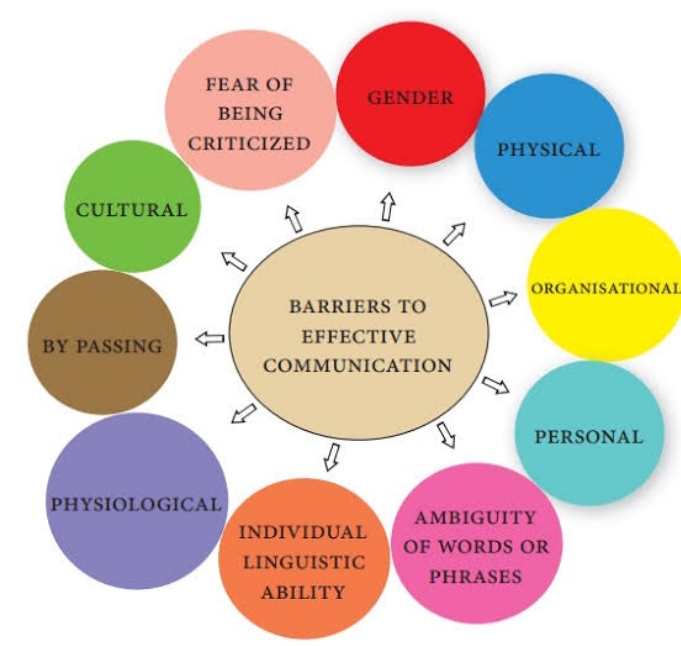
The first one is physical barriers are such things as inadequate equipment such as outdated computers, phones with poor signals,bad hearing, poor eyesight, background noise, poor lightening, poor impediments,  temperatures that are too hot or to cold, tangible items that may interfere with communication efforts.

The second is attitudes. Some times the strong emotions like anger, fear or sadness and attitudes (having to be right all the time, believing oneself to be superior or inferior to others) can taint your objectivity being extremely nervous having a personal agenda or asserting a need to win the argument can make communications less than effective such interfering emotions are also known as emotional noise.

The third one is Language. This may seem like a minor obstacle but even people who speak the same native language can have difficulty understanding each other. If they are from different generations or Different regions of the same country. Slang, professional jargon and regional colloquialisms Can hurt or frustrate communicators with even the best intentions.

The fourth is Physiological health. Ill health, poor eyesight, hearing difficulties and pain are all physiological obstacles to effective communication. The fifth barrier is problems with structure design companies or institutions can have unclear organizational structures making communications difficult. Bad information system lack of supervision and employee training are also to blame for faulty Communications.

The sixth one is cultural noise. People sometimes make assumptions about others based on their cultural background and associated stereotypes. not making eye contact is a sure way of raising doubt in listeners and losing their attention and making them fell suspicious of you not to mention invisible.

The seventh is lack of common experience. It is a great idea to use examples or stories and anecdotes to explain or enhance a point across however if others cannot relate to these examples. Because they do not have the knowledge or shared common experiences this tool will be ineffective.

The eighth is ambiguity and overuse of abstractions leaving things has said or using too many generalizations. Proverbs or sayings can lead to lack of clarity which in turn lends itself to misinterpretation.When you talk, you’re not listening, and you need to listen to the people you’re attempting to persuade.

The ninth is information overload. It takes time to process large quantities of information and too many details can overwhelm and distract the audience from the important topics.When you try too hard to persuade someone, you may seem desperate, and desperation smells like manipulation and turns people off before you can utter your next desperate word.

The tenth one is Jumping to conclusions. Making assumptions before listening to all the  facts can be problematic in the least and catastrophic at worst. If you don’t believe in your position, product, service, or whatever you’re trying to sell, they won’t believe in it either.

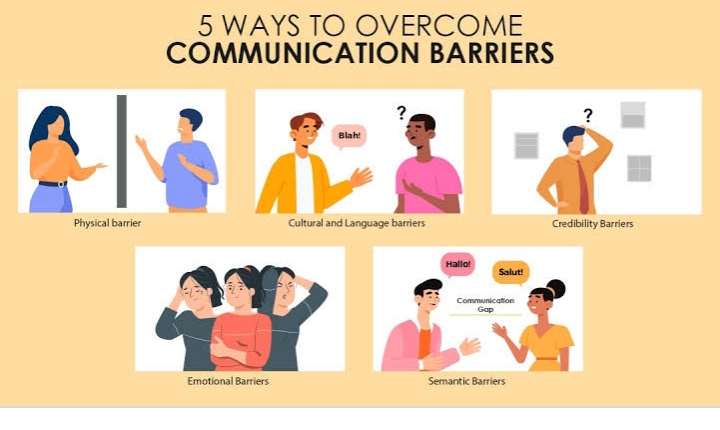
How to overcome these communication barriers?

checking whether it is a good time and place to communicate with the person. Use of simple and clear words should be emphasized. Use of ambiguous words and jargons should be avoided. Noise is the main communication barrier which must be overcome on priority basis. It is essential to identify the source of noise and then eliminate that source. Listen attentively and carefully. There is a difference between “listening” and “hearing”. Active listening means hearing with proper understanding of the message that is heard. By asking questions the speaker can ensure whether his/her message is understood or not by the receiver in the same terms as intended by the speaker. Avoid giving negative feedback. The contents of the feedback might be negative, but it should be delivered constructively. The managers should properly select the medium of communication. Simple messages should be conveyed orally, like: face to face interaction or meetings.