How is the GMAT Scored?


Congratulations on your outstanding achievement in finishing your undergraduate program. Completing college is not easy and takes a lot of effort and work. Between the fall of 2009 to 2019, the number of undergraduate enrollments in postsecondary institutions decreased by 5 percent, from 17.5 million to 16.6 million students. Of that number, only an average of 62 percent will be able to finish their bachelor’s degree in six years.

If you look at the total population, the percentage is even lower. In 2019, only around 22.5 percent of people ages 25 and older finished four years of college. Now that you are done with your bachelor’s degree, you might feel ready to face the challenges of the corporate world.

But are you really ready? With the competitive workplace, you might need more tools and skills for your career to move forward. Enrolling in graduate business school would give you a competitive edge. However, applying for graduate school can be overwhelming. So make sure you’re as prepared as possible.

The first step in your graduate school preparation is taking the GMAT, which is recognized globally as an indicator of your readiness to take a graduate business school. The GMAT measures relevant skills such as critical thinking and reasoning skills needed by the world’s top graduate business school. The GMAT exam is the most common test for MBA admission and is taken by at least 200,000 graduate school candidates each year. With over 7,000 MBA and master’s programs using the GMAT exam to screen their prospective graduate school students, it’s imperative to prepare thoroughly for the exam.

Understand The Sections

Total, Verbal, and Quantitative Scores

Analytical Writing Assessment Scores

Integrated Reasoning Scores

Take your time

The GMAT is a 3.5-hour business school entrance exam that has three sections:

● Analytical writing assessment– Measures your ability to analyze and critique an argument. It also measures your ability to communicate ideas and think critically through an essay in English. Topics will include business and other subjects that can help assess critical thinking and communication skills.

● Quantitative and verbal reasoning– Quantitative reasoning measures your mathematical reasoning, skills in problem-solving, and interpreting graphical data. It will involve an understanding of common concepts of geometry, arithmetic, and elementary algebra.

Meanwhile, verbal reasoning measures your reading comprehension, critical reasoning, and editing abilities. It also involves evaluating arguments and correcting materials to express ideas effectively.

● Integrated reasoning– Measures how good students are at analyzing and interpreting data displayed in different formats. It involves synthesizing information from graphics, numbers, text, table analysis, and evaluating information from multiple sources.

Total GMAT scores can range from 200-800. The average score between January 2015 to December 2017 was about 521.27 out of a total score of 800. Verbal and Quantitative sections are scored interactively and adaptively.

The number of questions answered, how correct they are, and even the question difficulty determine your score. These two sections have scores anywhere from 0-60 after being tabulated. However, scores below 6 and above 51 are rare in verbal and quantitative reasoning.

The Analytical Writing Assessment (AWA) involves the analysis of one argumentative essay. Scores are from 0-6 in intervals of 0.5. Machine algorithms and professional essay raters are used in scoring the essay. You can request a rescore if you feel it was inaccurate. The score can be adjusted pending the review of another human rater for a fee of $45, but any requests for rescoring should be made within six months of the date of the test.

Integrated Reasoning (IR) is rated on a scale of 1-8 within single-digit intervals. You are allowed to use an online calculator with basic functions to answer the questions. However, each question requires multiple responses and parts completed. So you have to answer all responses correctly because you do not receive partial credit if you leave sections blank.

Get Prepared for GMAT

You have to do your best to get the best score on GMAT and show you have what it takes to enter business school. Now that you know the scoring methodology, you need preparation to get your target score required to get into business school. It would be best to select suitable materials and a clear study plan. Then, shift into high gear and find resources such as a GMAT prep courseto help you fine-tune your test-taking.

The GMAT exam is a crucial step for business school candidates. Around 62 percent of GMAT test takers complete four or more weeks of preparation before their exam. The more time you put into studying, the greater chance you will do better in the exam.

<!–
/* Style Definitions */
p.MsoNormal, li.MsoNormal, div.MsoNormal
{mso-style-unhide:no;
mso-style-qformat:yes;
mso-style-parent:””;
margin:0cm;
line-height:115%;
mso-pagination:widow-orphan;
font-size:11.0pt;
font-family:”Arial”,sans-serif;
mso-fareast-font-family:Arial;
mso-ansi-language:EN;}
h1
{mso-style-priority:9;
mso-style-unhide:no;
mso-style-qformat:yes;
mso-style-link:”Heading 1 Char”;
mso-style-next:Normal;
margin-top:20.0pt;
margin-right:0cm;
margin-bottom:6.0pt;
margin-left:0cm;
line-height:115%;
mso-pagination:widow-orphan lines-together;
page-break-after:avoid;
mso-outline-level:1;
font-size:20.0pt;
font-family:”Arial”,sans-serif;
mso-font-kerning:0pt;
mso-ansi-language:EN;
font-weight:normal;}
h2
{mso-style-priority:9;
mso-style-qformat:yes;
mso-style-link:”Heading 2 Char”;
mso-style-next:Normal;
margin-top:18.0pt;
margin-right:0cm;
margin-bottom:6.0pt;
margin-left:0cm;
line-height:115%;
mso-pagination:widow-orphan lines-together;
page-break-after:avoid;
mso-outline-level:2;
font-size:16.0pt;
font-family:”Arial”,sans-serif;
mso-ansi-language:EN;
font-weight:normal;}
span.Heading1Char
{mso-style-name:”Heading 1 Char”;
mso-style-priority:9;
mso-style-unhide:no;
mso-style-locked:yes;
mso-style-link:”Heading 1″;
mso-ansi-font-size:20.0pt;
mso-bidi-font-size:20.0pt;}
span.Heading2Char
{mso-style-name:”Heading 2 Char”;
mso-style-priority:9;
mso-style-unhide:no;
mso-style-locked:yes;
mso-style-link:”Heading 2″;
mso-ansi-font-size:16.0pt;
mso-bidi-font-size:16.0pt;}
.MsoChpDefault
{mso-style-type:export-only;
mso-default-props:yes;
font-size:11.0pt;
mso-ansi-font-size:11.0pt;
mso-bidi-font-size:11.0pt;
font-family:”Arial”,sans-serif;
mso-ascii-font-family:Arial;
mso-fareast-font-family:Arial;
mso-hansi-font-family:Arial;
mso-bidi-font-family:Arial;
mso-ansi-language:EN;}
.MsoPapDefault
{mso-style-type:export-only;
line-height:115%;}
@page WordSection1
{size:612.0pt 792.0pt;
margin:72.0pt 72.0pt 72.0pt 72.0pt;
mso-header-margin:36.0pt;
mso-footer-margin:36.0pt;
mso-page-numbers:1;
mso-paper-source:0;}
div.WordSection1
{page:WordSection1;}
/* List Definitions */
@list l0
{mso-list-id:609973364;
mso-list-template-ids:-1877600202;}
@list l0:level1
{mso-level-number-format:bullet;
mso-level-text:●;
mso-level-tab-stop:none;
mso-level-number-position:left;
text-indent:-18.0pt;
color:#0E101A;
text-decoration:none;
text-underline:none;}
@list l0:level2
{mso-level-number-format:bullet;
mso-level-text:○;
mso-level-tab-stop:none;
mso-level-number-position:left;
text-indent:-18.0pt;
text-decoration:none;
text-underline:none;}
@list l0:level3
{mso-level-number-format:bullet;
mso-level-text:■;
mso-level-tab-stop:none;
mso-level-number-position:left;
text-indent:-18.0pt;
text-decoration:none;
text-underline:none;}
@list l0:level4
{mso-level-number-format:bullet;
mso-level-text:●;
mso-level-tab-stop:none;
mso-level-number-position:left;
text-indent:-18.0pt;
text-decoration:none;
text-underline:none;}
@list l0:level5
{mso-level-number-format:bullet;
mso-level-text:○;
mso-level-tab-stop:none;
mso-level-number-position:left;
text-indent:-18.0pt;
text-decoration:none;
text-underline:none;}
@list l0:level6
{mso-level-number-format:bullet;
mso-level-text:■;
mso-level-tab-stop:none;
mso-level-number-position:left;
text-indent:-18.0pt;
text-decoration:none;
text-underline:none;}
@list l0:level7
{mso-level-number-format:bullet;
mso-level-text:●;
mso-level-tab-stop:none;
mso-level-number-position:left;
text-indent:-18.0pt;
text-decoration:none;
text-underline:none;}
@list l0:level8
{mso-level-number-format:bullet;
mso-level-text:○;
mso-level-tab-stop:none;
mso-level-number-position:left;
text-indent:-18.0pt;
text-decoration:none;
text-underline:none;}
@list l0:level9
{mso-level-number-format:bullet;
mso-level-text:■;
mso-level-tab-stop:none;
mso-level-number-position:left;
text-indent:-18.0pt;
text-decoration:none;
text-underline:none;}
@list l1
{mso-list-id:634678560;
mso-list-template-ids:1746455336;}
@list l1:level1
{mso-level-number-format:bullet;
mso-level-text:●;
mso-level-tab-stop:none;
mso-level-number-position:left;
text-indent:-18.0pt;
color:#0E101A;
text-decoration:none;
text-underline:none;}
@list l1:level2
{mso-level-number-format:bullet;
mso-level-text:○;
mso-level-tab-stop:none;
mso-level-number-position:left;
text-indent:-18.0pt;
text-decoration:none;
text-underline:none;}
@list l1:level3
{mso-level-number-format:bullet;
mso-level-text:■;
mso-level-tab-stop:none;
mso-level-number-position:left;
text-indent:-18.0pt;
text-decoration:none;
text-underline:none;}
@list l1:level4
{mso-level-number-format:bullet;
mso-level-text:●;
mso-level-tab-stop:none;
mso-level-number-position:left;
text-indent:-18.0pt;
text-decoration:none;
text-underline:none;}
@list l1:level5
{mso-level-number-format:bullet;
mso-level-text:○;
mso-level-tab-stop:none;
mso-level-number-position:left;
text-indent:-18.0pt;
text-decoration:none;
text-underline:none;}
@list l1:level6
{mso-level-number-format:bullet;
mso-level-text:■;
mso-level-tab-stop:none;
mso-level-number-position:left;
text-indent:-18.0pt;
text-decoration:none;
text-underline:none;}
@list l1:level7
{mso-level-number-format:bullet;
mso-level-text:●;
mso-level-tab-stop:none;
mso-level-number-position:left;
text-indent:-18.0pt;
text-decoration:none;
text-underline:none;}
@list l1:level8
{mso-level-number-format:bullet;
mso-level-text:○;
mso-level-tab-stop:none;
mso-level-number-position:left;
text-indent:-18.0pt;
text-decoration:none;
text-underline:none;}
@list l1:level9
{mso-level-number-format:bullet;
mso-level-text:■;
mso-level-tab-stop:none;
mso-level-number-position:left;
text-indent:-18.0pt;
text-decoration:none;
text-underline:none;}

–>

Interesting facts about Men’s

Boys can test your patience, run your ragged, and make you want to pull your hair out. But they also melt ur heart with just one sweet look, and make you wonder how you ever exited before them.

1.  If you shake your groove thing in front of a man,  you’re pretty much guaranteed to have anything you want.

2.    Men enjoy long romantic walks to the beer fridge.

3.     Men waste thousands of gallons of fuel every year, driving around while not asking for directions.

4.     Men can slip into a coma while sitting in a retail store chair waiting for you to come out of the fitting room.

5.     50% of men claim they would feel comfortable if their girlfriend had a lesbian lover.

 6.     Putting toilet paper on the roll is not common sense, it’s a super power.  Apparently only women have this magical power.

.     For the love of Pete, what is the big deal about golf ?!  It’s a big patch of grass with a little dimpled ball… MmmKay.

8.     Men roll their eyes at words like “commitment, and change the toilet paper roll “

9.     If you find dirty socks and underwear near-to or semi-near the hamper, there is a man nearby.

10.    A woman speaks about 7,000 words a day; a man speaks about 2,000.

11.     If it’s attention that you want, don’t get in a relationship with a man during playoff season.

12.    Men do things that make us go aaaackkkkkk and make us go ahhhhhhhhh all at once.

13.    The front lawn is the Holy Land.   It’s not to be messed with.

14.     Men like gadgets with lots of fancy shiny black buttons.  It makes them feel dang important.

15.     Dear men, your Mother is not a saint.  A saint would have taught you to put the lid down.

16.      When men talk with food in their mouth, it makes you want to reach right across the table and slap them with a hot dog while mumbling the word wanker under your breath.

.      If men make the bed and do the laundry, we will gasp.

18.     Enough already with the combover.  It has never once fooled anyone into thinking you have hair.  Never.  Not once.  Ever.  In the history of ever.

19.    Breathing like a normal person seems like no biggie to women.

20.     It’s easier for a man to buy a bathing suit :

Women have two types :   depressing and more depressing.

Men have two types :   sexy-cool and a horrific-speedo.

21.    Booby kryptonite :  Dear men, they are just boobs.  Breathe.  Do you want to know who else has boobs?  Your Mom.

22.    It’s funny how men are brave enough to go to war, but shudder at the thought of a bikini wax.

23.    Men would rather take a bullet than pick up tampons at the grocery store.

24.     After a bottle of champagne, they start licking faces.  It makes you want to punch them and kiss them all at once.

25.     Men like to barbecue.  They suddenly like to cook if danger and fire are involved.  Weird how that happens.

26.     Let’s face it, they go a little bit bonkers if you don’t change the oil in your car.  Whatevers.  Oil schmoil.

27.     Bad boys are like cupcakes.  They are delicious for two nibbles and then you start to hate yourself.

28.     Getting a man organized is like herding a cat or pushing a rope uphill.

29.     You can praise them, but go easy on the pedal or Mr. Stud muffin will puff up like a peacock.

30.     Honest to Pete… do you have an unfinished project in your household that can only be completed by a man !?!  Light it on fire.

SCHOOL LIFE: THE GOLDEN PERIOD OF A CHILDS LIFE

” As a child we always to grow up fast, but now we realize that incomplete homework and broken toys were far better than unfilled dreams and the world outside”. As a child grows so do his tension and responsibilities. Well this cannot define the difference between the school life and collage life but provide us a sufficient outline. We always wanted to grow up fast like our parents so that no one can scold us or instruct us to do anything.

In school life there are tension of studies rather I would suggest that if we take up studies as daily routine like bathing, eating etc. then we would feel relieved of this tension. In school we have teacher to support us like a mother and expects u to be disciplined so that we are on the right path of a bright future. We enjoy a lot under the motherly warmth of our teachers at school.

we always wanted freedom, we used to think it exist. Does it? Yes it does. it exist in the frank discussion with our teacher in school. It exist in the fight over over stupid matter with friends in school. It exist in playing pranks with friends and teachers in school. It exist in passing a lovely smile to teachers for even the gravest mistake in school.

when at school, we feel that we are bound by many rules and regulations and once we will reach college we will be free bird, no teacher will force us to attend classes, no uniforms etc. But no, we are under a false notion. At college we may be misguided and go astray without the supervision of teachers. There the students who care for studies have to keep themselves updated and are bound to attend classes whether they wish to or not because attendance does matter and carries marks! In collage you are best judge of good and bad. The so called freedom is a merge because responsibility of your actions lies in you. I am in college and I know the freedom out here it is illusion.

However it is school life which gives us the real freedom to live in cocoon of care, concern and commitment of our teachers. The best phrase to sum up school life would be free life.

Aajtak Employee fired due to criticising The P.M.

Aajtak Employee claims that he has been fired from his job because of the criticism of Prime Minister. Shyam Meera Singh. He said in his tweet that he joined Aajtak, 7 months ago and knew what he had to write and how to do his job.As a journalist he knew that he is there to inform public with the facts. But soon people started tagging the company, in the posts which said that who is this man and kick him out. How can he write such things about our Prime Minister.

Shyam Meera Singh continuously tweet about what is going on and he does criticizes the government for its irresponsible actions. He tweeted about it on 19th July and was fired from the company.

What do you think is it right or is it wrong. Can a journalist simply can’t do his job and gets fires just because he did something that most of the media houses are afraid to do. Tell us you thoughts about it.

THE REAL STORY OF THE ANCIENT OLYMPIC GAMES

A short history of the winter olympic games | Sutori

The Olympic Games, which originated in ancient Greece as many as 3,000 years ago, were revived in the late 19th century and have become the world’s preeminent sporting competition. From the 8th century B.C. to the 4th century A.D., the Games were held every four years in Olympia, located in the western Peloponnese peninsula, in honor of the god Zeus. The first modern Olympics took place in 1896 in Athens, and featured 280 participants from 12 nations, competing in 43 events. Since 1994, the Summer and Winter Olympic Games have been held separately and have alternated every two years. The 2020 Summer Olympics, delayed one year because of the COVID-19 pandemic, will be held from July 23 to August 8, 2021 in Tokyo, Japan.

The Olympics Begin in Ancient Greece

The first written records of the ancient Olympic Games date to 776 B.C., when a cook named Coroebus won the only event—a 192-meter footrace called the stade (the origin of the modern “stadium”)—to become the first Olympic champion. However, it is generally believed that the Games had been going on for many years by that time. Legend has it that Heracles (the Roman Hercules), son of Zeus and the mortal woman Alcmene, founded the Games, which by the end of the 6th century B.C had become the most famous of all Greek sporting festivals. 

The ancient Olympics were held every four years between August 6 and September 19 during a religious festival honoring Zeus. The Games were named for their location at Olympia, a sacred site located near the western coast of the Peloponnese peninsula in southern Greece. Their influence was so great that ancient historians began to measure time by the four-year increments in between Olympic Games, which were known as Olympiads.

After 13 Olympiads, two more races joined the stade as Olympic events: the diaulos (roughly equal to today’s 400-meter race), and the dolichos (a longer-distance race, possibly comparable to the 1,500-meter or 5,000-meter event). The pentathlon (consisting of five events: a foot race, a long jump, discus and javelin throws and a wrestling match) was introduced in 708 B.C., boxing in 688 B.C. and chariot racing in 680 B.C. In 648 B.C., pankration, a combination of boxing and wrestling with virtually no rules, debuted as an Olympic event. Participation in the ancient Olympic Games was initially limited to freeborn male citizens of Greece; there were no women’s events, and married women were prohibited from attending the competition.

Tokyo Olympic Torch to be powered by hydrogen

Decline and Revival of the Olympic Tradition

After the Roman Empire conquered Greece in the mid-2nd century B.C., the Games continued, but their standards and quality declined. In one notorious example from A.D. 67, the decadent Emperor Nero entered an Olympic chariot race, only to disgrace himself by declaring himself the winner even after he fell off his chariot during the event. In A.D. 393, Emperor Theodosius I, a Christian, called for a ban on all “pagan” festivals, ending the ancient Olympic tradition after nearly 12 centuries.

It would be another 1,500 years before the Games would rise again, largely thanks to the efforts of Baron Pierre de Coubertin (1863-1937) of France. Dedicated to the promotion of physical education, the young baron became inspired by the idea of creating a modern Olympic Games after visiting the ancient Olympic site. In November 1892, at a meeting of the Union des Sports Athlétiques in Paris, Coubertin proposed the idea of reviving the Olympics as an international athletic competition held every four years. Two years later, he got the approval he needed to found the International Olympic Committee (IOC), which would become the governing body of the modern Olympic Games.

The Olympics Through the Years

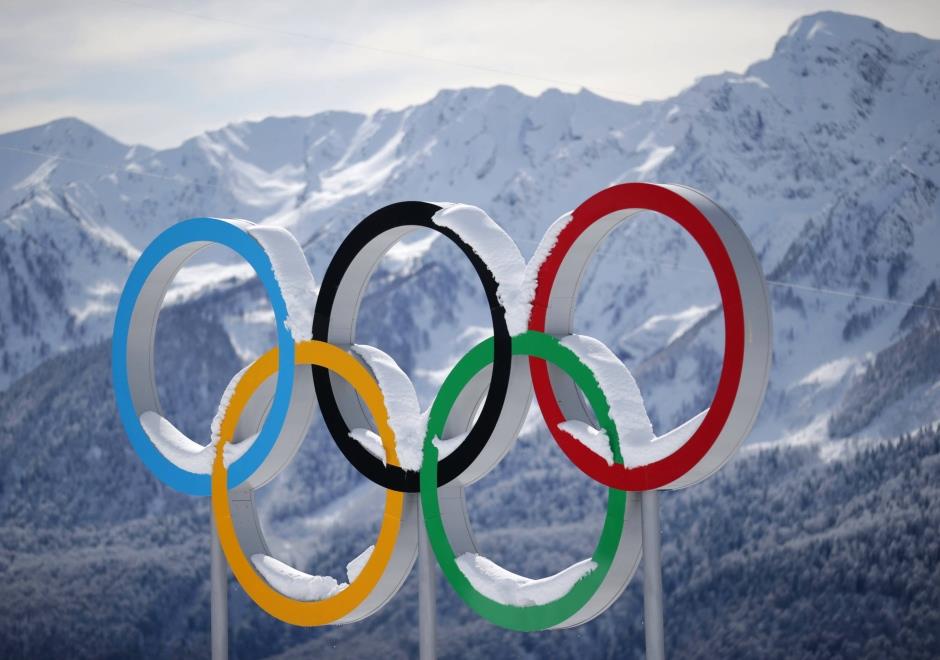
The first modern Olympics were held in Athens, Greece, in 1896. In the opening ceremony, King Georgios I and a crowd of 60,000 spectators welcomed 280 participants from 12 nations (all male), who would compete in 43 events, including track and field, gymnastics, swimming, wrestling, cycling, tennis, weightlifting, shooting and fencing. All subsequent Olympiads have been numbered even when no Games take place (as in 1916, during World War I, and in 1940 and 1944, during World War II). The official symbol of the modern Games is five interlocking colored rings, representing the continents of North and South America, Asia, Africa, Europe and Australia. The Olympic flag, featuring this symbol on a white background, flew for the first time at the Antwerp Games in 1920.

The Olympics truly took off as an international sporting event after 1924, when the VIII Games were held in Paris. Some 3,000 athletes (with more than 100 women among them) from 44 nations competed that year, and for the first time the Games featured a closing ceremony. The Winter Olympics debuted that year, including such events as figure skating, ice hockey, bobsledding and the biathlon. Eighty years later, when the 2004 Summer Olympics returned to Athens for the first time in more than a century, nearly 11,000 athletes from a record 201 countries competed. In a gesture that joined both ancient and modern Olympic traditions, the shotput competition that year was held at the site of the classical Games in Olympia.

Learning English Is Essential For A Child&#39;s Success. Read This To Find Out Why

              “Communication
works for those who work at it”

                            -John
Powell


Children are great at learning
languages, they learn a language quickly and gain fluency in a matter of years
but at what age should they start learning English? 
 

There is no age bar for learning but
the children need to start learning English as early as possible. Over 840
million people speak English
as a first or second language, which makes it the
second most-spoken language. It is considered to be the language of success. To
be very honest, if someone wants a decent job anywhere in the world, he/she
needs to be proficient in this language.
Children have a higher grasping power
as compared to an adult. Developing a habit of speaking, writing, listening,
and reading should be inculcated in a child from the very beginning.

Let’s look at the advantages of being
a young learner and how parents can help their children to learn, grow and
succeed.


Learn and Lead 


Being able to communicate in English is one of the most
important life skills. Communication skills take a lifetime to master, if not
mastered at an early age. According
to a 2018 survey conducted by the National Association of Colleges and
Employees
, communication skills are ranked first among ‘must have’
skills. The most important aim should be to
ignite young minds and unleash the dormant energy by providing an opportunity
for children to learn to communicate effectively in English. It is the duty of the parents and teachers to help broaden a child’s perspective, think critically, speak fluently, participate
in public speaking
and tap their leadership potential.


Invest time in learning  

Communication skills would make them stand strong on their feet.

Poor Communication has been considered as one of the greatest
barriers to confidence. If a child has not developed the skill of speaking, he
might lose the confidence to take his place among others.

Communicating daily will help to sharpen their skill.


 How is the current situation beneficial for students?


 In current situations, schools are closed and
students are not able to participate in co-curricular activities, thus
considering the situation it is the best time to grab the opportunity and
master the skill of communicating in English. Every child deserves to learn and
we as an older generation should give them the right opportunity and platform.

In today’s world, let’s make sure that our younger generation
does not have to face any hesitation. 

We must ensure that children develop skills that classrooms
can’t teach. A personalized curriculum should be developed which caters to the need
of the students. Thus, making them learn in a more conceptualized way.

Let them learn and lead the
world


Beneficial for higher studies 


Like job applications, one of the best benefits of learning
English is an educational opportunity. If you wish your child should
access the best colleges like Harvard, Stanford, Oxford, Cambridge, or any
college, knowing English provides them an incredible edge. Writing
SOP’s (Statement of Purpose) is not an easy task; therefore, writing English is
very important for the students. Thus, it will ensure them to get the best
education in the future. If your child wishes to study abroad or within India
itself, learning English is one of the most important factors which
should be kept in mind.

Learn, grow and communicate.


Develop the habit of writing 

 
Who knows your child might be the next Shakespeare?

One of the best ways to understand a language is to write. The more your child writes the
more exposure he receives. This eventually increases their creativity.

Schools must provide the students with exposure to
writing and make them understand the essence of writing. Students should start learning with simple words that later on turn into more complex and afterward the students must learn descriptive words needed to become creative writers. Much like becoming a musician, one might not understand
his/her instrument until they try it out. The same goes for English. It
requires consistent practice.

Start learning today, see the
benefits soon.


Improve focus


To correctly become a well-rounded English speaker requires
focus and determination. A child must develop such a thought process that helps her to remain focused and dedicated. Educators should give personal attention to students. During the course, students need to focus on
the
four core pillars of learning -:


<!–[if gte vml 1]><v:oval id="_x0000_s1029" style='position:absolute;
margin-left:407.25pt;margin-top:13.65pt;width:109.5pt;height:101.25pt;
z-index:-1′ fillcolor=”#c0504d [3205]” strokecolor=”#f2f2f2 [3041]”
strokeweight=”3pt”>
<v:shadow on="t" type="perspective" color="#622423 [1605]" opacity=".5"
offset=”1pt” offset2=”-1pt”/>
<![endif]–>
<!–[if gte vml 1]><v:oval id="_x0000_s1028"
style=’position:absolute;margin-left:282.75pt;margin-top:9.15pt;width:110.25pt;
height:105.75pt;z-index:-2′ fillcolor=”#9bbb59 [3206]” strokecolor=”#f2f2f2 [3041]”
strokeweight=”3pt”>
<v:shadow on="t" type="perspective" color="#4e6128 [1606]" opacity=".5"
offset=”1pt” offset2=”-1pt”/>
<![endif]–><!–[if gte vml 1]><v:oval id="_x0000_s1027"
style=’position:absolute;margin-left:2in;margin-top:9.15pt;width:125.25pt;
height:105.75pt;z-index:-3′ fillcolor=”#4bacc6 [3208]” strokecolor=”#f2f2f2 [3041]”
strokeweight=”3pt”>
<v:shadow on="t" type="perspective" color="#205867 [1608]" opacity=".5"
offset=”1pt” offset2=”-1pt”/>
<![endif]–><!–[if gte vml 1]><v:oval id="_x0000_s1026"
style=’position:absolute;margin-left:12.75pt;margin-top:3.15pt;width:113.25pt;
height:111.75pt;z-index:-4′ fillcolor=”#f79646 [3209]” strokecolor=”#f2f2f2 [3041]”
strokeweight=”3pt”>
<v:shadow on="t" type="perspective" color="#974706 [1609]" opacity=".5"
offset=”1pt” offset2=”-1pt”/>
<![endif]–>


       SPEAKING 
         

    READING
        

 WRITING

 LISTENING

 Thus, this will provide them amazing exposure and some invaluable experience of learning.

Children are the terra firma upon which the future is built. The
impact of learning will bring out their individuality. 
They deserve to know the world, let’s not keep them confined.

Let’s nurture their
leadership qualities because we can foresee a nation run by them.
  

                                               Students today are leaders tomorrow

INTERESTING FACTS ABOUT GIRLS:YOU SHOULD KNOW.

  • Girls like guys with a sense of humor and hate guys who always brag about themselves. 
  • Girls can either jokingly or seriously get jealous over your pubg game. 
  • It is really hard to trace why girls are unpredictable.
  • Girls spend one year of their lifetime just in deciding what to wear. 
  • A girl cannot keep a secret for more than 47 hours. 
  • Instead of a girl telling her feelings to a guy, her favorite song would convey it better. 
  • Girls usually compete unconsciously among themselves especially when it comes to beauty.
  • A woman can tolerate double the pain compared to a man.
  • Girls spend 120 hours in a year looking at themselves in the mirror.
  • In every 100 girls, only one would become the wife of her lover, remaining 99 would remain as passwords for Gmail and Facebook accounts of their lovers.
  • You should let her cool first before you say sorry, otherwise, she won’t accept your apology. 
  • Girls like guys who can protect and defend them.
  • If a girl says “no” believe her. She wouldn’t give you a no if she likes you.
  • Girls love receiving letters and surprises. 
  • When a girl is talking and if a boy says ”OK bye”, they hate him a lot. 
  • Girls like boys who ask for advice.
  • Girls hate it when you make them wait. 
  • If you’re thinking that girls are very particular with a guy’s looks, then its time for you to make a shift. It’s the attitude that they fall for
  • There is no guarantee that a girl would get impressed however we respect her, praise her, love her and care for her, but in the case of guys sly leer and a smile would suffice.
  • There would be a dark secret in every girl’s life which is not even shared with her best friend. 
  • Girls don’t enjoy talking dirty as much guys do.
  • Girls love to feel special even though they might not show it.
  • Being serious can turn a girl off.
  • When a guy says something really sentimental, a girl will remember it forever and ever.
  • Girls know how to control their emotions.
  • Girls daydream about their Crushs all the time even though they don’t show it.
  • Girls like to hear compliments, but usually not have to react to them.
  • Don’t try to guess girls feeling, Ask her.
  • If a girl calls you or expect a call from you stay with her.
  • Hearing the words “I love you” to a girl is great expression to agirl that she is beautiful.
  • Girls want nothing more than to feel love.

As humans, Women’s are beautiful, incredible, and powerful in their own right. They can achieve anything they set their minds to. Having to deal with oppression and inequality for centuries, there have been a ton of things women have had to fight for and change the future for succeeding generations of equally amazing women. therefore we should respect women.

Depression and the ways for getting out of it

The silent killer that takes lives without warning, punishment, or any sympathy; depression is truly one of the most prominent mental illnesses in the world. Depression has been defined as a mental illness-inducing a severe and staunch feeling of sadness. The term depressed is coined in English as a temporary sadness that everyone experiences in their life. Despite that depression is more active in women, it is still one of the most common mental illnesses in the world. It affects anybody, regardless of sex, race, ethnicity, or socioeconomic standing. Nervous breakdowns are commonly associated with depression and are often identified due to the confusion and fear that depression brings. Depression heavily influences emotions and one’s outlook on life and more than often ends up changing a person’s life in a major way. People experiencing depression often feel sad every day and cry very often, making that too another daily routine. Even when participating in activities that used to bring joy, people begin to lose interest and begin secluding themselves from people and things they love. Depression still exists in the teen population and recently has begun increasing in numbers. Reports of depression in teenagers have shown different signs from those of adults. Physical complaints are very common in the younger crowd, including stomachaches and headaches. It also leads to or is in correlation with eating disorders or abnormality, social withdrawal, and of course, depressed mood. They may feel unenthusiastic about school and other activities. Their sleeping patterns become irregular and unhealthy, they may sleep more, but still, feel an extreme lack of energy or enthusiasm.

However, there are small steps you can take to help you feel more in control and improve your overall sense of well-being:-

  •  Meet yourself where you are

           Every day with this disorder is different. It’s important to take your mental health                  seriously and accept that where you are right now isn’t where you’ll always be.

  • Know that today isn’t indicative of tomorrow

          Today’s mood, emotions, or thoughts don’t belong to tomorrow. If you were                          unsuccessful at getting out of bed or accomplishing your goals today, remember that               you haven’t lost tomorrow’s opportunity to try again. Give yourself the grace to                     accept that while some days will be difficult, some days will also be great. Try to look            forward to tomorrow’s fresh start.

  •  Do the opposite of what the ‘depression voice’ suggests.

           The negative, irrational voice in your head may talk you out of self-help. However, if            you can learn to recognize it, you can learn to replace it. Use logic as a weapon.                     Address each thought individually as it occurs.

  •  Reward your efforts.

           All goals are worthy of recognition, and all successes are worthy of celebration.                    When you achieve a goal, do your best to recognize it. You may not feel like                          celebrating with a cake and confetti, but recognizing your own successes can be a                  very powerful weapon against depression’s negative weight.

Lastly, life will throw many hurdles at you, instead of running away from them or even failing to cross them, one should always believe in himself as people don’t know but they have the ability to achieve wonders. 

MAGIC IN A CUP OF TEA!!!

Every morning won’t be complete without a cup tea right? Many people can’t do their work without a cup pf tea. Tea gives us refreshness and make us active. Though many like coffee, there are people who love tea too. The reason for me to talk about tea is nothing but today’s topic revolves around tea. Let me tell you an essay written by Eric Arthur Blair about a cup of tea.

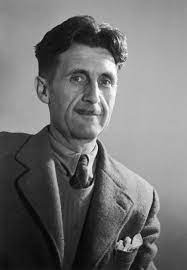
Eric Arthur Blair, known by his pename George Orwell, was an English Novelist, journalist and a critic. He opposed totalitarianism and supported democratic socialism. He is best known for the Allegorical novella ‘Animal farm” and the dystopian novel “Nineteen Eighty Four”. He wrote an essay about ‘A nice cup of tea’ and it was published in London Evening Standards in 1946. It is about the discussion of the art of making tea. He states ten rules to be followed while making tea. Let me tell you about his essay.

Eric Arthur Blair (George Orwell)

The author said that there are no cookery books that has the preparation of tea as a recepie. Countries like Eire, NewZealand and Australia which has tea as a part of civilization. He says that Chinese tea has virtues but there is no much stimulation in it. So the author prefers Indian or Ceylonese tea.

  • The first rule is that one should prefer Indian or Ceylonese tea. One does not feel wiser or more optimistic after drinking it. ‘A nice cup of tea’ literally means Indian tea.
  • Second rule is that tea should be made in small quantities in a tea pot. The teapot should be made of China or earthenware. Silver and birtannia ware tea pots produce inferior tea and enamel parts are worse. In the army, the tea is made in a big cauldron, tastes of grease and whitewash.
  • Thirdly, the pot should be warmed beforehand rather than placing it with water in it.
  • Fourthly, the tea should be strong. He states that one strong cup of tea is better than twenty weak ones. All tea lovers not only love a strong tea but like it a little longer with each year that passes.
  • Fifthly, the tea should be put straight into the pot. Don’t use strainers or muslin bags to imprison the tea. One can swallow tea-leaves in considerable quantities without ill effect and if the tea is not loose in the pot it never infuses properly.
  • Sixthly, one should take teapot to the kettle and no other way about. The water should be boiling at the time, one should keep it on the flame while pouring it.
  • Seventhly, after making the tea, one should stir it, or better give it a good shake allowing the leaves to settle.
  • Eighthly, one should drink it out in a cylindrical type of cup rather than a shallow type of cup. The shallow cup will have the tea half cold before one starts, drinking it.
  • Ninthly, one should pour the cream off the milk before using it for tea. Milk with cream gives a sickly taste.
  • Tenthly, one should pour tea into the cup first and then add milk. By pouring the tea first, one can regulate the amount of milk to be added to the tea. He also says that one should drink tea without adding sugar. Adding sugar, destroys the taste of the tea. He also asks the question to the tea lovers, How can you call yourself a tea lover if you destroy the flavour of your tea by adding sugar into it? He also says that adding sugar is similar to drinking a hot water.

The points said by him are quite controversiable. But try to drink a cup of tea without sugar for a fortnight, and you will never ruin your tea by adding sugar to it. Think about yourself guys. This essay is quite interesting. I like this essay and how about you guys?

Read more;

HISTORICAL EVENT ON JULY 27th.

Battle Of Maiwand on July 27th.

On 27th July, 1880, the Battle of Maiwand was fought between nation soldiers and also Afghan army, during the Second Anglo-Afghan War. during this battle, the Afghan forces, headed by Mohammad Ayub Khan, turned triumphant against Brits army.

2000 Fiji George Speight on July 27th.

The Rebel coup leader George Speight who led the coup to overthrow Fiji’s democratically elected government in May by taking Fiji’s Indian Prime Minister, Mahendra Chaudhry, and members of his multi-racial government hostage for 8 weeks has been arrested and can possibly face treason charges. He was found guilty of treason and is currently serving a term of captivity for his role within the overthrow of the constitutional government.

Segmenting a market?

See everybody has their own likes and dislikes right? It is always possible that my need and your need can be different or even similar also. Market segmentation is just the most useful aspect in which a marketer can divide the whole market into subgroups of people having the same needs and wants. Must be wondering why it is done? So by this concept marketer gets the clear idea of the group demanding the same products and can easily satisfy their demand on that basis. Suppose if their is a group of teenagers than obviously their demand and needs about a product will be different from that of old age group. Likewise we have many different basis for market segmentation let us just understand them one by one:

  • Geographic Segmentation: This is the most simple method of market segmentation as in this the people living in one region of the country have different buying behaviours from that of the people living in some other region and thus this becomes the base for dividing the market .
  • Demographic Segmentation: Demographic elements such as age(teenagers/adults/retired), occupation, education, sex and income are used here for Segmentation.
  • Psycho-graphic Segmentation: Under this basis the consumers are divided into subgroups on the basis of their psychological attitude and also includes their personality and lifestyle.
  • Behavioral Segmentation: Consumers are here divided on the basis of the knowledge , attitude and use of actual products.
  • Volume Segmentation: It is assumed that most of the product is sold to a certain percentage of people. There are light , medium and heavy users of products. It is important for the business to give due consideration to the heavy users so that they must not switch to some other brand and also along with that they are required to adopt various techniques to convert light , medium and non users into the heavy one.
Easy explaination of its benefits.

OLYMPIC GAMES


The History of the Olympic Games

The Olympic Games are an international sports festival that began in ancient Greece. The original Greek games were staged every fourth year for several hundred years, until they were abolished in the early Christian era. The revival of the Olympic Games took place in 1896, and since then they have been staged every fourth year, except during World War I and World War II (1916, 1940, 1944).

Perhaps the basic difference between the ancient and modern Olympics is that the former was the ancient Greeks’ way of saluting their gods, whereas the modern Games are a manner of saluting the athletic talents of citizens of all nations. The original Olympics featured competition in music, oratory, and theater performances as well. The modern Games have a more expansive athletic agenda, and for 2 and a half weeks they are supposed to replace the rancor of international conflict with friendly competition. In recent times, however, that lofty ideal has not always been attained.

The Ancient Olympics

The earliest reliable date that recorded history gives for the first Olympics is 776 B.C., although virtually all historians presume that the Games began well before then.

It is certain that during the midsummer of 776 B.C. a festival was held at Olympia on the highly civilized eastern coast of the Peloponnesian peninsula. That festival remained a regularly scheduled event, taking place during the pre-Christian golden age of Greece. As a testimony to the religious nature of the Games (which were held in honor of Zeus, the most important god in the ancient Greek pantheon), all wars would cease during the contests. According to the earliest records, only one athletic event was held in the ancient Olympics — a footrace of about 183 m (200 yd), or the length of the stadium. A cook, Coroibus of Elis, was the first recorded winner. The first few Olympics had only local appeal and were limited to one race on one day; only men were allowed to compete or attend. A second race — twice the length of the stadium — was added in the 14th Olympics, and a still longer race was added to the next competition, four years later.

When the powerful, warlike Spartans began to compete, they influenced the agenda. The 18th Olympiad included wrestling and a pentathlon consisting of running, jumping, spear throwing (the javelin), discus throwing, and wrestling. Boxing was added at the 23rd Olympiad, and the Games continued to expand, with the addition of chariot racing and other sports. In the 37th Olympiad (632 B.C.) the format was extended to five days of competition.

The growth of the Games fostered “professionalism” among the competitors, and the Olympic ideals waned as royalty began to compete for personal gain, particularly in the chariot events. Human beings were being glorified as well as the gods; many winners erected statues to deify themselves. In A.D. 394 the Games were officially ended by the Roman emperor Theodosius I, who felt that they had pagan connotations.

The Modern Olympics

The revival of the Olympic Games in 1896, unlike the original Games, has a clear, concise history. Pierre de Coubertin (1863–1937), a young French nobleman, felt that he could institute an educational program in France that approximated the ancient Greek notion of a balanced development of mind and body. The Greeks themselves had tried to revive the Olympics by holding local athletic games in Athens during the 1800s, but without lasting success. It was Baron de Coubertin’s determination and organizational genius, however, that gave impetus to the modern Olympic movement. In 1892 he addressed a meeting of the Union des Sports Athlétiques in Paris. Despite meager response he persisted, and an international sports congress eventually convened on June 16, 1894. With delegates from Belgium, England, France, Greece, Italy, Russia, Spain, Sweden, and the United States in attendance, he advocated the revival of the Olympic Games. He found ready and unanimous support from the nine countries. De Coubertin had initially planned to hold the Olympic Games in France, but the representatives convinced him that Greece was the appropriate country to host the first modern Olympics. The council did agree that the Olympics would move every four years to other great cities of the world.

Thirteen countries competed at the Athens Games in 1896. Nine sports were on the agenda: cycling, fencing, gymnastics, lawn tennis, shooting, swimming, track and field, weight lifting, and wrestling. The 14-man U.S. team dominated the track and field events, taking first place in 9 of the 12 events. The Games were a success, and a second Olympiad, to be held in France, was scheduled. Olympic Games were held in 1900 and 1904, and by 1908 the number of competitors more than quadrupled the number at Athens — from 311 to 2,082.

Beginning in 1924, a Winter Olympics was included — to be held at a separate cold-weather sports site in the same year as the Summer Games — the first held at Chamonix, France. In 1980 about 1,600 athletes from 38 nations competed at Lake Placid, N.Y., in a program that included Alpine and Nordic skiing, biathlon, ice hockey, figure skating and speed skating, bobsled, and luge.

But the Summer Games, with its wide array of events, are still the focal point of the modern Olympics. Among the standard events are basketball, boxing, canoeing and kayaking, cycling, equestrian arts, fencing, field hockey, gymnastics, modern pentathlon, rowing, shooting, soccer, swimming and diving, tennis, track and field, volleyball, water polo, weight lifting, wrestling (freestyle and Greco-Roman), and yachting. New sports are added to the roster at every Olympic Games; among the more prominent are baseball, martial arts, and most recently triathlon, which was first contested at the 2000 Games. The Games are governed by the International Olympic Committee (IOC), whose headquarters is in Lausanne, Switzerland.

The Summer and Winter Games were traditionally held in the same year, but because of the increasing size of both Olympics, the Winter Games were shifted to a different schedule after 1992. They were held in Lillehammer, Norway in 1994, in Nagano, Japan in 1998, in Salt Lake City, Utah in 2002, in Turin, Italy in 2006, and in 2010, Vancouver, British Columbia, Canada. 

Politics and the Olympics

The ideology of nationalism, which swept the world during the early 20th century, left its mark on the Olympics. Athletic nationalism was brought to a peak by Nazi Germany, which staged the 1936 Games in Berlin and used the Olympics to propagandize its cause. The Germans built a powerful team through nationalized training and scientific advances and dominated the Games in terms of medals won.

The political overtones of the Olympics did not lessen with the fall of Nazi Germany. In 1956, Egypt, Iraq, and Lebanon boycotted the Melbourne Games to protest the Anglo-French seizure of the Suez Canal, and the Netherlands, Spain, and Switzerland boycotted as well to protest the USSR’s invasion of Hungary. In Mexico City in 1968, two African American runners used the victory pedestal to protest U.S. racial policies. In the Munich Olympics in 1972, 11 Israeli athletes were massacred by Palestinian terrorists. And in 1976 in Montreal, 33 African nations, to be represented by about 400 athletes, boycotted the Games to protest South Africa’s apartheid policies.

The most serious disruptions to the modern Olympics, however, occurred in 1980 and 1984. In 1980, under strong pressure from the Carter administration, the U.S. Olympic Committee voted to boycott the Summer Games in Moscow to protest the 1979 Soviet invasion of Afghanistan. About 40 nations followed suit, including West Germany, China, and Japan, depriving the Soviets of their chief athletic competition and raising doubts about the future of the Olympic movement. Although the 1984 Winter Games, in Sarajevo, Yugoslavia, proceeded without boycotts, the Summer Games, in Los Angeles, were undercut by an Eastern-bloc boycott led by the USSR. Fear of an openly hostile environment in Los Angeles was cited by the Soviet Olympic Committee as the reason for nonparticipation, but most commentators believed the reasons to be political: the poor state of recent U.S.-Soviet relations, revenge for the U.S. boycott in 1980, and possible embarrassment to the Soviets on worldwide television caused by planned anti-Soviet demonstrations and defections of Eastern-bloc athletes. The popularity and financial success of the 1984 Los Angeles Games were, however, greater than anticipated.

In 1988 the Winter Games — in Calgary, Alberta, Canada — went on without incident. At the Summer Games, in Seoul, South Korea, only six nations (including Cuba and North Korea) boycotted, and the focus returned to the athletes.The 1992 Winter and Summer Games (in Albertville, France, and Barcelona, Spain, respectively) were the first Olympics without the Eastern-bloc sports machine, were the last for the “Unified Teams” from the former USSR, and marked the return of South Africa to Olympic competition. The 1996 Summer Games, in Atlanta, Ga., were the largest ever; they were marred by a bombing that took the lives of two people. The 1994 and 1998 Winter Games transpired without incident. The 2000 Summer Games were held in Sydney, Australia, to great acclaim. In Sydney, politics took a back seat to the competition, although North and South Korea were temporarily reunited as their athletes marched as one country in the opening ceremonies. Athens, Greece — site of the first modern Olympics — was the site of  the Summer Games in 2004.  Though it has potential for political controversies due to its rapid modernization and its communist state-Beijing, China was selected for the 2008 Summer Games. 

Pain to Gain!

So the very title, and yes I probably do acknowledge how the initial word would appeal your mind. That’s fine. Stress, Failures, Rejections, Frustrations, Agony, Depression, Pessimism, cynicism, Indolence, Apathy, Indifference… How does these terms sounds like?.. Well am not the genius and even the experts couldn’t suggest a permanent lifetime solution to those who face these barriers. All I could do now is to suggest how they would  appear in someone’s lucid appearance, which may worth the time taken for your eyes to blink a second.

How mean it is to conceive that one is the most innocent victim for all the traps! So.. most probably, all of us would have come across this. While reading this, some amidst us may even think that they are the most experienced in all those. That’s not the issue. But the very thing lies in how we receive it. Again; it is an universal topic that it is not possible for me to discuss each corners and peripheral aspects of something called pain.

For instance a little boy gets slapped often by his parents, an innocent teenager is often blamed for something that he/she has not done, one feels sorry for themself in contrast with others state and what if one faces interruptions in all their endeavours.., It is definite to bring them some bitter feel. It’s never gonna be an astonishing fact that these bitterness is most often inflicted by the environment!

It would have caused much pain for the little boy when he realises someone is much happier next to his door, than the literal pain that he had received during his slaps. It would have caused much pain when someone does mistakes without being noticed whilst the innocent is blamed. It would have caused much pain to the one who is pursuing their studies for a long time while the other go for a work; and that other would feel for losing their studies for the sake of doing some job. It would have caused much pain when others get their things done easily, in accordance with time than the moment when that one person had repeatedly faced interruptions.

I couldn’t disagree with the point that we tend to live our lives with interdependence in this society. But it still remains as a wonder, why are we easily carried upon by others, as even the personal emotion is replaced with the very thought of others life. Pain is something which drives us in a good way when it is internalized. One tends to find the solution when he repeatedly sorts out his faults and amends it. The same feel could be disastrous when it is juxtaposed. There is a saying that ‘Everything appears upon our views’ and here, this could be the suitable one here! Such pessimistic thing would lead to an optimistic track when the pain is optimised in a personal manner.

I wouldn’t like to discuss about the gain here as it is a comfort zone for a  many. ‘Bed of thorns proves to be effective than the Bed of roses’ as as the senses in our skin as well as in our mind gets the strengthened stimulus. It really requires some effort to gain any a thing. It may also be success, happiness, cherishments, ecstacy, satisfaction… Both the pain and gain is something that is present in your ‘ain’ (Yourself).

“Turn the pain to gain, but not to disdain thy ain”!

Allergies

Health is something that we cannot avoid. We need to take good care of ourselves so that we can stay healthy. But what if I say, that there are still a lot of criteria of health that we avoid. There is nothing wrong in saying that sometime, even when the situations are not really good we do not seem to pay much attention to the measures that may keep us healthy. During this current pandemic w have seen a lot of people who are wondering around like its nothing.

One more thing that we avoid like Covid-19 Guidelines are Allergies. Allergies are the conditions caused by hypersensitivity of the immune system to typically a harmless substance in the environment. It can be caused by any normal object and can result in fever, Food allergies, Sneezing, Rashes, Allergic Asthma, shortness of breathe, swelling and many more.

Most of us have some kind of Allergy but most of the people either avoid it or don’t know about it at all. Those who know about it, don’t consider an allergy more than a flu. But we need to know that there are different effects of different allergies. Some of which can lead to person’s death.

I am saying this cause I am allergic to Strong Smells. Whenever I am around someone who is wearing perfume even an hair oil with a strong smell. I get the headache that does not go away for weeks and results in flu and fever. Whenever I tell y family members to not to bring or use any perfume in the house, It’s just a topic for how is that even possible.

But it is possible. People suffer  lot from allergies and it causes a lot a trouble for them. 

Symptoms:

Many allergies give symptoms like, fever, irritation, itchiness, sneezing, redness in the eyes, shortness of breath, coughing and wheezing. Aside from these some of the allergies can lead to Swelling of the skin, Swelling in the eyes and Abdominal Pain, Bloating, Vomiting, Itchy skin and so much more. So, next time you get any of these symptoms do not ignore it. And try to figure out the what it is that you are allergic to. The chances of having a serious allergic reactions are rare but we still need to take care of ourselves.

Prevention:

In order to prevent the allergy you need to know about the cause of it and try not to get around that particular substance. And to get medication accordingly. You may get the medication for the allergy.

Tell us if you have any allergies and how do you deal with them.

Dharavi: Asia&amp;#39;s Largest Slum

Dharavi: Asia’s Largest Slum

Dharavi is a slum locality in Mumbai, Maharashtra, India and considered to be a one of the largest slum area in the Asia. Dharavi has a population of 10 lakhs and area of just over 2.1 square km. Dharavi has a population density of over 277,136/km.sq with this density, Dharavi is one of the most densly populated area in the world.


Demographics

The total current population of Dharavi slum is unknown, and estimates vary widely. Some sources suggest it is 300,000 to about a million. With Dharavi spread over 200 hectares (500 acres), it is also estimated to have a population density of 869,565 people per square mile. With a literacy rate of 69%, Dharavi is the most literate slum in India.

About 30% of the population of Dharavi is Muslim, compared to 14% average population of Muslims in India. The Christian population is estimated to be about 6%, while the rest are predominantly Hindus (63%), with some Buddhists and other minority religions. Among the Hindus, about 20% work on animal skin production, tanneries and leather goods. Other Hindus specialise in pottery work, textile goods manufacturing, retail and trade, distilleries and other caste professions – all of these as small-scale household operations. The slum residents are from all over India, people who migrated from rural regions of many different states. The slum has numerous mosques, temples and churches to serve people of Islam, Hindu and Christian faiths; with Badi Masjid, a mosque, as the oldest religious structure in Dharavi.

Location and characteristics

Dharavi is a large area situated between Mumbai’s two main suburban railway lines, the Western and Central Railways. It is also adjacent to Bombay Airport. To the west of Dharavi are Mahim and Bandra, and to the north lies the Mithi River. The Mithi River empties into the Arabian Sea through the Mahim Creek. The area of Antop Hill lies to the east while the locality called Matunga is located in the South. Due to its location and poor sewage and drainage systems, Dharavi particularly becomes vulnerable to floods during the wet season.

Slum shacks in Dharavi.

Dharavi is considered one of the largest slums in the world.The low-rise building style and narrow street structure of the area make Dharavi very cramped and confined. Like most slums, it is overpopulated.

Economy

An embroidery unit in Dharavi.

In addition to the traditional pottery and textile industries in Dharavi, there is an increasingly large recycling industry, processing recyclable waste from other parts of Mumbai. Recycling in Dharavi is reported to employ approximately 250,000 people.While recycling is a major industry in the neighborhood, it is also reported to be a source of heavy pollution in the area. The district has an estimated 5,000 businessesand 15,000 single-room factories.Two major suburban railways feed into Dharavi, making it an important commuting station for people in the area going to and from work.

Dharavi exports goods around the world. Often these consist of various leather products, jewellery, various accessories, and textiles. Markets for Dharavi’s goods include stores in the United States, Europe, and the Middle East. The total (and largely informal economy) turnover is estimated to be between US$500 million, and US$650 million per year, to over US$1 billion per year. The per capita income of the residents, depending on estimated population range of 300,000 to about 1 million, ranges between US$500 and US$2,000 per year.

A few travel operators offer guided tours through Dharavi, showing the industrial and the residential part of Dharavi and explaining about the problems and challenges Dharavi is facing. These tours give a deeper insight into a slum in general and Dharavi in particular.

Utility services

Potable water is supplied by the MCGM to Dharavi and the whole of Mumbai. However, a large amount of water is lost due to water thefts, illegal connection and leakage. The community also has a number of water wells that are sources of non-potable water.

Cooking gas is supplied in the form of liquefied petroleum gas cylinders sold by state-owned oil companies,as well as through piped natural gas supplied by Mahanagar Gas Limited.

There are settlement houses that still do not have legal connections to the utility service and thus rely on illegal connection to the water and power supply which means a water and power shortage for the residents in Dharavi.

Sanitation issues

Inside Dharavi

Mosque in Dharavi

Dharavi has severe problems with public health. Water access derives from public standpipes stationed throughout the slum. Additionally, with the limited lavatories they have, they are extremely filthy and broken down to the point of being unsafe. Mahim Creek is a local river that is widely used by local residents for urination and defecation causing the spread of contagious diseases. The open sewers in the city drain to the creek causing a spike in water pollutants, septic conditions, and foul odors. Due to the air pollutants, diseases such as lung cancer, tuberculosis, and asthma are common among residents. There are government proposals in regards to improving Dharavi’s sanitation issues. The residents have a section where they wash their clothes in water that people defecate in. This spreads the amount of disease as doctors have to deal with over 4,000 cases of typhoid a day. In a 2006 Human Development Report by the UN, they estimated there was an average of 1 toilet for every 1,440 people.

Epidemics and other disasters

Dharavi has experienced a long history of epidemics and natural disasters, sometimes with significant loss of lives. The first plague to devastate Dharavi, along with other settlements of Mumbai, happened in 1896, when nearly half of the population died. A series of plagues and other epidemics continued to affect Dharavi, and Mumbai in general, for the next 25 years, with high rates of mortality. Dysentery epidemics have been common throughout the years and explained by the high population density of Dharavi. Other reported epidemics include typhoid, cholera, leprosy, amoebiasis and polio.For example, in 1986, a cholera epidemic was reported, where most patients were children of Dharavi. Typical patients to arrive in hospitals were in late and critical care condition, and the mortality rates were abnormally high. In recent years, cases of drug resistant tuberculosis have been reported in Dharavi.

Fires and other disasters are common. For example, in January 2013, a fire destroyed many slum properties and caused injuries. In 2005, massive floods caused deaths and extensive property damage.

The COVID-19 pandemic also affected the slum. The first case was reported in April 2020.