Figuring out what really mattered

Perfect as the wing of a bird maybe, it will never enable the bird to fly if unsupported by air.” 

                                                                                                                                               –Ivan Pavlov 

Upon School, I knew to describe the electronegativity trends on the periodic table and identify when to use logarithmic differentiation to simplify a derivative problem. Despite knowing how to execute these very particular tasks, I currently fail to make a profit from stocks, or how to obtain a good insurance policy. A factory-model school system that has been left essentially unchanged for nearly a century has been the driving force in my educational development.

I have been conditioned to complete tasks quickly, efficiently, and with an advanced understanding. I measured my self-worth as my ability to outdo my peers academically, thinking my scores were the only aspect that defined me, and they were. I was getting everything right. Then, I ran for the IPM exam for entry into an IIM and failed. Rejection. I didn’t even make it past the first round of cuts. How could that be? I was statistically a smart kid with a good head on my shoulders, right? Surely someone had to have made a mistake. Little did I know, this was my first exposure to meaning beyond numbers.

I discovered I had been wrongfully measuring my life through numbers–my football statistics, my test scores, my age, my height (I’m short). I had the epiphany that oh wait, maybe it was my fault that I had never prioritized inter-social skills, or open-mindedness (qualities my fellow candidates possessed). Maybe it was me. I resolved to alter my mindset, taking a new approach to the way I lived. From now on I would emphasize qualitative experiences over quantitative skills. 

I had never been more uncomfortable. I forced myself to learn to be vulnerable by asking questions even if I was terrified of being wrong. My proficiency in using data evidence could not teach me how to bargain to crack a deal, nor could my test scores show me how to be more open to criticism. The key to all of these skills, I was to discover, happened to be learning from those around me. Turns out, I couldn’t do everything by myself.

The process of achieving this new mindset came through the cultivation of relationships. I became fascinated by the new perspectives each person in my life could offer if I really took the time to connect. Not only did I improve my listening skills, but I began to consider the big-picture consequences my engagements could have. People interpret situations differently due to their own cultural contexts, so I had to learn to pay more attention to detail to understand every point of view. I took on the state of what I like to call collaborative independence, and to my delight, I wasn’t selected from an IIM but was selected for NMIMS which was good enough for my bachelor’s

Not long ago, I would have fallen apart in the presence of any uncertainty. As I further accept and advance new life skills, the more I realize how much remains uncertain in the world. After all, it is quite possible my future job doesn’t exist yet, and that’s okay. I can’t conceivably plan out my entire life at the age of 19, but what I can do is prepare myself to take on the unknown, doing my best to accompany others. Hopefully, my wings continue to enable me to fly, but it is going to take more than just me and my wings; I have to continue putting my faith in the air around me.

What is Marketing Mix?

The term marketing sounds simple right? But do you have the clear idea about what is the whole concept of marketing mix? No worries you will have it after going through this article.

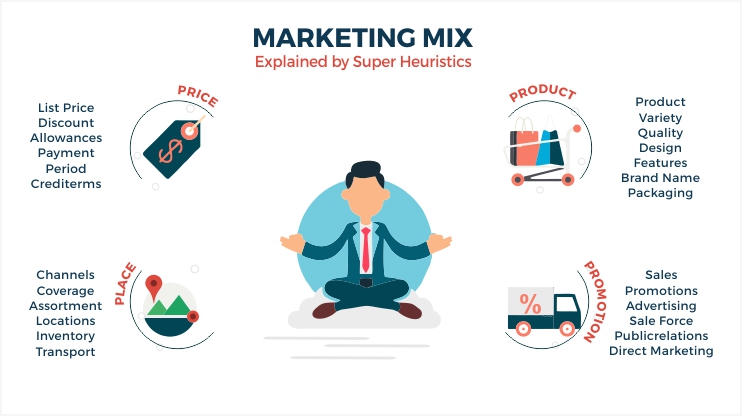
Marketing mix refers to the elements or components that are mixed by the marketers in order to interact with the customers in a much better way. These are basically the tactics used to promote the products. It provides broad guidelines for putting the right products in the right place, at the right time and price. Hence marketing mix plays a very important role for achieving the objectives . Majorly it is divided into the following elements:

Product:

Product is something that is actually offered to the customers for satisfying their needs and wants. Marketers need to clearly look out the conditions in the market before launching a product because customer is the king in today’s market scenario and if the product is not satisfactory for them they will switch over to some other brand as there is stiff competition in the market. There can be two situations the product can be known to the market or it can be the newly launched. More efforts will be required in new one because there will be the need of attracting the new customers and making them aware about that product along with the requirement of that product to the market. Product can be tangible that can be seen and touched or intangible which can’t be seen nor touched.

Price:

Price is the cost charged for a product. It is the most important element of marketing mix as it plays a very crucial role in attracting customers . Price must be set up in such a manner that it must be beneficial on behalf of both the customers and the sellers. Some products involve huge prices that gives them luxury while for some of the necessity products the prices offered are comparatively low.Marketers must link the price to the product’s real and perceived value, but they also must consider supply costs, seasonal discounts, and competitors’ prices.

Place:

It refers to the ultimate place where the product is being offered. Mostly the product is produced in one part and demanded in various parts so various distribution channels are used to make that product available to the customers who are more likely to buy it. Also product can be sold virtually the main difference in that case will be that there will be no personal touch between the buyer and the seller.

Promotion:

It involves adopting all those strategies that are responsible for making the customers aware about a particular product to increase the sale. These strategies leads to the huge changes in the profit potential of a business by helping the business to achieve its goals. It can be done through:

  • Advertising
  • Public relations or publicity.
  • Sales promotion.
  • Direct marketing.
  • Personal selling.

Google Classroom – The Future Of Teaching

As more schools have transitioned to online learning, the platforms or apps that offer online learning have come up to be extremely useful. One such is Google Classroom.
It was initially released publicly on August 12, 2014, but its usage increased recently during the pandemic period. Reportedly, its usage increased sharply, in 2020, when many schools shifted to remote education during the COVID-19 pandemic. Since then It has got a far wider use.

What is Google Classroom?

According to Wikipedia, Google Classroom is a free web service developed by Google for schools that aims to simplify creating, distributing, and grading assignments. The primary purpose of Google Classroom is to streamline the process of sharing files between teachers and students.

Uses Of Google Classroom

It has got a variety of usage which varies depending on the category of the user and can be categorized as follows :-

A Teacher Can

  • Start a video meeting.
  • Create and manage classes
  • Create assignments and assign grades on them
  • Add materials to the assignments, such as YouTube videos, a Google Forms survey, and other items from Google Drive.
  • Use the class stream to post announcements
  • Send Invitation to parents and guardians to sign up for email summaries.

A Student Can

  • Keep a track of classwork
  • Submit assignments.
  • Check feedback and grades
  • Share resources inside the class stream.

A Parent/Guardian Can

  • Receive an email summary of the child’s work.
  • Review announcements and activities.

Why Google Classroom?

It offers a free service to schools or anyone with a personal Google Account, making it easy for learners and instructors to connect both inside and outside of schools. 

It allows teachers to set assignments and have work submitted by students, mark them, and can even return grades on them and that too digitally. Thus reducing the usage of papers in classes. It saves time and makes it easy to communicate and stay organized.

What does Google Classroom cost?

Google Classroom is free to use. It also has a paid version for those who want some extra features. But as such there’s not much difference and one can get all the necessary things done via the basic unpaid version itself.

Key Features :

Make Assignments :

It allows the teachers to create assignments for the students. The assignment can be further supplemented with any necessary documents. Students are notified about the assignments via e-mail alert. When finished, The students can “turn in” the assignments that the teacher can then grade.

Make Announcements :

The teachers can make announcements that go out to the entire class. Any announcements made, appear on the home screen of the respective class in Google Classroom and are visible to all the students who are added to the classroom. Also, an email message is sent out so that everyone is notified.

Store classroom materials:

The materials that are added to the assignments get stored in the google drive of the respective user.

Allow students to interact:

 Students can comment on assignments and announcements and e-mail each other through the Classroom interface.

Google Classroom – Where teaching and learning come together

Is the Modi government really spying on journalists and opposition leaders through Pegasus?

300 high-profile Indians out of a list of 50,000 people worldwide have been subjected to targeted hacking and tapping of their phones using the ‘Pegasus spyware’. On the target list was Congress’ Rahul Gandhi, Political analyst Prashant Kishore, Mamata Banerjee’s nephew Abhishek Banerjee, former Election Commissioner Ashok Lavasa (that ruled that PM Modi had violated the MCC during the 2019 election commission). Also, there were 40 Journalists from various Media houses including Rohini Singh, Swati Chaturvedi (that criticize the ruling govt), Supreme Court Judge, and opposition leaders.

The French media Forbidden stories and Amnesty International shared the leaked list with ‘The Wire’ in India and 15 other news organizations across the world including The Guardian, The Washington Post, Le Monde, Suddeutsche Zeitung as part of the Pegasus project.

But what really is Pegasus? How does it operate? Who uses the software? And why has it earned the reputation of being behind the most sophisticated spyware attacks? According to The Citizen Lab, in this way, Pegasus can be used to gather a vast amount of victim information: “Passwords, contact lists, calendar events, text messages, and live voice calls from popular mobile messaging apps.” According to this report, “Pegasus could even listen to encrypted audio streams and read encrypted messages”. NSO does not openly name who buys its software. But its website does say that its products are used and bought exclusively “by government intelligence and law enforcement agencies to fight crime and terror”. 

“Pegasus is modular malware. After scanning the target’s device, it installs the necessary modules to read the user’s messages and mail, listen to calls, capture screenshots, log pressed keys, exfiltrate browser history, contacts, and so on, and so forth. Basically, it can spy on every aspect of the target’s life,” cybersecurity company Kaspersky noted. Pegasus infections can also be achieved via so-called “zero-click” attacks that do not require any interaction from the phone’s owner. It means that your phone could still be hacked even if you’re careful not to click on those malicious links. Most of these attacks exploit vulnerabilities in an operating system that the phone’s manufacturer may not yet know about and so has not been able to fix. An example of such an attack was revealed by WhatsApp in May 2019 when the spyware targeted a vulnerability in its VoIP stack. Simply by placing a WhatsApp call to a target device, Pegasus could be installed on the phone, irrespective of whether the target answered the call or not.

In November 2019, Lok Sabha MP from the DMK, Dayanidhi Maran, asked on the floor of the House if the government taps WhatsApp calls and messages and whether the government uses Pegasus for this purpose. A written response provided by then Minister of State for Home Affairs, Kishan Reddy, did not directly address queries about tapping or Pegasus. “Section 69 of the Information Technology Act, 2000 empowers the Central Government or a State Government to intercept, monitor or decrypt…any information generated…or stored in any computer resource,” the response said, adding that it was for reasons including sovereignty and security of the country. “Section 5 of the Indian Telegraph Act, 1885 empowers lawful interception of messages on the occurrence of public emergency or in the interest of public safety,” the response added.

The response also listed the 10 agencies that can intercept messages under the law and a Standard Operating Procedure (SOP). Such agencies allowed to intercept messages include the Intelligence Bureau, Enforcement Directorate, Cabinet Secretariat (RAW), and Commissioner of Police, Delhi.

The Government of India responded that they are not spying on anyone illegally and they have got nothing to do with Pegasus. The response further said that “there is no blanket permission to any agency for interception or monitoring or decryption and that permission from competent authority is required, as per the due process of law and rules, in each case”. While, on the other hand, NSO claims that only governments can buy its software, private parties cannot buy the software.

This clearly points finger towards the Government and the names of those under surveillance have a definite pattern that threatens power.

Infodemic

                   After the initial days of dalgona coffee and ludo king match nights, lockdown or rather the pandemic had a numbing effect on all of us. The ever growing numbers of cases and death tolls, all the first world nations under lockdown, the big retailers going bankrupt, everything seemed glee and survival at stake. Depression took its form, irrespective of whether they were spending whole day before a screen or in kitchen cooking, it was bound to have its effects on all. The rising number had an unending effect on all of us, no arguments, but have we ever paused to thing, is the rising numbers deducting the number of recovered patients or rather are they even publishing these numbers? Is our westernized outlook of everything make us only concentrate on the rising cases in America and death toll of Italy? Did we pause to check out the Bilwara model or how Goa or Kerala contained the pandemic? This exactly is Infodemic.

What is an infodemic?

 An Infodemic is an overabundance of information, some accurate and some not, occurring during an epidemic. It makes it hard for people to find trustworthy sources and reliable guidance when they need it. Even when people have access to high-quality information, there are still barriers they must overcome to take the recommended action. They make the readers feel overwhelmed or over burdened by whatever is happening around us. “We’re not just fighting an epidemic; we’re fighting an Infodemic,” said Tedros Adhanom Ghebreyesus, Director-General of the World Health Organization (WHO) at a gathering of foreign policy and security experts in Munich, Germany, in mid- February, referring to fake news that “spreads faster and more easily than this virus.” WHO explains that infodemics are an excessive amount of information about a problem, which makes it difficult to identify a solution. They can spread misinformation, disinformation and rumors during a health emergency. Infodemics can hamper an effective public health response and create confusion and distrust among people.

How to tackle this?

            To tackle this information a team of WHO “myth busters” are working with companies like Facebook, Google, Pinterest, Tencent, Twitter, TikTok, YouTube and others to counter the spread of rumors, which include misinformation like that the virus cannot survive in the hot weather, that taking a high dose of chloroquine medication can protect you, and that consuming large quantities of ginger and garlic can prevent the virus. These companies, according to news reports, are aggressively filtering out unfounded medical advice, hoaxes and other false information that they say could risk public health. In a rare move, Facebook and Twitter have taken down a post from a head of State that falsely stated that a drug was working everywhere against the coronavirus. (Inspired from an article published in Times of India.)

South India Is Better For Women Than North India

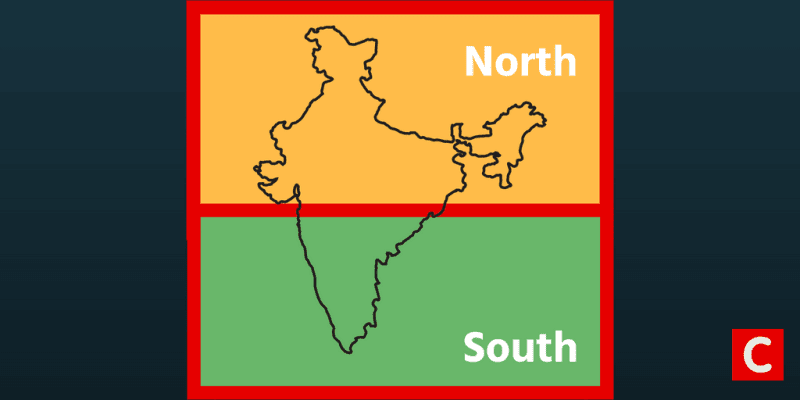
Hi everybody, If you were to ask an Indian woman, to prefer between living in North India or South India, imagine what would her answer be? Don’t worry, it’s not a trick question? Most women would prefer to live in South India. And it shouldn’t come as a surprise. In South India, women marry late, live longer, and are more educated. 

The gender gap in education is 26% for the north and while for the south it’s only 9%. Other than economic and social benefits, safety is another factor that could explain the woman’s preference. Compared to North India there could be less crime against women in the south. If you notice, I used the word ‘could’. It’s because data suggest that states like Kerala have high crime rates against women. But it’s not clear why the crime rate is higher in Kerala. 

NORTH INDIA VS SOUTH INDIA

Due to which a woman and her family will feel safer to lodge a police complaint against a crime. compared to the north Indian states? We’re aware that the family of a sexual assault victim doesn’t lodge a complaint in India. Around 99% of the sexual assault cases go unreported. Like the data we studied before, due to many socioeconomic indicators, women of South India live better lives than that of North India. But what’s the reason?

 It’s very interesting to find an answer to such a question. Because this difference didn’t arise in the past 70 years. It dates back to the 19th century. According to research, due to a famine in the 19th century, the women in Punjab got affected more severely than the women in Madras. Around that time the sex ratio of South India was better compared to the north. 

So Maharastra has been included in South India and West Bengal in North India. Professor Alice Evans wrote a detailed article on this subject. In her article, she wrote that when during the 19th century a group of Marathi women traveled to Calcutta, they got surprised by what they saw. According to the group of Marathi women, a woman in Calcutta could scarcely stand in presence of her relatives. Her face was always veiled. 

She wasn’t allowed to speak to any man, muss less laugh with him. Before discussing the factors that could explain this difference, let’s first understand the factors that can’t explain it. One such factor is Poverty. Many might think South India has more female empowerment given how rich the state is. But it’s not necessarily the truth. According to the GDP, Punjab and Haryana are one of the richest states in India. But these states have the worst sex ratio too.

 Doctor Evans uses these charts to prove that it’s not necessary that a woman belonging to a rich state will find better job opportunities. The second factor that can’t explain the difference, is the marriage custom or traditions. In North India, women are generally married into other villages. When they go away from their families, the chances of them ever getting their share of inheritance of property becomes nil. 

In South India, women are most probably married into the same village. And according to research when a woman marries into the same village, she’s more likely to move freely, and earn more cash. And the logic behind this is that in an intra-village marriage, you get more freedom as you live within the security of your parents and a community with whom you’ve grown accustomed. But can this norm of intra-village marriage explain the gender difference? Alice believes that it can’t. As we can see the examples of cousin marriages in the Middle East and North Africa. 

Even though after marriage the women live among their relatives, the cases of women empowerment weren’t reported in these regions. The third reason is that of colonialism. This map shows the years Britishers governed a certain region of India. They governed some regions for more than 200 years and on the other hand, they scarcely governed some regions at all. Given this, we never saw much difference in the terms of women empowerment. 

As you can notice, Britishers governed the regions of Tamil Nadu and UP for the same time period. But there’s a huge difference in the female literacy rate of UP and Tamil in the data of the 19th and 20th centuries. Now let’s discuss the factors that can better explain the difference. And one of the factors relied largely on the British administration. Looking at a broader level we won’t sense the difference that the Britishers created in the women empowerment between North and South India. 

But we dig deeper, it becomes clearer. According to Hindu law, there are two types of property inheritance rights. One is called Mitakshara and another is called Dayabhaga. Dayabhaga originated in the Bengal region. According to Dayabhaga, women could inherit property. Mitakshara operated in Madras and Bombay presidency. According to this law, women had no inheritance rights.

 Looking at the surface level, you might think that the Bengal region should have more women empowerment given it had Dayabhaga law, which ensured property to women. But we saw in research how surprised the women of Madras were on seeing restrictions on the women of Calcutta. So what’s going on here? If Bengali women held more rights, why didn’t they have a better position? According to research, the district governed by Dayabhaga saw an increase in the practice of Sati Pratha (widow immolations) too. 

Instead of improving a women’s position in society, inheritance rights led to an average increase of between 115 and 437 widow immolations in Dayabhaga districts. This law was enacted at the time of extreme elite patriarchy. This suggests that women were subjected to torments. This positive law backfired. Many joint families argued that by implementing Dayabhaga law they would tarnish their traditions. Due to this, the districts where women were given the rights of inheritance, saw an increase in the practice of sati too.

 The second factor that can explain this difference is the tradition of Ghunghat (veil). This system originated in the Arabic region and was introduced to India during the Islamic invasions. This was a mode of ensuring status. The families that belonged to higher status wanted their women to practice Purdah (veil) to maintain their status of superiority. The cast system of India was already had several restrictions for women. If a woman from an upper-caste married a man belonging to a lower caste, the family of the woman lost its honor. And the Purdah system got added to that.

 This was common among the Rajput families belonging to North India. This practice severely affected the way the women lived their lives. In rural Haryana, if a woman failed to cover her face with a veil, she was subjected to afflictions and her character was questioned too. This affected the women’s ability to earn a living. As researches have shown that due to Purdah or Ghunghat, women become more dependent on men for financial support. 

Many of you might wonder who would be practicing an age-long tradition of the Purdah system nowadays. But that’s not true. In rural Rajasthan, 98% of women in the age group of 18-25 cover their faces with a veil. The third reason is the difference in the agricultural practices between North and South India. In India, crop cultivation has two patterns. One is the cultivation of wheat by plowing of fields as seen in North India. 

Another one is the wet and intensive cultivation of rice in South India. If we take wheat for an instance, the intensive plowing isn’t carried out by women. And cultivation of wheat isn’t labor-intensive. This lowers the demand for female labor in the field. Whereas cultivation of rice is labor-intensive. Here women are required to contribute to the workforce. Dr. Evans states in her research that, women are required to step out and contribute to the workforce for the cultivation of rice. And that’s the reason why women in South India are better empowered as compared to their North Indian compatriots.

 These three factors can explain the difference in the condition of women in North and South India. Inheritance rights, Purdah/Ghunghat system (veil system), and the agricultural practices. But we need to let go of the delusion that women living in south India are leading a perfect life. They too have to face problems of their own. 

Our government shouldn’t have an objective that they should somehow provide North Indian women the quality of life as that of South Indian women. They should have a broader objective. If you consult the rankings, India is further low in gender issues. In the UN’s Gender Inequality Index, India ranks 131st, even lower than Iraq. According to World Bank, nations not well off as India, like Bangladesh and Nepal, have better literacy rates among girls. 

Our politicians dream about making India a superpower. But it would never become a reality until Indian women are given opportunities to contribute too. Through this video, we learned the differences in the situation of women in North and South India. But North Indian women shouldn’t take the lives of South Indian women as their ideal. They should aim for something better than that. This is the way India will become a superpower.

GURU PURNIMA

Guru Purnima symbolizes offering gratitude towards Gurus; it is celebrated on the day of full moon of Ashada. The teacher not only guides a student but also shapes his life by instilling true knowledge and by giving him direction. As full moon holds an attraction and magnetism that uplifts mind, similarly gurus have that aura which makes the disciple to acknowledge the true sign and inner light. Widely celebrated by the Hindus, Sikhs and Buddhist communities all over the world.

Image : Rkalert

 A true guru spread the light of knowledge and wisdom to his disciples. Like the shine of silvery moon gives joy to everyone, a guru is also like that; he blesses the entire world with auspiciousness.

A guru is one who guides us through the knowledge of eternal self. A disciple should be ready to take the knowledge, keen to learn, should have faith, reverence and devotion to guru every moment.

Beside that a true guru reside all of us, the need is to look into self. So, why do we need an external guru? For example, children who want to become a researcher have to study for years under the supervision of expert educators. If we desire for knowledge, we must need an expert masters.

Image: Bee bulletin

Like a dark room can be lit only when somebody enters with a light or candle, the disciple also needs a guru to realize its true self. A guru can remove darkness with the light of wisdom; the inner lamp needs to be lit with the guidance of a Guru. There is a mirror within us but due to the hustle bustle of life, we are unable to visualize our inner guru. The mirror can be cleaned when you realize the true self and open to take the light within to remove the darkness of ignorance.

We all need a true guru who can show us the way through the journey of our life.

7 Mumbai-Based Women Entrepreneurs Made a 1600 Cr empire from 80Rs – Lijjat Papad Case Study

 Hi everybody, This is a story of 7 ordinary women who had no background in business, no significant educational qualification And with just 80 rupees in capital they were able to build a business empire worth 1600 crores which is spread across 69 branches and more than 42,000 employees. This home-grown brand that I’m talking about is none other than Shri Mahila Griha Udyog Lijjat Papad.

 Now, what’s more fascinating about this company is not the growth of the company but the fact that the business philosophies of this home-grown company somehow seems to have very close resemblance to extraordinary companies like Starbucks and Apple also. The question is- What is so special about this papad company and how has it lasted for more than 62 years ? And how did these 7 women manage to build a business empire out of just ₹80 in capital ? The answer to this question lies in the incredible history of the Lijjat papad. 

This is a story that dates back to the late 1950s India when India was a fairly underdeveloped country. And back then let alone education, even literacy was considered to be a luxury. And even in terms of literacy during those times woman’s literacy was not even considered important because of which only 8% of women in India could read and write while 92% of women in India were illiterates. On top of that, women were not even allowed to go out and work and the earning capacity of the families was not enough to afford a decent standard of living. That is when in 1959, Mumbai. 

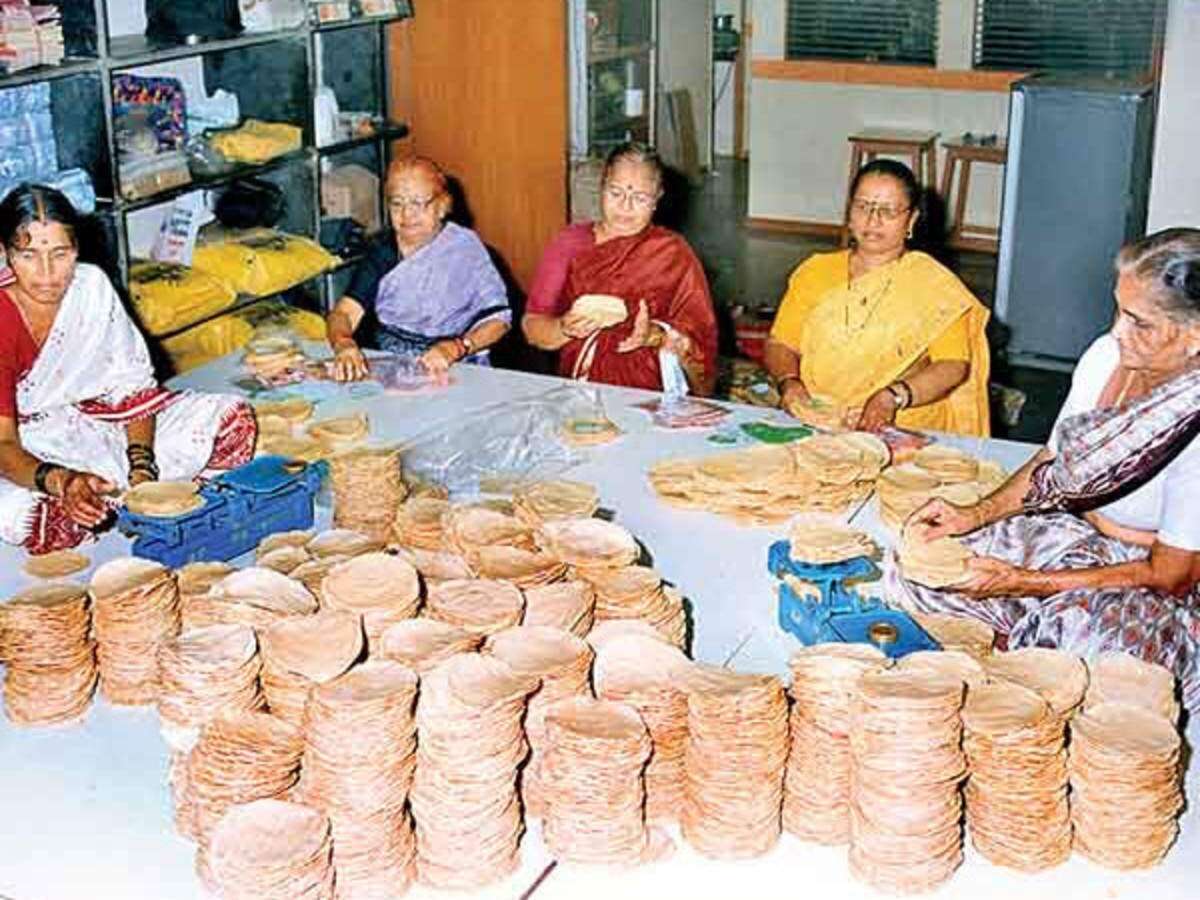
A group of 7 amazing women from very ordinary background came together to discuss a business idea which wouldn’t need them to step out of the house, wouldn’t need education and yet could produce a competitive product in the market. Ladies and gentlemen, that is how the idea of Lijjat Papad was born with just ₹80 of capital that was given to them by a social worker. They first started selling their papads at a local store and soon enough due to the superb quality and taste of the papad even other shops started buying their papads. And that’s when they started scaling up. 

Now, when they started scaling they had the opportunity to hire women at a dearth cheap cost because they were one of the rarest avenues of income for women which allowed them to work from home. But you know what ? When these women had their first board meeting they established the fact that the primary goal of their business wouldn’t be to make money but to empower women from the smallest households of the country and to provide them with the livelihood to nurture their family. And mor importantly they also established the fact that money would only be used as a fuel to scale their impact on the women of India and not be the sole purpose of their existence. 

So instead of hiring women they started to give out ownership to every woman who joined their business and called them Lijjat Sisters rather than employees. This is what you call as collective ownership, wherein every employee owns a small part of the company such that the profits and losses, both are shared by every single person in the organisation. So regardless of your age, caste, religion even if you were at the lowest hierarchy of the Lijjat Papad organisation you’d still own a part of the business.

 Now, most of us might think that this is just another business move but I gotta tell you guys that this attribute of collective ownership is one of the foundational principles that make Starbucks an extraordinary company. Because you know what ? Just like the sisters of Lijjat papad own a small part of the company regardless of their position in the organisation, every employee at starbucks is considered as a partner in the business rather than an employee. Everyone starting from the baristas who serve coffee to the customers all the way upto the senior management officers, each one of them are offered stock options of the company. 

So this way, just like the Lijjat sisters every employee in Starbucks could be a small owner of the company And this move develops a deep sense of ownership which cultivates a culture of greatness wherein every employee is motivated to go out of the way and to contribute diligently towards the growth of the organisation. But the only difference between both these companies is that while Starbucks ideated this with MBA masterminds and with a million dollar capital backing the 7 sisters of Lijjat did it way before Starbucks, in 1959 without even knowing what an MBA degree is. 

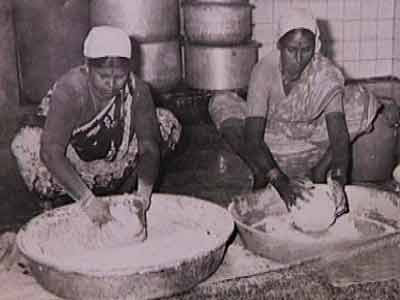
Such was the business acumen of these incredible women. The second phase of Lijjat was building a robust supply chain that would be cost effective, would ensure quality production and would fit the lifestyle of the women who work for the company. So instead of having huge office spaces they used the houses of the sisters as their small centres of papad making. And this is what their supply chain looked like The flour would first arrive from the mills to the respective central location wherein the dough is made. And after the dough is made the sisters will be brought by a bus facility provided by the company. 

Over here they would collect the doughs and then go home, make papads dry them on the veranda and then deliver the papads the next day. And lastly, after the delivery of the papads they would collect their money and the dough for the next cycle. This would be followed by surprise visits by the supervisors to check the quality of oil they use, the hygiene check of the house and most importantly the process of making papads. Now the sisters are also given aluminium papad makers to ensure that the papad is produced in a standardised manner. This happens at all the branches. If one of these branches does very well the profits are distributed among the sisters. And if not, the losses are borne by the branch members together. And after all of this comes the most challenging part of all and that is sticking to the vision and mission statement of the company. 

Now people, for most of us mission and vision statements are just stupid formalities and they have no real significance for us.  At the same time in case of colleges also even your principle wouldn’t remember the vision and mission statement of your college and if he did it would only be because he mugged it up because some committee was visiting to give your college some stupid certification or some accreditation. And this is the reason why most of us do not understand the importance of mission and vision statements. 

But here’s a thing guys Mission and vision statements form the very foundations of every single organisation. And when designed and followed the right way it can help the organisation sustain for a century. At the same time, if not done right they can even bring down a million dollar business. A classy example of the same is Apple. Now people, when Steve Jobs got fired from Apple in 1984, Apple was a million dollar company. Until he was there at the company, the company stuck to it’s value. And it was a formidable player in the industry. But after he left, they started to derail from their values. And within just 10 years they were almost about to go bankrupt. 

That’s when Steve Jobs got called back to Apple to fix things and get the company back on track. And you know what ? After he took over the company, the first question he asked to every single engineer to every single deisgner and every single manager was What does Apple stand for ? And what are the values that we believe in as a company. Because the biggest mistake that Apple made was while he was not around they started to loose their identity and started to deviate from their values because of which they started making products with no sense of purpose. 

Eventually, the brand lost it’s unique identity and customer loyalty just faded away. So Steve baba comes back asks this question and within some time the entire team is absolutely clear as to what exactly they were supposed to do. And this is what got them the ‘Think Different’ campaign that told the world what Apple truly stood for. And that is “Think Different”. And within just 2 years the same company with the same engineers and the exact same resources then went on to create history to become a legendary company that made products that changed the world forever. And again as soon as Steve baba left we all know what’s happening with Apple.

This is the importance of mission and vision statements. And here’s the most mind-blowing fact of all. In it’s 62 years of existence, not a single time Lijjat Papad has ever deviated from it’s core values. And even today After expanding to 67 branches and scaling up to 42,000 employees and after exporting their products to 15 different countries. They still abide by the core philosophy of their business, that is, Sarvodaya, which means Progress for all. 

While we live in a world where billion dollar corporates, even with the slightest change in the policies wouldn’t think twice before firing thousands of employees and putting each one of their family’s life at stake. On the other side we have got Lijjat Papad wherein with every single machinery they bring in for automation, they make sure that not a single woman is asked to leave the organisation. Because they are 100% clear that their ultimate purpose of business is not to make money but the empowerment of women so that they can give their family and children a better quality of life. 

On one side where we have got these evil companies who would put the health of their frontline workers at stake just to maximize their profits. On the other hand we have got Lijjat Papad wherein even if they have a great year, they make use of the extra profits to sponsor the education of the children of their frontline workers regardless of their age, caste, religion or even the position in the organisation. 

And they do all of this just so that the next generation of these frontline workers can be given the opportunities that they truly deserve. And last and most importantly while inspite of being at the pinnacle of the technological revolution there are people like you and me who often keep doubting our capabiities. And here we see a standing example of 7 incredible women who had no educational qualification. no background in business and no fancy investor. And yet, they were able to build a business empire that is now empowering generations of women all across the country. 

And that too during a time when women had no scope of opportunities. If this isn’t an epitome of greatness I don’t know what is…. bye bye.

WHAT ARE VOWELS ?

Vowels are sounds in which there is no obstruction to the flow of air as it passes from the larynx to lips . Vowels are thus produced with a stricture of ‘open approximation ‘, that is the tongue (active articulator ), is raised towards , the roof of the mouth (passive articulator),so that there is enough gap between them for the air to flow out freely and continuously , without friction . Vowels are essentially a ‘tone’ or ‘hum’ issuing from the glottis with the vocal cords vibrating . Hence all vowels are voiced sounds .The quality of a vowel depends on the shape of the cavities of the pharynx ,the mouth and the nose , which in turn depend on the position of the soft palate , the tongue and the lips during its articulation .

CLASSIFICATION OF VOWELS

Vowels may be either long or short ./I/ for example ,is short while /i:/ is long Usually vowels from the ‘nucleus’ in a syllable . They are soft , voiced and musical .Vowels can be classified on the basis of

  • THE HEIGHT TO WHICH THE TONGUE IS RAISED
  • THE PART OF THE TONGUE THAT IS RAISED
  • THE POSITION OF THE LIPS

CARDINAL VOWELS

For the proper study of vowel sounds ,we need a set of fixed vowel points as references .The vowel sounds specially selected for this purpose are called Cardinal vowels .They are used as references to describe , classify and compare the the vowels of any language . If we learn them we are learning about the range of vowels that human vocal organs can make.

FEMINISM- IMPORTANCE AND IMPACTS


 Feminism is a social and political movement that advocates for the rights of women on the grounds of equality of sexes. It does not deny the biological differences between the sexes but demands equality in opportunities. It covers everything from social and political to economic arenas. In fact, feminist campaigns have been a crucial part of history in women empowerment. The feminist campaigns of the twentieth century made the right to vote, public property, work and education possible. Thus, an essay on feminism will discuss its importance and impact.

Importance of Feminism

Feminism is not just important for women but for every sex, gender, caste, creed and more. It empowers the people and society as a whole. A very common misconception is that only women can be feminists.

It is absolutely wrong but feminism does not just benefit women. It strives for equality of the sexes, not the superiority of women. Feminism takes the gender roles which have been around for many years and tries to deconstruct them.

This allows people to live freely and empower lives without getting tied down by traditional restrictions. In other words, it benefits women as well as men. For instance, while it advocates that women must be free to earn it also advocates that why should men be the sole breadwinner of the family? It tries to give freedom to all.

Most importantly, it is essential for young people to get involved in the feminist movement. This way, we can achieve faster results. It is no less than a dream to live in a world full of equality.

Thus, we must all look at our own cultures and communities for making this dream a reality. We have not yet reached the result but we are on the journey, so we must continue on this mission to achieve successful results.

Impact of Feminism

Feminism has had a life-changing impact on everyone, especially women. If we look at history, we see that it is what gave women the right to vote. It was no small feat but was achieved successfully by women.

Further, if we look at modern feminism, we see how feminism involves in life-altering campaigns. For instance, campaigns that support the abortion of unwanted pregnancy and reproductive rights allow women to have freedom of choice.

Moreover, feminism constantly questions patriarchy and strives to renounce gender roles. It allows men to be whoever they wish to be without getting judged. It is not taboo for men to cry anymore because they must be allowed to express themselves freely.


DIGITAL MARKETING


Digital Marketing

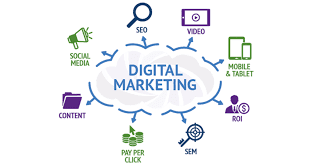
Any marketing that uses electronic devices to convey promotional messaging and measure its impact. In practice, digital marketing typically refers to marketing campaigns that appear on a computer, phone, tablet, or other device. It can take many forms, including online video, display ads, and social media posts. Digital marketing is often compared to “traditional marketing” such as magazine ads, billboards, and direct mail. Oddly, television is usually lumped in with traditional marketing.


Did you know that more than 3 quarters of Americans go online on a daily basis? Not only that, but 43% go on more than once a day and 26% are online “almost constantly.”

These figures are even higher among mobile internet users. 89% of Americans go online at least daily, and 31% are online almost constantly. As a marketer, it’s important to take advantage of the digital world with an online advertising presence, by building a brand, providing a great customer experience that also brings more potential customers and more, with a digital strategy.

What is digital marketing?

Digital marketing, also called online marketing, is the promotion of brands to connect with potential customers using the internet and other forms of digital communication. This includes not only email, social media, and web-based advertising, but also text and multimedia messages as a marketing channel.

Essentially, if a marketing campaign involves digital communication, it’s digital marketing.

Inbound marketing versus digital marketing

Digital marketing and inbound marketing are easily confused, and for good reason. Digital marketing uses many of the same tools as inbound marketing—email and online content, to name a few. Both exist to capture the attention of prospects through the buyer’s journey and turn them into customers. But the 2 approaches take different views of the relationship between the tool and the goal.

Digital marketing considers how each individual tool can convert prospects. A brand’s digital marketing strategy may use multiple platforms or focus all of its efforts on 1 platform.

Inbound marketing is a holistic concept. It considers the goal first, then looks at the available tools to determine which will effectively reach target customers, and then at which stage of the sales funnel that should happen.

The most important thing to remember about digital marketing and inbound marketing is that as a marketing professional, you don’t have to choose between the 2. In fact, they work best together. Inbound marketing provides structure and purpose for effective digital marketing to digital marketing efforts, making sure that each digital marketing channel works toward a goal.

B2B versus B2C digital marketing

Digital marketing works for B2B as well as B2C companies, but best practices differ significantly between the 2.

  • B2B clients tend to have longer decision-making processes, and thus longer sales funnels. Relationship-building strategies work better for these clients, whereas B2C customers tend to respond better to short-term offers and messages.
  • B2B transactions are usually based on logic and evidence, which is what skilled B2B digital marketers present. B2C content is more likely to be emotionally-based, focusing on making the customer feel good about a purchase.
  • B2B decisions tend to need more than 1 person’s input. The marketing materials that best drive these decisions tend to be shareable and downloadable. B2C customers, on the other hand, favor one-on-one connections with a brand.

Of course, there are exceptions to every rule. A B2C company with a high-ticket product, such as a car or computer, might offer more informative and serious content. Your strategy always needs to be geared toward your own customer base, whether you’re B2B or B2C.


Types of digital marketing

There are as many specializations within digital marketing as there are ways of interacting using digital media. Here are a few key examples.

Search engine optimization

Search engine optimization, or SEO, is technically a marketing tool rather than a form of marketing in itself. The Balance defines it as “the art and science of making web pages attractive to search engines.”

The “art and science” part of SEO is what’s most important. SEO is a science because it requires you to research and weigh different contributing factors to achieve the highest possible ranking. Today, the most important elements to consider when optimizing a web page include:

  • Quality of content
  • Level of user engagement
  • Mobile-friendliness
  • Number and quality of inbound links

The strategic use of these factors makes SEO a science, but the unpredictability involved makes it an art.

In SEO, there’s no quantifiable rubric or consistent rule for ranking highly. Google changes its algorithm almost constantly, so it’s impossible to make exact predictions. What you can do is closely monitor your page’s performance and make adjustments accordingly.

Content marketing

SEO is a major factor in content marketing, a strategy based on the distribution of relevant and valuable content to a target audience.

As in any marketing strategy, the goal of content marketing is to attract leads that ultimately convert into customers. But it does so differently than traditional advertising. Instead of enticing prospects with potential value from a product or service, it offers value for free in the form of written material.

Content marketing matters, and there are plenty of stats to prove it:

  • 84% of consumers expect companies to produce entertaining and helpful content experiences
  • 62% of companies that have at least 5,000 employees produce content daily
  • 92% of marketers believe that their company values content as an important asset

As effective as content marketing is, it can be tricky. Content marketing writers need to be able to rank highly in search engine results while also engaging people who will read the material, share it, and interact further with the brand. When the content is relevant, it can establish strong relationships throughout the pipeline.

Social media marketing

Social media marketing means driving traffic and brand awareness by engaging people in discussion online. The most popular platforms for social media marketing are Facebook, Twitter, and Instagram, with LinkedIn and YouTube not far behind.

Because social media marketing involves active audience participation, it has become a popular way of getting attention. It’s the most popular content medium for B2C marketers at 96%, and it’s gaining ground in the B2B sphere as well. According to the Content Marketing Institute, 61% of B2B content marketers increased their use of social media this year.

Social media marketing offers built-in engagement metrics, which are extremely useful in helping you to understand how well you’re reaching your audience. You get to decide which types of interactions mean the most to you, whether that means the number of shares, comments, or total clicks to your website.

Direct purchase may not even be a goal of your social media marketing strategy. Many brands use social media marketing to start dialogues with audiences rather than encourage them to spend money right away. This is especially common in brands that target older audiences or offer products and services not appropriate for impulse buys. It all depends on your company’s goals.

To learn more about how Mailchimp can help with your social media strategy, check out the comparison of our free social media management tools versus others.

Pay-per-click marketing

Pay-per-click, or PPC, is posting an ad on a platform and paying every time someone clicks on it.

How and when people see your ad is a bit more complicated. When a spot is available on a search engine results page, also known as a SERP, the engine fills the spot with what is essentially an instant auction. An algorithm prioritizes each available ad based on a number of factors, including:

  • Ad quality
  • Keyword relevance
  • Landing page quality
  • Bid amount

Each PPC campaign has 1 or more target actions that viewers are meant to complete after clicking an ad. These actions are known as conversions, and they can be transactional or non-transactional. Making a purchase is a conversion, but so is a newsletter signup or a call made to your home office.

Whatever you choose as your target conversions, you can track them via your chosen platform to see how your campaign is doing.

Affiliate marketing

Affiliate marketing lets someone make money by promoting another person’s business. You could be either the promoter or the business who works with the promoter, but the process is the same in either case.

It works using a revenue sharing model. If you’re the affiliate, you get a commission every time someone purchases the item that you promote. If you’re the merchant, you pay the affiliate for every sale they help you make.

Some affiliate marketers choose to review the products of just 1 company, perhaps on a blog or other third-party site. Others have relationships with multiple merchants.

Whether you want to be an affiliate or find one, the first step is to make a connection with the other party. You can use a platform designed to connect affiliates with retailers, or you can start or join a single-retailer program.

If you’re a retailer and you choose to work directly with affiliates, there are many things you can do to make your program appealing to potential promoters. You’ll need to provide those affiliates with the tools that they need to succeed. That includes incentives for great results as well as marketing support and pre-made materials.

Native advertising

Native advertising is marketing in disguise. Its goal is to blend in with its surrounding content so that it’s less blatantly obvious as advertising.

Native advertising was created in reaction to the cynicism of today’s consumers toward ads. Knowing that the creator of an ad pays to run it, many consumers will conclude that the ad is biased and consequently ignore it.

A native ad gets around this bias by offering information or entertainment before it gets to anything promotional, downplaying the “ad” aspect.

It’s important to always label your native ads clearly. Use words like “promoted” or “sponsored.” If those indicators are concealed, readers might end up spending significant time engaging with the content before they realize that it’s advertising.

When your consumers know exactly what they’re getting, they’ll feel better about your content and your brand. Native ads are meant to be less obtrusive than traditional ads, but they’re not meant to be deceptive.

Marketing automation

Marketing automation uses software to power digital marketing campaigns, improving the efficiency and relevance of advertising.

According to statistics:

  • 90% of US consumers find personalization either “very” or “somewhat” appealing
  • 81% of consumers would like the brands they engage with to understand them better
  • 77% of companies believe in the value of real-time personalization, yet 60% struggle with it

Marketing automation lets companies keep up with the expectation of personalization. It allows brands to:

  • Collect and analyze consumer information
  • Design targeted marketing campaigns
  • Send and post marketing messages at the right times to the right audiences

Many marketing automation tools use prospect engagement (or lack thereof) with a particular message to determine when and how to reach out next. This level of real-time customization means that you can effectively create an individualized marketing strategy for each customer without any additional time investment.

Email marketing

The concept of email marketing is simple—you send a promotional message and hope that your prospect clicks on it. However, the execution is much more complex. First of all, you have to make sure that your emails are wanted. This means having an opt-in list that does the following:

  • Individualizes the content, both in the body and in the subject line
  • States clearly what kind of emails the subscriber will get
  • Offers a clear unsubscribe option
  • Integrates both transactional and promotional emails

You want your prospects to see your campaign as a valued service, not just as a promotional tool.

Email marketing is a proven, effective technique all on its own: 89% of surveyed professionals named it as their most effective lead generator.

It can be even better if you incorporate other techniques such as marketing automation, which lets you segment and schedule your emails so that they meet your customer’s needs more effectively.

Depression: Screaming that nobody can hear

what people never understand is the depression isn’t about the outside its about inside.

There was a little girl filled with happiness and hope, Who wanted to explore the world know more about people and was hoping to get love the way she use to give to others. She was a simple minded girl her life was going great she made alot of friends but little did she know a black whole was waiting for her to consume all her happiness and hope.

What is depression?

There are wounds that never show on body that are deeper and more hurtful than anything that bleed.

Depression, also known as major depressive disorder is a common disorderserious medical illness that negatively affects how you feel, the way you think and how you act. Fortunately, it is also treatable. Depression causes feelings of sadness and/or a loss of interest in activities you once enjoyed, basically it causes lack of interest in life. It can lead to a variety of emotional and physical problems and can decrease your ability to function at work and at home.

Symptoms of depression.

Tears come from the heart and not from the brain.

Depression symptoms can vary from mild to severe and can include:-

  • Your mood is depressed for most of the day, especially in the morning.
  • You feel tired or have a lack of energy almost every day.

  • You feel worthless or guilty almost every day.
  • You feel hopeless or pessimistic.
  • You have a hard time focusing, remembering details, and making decisions.
  • You can’t sleep, or you sleep too much, almost every day.
  • You have almost no interest or pleasure in many activities nearly every day.
  • You think often about death or suicide (not just a fear of death).
  • You feel restless or slowed down.
  • You’ve lost or gained weight.
  • Feel cranky and restless.
  • Lose pleasure in life.
  • Overeat or stop feeling hungry.
  • Have aches, pains, headaches, cramps, or digestive problems that don’t go away or get better with treatment.
  • Have sad, anxious, or “empty” feelings.

These symptoms are common, not everyone with depression will have the same ones. 

Self help.

“why did u tried to kill yourself?” “You told me to be happy. “

There are a number of things people can do to help reduce the symptoms of depression. For many people, regular exercise helps create positive feeling and improves mood. Getting enough quality sleep on a regular basis, eating a healthy diet and avoiding alcohol (a depressant) can also help reduce symptoms of depression.

Depression is a real illness and help is available. With proper diagnosis and treatment, the vast majority of people with depression will overcome it. If you are experiencing symptoms of depression, a first step is to see your family physician or psychiatrist. Talk about your concerns and request a thorough evaluation. This is a start to addressing your mental health needs.

How friendship can help depression

Part of being a person is about helping others.

The benefits of friendship for people that are depressed are astounding. Relationships, although not a substitute for professional therapy, can help people dealing with depression with their healing. Dr. Leaf says, “A strong friendship can help heal someone’s thinking habits and improve how the brain functions, helping them gain clarity into their situation, building up mental resilience and encouraging them to face and overcome what is causing them distress.”

Friendship is all about supporting each other in good times and in bad. Although depression can challenge a strong friendship, it doesn’t make it impossible for the friendship to continue. In fact, the friendship can be beneficial to both parties. Dr. Leaf explains, “Studies show that helping others can also increase our own healing by up to 63%! This is why it is so important to try to be there for a friend who is experiencing mental distress on both the person that is ill and the supportive friend.”

And being friends with someone who is depressed isn’t always so difficult. You may still be able to enjoy good times and meaningful conversation. As Bernat explains, “Despite what you might think, talking to friends and family living with depression can be easy and maybe fun. Not like Facebook-selfie-with-Lady-Gaga-at-an-underground-party fun though. Instead, I’m talking about the kind of fun where people enjoy each other’s company effortlessly, no one feels awkward, and no one accuses the sad person of ruining the holidays.”

we can bring change by helping each other, By showing these small kindness we can make this world a better place to live. Love people the way they are never ask them to change and help each other and support each other something it’s better to loose in arguments even if they are wrong because it can make them feel better.

Is Coronavirus Pandemic an existential crisis?

-Aditi Raj

“covid is an existential crisis that comes from an awareness of your own freedom” says Dr Sarb Johal

The word existential means feelings of unease about meaning, choices and freedom in one’s life. Whatever you call it, the main motive is the same: the idea of our life being meaningless because it is continuously facing restrictions, and with a conclusion that at the end our life will end with death. In this article we will discuss the feeling of existential crisis in an individual mind has a positive or a negative impact.

The ideation sounds quite bleak, but if we do think about it it’s not an uncommon experience. It’s just we barely have a conversation over such topic, and when we experience this in our own, we think we’re alone in this experience, so we end up choosing to hide it. Forging ahead to the article I would like to attach few words of fiction written by me during the beginning of this pandemic.

Last sleepless night(which is quite frequent nowadays),some astonishing thoughts suddenly appeared in my mind. As I had an integrated night, soon that thoughts changed into overthinking. I had a thought that how everything is so interim in our life. Last month we were so engrossed in our daily schedule and here we are in complete isolation where we don’t even know how to spend our day. Have we ever thought that a virus can entirely transform our way of living? Have we ever thought that sitting ideally will be subtitled as “serving the tribe”? One moment we were so busy with everything and the second moment everything has stopped. Things that were decisive for us now seem worthless. Lying on my bed, my brain bursted with the thought that how temporary everything is. The body is mortal and anything can happen anytime. And the most important thing is our lives and the people we love.

An existential crisis often occurs after major life events, such as one’s career or their job, death of their close one’s, diagnosis of a life-threatening illness or experiencing a trauma. For existentialists, an existential crisis is considered to be a journey, a necessary experience and a complex phenomenon. It comes from awareness of your own freedom and realization of how our life will end up one day. Experiencing an existential crisis can also be positive as it brings out the self guidance and also the question where you realize the purpose of life and finding directions.

Around the world, many have found that the covid-19 crisis has helped them realize what is truly important in their lives. The basics :like health, stable relationships with family and closed one and a comfortable and safe place called home.

And in the conclusion, the process of learning to live with this existential anxiety should possibly be framed as adaption rather than anxiety. Adaption means adjusting yourself according to the condition, rather than moving yourself to some imaginary point which may never happen.

LADLI FOUNDATION


LADLI FOUNDATION


Ladli Foundation is an internationally recognized non-profit organization. It is known for its innovative action research initiatives and effective community outreach at the grassroots level.

Foundation is also listed by the Niti Aayog – The highest policy-making body of the Government of India.

Driven by concerns of gender equality as an integral and critical dimension of human rights, Ladli Foundation became a reality in 2012 for working as a grassroots social catalyst.

Officially associated with government departments and Delhi Police, Ladli has been known to bring positive reformative changes in society through its unique initiatives at the grassroots level, bringing direct benefits to program recipients.

Further, in acknowledging its well-meaning endeavors, Ladli Foundation gained the reputed Special Consultative Status in the United Nations Economic and Social Council.

Recently the organization was recognized by the United Nations Secretary-General Mr. António Guterres during the 65th Session of Commission on the Status of Women for raising the voice to prioritize the agenda of Women’s Health and elimination of Child Marriages in developing countries for achieving Gender Equality (SDG5).

With a mission of building a gender-sensitized inclusive society with equal access to basic, essential amenities and services- healthcare, education, workforce participation by women- the foundation has been diligently working in 50 districts across 10 states in India.

Ladli foundation have taken many initiatives for unprivileged and illiterate women and children who are living in slum areas. This foundation is created to make society for developing in every field. Ladli scheme has been started to spread awareness about the safety and importance of girls. Along with it, the Ladli scheme has been started with the aim of increasing the trend of registering girl child after her birth and promoting the education of girl child. This organization also contribute to those women who have skills and talents by making homemade crafts and food items. By this, the organization helps to take the products to the market. There are certain many privileges which are given by Ladli Foundation: – 1. To provide education to poor girls, getting 50 poor girls married in a year and includes all work like bearing all the expenses. 2. Preventive and Primary healthcare is given to the needed ones. 3. Education and skill development is practiced for the children who cannot afford school fees. 4. Making campaigns and providing all the necessities to the poor people. This was spread among millions through media and it was praised by our honorable Home Minister of India Sh. Rajnath Singh. There were many initiatives taken by Ladli Foundation: – 1. Foundation have diagnosed nearly 57,000 girls and women in the country at various locations. 2. Used to approach and sensitize the affected women to counsel and educate them. 3. Under Ladli Foundation’s Scheme initiative, they sensitize both mother and daughter because there is no barrier for discussions related to any such issues faced by a girl. Equally, it aims to create awareness among the global community about the significance of scientifically proven Indian traditional practices for advancing sustainable living for achieving United Nations sustainable development goals.


Top 6 places in India where a traveler should visit.

When it comes to tourism, India always founded as an attractive place to visit. From different types of people to different types of culture and traditions, the country has everything that one is looking for. But why India? Because it costs very cheap and very little amount of money to travel the most beautiful places around the region. The Country has the most beautiful beaches, Mountains, deserts, Forests, Rivers and the old historical temples that one should visit.

Here are the TOP 6 tourist places in India that a traveler Should Visit.

Photo by Alok Uniyal on Pexels.com

6. Varanasi, Uttarpradesh

If one wants to travel every corner of the country, then they should start with this place and set it up at the of the priority list. Visiting the place where you can smell the Hindu culture everywhere. One should see the night near the river Ganga, where Hundreds and thousands of people come together and performs rituals and prayers. It is one of the most famous place in all over India. Starting a journey with the blessing of God is a best way to start. You can try a number of different food style around the street of Varanasi.

Photo by Shootcase Chronicles on Pexels.com

5. Taj Mahal, Agra

Taj Mahal is one of the examples of the most beautiful Monuments that one could ever visit. Taj Mahal is a wonder out of total 7 In the world. It was built around 1648 and was started in 1631 after the death of Mumtaj Mahal, the wife of Shah Jahan. It has a beautiful story of love and most famous in the world. It was decorated with diamonds, mother of pearls, Jade and was constructed with white marble.

Photo by Sam Kolder on Pexels.com

4. Shimla, Himachal Pradesh

Feel the cold wind at the top of the hill around the Himalayas, a relaxation to your eyes while watching the beauty of nature. One of the finest pieces of nature that one could ever see in Shimla. The place costs quite less than the others. There’s a town hall at the center of the town and number of hill stations around the place. If one loves to visit the nature, then this place needs to be visited.

Photo by Sanket Barik on Pexels.com

3. Jaipur, Rajasthan

One could experience the old rich culture in this place. From the old tradition of shopping to Visiting the finest pieces of architecture, this place brings everything you need. Jaipur is the capital city of Rajasthan State and also known as “Pink City”. There are most famous places around the city which needed to be visited and they are, Hawa Mahal, Jantar Mantar, Amber Fort, and City Palace.

Photo by Sagar Soneji on Pexels.com

2. Statue Of Unity, Gujarat

Recently, India had built the World’s Tallest State in the Name of One of the Country’s Freedom Fighter and also Known As an Iron Man of India, Shree ” Sardar Vallabhbhai Patel”, a former Deputy Prime Minister Of India. The statue is 180 meters Tall and Located near the Sardar Sarovar Dam. It serves the major tourist Attraction as well as it is a symbol of India’s integrity and resolve.

1. Rajmachi, Maharashtra

If one Love trekking then this place must needed to be visited. It is situated near a small village and has 2 two fortified peaks Shrivardhan and Manaranjan forts, located near two famous hills of Lonavala and Khandala. One can trek Upto 3 to 4 hours to reach the destination or one can easily drive to the other route and can trek for just 20 to 40 Minutes to reach the hill.

There are plenty of Places In India, which must be Visited by a traveler and above were one of those places.

Sources And Links

https://www.planetware.com/tourist-attractions/india-ind.htm

https://www.tourmyindia.com/blog/top-places-in-india-that-every-tourist-must-visit/