A LETTER TO THE MOTHERLAND

Hello motherland, I hope you are fine, I can only hope this because your children living here are not completely loyal to you.

Since long time you have been through many things and faced a lots of challenges. You have seen people changing, their changing lifestyles and even their behaviour towards you. During ancient times people used to discover things from you, they only used natural things like branches of trees to cook food, stones to setup fire and made tools from them. People at that time were totally dependent on you for everything from eating to wearing to shelter. As the time passes, in the medieval time people were more developed and found ways to rule over you. Different communities were made and people got divided according to their power and started making policies and planning to rule over a large piece of land this way you got divided into several religion and genders. Coming to the Modern Times now no one is afraid of you, everyone is seeking their benefit and doing whatever they wish to do without taking any precautions. Use of plastic bags, burning of crackers on festivals, wastage of water, deforestation etc all are leading to the serious conditions of the health of the motherland. Today’s society is always busy on technology and this too is creating a lot of junk on land and in people’s mind. They are harming the land as well as their health conditions. Due to huge amount of pollution, Ozone Layer has got a black hole in it and still people are not aware that it can cause serious skin problem like skin cancer.

As human beings have troubled you so much, the day will come when you will trouble us and I think the day has arrived, that is why in many parts of the world people are facing floods and even drought, heavy rainfall and even areas with graphic heat. You have suffered a lot and now that one day is very close when everybody will suffer and realise that what you have gone through.

Nowadays oxygen is free of cost and is God gifted but that day is very near when people will have pay for it. Everyone on the streets would walk by carrying oxygen cylinders on their back and masks on their face due to pollution and harmful waves. The harmful rays or pollution are not only affecting the life of people but also affecting the biodiversity. India, which is famous for its Bengal tiger is now found very rarely, butterflies which were in large quantities are now decreasing rapidly. Many of the birds and animals have been extinct because of unnecessary hunting in past and present by various kings and famous personalities in order to outshine others. Due to the overuse of the resources the time will come when the rivers will dry up and nothing will be left for the future, due to the present scenario it seems that the only thing we can leave for future generations are the photographs and paintings of the wildlife resources.

Human beings are not respecting their God then how can you expect that they will give you that respect which you deserve. It can be concluded by example of Ganesh Visarjan when tons of Ganesh idols are been sank in the rivers and later these were all collected by cleaners to take them to the safer place. The idols seems half dissolved in water and some even didn’t desolved because they are usually made of Plaster of Paris (POP). Government had insisted the public to buy idols made of mud instead of POP but for the beauty of the home they are destroying the beauty of nature.

There are very few helping hands which are not enough to protect you or conserve you. But we need more human efforts to protect you from big natural calamities.

To prevent the motherland from being old and unhealthy everyone should stop using plastic and start using alternative methods like paper bags, cloth bags, bamboo bottles, etc. Use of less pollutants should be encouraged and bicycle should be used for smaller distances to prevent the atmosphere from harmful chemicals. Candles and earthen lamps should be lighten up on festivals instead of firing crackers. These little steps by everyone can bring greater changes and will improve your health. If we talk about last year then due to covid-19 when the whole world was locked and everyone stayed at their homes, the ozone layer healed itself and pollution started to decrease.

I hope that my letter to motherland will somehow influence and aware people and hope that they will gain some more respect towards our motherland and I thank you to all those citizens who are engaged directly or indirectly in conserving it and contributing their bit for the world.

This is Ifrah Javed signing off.

Advertisement Appeal

Advertising appeal is defined as strategies for grabbing the attention of people to persuade them to purchase a product or service. The approach can be a marketing or advertising strategy. Many advertisers commonly use appeals to influence their customers. It is also used so that people can support a cause. Appeals are customized for the target audience, and they speak to the interests of individuals and in their words or interest. The primary purpose is to entice them to take the action that is desired by the seller.

Brand appeal is for the customers or people who are brand conscious and have an individual inclination towards a particular brand. The primary objective of the brand appeal is to motivate people to buy a product because the product has an excellent brand. It gives the feeling of differentiation to the customer. Apple is an example whose products have brand appeal to its customers.

Sex is an attention catcher. It can be rarely used to promote your product. Sex appeal ads are used to convey a particular message to a selected group of audience. These days even deodorant ads and fragrant products also use sex appeal in them.

Some advertisements appeal to the sense of adventure and excitement of a person. The primary objective of these advertisements is to appeal to people that enthusiasm will be enhanced after they buy or use the product or service. The advertisements of energy drink use adventure appeal in them. It is often shown that the protagonist of the ad who is tired drinks the energy drink and achieves something almost impossible. He gets invigorated with energy, and because he consumed this product, his adventure was successful.

Bandwagon appeal involves making people feel that since everyone is buying the product, so they should too. The objective of bandwagon appeal is to ensure that the customer joins the bandwagon and starts using the product because everybody else is using it. It is known as persuasion by masses technique. Many direct to home cable services use bandwagon appeal in which they show that the entire neighbourhood is with a particular brand and why hasn’t the protagonist of the advertisement joined the bandwagon. They make him feel left out by not joining the bandwagon and show that he is happy after purchasing the product or service, ergo, after joining the bandwagon.

The fear appeal shows that adverse outcomes can happen because a particular action is not taken. Advertisements often use fear as a motivator to promote change. The fear tactic also involves isolation. With this technique, many kinds of toothpaste, deodorants, and anti-dandruff shampoos are advertised. It is shown that if people do not brush with their toothpaste, it will result in bad hygiene and foul mouth odour, which would lead to social isolation for the person. Similarly, if flakes of dandruff are seen on the shoulder of a person, then it may result in separation from the group. It is only after the consumption or use of the product that the person can avoid isolation and get a feeling of belongingness.

Some advertisements appeal to a person’s sense of humour. Human beings like to laugh and what can be a better type of attention-grabbing tool than humour, because humour helps people to remember a particular product or an idea. Humour appeal often try to build a positive association with their product or service. In many insurance advertisements, it can be seen that the customer is often shown the benefits of having insurance with the help of humour. However, humour should be carefully used so that it does not offend any group. Senior citizens often hate the idea in which they are portrayed as angry and grumpy on the other hand; women do not buy a product which shows them as overreacting. Usually, humour works for everyday products such as cell phones, alcoholic beverages, or fast food.

8 Free Sources To Learn Web Development

Want to dive deep into web development or are you looking to kickstart your development journey.
Here are 8 YouTube channels that can help you to get started.

1. Free Code Camp

It is an online learning platform that aims to make learning web development easy and accessible to anyone within the comfort of their home. They publish courses all the time. From Python and Data Science to Game Development and JavaScript.

2. Clever Programmer

Clever Programmer is a startup that aims to make anyone a full-stack developer starting from scratch.

Rafeh Qazi is the founder of Clever Programmer. He is a Python Fullstack Developer and was initially a freelancer and then shifted to teaching programming.

3. The Net Ninja

The Net Ninja offers over 1000 free programming tutorials about web development namely Modern JavaScript, Node.js, Firebase, and others.
You can Black-belt your web development skills.
The way material is broken down into smaller chunks is exceptional. There’s plenty of content for anyone to learn anything related to programming.

4. Faraday Academy

Faraday Academy is an education platform mainly for software developers.

The academy is run by Gwendolyn and she’s super fun with a ton of helpful content!
She is a software engineer, author, speaker, and passionate content creator.

5. Academind 

Academind offers hundreds of coding tutorials and other programming video courses.
With the tagline, There’s always something to learn!

It is run by Max & Manuel. They create courses and tutorials that teach you everything related to web development. Be it programming languages like JavaScript, runtimes like NodeJS or popular frameworks like ReactJS, Angular, or VueJS or any other. They’ve got you covered.

6. James Q Quick

James Q Quick is a Fullstack Web Developer who is addicted to learning and loves working with people.

With hundreds of videos and over 10,000 subscribers, he has been creating YouTube videos for about 7 years.

7. London App Brewery

The channel is run by Angela Yu and her team. There’s content for absolute beginners. 

They cover Web Development, how to make iOS, Flutter and Android apps, as well as Data Science. They make learning to program fun and accessible. They design programming courses that teach programming through doing.

8. Dev Ed

The about section of the channel reads – Learn web development, web design, 3d modeling, tools like Figma, and more without getting bored!

Ed, who is famously known online as Dev Ed, is a Romanian-German YouTuber who makes programming and design videos. He is particularly famous for his web development tutorials, as that is his main type of video.

List Source – Edan Ben Atar

It’s okay, if you feel the same.

Best things happens in life unexpectedly, it often catches you off guard and takes you by suprise, and sometimes you are not ready for that, sometimes you are not assure or you can’t trust anyone, as you have bad past, so it takes time to believe.
And then, when you feel the right person came, you get stuck and starts feeling bad for being low and not believing in them.
But it’s absolutely fine, it’s okay to be like that, time will heal everything. It’s then if your partner stand by you through the process, it’s lets you see how much he/she love and honor you.

It’s true “waiting is hard, for the right person,the outcome can be worth it.”

GRAMMARLY vs PROWRITINGAID

What is grammarly?

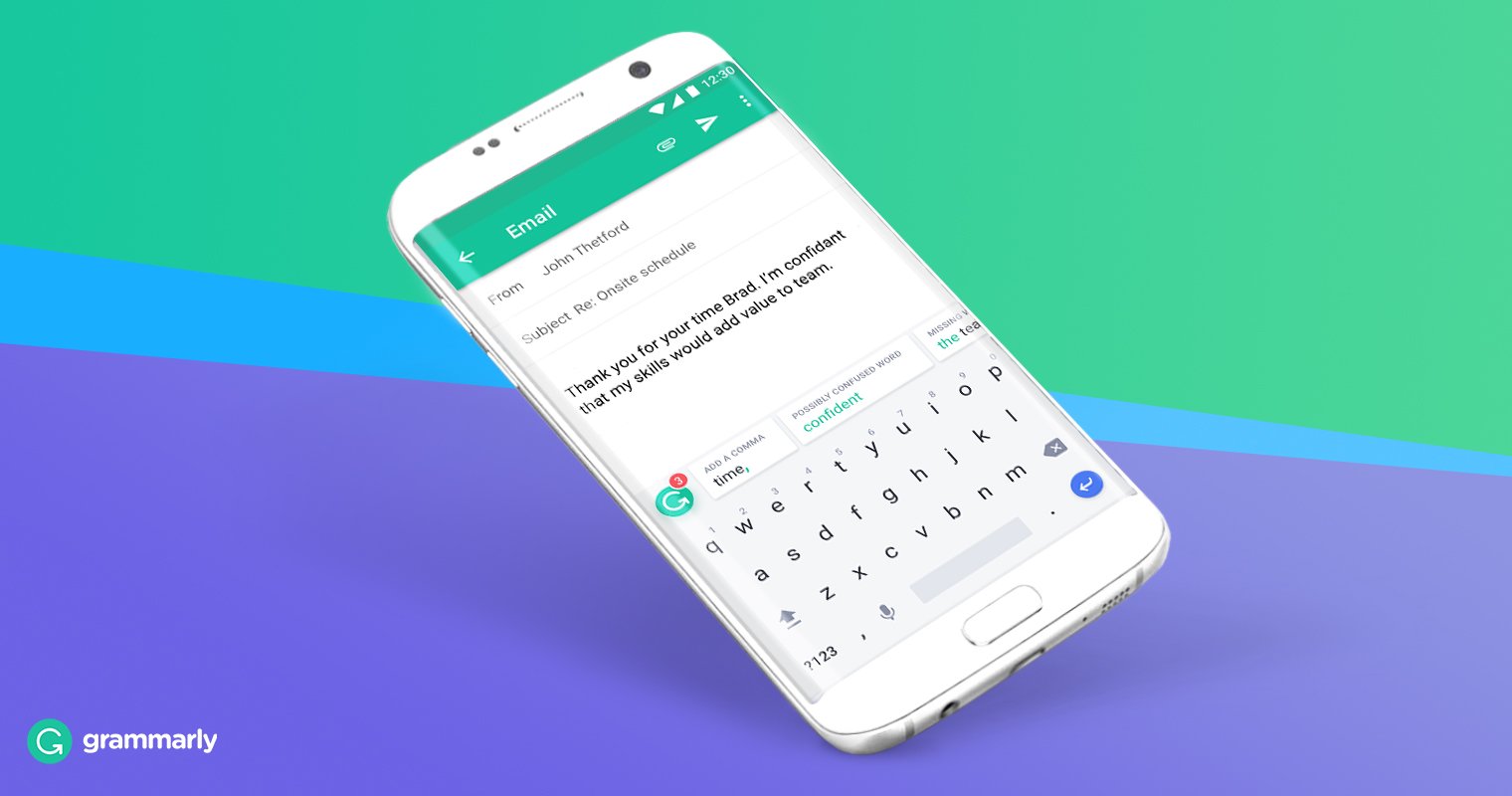
Grammarly is AI-powered application. It help people communication more effectively, millions of users rely on grammarly everyday to make their message, document, and social media post.
Grammarly is an app that you can use to improve your grammar and vocabulary.

Usage grammarly

Grammarly has simple user interface that allows anyone to use it without any hindrance.

FEATURES

• Grammarly offers a great keyboard for IOS and android, a desktop and web version, and add-in for Microsoft word.

• Grammarly checks your work in following categories, including but not limited for to spelling, grammar, punctuation, word variety, vocabulary and style.

Translate features grammarly
• It is necessary to translate text sometimes according to the requirements of the clients. But unfortunately, grammarly does not support this feature.

Plagiarism checker grammarly
• It supports this valuable feature that is known as plagiarism checker. This tool is so helpful that is saves the time, money and reputation in the market.It supports this valuable feature that is known as plagiarism checker. This tool is so helpful that is saves the time, money and reputation in the market.

Pricing

Grammarly charges $29.95  monthly and discounts to $11.66 on monthly basis when you go for the 1 year plan

What is pro-writingAid?

• Pro-writingAid offers world-class grammar and style checking, combined with more in-depth reports to help you strengthen your writing.

• It allows you to checker grammatical and punctuation mistakes while also checking for structural issues like overuse, repetition, clinches, and a writing style and sentence length.

Usage ProwritingAid

• ProwritingAid is little bit difficult user interface, it takes times to understand it. It does not facilitate every of user.

Features
• Pro-writingAid offers for more grammar and spelling checks than grammarly. “spelling, grammar, style, overused words, diction, dialogue checks and homonyms.

Translate feature ProwritingAid
• It provides this amazing features like ginger. It helps to translate the text in different language.

Plagiarism checker ProwritingAid

• It also supports plagiarism checker feature like every online proofreading tool but there is one issue.
• It provides this support to only premium plans.
• It is not for basic plans.

Pricing
• Pro writing aid premium plan is available for $ 40 on annual basis and premium plus plan is available for $45 on annual basis.

Which one is the best?
• Grammarly is highly advanced and effectively available in market.
• Pro-writingAid is also a good tool to improve your grammar and vocabulary.
• Both app are doing good in market people use both app.

Why do North Koreans hate South Korea and America (USA)?

Korea was a part of the Japanese empire between 1910 to 1945. The dynastic kingdom- Joseon Korea had signed the Japan-Korean Treaty in 1876 and formed a coalition with the Meiji government of Japan. Through the treaty, Japan had indirect control of Korea as it also gave protection to it, followed by the annexation of Korea by Japan in 1910. This annexation was arbitrary and without the consent of the Korean emperor. 

  As with any other colonization in the world, it too was a brutal one. People were exploited by the Japanese army. Industrialization was accelerated in Korea to benefit Japan. Soon they also attacked Korean history and culture. The environment too was exploited. Soon, the need for a freedom movement became palpable. Many rallies took place throughout the nation after the death of the Korean emperor as there was widespread suspicion that he was poisoned. The Japanese violently responded to these protests and subsequently suppressed the movement. An estimated 2 million people participated in the country-wide protests and about 7000 people were killed by the Japanese forces during the 1 year. According to the Korean reports, almost 50,000 people were arrested and 16000 wounded.

March 1 movement

  Following the dropping of atomic bombs on Hiroshima and Nagasaki, Japan surrendered to the Allied forces on 15 August 1945, ending 35 years of Japanese occupation. American forces under General John R. Hodge arrived at the southern part of the Korean Peninsula on 8 September 1945, while the Soviet Army and some Korean Communists had stationed themselves in the northern part of the Korean Peninsula. U.S. Colonel Dean Rusk proposed to Chischakov, the Soviet military administrator of northern Korea, that Korea should be split at the 38th parallel. This proposal was made at an emergency meeting to determine post-war spheres of influence, which led to the division of Korea. After the surrender of Japan on 15 August 1945, the United States and the Soviet Union divided Korea along the 38th parallel into two zones of occupation. The Soviets (Russia and allies) administered the northern zone and the Americans administered the southern zone. Post World War 2, the Cold war began. It was an ideological war between Communism of Russia & allies and The Capitalism of the USA. 

The US bombings.

  The Soviet Army crossed the borders and attacked South Korea in June 1950. The UN denounced this as arbitrary and an invasion. Soon the UN sent their forces to help the South Korean army and counter the attack. Twenty-one countries of the United Nations eventually contributed to the UN force, with the United States providing around 90% of the military personnel. Russia, too, sent in more forces to help the North Korean attack. The South, backed by UN and US forces, was successful in defending and driving the invading forces out. Post this, they invaded the north. China too joined the war and backed its ideological ally- Russia and helped the North. The Chinese army invaded the South but was pushed back to positions around the 38th parallel from where it all started. The North had to face immense American bombing. Many civilians died. The backbone of the northern army was broken. This war which started in June 1950 ended in July 1953. Approximately 3 million people died in the Korean War, the majority of whom were civilians, making it perhaps the deadliest conflict of the Cold War era. Compounding this devastation for Korean civilians, virtually all of the major cities on the entire Korean Peninsula were destroyed as a result of the war. The May 1953 bombing of major North Korean dams threatened several million more North Koreans with starvation, although large-scale famine was averted with emergency aid provided by North Korea’s allies. North Korea was the country most devastated by the war, which resulted in the death of an estimated 12%–15% of the North Korean population (appox. 10 million), “a figure close to or surpassing the proportion of Soviet citizens killed in World War 2”, according to Charles K. Armstrong. Post-war, South Korea took comparatively less time to recover. As America was an ally, South Korea grew on the principles of Capitalism and Democracy while, North Korea, having the Soviet Union as an ally, moved ahead with Communism, and no sooner it turned into a dictatorship. People’s life there is miserable. No freedom of speech, expression. No press freedom. South Korea, on the other hand, is very democratic and is one of the fastest-growing economies. But South Korea is constantly at threat of war with the North. With the dictator of North Korea having now initiated many nuclear tests, even the US is under a threat of attack. North Korea was devastated to a great extent by the south and the US. The hatred of the North Koreans and the dictator himself towards these two is very evident.

Everything about Zomato IPO

History

Zomato was established in 2010 as just a restaurant finding platform. Over the years, the young online startup expanded its services and is today one of the largest online food delivery platforms in India. It has currently expanded its territory to 24 countries including India. Its active restaurant partners have grown to over 1.5 lakhs in the fiscal year 2021 as compared to 94,286 in the fiscal year 2019. The average order value on this platform has risen from Rs 264 in 2020 to Rs 395 in 2021.

Zomato also boasts of having the largest local delivery networks in India with almost 1.7 lakh delivery partners. It’s units are making Rs 20.5 per order from the previous fiscal year. But it also suffered a loss of Rs 30.5 per order in the fiscal year 2020. However, the company has been suffering losses over the last three years.

About the IPO

The IPO issue size is Rs 9375 crores. Of this, Rs 9000 crores is a fresh issue which will be used for the company’s organic and inorganic growth. The remaining Rs 375 crores is an offer for sales. The IPO will be allocated to Qualified Institutional Buyers(QIB), Non-Institutional Buyers(NIB) and Retailers. Qualified Institutional Buyers are allotted a quota of 75%, Non-Institutional Buyers are allotted a quota of 15% and the Retailers are allotted a quota of 10%.

Price range per share is Rs 72-76. There will be 195 shares per lot and retailers can bid for a maximum of 13 lots for the maximum price. The issuing of IPO’s has already begun on 14 July 2021. As of now the IPO has been oversubscribed by more than 4 times in the retail investors quota. The QIB quota has been oversubscribed by 7 times and the NIB quota has seen an oversubscription of 0.45 times. Overall, the IPO has been oversubscribed by 4.79 times.

It is believed that the company will be a loss making company for the next 2-3 years. Experts say that this IPO is not suitable for retail investors. Only people with high risk appetite and those who are willing for long term holdings are advised to go for this IPO. Going ahead, the subscription for this IPO will be available for one more day from 10 am till 5 pm on Friday, July 16, 2021.

The allotment of this IPO will begin on Thursday, 22 July 2021. To the investors who didn’t get allotted, the refund will be initiated on Friday, July 23, 2021. Investors who have been allotted will get their shares on their respective demat accounts on Monday, July 26, 2021. The shares will be listed publicly for exchange from Tuesday, July 27, 2021.

Allotment of IPO’s is random and not based on first come first serve. But being too late is also not good for the allotment. To get higher chances of allotment, make sure that you apply early and apply from different demat accounts. If a person has applied for more than one time with the same PAN card, then all of his applications will be rejected. Buy the shares of it’s parent company to ensure more chances of subscription.

EDUCATION DEVELOPMENT DAY IN TAMILNADU!!!

Though many National leaders rendered their selfless service to our country, one among them to be noted was the Kingmaker Kamaraj. K. Kamaraj, familiarly known as Kamarajar was an independent activist and the former Chief Minister of Tamil Nadu. He was popularly known as the Kingmaker of India during the 1960s. He supported Lal Bahadur Shastri, to be the President of India after the death of Nehru. After the sudden dismissal of Lal Bahadur Shastri, he supported Indira Gandhi to be the President of India. He was a man of simplicity and known for his best leadership in the development of Tamil Nadu. The Midday Meals Scheme introduced by him was very popular in India. He was popularly known as Karmaveerar, KalviKan Thirantha Mudhalvar, etc.

K KAMARAJ – Former Chief Minister Of TamilNadu

Kamaraj was born on 15th July 1903 at Virudhunagar in TamilNadu to Kumarasamy and Sivagami Ammal. His birth name was Kamatchi and later changed to Kamarajar. He studied primary education in a traditional school and he was to drop out because of his father’s death to support his family. He had a younger sister named Nagammal. He worked in his uncle’s shop and begun to attend political meetings and common meetings related to Home Rule Movement. He developed his interest in politics by reading daily newspapers. In 1920, at the age of 18, he became a very enthusiastic person and joined Indian National Congress. He organized public meetings for leaders in Virudhnagar and was very eager to meet Mahatma Gandhi. As he wished, he met Gandhiji for the first time in the meeting. Kamaraj went to jail for two years for taking part in ‘Salt Sathyagraha’ led by C. Rajagopalachari at Vedaranyam.

At the age of 34, he contested in the Legislative election for the first time and marked his first victory at Sattur in 1937. He stuck by the principle ‘ One should not accept any post/leadership to which one could not do full justice ‘. In 1954, Kamaraj became the Chief Minister of Tamil Nadu. Various schemes and deeds introduced by him as a Chief Minister are as follows:

  • He removed Hereditary Education Policy introduced by Rajaji.
  • He reopened more than 12,000 schools during his leadership as a Chief Minister.
  • Education and trade hiked during his period.
  • Kamarajar aimed to eradicate illiteracy and introduced compulsory education. The literacy rate was 7% during the British period but during his period, the literacy rate increased to 37%.
  • He also introduced the Midday Meals Scheme to provide atleast one healthy meal per day to the poor and needy children. He introduced the uniform scheme to the school children to eradicate the germination of caste-based flaws in young minds.
  • He built several irrigation canals during his period. He built nine dams which are appreciated till now and they are as strong as him.
  • Huge investment industries such as Neyveli Lignite Corporation, BHEL, etc. were started during his period.

He has been the Chief Minister of Tamil Nadu for three consecutive terms, by the victory in 1957 and 1962. His ruling period was known as the Golden Age of Tamil Nadu. Kamaraj was a great follower of Mahatma Gandhi, yet to this fact, he died on 2nd October 1975 during his sleep in his native Virudhunagar. He was awarded ‘Bharat Ratna’ posthumously in 1976. The Chennai Airport is named after him as Kamaraj Terminal.

His birthday is celebrated as ‘ Education Development Day ‘ in Tamil Nadu every year. Though he died, his good deeds remain in the hearts of the people.

Intelligence plus character – that is the goal of Education.

– K Kamaraj.

Tour de Web Development

Nowadays, Technology plays a huge role in our daily lives ranging from the simplest of apps to the most groundbreaking inventions. Every single website or piece of software that we encounter has been built by a web developer.
To the newbies who have no idea about it, web development can seem like a complicated, confusing, and somewhat inaccessible field. So, Today in this article we’ll put some light on this fascinating industry.

What is Web Development?

According to Wikipedia “ Web development is the work involved in developing a Web site for the Internet or an intranet.” Web development is also known as website development, and the professionals that maintain a website are called web developers or more commonly web devs.

Scope of Web Development

It ranges from developing a simple page of plain text to complex web applications. A more comprehensive list of tasks to which Web development commonly refers, may include Web engineering, Web design, Web content development, client liaison, client-side/server-side scripting, Web server and network security configuration, and e-commerce development.

The Basics Of Web Development


The basic divisions in web development is as follows:

  • Client-side or Frontend
  • Server-side or Backend
  • Database Technology or Content Management System

Front-end/Client-side

Client-side coding or frontend development refers to everything that is experienced by the end-user directly. The frontend code executes directly in a web browser and is the part which people see when they visit a website. Things like layout, fonts, colours and menus etc are all driven by the frontend.


Back-end/Server-side

Server-side coding or backend development refers to what goes on behind the scenes. The backend is essentially that part of a website that the user doesn’t actually see. It stores the data and ensures that everything on the client-side runs smoothly. It is done by communicating with the frontend.


Database Technology

The another important part is the storing and retrieving of data which is done via a Database Management System. It contains all the files and content that are necessary for a website to function. It stores the files in such a way that makes it easy to retrieve, organize, edit and save. Most websites typically use relational database management system (RDBMS).

Basically, the frontend, backend and DBMS all are related and work together to build and run a fully functional website or application, and these three layers form the foundation of web development.


The Difference Between Web Development And Web Design

The terms web development and web design are often used interchangeably, but these are two very different things.

Web designers design the look and feel of the website. They prepare the layout of the website and make sure it’s user-friendly, and pleasant to use. They consider all the different visual elements that form the part of a website. Web design is a broad field, and is broken down into more specific roles such as User Experience Design (UX), User Interface Design(UI), and Information Architecture.

The job of the web developer’s is to take this design and convert it into a fully functional website. The front-end developer takes the design as provided by the web designer and develops it into website using coding languages such as HTML, CSS, and JavaScript whereas the backend developer builds the more advanced functionality of the site, such as the payment function on a website..

In a nutshell, a web designer is the architect, whereas the web developer is the builder or engineer.

Should You Become A Web Developer In 2021?

Considering the situation of the job market and projected employment growth, Now is an excellent time to become a web developer! Nowadays, technology has been pivotal, more than ever, to how we work, connect with loved ones etc. Those who can build and maintain websites, apps, and software have a crucial role to play in today’s technology-driven world and so is reflected in the web development job market.
According to the Bureau of Labor Statistics, employment of web developers is projected to grow 8% from 2019 to 2029 which is much faster than the average for all occupations. Taking all these into account, It won’t be wrong to say that now is the correct time to join this industry.

FALSE MEMORIES: THE PAST YOU REMEMBER IS NOT ALWAYS THE TRUTH

We can’t reliability distinguish the true memories from false memories.

False memory is a psychological phenomenon whereby an individual recalls an event that never happened, or an actual occurrence substantially differently from the way it transpired.

In other words, a false memory could either be an entirely imaginary fabrication, or a distorted recollection of an actual event. Moreover, false memories are distinct from simple errors in recollection.

Firstly, an individual who holds a false memory maintains some certitude in the veracity of the memory.  Secondly, a false memory deals not with forgetting something that actually happened, but with remembering what had never taken place.

Instances of this phenomenon may range from the mundane—such as remembering that you ate breakfast when you actually did not, to the serious—such as falsely recalling that you were assaulted by your boss.

HOW ARE FALSE MEMORIES FORMED OR MADE?

The difference between false memory and ones is as same as for jewels: it is always the false ones that looks the most real, the most brilliant.

Memories are complex. While you might imagine a memory as a black or white element, the truth is memories are subject to change, malleable, and often unreliable.

Events are moved from your brain’s temporary memory to permanent storage while you sleep. The transition, however, isn’t absolute. Elements of the memory may be lost. This is where false memories can begin.

IS THERE A GROUP WHICH IS MORE LIKELY TO HAVE FALSE MEMORIES?

people change memory dosnt.

Memory isn’t permanent. Indeed, it’s pliable and often ever-changing. Certain people or events may make you more likely to develop false memories. These include:

Eye witnessing

If you witness a crime or an accident, your testimony is important — but not conclusive. That’s because experts and law enforcement officials know memories and recollections can and do change, whether through suggestion or the passage of time.

Any gaps in events may be filled in by your memory, turning a reliable recall into a faulty one.

Trauma

People who have a history of trauma, depression, or stress may be more likely to produce false memories. Negative events may produce more false memories than positive or neutral ones.

OCD

Individuals with Obsessive-compulsive disorder(OCD) may have a memory deficit or poor memory confidence.

They may be more likely to create false memories because they don’t have confidence in their own memories. This often leads to the repetitive or compulsive behaviors that are associated with this disorder.

Aging

As both you and a memory age, details about that memory may be lost. The gist of a memory becomes stronger, while the details fade away.

For example, you may remember you went to the beach on your honeymoon, but you don’t remember the name of the hotel, what the weather was like, or even the city you stayed in.

Confidence:a key to success?

Confidence means feeling sure of yourself and your abilities in a realistic and secure way. Yes, it is rightly said that confidence is the key to success. It is built on the choices and accomplishments that feed your passion, most of all making you happy and feeling proud on yourself.

It doesn’t mean to feel like superior from others or in any arrogant way but to believe in a positive manner that you’re capable. A confident person can achieve the goals and face the scenarios of life far better than those who lacks it.

The people who are confident enough are admired by others ,can take the risk , look up the situations positively and also inspire others.

” low self-confidence isn’t a life sentence. Self confidence can be learned , practiced and mastered- just like any other skill. Once you master it, everything in your life will change for the better”.

Barrie Davenport

Tips to be confident:

  1. It is obvious that if you don’t believe in yourself how do u expect any other person to do that ? Confidence begins to develop by the time of accomplishment of the goals. So GET THE THINGS DONE is the foremost step in which you are required to set-up your day-to-day goals and when you will achieve them, automatically you will have the confidence of doing it.
  2. Just setting up of the goals is not enough and there comes the second tip to MONITOR THE PROGRESS by which you can easily know how much you have achieved and also can make any changes in your goals if needed to satisfy them.
  3. The way you appear or dress have a significant impact on your confidence .So DRESS SMART , it is the international symbol of status and no matter where you live it is always preferable to bring more attractiveness and confidence in you.
  4. Here comes the role of a BODY LANGUAGE which plays more important role in judging the personality of a person. Behave in a manner which will present you more confident . Always walk tall ,have an eye contact while talking and be energetic.
  5. Find out your strengths and try to LEVERAGE YOUR STRENGTHS dont give much focuss on your shortcomings otherwise you will become less confident. Just know your areas of master and bring them to more upper level to increase them it will eventually help you to be more confident about yourself.

Compelling A Married Woman To Live In Her Parental Home Amounts To Cruelty

While displaying zero tolerance towards act of cruelty against women, the Madhya Pradesh High Court has just recently on June 22, 2021 in a learned, laudable, latest and landmark judgment titled Amar Singh Vs Smt Vimla minced just no words to observe that compelling a married woman to live in her parental home after marriage amounts to cruelty and that for this reason, it cannot be said that she was living separately without reasonable reason. To ensure that women is protected from being harassed, humiliated and harangued by her husband and his relatives, it is imperative that Courts speak out firmly in favour of women where she is compelled to stay at her parental home without any cogent reason whatsoever! It must be apprised here that this significant development came from a Single Judge Bench of Justice GS Ahluwalia who was dealing with a criminal revision petition challenging the Family Court’s order directing the husband to pay Rs 7,000/- per month to wife under Section 125 CrPC. 

To start with, a Single Judge Bench of Justice GS Ahluwalia of Madhya Pradesh High Court who has authored this cogent, commendable, composed and convincing judgment sets the ball rolling through video conferencing by first and foremost observing that, “This criminal revision under Section 397/401 of Cr.P.C. r/w Section 19(4) of Family Court Act has been filed against the order dated 10/10/2020 passed by Principal Judge, Family Court Guna in case MJC No.72/2018, by which the application filed by the respondent under Section 125 of Cr.P.C. has been allowed and the applicant has been directed to pay Rs.7,000/- per month from the date of the order.”
While elaborating on the facts of the case, the Bench then puts forth that, “The necessary facts for disposal of present revision in short are that, the respondent filed an application under Section 125 of Cr.P.C. on the ground that she got married to the applicant on 25/05/2013 in accordance of Hindu Rites and Rituals. Since, the applicant and her in-laws were not satisfied with the dowry, therefore, they used to beat her, harass her for demand of a four wheeler and cash amount. About seven months prior to filing of the application i.e. in the month of September, 2017, the respondent was ousted from her matrimonial house and thereafter, she is residing in her parental home. In the meanwhile, neither the applicant came to take her back nor made any efforts to look after her. The respondent is on the verge of starvation. Her father is poor and is not in position to bear her expenses and accordingly, it was prayed that for meeting out necessary expenses, the applicant be directed to pay Rs.15,000/- per month by way of maintenance amount. It was further pleaded that the applicant belongs to a rich family and is having 50 bigha of agriculture land with two tube wells. The applicant has cattles, tractor and other agriculture equipments. He has a house and accordingly, the yearly income of the applicant is Rs. 50,00,000/-.”
Furthermore, the Bench then points out that, “The applicant filed his reply to the application filed under Section 125 of Cr.P.C. He admitted that he got married to the respondent on 25/05/2013. It was claimed that since, both the parties are poor and since they were not in a position to bear the expenses of marriage and therefore, the marriage was performed in Sammelan. The marriage was performed without any dowry. The allegation of harassment due to non fulfillment of demand of four wheeler and cash amount was denied. It was also denied that the respondent was ousted from her matrimonial house about seven months prior to the filing of application. It was pleaded that for the first time the respondent had resided in her matrimonial house for a period of four days and during this period her behavior towards her in-laws was cruel. It was further pleaded that the respondent never allowed the applicant to consummate the marriage and she was continuously challenging the potency of the applicant in the society. The respondent is an expert in stitching and is also running beauty parlor and earning rupees thirty to forty thousand per month. She is maintaining her parents out of her own income that is why the parents of the respondent are not permitting her to come to her matrimonial home. It was further pleaded that in fact the parents of the respondent are insisting that the applicant should reside in the parental home of the respondent as Gharjamai. When the applicant refused to do so, then a false criminal case under Section 498-A of IPC was instituted against the applicant and his family members. Later on the applicant and his family members were acquitted. It was further denied that the applicant is having any agriculture land, house, two tube wells, tractor and agricultural equipments. He also denied that he had any cattles, it was also denied that yearly income of the applicant is Rs.50,00,000/-. It was further pleaded that the applicant is a student and is working on a part time basis in a shop from where he is getting Rs.2,000/- per month and apart from that, the applicant has no source of income. It was further pleaded that after the marriage, when the applicant went to the parental home of the respondent to take her back, then for half an hour, the respondent and her family members did not open the door and thereafter, they insisted that the respondent should be permitted to reside in her parental home for next 8 to 10 days. Accordingly, the applicant came back from the door of the parental home of the respondent. Thereafter, the applicant again went to the parental home of the respondent to take her back. However, although the respondent was 4 permitted to come back to her matrimonial home but the applicant was disrespected. Whenever the applicant informed the parents of the respondent about her cruel behavior then every time they replied that if the applicant wants to leave the respondent then he can do so but he has to pay an amount of Rs.15 to 20 Lacs. In reply several allegations were made against the respondent and her parents about cruel behavior.”
Going ahead, the Bench then points out that, “The respondent in support of her case examined herself. In cross-examination, she admitted that the applicant was acquitted for offence under Section 498-A of IPC. However, she denied that the marriage was performed without any dowry. She further admitted the suggestion given by the applicant that the applicant and his mother did not like the food prepared by the respondent. It was further denied that she did not allow the applicant to consummate marriage. She further denied that the applicant was detained in her parental home. She further denied that the applicant is a land less laborer. She further accepted that the marriage has not been consummated so far. She Further denied that she is doing the work of stitching or beauty parlor. She further denied that she is running a beauty parlor in the name of Sunena beauty parlor and Sunena Ladies Tailor. She further denied that she is earning Rupees 30 to 40 thousand per month. She further denied that the applicant is doing a part time job in a shop on monthly income of Rs.2,000/-. The respondent examined her father Kedari as P.W.2.”
On the contrary, the Bench then also brought out in the next para that, “The applicant examined himself in his defence and apart from alleging the allegations of cruelty by the respondent and her parents, it was claimed by the respondent that he does not have any property or land or agriculture equipments. He also denied that the respondent was ever harassed for demand of four wheeler and an amount of ten lacs. He further claimed that the marriage has not been consummated however, he denied that because of non consummation of marriage, he had started beating the respondent.”
To put things in perspective, the Bench then after considering the version of both the sides goes on to point out that, “The Court below after considering the totality of the facts and circumstances of the case, came to a conclusion that it cannot be said that the respondent is residing separately without any reasonable reason. It was further held that the applicant is an able bodied person and certain allegations have been made by the applicant, which have not been proved by him. It was also found that the respondent is not doing any work and she is unable to maintain herself.”
Frankly speaking, the Bench then holds in the next para that, “So far as the question of quantum of maintenance amount is concerned, it was held that according to the respondent, the applicant is having 12 bigha of land whereas his father is having 38 bighas of land. He is the only son of his parents. Kedari P.W.2 has also claimed that the applicant is having forty to fifty bigha of land.”
As against what is stated above, the Bench then brings out in the next para that, “On the contrary, it was the claim of the applicant that he is a student and is working as a part time job in a shop from where he is earning Rs.2,000/- per month.”
Interestingly enough, the Bench then envisages in the next para that, “The Court below after considering the evidence came to a conclusion that although, the respondent has failed to prove that the applicant is having any agriculture land but from the pleadings as well as evidence of the parties, it appears that the applicant belongs to a financially sound family and accordingly, he is in a position of maintaining the respondent. Accordingly, an amount of Rs.7,000/- has been awarded by way of monthly maintenance.”
As we see, the Bench then goes on to add in the next para that, “Challenging the order passed by the Court below, it is submitted by the counsel for the applicant since the applicant was acquitted for offence under Section 498-A of IPC, therefore, the Court below has committed material illegality by holding that the respondent is residing separately because of reasonable reason. It is further submitted that the respondent has failed to prove the monthly income of the applicant, therefore, the maintenance amount of Rs.7,000/- per month is on higher side. None for the respondent though served.”
It cannot be glossed over that the Bench then observes in the next para that, “It is true that the applicant has been acquitted for offence under Section 498-A of IPC. However, it is equally true that the applicant had leveled serious allegations against the respondent and her parents. However, the applicant did not file even a single document to show that he had ever lodged any report regarding the illegal confinement or mal-treatment by the respondent her parents. Leveling serious allegations and failing to prove the same, may also amount to cruelty. Undisputedly the marriage between parties could not be consummated. On one hand the applicant has claimed that the respondent is defaming him in the society by alleging that he is impotent but he did not bring any evidence on record to show that he is not impotent. Further, the applicant had leveled a false allegation that the respondent is running a beauty parlor as well as a stitching center. He did not even file the photographs of the shops.”
What’s more, the Bench then further most significantly holds in the next para that, “Under these circumstances, this Court of the considered opinion that after having leveled serious allegations against her and her parents and having failed to prove the same, it cannot be said that the respondent is residing separately without any reasonable reason. Furthermore, it is not the case of the applicant that he had ever tried to take the respondent back from her parental home. Thus, it is also clear that the applicant has deserted the respondent and he cannot take advantage of his own wrong. Further, compelling a married women to live in her parental home, is also a cruelty. Accordingly, it is held that it cannot be said that the respondent is residing separately without any reasonable reason.”
Be it noted, the Bench then also makes it clear in the next para that, “Thus, if the husband is healthy and is an able bodied person, then he is under legal obligation to support his wife. It is the claim of the applicant that he is working on a part time basis in a shop and is earning Rs.2,000/- per month. The applicant has not examined owner of the shop in support of his claim. The applicant has also not examined his father to establish that the applicant does not belongs to a financially sound family. The applicant has not filed any document to show that he is a student. Under these circumstances, this Court is of the considered opinion that since the applicant is a healthy and able bodied person therefore, he cannot run away from his legal obligation to support the respondent.”
While citing the relevant case law, the Bench then holds that, “So far as the question of quantum of maintenance is concerned, the Supreme Court in the case of Jasbir Kaur Sehgal v. Distt. Judge, Dehradun reported in (1997) 7 SCC 7 has held as under:- 
“8. The wife has no fixed abode of residence. She says she is living in a Gurdwara with her eldest daughter for safety. On the other hand the husband has sufficient income and a house to himself. The wife has not claimed any litigation expenses in this appeal. She is aggrieved only because of the paltry amount of maintenance fixed by the courts. No set formula can be laid for fixing the amount of maintenance. It has, in the very nature of things, to depend on the facts and circumstances of each case. Some scope for leverage can, however, be always there. The court has to consider the status of the parties, their respective needs, the capacity of the husband to pay having regard to his reasonable expenses for his own maintenance and of those he is obliged under the law and statutory but involuntary payments or deductions. The amount of maintenance fixed for the wife should be such as she can live in reasonable comfort considering her status and the mode of life she was used to when she lived with her husband and also that she does not feel handicapped in the prosecution of her case. At the same time, the amount so fixed cannot be excessive or extortionate. In the circumstances of the present case we fix maintenance pendente lite at the rate of Rs 5000 per month payable by the respondent-husband to the appellant-wife.””
In addition, the Bench then states in the next para that, “The Supreme Court in the case of Chaturbhuj v. Sita Bai reported in (2008) 2 SCC 316 has held as under:- 
“6. The object of the maintenance proceedings is not to punish a person for his past neglect, but to prevent vagrancy by compelling those who can provide support to those who are unable to support themselves and who have a moral claim to support. The phrase “unable to maintain herself” in the instant case would mean that means available to the deserted wife while she was living with her husband and would not take within itself the efforts made by the wife after desertion to survive somehow. Section 125 CrPC is a measure of social justice and is specially enacted to protect women and children and as noted by this Court in Captain Ramesh Chander Kaushal v. Veena Kaushal [(1978) 4 SCC 70 : 1978 SCC (Cri) 508 : AIR 1978 SC 1807] falls within constitutional sweep of Article 15(3) reinforced by Article 39 of the Constitution of India. It is meant to achieve a social purpose. The object is to prevent vagrancy and destitution. It provides a speedy remedy for the supply of food, clothing and shelter to the deserted wife. It gives effect to fundamental rights and natural duties of a man to maintain his wife, children and parents when they are unable to maintain themselves. The aforesaid position was highlighted in Savitaben Somabhai Bhatiya v. State of Gujarat [(2005) 3 SCC 636 : 2005 SCC (Cri) 787 : (2005) 2 Supreme 503].””
Quite significantly, the Bench then also points out that, “Thus, it is clear that the applicant has made every effort to suppress his income as well as the financial condition of his family. It is well established principle of law that a wife is entitled to enjoy the same status, which she would have enjoyed in her matrimonial house. The Wife cannot be compelled to leave the life of rectitude.”
While rejecting the contention of the counsel of the applicant that the Trial Court should not have awarded maintenance from the date of application, the Bench then while citing a recent, remarkable and relevant case law holds that, “The Supreme Court in the case of Rajnesh v. Neha reported in (2021) 2 SCC 324 has laid down guide lines for determining the quantum of maintenance and has held as under:- 
“113. It has therefore become necessary to issue directions to bring about uniformity and consistency in the orders passed by all courts, by directing that maintenance be awarded from the date on which the application was made before the court concerned. The right to claim maintenance must date back to the date of filing the application, since the period during which the maintenance proceedings remained pending is not within the control of the applicant.””
As a corollary, the Bench then holds in the next para that, “Accordingly, this Court is of the considered opinion that Court below did not commit any mistake by awarding the maintenance from the date of the application. Consequently, the order dated 10/10/2020 passed by Principal Judge, Family Court Guna in case MJC No.72/2018 is hereby affirmed.”
Finally, the Bench then holds in the last para that, “It appears that by order dated 06/02/2019, Court had below awarded an amount of Rs.3,000/- by way of interim maintenance. Accordingly, it is directed that the amount paid by the applicant by way of interim maintenance is liable to be adjust in the arrears of maintenance amount. With aforesaid observation, this petition is hereby dismissed.”
In essence, this brief, brilliant, balanced and bold judgment by a Single Judge Bench of Justice GS Ahluwalia of Madhya Pradesh High Court leaves no room of doubt that compelling a married woman to live in her parental home amounts to cruelty. It is the bounden duty of the husband to keep his wife with her. If the husband compels a married women to live in her parental home then he is guilty of cruelty and shall be accordingly held liable!
Sanjeev Sirohi


CHILDREN’S DAY

Children’s Day is celebrated across India to increase awareness of the rights, care and education of children.[1][2] It is celebrated on 14 November every year as a tribute to the birthday of India’s First Prime Minister, Jawaharlal Nehru. Known as Chacha Nehru among children, Nehru advocated for children to have all-rounded education that would build a better society in the future.Nehru considered children as real strength of a nation and foundation of society.On this day, many educational and motivational programs are held across India for children.

The celebration of Children’s Day in India dates back to 1956. Prior to the death of Pt. Jawaharlal Nehru, India celebrated Children’s Day on 20 November (the date observed as Universal Children’s Day by the United Nations). After the death of Jawaharlal Nehru, his birth anniversary was chosen to be celebrated as Children’s Day in India. A resolution was passed in the parliament to give a befitting farewell to the first Prime Minister of India.

GANDHI JAYANTI

“The best way to find ypurself is to lose yourself in the service of others”.

A Great slogan given by our great Father of nation “Mahatma Gandhi”. He was born on 2nd october 1869.

Born and raised in a Hindu family in coastal Gujarat, Gandhi trained in law at the Inner Temple, London, and was called to the bar at age 22 in June 1891. After two uncertain years in India, where he was unable to start a successful law practice, he moved to South Africa in 1893 to represent an Indian merchant in a lawsuit. He went on to live in South Africa for 21 years. It was in South Africa that Gandhi raised a family and first employed nonviolent resistance in a campaign for civil rights. In 1915, aged 45, he returned to India. He set about organising peasants, farmers, and urban labourers to protest against excessive land-tax and discrimination. Assuming leadership of the Indian National Congress in 1921, Gandhi led nationwide campaigns for easing poverty, expanding women’s rights, building religious and ethnic amity, ending untouchability, and above all for achieving swaraj or self-rule.[9]

Also in 1921, Gandhi adopted the use of an Indian loincloth (short dhoti) and a shawl (in the winter) woven with yarn hand-spun on a traditional Indian spinning wheel (charkha) as a sign of identification with India’s rural poor. He also began to live modestly in a self-sufficient residential community, ate simple vegetarian food, and undertook long fasts as a means of self-purification and political protest. Bringing anti-colonial nationalism to the common Indians, Gandhi led them in challenging the British-imposed salt tax with the 400 km (250 mi) Dandi Salt March in 1930 and in calling for the British to quit India in 1942. He was imprisoned many times and for many years in both South Africa and India.

Get acquainted with Slow thinking!

Our mind is an universal miracle! It’s incredible to acknowledge that our mind has the capability to process much more thoughts, than the count of the molecules. Our stream of consciousness is about 15,000 words per minute. But the control is in our hands. It is possible to predict and have a control on the prudent aspects of our life, by being a master of our mind and its thinking process. Thomas Edison’s famous saying is that ” Thinking is the hardest work of all, which is why most people avoid it at all costs.” Thus the term ‘Think‘ plays an inevitable role in each stage of our life.

So, developing the habit of thinking is one of the best thing that we do for ourselves; but how does we think matters a lot because, ‘thinking’ is a kind of ardent skill that one should carry over. This process is done with the basis of the partial informations and available statistics which may lead to cognitive bias and it is important to be careful before we think as the available sources of informations may not be trusted. Let’s get landed into the so-called Slow thinking which contrasts from the fast thinking. These two thinking styles differs as the former would be called as something that is conscious, effortful and logical process and the latter would be termed as unconscious, frequent and automatic.

Fast thinking is the course of making decisions quickly such as while driving a car in a traffic. Such decisions are made with less considerations as it takes most of its role in our daily life situations. It doesn’t matter whether one orders for a hamburger or sandwich, but he/she is definite to grab a delicious dish! Whereas slow thinking should be considered with little difference as it costs for long-term decisions with preferable consequences. Determination of a goal can be quoted as a good example. It may be disastrous to use fast thinking in such circumstances. This concept cannot be bound with such long-term aspects, but also with the decision making in situations such as, to turn the focus towards the clown in a circus and giving someone our telephone number. Certain decisions which are made at the moment, may have long lasting impacts. Even turning the focus from a central black dot towards the surrounded white sheet requires slow thinking. In this way it could be evinced that slow thinking drives our mind in a unique manner, which may also enhance oneself with good attitude and perseverance.

So the very title, why is it necessary for us to get acquainted with Slow thinking? The reply is; according to scientists the speed of information processing of the human mind could be calculated with the inverted ‘U’ shape. The thinking speeds up from childhood to adolescence and then gradually slows down as the age increases and that’s why we hear our grandma’s or grandpa’s say that they tend to forget things easily. The relative stability in our thinking process is maintained in the youth period. The frontal and parietal cortex, which is most of the brain is responsible for analytical decision making and as the age surpasses, the white matter of the brain tears which is connected by the apron cells.

Thus, all our mind is trained to run towards the future in accordance with the conventions. Since our life is oriented with futuristic goals, it is important to practice slow thinking, in accordance with the long-term consequences. The adolescent and the youth period of life is the important stage as the energy is reserved to direct them towards our plans and it is essential to practice the habit of slow thinking especially during this time, as our measures would be directed in futuristic way. ‘Actions should speak louder than words, and our mind should be moderate before we perform something.’