Automatic Featured Posts Slider Widget For Blogger

  Anyone with a blog wants readers to stay rather than move on to another. It’s not being selfish but after someone has read one post, you’d definitely want them to read another, right? After all, isn’t it one of the tenets of SEO to make people stay longer on your blog if it has to have a fighting chance at the rankings game?

The question now is: how exactly do you entice them to read a few more of your blog posts?

First off, you don’t know exactly what brought a reader to your site. Well, you sort of do, if you have Google Analytics and all that. But that’s beside the point. It wouldn’t be productive for you to stare at GA the entire day hoping that it will tell you that yes, someone has been perusing your blog.

The point being driven at here is that you have to offer more on your blog. It’s not enough that you get traffic from search engines and other sites; you also have to add some extras that will entice visitors to stay longer.

How exactly do you do that?

The Tactics of Persuading Users to Stay

Bloggers have employed a variety of tactics to persuade readers to stay. For one, they load the sidebar with widgets for Popular Posts, for example. Of course, it would be in the interest of your readers to know which other posts on your blog are gaining traction. Maybe those pieces are of interest to them as well. As a result, you’ve got one surefire way of making readers stay.

Now, what if you want to highlight Featured Posts, for example? Let’s say that your blog has been around for a number of years and in that span, it has produced some great content that received quite the number of shares, likes, +1s, comments on so on. Wouldn’t that be the kind of post you want featured? Unless your reader was looking for that topic specifically, there’s little chance that they might uncover that gem if you don’t bring it to their attention.

Thankfully, it’s quite possible to add a Featured Posts slider for Blogger. And if you don’t know how to make one yourself, this is exactly what this post is for. Here’s an awesome Featured Posts slider widget that you can use on your blog.

How to Add Featured Posts Slider Widget in Blogger

1. Go to ‘Layout’ > click the ‘Add a gadget’ link in the sidebar area and select ‘HTML/JavaScript’ gadget from the pop-up window.

2. Add the code below inside the empty box:

ul.featured-widget-list,ul.featured-widget-list li{margin:0;padding:0;list-style:none;position:relative }ul.featured-widget-list li{display:none}ul.featured-widget-list li:nth-child(1){display:block;line-height:0}ul.featured-widget-list img{border:0;width:100%;height:auto}ul.featured-widget-list .featuredbg{width:100%;height:100%;position:absolute;z-index:2;left:0;top:0;opacity:.6;background-image:url(https://blogger.googleusercontent.com/img/b/R29vZ2xl/AVvXsEg9xYcCNrcnTNWee7JpsdHu1DUMSjLwE-Wwmp1Vo0Cb-5i2okkL-ltU_fDOVylXzY7-rdbnvn3bwdfWIvhN8wNgbM6IfUhLHSJ1QnUz2n1EKL7QrqtQu2Uh3zqY23DZB3uPo87zey3xP20/s400/overlay-bg.png);background-position:0% 100%;background-repeat:repeat-x}ul.featured-widget-list .featuredbg:hover{opacity:.1}ul.featured-widget-list h5{position:absolute;left:0;right:0;text-align:center;bottom:10px;z-index:2;color:#fff;margin:0;text-transform: capitalize;padding:10px 20px;line-height:1.9em;letter-spacing:0.3px;font: 600 16px ‘Abel’, sans-serif;overflow:hidden}ul.featured-widget-list li:hover h5{bottom:30px}ul.featured-widget-list .featured-meta{font: 11px ‘Abel’, sans-serif;letter-spacing:0.3px;position:absolute;bottom:0;left:0;right:0;text-align:center;z-index:2;color:#fff;opacity:0}ul.featured-widget-list h5, ul.featured-widget-list .featured-meta {-webkit-transition: all 0.3s;-moz-transition: all 0.3s;-o-transition: all 0.3s;transition: all 0.3s;}ul.featured-widget-list li:hover .featured-meta{bottom:20px;opacity:1}.feat-buttons{position:absolute;top:50%;left:0;z-index:5;width:100%}
.feat-buttons a{text-indent:-9999px;margin:0 7px;width:15px;height:15px;padding:5px;background:#000;-ms-filter:”progid:DXImageTransform.Microsoft.Alpha(Opacity=60)”;filter: alpha(opacity=60);-moz-opacity:0.6;-khtml-opacity:0.6;opacity:0.6;position:relative;-webkit-border-radius: 50%;-moz-border-radius: 50%;border-radius: 50%;}.feat-prev{float:left;}.feat-next{float:right;}.feat-buttons a.feat-prev::before, .feat-buttons a.feat-next::before{content:””;width:0;height:0;border-width:6px 7px;border-style:solid;border-color:transparent #fff transparent transparent;position:absolute;top:50%;margin-top:-6px;margin-left:-11px;left:50%}
.feat-buttons a.feat-next::before{border-color:transparent transparent transparent #fff;margin-left:-3px}

//<![CDATA[
featuredbwidget({
listURL:”https://helplogger.blogspot.com/&#8221;,
featuredNum:9,
listbyLabel:false,
feathumbSize:350,
interval:3000,
autoplay:true,
featuredID:”#featuredbwidget”
});
function featuredbwidget(a){(function(e){var h={listURL:””,featuredNum:3,featuredID:””,feathumbSize:300,interval:5000,autoplay:false,loadingFeatured:”nextfeatured”,pBlank:”https://blogger.googleusercontent.com/img/b/R29vZ2xl/AVvXsEgL-HKGMbN4lhifWz37o83dbEiXjZvmygWZ2ZkBjvACHCKc1_hJ2acw7PlNWJ3d3pvYFfPC8IATHKHUmvtWpcRSJcBdazEraoM0c5G_QoSB3sA1-gzXdWBVJEmXpTBDvLQrj3mAkGnVtUI/s500/no-image.png&#8221;,byMonth:[“Jan”,”Feb”,”Mar”,”Apr”,”May”,”Jun”,”Jul”,”Aug”,”Sep”,”Oct”,”Nov”,”Dec”],listbyLabel:false};h=e.extend({},h,a);var g=e(h.featuredID);var d=h.featuredNum*200;g.html(‘

‘);var f=function(w){var q,k,m,u,x,p,t,v,r,l=””,s=w.feed.entry;for(var o=0;o<s.length;o++){for(var n=0;n<s[o].link.length;n++){if(s[o].link[n].rel=="alternate"){q=s[o].link[n].href;break}}if("media$thumbnail" in s[o]){u=s[o].media$thumbnail.url.replace(/\/s[0-9]+\-c/g,"/s"+h.feathumbSize+"-c")}else{u=h.pBlank.replace(/\/s[0-9]+(\-c|\/)/,"/s"+h.feathumbSize+"$1")}k=s[o].title.$t;r=s[o].published.$t.substring(0,10);m=s[o].author[0].name.$t;x=r.substring(0,4);p=r.substring(5,7);t=r.substring(8,10);v=h.byMonth[parseInt(p,10)-1];l+='

  • ‘+k+’

  • “}e(“ul”,g).append(l).addClass(h.loadingFeatured)};var c=function(){e(h.featuredID+” .feat-next”).click()};var b=function(){e.get((h.listURL===””?window.location.protocol+”//”+window.location.host:h.listURL)+”/feeds/posts/summary”+(h.listbyLabel===false?””:”/-/”+h.listbyLabel)+”?max-results=”+h.featuredNum+”&orderby=published&alt=json-in-script”,f,”jsonp”);setTimeout(function(){e(h.featuredID+” .feat-prev”).click(function(){e(h.featuredID+” .featslider li:first”).before(e(h.featuredID+” .featslider li:last”));return false});e(h.featuredID+” .feat-next”).click(function(){e(h.featuredID+” .featslider li:last”).after(e(h.featuredID+” .featslider li:first”));return false});if(h.autoplay){var i=h.interval;var j=setInterval(c,i);e(h.featuredID+” .featslider li:first”).before(e(h.featuredID+” .featslider li:last”));e(h.featuredID+” .featslider”).hover(function(){clearInterval(j)},function(){j=setInterval(c,i)})}e(“ul”,g).removeClass(h.loadingFeatured)},d)};e(document).ready(b)})(jQuery)};
    //]]>

    Automatic Featured Posts Slider Settings

    • listURL – replace “https://helplogger.blogspot.com/&#8221; with your blog URL
    • featuredNum – add the number of posts to display in the slider
    • listbyLabel – if you want to display posts by category / label, such as the tag fashion, it will be written as listbyLabel: “fashion”
    • feathumbSize – the size or dimension of the image in pixels
    • interval – time taken to change the slides position in milliseconds
    • autoplay – replace true with false if you don’t want the slides to change automatically.

    3. Once you are done with the settings, click the ‘Save’ button.

    Now, this code is for a slider widget which means that instead of just a random list of Featured Posts, you get to display them with images (if they have one) and you can include effects too. You can also control how many slides should be shown because it just wouldn’t be prudent to feature your entire oeuvre, right?

    Plus, being a slider widget, it adds a nice little visual to your site. And we all know how visuals are important in enticing people to stay, don’t we?


    Education System Suffering during pandemic

    Online education in this pandemic

    The Covid created lockdown damaged very badly to education system. schools were closing down and online learning is not everywhere working.

    There are some statics

    • Estimated 1.5 million schools across India closed down due to the pandemic A switch to large-scale digital education is not possible now.
    • according to a 2019 government survey.Only 24 per cent house-holds have access to the internet,
    • In rural India, the numbers are far lower, with only 4 per cent households having access The education ministry’s budget for digital e-learning was slashed to Rs 469 crore in 2020-21—the year Covid struck—from Rs 604 crore the previous year

    According to world bank :

    before the COVID-19 pandemic, world was living in a educational crisis . 258 million children and youth of primary and secondary school age were out of school. quality of education also was very low , meant many who were in school learned too little. The COVID-19 pandemic threatens to make education outcomes even worse. The pandemic has already had profound impacts on education by closing schools almost everywhere in the planet, in the largest simultaneous shock to all education systems in our lifetimes. The damage will become even more severe as the health emergency translates into a deep global recession.

    Deepesh Bisht is a first-year student of BAMS in Doon Institute Of Medical Science . He is 18-year-old hasn’t set foot on campus even once since he took admission in 2020 sept . He has taken a virtual tour of the college and has been taking lessons through his laptop and mobile phone. Deepesh isn’t alone in this. That’s how the batch of 2020-the Covid-19 generation-has been experiencing institutional education in a world disrupted by an unprecedented pandemic. Because of this, 47 per cent students have decided against migrating to another city for higher education, revealed a study titled the ‘Big Qs Student Survey’. 50% respondents have also abandoned plans to pursue higher education abroad.

    states like Delhi are still confined to homes, spending long hours online, leading to concerns over physical health and stress triggered due to the prolonged use of electronic devices.Even in the national capital, when government schools started online classes during the lockdown, the attendance hovered between “25 and 30 per cent”. students in Assam and several other states have gradually returned to schools and colleges . The education ecosystem of India, already weighed down by myriad issues such as school dropouts, learning deficiencies, teacher absenteeism, gender disparity and lack of infrastructure, now faces yet another big challenge-the widening digital divide.

    Hence , this pandemic made our education system digital . This digital education is giving benefit to a part of society only . Poor students were fading away from education. This will create a huge disparity in our society.

    SALADs


    SALADS
    We are avoid the most in our everyday life. Which is SALADS. A salads that are most important to us. It is very important for the digestion of our food as well as for our body. With this we can overcome the deficiencies of many vitamins.

    Everyday garnishes are tomato slices, beet-slices, scored cucumber slices, hard-boiled egg slices, etc. Somewhat more fancy garnishes can be made in the following manner:

    Carrot curls
    Slice carrots paper-thin lengthwise with a slicer. Chill in ice-water until very crisp.


    Cucumber curls
    Pare a cucumber by cutting round and round a continuous strip just as you would pare an apple. Chill in ice-water until very crisp.

    Cheese balls
    Shape cream cheese or cottage cheese into balls. Roll lightly in paprika or in finely chopped olives or nuts.

    Capsicum rings
    Take a firm capsicum of good shape, slice thinly crosswise and remove the white portions. Chill in ice-water until very crisp.

    Onion rings
    Take large onions, slice thinly crosswise and separate into rings. Chill in ice-water until very crisp.

    Radish roses

    Cut off the roots and with a sharp knife, score sections. Chill in ice-water until very crisp.

    Demonetization

    Demonetization refers to the act of stripping a currency as legal tender. In demonetization, the current form of money is removed from circulation and retired. Furthermore, the replacement of this form of money occurs with new notes or coins. Sometimes, a nation completely introduces a new currency in place of old currency. Most noteworthy, demonetization is a move in which a government bans the notes or coins of a certain denomination.

    Help the environment by recycling

                In our day-to-day life we are using more and more things so, after the usage are we recycling it? Most of us answer is no. This answer statement must be changed for the betterment of our life and the environment. Simple changes make’s great things to occur so, it is everyone’s responsibility to make our environment better.

    Recycle

    The single word recycle means a lot for the betterment of our environment, when we start to recycle most of thing’s as possible, the Earth will be of less pollution. Less pollution means a fresh air, less contamination of the air, water, land etc., importantly there will be less diseases. It is every individual’s role to make the Earth beautiful, on the other hand Government is also making the new rules to protect the environment, for example the government of Tamil Nadu has banned the usage of one -time use and through away plastics from 1st January 2019, this rule which banned the production, storage, supply, transport, sale and distribution of one-time plastics, which is extremely effective.

    India

                India, the world’s second most populated country, generates around 5.6 million tones of plastic waste annually, according to government figures.

                In India, 77% of waste is disposed of in open dumps, 18% is composed and just 5% is recycled.

                A major chunk of waste is recyclable, which is tapped by the recyclers, they are about 7500 plastic recyclers in India, 312 registered e-waste recyclers and 5 registered construction and demolition waste recycling units.

    Process of recycling

    1. Collection

    The items are collected and taken to the recycling facilities.

    • Processing
      • The wastage are separated and preferred materials are used in the

    manufacturing the new products.

    • Manufacturing

    Making old stuff from the new stuff.

    • Buying recycled

    Purchasing products made from recycled materials bring the loop full circle.

    Recycling turns things into other things which is like a magic.

    Break in marriage

    After marriage no one going to be a celebrity, it’s just two days of celebration.

    Marriage is made in heaven if two souls able to understand the concept of marriage if not hell will be there. Many things two body is important in marriage but they forget two mind and heart together one soul, in marriage between husband and wife when there will be strong bonding, when they find friend in opposite persons. There has to be understanding each others, accepting everyone have drawback but we have to accept that person with that drawback and when whole world forgotten to see good in him/her tell them I will accept as you are that create great respect towards you.

    There must be understanding, acceptance and respect in between them but people it’s all materialist give happiness but materialistic comfort our lifestyle but not our inner soul.

    Busting COVID-19 Myths

    The world is undergoing profound changes unseen in a century because of the global pandemic. Ever since the outbreak of coronavirus, situations have changed drastically. The world has switched from outdoor normalcy to indoors, just as the tortoise draws its limbs within the shell in case of a potential threat. Everything is now being done online, be it meetings, conferences, classes, seminars, events, and whatnot! Virtual is a new reality.

    With increased engagement in social media platforms, there has been an increase in the number of misinformation and false rumors being spread, particularly about the coronavirus. The only way to curb this is to know the facts about the virus. Moreover, Knowing the facts is also important because this will ensure that you do not fall prey to any such misinformation and also avoid being a potential spreader of the same. So, In this article, we will be dissecting some of the most common myths related to Covid-19 that are currently being circulated on social media and beyond.

    Let us begin with a piece of brief information about Covid-19 and its origin.


    The WHO states that  COVID-19 is a disease that is caused by a new virus called coronavirus or SARS-CoV-2.  The first reported instance of this new virus was on 31 December 2019, following a cluster of cases of ‘viral pneumonia in Wuhan, People’s Republic of China.
    The World Health Organization (WHO) changed its classification of the situation from a public health emergency of international concern to a pandemic on March 11, 2020. Till date, the virus has cost more than four million of life globally and is increasing every minute.

    Some of the most common myths related to Covid-19 are as follows :

    The Virus Cannot Sustain In The Cold Weather

    There is no such evidence or scientific reason for us to believe that coronavirus cannot survive in cold weather. Moreover, the normal human body maintains its temperature around 36.5°C to 37°C, regardless of external factors such as temperature or weather. The most effective way to protect yourself against the new coronavirus is by frequently cleaning your hands with an alcohol-based sanitizer or washing them with soap and water.

    The Hot Climate Will Kill The Virus


    This claim is baseless as several countries which are known for their hot and humid climate have reported COVID-19 cases and that too in bunches. COVID-19 can spread in any climate. It can be transmitted in all types of areas irrespective of the surrounding or tropical conditions. Be it a region of extremely hot weather or even humid conditions, the virus still has the potential to spread. The only way of prevention is by adopting protective measures such as frequently washing your hands. This will eliminate the possibility of the virus spreading in your locality.

    Spraying Alcohol All Over Your Body Can Kill Coronavirus


    This is yet another common misinterpretation of information. The novel coronavirus primarily infects any person by entering through the nose or mouth. Spraying, alcohol, or disinfectant such as hand sanitizers will neither kill the viruses that have already entered your body nor cure the disease. It is only that frequent washing of hands with these alcohol-based sanitizers, hand rubs, or soaps can prevent the germs from entering your nose, eyes, or mouth through infected hands.
    In fact, spraying such substances can be even harmful to one’s health. 

    Alcohol Consumption Cures COVID-19 Infection


    The WHO clearly mentioned that although alcohol can disinfect the skin but it does not show any such effect inside the body. There isn’t any such established evidence which can claim that drinking alcohol can cure COVID-19. 

    Moreover excessive or regular consumption of alcohol has the potential to increase the risk of health problems. Drinking alcohol is dangerous and can weaken your immune system thus reducing the ability to cope with infectious diseases. Ingestion of alcohol and because alcohol is associated with several other diseases, it may make people more vulnerable to COVID-19.

    5G Helps In Spreading Coronavirus


    Among all the myths this seems to be the most stupid one to believe at. With the technological advancements, some regions are rolling out 5G mobile technology which has raised a dispute among a few communities. Some people tend to believe that the 5G technology helps viruses to spread and communicate.  However, experts completely condemn this theory as it is entirely baseless.

    The World Health Organisation (WHO) states that the claim that viruses such as the novel coronavirus can travel on mobile networks or radio waves is entirely false. Moreover, It has been found that the virus is spreading across countries that do not have the 5G technology or have very little 5G coverage such as Iran.

    Being Able To Hold Your Breath For 20 Seconds Means You Don’t Have Coronavirus


    There’s no way for you to tell whether or not you have the virus, at least without going through official medical testing. A post circulating around social media suggests that anyone who can hold a deep breath for more than 20 seconds without chest pain or tightness likely did not have coronavirus.

    But the truth is that it’s possible to be infected and not show any symptoms at all. A person who looks and feels healthy, and can hold their breath without a problem could have the virus. The most common symptoms of COVID-19 are dry cough, tiredness, and fever. The best and only way to confirm if you have the virus-producing COVID-19 disease is with a laboratory test. You cannot confirm it with this kind of breathing exercise, which can even be dangerous and may lead you into trouble. 

    Everyone With COVID-19 Dies


    Again this is another false claim. COVID-19 is fatal for a small percentage of people who develop the illness.
    The WHO has reported that around 80% of people with COVID-19 experience a relative form of the illness and do not need special treatment in a hospital. Some of the commonly reported mild symptoms include a sore throat, cough, tiredness, fever, and sometimes shortness of breath. Most treated persons have recovered and have eliminated COVID-19 from their bodies.

    Also, many people with the underlying infection experience very little or no symptoms at all.
    Hence, It will be completely inappropriate to conclude that everyone with this disease dies or is seriously affected.

    However, you must seek medical attention as soon as you realize you have COVID-19 symptoms. Immediately call your local health facility and seek medical care at your earliest, if necessary.

    Sports

    Dou you like sports? Sports are the act as a very much key role in our daily life. If you play the sports in daily it can improves our mental stability and physical stability.

    Cricket

    Cricket is the most famous game in the world compared to the others game.

    History Of cricket

    The history of cricket to 1725 traces the sports development from its perceived origine to the stage where it become a major sport in England and had been introduced to the other countries. The Earliest definite reference to cricket course in 1598 and makes clear that the sport was being placed c. 1550, but it true origin is mystery.

    Concept and rules of cricket

    Concept

    Cricket is played with two teams of 11 players each. Each team takes turns batting and playing the field, as in baseball. In cricket, the batter is a batsman and the pitcher is a bowler. The bowler tries to knock down the bail of the wicket. A batsman tries to prevent the bowler from hitting the wicket by hitting the ball. Two batsmen are on the pitch at the same time.

    Scoring

    The batters can run after the ball is hit. A run is scored each time they change places on the pitch. The team with the highest number of runs (typically in the hundreds) wins the match.

    • 6 runs: A ball hit out of the field on a fly.
    • 4 runs: A ball hit out of the field on a bounce.

    Outs

    • Bowled out: Bowler knocks over (breaks) the wicket with a bowl.
    • Caught out: Fielder catches a batted ball on the fly
    • Run out: Fielder catches ground ball and throws it at the wicket, knocking it down before the batsman gets there.
    • Leg before wicket: Batsman’s body interferes with a bowled ball that would hit the wicket

    Rules

    • Cricket is played between two teams each made up of eleven players. (Sometime in junior competitions you will find 8 player teams).
    • Games comprise of at least one innings where each team will take turns in batting and fielding/bowling.
    • The fielding team will have a bowler bowl the ball to the batsman who tries to hit the ball with their bat.
    • The fielding team tries to get the batsmen out by…
      • Hitting the wickets with the ball when bowling
      • Catching a batsman’s shot on the full
      • Hitting the batsman’s leg in front of the wicket (LBW)
      • Or hitting the wickets before the batsmen can run to the other end of the pitch
    • The batmen try to score as many runs as possible before getting out by…
      • Hitting the ball and running between the wickets and making it to the other end before the fielders can hit the wickets with the ball. Each time you run one full length of the pitch it equals 1 run.
      • Hitting the ball to the boundary along the ground is 4 runs.
      • Hitting the ball over the boundary on the full equals 6 runs.
    • The fielding team must get 10 batsmen out before they can change over and start batting.
    • The aim of the game is to score as many runs as possible before the fielding team takes 10 wickets. The team with the most runs wins.

    Important of cricket

    As well as physical health benefits, cricket can also bring other benefits and opportunities such as: Team skills. Social skills such as cooperation, communication and learning how to cope with winning and losing. Social interaction – it’s a great way to meet new people and make new friends.

    “When people throw stones at you, you turn them into milestones.”– Sachin Tendulkar

    Inspirational Cricket Quotes

    The God of cricket speaks to you. He asks you to turn the negative vibes directed at you, into the incense of calm and spirit of achievement. Sachin’s struggle is widely acknowledged. He is a legend and nobody can deny.

    OLDEST RELIGIONS IN THE WORLD

    Though most religions make it a point to claim their teachings have been consistent since the dawn of time (whenever that was), spiritual traditions have appeared and disappeared throughout the ages with the same regularity as empires. And if such ancient faiths as Manichaeism, Mithraism, and Tengriism are all but gone, a few of the oldest religions and practices are still around today. Find out what they are below.

    Hinduism (founded around the 15th – 5th century BCE)

    Hinduism may not be a unified religion per se, or organized into a distinctive belief system, but Hindus (as they have been identifying themselves for centuries, the result of opposition with other religions) roughly follow the same central traditions, understandable to all the religion’s multifarious adherents. The first and foremost of these is a belief in the Vedas – four texts compiled between the 15th and 5th centuries BCE on the Indian subcontinent, and the faith’s oldest scriptures – which make Hinduism without doubt the oldest religion in existence. It has since evolved into a diverse and flexible tradition, notable, as the scholar Wendy Doniger puts it, for its ability to ‘absorb potentially schismatic developments.’ There are close to one billion Hindus in the world today.

    Zoroastrianism (10th – 5th century BCE)

    The ancient Indo-Iranian religion of Zoroastrianism (known to natives as Mazdayasna) – said to date back to the 2nd millennium BCE – emerged in its current version from the teachings of the reforming prophet Zoroaster (Zarathustra), who historians contend lived at some point between the 10th and 6th centuries BCE (they disagree somewhat). Extremely influential over the development of the Abrahamic tradition, it was the state religion of various Persian empires until the Muslim conquest of the 7th century CE, and survives in parts of IranIndia, and Iraq to this day, reportedly followed by some 200,000 people.

    Yazdânism: Interestingly enough, three particular Kurdish religious variants (practiced among the Yazidis, Goran, and Ishik Alevis), grouped together under the umbrella neologism Yazdânism (Cult of Angels), have evolved from a mix of Islam and a Hurrian precursor to the Zoroastrian faith. They reconcile the existence of Abrahamic prophets with a doctrine of reincarnation, and the belief that the world is defended from evil by seven ‘angels’. This may make these creeds as old, if not older, as Zoroastrianism.

    Judaism (9th – 5th century BCE)

    The foundation for all other Abrahamic religions, and the oldest monotheism still around (though by no means the first – that is alleged to be a variation on ancient Egyptian faith called Atenism, which disappeared in the 14th century BCE), Judaism originated in the kingdoms of Israel and Judah, which first appeared in the Levant around the 9th century BCE. The religion morphed into its current form in the 6th century BCE, evolving from the worship of a state god based in a polytheistic worldview into that of a one ‘true’ God, codified in the Bible. If it is today followed by an estimated 11–14 million people, its two successor faiths – Christianity (1st century CE) and Islam (7th century CE) – are the world’s most popular, with a combined 3.8 billion adherents.

    Jainism (8th – 2nd century BCE)

    Once a dominant religion on the Indian subcontinent (before the rise of reform Hinduism in the 7th century CE), Jainism has fairly obscure origins. Its followers believe in the tirthankaras, omniscient preachers of the Jain path, whose defining characteristics are marked by asceticism and self-discipline. The last two tirthankaras are known historical figures: Parshvanatha (8th century BCE) and Mahavira (599 – 527 BCE). Yet archeological evidence proving the existence of Jainism only dates back to the second century BCE. Jains are said to number six to seven million worldwide.

    Confucianism (6th – 5th century BCE)

    If, like Buddhism, Confucianism must invariably be traced to one man – in this case, the Chinese politician, teacher, and philosopher Confucius (551 – 479 BCE) – it is worth noting that he himself maintained he was part of a scholarly tradition dating back to an earlier golden age.

    Though the most humanistic and least spiritual creed on this list, Confucianism does provide for a supernatural worldview (it incorporates Heaven, the Lord on High, and divination) influenced by Chinese folk tradition. Since the teachings were first compiled in the Analects a generation or two after Confucius’s death, the tradition has gone through various periods of popularity and unpopularity in China, and remains one of the leading influences on modern Chinese folk religion. Strict Confucianists are said to number about six million.

    Buddhism (6th – 5th century BCE)

    Unlike most other religions on this list, Buddhism has a fairly clear history: it begins with one man, Siddhartha Gautama, known otherwise as Buddha. Based in the northernmost regions of the Indian subcontinent (most likely in present-day Nepal) roughly between the 6th and 5th centuries BCE, he was the founder and leader of his own monastic order, one of many sects (known as Śramana) that existed across the region at the time. His teachings began to be codified shortly after his death, and continue to be followed one way or another (and with major discrepancies) by at least 400 million people to this day.

    Taoism (6th – 4th century BCE)

    Taoism can be traced with some certainty to a work attributed to the mythical Laozi (said to have been a contemporary of Confucius), the Tao Te Ching, whose oldest recorded edition dates back to the 4th century BCE. The religion evolved from a strand of traditional Chinese folk religion, and makes mention of masters and teachings from long before it was codified, including the god-like Yellow Emperor, said to have reigned from 2697 – 2597 BCE, and the I Ching, a divination system dating back to 1150 BCE. Today, an estimated 170 million Chinese claim some affiliation with Taoism, with 12 million following it strictly.

    Shintoism (3rd century BCE – 8th century CE)

    Though not codified until 712 CE in response to contact with mainland religions (namely, Confucianism, Buddhism, and Taoism), Shintoism is a direct descendant of the animistic folk religion of the Yayoi, whose culture spread from the north of Kyushu to the rest of Japan from the 3rd century BCE onward. Today, the faith is a unified account of ancient Japanese mythology, marked strongly by Buddhist influences, and followed by the vast majority of the country’s population (though only a small minority identify it as an organized religion).

    A note on methodology:

     Before getting into it, it is worth mentioning that determining a religion’s age depends entirely on how one defines what a religion is. All spiritual systems have roots in beliefs dating back millennia – meaning that the main differences between each are found elsewhere: in their codification and general uniformity, and the age of their wider precepts.

    Not included, then, are the various animistic and shamanistic traditions (counting the Chinese folk religion, which lacks consistency and is partly constructed on Taoist and Confucian beliefs), as well as the modern revival of ancient religions such as Neopaganism or Mexicayotl (both traditions that were for a long time eradicated, and may differ in important ways from their original conception).

    Likewise omitted is atheism, which, despite its natural rejection of organization, is known to have existed at least since the 6th century BCE (though we suspect it’s as old as the first stirrings of religious thoughts).

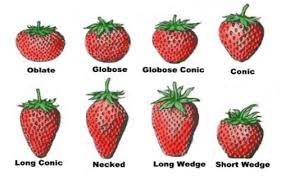
    STRAWBERRY AND ITS ORIGIN

    ORIGIN OF STRAWBERRY :

    Strawberries have a very ancient origin and are considered to be born in France. The first variety cultivated dates back to the beginning of the eighteenth century. Commonly, the term strawberry means the edible part of the Fragaria vesca plant, but in reality, they are not real fruits, but the enlarged receptacle of an inflorescence. The real fruits are identified in the so-called “achenes’’, or better known as the yellow seeds on the surface of the strawberry. It originates from France basically.

    The first variety cultivated dates back to the beginning of the eighteenth century. Its scientific name is Fragaria and derives from the Latin word fragrans (fragrant), just in virtue of the intense aroma released by its fruits, especially those that grow spontaneously in the woods. The strawberry is a member of the Rosaceae family and the most common varieties are hybrid of the wild Virginia strawberry and Chilean variety. The strawberries that we currently grow and eat come from the creation of a hybrid, a random cross between two American octoploid species of Fragaria. Until just over two centuries ago, in fact, the strawberries that were known were wild spontaneous species, wild strawberries that grew in many areas of the world.

    HISTORY OF STRAWBERRY :

    According to mythology, the strawberry was particularly loved by the Romans especially during the holidays dedicated to Adonis and is governed by the planet Venus. When Adonis was gored by a wild boar, the tears that Venus, the goddess of love had reached the earth, turned into small red heart-shaped fruits. During the Middle Ages, this fruit, in shape and colour, began to be called “heart fruit”, as food capable of appeasing the passions of love. Later, the strawberry became a symbol of fertility due to its many exterior seeds. The fruit looks so alluring in fact, that strawberries were carved into church altars and cathedral pillars in medieval times to represent perfection.

    Strawberry represents perfection in the Victorian language of the flower. A double strawberry will bring you, love! Legend has it that by breaking a double strawberry in half and sharing it with another person, you will fall in love with each other. The French considered strawberry to be an aphrodisiac. They served strawberry soup to newly-weds. In parts of Bavaria, country folk still practise the annual rite each spring of tying small baskets of wild strawberries to the horns of their cattle as an offering to elves. It is believed that the elves, who are passionately fond of strawberries, will bless healthy calves and abundance of milk in return.

    Until the sixteenth century, strawberries weren’t extremely regarded. Then some individuals began to attribute their therapeutic qualities: in keeping with a German intellectual, Crollius, the fruit may cure the infectious disease as it was absolutely similar in look to the symptom of the disease; for Della orifice (Italian thinker and alchemist) it absolutely was instead a remedy for wounds as a result of it absolutely was red like blood; lady Tallien created a lot of use of it between the eighteenth and nineteenth centuries, who used 10 kilos at a time to wash and maintain lovely skin. The ancient Romans believed that the berries alleviated symptoms of melancholy, fainting, all inflammations, fevers, throat infections, kidney stones, halitosis, attacks of gout, and diseases of the blood, liver and spleen.

    History of Strawberry

    Strawberry, (genus Fragaria), genus of more than 20 species of flowering plants in the rose family and their edible fruit. Strawberries are native to the temperate regions of the Northern Hemisphere, and cultivated varieties are widely grown throughout the world. The fruits are rich in Vitamin C and are commonly eaten fresh as a dessert fruit, are used as a pastry or pie filling, and may be preserved in many ways. Strawberry shortcake—made of fresh strawberries, sponge cake, and whipped cream—is a traditional American dessert.

    Strawberries are low-growing herbaceous plants with a fibrous root system and a crown from which arise basal leaves. The leaves  are compound, typically with three leaflets, sawtooth-edged, and usually hairy. The flowers, generally white, rarely reddish, are borne in small clusters on slender stalks arising, like the surface-creeping stems, from the axils of the leaves. As a plant ages, the root system becomes woody, and the “mother” crown sends out runners that touch ground and root, thus enlarging the plant vegetatively. Botanically, the strawberry fruit is considered an “accessory fruit” and is not a true berry. The flesh consists of the greatly enlarged flower receptacle and is embedded with the many true fruits, or achenes, which are popularly called seeds.

    strawberry

    CULTIVATION AND PLANTING :

    The cultivated large-fruited strawberry originated in Europe in the 18th century. Most countries developed their own varieties during the 19th century, and those are often specially suitable for the climate, day length, altitude, or type of production required in a particular region. Strawberries are produced commercially both for immediate Consumption and for processing as frozen, canned, or preserved berries or as juice. Given the perishable nature of the berries and the unlikelihood of mechanical picking, the fruit is generally grown near centres of consumption or processing and where sufficient labour is available. The berries are handpicked directly into small baskets and crated for marketing or put into trays for processing. Early crops can be produced under glass or plastic covering. Strawberries are very perishable and require cool dry storage.

    strawberry

    The strawberry succeeds in a surprisingly wide range of soils and situations and, compared with other horticultural crops, has a low fertilizer requirement. It is, however, susceptible to drought and requires moisture-retaining soil or irrigation by furrow or sprinkler. Additionally, the plants are susceptible to nematodes and pathogenic soil fungi, and many growers sterilize the soil with chemicals such as methyl bromide prior to planting. Runner plants are planted in early autumn if a crop is required the next year. If planted in winter or spring, the plants are deblossomed to avoid a weakening crop the first year. Plants are usually retained for one to four years. Runners may be removed from the spaced plants, or a certain number may be allowed to form a matted row alongside the original parent plants. In areas with severe winters, plants are put out in the spring and protected during the following winters by covering the rows with straw or other mulches.

    MAJOR SPECIES :

    In addition to the dominant commercial variety (Fragaria ×ananassa), the musk, or hautbois, strawberry (F. moschata) is also cultivated in some areas for its unique musky aroma and flavour.

    Wild strawberries grow in a variety of habitats, ranging from open woodlands and meadows to sand dunes and beaches. The woodland, or alpine, strawberry can be found throughout much of the Northern Hemisphere and bears small intensely flavourful fruits. Common North American species include the virginia wild strawberry and the beach, or coastal strawberry .

    EXPORTS AND PROFIT :

    With the onset of summer, strawberry plants are fast turning into proverbial money-tree in the UK and other countries, where the prices of the delicate fruit have started soaring, inducing many an Indian firm to grow more for exporting the commodity to these countries.It is learnt that at least three firms had applied for permission to import nearly 1.3 million plants of strawberry from Europe and the US for growing in India.However, the agriculture ministry has allowed only Delhi-based Sheel Biotech to import 600,000 tissue culture plants of strawberry and denied permission to Mizoram’s Zopar Exports and Delhi’s Dev Bhumi Cold Chain for want of dealer licence.The agri-business firms feel that by growing imported plants in Himachal Pradesh and in the North-east, the quality of the fruit can be improved because of climatic conditions.

    THANK YOU !


    Bundle of talent: Kiccha Sudeepa

    Well known South-Indian actor Sudeep was born on September 2nd 1971. He started his life journey as an actor from the year 1997, sandalwood’s “Thayavva” was his first film which is a flop. Priya Sudeep is his wife they married on 18th October 2001, she produced the film “Manikya” in which Sudeep had a major role of hero. They have a daughter named Saanvi Sudeep.

    “Badhshah of sandalwood” kiccha Sudeeep always attracts his fans through his inspirational words, handsome looks, trendy hairstyles and attractive dress codes. He hosts the reality show bigg boss kannada, waiting to see him in weekend episodes roasting the bigg contestants was a uphill work for his fans and memers. His advises to the contents were so great and inspirational, no one knows whether all that words are scripted or it comes with the flow. Everyone agries that no one can manage the hosting of bigg boss better than Sudeeep. His fans are eagerly waiting watch his upcoming film “Vikranth Rona”.

    I won’t take it for too long finally, don’t forget

    “There is no formula for success. All you need to do is put in your best.”- Sudeep.

    >>Stay connected to eduindex.org for more updates.

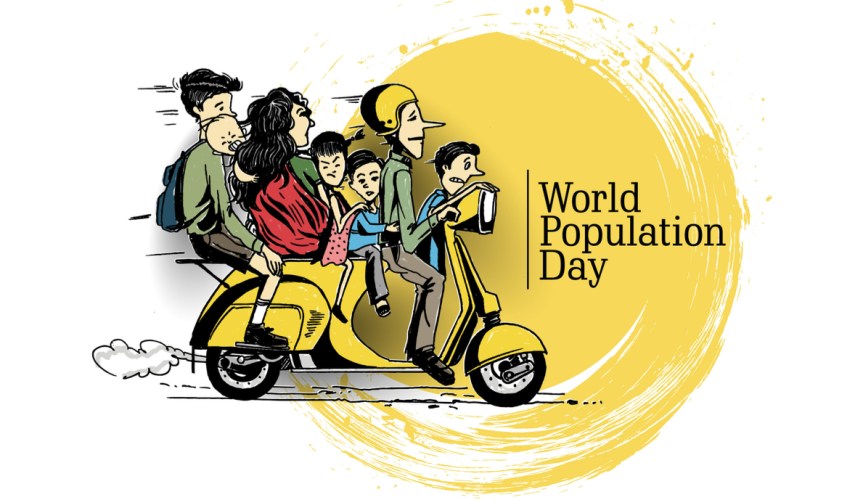
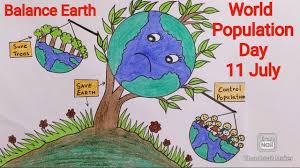
    WORLD POPULATION DAY – JULY 11

    Image Source: google.com

    One of the biggest challenges that we are facing still now is the rise of world population. World population day is annually celebrated on July 11. The main purpose this is to bring awareness about the rising population issues and how to tackle these issues. Population issues includes family planning, gender equality, child marriage, human rights, right to health, baby’s health, etc. World Population Day was established by the Governing Council of the United Nations Development Programme in 1989. It was inspired by the public interest in Five Billion Day, the approximate date on which the world’s population reached five billion people on July 11, 1987.

    Every year there is a specific theme for World Population Day and the theme of World Population Day 2021 is “Rights and choices are the answer: Whether baby boom or bust, the solution to shifting fertility rates lies in prioritizing the reproductive health and rights of all people.”

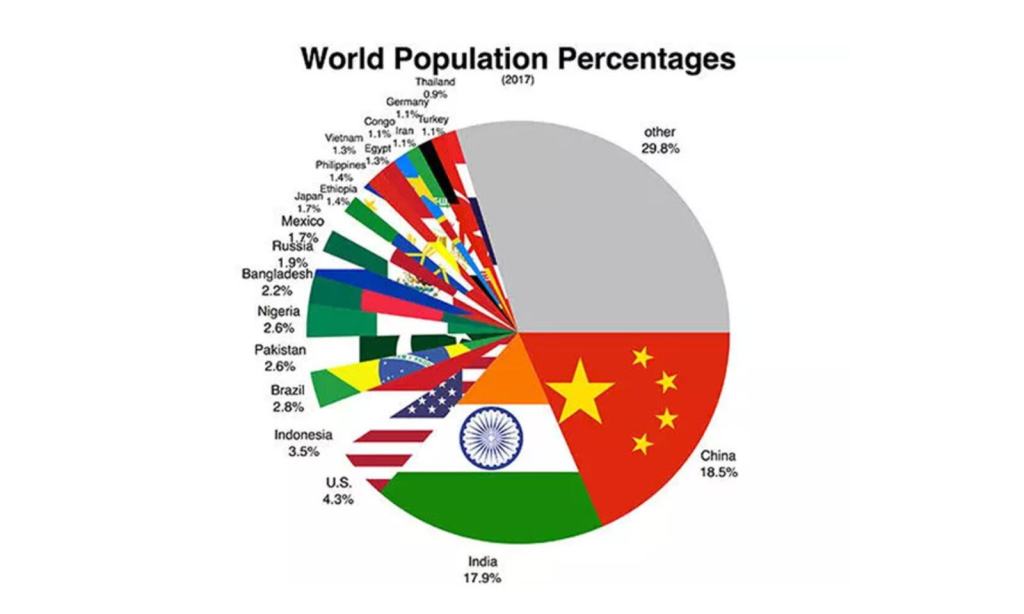
    US, India and China are the top three countries that have the largest population count. The size of a nation’s population has a major impact on its development and operations. Population growth has always been a concern. The number of human beings is increasing every year, but the resources that sustain human life are still unable to regenerate. The growth rate has also been increasing rapidly. Put this fact in perspective: the population broke the 2 billion marks in 1927. By 1999, the population was recorded as 6 billion. Therefore, the population growth rate has increased significantly year by year. It is very urgent to control the population. It causes some irreparable damage to the environment and atmosphere. A large number of people means the rapid and unfair consumption of environmental resources. Natural resources such as land, water, and air are limited. They cannot be manually produced. The rapid consumption of these resources has caused huge losses.

    According to UN Secretary-General Antonio Guterres,” Sustainable Development 2030 agenda is the world’s blueprint for a better future for all on a healthy planet. On World Population Day we recognise that this mission is closely interrelated with demographic trends including population growth, aging, migration, and urbanisation”.

    The Population Division works closely with agencies, programs, funds and bodies of the UN system in order to execute work program on population. Activities organized on this day include seminars, discussions, educational meetings, open competitions, slogans, workshops, debates, songs, etc. Not only that, even TV channels, news channels, and radio programs broadcast various programs related to the importance of population and family planning. Demographic issues also create tensions in society: there are more heinous crimes committed in the field of gender inequality and human rights than ever before, especially in developing countries.

    The government of each country must formulate effective policies and plans to control the growing population. Without immediate control, the ever-increasing world population will lead to some unbearable situations. Policies such as family planning and use of birth control should be implemented on a large-scale basis.

    Indian Culture – Varied but one


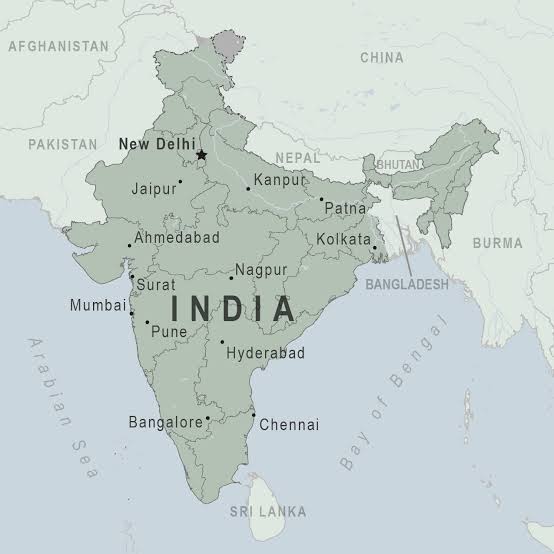
    India is a country with vast culture and several religions within itself. Before, getting into the context let us know what exactly the word culture mean.


    Culture can be defined as knowledge of a particular group of people, cuisine, religion, rituals, language, arts and music, etc.


    Indian culture is one of biggest and most complex cultures to understand in the world. With 29 states and 8 union territories and more than 4 religions in a single country, India stands rich in its literature. Even though, the nation has 80.5% Hindus, 13.4% of Muslims, 2.3% Christians, 1.9% Sikhs with 2 billion followers in total the unity of the nation holds strong. There is always culture in everything from God to Art in India . It has to be mentioned here that ‘Indian Gods’ play a major role in the ocean-like Indian mythologies. From Mahabharat, India has had the culture of giving priority to prayers. The religions that originated in India are based on the concepts of dharma and karma (Hinduism, Jainism, Buddhism and Sikhism). Ahisma, being an important aspect of Indian culture, has played a major role in India’s struggle for Freedom. Mahatma Gandhi, a freedom fighter, followed Ahimsa to gain freedom for the nation which was later took as an inspiration by Martin Luther King Jr.
    Atheism is seen as a rejected concept by most of the Indians. Atheists are seen as aliens in the country. Even though, it is a personal choice of a person it is often not understood by many, which shows their deep passion for religions, gods and prayers.

    Mahatma Gandhi (left) and Martin Luther King Jr ( right)


    This country with vast culture celebrates several festivals. With half of them being celebrated by the nation together (Diwali, festival of lights) and rest celebrated by a particular group of people from an area or state (Onam being celebrated by Keralites). The three national holidays in India, the Independence Day, Republic Day and Gandhi Jayanthi are celebrated with great enthusiasm.

    Diwali – festival of light


    India has five major languages that includes Hindi, Tamil, Telugu, Malayalam and Kannada. Each language has its own history with Tamil being considered as one of the oldest and classical languages in the world. Hindi being considered as the national language by many.


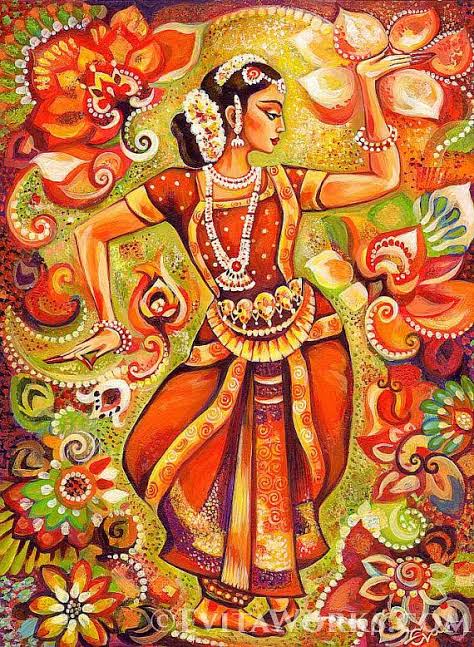
    India has eight classical forms of dance. Indian Art has always had mythological elements in it. With Bharatanatyam from Tamil Nadu, Kuchipudi from Andhra Pradesh, Mohiniattam from Kerala, Yakshagana of Karnataka, Manipuri from Manipur, Odissi from Odisha, Sattriya from Assam and Kathak from Uttar Pradesh. Apart from the classicals dance forms, Indian regions have a strong dance tradition from Bhangra of Punjab to Dekhnni of Goa.

    Bharatanatyam- a classical dance form


    Hockey is often seen as the national game of India, though Indian Government has denied it. Indian Government has clarified India currently doesn’t have any national game. Martial Arts being another traditional sport that originates in Kerala. Kalaripayattu (400 BCE-600 CE) in the Sangam literature is one of the oldest martial arts in the world. Ayurvedic Massage with Sesame oil is also considered as a form of Martial Arts.
    India being a roof for varied cultures and religions, still stays together and strong.

    Kalaripayattu – martial arts

    Best catch of the Year

    Indian Women cricketer Harleen Deol pulled off a stunning catch to dismiss Amy Jones in the first T20 against on Friday (9th July 2021), that acrobatic effort from Harleen Deol won the hearts of fans and Cricket lover all over the globe.

    Harleen was fielding at long off and Amy Jones tried to clear the fences off Shikha Pandey’s delivery, everyone thought that the ball would sail over the fence for maximum but Harleen Deol timed her jump in the air to perfection and managed it to keep it inside the boundary and drived back to hold onto it.

    Every single person watching that catch knows that she had broken the barrier between men’s and women’s cricket . Though India women’s lost the match to England women’s, but everyone appreciated that effort of Harleen, even England cricket team appreciate that efforts in their twitter.

    World Population Day

    World Population Day is observed on 11th of July every year. It is an annual and global event which seeks to raise awareness about the rising population issues all over the world. It was first observed on the 11th of July 1989. Governing Council of the United Nations Development Programme was the organization behind the establishment of this event. A question might arise in your mind about why 11th July was established as the World Population Day and not any other date? The answer to this question lies in the year 1987 two years prior to the first observation of the World Population Day. 11 July 1987 is known as the Five Billion Day because it is considered as the approximate date when the world population reaches the mark of 5 billion.

    The day was proposed by Dr. K.C. Zachariah who worked as a senior Demographer at World Bank when the world population reaches five billion. World Population Day aims to increase awareness on various issues regarding population such as family planning, gender equality, poverty, human rights, and maternal health.

    World Population Trends

    Due to the increase in number of people surviving to reproductive age, major changes in fertility rates, increasing urbanization and accelerated migration has resulted in a very dramatic drastic growth in the population all around the world. If look at the empirical data, it will be clearer. Earlier it took hundreds of thousands of years to reach the world population to the 1 billion mark but in the near 200 years or so the population increases by seven times. Global population reaches to 7 billion mark in the year 2011. Today global population stands around 7.7 billion and it is estimated to reach 8.5 billion in 2030, 9.7 billion in 2050, and 10.9 billion in 2 100. These trends as shown here if continues then it will have very far-reaching negative consequences on the future generation to come. They affect economic development, increase unemployment, poverty, increase income disparity and affect income distribution. Growing population also acts as a setback to the efforts of providing universal access to healthcare facilities, sanitation, education, better lifestyle, housing, energy, food and water.

    Themes of this year’s World Population Day

    “Rights and choices are the answer: Whether baby boom or bust, the solution to shifting fertility rates lies in prioritizing the reproductive health and rights of all people.” This is the theme of World Population Day this year. The pandemic had made the health system to compromised with other problems especially in the area of sexual and reproductive health of women. Risk of child marriage and female genital mutilation increase in the pandemic and the programmes to eradicate these problems faced a setback due to the pandemic. A quantitative surveys suggest that between 4% – 29% of women who use contraception do so without their husbands’ or partners’ knowledge. Against this backdrop, many countries are expressing growing concern over changing fertility rates. Historically, alarmism over fertility rates has led to abrogation of human rights. The agency emphasizes that women must be empowered educationally, economically and politically to exercise choice over their bodies and fertility.